
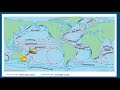
Ocean Currents Influence on Climate Through the Journey of Rubber Duckies

Interactive Video
•
Science, Geography, Biology
•
6th - 8th Grade
•
Practice Problem
•
Hard

Patricia Brown
FREE Resource
Read more
10 questions
Show all answers
1.
MULTIPLE CHOICE QUESTION
30 sec • 1 pt
What role do oceans play in the climate system?
They create weather patterns.
They absorb carbon dioxide.
They produce oxygen.
They transfer heat from the sun around the globe.
2.
MULTIPLE CHOICE QUESTION
30 sec • 1 pt
How did the rubber duckies help scientists?
By showing how ocean currents can be mapped.
By cleaning up the ocean.
By measuring ocean temperatures.
By providing data on marine life.
3.
MULTIPLE CHOICE QUESTION
30 sec • 1 pt
What is a characteristic of warm ocean currents?
They cool the air over land.
They are found near the equator.
They are found near the poles.
They are represented with a blue arrow on maps.
4.
MULTIPLE CHOICE QUESTION
30 sec • 1 pt
How do cold ocean currents affect the climate of nearby land?
They warm the air over land.
They have no effect on the climate.
They cool the air over land.
They increase precipitation.
5.
MULTIPLE CHOICE QUESTION
30 sec • 1 pt
What is the effect of the cold current along the left side of Southern Africa?
It has no effect on the climate.
It causes warmer summers and winters.
It cools down the climate.
It increases rainfall.
6.
MULTIPLE CHOICE QUESTION
30 sec • 1 pt
What happens to the climate of a region near a warm ocean current?
It experiences warmer winters.
It becomes more arid.
It experiences cooler summers.
It has more rainfall.
7.
MULTIPLE CHOICE QUESTION
30 sec • 1 pt
What is the primary function of ocean currents?
To generate tides.
To create waves.
To move heat from the tropics towards the poles.
To support marine life.
Access all questions and much more by creating a free account
Create resources
Host any resource
Get auto-graded reports

Continue with Google

Continue with Email

Continue with Microsoft
or continue with

%20(1).png)
Apple

Others
Already have an account?



