
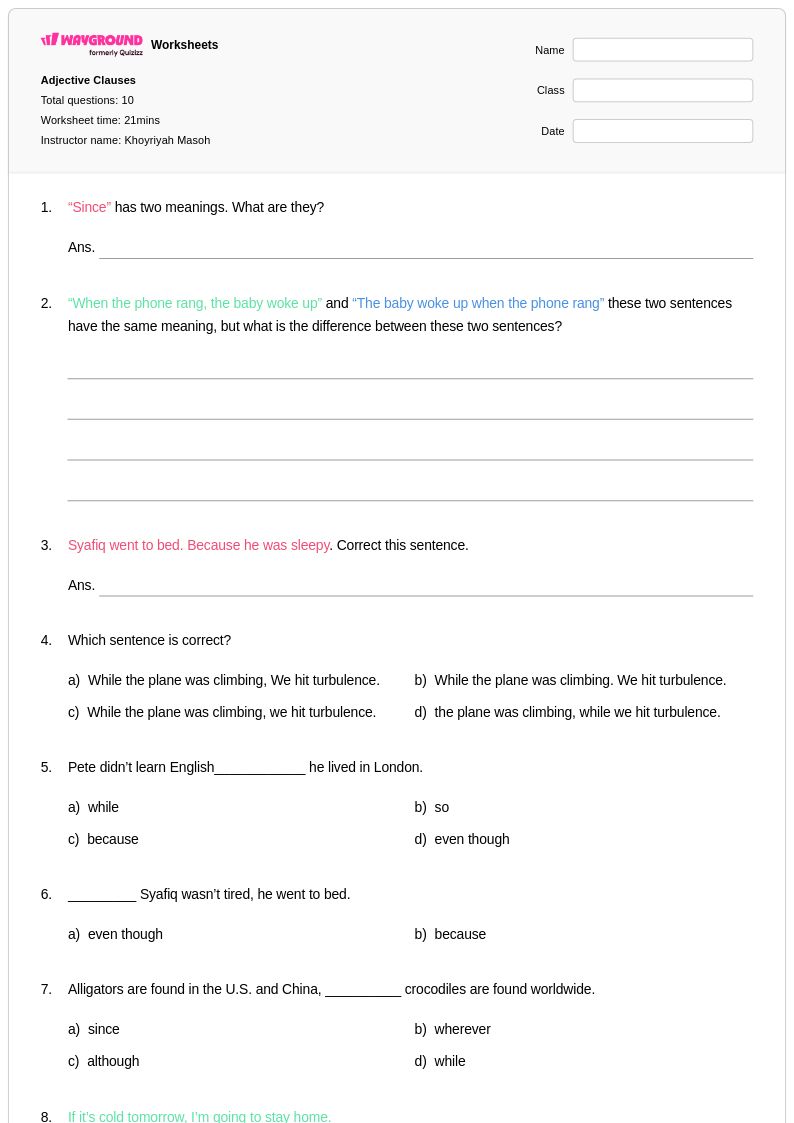
10 Q
11th - Uni
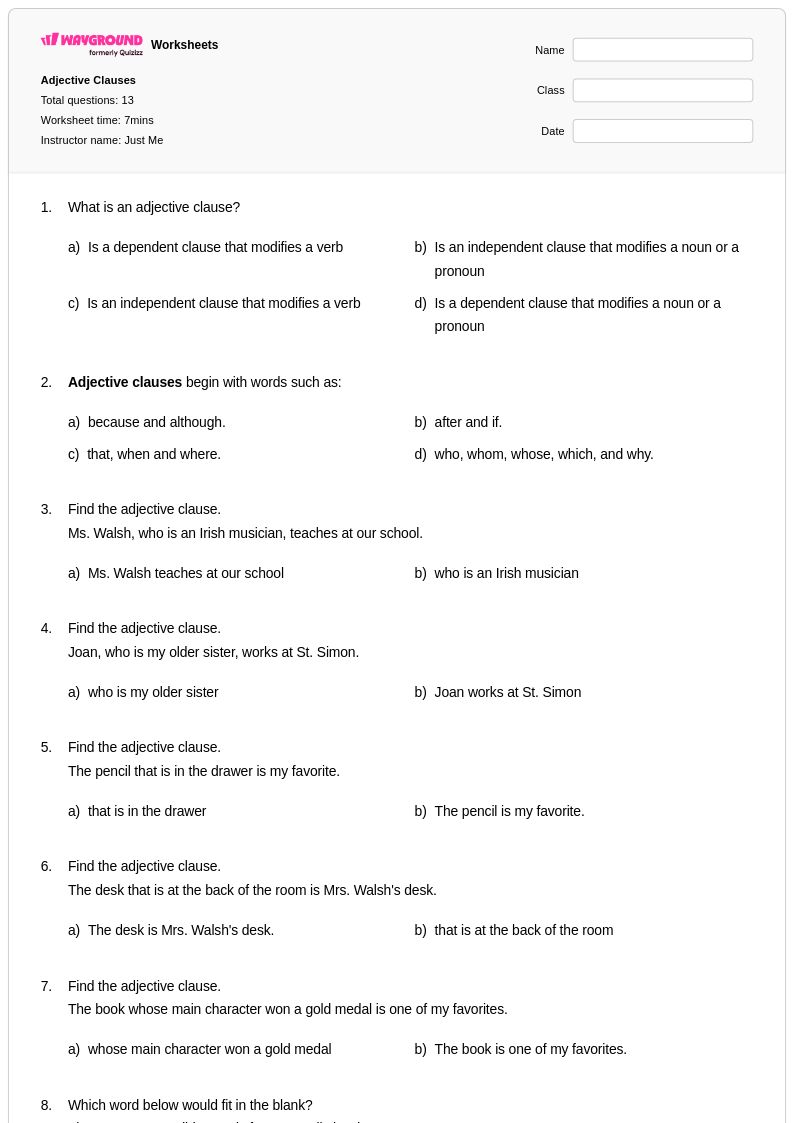
13 Q
7th - 12th
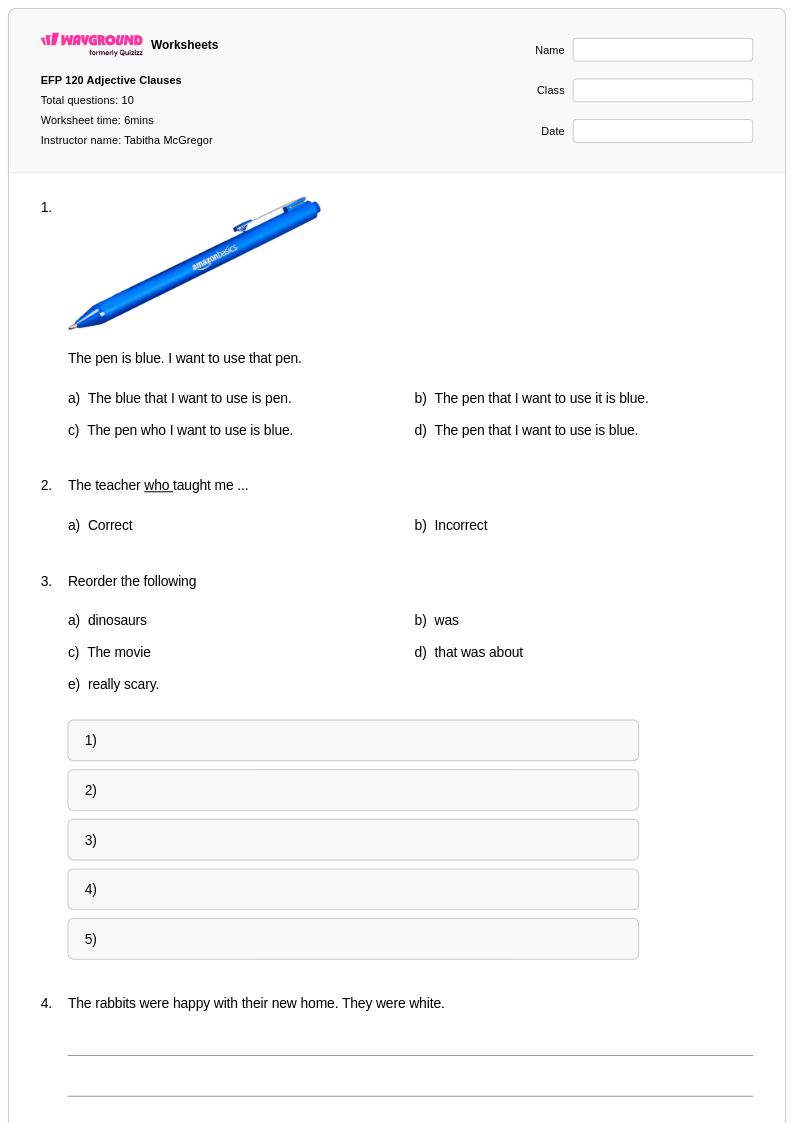
10 Q
9th - 12th
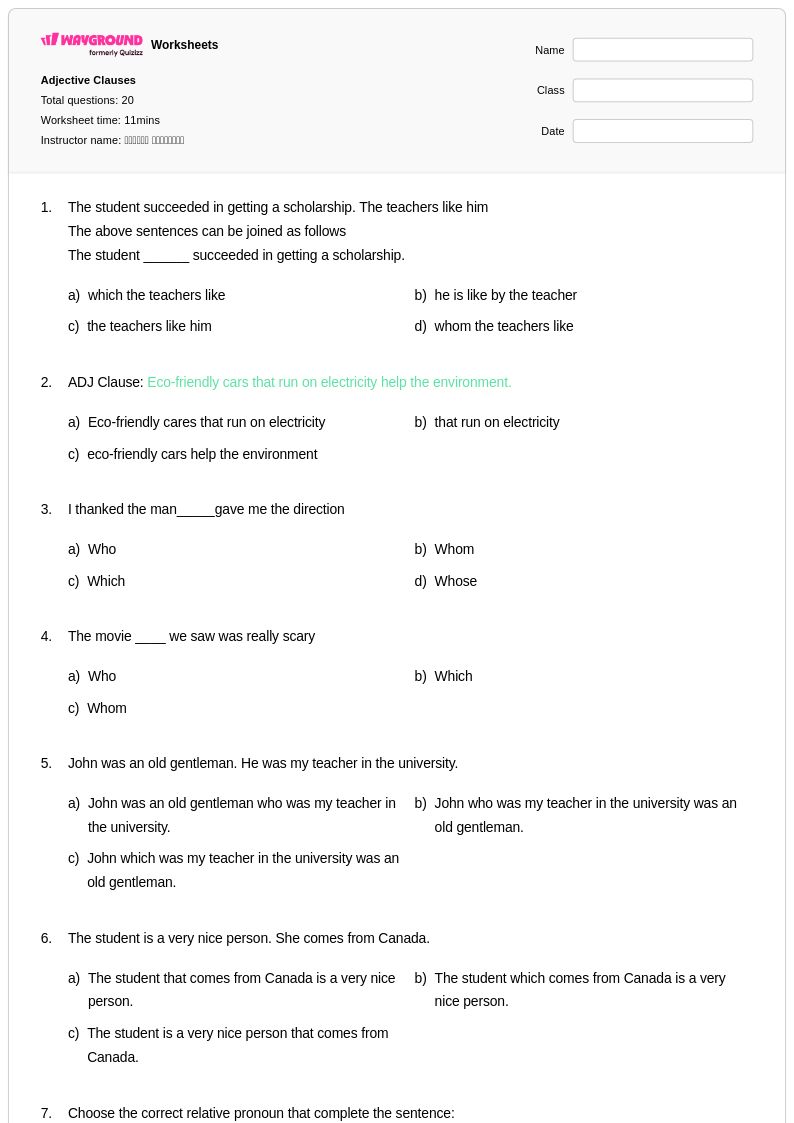
20 Q
12th
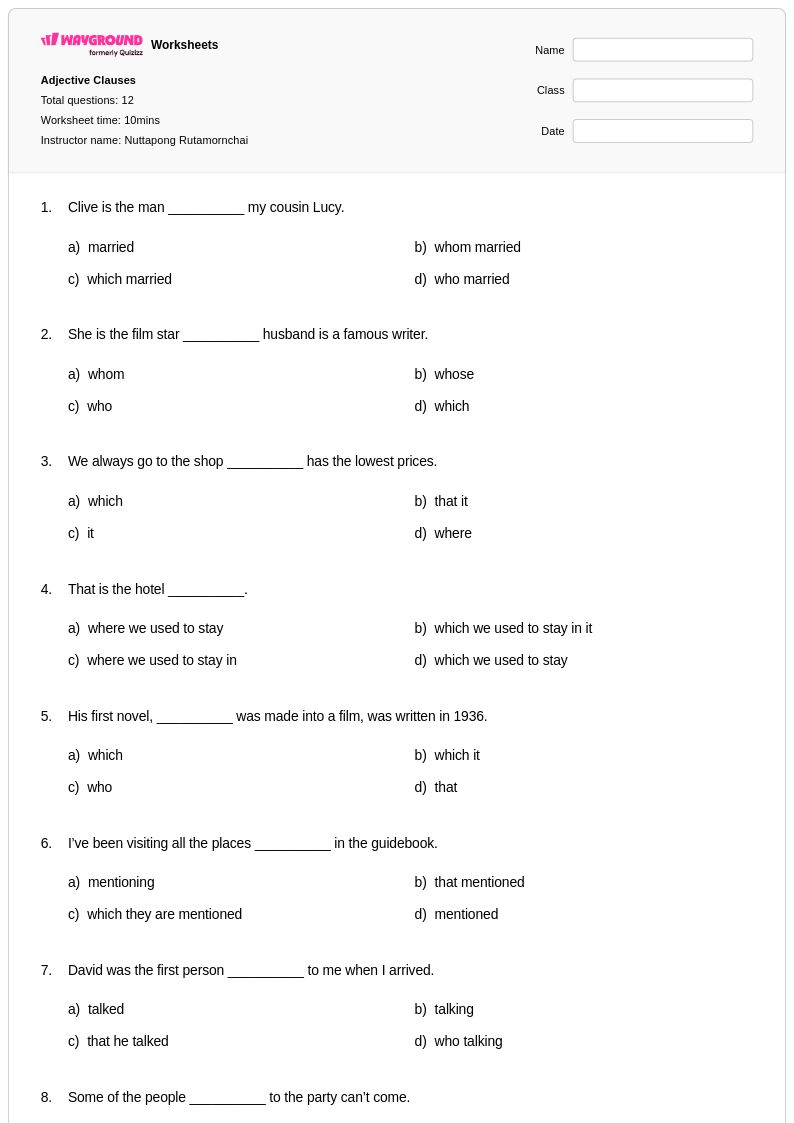
12 Q
10th - Uni
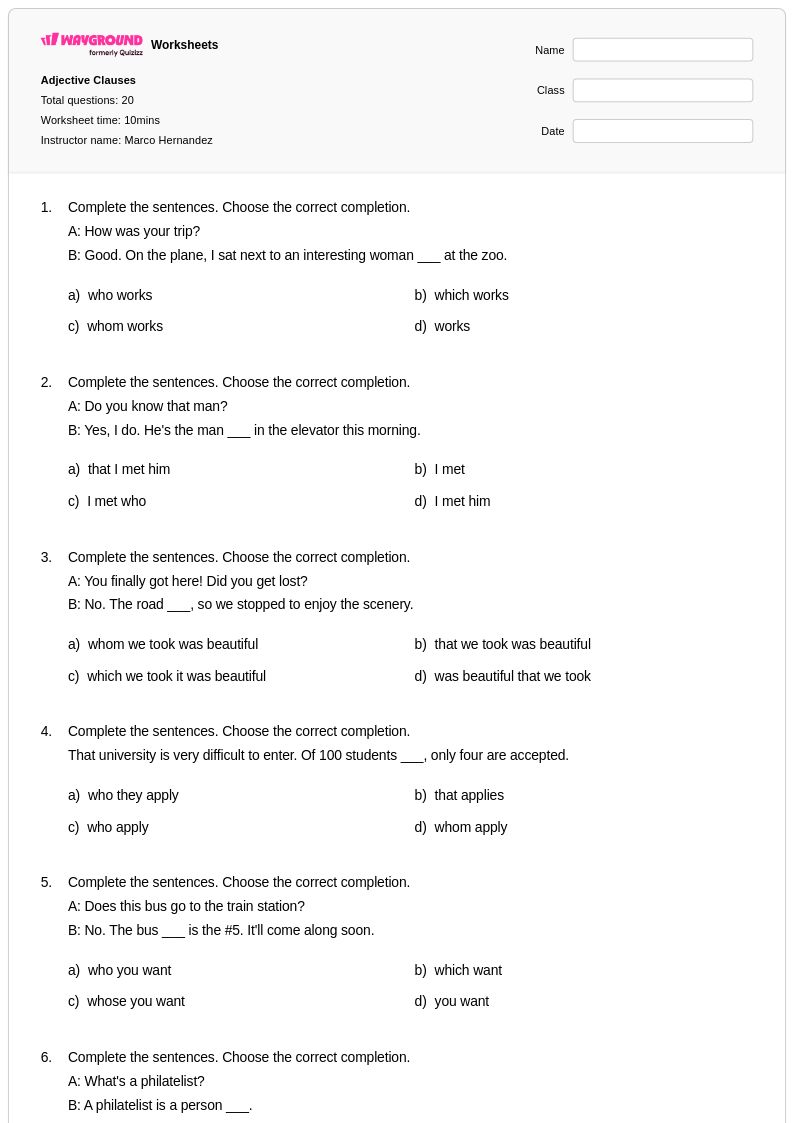
20 Q
10th - 12th
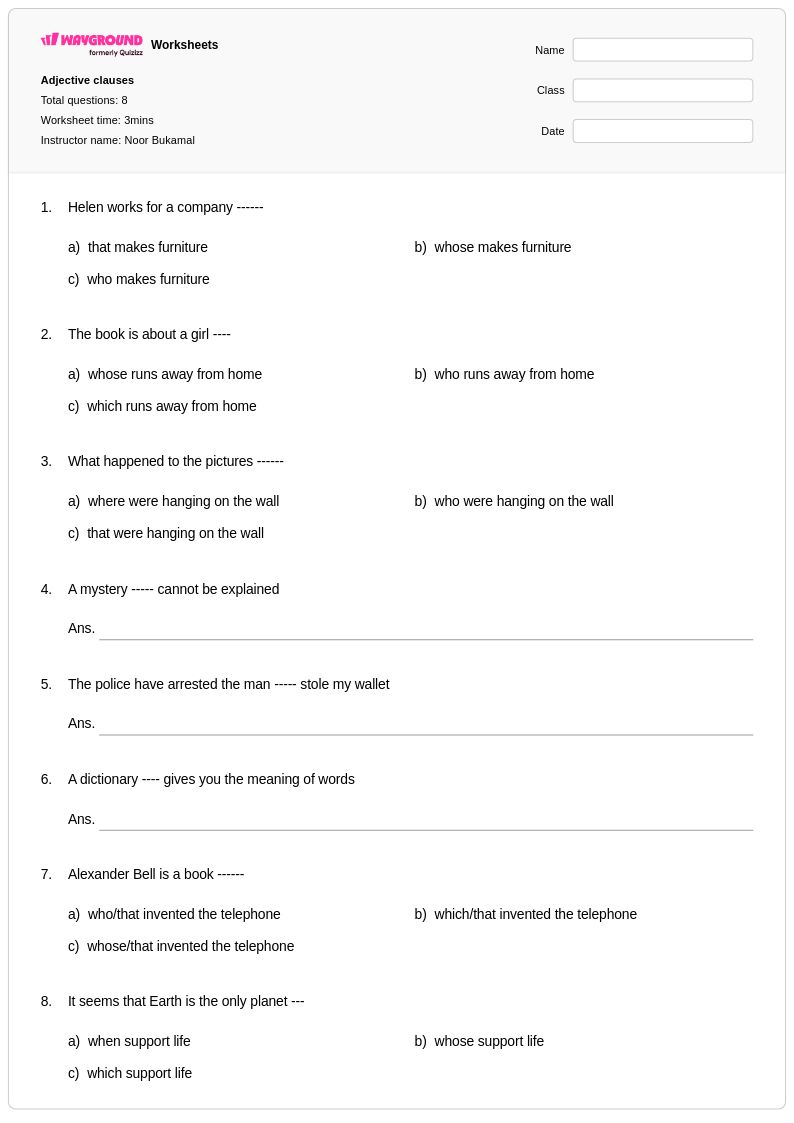
8 Q
10th - 12th
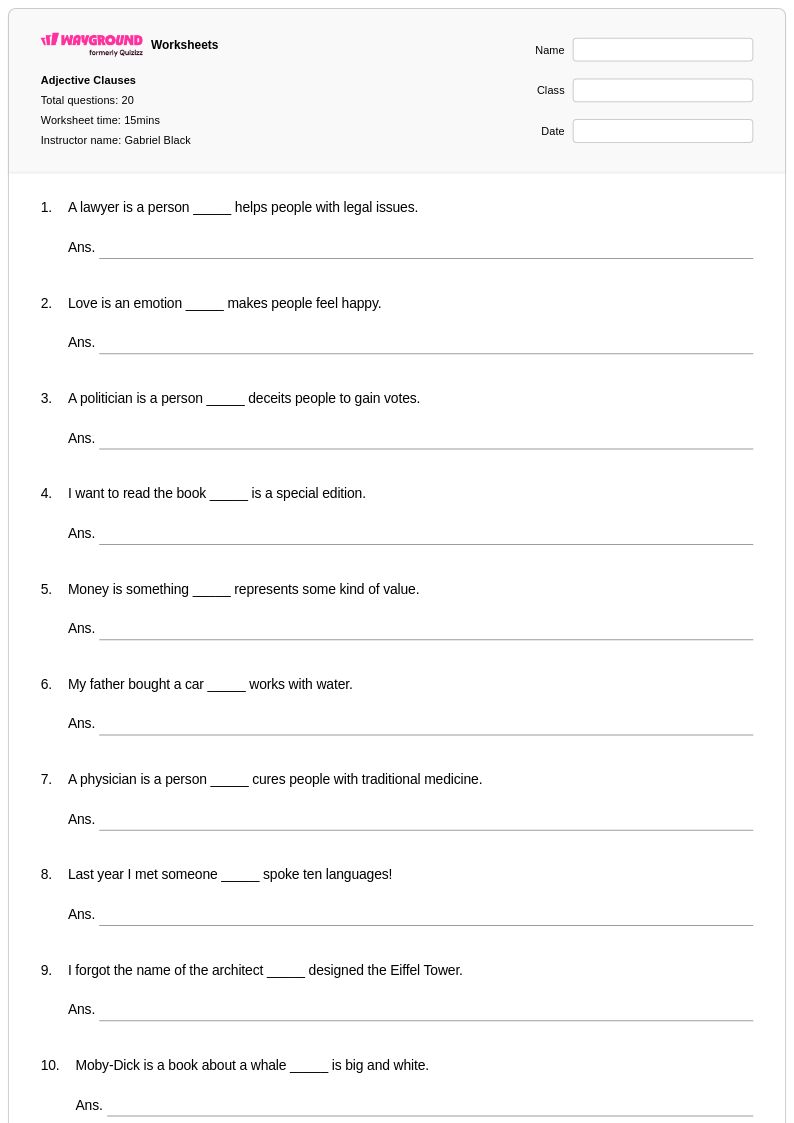
20 Q
1st - 12th
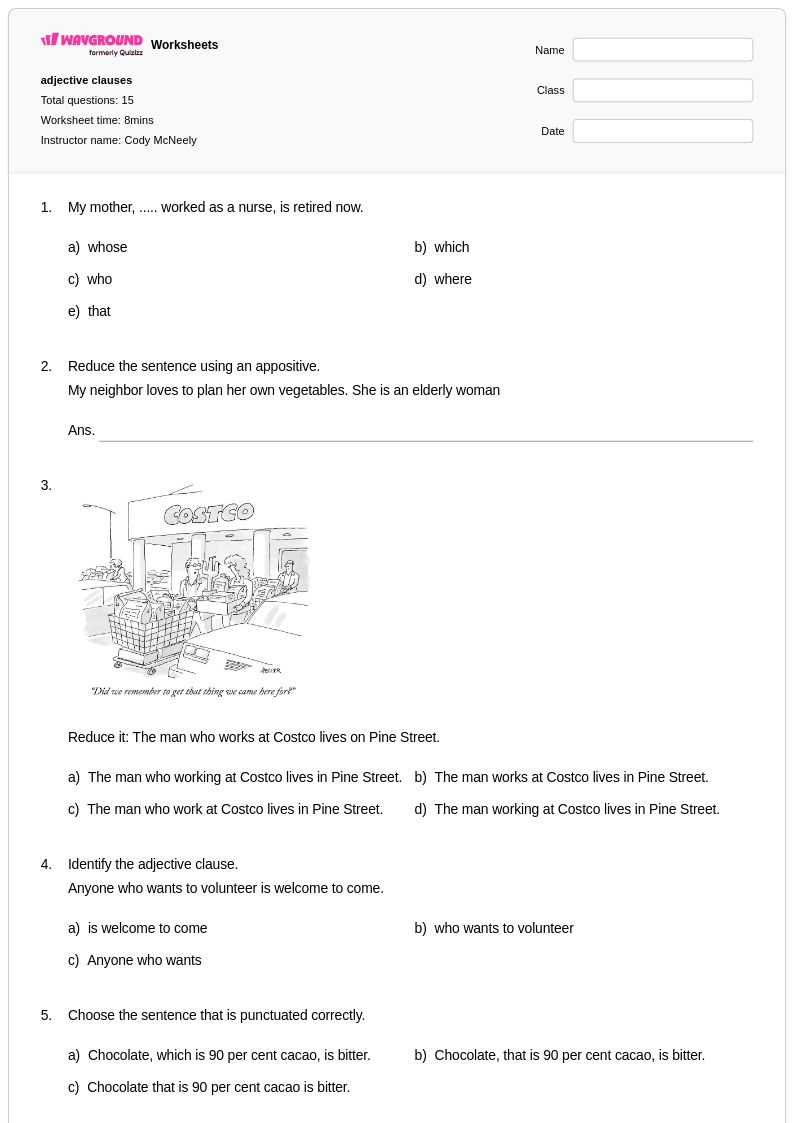
15 Q
12th
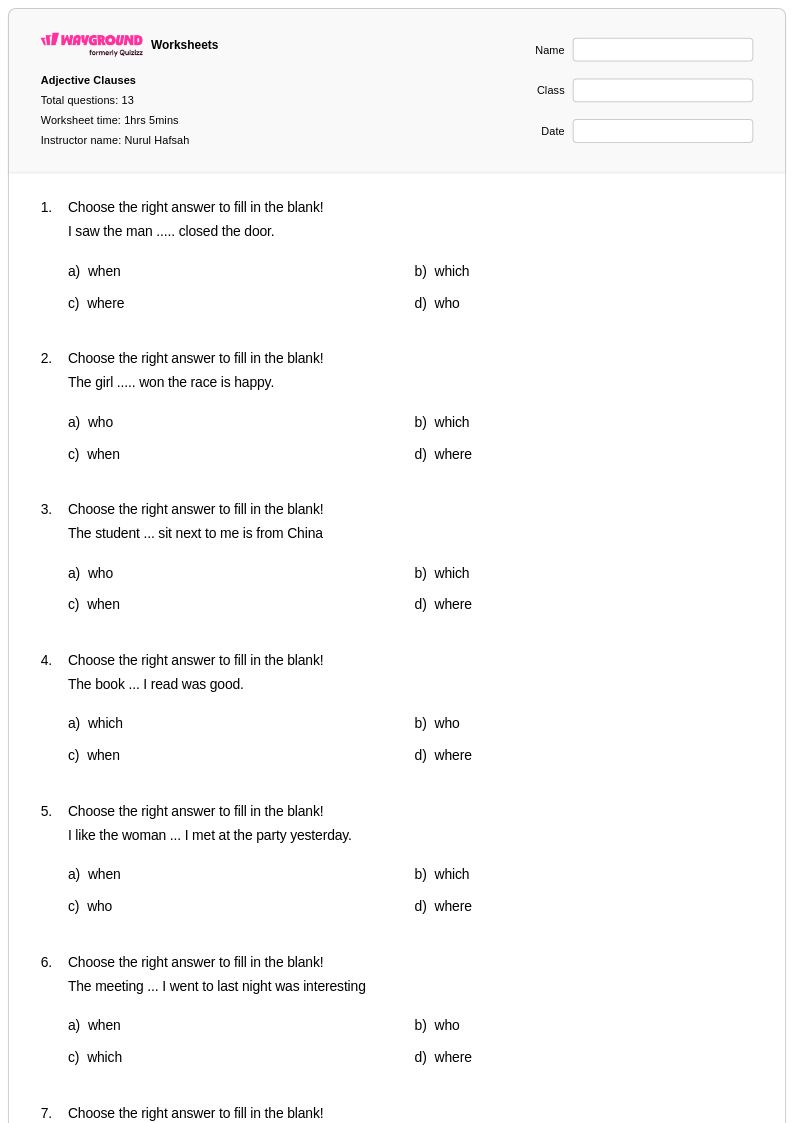
13 Q
12th
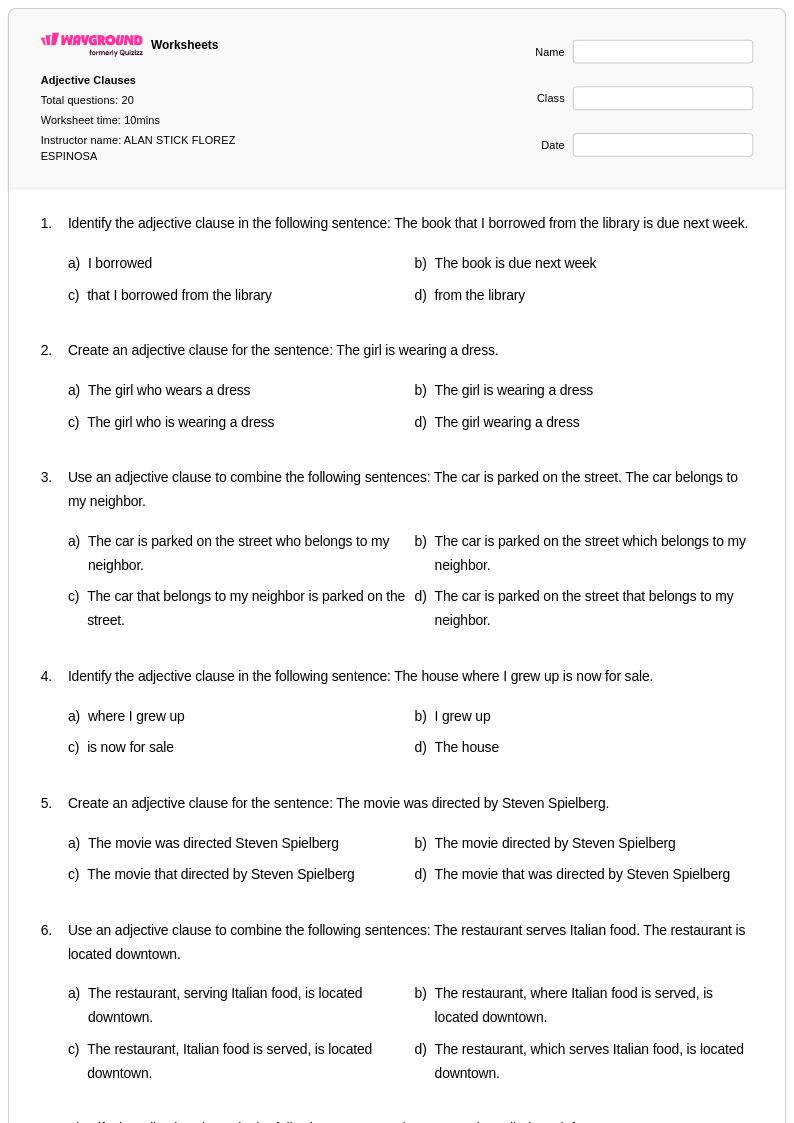
20 Q
9th - 12th
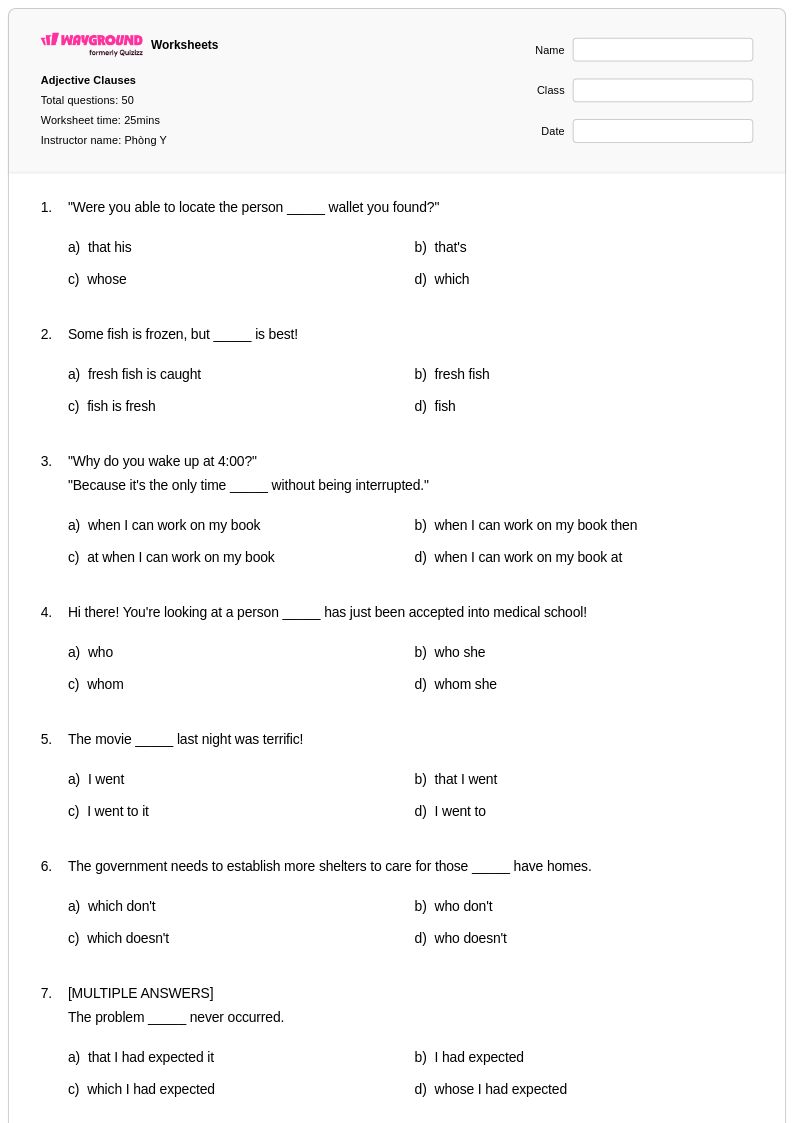
50 Q
9th - 12th
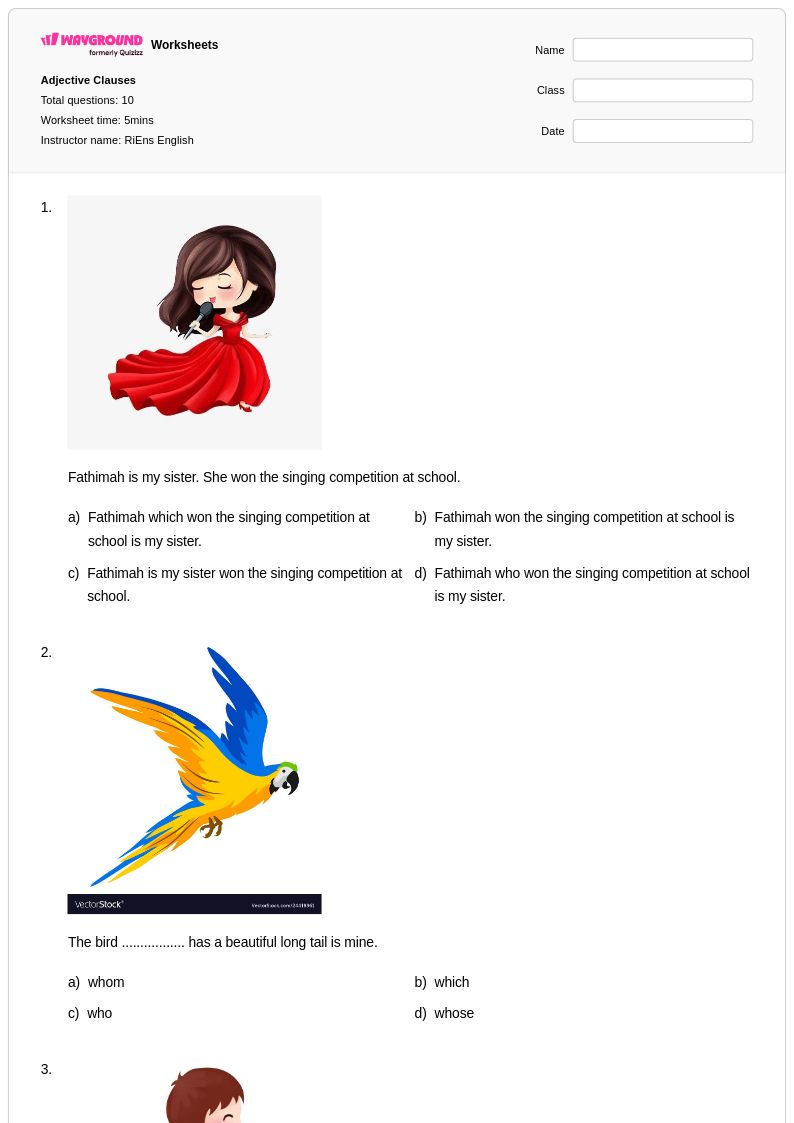
10 Q
9th - 12th
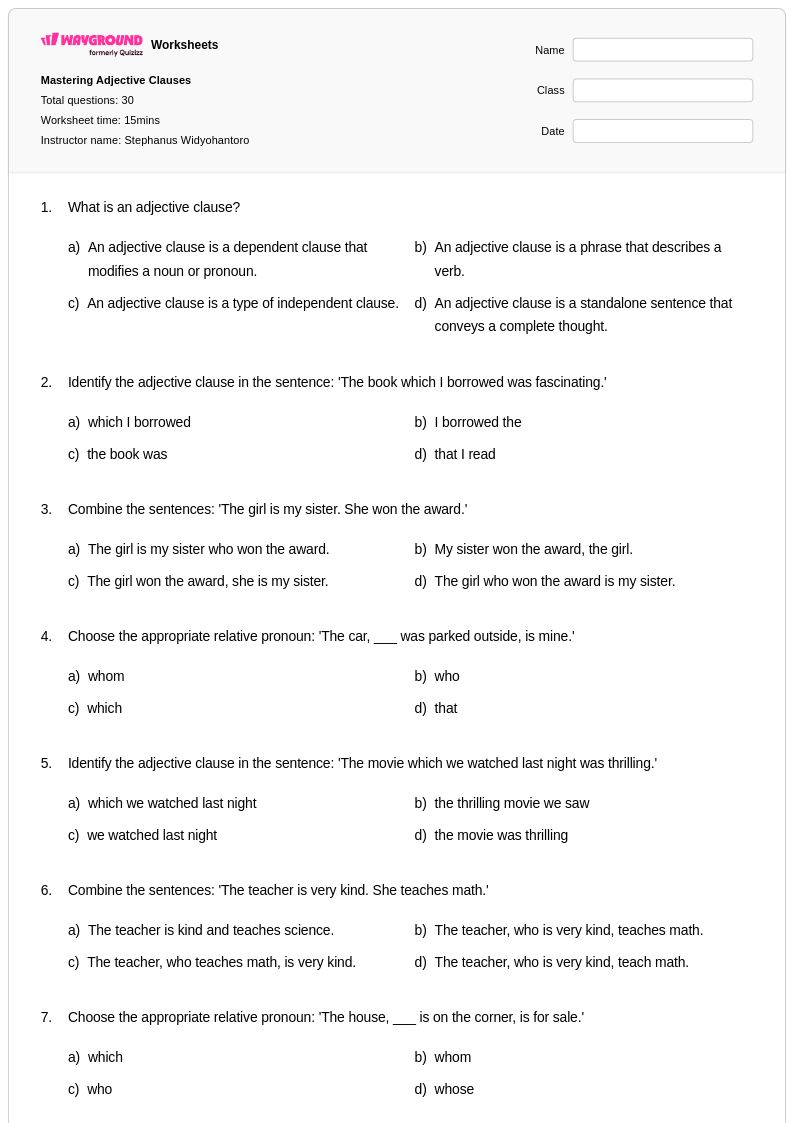
30 Q
11th - Uni
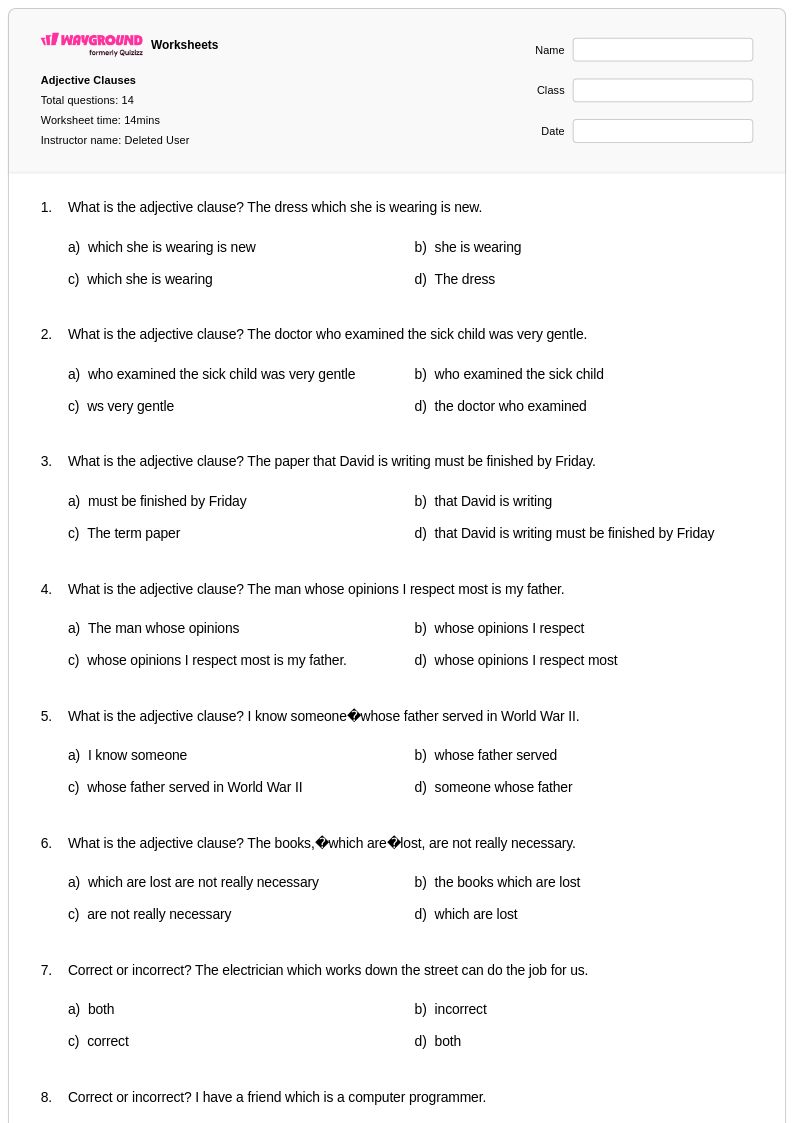
14 Q
9th - 12th
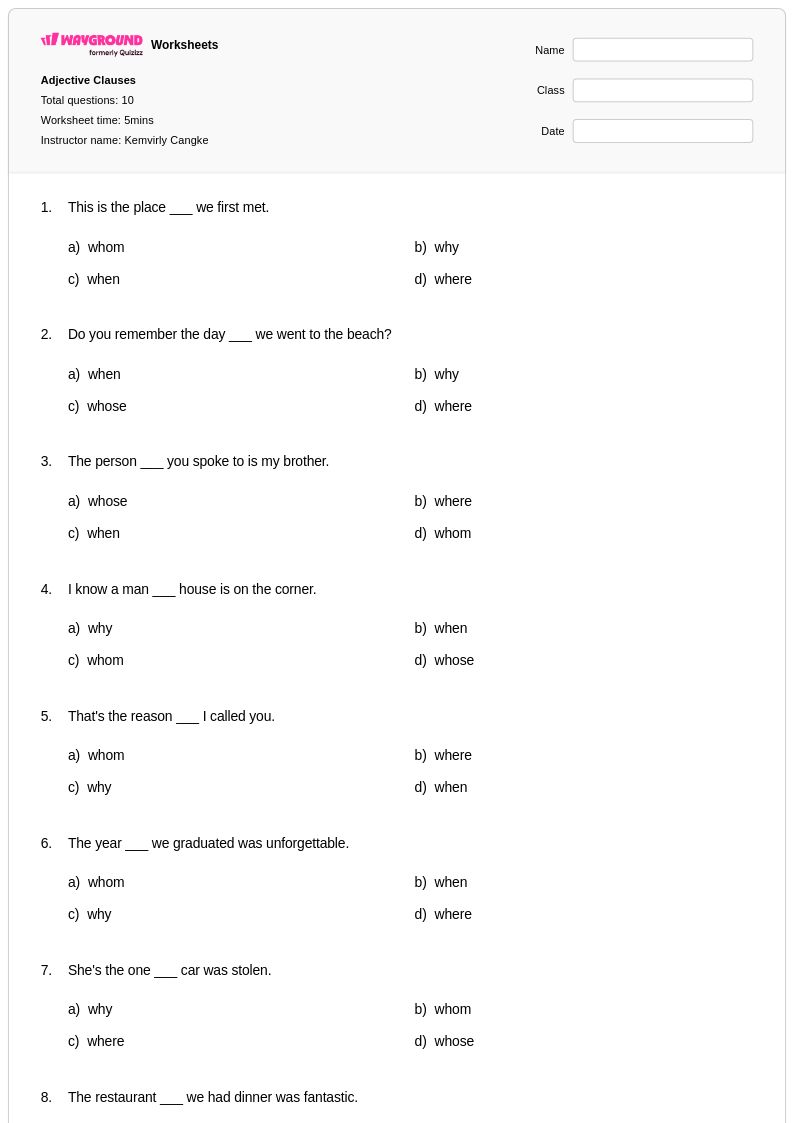
10 Q
12th
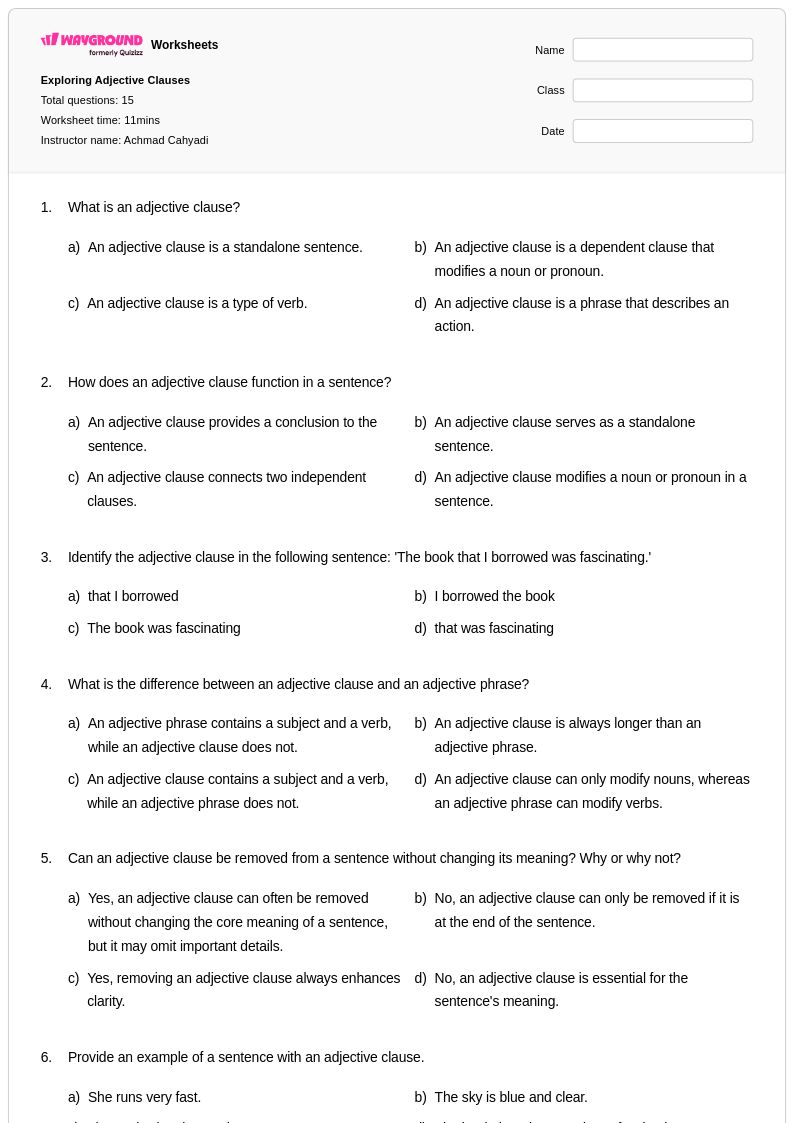
15 Q
11th - Uni
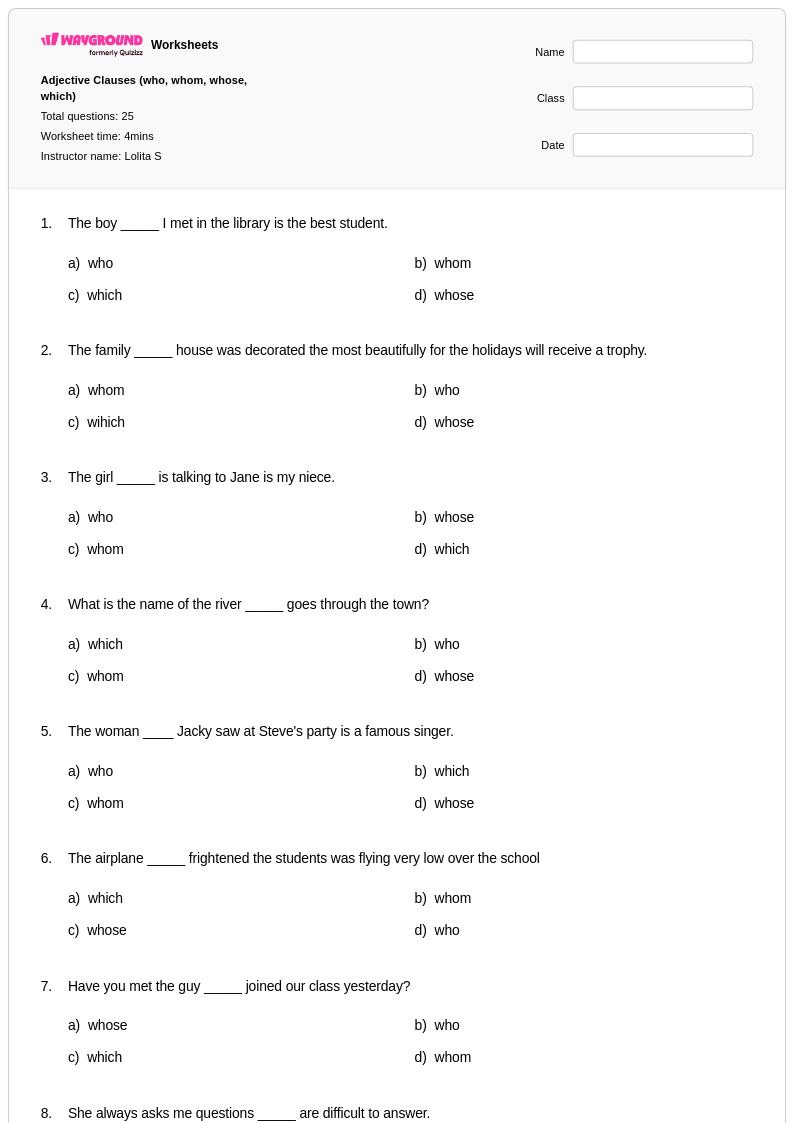
25 Q
9th - 12th
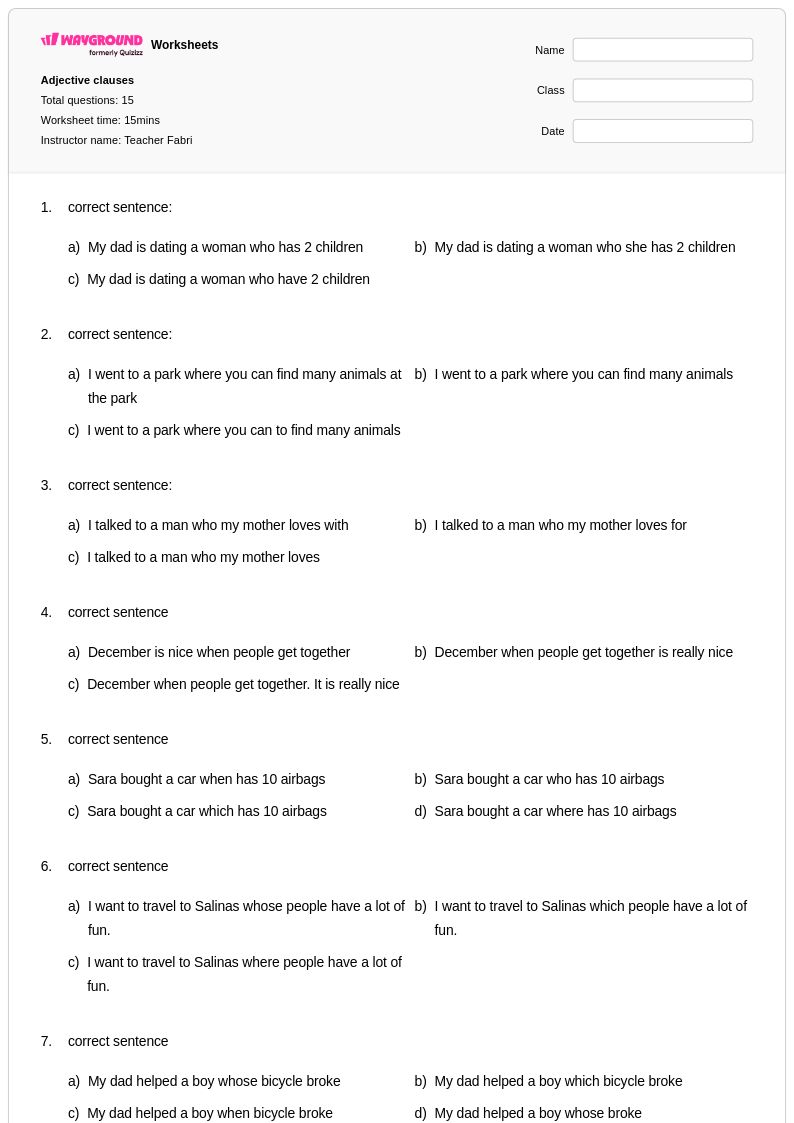
15 Q
12th
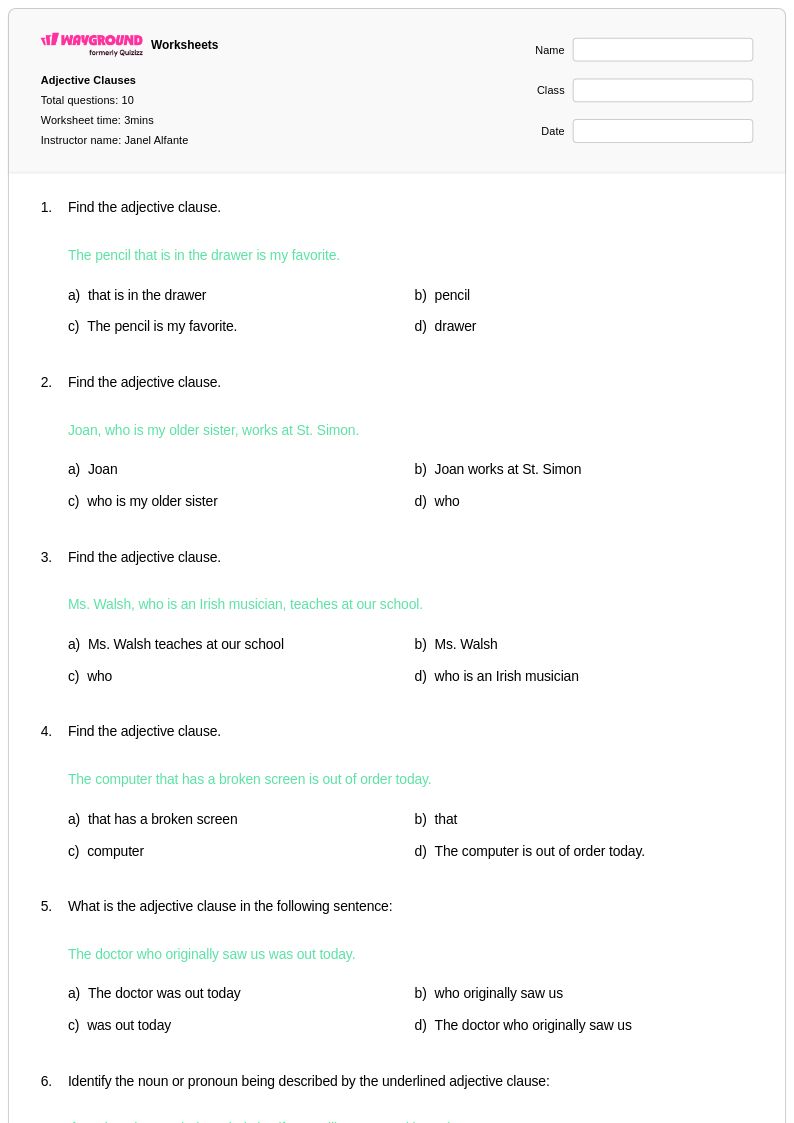
10 Q
1st - Uni
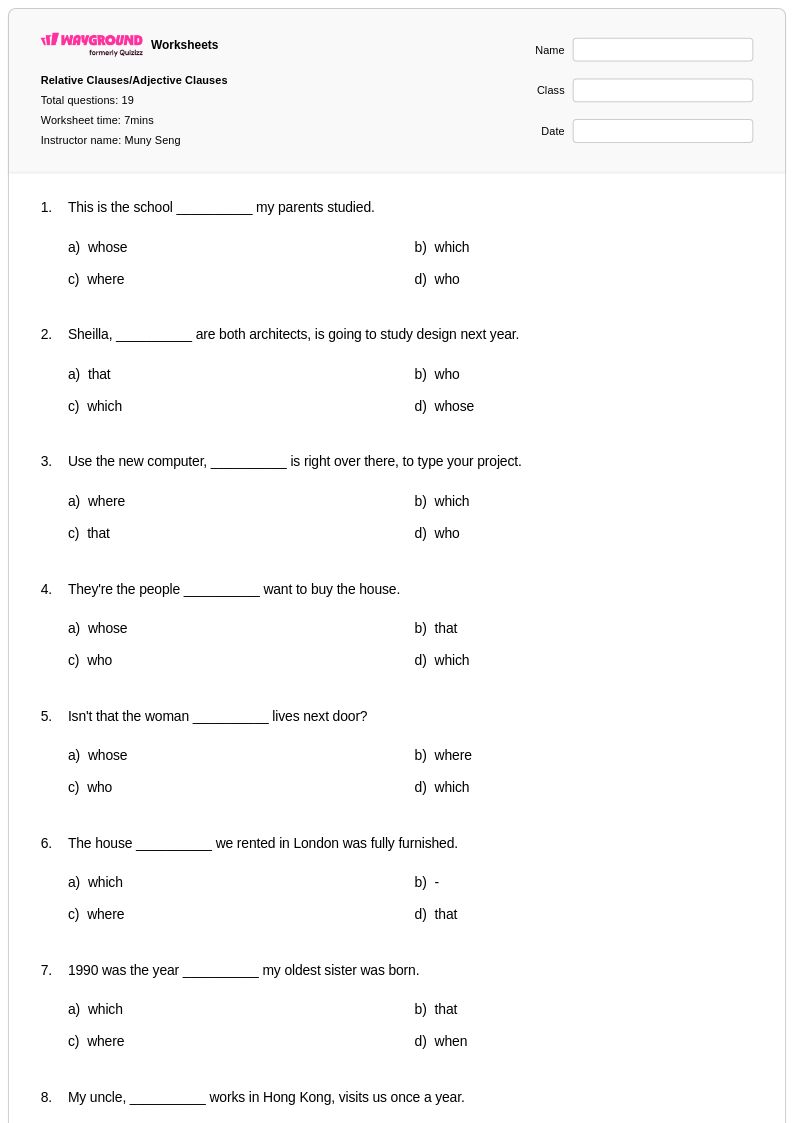
19 Q
11th - Uni
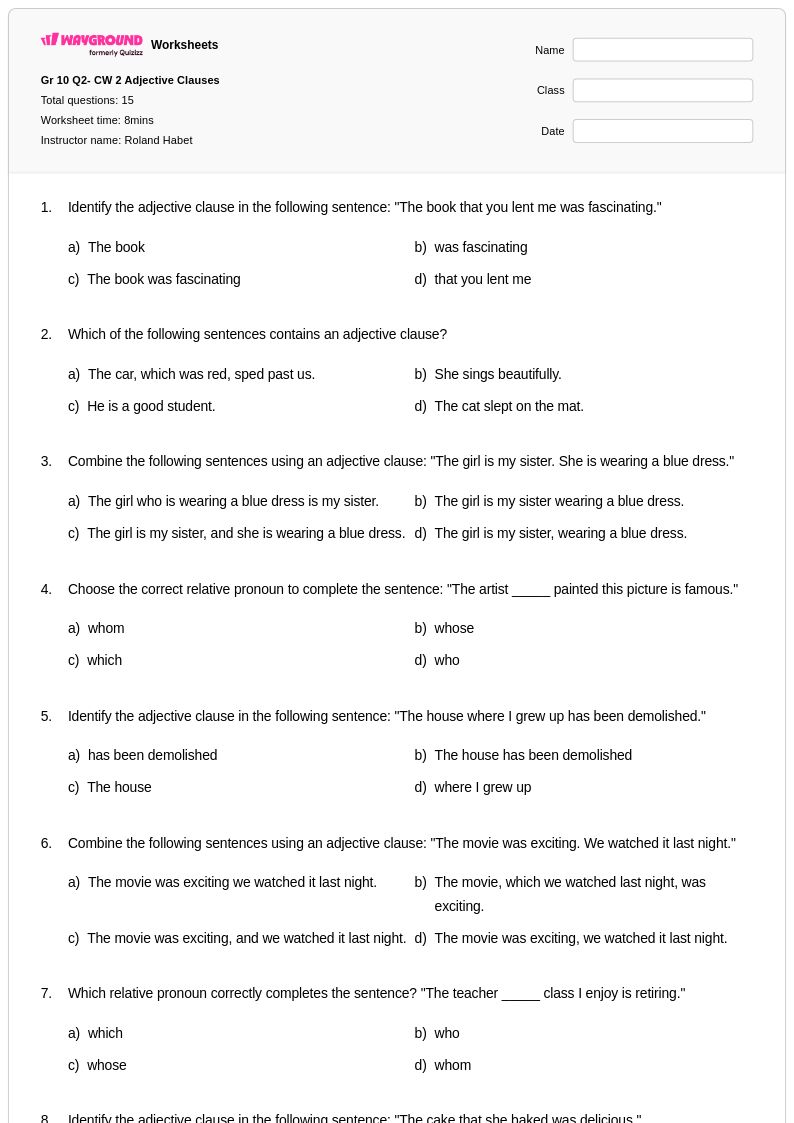
15 Q
10th - Uni
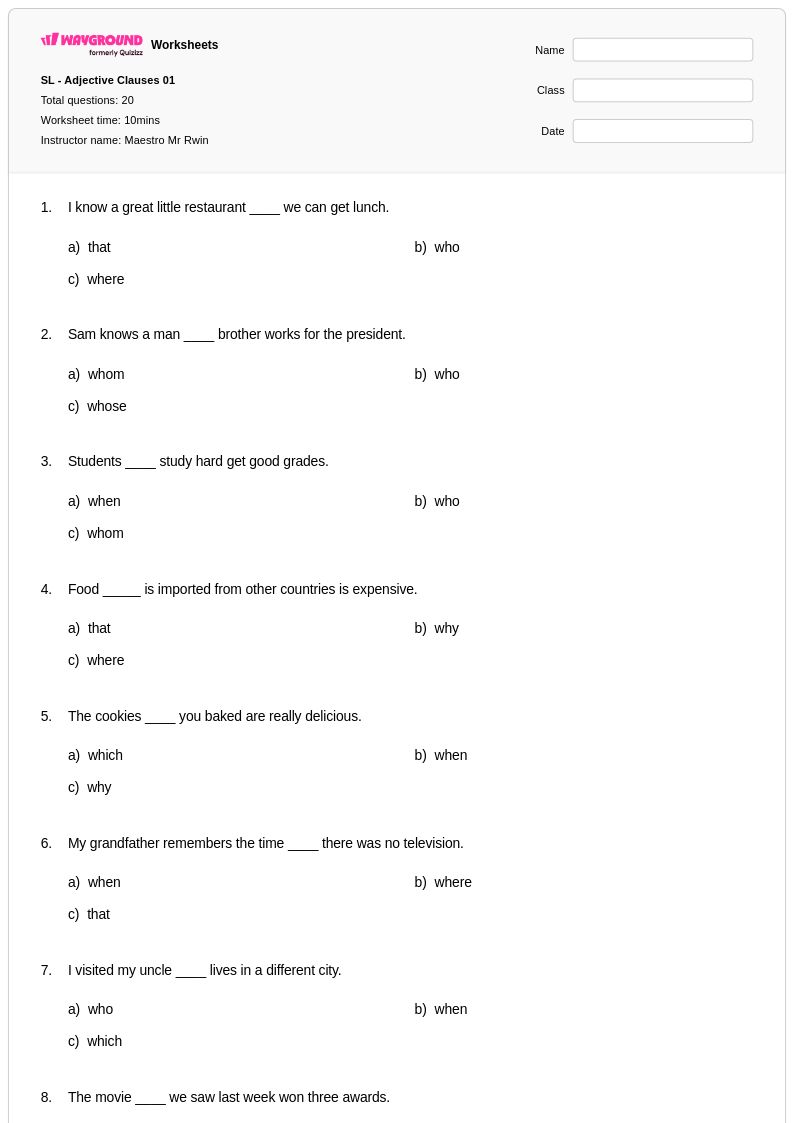
20 Q
11th - 12th
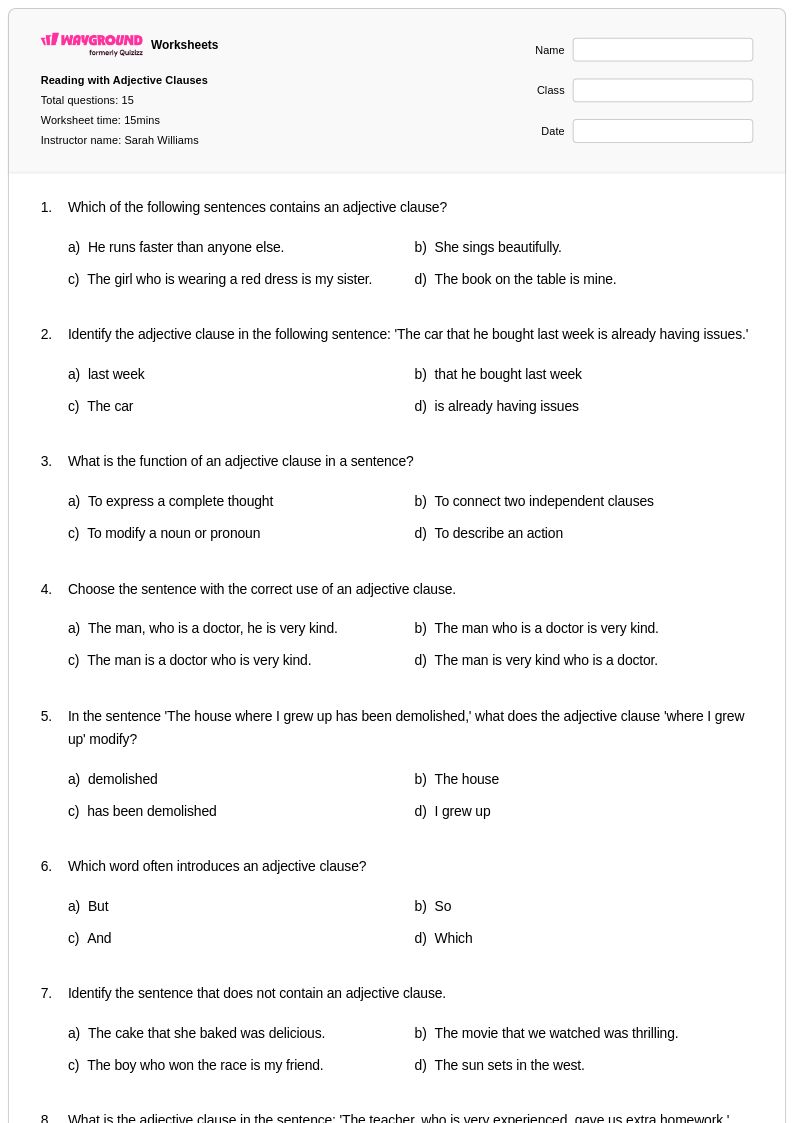
15 Q
4th - Uni
Explore Other Subject Worksheets for year 12
Explore printable Adjective Clauses worksheets for Year 12
Adjective clauses represent a sophisticated grammatical structure that Year 12 students must master to demonstrate advanced writing proficiency and analytical thinking skills. Wayground's comprehensive collection of adjective clause worksheets provides targeted practice with these essential subordinate clauses that modify nouns and pronouns, helping students understand how relative pronouns like who, whom, whose, which, and that function within complex sentence structures. These carefully designed printables offer systematic practice problems that guide students through identifying restrictive and non-restrictive adjective clauses, proper punctuation rules, and the strategic placement of these clauses for maximum clarity and impact. Each worksheet includes a detailed answer key that enables students to self-assess their understanding while working through increasingly complex examples, from basic relative pronoun identification to advanced clause reduction techniques. The free pdf resources support both independent study and classroom instruction, ensuring students develop the grammatical precision expected at the senior high school level.
Wayground's extensive library draws from millions of teacher-created resources specifically designed to address the nuanced challenges of teaching adjective clauses to Year 12 students. The platform's robust search and filtering capabilities allow educators to quickly locate worksheets that align with specific curriculum standards while accommodating diverse learning needs through differentiated instruction tools. Teachers can customize existing materials or combine multiple worksheet formats to create comprehensive practice sessions that target individual student weaknesses, whether in clause identification, punctuation application, or sentence combining techniques. The flexible digital and printable formats enable seamless integration into various instructional settings, from traditional classroom lessons to remote learning environments. These resources prove invaluable for lesson planning, targeted remediation for struggling students, enrichment activities for advanced learners, and systematic skill practice that prepares students for standardized assessments and college-level writing demands.
FAQs
How do I teach adjective clauses to students who are new to dependent clauses?
What exercises help students practice identifying and writing adjective clauses?
What is the difference between a restrictive and a non-restrictive adjective clause?
What mistakes do students commonly make with adjective clauses?
How do I use adjective clause worksheets from Wayground in my classroom?
How can I differentiate adjective clause instruction for students at different proficiency levels?