Year 12 appositives worksheets and printables help students master identifying and using appositives correctly through comprehensive practice problems, free PDF resources, and detailed answer keys.
Explore printable Appositives worksheets for Year 12
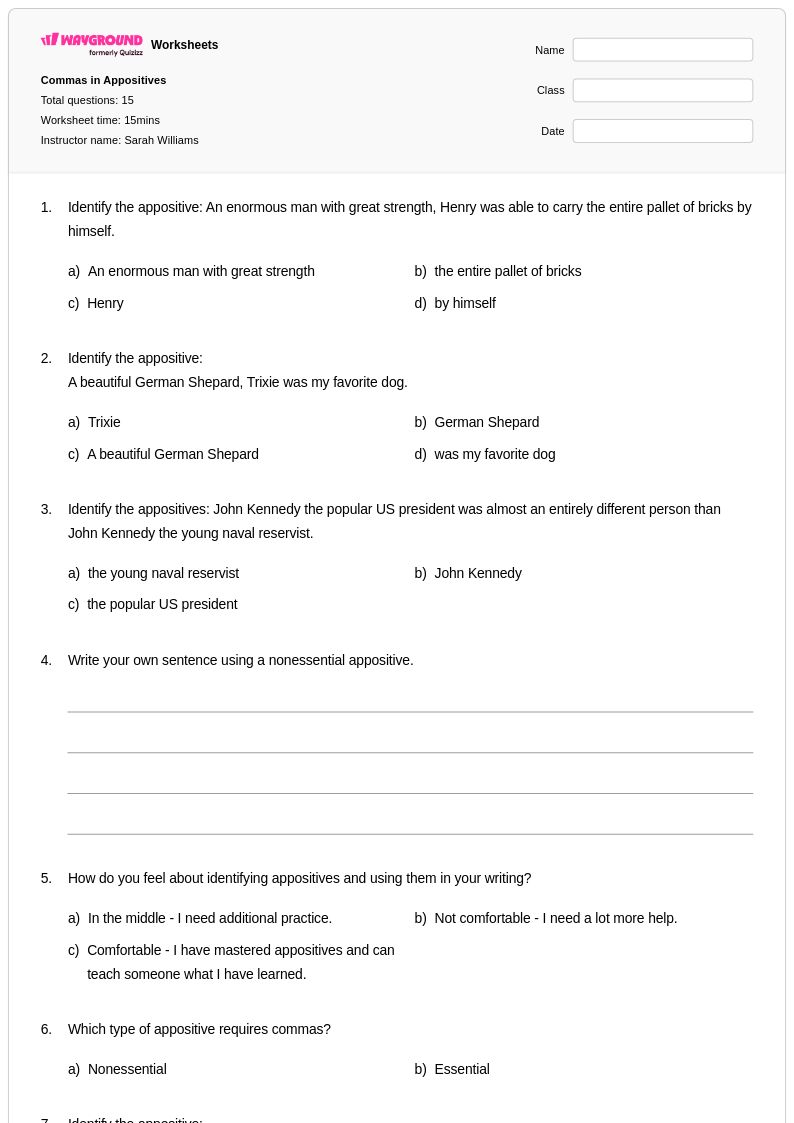
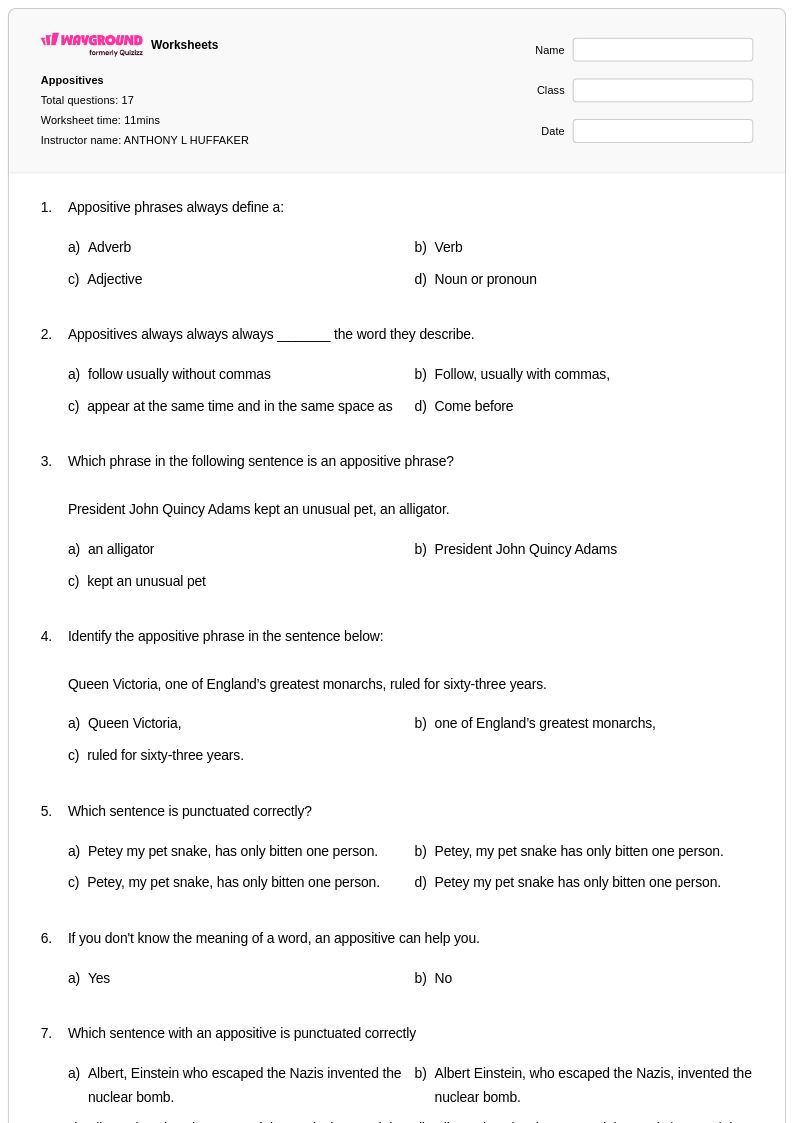
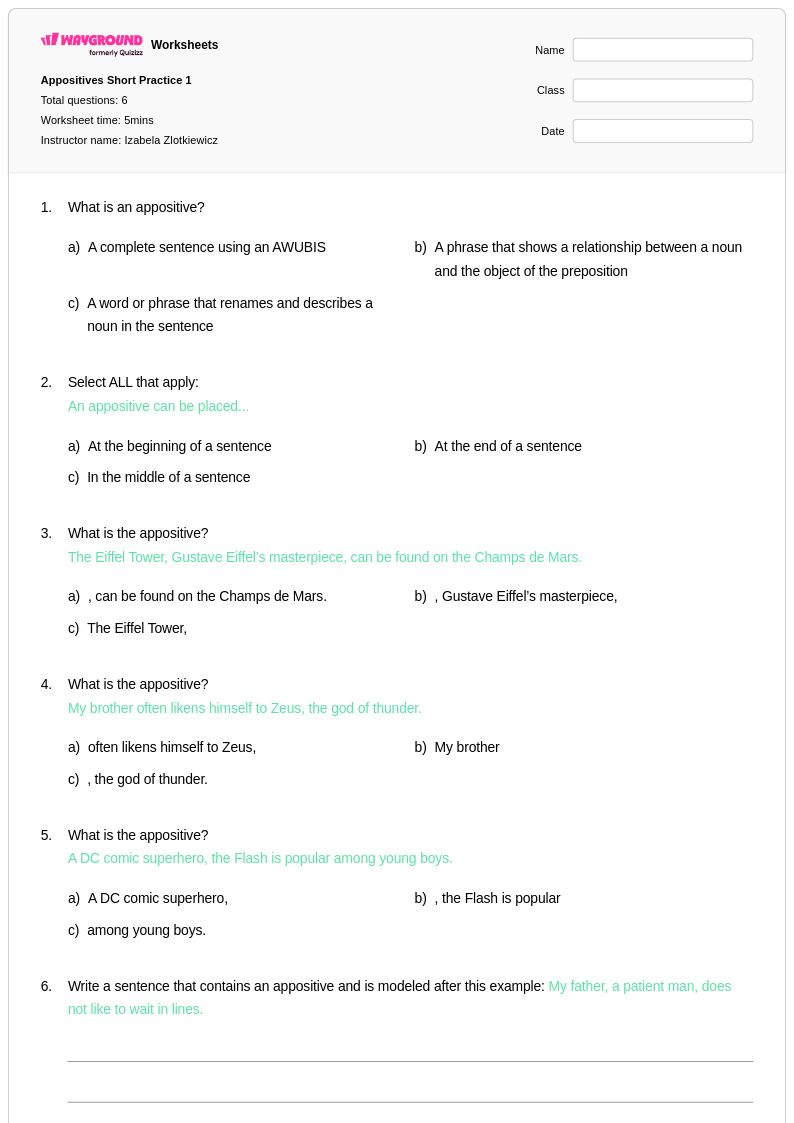
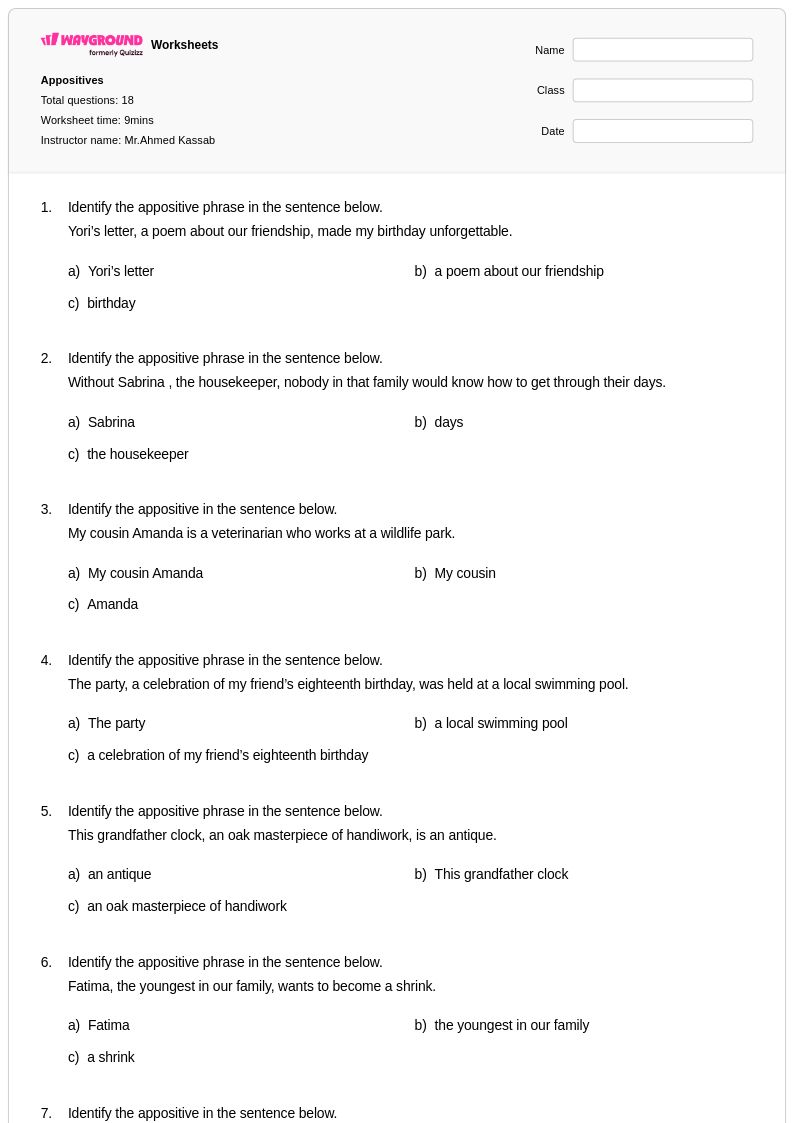
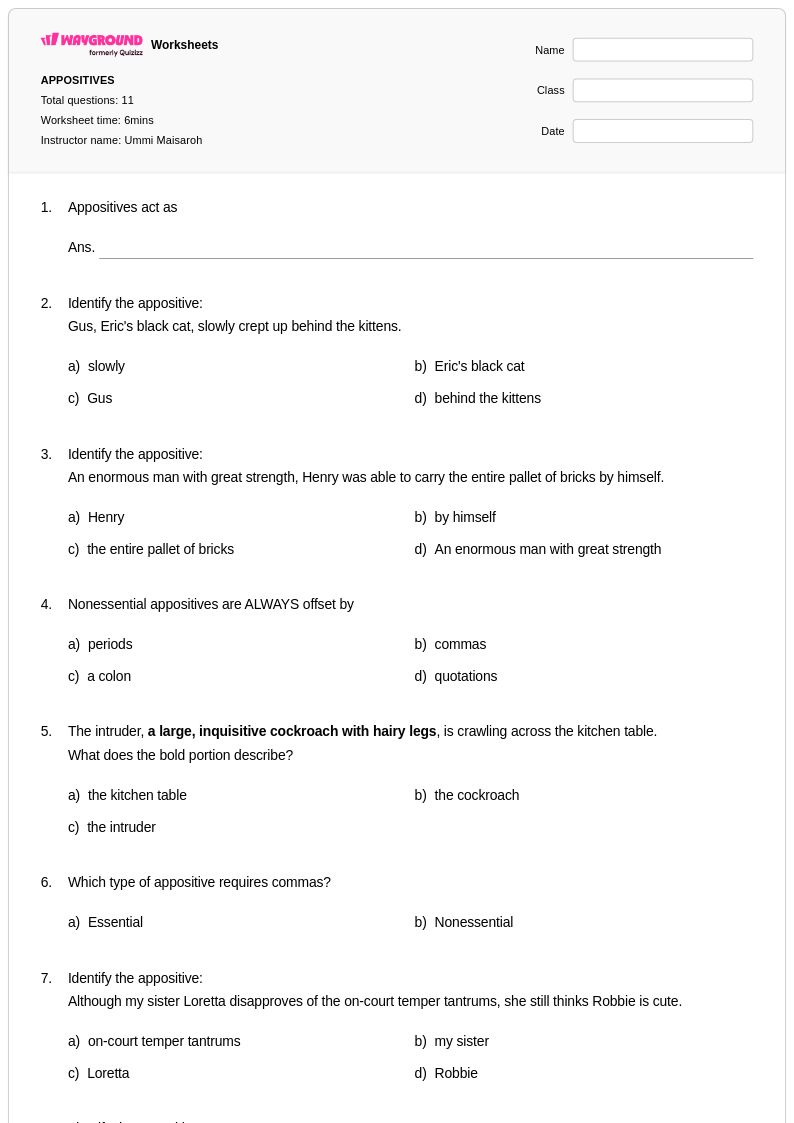
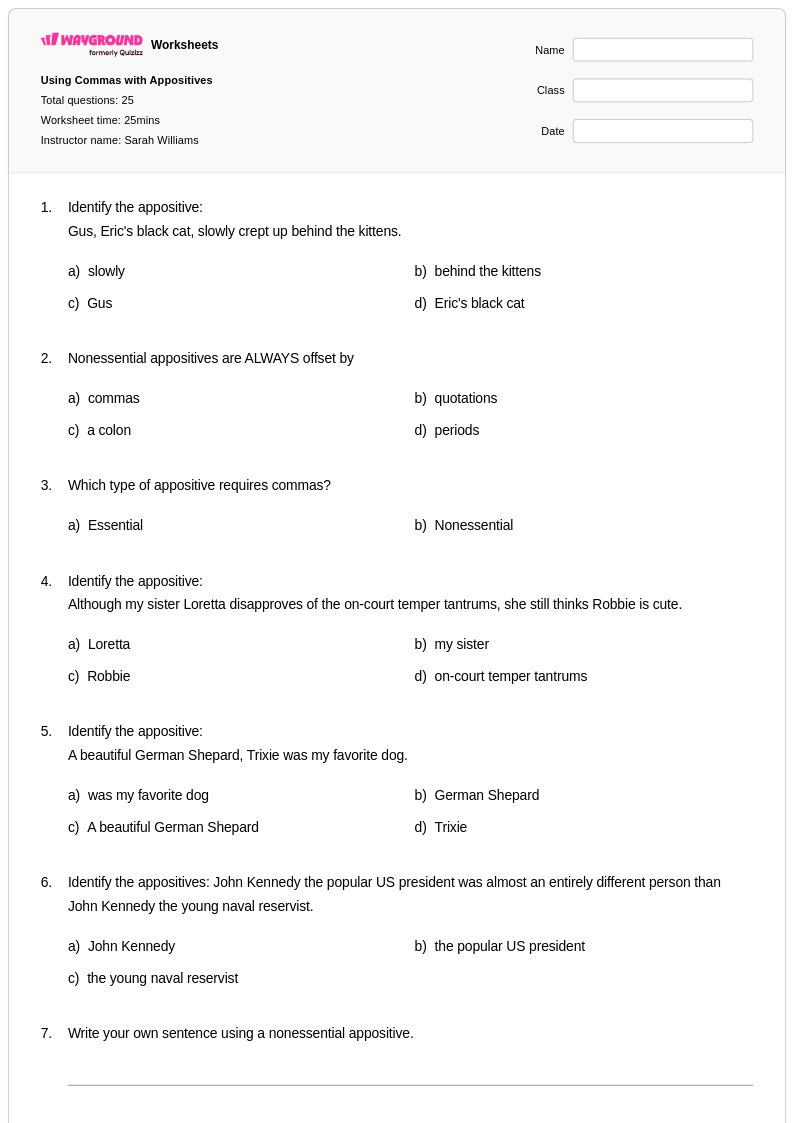
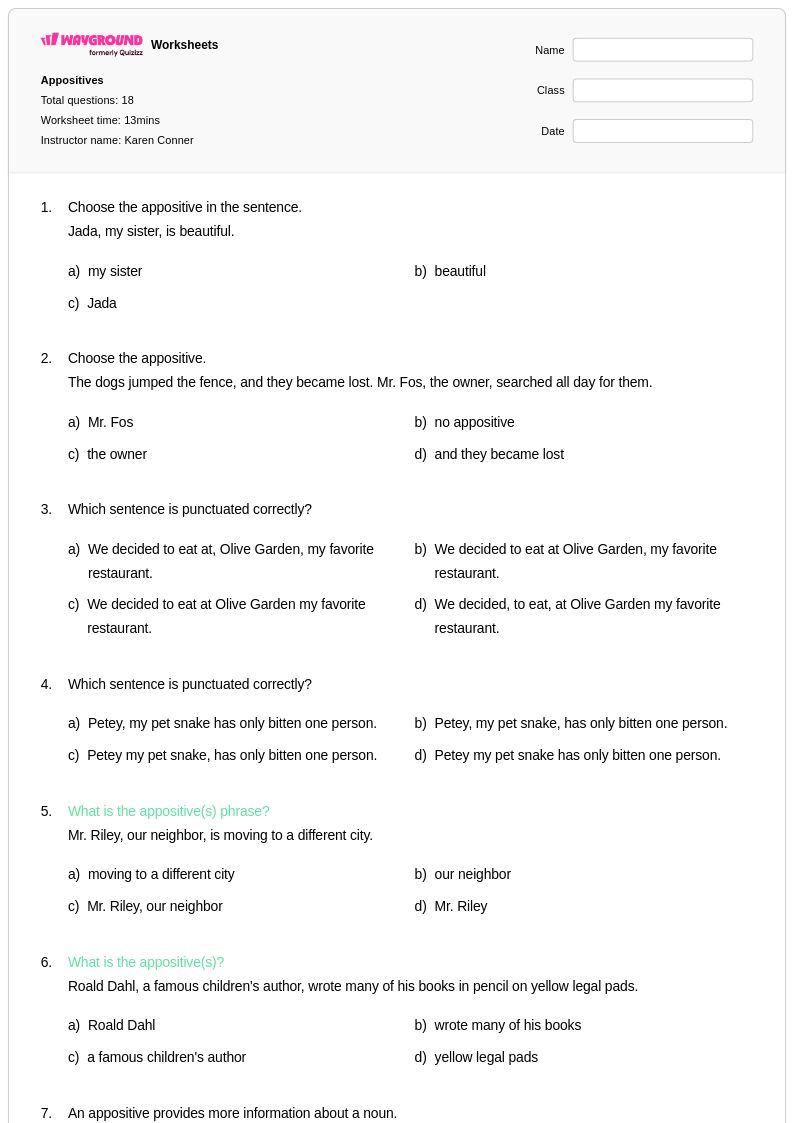
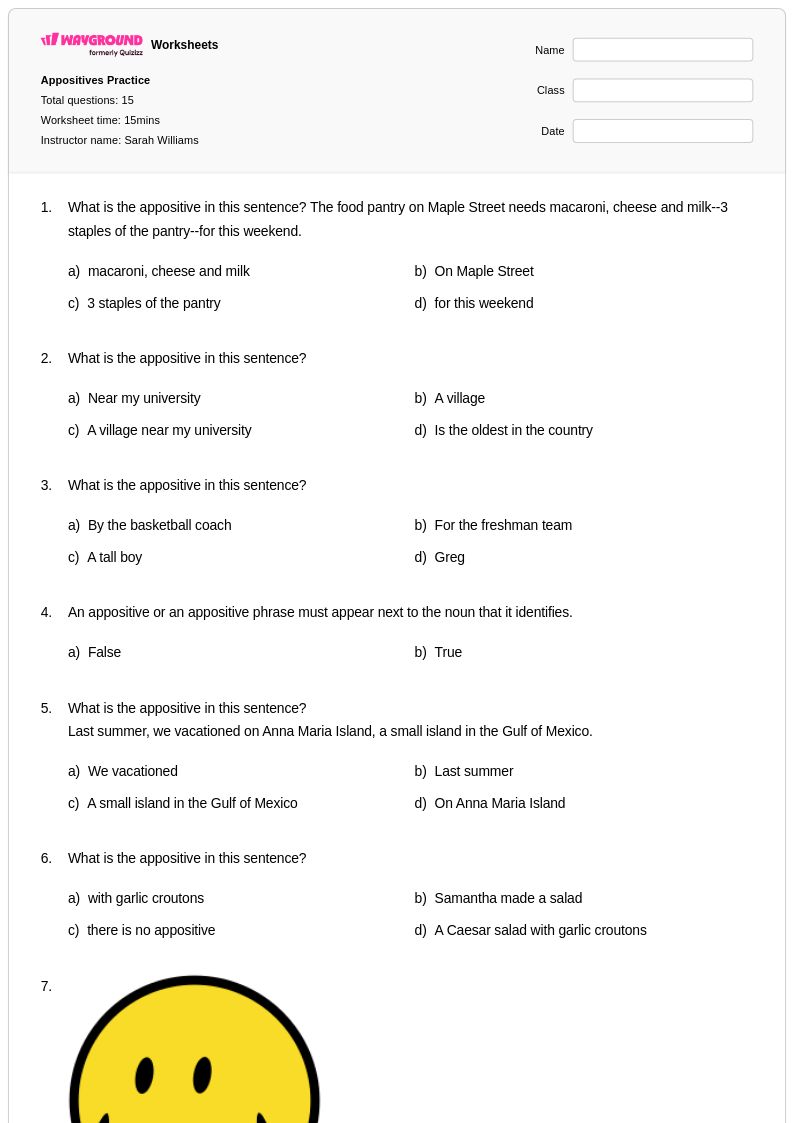
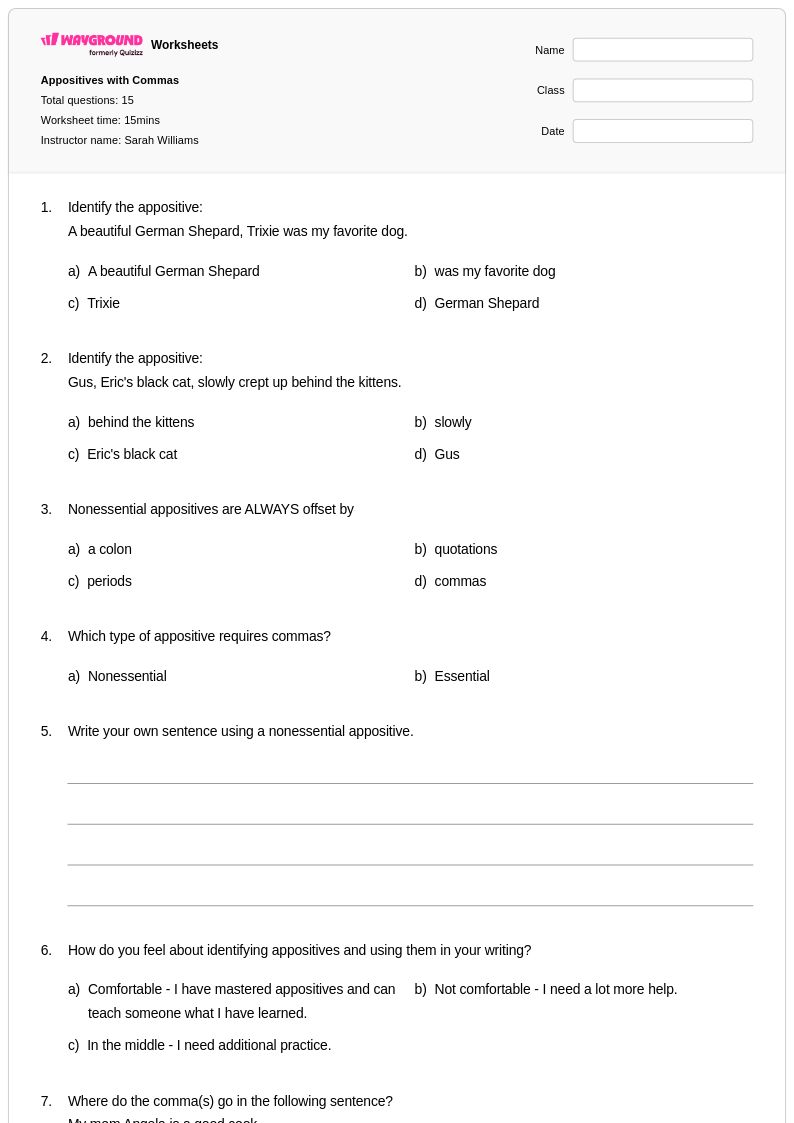
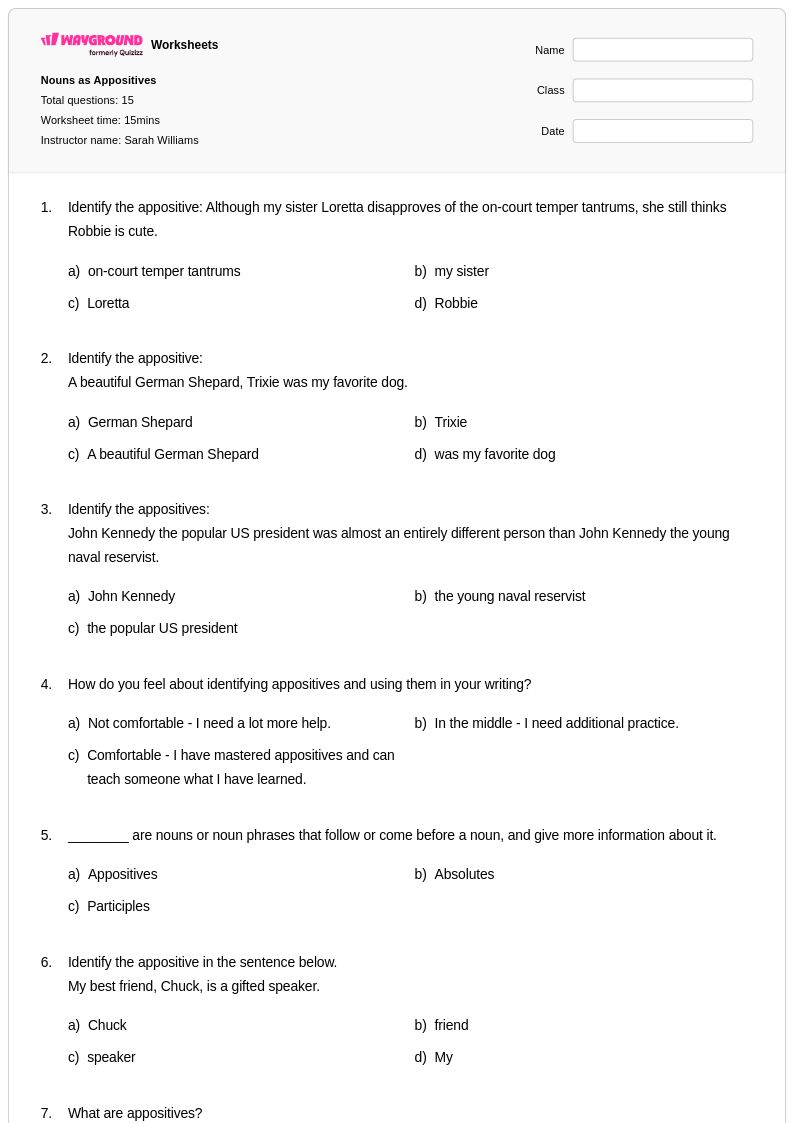
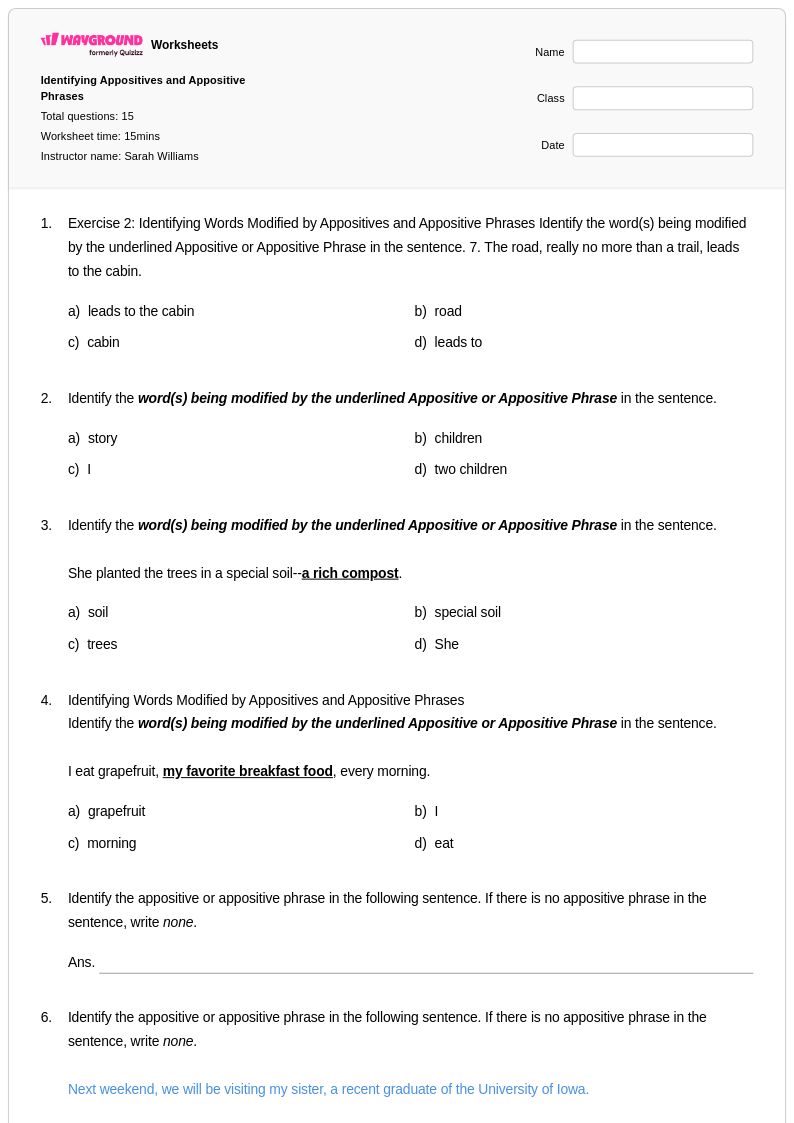
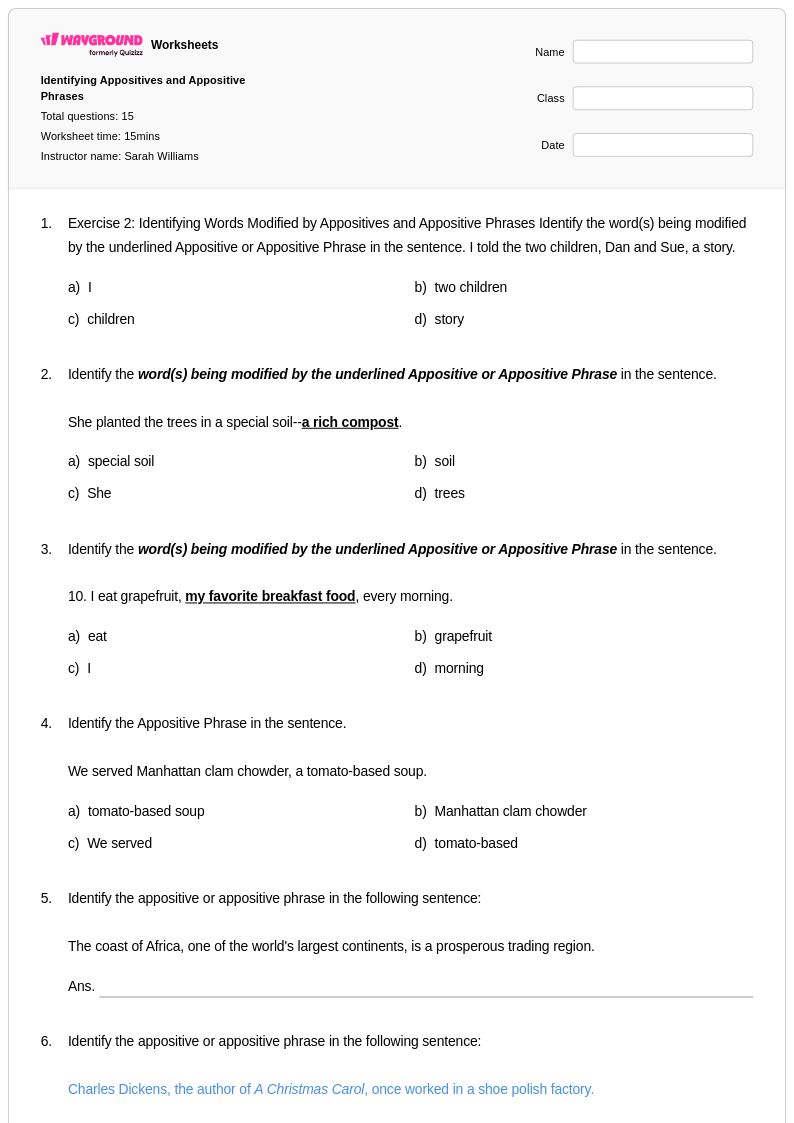
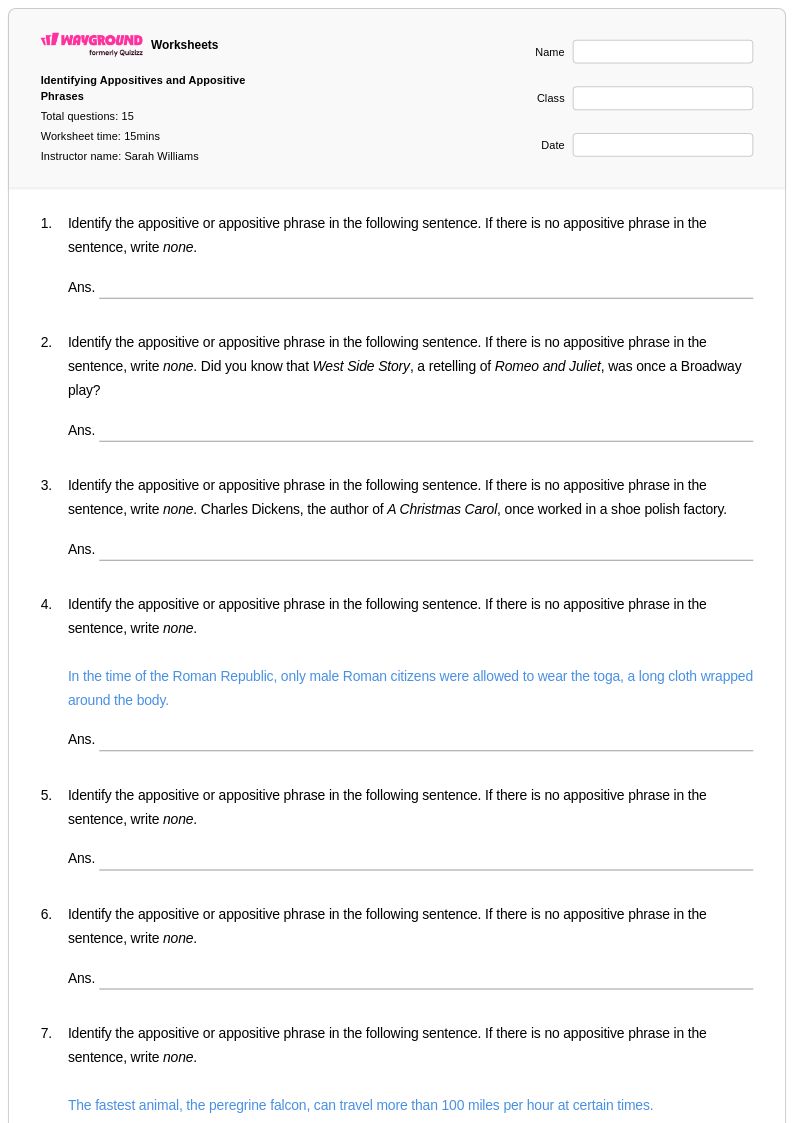
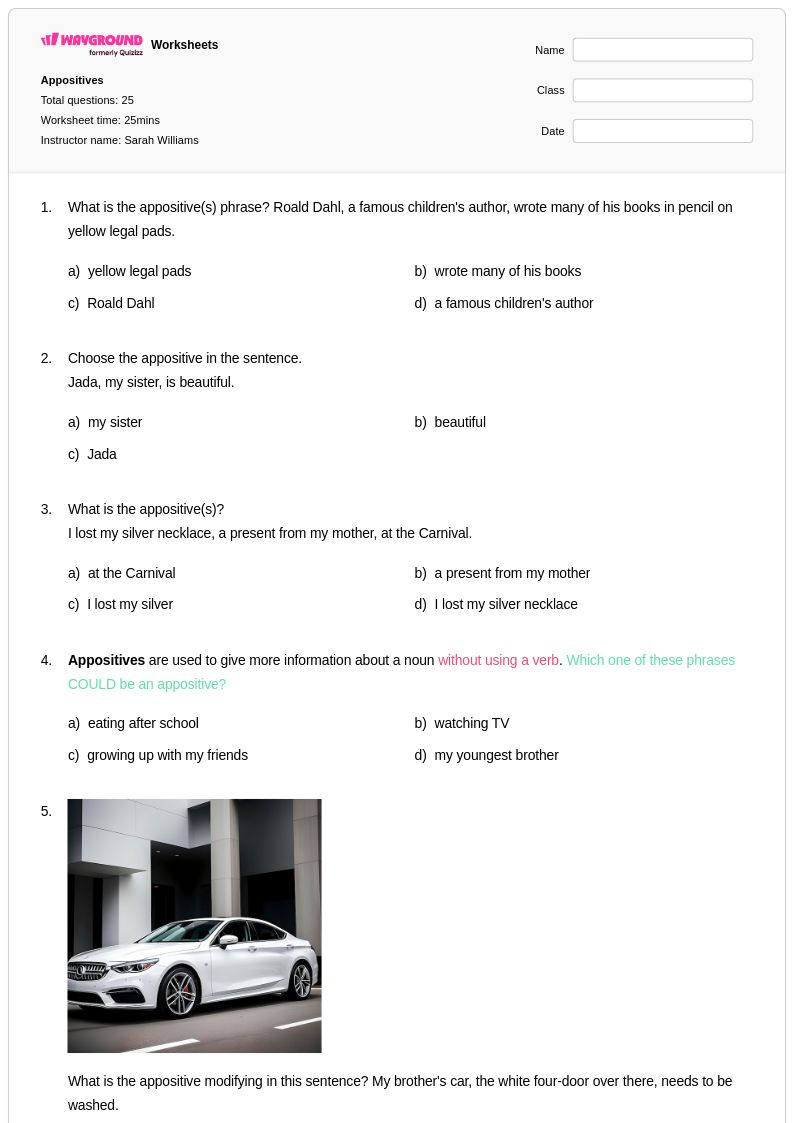
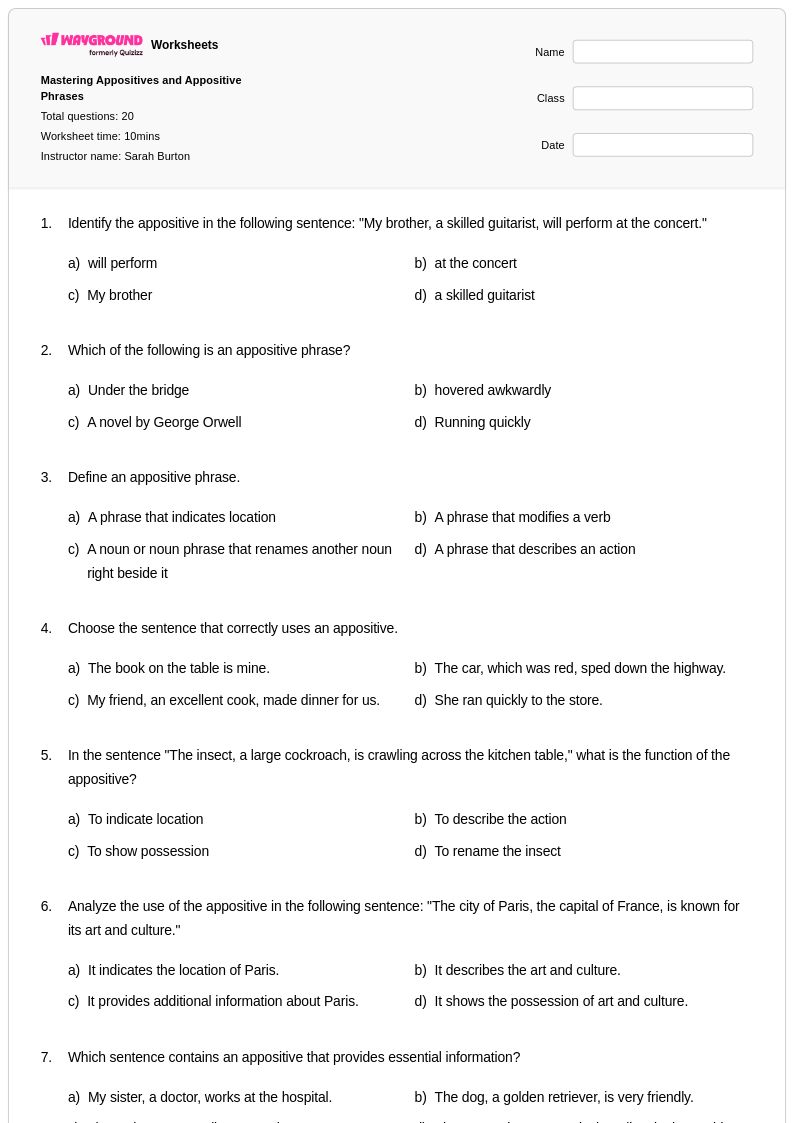
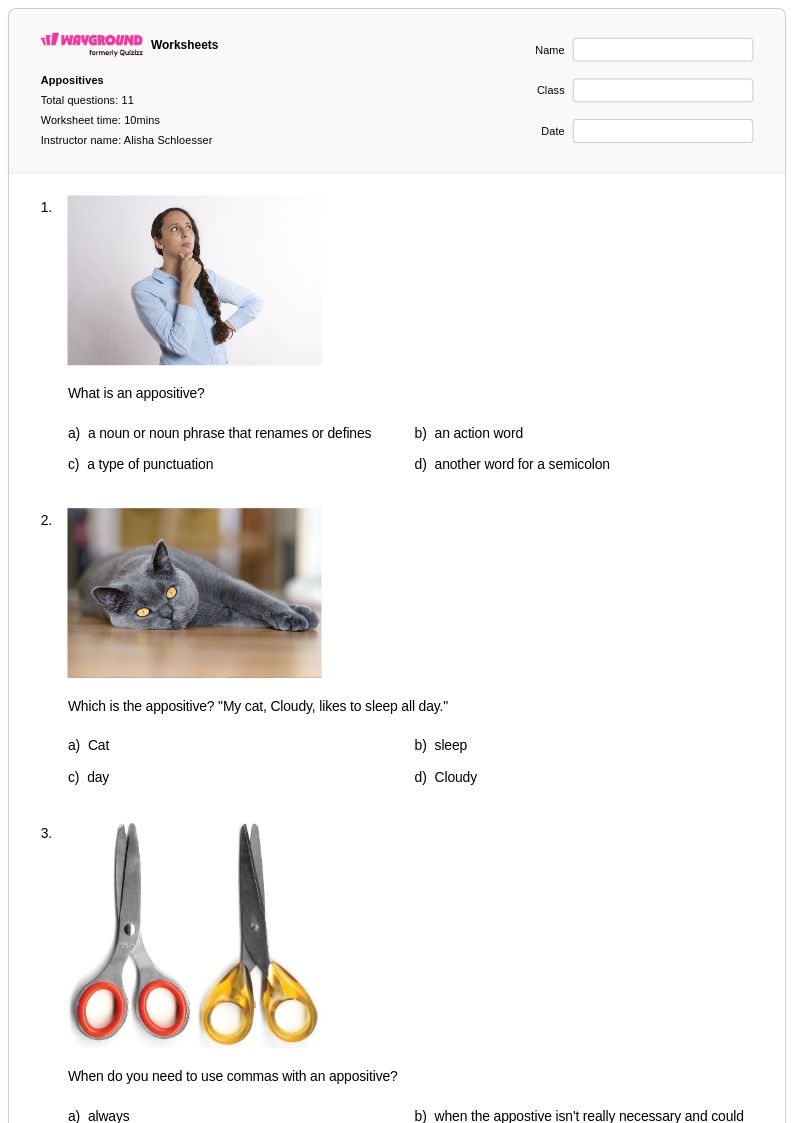
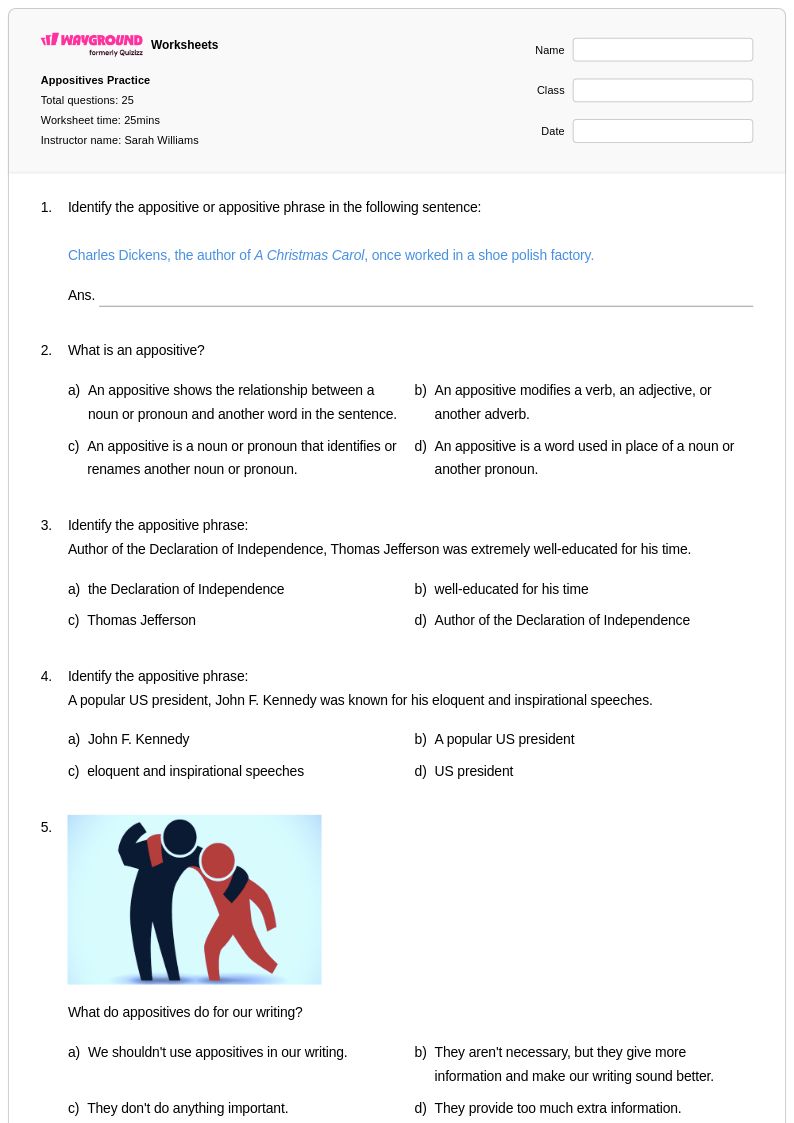
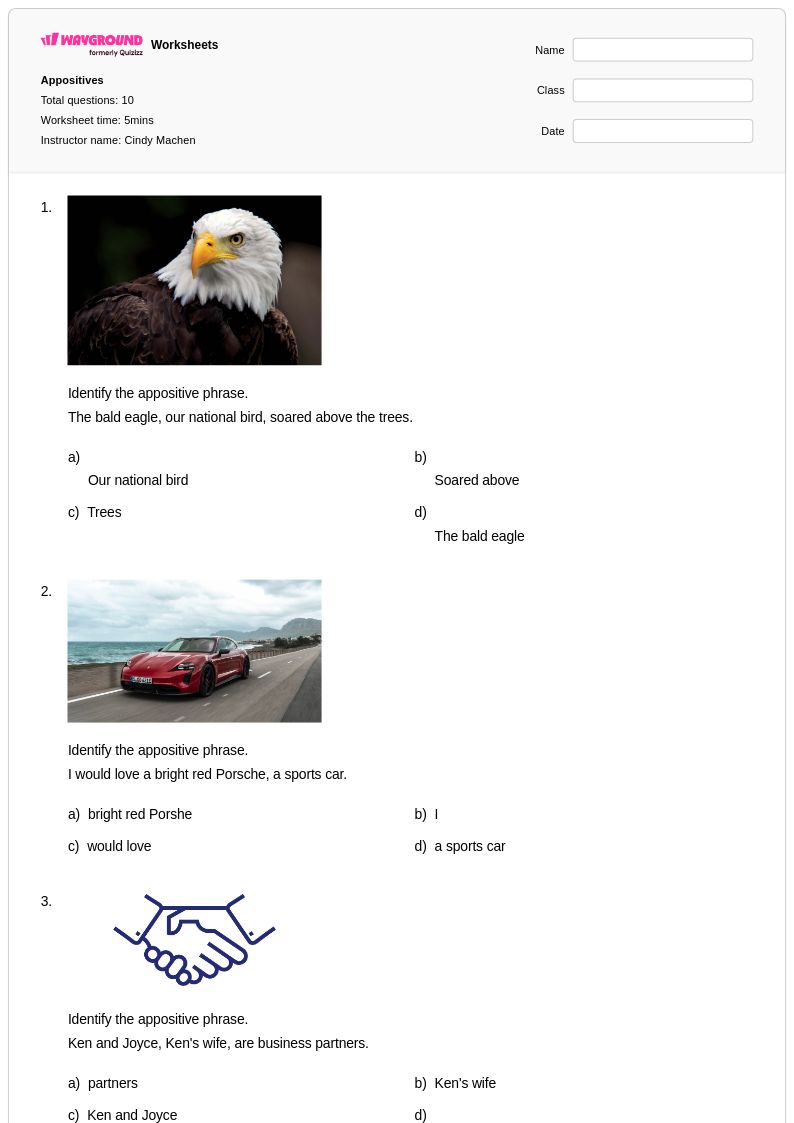
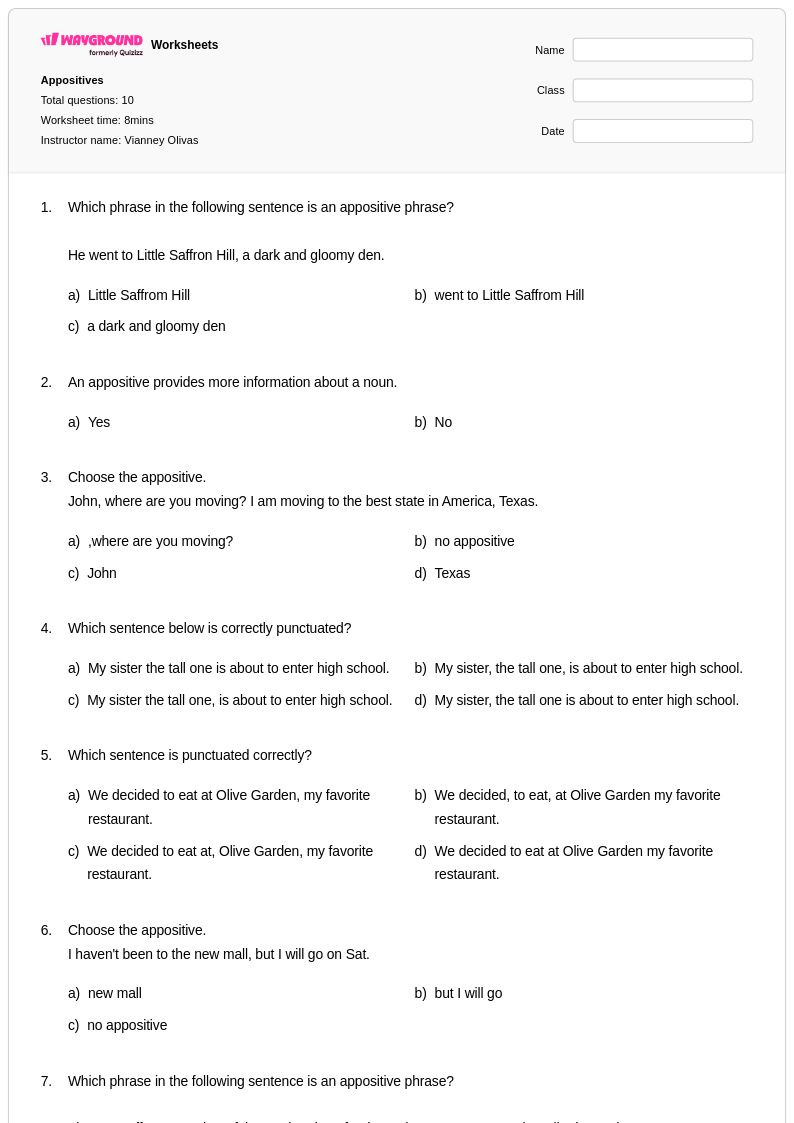
Appositives worksheets for Year 12 students available through Wayground (formerly Quizizz) provide comprehensive practice with these essential grammatical structures that rename or provide additional information about nouns and pronouns. These expertly crafted resources strengthen students' understanding of restrictive and non-restrictive appositives, proper punctuation techniques, and the strategic use of appositive phrases to create more sophisticated and concise writing. The collection includes detailed practice problems that challenge students to identify appositives in complex sentences, construct their own appositive phrases, and master the nuanced comma rules that govern their usage. Each worksheet comes with a complete answer key and is available as free printable resources in convenient PDF format, making them accessible for both classroom instruction and independent study.
Wayground (formerly Quizizz) supports English teachers with an extensive collection of appositive worksheets drawn from millions of teacher-created resources, ensuring diverse approaches to this advanced grammar concept. The platform's robust search and filtering capabilities allow educators to quickly locate materials that align with specific standards and match their students' proficiency levels, while differentiation tools enable teachers to customize content for varied learning needs within Year 12 classrooms. These flexible resources are available in both printable and digital formats, including downloadable PDFs, making them ideal for traditional classroom settings, hybrid learning environments, and remote instruction. Teachers can effectively use these comprehensive materials for initial skill instruction, targeted remediation for students struggling with complex punctuation rules, and enrichment activities that challenge advanced learners to incorporate sophisticated appositive constructions into their academic writing.
FAQs
How do I teach appositives to middle or high school students?
Start by showing students how an appositive renames or describes the noun directly beside it, using mentor sentences from texts they already know. Contrast essential appositives (no commas, meaning changes if removed) with nonessential appositives (set off by commas, meaning holds without them). Once students can identify both types, move them to sentence-combining exercises where they merge two related sentences using an appositive phrase. This sequence builds both recognition and application in a logical progression.
What exercises help students practice using appositives in their writing?
Sentence-combining tasks are among the most effective exercises for appositive practice — give students two sentences and ask them to fold one into the other as an appositive phrase. Identification drills using authentic passages help students recognize how published writers use appositives to add detail efficiently. Error-correction exercises, where students fix missing or misplaced commas around nonessential appositives, reinforce punctuation rules in a low-stakes format. Together, these task types build both recognition and production skills.
What mistakes do students commonly make with appositives?
The most frequent error is comma misuse — students either omit commas around nonessential appositives or insert commas around essential ones that should not be set off. Many students also confuse appositives with other noun phrases, especially predicate nominatives, because both follow a form of 'to be.' A third common mistake is placing the appositive too far from the noun it renames, creating ambiguity about which noun is being described. Targeted practice with comma placement and proximity drills addresses all three of these patterns directly.
How do I use Wayground's appositives worksheets in my classroom?
Wayground's appositives worksheets are available as printable PDFs for traditional classroom use and in digital formats for technology-integrated environments, giving teachers flexibility across instructional settings. Teachers can also host the worksheets as a quiz directly on Wayground, which allows for streamlined student submission and review. Each worksheet includes a complete answer key, making them practical for independent practice, small-group work, or homework assignments. The digital format is especially useful for remote learning or 1:1 device classrooms where students complete work on-screen.
How do I differentiate appositive instruction for students at different skill levels?
For students who are still building foundational grammar skills, begin with single-sentence identification tasks where the appositive is clearly adjacent to the noun it renames before introducing comma rules. More advanced students can work on multi-clause sentences or revise their own writing to incorporate appositives deliberately. On Wayground, teachers can apply accommodations such as reduced answer choices for students who need cognitive scaffolding, or enable Read Aloud so that questions are read aloud for students who benefit from audio support. These settings can be assigned to individual students while the rest of the class receives standard versions.
How are essential and nonessential appositives different, and why does it matter for instruction?
An essential appositive identifies which specific noun is being referenced and cannot be removed without changing the sentence's meaning — it takes no commas. A nonessential appositive adds descriptive detail about a noun already clearly identified and is set off by commas because it can be removed without altering the core meaning. This distinction matters for instruction because it connects grammar directly to writing clarity: students who understand it will punctuate correctly and understand why word choice and context affect comma usage. Teaching both types together, with contrast examples, prevents the common all-or-nothing comma error.