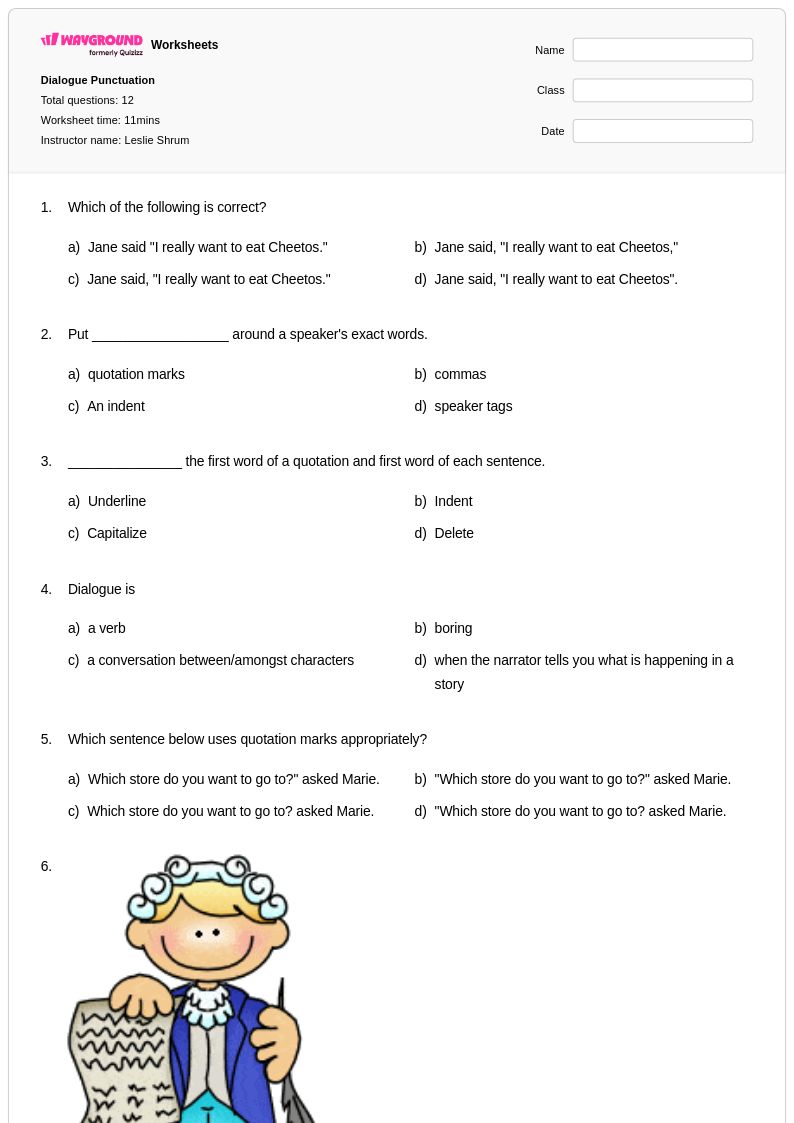
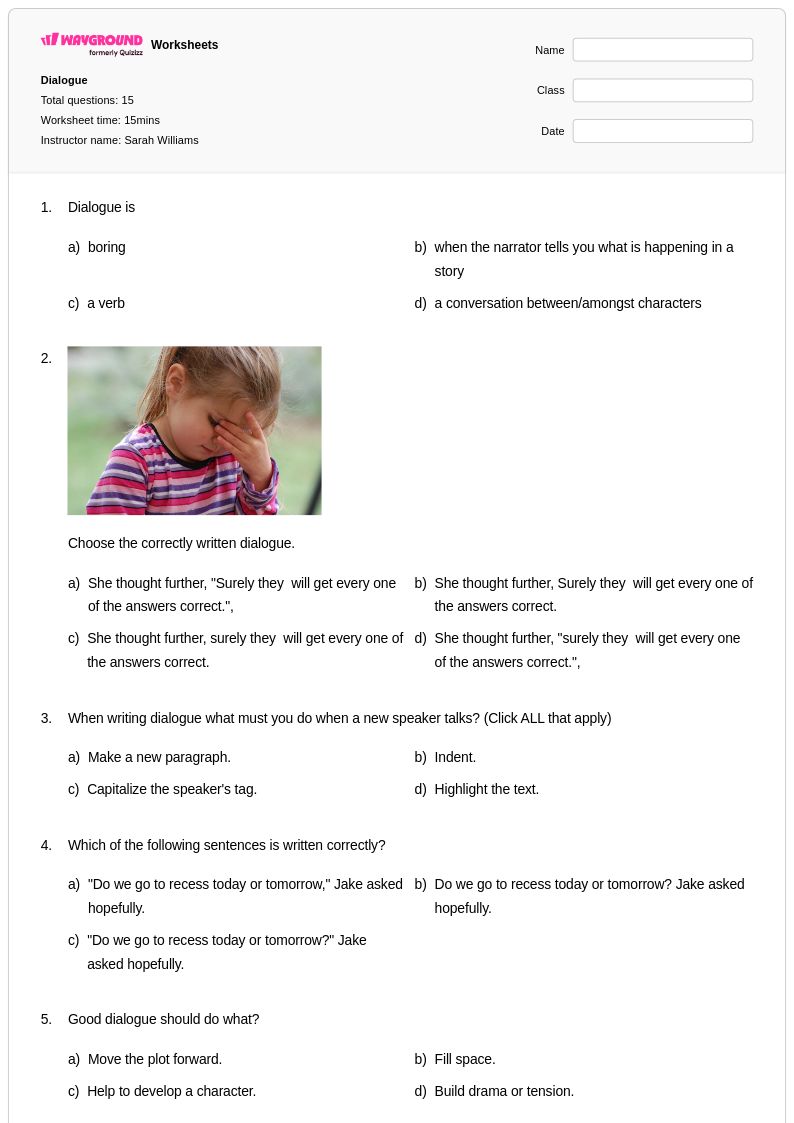
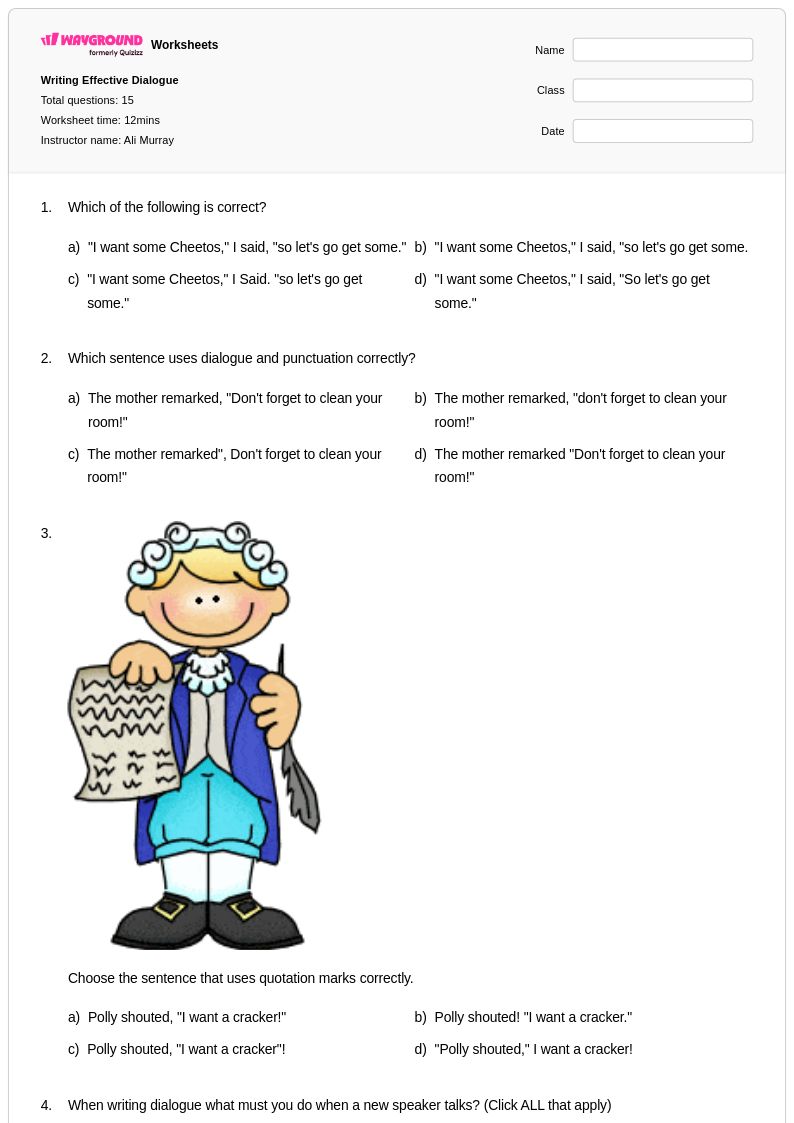
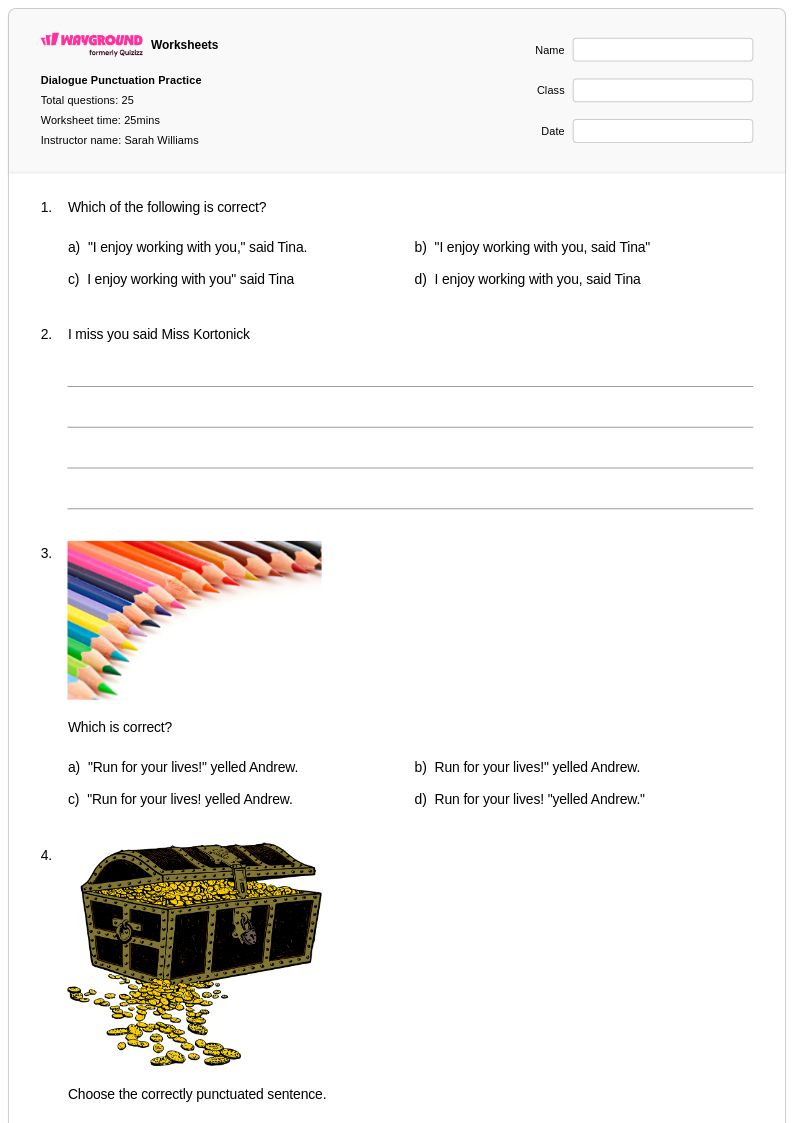
Master Year 12 dialogue writing with Wayground's free printable worksheets and practice problems, featuring comprehensive exercises on punctuation, formatting, and character voice development with complete answer keys.
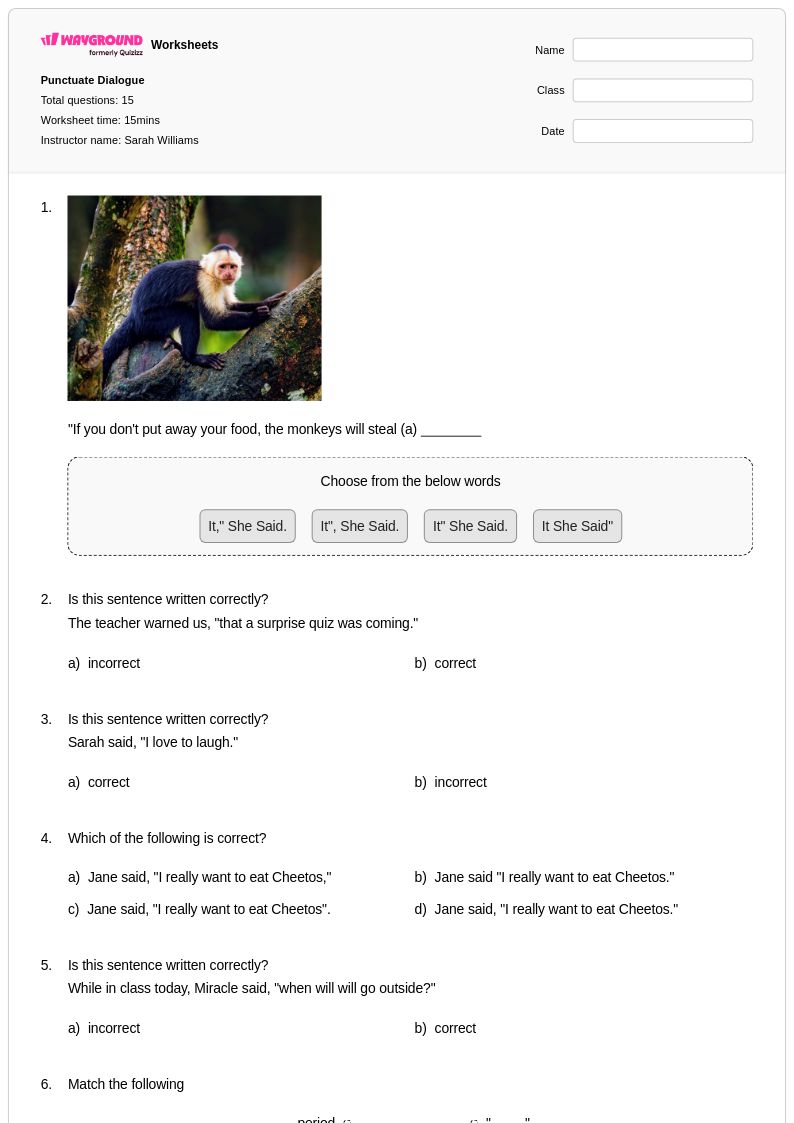
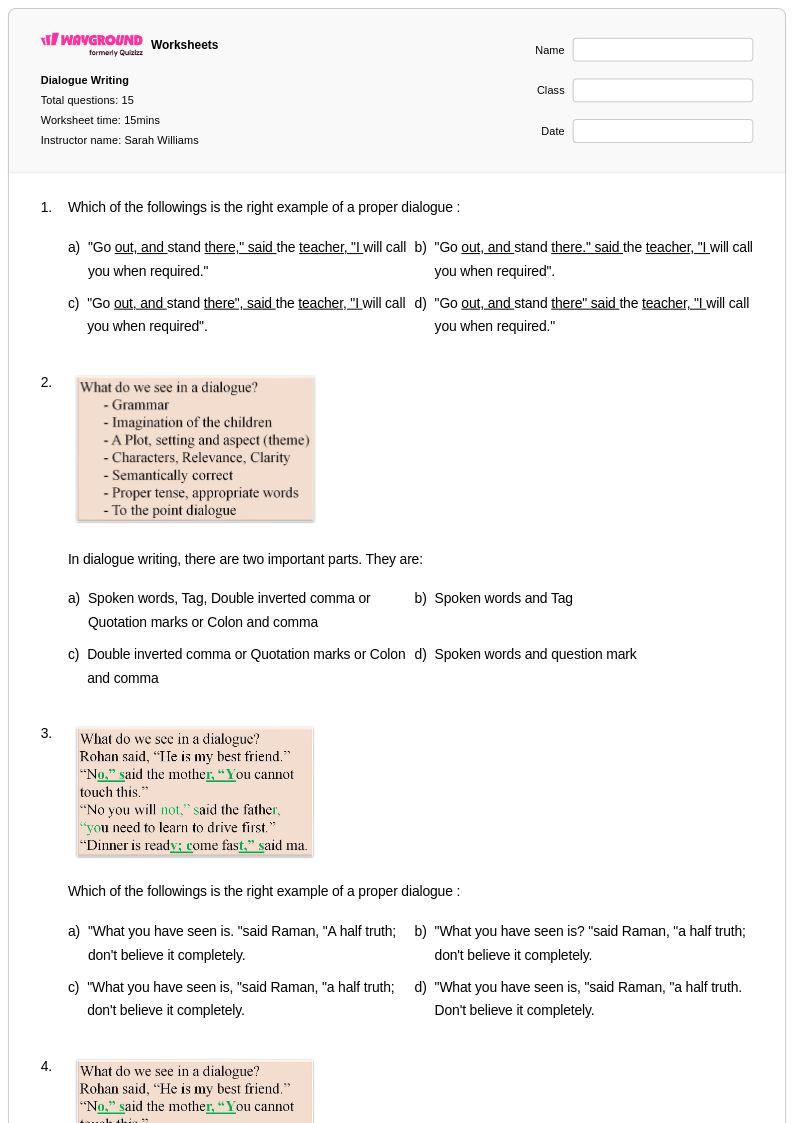
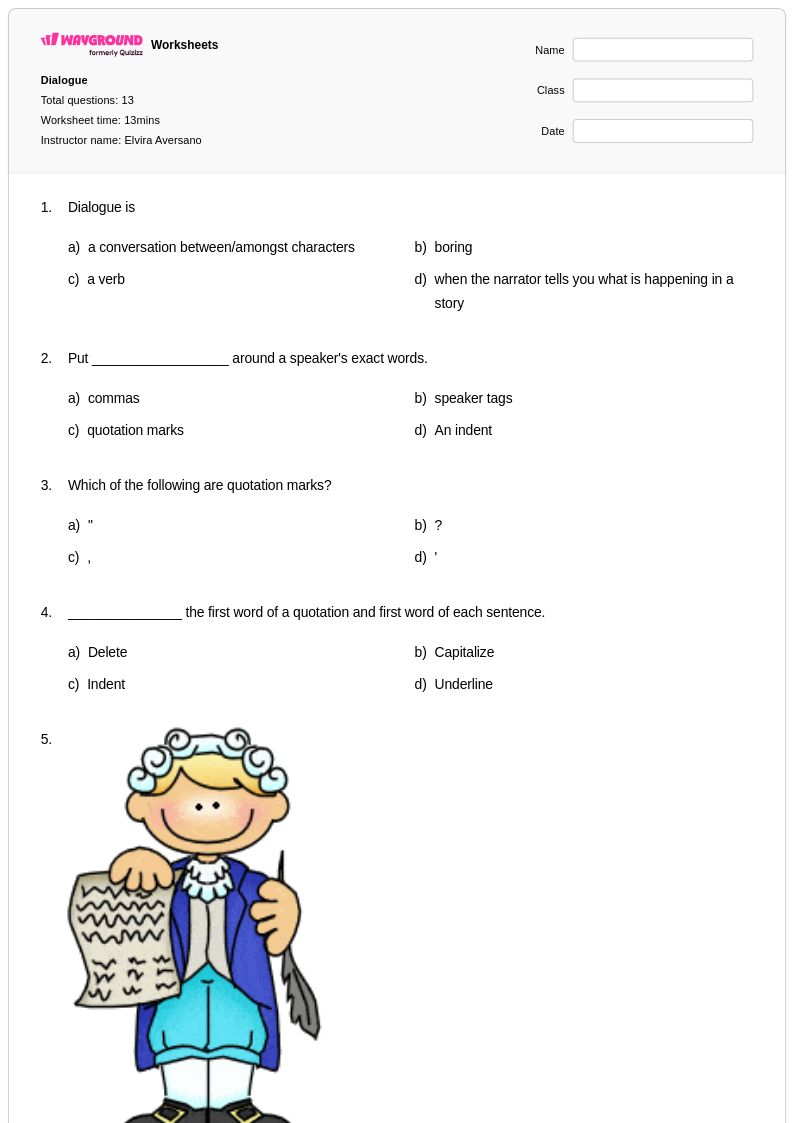
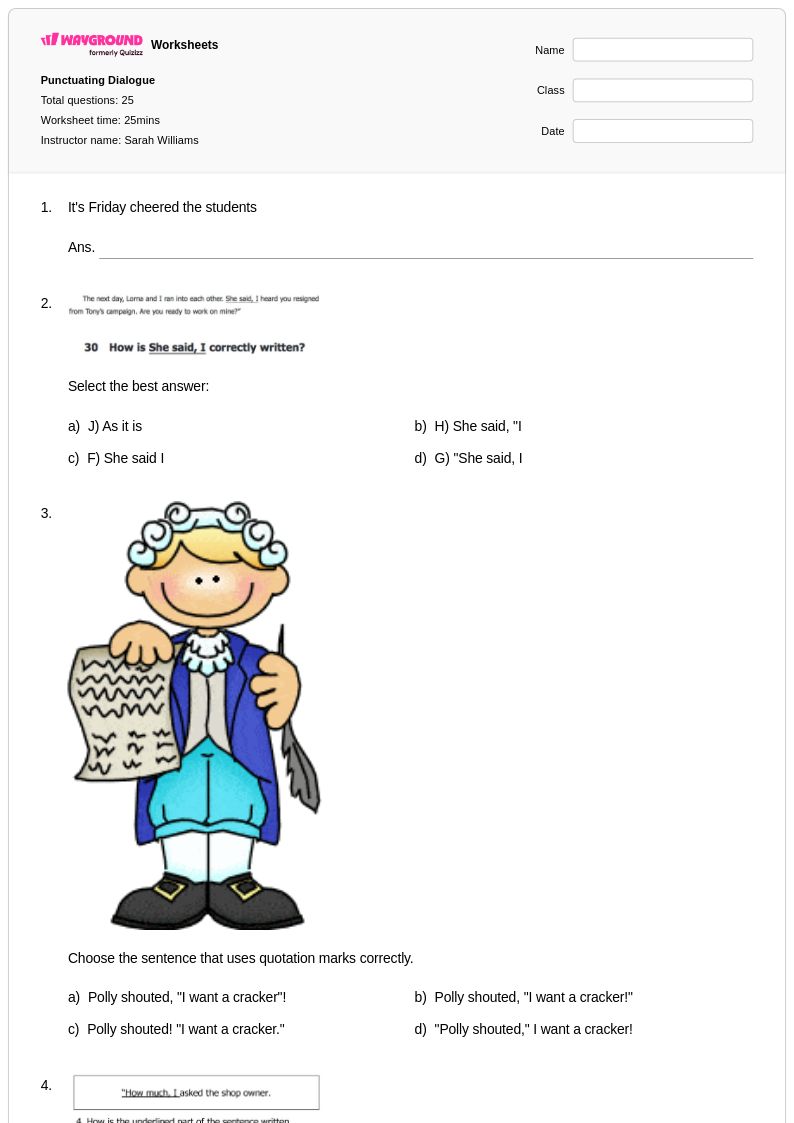
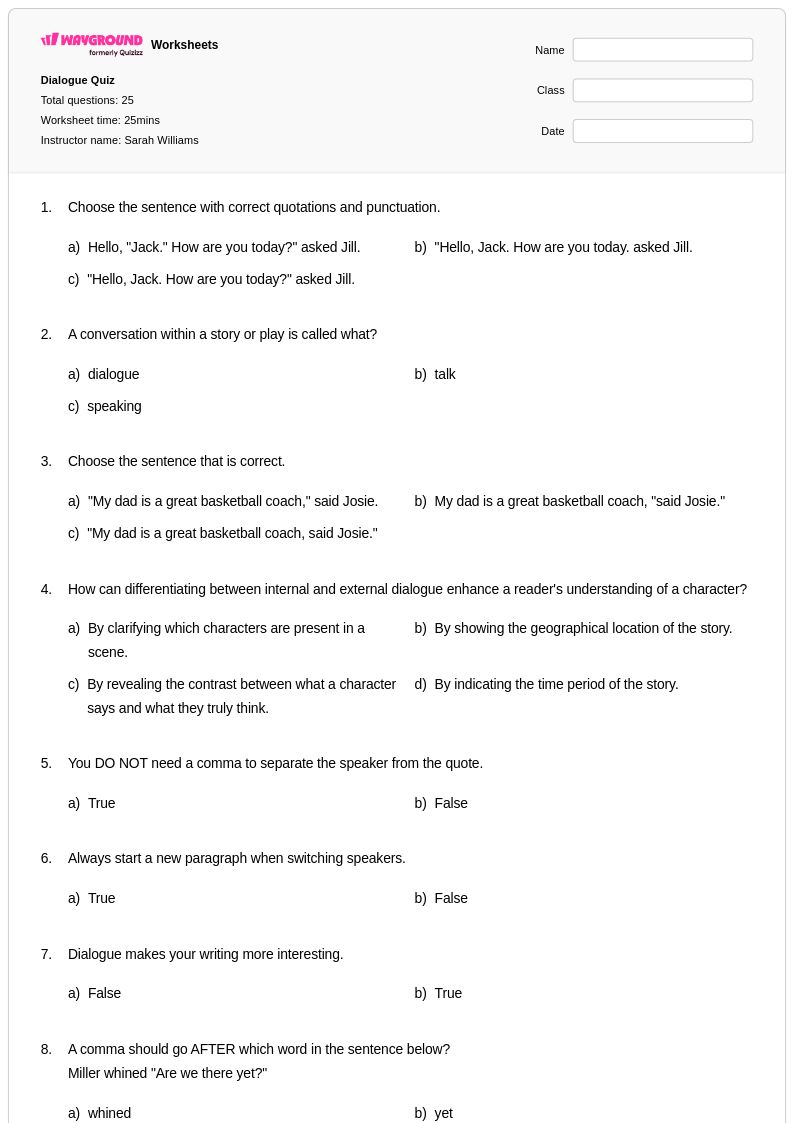
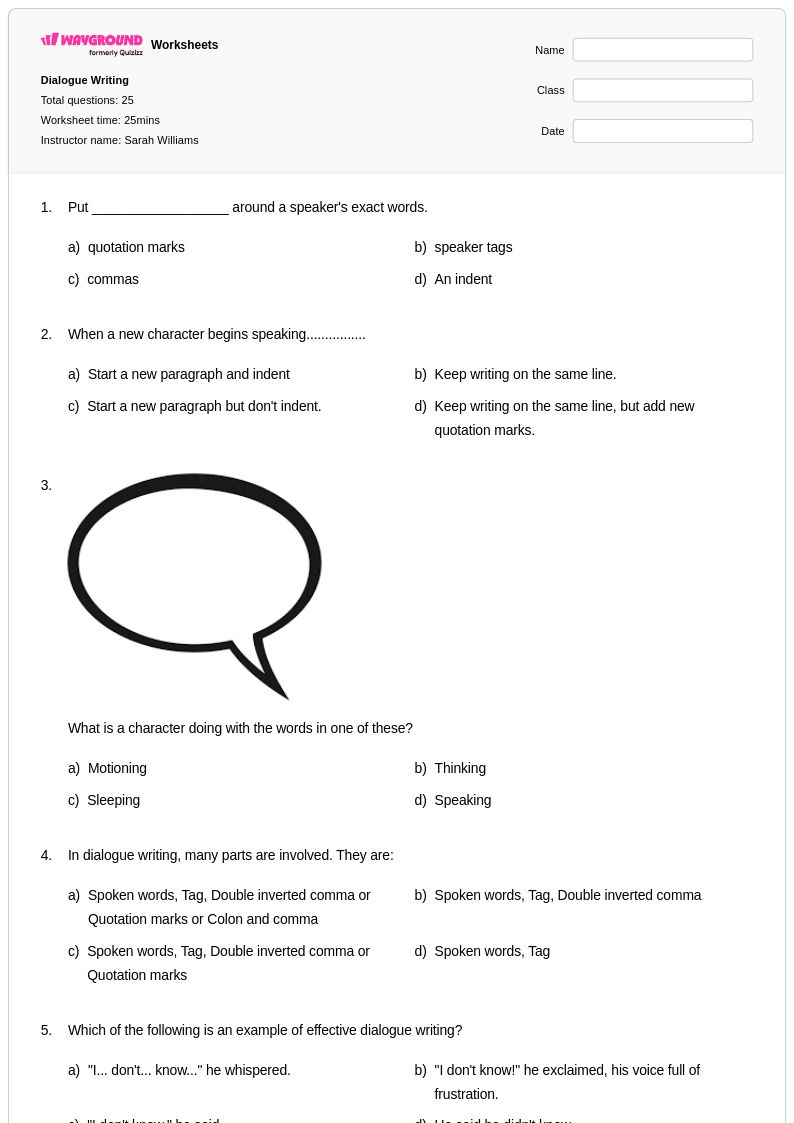
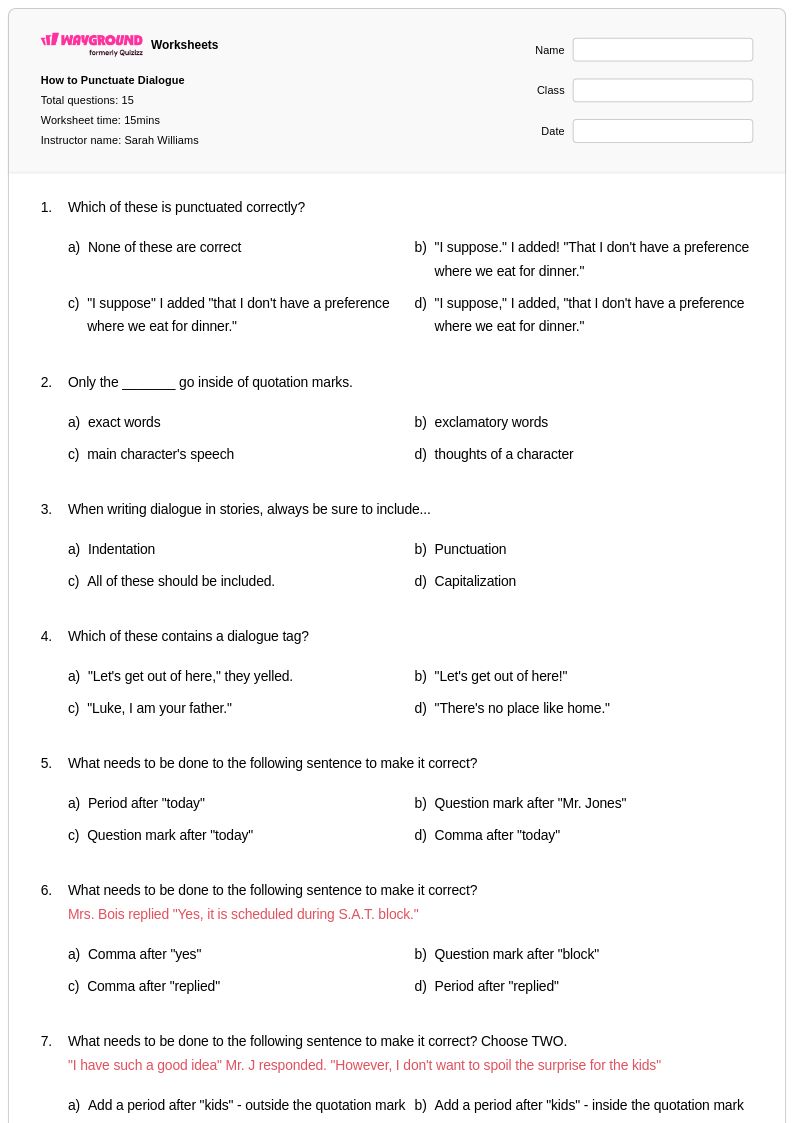
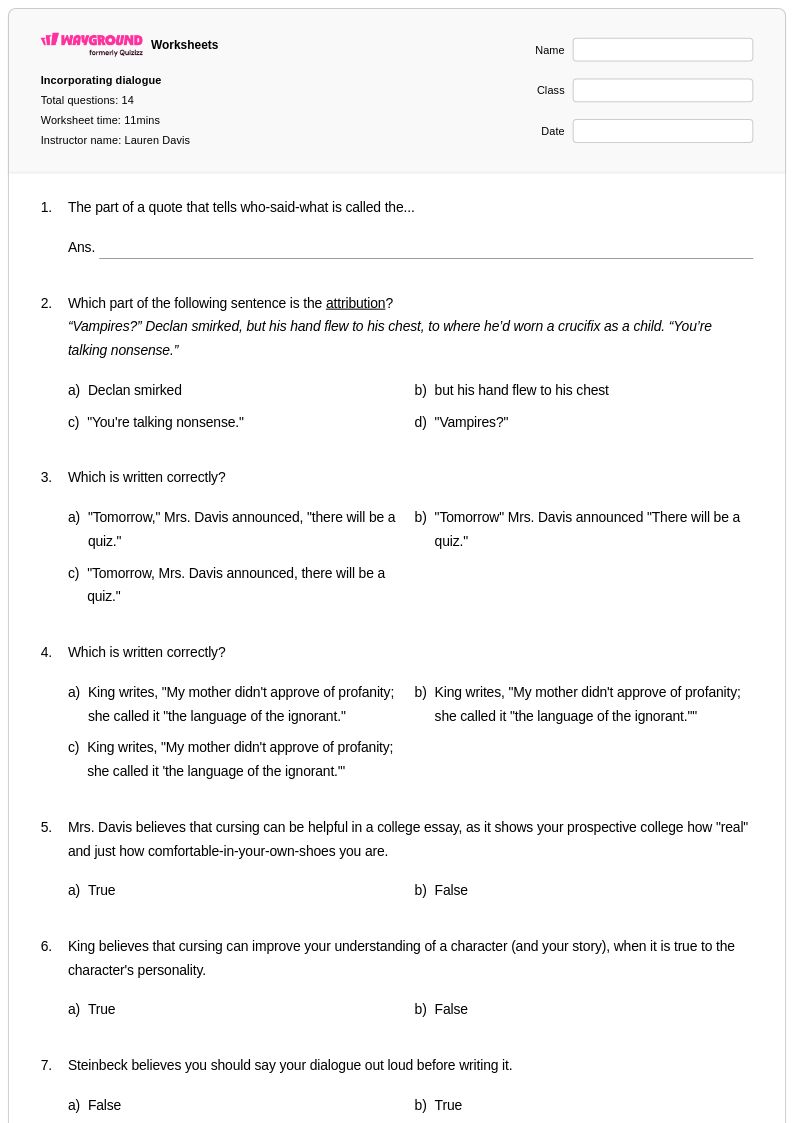
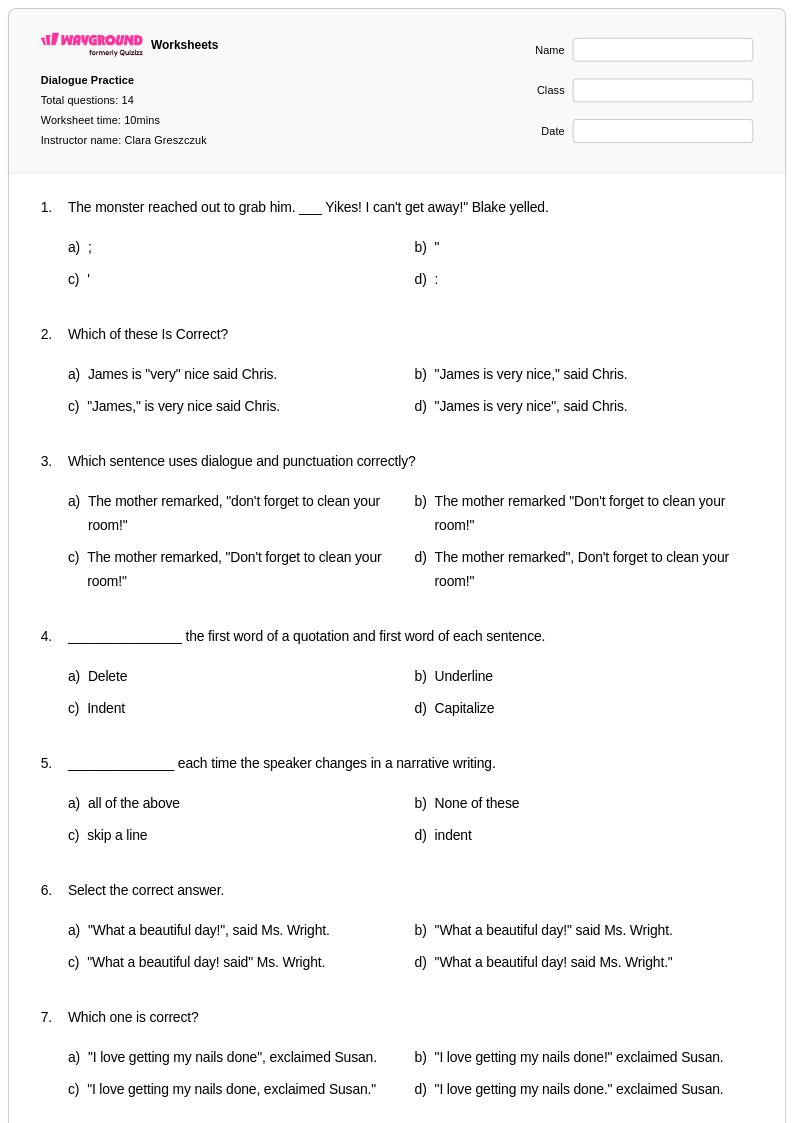
Dialogue worksheets for Year 12 students available through Wayground (formerly Quizizz) provide comprehensive practice in mastering the sophisticated punctuation, formatting, and stylistic conventions essential for effective written communication at the advanced secondary level. These expertly crafted resources strengthen students' ability to properly punctuate complex dialogue passages, correctly format multi-paragraph conversations, and seamlessly integrate quoted speech with narrative text while maintaining proper attribution and flow. The worksheets feature challenging practice problems that require students to apply advanced dialogue mechanics including nested quotations, interrupted speech patterns, and dialogue tags positioned at various points within conversations. Each resource includes a detailed answer key to support independent learning and self-assessment, with free printables available in convenient pdf format for flexible classroom implementation.
Wayground (formerly Quizizz) empowers educators with millions of teacher-created dialogue resources specifically designed to meet the rigorous demands of Year 12 English instruction. The platform's robust search and filtering capabilities allow teachers to quickly locate worksheets aligned with specific standards and learning objectives, while built-in differentiation tools enable seamless customization to accommodate diverse student needs and skill levels. These dialogue collections support comprehensive lesson planning by offering both printable pdf versions for traditional paper-based practice and digital formats that integrate seamlessly with modern classroom technology. Teachers can efficiently address individual student gaps through targeted remediation materials, provide enrichment opportunities for advanced learners, and deliver consistent skill practice that builds confidence in applying complex dialogue conventions across various writing contexts and literary analysis tasks.
FAQs
How do I teach dialogue writing to students?
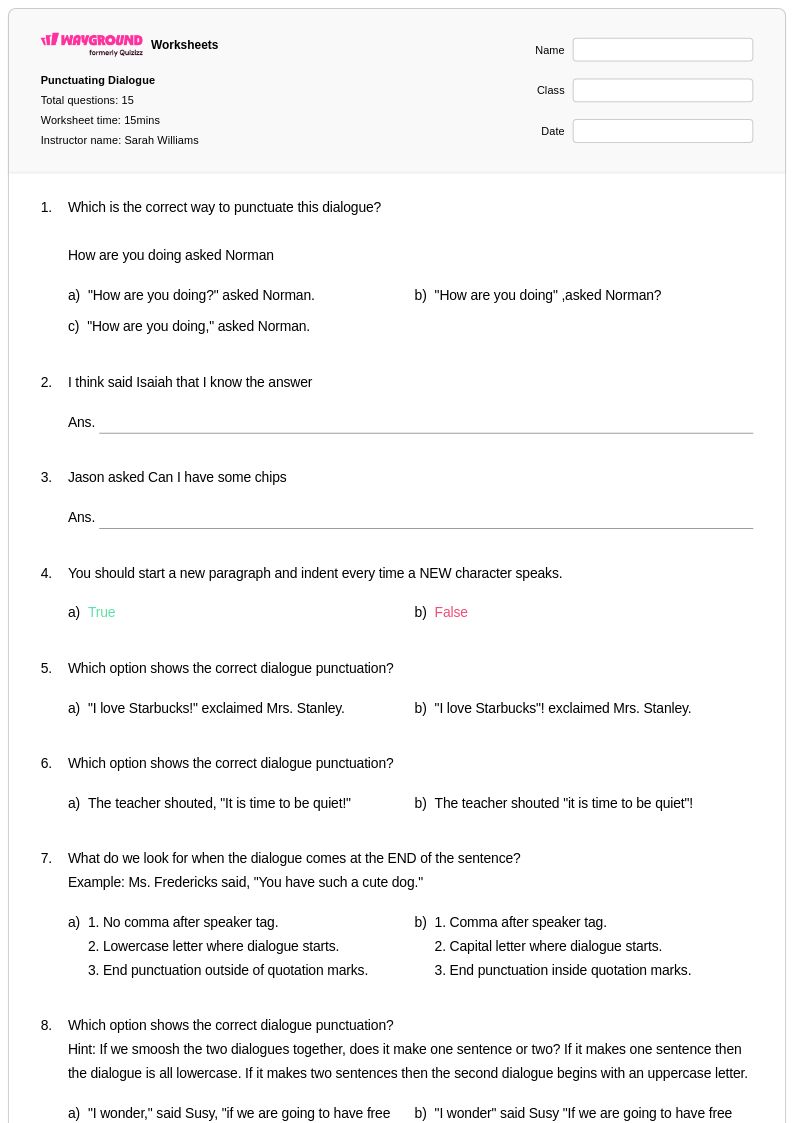
Teaching dialogue writing works best when you break it into distinct mechanics: quotation mark placement, comma usage with dialogue tags, and paragraph breaks for each new speaker. Start with mentor texts that model strong dialogue, then have students identify and annotate each convention before attempting their own. Once students understand the rules in isolation, move to integrated practice where they punctuate, revise, and write full conversational passages. Consistent exposure to both reading and writing dialogue accelerates internalization of the conventions.
What exercises help students practice punctuating dialogue correctly?
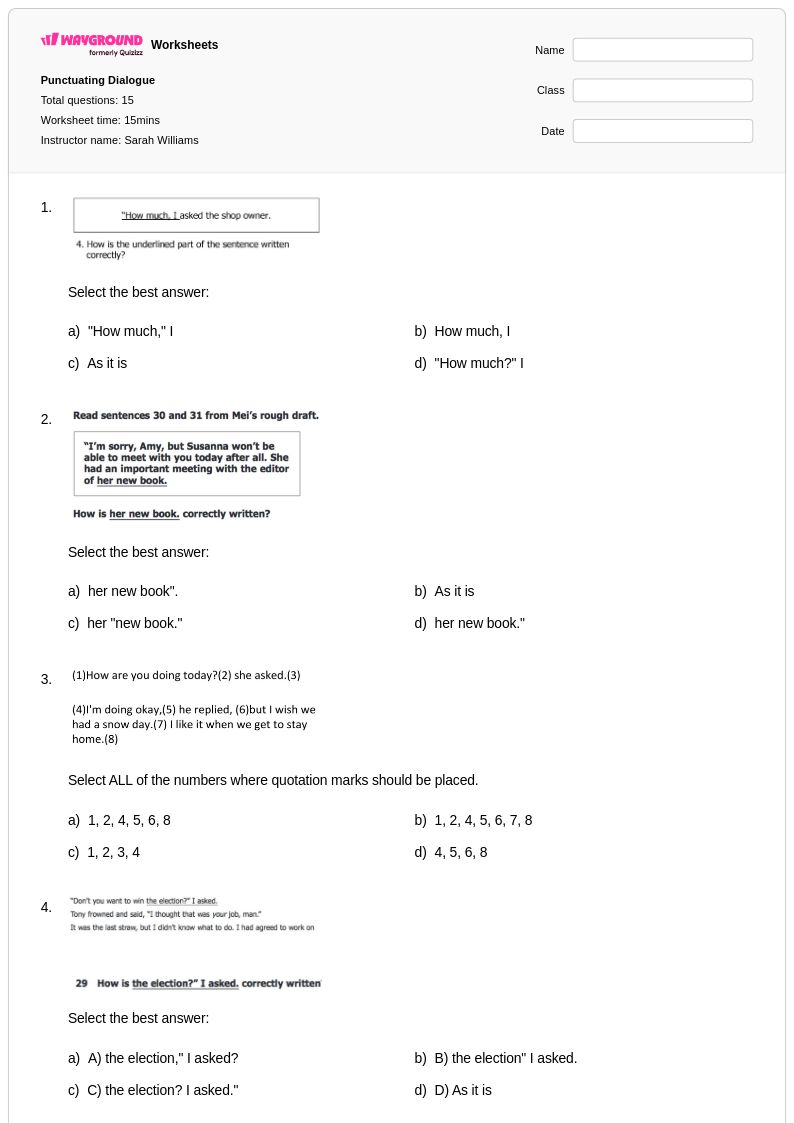
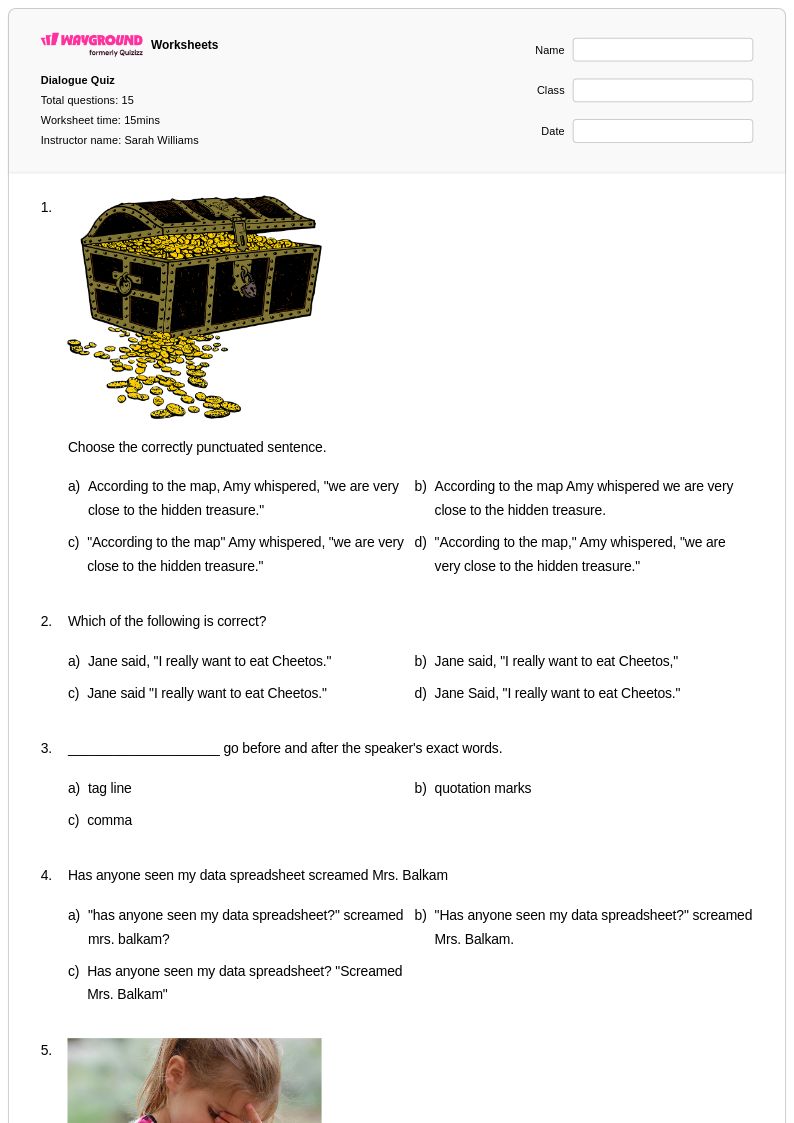
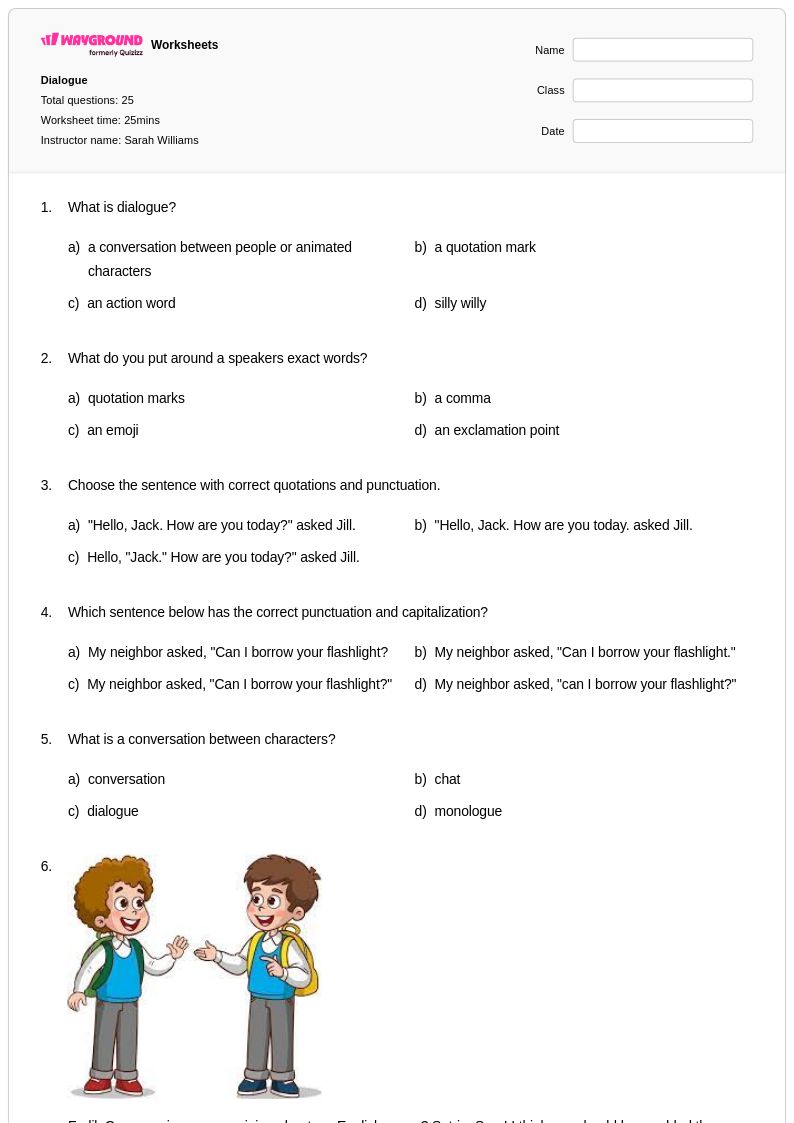
Effective practice exercises for dialogue punctuation include inserting missing quotation marks into unpunctuated passages, correcting improperly tagged dialogue, and rewriting run-on or fused dialogue exchanges. Students also benefit from exercises that require them to add appropriate paragraph breaks when speakers change, since this is one of the most commonly misapplied rules. Combining error-correction tasks with original writing prompts gives students both analytical and generative practice, which reinforces the rules from two directions.
What mistakes do students most commonly make when writing dialogue?
The most frequent errors in student dialogue writing are misplacing or omitting quotation marks, using a period instead of a comma before a dialogue tag, and failing to start a new paragraph when the speaker changes. Students also tend to overuse 'said' or drop dialogue tags entirely, which creates confusion about who is speaking. Another persistent issue is integrating action beats incorrectly, often punctuating them as if they are dialogue tags rather than separate sentences.
How does analyzing dialogue help students with reading comprehension?
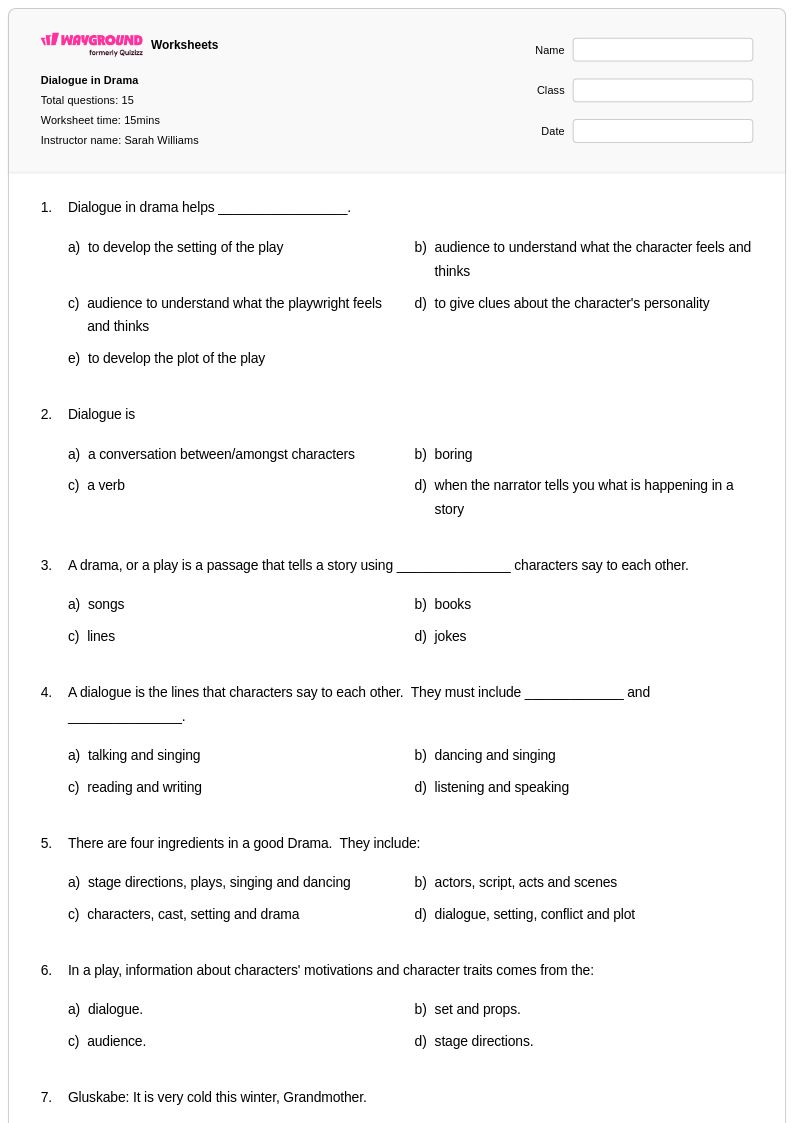
Analyzing dialogue in texts helps students understand character development, relationships, and narrative voice because the way characters speak reveals personality, motivation, and subtext. When students identify how an author uses dialogue tags, pacing, and speaker attribution, they develop stronger inference skills and a deeper awareness of how writers craft meaning. This analytical work also reinforces the mechanics of written dialogue, making reading and writing instruction mutually reinforcing.
How do I use Wayground's dialogue worksheets in my classroom?
Wayground's dialogue worksheets are available as printable PDFs for traditional classroom use and in digital formats for technology-integrated environments, making them flexible enough for in-person, hybrid, or remote instruction. Teachers can also host the worksheets as a quiz directly on Wayground, which allows for real-time tracking and immediate feedback. Each worksheet includes a complete answer key, so students can self-assess or teachers can use them for quick grading. For students who need support, Wayground's accommodation tools allow you to enable read aloud, extended time, or reduced answer choices on an individual basis without disrupting the rest of the class.
How can I differentiate dialogue worksheets for students at different skill levels?
For students who are still developing foundational mechanics, start with exercises focused on a single rule at a time, such as quotation mark placement only, before layering in comma usage and paragraph breaks. More advanced students benefit from open-ended tasks that ask them to write original dialogue incorporating all conventions, or to revise a weak dialogue passage for clarity and style. On Wayground, you can apply individual accommodations such as reduced answer choices or read aloud to specific students, so every learner engages with the same content at an appropriate level of support.