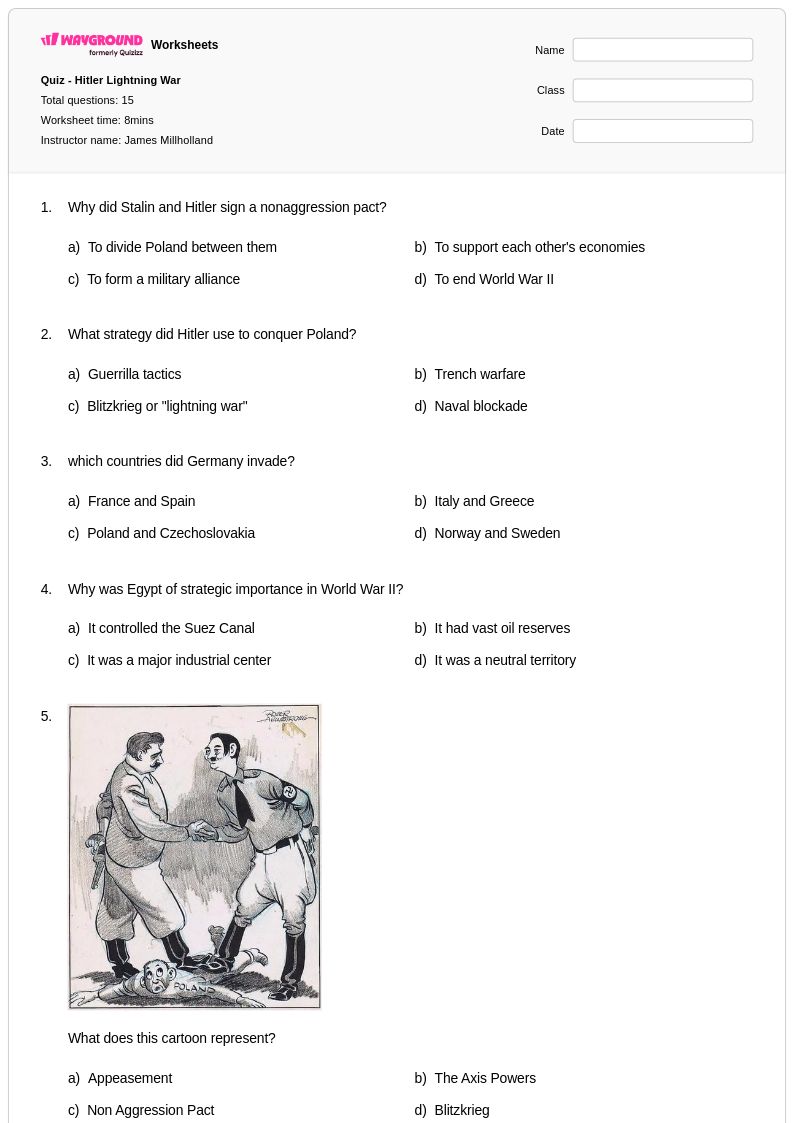
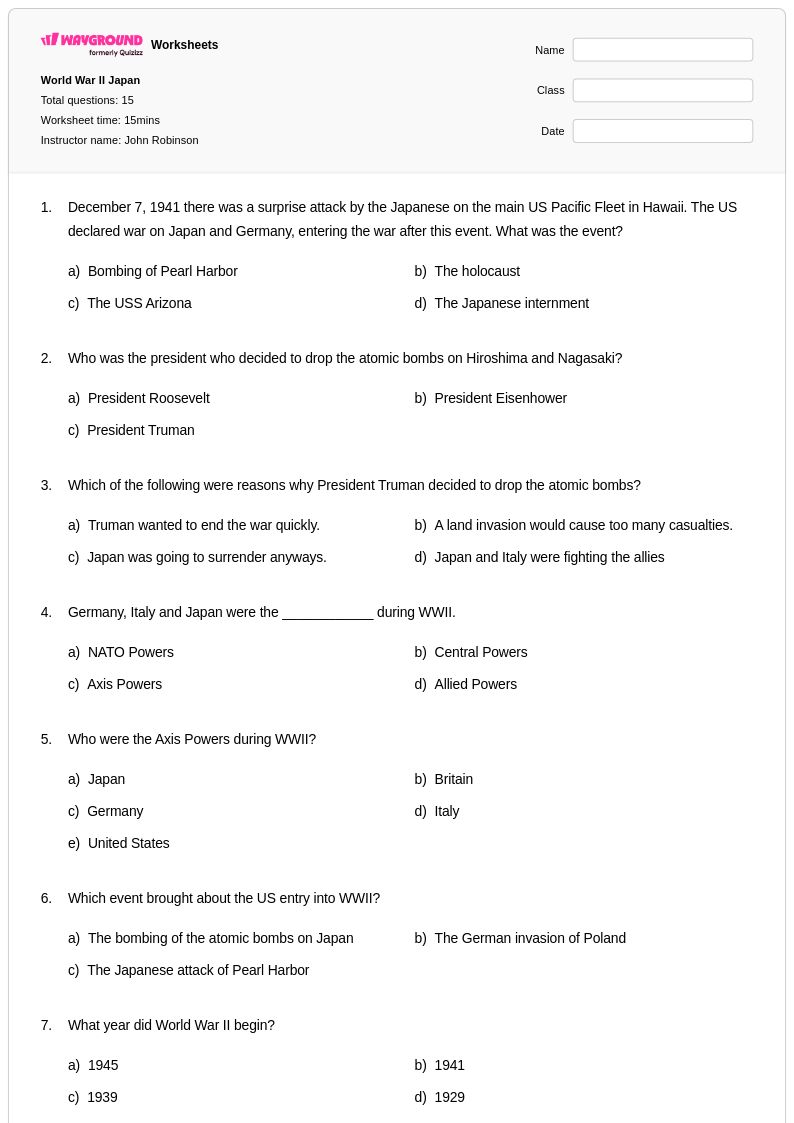
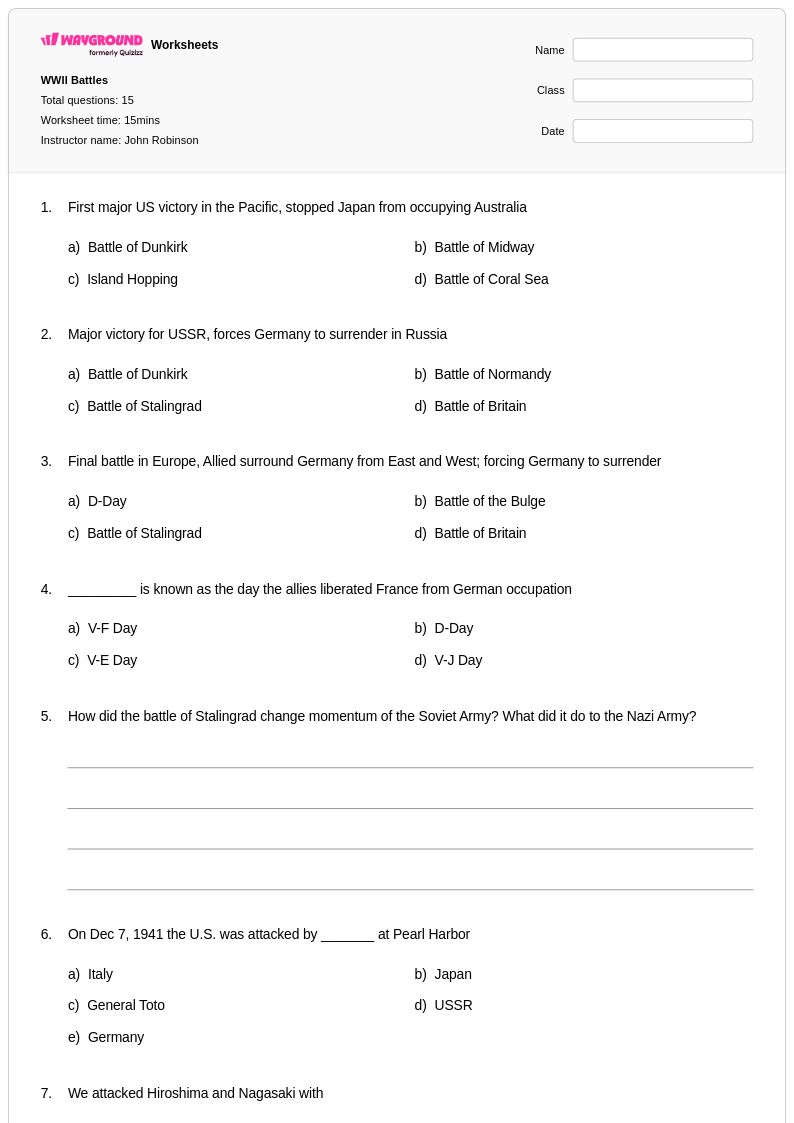
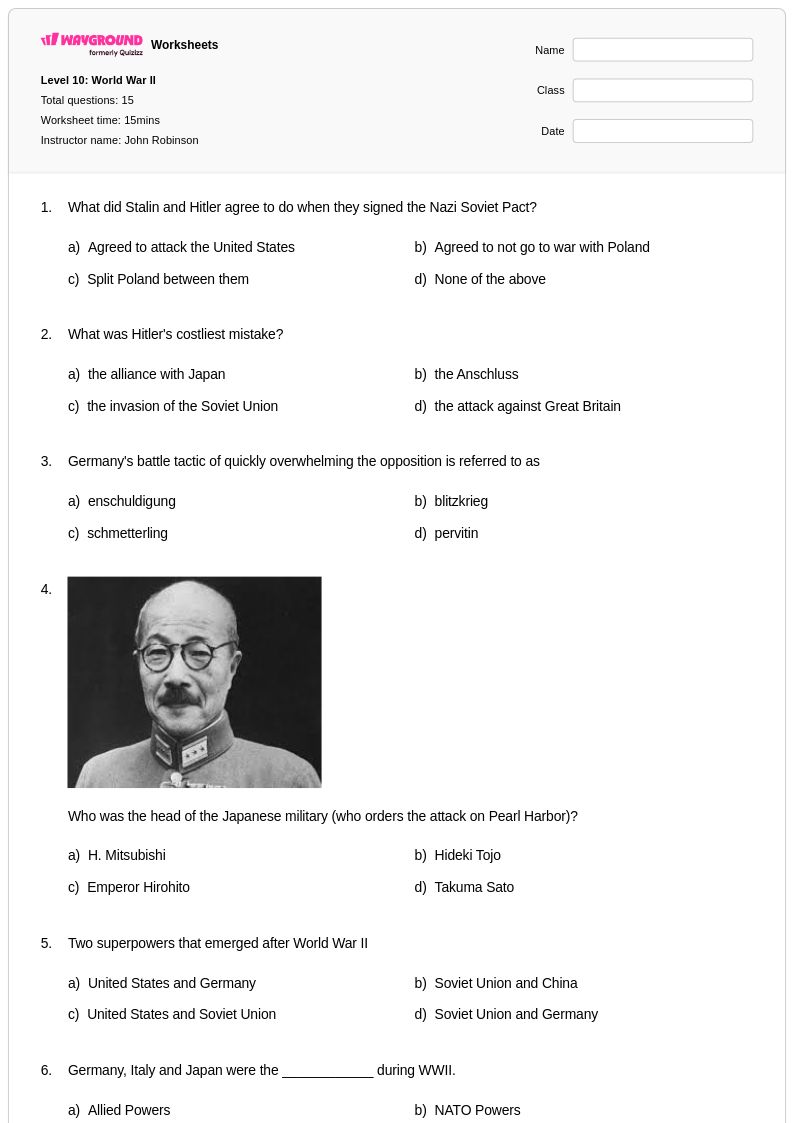
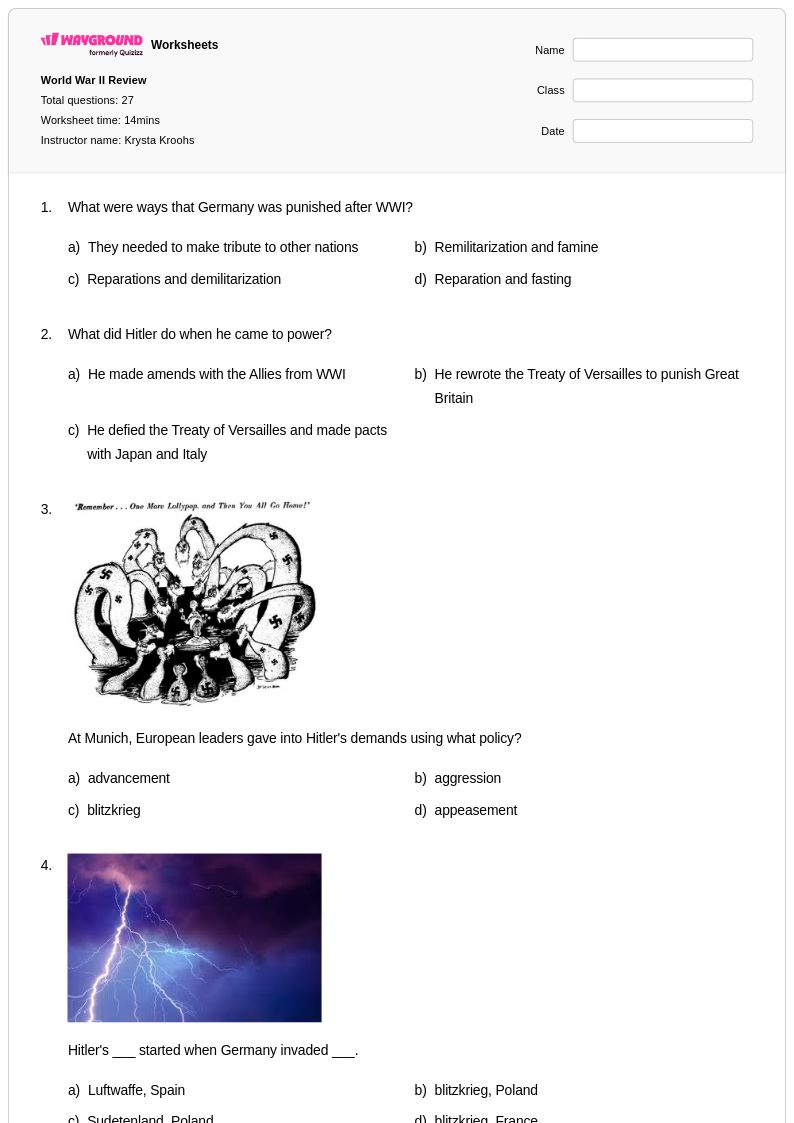
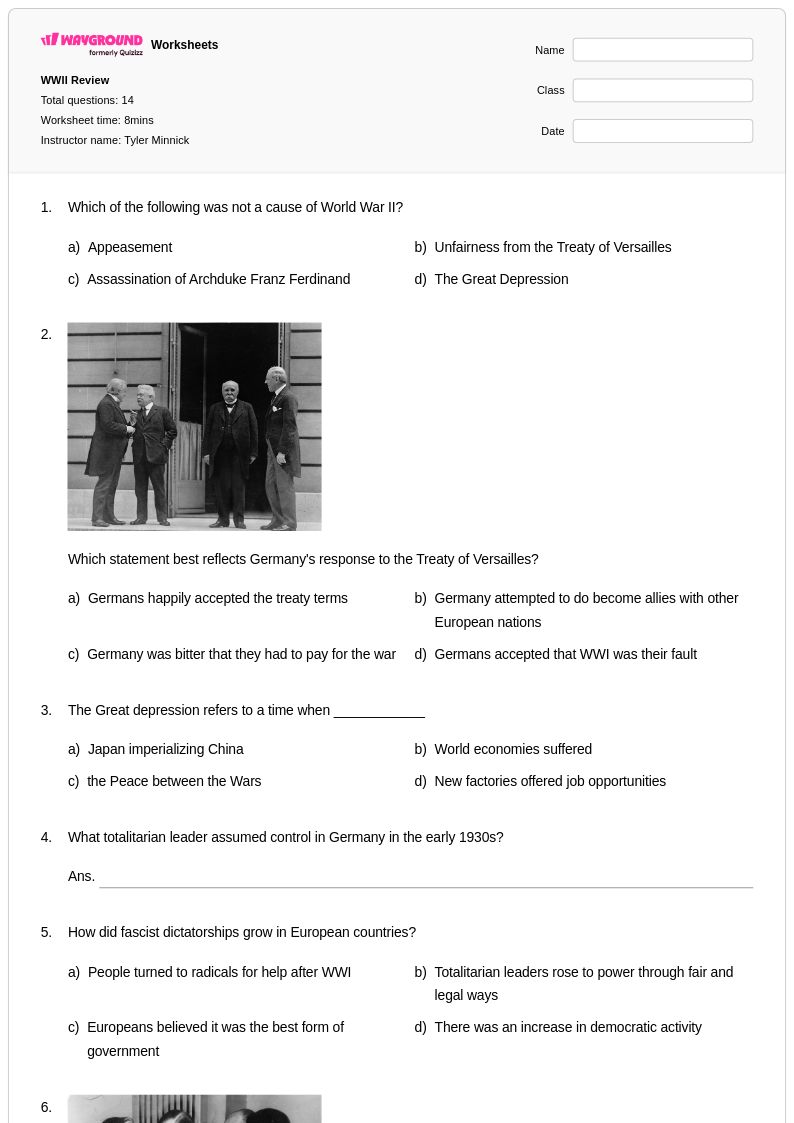
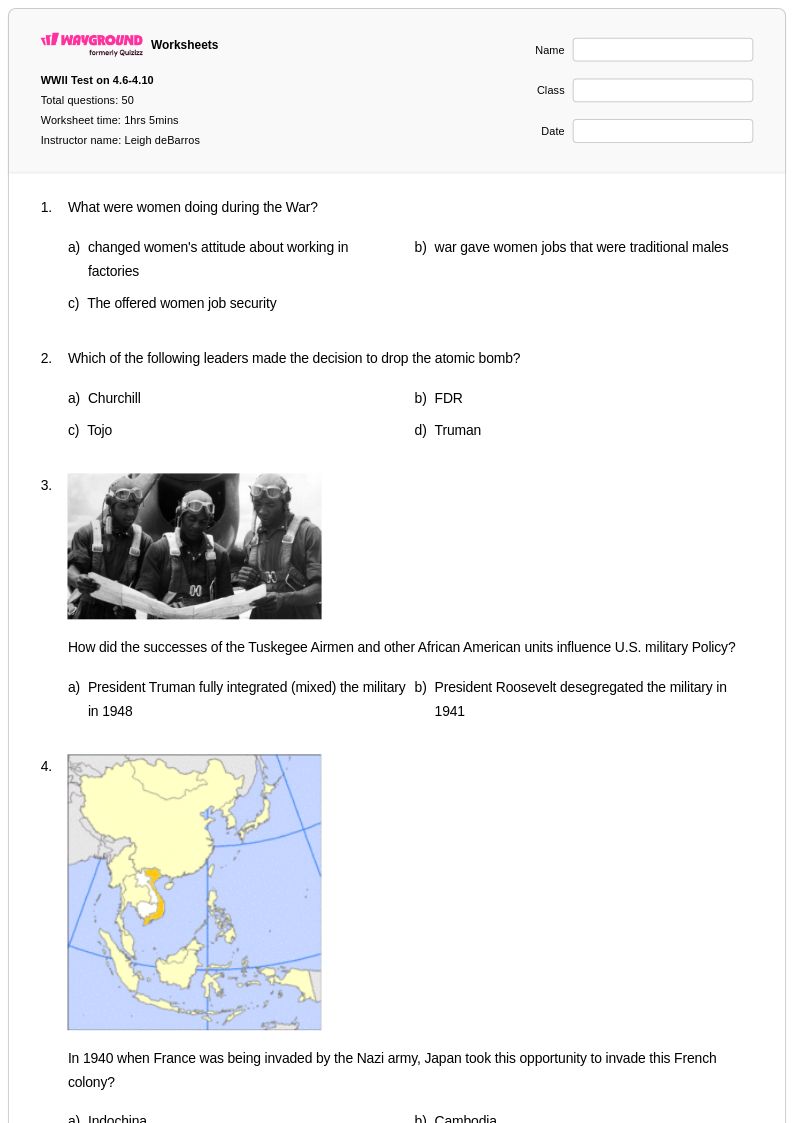
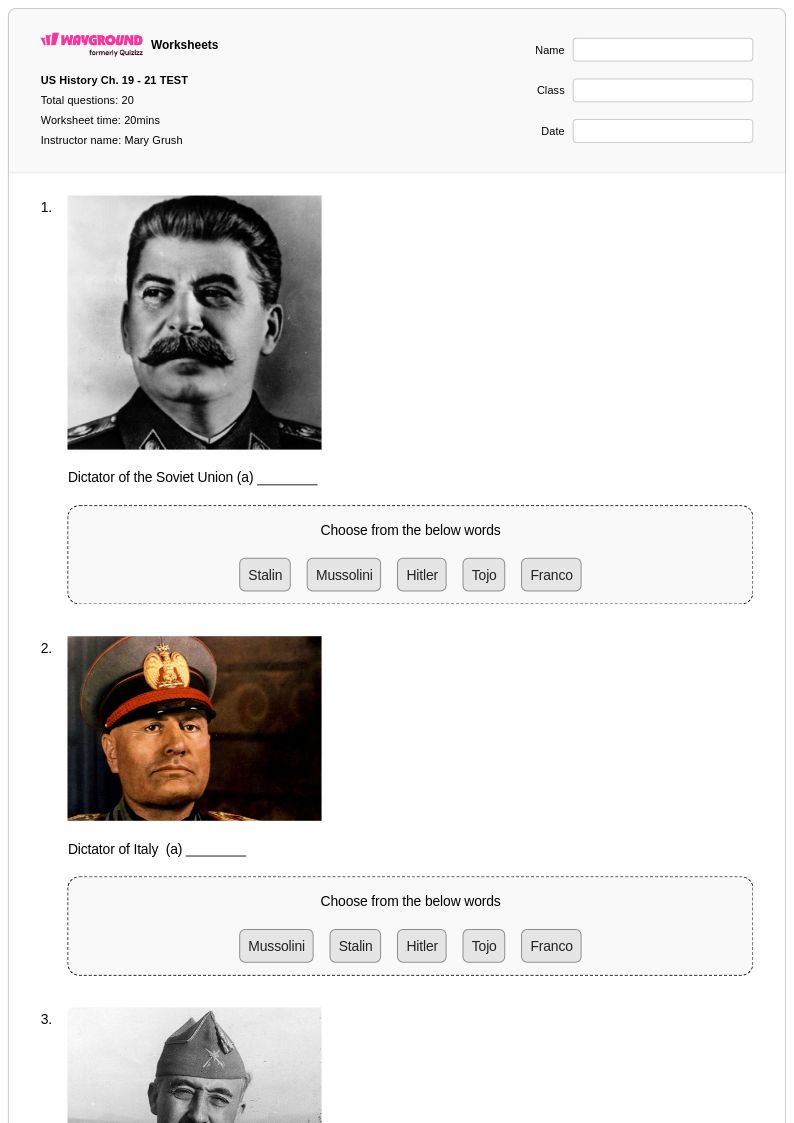
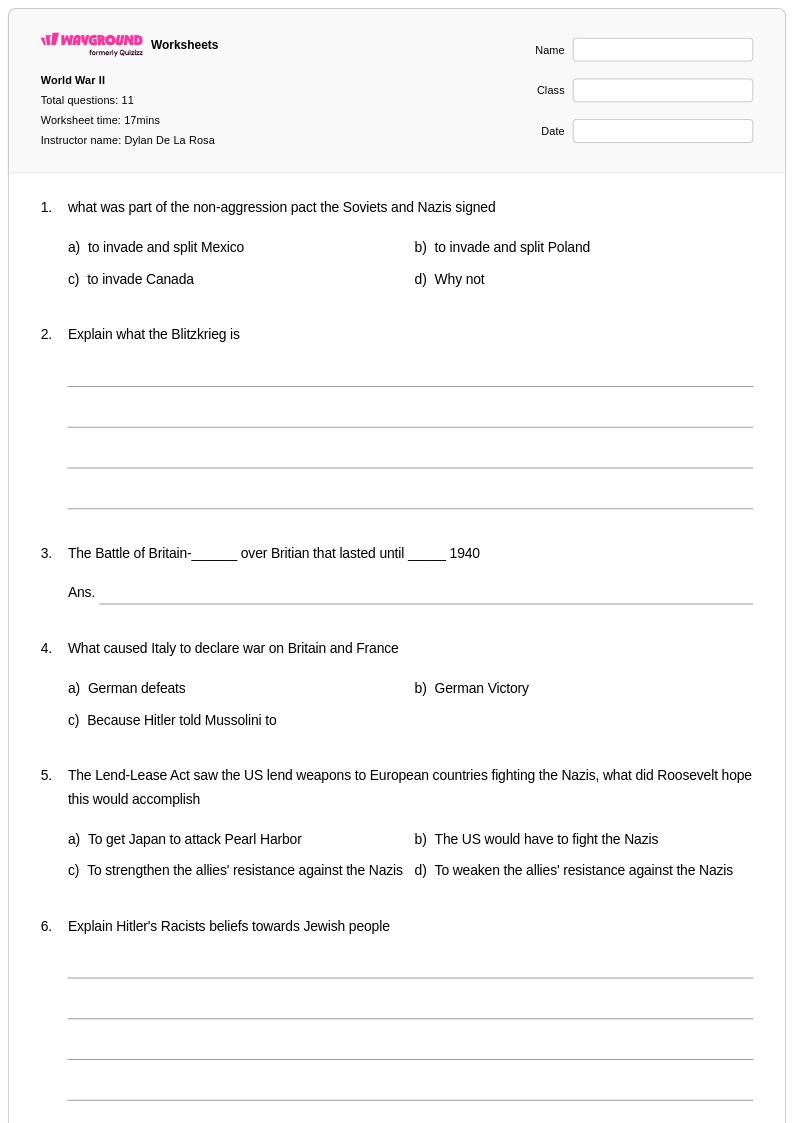
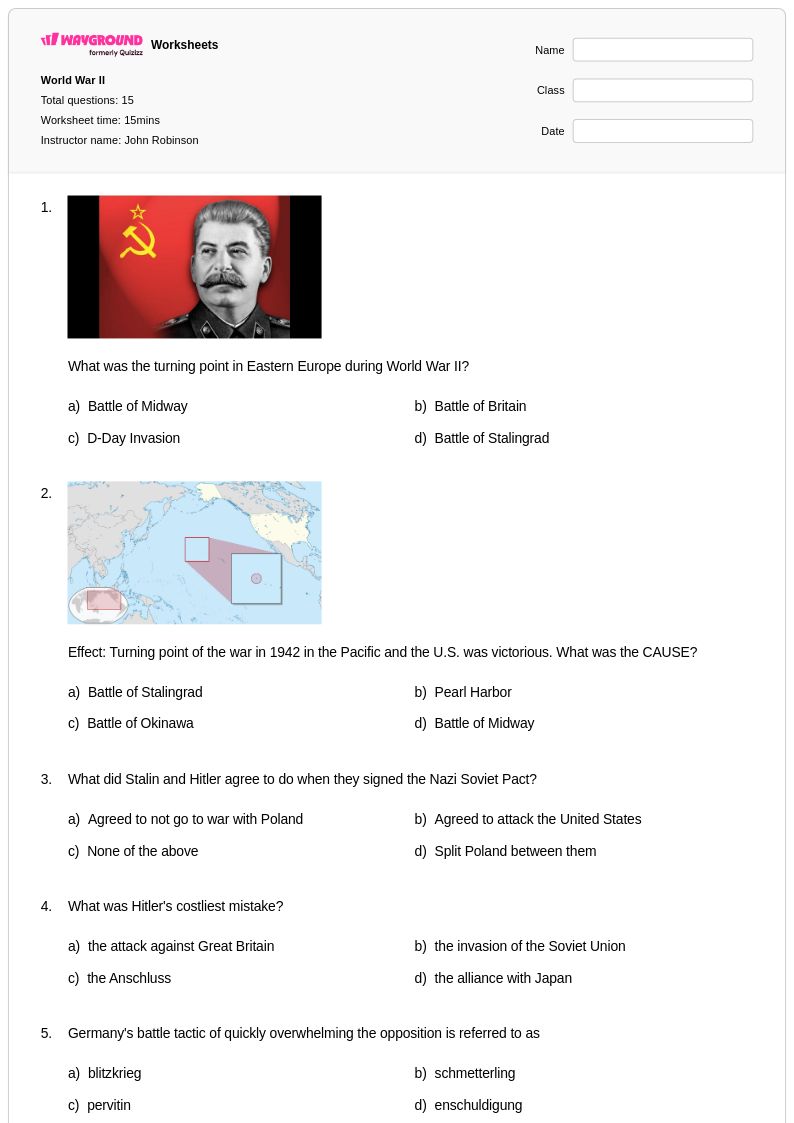
Year 10 World War 2 Blitzkrieg worksheets from Wayground offer comprehensive printables and practice problems that help students analyze Germany's lightning warfare tactics, complete with answer keys and free PDF resources for mastering this pivotal military strategy.
Explore printable Blitzkrieg worksheets for Year 10
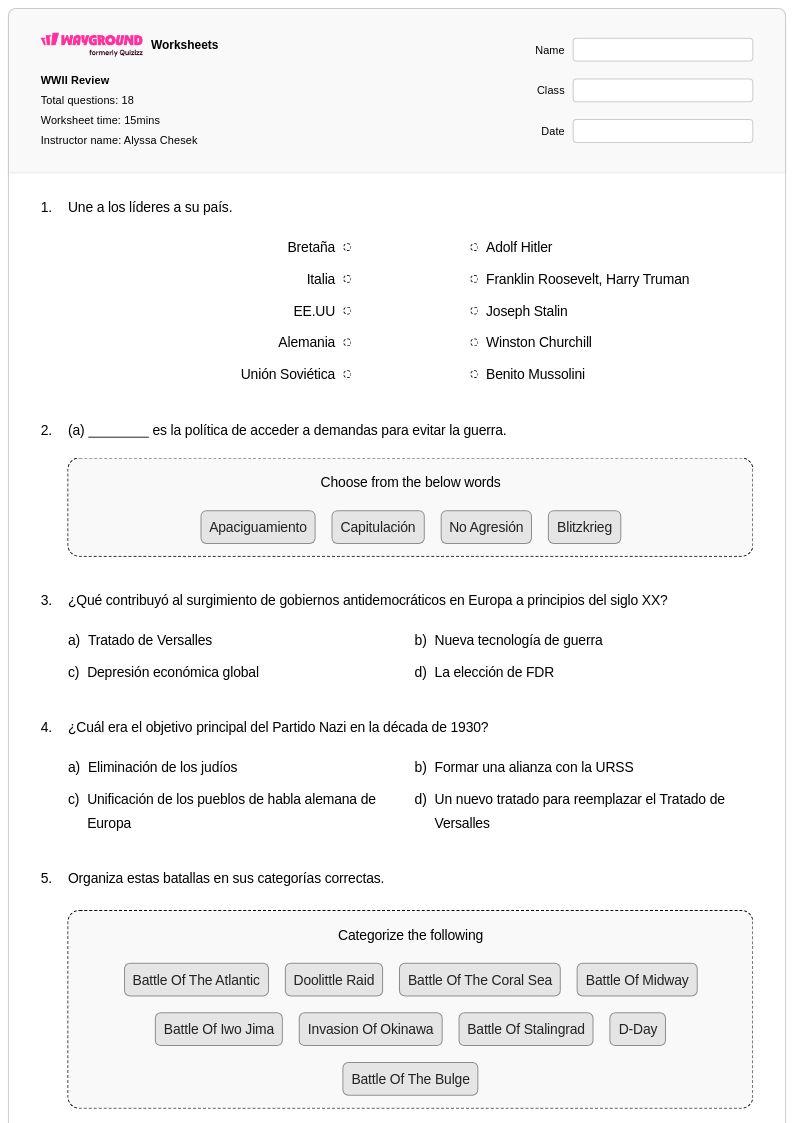
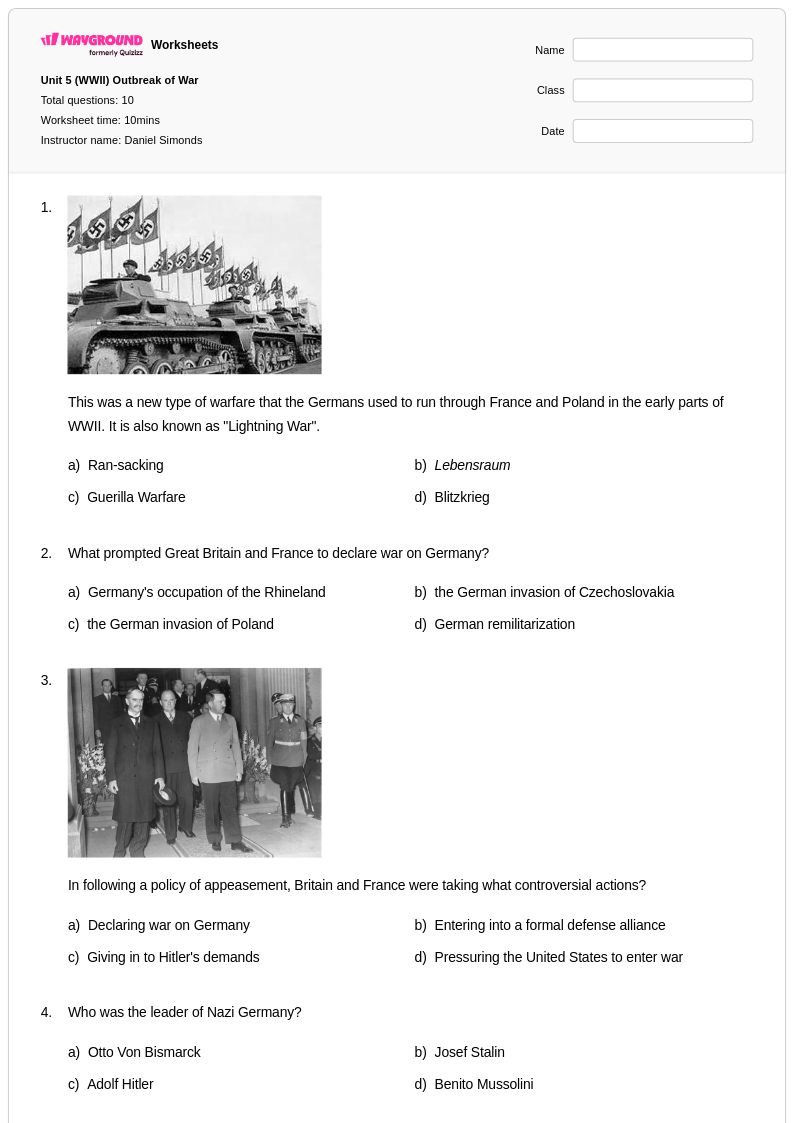
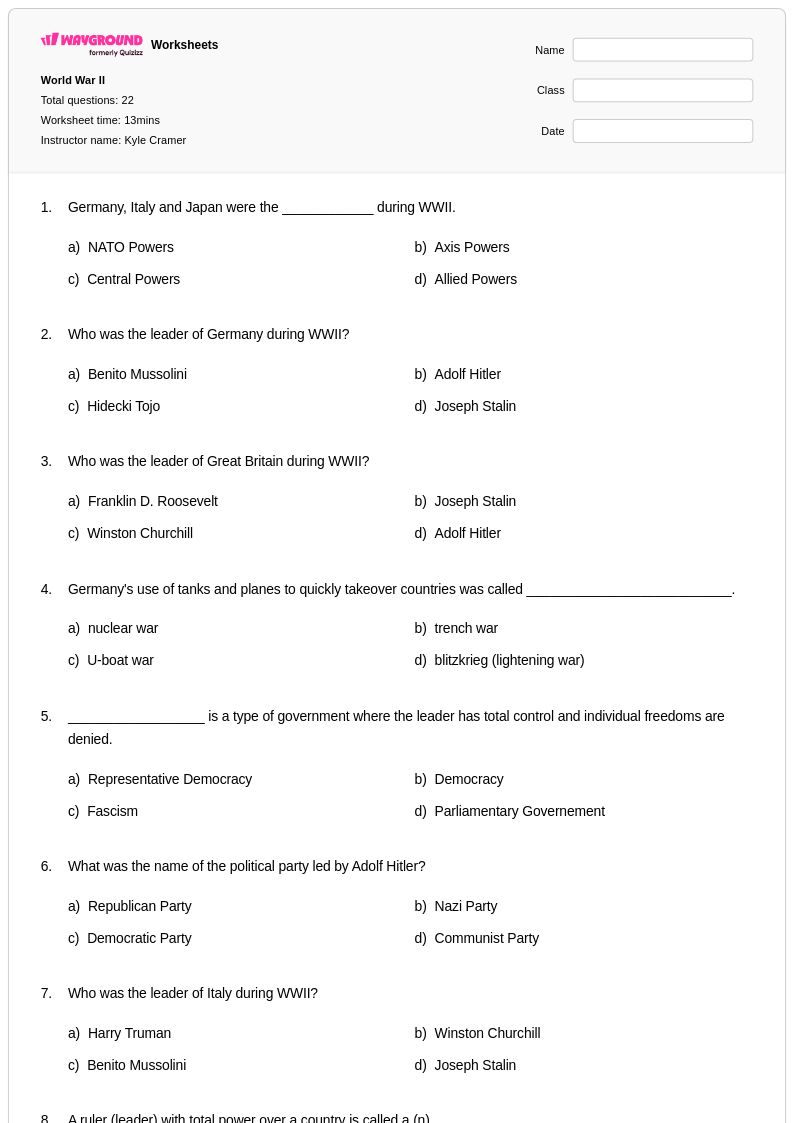
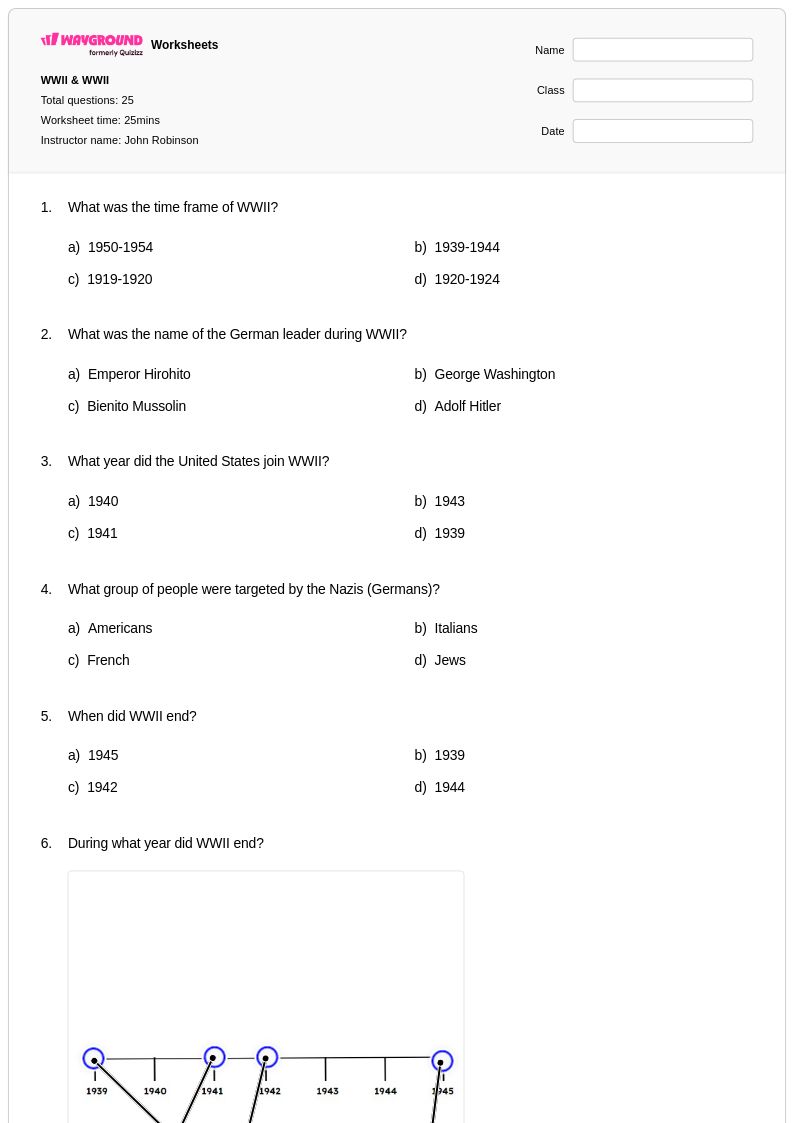
Blitzkrieg worksheets for Year 10 students available through Wayground (formerly Quizizz) provide comprehensive exploration of Germany's revolutionary "lightning war" tactics that transformed military strategy during World War 2. These expertly crafted educational materials strengthen students' analytical skills by examining the coordination of tanks, aircraft, and infantry that enabled rapid territorial conquests across Europe between 1939 and 1941. Students engage with primary source documents, strategic maps, and detailed battle analyses while developing critical thinking abilities through practice problems that connect military innovations to broader historical consequences. Each worksheet collection includes comprehensive answer keys and is available as free printables in convenient pdf format, allowing educators to seamlessly integrate these resources into their World War 2 curriculum while reinforcing essential historical literacy skills.
Wayground (formerly Quizizz) empowers educators with millions of teacher-created Blitzkrieg and World War 2 resources that support diverse instructional needs through advanced search and filtering capabilities aligned to social studies standards. Teachers can efficiently locate materials specifically targeting Year 10 learning objectives while utilizing differentiation tools that accommodate varying skill levels within their classrooms. The platform's flexible customization options enable educators to modify existing worksheets or combine multiple resources for comprehensive lesson planning, remediation support, and enrichment activities. Whether delivered through printable pdf formats for traditional classroom use or digital formats for technology-integrated learning environments, these worksheet collections provide essential practice opportunities that deepen students' understanding of this pivotal military strategy and its lasting impact on modern warfare.
FAQs
How do I teach blitzkrieg to high school students?
Teaching blitzkrieg effectively requires students to understand both the tactical mechanics and the strategic context that made it so devastating in 1939–1941. Start by contrasting it with World War 1 trench warfare so students can appreciate why speed, coordination among tanks, aircraft, and motorized infantry was so revolutionary. Using maps of the Polish and French campaigns helps students visualize how rapidly German forces bypassed and encircled opponents, making the abstract concept of 'lightning war' concrete and analyzable.
What primary sources work best for analyzing blitzkrieg tactics in the classroom?
Military maps showing German advance routes through Poland and France are among the most effective primary sources because they make the speed and direction of blitzkrieg operations immediately visible. Firsthand accounts from Allied commanders who faced these tactics, such as French general Maxime Weygand's wartime writings, help students understand the psychological and organizational shock blitzkrieg created. Combining maps with these accounts pushes students toward higher-order analysis rather than simple recall.
What practice exercises help students understand blitzkrieg as a military strategy?
Exercises that ask students to compare campaign timelines, such as how quickly Germany defeated Poland versus how long World War 1 battles lasted, make blitzkrieg's speed tangible and analytically meaningful. Map-based activities where students trace German mechanized advances and identify where Allied defensive lines collapsed reinforce the coordination of tanks, aircraft, and infantry central to the strategy. Document analysis tasks using after-action reports or propaganda materials layer in the ideological and psychological dimensions of the tactic alongside the military ones.
What misconceptions do students commonly have about blitzkrieg?
The most common misconception is that blitzkrieg was a formally planned and named doctrine developed before the war, when in reality it evolved from improvised tactics and was later labeled by journalists and historians. Students also frequently overattribute Germany's early successes solely to blitzkrieg technology, underestimating the role of Allied strategic failures, poor communication, and command rigidity in enabling German breakthroughs. A third persistent error is conflating blitzkrieg with any fast military campaign rather than understanding it as a specific combined-arms method emphasizing shock, encirclement, and disruption of enemy command structures.
How did blitzkrieg change after Germany invaded the Soviet Union?
Operation Barbarossa in 1941 initially replicated the rapid encirclements of earlier campaigns, but the sheer geographic scale of the Soviet Union, Soviet industrial capacity beyond the Urals, and the Red Army's ability to absorb losses gradually exposed blitzkrieg's limitations. Supply lines could not sustain the speed of mechanized advances across such distances, and Soviet resistance stiffened as German forces moved deeper into Russia. By 1942–1943, Germany was no longer conducting true blitzkrieg operations and had shifted to more attritional warfare, a shift students should trace as part of understanding why Germany ultimately lost the war.
How can I use Wayground's blitzkrieg worksheets in my classroom?
Wayground's blitzkrieg worksheets are available as printable PDFs for traditional classroom use and in digital formats for technology-integrated or remote learning environments, and teachers can also host them as a quiz directly on Wayground. The resources include answer keys, which makes them suitable for independent practice, small group analysis, or guided review sessions without requiring additional teacher preparation. Digital delivery is particularly useful for assigning document analysis or map-based tasks as homework or formative assessment, and Wayground's built-in accommodation tools allow teachers to enable read aloud, extended time, or reduced answer choices for individual students who need additional support.