
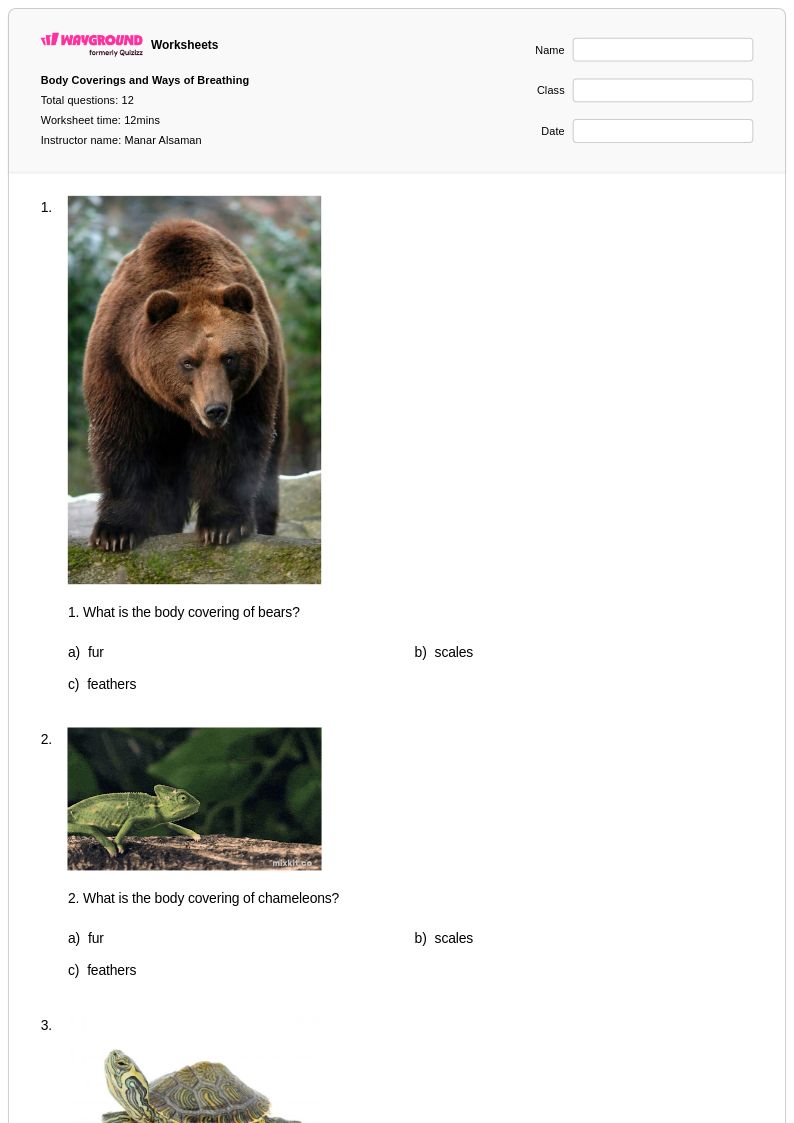
10 Q
1st
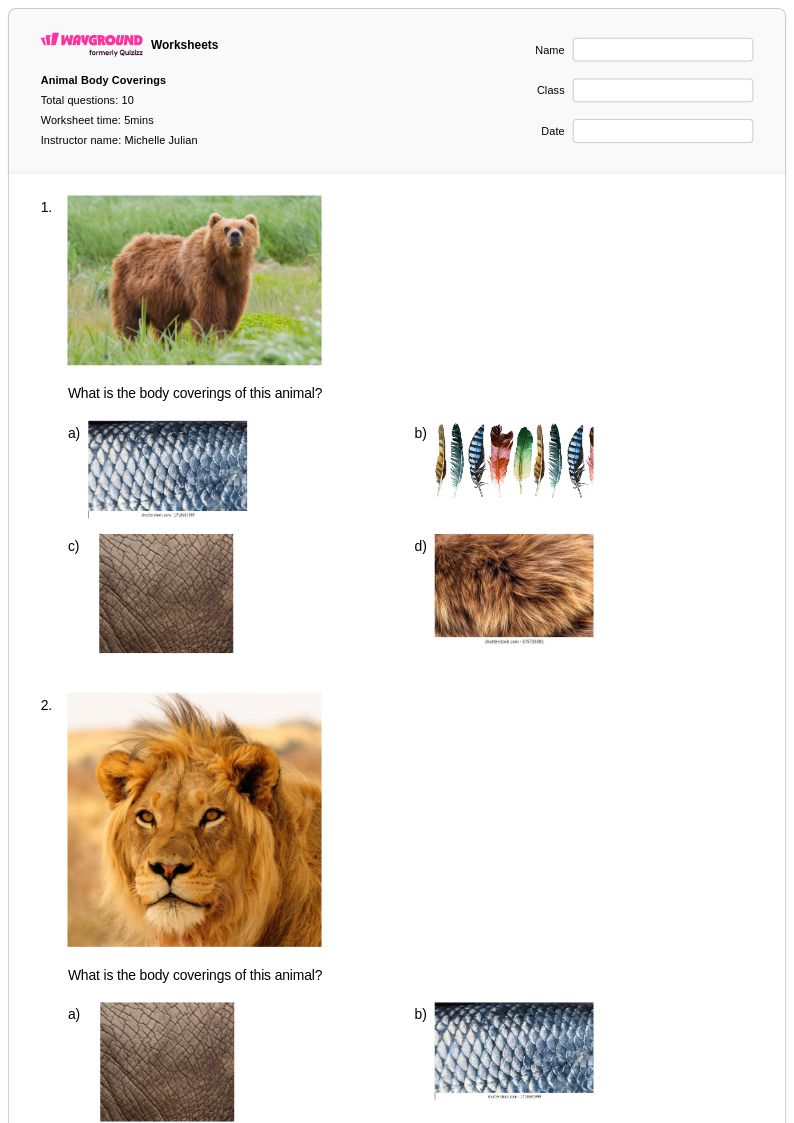
10 Q
KG - 1st
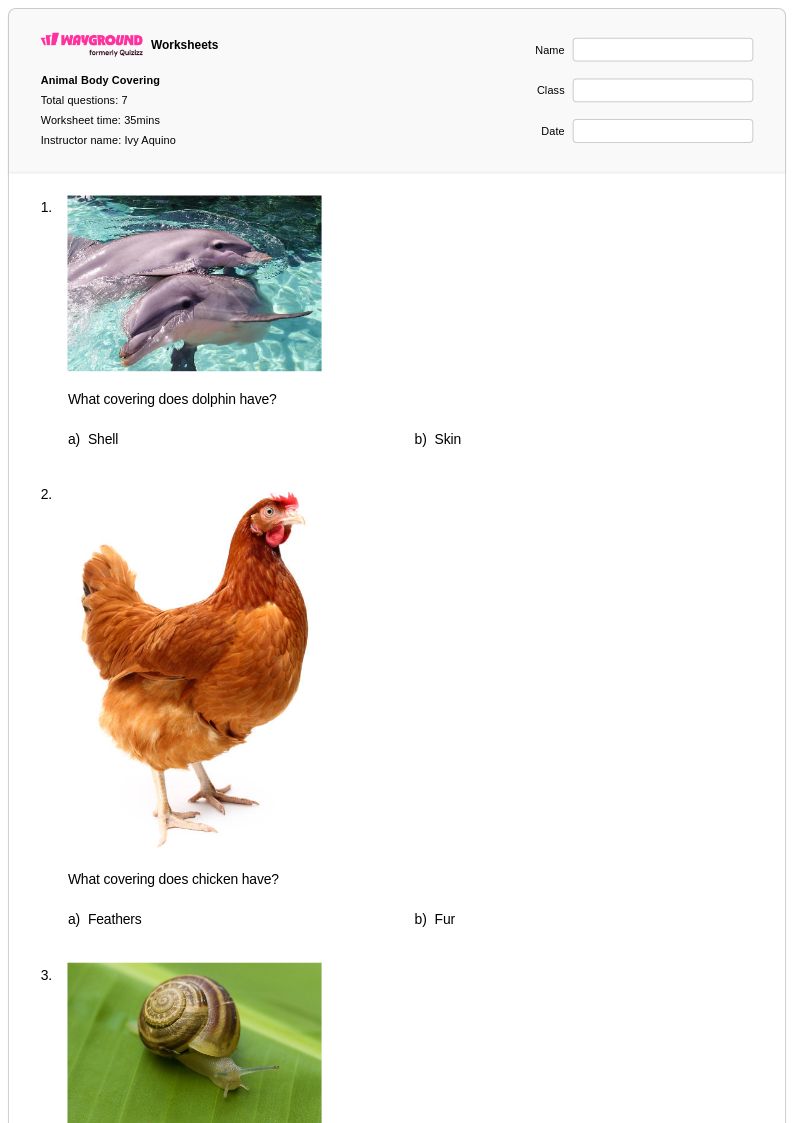
7 Q
KG - 1st
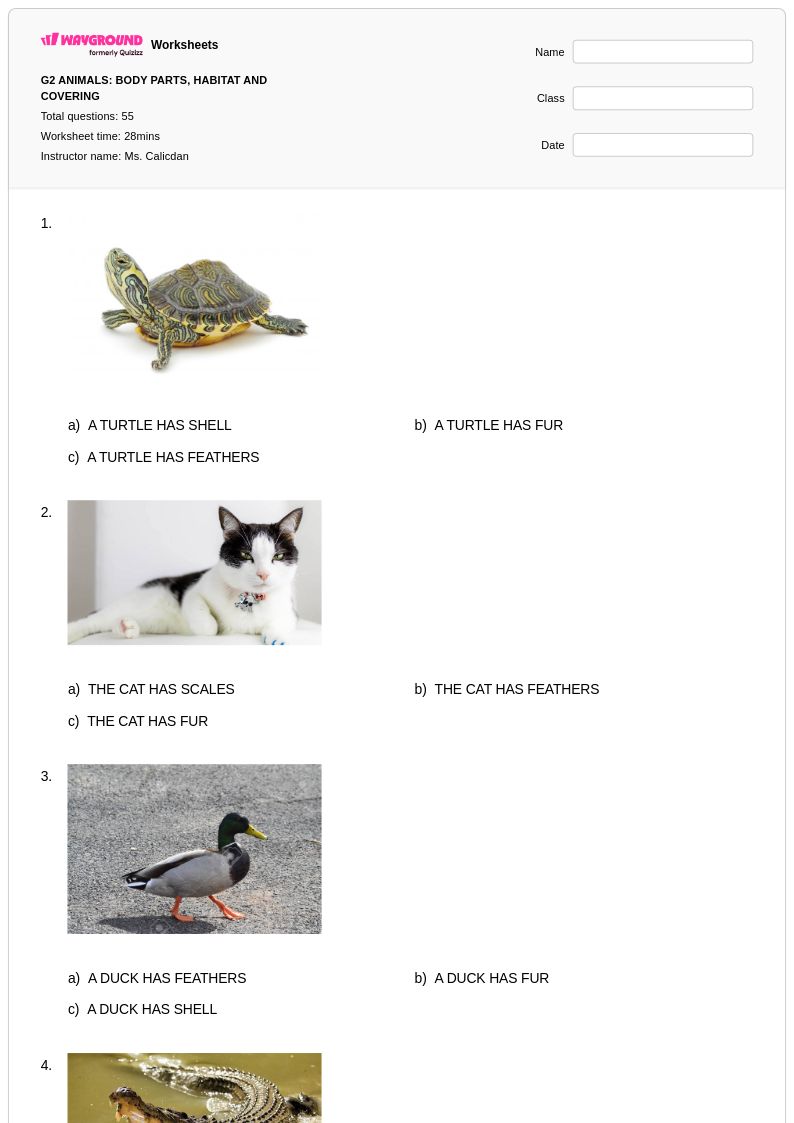
55 Q
1st - 3rd
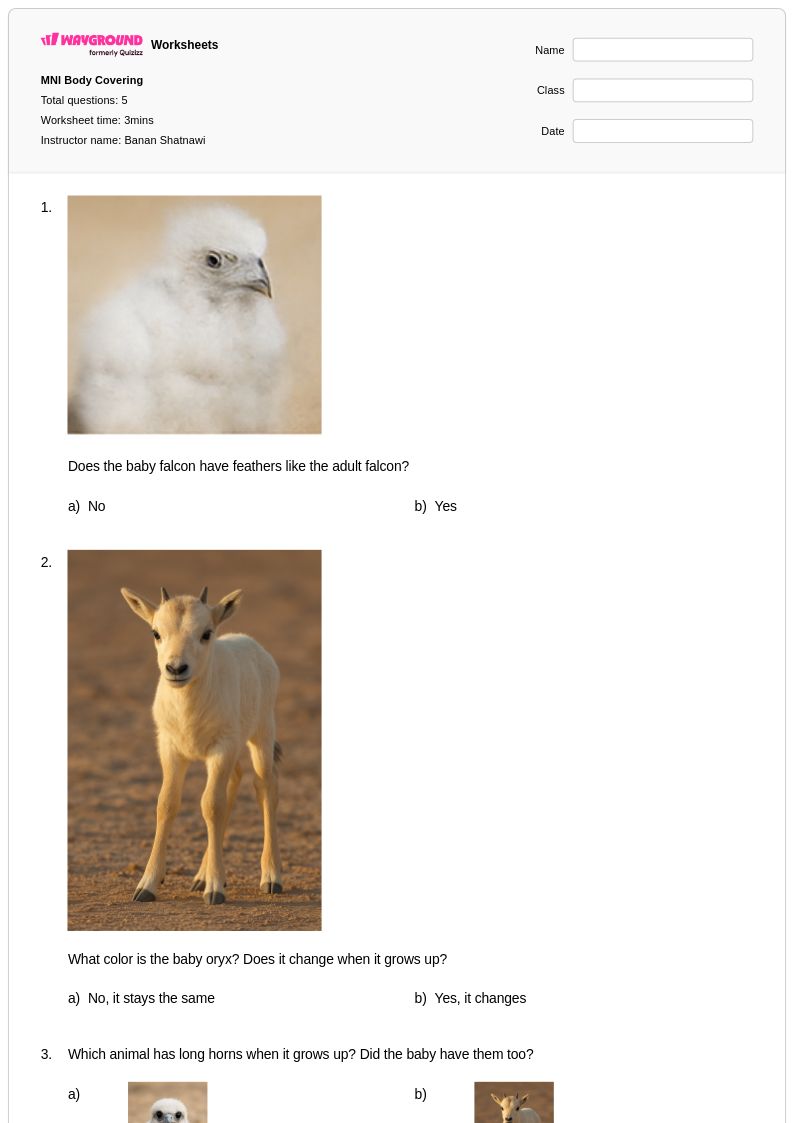
5 Q
1st
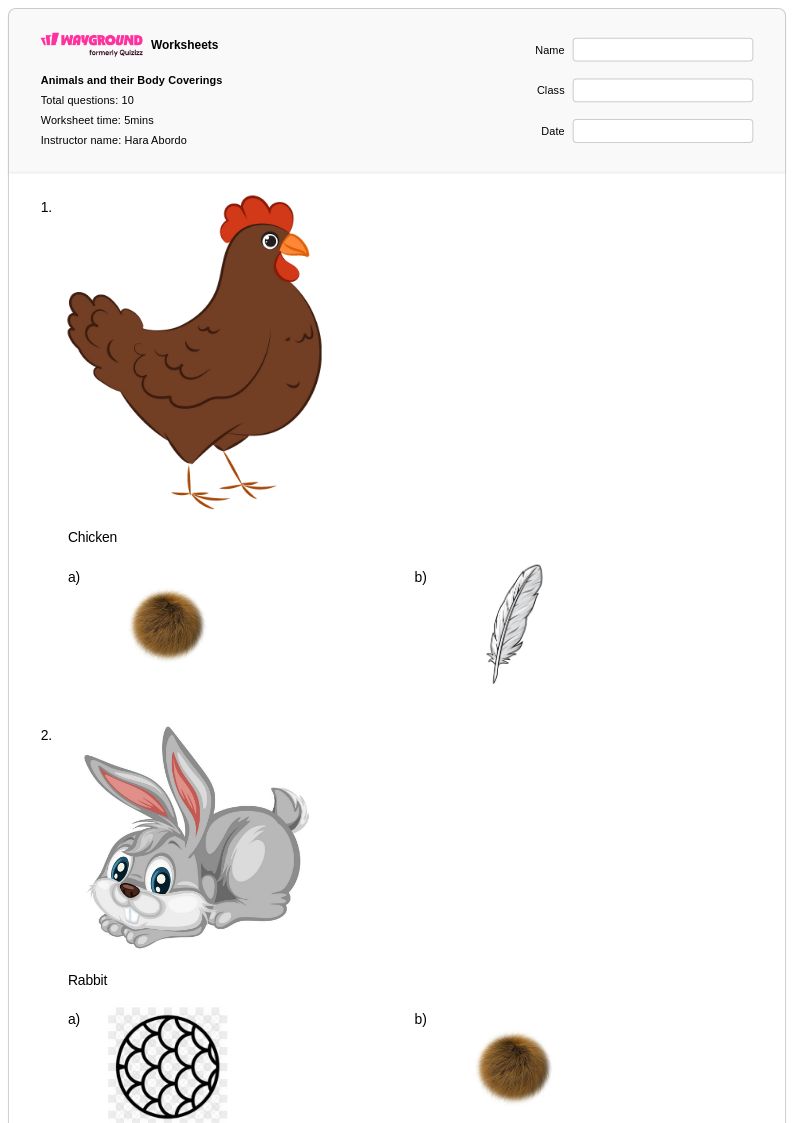
10 Q
KG - 1st
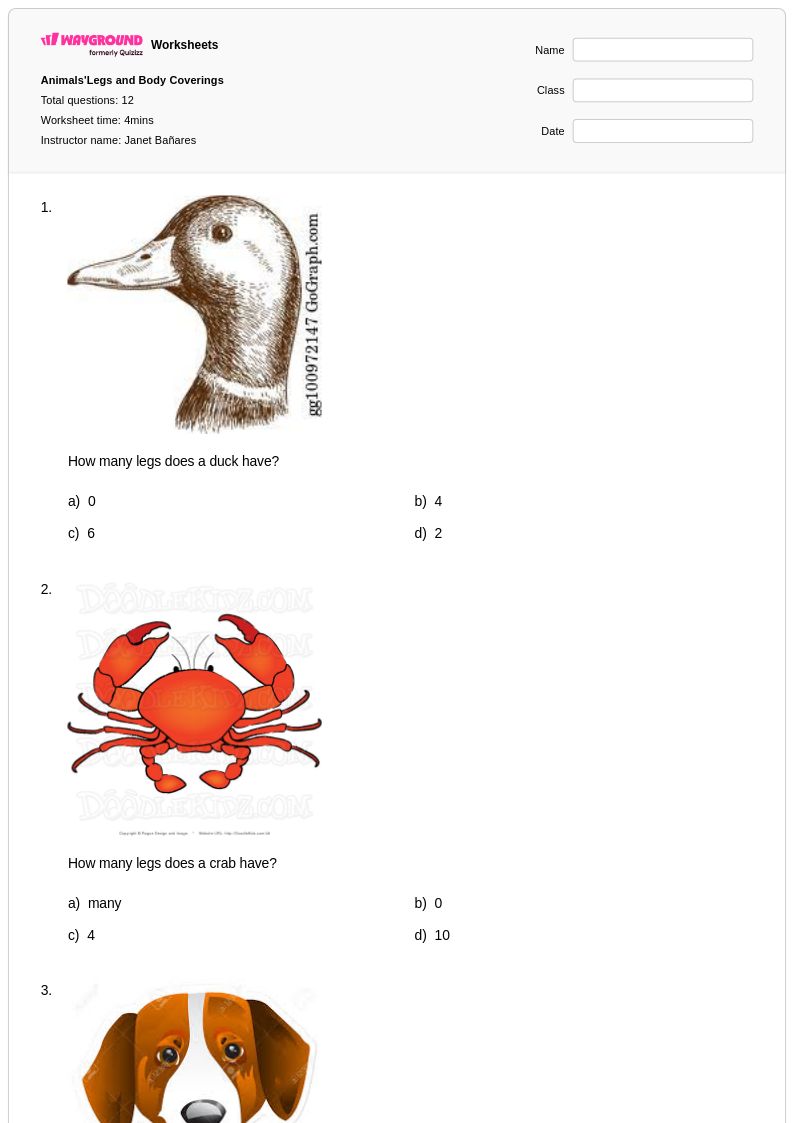
12 Q
KG - 1st
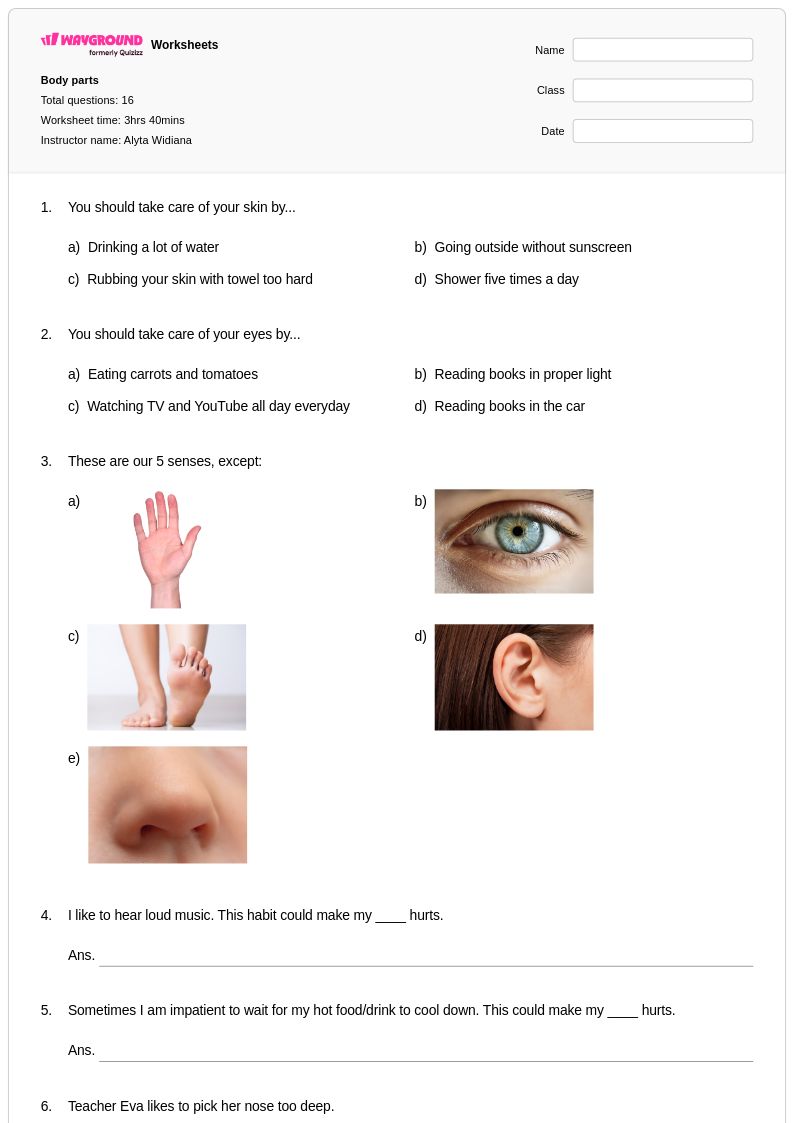
16 Q
1st
15 Q
1st
10 Q
1st
11 Q
1st
13 Q
1st
15 Q
1st
29 Q
1st - 5th
10 Q
1st
11 Q
1st
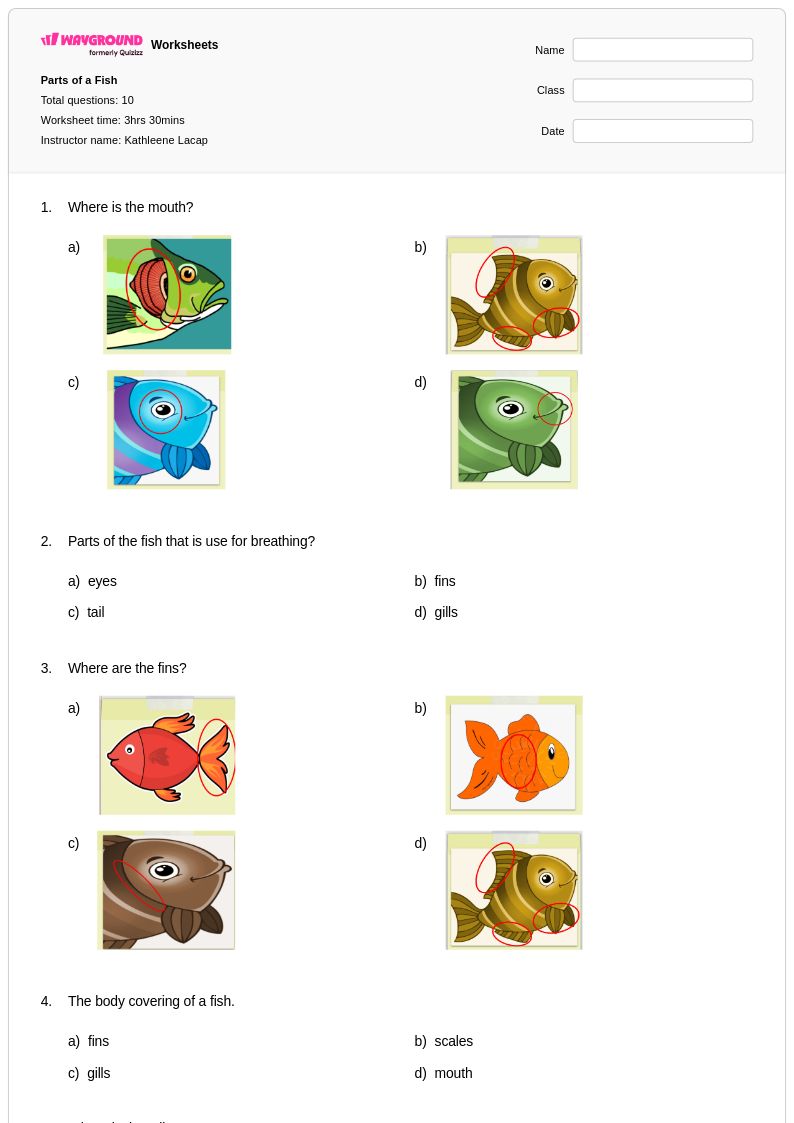
10 Q
KG - 1st
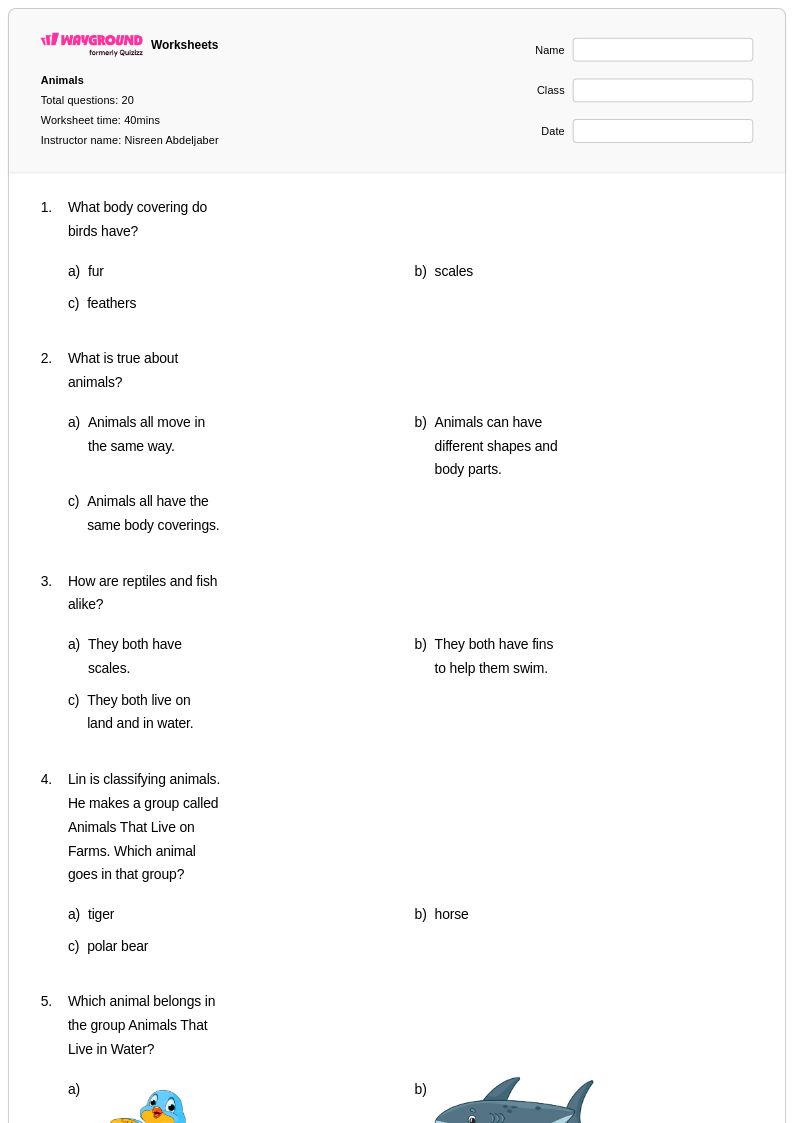
20 Q
1st
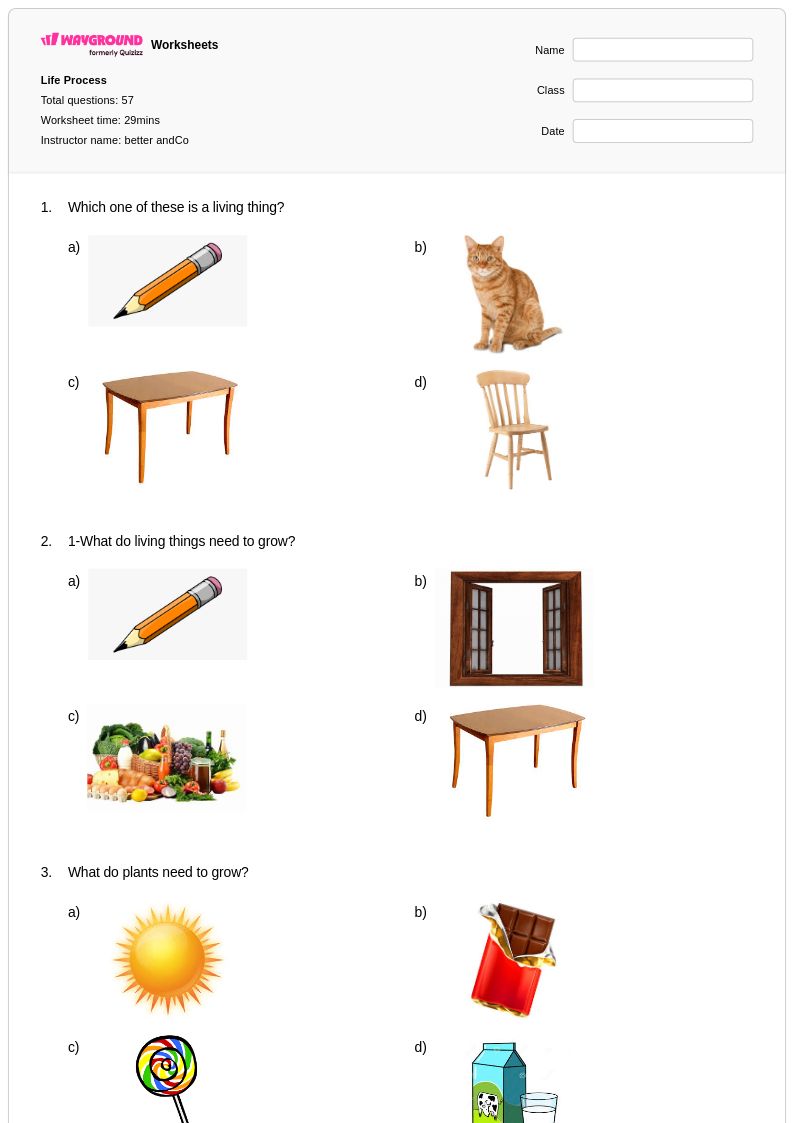
57 Q
1st
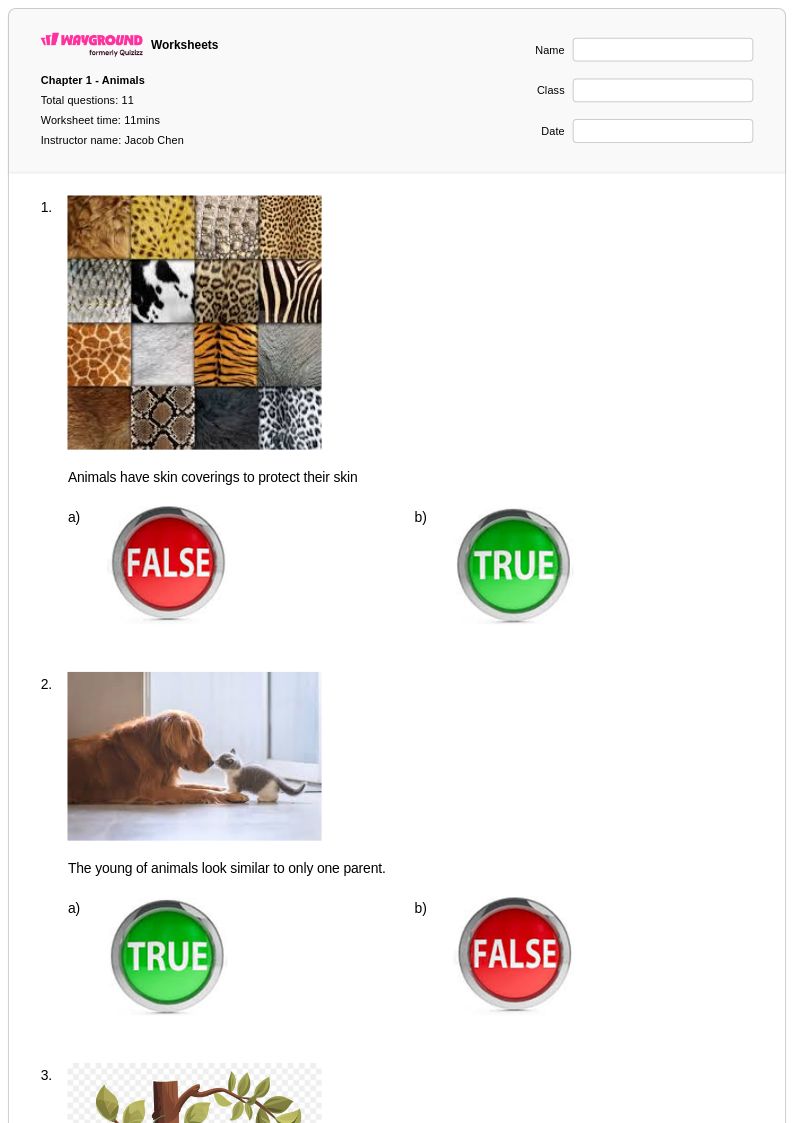
11 Q
1st
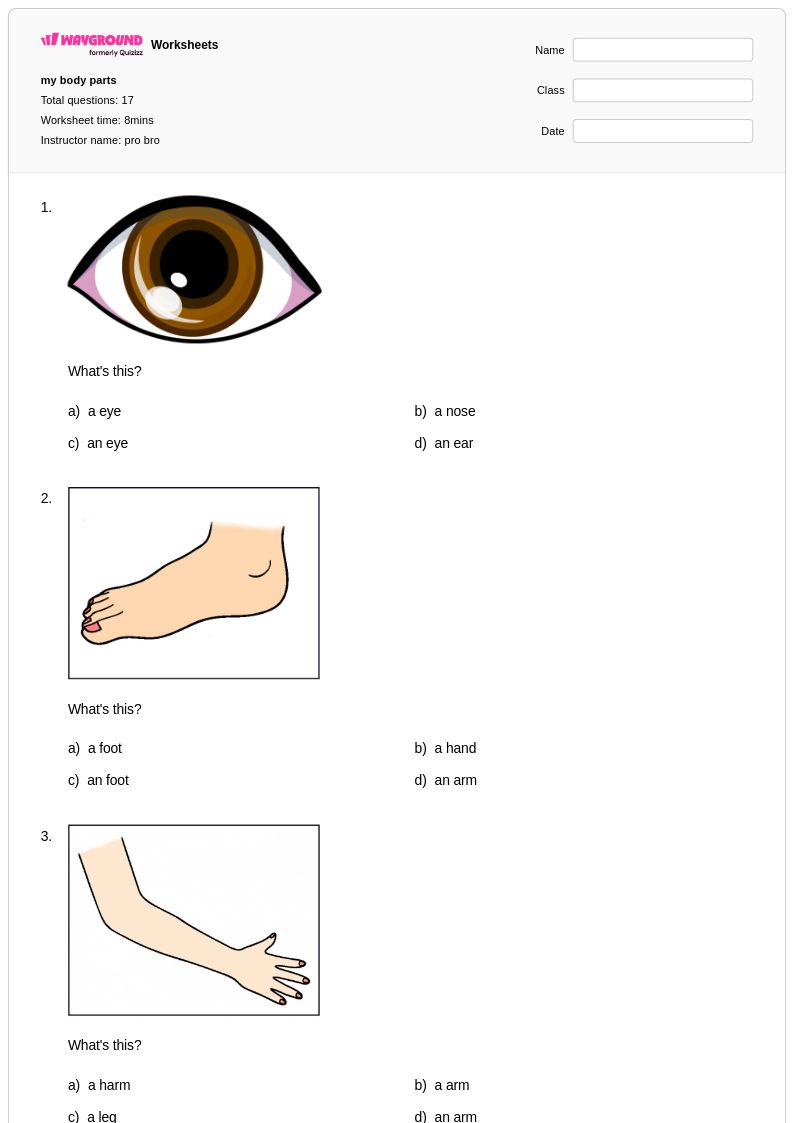
17 Q
1st
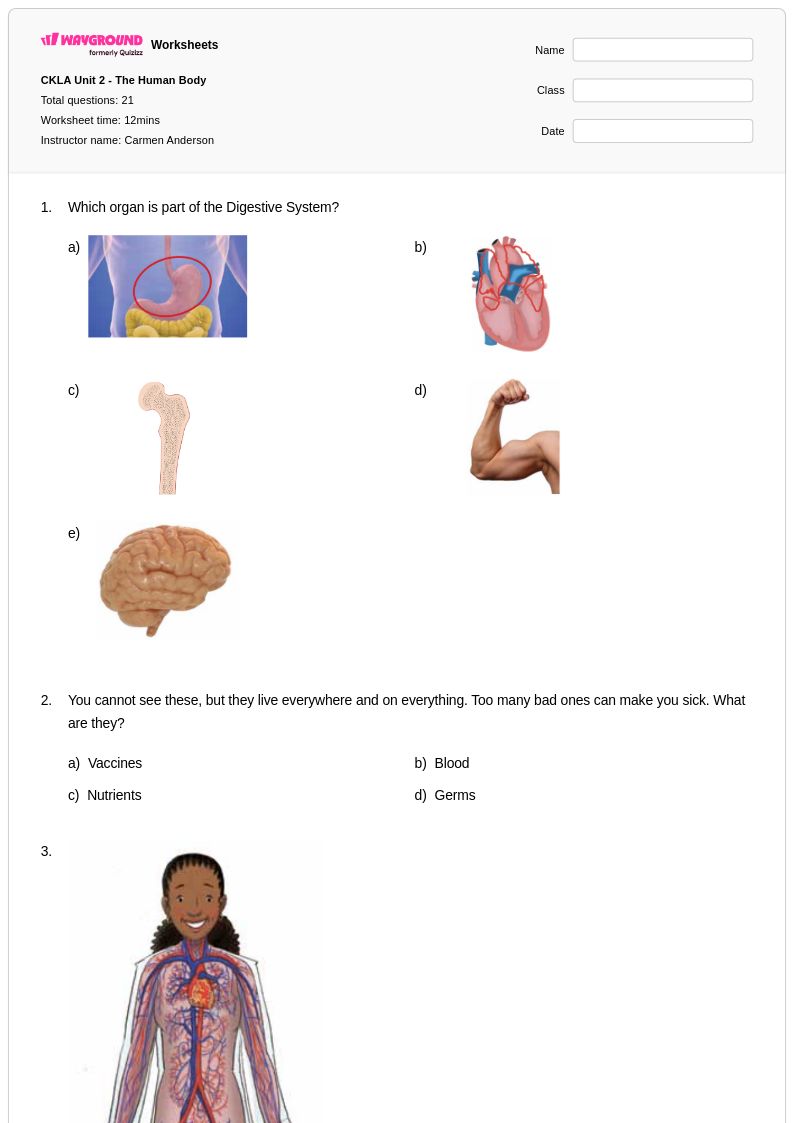
21 Q
1st
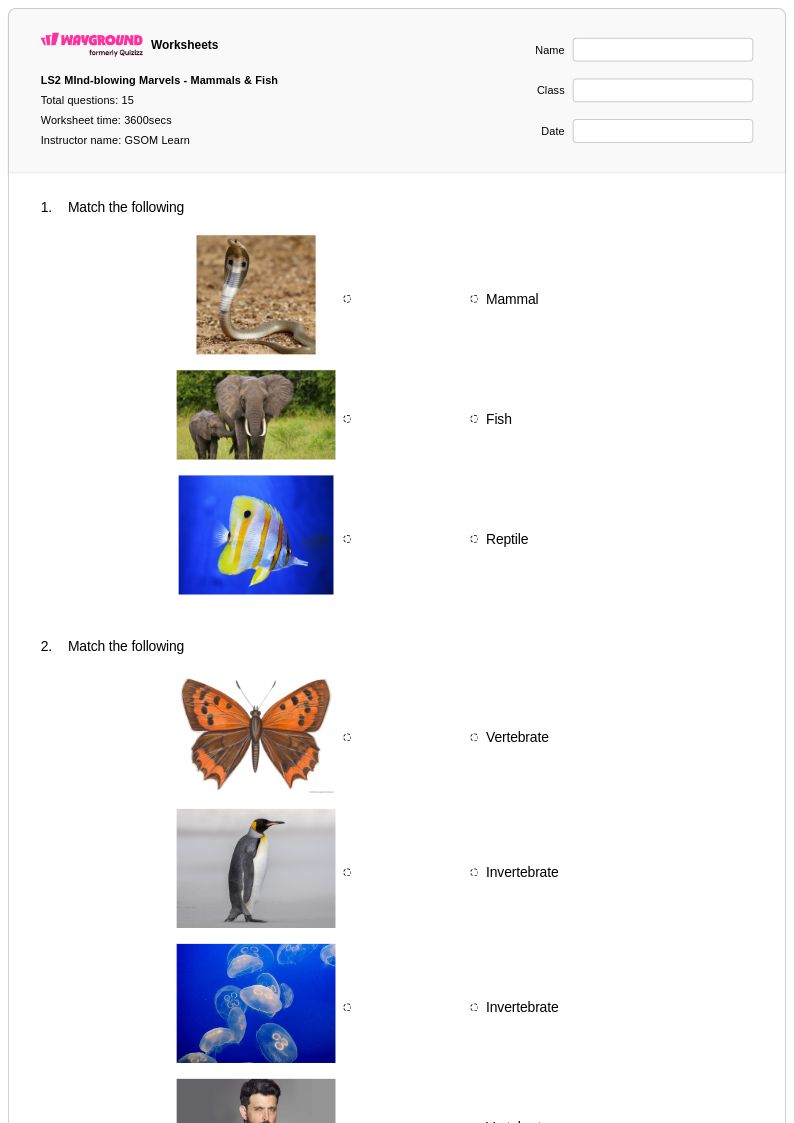
21 Q
1st - 5th
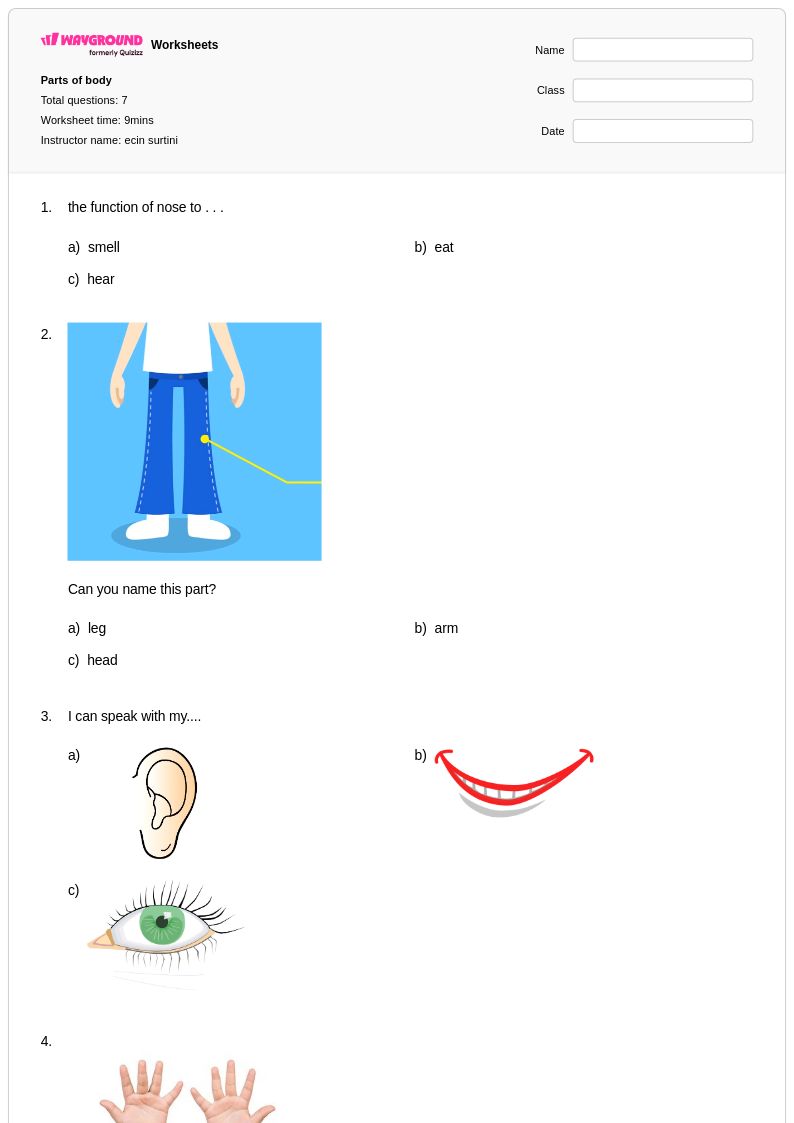
7 Q
1st
Explore Other Subject Worksheets for year 1
Explore printable Body Covering worksheets for Year 1
Body covering worksheets for Year 1 students available through Wayground (formerly Quizizz) introduce young learners to the fascinating world of animal adaptations and protection mechanisms. These educational resources help first-grade students develop foundational biology skills by exploring how different animals use fur, feathers, scales, shells, and skin to survive in their environments. The worksheets strengthen observation abilities, classification skills, and scientific vocabulary through engaging practice problems that encourage students to match animals with their protective coverings and identify patterns in nature. Teachers can access comprehensive materials including detailed answer keys and free printable pdf resources that support hands-on learning experiences, allowing students to connect classroom concepts with real-world examples of animal diversity and adaptation strategies.
Wayground (formerly Quizizz) empowers educators with an extensive collection of teacher-created body covering resources designed specifically for Year 1 biology instruction. The platform's millions of educational materials feature robust search and filtering capabilities that enable teachers to quickly locate age-appropriate content aligned with science standards and learning objectives. These differentiation tools support diverse classroom needs through flexible customization options, allowing educators to modify worksheets for remediation or enrichment purposes while maintaining academic rigor. Available in both printable and digital pdf formats, the body covering worksheet collection facilitates seamless lesson planning and provides teachers with reliable resources for skill practice, formative assessment, and reinforcement of key biological concepts that build students' understanding of animal characteristics and environmental adaptations.