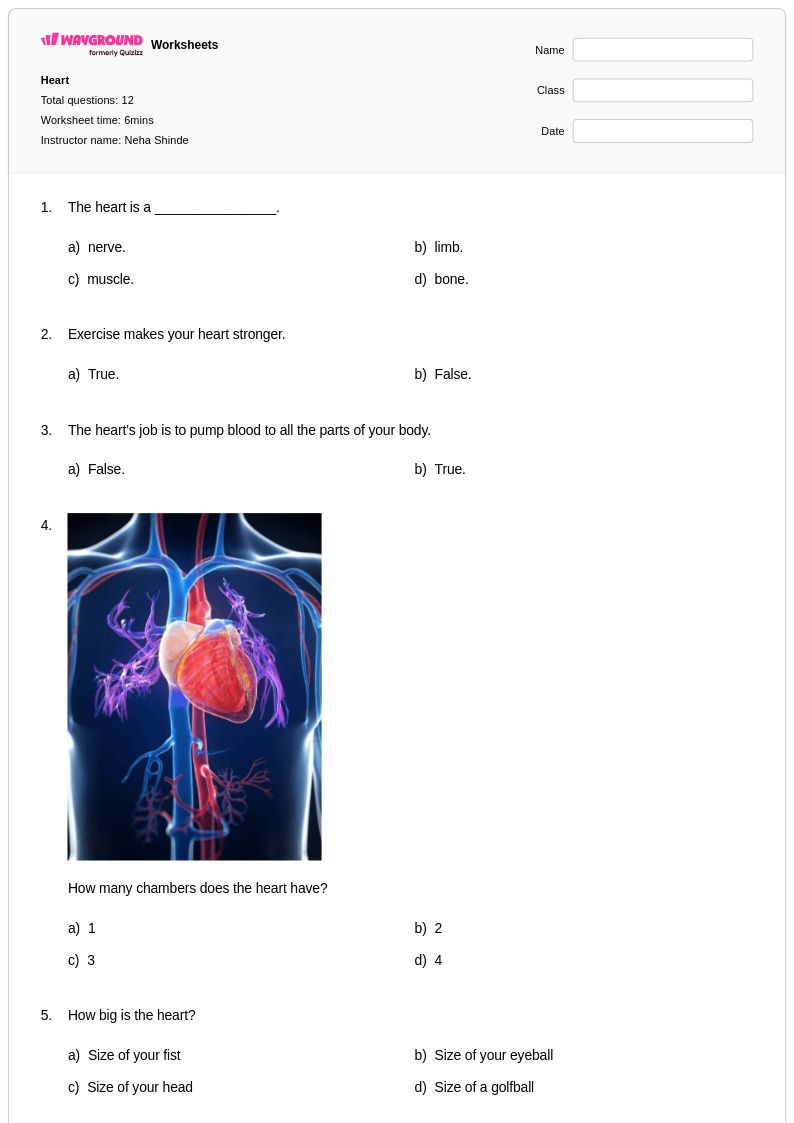
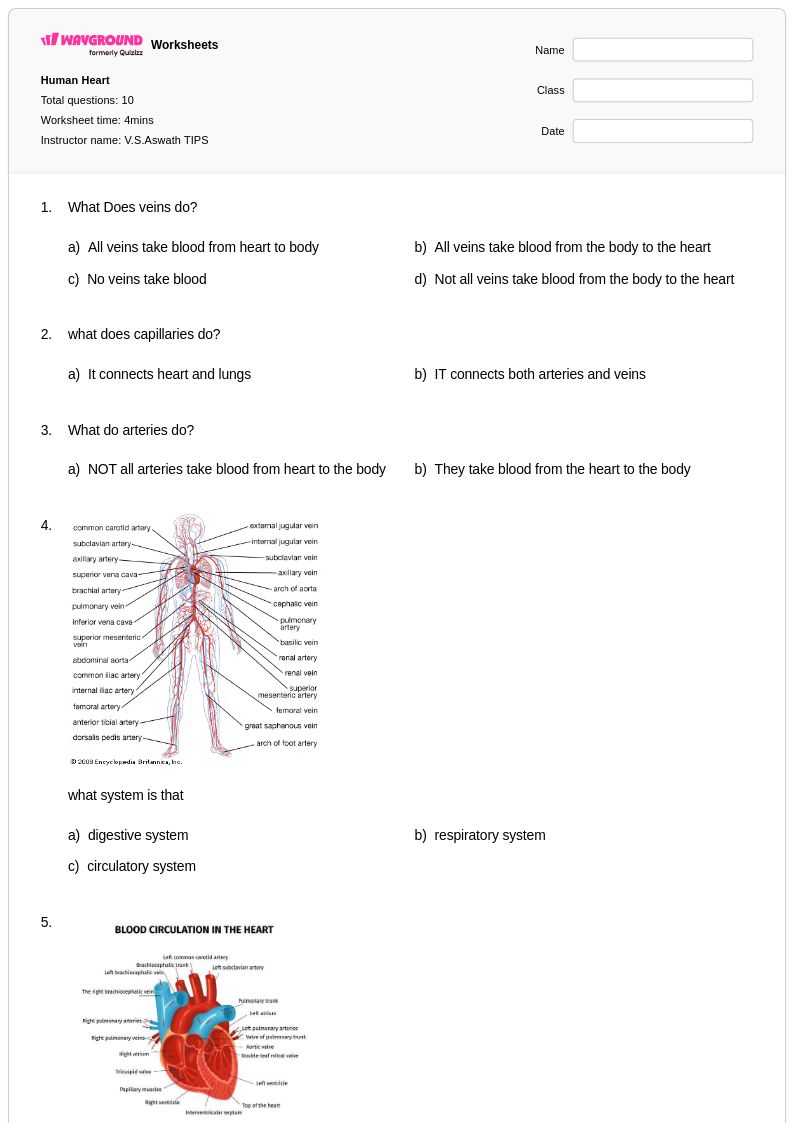
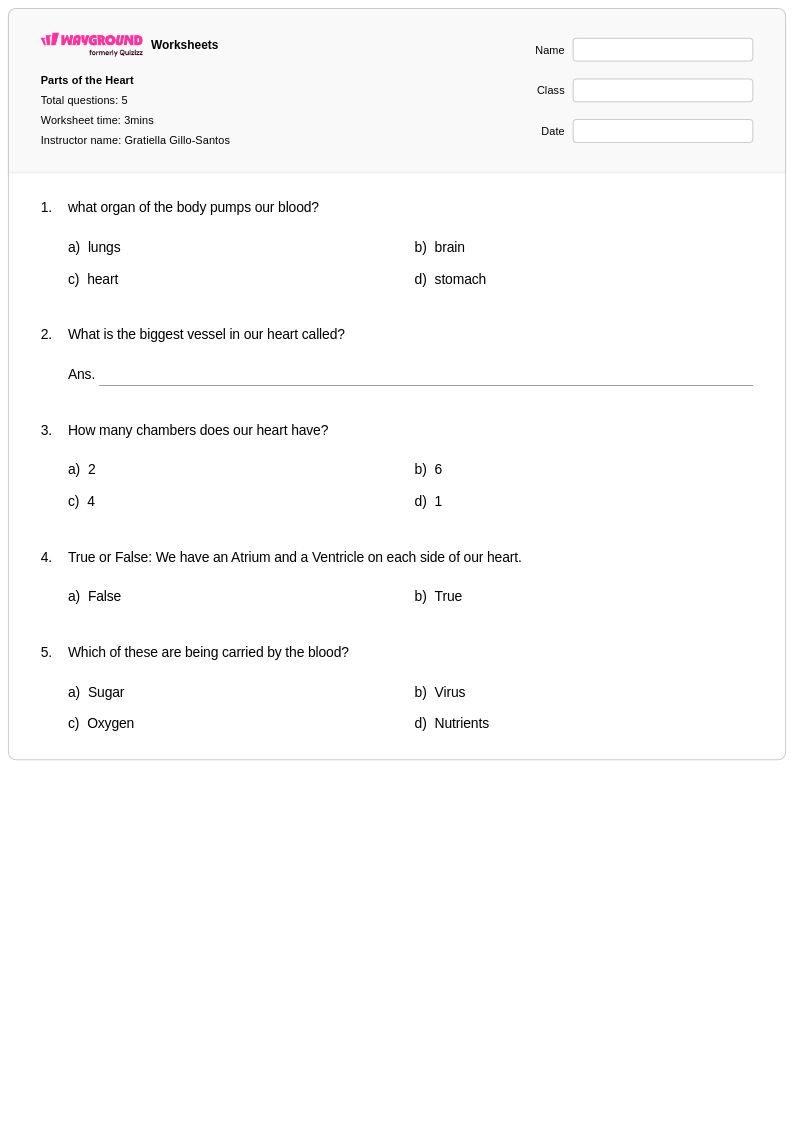
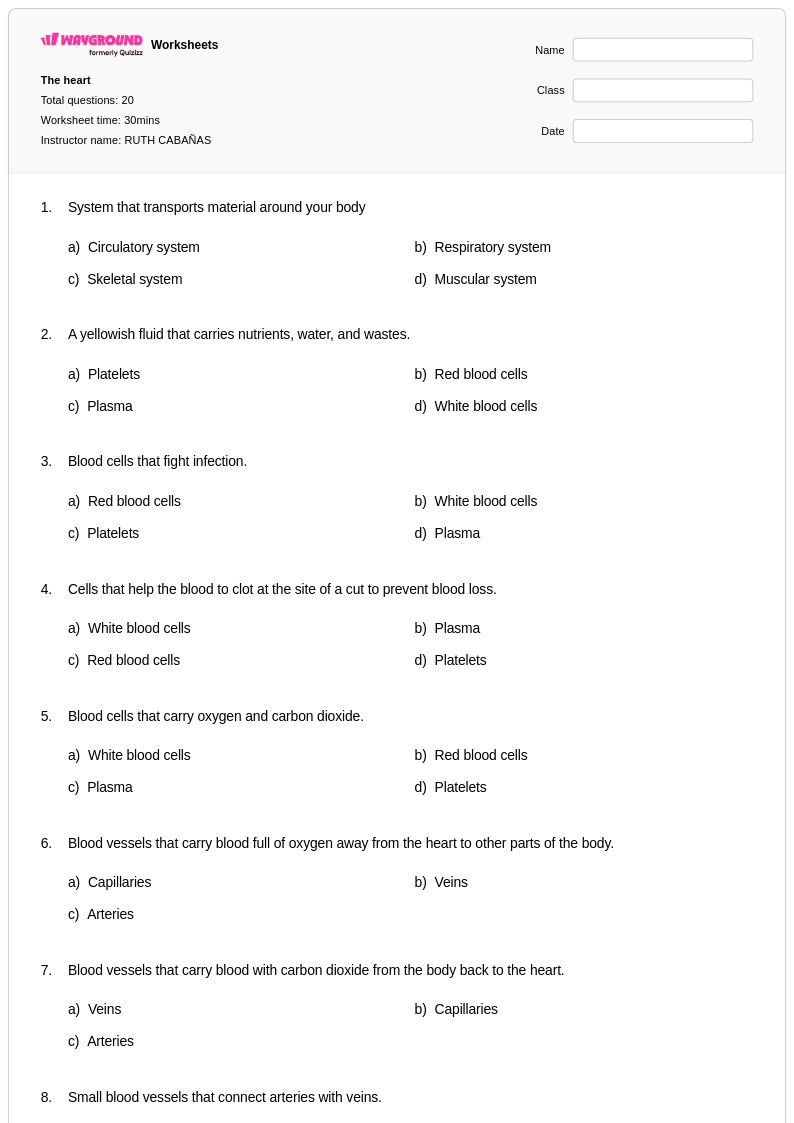
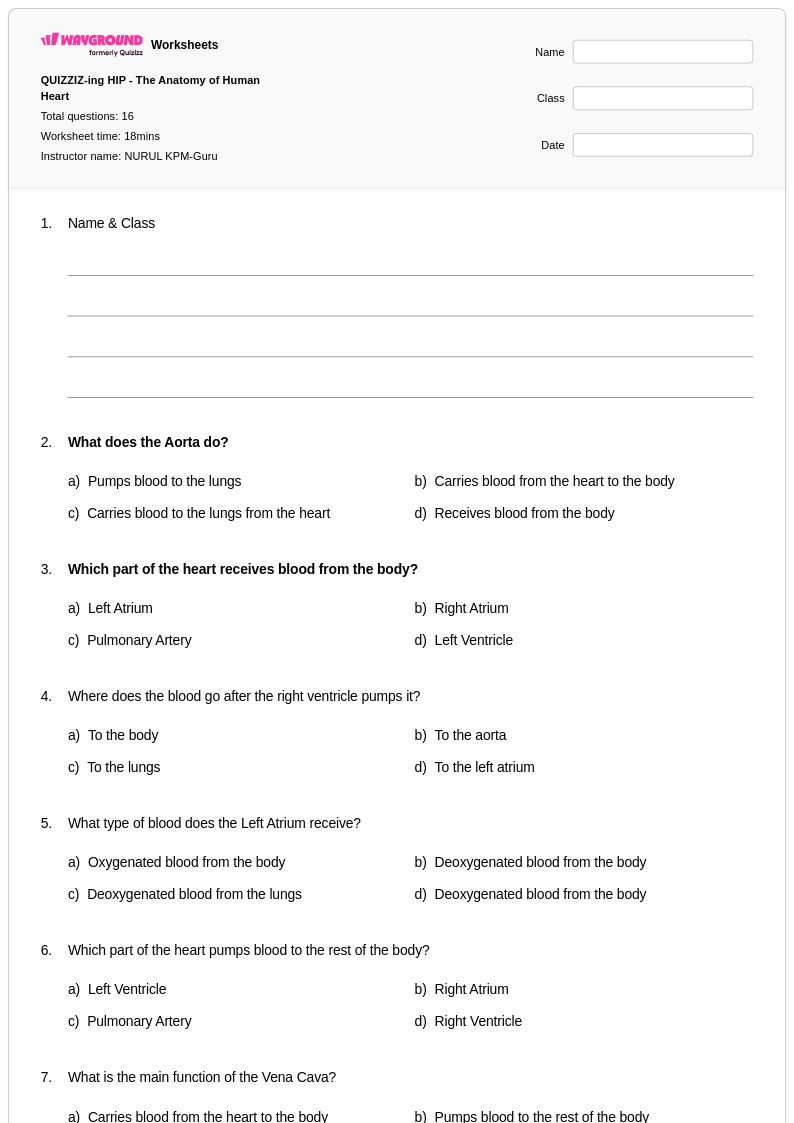
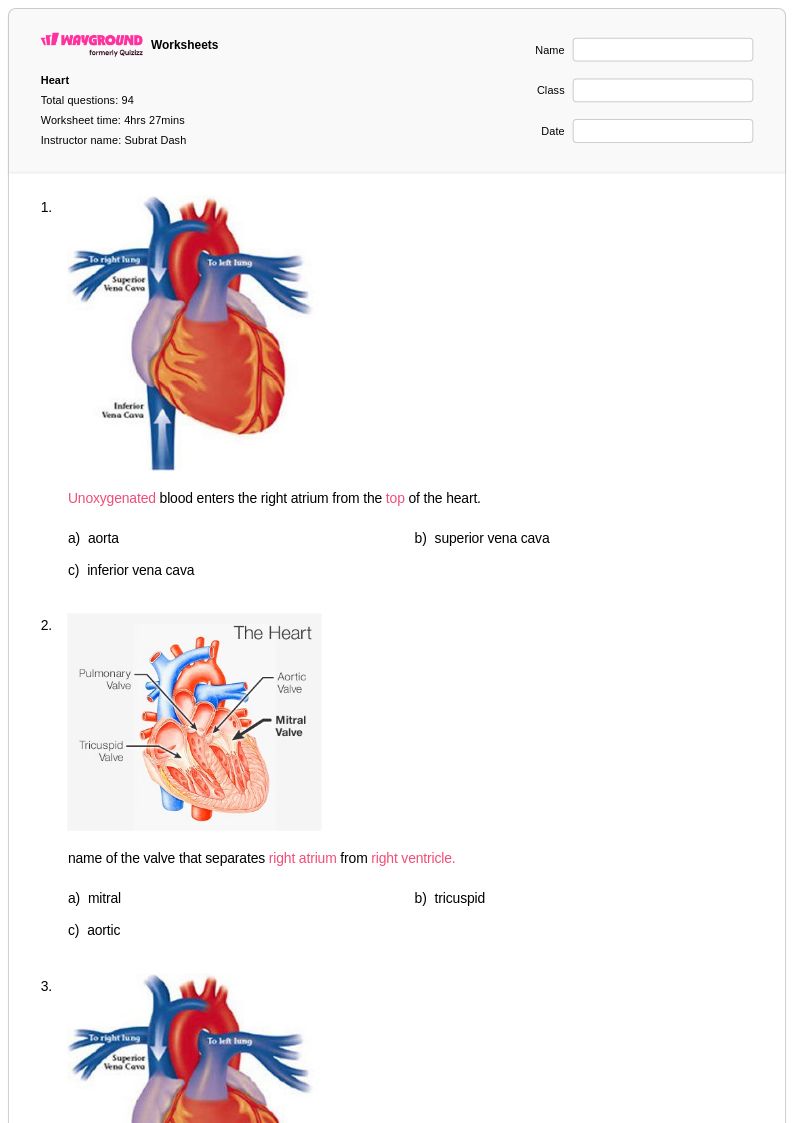
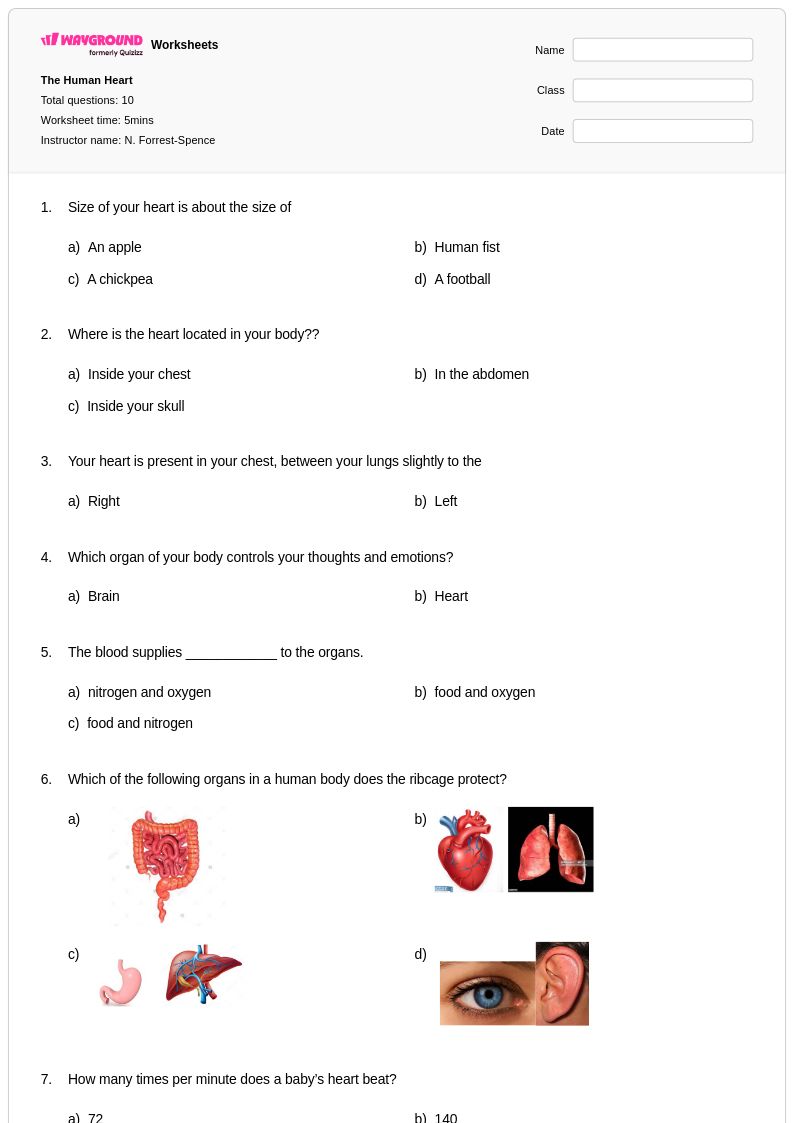
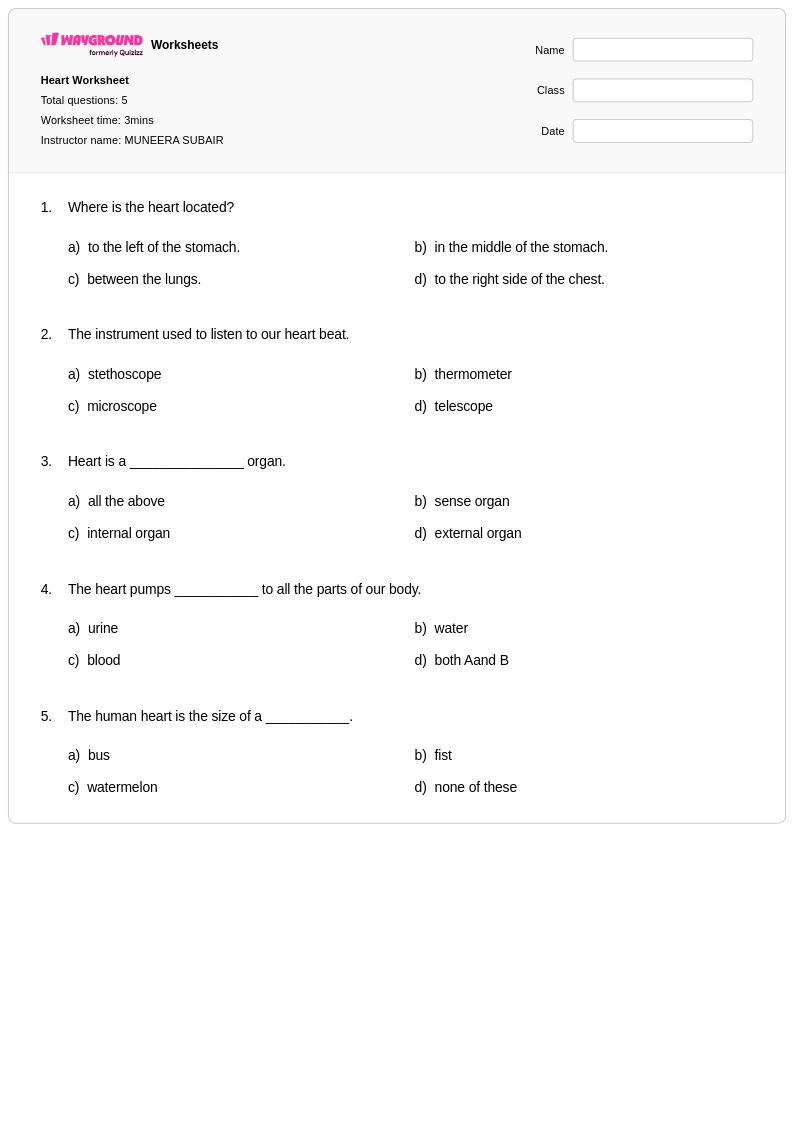
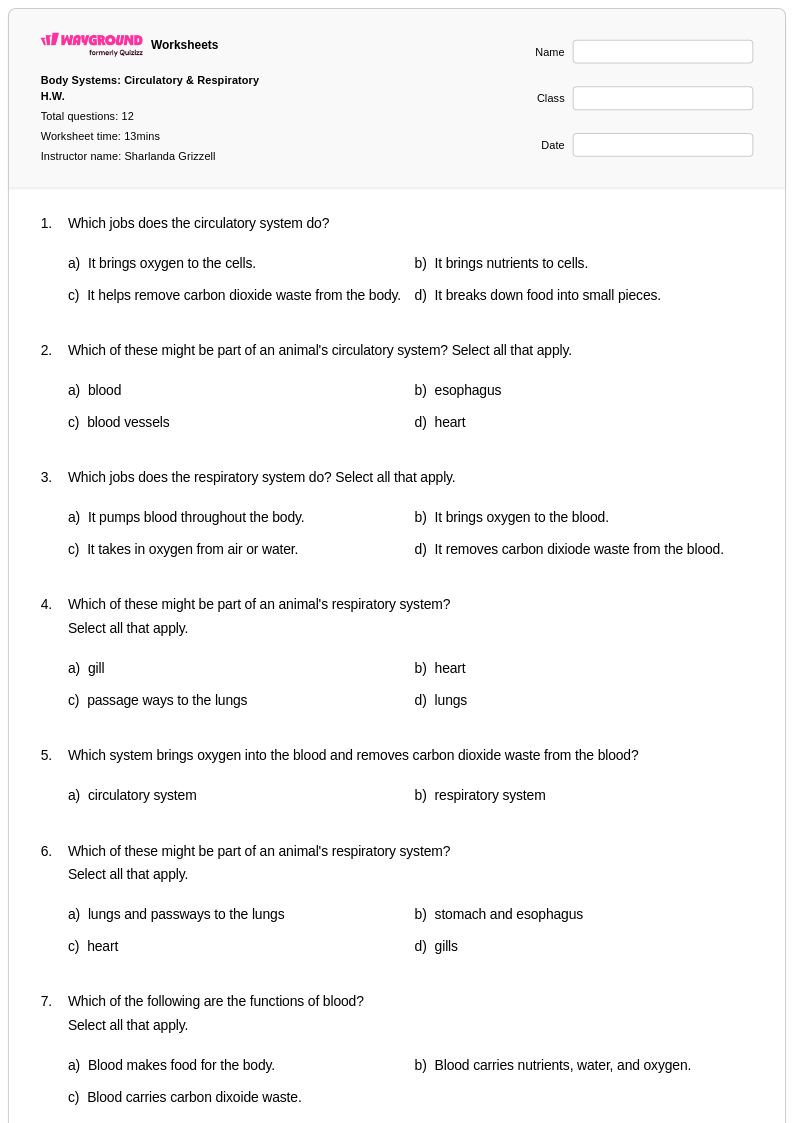
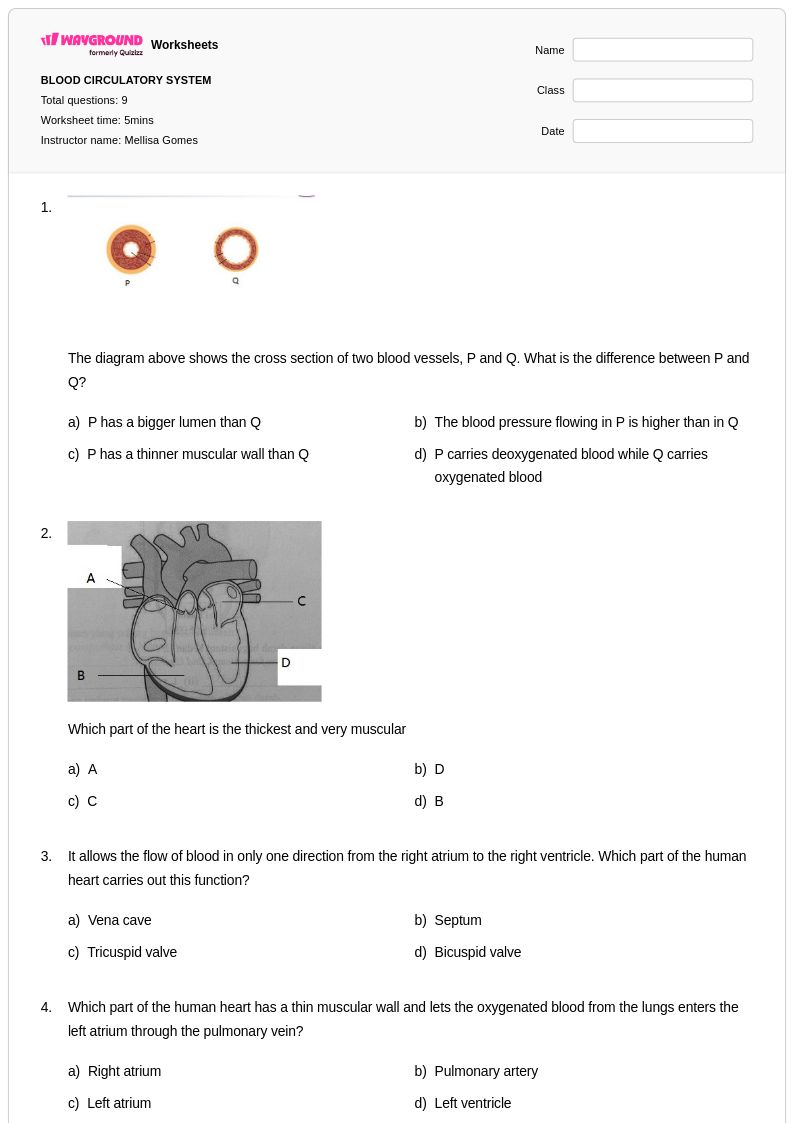
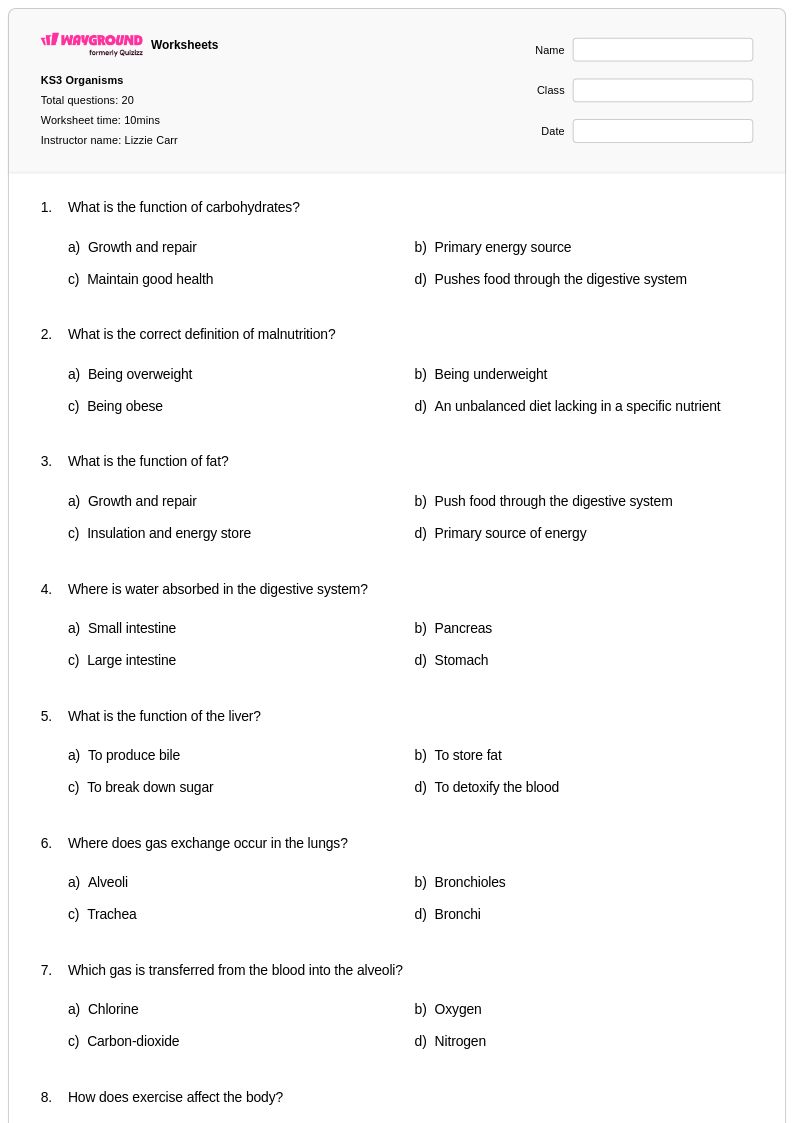
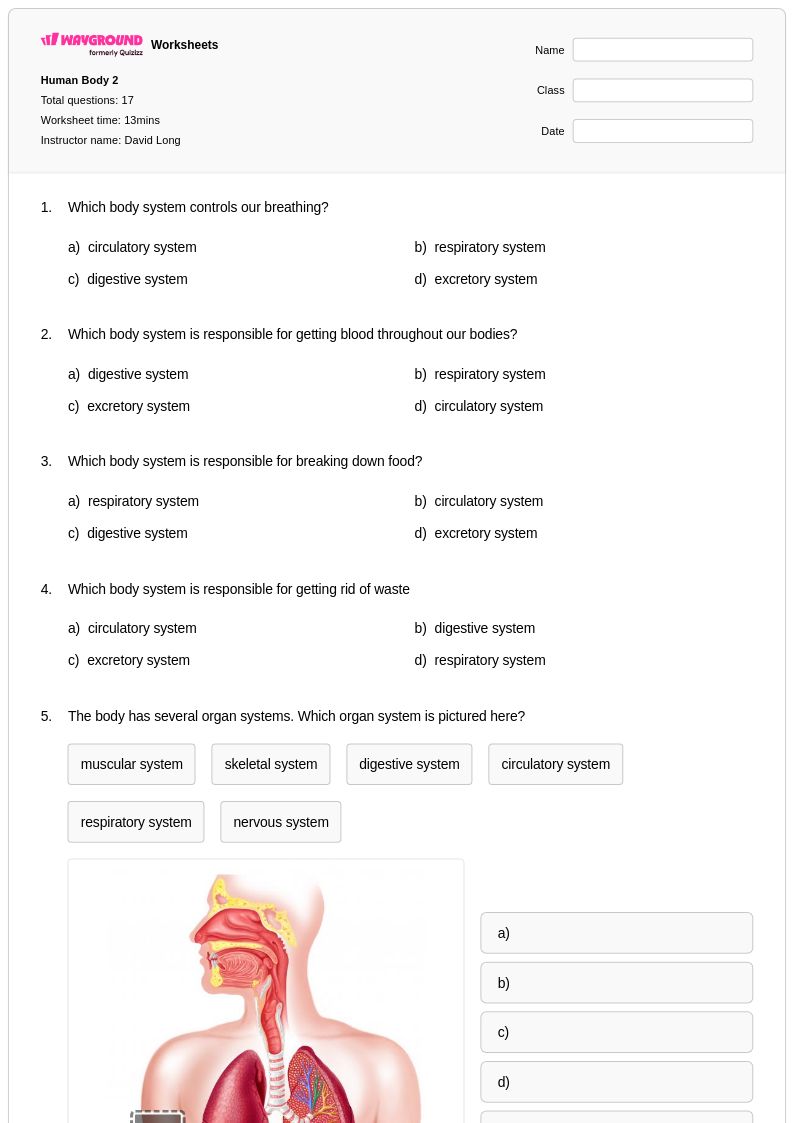
Year 1 heart worksheets and printables from Wayground help young students discover how their heart works through engaging practice problems, free PDF activities, and comprehensive answer keys.
Heart worksheets for Year 1 students available through Wayground (formerly Quizizz) introduce young learners to fundamental concepts about this vital organ through age-appropriate activities and engaging practice problems. These carefully designed printables help first-grade students develop basic understanding of the heart's location in the body, its primary function of pumping blood, and its role in keeping us alive and healthy. The worksheets strengthen essential science observation skills, vocabulary development, and critical thinking abilities while building foundational knowledge about human anatomy. Each resource includes comprehensive materials such as answer keys and free pdf downloads, making it easy for educators to implement effective lessons that connect abstract biological concepts to students' everyday experiences and personal health awareness.
Wayground (formerly Quizizz) empowers teachers with access to millions of educator-created heart-focused resources specifically tailored for Year 1 biology instruction, featuring robust search and filtering capabilities that streamline lesson planning and curriculum alignment. The platform's extensive collection supports differentiated instruction through customizable worksheets that can be adapted for various learning styles and academic needs, whether used for initial concept introduction, skill reinforcement, or enrichment activities. Teachers can seamlessly integrate these materials into their classroom routines using both printable pdf formats for traditional paper-based learning and digital versions for technology-enhanced instruction. This comprehensive approach enables educators to effectively address diverse student needs while providing targeted practice opportunities that support remediation for struggling learners and advanced exploration for students ready to deepen their understanding of basic cardiovascular concepts.
FAQs
How do I teach heart anatomy and the cardiovascular system effectively?
Effective heart anatomy instruction begins with establishing the four-chamber structure (right atrium, right ventricle, left atrium, left ventricle) before introducing blood flow pathways. Teachers should distinguish between pulmonary and systemic circulation early, as students often confuse the two circuits. Using labeled diagrams alongside tracing activities helps students connect structural features to their functions, such as linking valve placement to the prevention of backflow.
What exercises help students practice tracing blood flow through the heart?
Blood flow tracing exercises ask students to follow a drop of blood from entry at the vena cava through each chamber, valve, and vessel in sequence, reinforcing the directional logic of circulation. Practice problems that require students to identify whether blood is oxygenated or deoxygenated at each stage are particularly effective for building accurate mental models. Combining diagram labeling with written sequencing tasks addresses both visual and analytical skill development.
What mistakes do students commonly make when learning about the heart?
One of the most common misconceptions is that the right side of the heart pumps blood to the body — students frequently mix up the roles of the right and left ventricles. Another frequent error is conflating the pulmonary artery carrying deoxygenated blood with the expectation that arteries always carry oxygenated blood, which breaks their prior rule-based understanding. Students also struggle with the electrical conduction system, often treating the sinoatrial node as a vague concept rather than a discrete anatomical structure.
How do I use Wayground's heart worksheets in my classroom?
Wayground's heart worksheets are available as printable PDFs for traditional classroom use and in digital formats for technology-integrated environments, giving teachers flexibility for in-class, homework, or independent study settings. Teachers can also host worksheets as a quiz directly on Wayground, enabling real-time tracking of student responses. Digital formats support accommodations such as read aloud, extended time, and reduced answer choices, which can be assigned to individual students without disrupting the rest of the class.
How do I differentiate heart anatomy instruction for students at different levels?
For students who need remediation, focus on the basic four-chamber model and a simplified blood flow sequence before introducing valves or the conduction system. Advanced learners can be challenged with cardiac output calculations, analysis of how heart rate changes under physiological stress, or comparison of fetal and adult circulation. On Wayground, teachers can assign accommodations such as reduced answer choices or read aloud to individual students, allowing the same worksheet to serve multiple learner profiles simultaneously.
How does understanding cardiac muscle function support broader cardiovascular learning?
Cardiac muscle is unique because it contracts involuntarily and is electrically coupled, meaning cells communicate directly to produce coordinated, rhythmic contractions. Understanding this distinguishes the heart from both skeletal and smooth muscle and explains why disruptions to the conduction system, such as arrhythmias, affect the entire organ. Building this conceptual foundation helps students make sense of more advanced topics like the sinoatrial node's role as the heart's natural pacemaker.