Free Printable Capitalization Worksheets for Year 6
Year 6 capitalization worksheets and free printables help students master proper capitalization rules through engaging practice problems, downloadable PDFs, and comprehensive answer keys from Wayground's extensive collection.
Explore printable Capitalization worksheets for Year 6
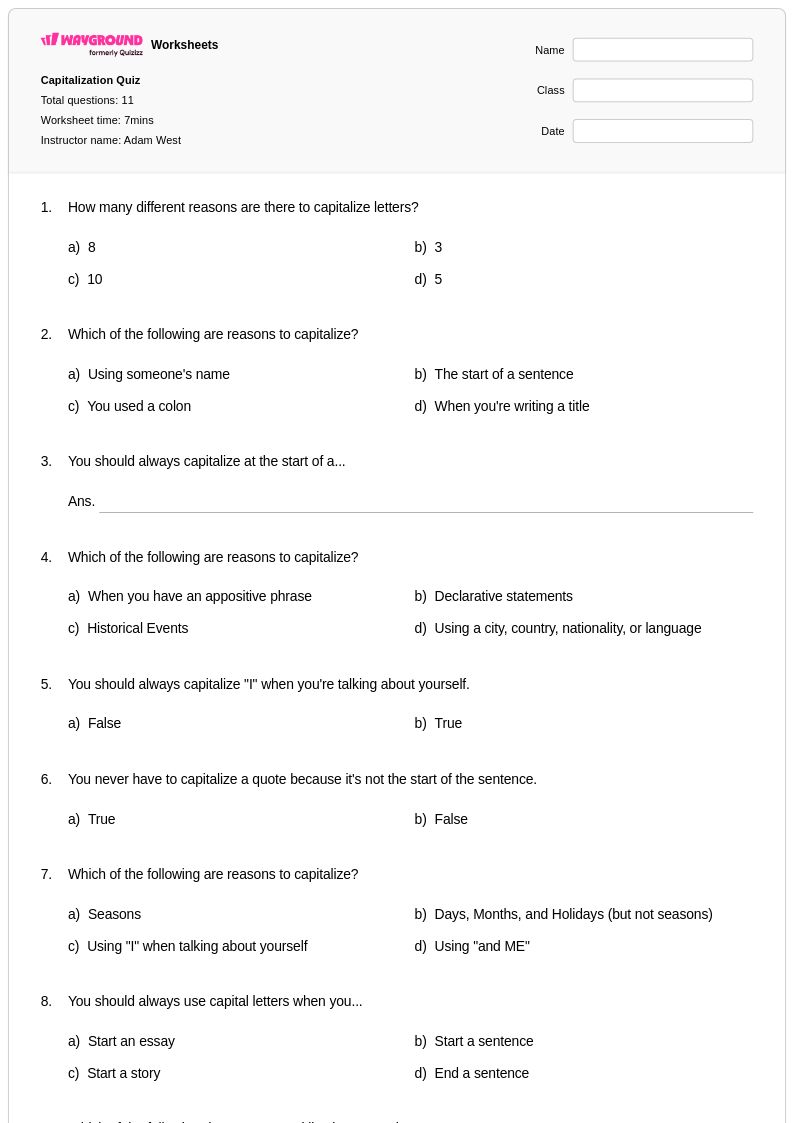
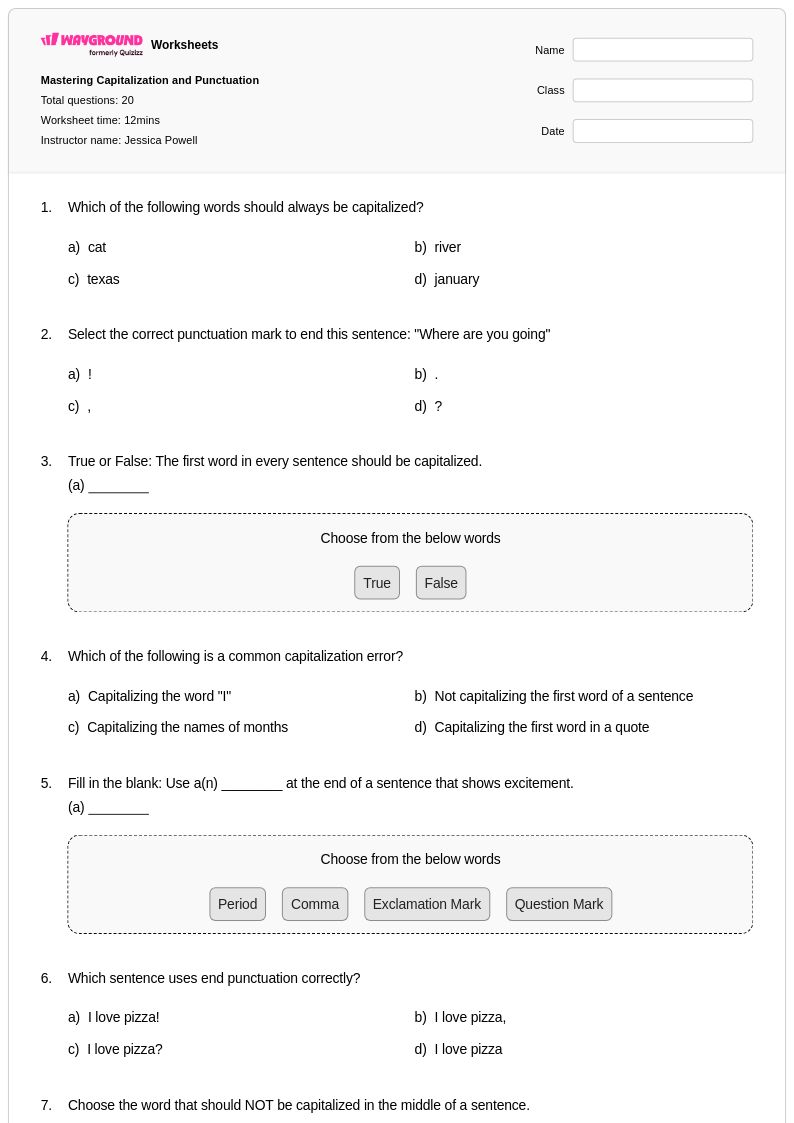
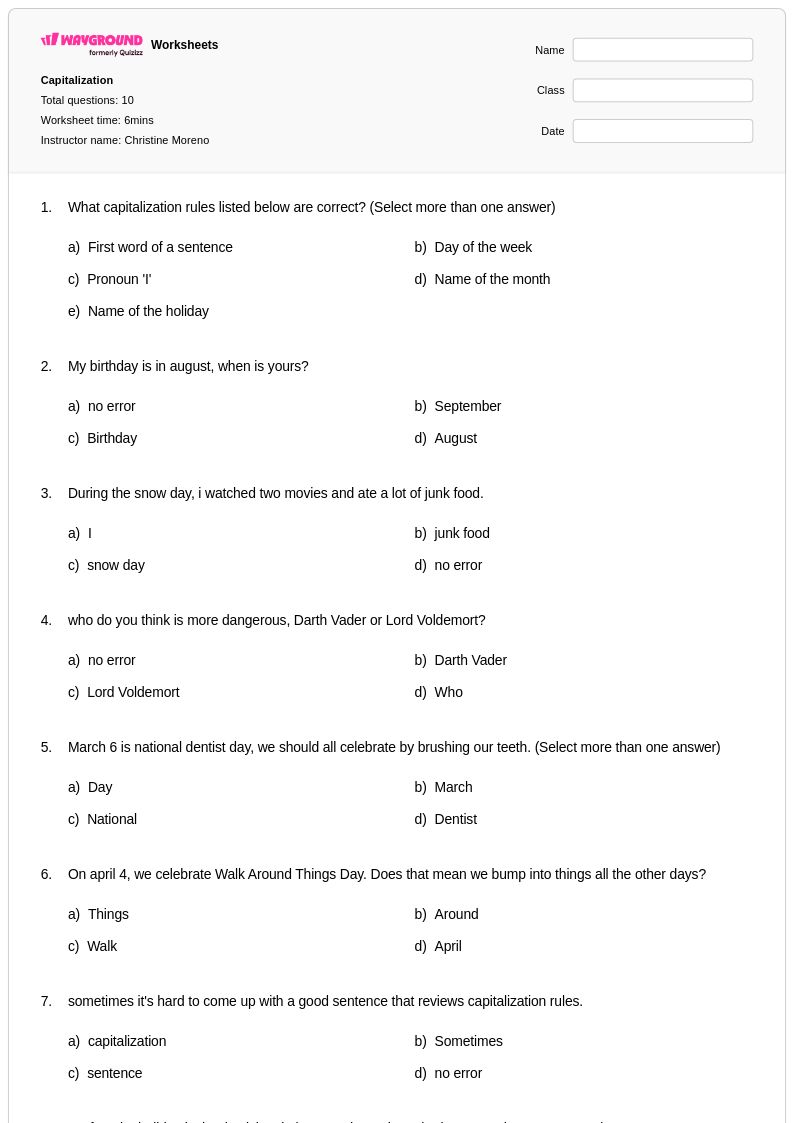
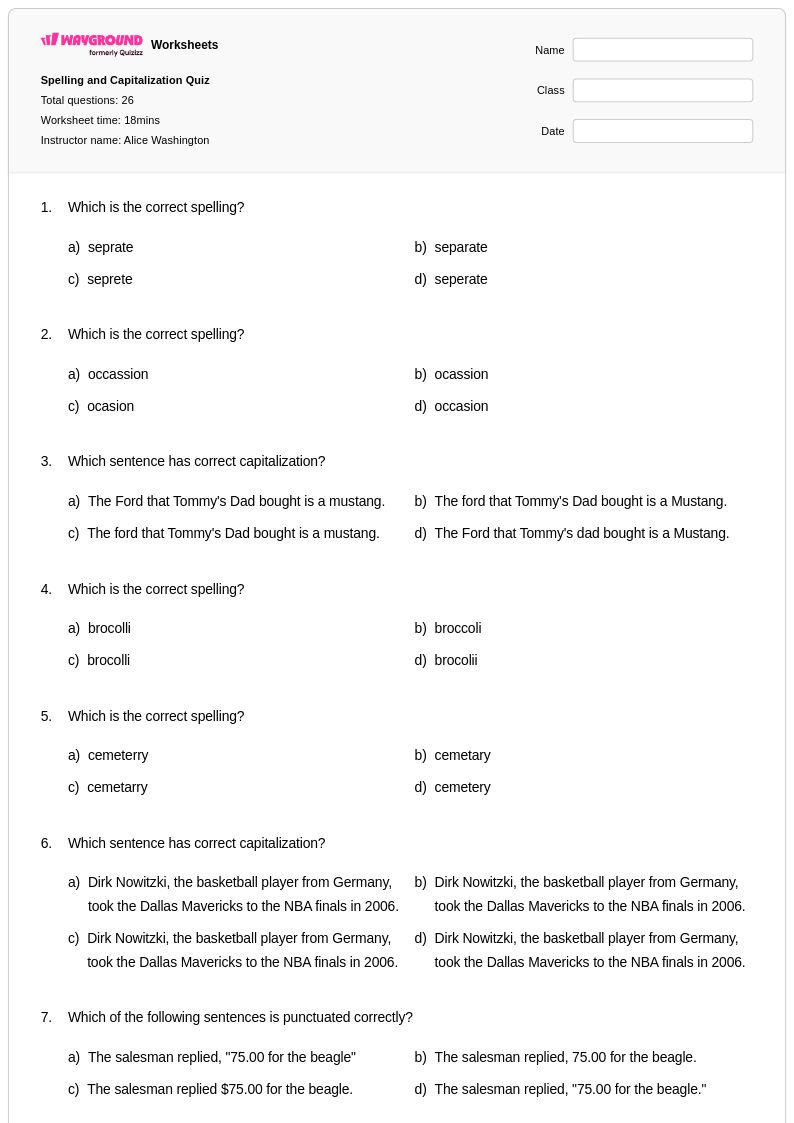
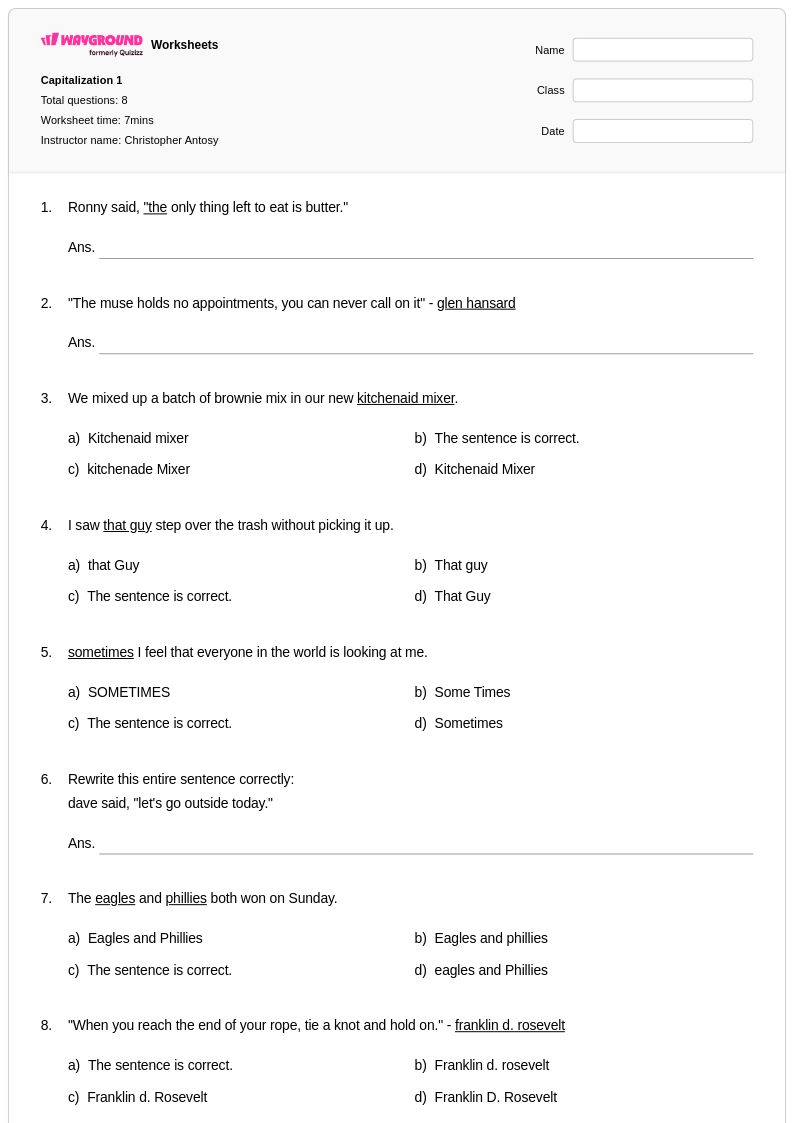
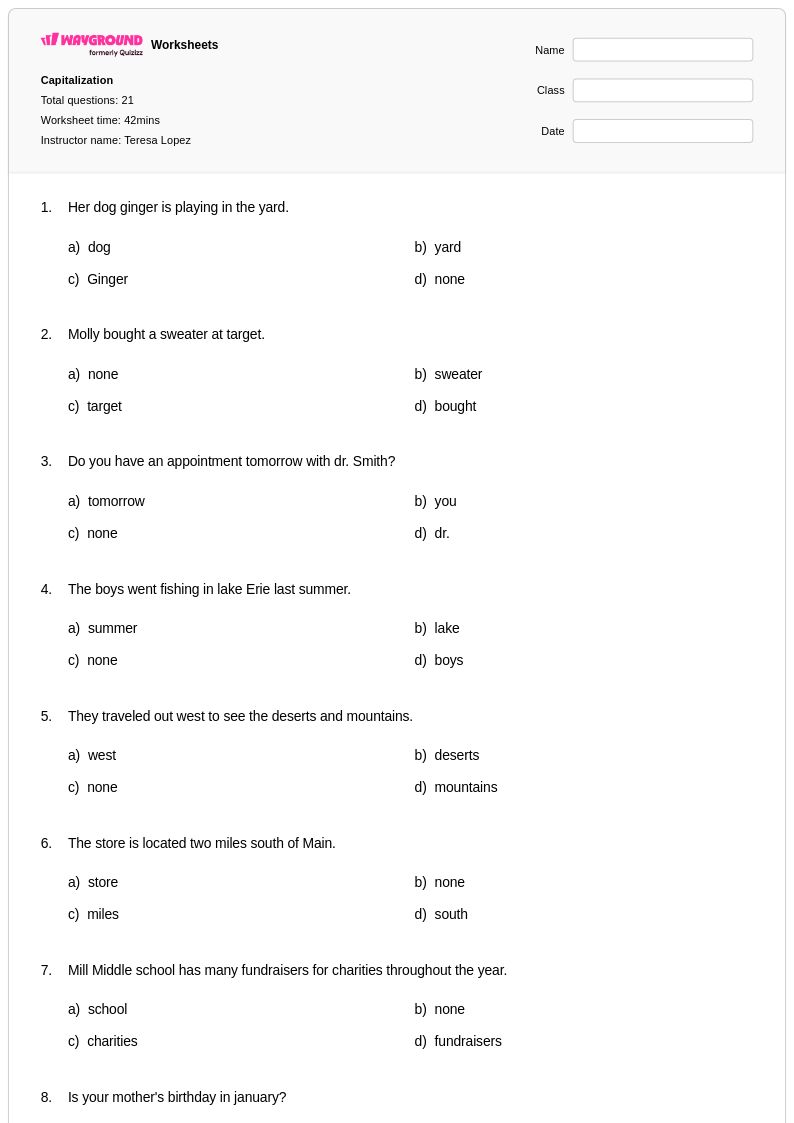
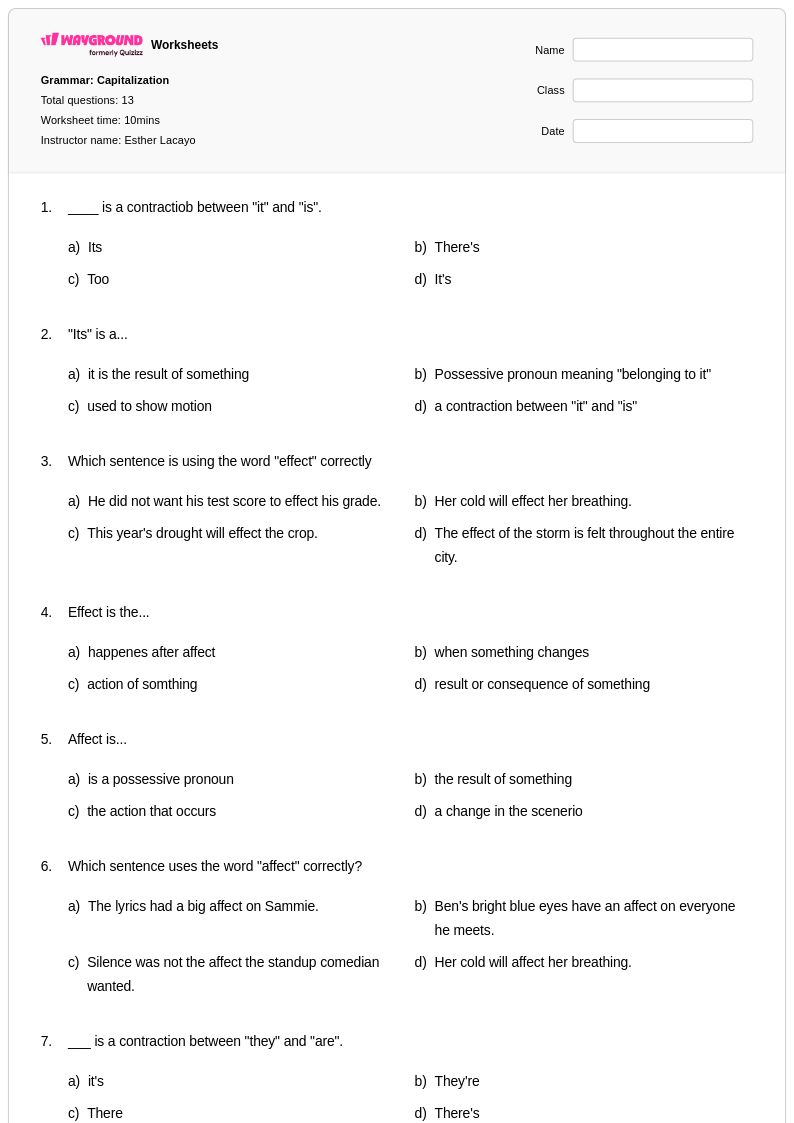
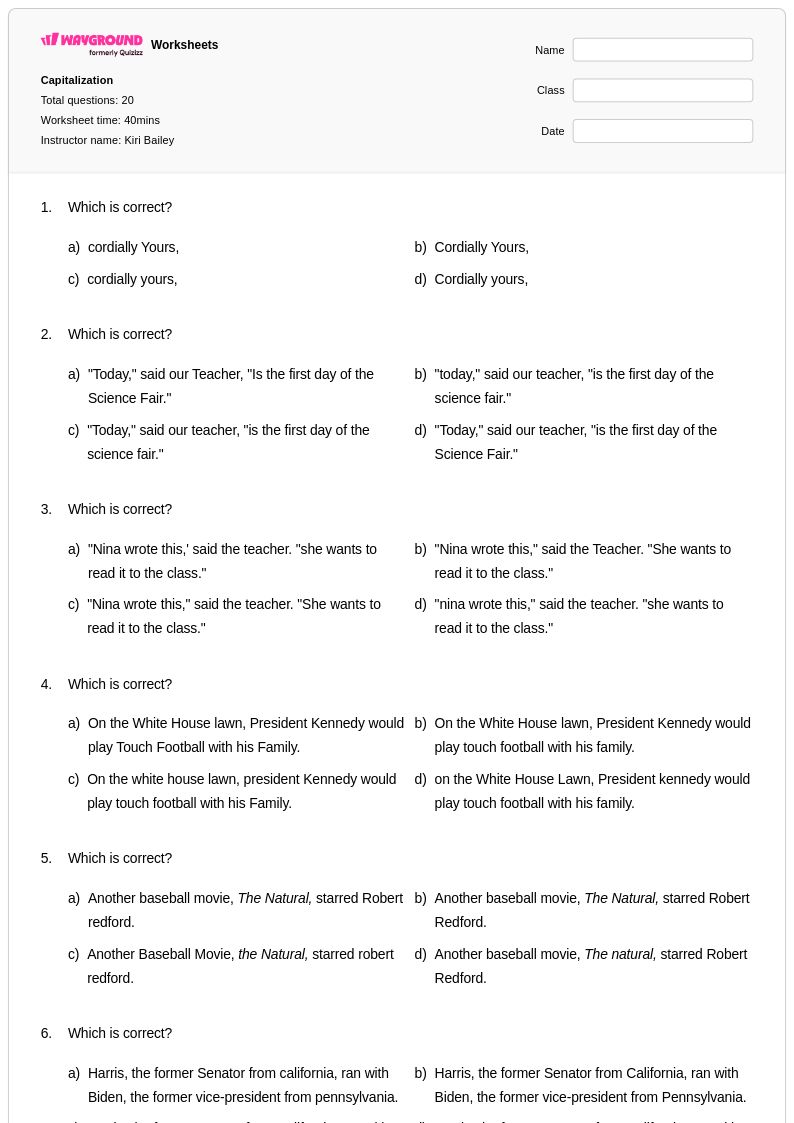
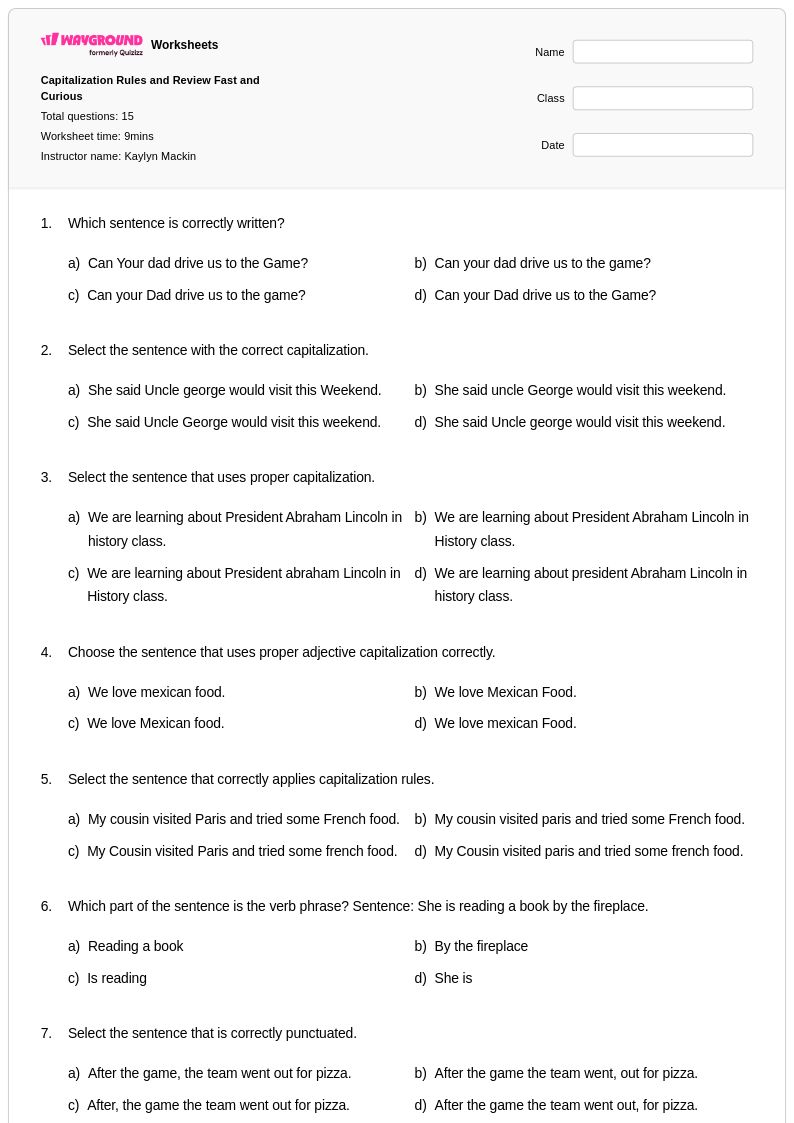
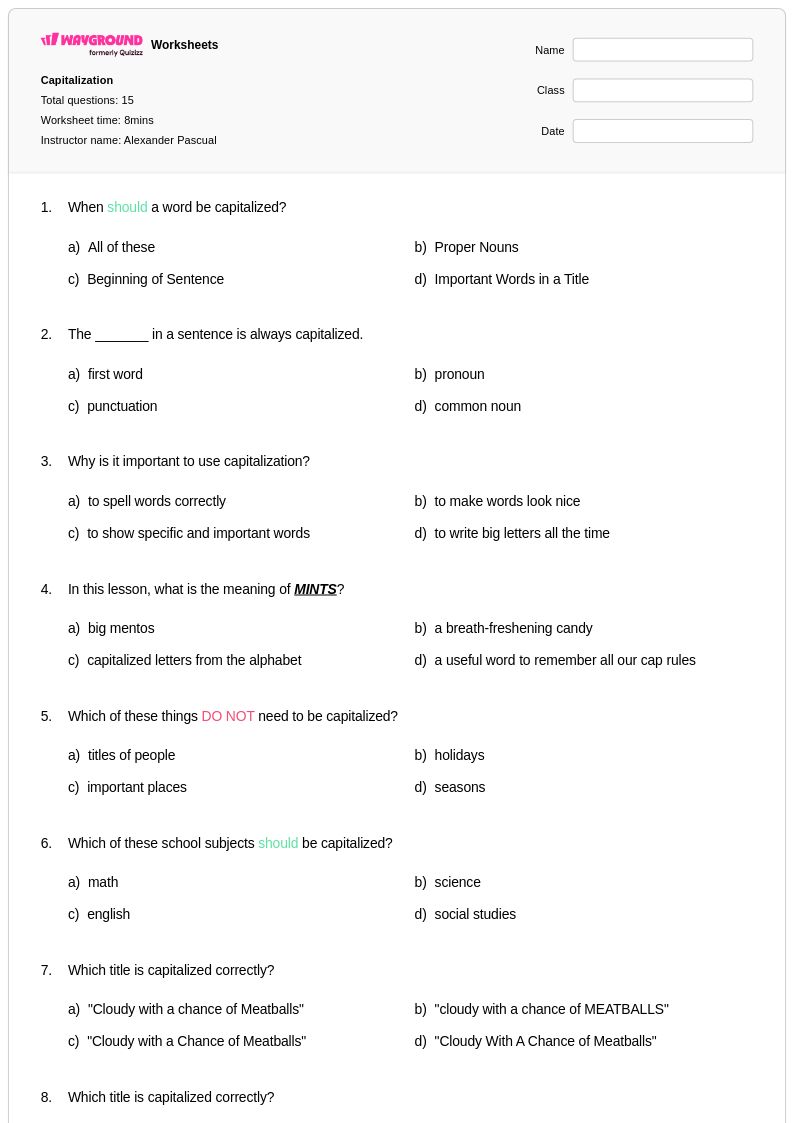
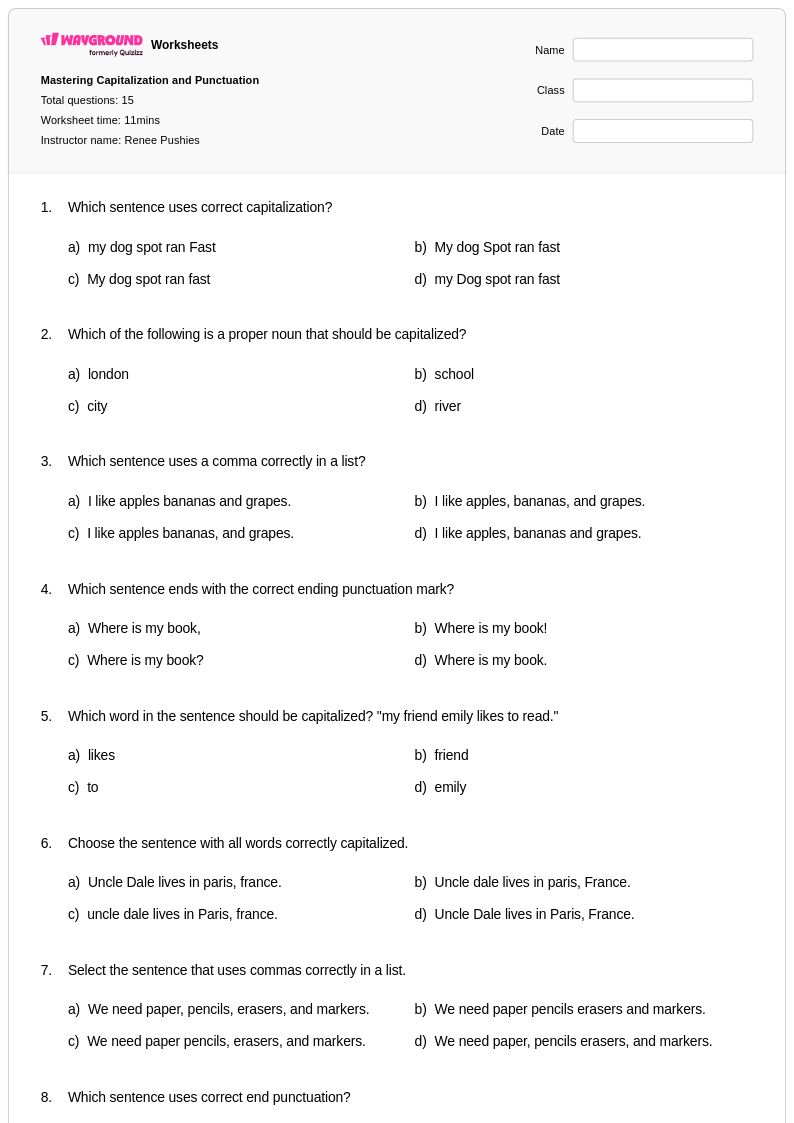
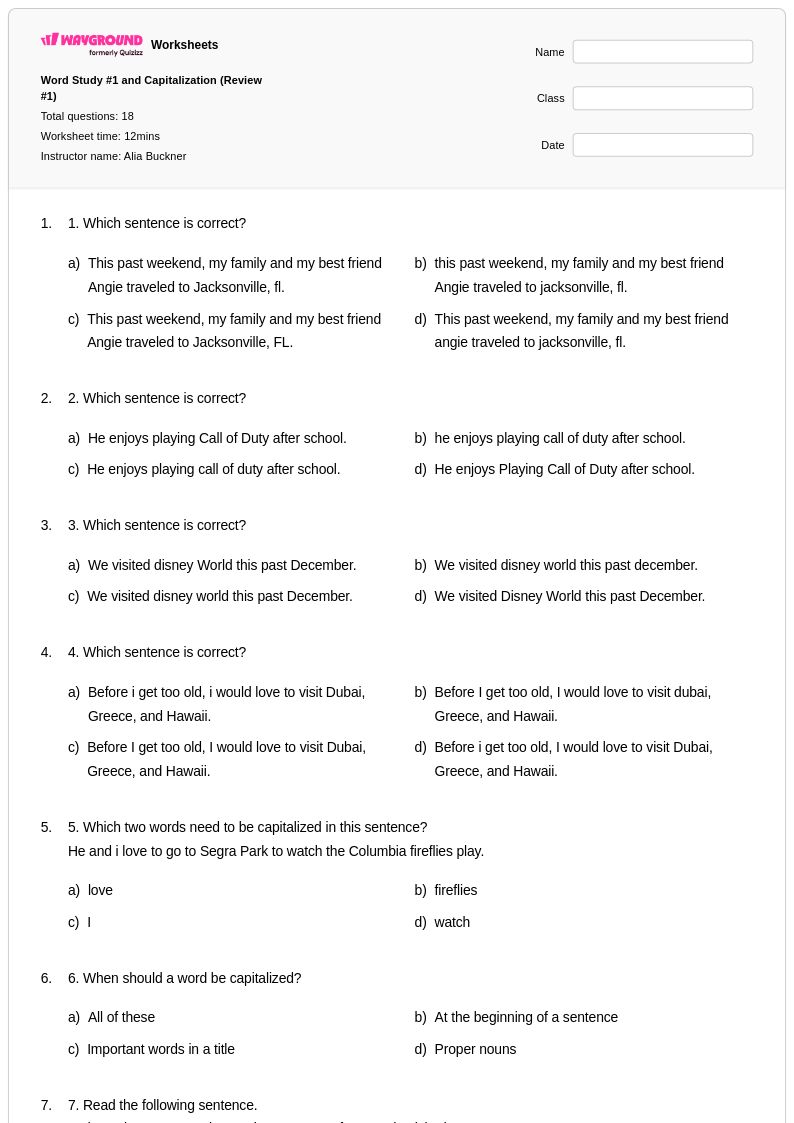
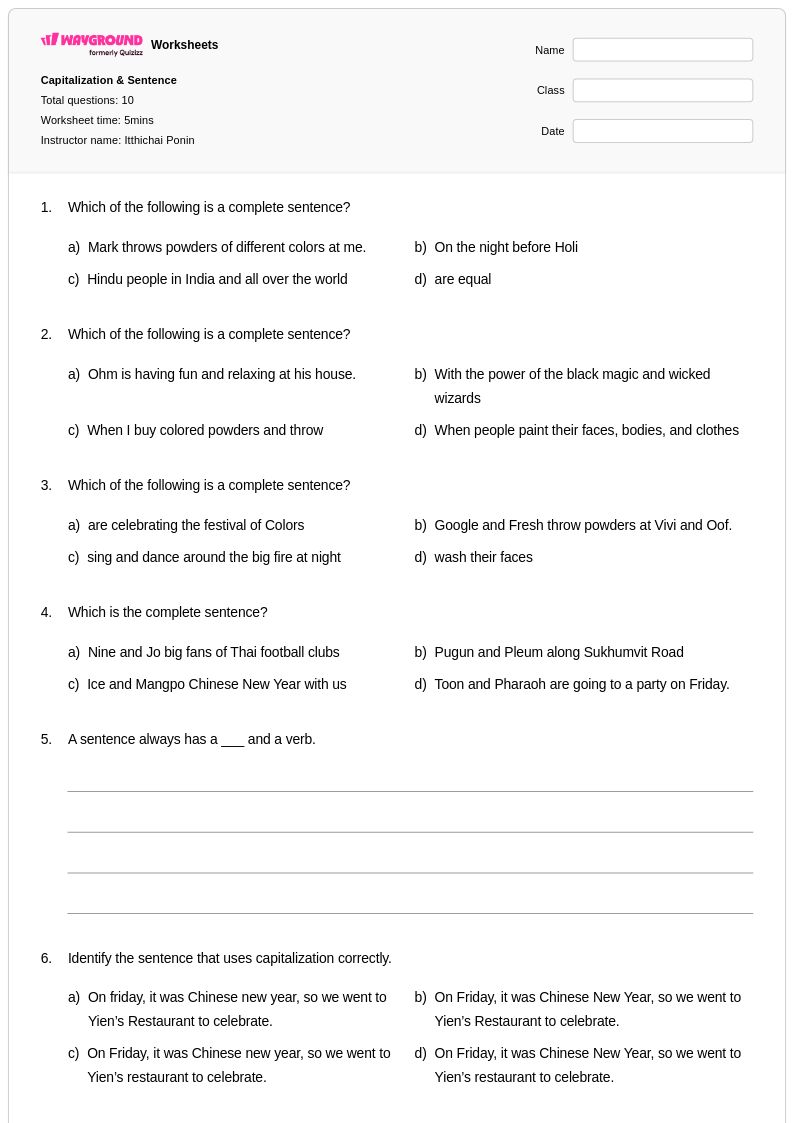
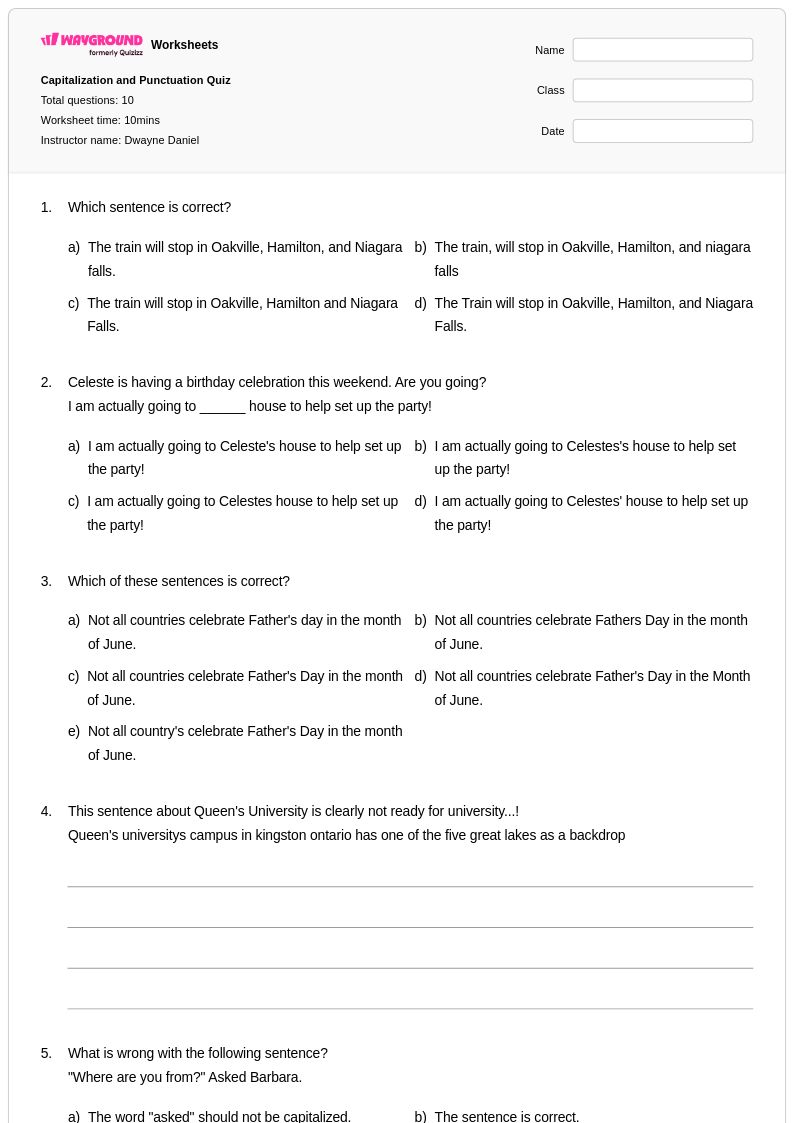
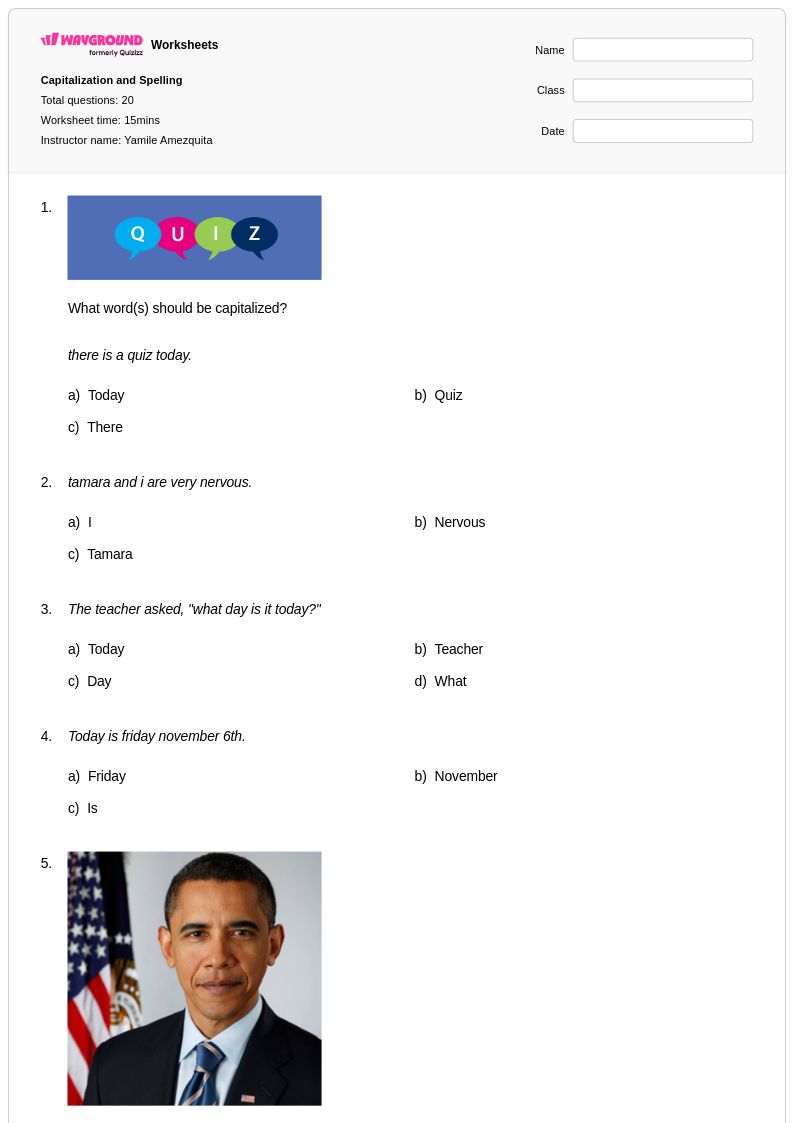
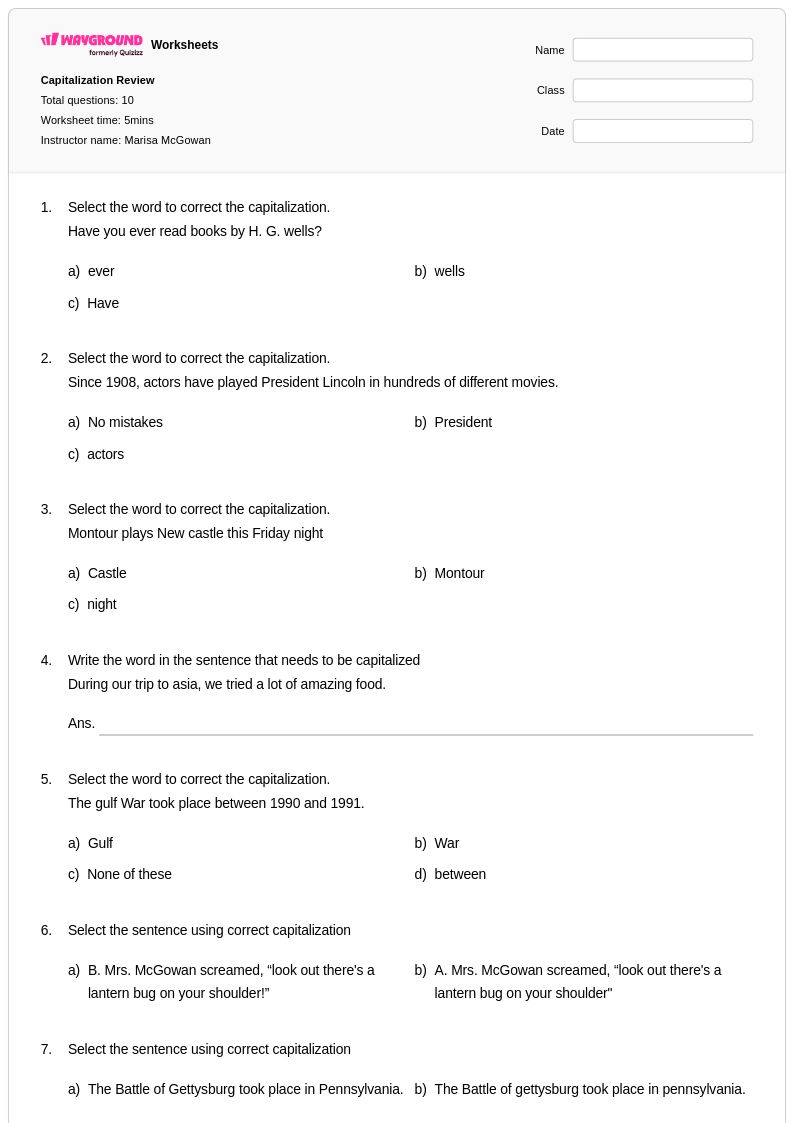
Capitalization worksheets for Year 6 students through Wayground (formerly Quizizz) provide comprehensive practice with the essential mechanics of proper noun identification, sentence beginnings, and advanced capitalization rules that sixth graders must master. These carefully designed resources strengthen students' understanding of when to capitalize titles, geographical locations, historical periods, brand names, and specific course titles while reinforcing foundational skills like capitalizing the first word of sentences and proper nouns. Each worksheet collection includes detailed answer keys and is available as free printables in convenient pdf format, allowing students to work through practice problems that progress from basic capitalization concepts to more nuanced applications such as capitalizing words in titles according to standard style guides and recognizing when common nouns become proper nouns in specific contexts.
Wayground (formerly Quizizz) empowers teachers with millions of educator-created capitalization resources that feature robust search and filtering capabilities aligned to state and national language arts standards. The platform's differentiation tools enable instructors to customize worksheets based on individual student needs, whether providing remediation for learners still mastering basic proper noun capitalization or offering enrichment activities that challenge advanced students with complex title capitalization rules and exception cases. Teachers can seamlessly access these materials in both printable pdf formats for traditional classroom use and digital versions for online learning environments, streamlining lesson planning while ensuring consistent skill practice across diverse learning settings. The extensive filtering options help educators quickly locate grade-appropriate content that targets specific capitalization concepts, from fundamental sentence mechanics to sophisticated applications involving quotations, poetry, and formal writing conventions.
FAQs
How do I teach capitalization rules to elementary students?
Start by introducing one rule at a time, beginning with the most concrete and frequently encountered: capitalizing the first word of a sentence and the pronoun 'I.' Once students demonstrate consistency with those, introduce proper nouns by having them categorize examples (names of people, cities, holidays) versus common nouns. Anchor each rule to real writing samples so students see capitalization in context rather than as an isolated grammar rule.
What exercises help students practice capitalization?
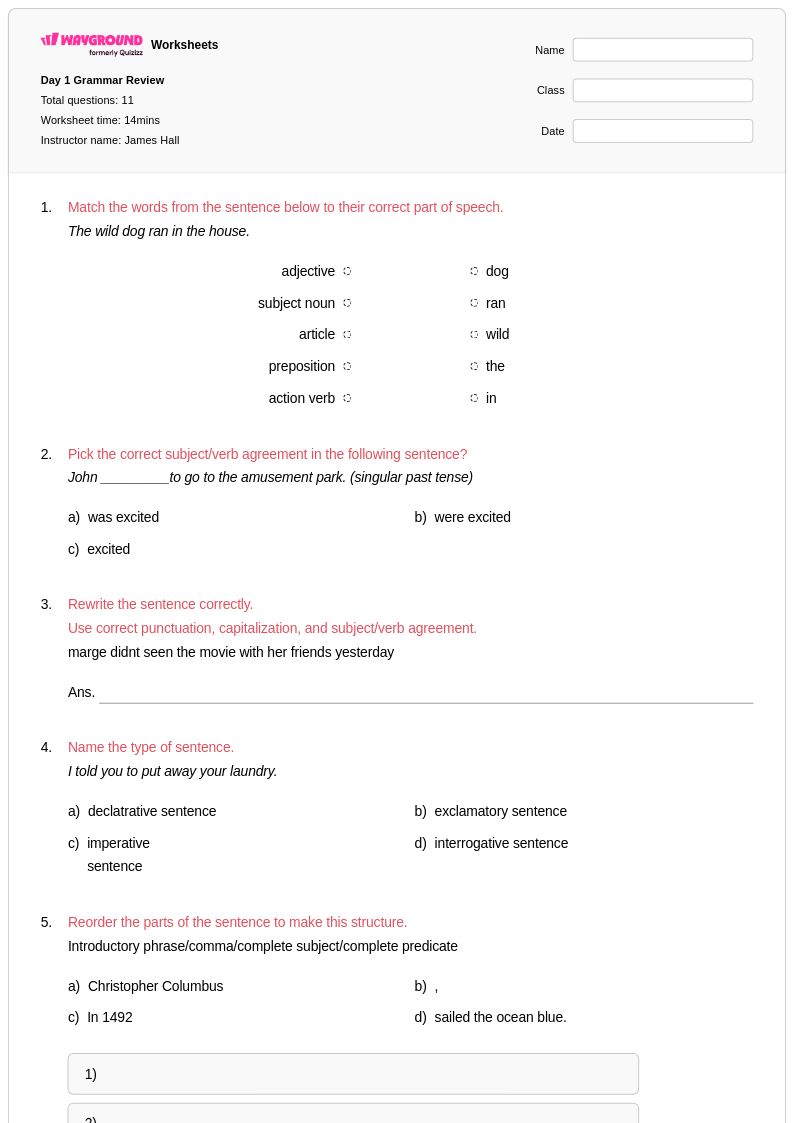
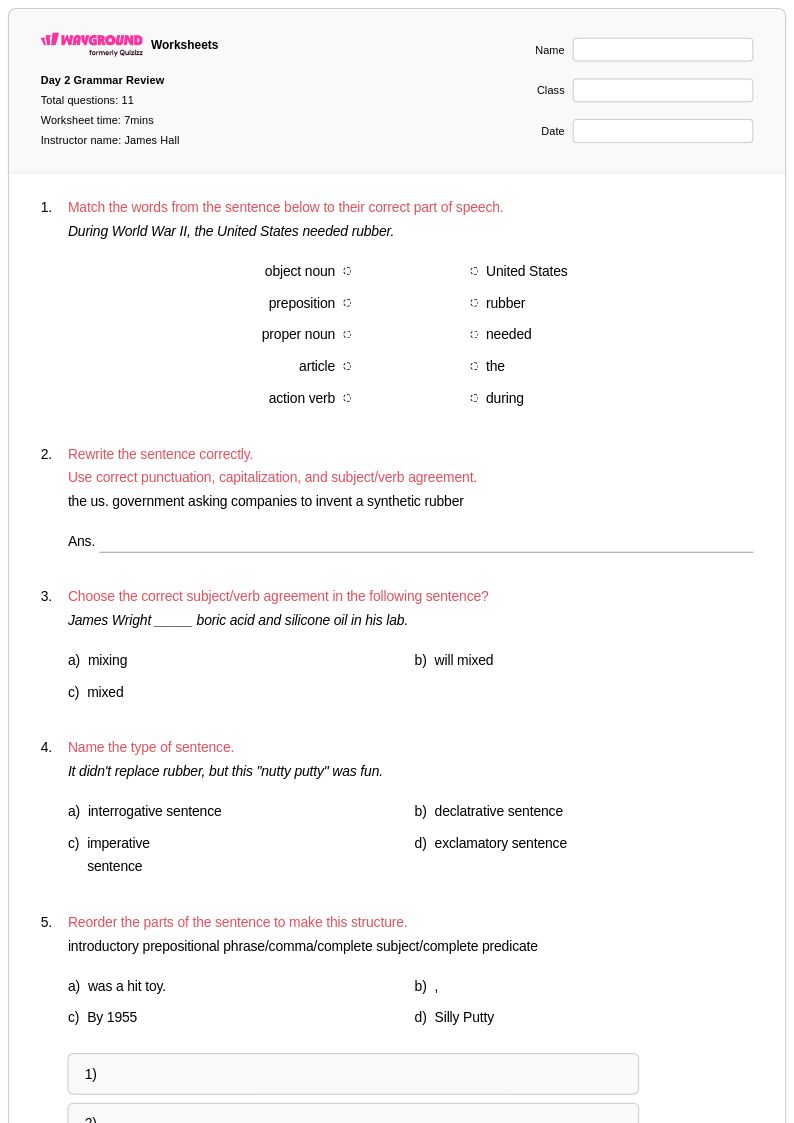
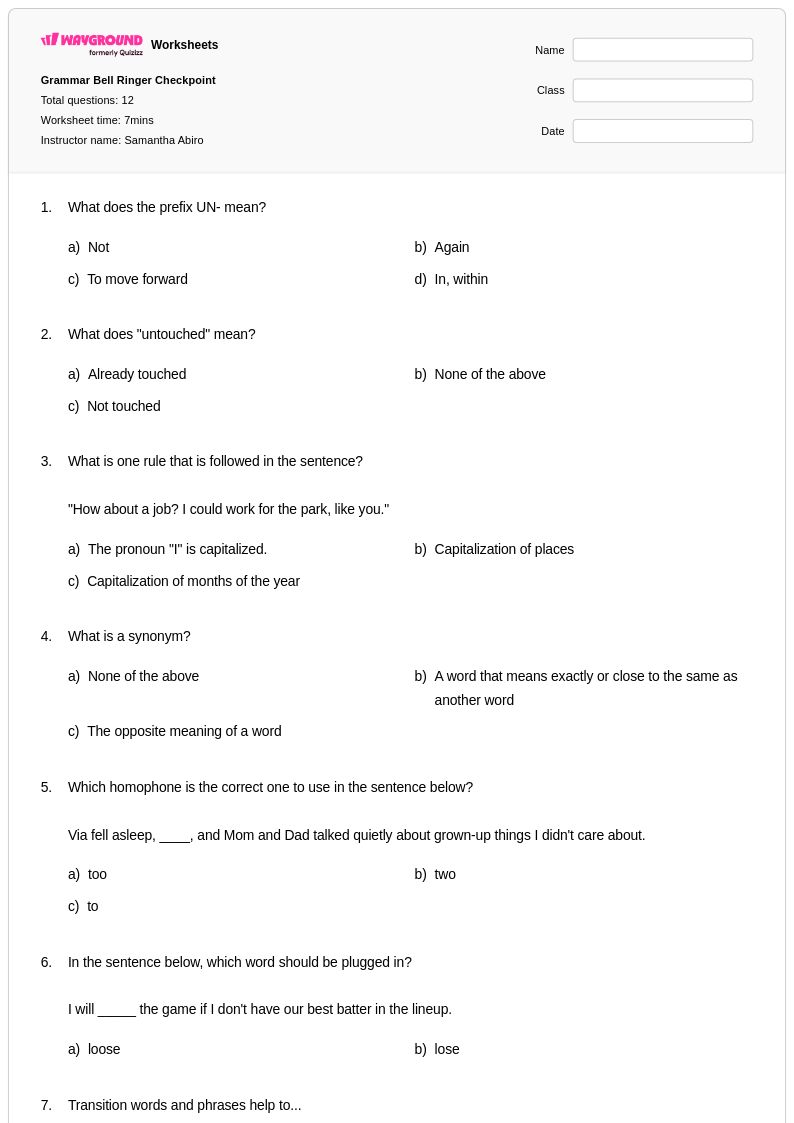
Sentence correction tasks are among the most effective practice formats because they require students to identify errors in context rather than simply recite rules. Exercises that progress from identifying incorrectly capitalized words to rewriting full sentences build both recognition and application skills. Including a mix of proper nouns, titles, and sentence beginnings in practice problems ensures students encounter the full range of capitalization rules.
What capitalization mistakes do students most commonly make?
The most frequent errors involve over-capitalizing common nouns that students perceive as important (for example, writing 'the President gave a Speech'), under-capitalizing proper nouns they encounter infrequently, and forgetting to capitalize geographic locations and holiday names. Students also frequently omit the capital on the pronoun 'I' in informal writing. Targeted sentence correction exercises that isolate these specific error patterns are the most efficient way to address them.
How do I teach students to correctly capitalize titles?
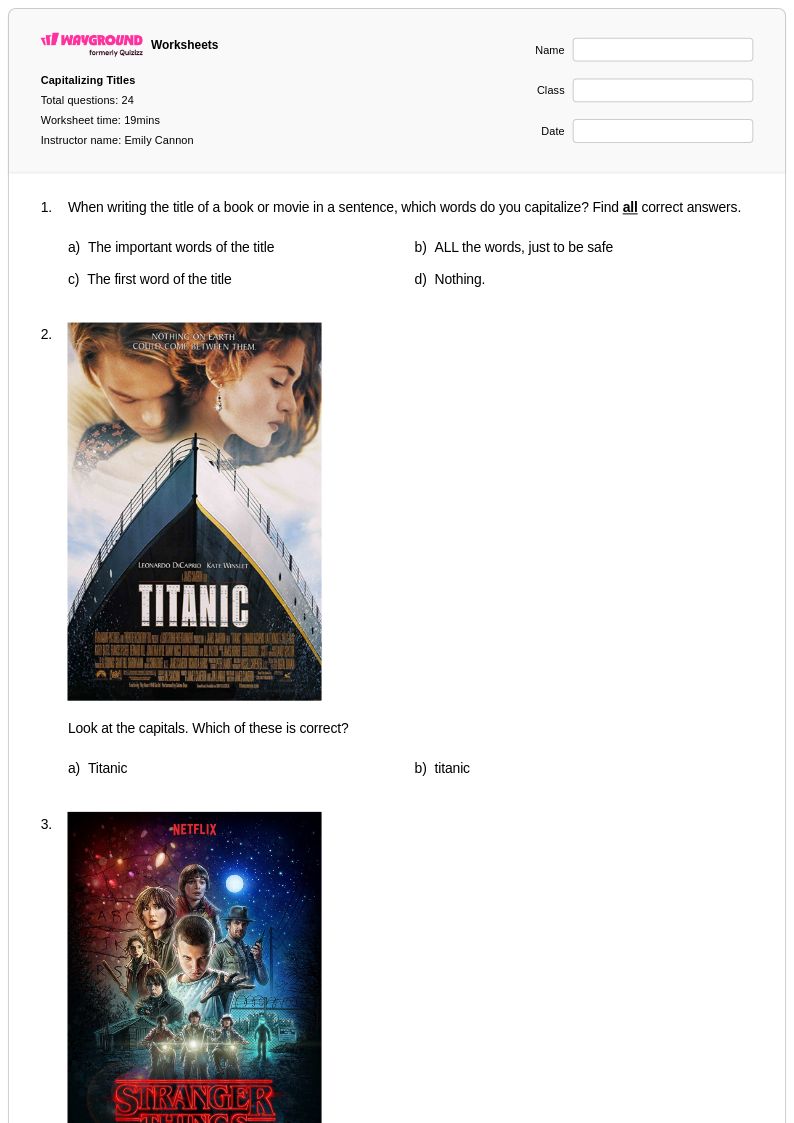
Teach students the distinction between major words (nouns, verbs, adjectives, adverbs) and minor words (articles, short prepositions, coordinating conjunctions) since title capitalization rules hinge on this difference. A reliable classroom strategy is to have students underline each word in a title and classify it before deciding whether to capitalize. Practicing with familiar book, movie, and song titles makes the rule feel relevant and reduces abstraction.
How do I use Wayground's capitalization worksheets in my classroom?
Wayground's capitalization worksheets are available as printable PDFs for traditional classroom use and in digital formats for technology-integrated environments, giving teachers flexibility in how they assign and administer practice. Teachers can also host the worksheets as a quiz directly on Wayground, which streamlines progress tracking. All worksheets include complete answer keys, supporting both teacher-led review sessions and independent student practice.
How can I differentiate capitalization practice for students at different skill levels?
For students who are still building foundational skills, begin with single-rule identification tasks focused on sentence beginnings or the pronoun 'I' before introducing proper nouns and titles. More advanced students benefit from open-ended editing tasks where multiple capitalization rules appear in the same passage. On Wayground, teachers can apply accommodations such as read aloud support or reduced answer choices to individual students, ensuring each learner engages with the material at an accessible level.