
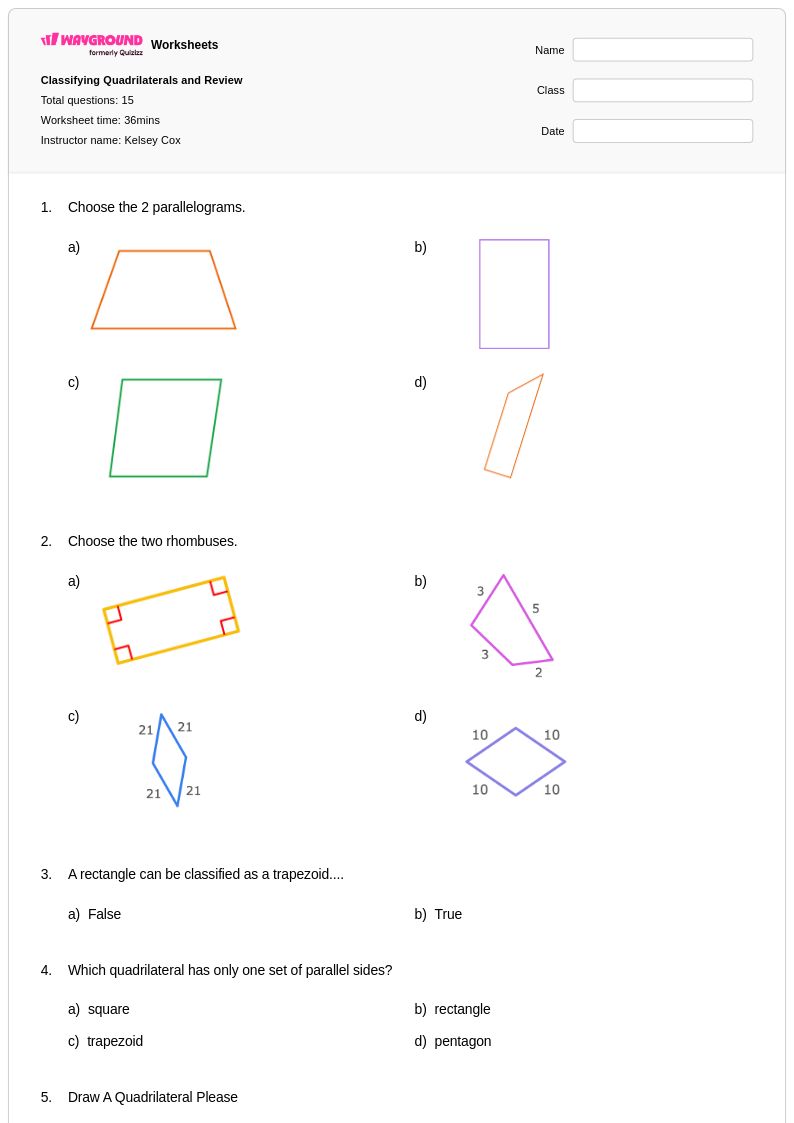
15 Q
3rd
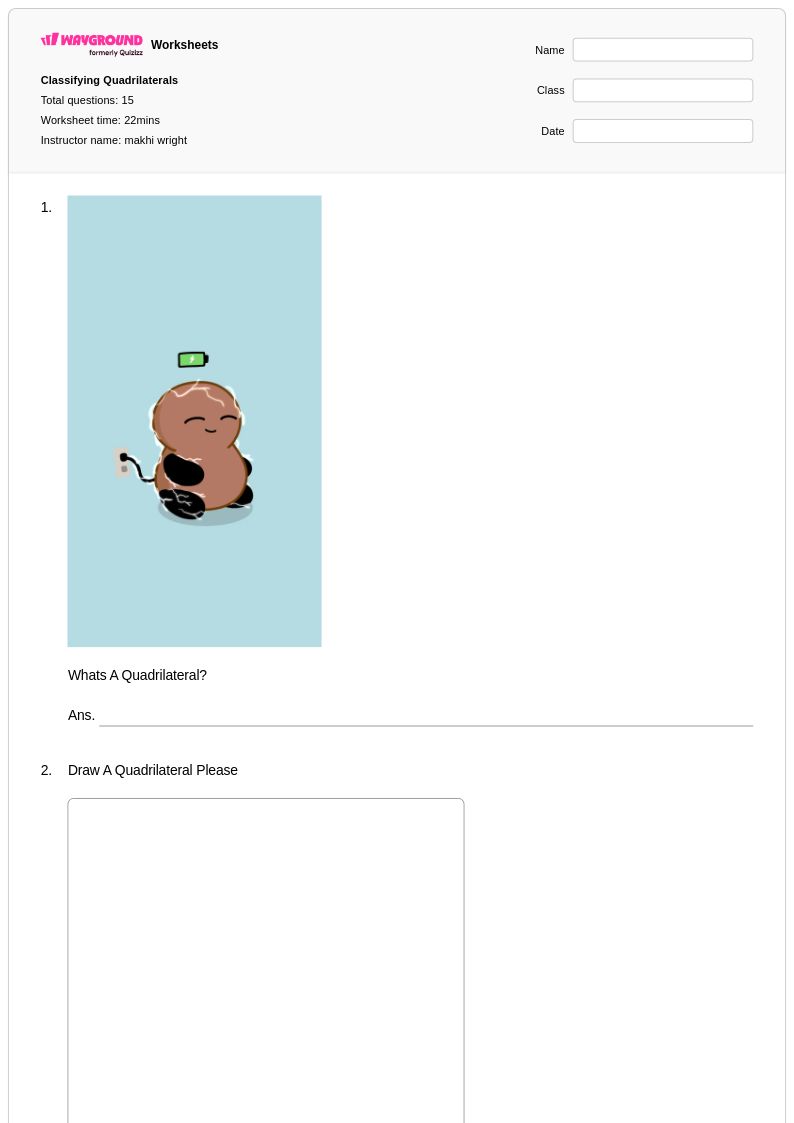
15 Q
3rd
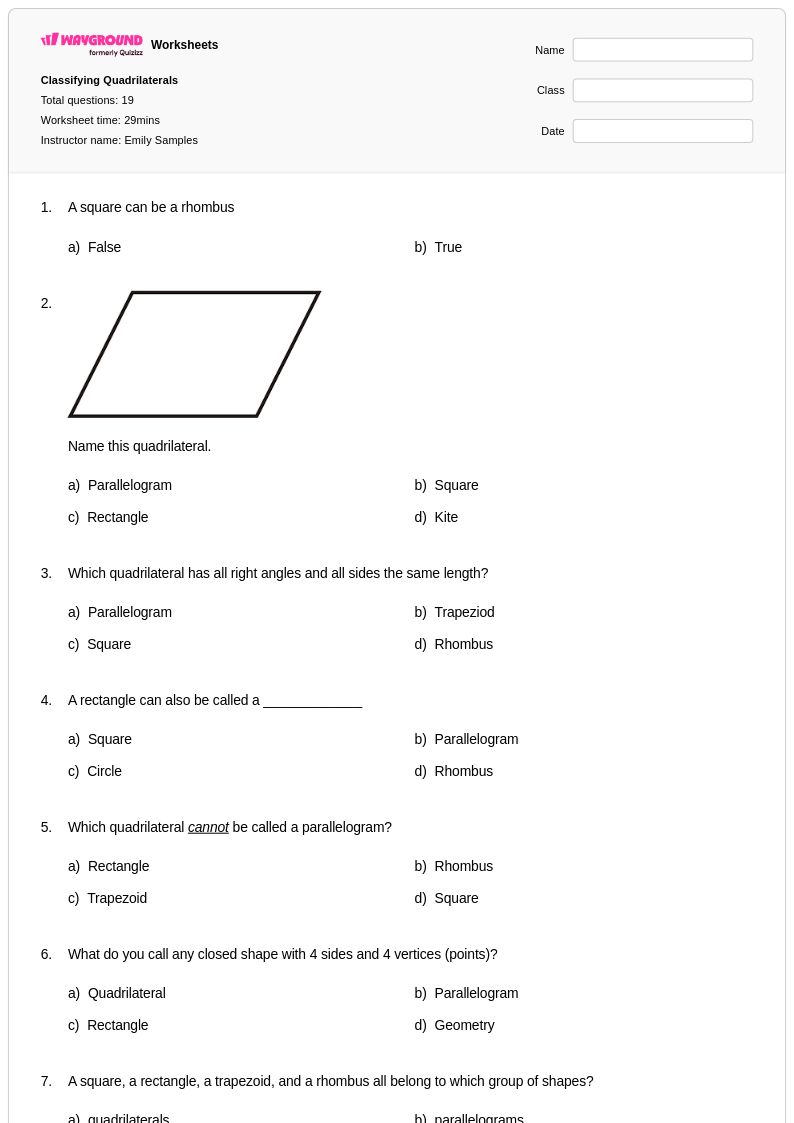
19 Q
3rd
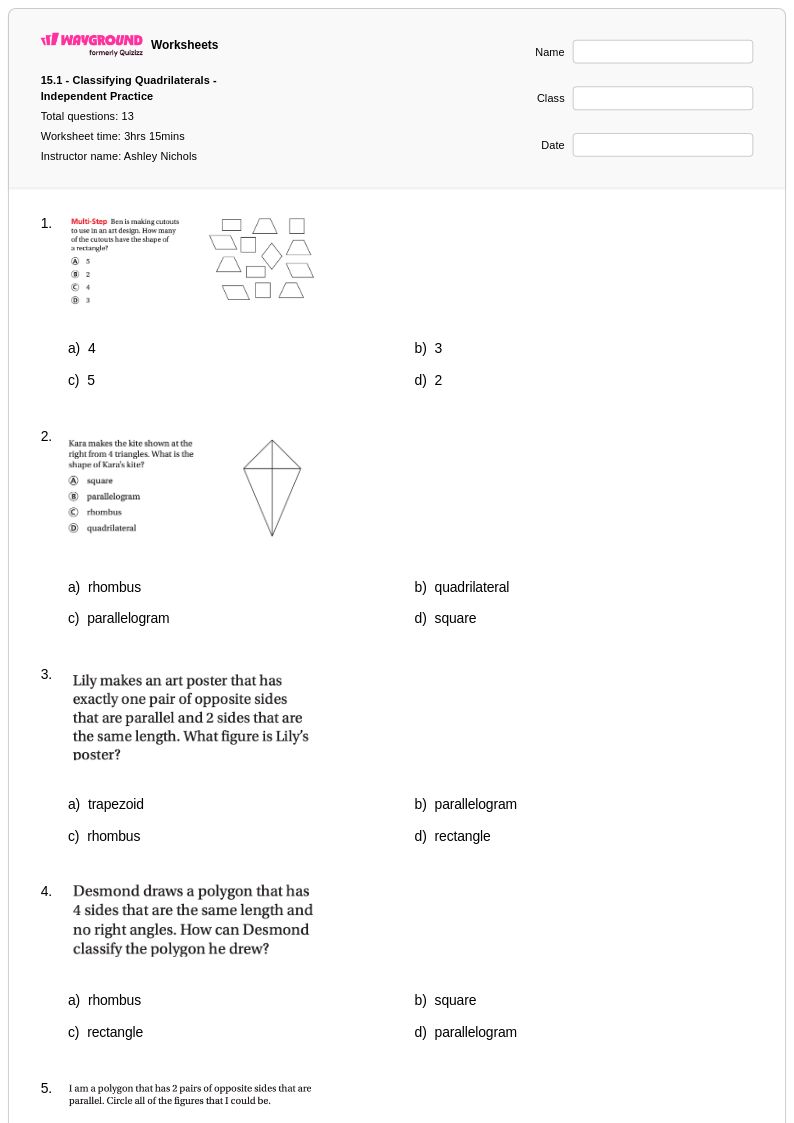
13 Q
3rd
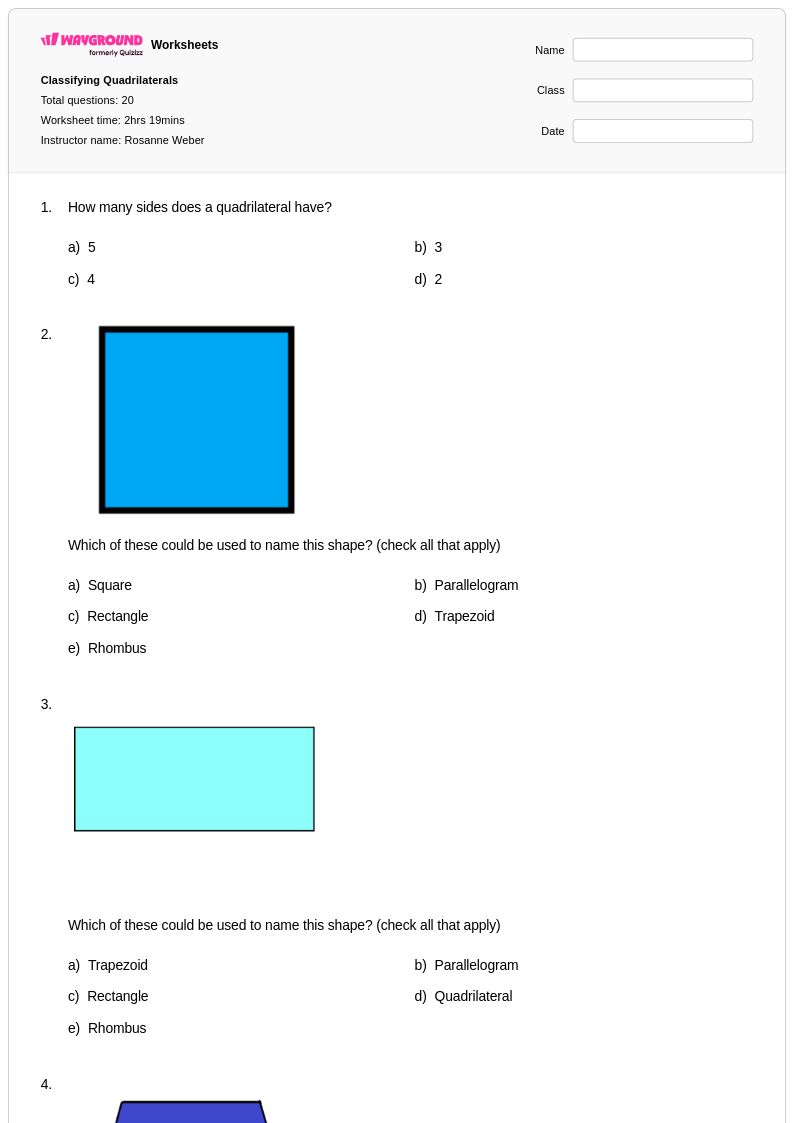
20 Q
3rd - 4th
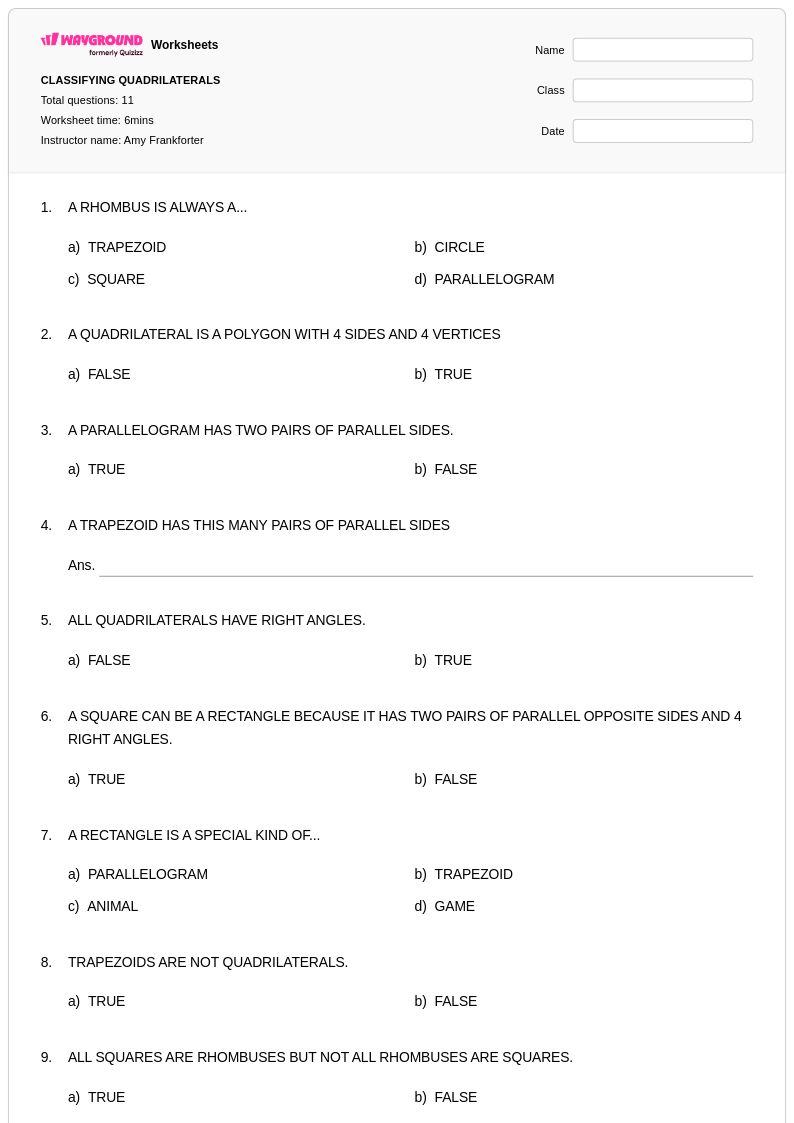
11 Q
3rd - 4th
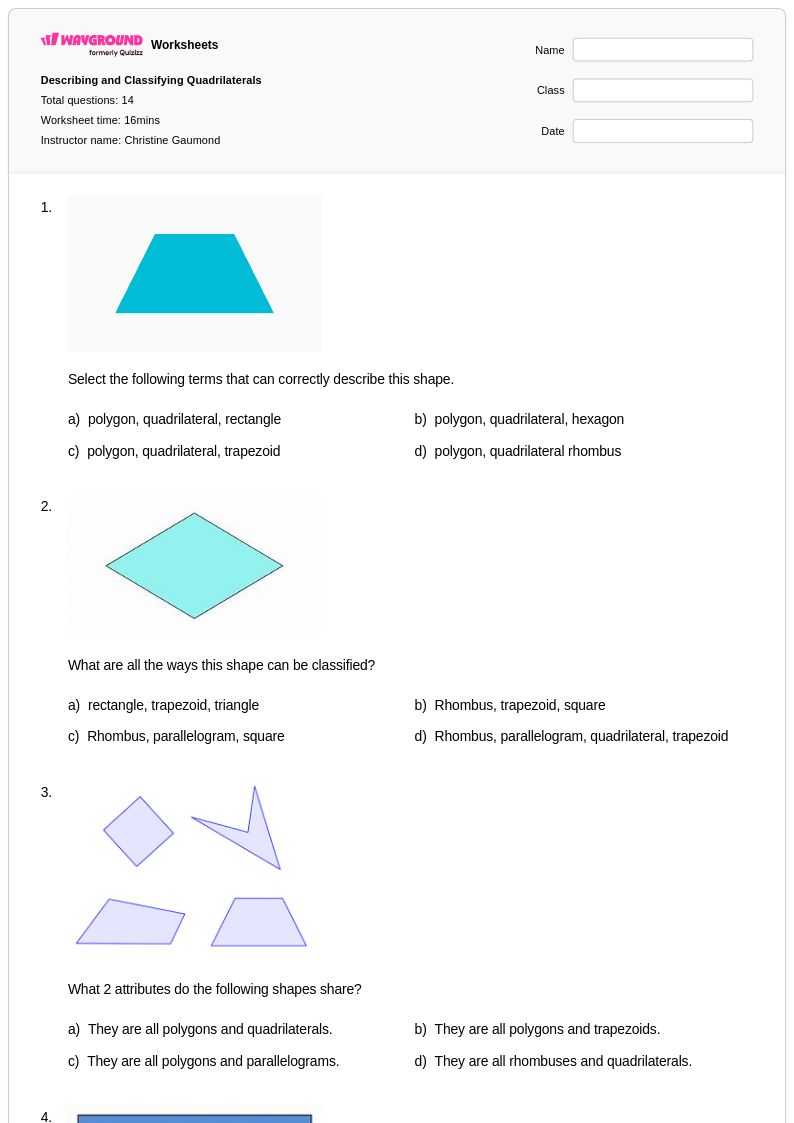
14 Q
3rd
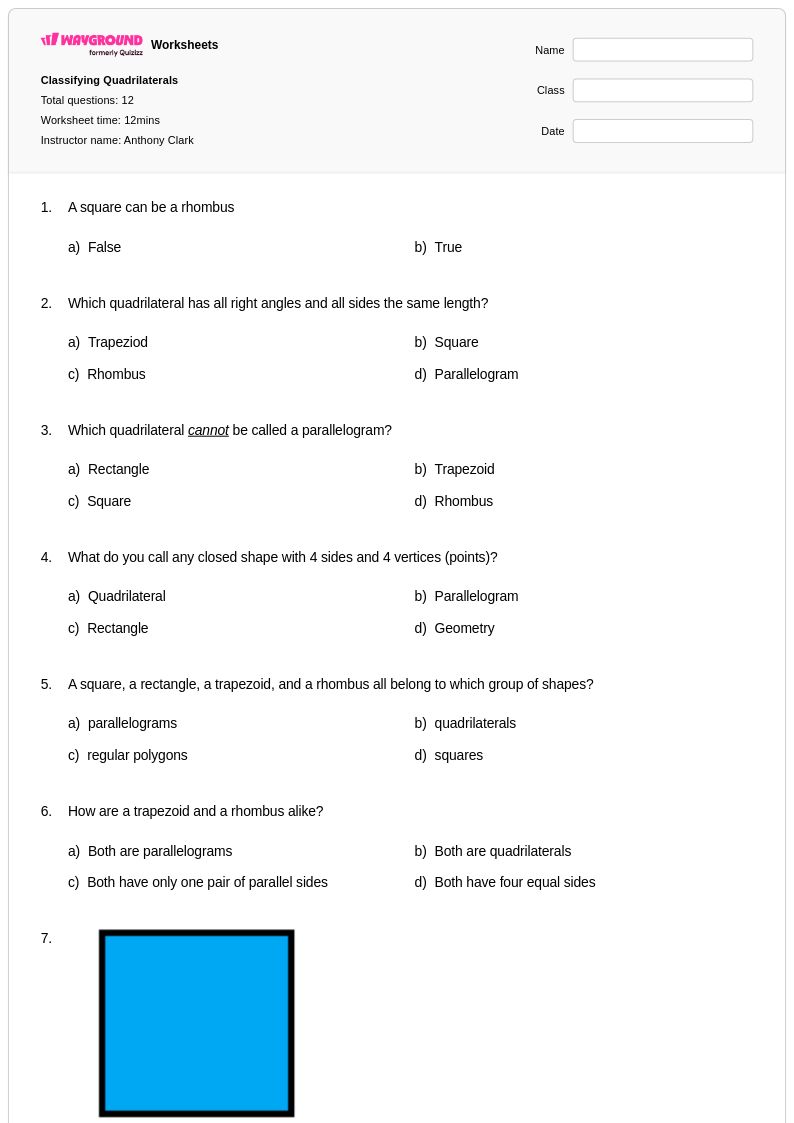
12 Q
1st - Uni
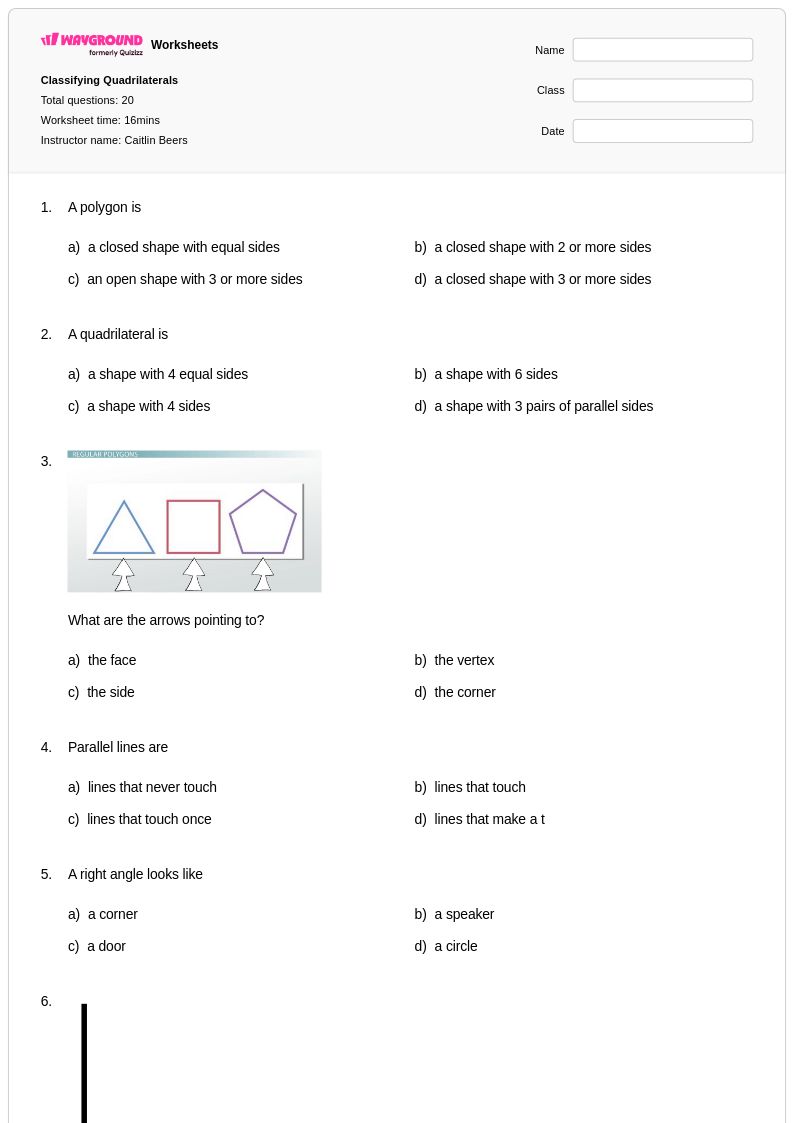
20 Q
3rd
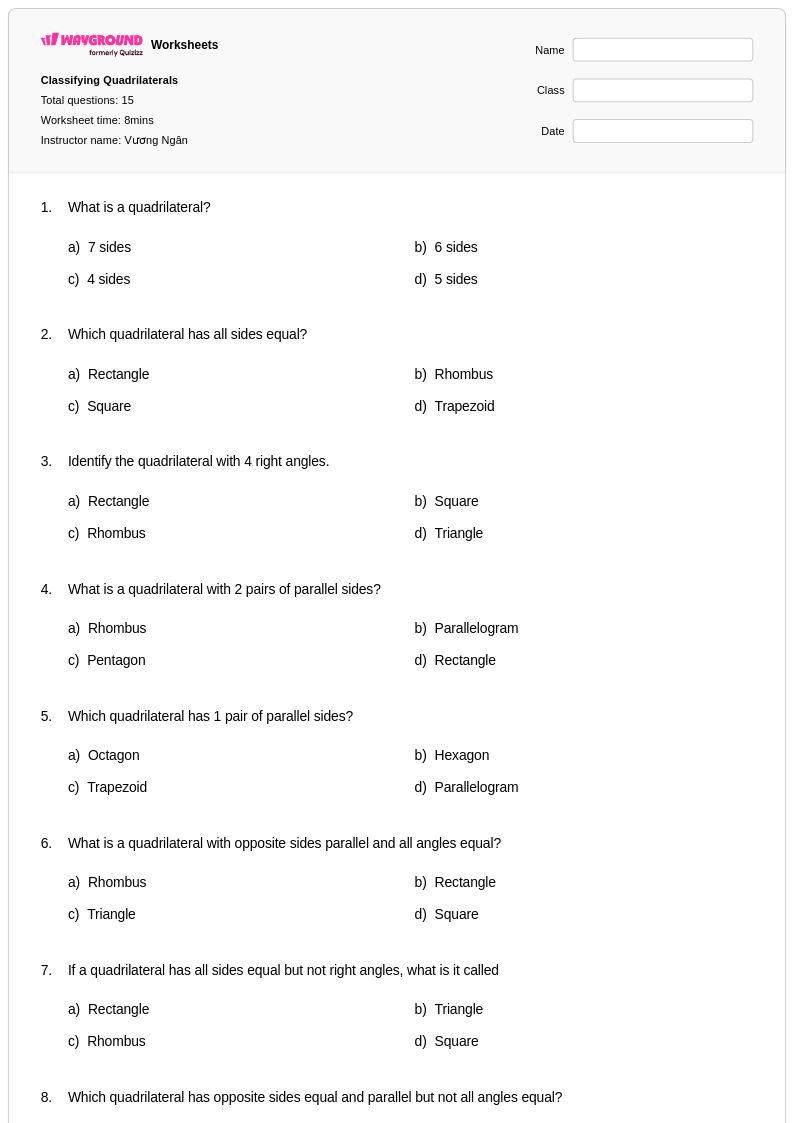
15 Q
3rd
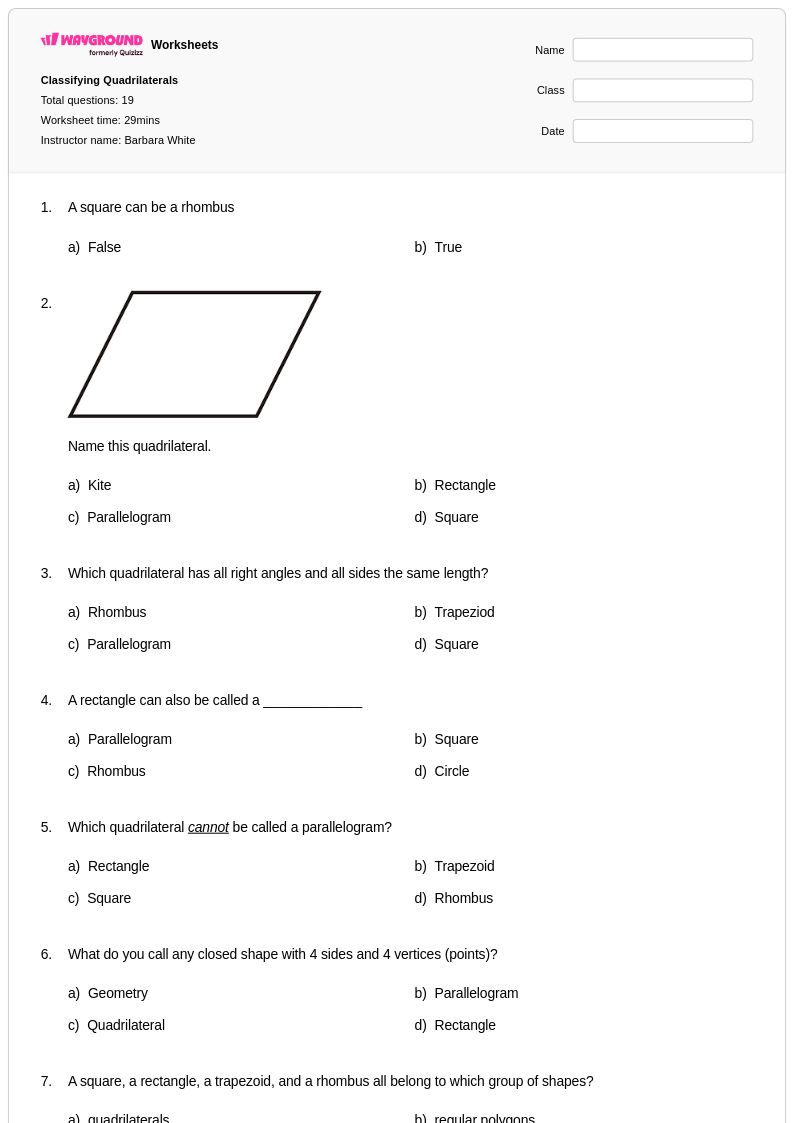
19 Q
3rd
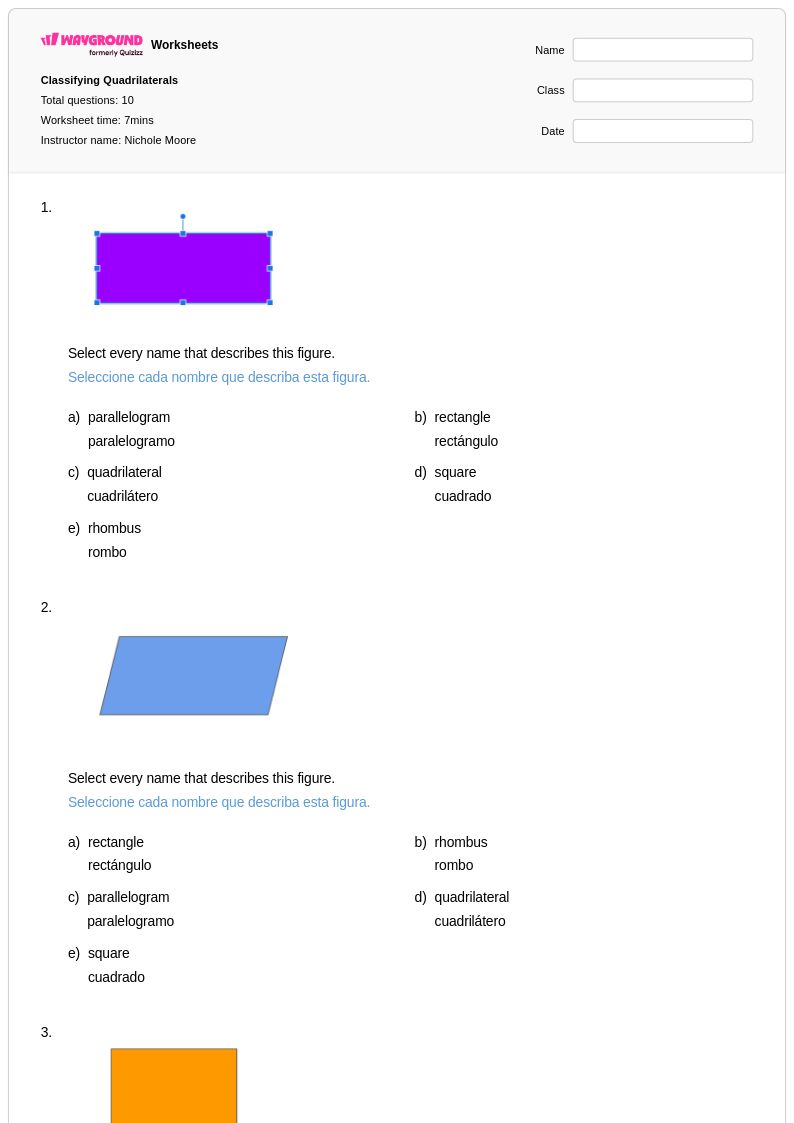
10 Q
3rd
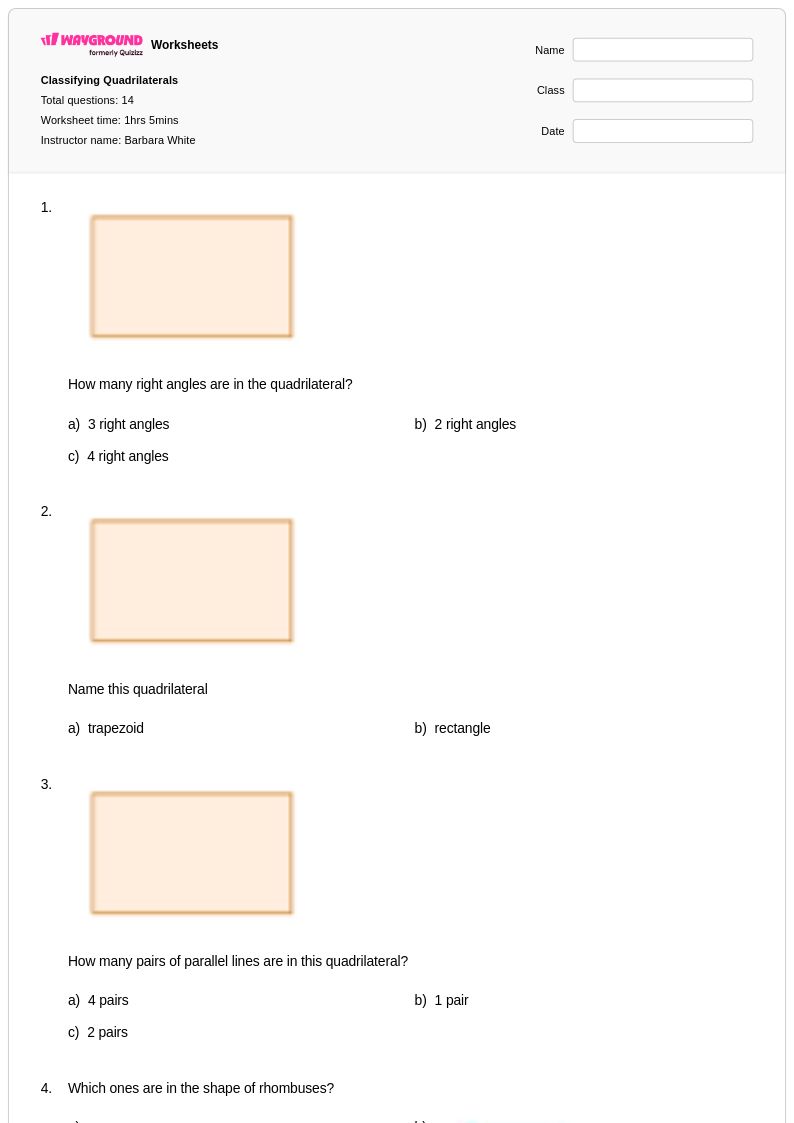
14 Q
3rd
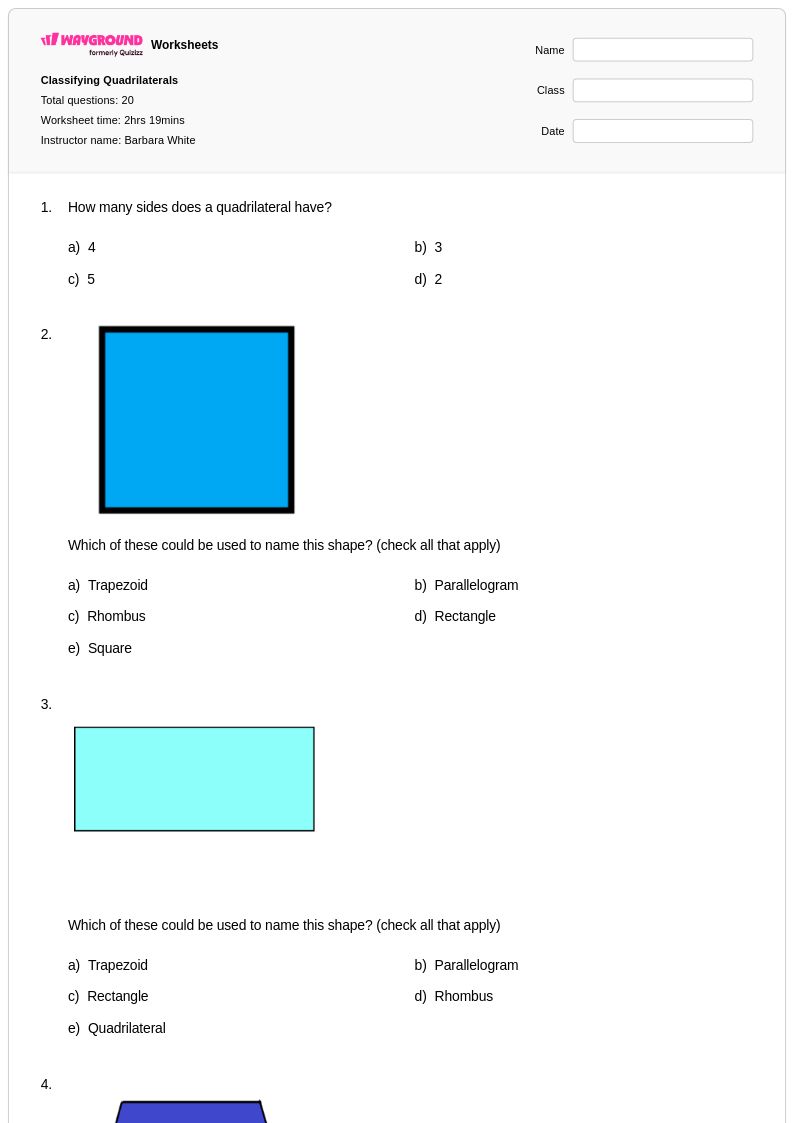
20 Q
3rd - 4th
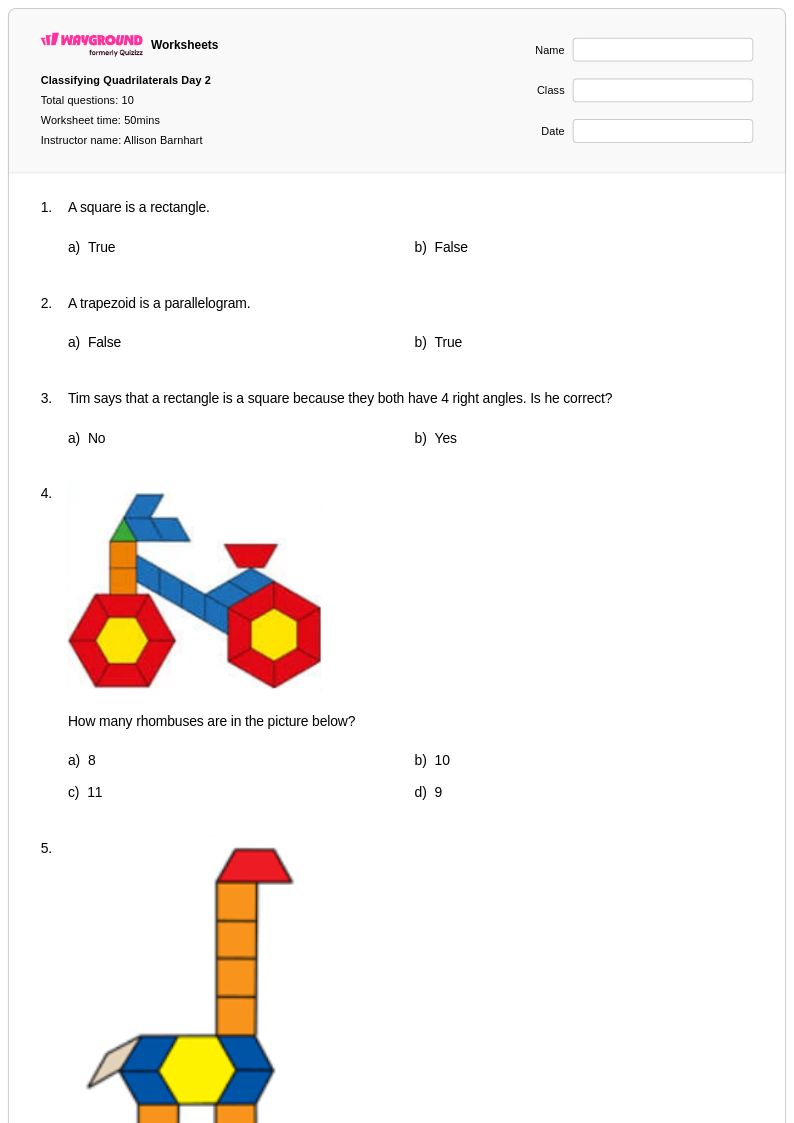
10 Q
3rd - 5th
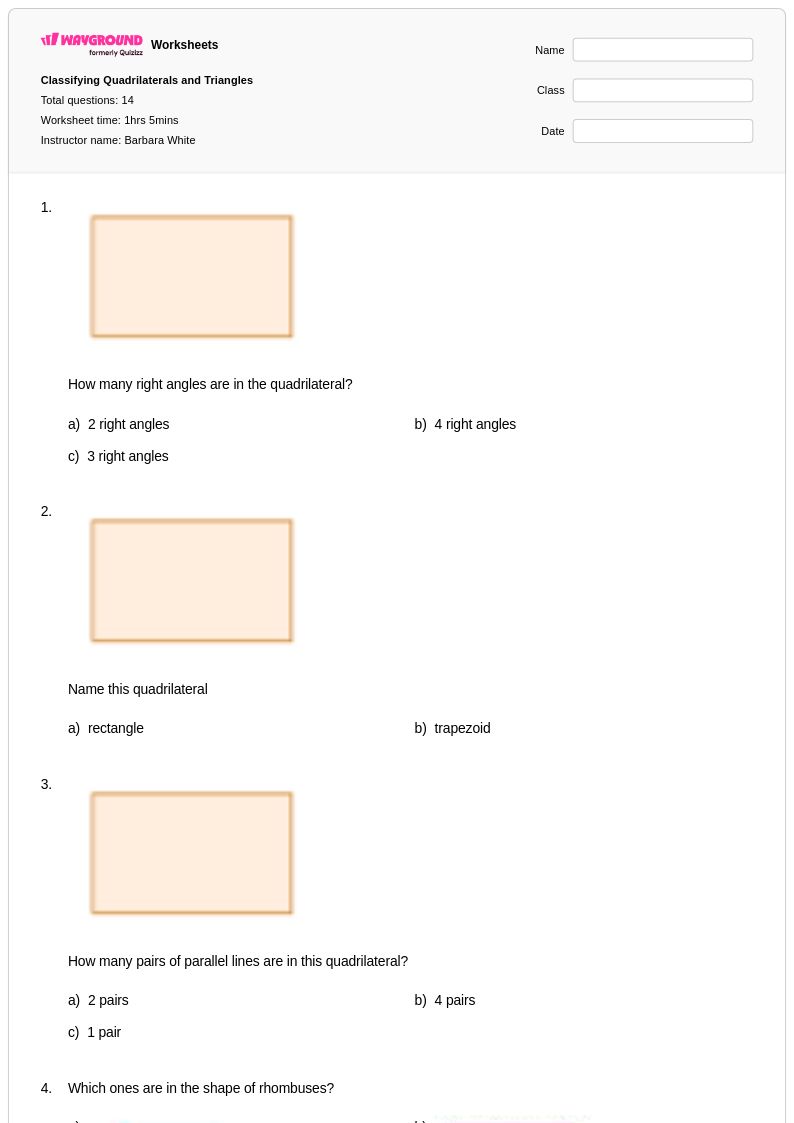
14 Q
3rd
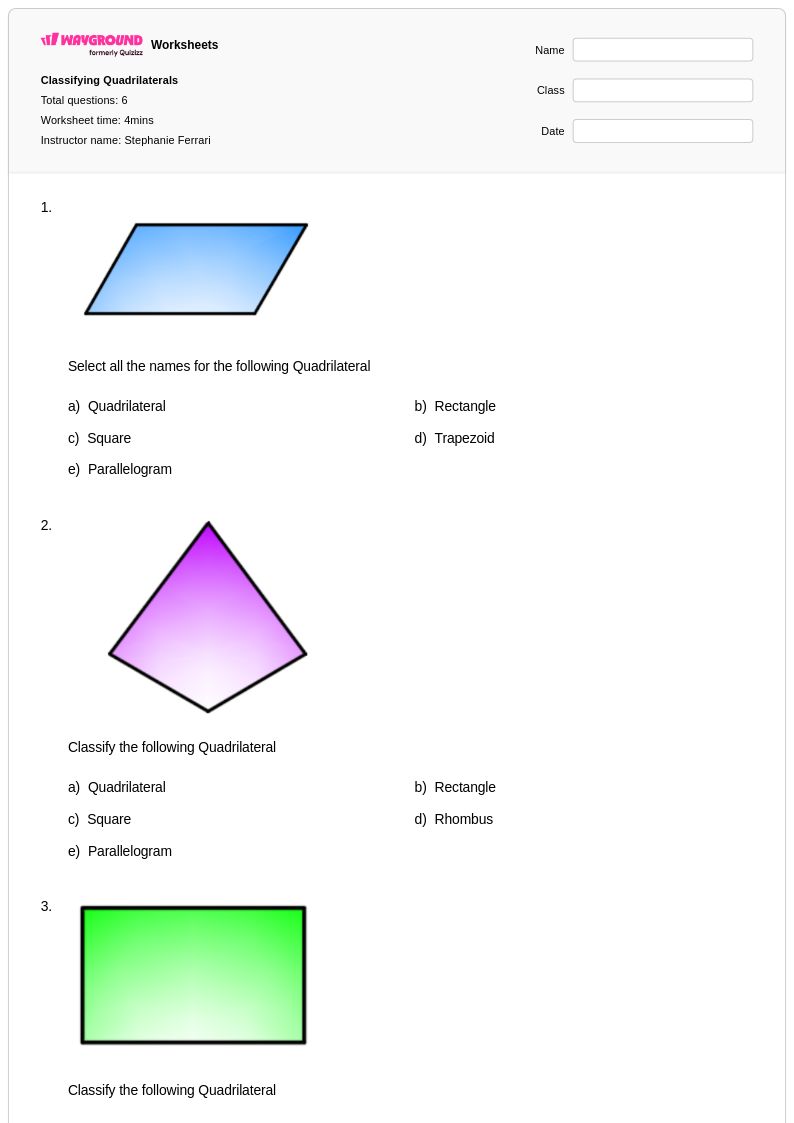
6 Q
3rd - 5th
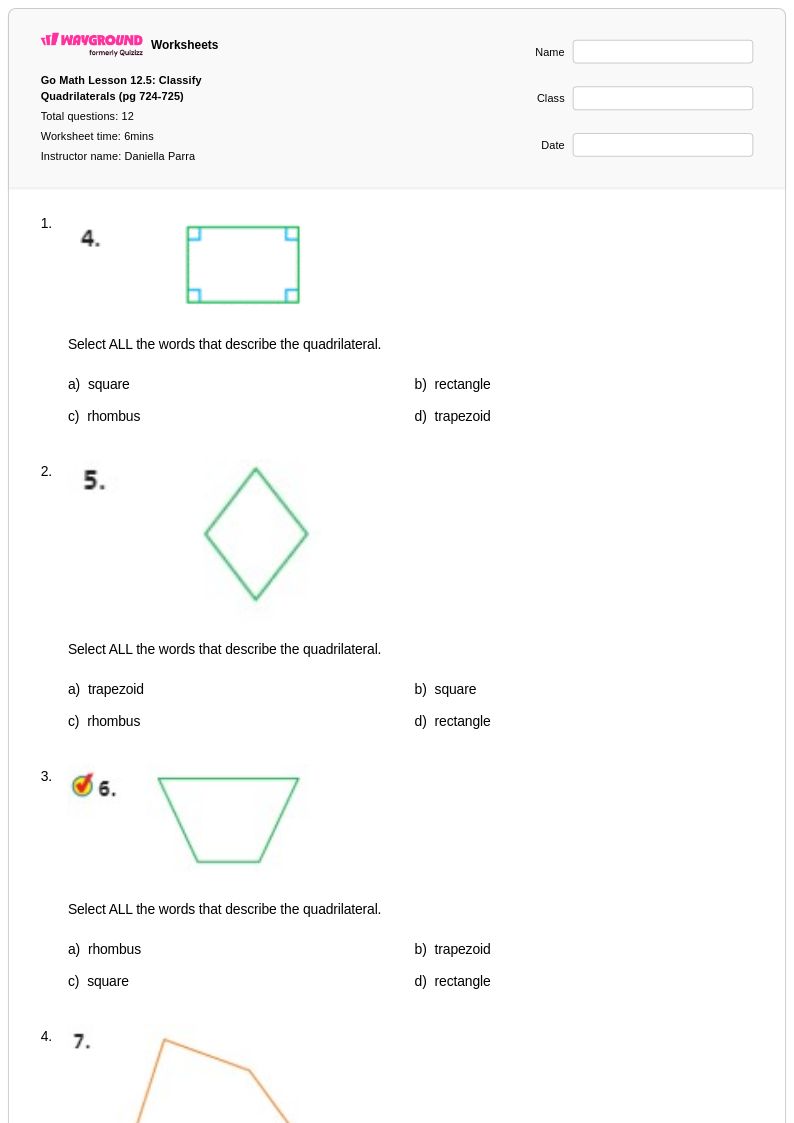
12 Q
3rd
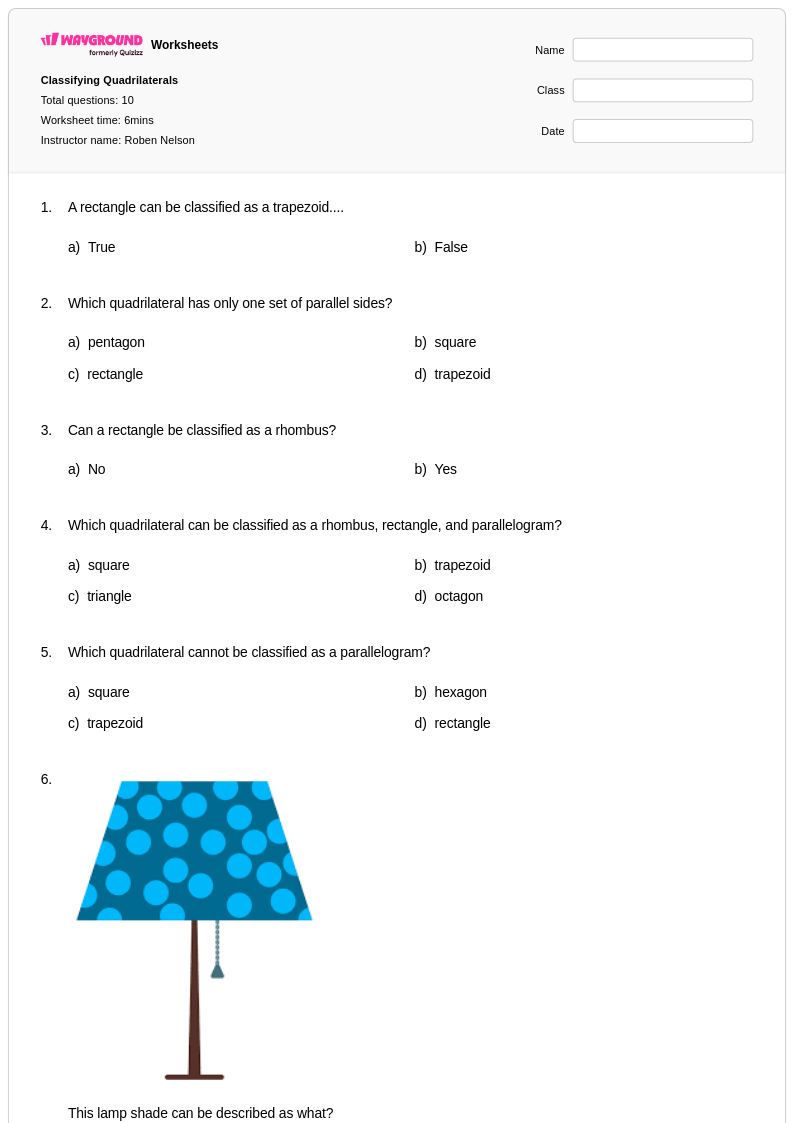
10 Q
3rd - 5th
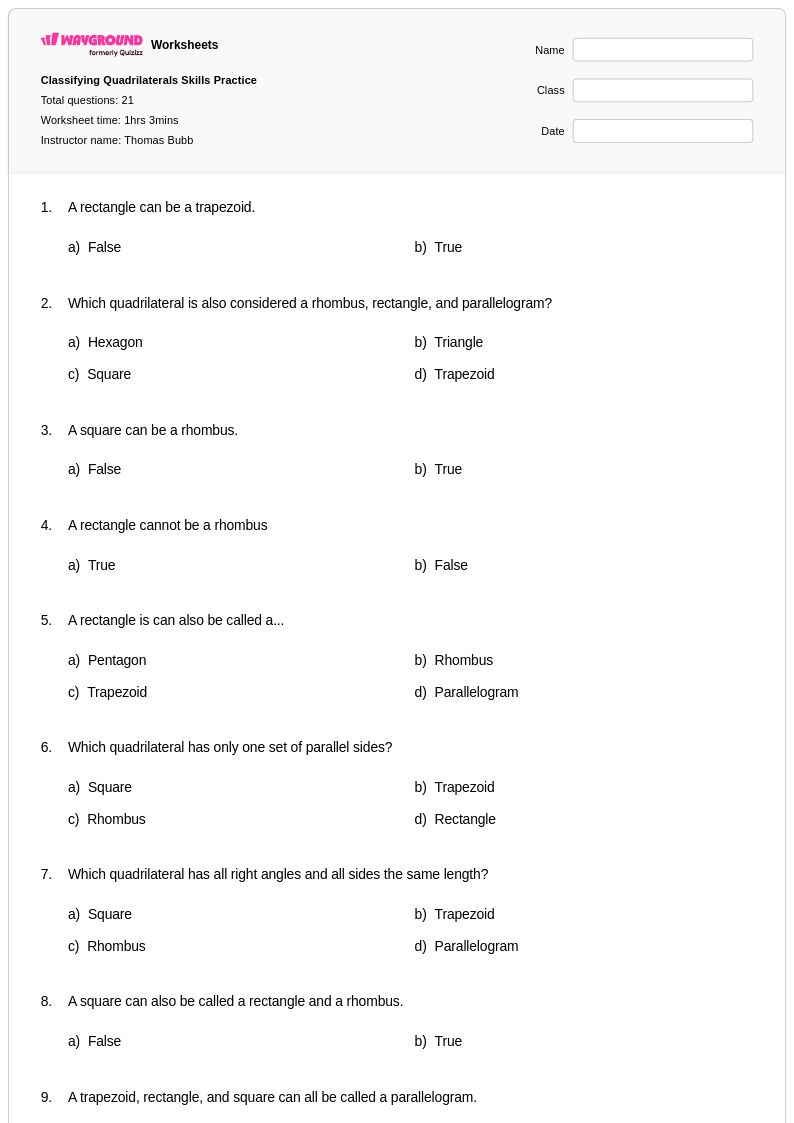
21 Q
3rd - 5th
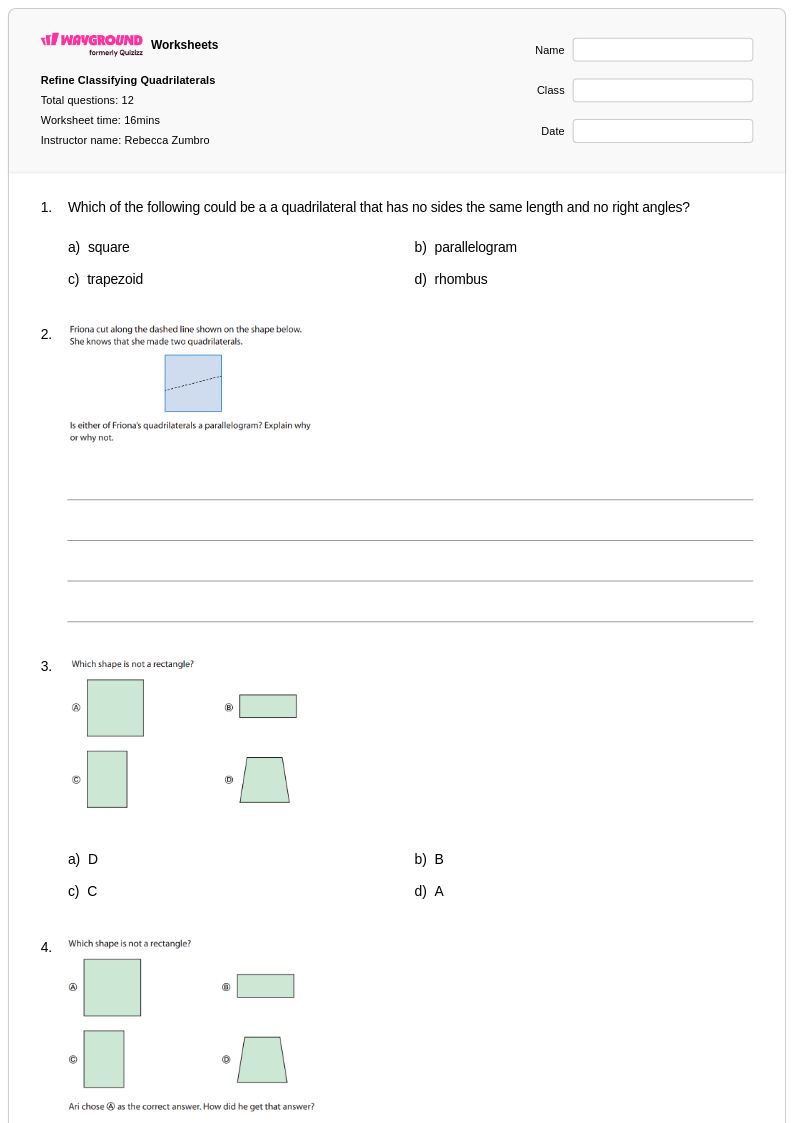
12 Q
3rd
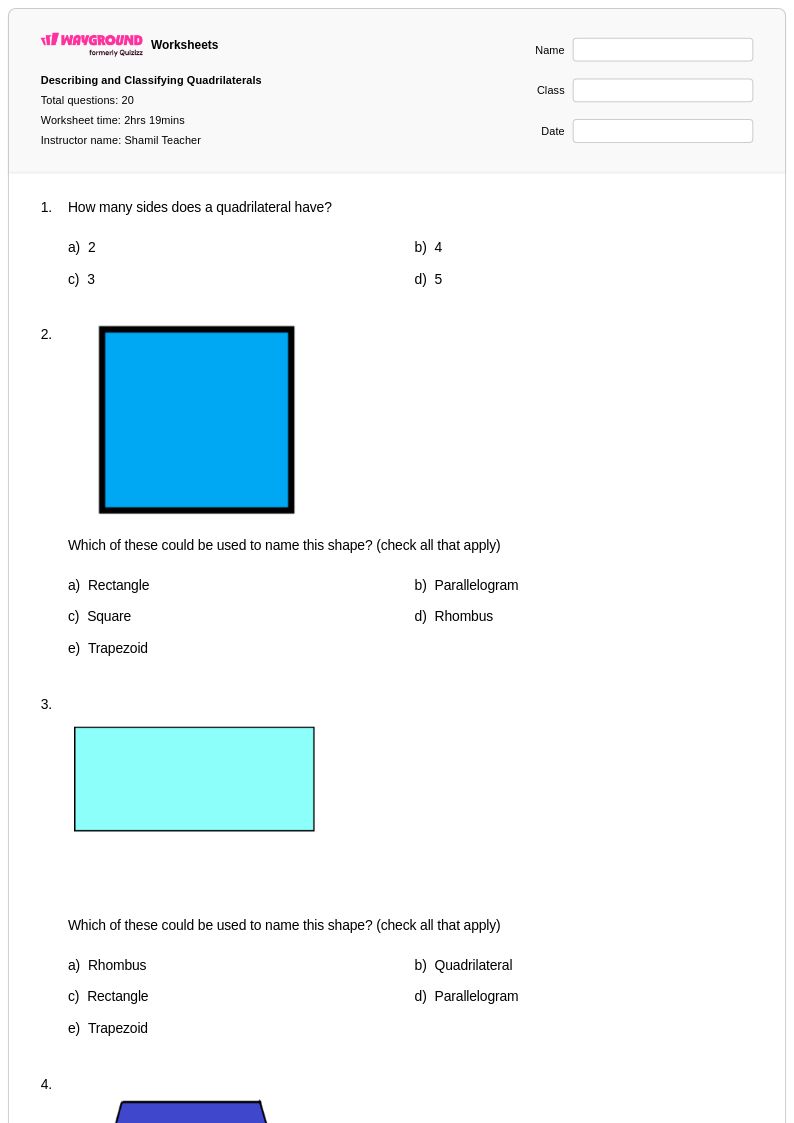
20 Q
3rd - 4th
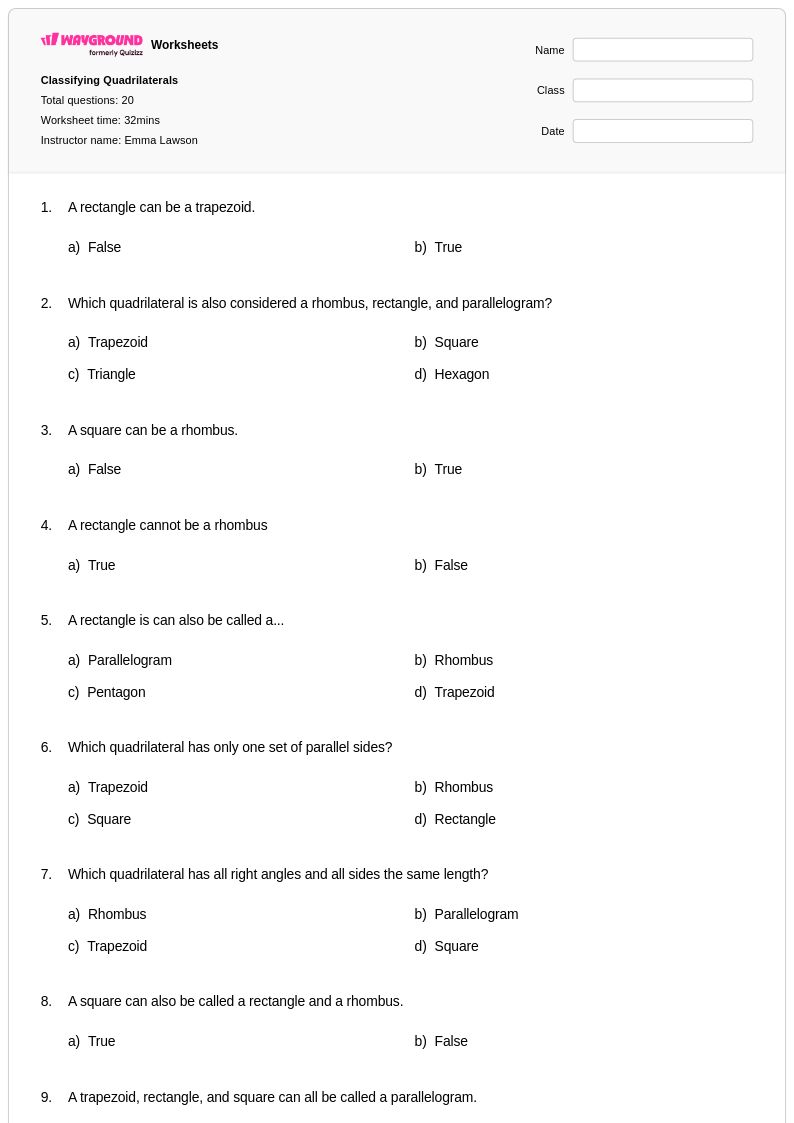
20 Q
2nd - 4th
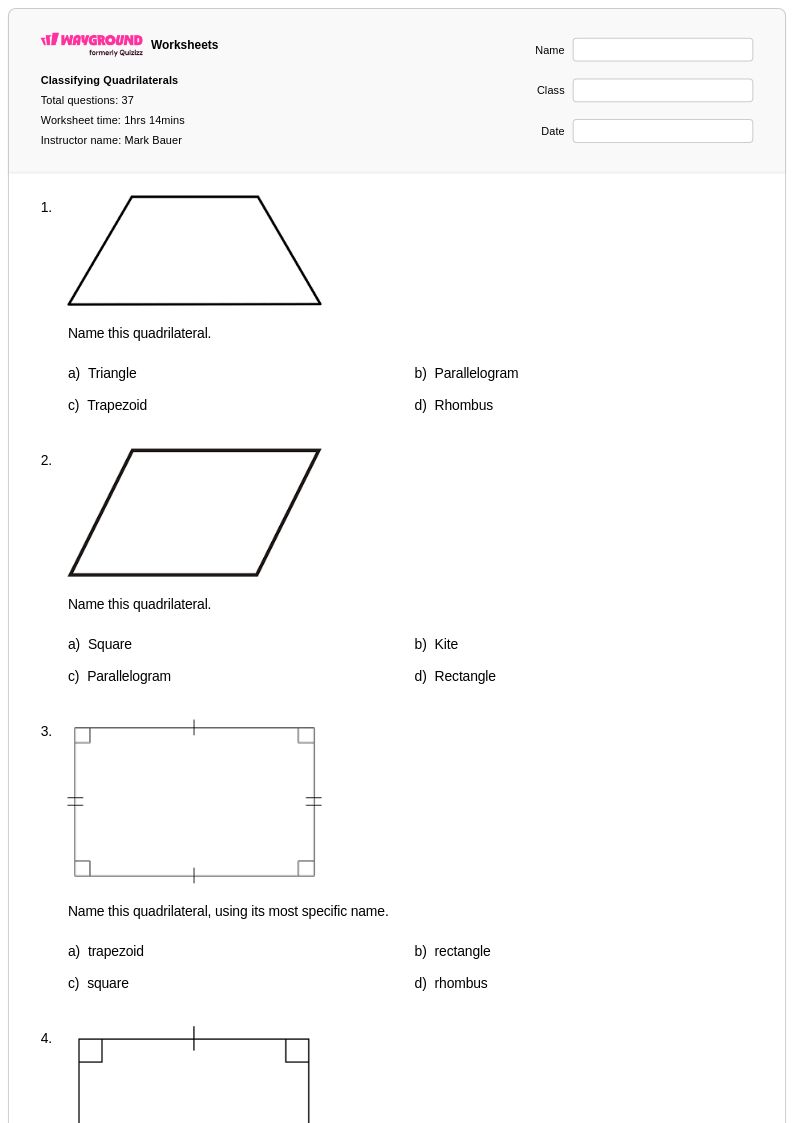
37 Q
1st - 5th
Explore Other Subject Worksheets for year 3
Explore printable Classifying Quadrilaterals worksheets for Year 3
Year 3 classifying quadrilaterals worksheets from Wayground (formerly Quizizz) provide comprehensive practice opportunities for students to identify, compare, and categorize four-sided geometric shapes. These educational resources strengthen critical mathematical skills including shape recognition, property analysis, and geometric vocabulary development as students learn to distinguish between rectangles, squares, parallelograms, rhombuses, and trapezoids. The worksheets feature carefully designed practice problems that guide third-grade learners through systematic examination of quadrilateral characteristics such as parallel sides, equal angles, and congruent sides. Each worksheet collection includes detailed answer keys to support accurate assessment and immediate feedback, with free printable pdf formats that ensure easy classroom distribution and home practice accessibility.
Wayground (formerly Quizizz) empowers educators with millions of teacher-created quadrilateral classification resources that streamline mathematics instruction and differentiated learning. The platform's robust search and filtering capabilities allow teachers to locate grade-appropriate worksheets aligned with curriculum standards, while customization tools enable modification of content difficulty and problem types to meet diverse student needs. These comprehensive worksheet collections are available in both printable and digital formats, including downloadable pdf versions that facilitate flexible classroom integration and remote learning scenarios. Teachers utilize these resources for targeted skill practice, remediation support for struggling learners, enrichment activities for advanced students, and systematic lesson planning that builds geometric reasoning abilities progressively throughout the academic year.
FAQs
How do I teach third graders to classify quadrilaterals?
What exercises help Grade 3 students practice classifying quadrilaterals?
What mistakes do third graders make when classifying quadrilaterals?
How can I use Wayground’s Grade 3 quadrilateral worksheets?
How does Grade 3 quadrilateral classification align with Common Core math?
How can I differentiate Grade 3 quadrilateral worksheets?
What quadrilateral skills should Grade 3 students master?