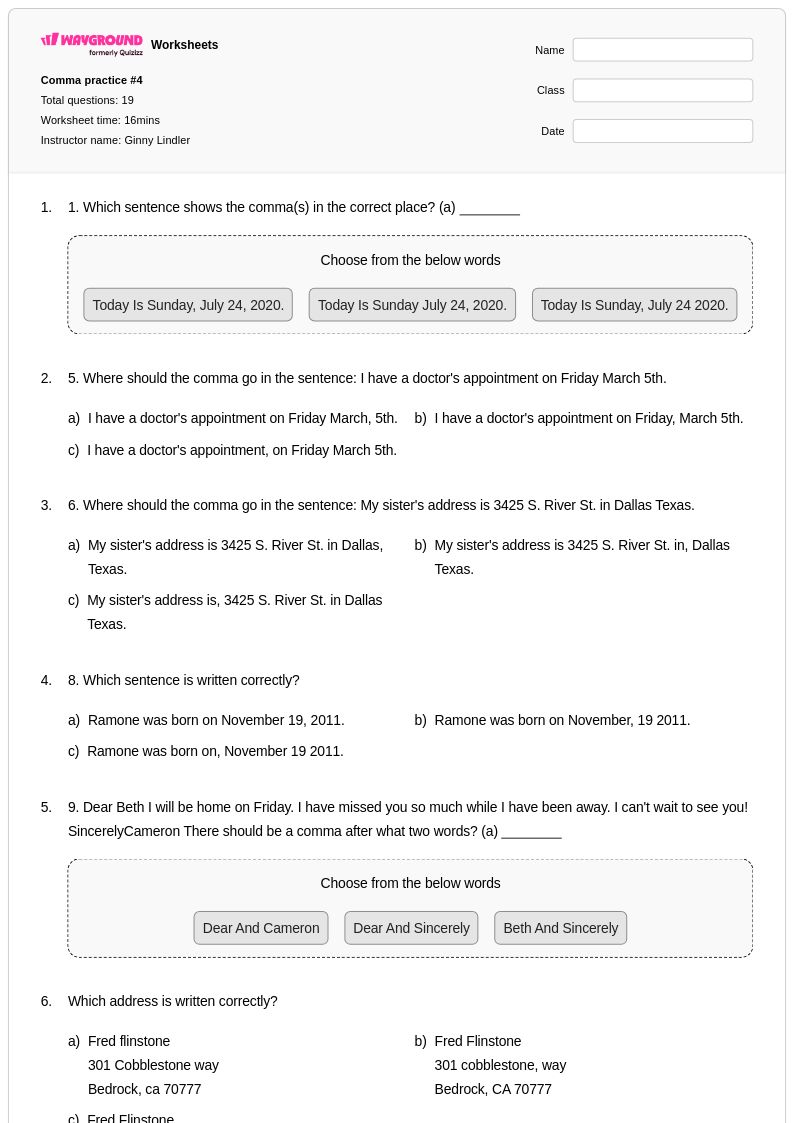
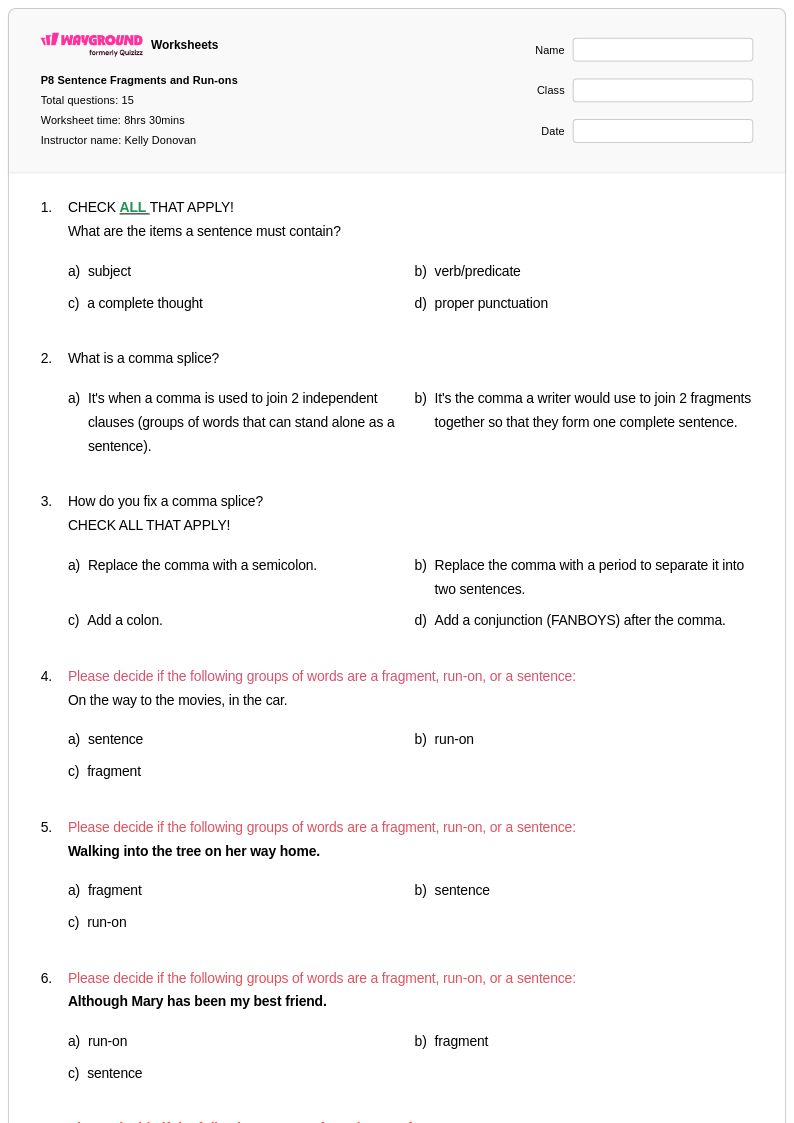
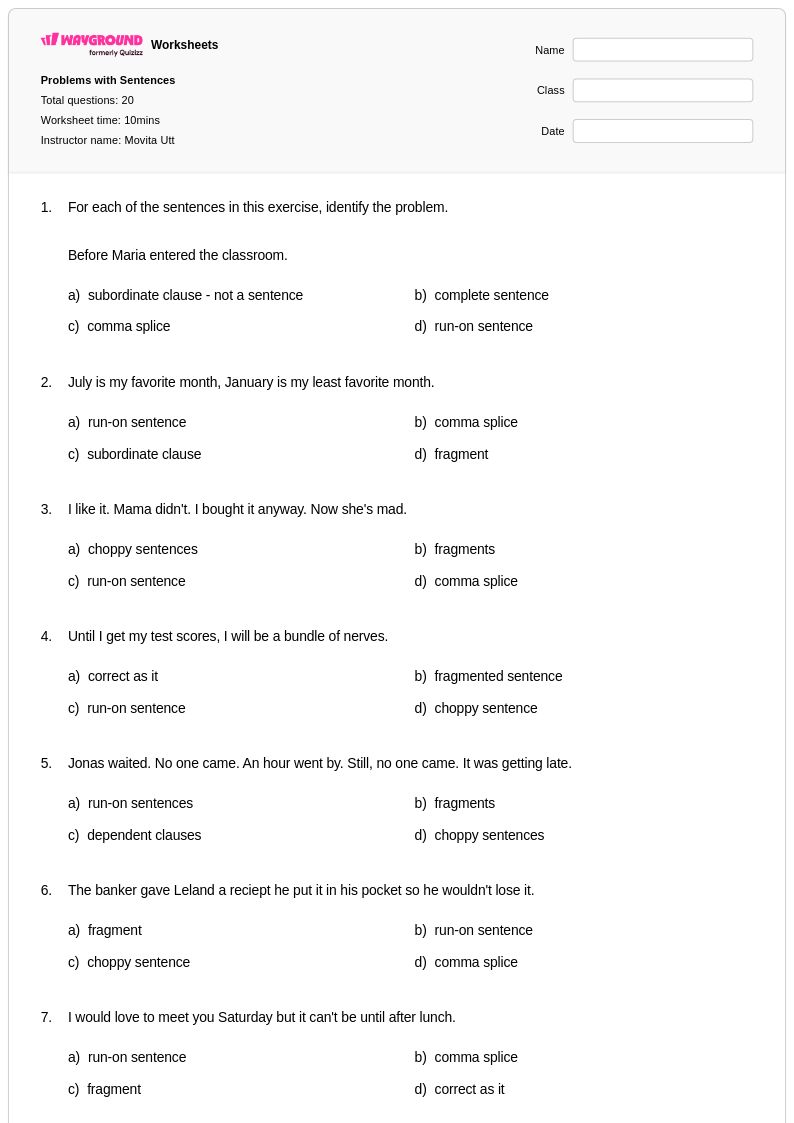
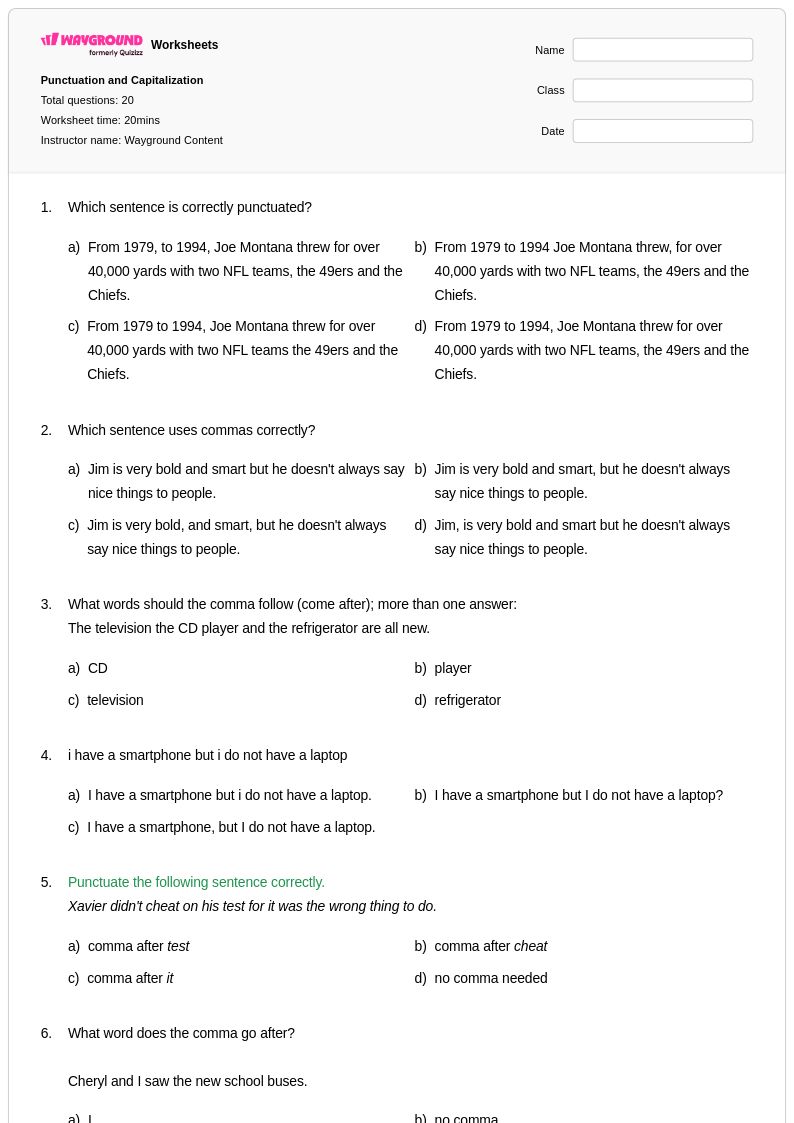
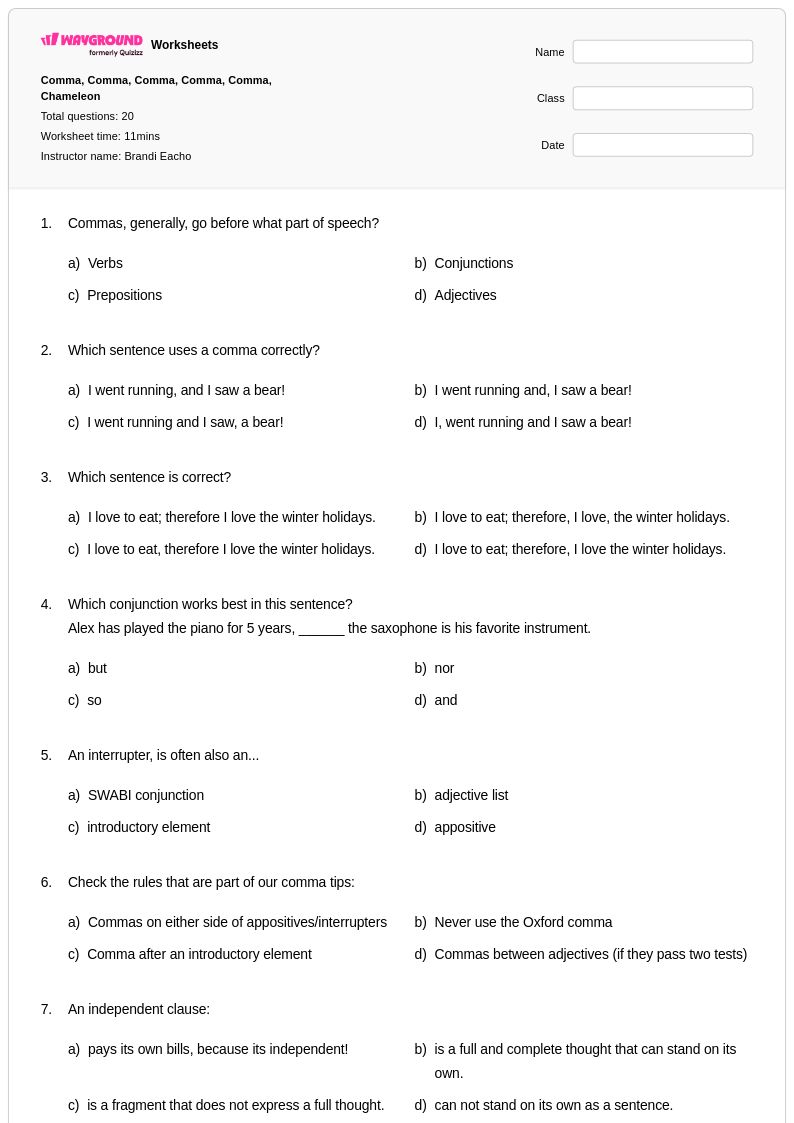
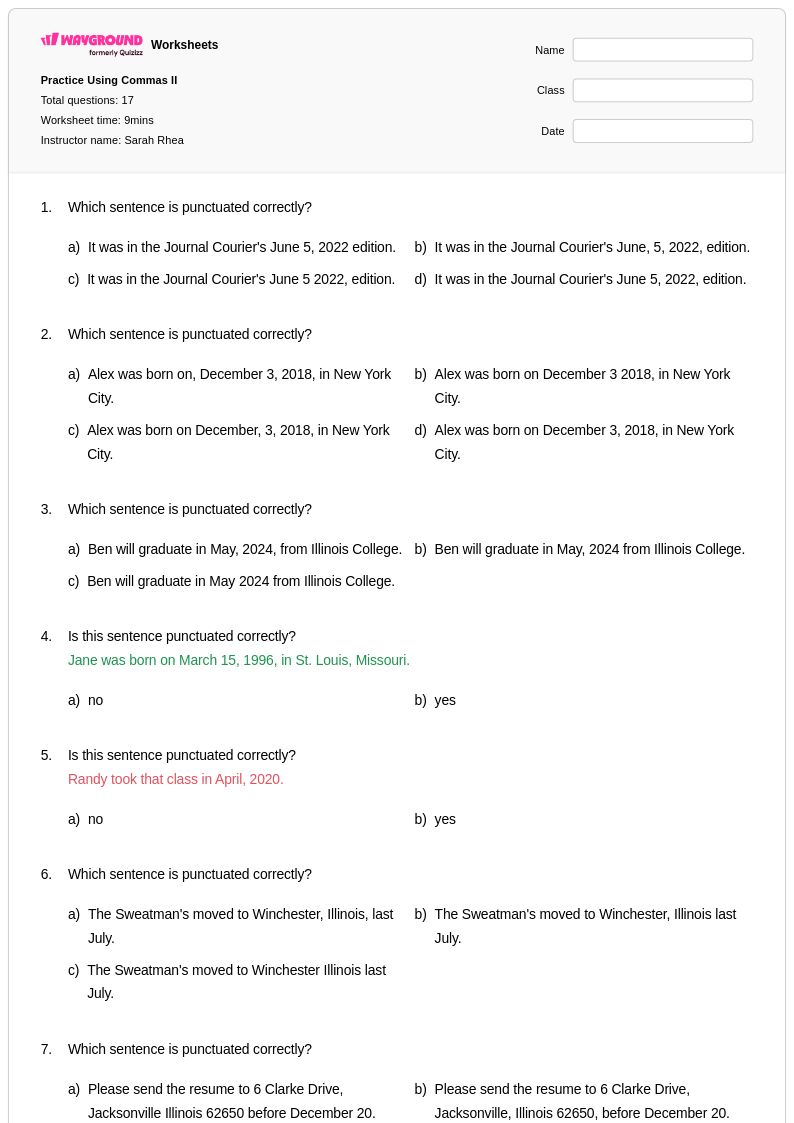
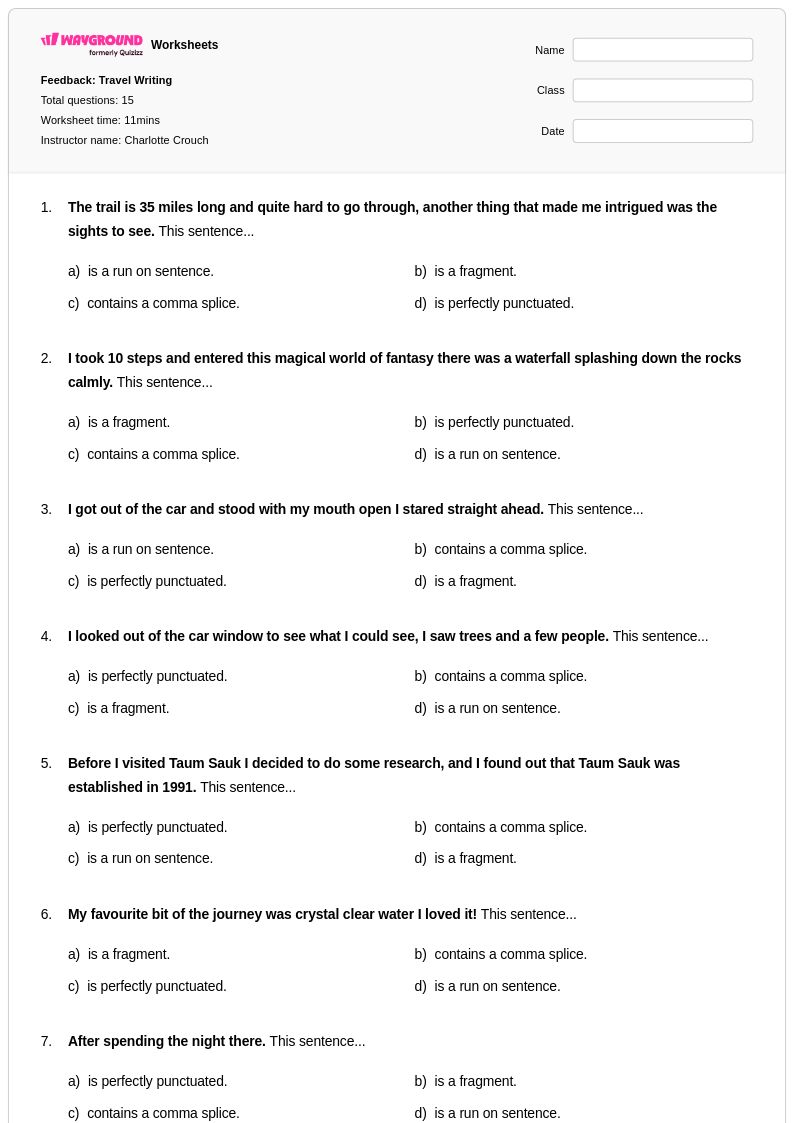
Year 6 comma splice worksheets from Wayground provide comprehensive printables and practice problems to help students identify and correct run-on sentences, complete with answer keys for effective grammar mastery.
Explore printable Comma Splice worksheets for Year 6
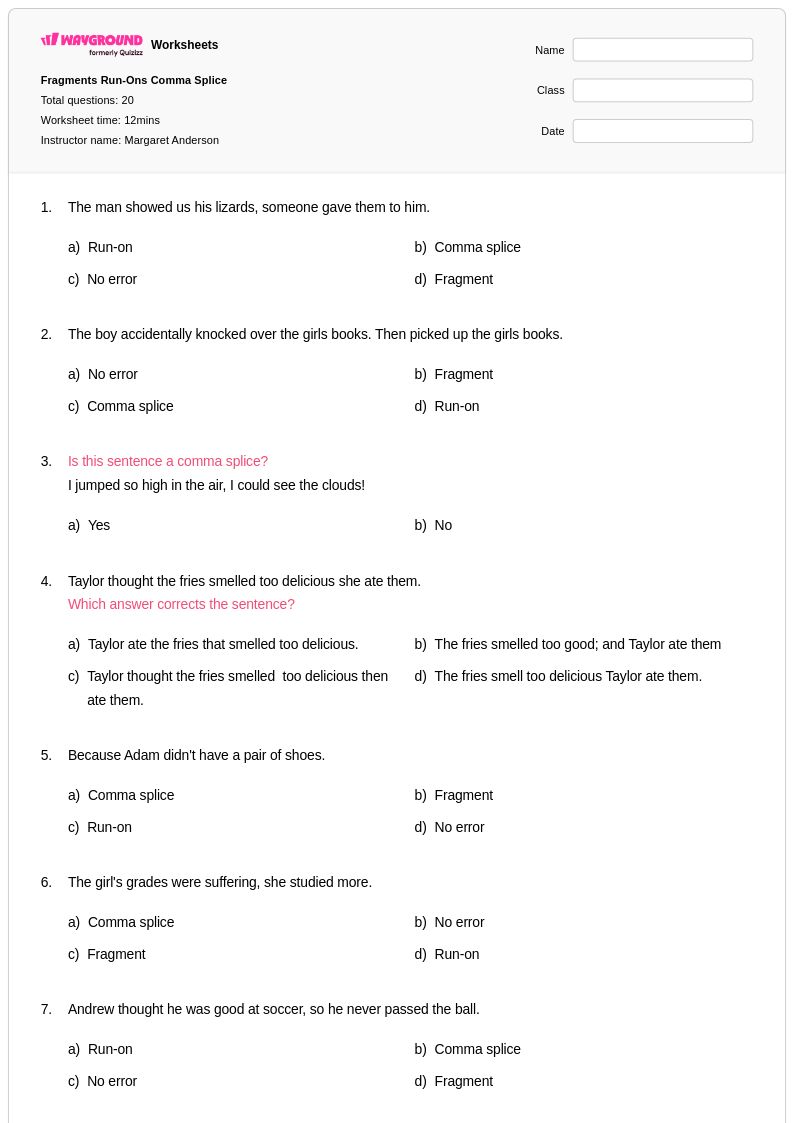
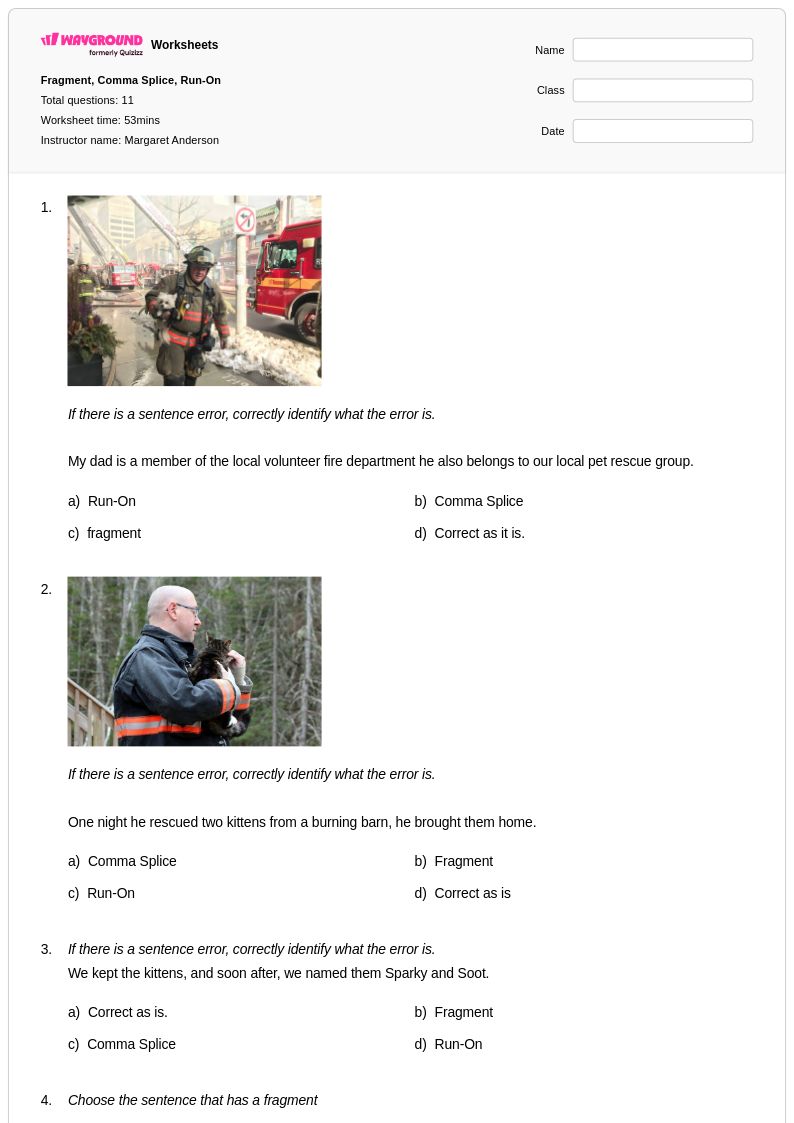
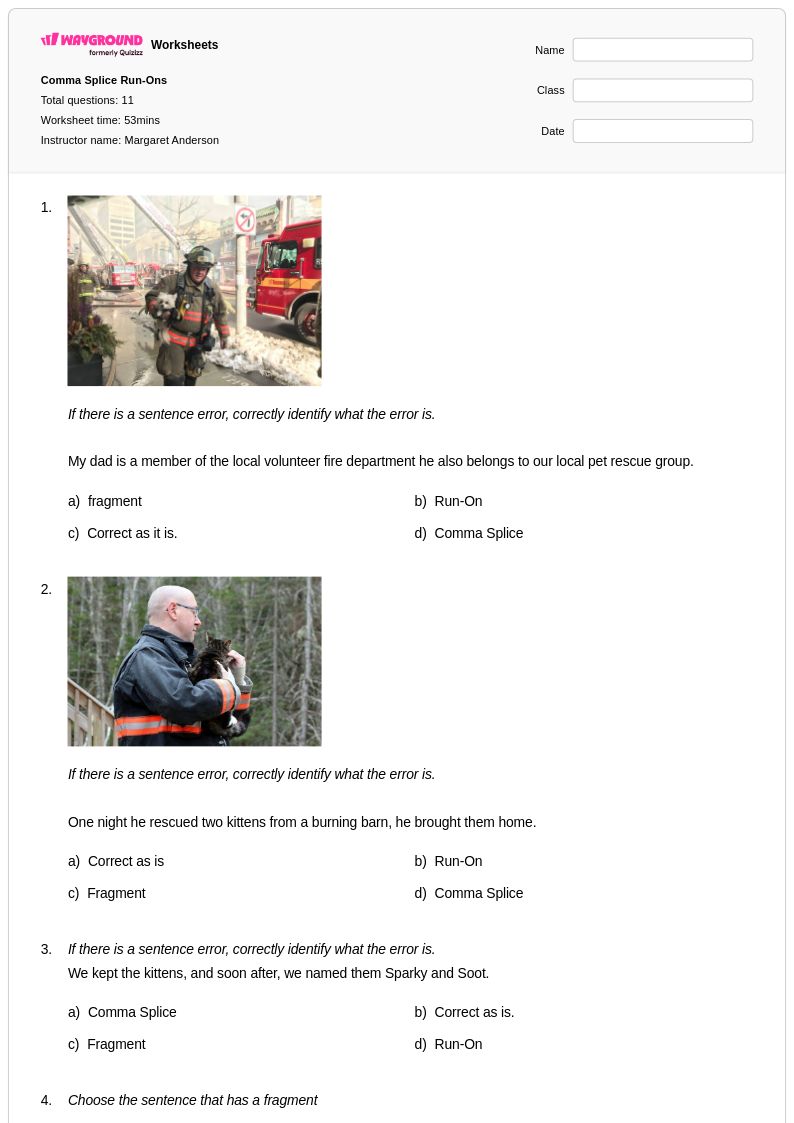
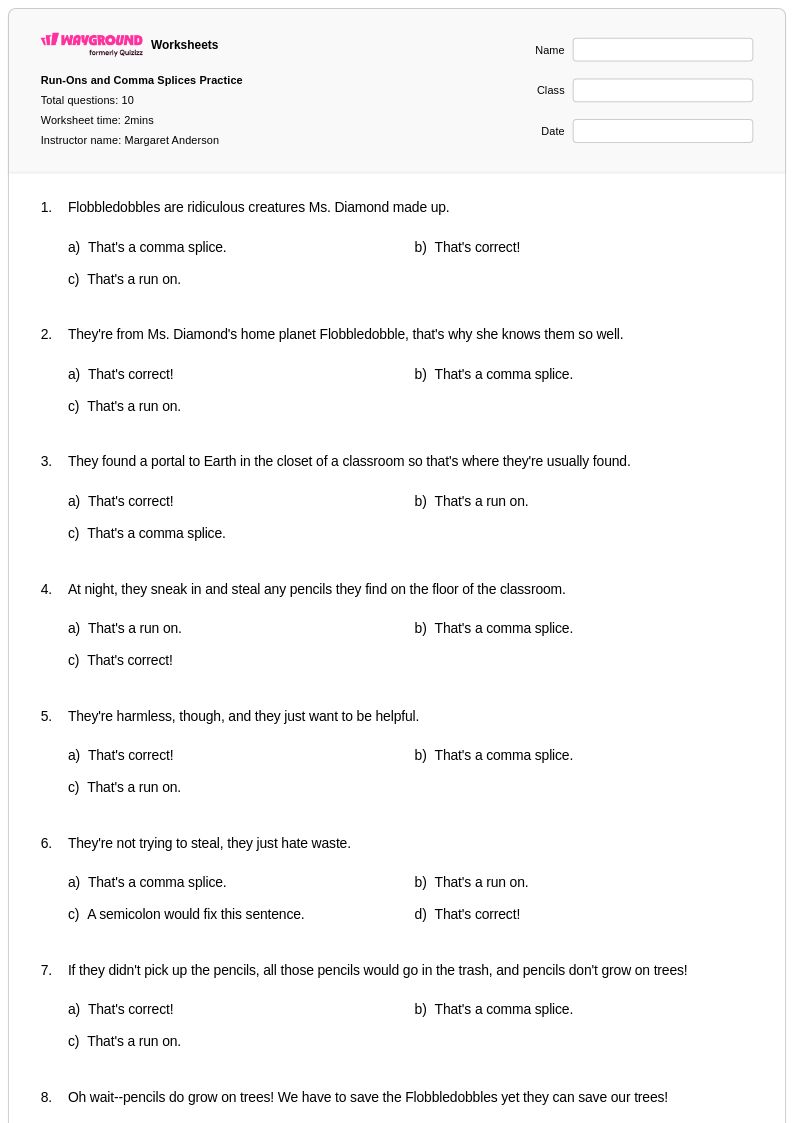
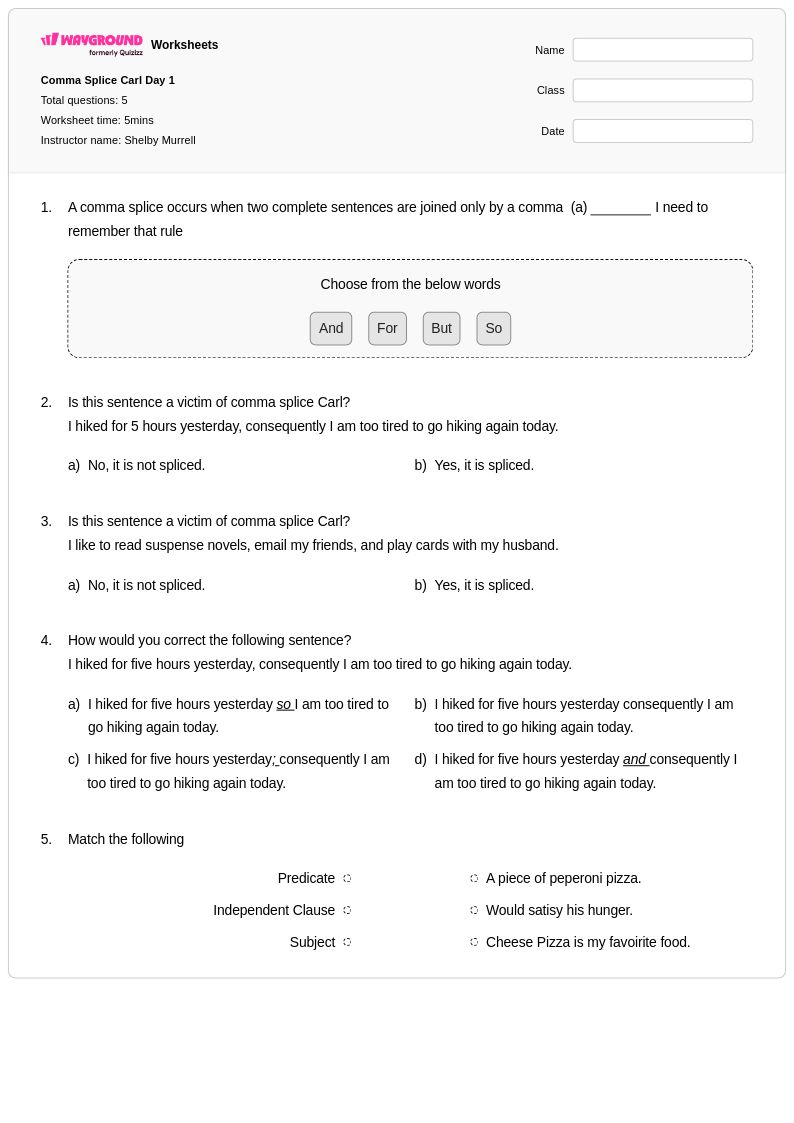
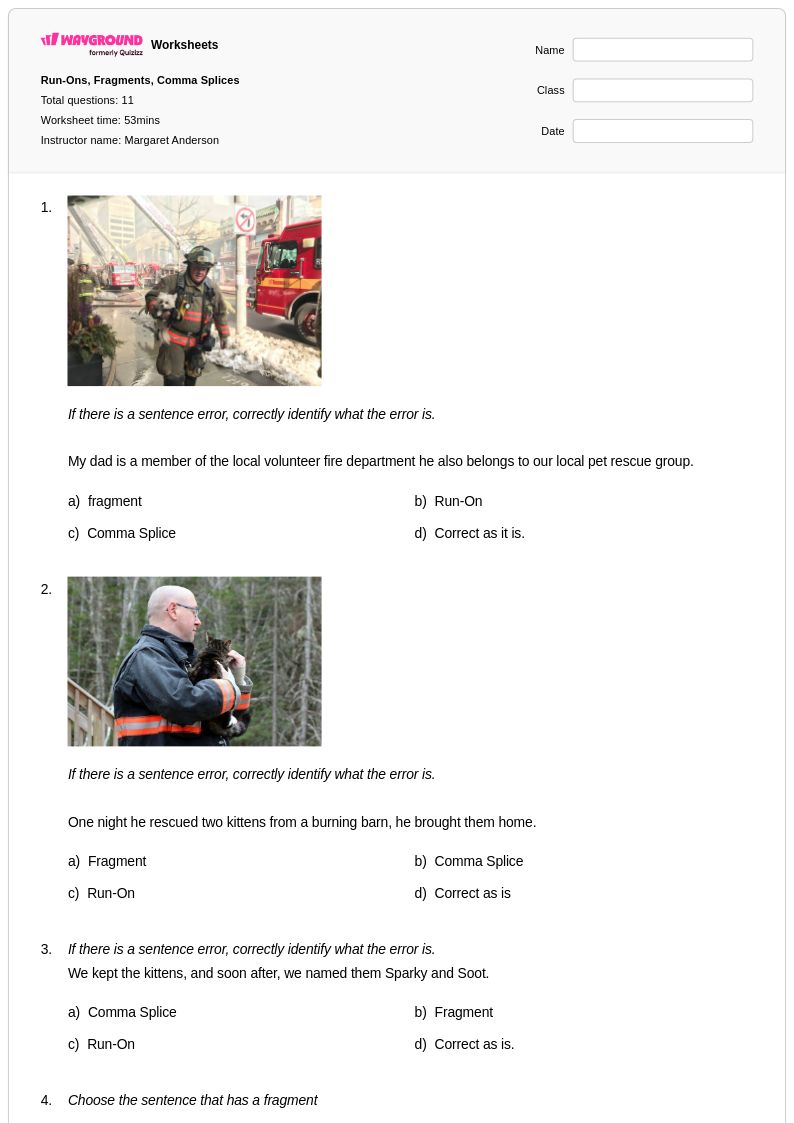
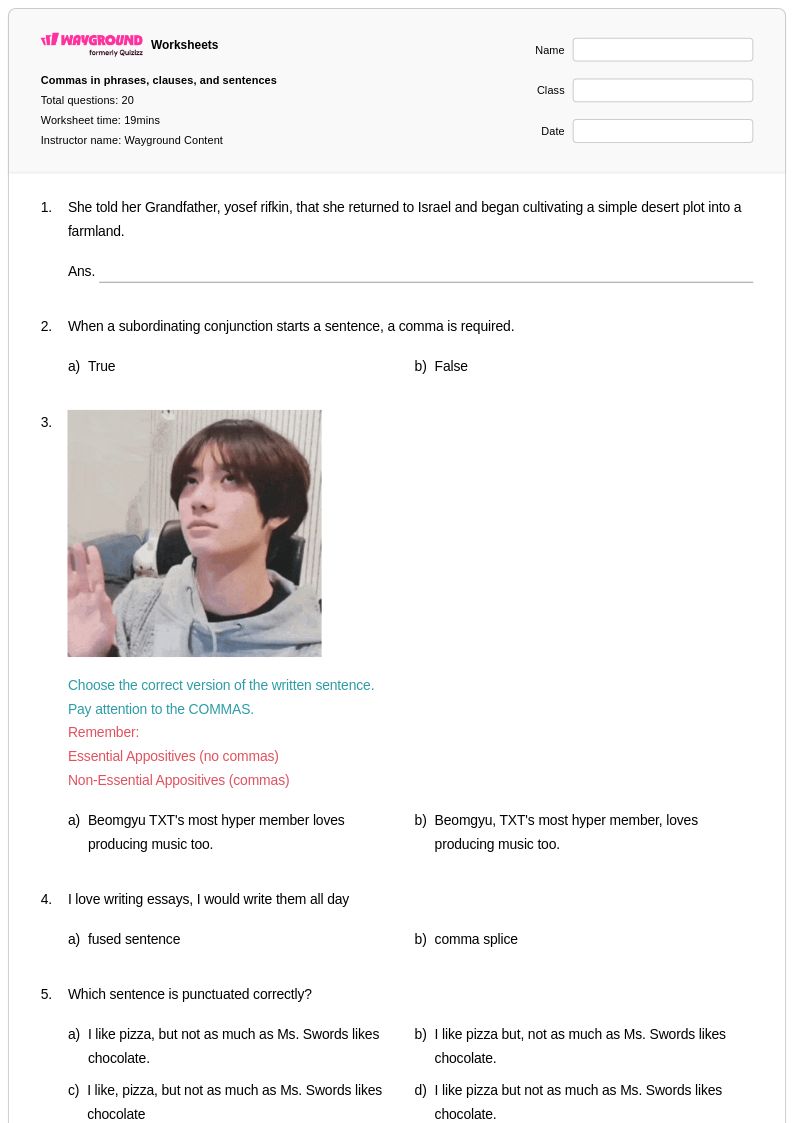
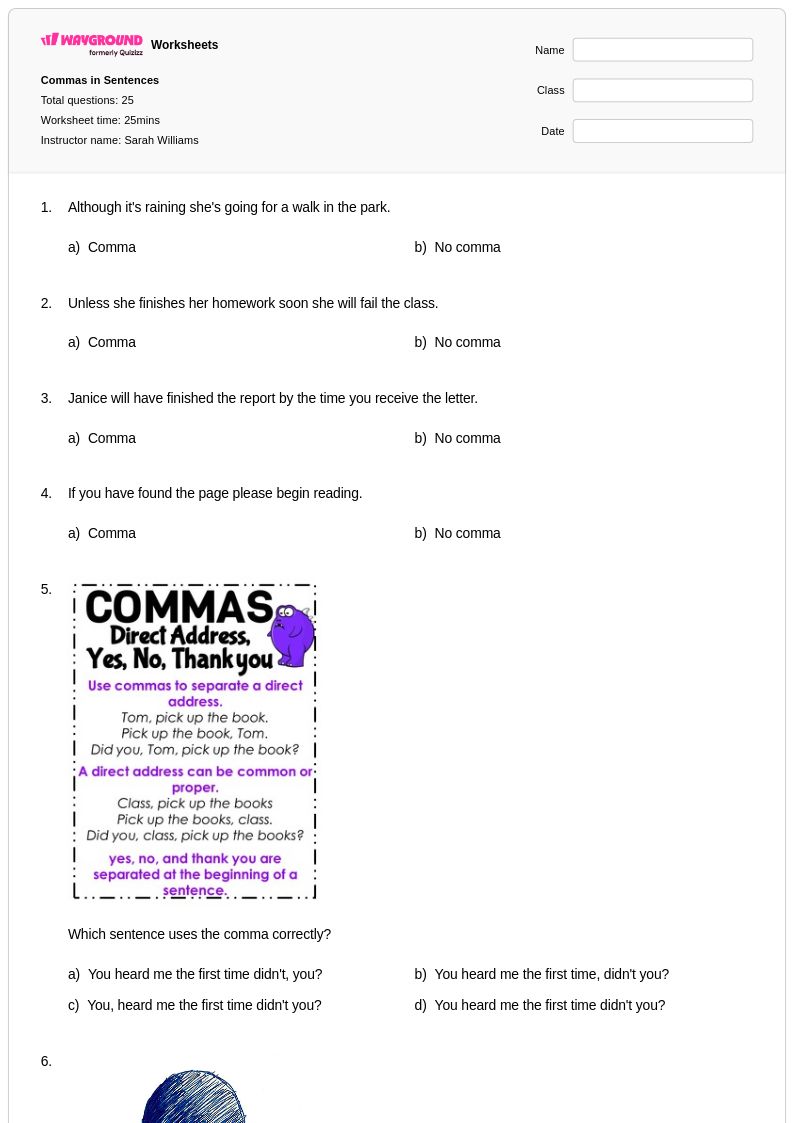
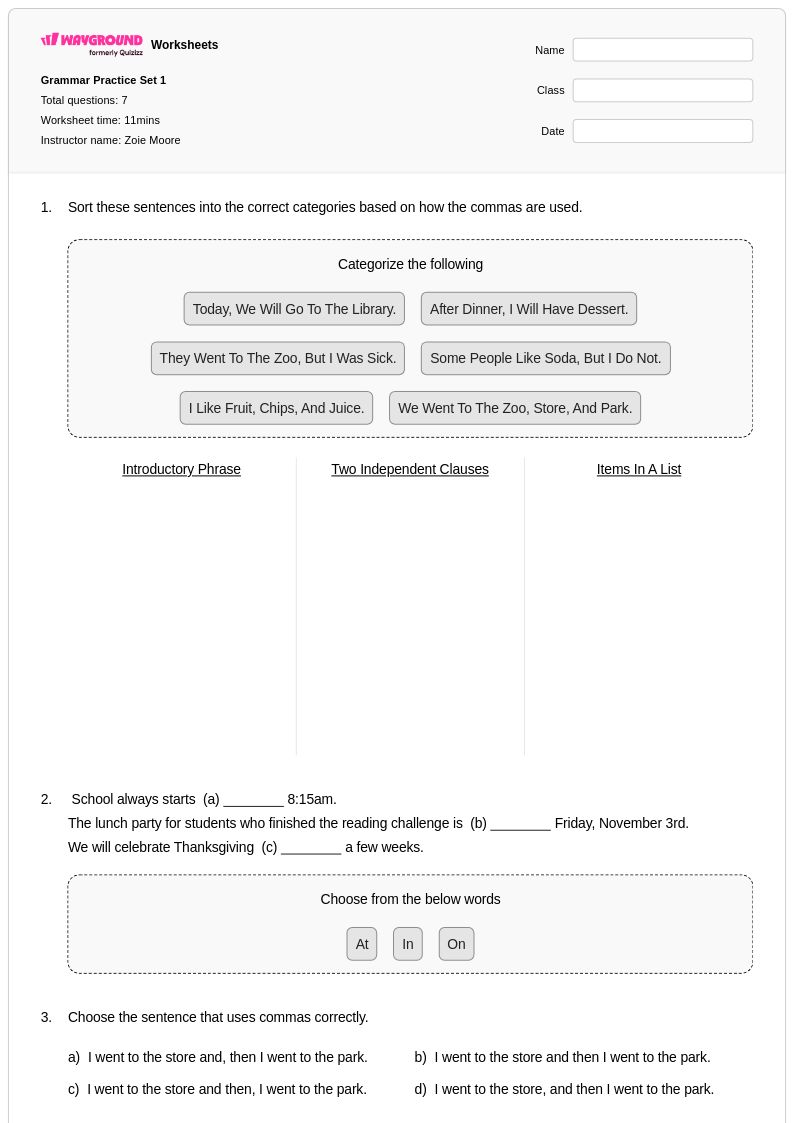
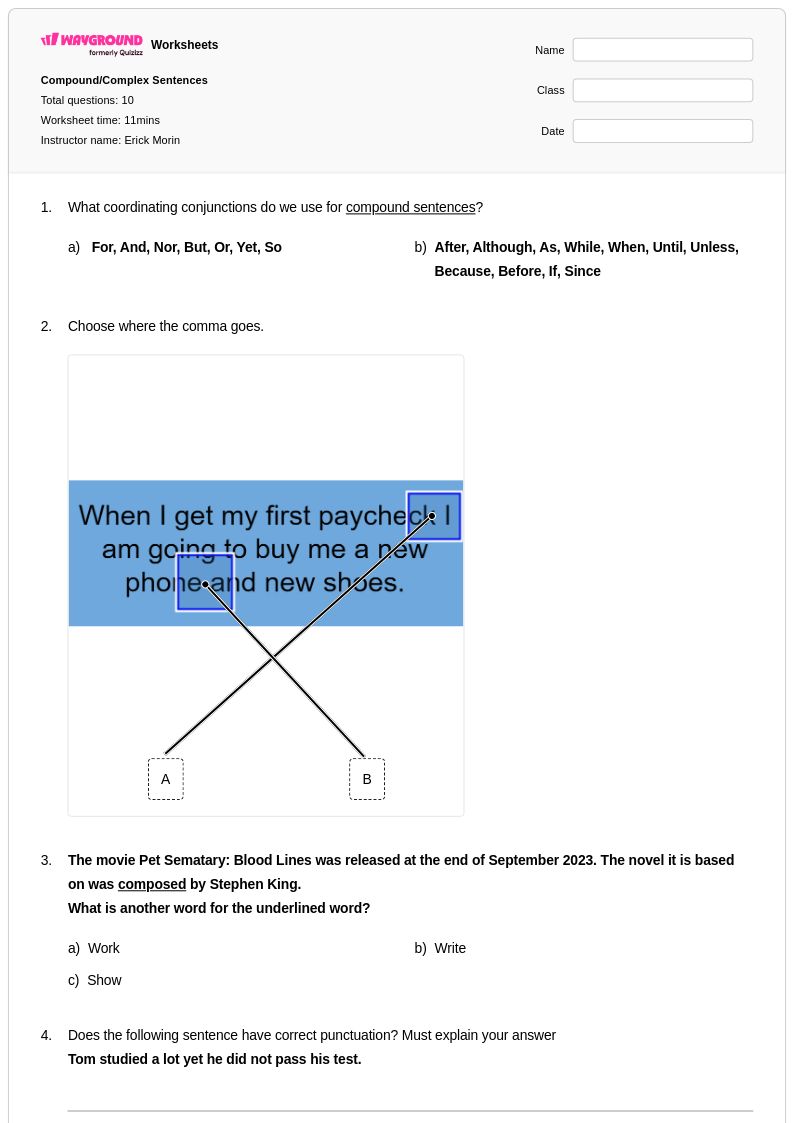
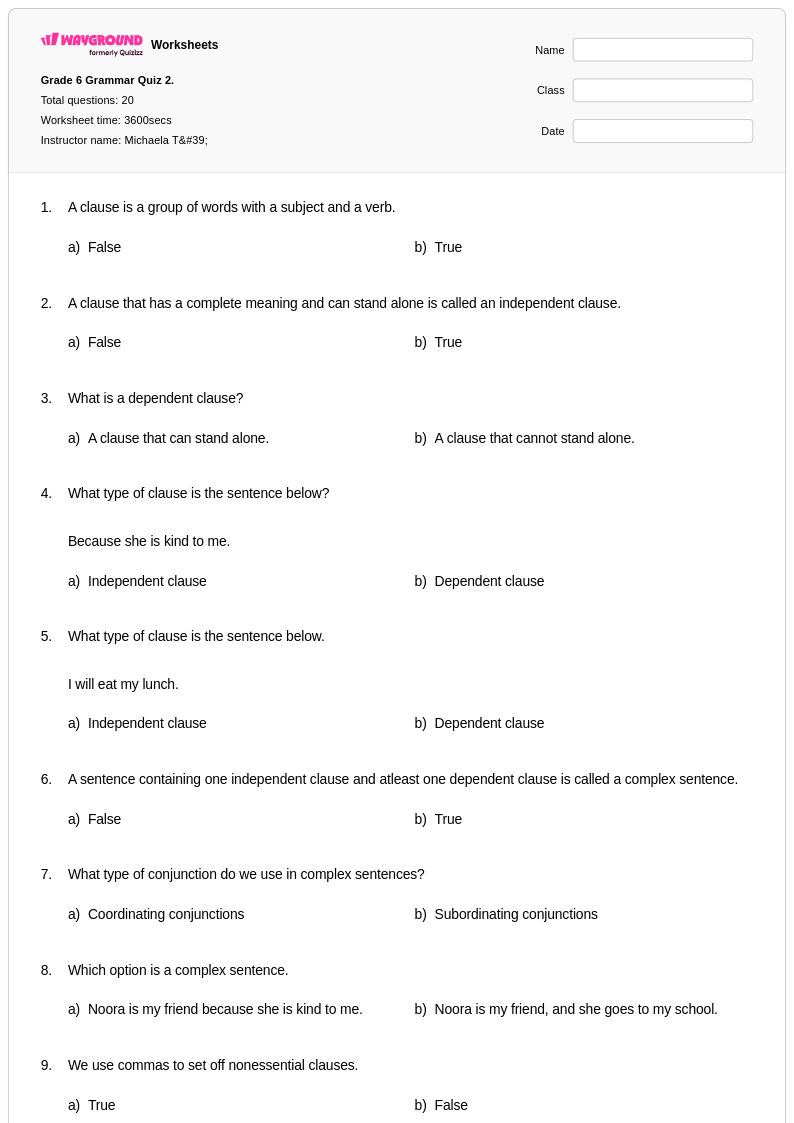
Comma splice worksheets for Year 6 students through Wayground (formerly Quizizz) provide comprehensive practice in identifying and correcting one of the most common sentence boundary errors in student writing. These carefully designed printables help sixth-grade learners understand that a comma splice occurs when two independent clauses are incorrectly joined by only a comma, and they offer systematic practice in recognizing these errors and applying appropriate correction strategies. Students work through engaging practice problems that teach them to use coordinating conjunctions, semicolons, or periods to properly connect or separate independent clauses. Each worksheet includes a detailed answer key that enables students to check their work independently and reinforces proper punctuation patterns through immediate feedback, making these free resources invaluable for both classroom instruction and independent study.
Wayground (formerly Quizizz) empowers educators with an extensive collection of teacher-created comma splice resources that can be seamlessly integrated into any Year 6 grammar curriculum. The platform's millions of worksheets offer robust search and filtering capabilities that allow teachers to quickly locate materials aligned with specific learning standards and student proficiency levels. These differentiation tools enable instructors to customize worksheets for individual student needs, providing targeted remediation for struggling learners while offering enrichment opportunities for advanced students. Available in both printable pdf format and interactive digital versions, these comma splice worksheets support flexible lesson planning and can be easily distributed for homework assignments, classroom activities, or assessment preparation, ensuring that teachers have the resources they need to help students master this critical grammar skill.
FAQs
How do I teach students to identify and fix comma splices?
Start by ensuring students can reliably identify independent clauses before introducing comma splices. Once they can spot two complete thoughts joined by only a comma, teach the three main correction strategies: adding a coordinating conjunction after the comma, replacing the comma with a semicolon, or splitting the sentence into two. Practicing with real examples from student writing tends to make the concept stick faster than isolated drills.
What exercises help students practice correcting comma splices?
Effective practice exercises include error-identification tasks where students flag comma splices in a passage, correction drills where students rewrite flawed sentences using multiple fix strategies, and sentence-combining activities that reinforce when a comma alone is insufficient. Worksheets that require students to apply all three correction methods — coordinating conjunctions, semicolons, and sentence separation — build more flexible understanding than those focused on a single strategy.
What mistakes do students commonly make when correcting comma splices?
The most frequent error is confusing comma splices with compound sentences that use a coordinating conjunction correctly — students often remove the comma entirely without adding a conjunction, creating a fused sentence instead. Another common mistake is treating conjunctive adverbs like 'however' or 'therefore' as coordinating conjunctions, which does not fix the splice. Students also sometimes struggle to recognize that both clauses must be truly independent before a correction strategy applies.
How do I use comma splice worksheets effectively in my classroom?
Comma splice worksheets on Wayground are available as printable PDFs for traditional classroom use and in digital formats for technology-integrated or remote learning environments, and can also be hosted as an interactive quiz on Wayground. For initial instruction, use them as guided practice with whole-class discussion of each correction choice. For remediation, assign targeted sections to students who continue making this error in their writing. The included answer keys support both teacher-led review and independent self-correction.
How is a comma splice different from a run-on sentence?
A comma splice is a specific type of run-on sentence in which two independent clauses are joined with only a comma, which is insufficient punctuation. A run-on sentence is the broader category and includes fused sentences, where two independent clauses are joined with no punctuation at all. Teaching this distinction helps students understand that fixing a comma splice requires adding either a conjunction or stronger punctuation, not simply removing the comma.
How can I differentiate comma splice practice for students at different skill levels?
For struggling writers, reduce cognitive load by having students focus first on identifying which sentences contain a splice before attempting corrections. More advanced students can be challenged to correct each splice using all three methods and then explain which revision produces the clearest sentence. On Wayground, teachers can apply accommodations such as reduced answer choices or read-aloud support to individual students, ensuring that learners with diverse needs can access the same practice material without disrupting the rest of the class.