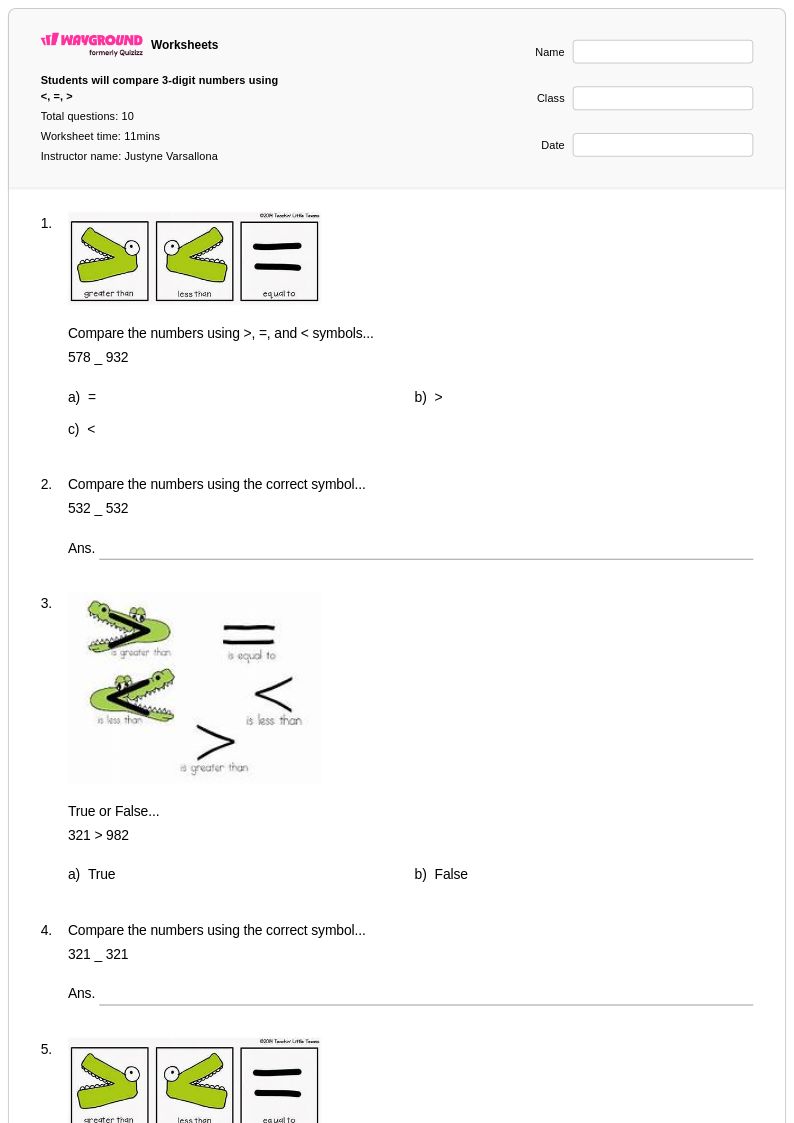
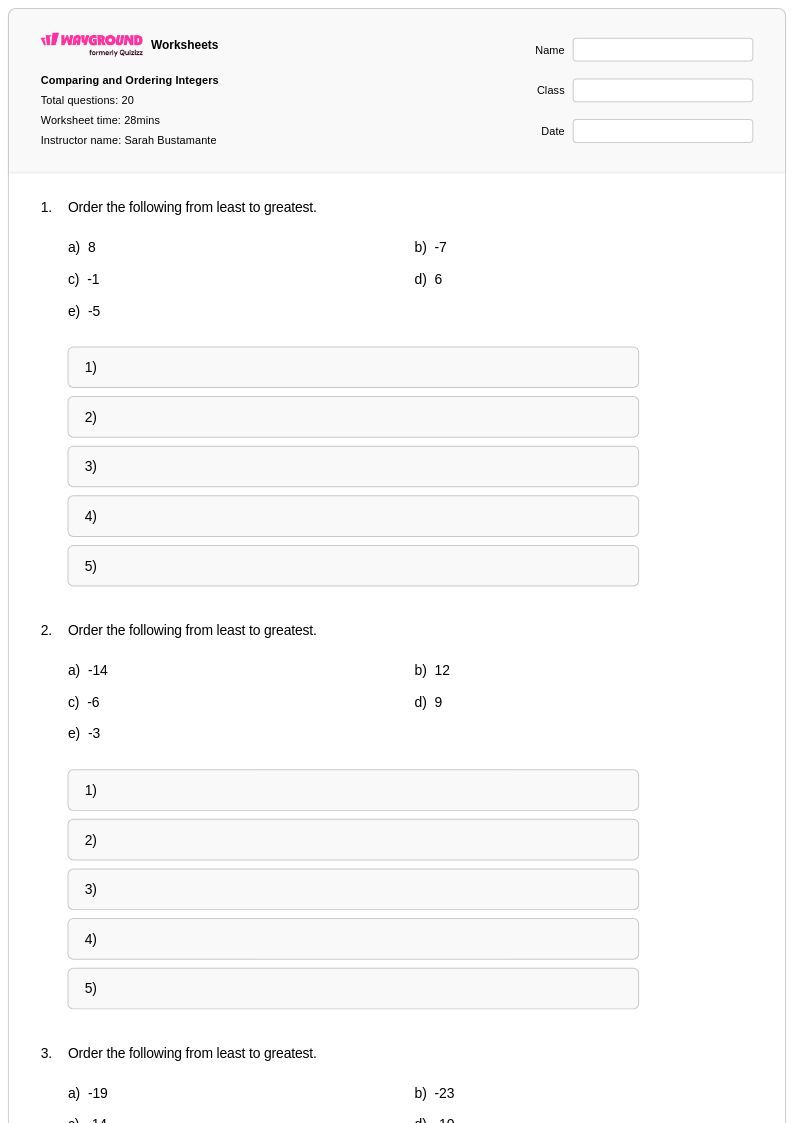
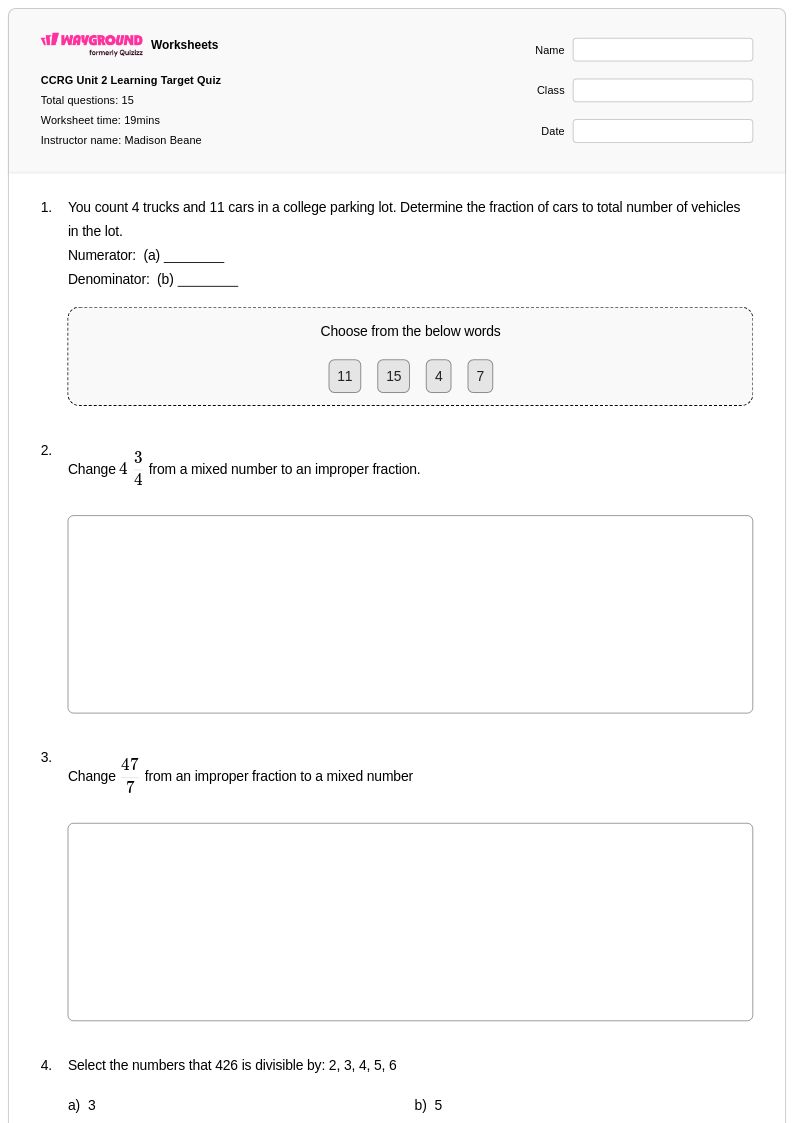
Discover free printable worksheets and practice problems for comparing mixed numbers, complete with answer keys to help students master fraction comparison skills through engaging PDF exercises.
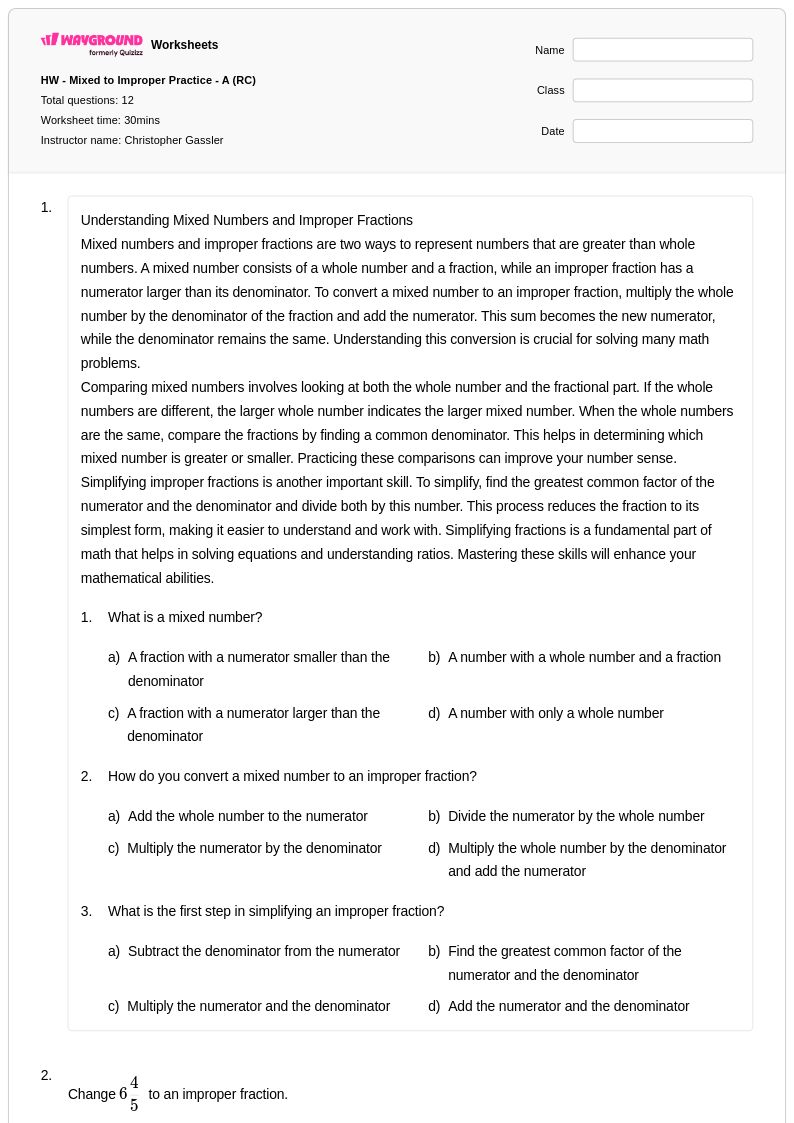
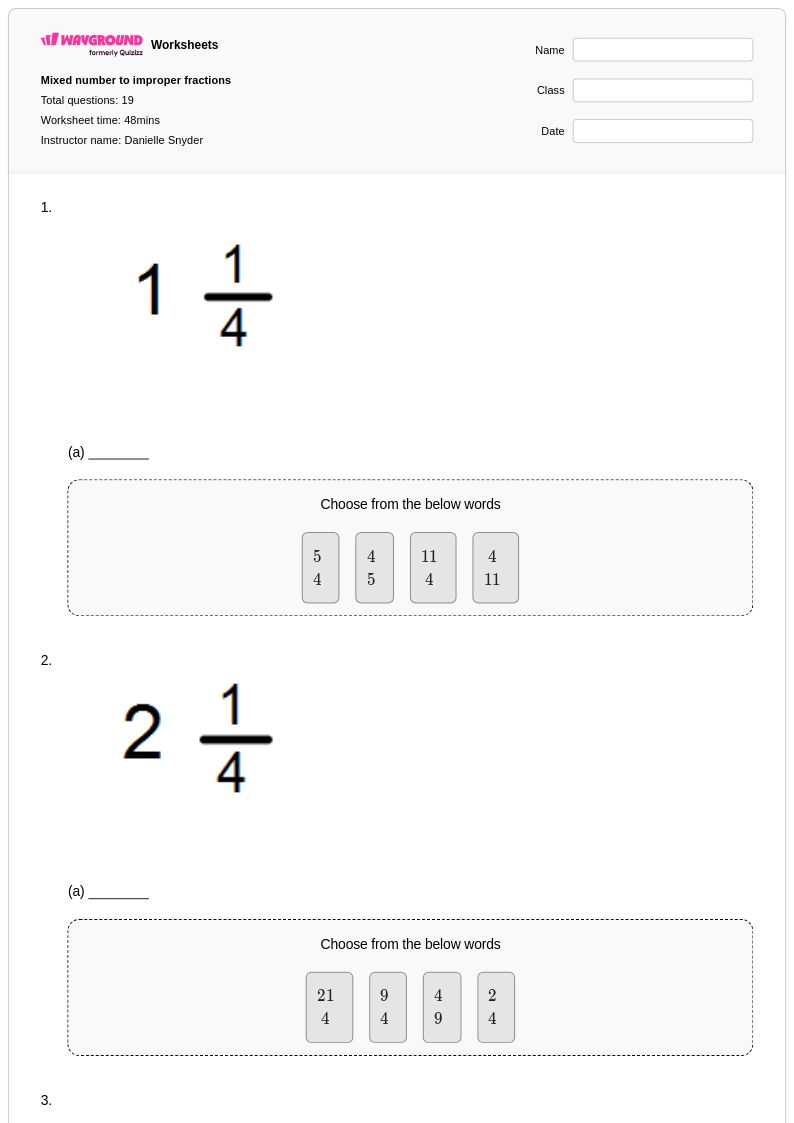
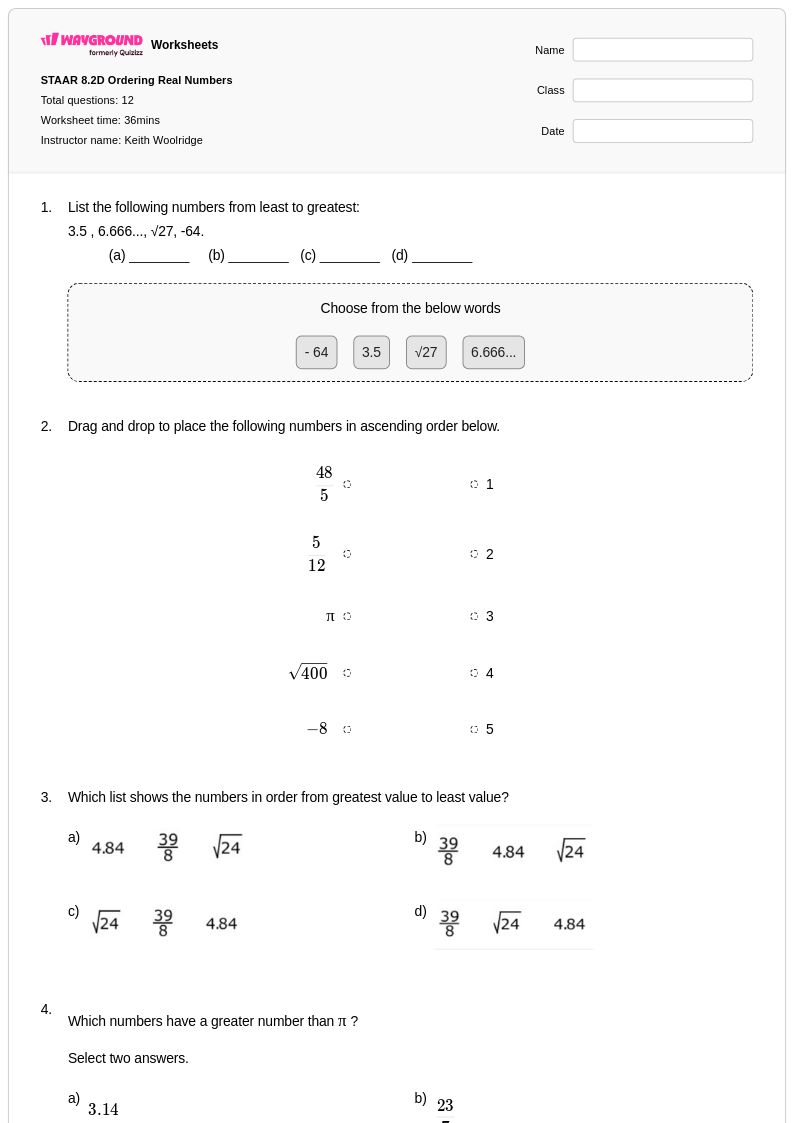
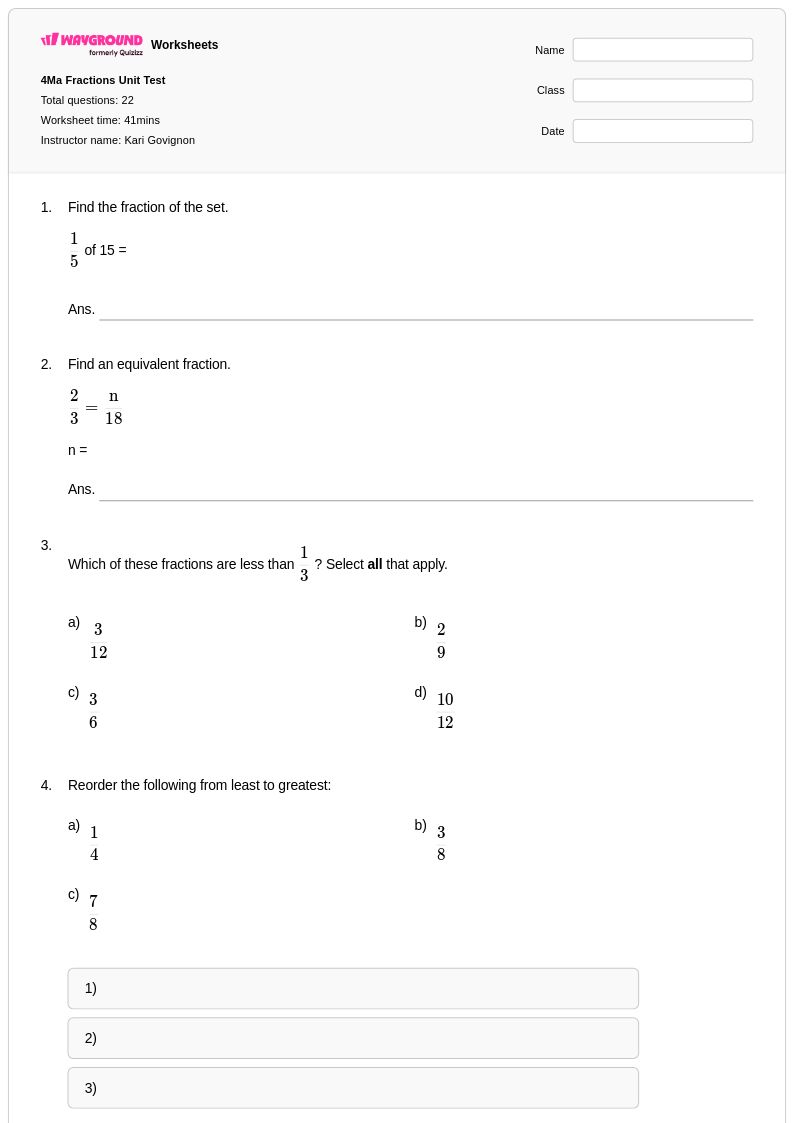
Comparing mixed numbers represents a fundamental mathematical skill that bridges basic fraction understanding with more advanced numerical reasoning. Wayground's comprehensive worksheet collection focuses specifically on helping students master the comparison of mixed numbers through systematic practice and skill development. These carefully designed worksheets guide learners through the essential process of converting mixed numbers to improper fractions or finding common denominators to make accurate comparisons. Each worksheet includes detailed answer keys that support both independent learning and classroom instruction, while the free printable format ensures accessible practice for all students. The practice problems progress logically from simple comparisons with like denominators to more complex scenarios involving unlike denominators, helping students build confidence and computational fluency with mixed number relationships.
Wayground's extensive library of teacher-created resources provides educators with millions of high-quality worksheets specifically designed for comparing mixed numbers instruction. The platform's advanced search and filtering capabilities allow teachers to quickly locate materials that align with curriculum standards and match their students' specific learning needs. These differentiation tools enable seamless customization of worksheet difficulty levels, supporting both remediation for struggling learners and enrichment opportunities for advanced students. Available in both printable pdf format and interactive digital versions, these resources offer flexible implementation options for diverse classroom environments. Teachers can efficiently plan targeted skill practice sessions, create focused intervention materials, or develop comprehensive assessment tools that accurately measure student progress in comparing mixed numbers across various mathematical contexts.
FAQs
How do I teach students to compare mixed numbers?
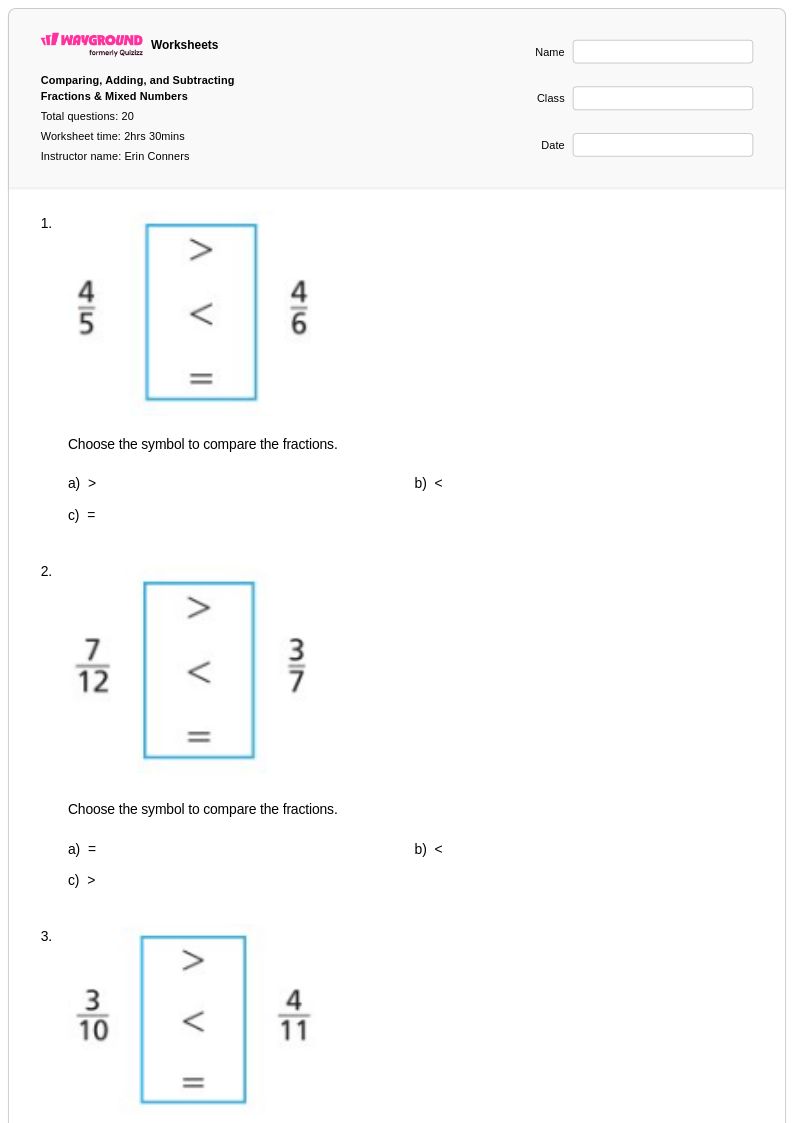
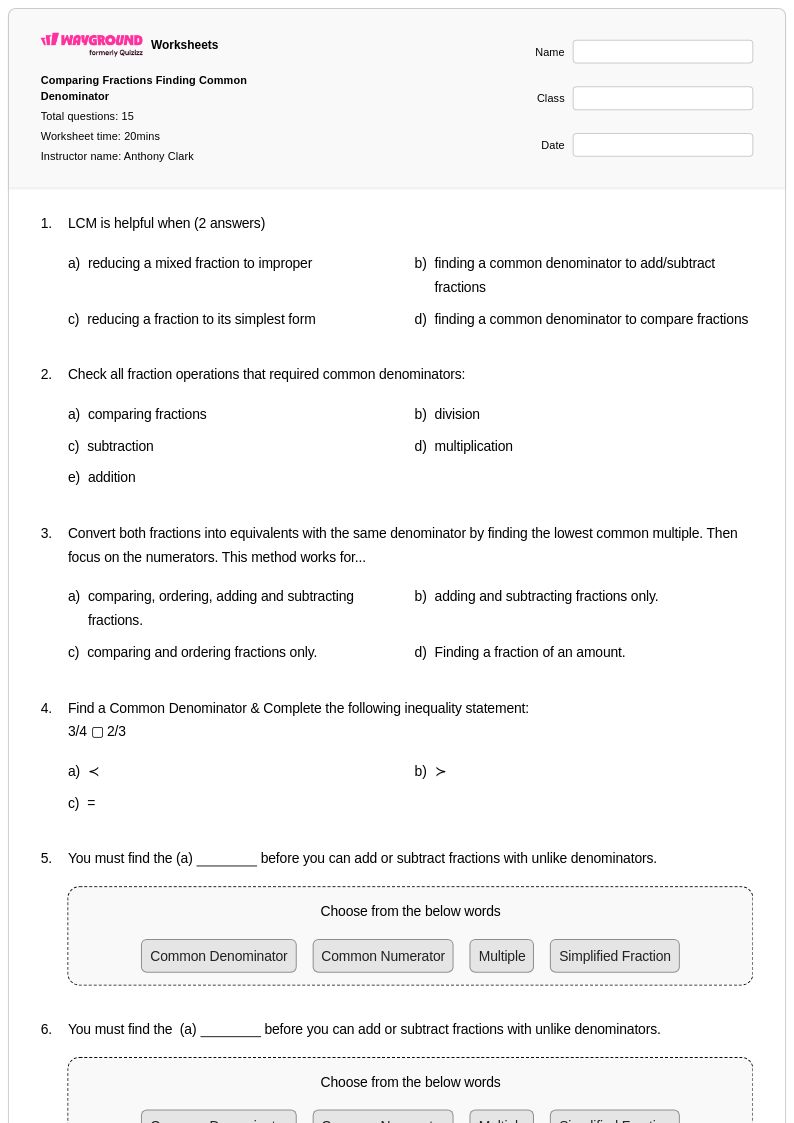
Begin by having students compare the whole-number parts; if those differ, the mixed number with the greater whole-number part is larger. When the whole-number parts match, students can compare the fractional parts by using common denominators, visual models, or conversion to improper fractions, then justify the result with <, >, or =.
What exercises help students practice comparing mixed numbers?
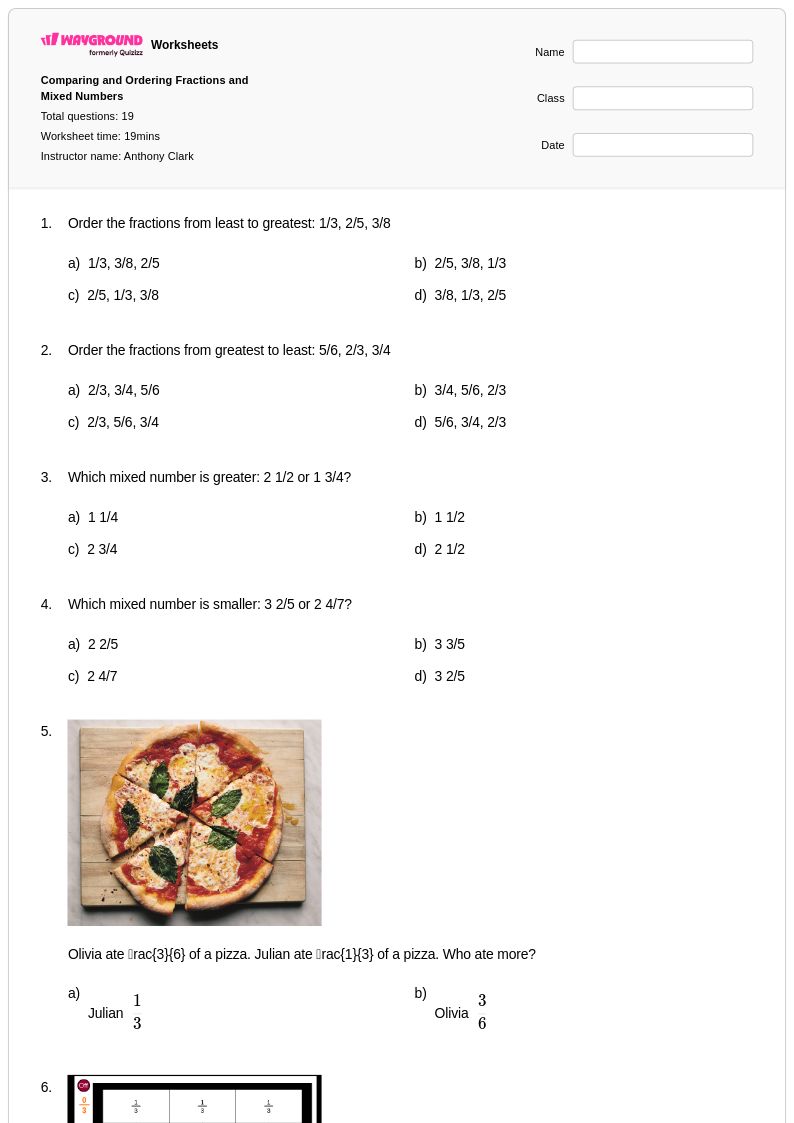
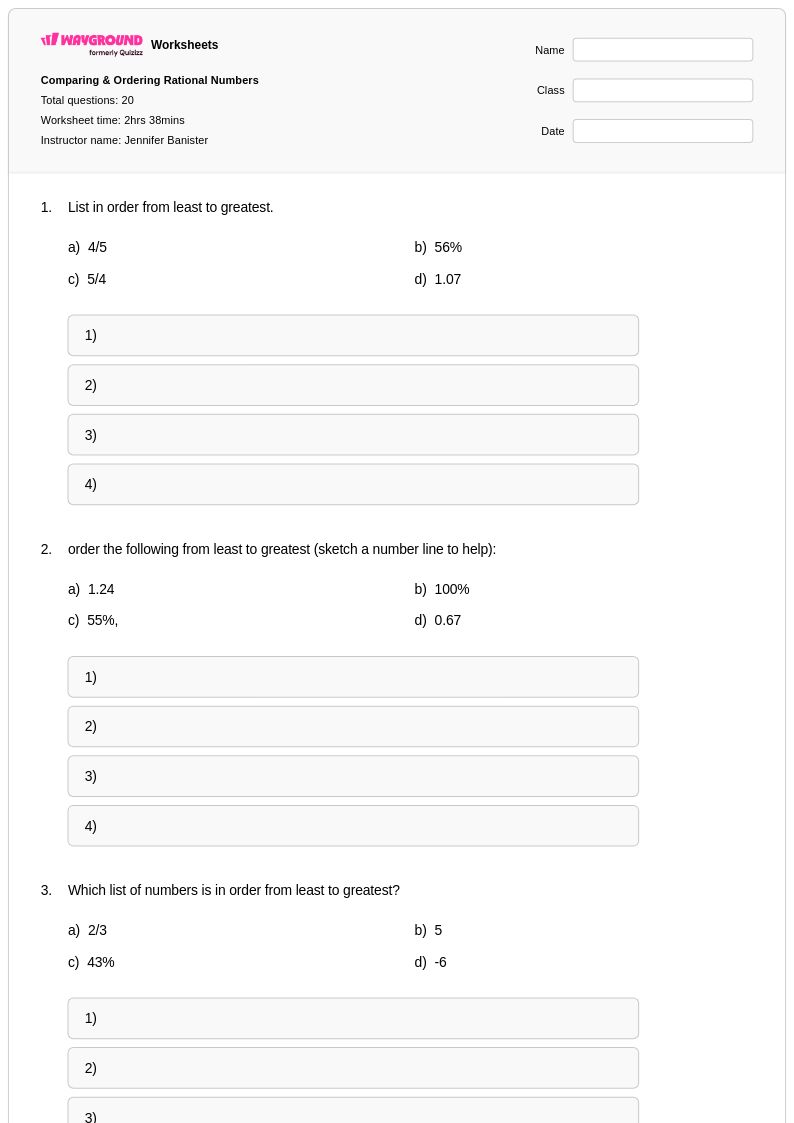
Use a progression that starts with mixed numbers containing like denominators and advances to unlike denominators, equivalent values, and ordering several numbers from least to greatest. Include problems that require students to choose between comparing whole-number parts, finding common denominators, and converting to improper fractions so they develop flexible strategies.
What mistakes do students make when comparing mixed numbers?
Students may compare only the numerators or denominators, ignore the whole-number parts, or assume that a fraction with a larger denominator has the larger value. They may also convert mixed numbers incorrectly, so teachers should check whether students multiply the denominator by the whole number before adding the numerator.
How can I use a comparing mixed numbers worksheet from Wayground?
Wayground worksheets are available as printable PDFs and digital formats, so teachers can host a worksheet as a digital quiz on Wayground or print it and assign it on paper; paper practice can also support schools working to reduce screen time. Every worksheet includes a complete answer key, and teachers can grade physical submissions with the Wayground for Teachers app by scanning or capturing student work.
How does comparing mixed numbers fit into the Common Core math progression?
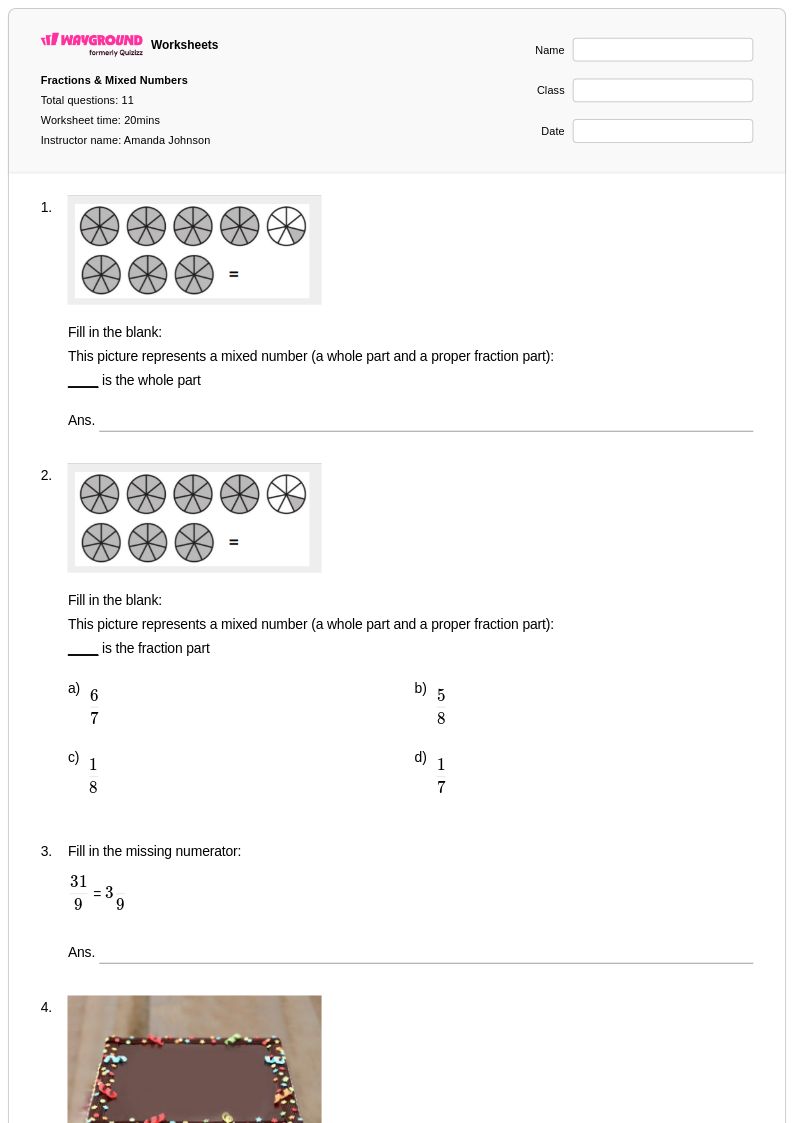
Comparing mixed numbers extends the Common Core progression from understanding fraction equivalence and comparing fractions to operating confidently with fractions and rational numbers. Practice should emphasize reasoning from the numbers’ size, using common denominators or equivalent forms, and explaining comparisons rather than relying only on a memorized procedure.
How can I differentiate comparing mixed numbers practice?
Teachers can create scaffolded worksheet versions by changing font spacing and size, applying a dyslexia-friendly font, translating content, or selecting easier or more complex comparison problems. For digital sessions, Wayground also supports reusable student-level accommodations such as extended time, Read Aloud, reduced answer choices, and Reading Mode without changing the default experience for classmates.