
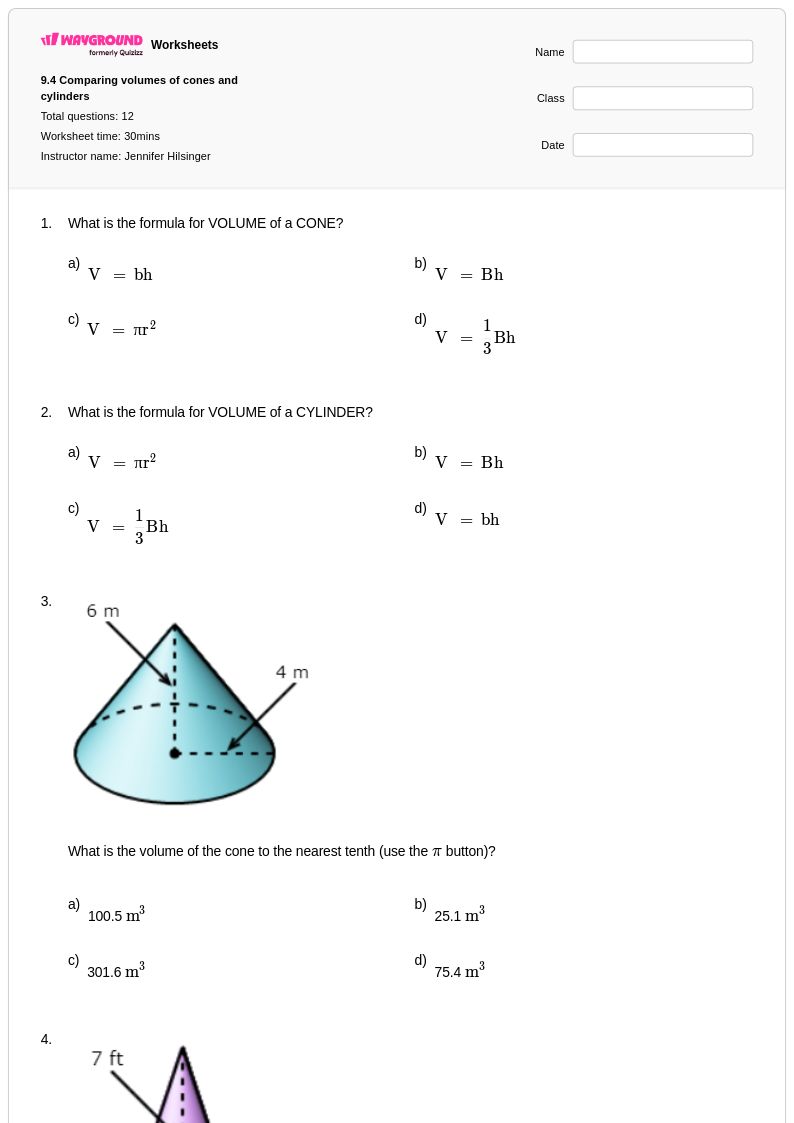
12 Q
8th
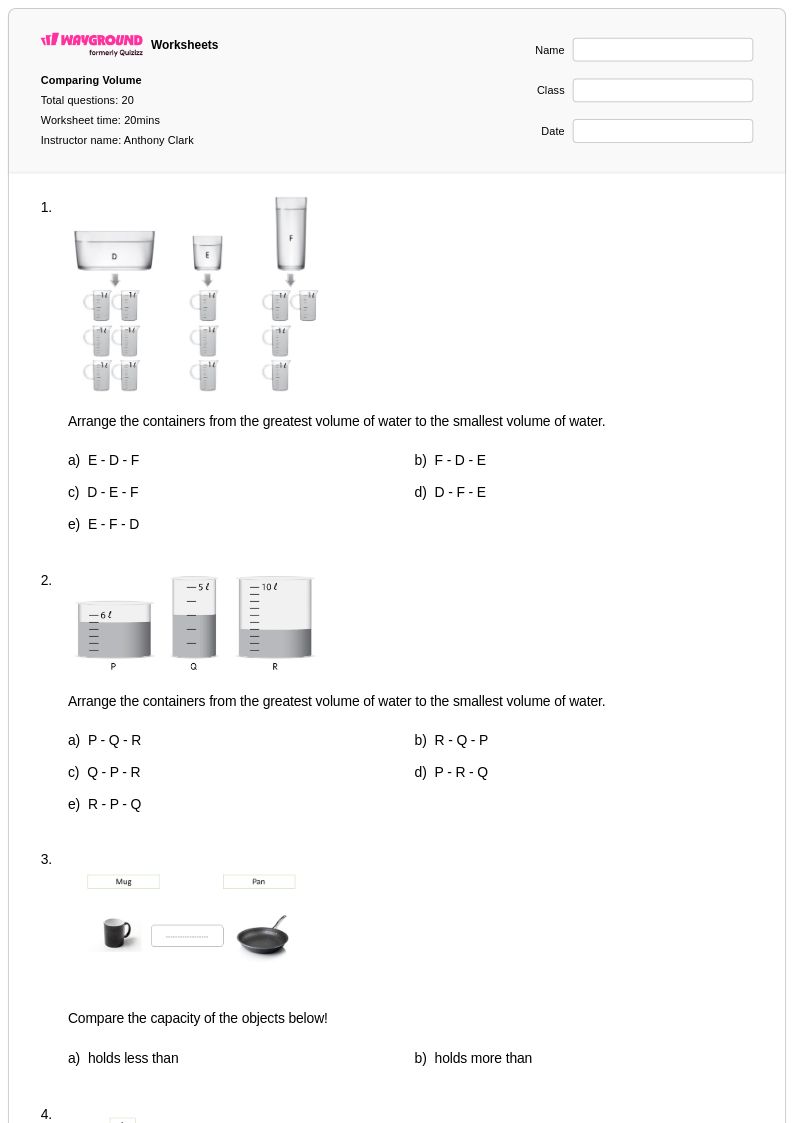
20 Q
2nd - Uni
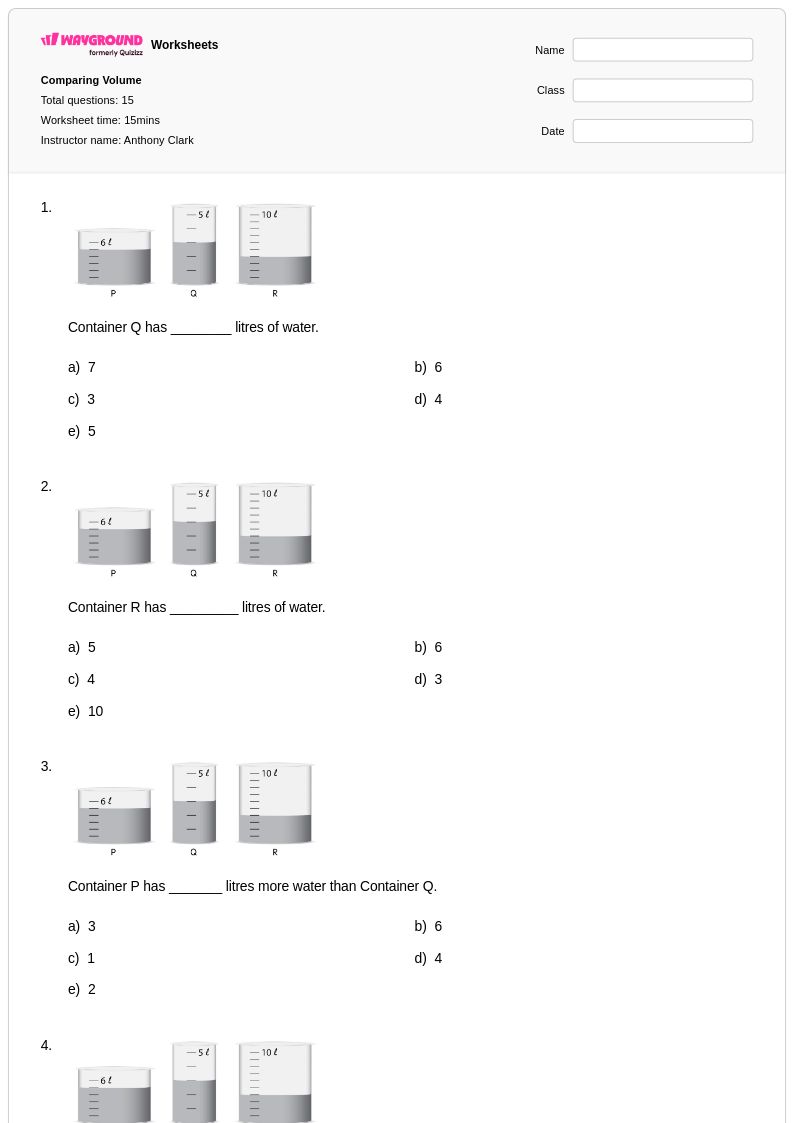
15 Q
2nd - Uni
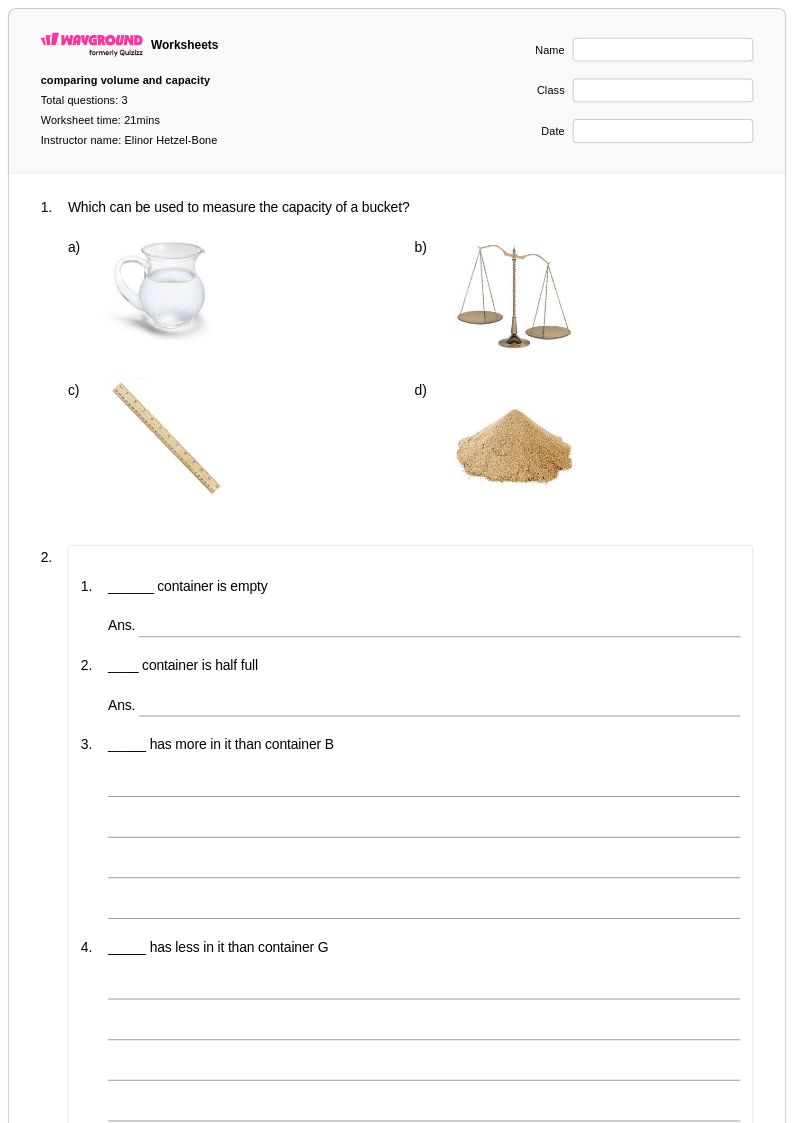
9 Q
2nd
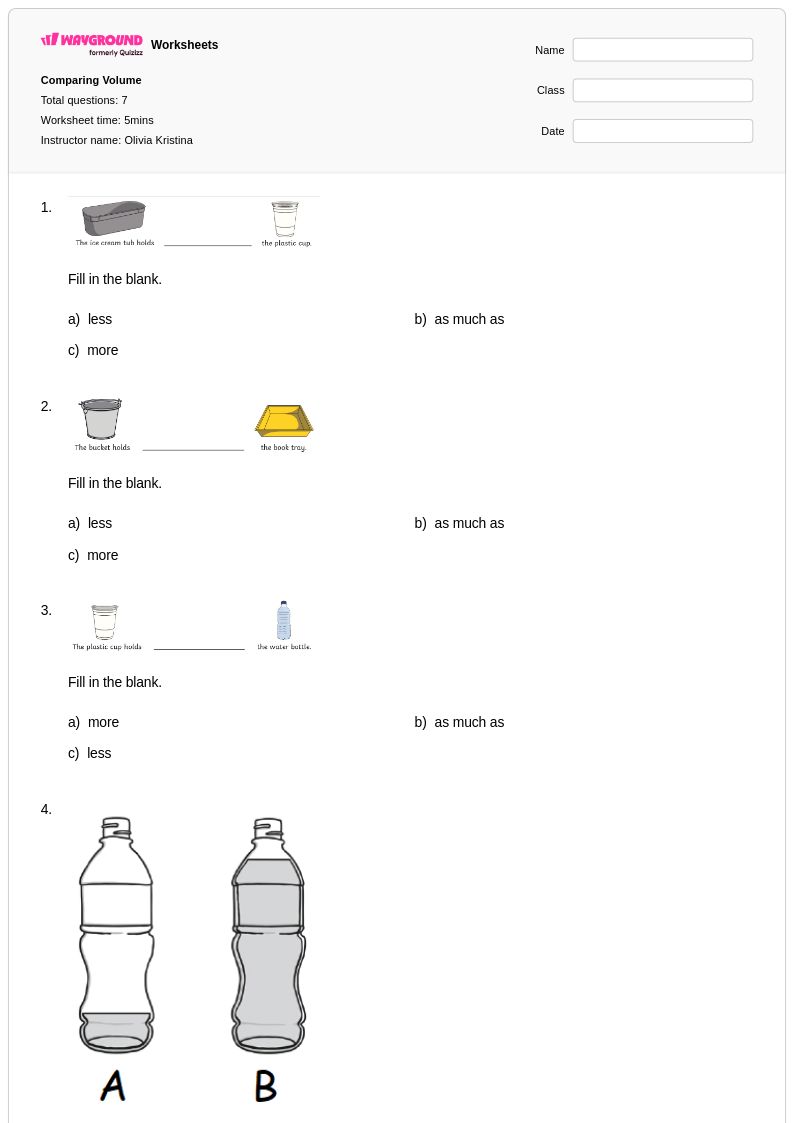
7 Q
1st - 2nd
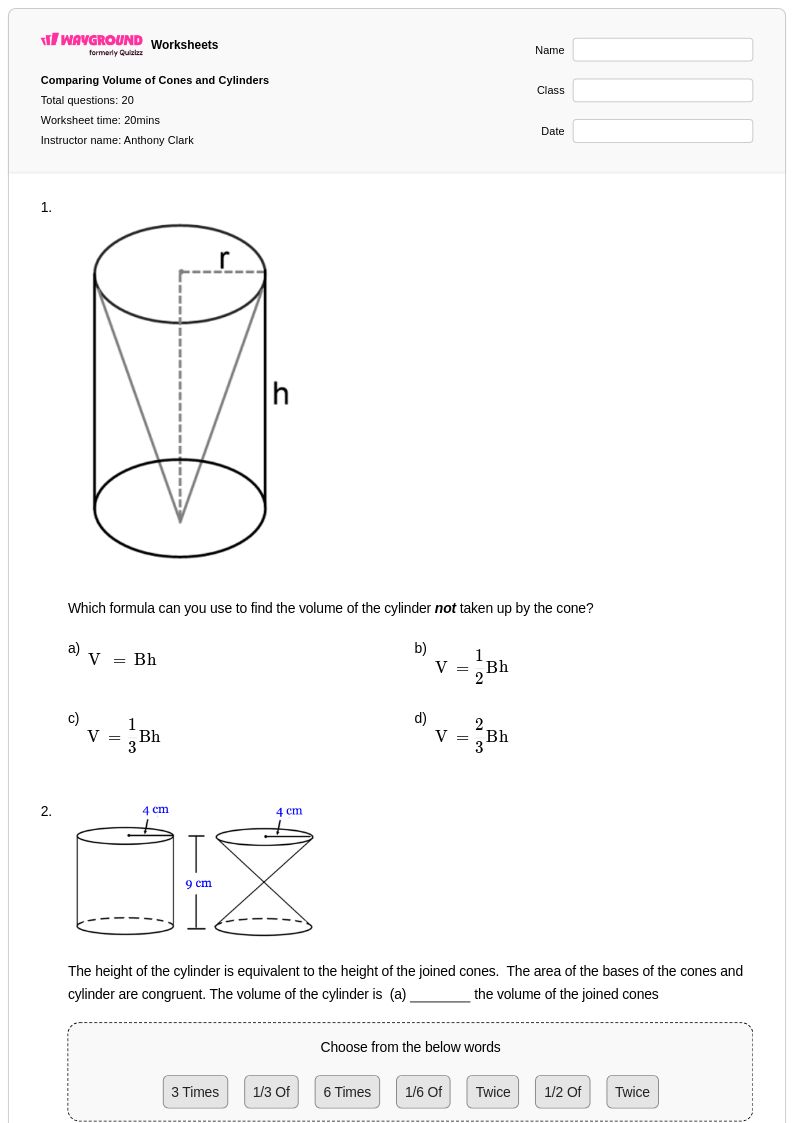
20 Q
8th - Uni
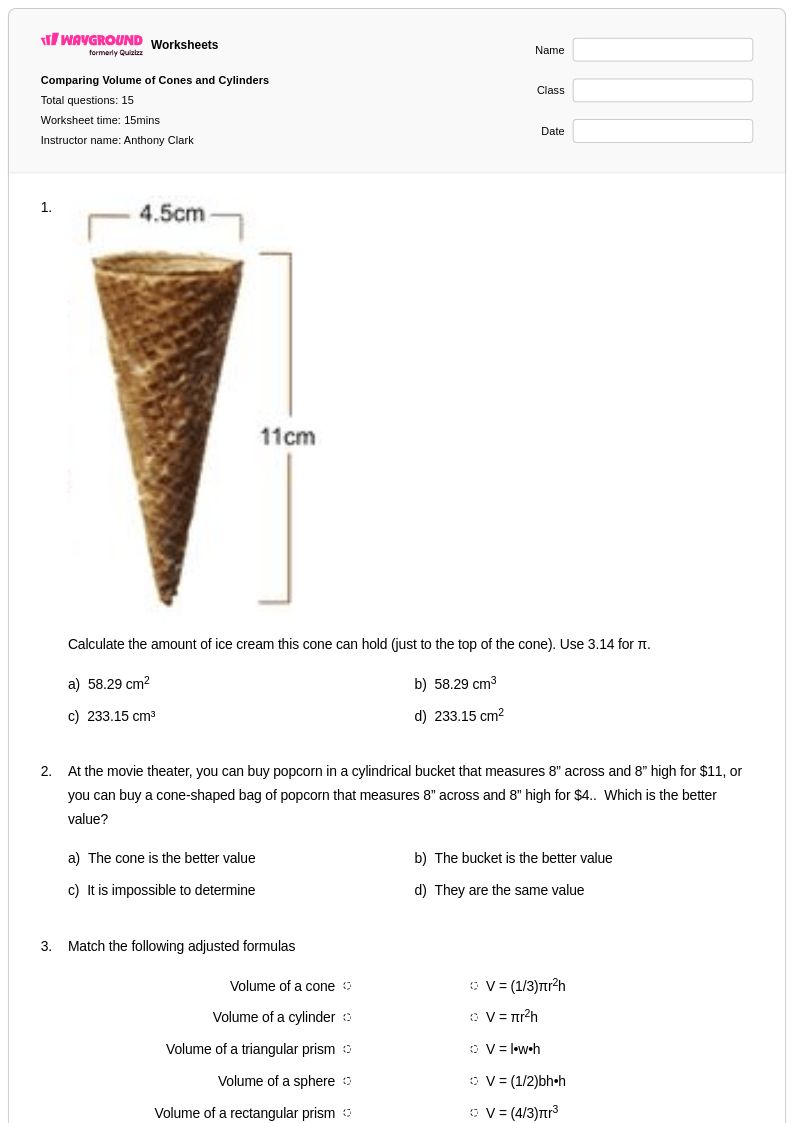
15 Q
8th - Uni
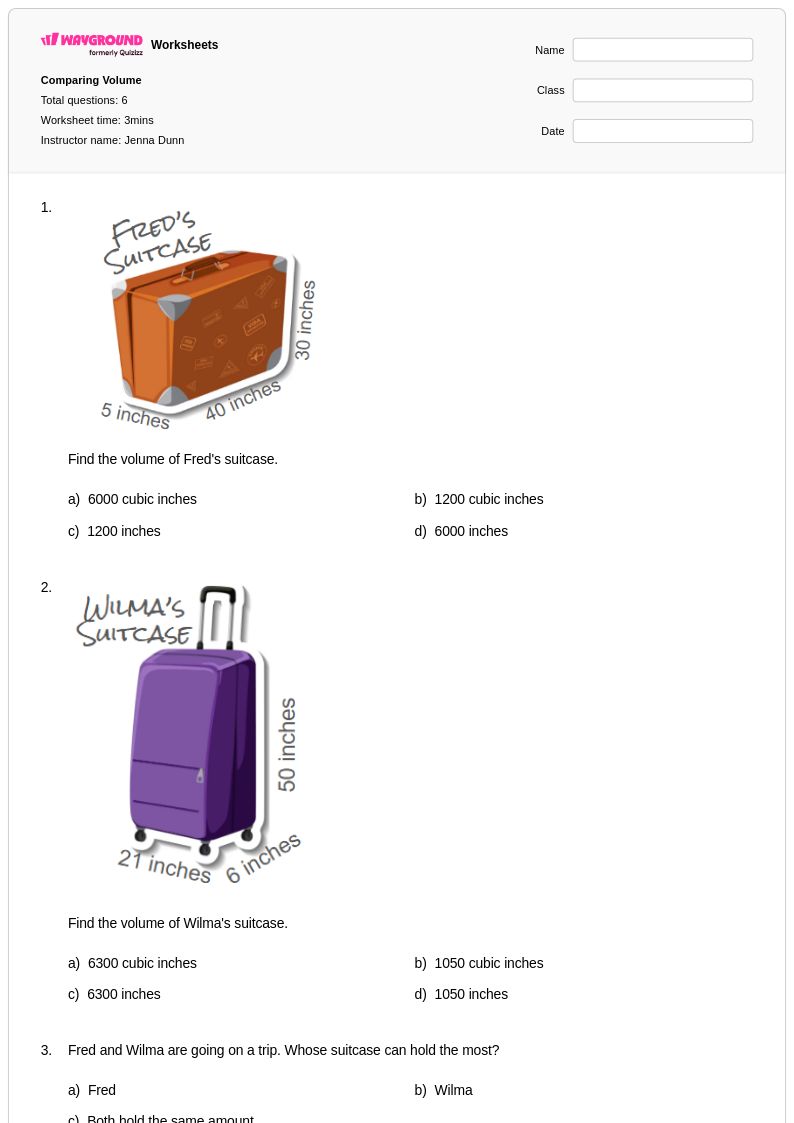
6 Q
6th
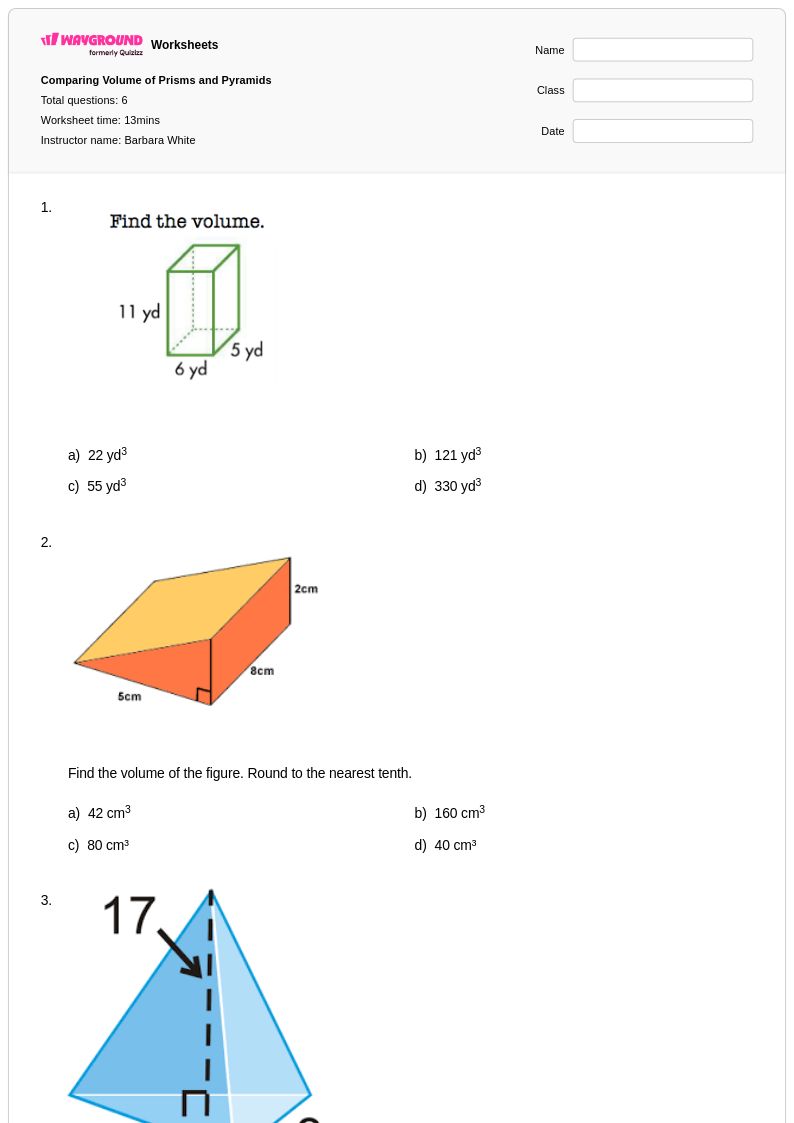
6 Q
7th
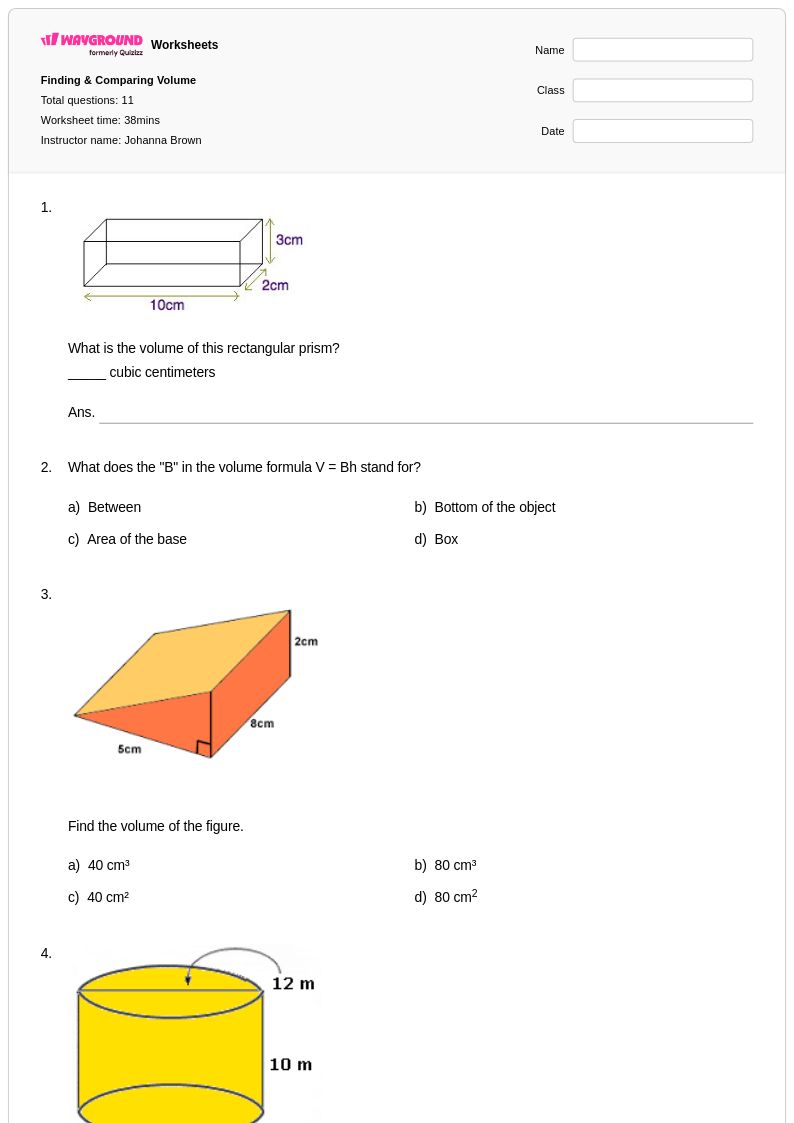
11 Q
KG - Uni
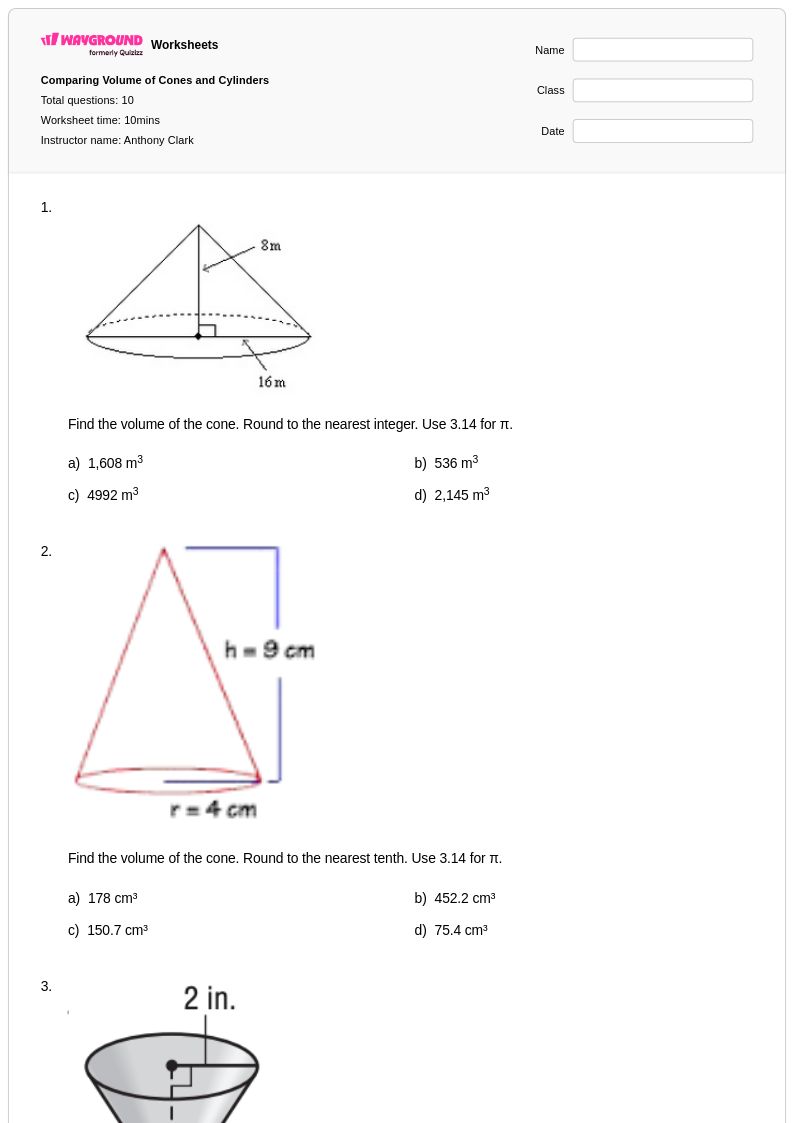
10 Q
8th - Uni
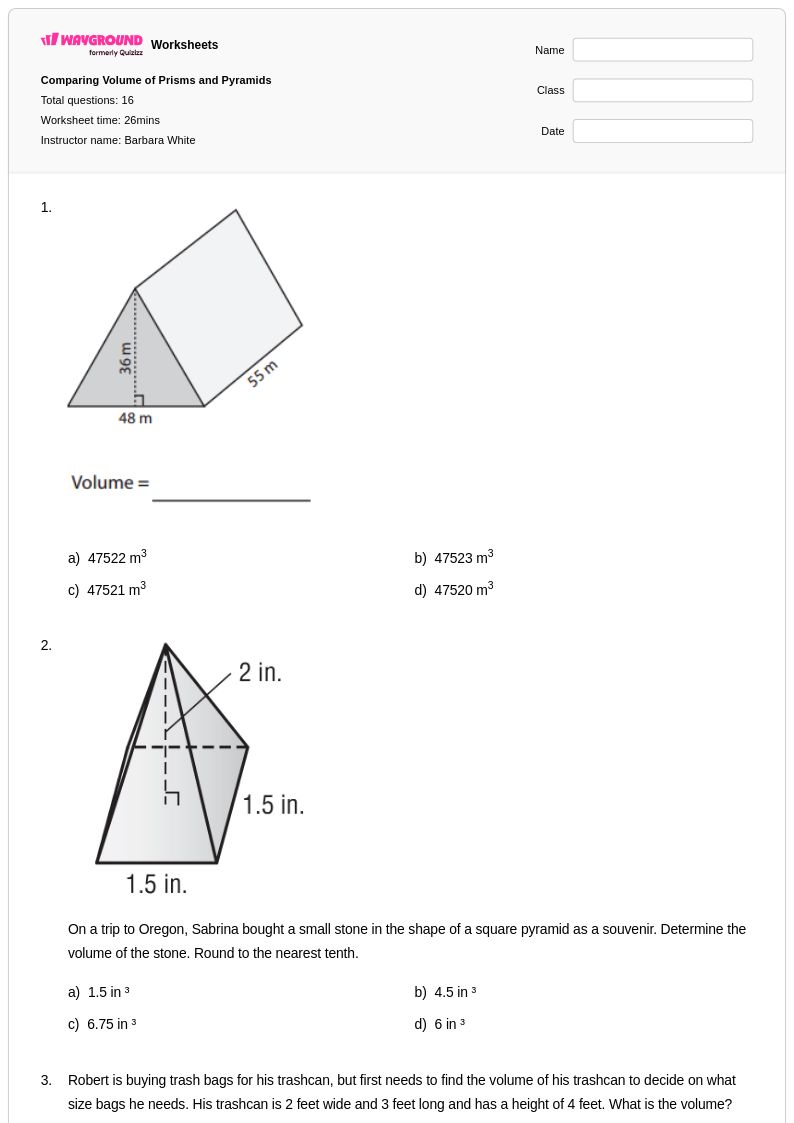
16 Q
7th
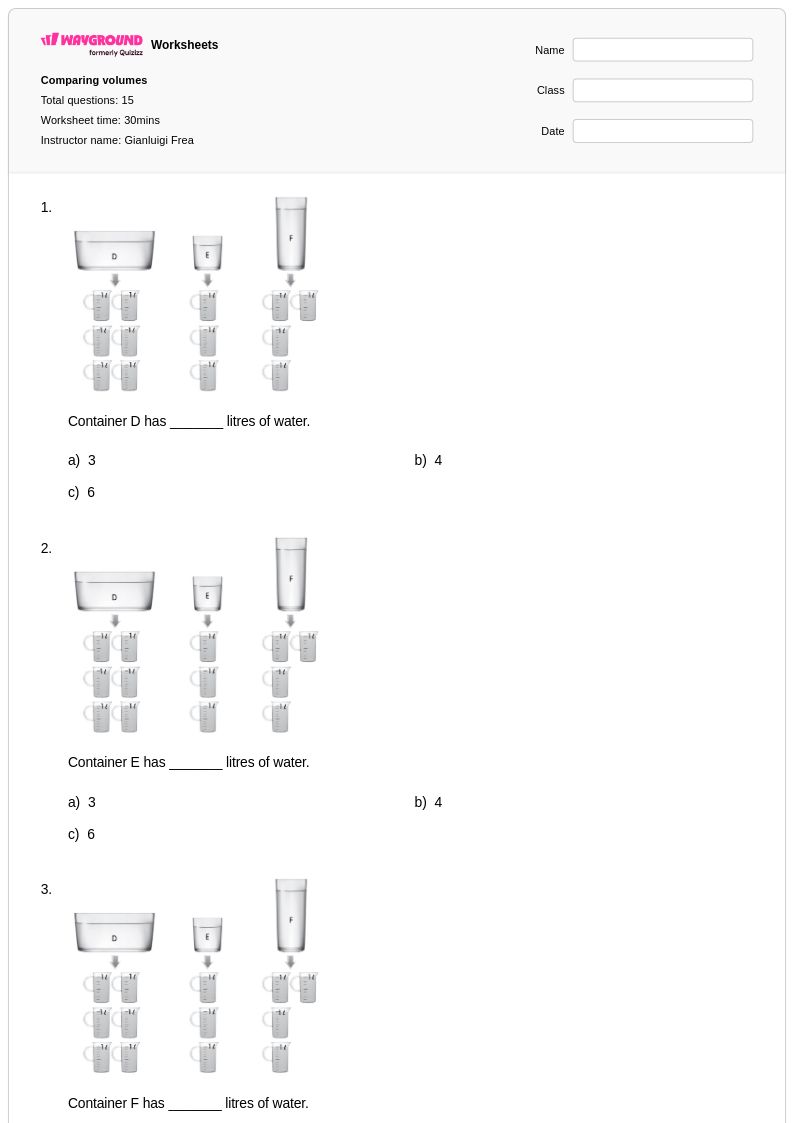
15 Q
1st - 3rd
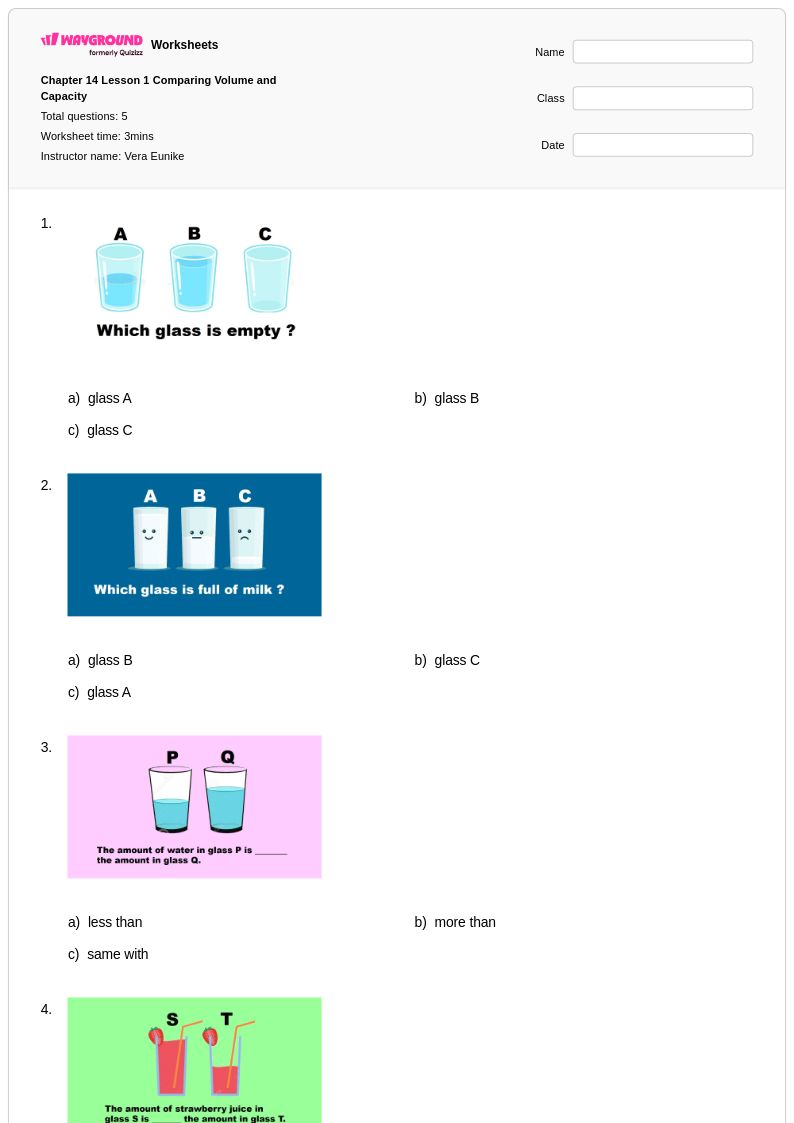
5 Q
1st
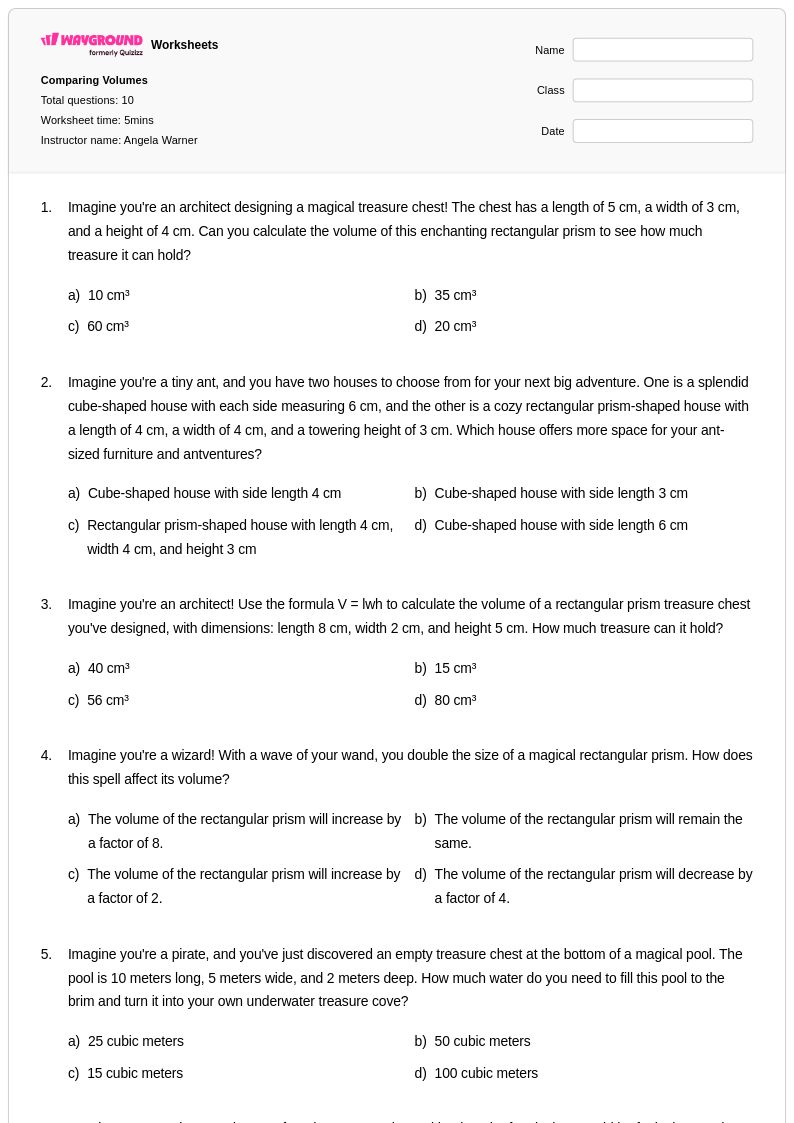
10 Q
9th - 12th
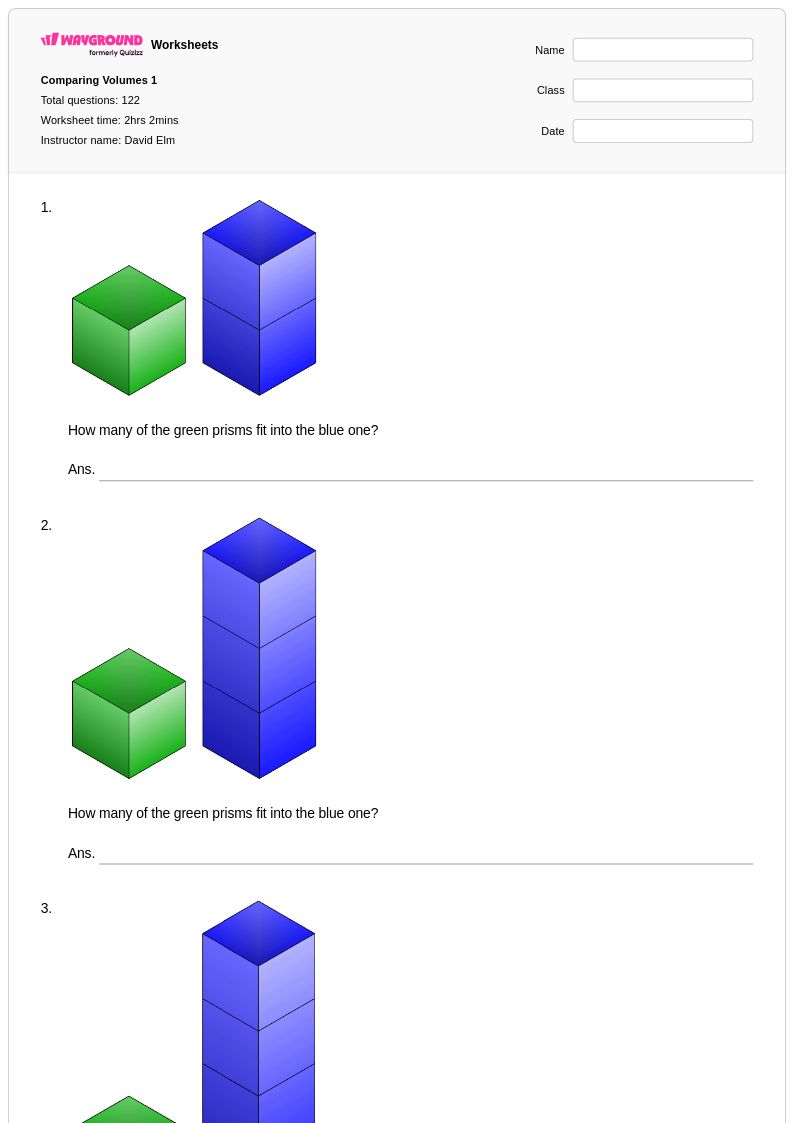
122 Q
9th - 12th
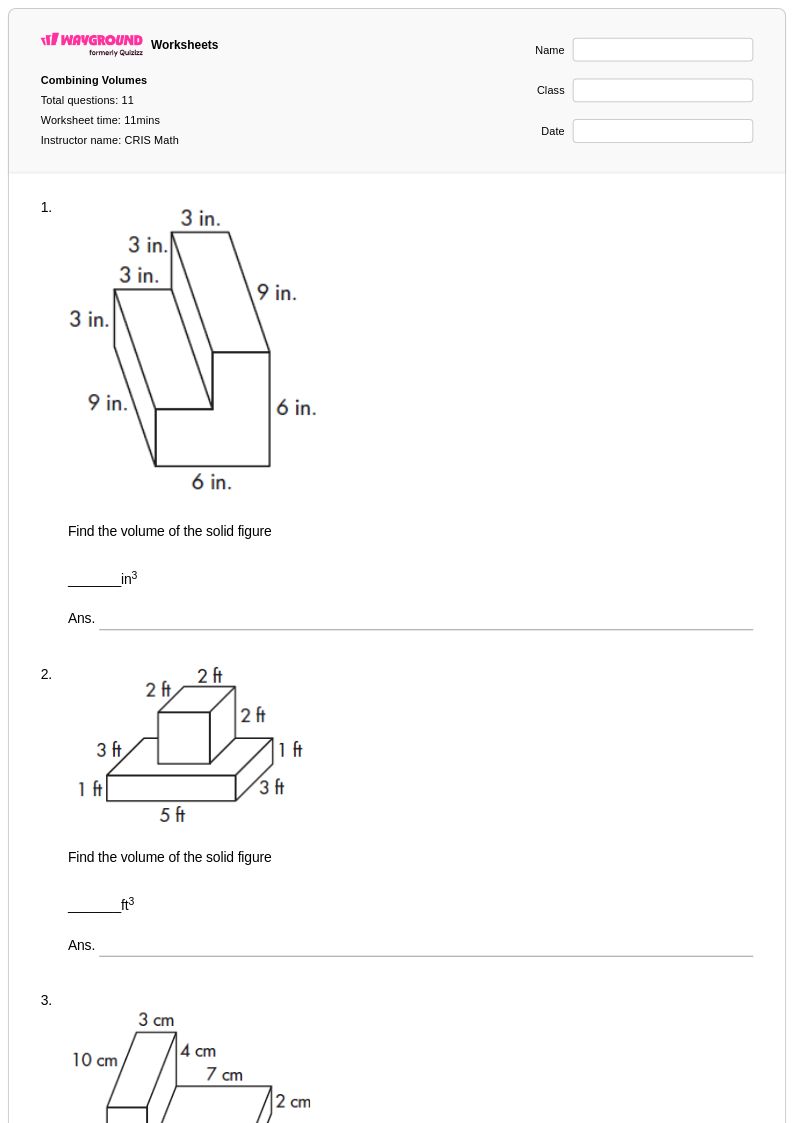
11 Q
5th
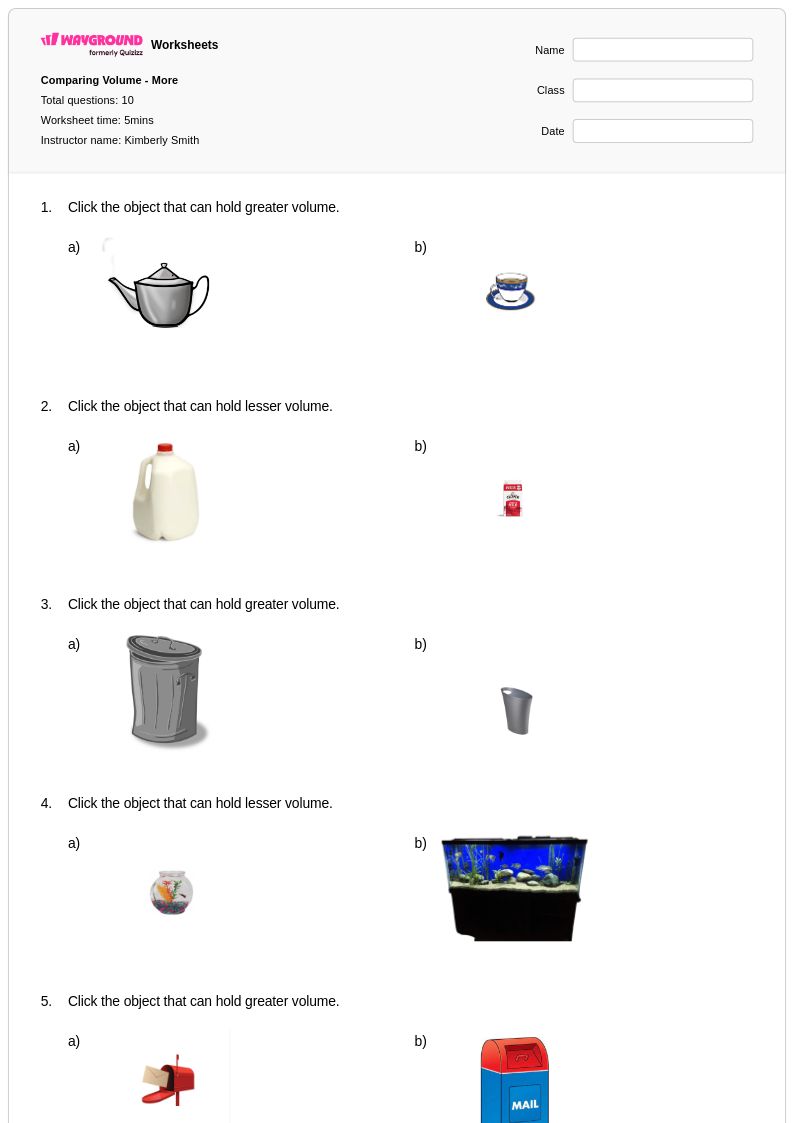
10 Q
KG
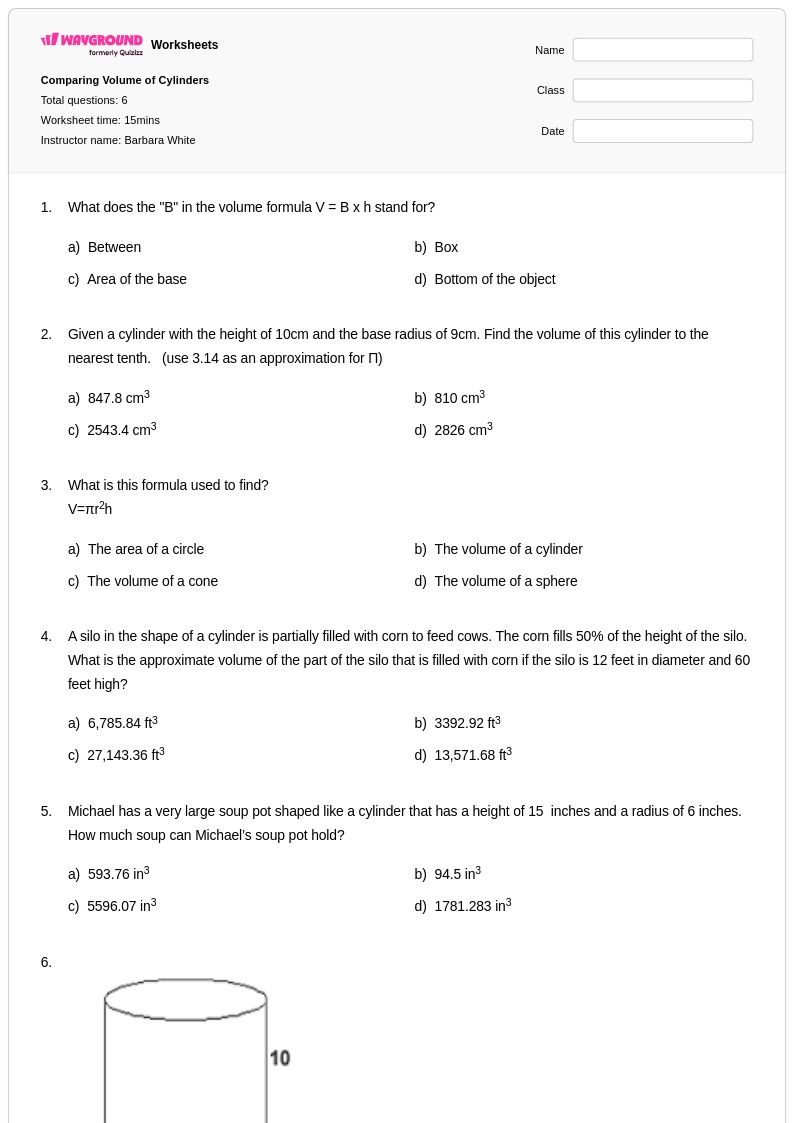
6 Q
8th
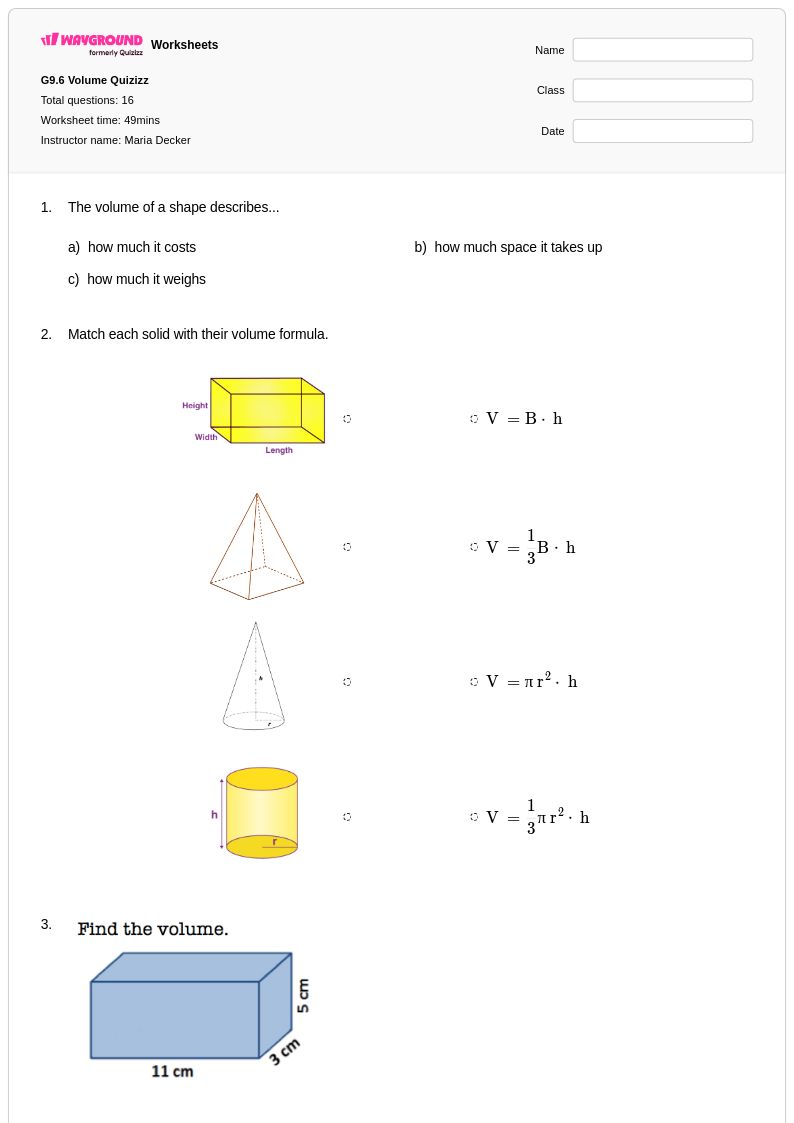
16 Q
9th - 12th
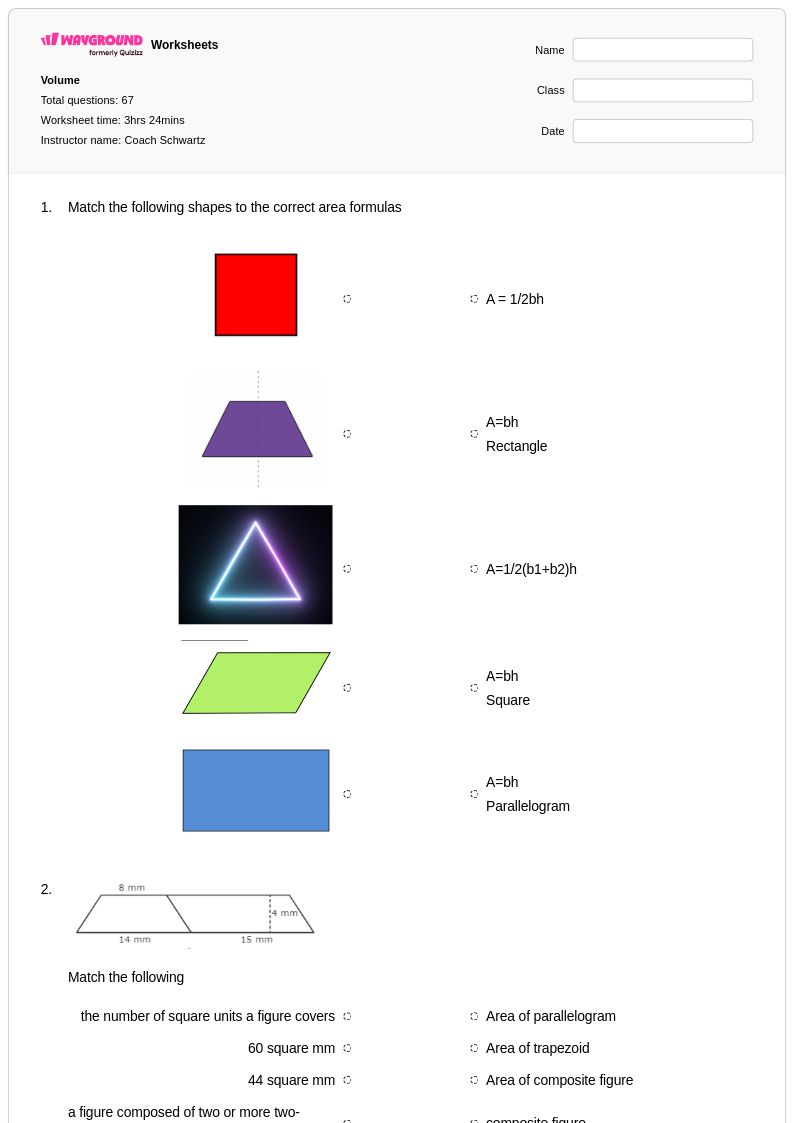
67 Q
7th
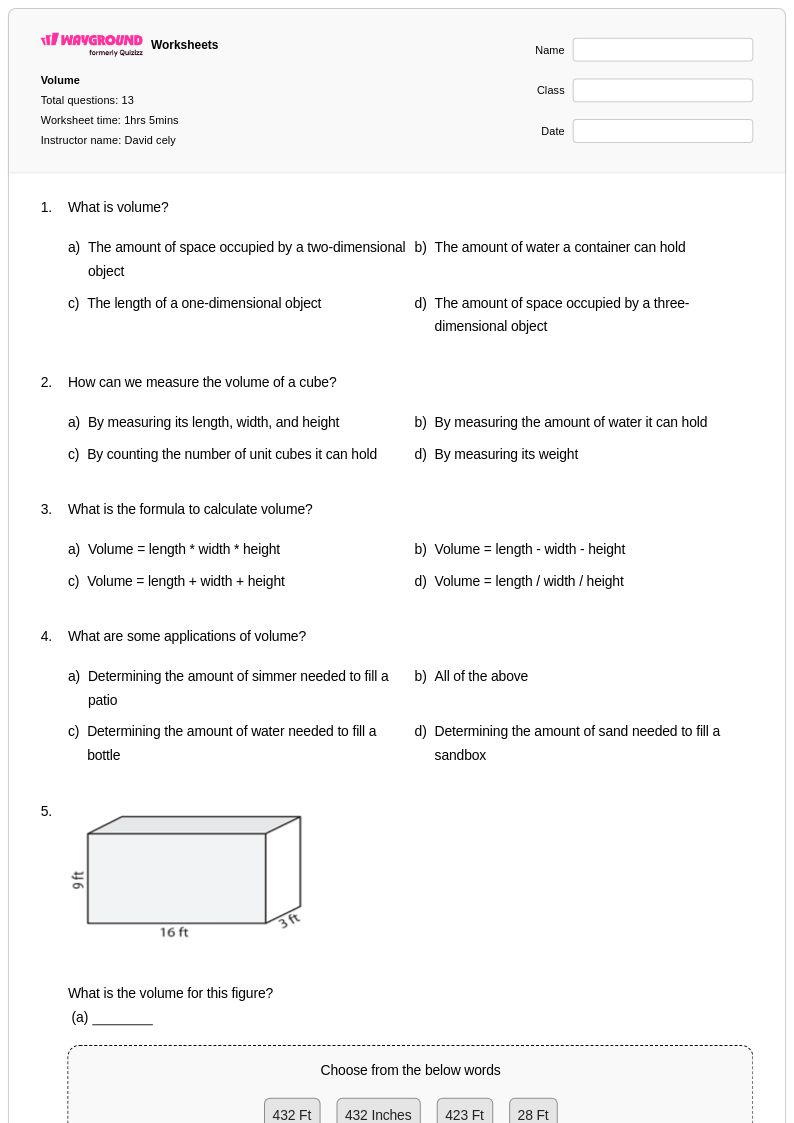
13 Q
5th
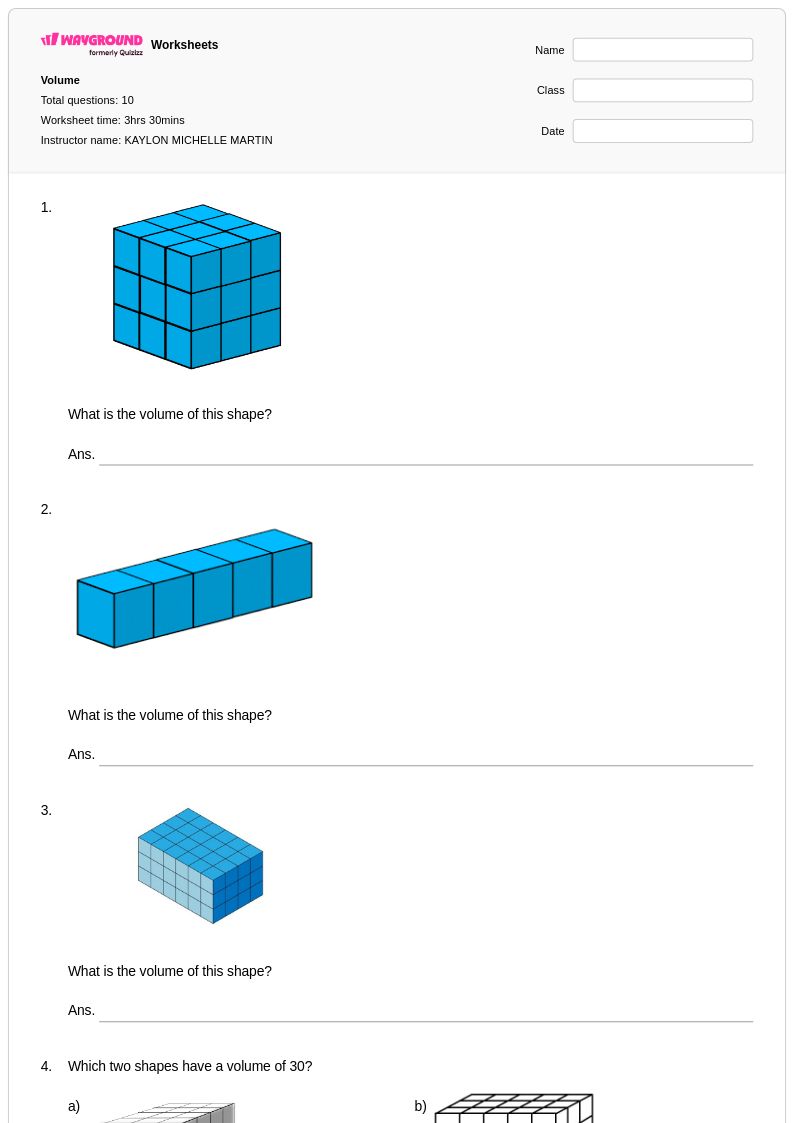
10 Q
5th
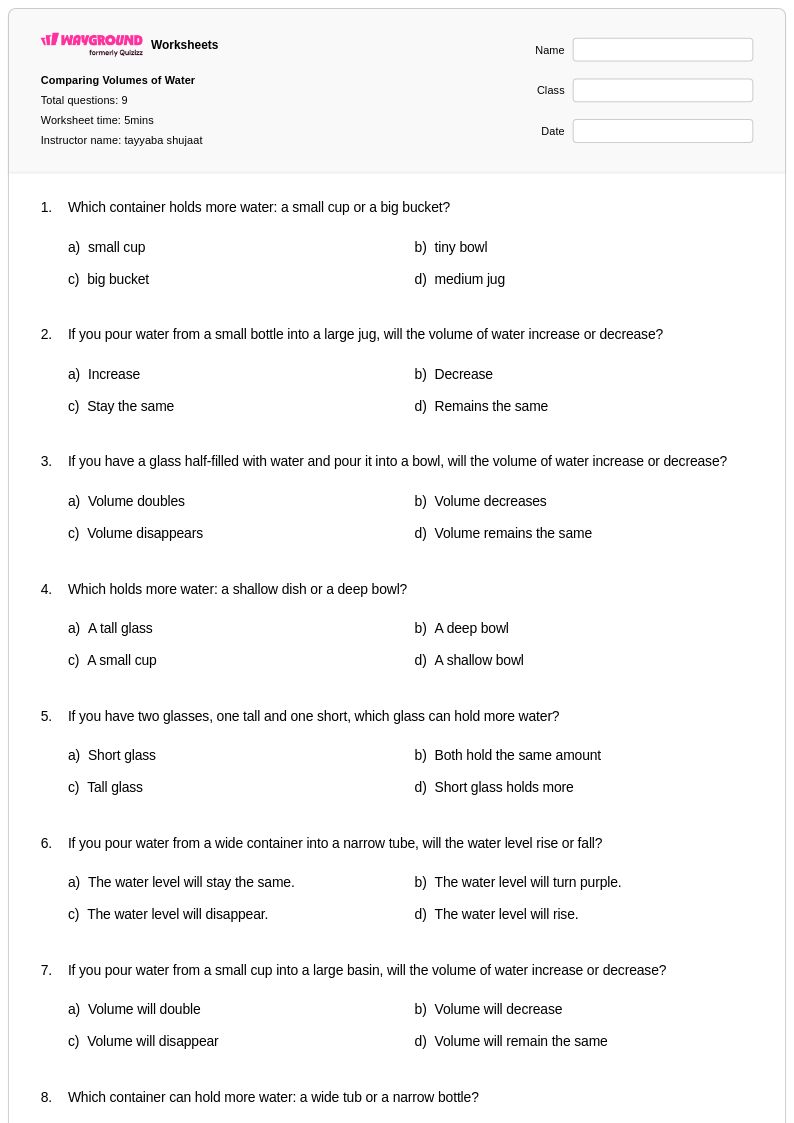
9 Q
2nd
Explore Worksheets by Subjects
Explore printable Comparing Volume worksheets
Comparing volume worksheets available through Wayground (formerly Quizizz) provide students with comprehensive practice in analyzing and contrasting the three-dimensional space occupied by different objects and containers. These mathematics resources strengthen critical measurement skills by challenging learners to evaluate volumes using various units, compare containers of different shapes and sizes, and apply volume formulas across diverse geometric figures including rectangular prisms, cylinders, and irregular shapes. The collection includes free printables with detailed answer keys, allowing students to work through practice problems that range from direct volume comparisons to multi-step word problems requiring calculation and analysis. These pdf resources systematically build understanding of volume relationships, helping students recognize that objects with different dimensions can have equal volumes while developing spatial reasoning and mathematical comparison skills.
Wayground (formerly Quizizz) empowers educators with millions of teacher-created comparing volume worksheets that feature robust search and filtering capabilities, enabling quick identification of resources aligned to specific mathematical standards and learning objectives. The platform's differentiation tools allow teachers to customize worksheets for various skill levels, ensuring appropriate challenges for remediation and enrichment while maintaining focus on volume comparison concepts. Available in both printable and digital formats including downloadable pdfs, these resources support flexible lesson planning whether teachers need quick skill practice activities, comprehensive assessment tools, or targeted intervention materials. The extensive collection spans multiple difficulty levels and problem types, giving educators the ability to scaffold learning progressively while addressing diverse student needs in measurement and geometric reasoning through systematic volume comparison practice.
FAQs
How do I teach students to compare volume?
What exercises help students practice comparing volume?
What mistakes do students commonly make when comparing volume?
How can I use a Wayground comparing volume worksheet?
How does comparing volume fit into the Common Core math progression?
How can I differentiate comparing volume practice for mixed-ability students?