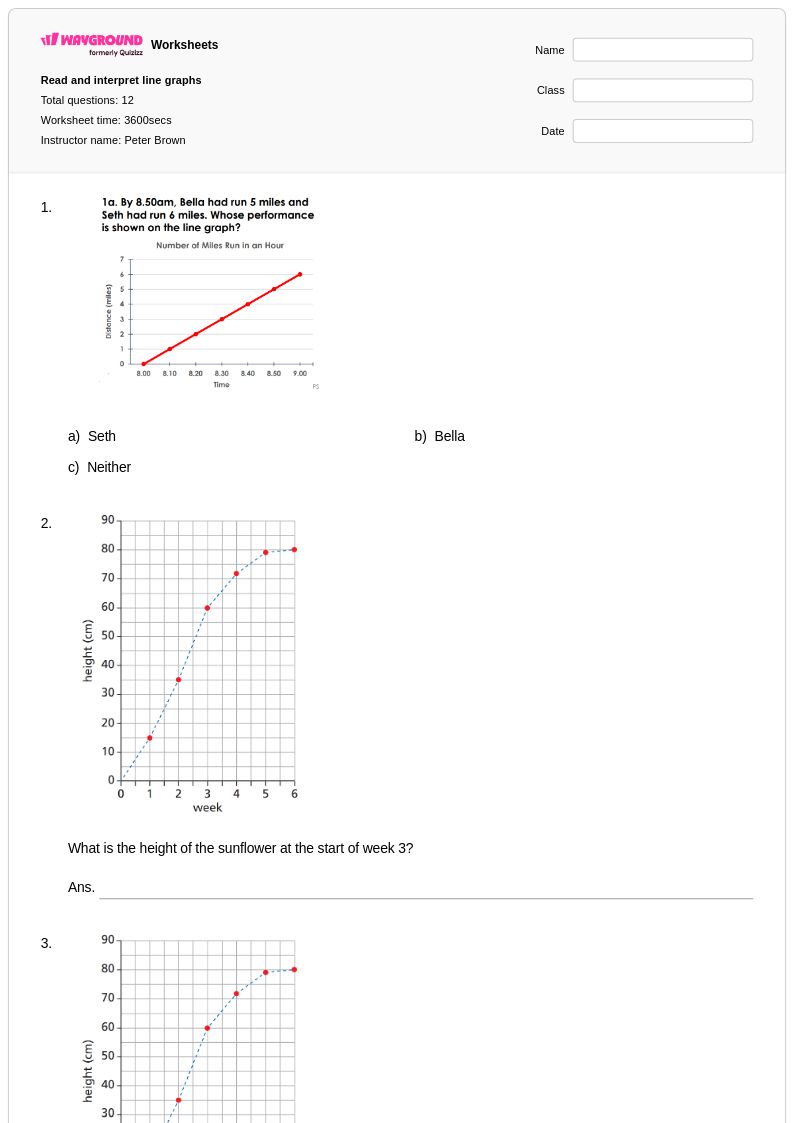
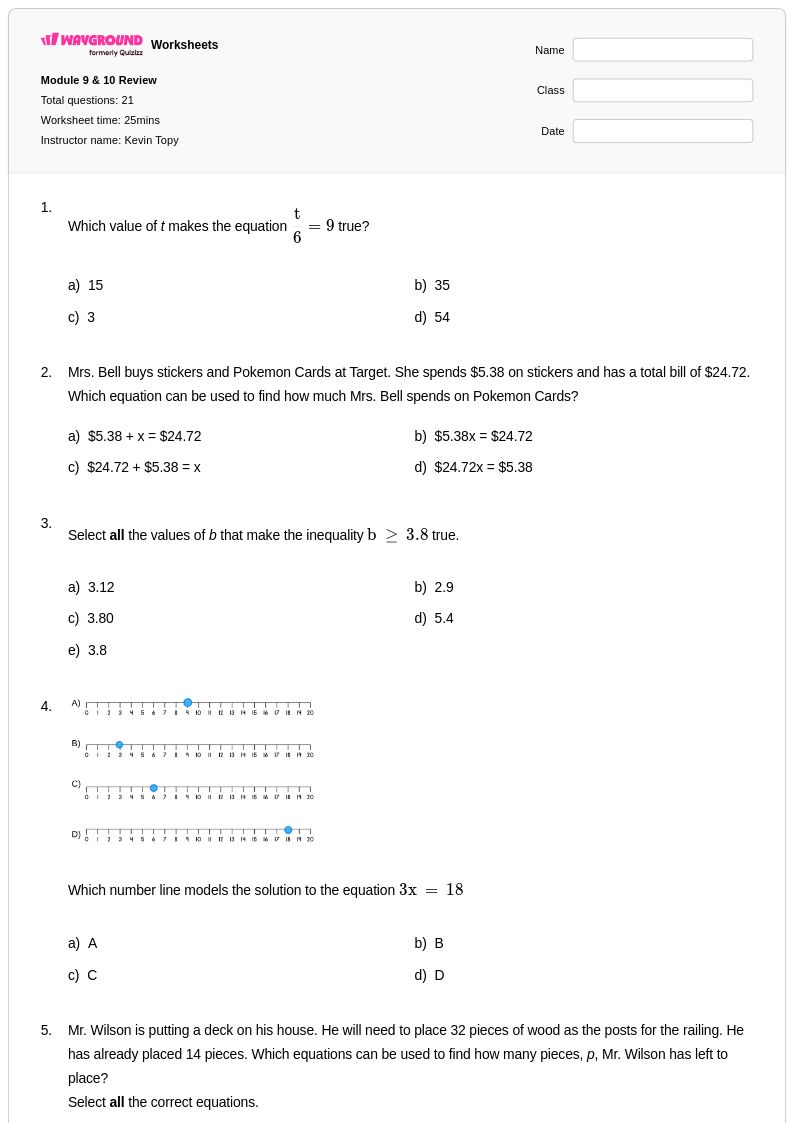
Explore Wayground's free reading meters worksheets and printables that help students master measurement skills through engaging practice problems with comprehensive answer keys and downloadable PDFs.
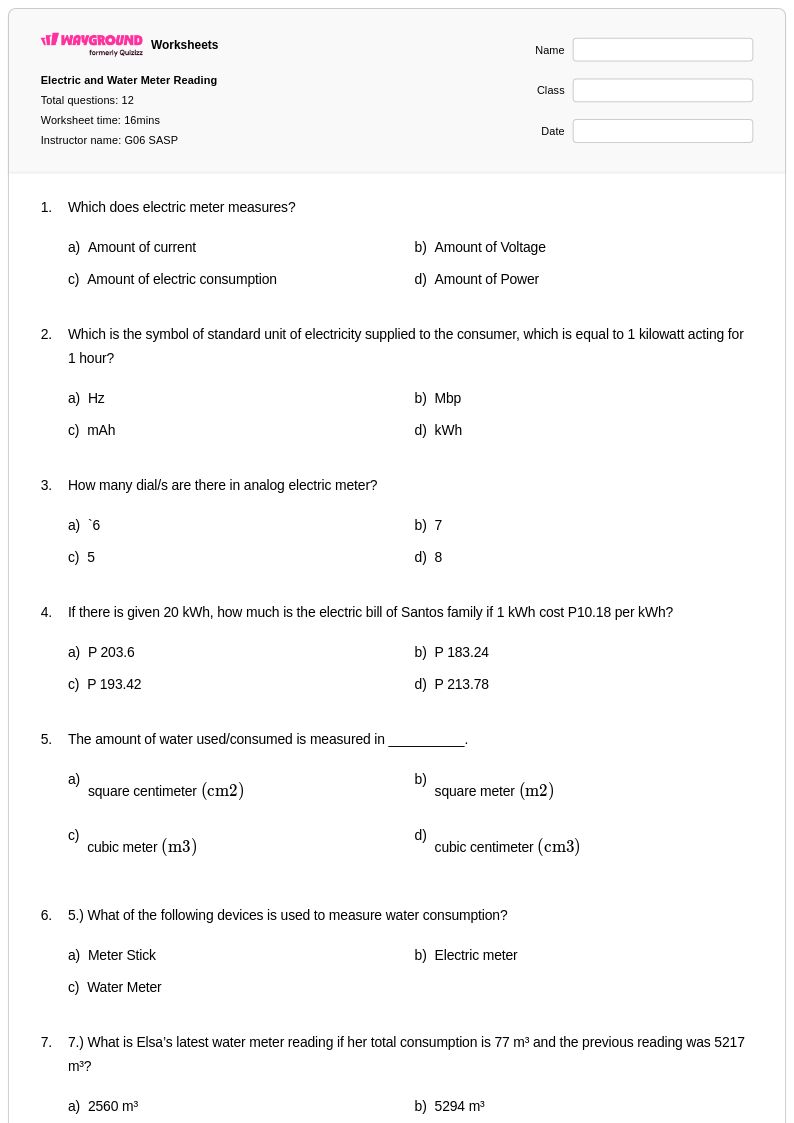
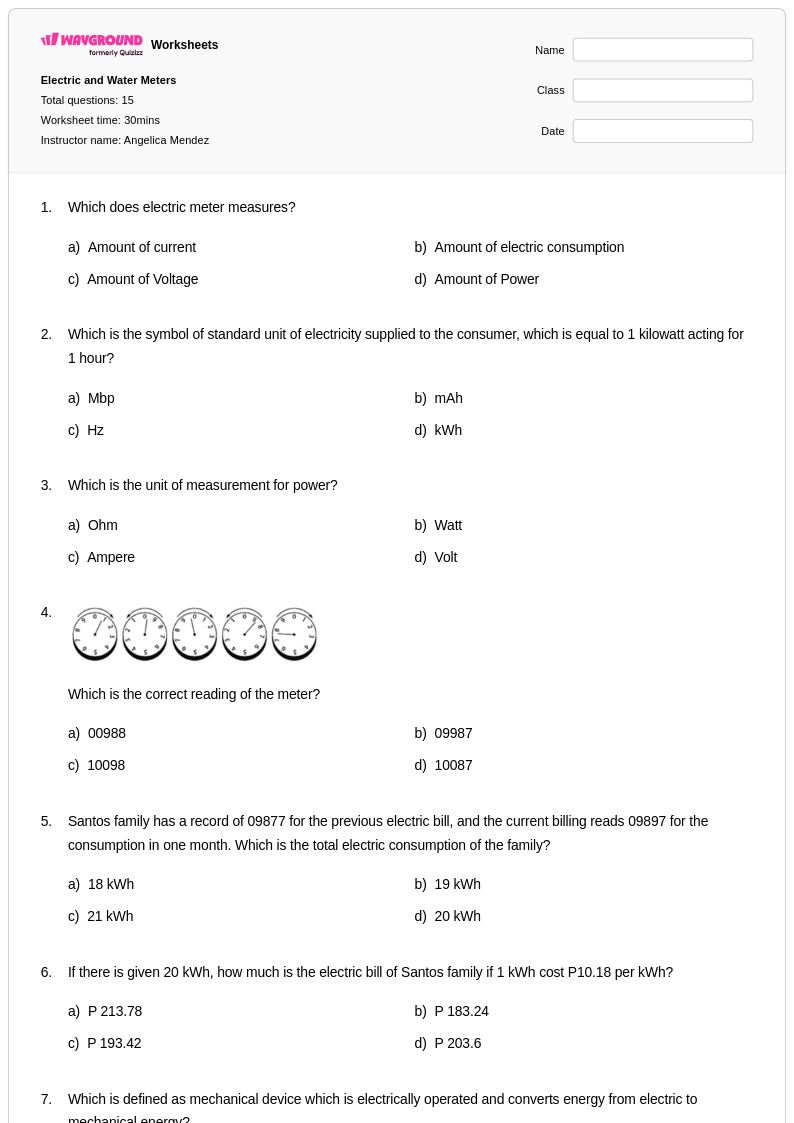
Reading meters worksheets from Wayground (formerly Quizizz) provide comprehensive practice for students developing essential measurement interpretation skills. These expertly designed resources focus on teaching learners how to accurately read various types of meters, including analog and digital displays, utility meters, measuring instruments, and gauge readings. The worksheets strengthen critical mathematical abilities such as scale interpretation, precision measurement, estimation skills, and data collection techniques that form the foundation of practical mathematics applications. Each printable resource includes detailed answer keys and progressive practice problems that guide students through systematic approaches to meter reading, from basic scale identification to complex multi-unit conversions, ensuring thorough skill development through structured repetition and application.
Wayground (formerly Quizizz) empowers educators with an extensive collection of millions of teacher-created reading meters worksheets that streamline lesson planning and enhance instructional effectiveness. The platform's robust search and filtering capabilities allow teachers to quickly locate age-appropriate materials aligned with curriculum standards, while built-in differentiation tools enable seamless customization for diverse learning needs and skill levels. These flexible resources are available in both printable pdf formats for traditional classroom use and interactive digital versions for technology-enhanced learning environments. Teachers can efficiently design targeted remediation sessions for struggling students, create enrichment activities for advanced learners, and implement consistent skill practice routines that reinforce meter reading proficiency across various mathematical contexts and real-world applications.
FAQs
How do I teach students to read different types of meters?
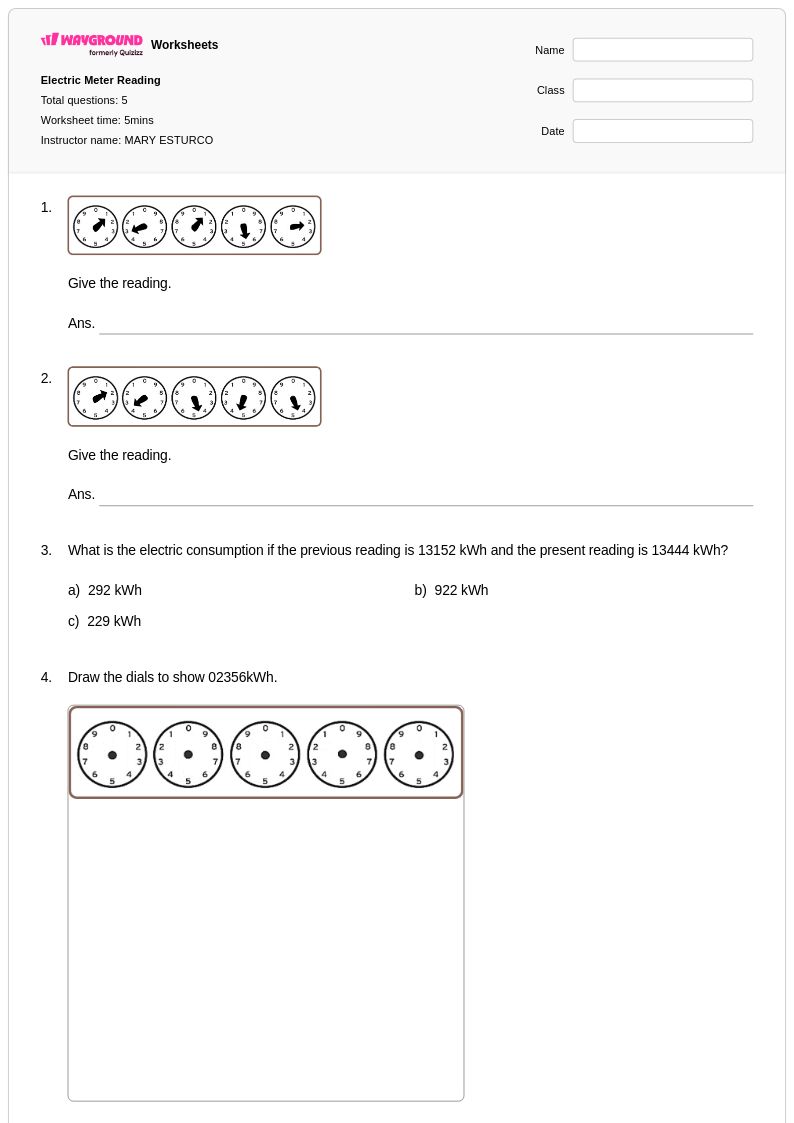
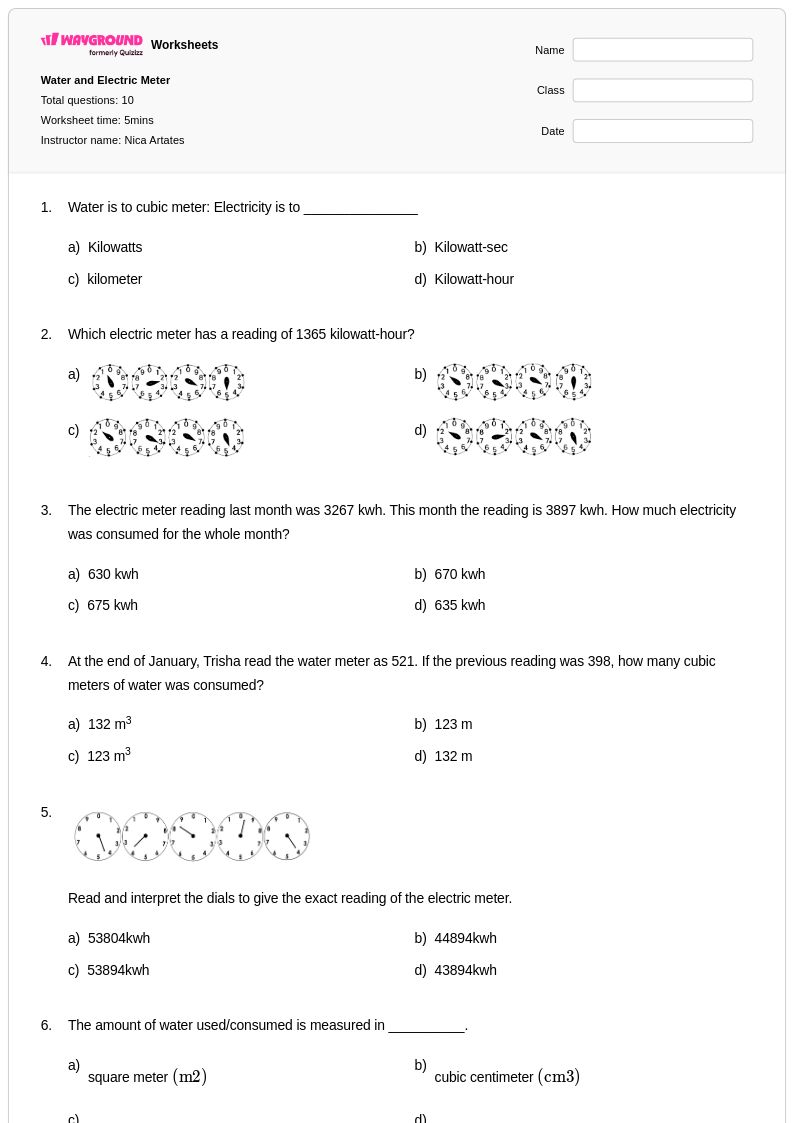
Start with familiar linear scales like rulers and thermometers, focusing on identifying the value of each interval. Then, introduce circular gauges like speedometers, teaching students to follow the needle. Finally, tackle multi-dial utility meters by explaining that each dial represents a place value and must be read in a specific order, often alternating between clockwise and counter-clockwise.
What exercises help students practice reading meters?
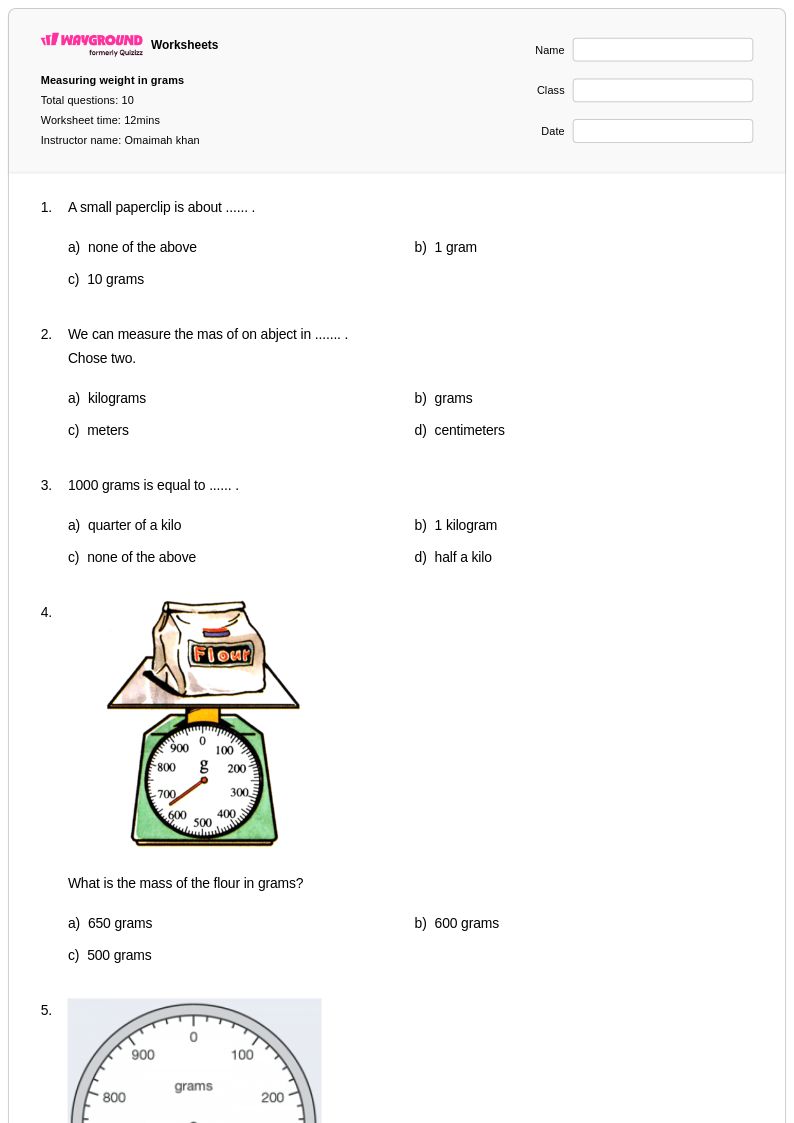
Effective practice moves from simple to complex. Begin with worksheets showing clear, single-scale instruments where students read marked values. Progress to estimating values between marks. Finally, use real-world scenarios with images of utility meters or multi-step word problems that require students to read a meter and then perform a calculation with the data.
What are common mistakes when students learn to read meters?
A frequent error is misinterpreting the scale's intervals, for example, assuming each mark is '1' when it might be '2', '5', or '0.5'. On circular dials, students may read the wrong set of numbers if there are multiple scales. With multi-dial utility meters, the most common mistake is reading a dial in the wrong direction (e.g., clockwise instead of counter-clockwise).
How can I use this reading meters worksheet with my class?
This versatile worksheet can be used in multiple ways. You can assign it as a digital quiz directly on the Wayground platform for automated grading, or download it as a printable PDF for hands-on practice. For printed work, the included answer key makes grading straightforward, or you can use the Wayground for Teachers app to quickly scan and grade student submissions.
How does reading meters fit into the math curriculum?
Reading meters is a practical application of measurement and data skills that builds across grade levels, aligning with the Common Core State Standards. It begins in early elementary with reading simple scales (like a number line), progresses to interpreting fractional values on rulers and gauges in upper elementary, and extends into middle school with multi-step problems involving rates and conversions from utility meters.
How can I support students who struggle with reading meters?
For students needing support, use Wayground's features to create a scaffolded experience. You can generate a version of the worksheet with a dyslexia-friendly font or increased font size and spacing to improve readability. When assigning digitally, you can enable Read Aloud for auditory support or reduce the number of answer choices on multiple-choice questions to lower cognitive load.