Free Printable Customary Units of Capacity Worksheets for Year 3
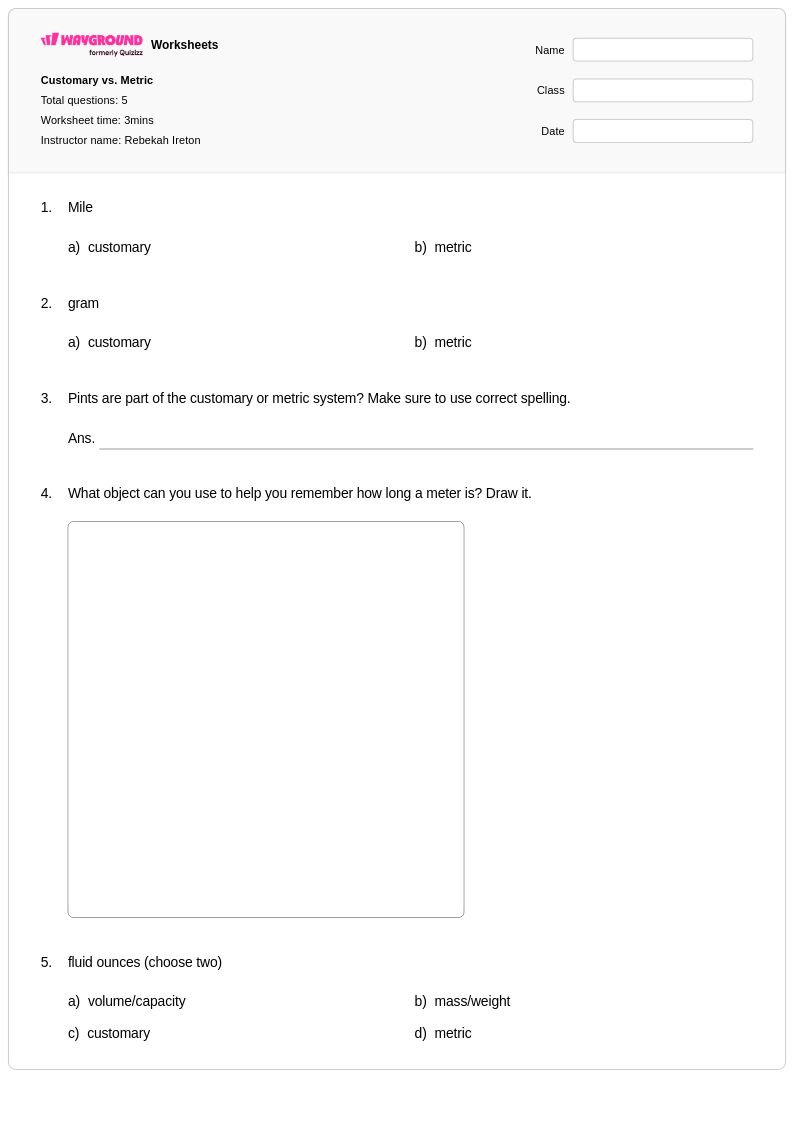
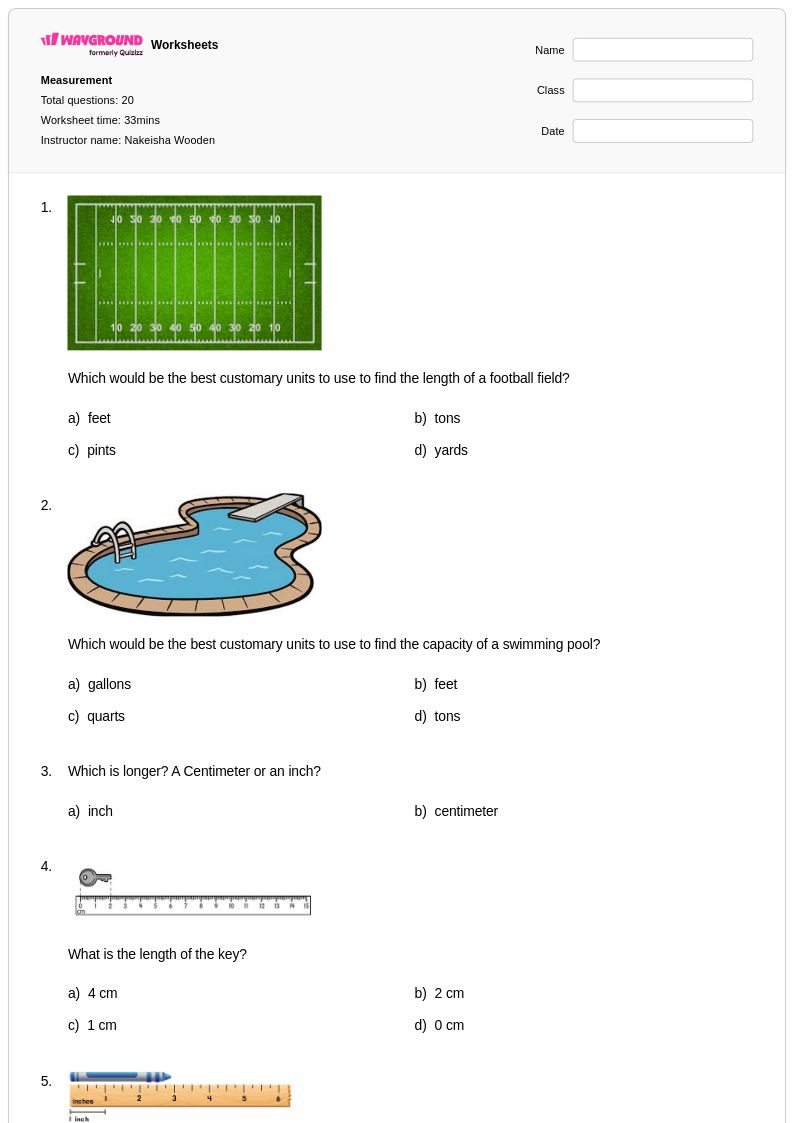
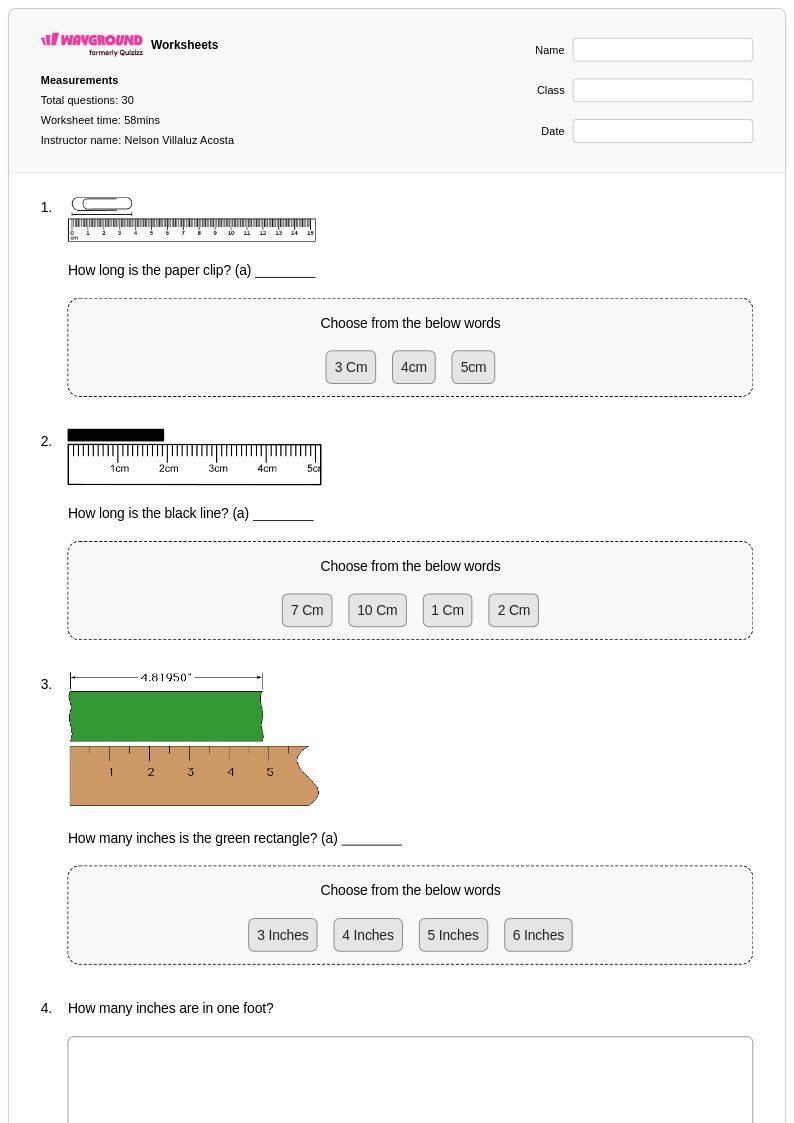
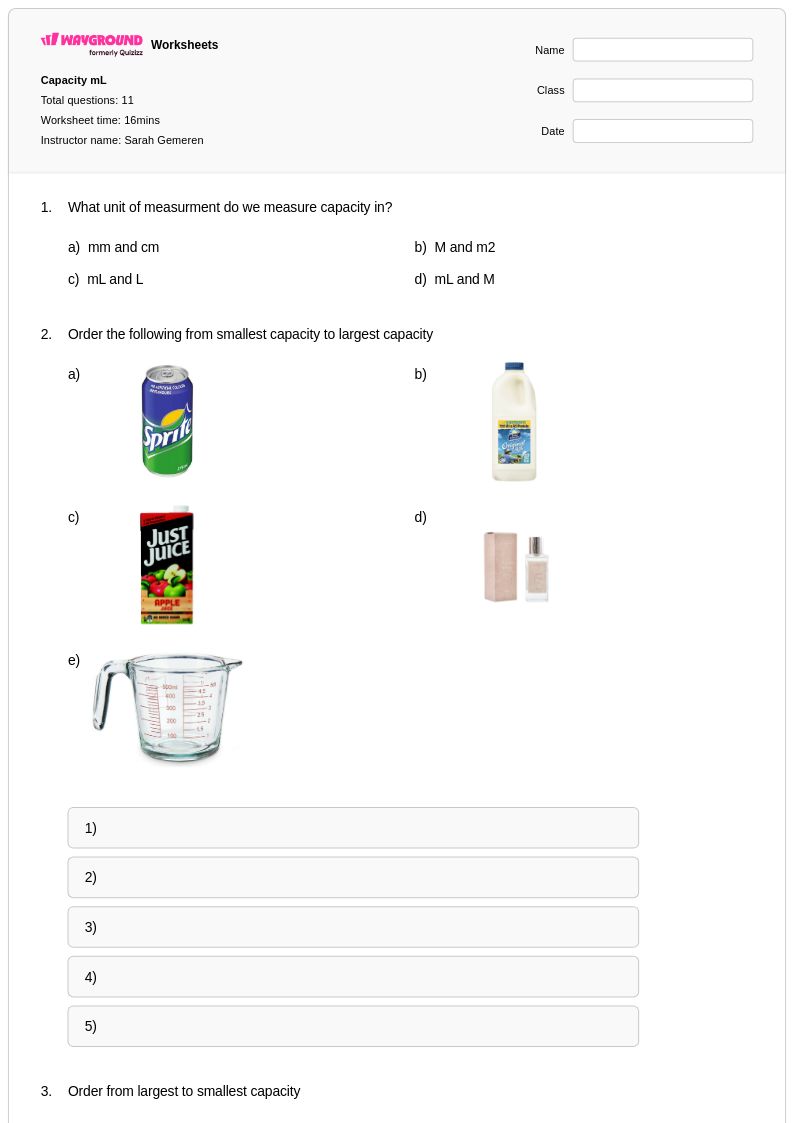
Year 3 customary units of capacity worksheets from Wayground help students master measuring liquids using cups, pints, quarts, and gallons through engaging printables, practice problems, and comprehensive answer keys.
Explore printable Customary Units of Capacity worksheets for Year 3
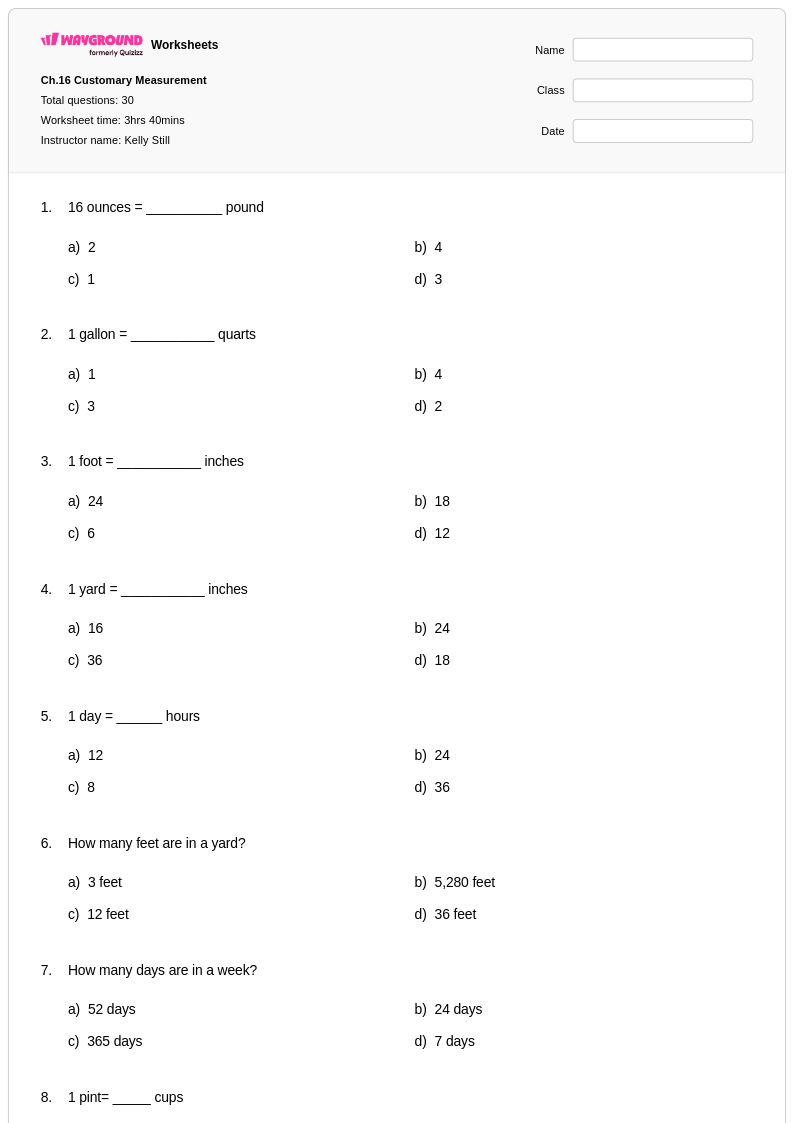
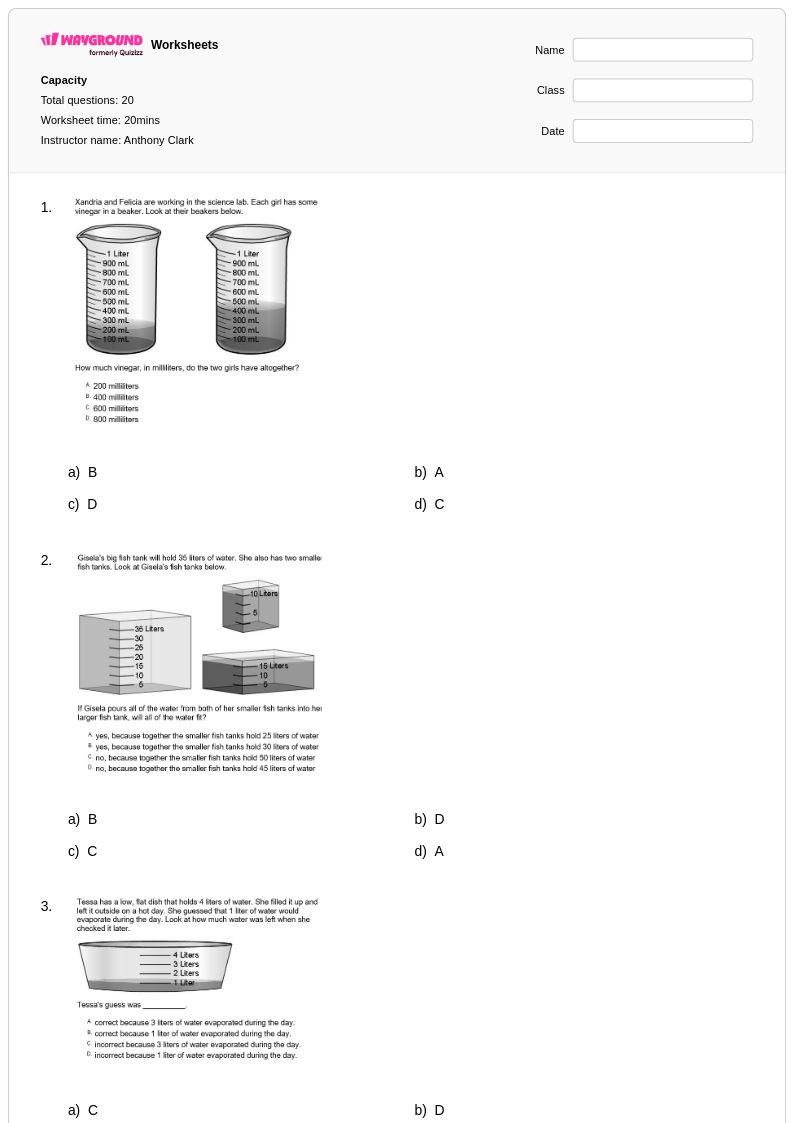
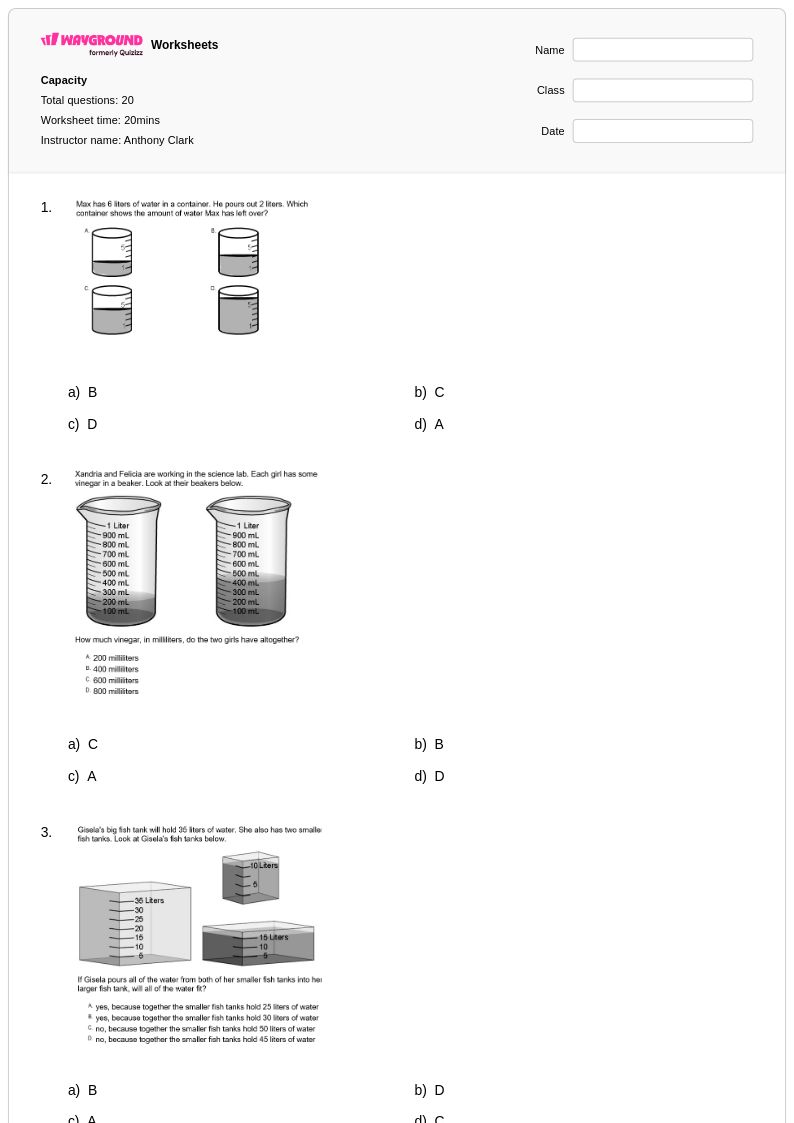
Customary units of capacity worksheets for Year 3 students available through Wayground provide essential practice with measuring liquid volumes using cups, pints, quarts, and gallons. These carefully designed printables strengthen foundational measurement skills by guiding young learners through systematic exploration of capacity relationships and conversions within the customary system. Students develop number sense and spatial reasoning as they work through practice problems that connect real-world scenarios with mathematical concepts, while comprehensive answer keys enable independent learning and immediate feedback. The free pdf resources emphasize hands-on measurement experiences that help third graders build confidence with estimation, comparison, and calculation of liquid capacities in everyday contexts.
Wayground supports mathematics educators with millions of teacher-created worksheet collections specifically designed for Year 3 customary capacity instruction. The platform's robust search and filtering capabilities allow teachers to quickly locate resources aligned with curriculum standards, while differentiation tools enable customization for diverse learning needs and skill levels. These versatile worksheets are available in both printable and digital formats, including downloadable pdf versions that facilitate seamless integration into lesson planning, homework assignments, and assessment preparation. Teachers can efficiently address remediation needs, provide enrichment opportunities, and deliver targeted skill practice through this comprehensive collection of capacity measurement resources that adapt to various instructional approaches and classroom environments.
FAQs
How do I teach customary units of capacity to third graders?
Use measuring tools and familiar containers to establish the relative sizes of cups, pints, quarts, and gallons. Then connect concrete models to equivalency diagrams, estimation tasks, and real-world problems that require students to compare or calculate liquid capacities.
What exercises help third graders practice customary capacity conversions?
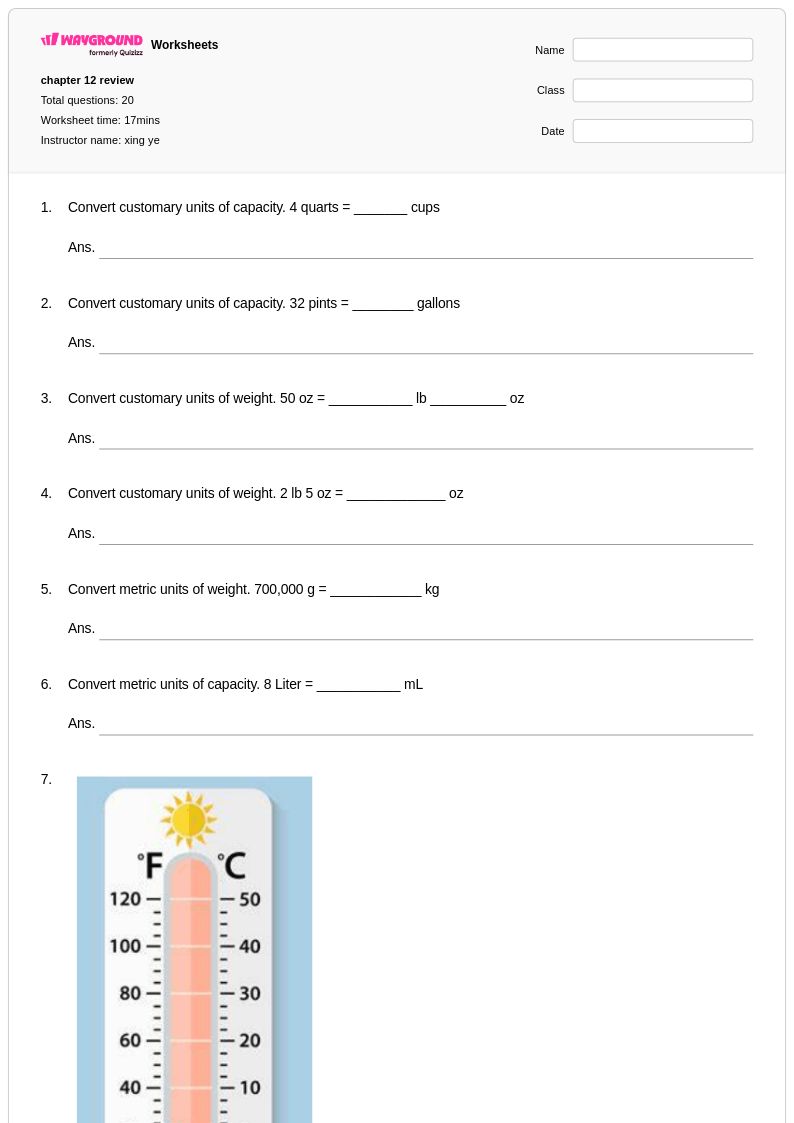
Useful exercises include completing equivalency tables, converting between related units, estimating container capacities, and comparing measurements expressed in different units. Recipe problems, filling-container scenarios, and multi-step capacity questions help students apply conversions purposefully.
What mistakes do Grade 3 students make with customary capacity conversions?
Students commonly reverse the conversion operation, forget how the units are ordered, or compare numerical values without first expressing them in compatible units. Have students label units at every step and check whether an answer should become numerically larger or smaller after conversion.
How can I use these Grade 3 customary capacity worksheets?
Wayground worksheets are offered as printable PDFs and digital formats to accommodate different teaching environments and student preferences. Teachers can host them as digital quizzes or assign printed copies for off-screen practice, then grade physical submissions by scanning or capturing them with the Wayground for Teachers app; every worksheet includes a complete answer key.
How does customary capacity fit into the Grade 3 math curriculum?
Common Core Grade 3 measurement emphasizes estimating and measuring liquid volumes and solving one-step problems involving volume. These customary-capacity worksheets extend that measurement reasoning through cups, pints, quarts, and gallons while developing unit relationships, estimation, and real-world problem solving.
How can I differentiate customary capacity practice in Grade 3?
Students needing support can use conversion charts, labeled container models, and one-step problems, while advanced learners can tackle multi-step conversions and problems with excess or remaining liquid. Wayground supports extended time, Read Aloud, reduced answer choices, and reading mode, and teachers can create alternate worksheets with adjusted spacing, larger fonts, a dyslexia-friendly font, or translation.
What should Grade 3 students know about customary units of capacity?
Grade 3 students should recognize and compare cups, pints, quarts, and gallons, estimate reasonable capacities, and use basic unit relationships in calculations. They should also apply these skills to practical situations such as recipes, container selection, and determining total or remaining liquid volume.