
20 Q
3rd - Uni
21 Q
3rd
10 Q
2nd
16 Q
3rd
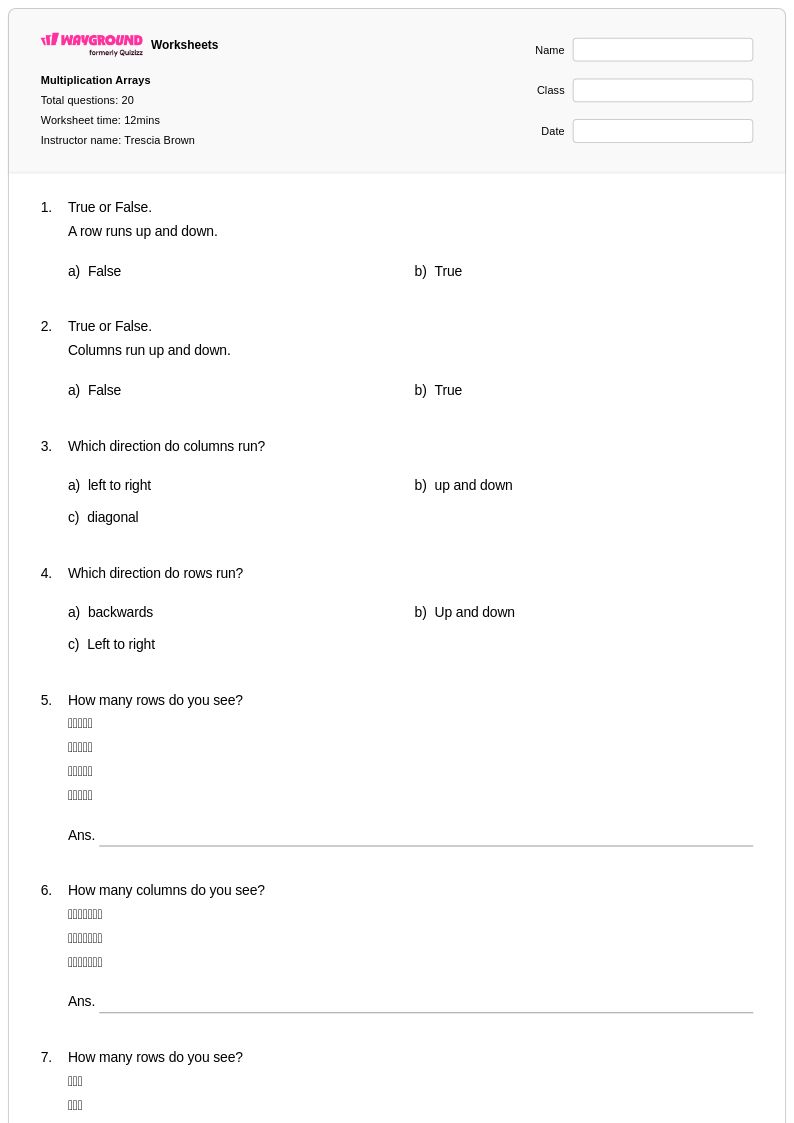
20 Q
2nd - 3rd
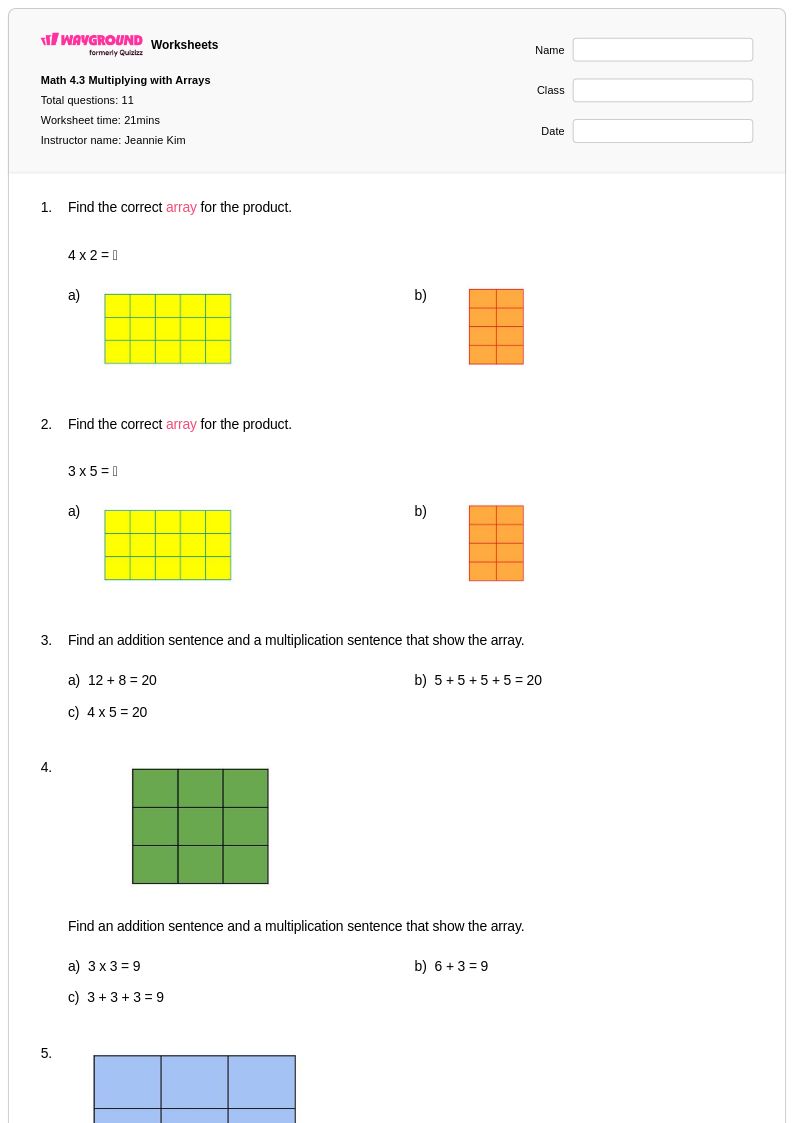
11 Q
3rd
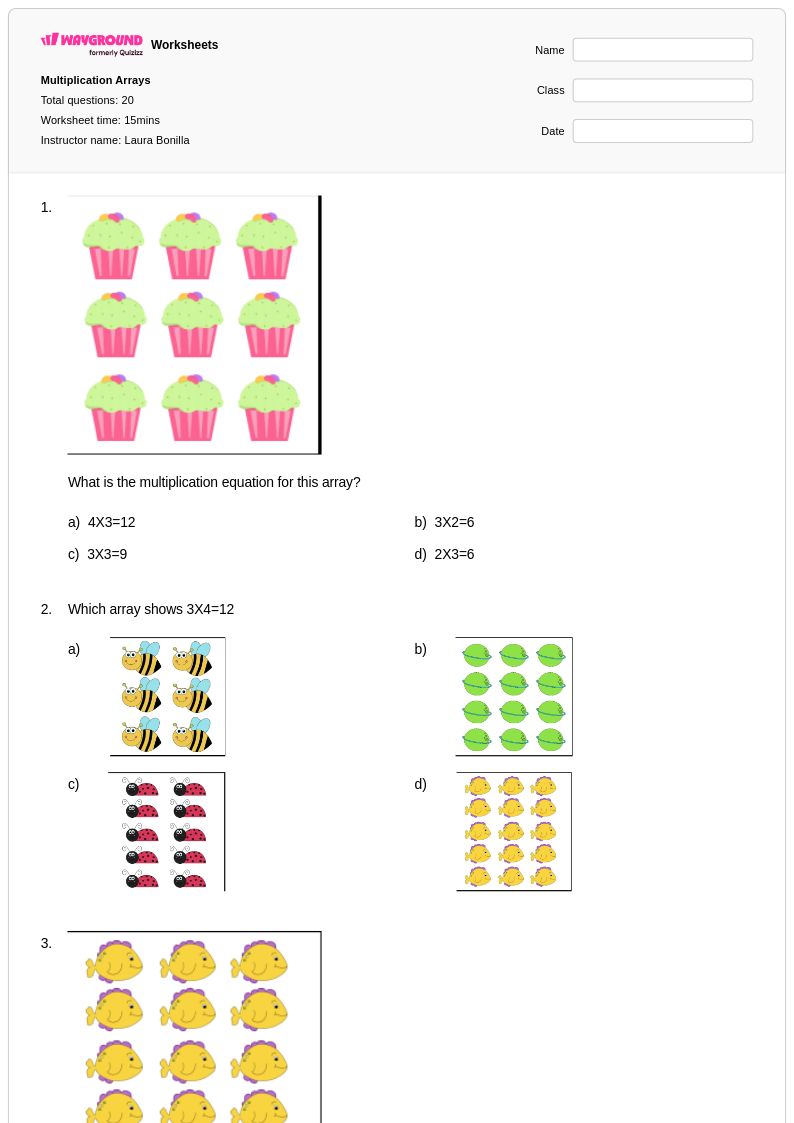
20 Q
3rd
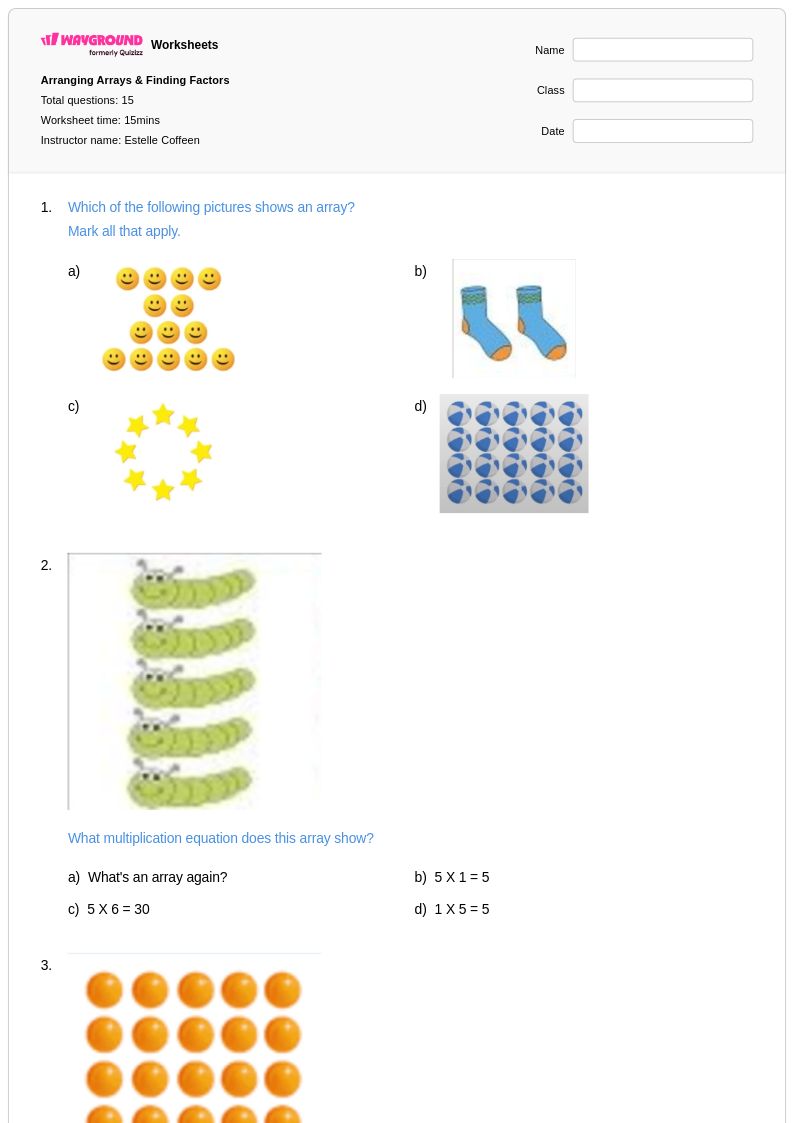
15 Q
4th
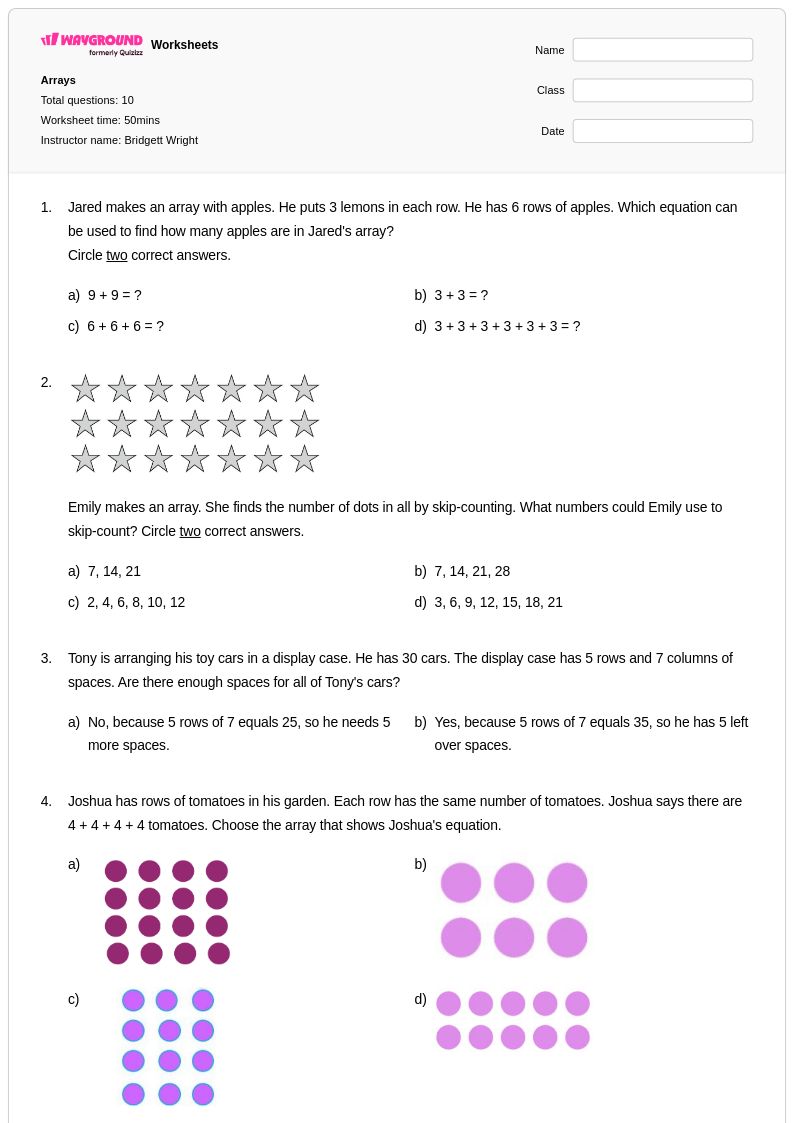
10 Q
2nd
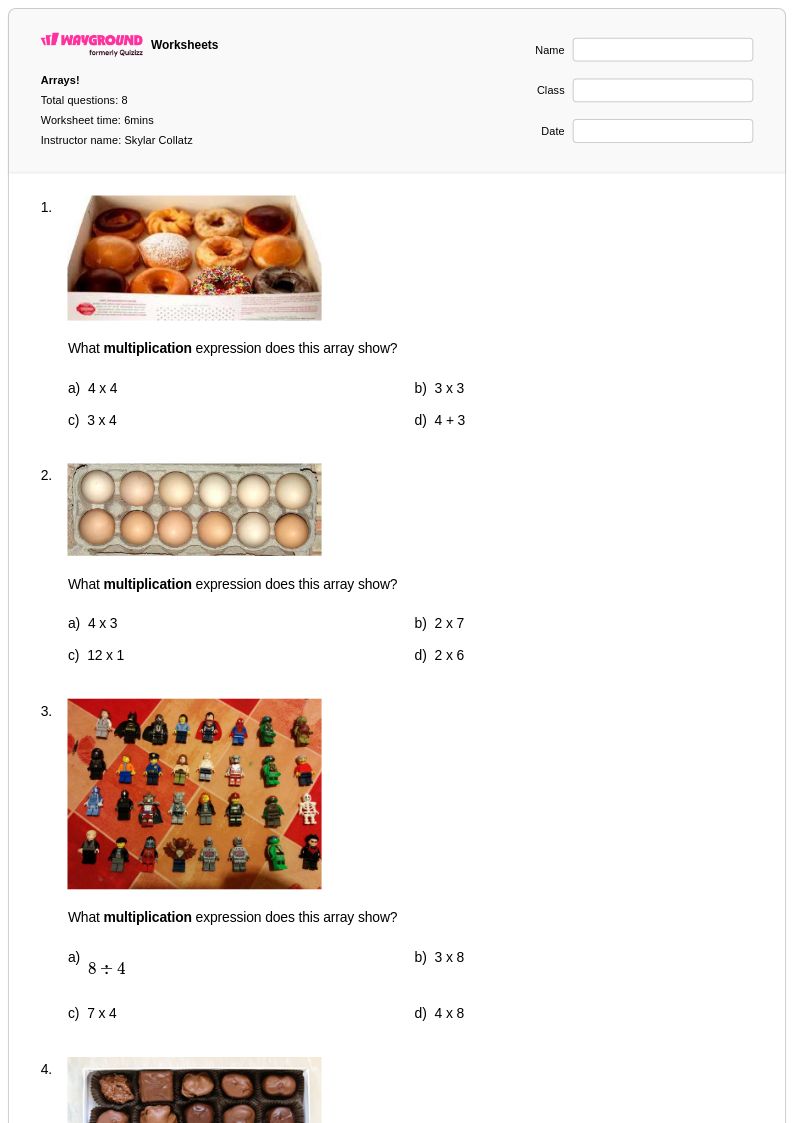
8 Q
3rd - 5th
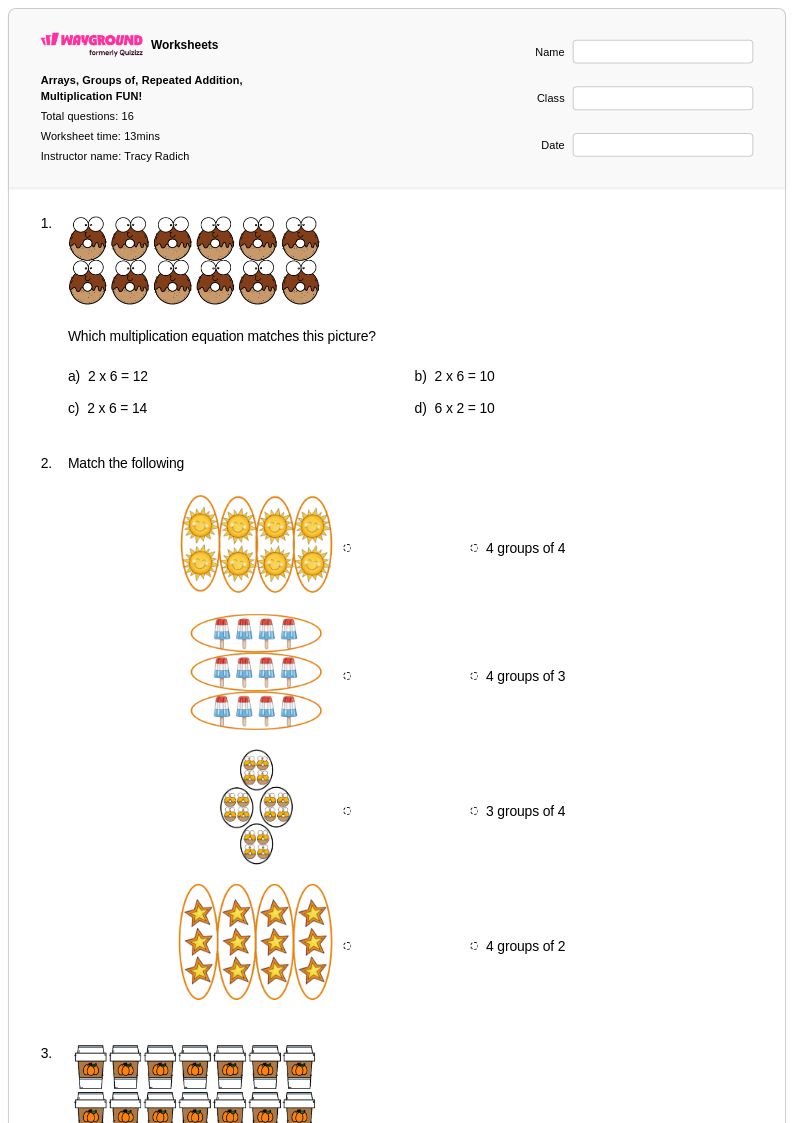
16 Q
3rd
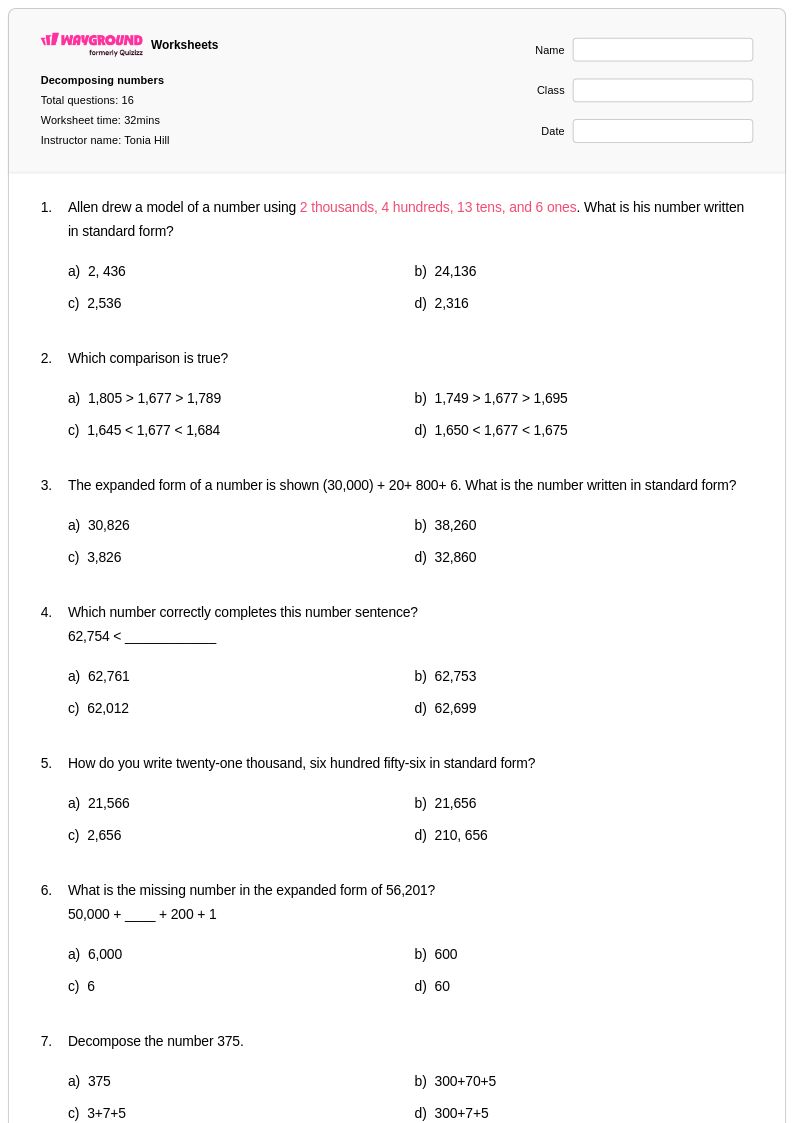
16 Q
3rd
19 Q
4th - Uni
20 Q
4th - Uni
30 Q
4th
20 Q
4th - Uni
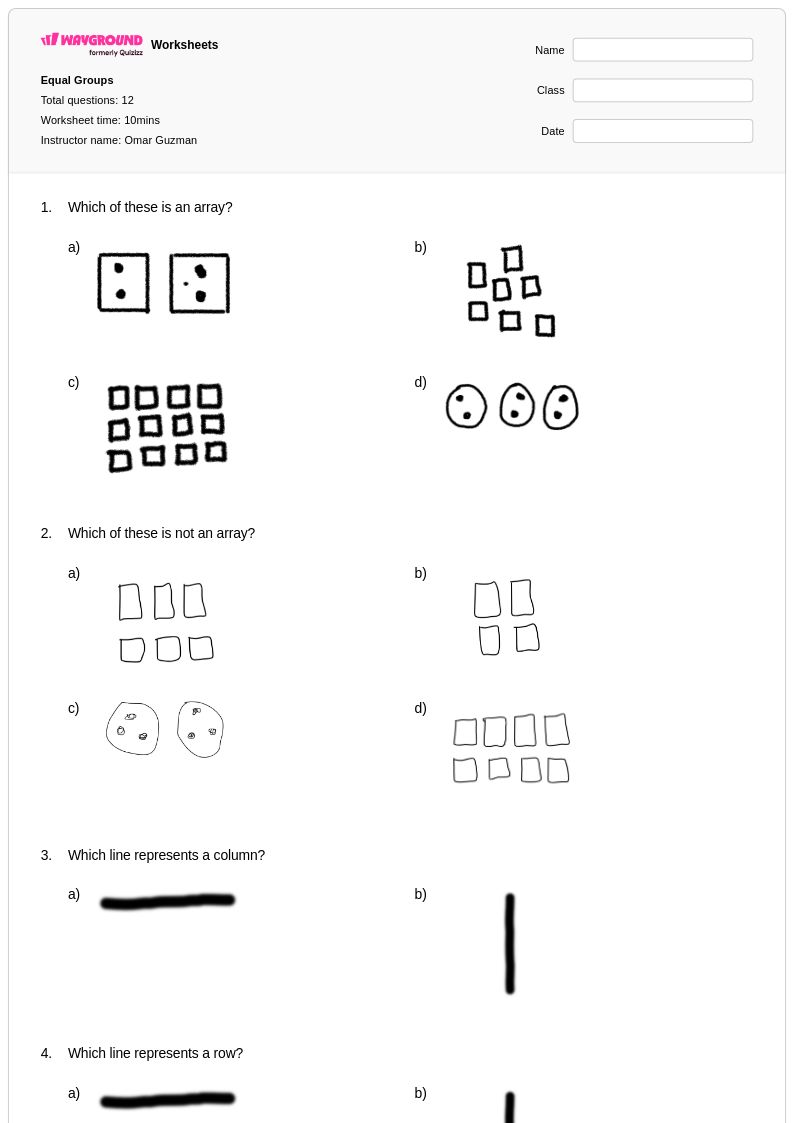
12 Q
2nd
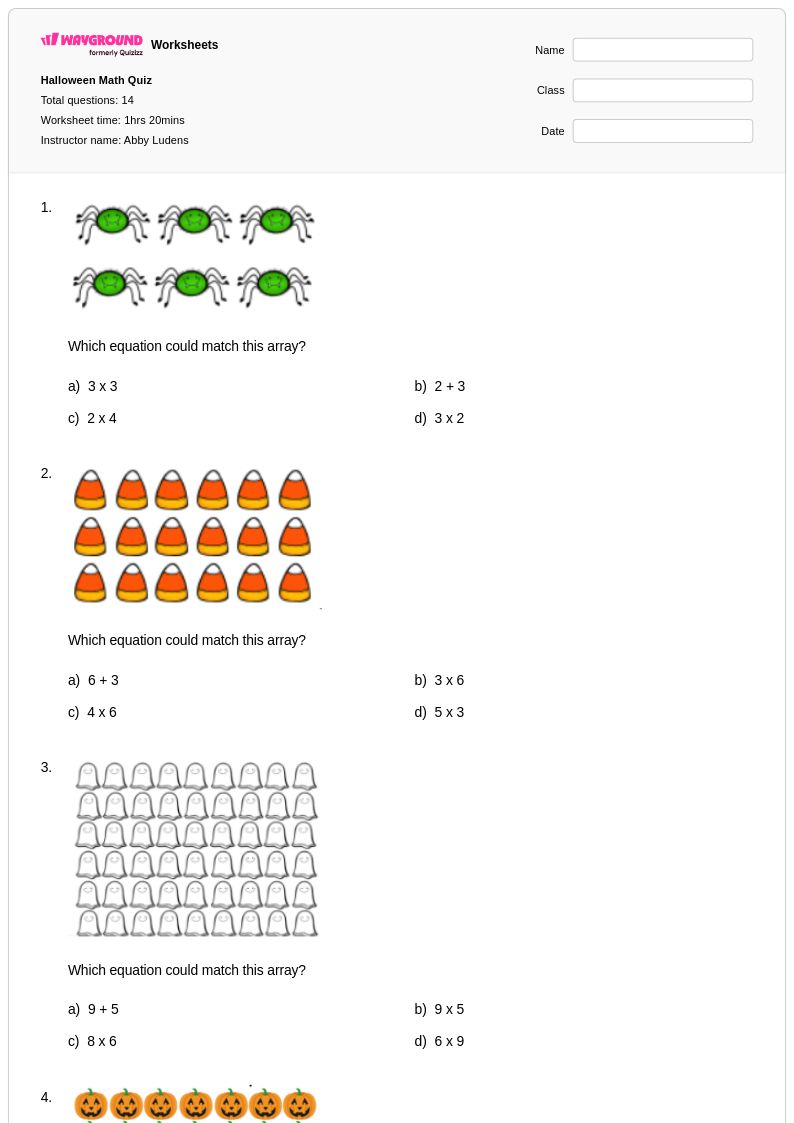
14 Q
3rd
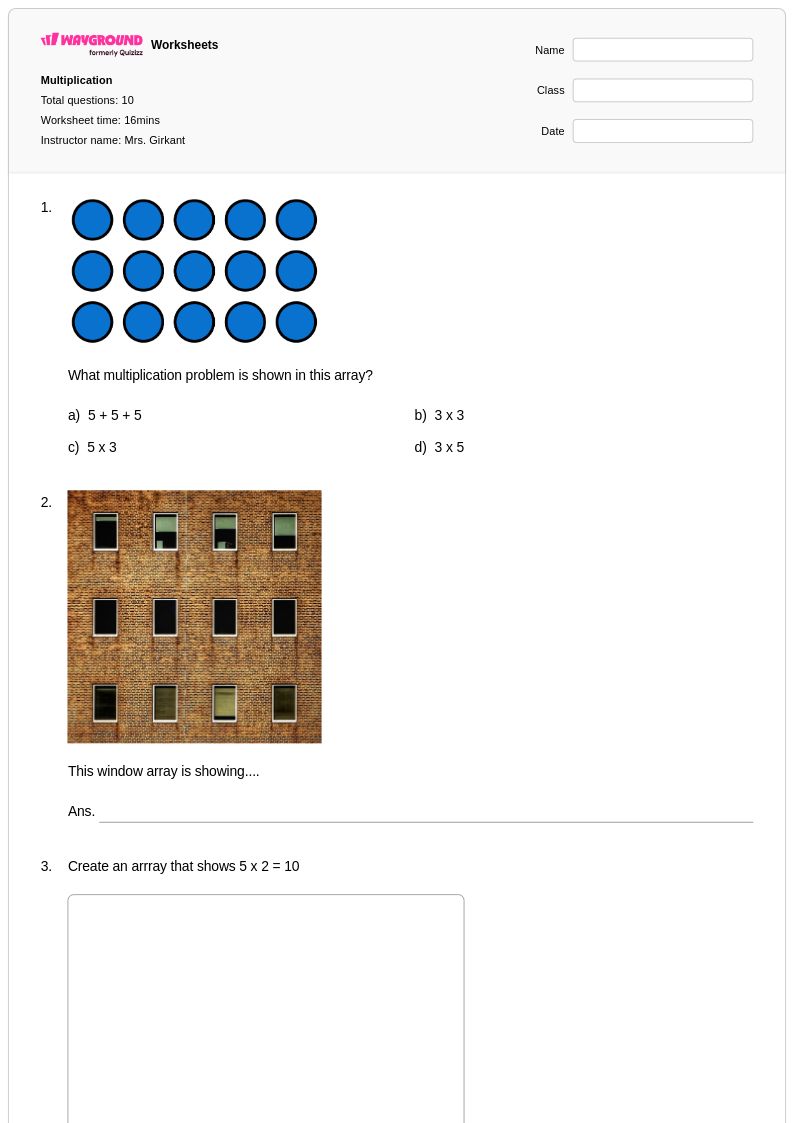
10 Q
3rd
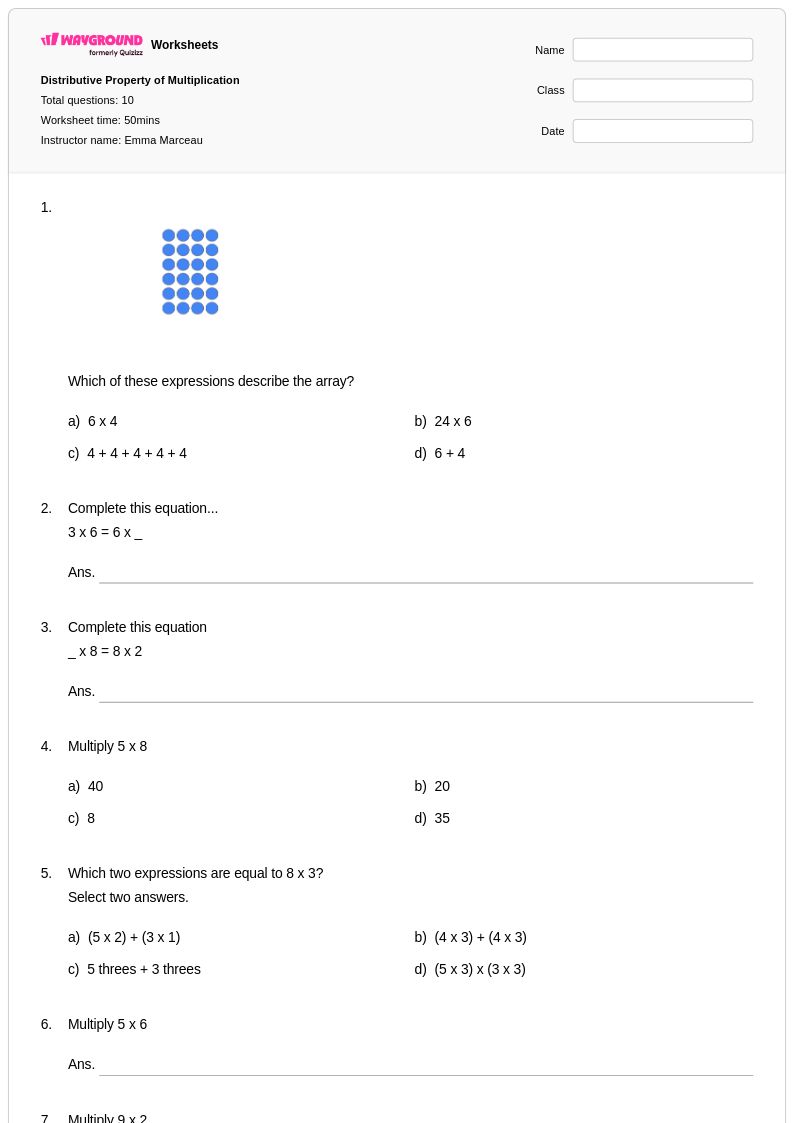
10 Q
3rd
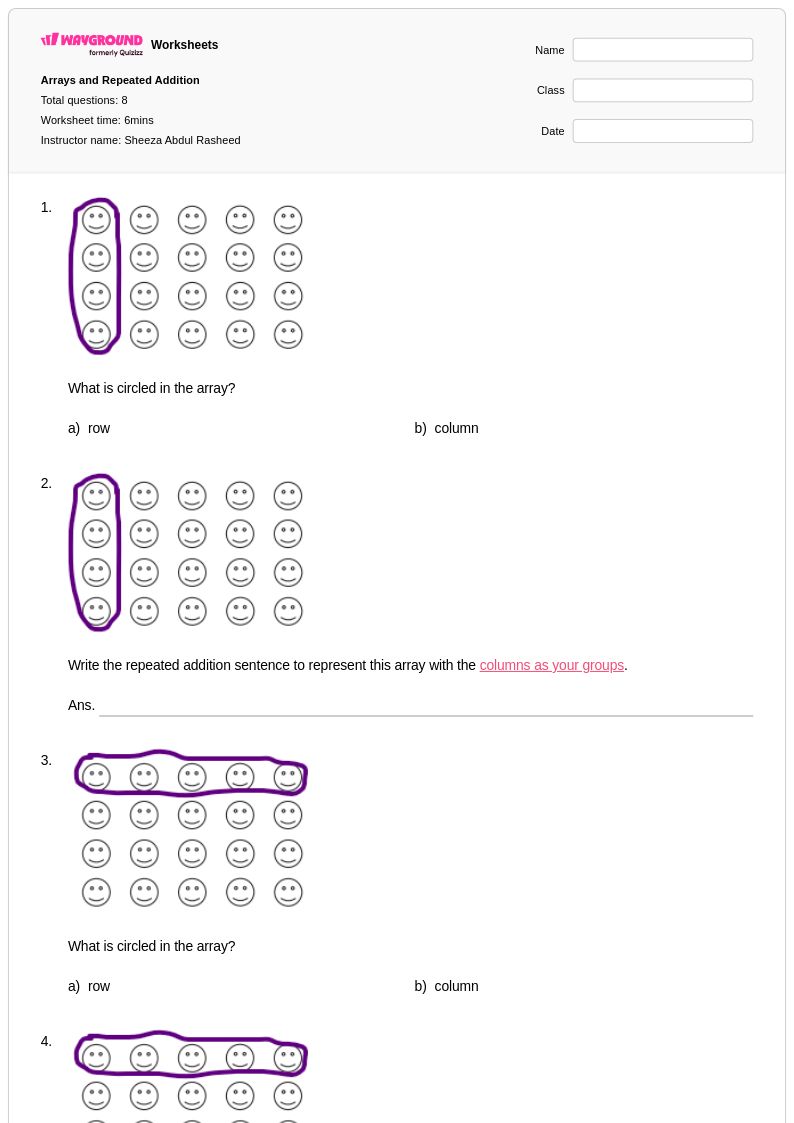
8 Q
2nd
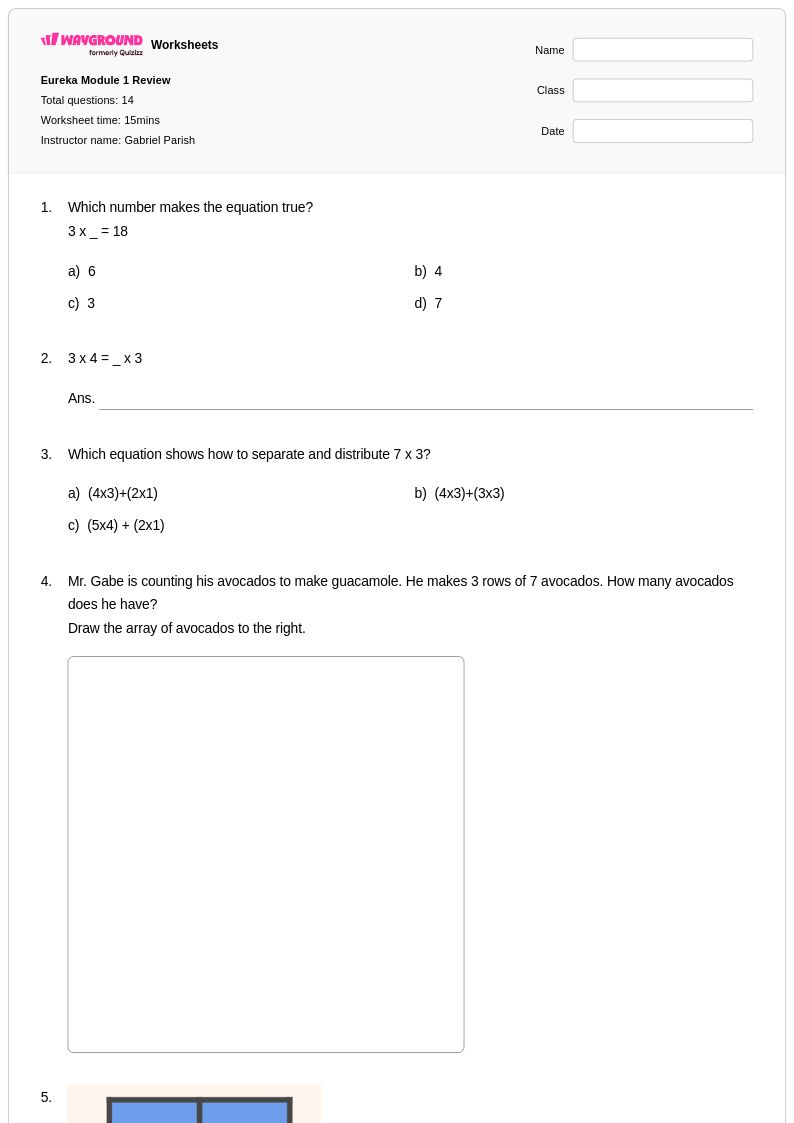
14 Q
3rd
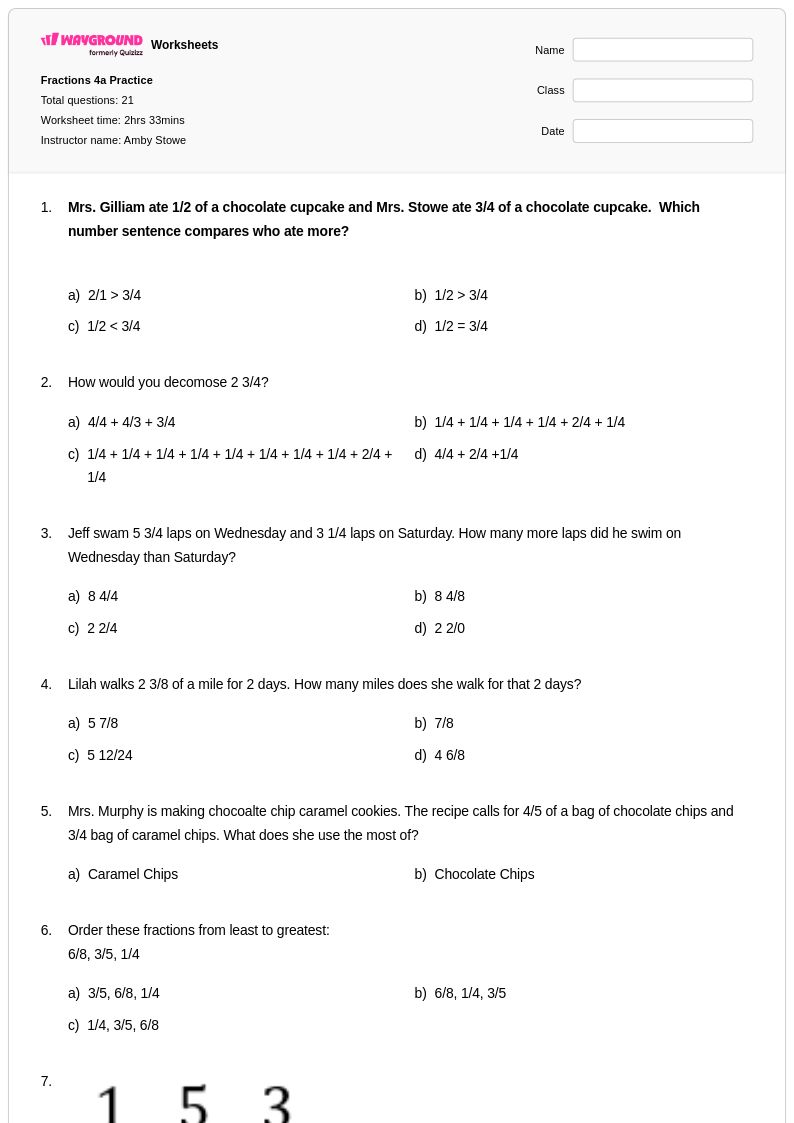
21 Q
4th
Explore Worksheets by Subjects
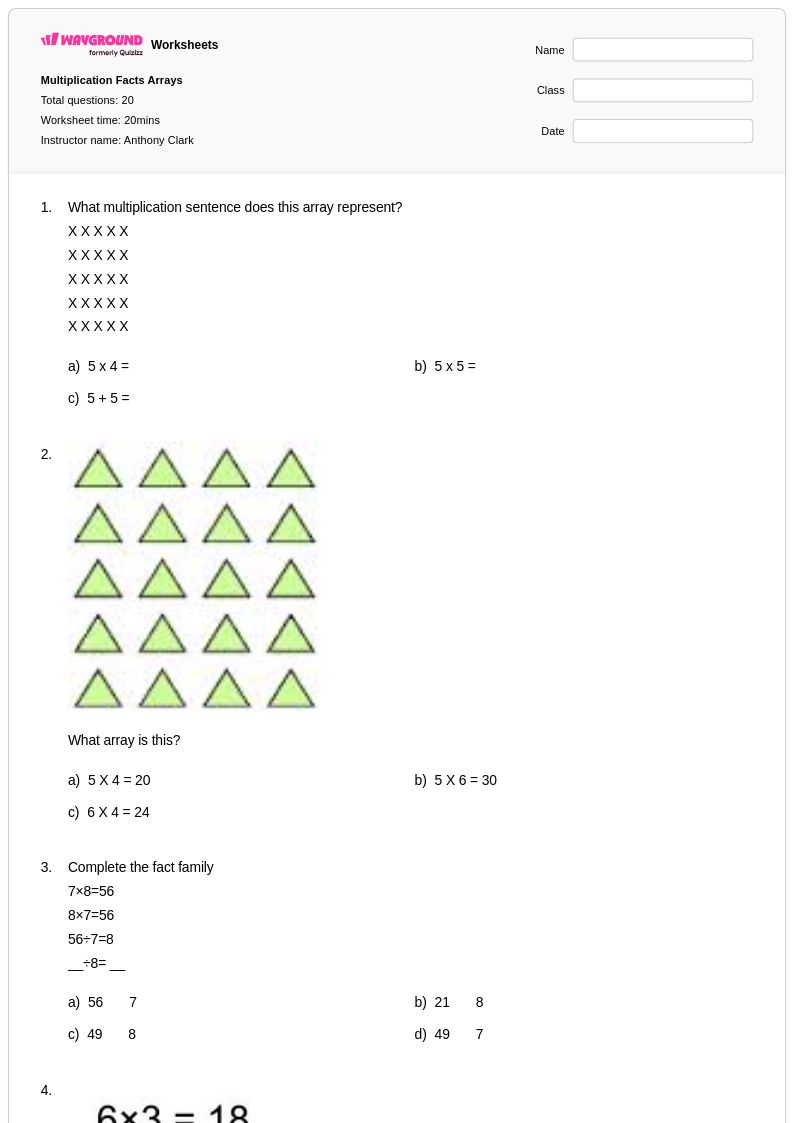
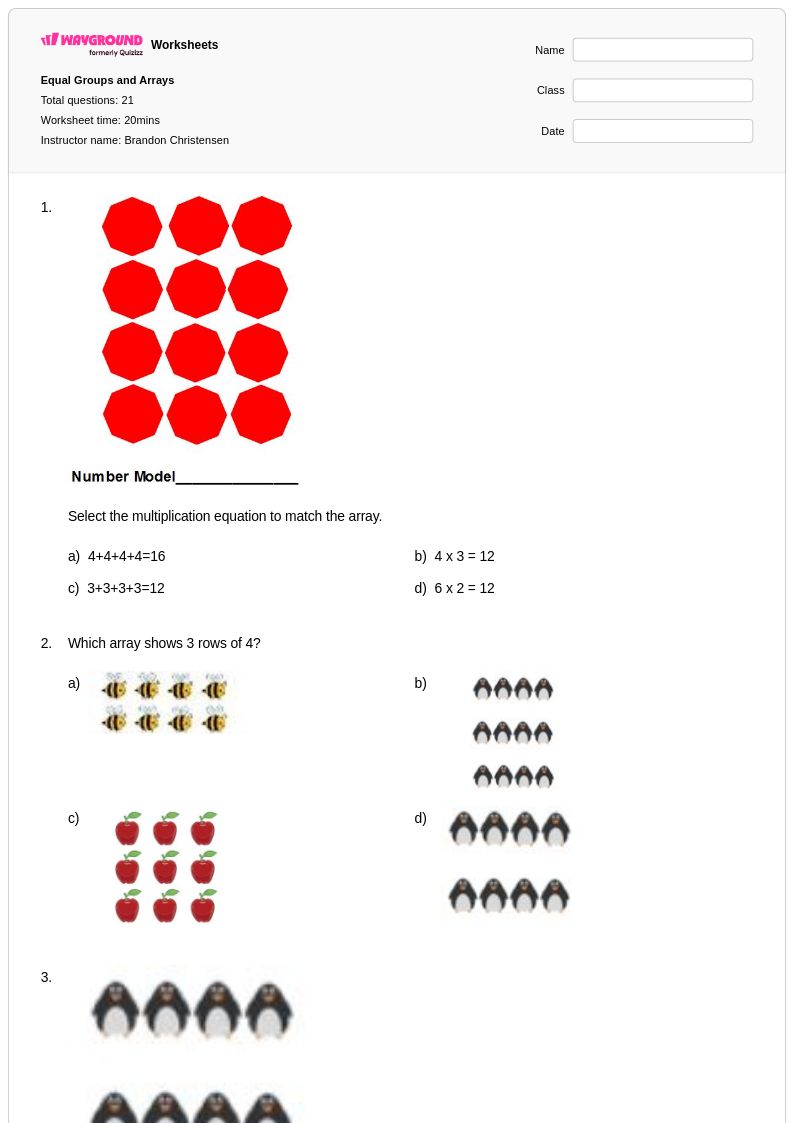
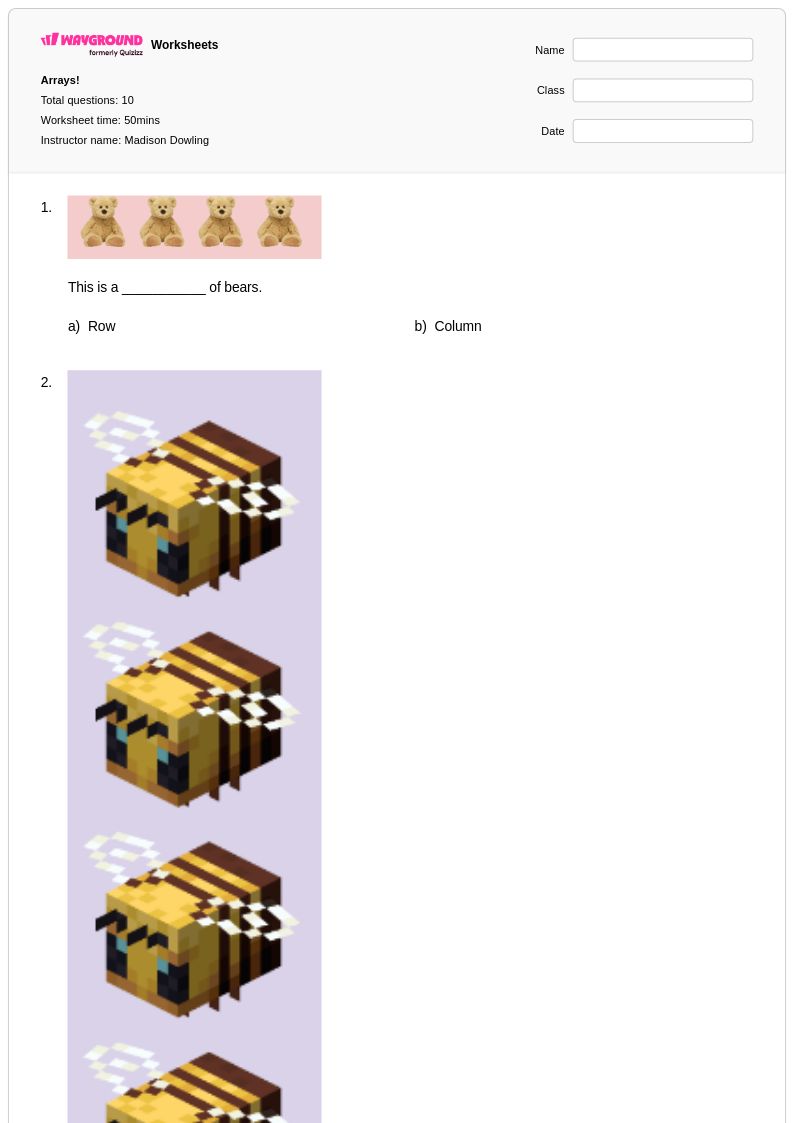
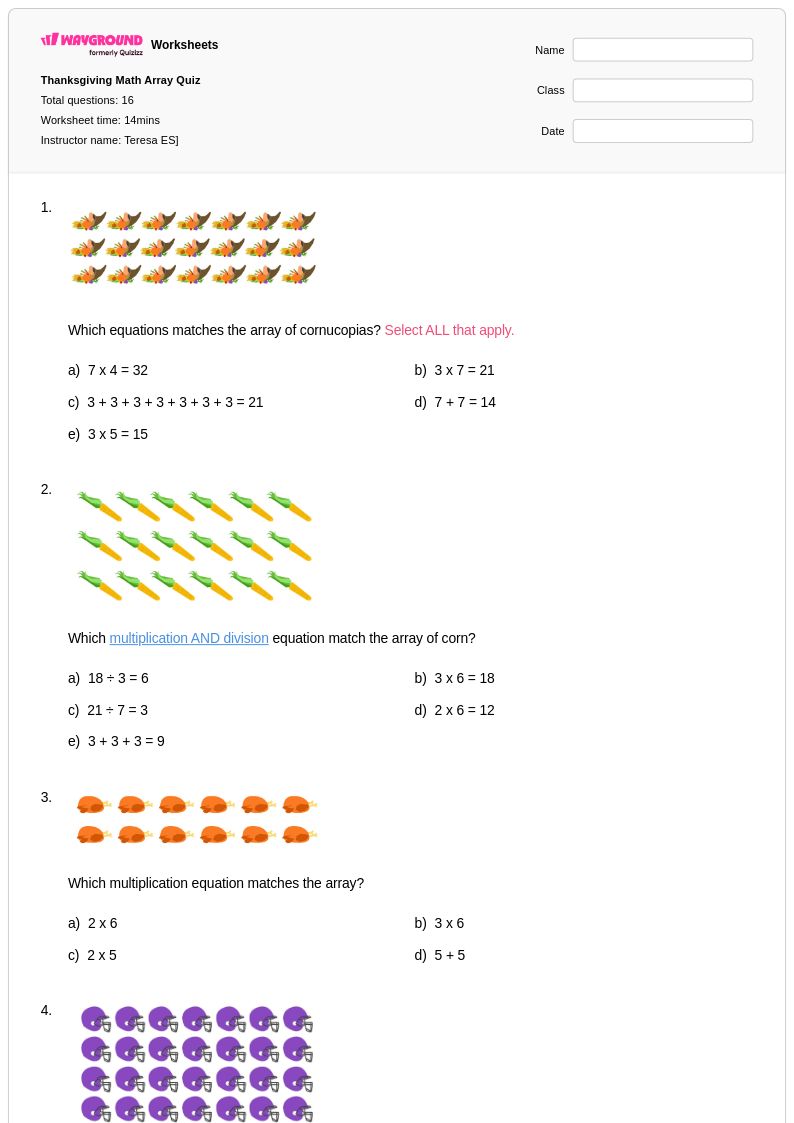
Explore printable Decomposing Arrays worksheets
Decomposing arrays worksheets available through Wayground (formerly Quizizz) provide students with essential practice in breaking down rectangular arrangements of objects into smaller, more manageable multiplication problems. These comprehensive printables focus on helping learners understand how larger arrays can be separated into component parts, strengthening their conceptual grasp of multiplication through visual representation and spatial reasoning. Students work through practice problems that demonstrate how a 6×8 array might be decomposed into 6×5 and 6×3, or how various other rectangular formations can be strategically divided to simplify calculations. Each worksheet collection includes detailed answer keys and free pdf formats, making it easy for educators to implement this foundational multiplication strategy across diverse learning environments while building students' number sense and multiplicative thinking skills.
Wayground (formerly Quizizz) empowers teachers with millions of educator-created decomposing arrays resources that feature robust search and filtering capabilities, ensuring quick access to grade-appropriate materials aligned with mathematical standards. The platform's differentiation tools allow instructors to customize worksheets based on individual student needs, while flexible formatting options provide both printable and digital versions including downloadable pdfs for seamless classroom integration. These extensive collections support comprehensive lesson planning by offering varied approaches to array decomposition, from basic rectangular separations to more complex multi-step breakdowns, enabling teachers to scaffold instruction effectively. Whether used for initial concept introduction, targeted remediation, advanced enrichment, or ongoing skill practice, these resources help educators address the full spectrum of learner needs while reinforcing this critical multiplication strategy foundation.
FAQs
How do I teach students to decompose arrays?
What exercises help students practice decomposing arrays?
What mistakes do students make when decomposing arrays?
How can I use Wayground decomposing arrays worksheets in class?
How does decomposing arrays support the Common Core math progression?
How can I differentiate decomposing arrays practice for mixed-ability students?