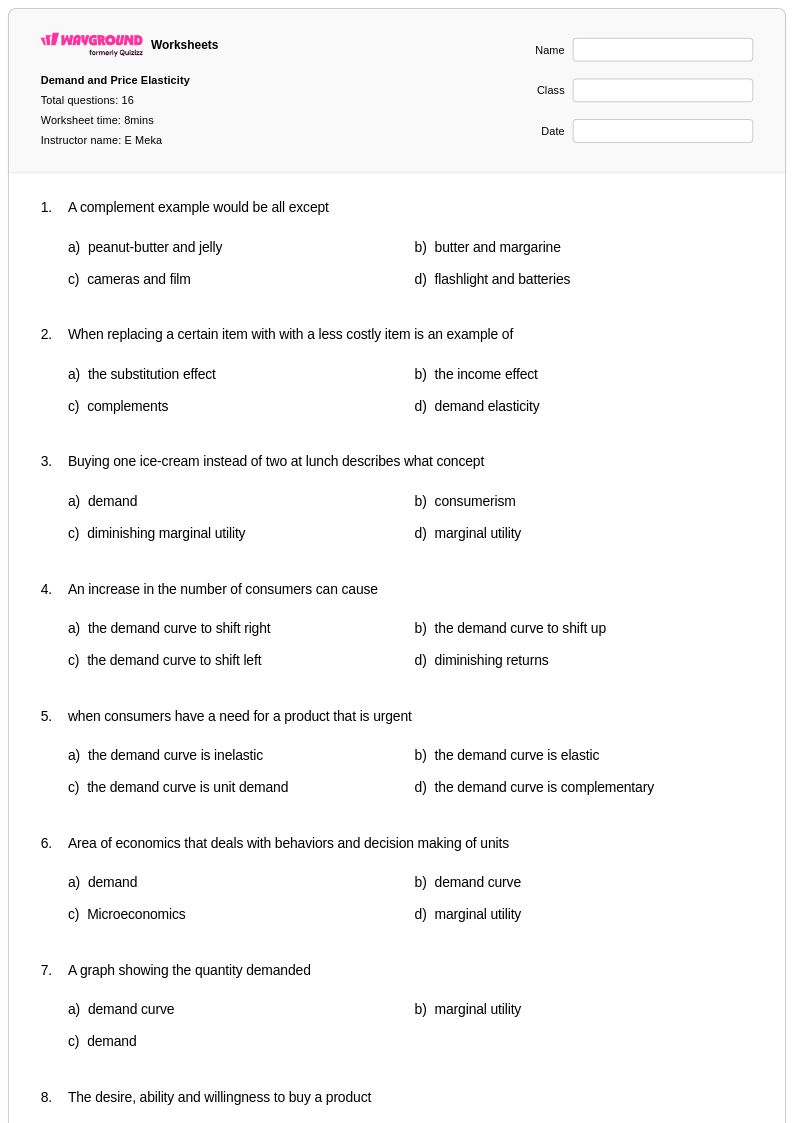
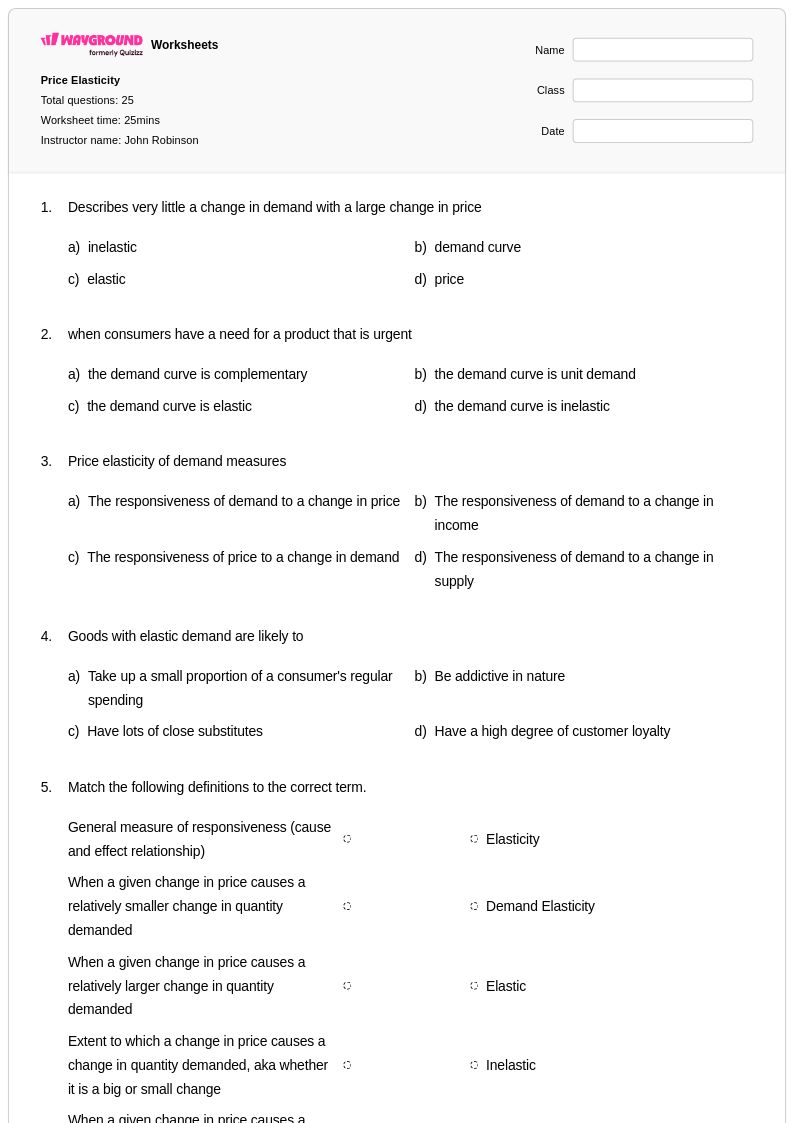
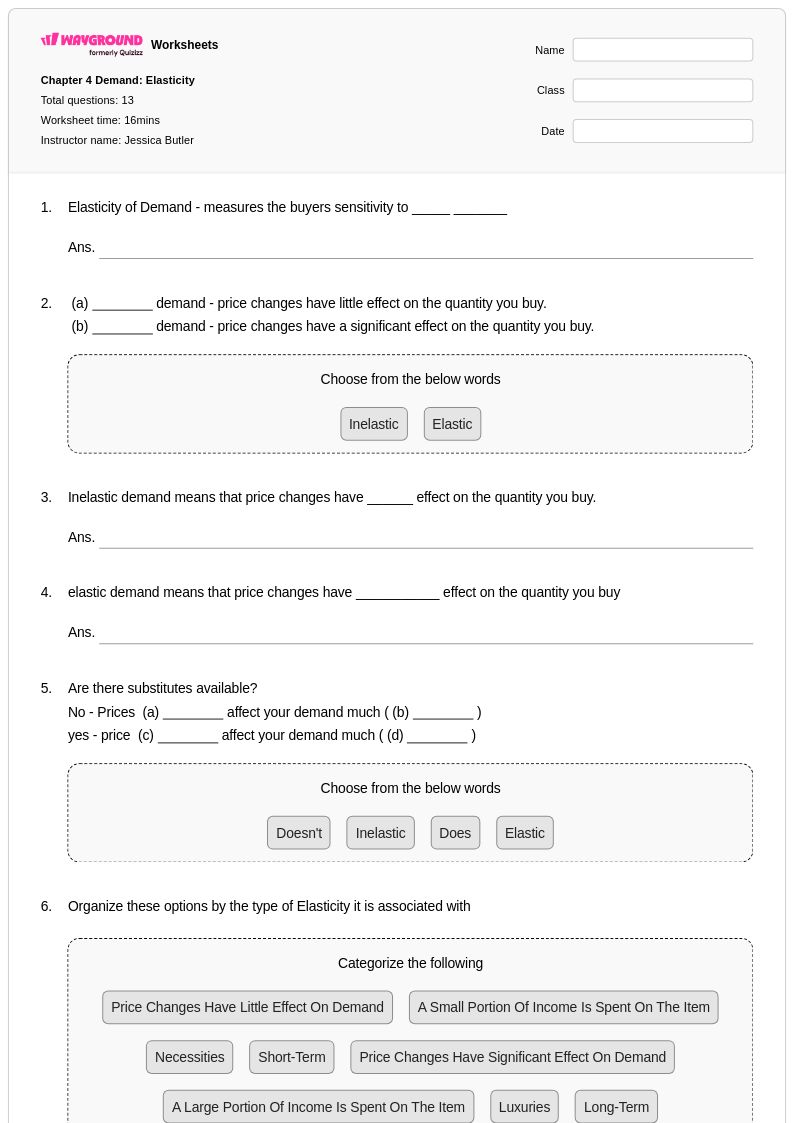
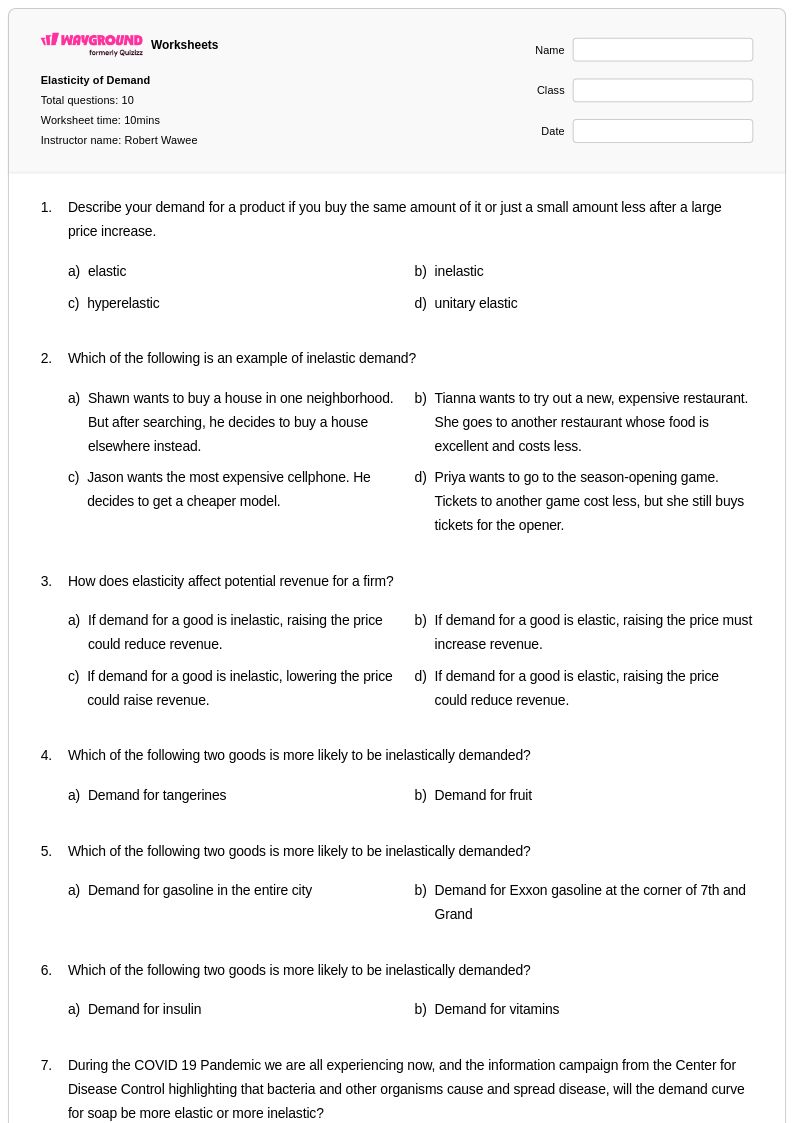
Free Printable Demand and Price Elasticity Worksheets for Year 10
Year 10 demand and price elasticity worksheets from Wayground help students master economic concepts through engaging printables, practice problems, and comprehensive answer keys available as free PDF downloads.
Explore printable Demand and Price Elasticity worksheets for Year 10
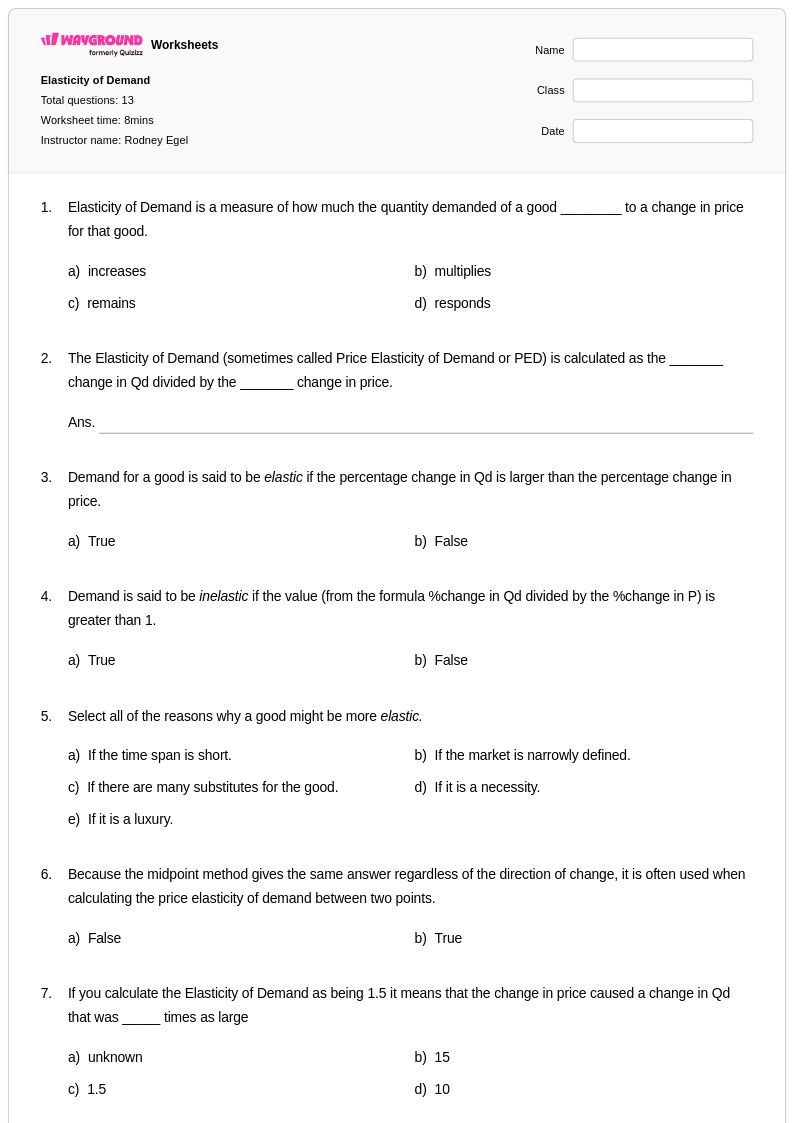
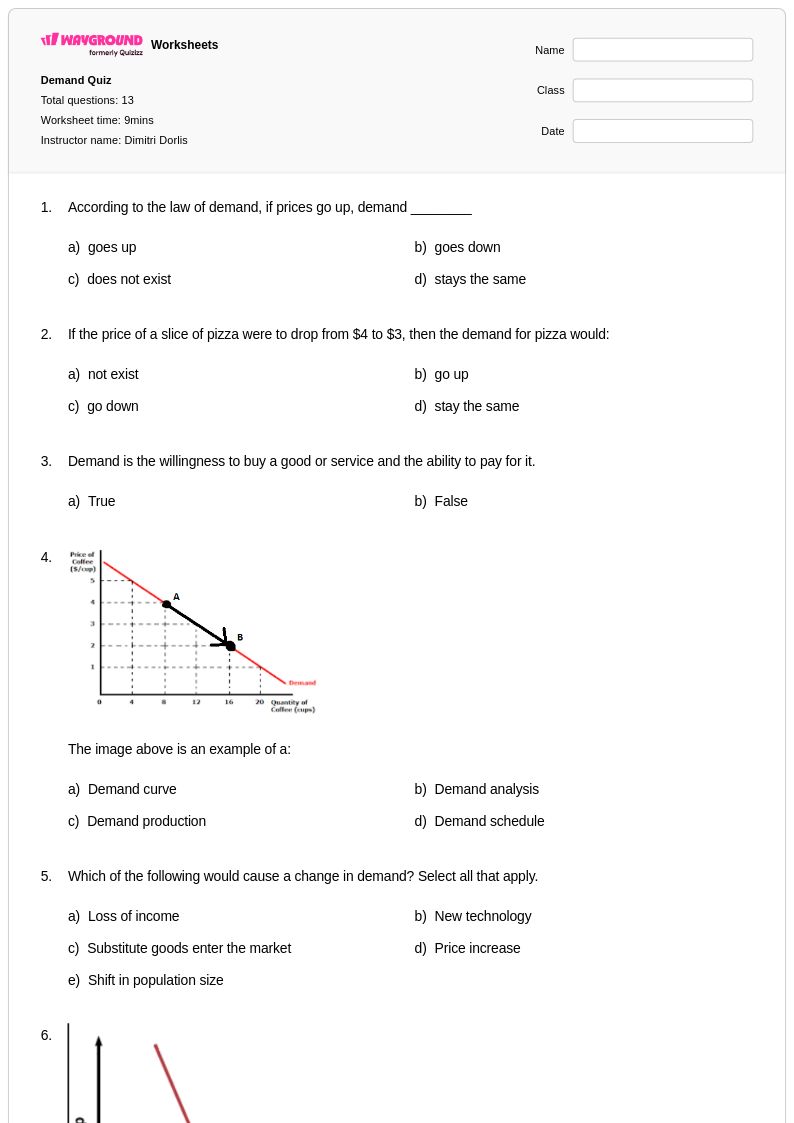
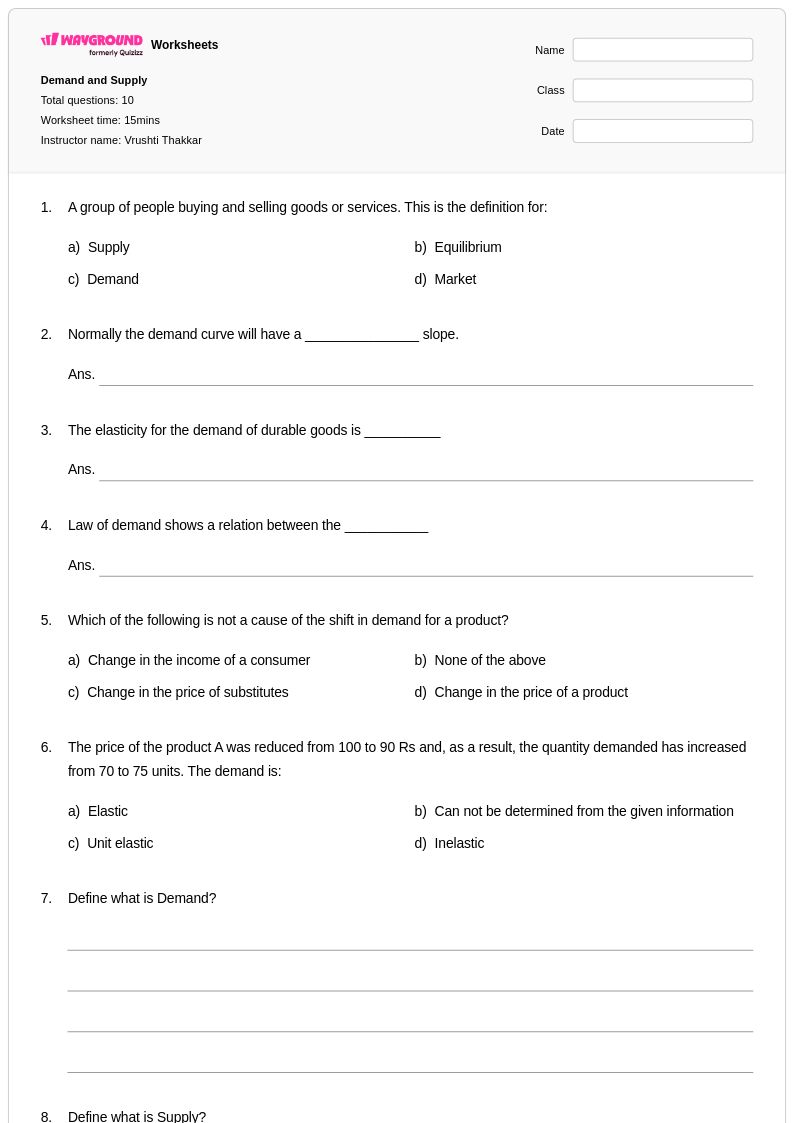
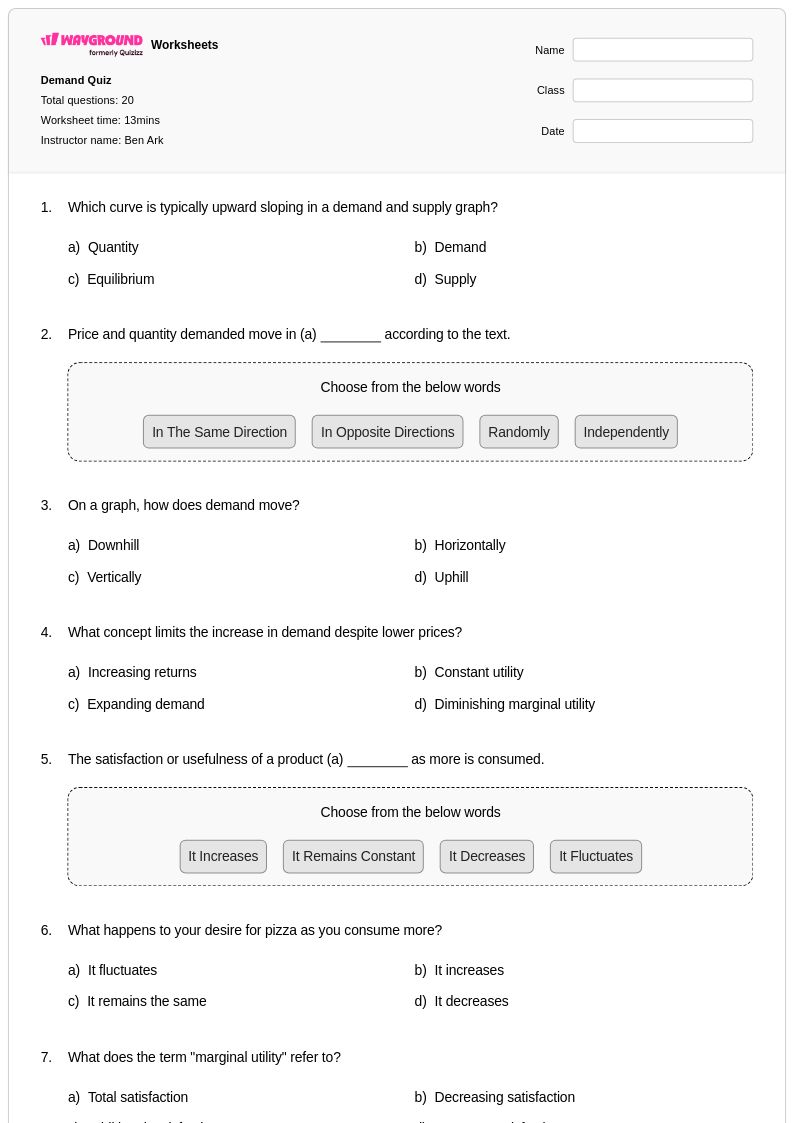
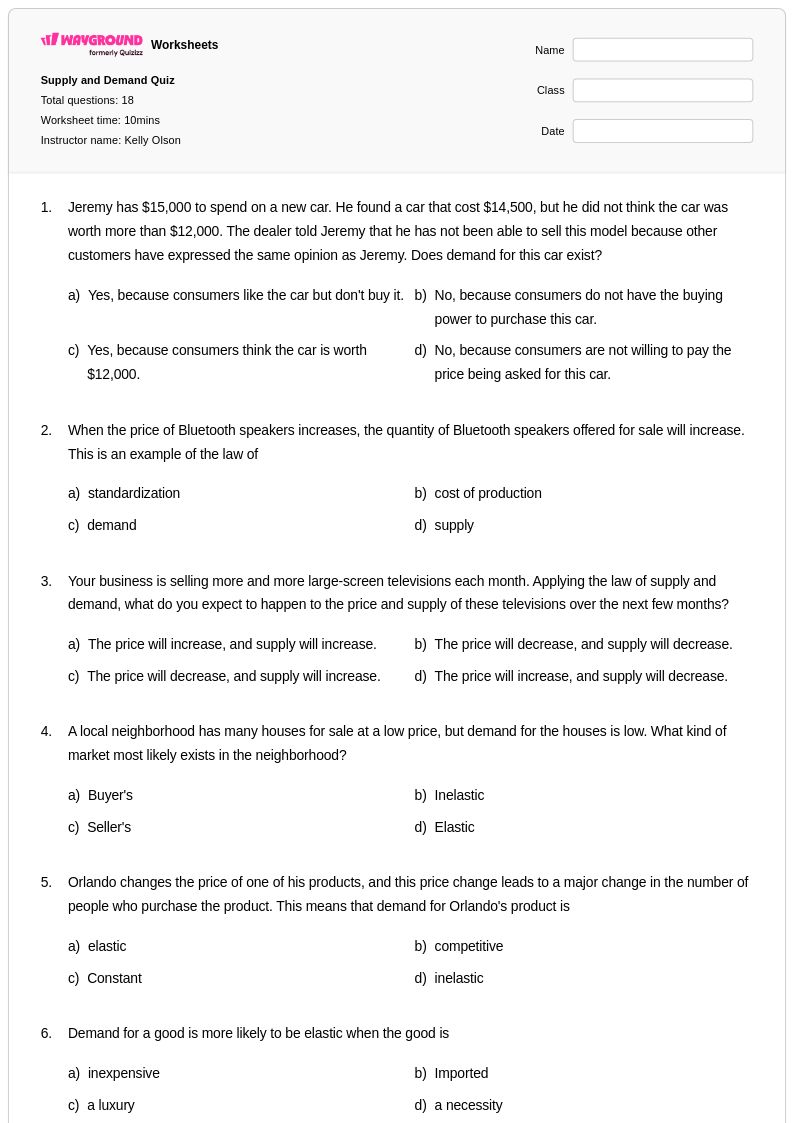
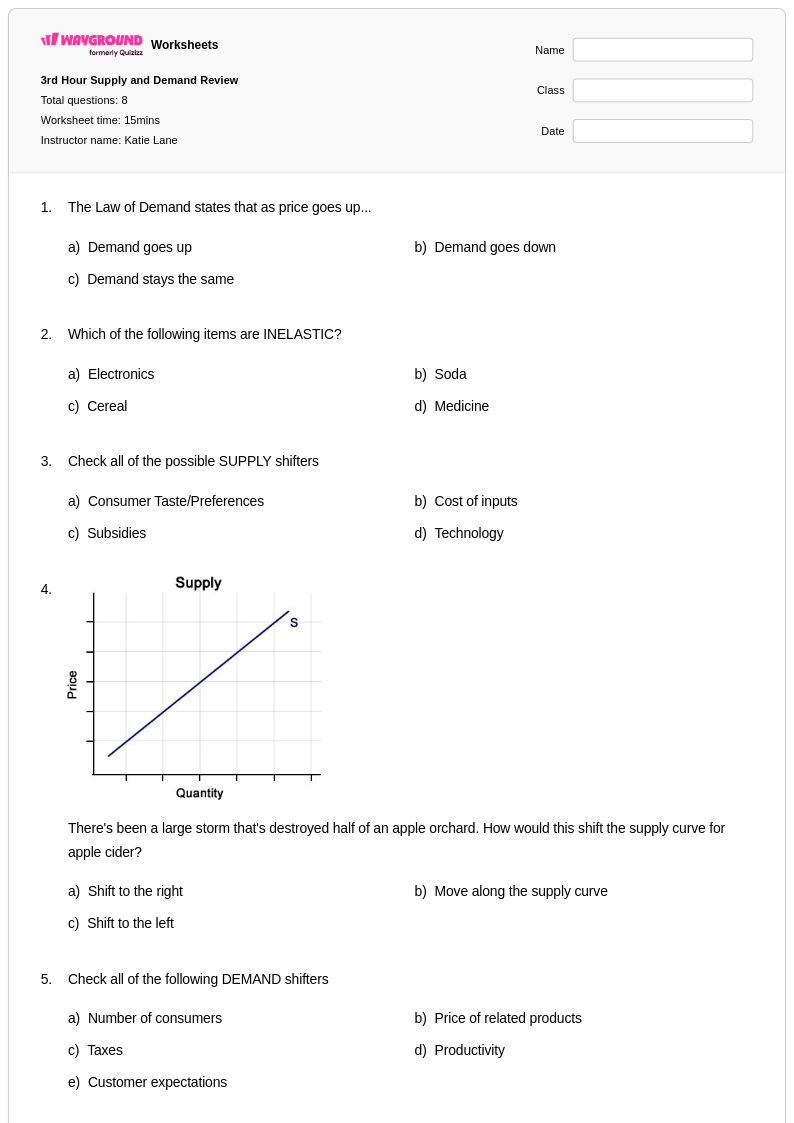
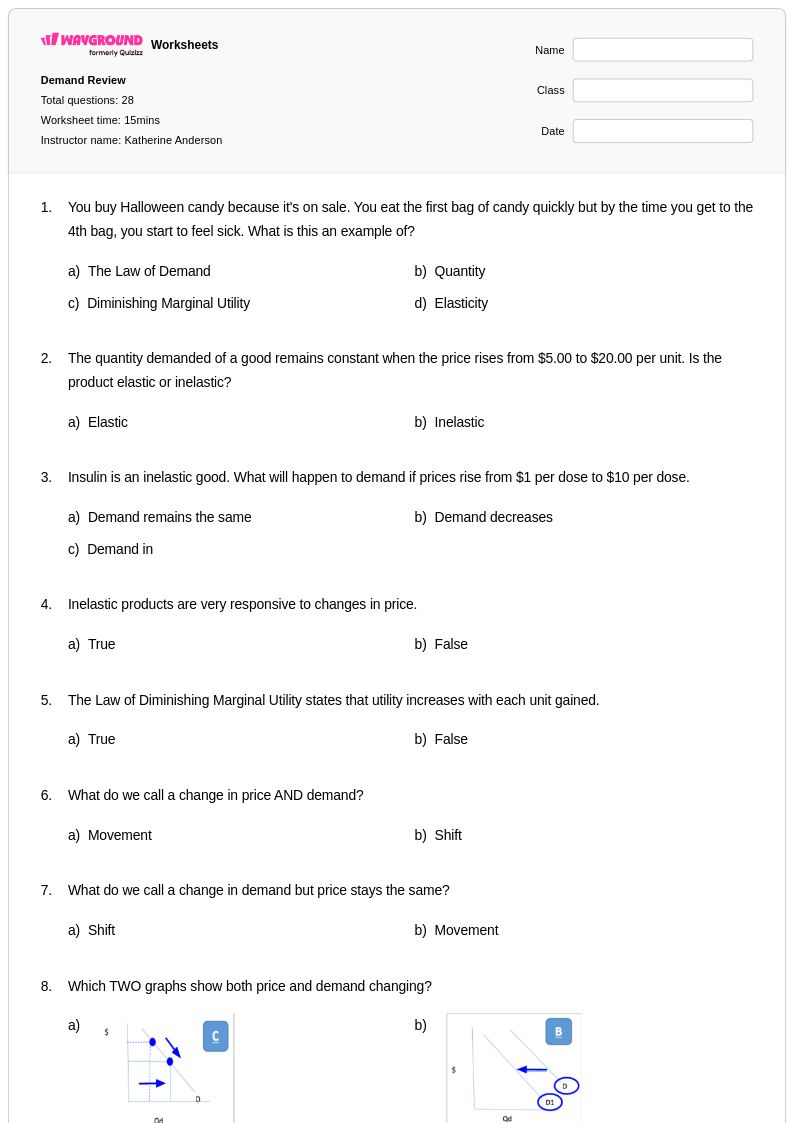
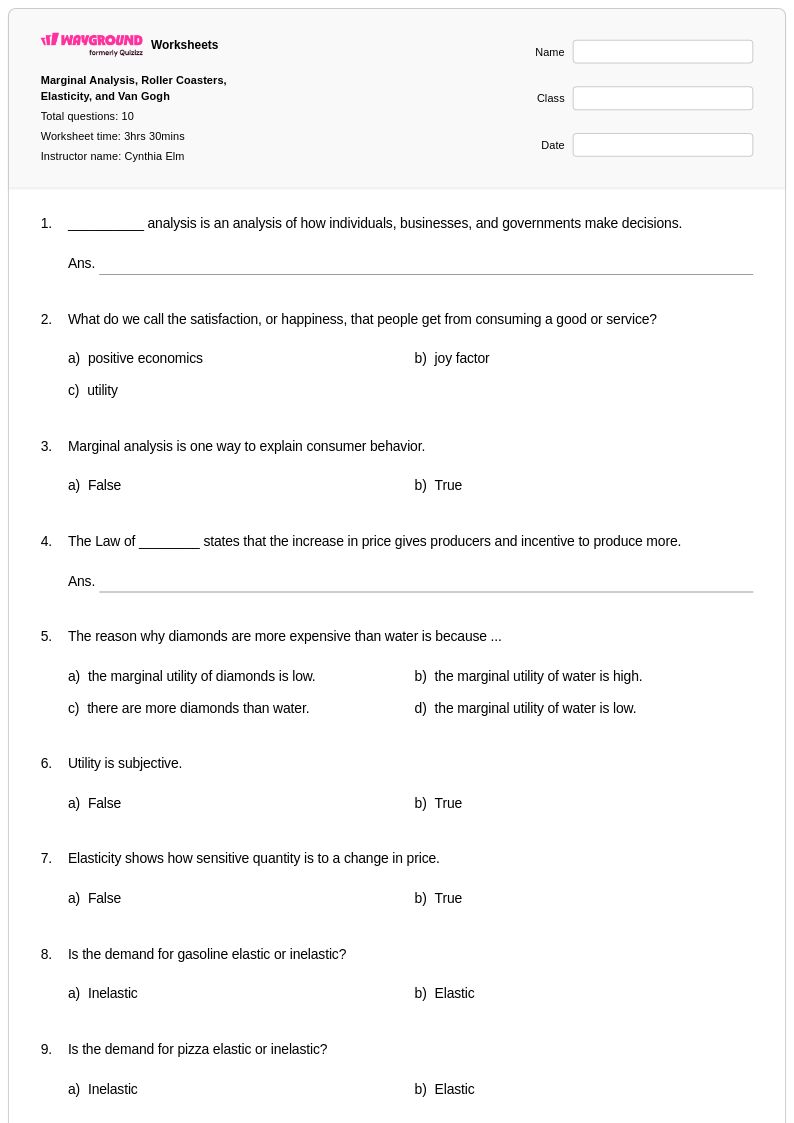
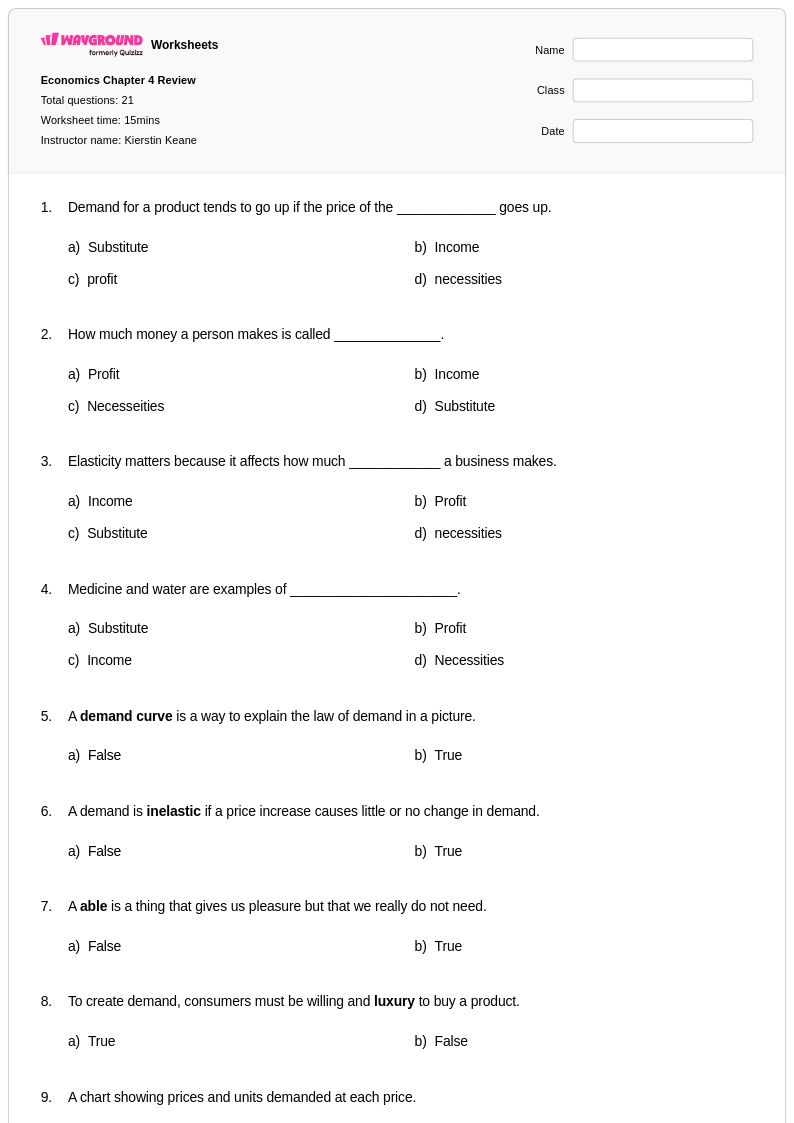
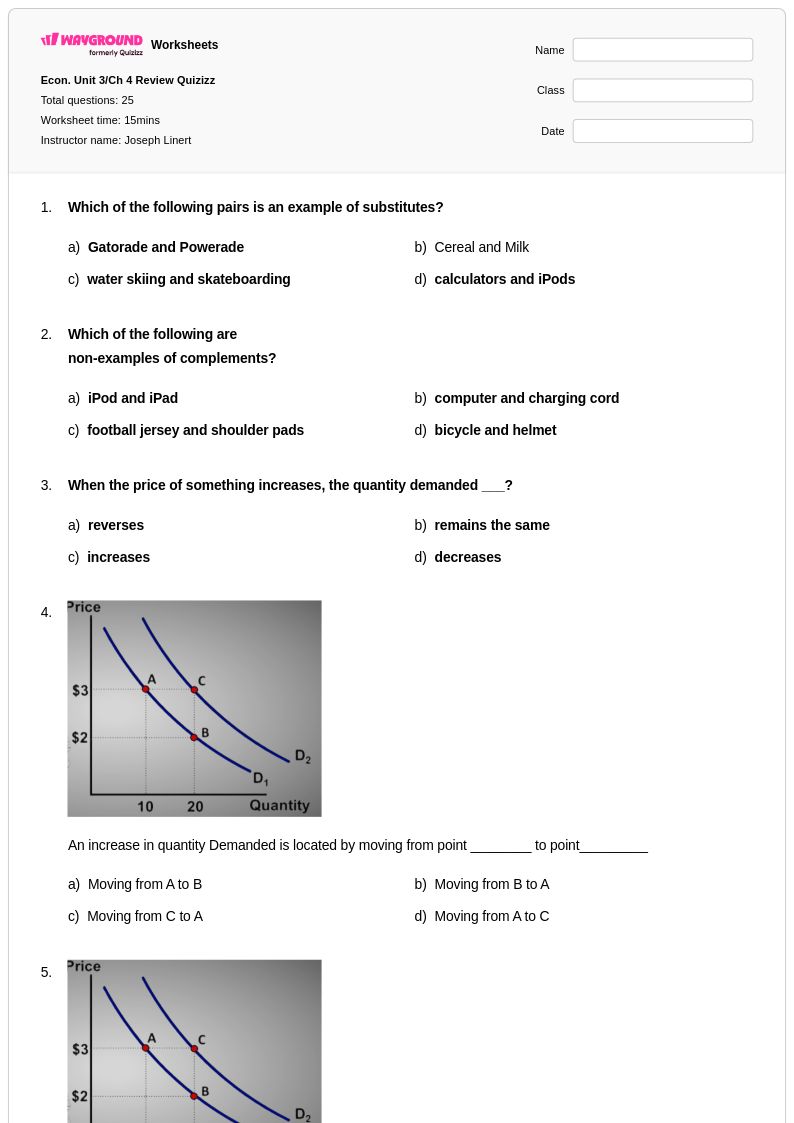
Year 10 demand and price elasticity worksheets available through Wayground (formerly Quizizz) provide comprehensive coverage of this fundamental economic concept that measures how responsive consumer demand is to price changes. These expertly designed resources strengthen students' analytical skills by guiding them through calculations of elasticity coefficients, interpretation of elastic versus inelastic demand scenarios, and real-world applications across different market conditions and product categories. The practice problems systematically build understanding of factors that influence elasticity, including availability of substitutes, necessity versus luxury classifications, and time periods for consumer adjustment, while accompanying answer keys enable students to verify their computational work and deepen conceptual mastery. Available as free printables and digital formats, these worksheets reinforce essential economic literacy skills through structured exercises that connect mathematical formulations to practical business and policy implications.
Wayground (formerly Quizizz) supports educators teaching demand and price elasticity through millions of teacher-created resources that feature robust search and filtering capabilities, enabling quick identification of materials aligned with specific curriculum standards and learning objectives. The platform's differentiation tools allow teachers to customize worksheets based on individual student needs, providing multiple complexity levels within the same topic to accommodate diverse learning paces and prior knowledge foundations. Available in both printable pdf formats for traditional classroom use and interactive digital versions for technology-enhanced instruction, these resources facilitate flexible lesson planning approaches that support initial concept introduction, targeted skill practice, remediation for struggling learners, and enrichment opportunities for advanced students seeking deeper economic analysis challenges.
FAQs
How do I teach price elasticity of demand to high school economics students?
Start by grounding students in the concept of consumer responsiveness before introducing the elasticity coefficient formula. Use real-world examples such as gasoline versus luxury goods to contrast inelastic and elastic demand in ways students can relate to. Once students grasp the basics, progress to interpreting demand curves and exploring factors like availability of substitutes, necessity versus luxury status, and time horizon. Building from concrete examples to abstract calculation helps students internalize the concept rather than just memorize the formula.
What practice problems help students learn how to calculate price elasticity of demand?
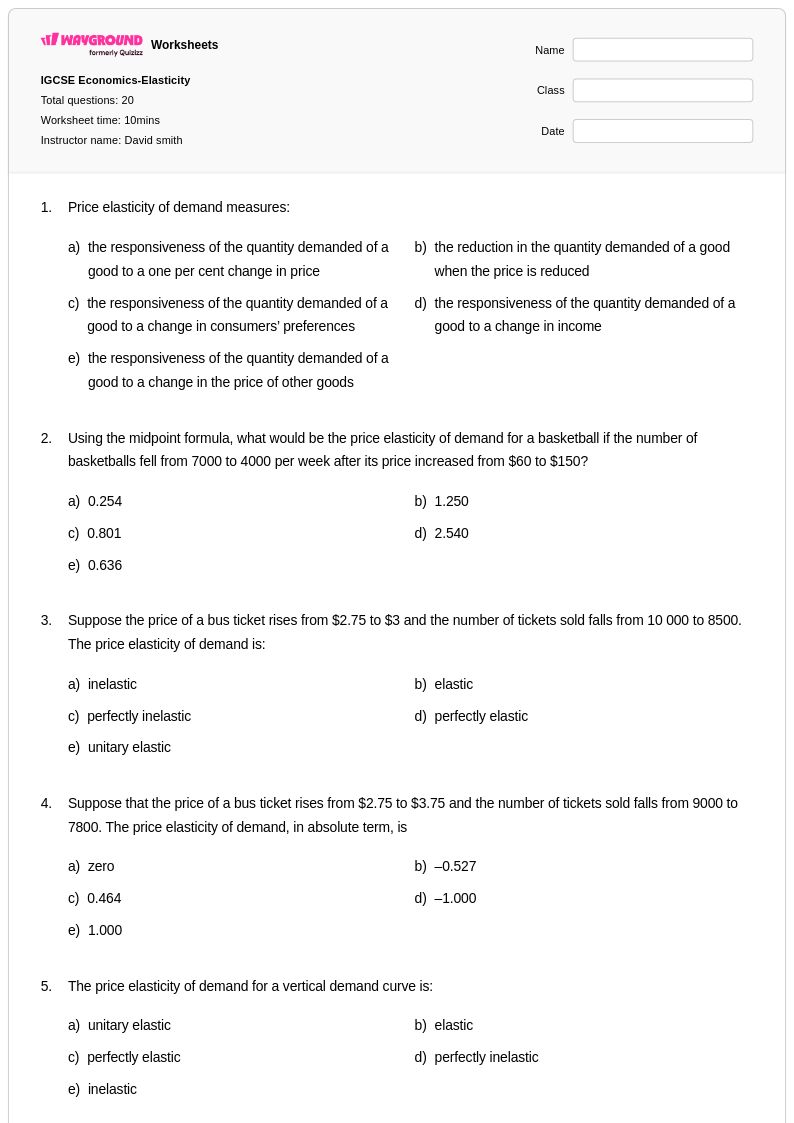
Effective practice problems should move from straightforward coefficient calculations using the percentage change formula to interpretation tasks where students classify demand as elastic, inelastic, or unit elastic based on their results. Structured worksheet sets that progress from basic elastic and inelastic scenarios to cross-price elasticity and income elasticity give students a scaffold for building fluency. Including real or realistic price-quantity data sets makes calculations more meaningful and prepares students for applying elasticity analysis to actual market situations.
What mistakes do students commonly make when calculating price elasticity of demand?
One of the most frequent errors is confusing the direction of the coefficient with its magnitude — students often focus on whether the value is positive or negative rather than its absolute value when classifying demand. Another common mistake is misapplying the percentage change formula by using raw change instead of percentage change, which produces incorrect coefficients. Students also frequently struggle to distinguish between cross-price elasticity and price elasticity of demand, conflating how a price change in one good affects demand for a related good with how it affects demand for the same good.
How do I differentiate demand and price elasticity instruction for students at different skill levels?
For struggling learners, focus first on the conceptual distinction between elastic and inelastic demand using visual aids like demand curve diagrams before introducing coefficient calculations. For advanced students, introduce more complex applications such as income elasticity of demand, cross-price elasticity, and analysis of luxury versus necessity goods across different market scenarios. Wayground supports student-level accommodations including reduced answer choices to lower cognitive load, read aloud for accessibility, and extended time settings that can be configured individually so each student receives appropriately differentiated support without disrupting the rest of the class.
How can I use demand and price elasticity worksheets to assess student understanding?
Elasticity worksheets work well as formative assessment tools when they include both calculation tasks and interpretation questions, since correct computation alone does not confirm conceptual understanding. Problems that ask students to explain why a good is elastic or inelastic, or to predict how a price change will affect total revenue, reveal whether students can apply elasticity concepts rather than just execute the formula. Using a mix of structured calculation problems and open-ended analysis questions gives teachers a clearer picture of where gaps in understanding exist before moving to more advanced microeconomic topics.
How do I use Wayground's demand and price elasticity worksheets in my classroom?
Wayground's demand and price elasticity worksheets are available as printable PDFs for traditional classroom use and in digital formats for technology-integrated learning environments, including the option to host them as a quiz directly on Wayground. Teachers can assign worksheets for independent practice, guided instruction, or formative assessment, with complete answer keys included for efficient grading. Digital hosting allows teachers to track student responses in real time, while the printable option accommodates settings where device access is limited or where students benefit from working on paper.