Free Printable Supply and Demand Curves Worksheets for Year 10
Year 10 supply and demand curves worksheets from Wayground help students master economic principles through engaging printables and practice problems with comprehensive answer keys available as free PDF downloads.
Explore printable Supply and Demand Curves worksheets for Year 10
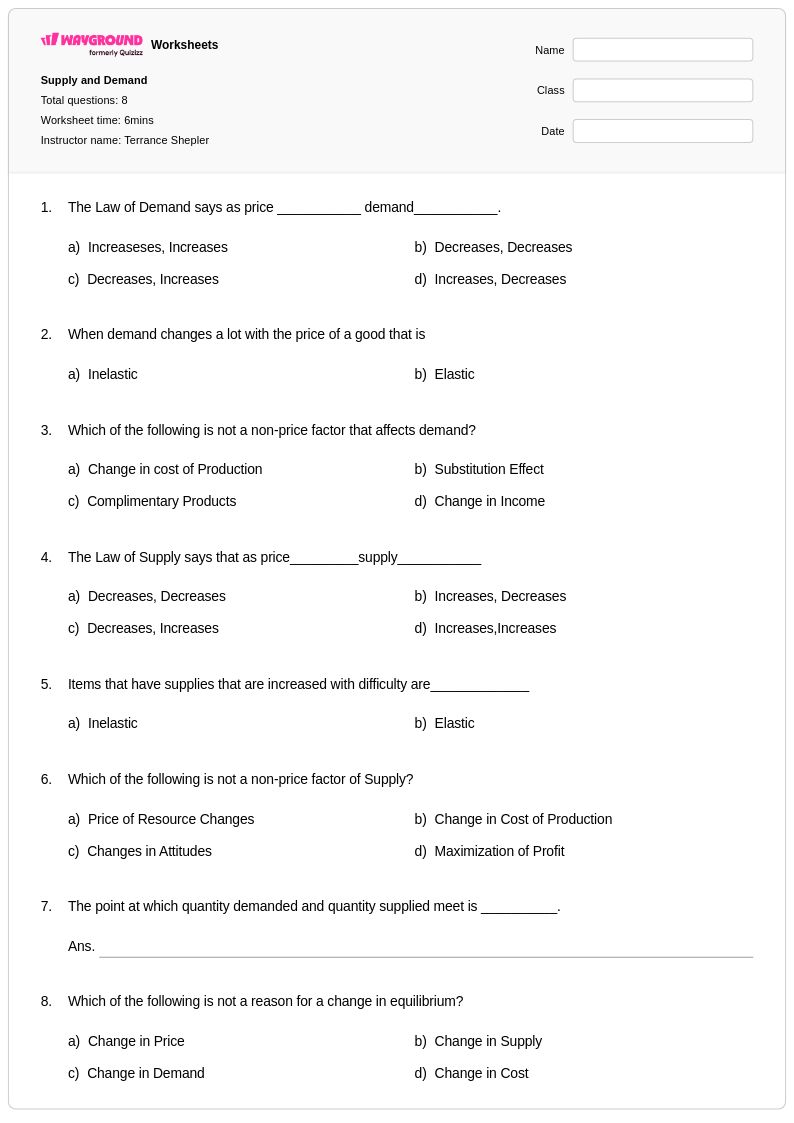
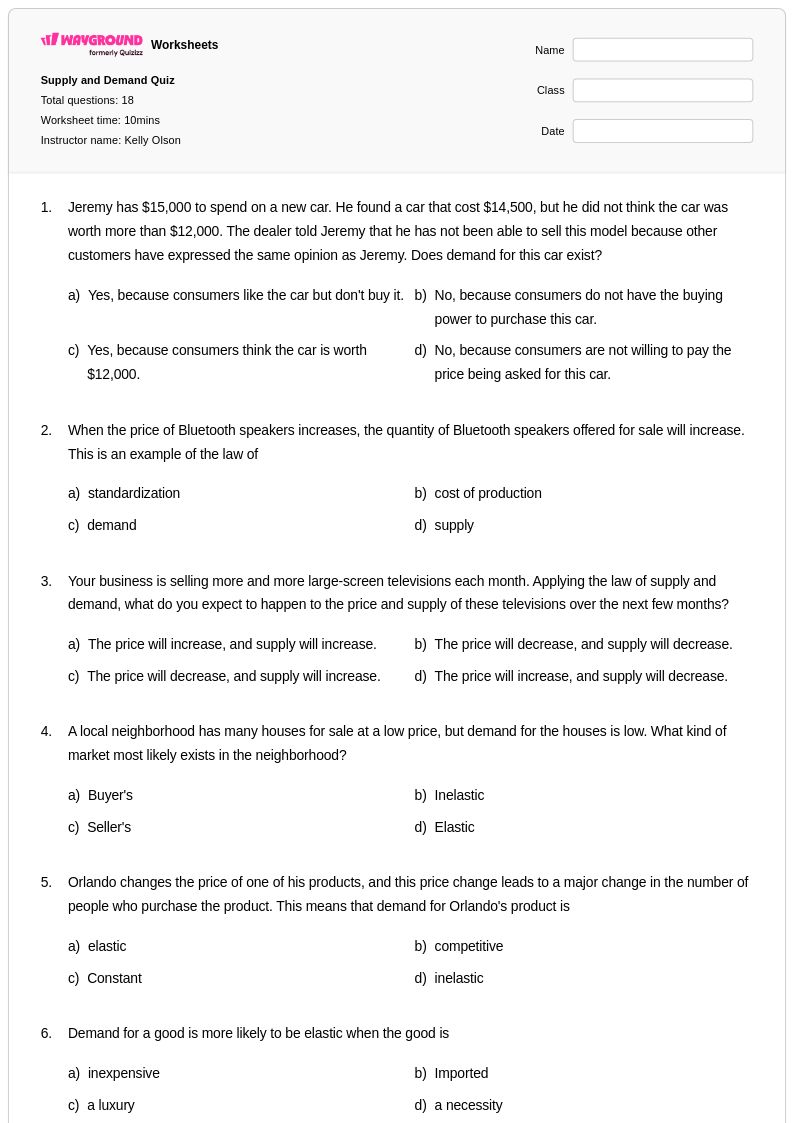
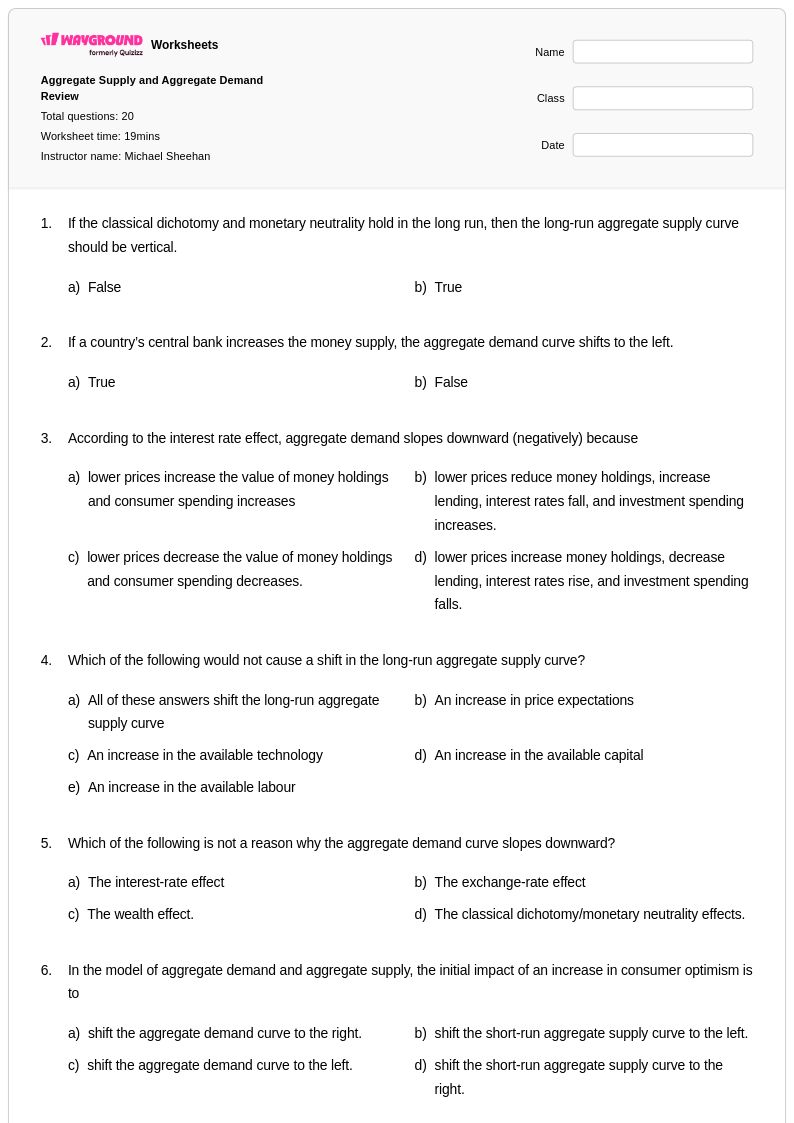
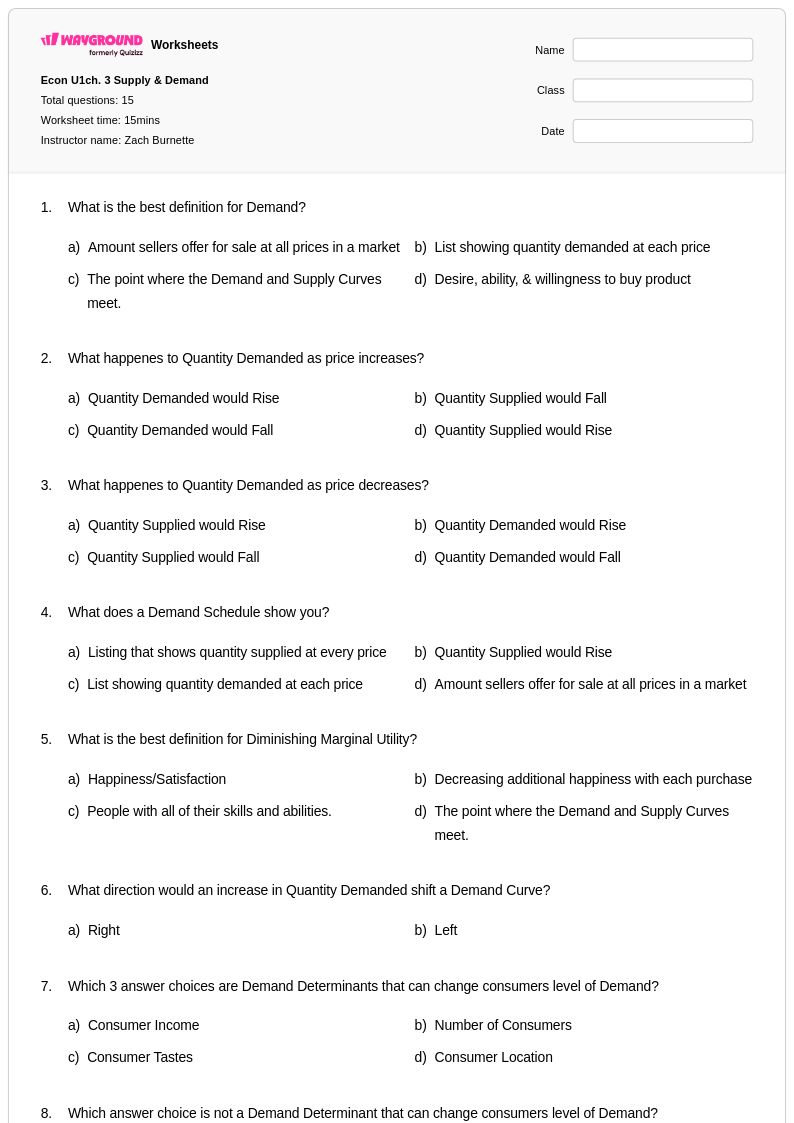
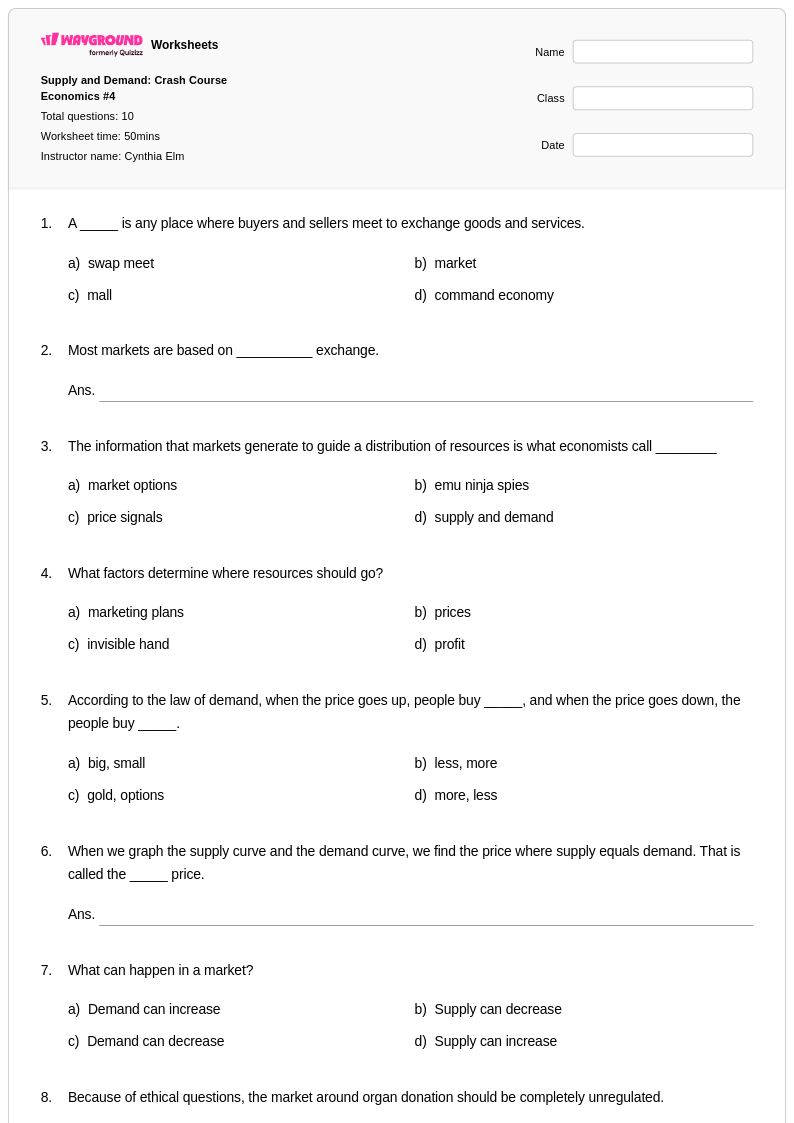
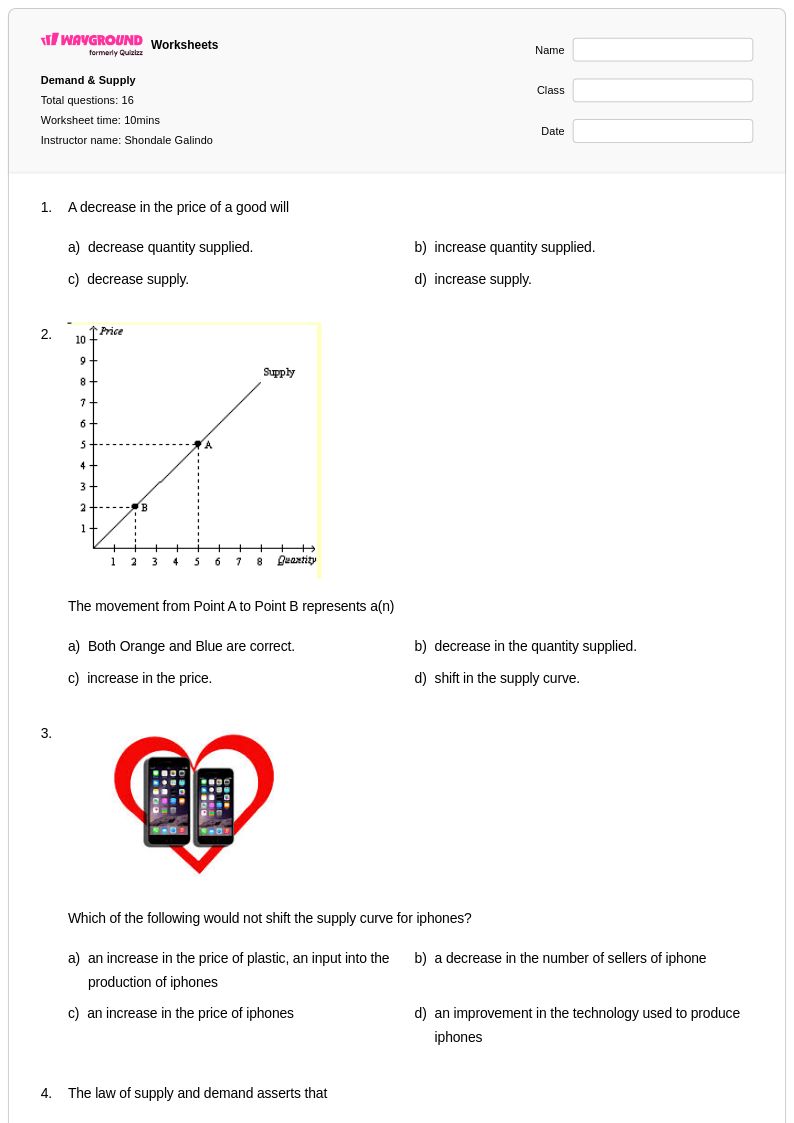
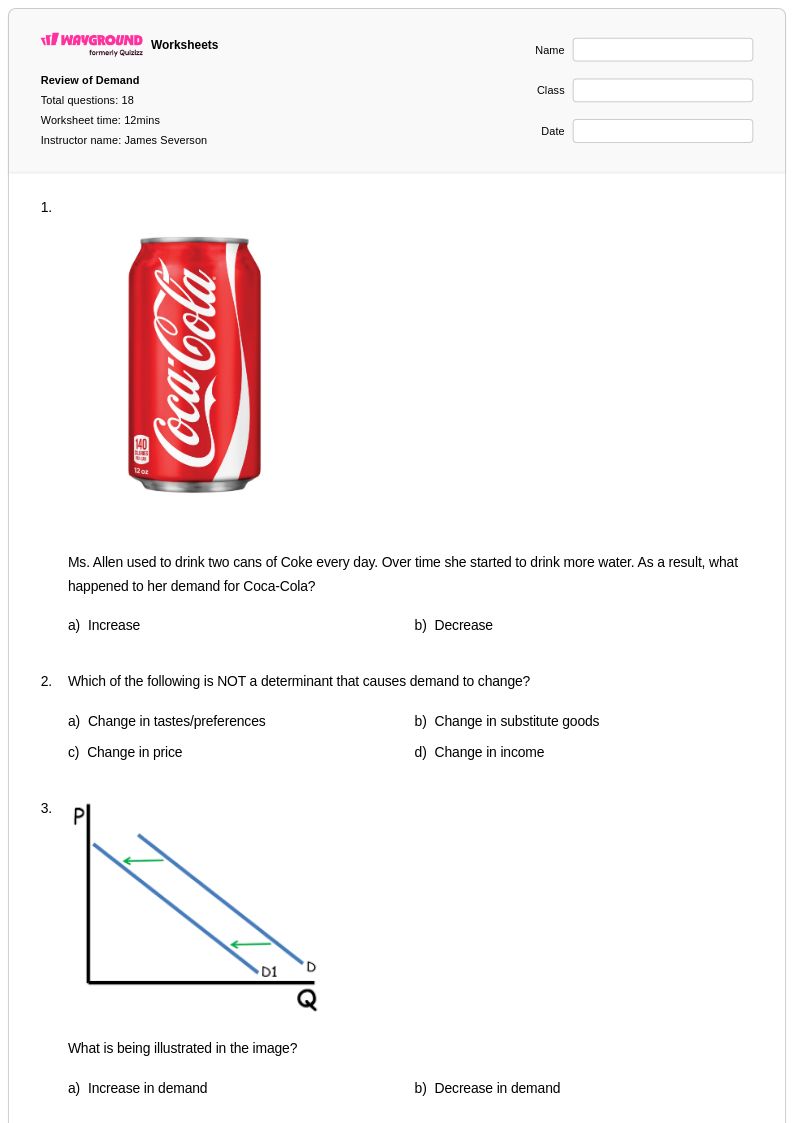
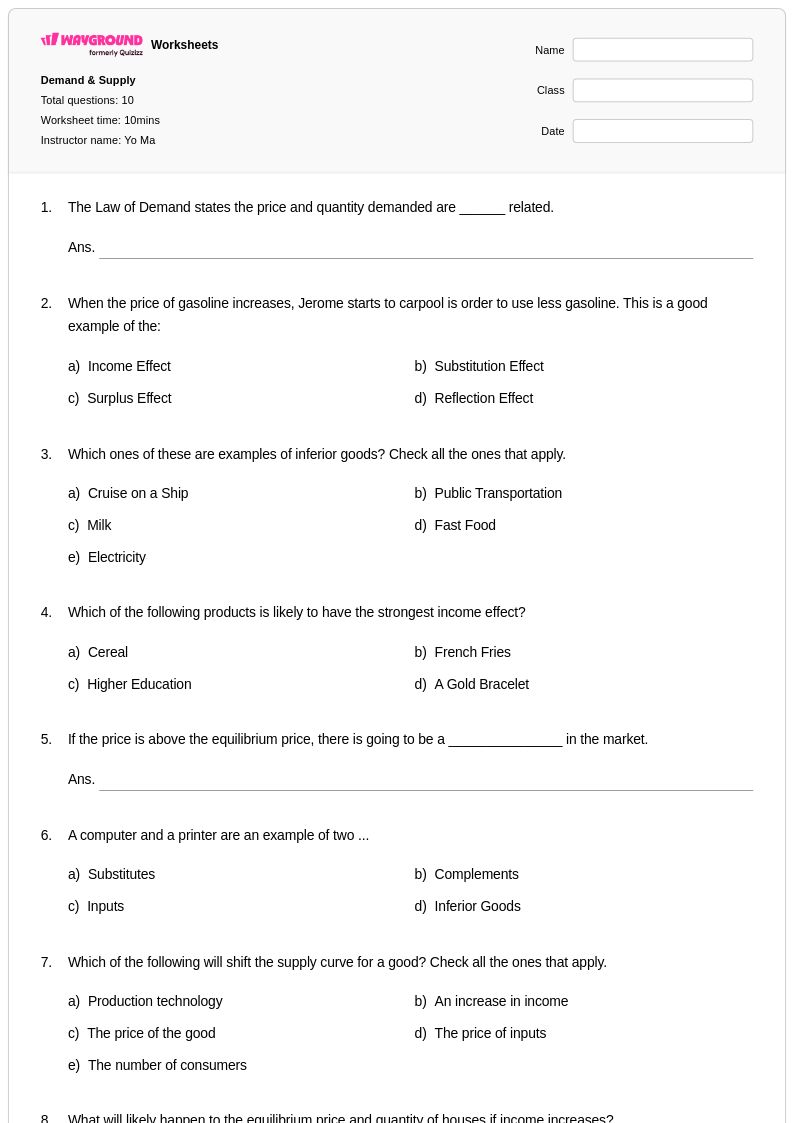
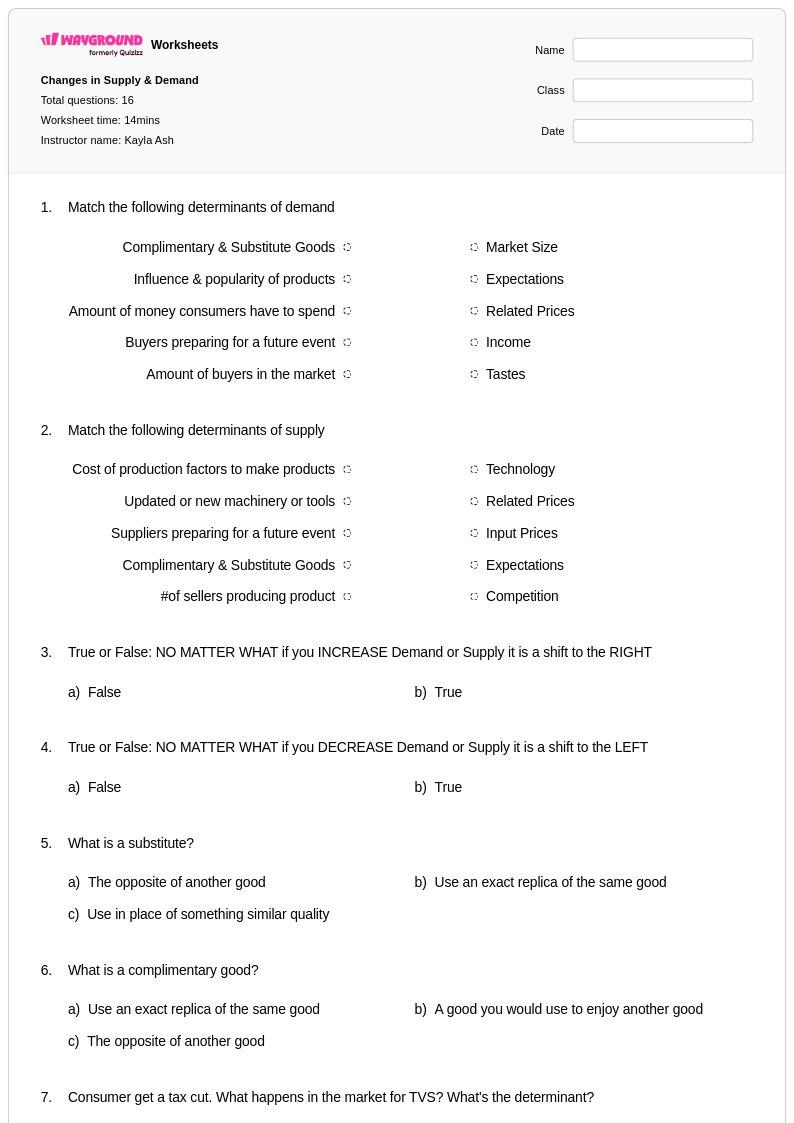
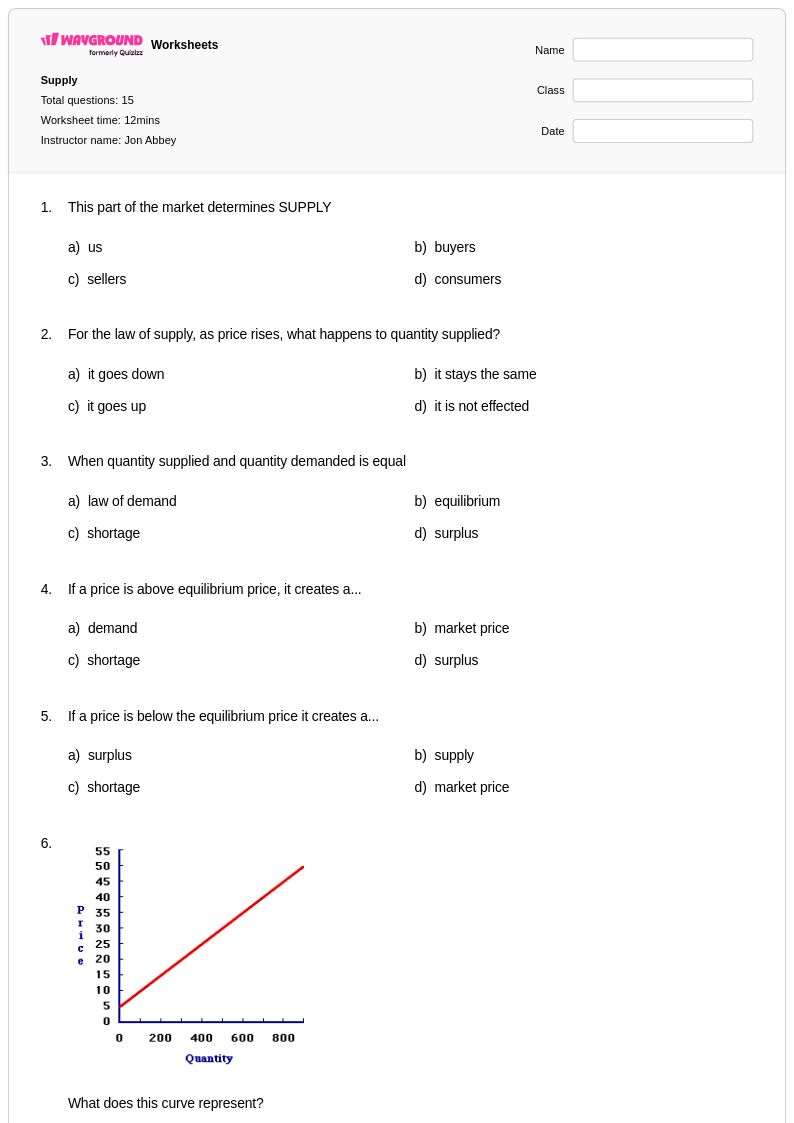
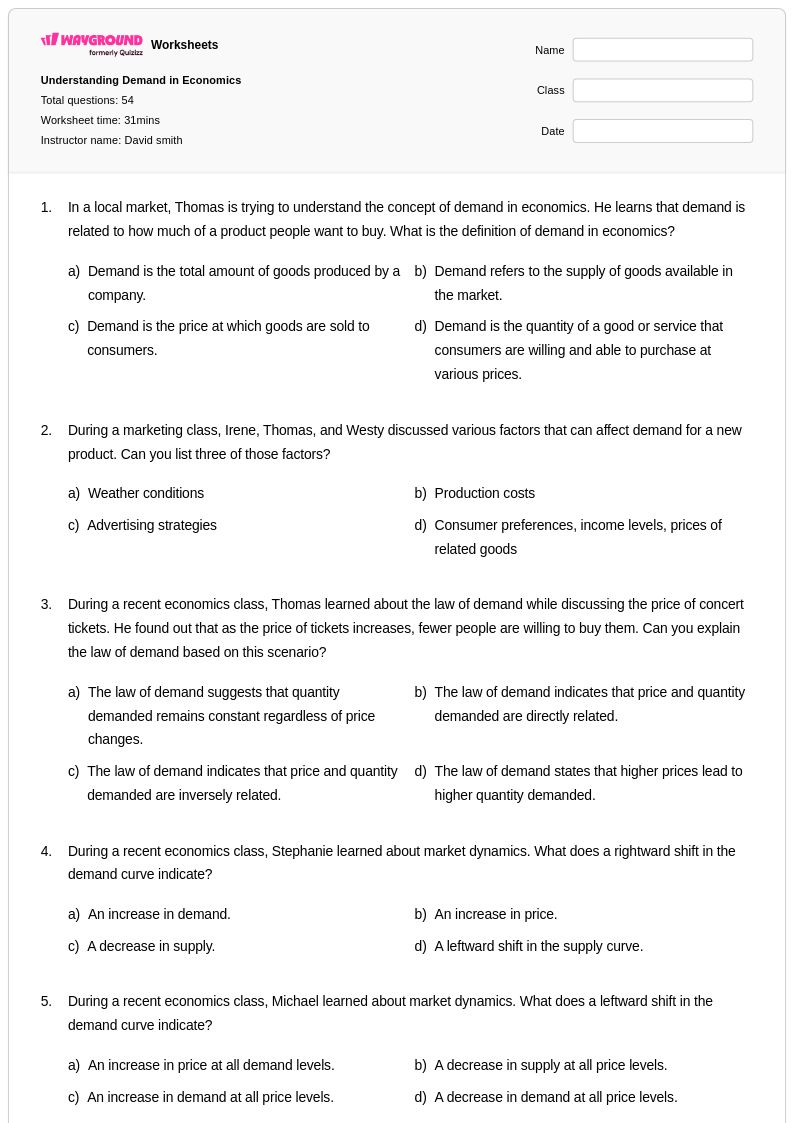
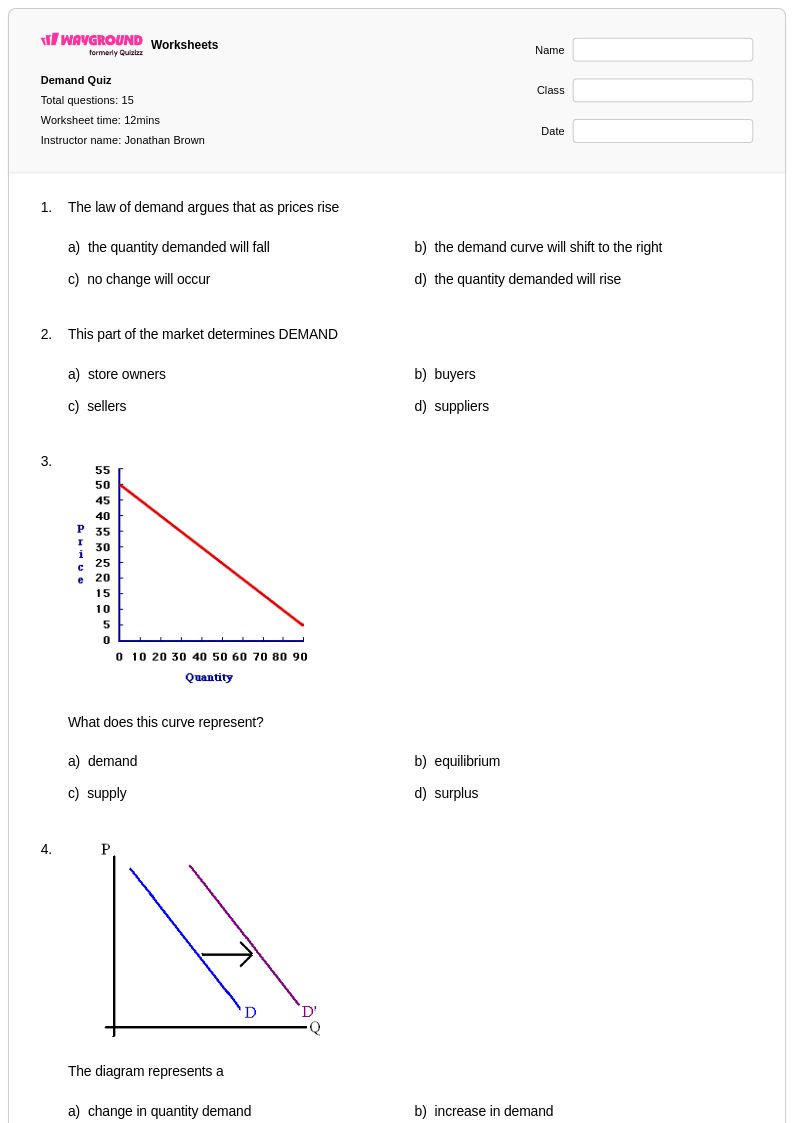
Supply and demand curves represent fundamental economic concepts that Year 10 students must master to understand how markets function and prices are determined. Wayground's comprehensive collection of supply and demand curve worksheets provides students with essential practice problems that reinforce their ability to interpret graphical representations of market dynamics, analyze shifts in supply and demand, and calculate equilibrium points. These carefully designed printables include detailed answer keys that help students verify their understanding of concepts such as market equilibrium, price elasticity, and the factors that cause curves to shift left or right. The free pdf resources guide students through progressive skill-building exercises, from basic curve identification to complex scenarios involving multiple market variables and real-world economic situations.
Wayground's millions of teacher-created resources ensure educators have access to diverse, high-quality supply and demand curve materials that align with established economics standards and accommodate various learning needs. The platform's robust search and filtering capabilities allow teachers to quickly locate worksheets targeting specific aspects of supply and demand theory, whether for initial instruction, remediation, or advanced enrichment activities. Teachers can customize these digital and printable resources to match their classroom requirements, adjusting difficulty levels and focusing on particular economic scenarios that resonate with their students. This flexibility supports differentiated instruction while providing consistent opportunities for skill practice, enabling educators to effectively address the varying levels of economic literacy present in Year 10 classrooms and ensure all students develop confidence in analyzing market mechanisms.
FAQs
How do I teach supply and demand curves to students?
Start by grounding students in the law of supply and the law of demand separately before bringing both curves onto the same graph. Use real-world examples like gas prices or concert tickets to show why curves shift, then have students practice drawing and labeling their own supply and demand diagrams. Introducing equilibrium as the point where the two curves intersect gives students a concrete anchor before moving on to market disruptions and price controls.
What exercises help students practice reading and interpreting supply and demand curves?
The most effective practice combines graph interpretation with prediction tasks: give students a baseline supply-demand graph, then describe a market event (such as a new tax or a change in consumer income) and ask them to redraw the curves and identify the new equilibrium. Calculating equilibrium price and quantity from equations or tables reinforces the visual skill with numerical reasoning. Worksheets that sequence these tasks from simple identification to multi-step analysis build fluency progressively.
What mistakes do students commonly make when working with supply and demand curves?
The most frequent error is confusing a change in quantity demanded with a shift in the demand curve itself. Students often move along the existing curve when they should be drawing an entirely new one in response to a non-price factor such as income, preferences, or the price of a related good. A second common mistake is mislabeling axes or plotting price on the horizontal axis, which inverts the standard graph and leads to incorrect equilibrium analysis.
How do I use supply and demand curve worksheets on Wayground?
Wayground's supply and demand curve worksheets are available as free printable PDFs for traditional classroom use and in digital formats for technology-integrated or remote learning environments. Teachers can host any worksheet as a live or self-paced quiz directly on the Wayground platform, giving students immediate feedback and giving teachers real-time performance data. Robust search and filtering tools make it straightforward to find worksheets aligned to a specific standard or skill level, and existing materials can be customized to suit remediation or enrichment needs.
How can I differentiate supply and demand curve instruction for students at different skill levels?
For students who are still developing fluency, reduce cognitive load by providing partially completed graphs or limiting analysis to a single curve before introducing both simultaneously. Advanced students can be challenged with multi-market scenarios, simultaneous shifts in both curves, or open-ended questions that require written economic justification. On Wayground, teachers can apply individual accommodations such as reduced answer choices or extended time to specific students without altering the experience for the rest of the class.
How do supply and demand curves connect to broader economics standards?
Supply and demand curves are central to most secondary economics curricula because they underpin the analysis of markets, price determination, resource allocation, and government intervention. Mastery of these graphs is typically prerequisite to studying more advanced topics such as elasticity, market structures, and fiscal or monetary policy. Teachers can use curve-based worksheets as both an introductory tool and a recurring diagnostic to check whether students retain foundational market mechanics as instruction advances.