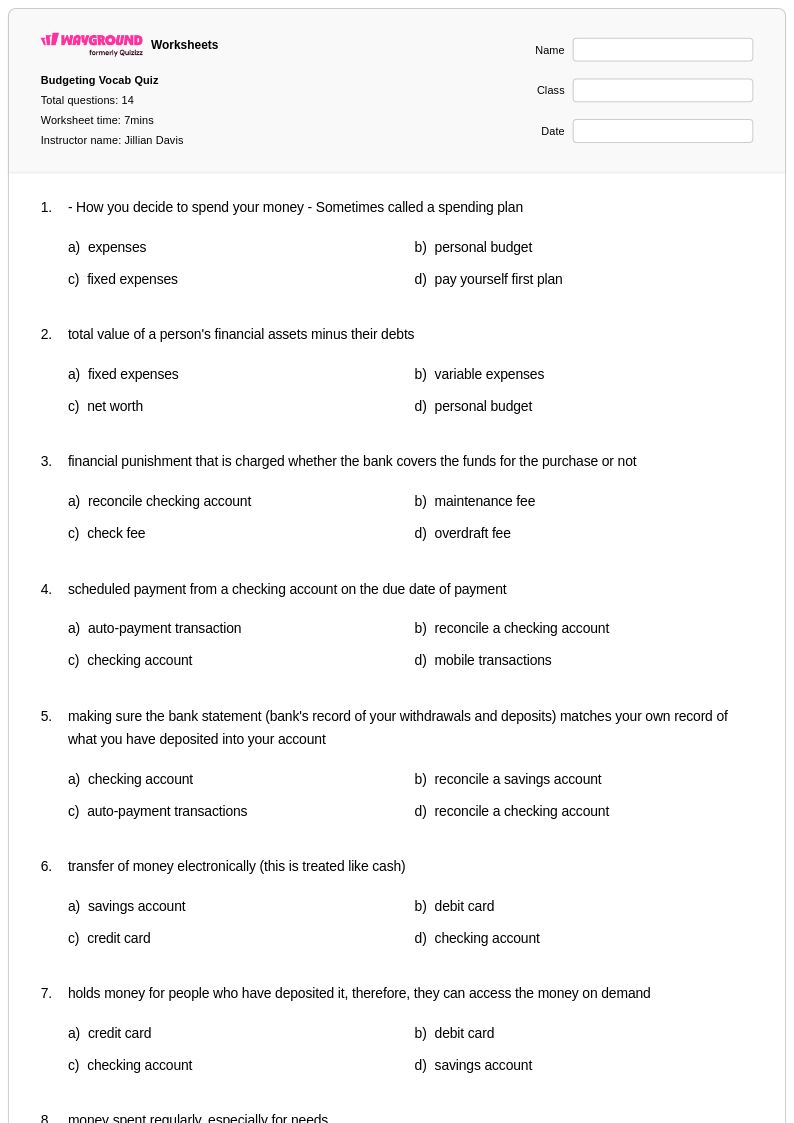
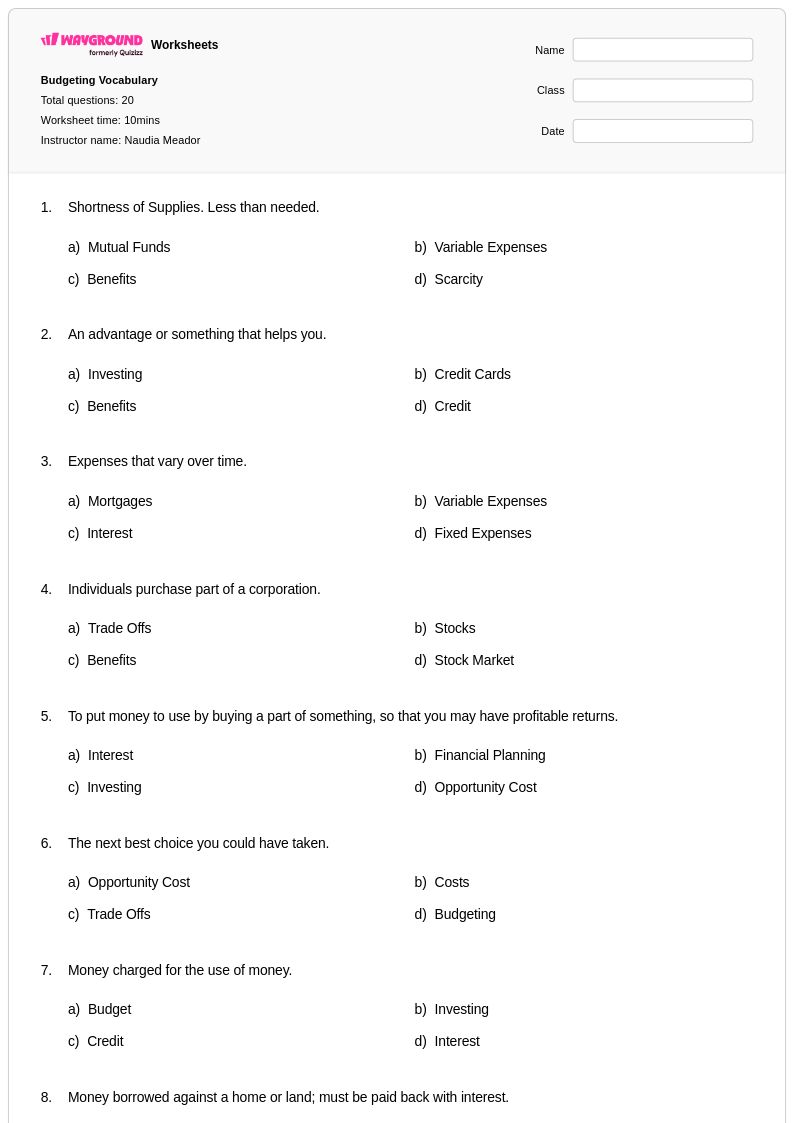
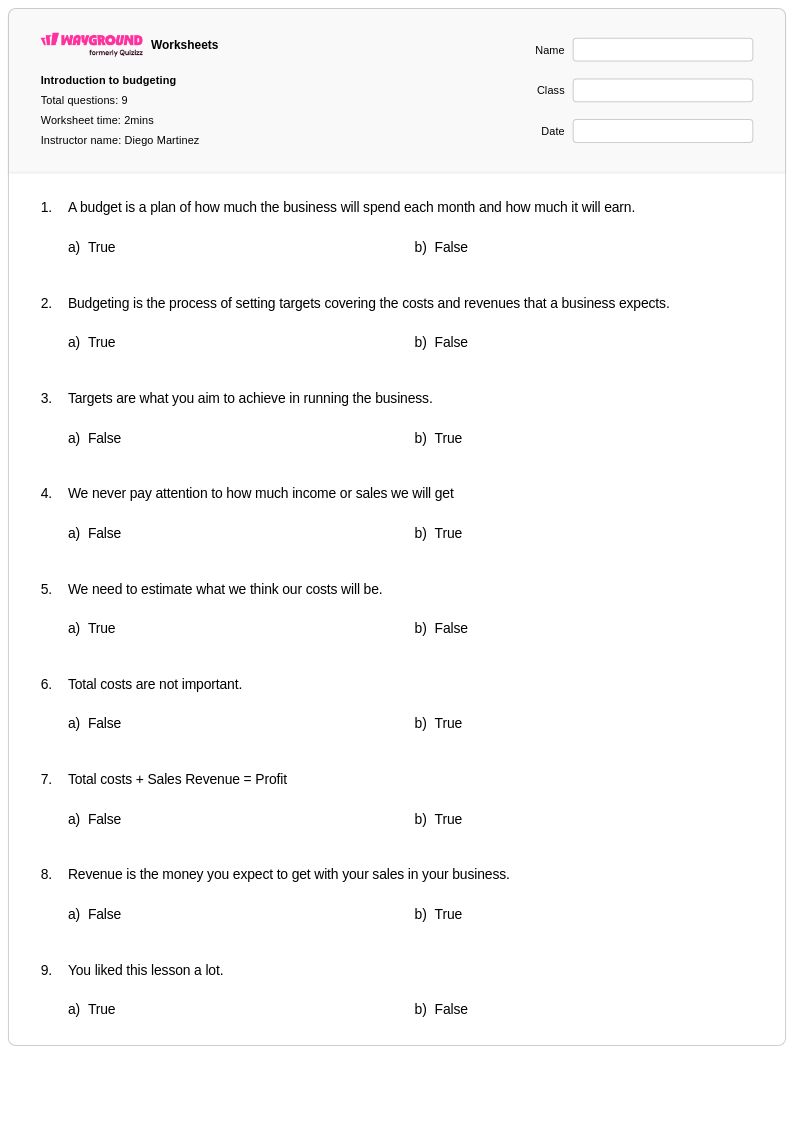
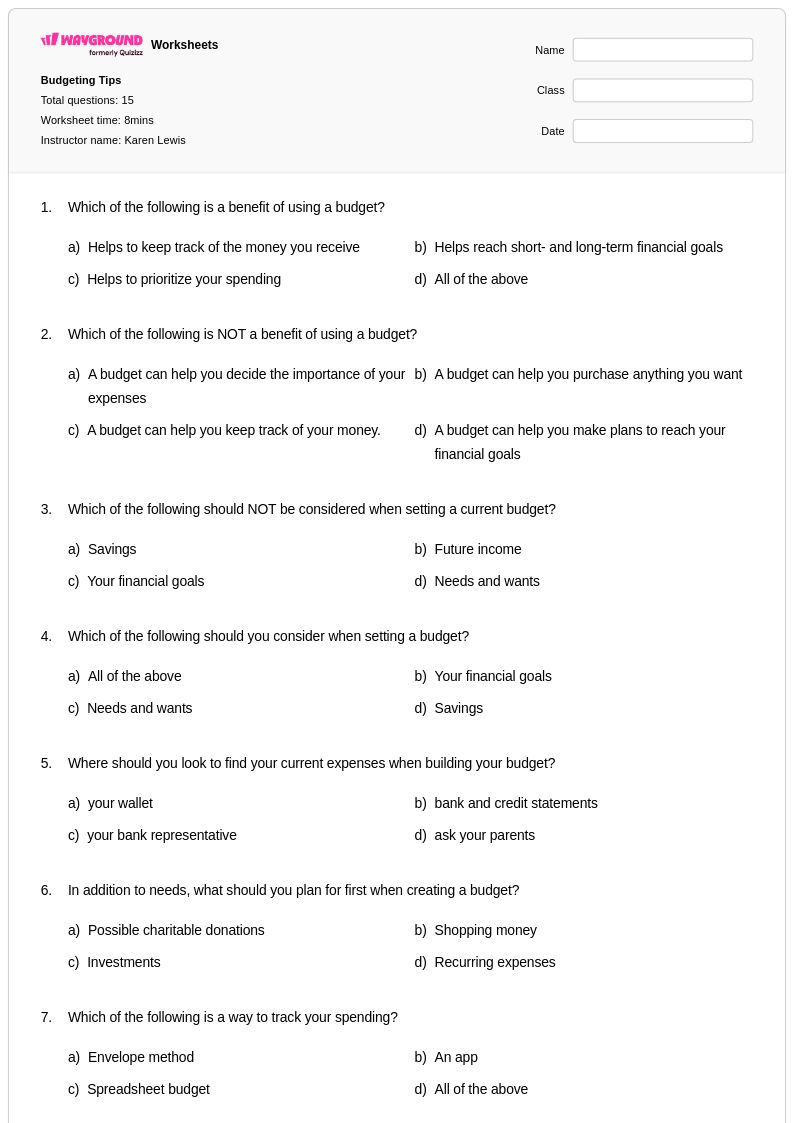
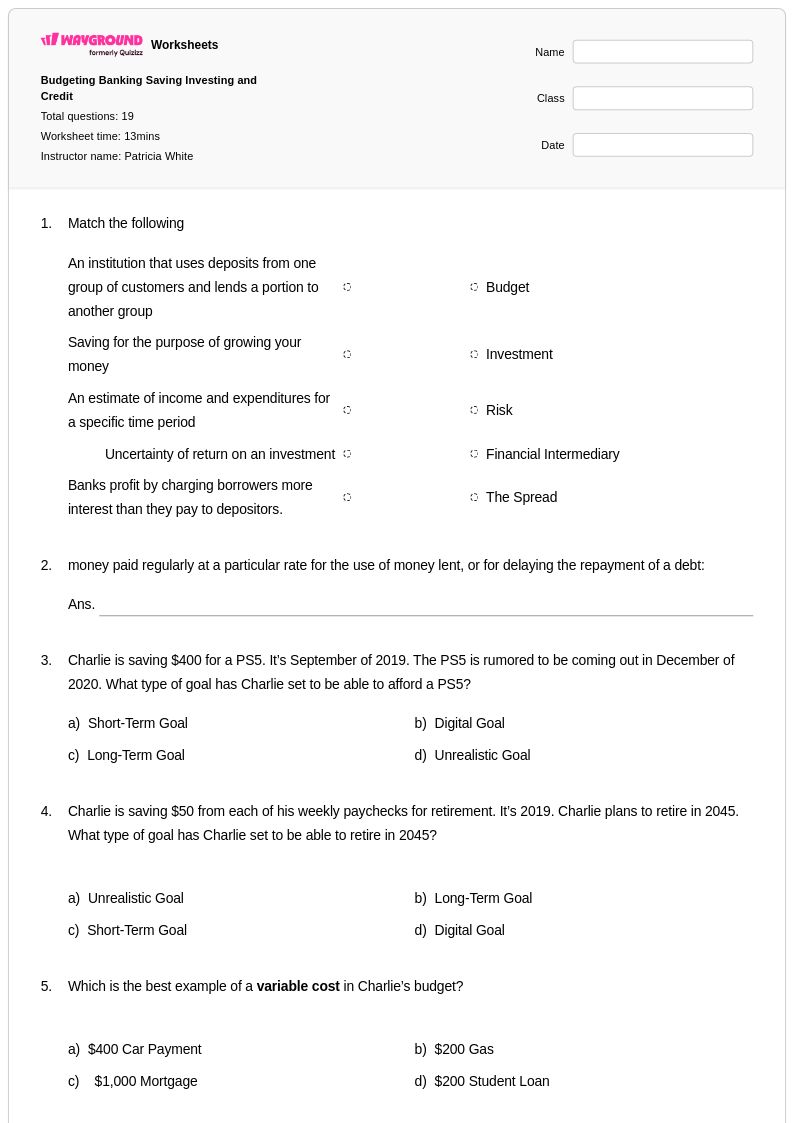
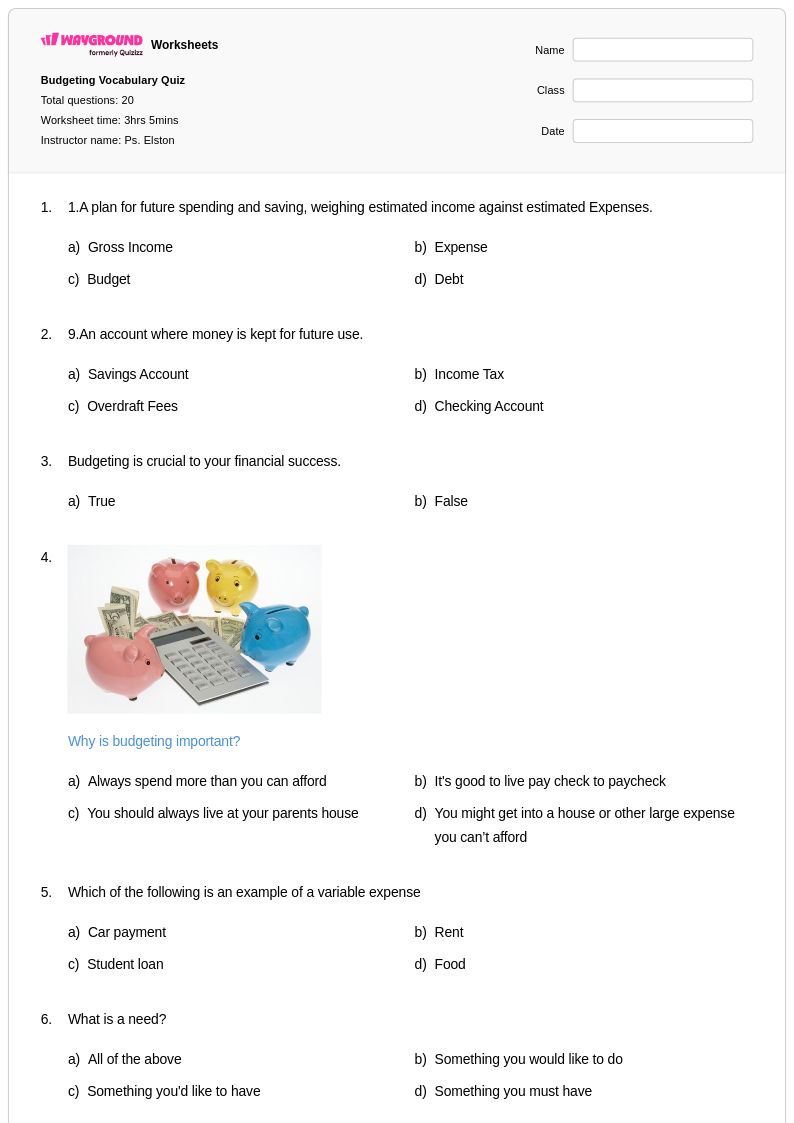
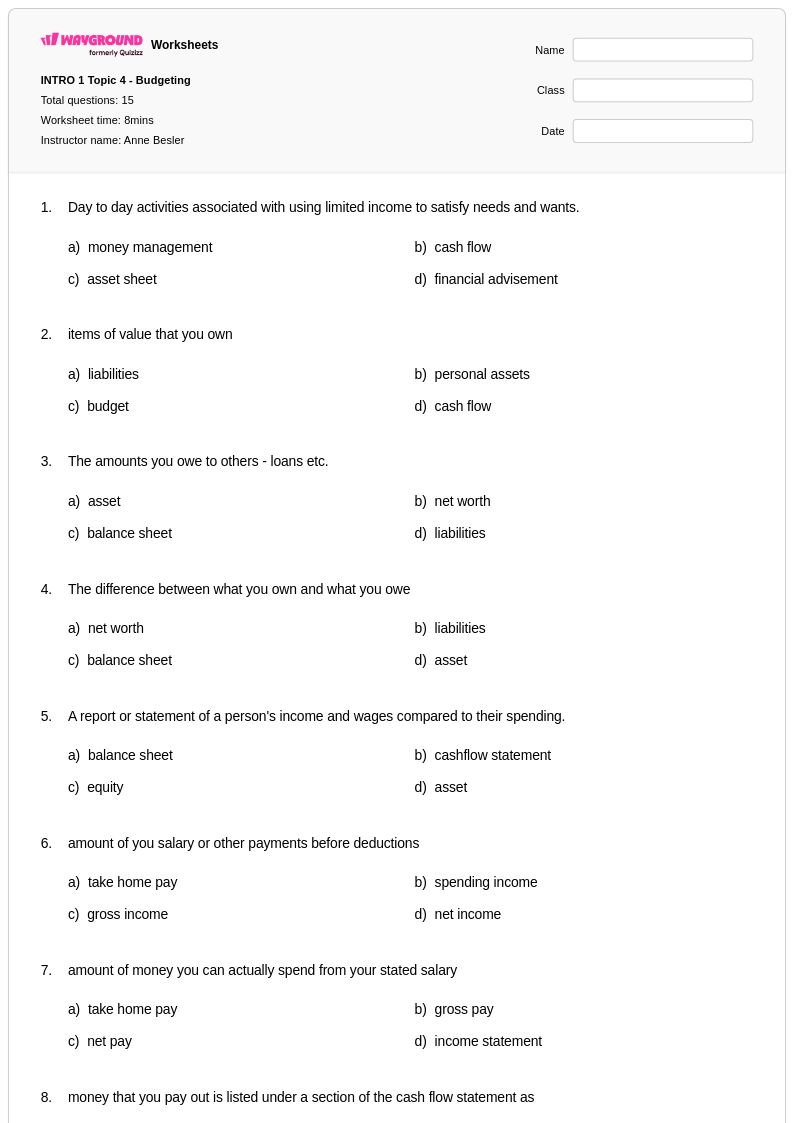
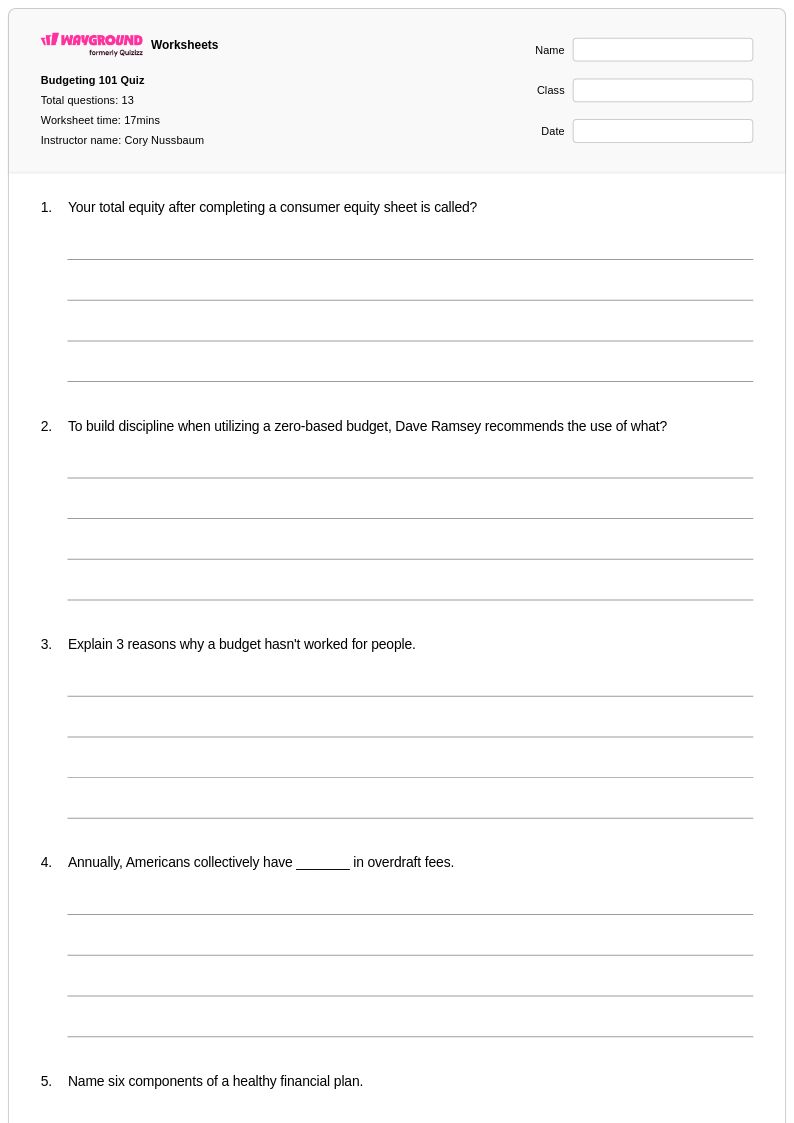
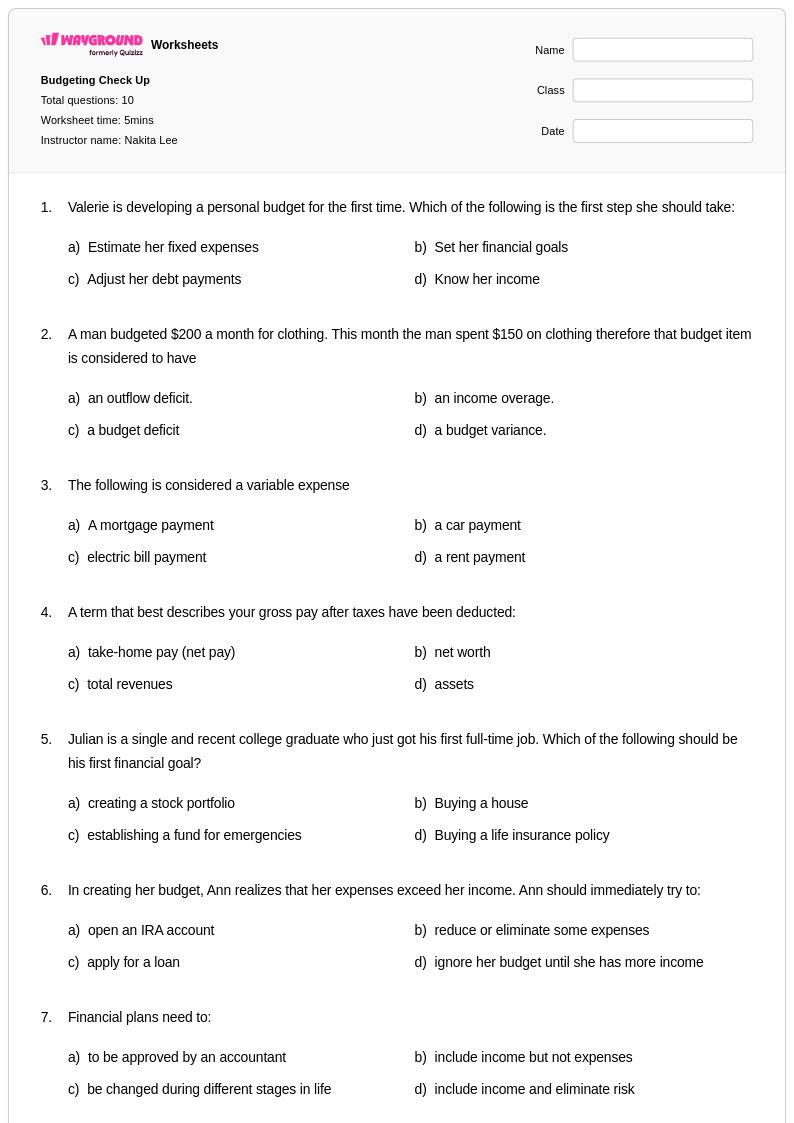
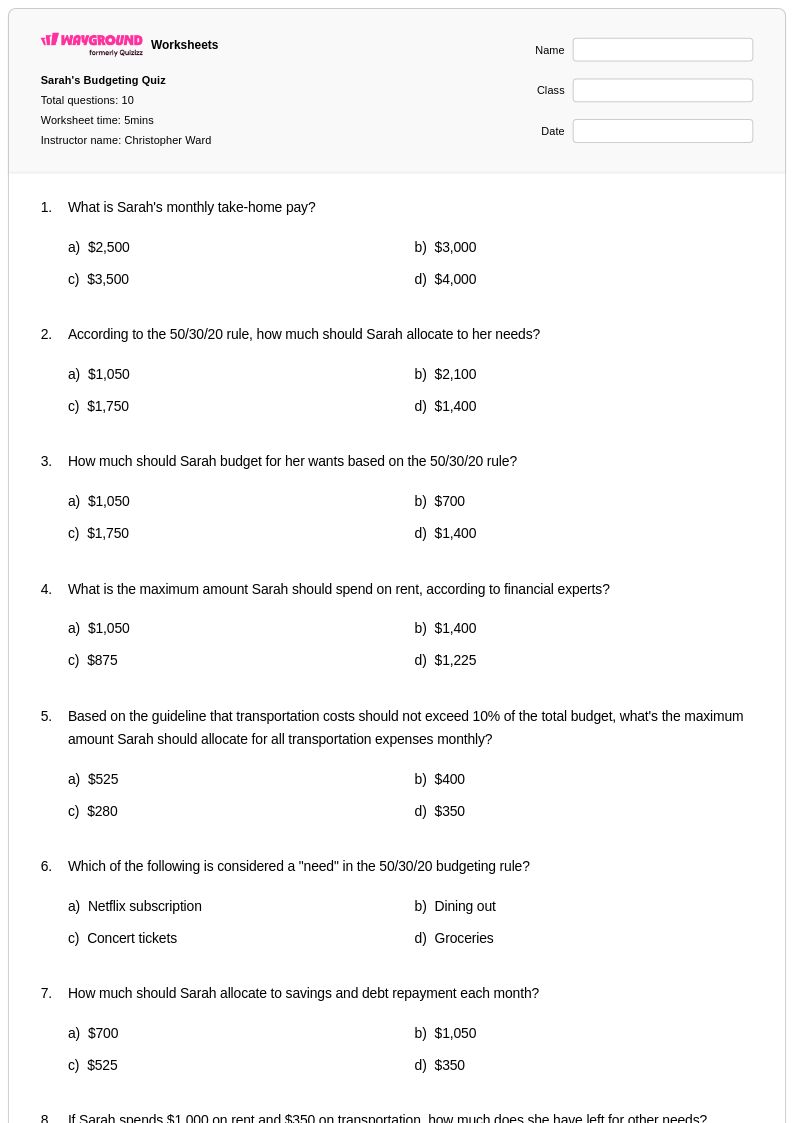
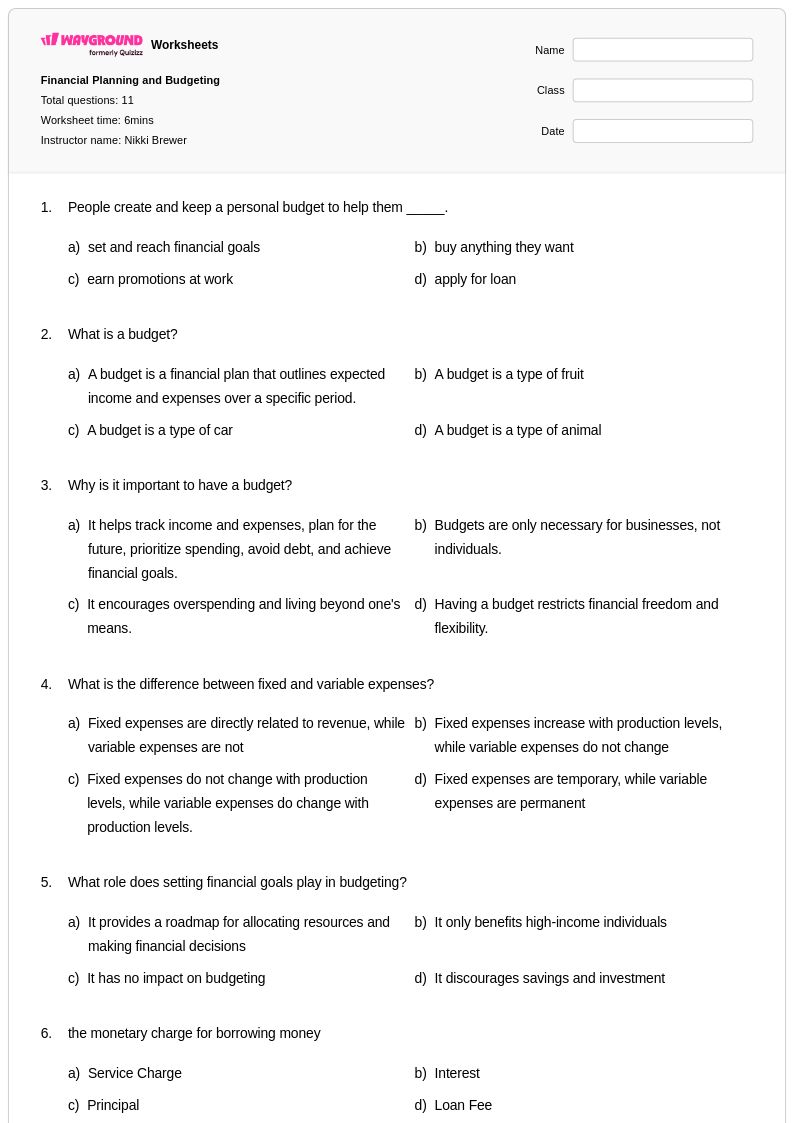
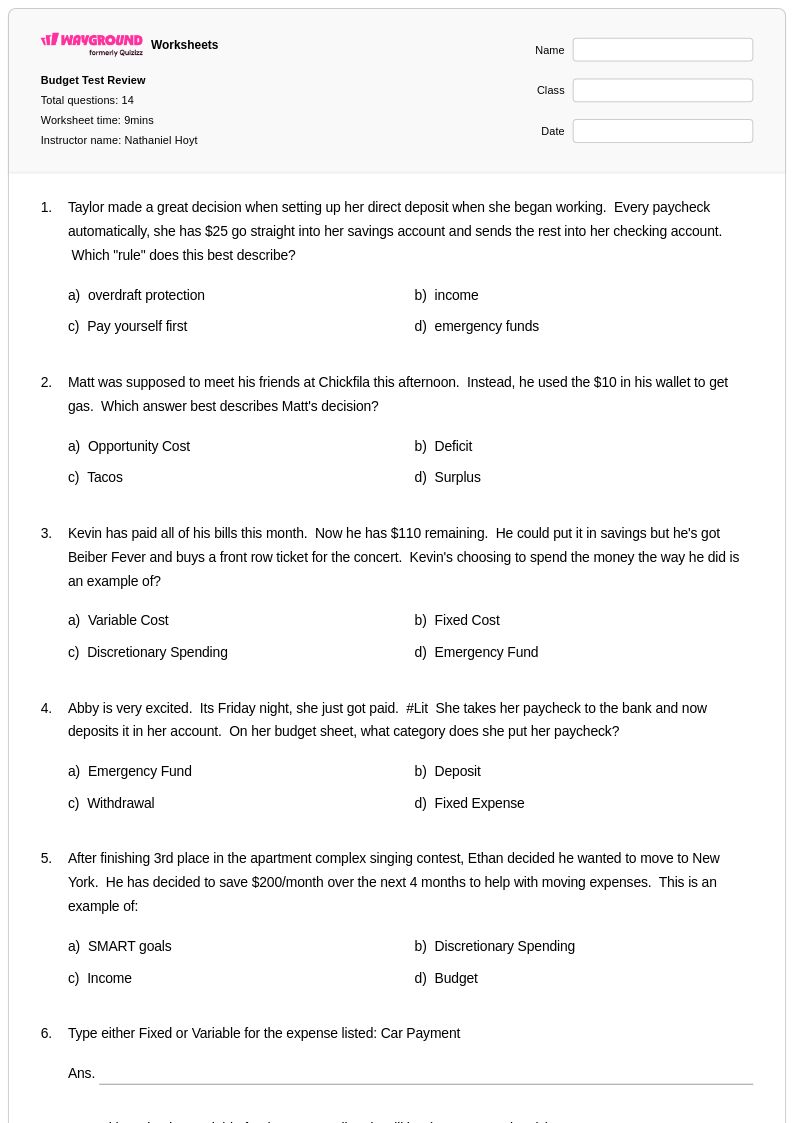
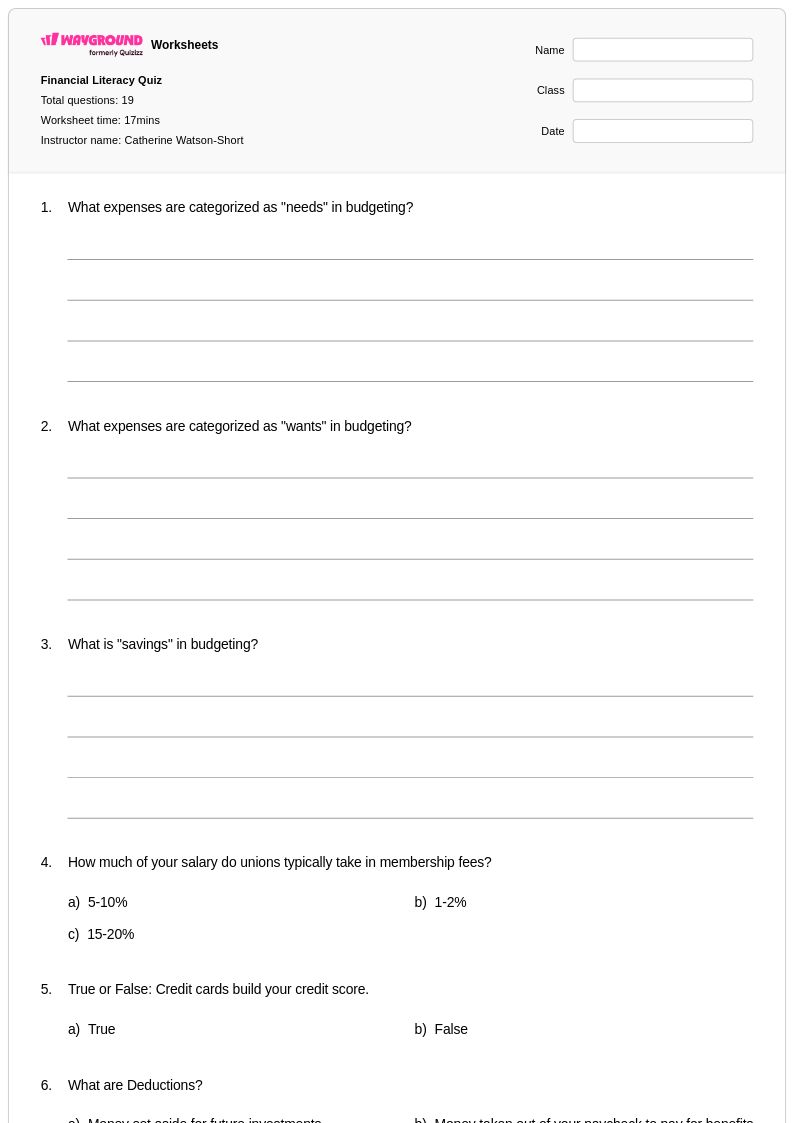
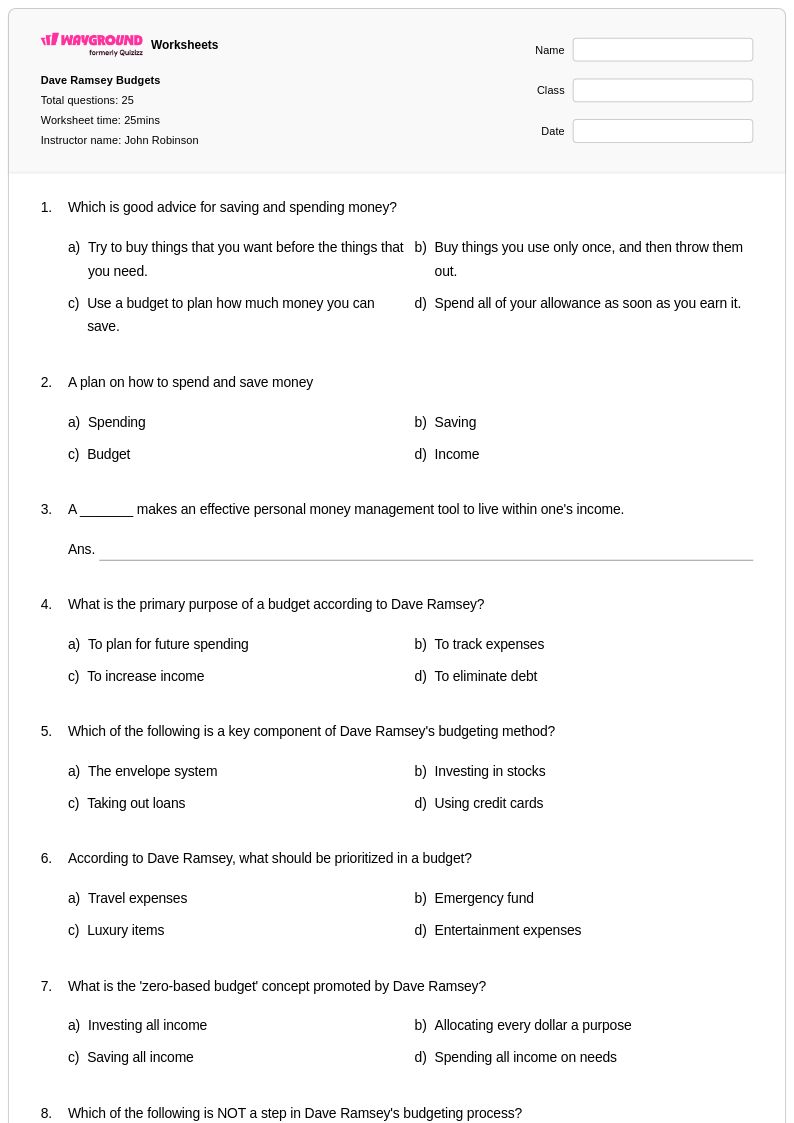
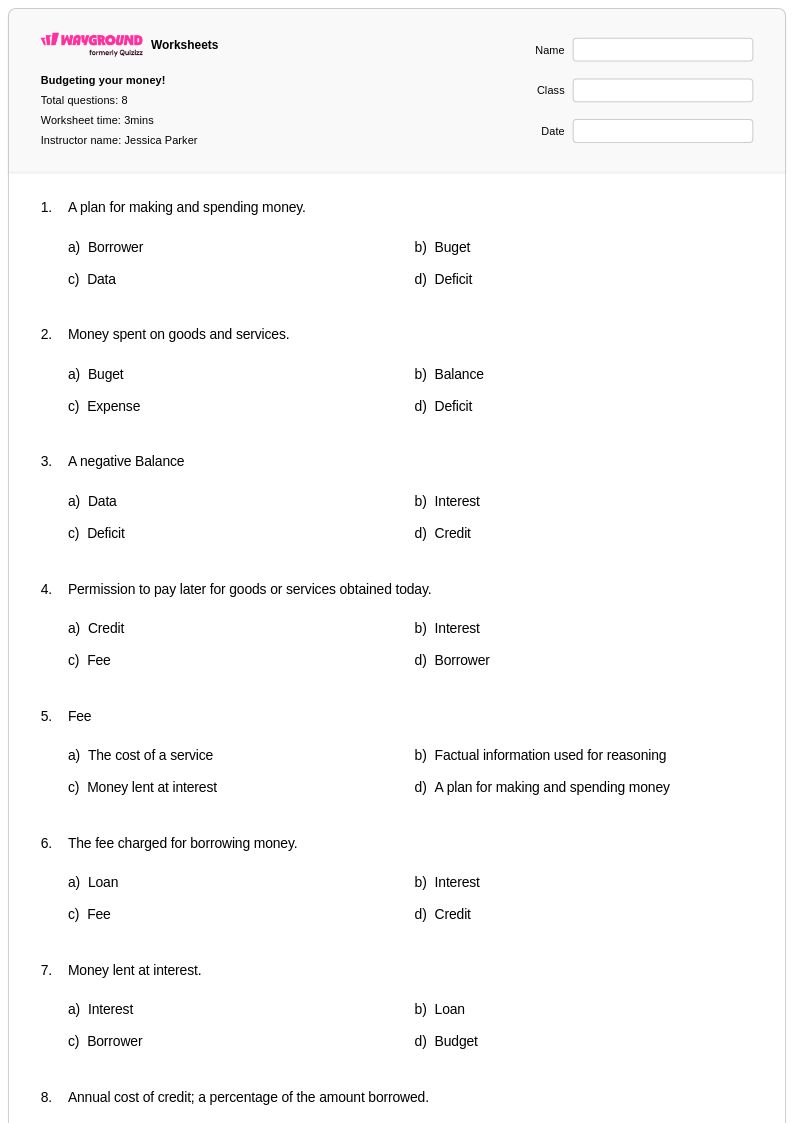
Year 10 budgeting worksheets from Wayground help students master personal finance skills through engaging printables, practice problems, and comprehensive answer keys for effective economic literacy development.
Explore printable Budgeting worksheets for Year 10
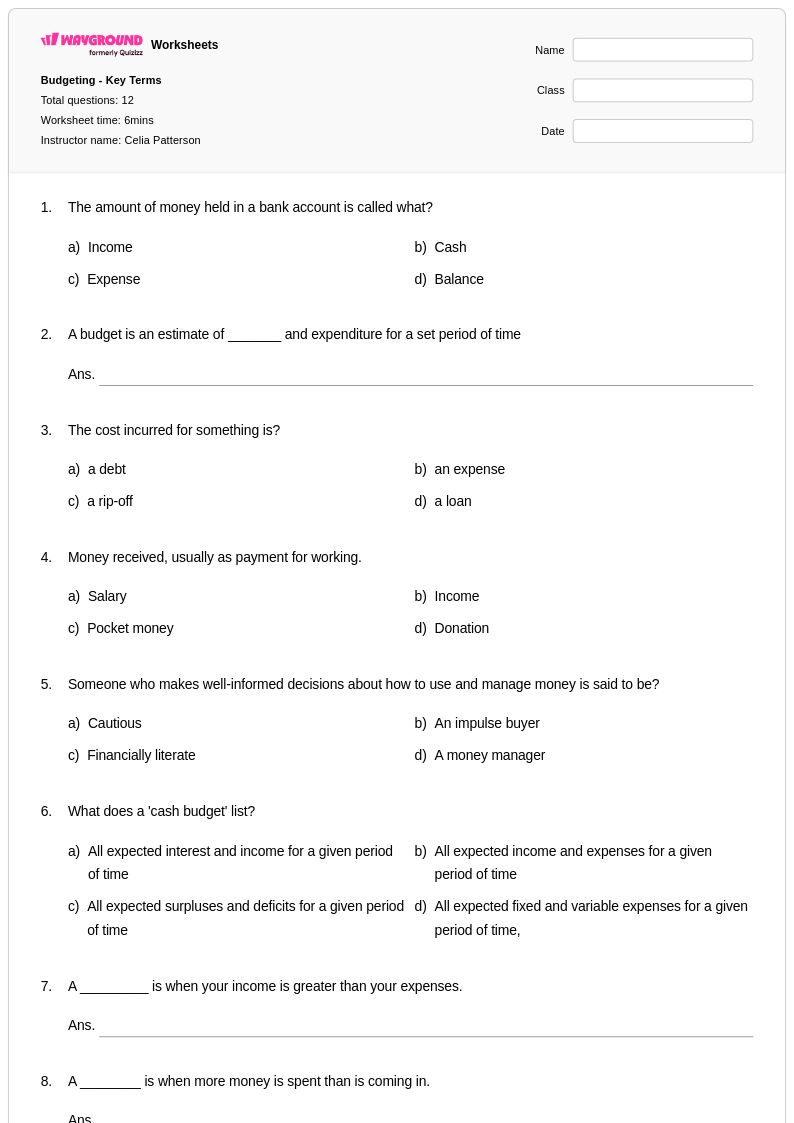
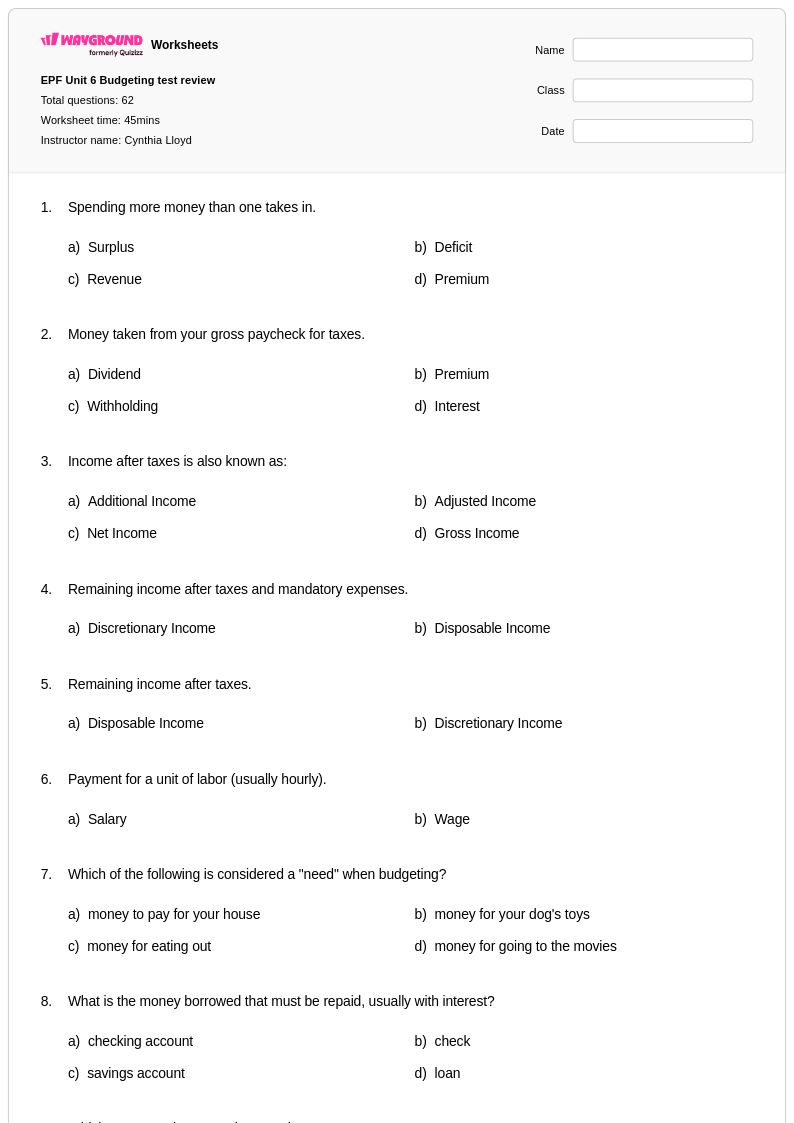
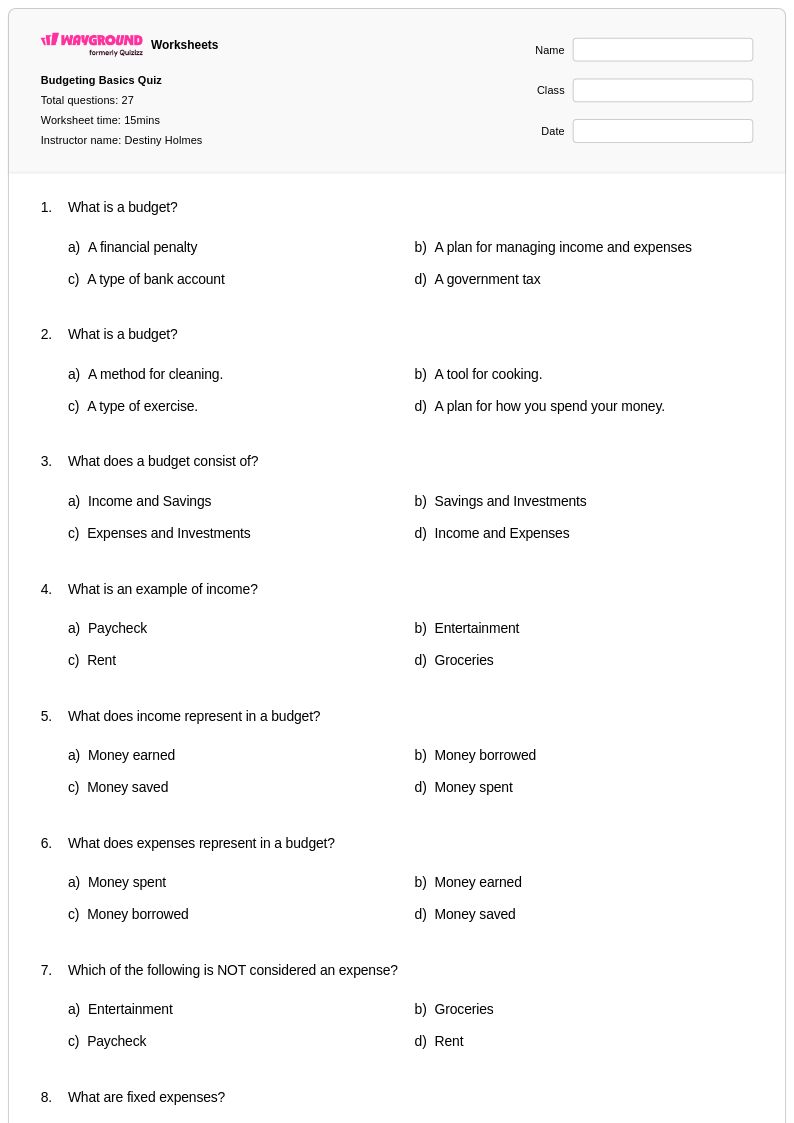
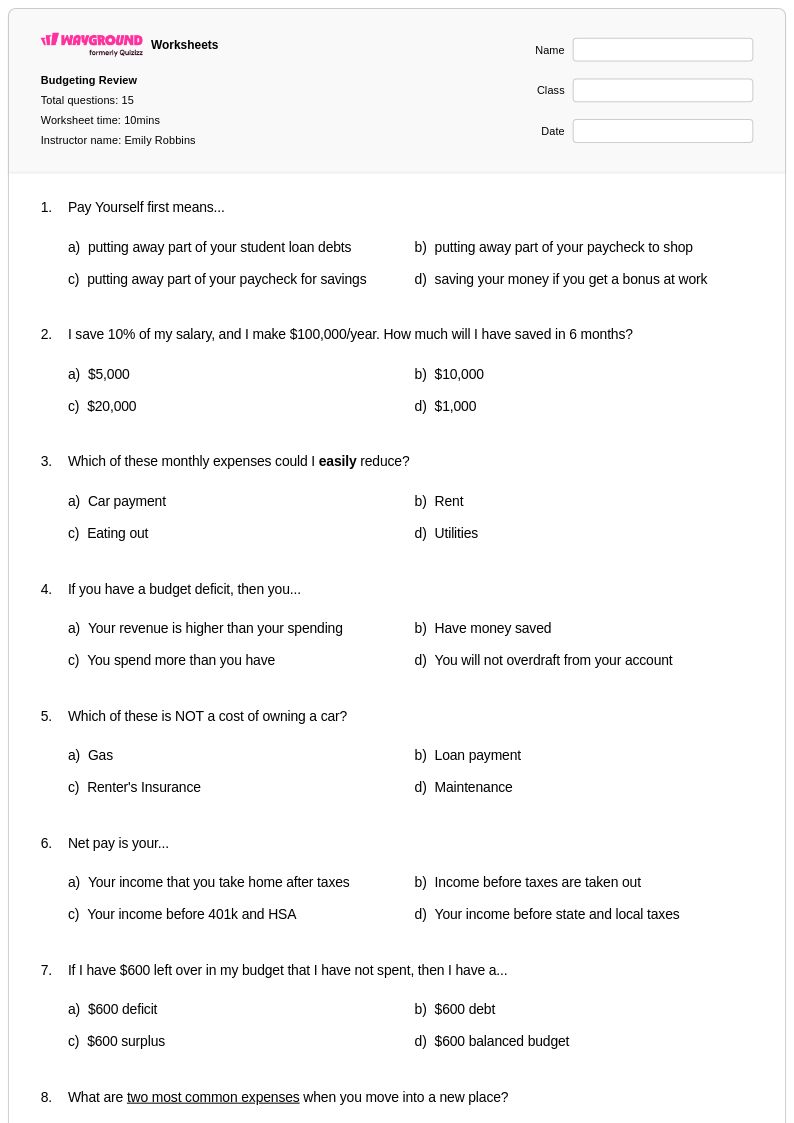
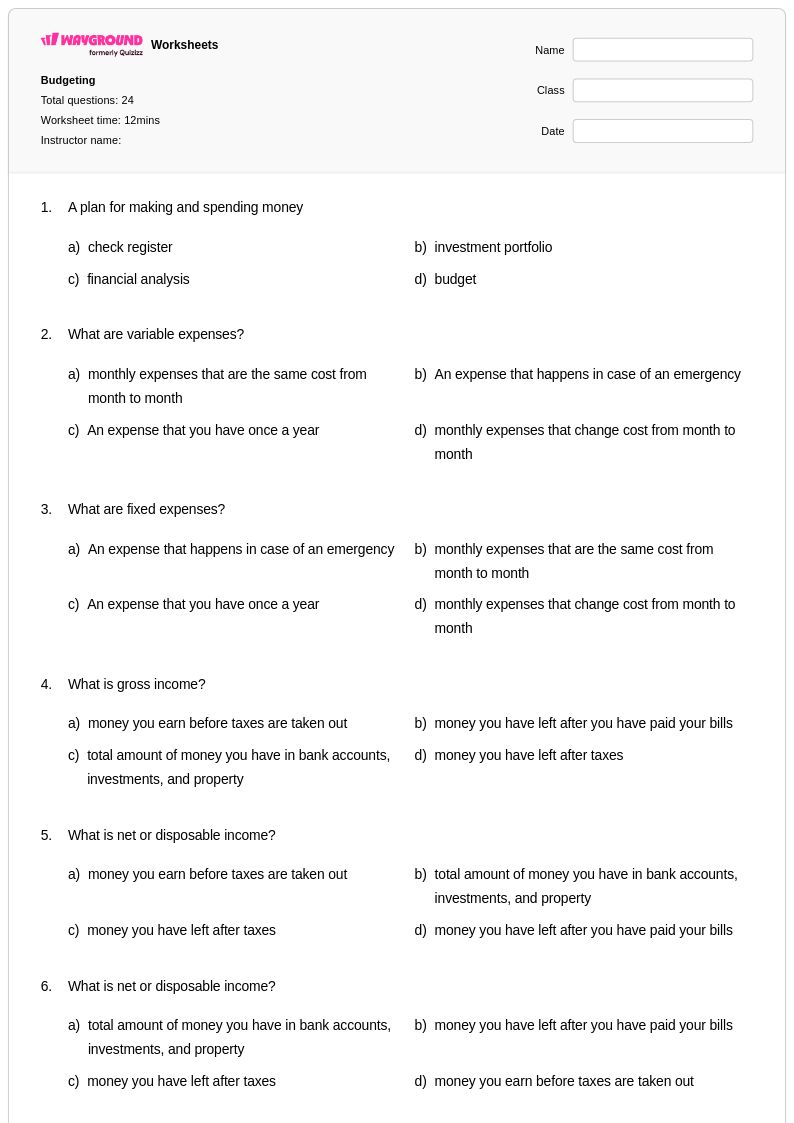
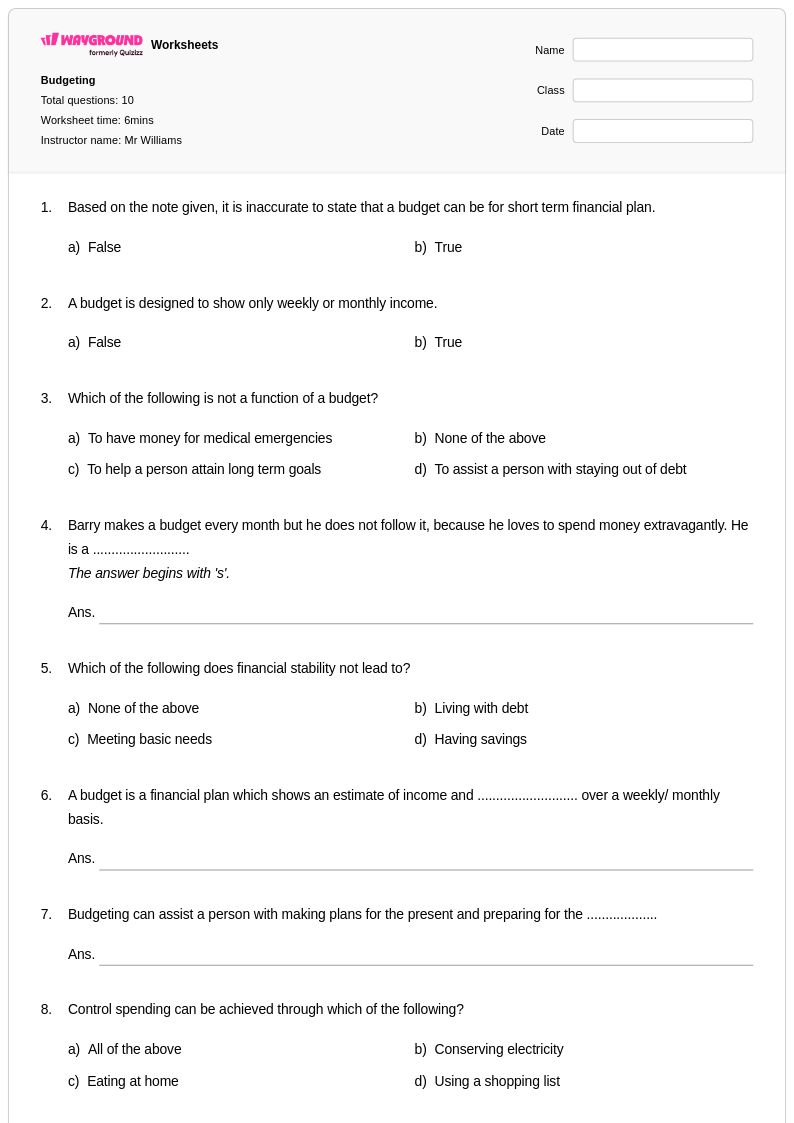
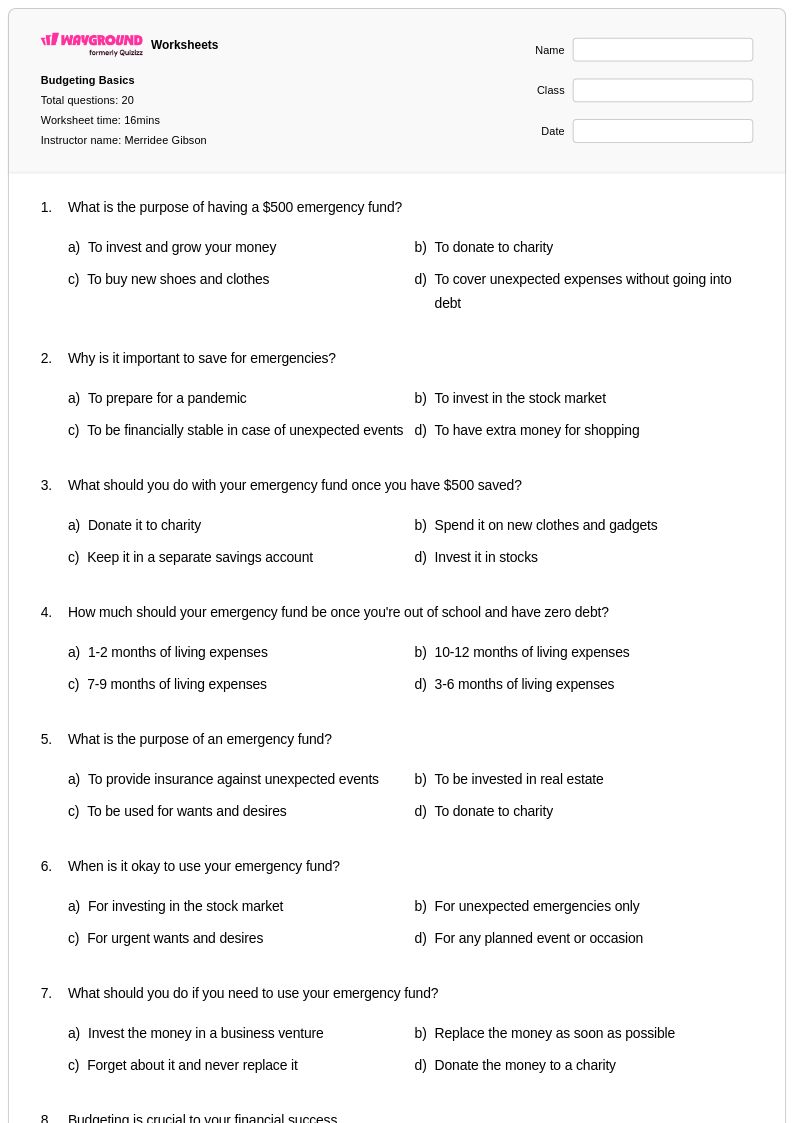
Year 10 budgeting worksheets available through Wayground (formerly Quizizz) provide comprehensive practice in essential personal finance skills that students need to manage money effectively throughout their lives. These carefully designed resources strengthen students' abilities to create realistic spending plans, track income and expenses, prioritize financial goals, and make informed decisions about resource allocation. The collection includes varied practice problems that challenge students to work with real-world scenarios such as calculating monthly budgets for college students, analyzing family spending patterns, and determining savings strategies for major purchases. Each worksheet comes with a detailed answer key that helps students verify their calculations and understand proper budgeting methodologies, while the free printable format ensures accessibility for all learners regardless of their access to technology.
Wayground (formerly Quizizz) supports educators with millions of teacher-created budgeting resources that can be easily searched and filtered by specific skills, difficulty levels, and curriculum standards alignment. The platform's differentiation tools allow teachers to customize worksheets for various learning needs, offering both digital interactive formats and traditional pdf printables that can be seamlessly integrated into any classroom environment. These flexible resources prove invaluable for lesson planning, providing targeted remediation for students struggling with mathematical concepts in budgeting, and offering enrichment opportunities for advanced learners ready to tackle complex financial scenarios. Teachers can efficiently assign practice problems for homework, create assessment materials, or develop engaging classroom activities that build students' confidence in managing personal finances while meeting grade-level expectations for economic literacy.
FAQs
How do I teach budgeting to students who have no prior experience with personal finance?
Start with the concept of income versus expenses using simple, relatable scenarios — such as a student receiving an allowance and deciding how to spend or save it. Introduce fixed versus variable expenses before moving into more complex topics like savings goals and opportunity cost. Building from concrete, real-world examples helps students internalize why budgeting matters before they encounter abstract financial terminology.
What types of practice problems help students build budgeting skills?
Effective budgeting practice involves working through household budget scenarios, calculating percentages for savings and spending categories, and tracking income against expenses to identify surpluses or deficits. Problems that require students to make trade-off decisions — such as choosing between two purchases given a fixed income — build both mathematical fluency and critical thinking. Real-world applications like planning a monthly budget for a fictional household reinforce why these skills matter beyond the classroom.
What mistakes do students commonly make when learning to budget?
Students frequently confuse gross income with net income, leading to budget plans that don't reflect realistic take-home pay. Another common error is omitting irregular or variable expenses — such as transportation or entertainment — which causes budgets to appear balanced on paper but fail in practice. Students also tend to underestimate the role of savings as a non-negotiable expense rather than a leftover after spending.
How can I differentiate budgeting instruction for students at different skill levels?
For students who are still developing number sense, simplify scenarios to whole-dollar amounts and limit the number of expense categories. Advanced learners can work with percentage-based budgeting frameworks, multi-month projections, and opportunity cost analysis. On Wayground, teachers can apply accommodations such as reduced answer choices or read-aloud support to individual students, ensuring that all learners can engage with the same core content at an appropriate level of challenge.
How do I use Wayground's budgeting worksheets in my classroom?
Wayground's budgeting worksheets are available as printable PDFs for traditional classroom use and in digital formats for technology-integrated or remote learning environments. Teachers can also host worksheets as a quiz directly on Wayground, making it easy to assign, monitor, and review student responses in one place. Each worksheet includes a complete answer key, supporting both self-paced independent work and teacher-led instruction.
How do budgeting worksheets connect to economics and social studies standards?
Budgeting instruction aligns with personal financial literacy standards embedded in many state social studies and economics frameworks, covering concepts such as income management, consumer decision-making, and savings. Worksheets that incorporate opportunity cost and financial planning extend into core economic principles typically addressed in middle and high school coursework. Using standards-aligned materials ensures that budgeting practice contributes to measurable learning outcomes rather than functioning as a standalone enrichment activity.