Free Printable Demonstratives Worksheets for Year 8
Year 8 demonstratives worksheets from Wayground provide comprehensive printables and practice problems to help students master this, that, these, and those, featuring free PDF downloads with complete answer keys.
Explore printable Demonstratives worksheets for Year 8
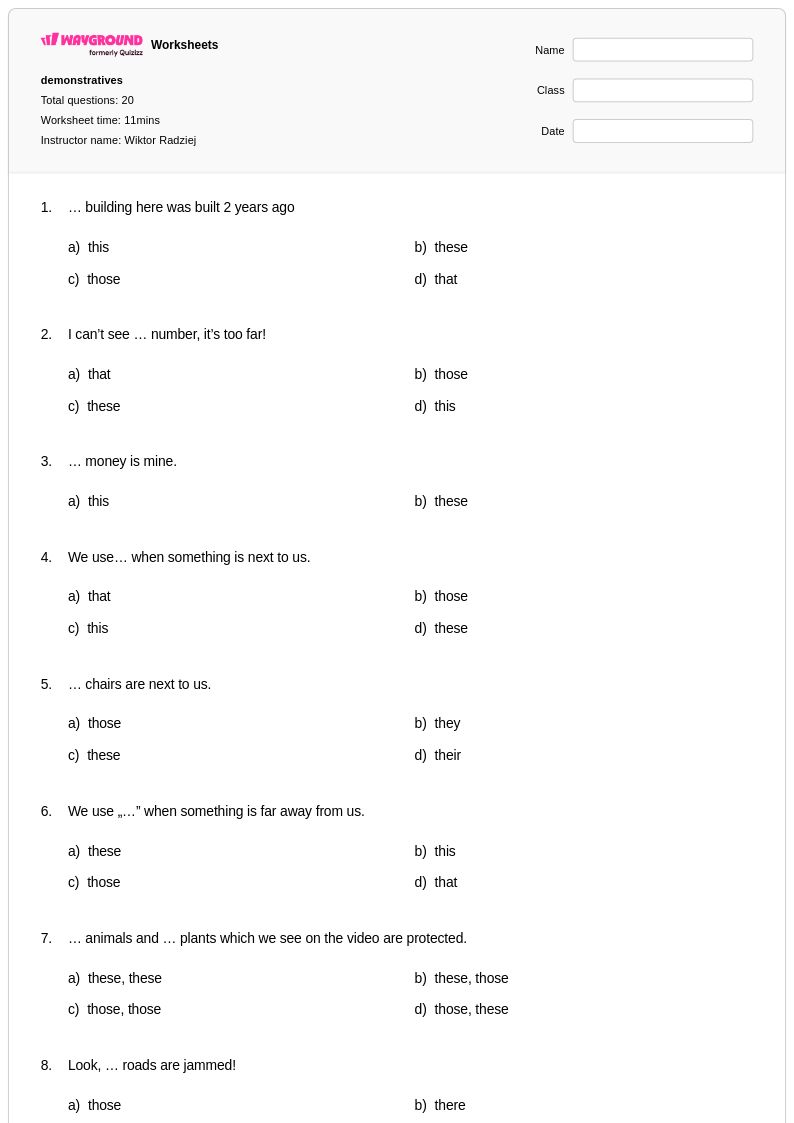
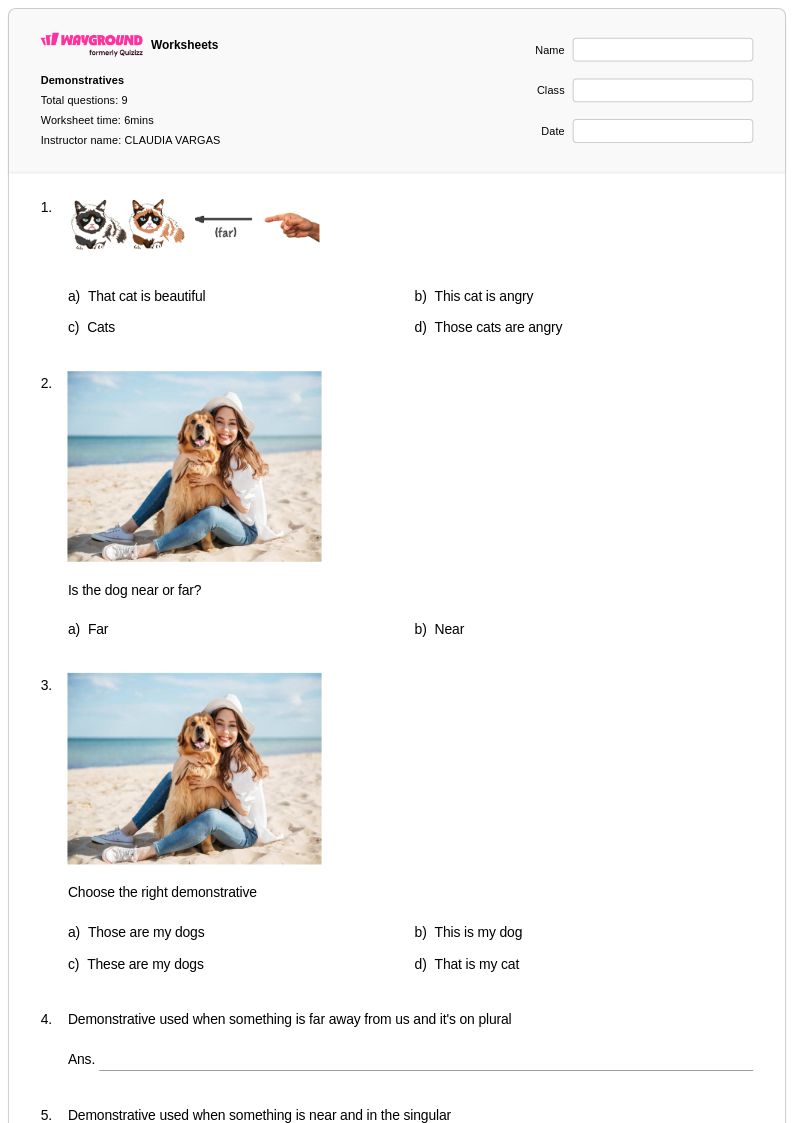
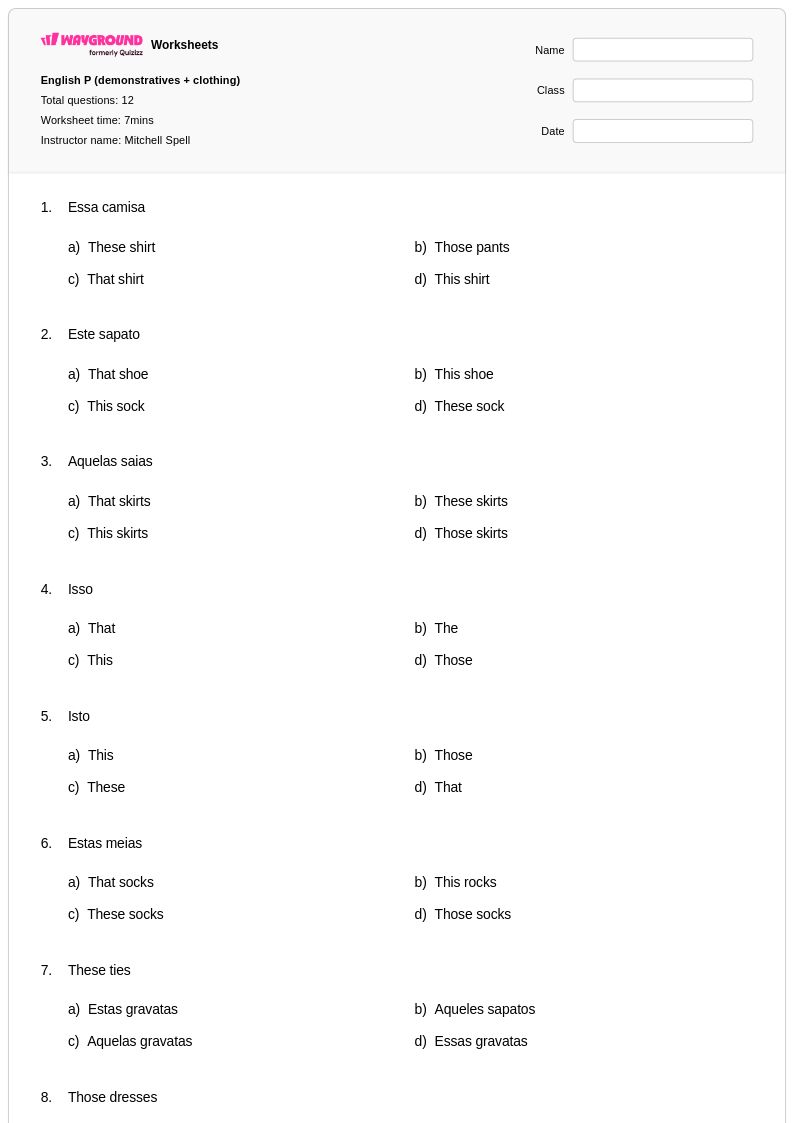
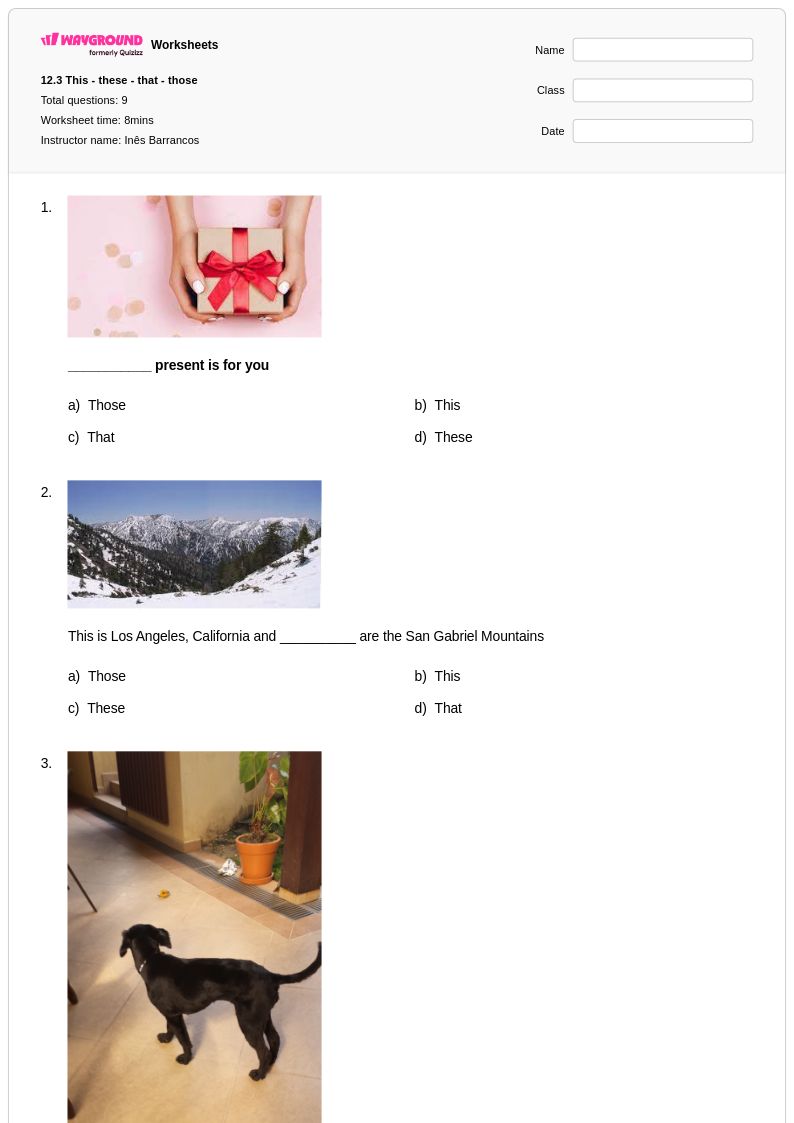
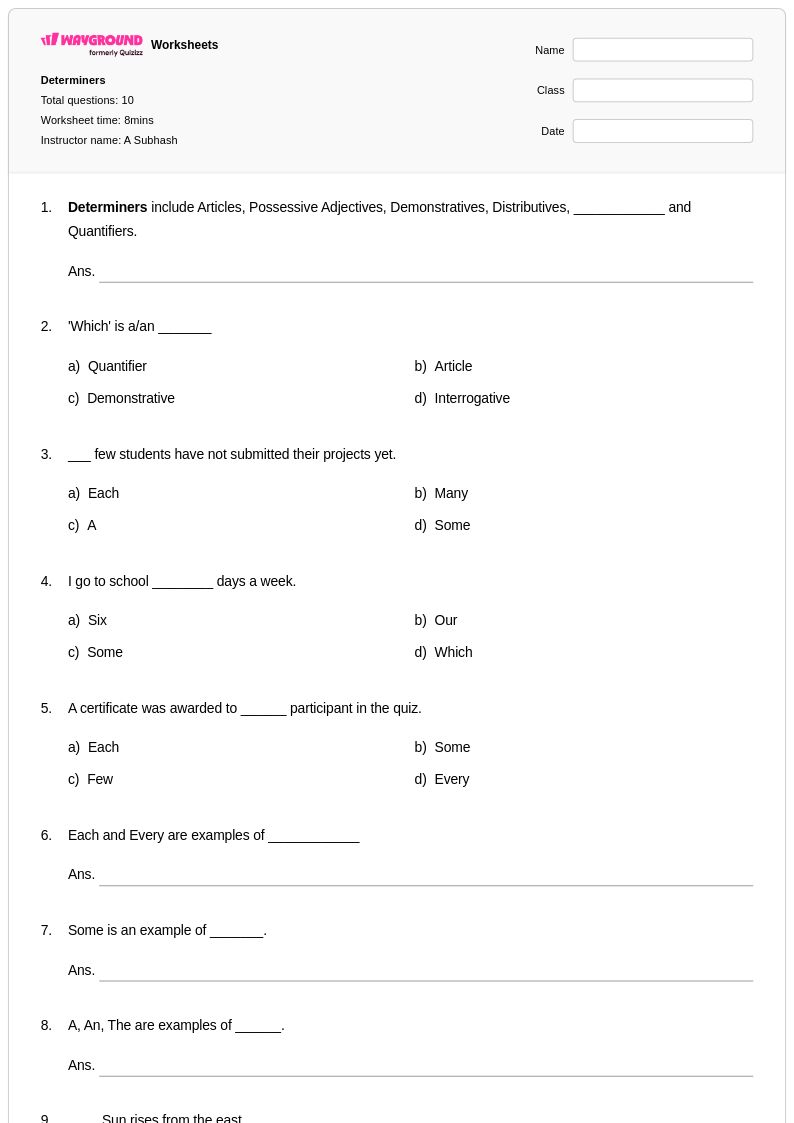
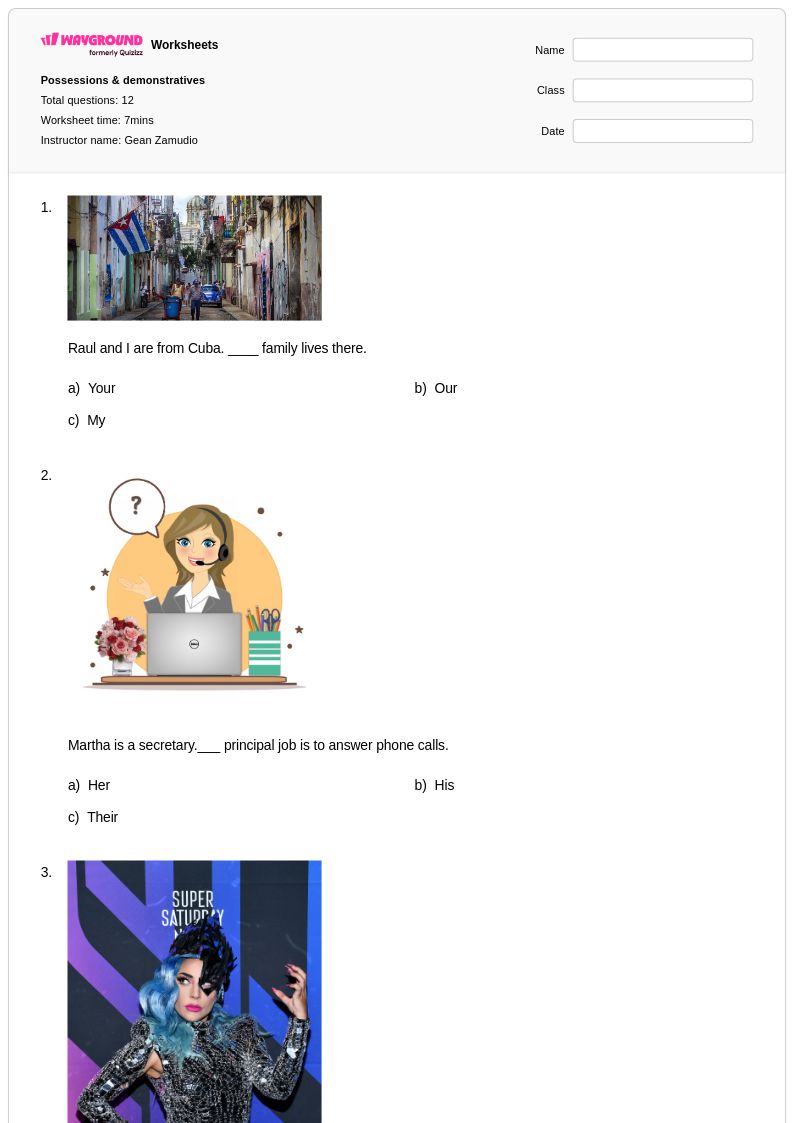
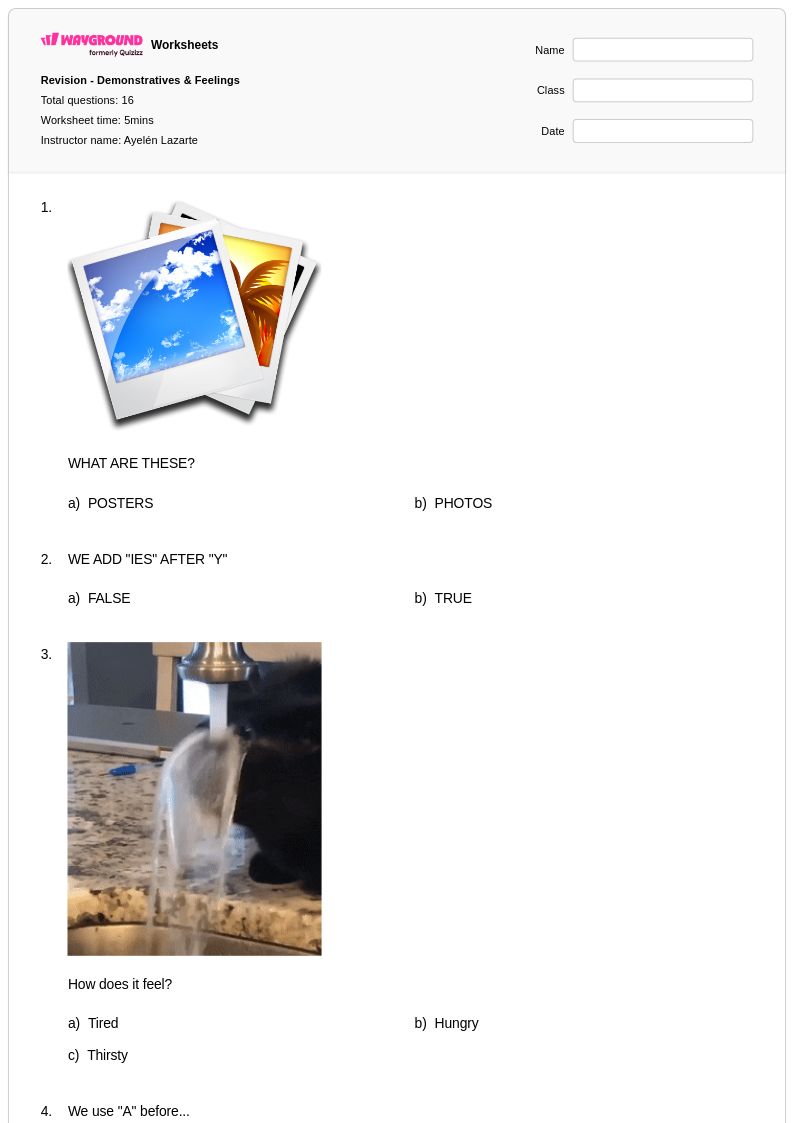
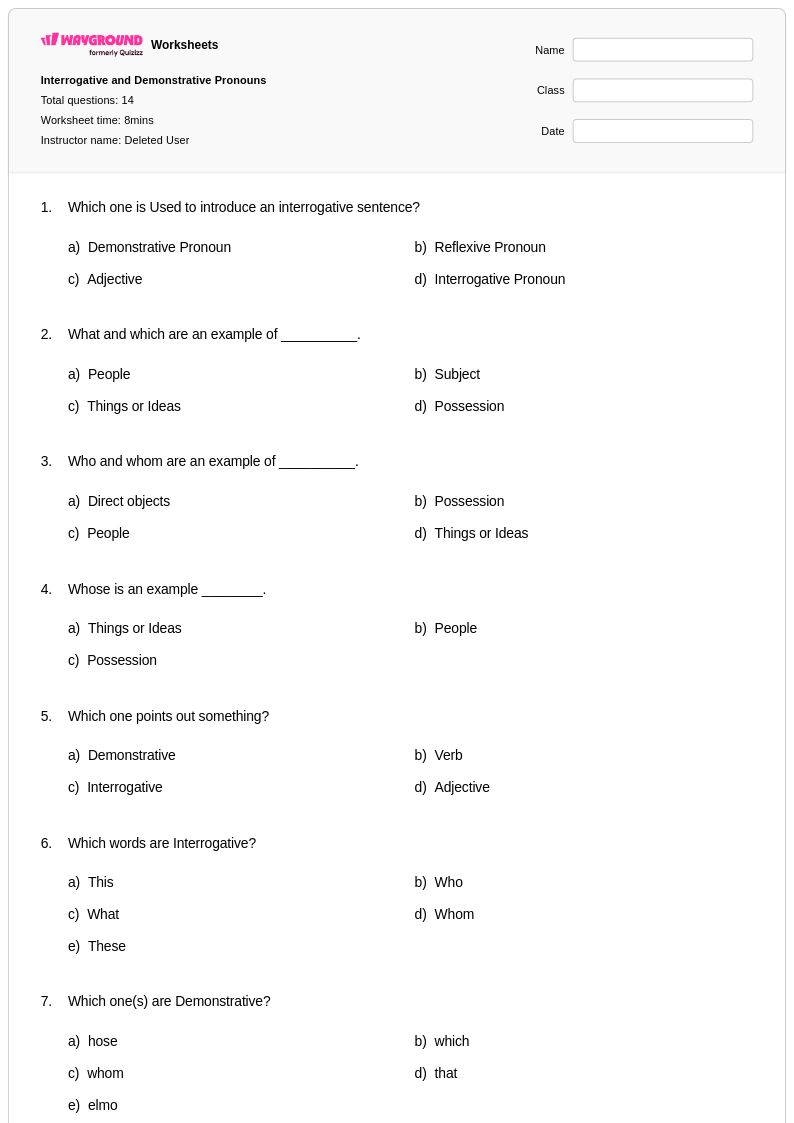
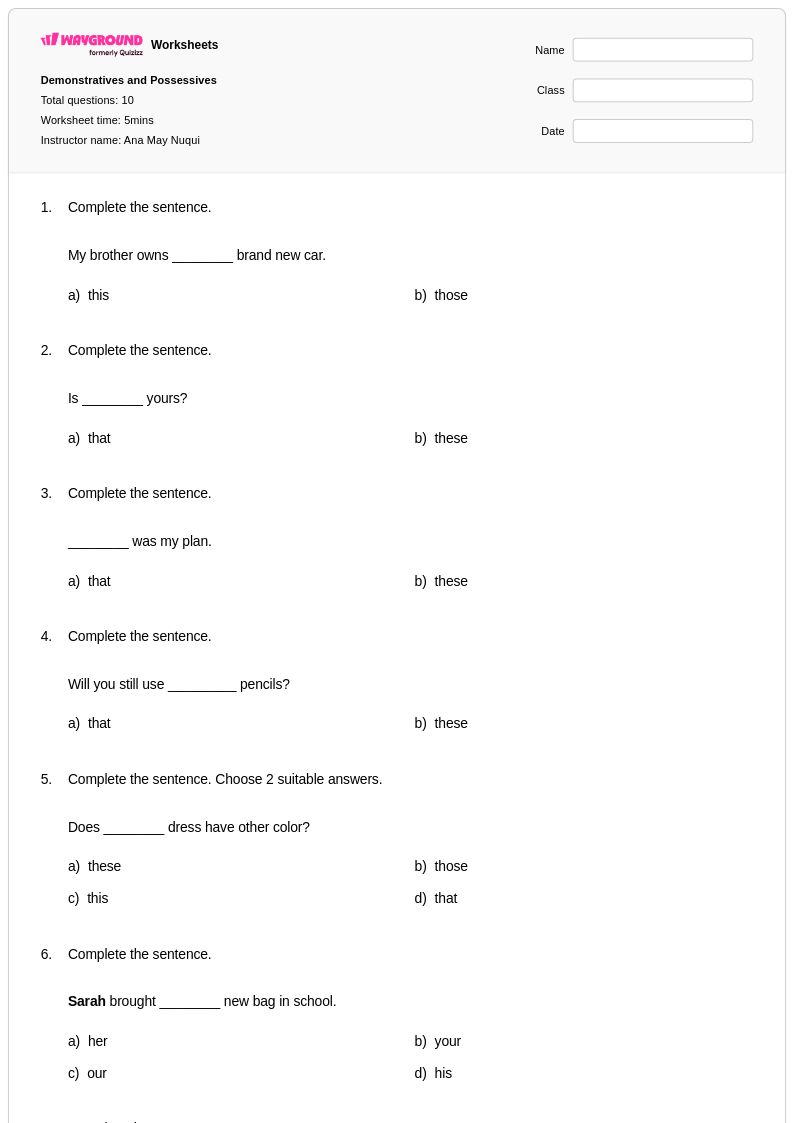
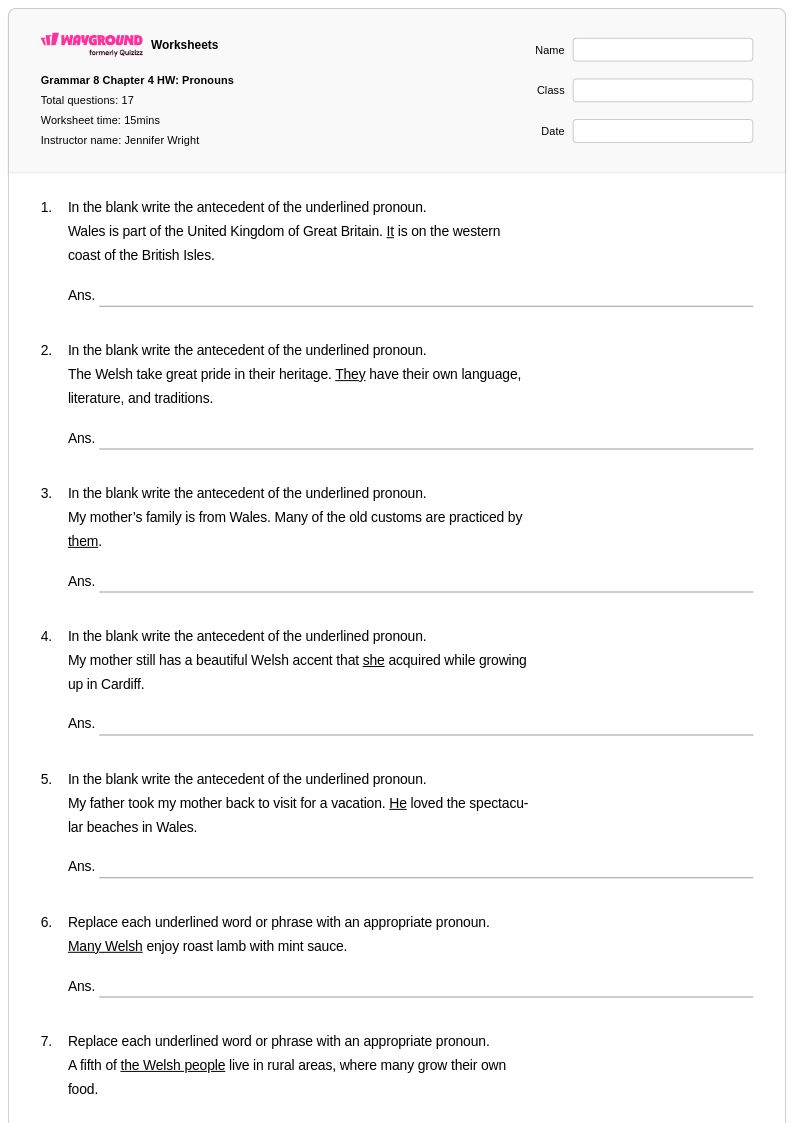
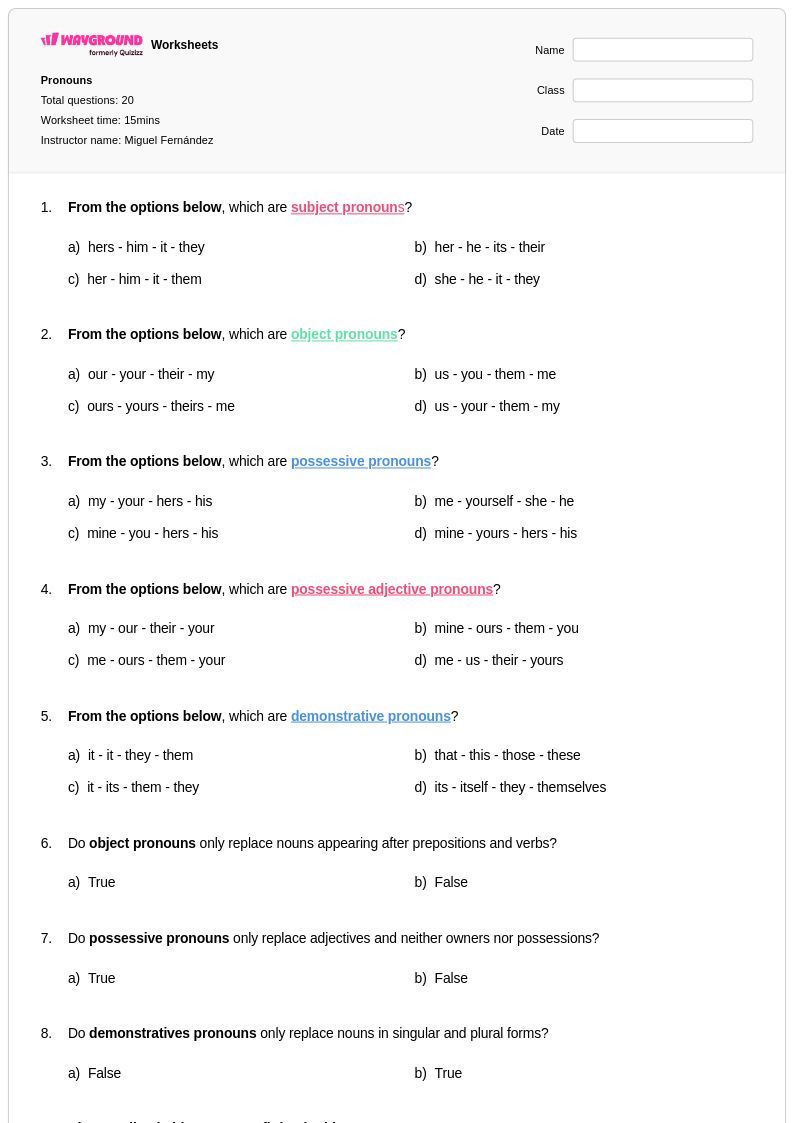
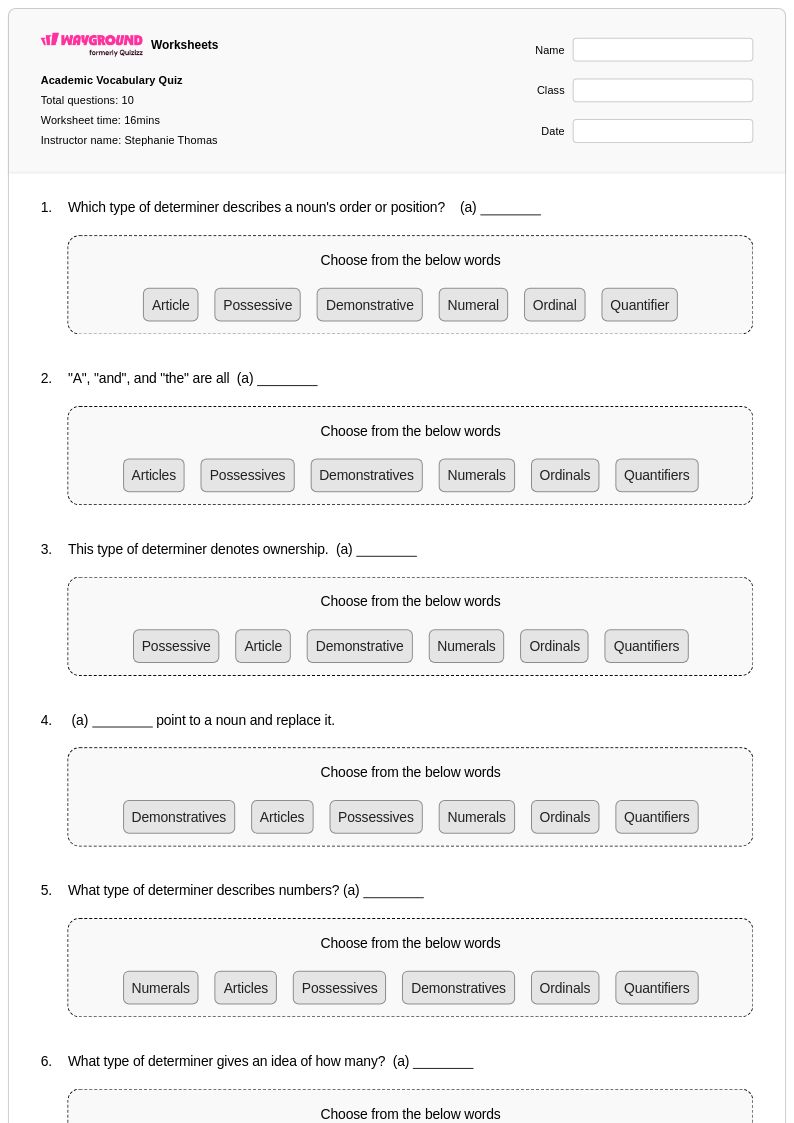
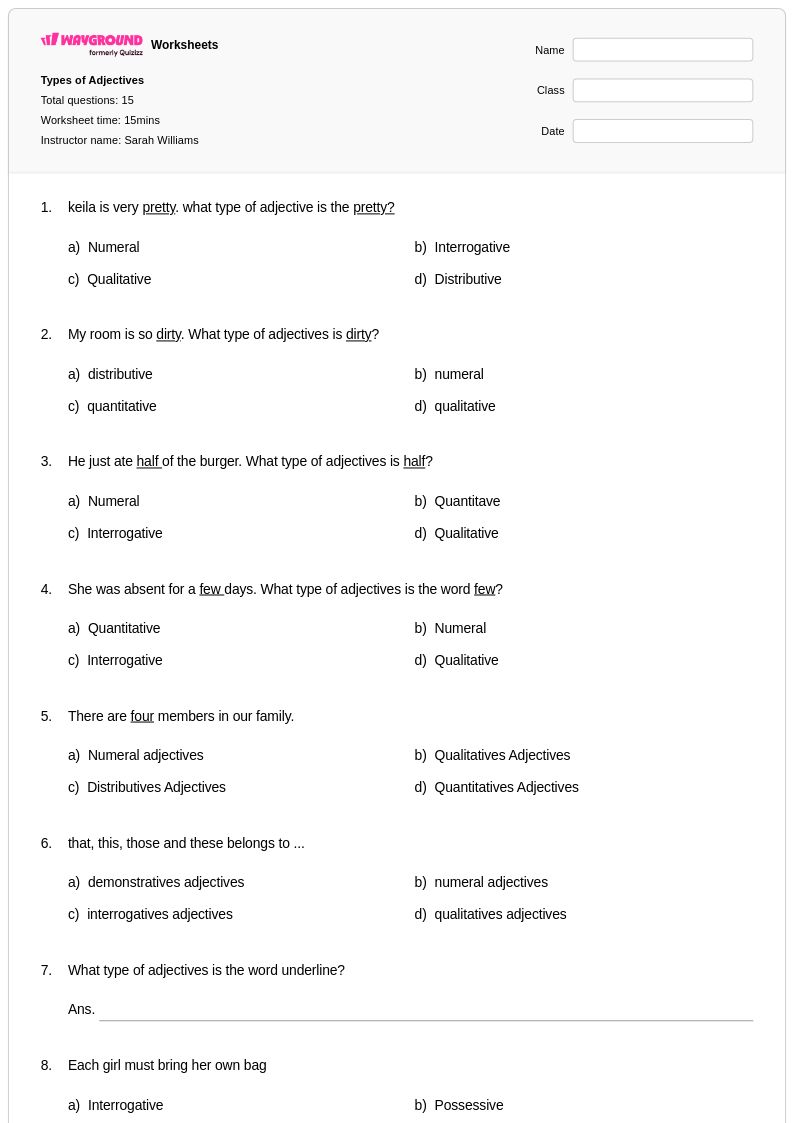
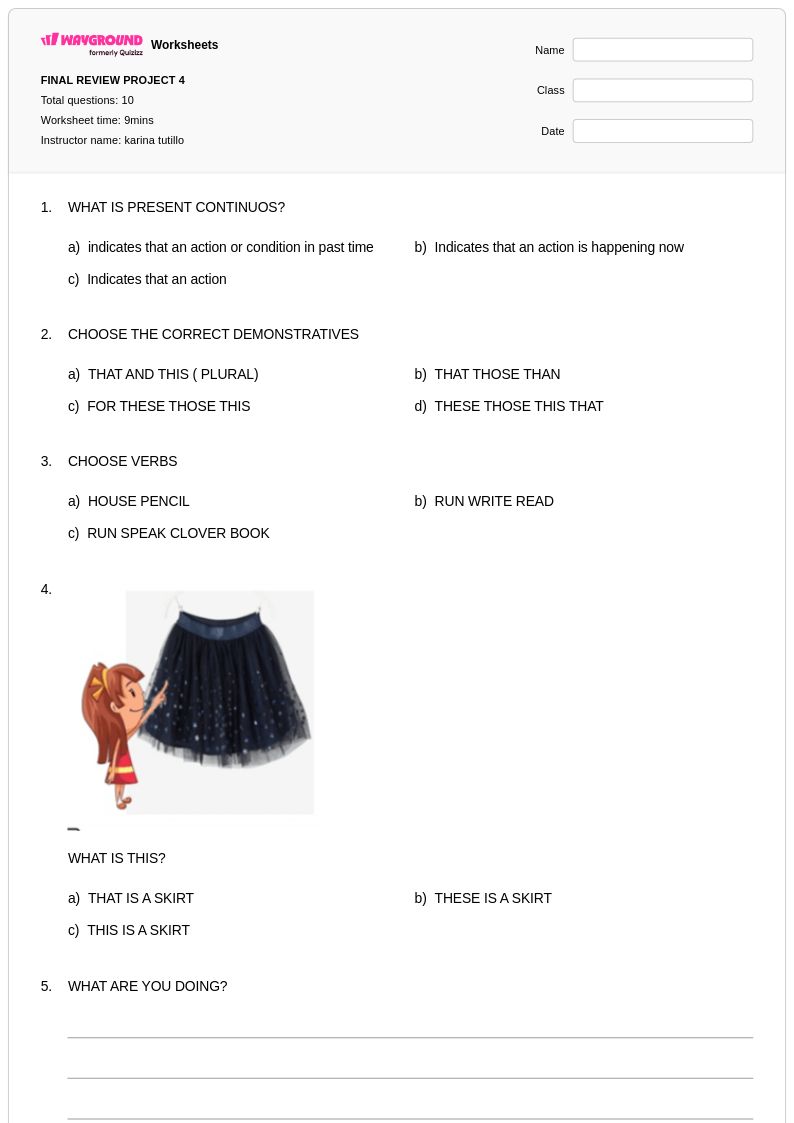
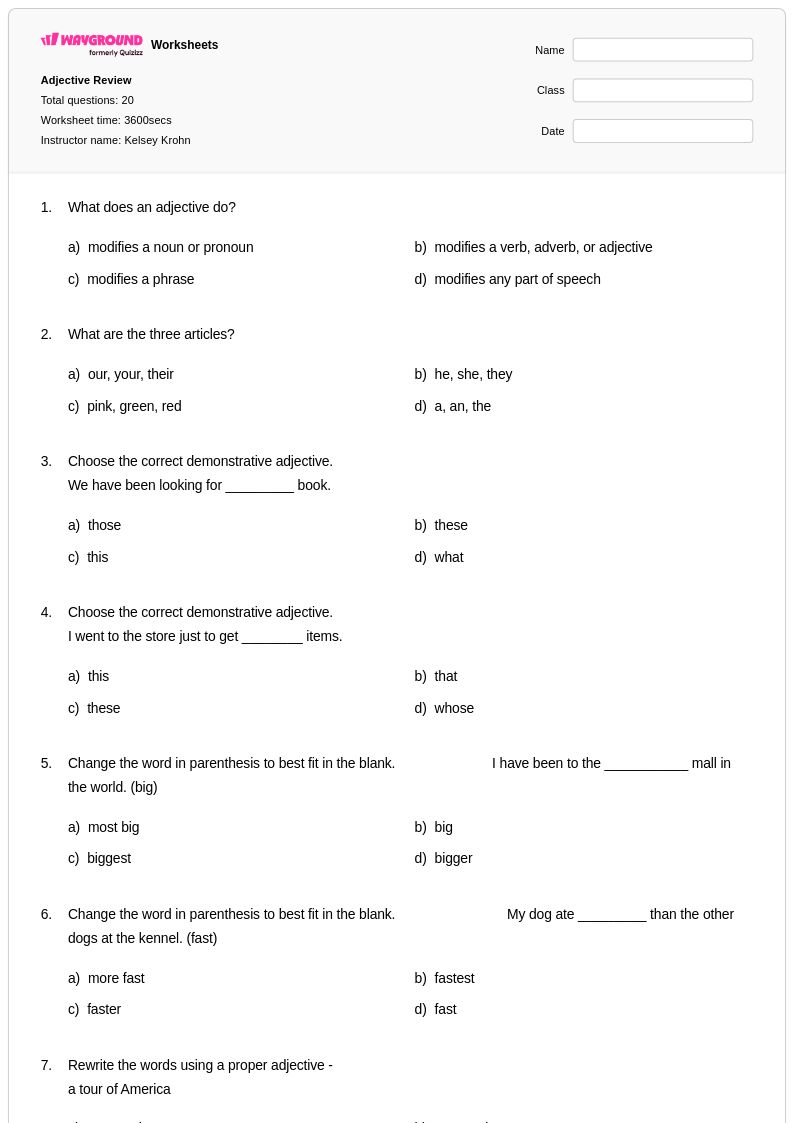
Demonstratives worksheets for Year 8 students available through Wayground (formerly Quizizz) provide comprehensive practice with this essential category of determiners that help specify which nouns students are referencing in their writing and speech. These educational resources focus on mastering the four primary demonstrative words—this, that, these, and those—while teaching students how to distinguish between near and far references in both singular and plural contexts. The worksheets strengthen critical grammar skills by offering varied practice problems that challenge students to identify demonstratives in complex sentences, replace inappropriate demonstrative choices, and apply proper demonstrative usage in their own writing. Each worksheet collection includes detailed answer keys and is available as free printables in convenient PDF format, allowing teachers to seamlessly integrate demonstrative practice into daily instruction or assign targeted skill reinforcement.
Wayground's extensive collection of demonstratives worksheets draws from millions of teacher-created resources, ensuring Year 8 educators have access to diverse, high-quality materials that align with language arts standards and accommodate different learning needs. The platform's robust search and filtering capabilities enable teachers to quickly locate worksheets that match specific skill levels, from basic demonstrative identification to advanced applications in complex sentence structures. These differentiation tools support both remediation for struggling students and enrichment opportunities for advanced learners, while the flexible customization options allow educators to modify content for individual classroom requirements. Available in both printable and digital formats including PDF downloads, these demonstrative worksheets streamline lesson planning and provide consistent skill practice that helps students develop confident, accurate grammar usage across all forms of written and spoken communication.
FAQs
How do I teach demonstratives to English grammar students?
Start by introducing the four demonstratives — this, that, these, and those — and explain that they are categorized by two variables: proximity (near vs. far) and number (singular vs. plural). Use physical classroom objects to model usage in real time, pointing to nearby items with 'this' and 'these' and distant items with 'that' and 'those.' Once students understand the logic, move to sentence-level practice where they identify and select the correct demonstrative based on context. Anchoring the lesson in concrete, physical examples before shifting to abstract written practice significantly reduces confusion.
What exercises help students practice using demonstratives correctly?
Effective practice exercises include fill-in-the-blank sentences where students must choose between this, that, these, and those based on proximity and number cues, as well as sentence identification tasks where students underline or label demonstratives already present in a passage. Error correction exercises — where students spot and fix incorrectly used demonstratives — are particularly valuable because they require students to apply both rules simultaneously. Writing prompts that ask students to describe objects in the room or items in a picture also reinforce accurate, context-driven usage.
What mistakes do students commonly make when using demonstratives?
The most common error is confusing singular and plural demonstratives — for example, writing 'this books' instead of 'these books.' Students also frequently misapply proximity, defaulting to 'this' or 'that' regardless of how near or far the referent is. A subtler mistake involves using demonstratives as pronouns vs. adjectives without understanding the distinction, such as saying 'That is good' (pronoun) versus 'That cake is good' (adjective). Targeted practice that isolates each variable — first number, then proximity, then combined — helps students correct these patterns systematically.
How can I use demonstratives worksheets in my classroom?
Demonstratives worksheets on Wayground are available as printable PDFs for traditional classroom use and in digital formats for technology-integrated environments, including the option to host them as a quiz directly on Wayground. Printable versions work well for independent practice, homework, or small-group remediation, while the digital format allows for immediate feedback and interactive use on student devices. Each worksheet includes a detailed answer key, making them efficient for both self-paced study and teacher-led instruction. The flexibility of format means these resources can be used at any stage of a grammar unit — introduction, reinforcement, or assessment.
How do demonstratives fit into broader English grammar instruction?
Demonstratives are a subset of the parts of speech, functioning as either adjectives or pronouns depending on their role in a sentence. They are foundational to teaching reference and deixis — the way language points to specific entities in context — which connects directly to lessons on noun phrases, pronouns, and coherent writing. Introducing demonstratives early in grammar instruction supports students' ability to write with clarity and precision, particularly when describing or comparing objects, events, or ideas.
How can I support struggling students or English language learners with demonstratives?
For students who struggle with demonstratives, reducing the number of answer choices in practice activities can lower cognitive load and help them focus on one rule at a time — for example, presenting only 'this' vs. 'these' before introducing proximity. On Wayground, teachers can apply accommodations such as reduced answer choices and read-aloud support to individual students without notifying the rest of the class, allowing differentiated practice within a shared assignment. Visual aids like proximity charts and number-sorting diagrams are also effective scaffolds for English language learners who may not have an equivalent grammatical structure in their first language.