Free Printable Descriptive Verbs Worksheets for Year 8
Enhance Year 8 students' understanding of descriptive verbs with Wayground's comprehensive collection of free worksheets, printables, and practice problems that include detailed answer keys to strengthen expressive writing skills.
Explore printable Descriptive Verbs worksheets for Year 8
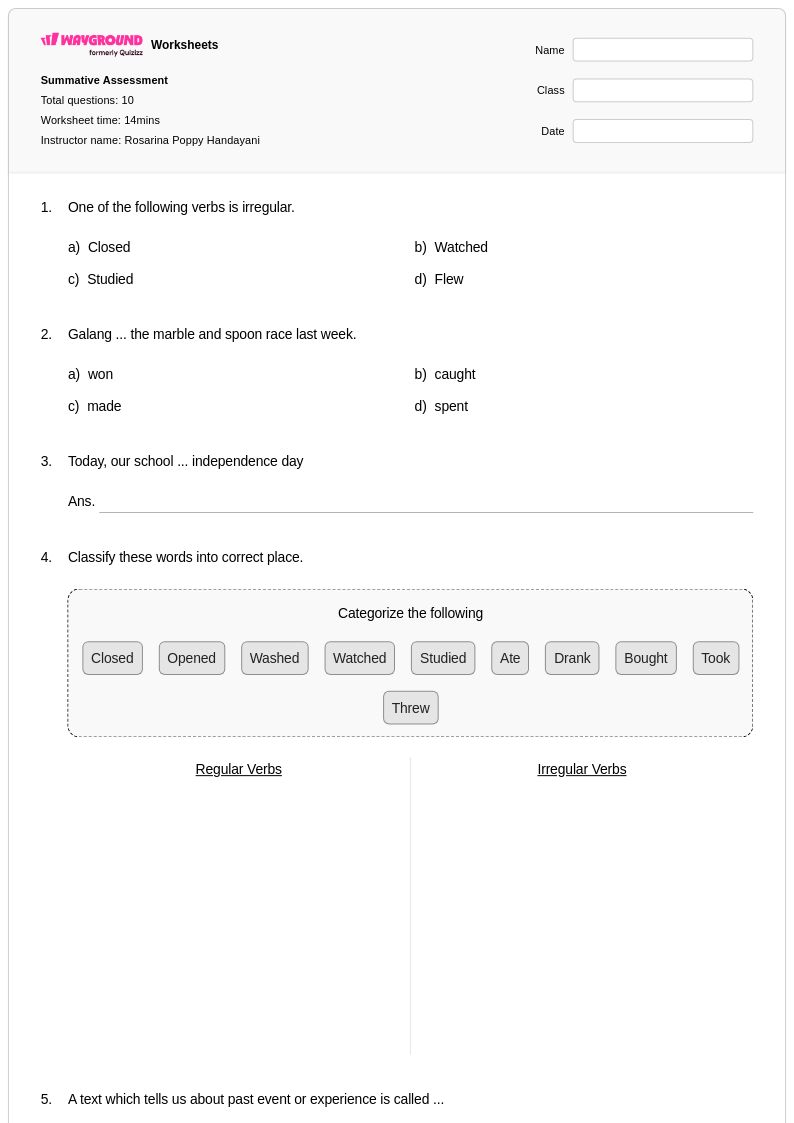
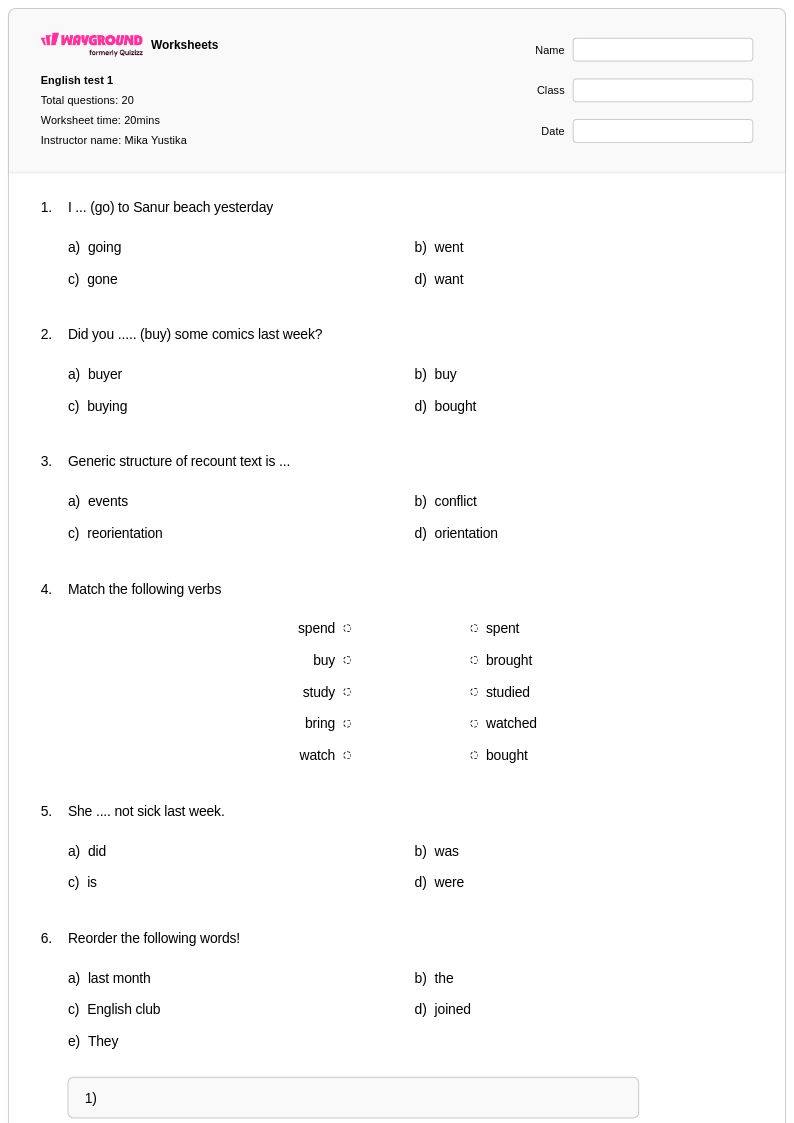
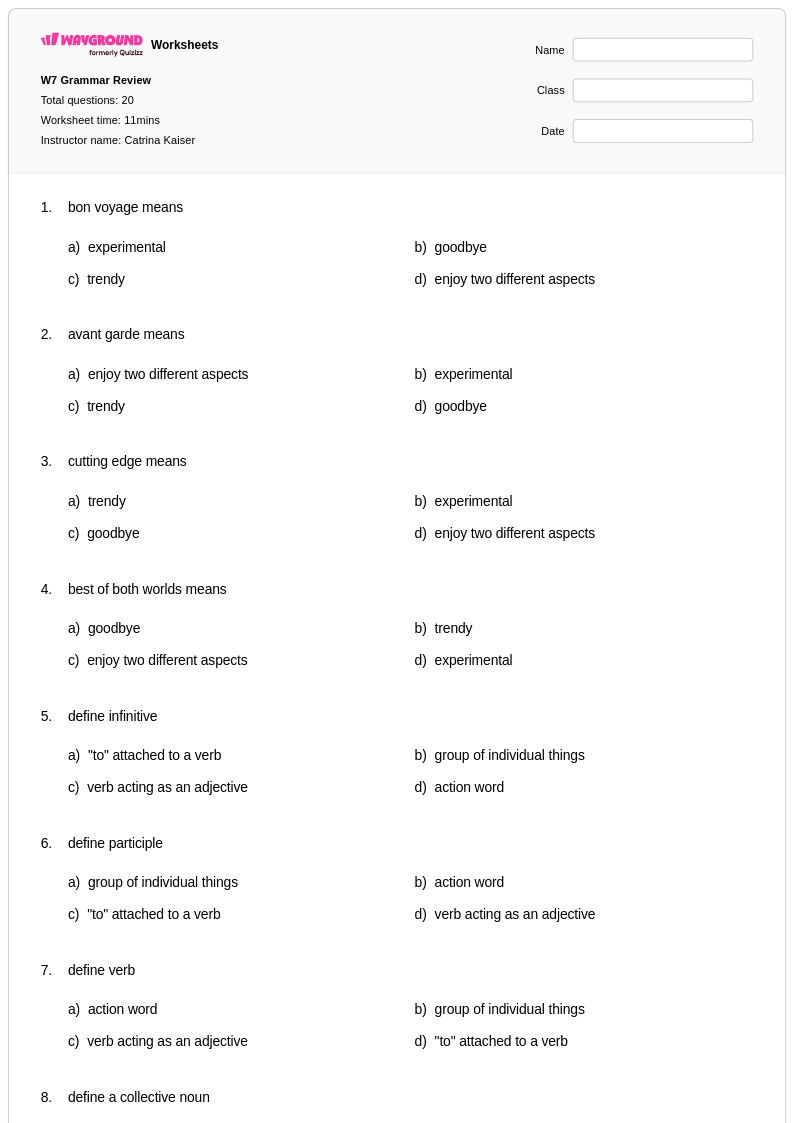
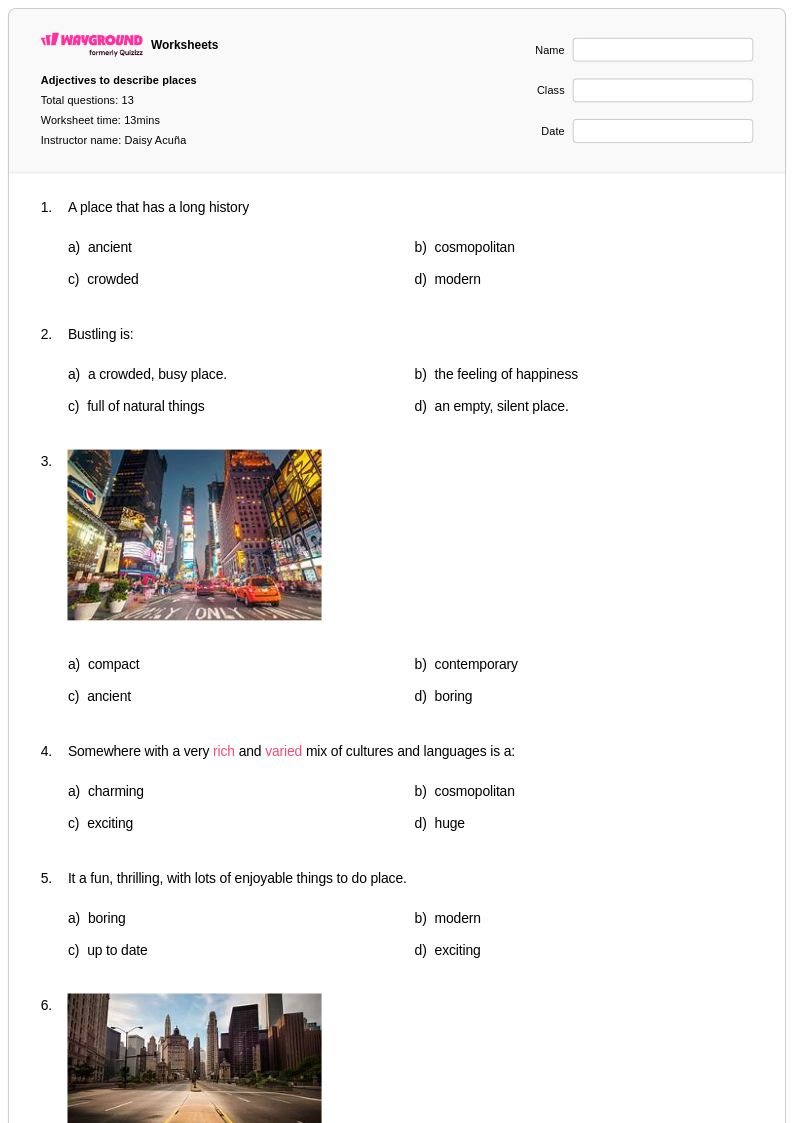
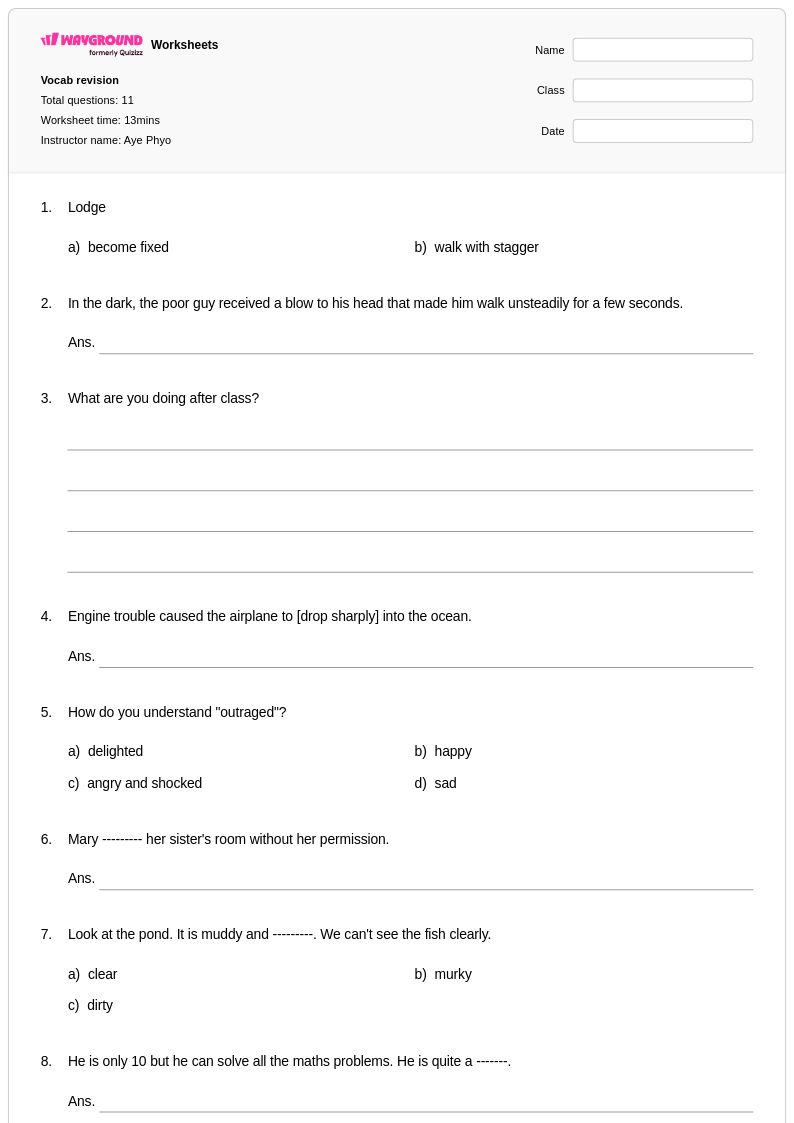
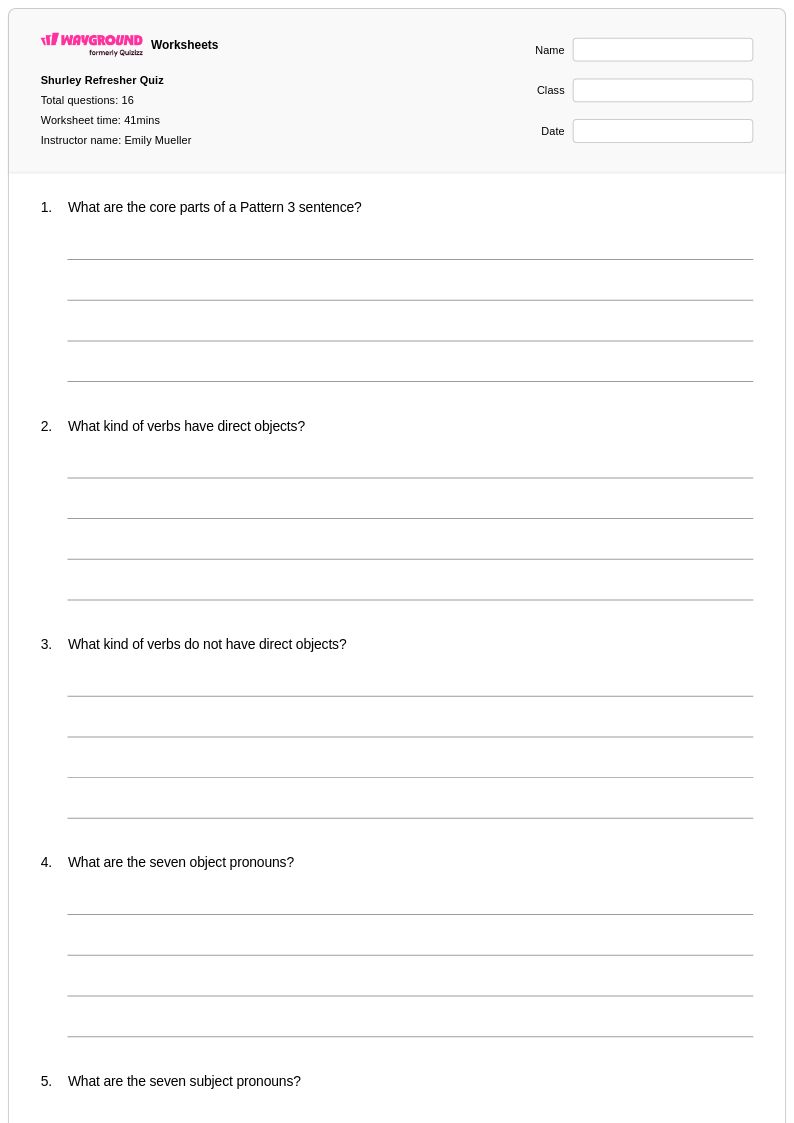
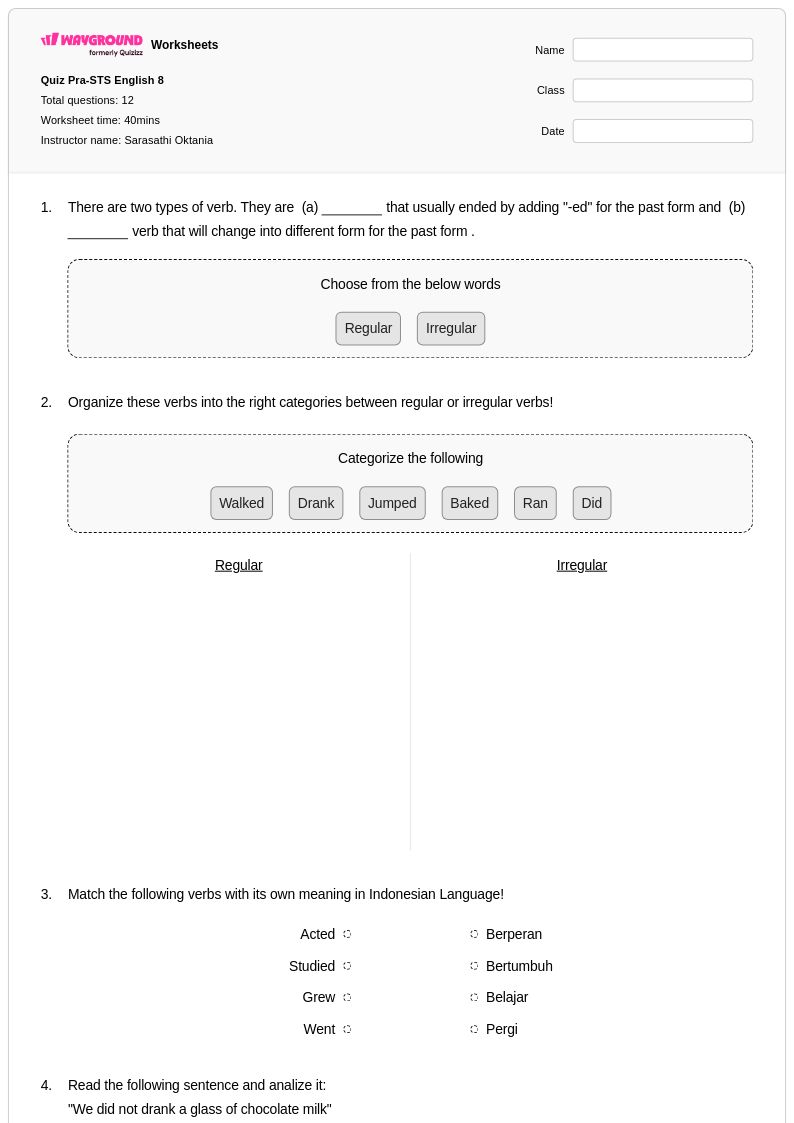
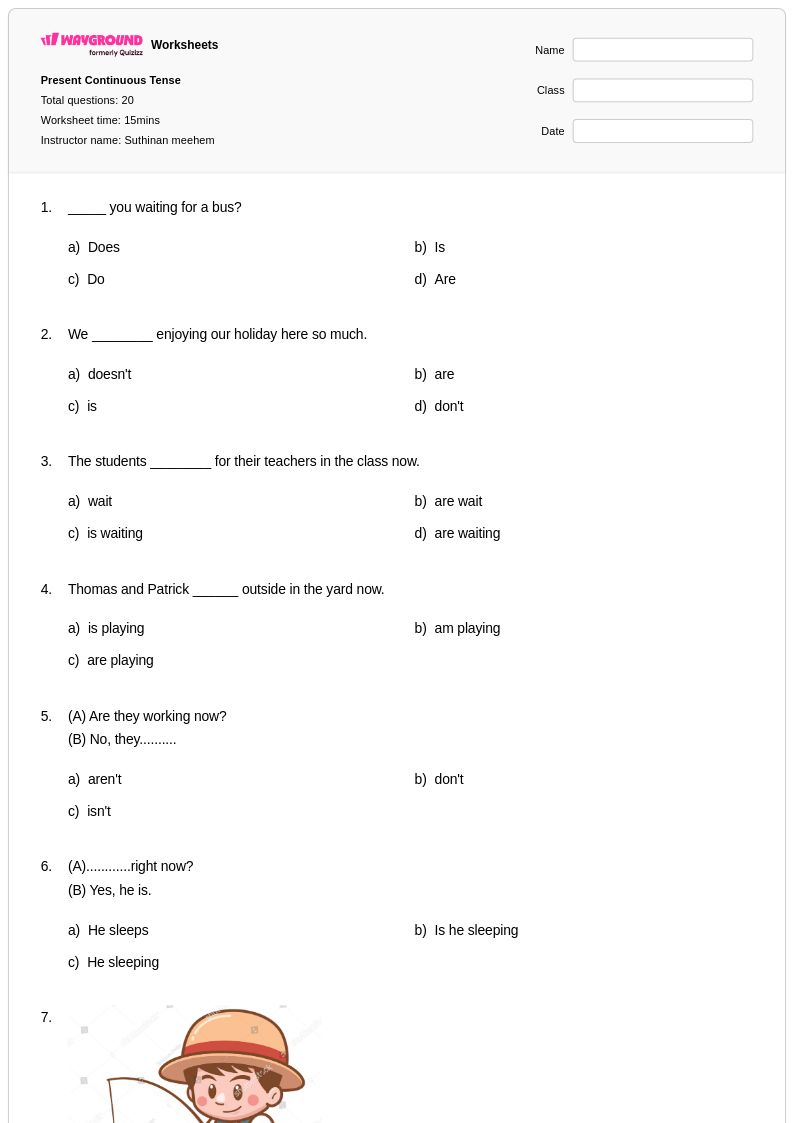
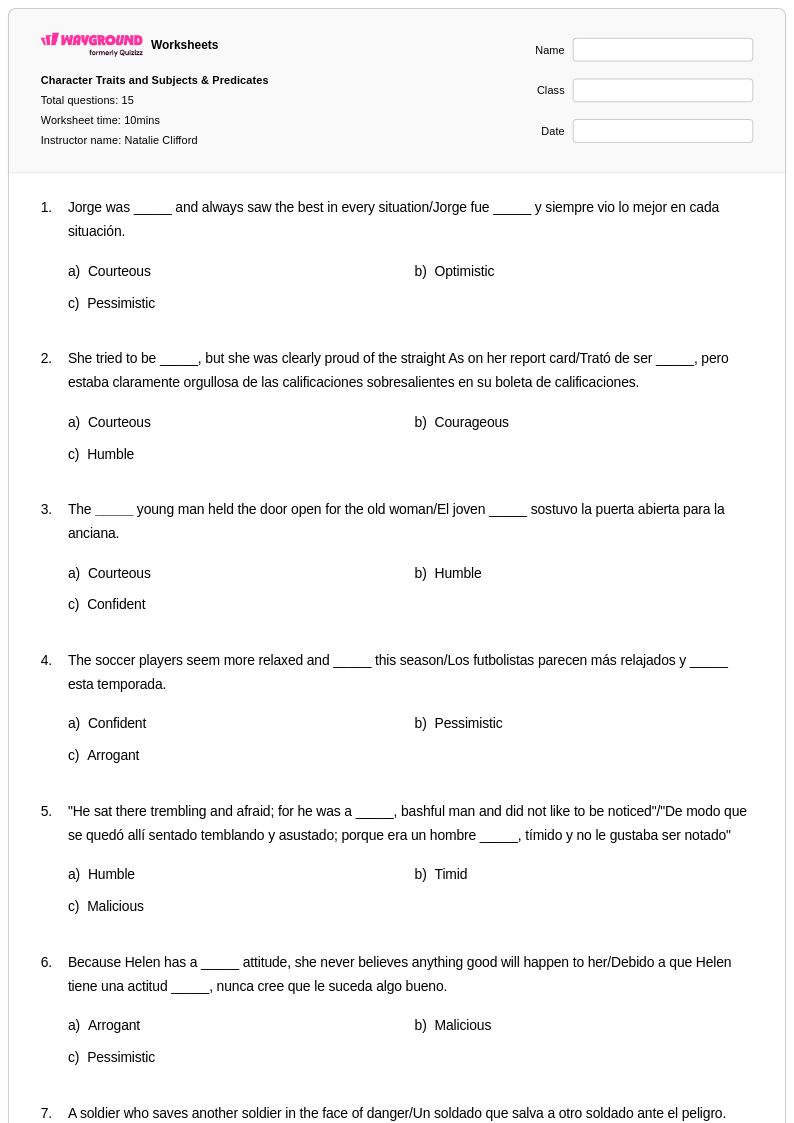
Descriptive verbs form a crucial component of Year 8 English language instruction, helping students express actions with precision and vivid detail. Wayground's comprehensive collection of descriptive verb worksheets provides targeted practice opportunities that strengthen students' ability to identify, categorize, and effectively use action words that paint clear mental pictures for readers. These educational resources feature carefully structured practice problems that guide eighth-grade learners through exercises involving sensory verbs, motion verbs, and other descriptive action words that enhance writing quality. Each worksheet includes a complete answer key, making independent study and self-assessment achievable, while the free printable format ensures accessibility for both classroom instruction and home practice. The pdf materials systematically build vocabulary recognition skills while reinforcing proper usage patterns essential for academic writing success.
Wayground's extensive database contains millions of teacher-created worksheet resources specifically designed to support Year 8 descriptive verb instruction across diverse learning environments. The platform's advanced search and filtering capabilities enable educators to quickly locate materials that align with specific curriculum standards and individual student needs, while built-in differentiation tools allow seamless customization for varying ability levels within the same classroom. Teachers can access these resources in both printable pdf format for traditional worksheet distribution and digital formats for technology-integrated lessons, providing maximum flexibility for different instructional approaches. This comprehensive system streamlines lesson planning while offering robust options for targeted remediation, advanced enrichment activities, and ongoing skill practice that helps students master the nuanced use of descriptive verbs in their writing across all subject areas.
FAQs
How do I teach descriptive verbs to students?
Start by contrasting weak, generic verbs (like 'walk' or 'said') with vivid alternatives ('trudged', 'whispered') so students can immediately see the difference in specificity and impact. Use mentor texts to highlight how strong authors choose precise action words that create mental images. From there, move students into guided practice where they swap out flat verbs in sample sentences before applying the skill to their own writing.
What exercises help students practice using descriptive verbs?
Effective practice involves verb-replacement tasks where students identify a weak verb in a sentence and substitute a more precise, evocative alternative. Sentence-rewriting exercises, word sort activities that group verbs by intensity or specificity, and fill-in-the-blank passages that require students to select the most fitting descriptive verb all build this skill systematically. These structured formats help students internalize the difference between generic and vivid action words across a range of contexts.
What mistakes do students commonly make when learning descriptive verbs?
The most common error is confusing descriptive verbs with adverb-heavy phrases — students often write 'walked slowly' instead of choosing a single precise verb like 'shuffled' or 'crept'. Another frequent mistake is overusing a small set of dramatic verbs, which can make writing feel forced rather than purposeful. Students also struggle to match verb intensity to tone, selecting overly intense words in neutral contexts.
How do descriptive verbs improve student writing?
Descriptive verbs make writing more concise and vivid by doing the work of multiple words in a single choice — 'slammed' conveys force and emotion more efficiently than 'closed the door loudly'. When students develop a working vocabulary of precise action words, their writing becomes clearer and more engaging across all genres, from narrative to expository. Building this skill also strengthens students' reading comprehension, as they become more attuned to how authors use language deliberately.
How do I use Wayground's descriptive verbs worksheets in my classroom?
Wayground's descriptive verbs worksheets are available as printable PDFs for traditional classroom use and in digital formats for technology-integrated learning environments, giving teachers flexibility for in-class instruction, homework, or independent practice stations. Teachers can also host worksheets as a quiz directly on Wayground, which adds an interactive layer to practice. Each worksheet includes a comprehensive answer key, supporting both guided instruction and independent student review.
How can I differentiate descriptive verbs practice for students at different levels?
For struggling learners, reduce the number of answer choices available so students can focus on selecting between a smaller set of options without cognitive overload. Advanced students benefit from open-ended tasks that require them to generate their own descriptive verbs rather than selecting from a provided list. On Wayground, teachers can apply per-student accommodations such as reduced answer choices, extended time, or read-aloud support directly from the session settings, without other students being notified of those adjustments.