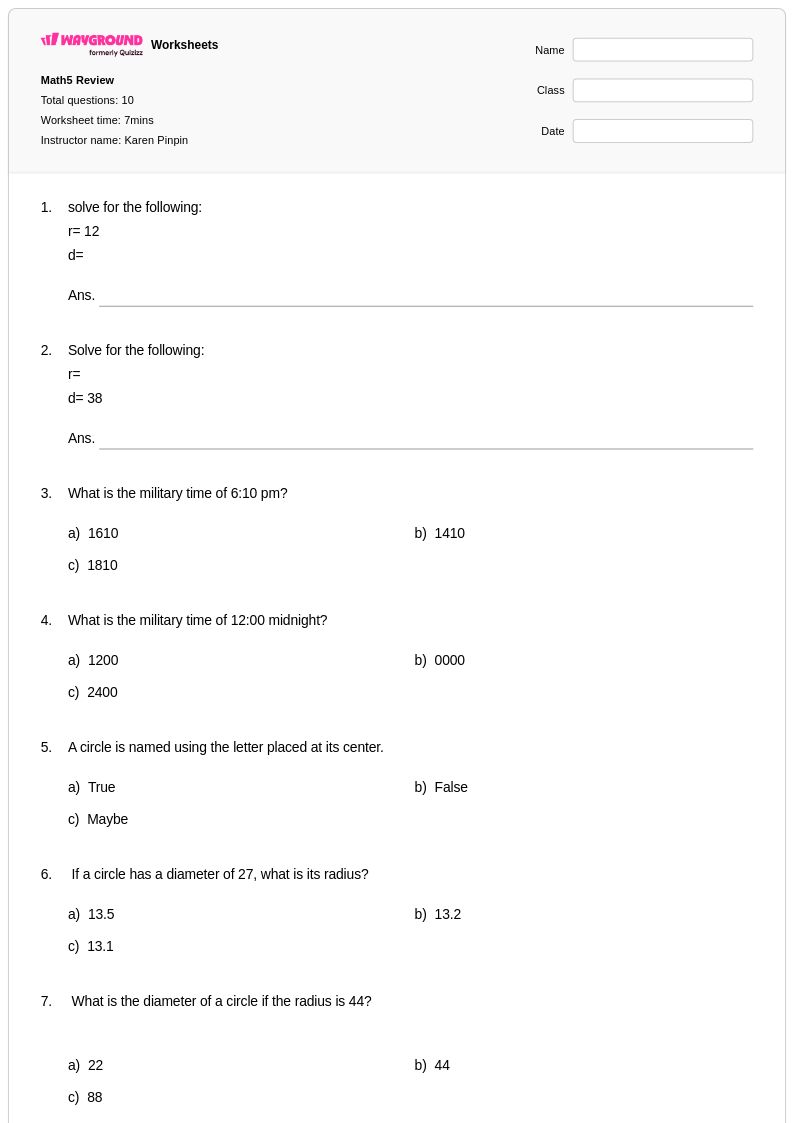
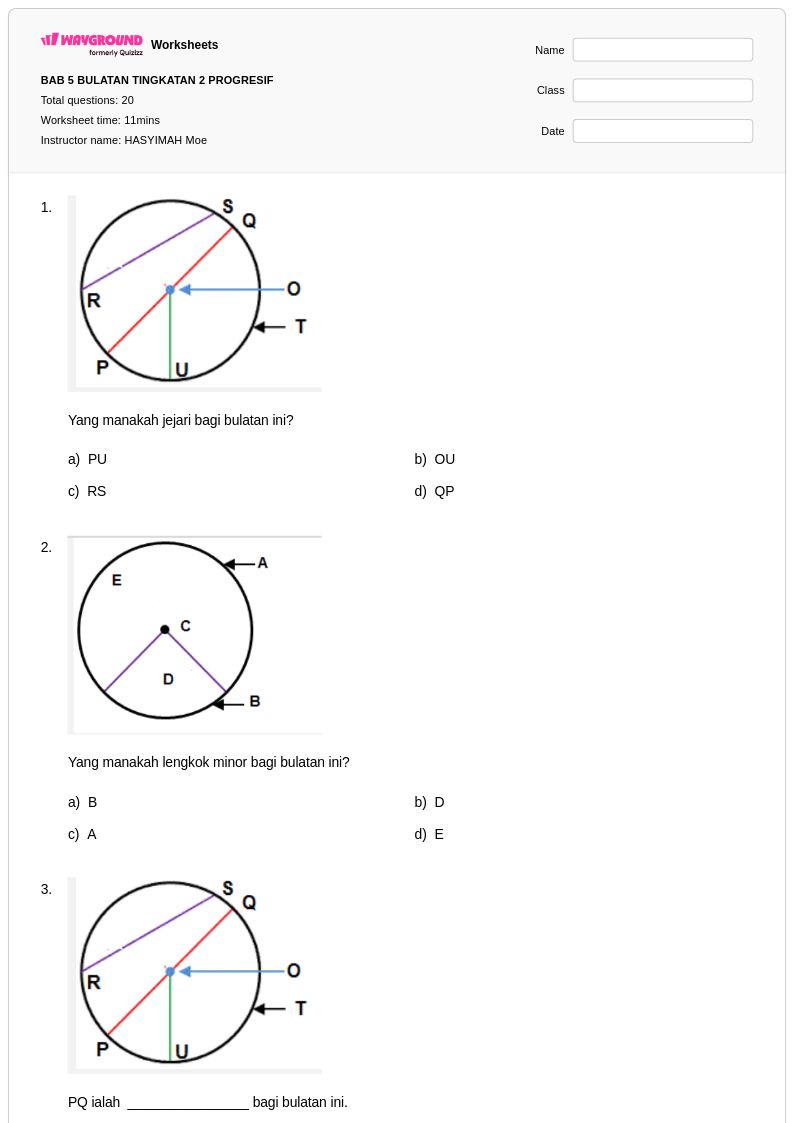
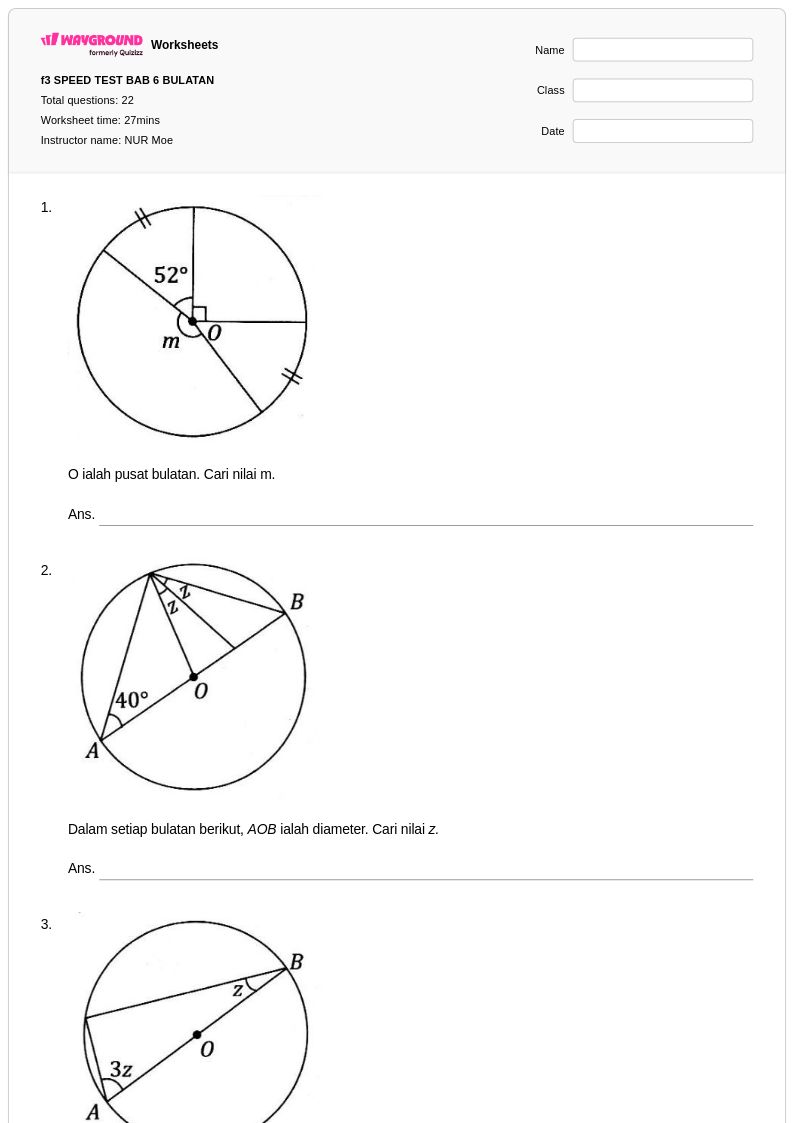
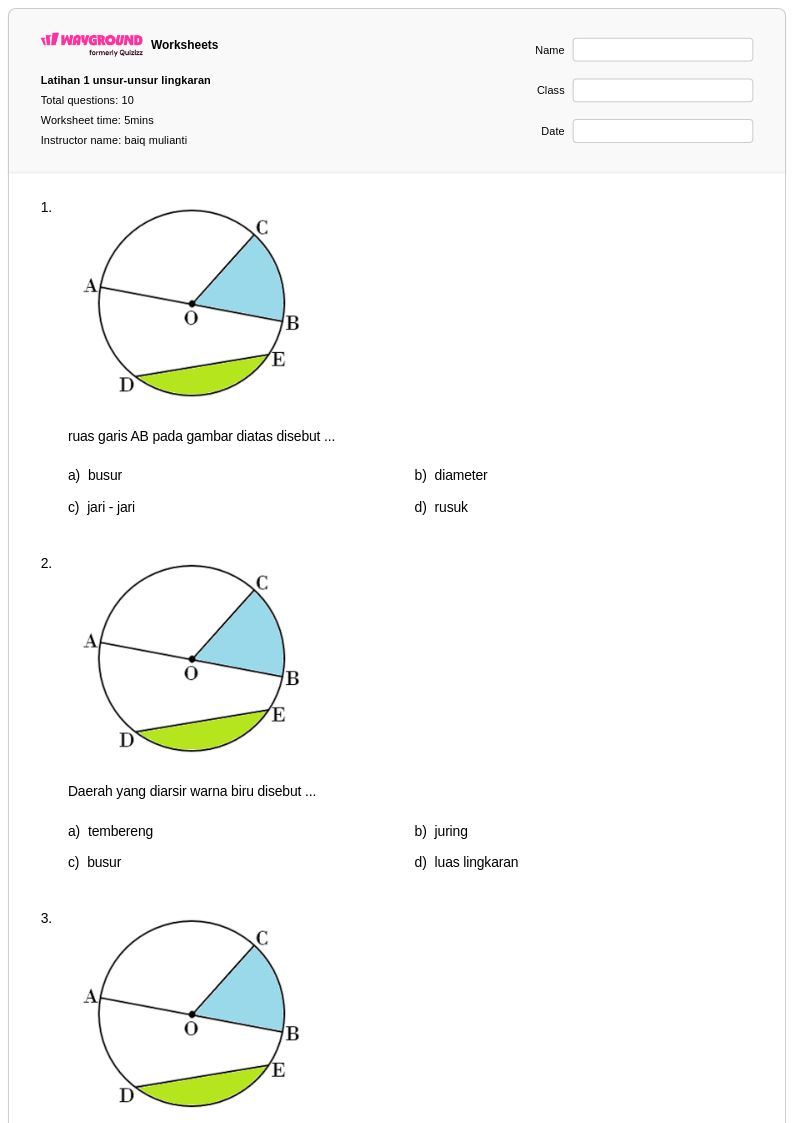
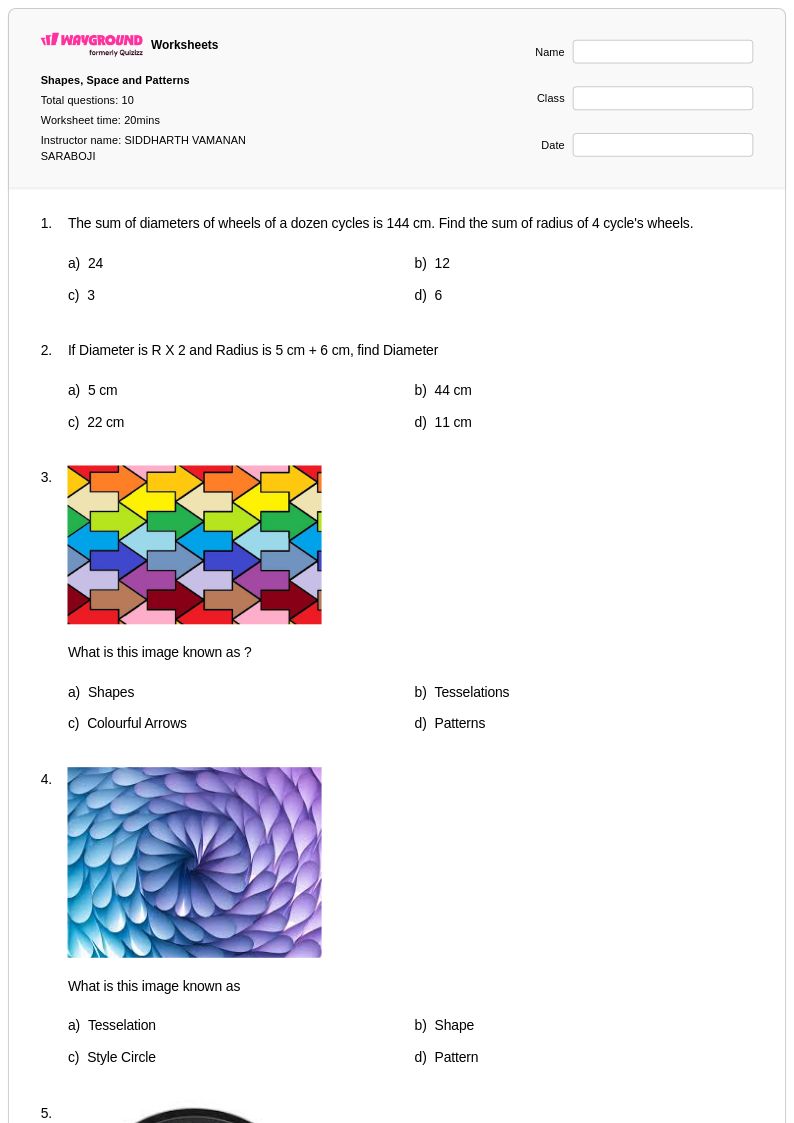
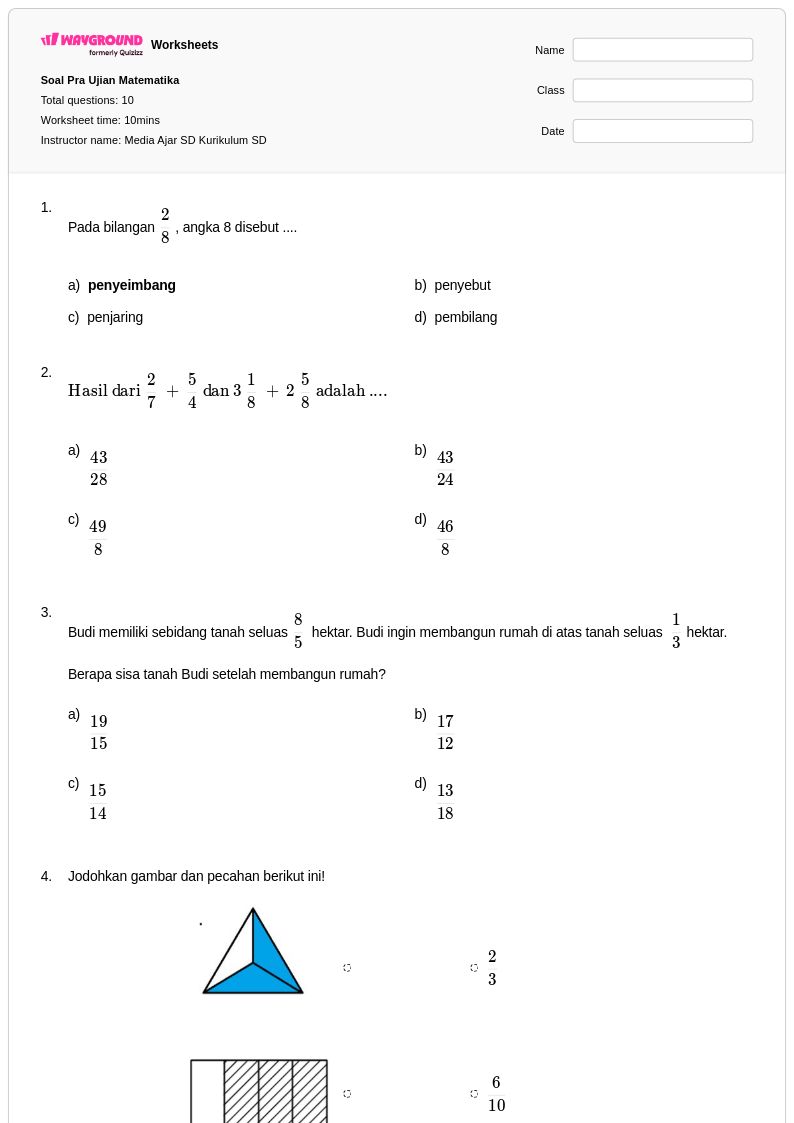
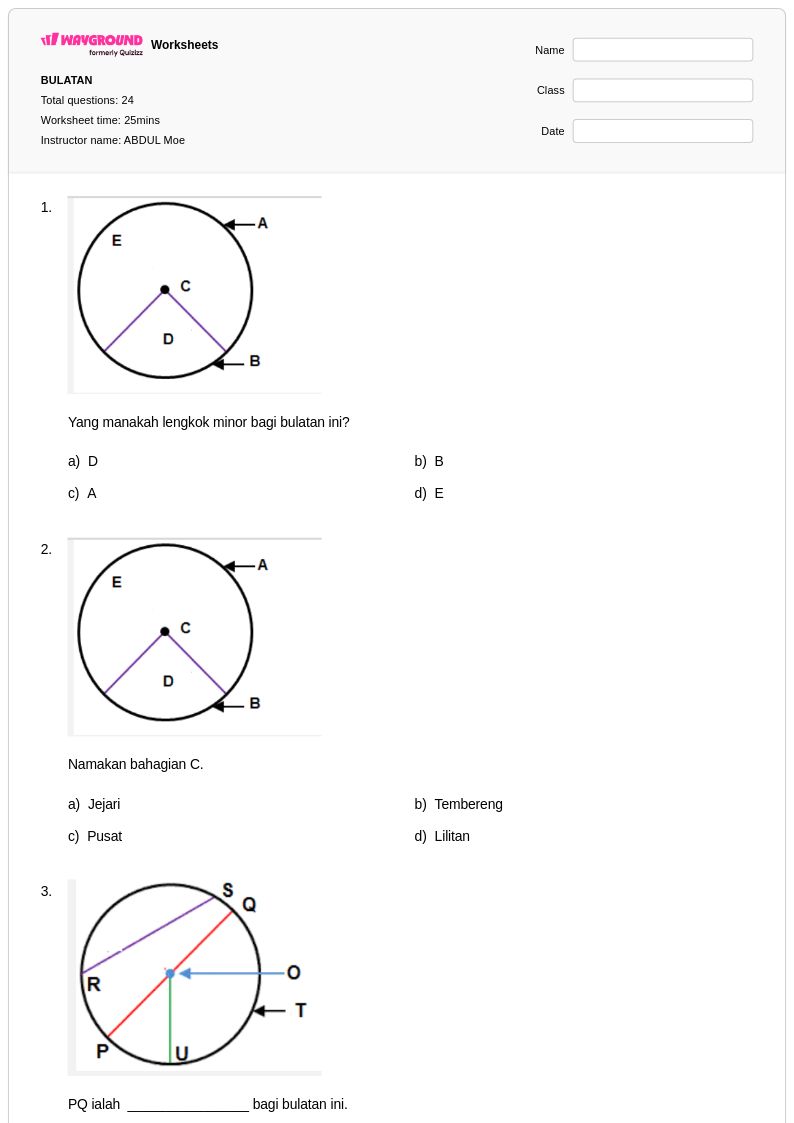
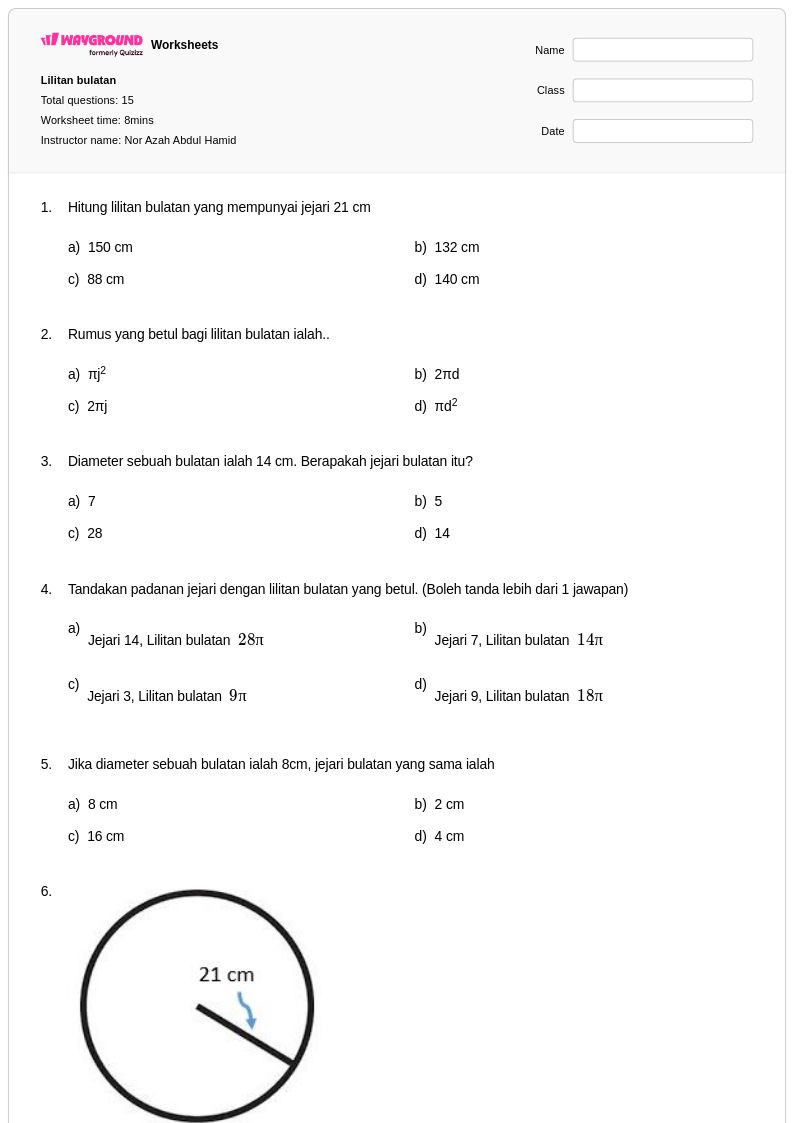
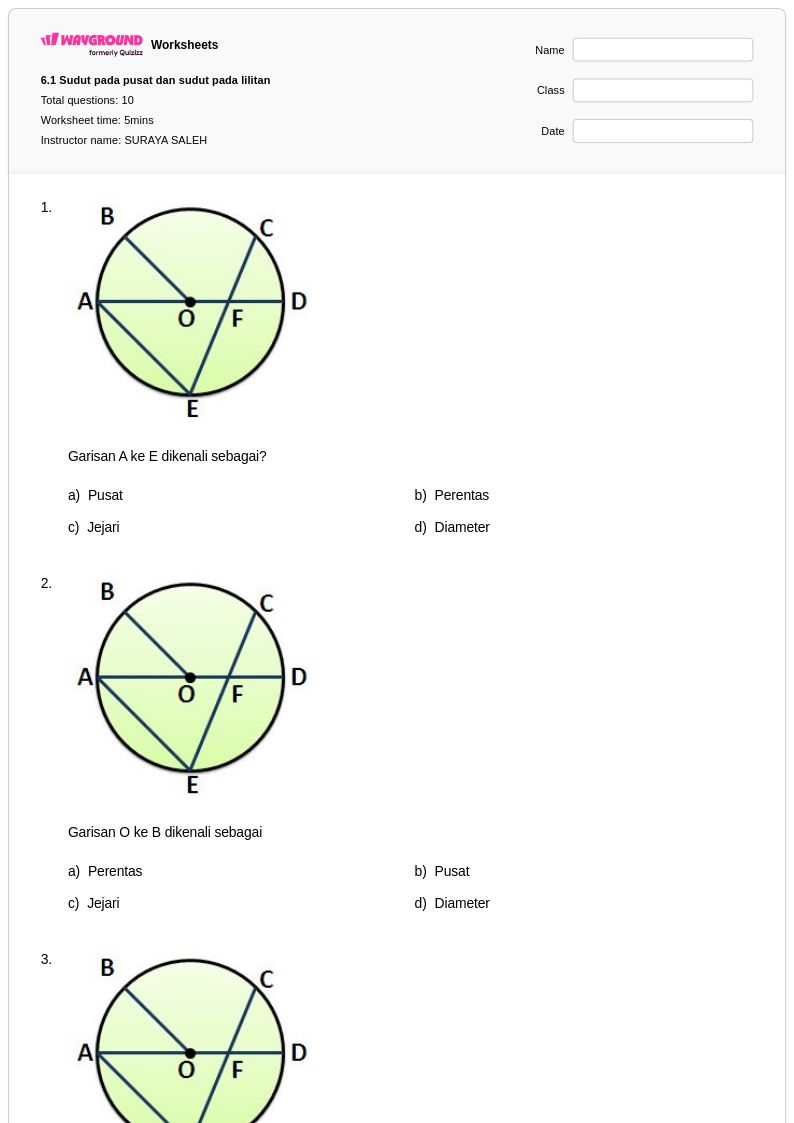
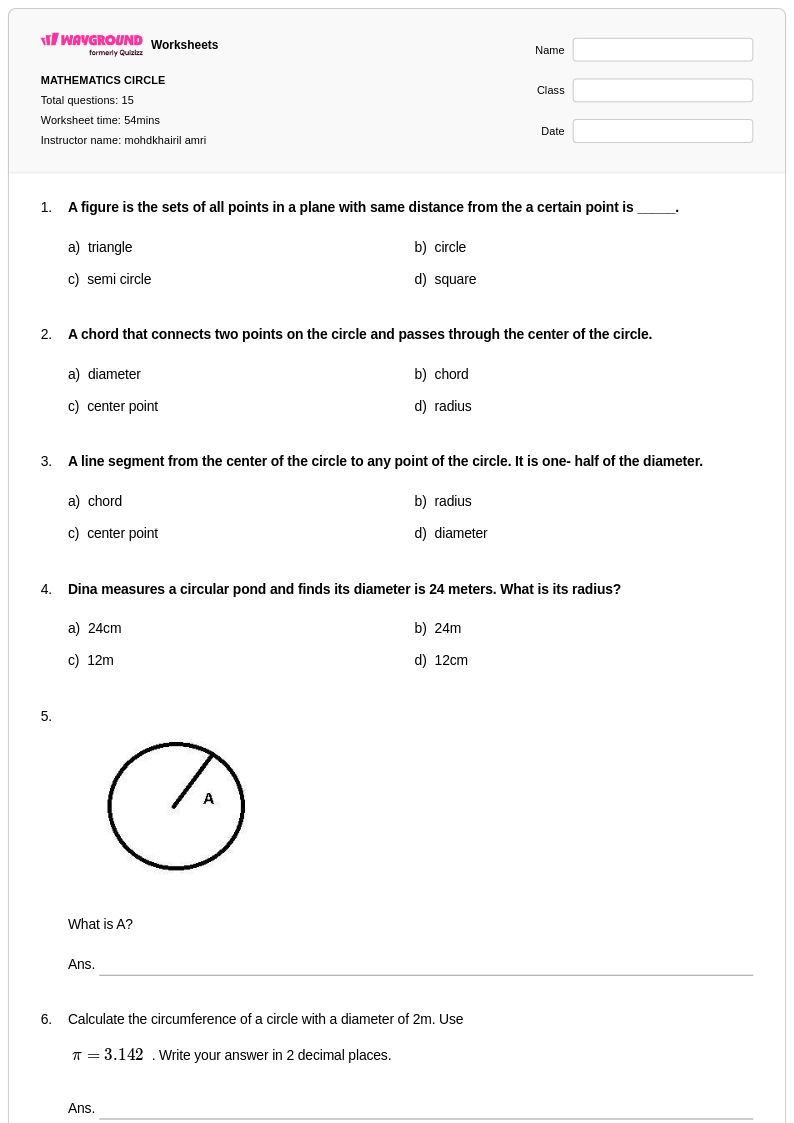
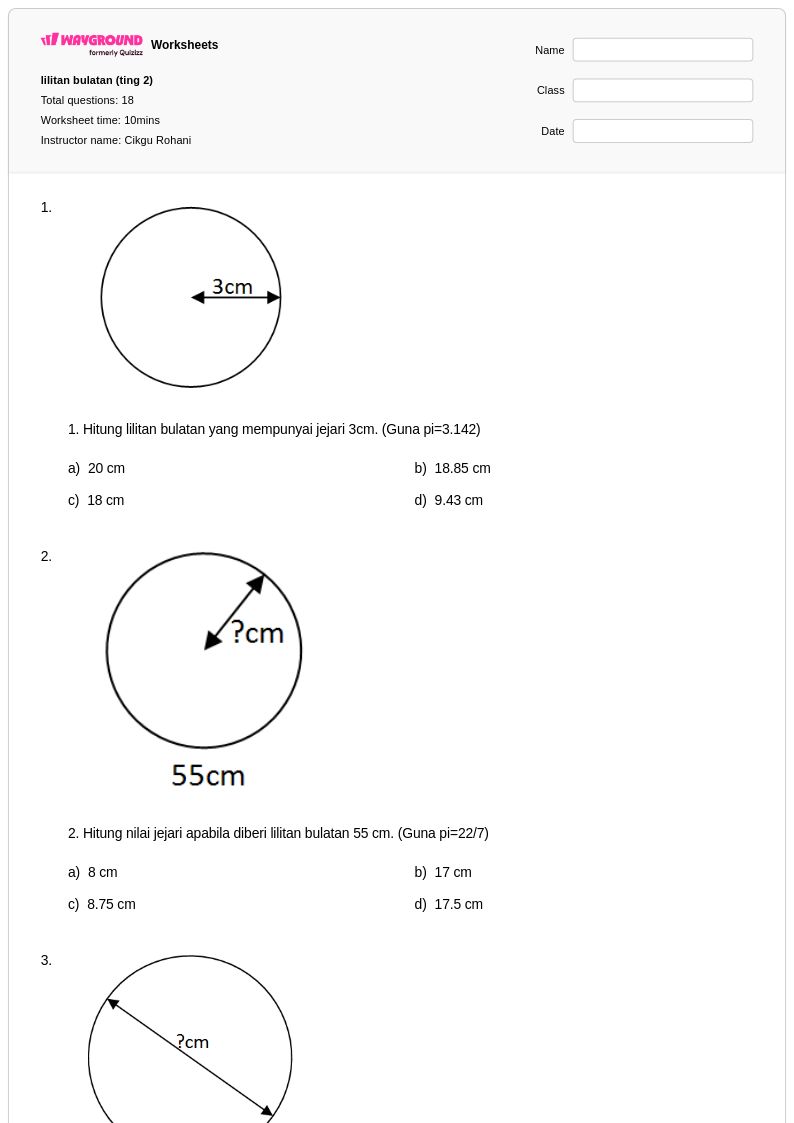
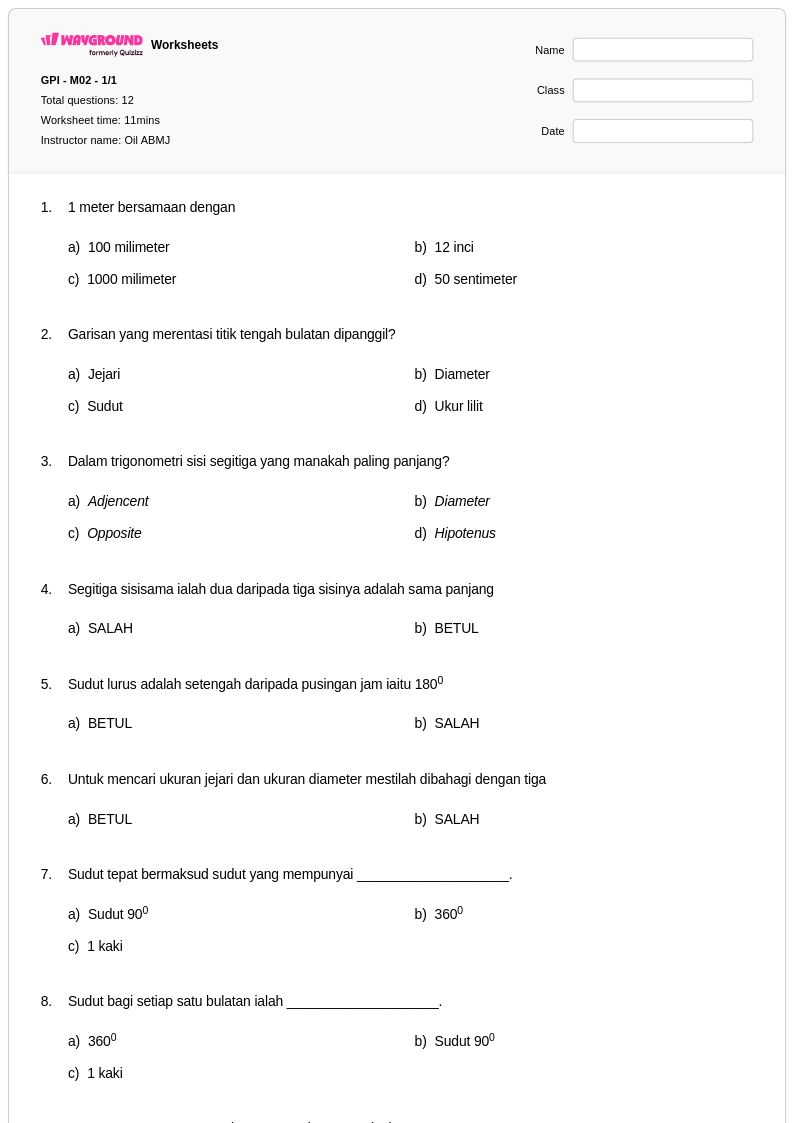
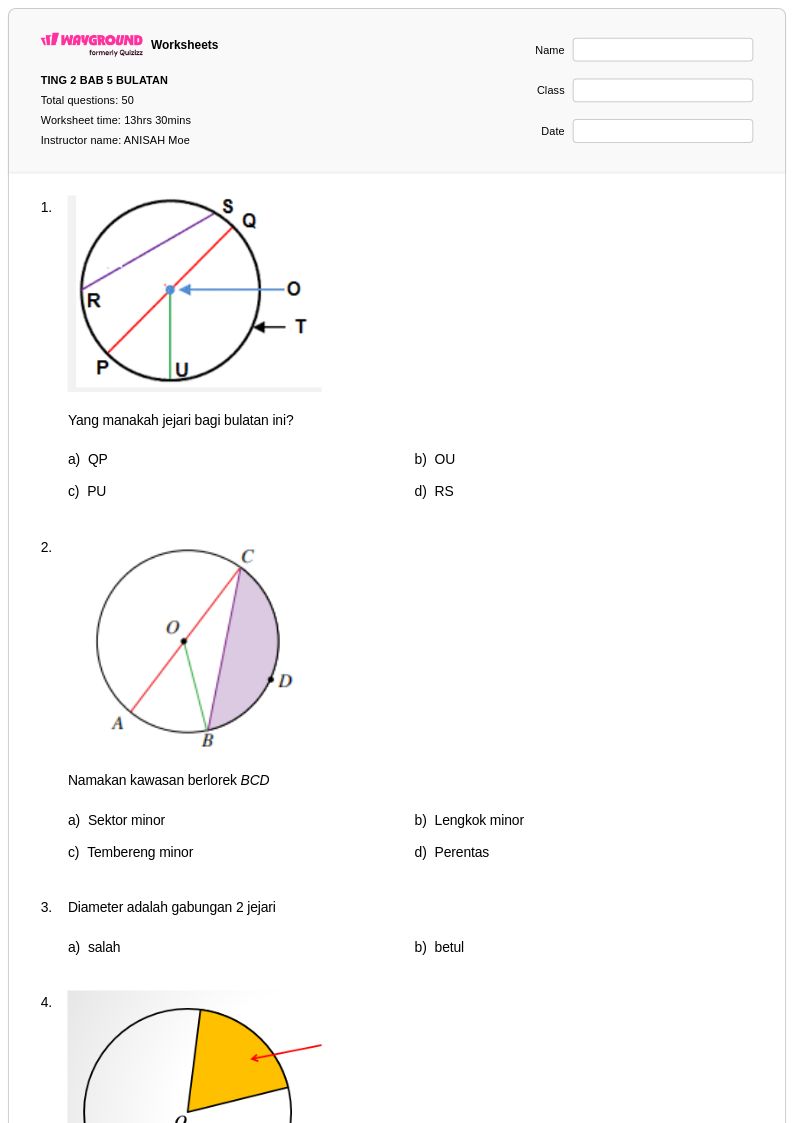
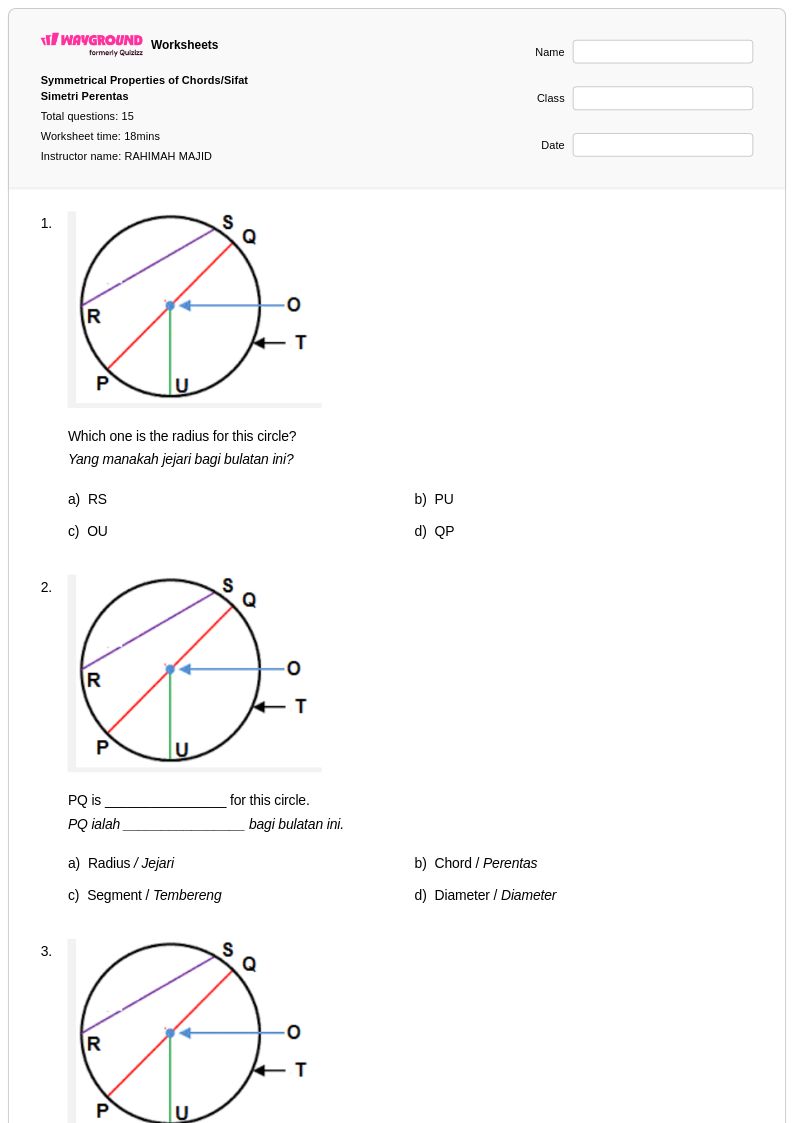
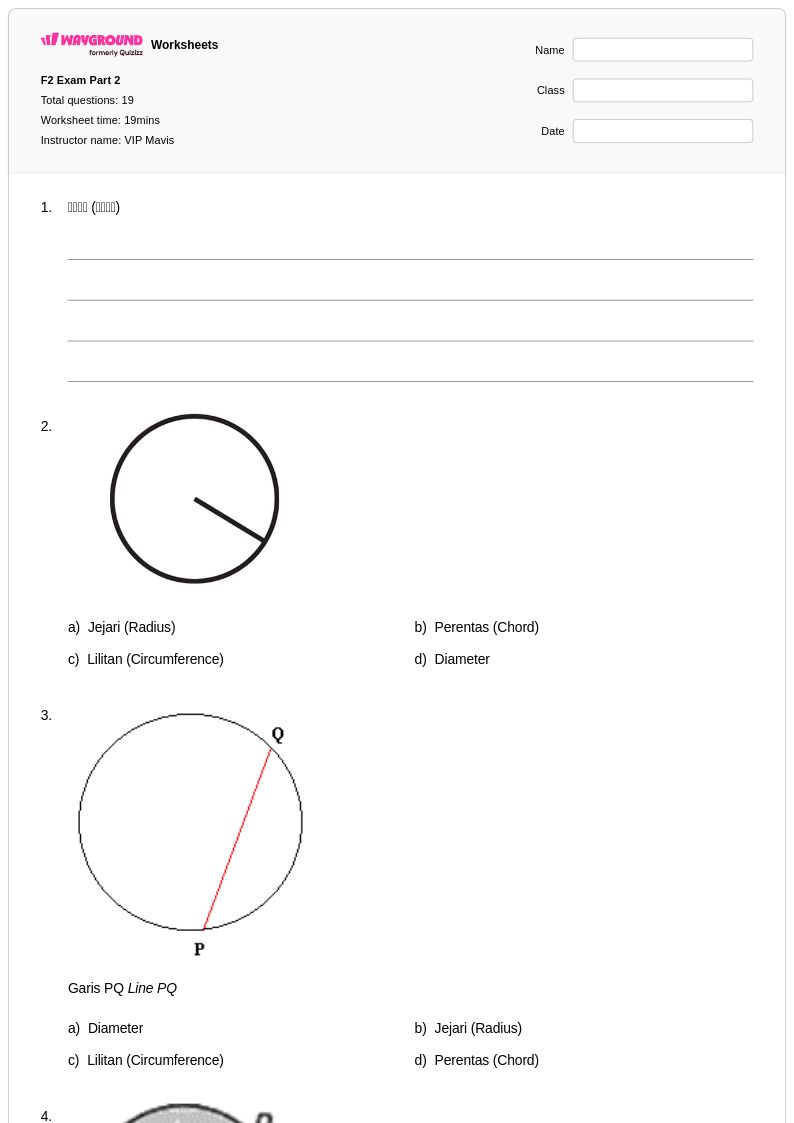
Year 2 diameter worksheets from Wayground offer free printables and practice problems that help young students understand this essential geometry concept through engaging activities with complete answer keys.
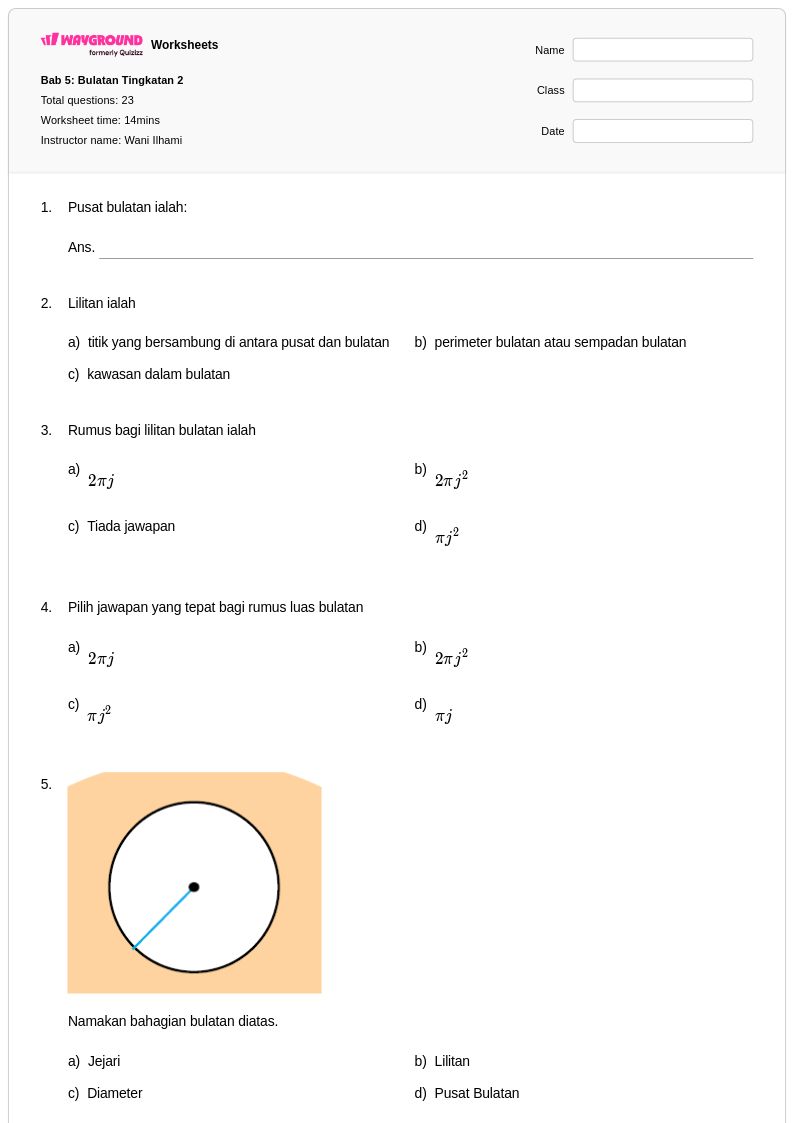
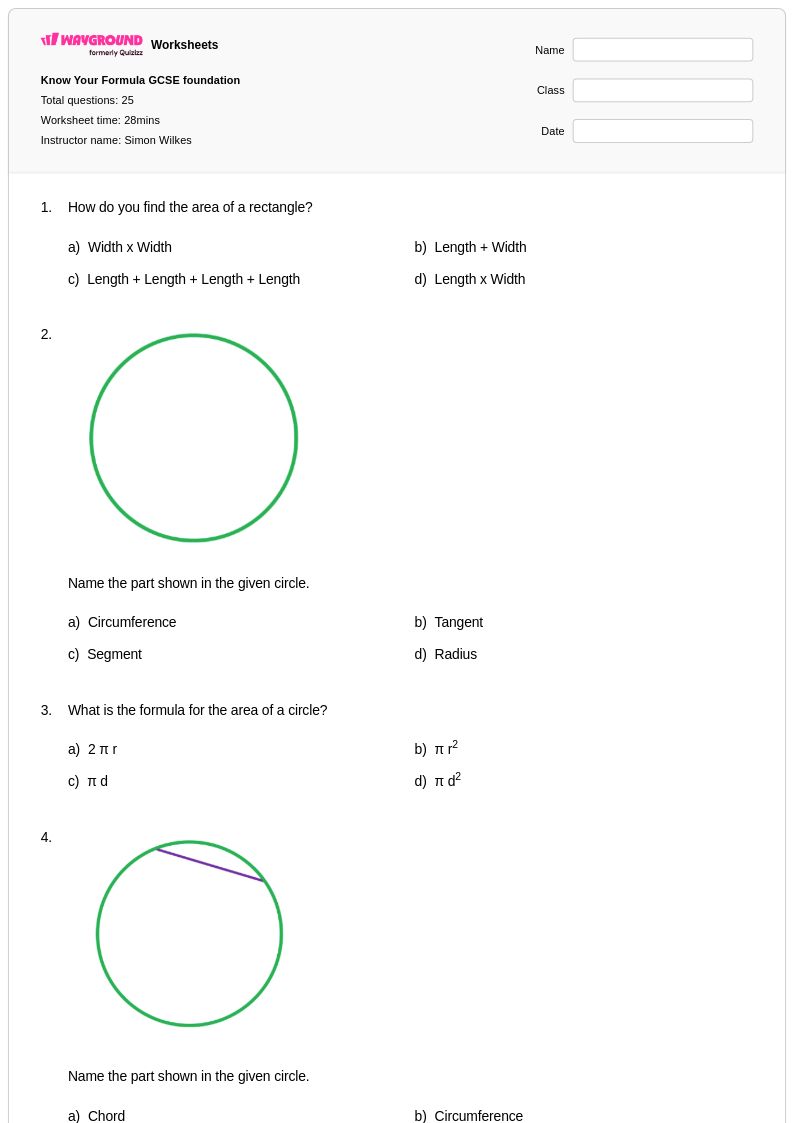
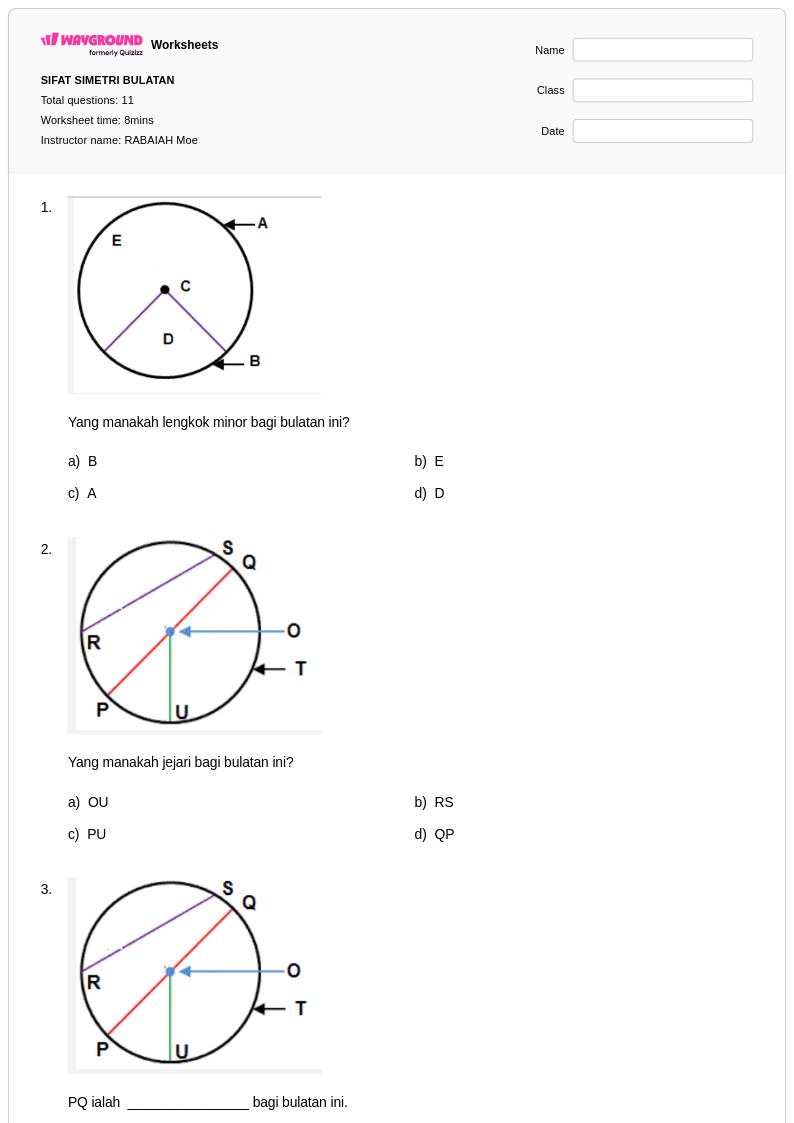
Diameter worksheets for Year 2 students through Wayground (formerly Quizizz) introduce young learners to this fundamental geometric concept through age-appropriate visual exercises and hands-on activities. These carefully crafted worksheets help second graders understand that a diameter is a straight line that passes through the center of a circle and connects two points on the circle's edge, building essential spatial reasoning skills that form the foundation for more advanced geometry concepts. Students engage with practice problems that involve identifying diameters in various circles, measuring diameters using simple tools, and distinguishing between diameters and other circle parts like radius. Each worksheet includes a comprehensive answer key and is available as free printables in convenient pdf format, making it easy for educators to incorporate diameter instruction into their mathematics curriculum while providing students with concrete visual representations of this abstract concept.
Wayground (formerly Quizizz) empowers teachers with millions of teacher-created diameter resources that support diverse learning needs in Year 2 mathematics classrooms. The platform's robust search and filtering capabilities allow educators to quickly locate worksheets that align with specific curriculum standards and match their students' developmental levels, while differentiation tools enable teachers to modify content complexity for individual learners. These diameter worksheet collections are available in both printable and digital formats, including downloadable pdf versions, giving instructors the flexibility to seamlessly integrate circle geometry instruction into various teaching environments. Teachers can customize these resources for targeted skill practice, use them for remediation with students who need additional support understanding geometric concepts, or implement them as enrichment activities for advanced learners, making lesson planning more efficient while ensuring all students develop a solid understanding of diameter as a key geometric measurement.
FAQs
How do I teach diameter to second graders?
By Grade 2, students can handle more precision. Start by reviewing that the diameter must pass through the center, not just across the circle, then move into distinguishing diameter from radius. A side-by-side comparison works well: draw both on the same circle, label them, and ask students what they notice. Once students can reliably tell the two apart, introduce the relationship: the diameter is always twice the radius. That doubling relationship is the key second-grade takeaway.
What exercises help second graders practice diameter?
Practice at this level should include: identifying the diameter versus the radius on labeled diagrams, measuring diameter with a ruler, and simple calculations using the diameter-radius relationship (e.g., "the radius is 4 cm — what is the diameter?"). Wayground's Grade 2 worksheets cover all three, with problems that use concrete visual representations before moving to numerical calculations.
What mistakes do second graders make with diameter?
The most common error is mixing up diameter and radius, students know both terms but apply them inconsistently, especially under time pressure. A second error is measuring from the center to the edge and calling it the diameter (that's the radius). Labeling exercises where students must write both measurements on the same circle, and check that the diameter is exactly double, are effective at catching both errors.
How do I use Wayground's Grade 2 diameter worksheets in my class?
Each worksheet includes a complete answer key, so students can self-check after independent practice. You can assign the worksheet as a digital quiz on Wayground for immediate, auto-scored feedback, or print the PDF for hands-on ruler work — which is often the better choice when the lesson involves physical measurement. Both formats use the same problems, so switching between them doesn't disrupt your sequence.
How does diameter fit into the Grade 2 math curriculum?
Common Core's Grade 2 geometry standards focus on shapes and their attributes rather than circle measurement specifically, so diameter at this level is preparatory rather than assessed. Students are building the spatial reasoning and measurement vocabulary, distinguishing parts of a circle, using a ruler accurately, that Common Core formalizes in Grade 7 when circumference calculations require a solid understanding of what diameter actually measures. Grade 2 is the right time to make the diameter-radius relationship automatic.
How can I support diverse learners with these diameter worksheets?
For students who find the diameter-radius distinction confusing, Wayground's reduced answer choices accommodation narrows the options they see, making it easier to focus on the concept rather than the number of choices. For English language learners or students with reading challenges, the worksheet translation feature and Read Aloud accommodation ensure the language barrier doesn't block access to the geometry. Both can be set per student without affecting the rest of the class.