
11 Q
1st - 5th
7 Q
2nd - 3rd
11 Q
2nd - 5th
10 Q
1st - Uni
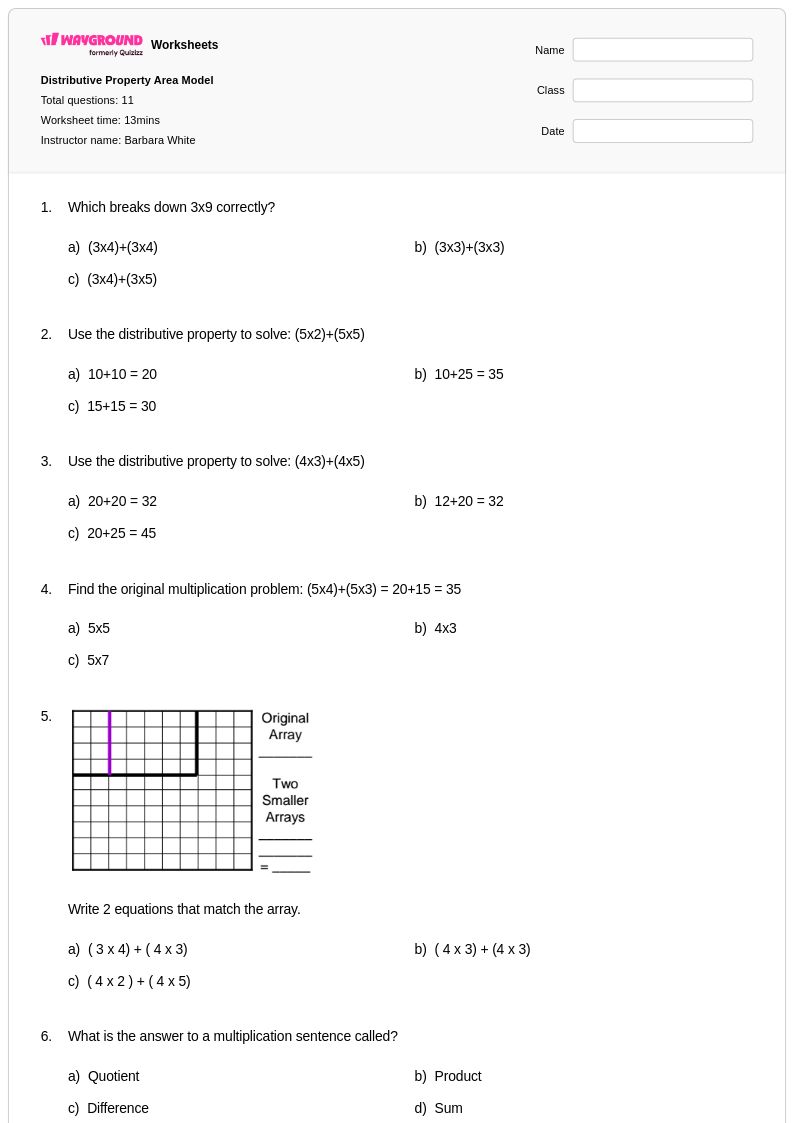
11 Q
2nd - 5th
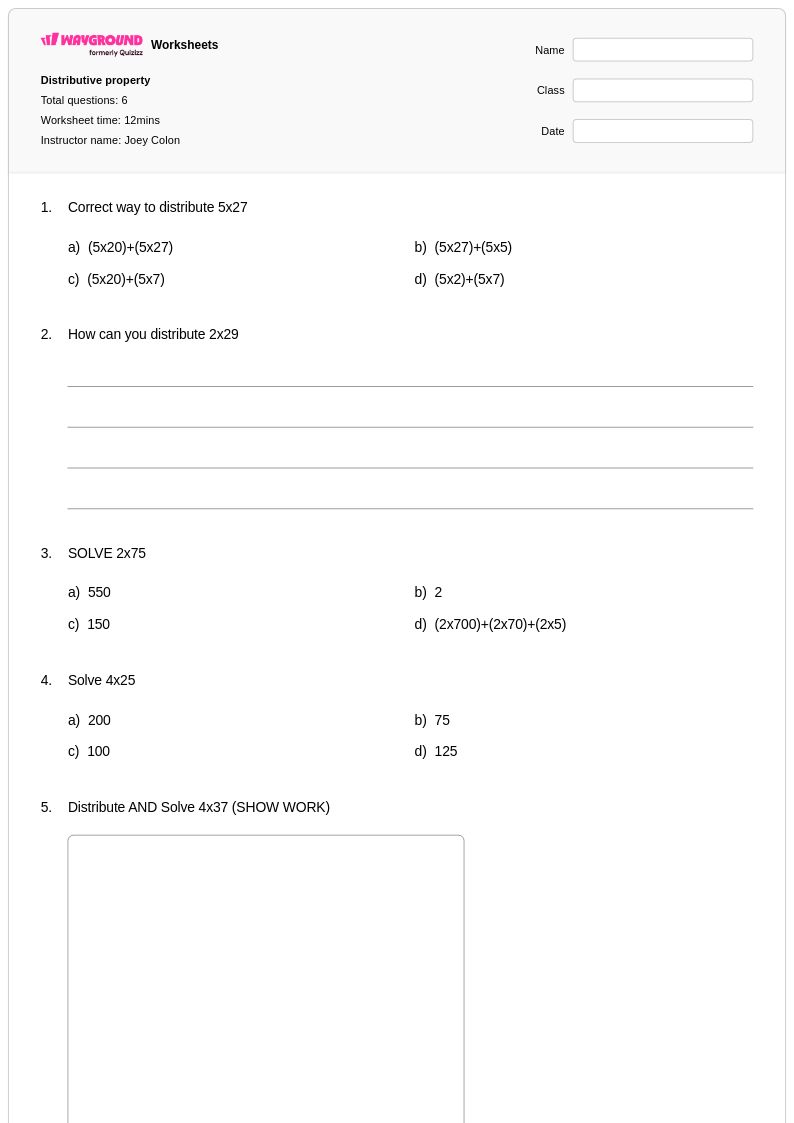
6 Q
2nd - 3rd
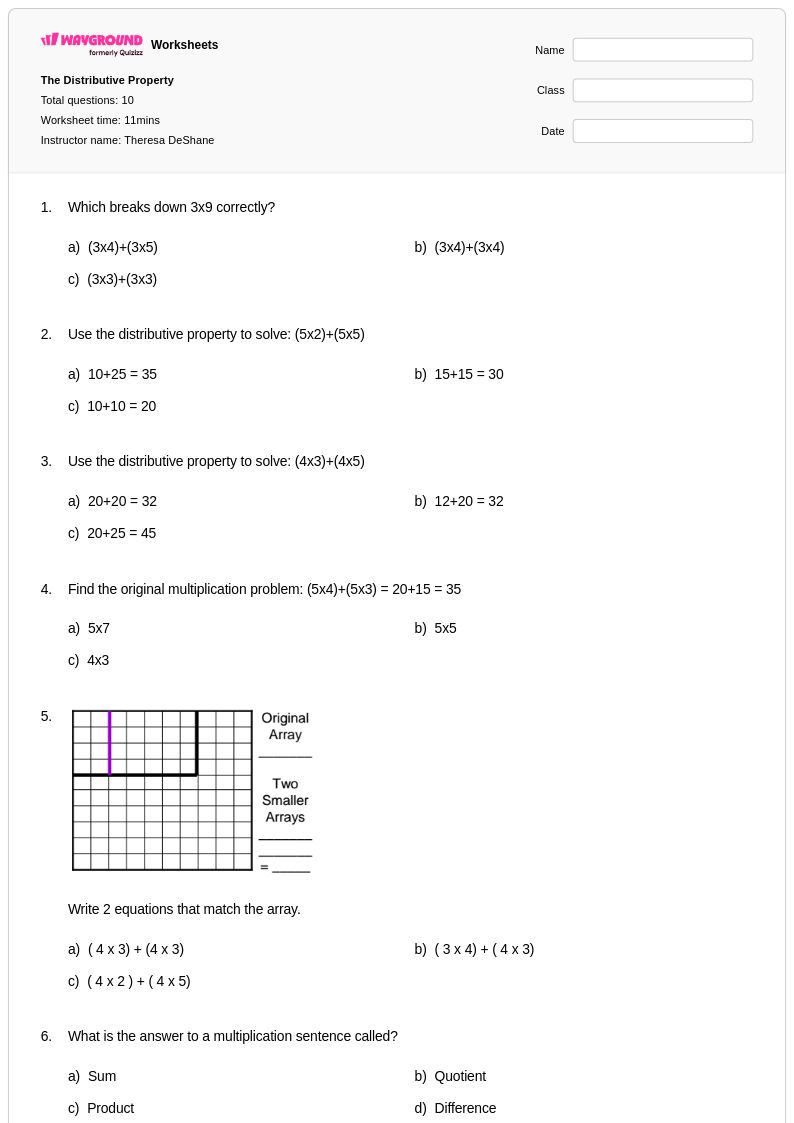
10 Q
2nd - 5th
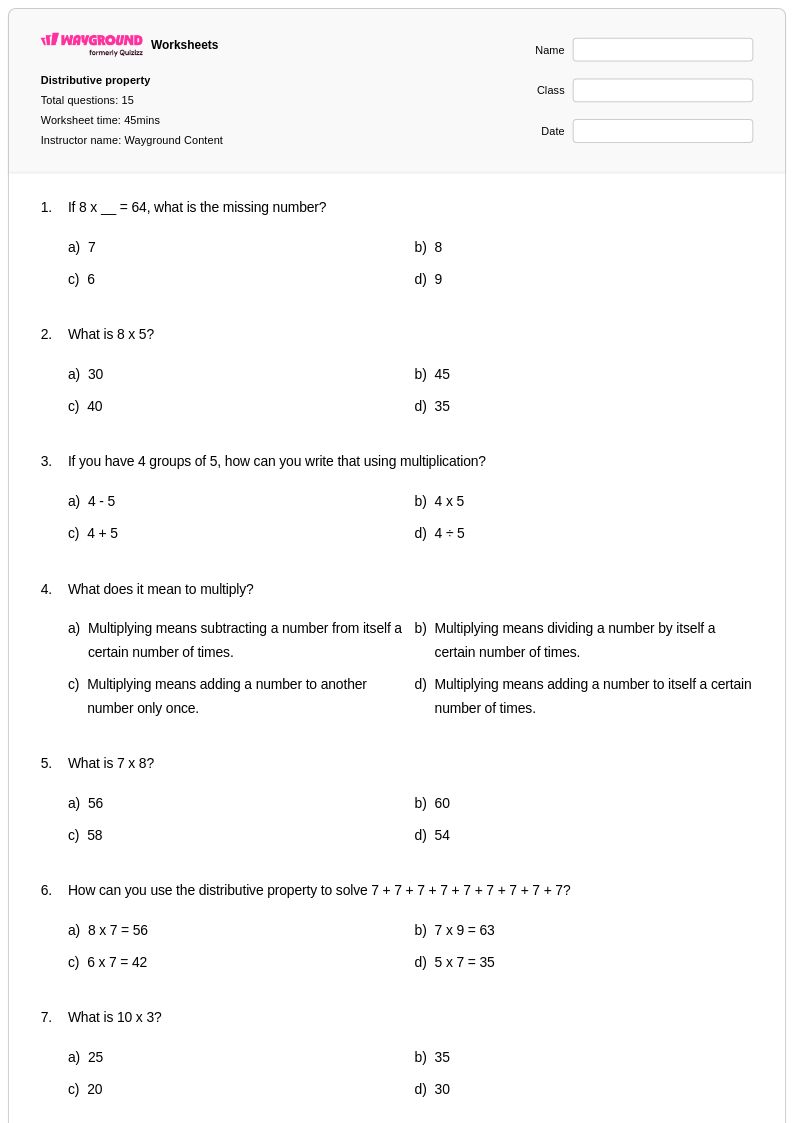
15 Q
2nd - 3rd
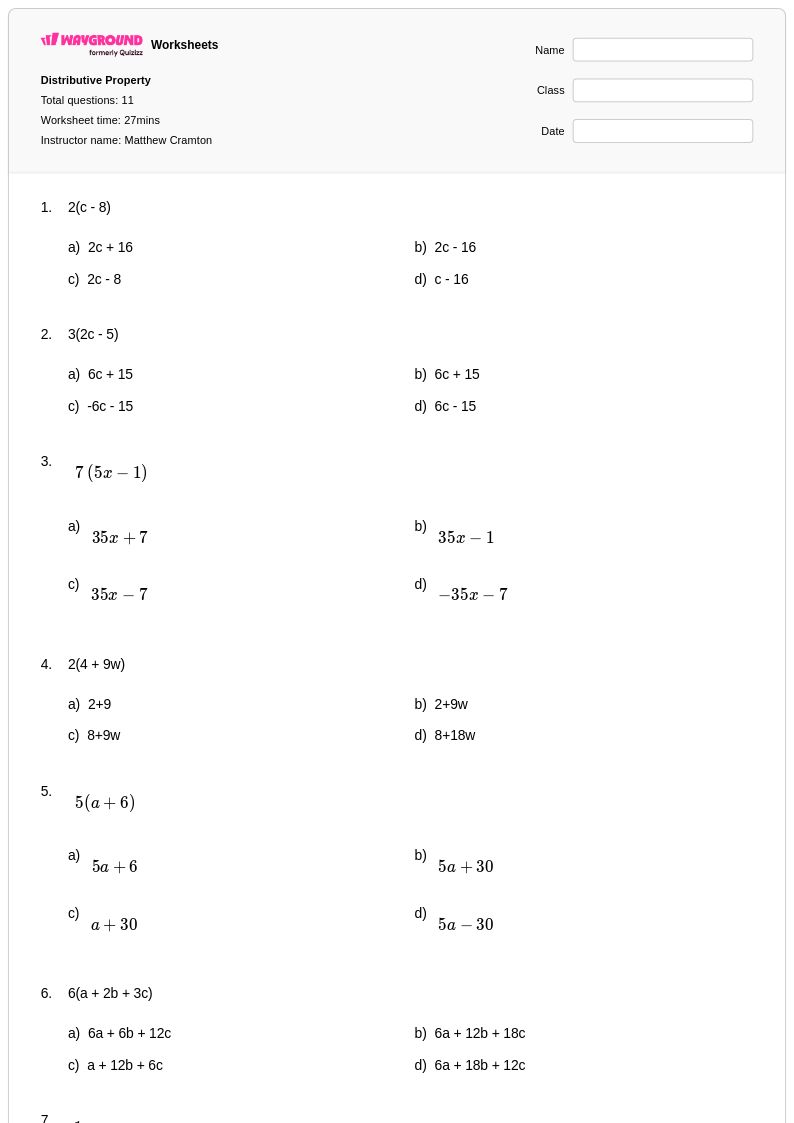
11 Q
1st - Uni
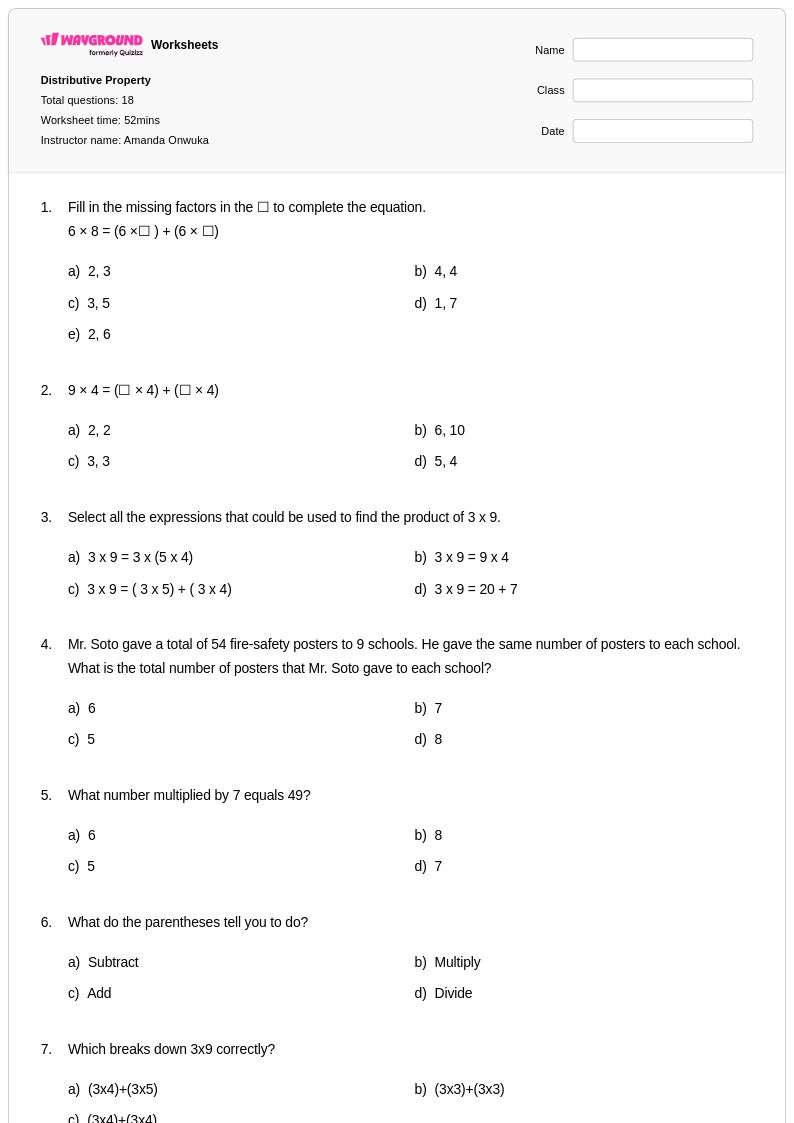
18 Q
1st - 5th
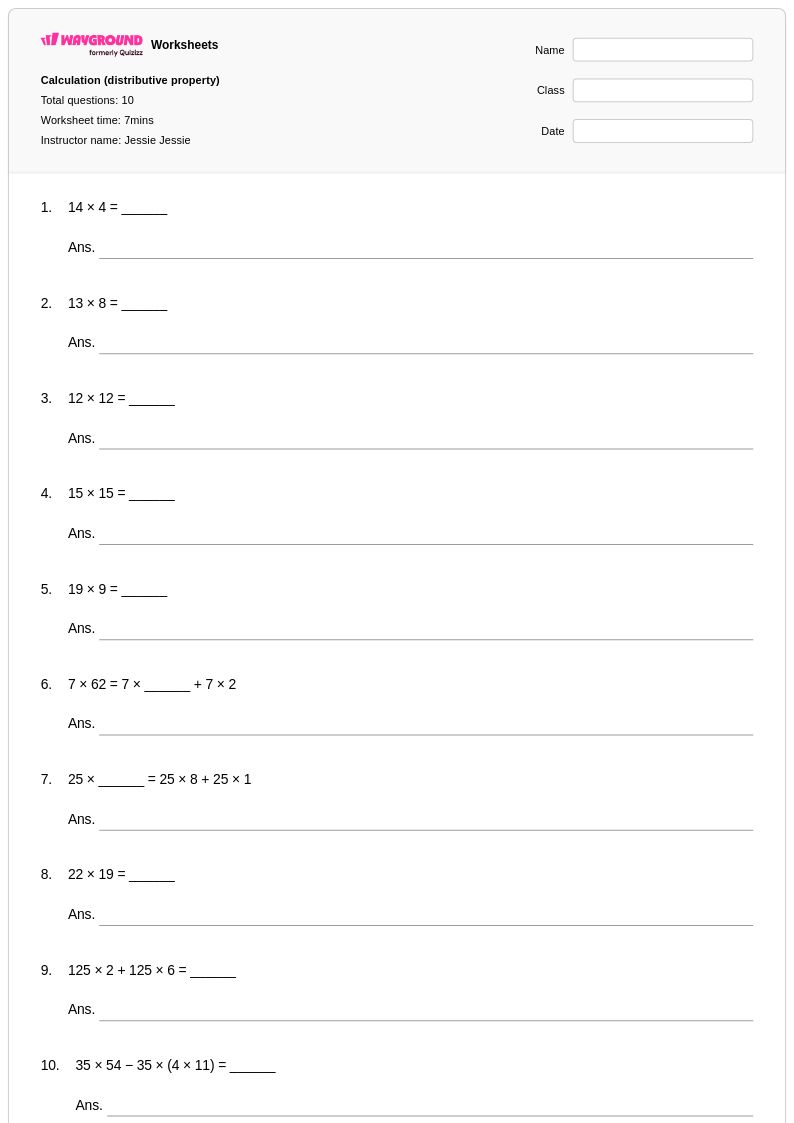
10 Q
1st - 5th
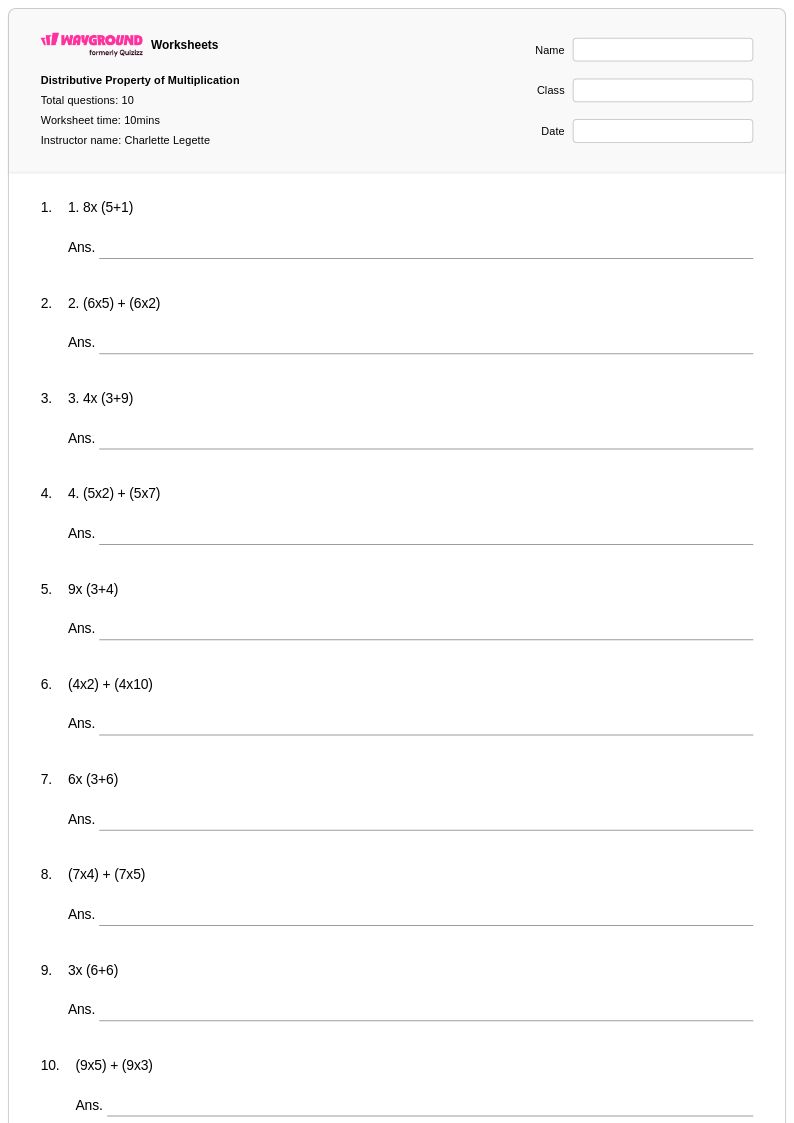
10 Q
1st - 5th
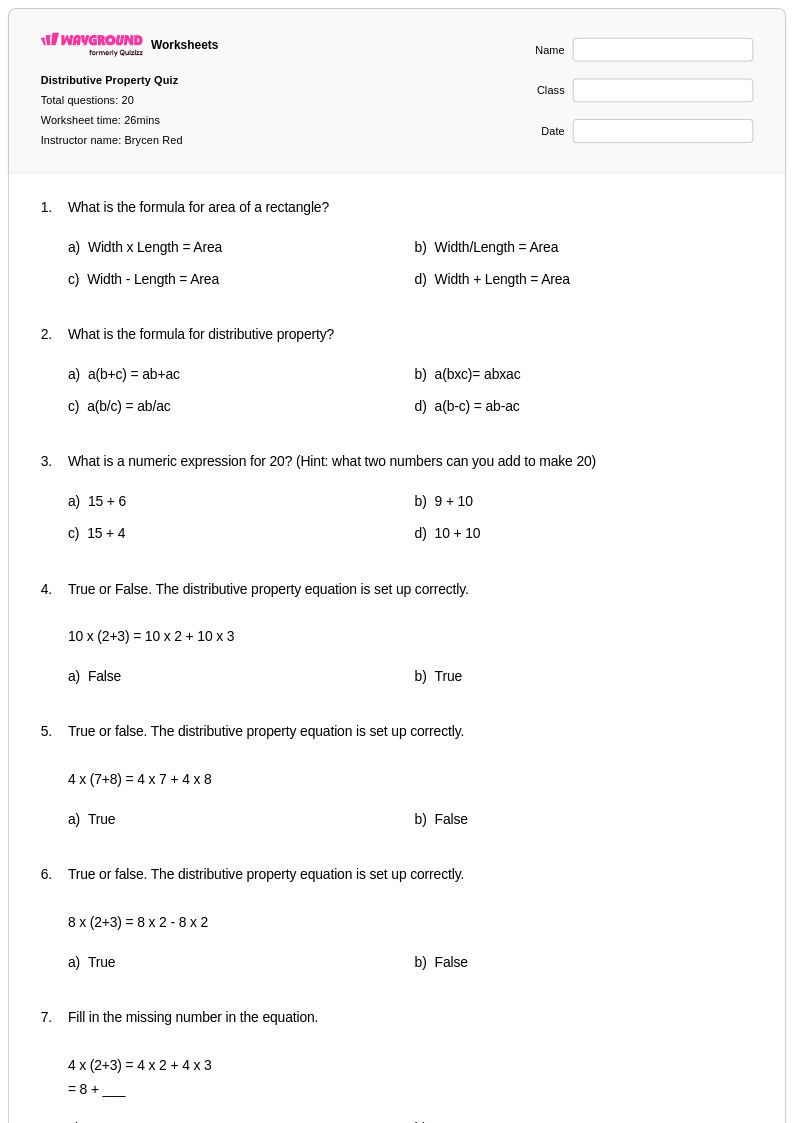
20 Q
1st - 6th
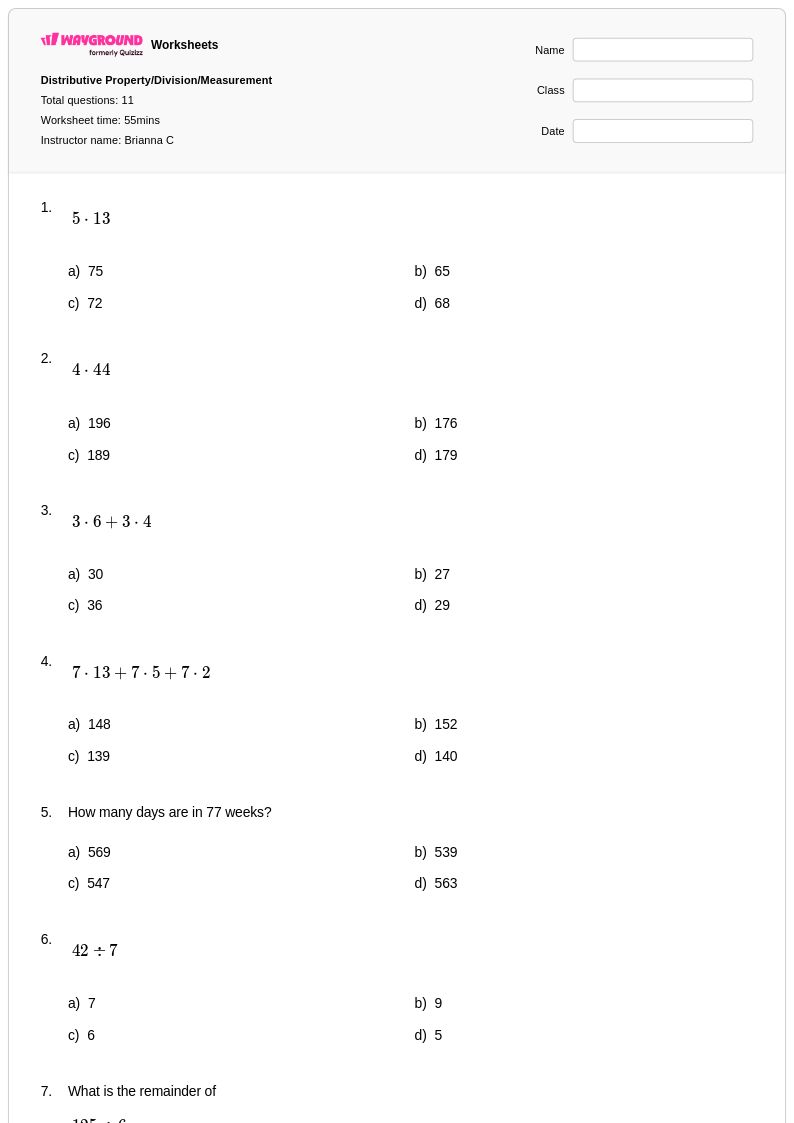
11 Q
2nd - 4th

19 Q
2nd

50 Q
2nd - 5th
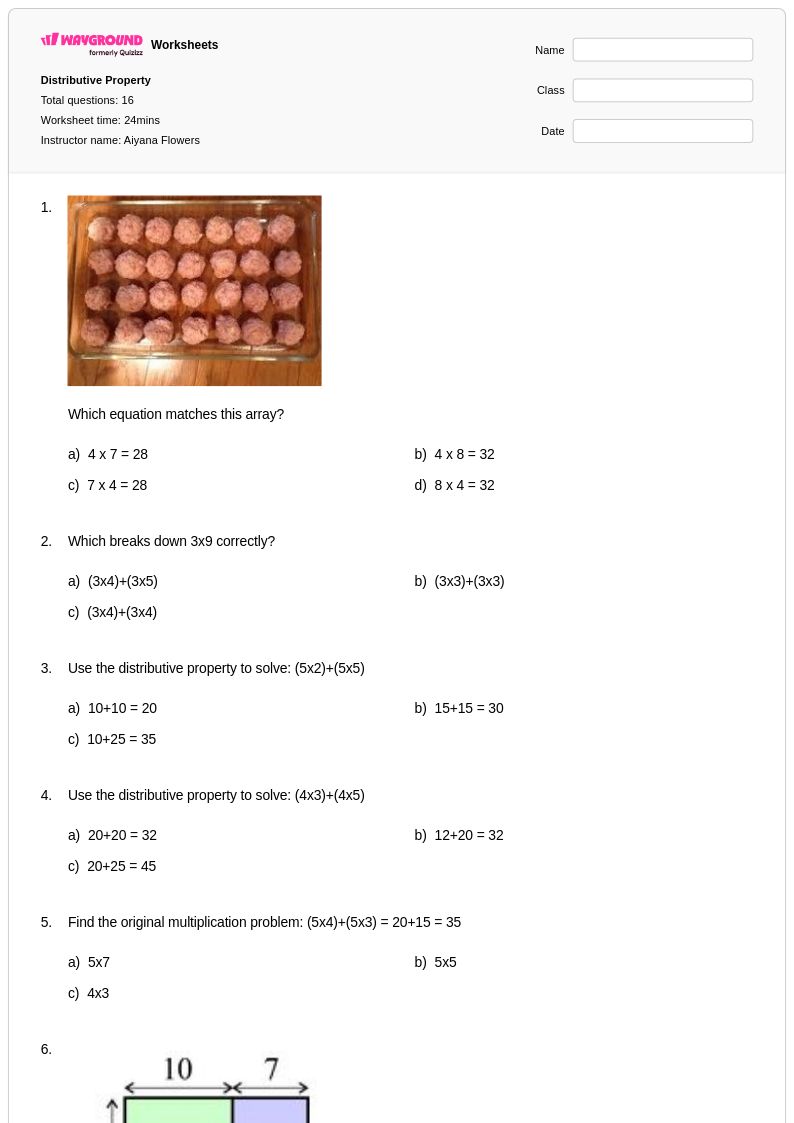
16 Q
1st - 5th
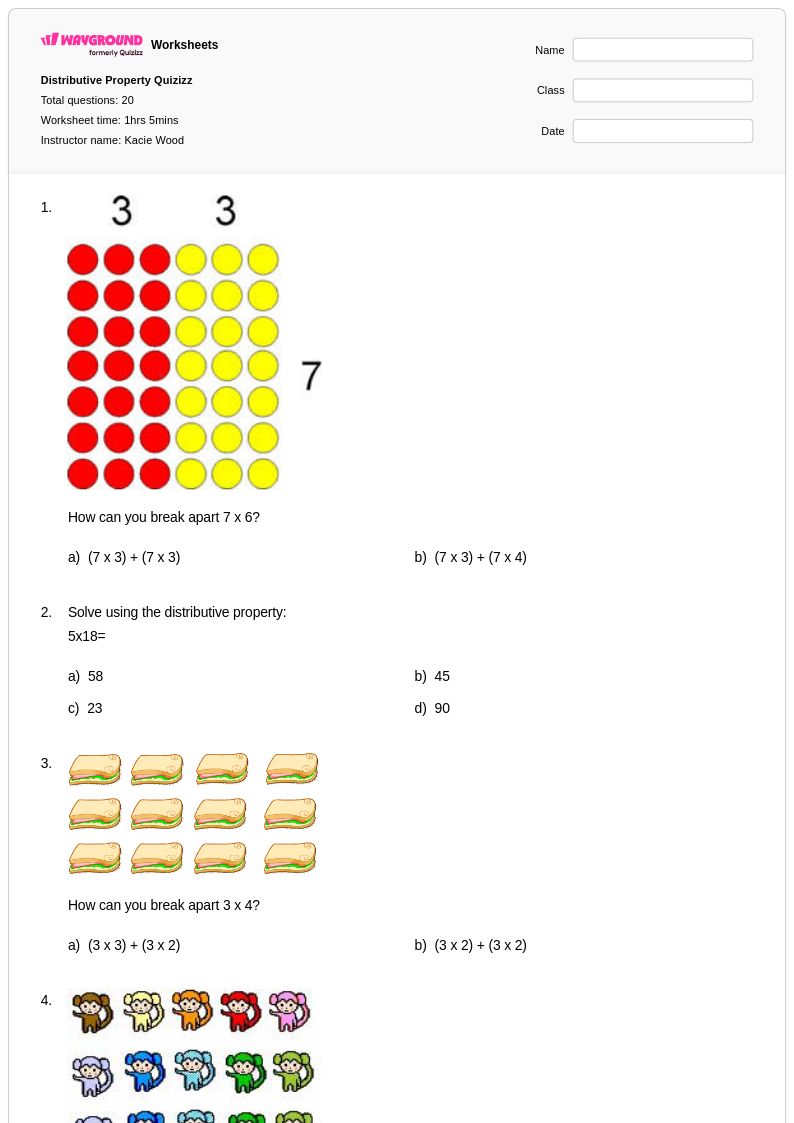
20 Q
2nd - 5th
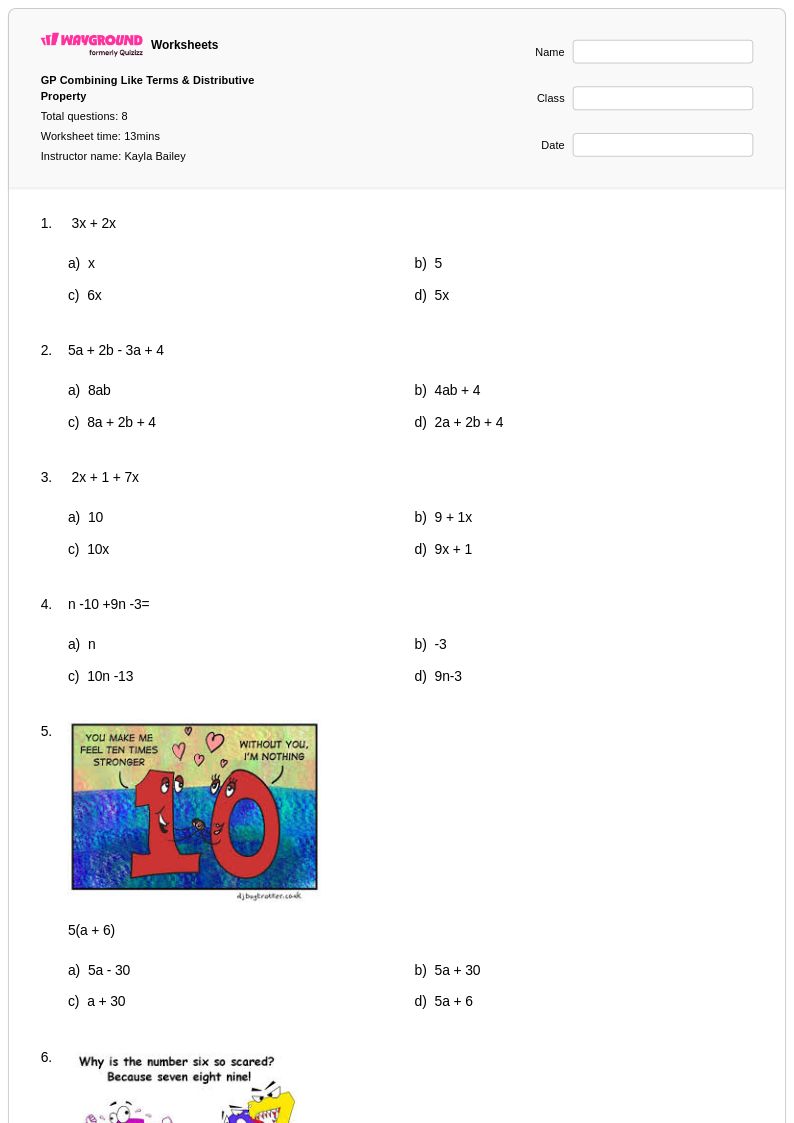
8 Q
2nd
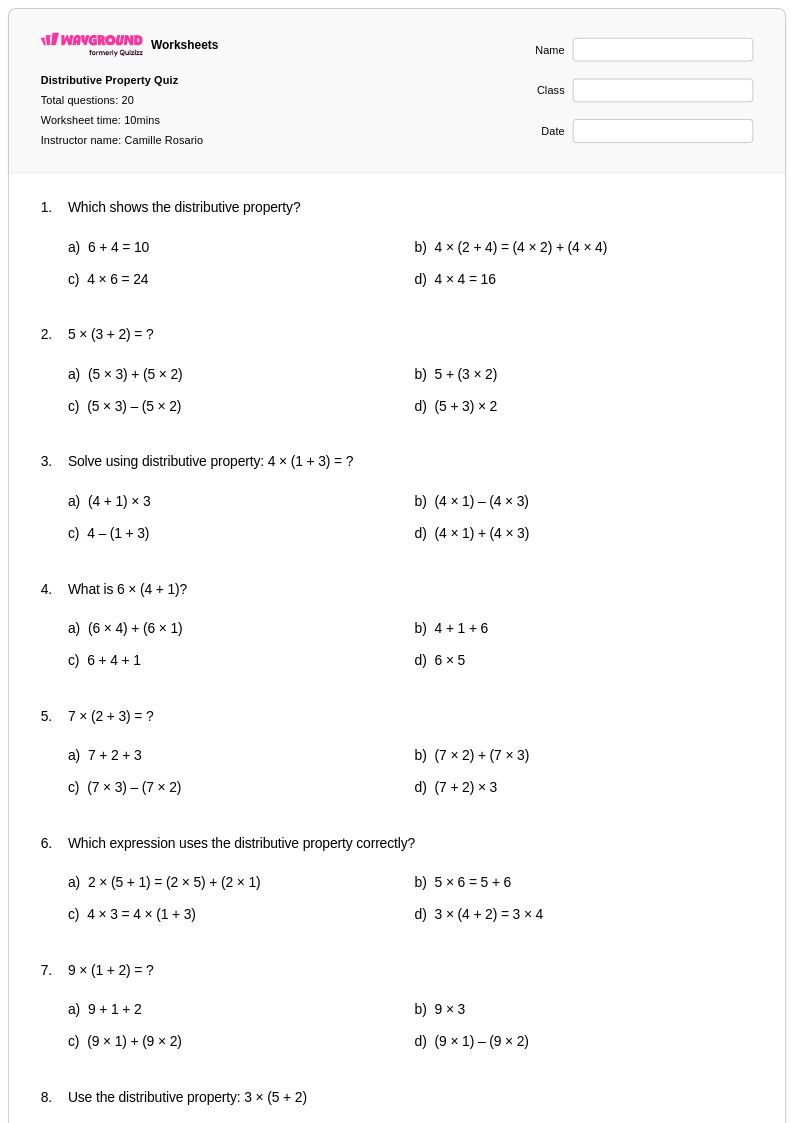
20 Q
1st - 5th
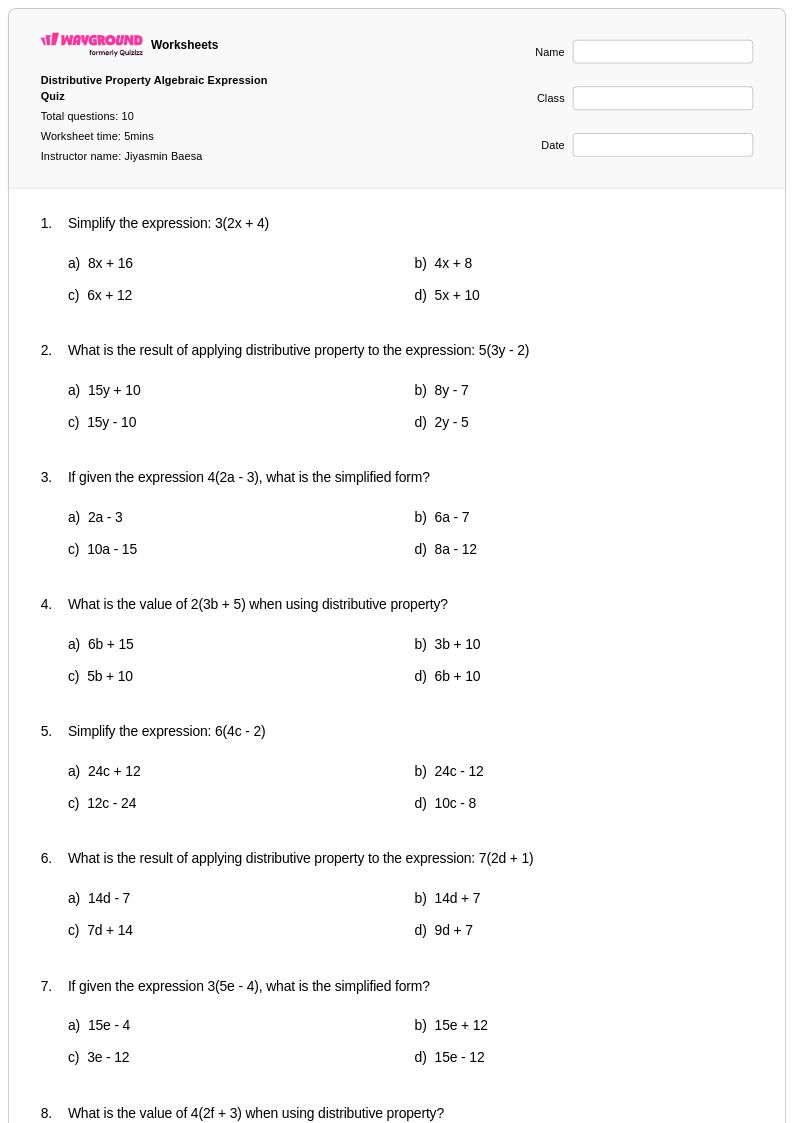
10 Q
2nd
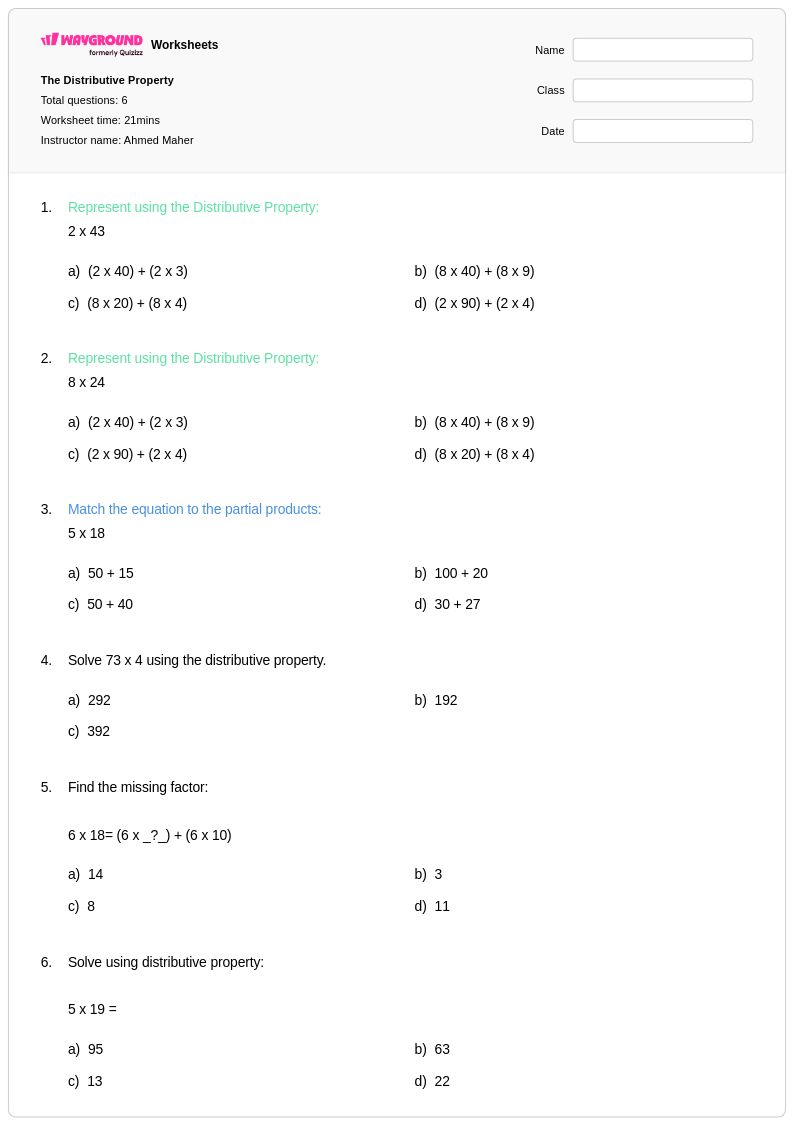
6 Q
2nd - 5th
5 Q
2nd
25 Q
1st - 5th
Explore Distributive Property Worksheets by Grades
Explore Other Subject Worksheets for year 2
Explore printable Distributive Property worksheets for Year 2
Distributive property worksheets for Year 2 students available through Wayground (formerly Quizizz) provide essential foundational practice in understanding how multiplication distributes over addition and subtraction. These carefully designed resources help young learners grasp the concept that breaking apart numbers can make calculations easier, such as recognizing that 3 × (2 + 4) equals (3 × 2) + (3 × 4). The worksheets strengthen critical mathematical thinking skills by presenting visual models, array representations, and real-world scenarios that make abstract concepts concrete for second-grade minds. Each printable resource includes comprehensive practice problems that progress from simple illustrations to more complex number relationships, supported by detailed answer keys that enable both independent learning and guided instruction. These free pdf materials serve as invaluable tools for building number sense and preparing students for more advanced arithmetic operations.
Wayground (formerly Quizizz) empowers educators with an extensive collection of millions of teacher-created distributive property resources specifically curated for Year 2 mathematics instruction. The platform's robust search and filtering capabilities allow teachers to quickly locate worksheets that align with curriculum standards and match their students' specific learning needs. Advanced differentiation tools enable instructors to customize difficulty levels, modify problem types, and adjust visual supports to accommodate diverse learning styles within their classrooms. These versatile materials are available in both printable and digital formats, including downloadable pdf versions that facilitate seamless integration into lesson planning, homework assignments, and assessment preparation. Whether supporting whole-group instruction, targeted remediation for struggling learners, or enrichment activities for advanced students, these distributive property worksheets provide the flexibility and depth educators need to strengthen mathematical understanding through consistent, meaningful practice.
FAQs
How do I teach the distributive property to second graders?
What exercises help second graders practice the distributive property?
What mistakes do second graders make with the distributive property?
How do I use Wayground's Grade 2 distributive property worksheets?
How does the distributive property fit into the Grade 2 Common Core progression?
How can I differentiate distributive property practice for my second-grade class?