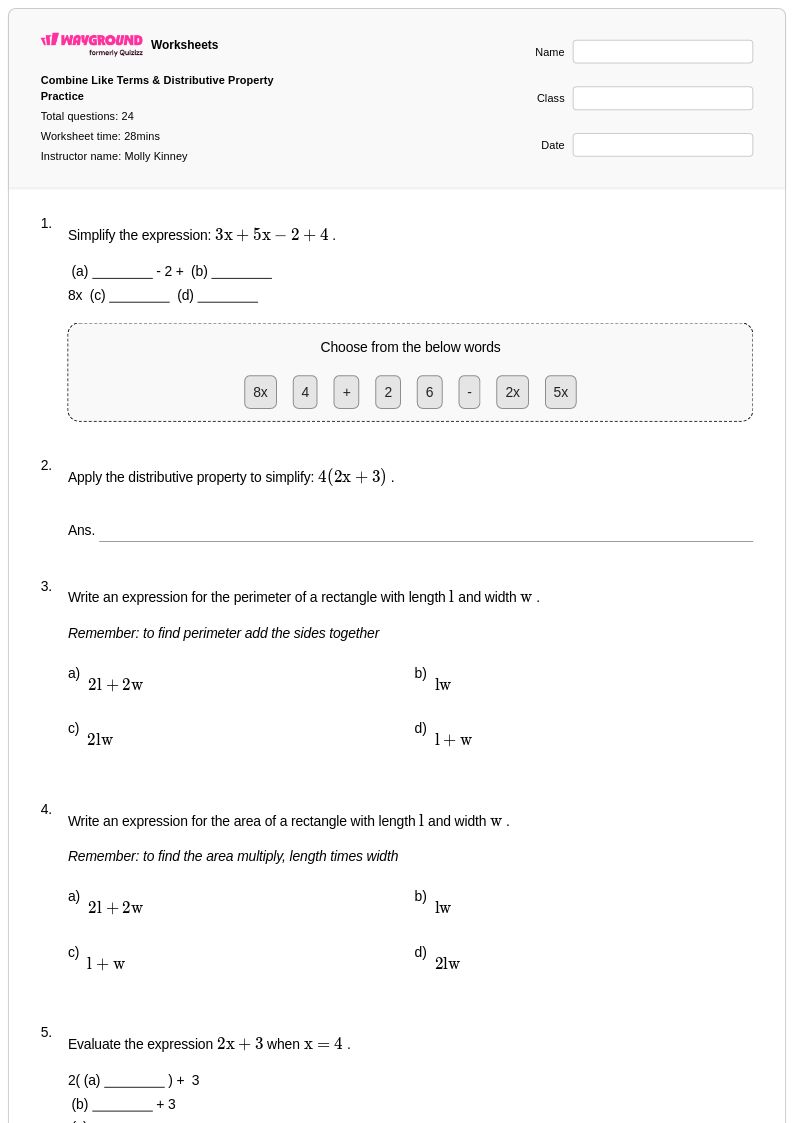
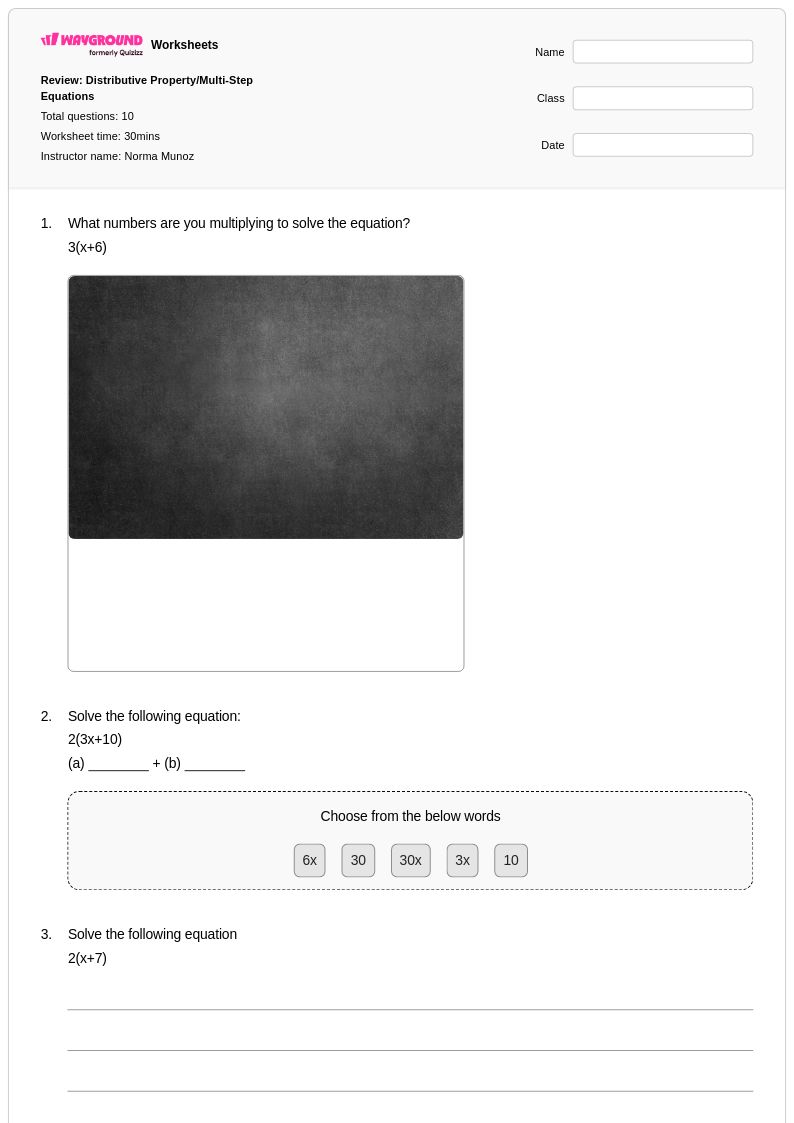
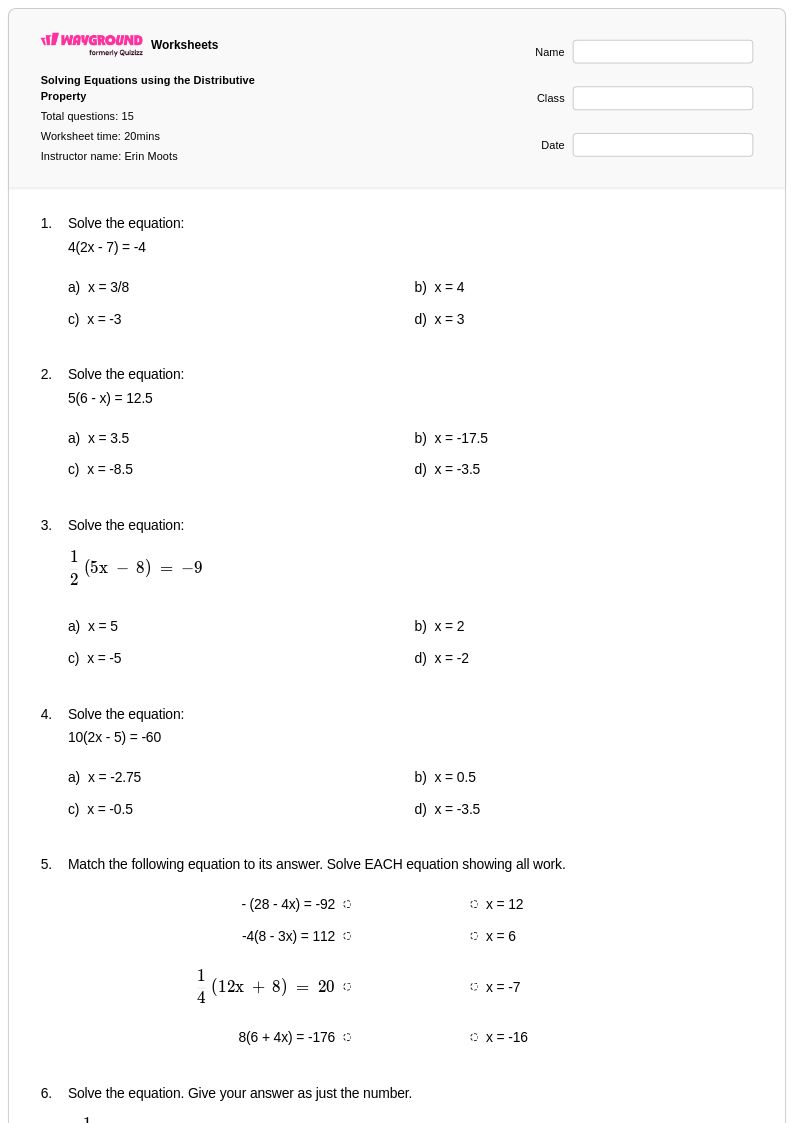
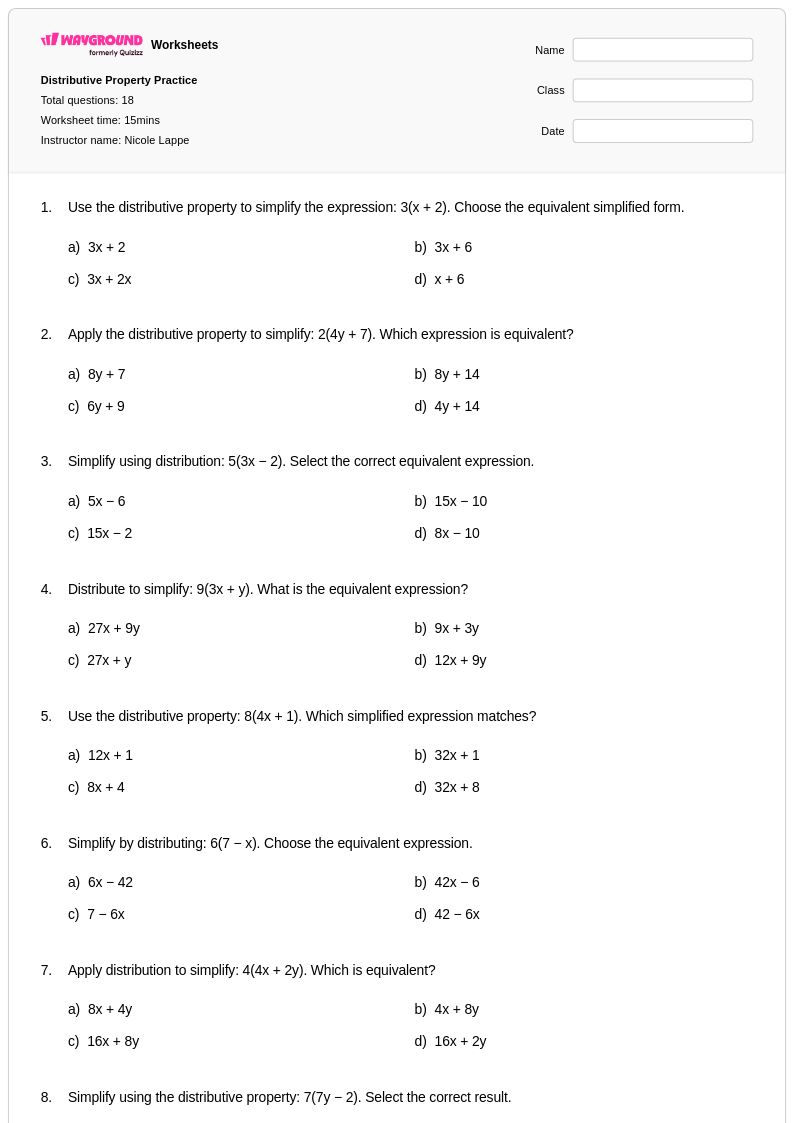
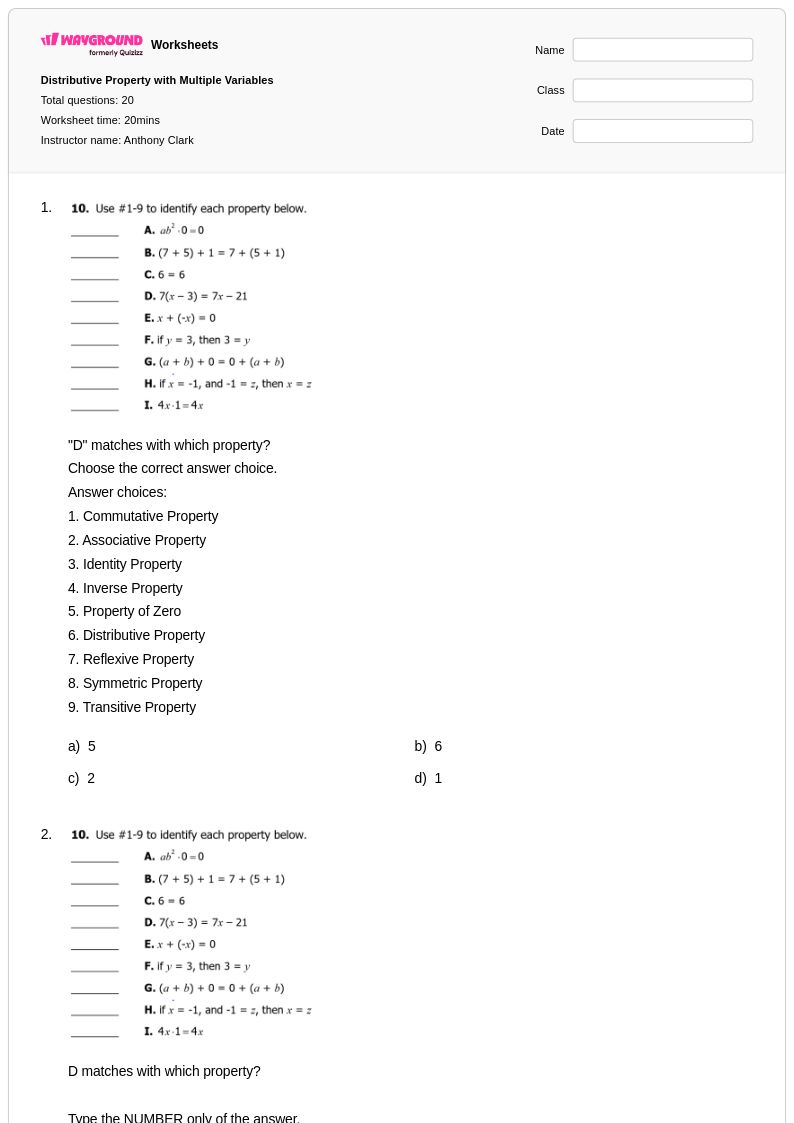
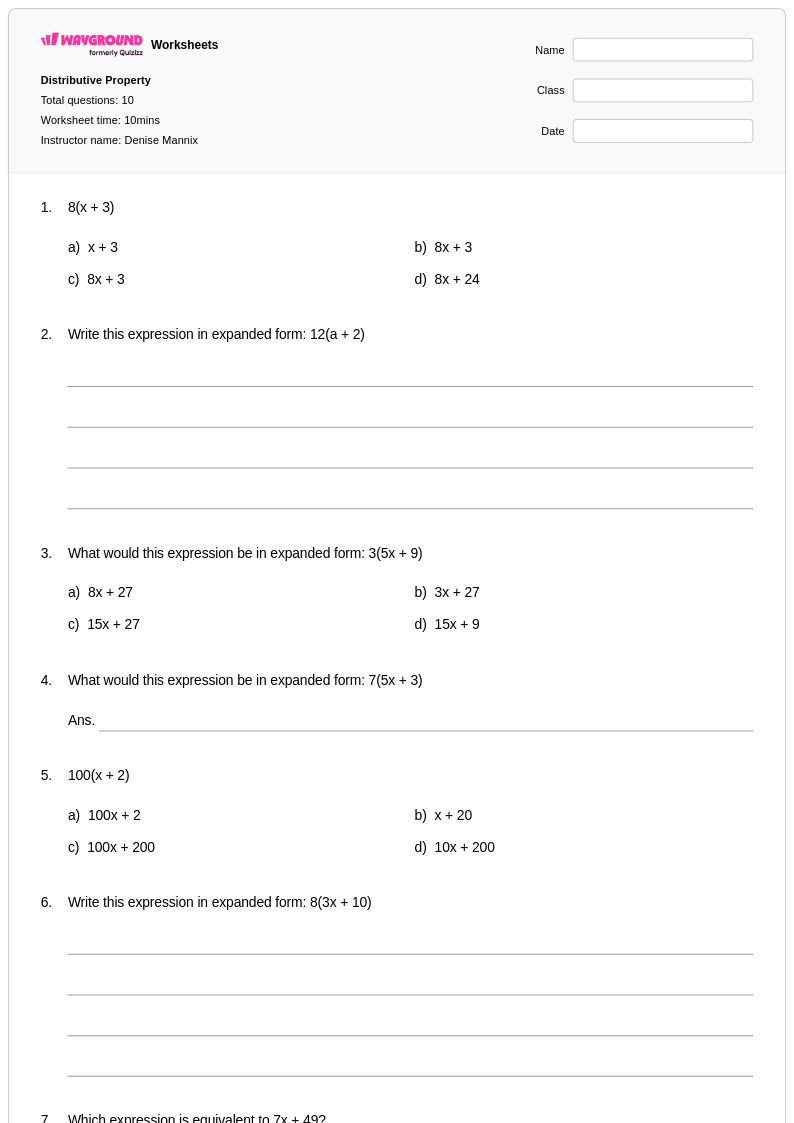
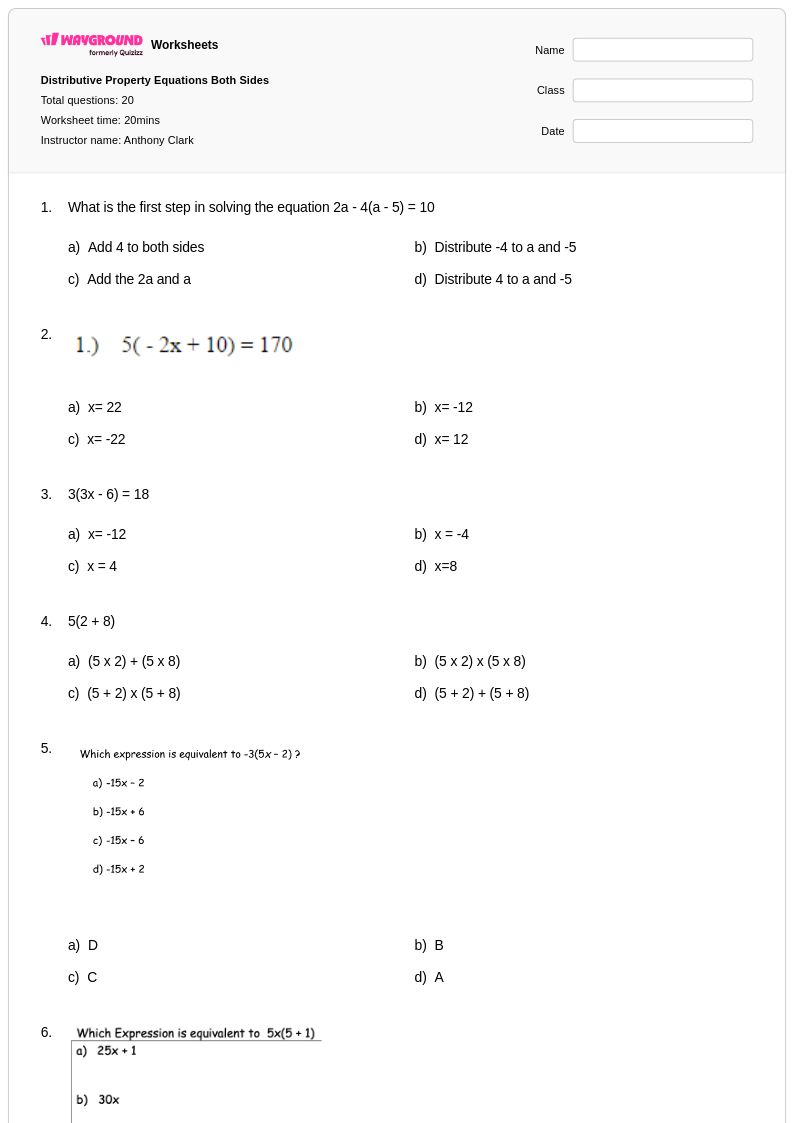
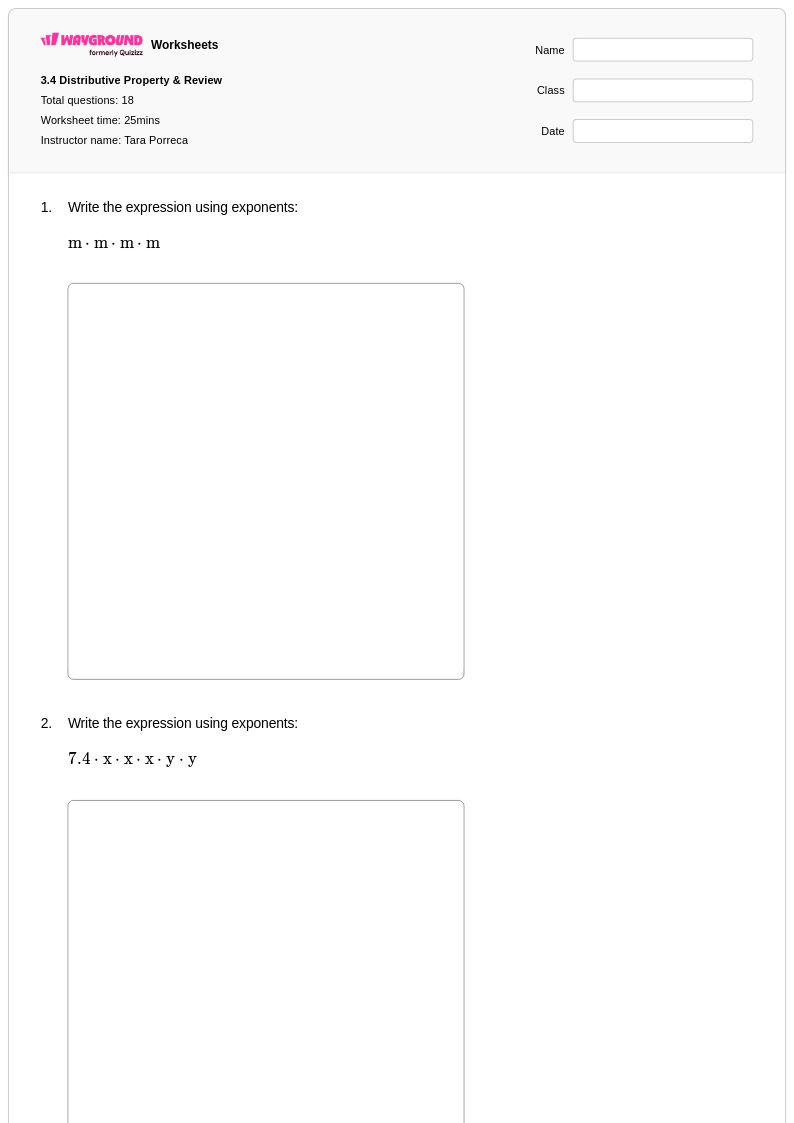
Free distributive property worksheets and printables help students master this fundamental algebraic concept through structured practice problems with comprehensive answer keys and PDF downloads.
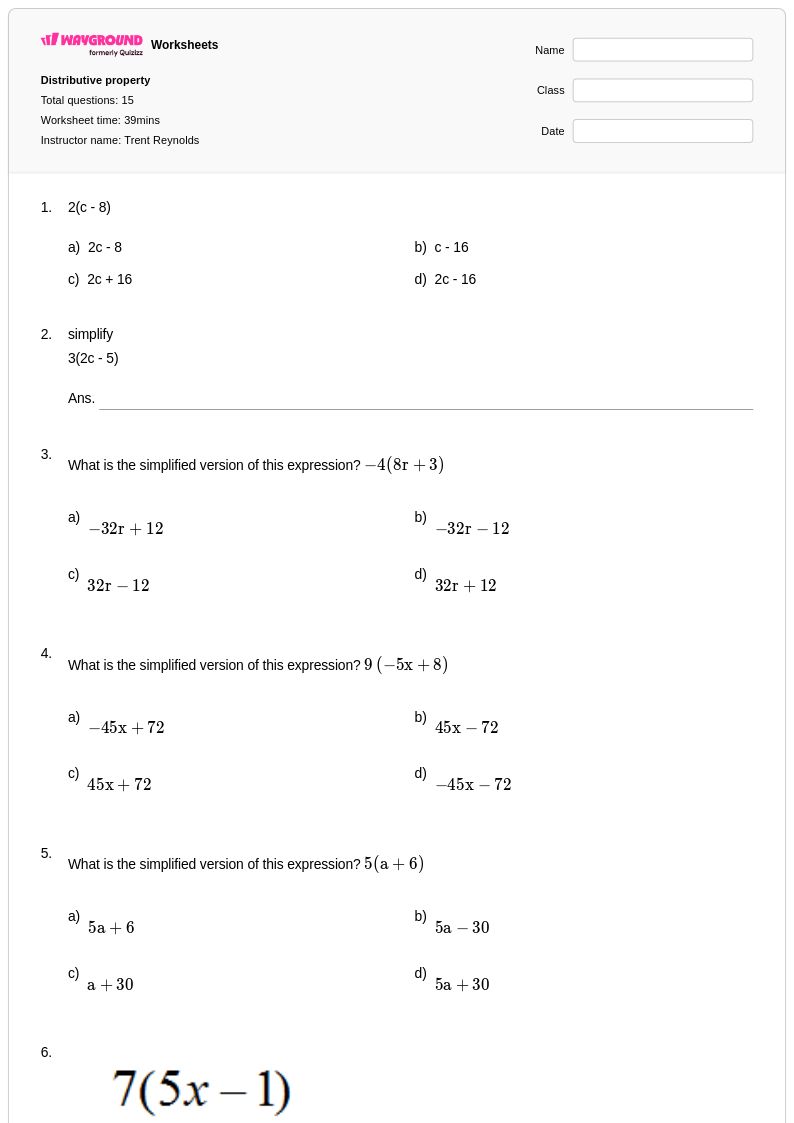
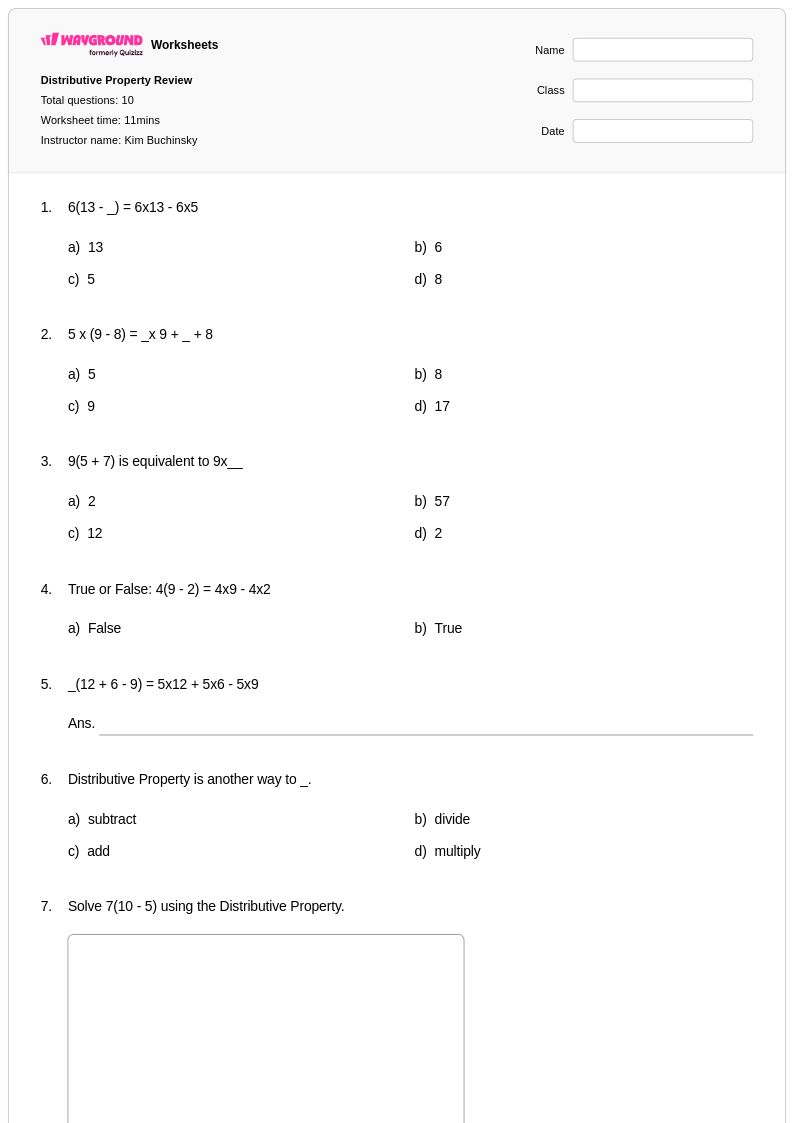
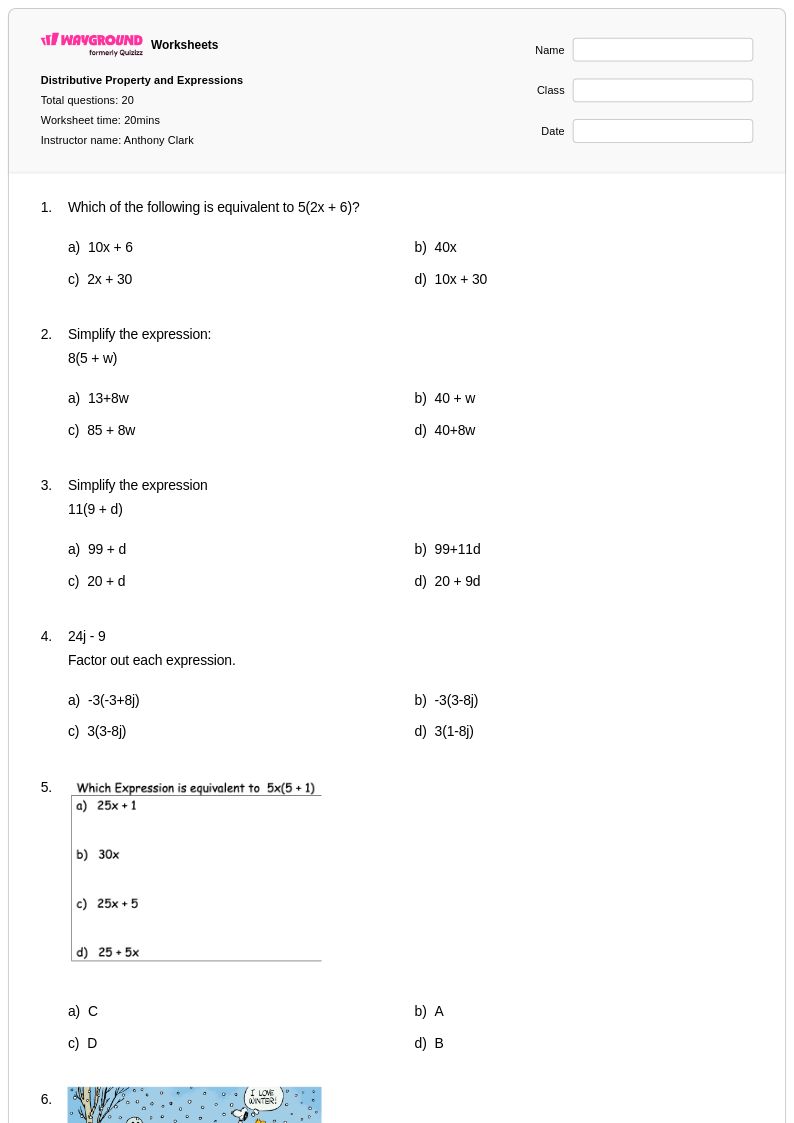
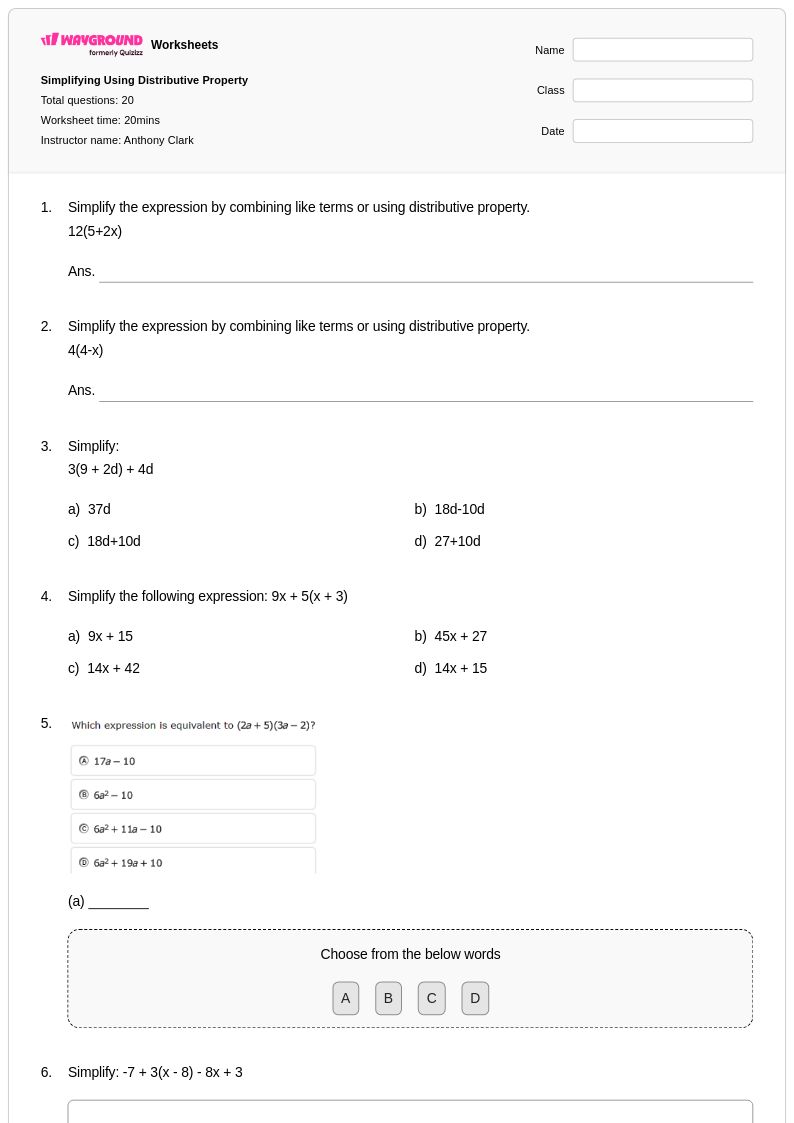
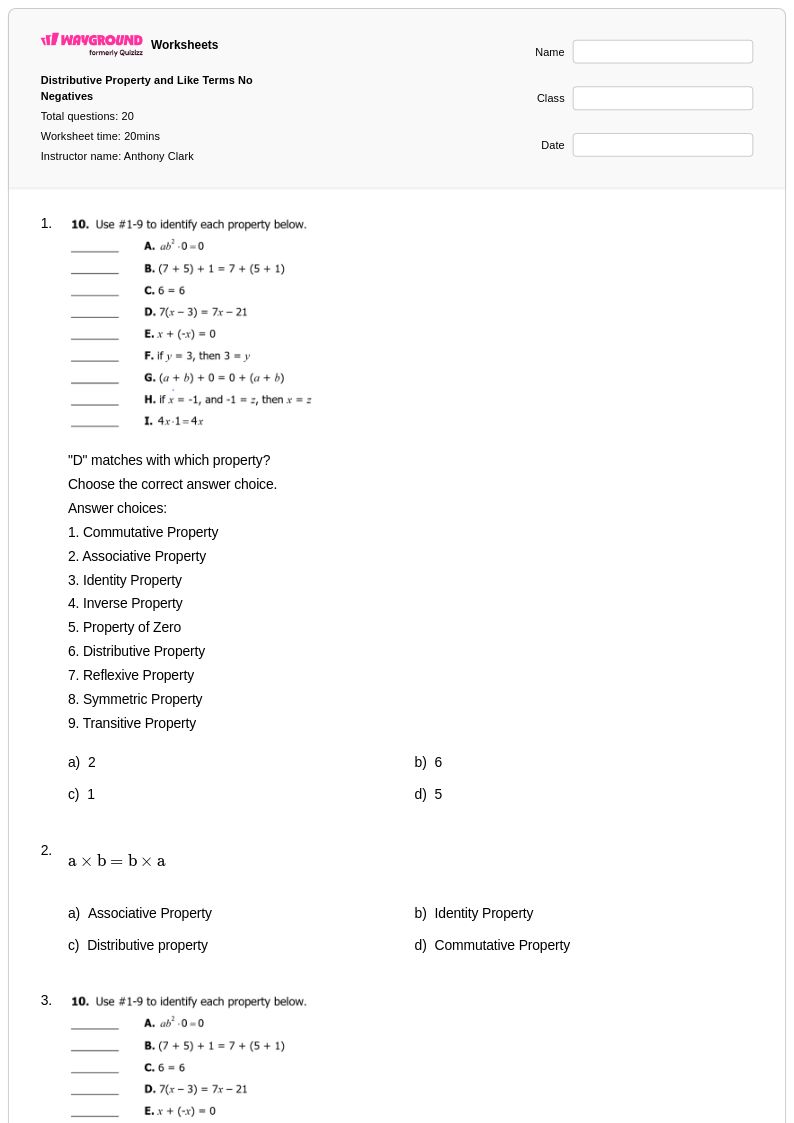
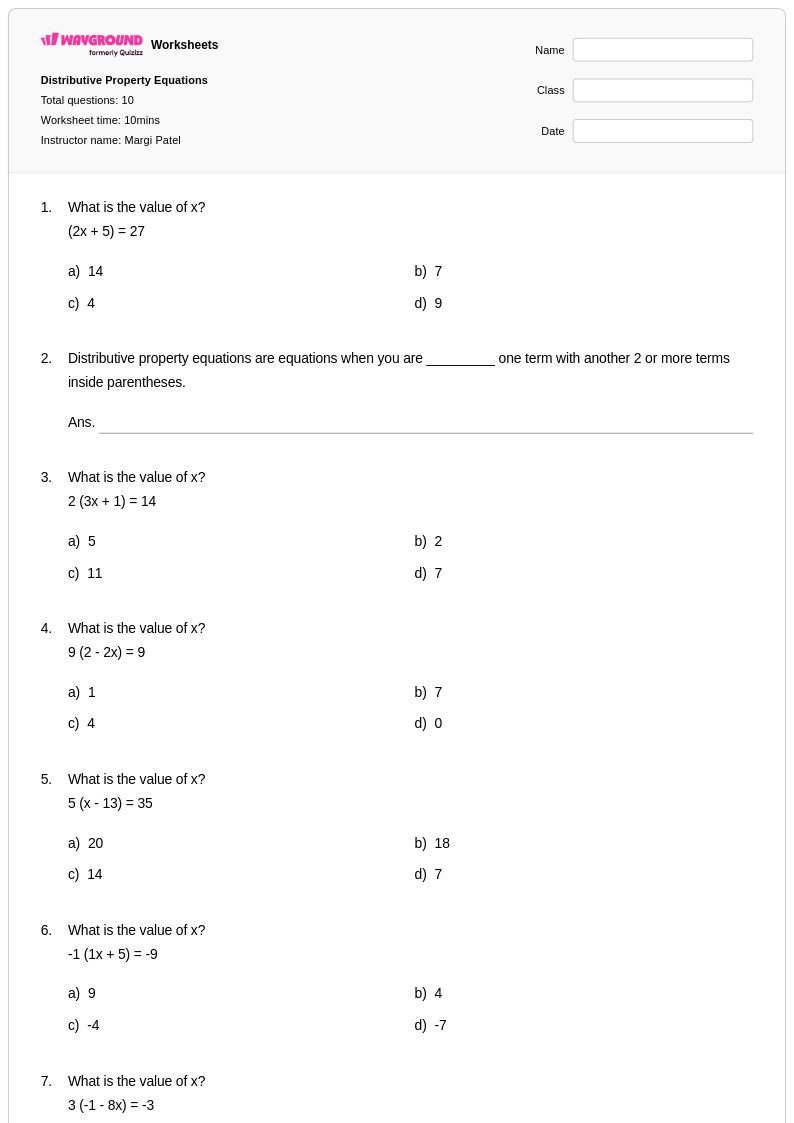
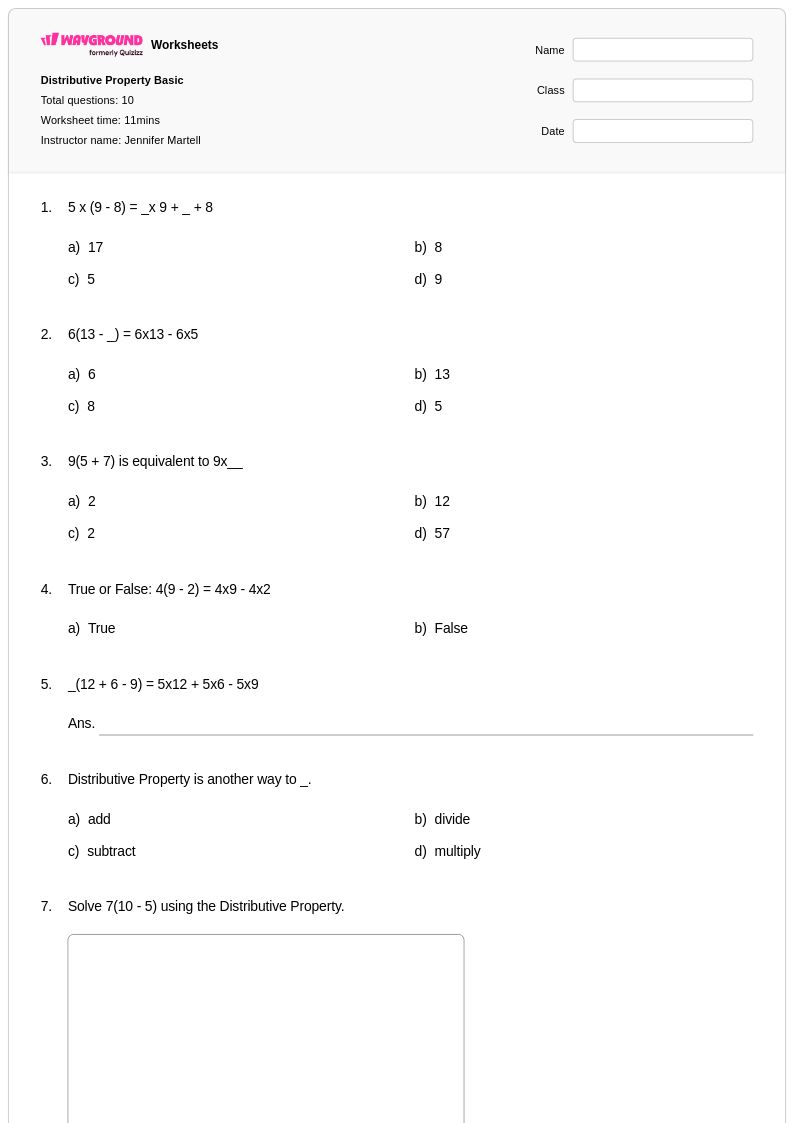
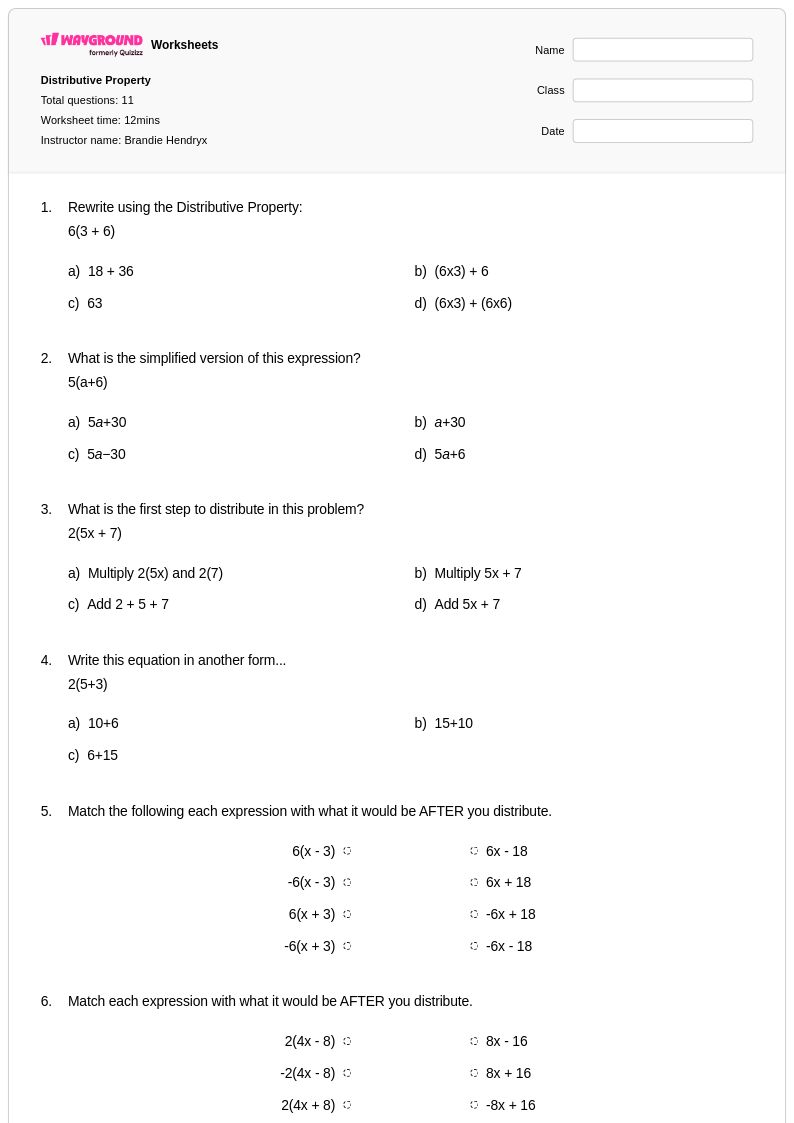
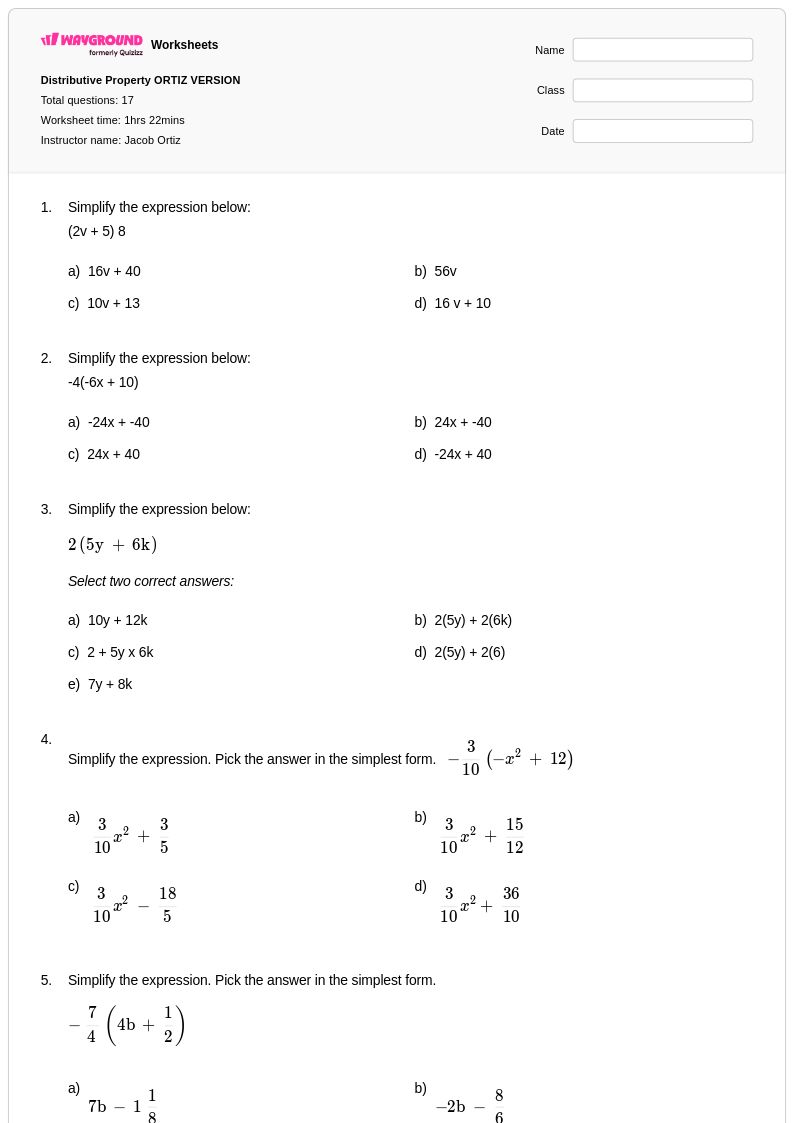
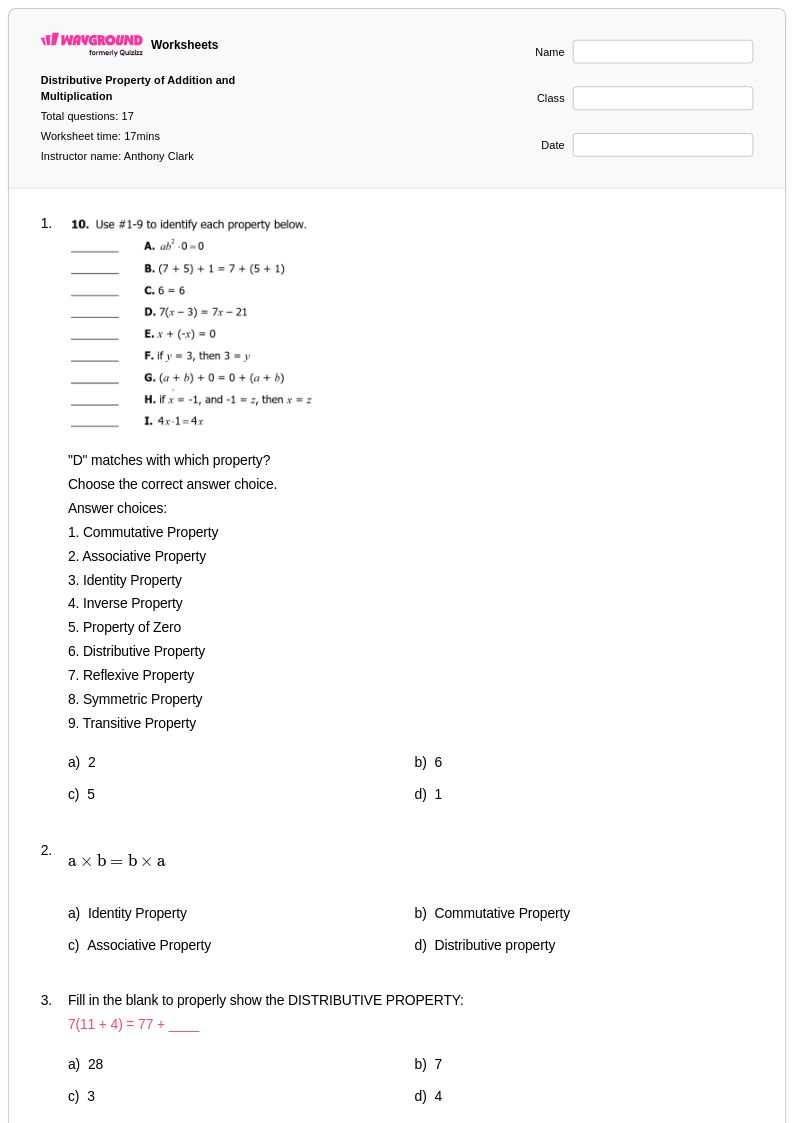
Distributive Property worksheets available through Wayground (formerly Quizizz) provide comprehensive practice opportunities for students to master this fundamental algebraic concept that bridges arithmetic and algebra. These carefully designed resources help students understand how to distribute multiplication over addition and subtraction, such as transforming expressions like 3(x + 4) into 3x + 12, while strengthening their ability to simplify complex expressions and solve multi-step equations. The worksheet collections include varied practice problems that progress from basic numerical examples to more advanced algebraic applications, complete with detailed answer keys that support both independent study and classroom instruction. Available as free printables in convenient PDF format, these resources ensure students develop fluency with the distributive property through systematic practice that builds confidence and mathematical reasoning skills.
Wayground (formerly Quizizz) empowers educators with access to millions of teacher-created distributive property resources that streamline lesson planning and support differentiated instruction across diverse learning needs. The platform's robust search and filtering capabilities allow teachers to quickly locate worksheets aligned with specific curriculum standards, whether focusing on introductory concepts or advanced applications of the distributive property in polynomial operations. These customizable materials are available in both printable and digital formats, including downloadable PDFs that facilitate flexible classroom implementation and remote learning scenarios. Teachers can leverage these comprehensive worksheet collections for targeted remediation with struggling students, enrichment activities for advanced learners, and consistent skill practice that reinforces the distributive property's role as a cornerstone of algebraic thinking and mathematical problem-solving.
FAQs
How do I teach the distributive property?
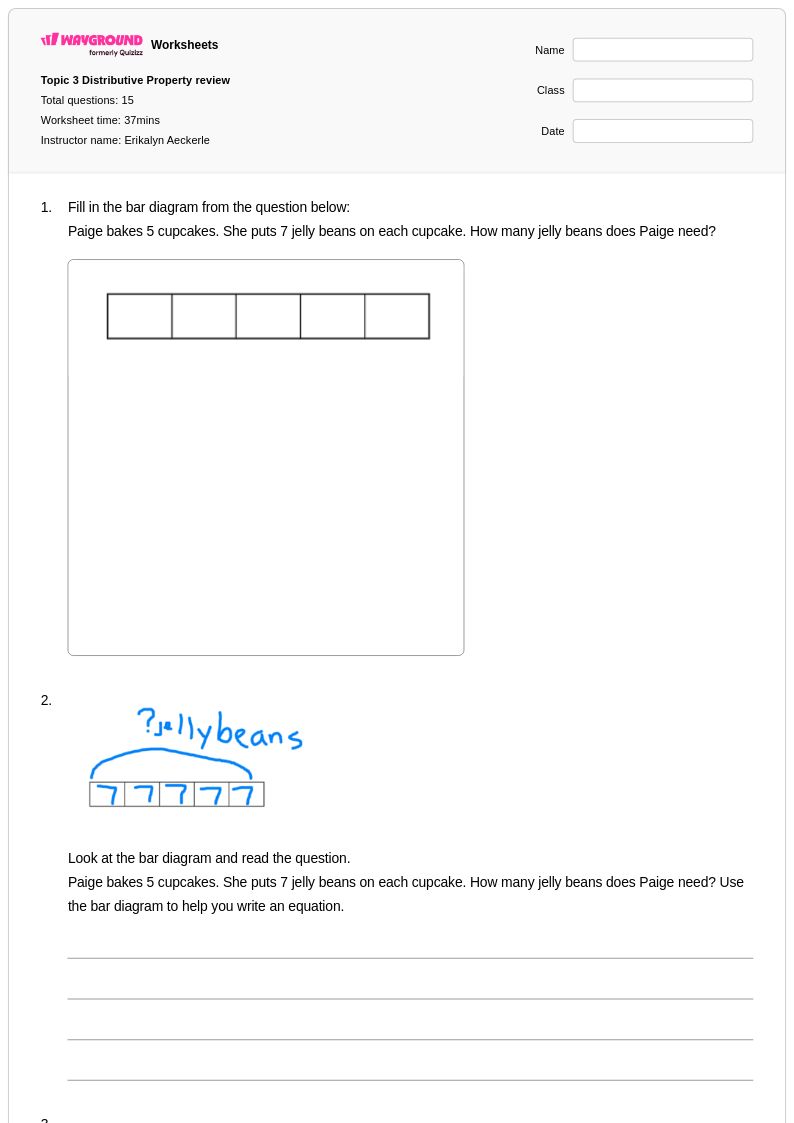
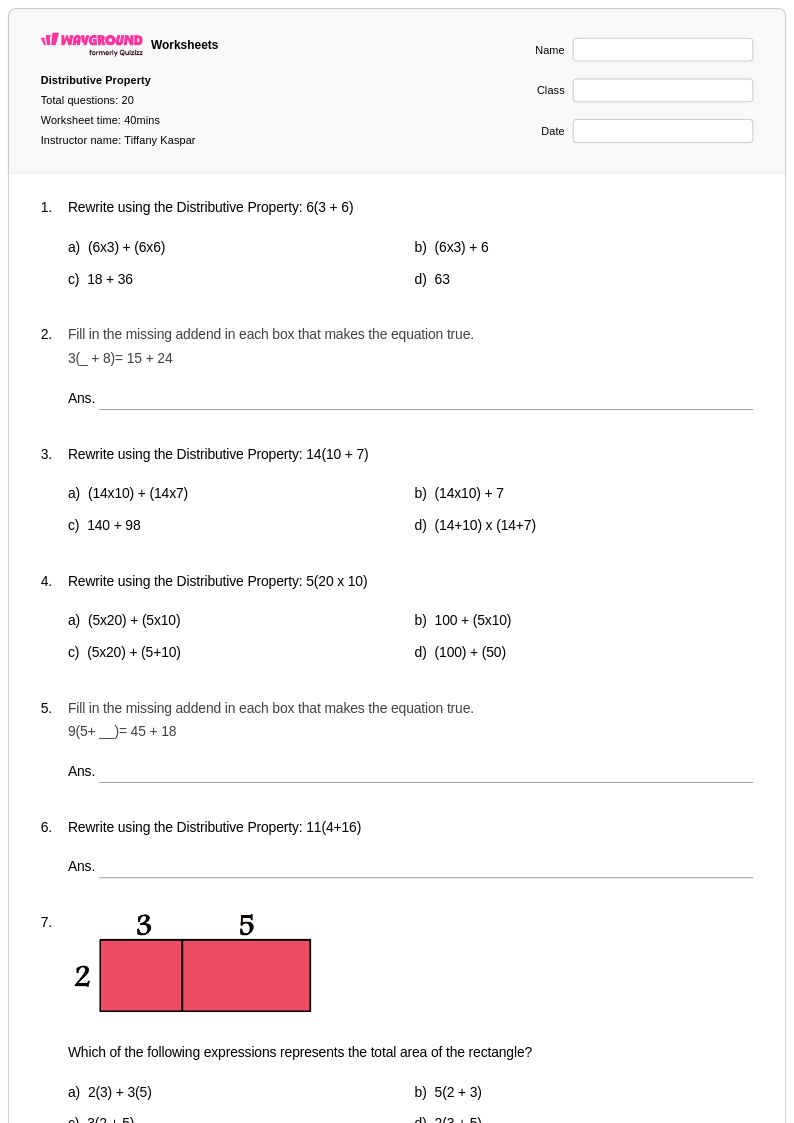
Start with area models or arrays before introducing symbolic notation. Show students that 3(x + 4) is just three groups of (x + 4), and let them draw it out before writing the expanded form. Once the visual clicks, move to numerical examples like 6 × 13 = 6(10 + 3), which connects the property to mental math they already use. Only then introduce variables. Students who skip the visual stage often apply the property mechanically and fall apart when expressions get more complex.
What exercises help students practice the distributive property?
The most effective practice moves through three stages: expanding expressions (turning 4(x + 5) into 4x + 20), factoring in reverse (recognizing 4x + 20 as 4(x + 5)), and applying the property inside multi-step equations. Wayground's distributive property worksheets cover this progression, starting with numerical examples and building toward algebraic applications — so students aren't just drilling one direction of the skill.
What mistakes do students commonly make with the distributive property?
The most persistent error is partial distribution: students write 3(x + 4) = 3x + 4, multiplying only the first term. A close second is sign errors when distributing over subtraction — 2(x − 5) becomes 2x − 5 instead of 2x − 10. Both mistakes usually signal that the student is following a memorized step rather than understanding what distribution means. Going back to the area model for a few problems typically fixes it faster than more symbolic practice.
How do I use Wayground's distributive property worksheets in my class?
You can run the worksheet as a digital quiz on Wayground — students complete it on any device and you see results immediately — or download the PDF and print it for paper practice. Every worksheet includes a complete answer key, so it works for independent practice or homework without extra prep. If you go the print route, the Wayground for Teachers app lets you scan or capture student work to grade it without re-entering anything manually.
Is the distributive property aligned to Common Core standards?
Yes. Common Core introduces the distributive property in the elementary grades through multiplication with arrays and area models, then formalizes it in the middle grades as students apply it to algebraic expressions and equations. By sixth and seventh grade, students are expected to use distribution fluently when expanding expressions like 3(x + 4) and when factoring expressions like 12x + 8. The property is also the engine behind multiplying polynomials in high school algebra, so the groundwork laid here carries forward significantly.
How can I differentiate distributive property practice for mixed-ability classes?
For students who struggle with the symbolic notation, Wayground's Read Aloud accommodation reads questions aloud, and you can reduce answer choices to lower the cognitive load while they build confidence. For students with visual processing needs, the worksheet-level tools let you increase font size, widen spacing, or apply a dyslexia-friendly font — all without creating a separate assignment. Advanced students can be pointed to the algebraic application problems in the same worksheet set while others work through the numerical examples.
What grade level is the distributive property taught?
It depends on the depth. Students first encounter the idea in grades 3–4 through multiplication with arrays and area models. It becomes explicit and symbolic in grades 5–6, and by grades 7–8 students apply it to algebraic expressions and multi-step equations. High school algebra revisits it again for polynomial multiplication.