Free Printable Electromagnetism Worksheets for Year 10
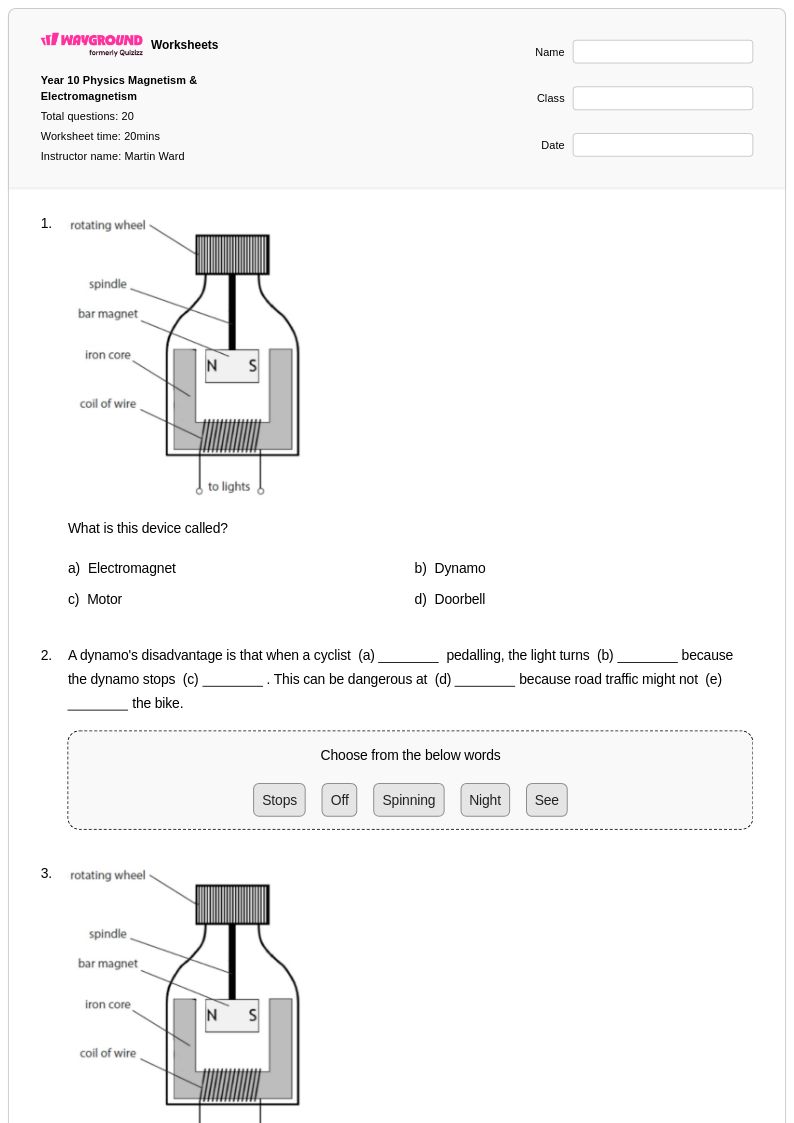
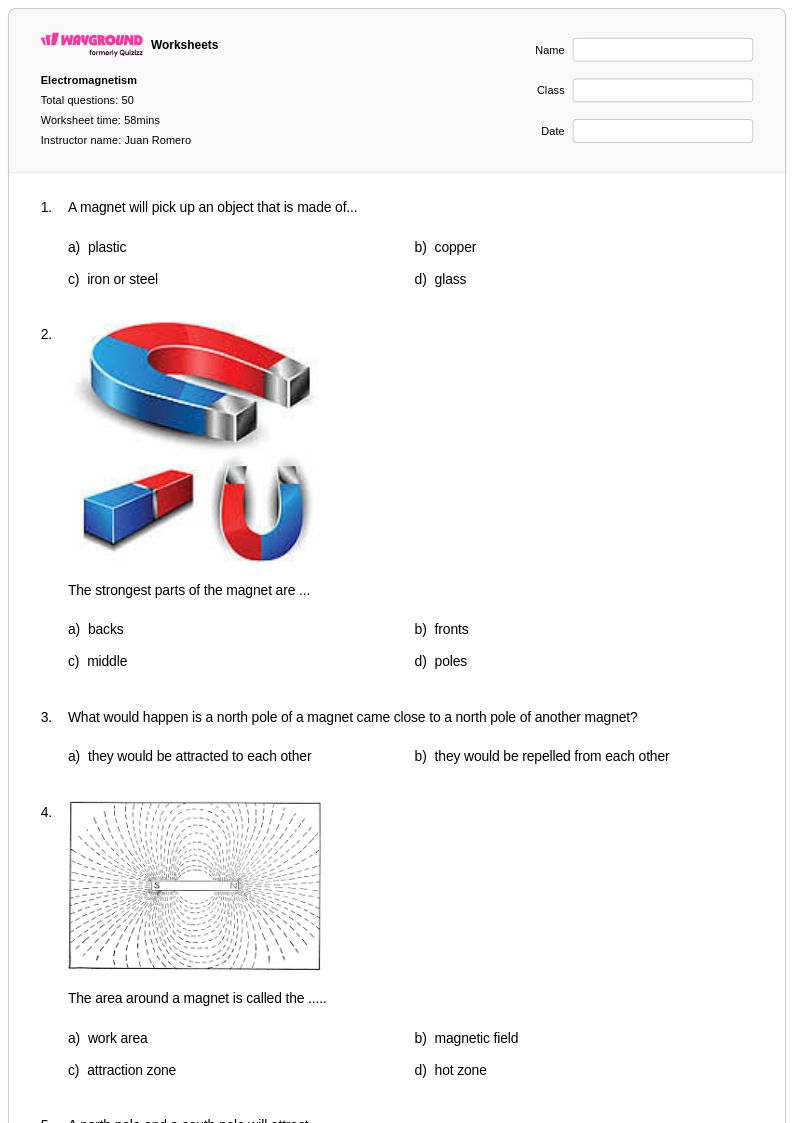
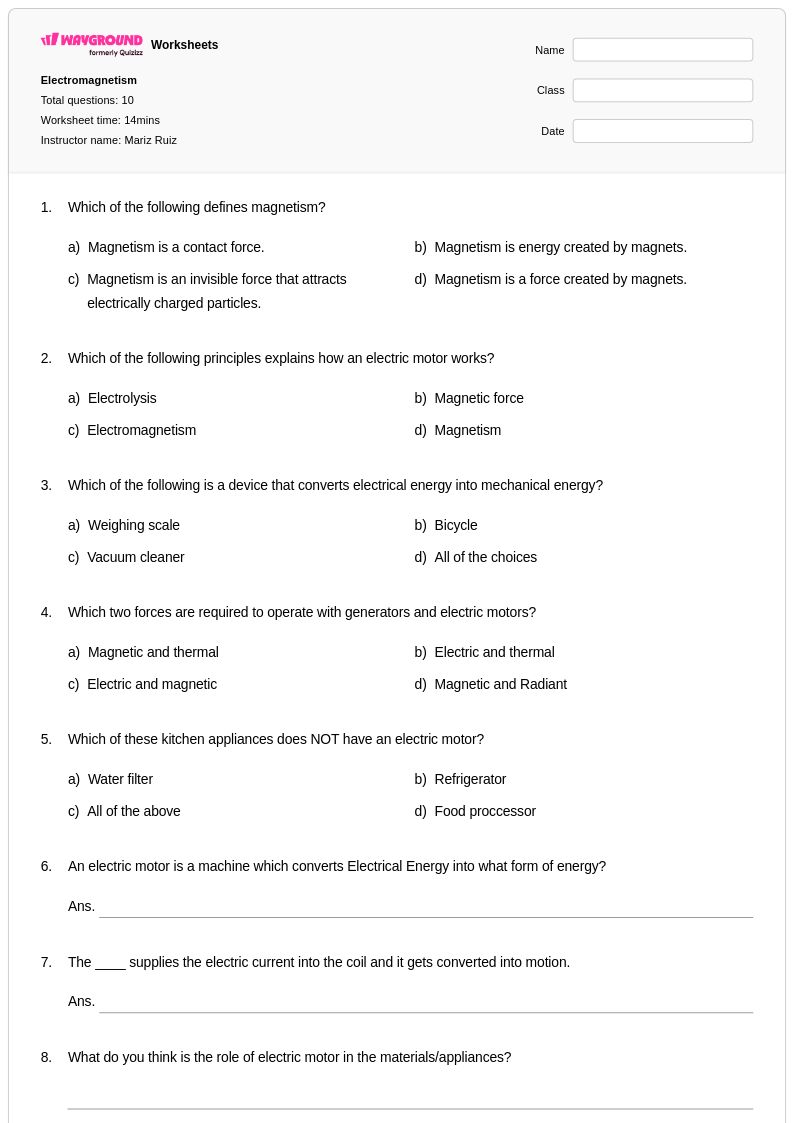
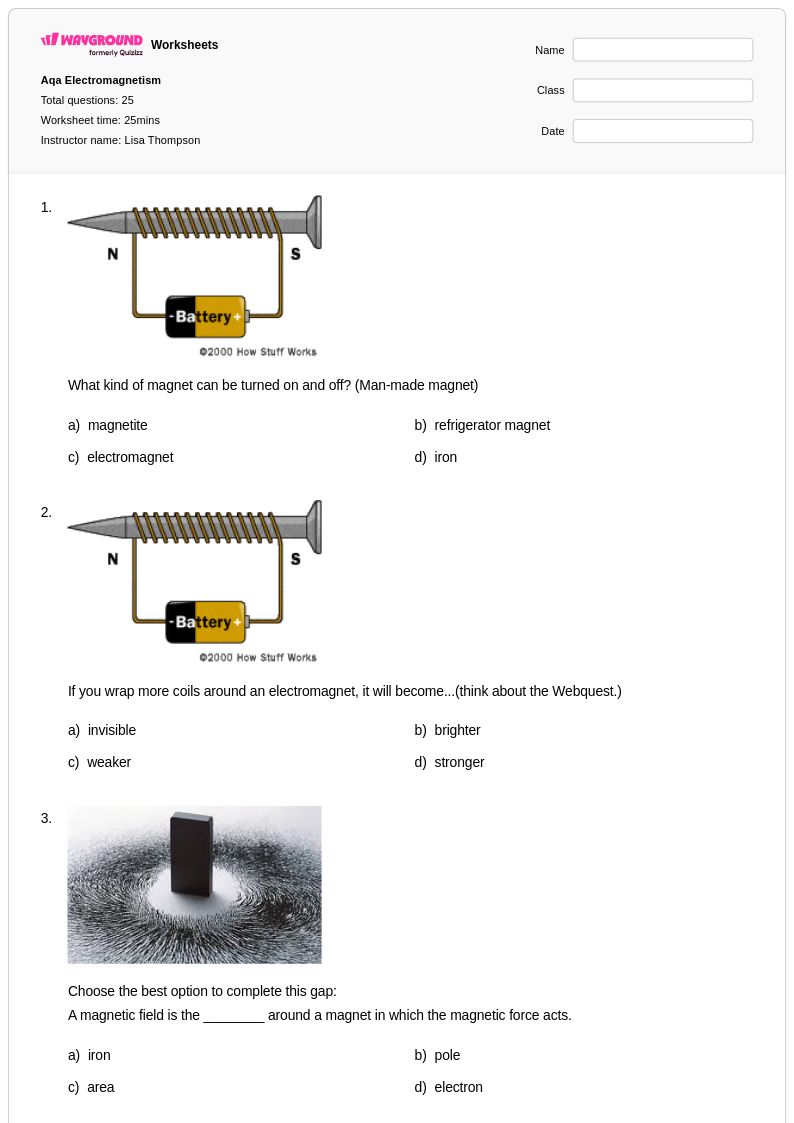
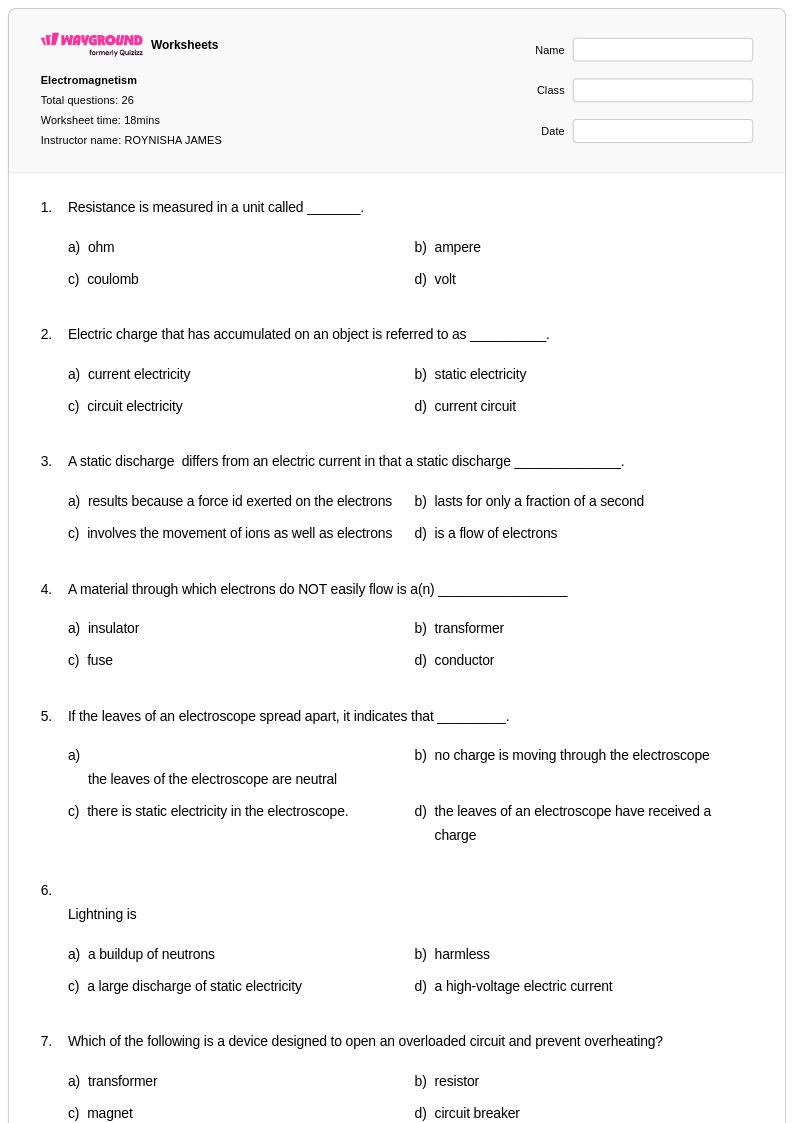
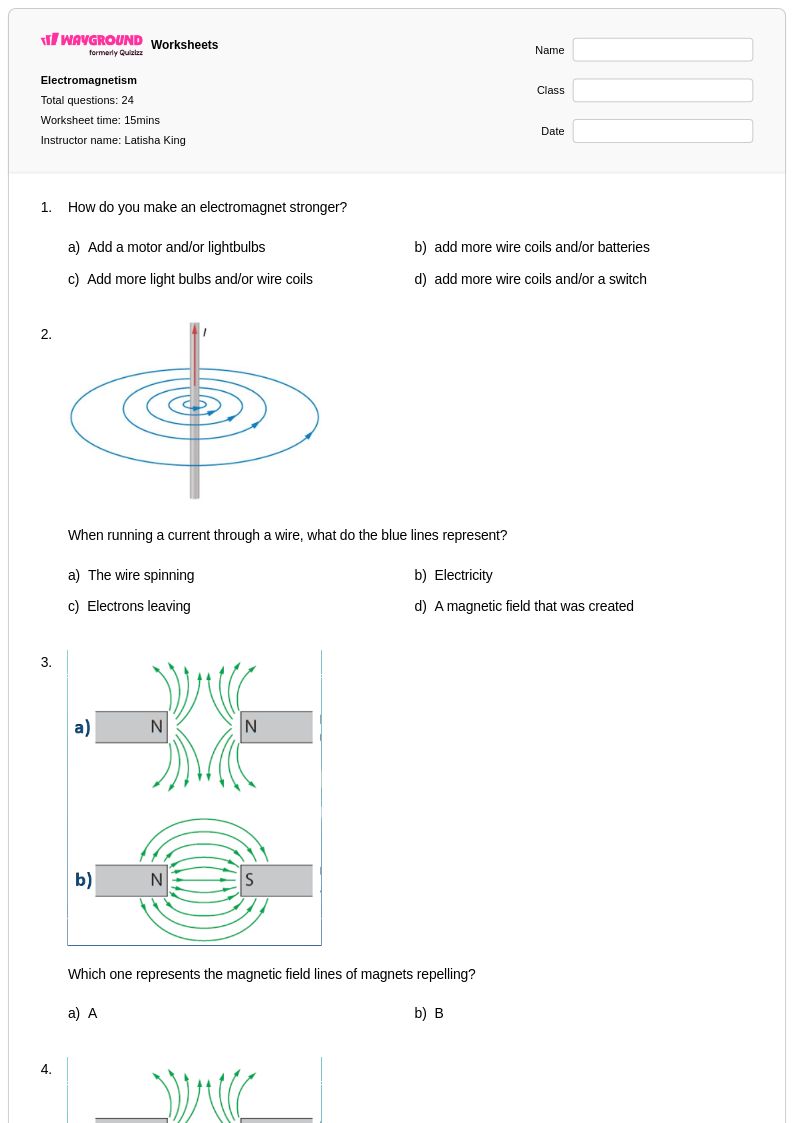
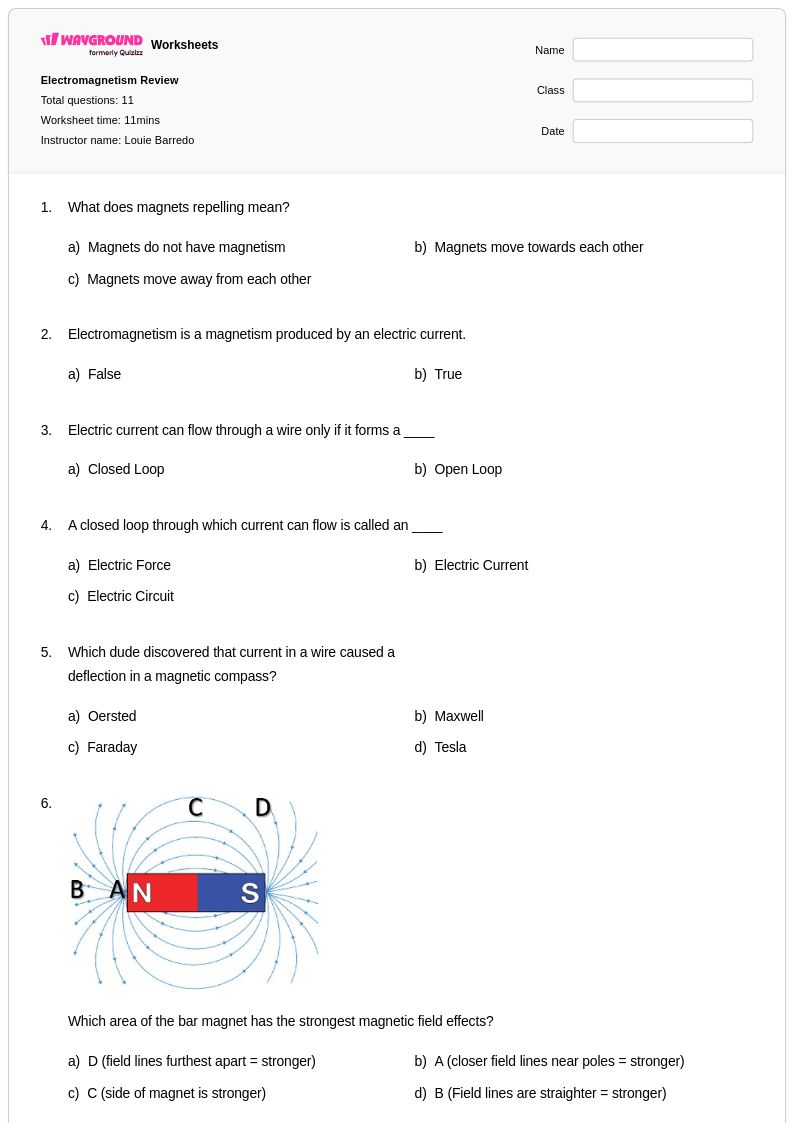
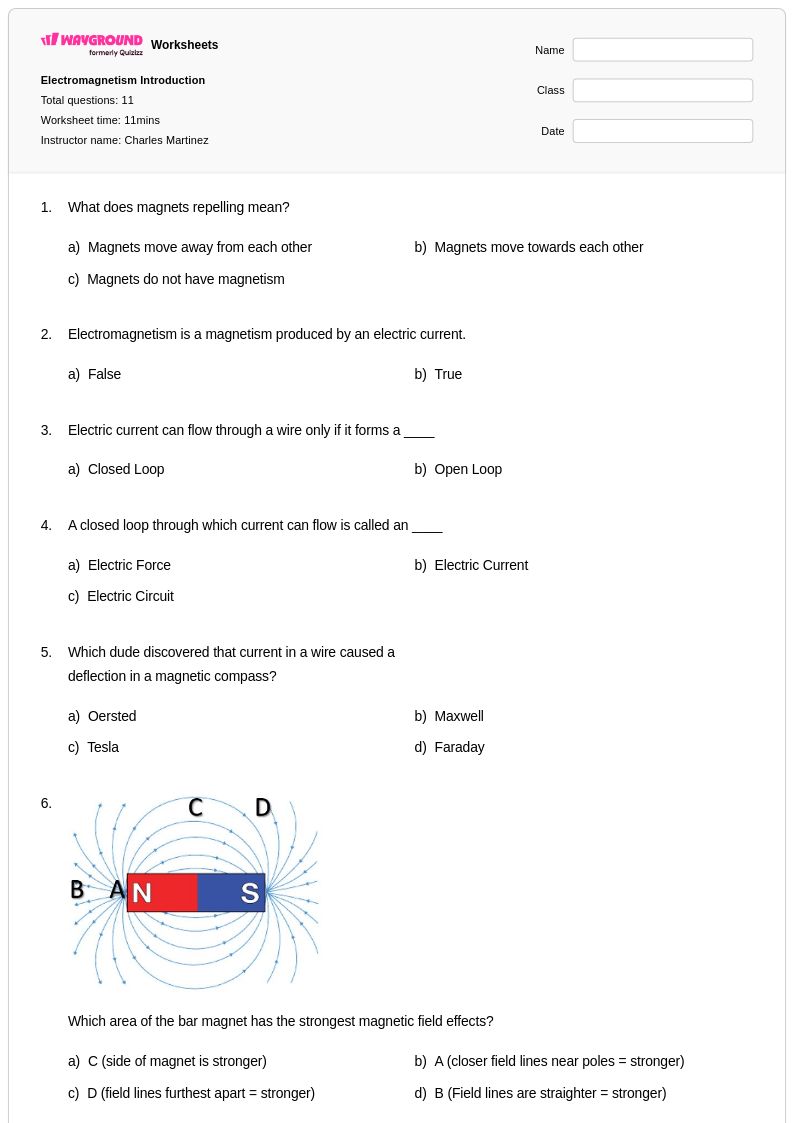
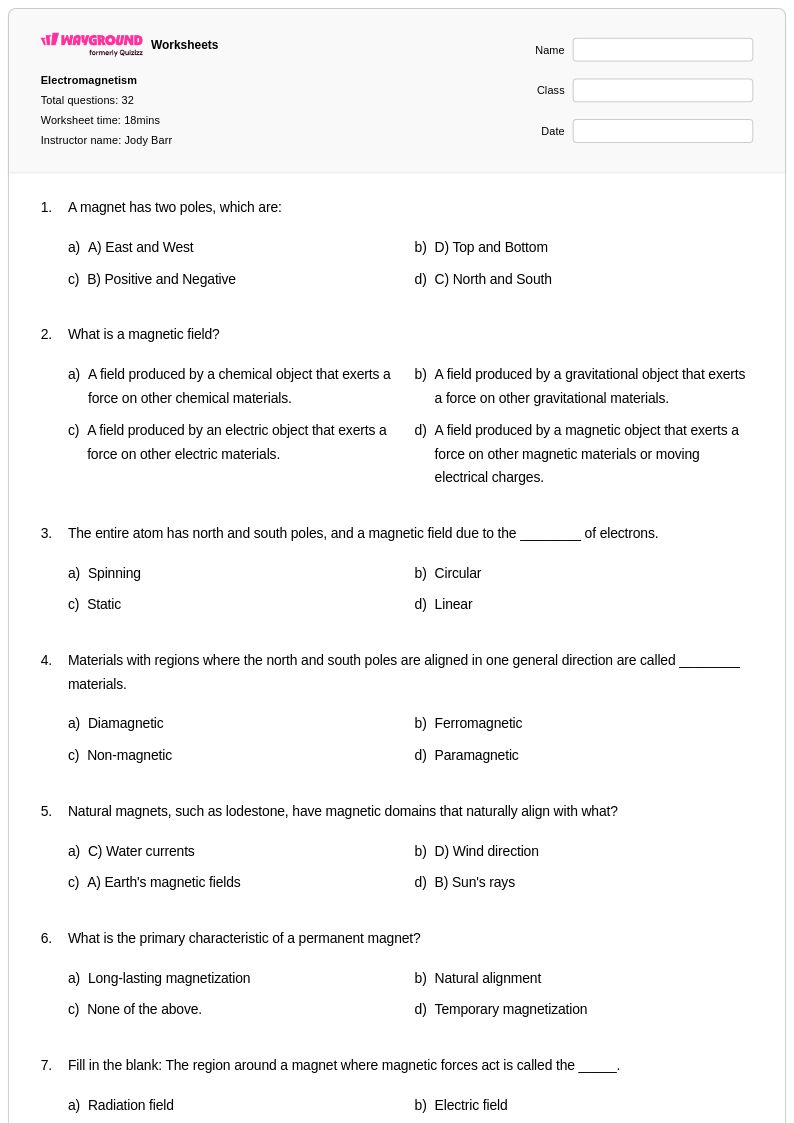
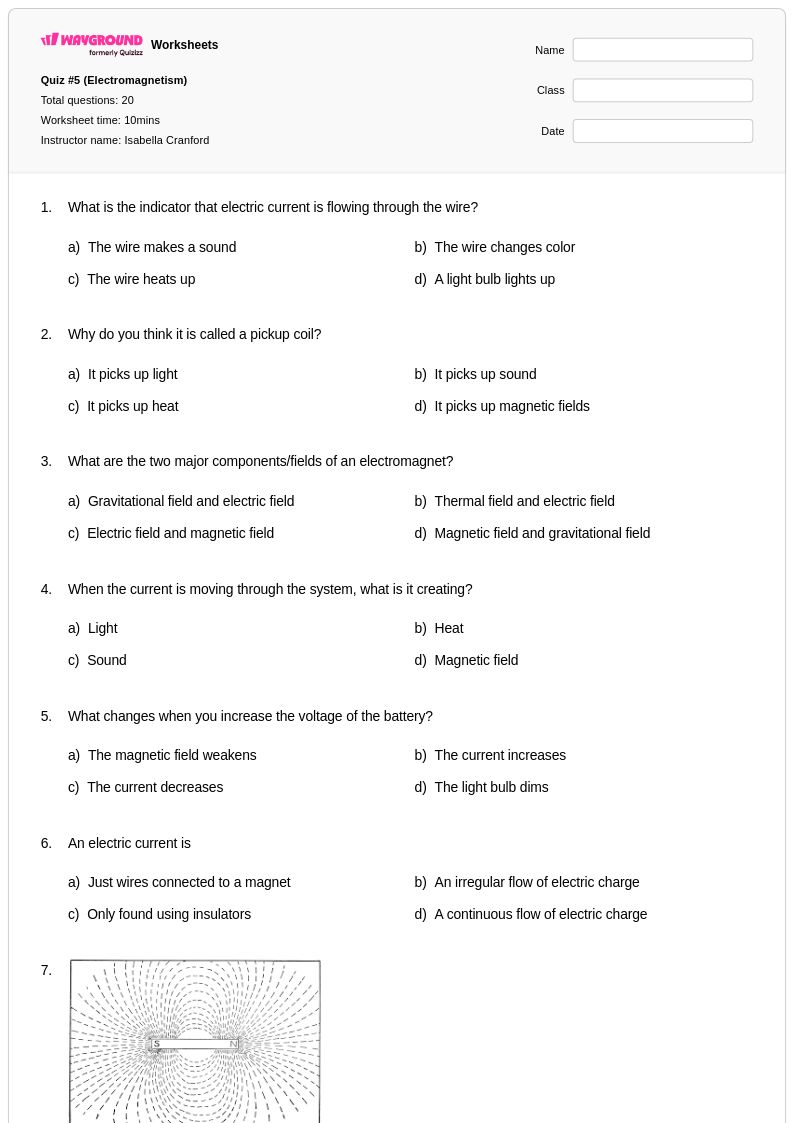
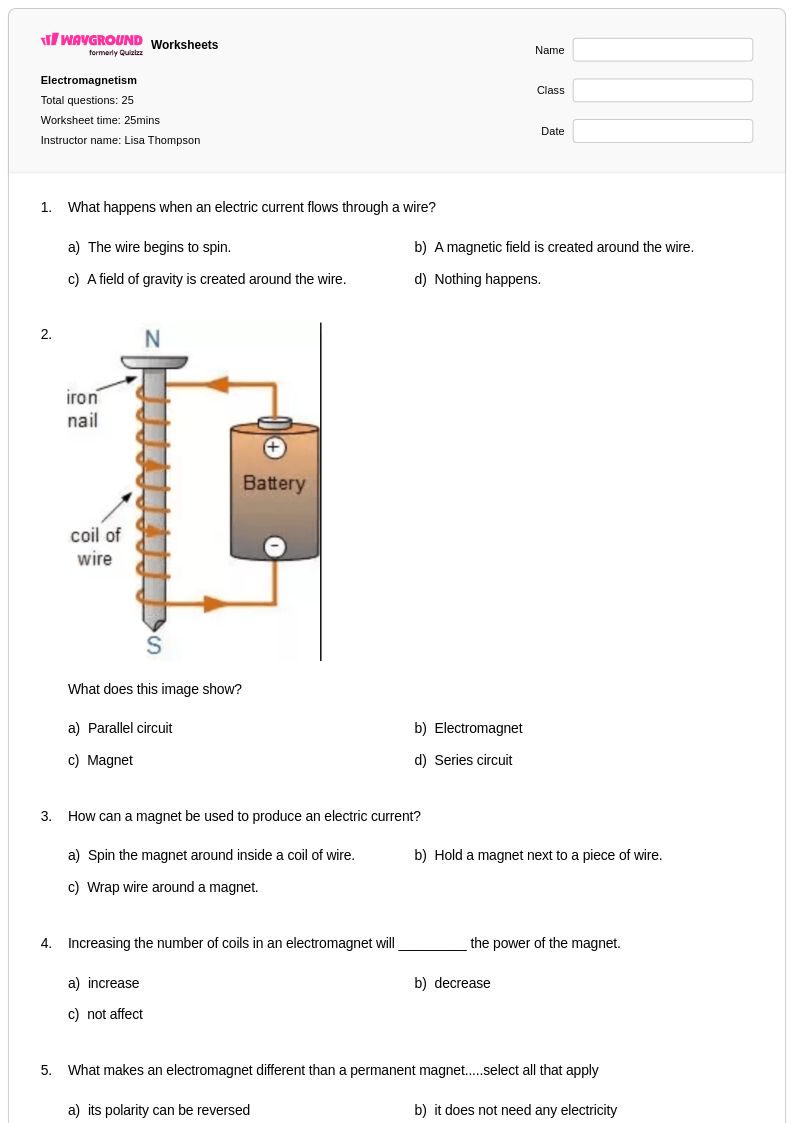
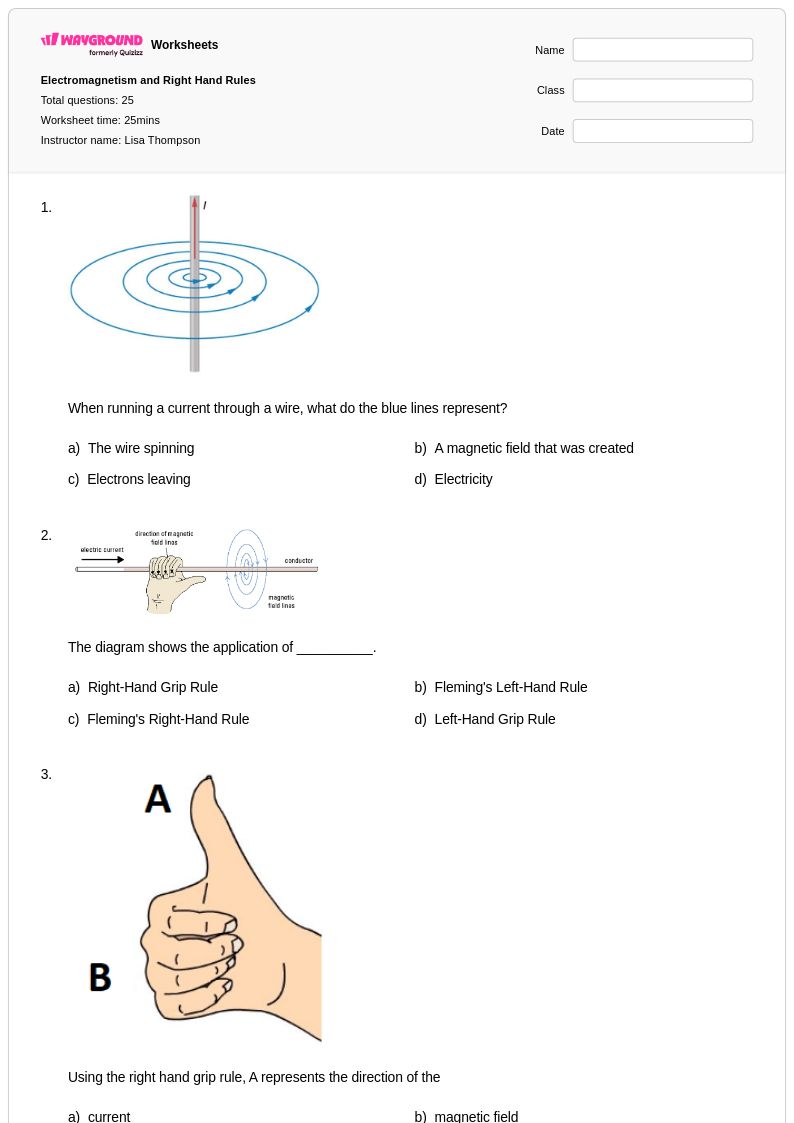
Year 10 electromagnetism worksheets from Wayground offer comprehensive printables and practice problems covering magnetic fields, electromagnetic induction, and motor principles, complete with answer keys to help students master essential physics concepts.
Explore printable Electromagnetism worksheets for Year 10
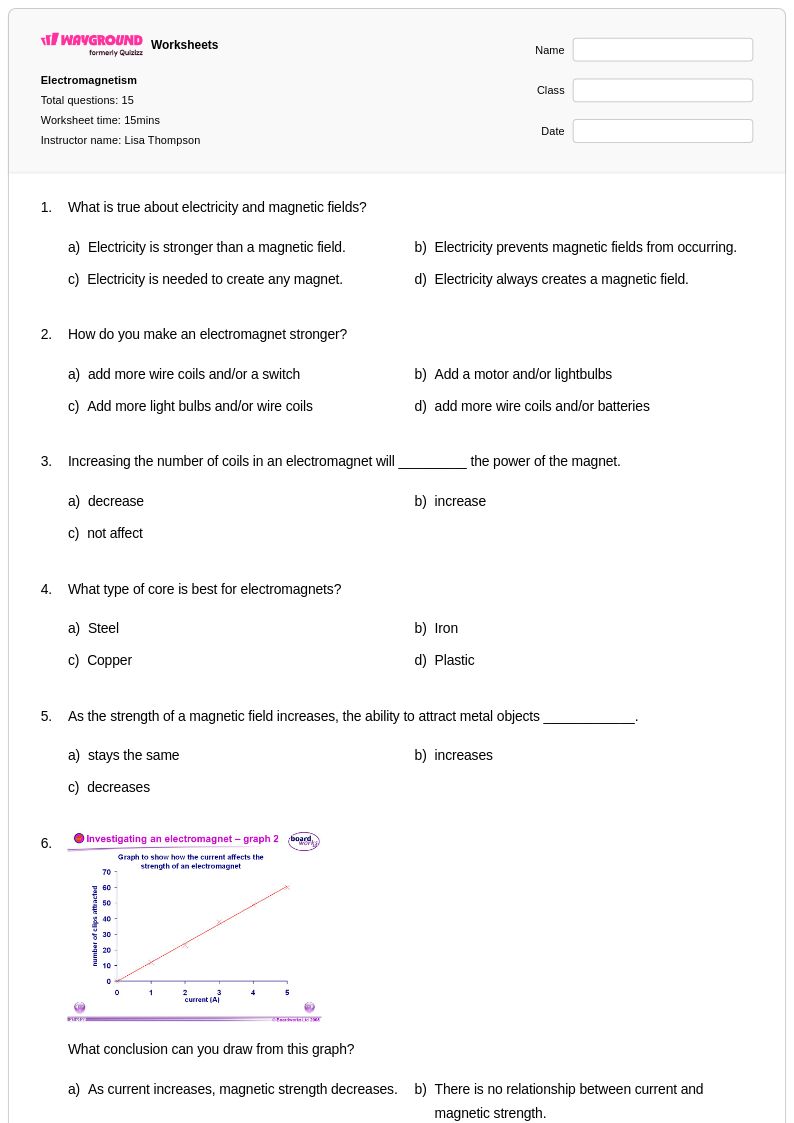
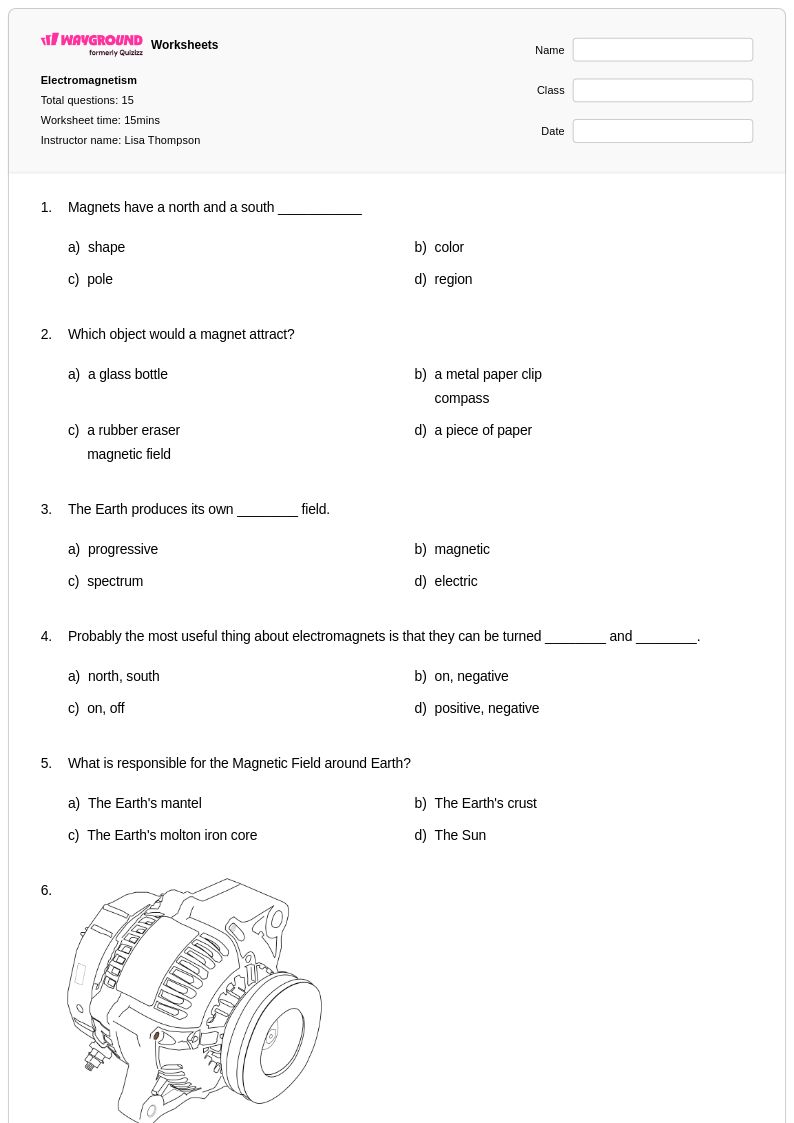
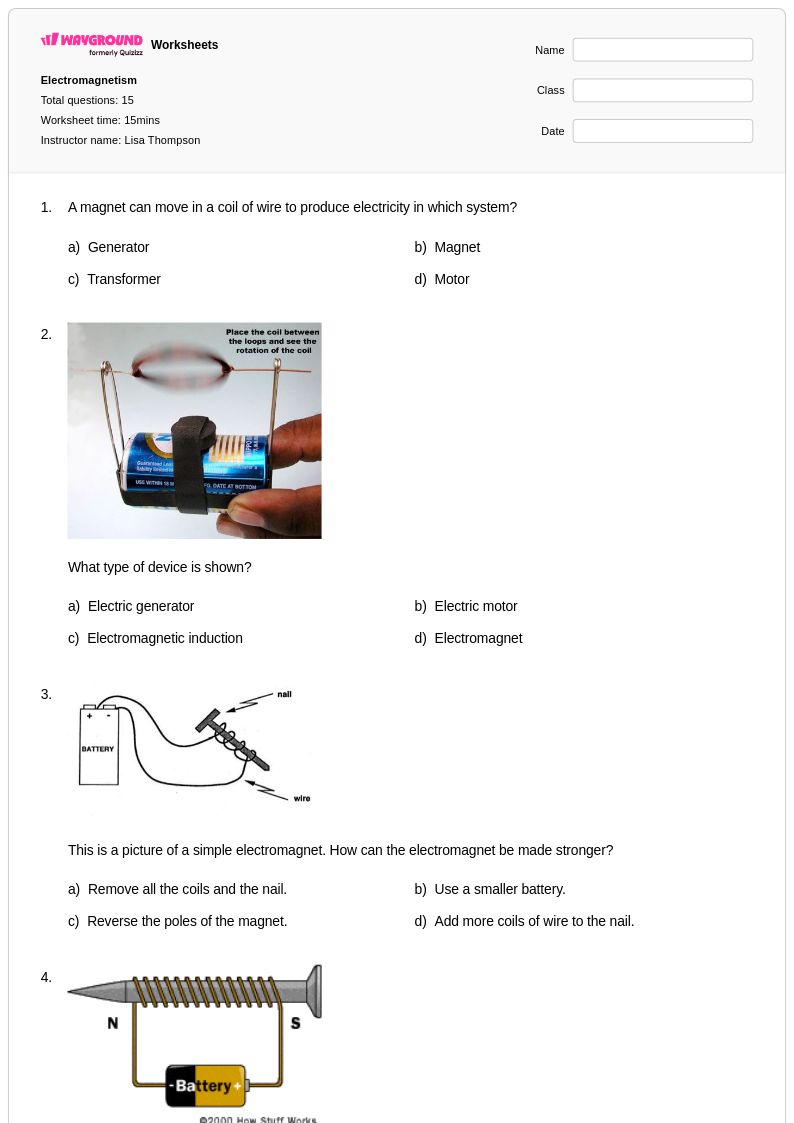
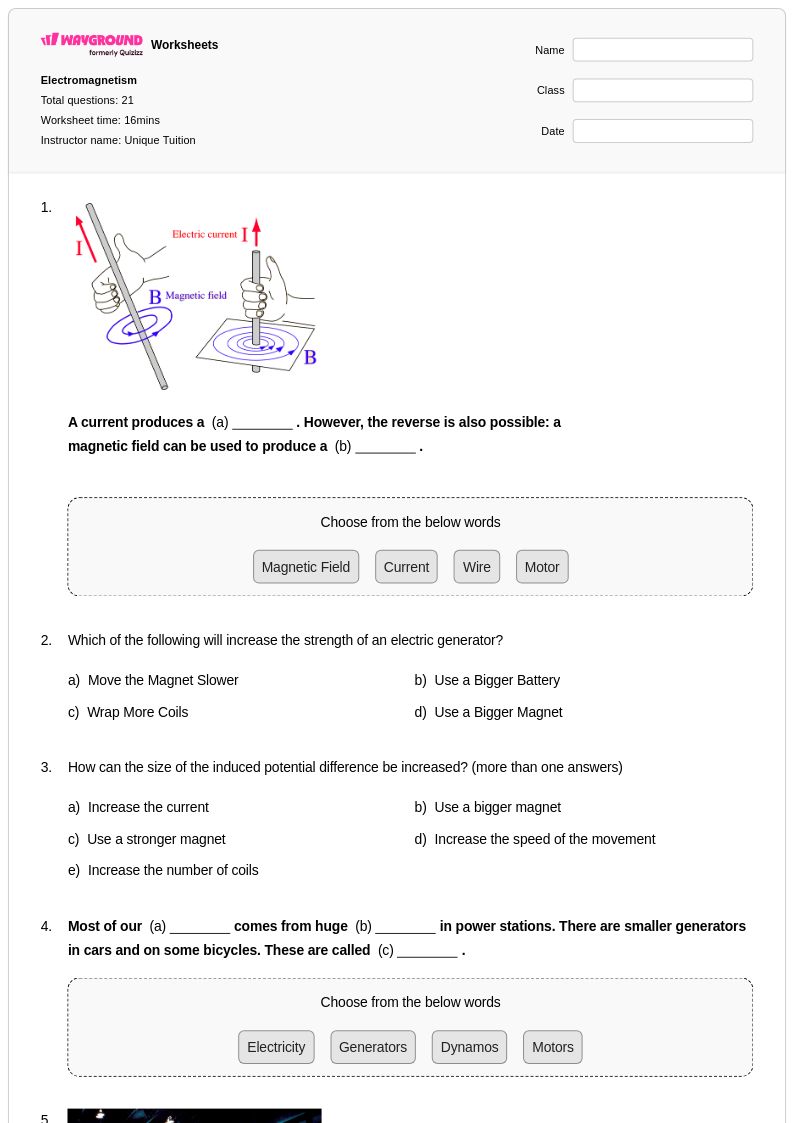
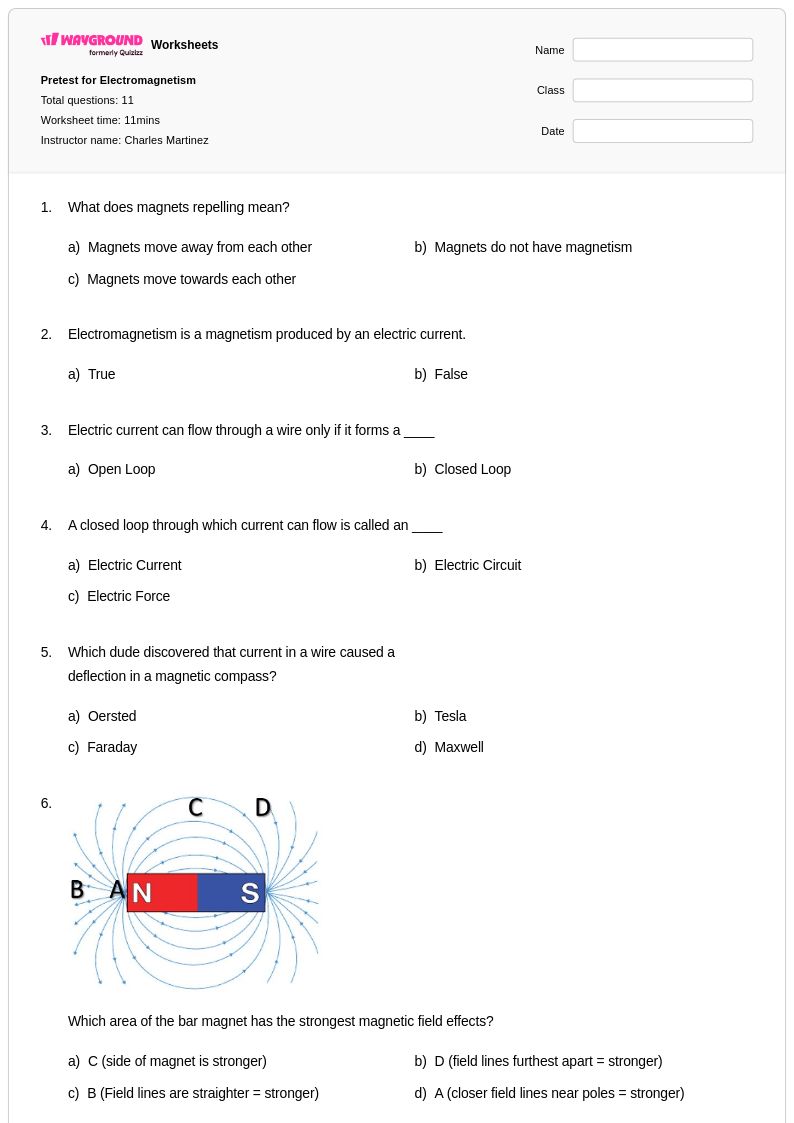
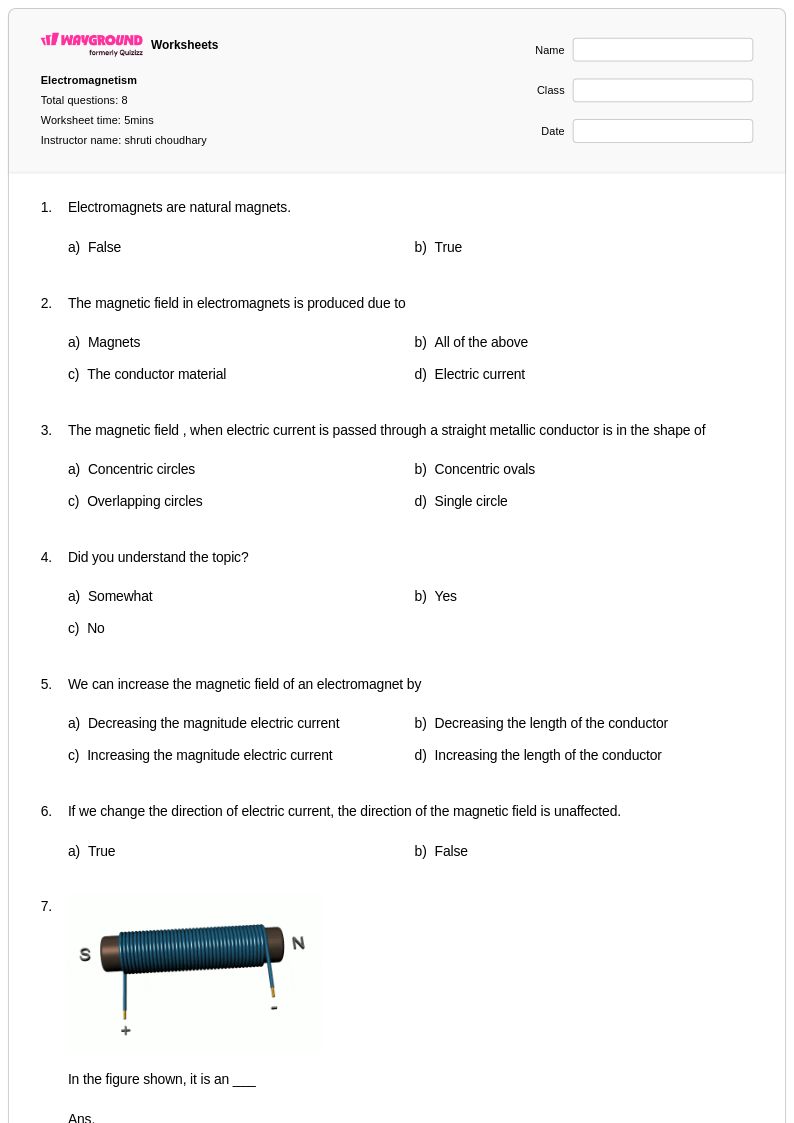
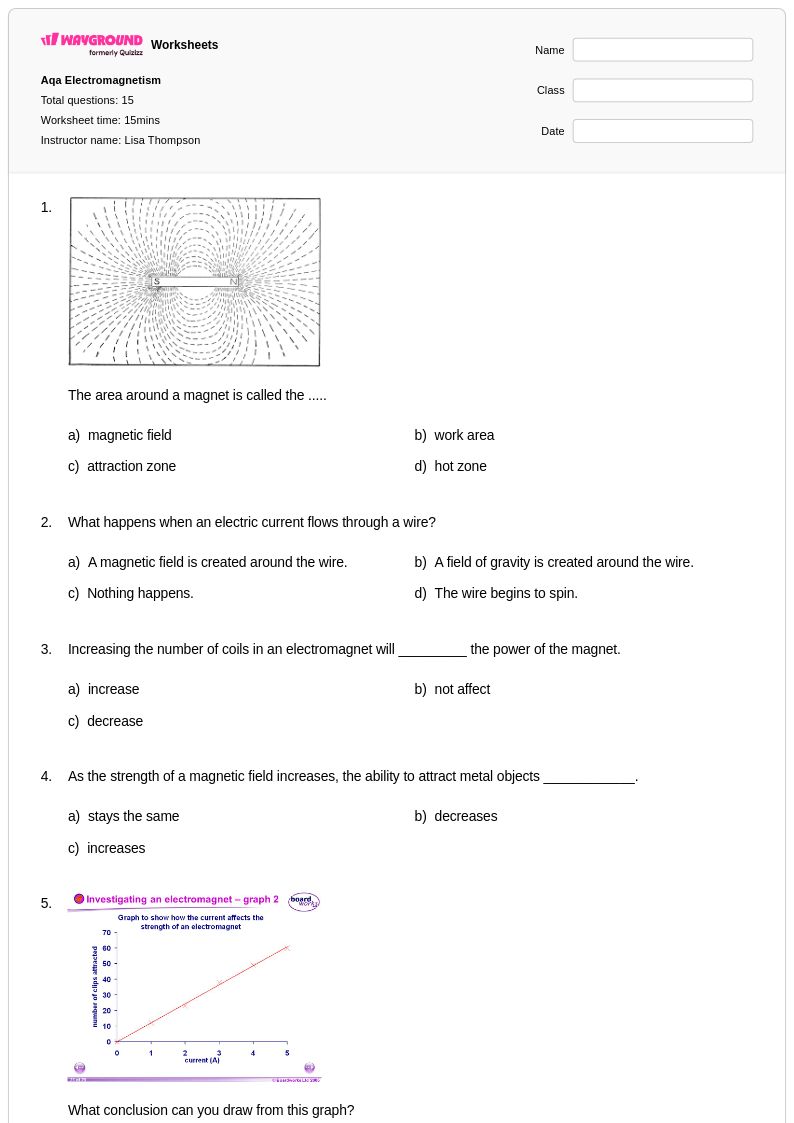
Year 10 electromagnetism worksheets available through Wayground (formerly Quizizz) provide comprehensive coverage of fundamental electromagnetic principles that form the cornerstone of advanced physics understanding. These expertly designed resources strengthen students' analytical skills in areas such as magnetic field interactions, electromagnetic induction, Faraday's laws, and the relationship between electricity and magnetism. Each worksheet collection includes detailed practice problems that guide students through calculating magnetic force on current-carrying conductors, determining induced EMF in rotating coils, and analyzing the behavior of electromagnetic waves. The materials feature complete answer keys that enable both independent study and instructor-led review sessions, while the free printable pdf format ensures accessibility for diverse classroom environments and home study applications.
Wayground (formerly Quizizz) supports physics educators with an extensive library of millions of teacher-created electromagnetic resources that streamline lesson planning and enhance student engagement. The platform's robust search and filtering capabilities allow instructors to quickly locate worksheets aligned with specific curriculum standards and learning objectives, while built-in differentiation tools enable customization for varying skill levels within the same classroom. Teachers can seamlessly modify existing content or create entirely new electromagnetic problem sets, with flexible formatting options that accommodate both digital distribution and traditional printable worksheets in pdf format. These comprehensive tools prove invaluable for targeted remediation of challenging electromagnetic concepts, enrichment activities for advanced learners, and systematic skill practice that builds student confidence in manipulating complex electromagnetic equations and theoretical applications.
FAQs
How do I teach electromagnetism to high school students?
Start by grounding students in the relationship between electric and magnetic fields before introducing dynamic phenomena like electromagnetic induction. Build conceptual understanding with field diagrams and real-world examples such as motors and generators, then layer in quantitative problem-solving using Faraday's law and circuit analysis. Connecting abstract equations to observable devices helps students see why electromagnetic principles matter beyond the textbook.
What practice problems help students understand electromagnetic induction?
Effective practice for electromagnetic induction focuses on calculating magnetic flux, applying Faraday's law to changing field scenarios, and analyzing Lenz's law to determine induced current direction. Problems that vary the rate of flux change, coil orientation, and conductor geometry give students repeated exposure to the core relationship between changing magnetic fields and induced EMF. Scaffolded problem sets that progress from conceptual questions to multi-step calculations are especially effective for building mastery.
What mistakes do students commonly make when solving electromagnetic induction problems?
A frequent error is confusing the magnitude of induced EMF with induced current — students often forget to account for circuit resistance when moving between the two. Many also misapply Lenz's law, incorrectly predicting the direction of induced current without carefully identifying what opposes the change in flux. Additionally, students tend to treat magnetic flux as equivalent to magnetic field strength, overlooking the role of area and the angle between the field and the surface normal.
How do I help students who struggle with Maxwell's equations and electromagnetic wave concepts?
Students often struggle with Maxwell's equations because the mathematical formalism arrives before the physical intuition is secure. Prioritize conceptual understanding of how changing electric fields produce magnetic fields and vice versa before introducing the full equation set. Use visual representations of electromagnetic wave propagation and relate wave properties like frequency and wavelength to familiar contexts such as light and radio waves to anchor abstract ideas in something tangible.
How do I use Wayground's electromagnetism worksheets in my classroom?
Wayground's electromagnetism worksheets are available as printable PDFs for traditional classroom use and in digital formats for technology-integrated learning environments, including the option to host them as a quiz directly on Wayground. Each worksheet includes a complete answer key, making them suitable for in-class practice, homework, or self-paced review. Digital delivery also allows teachers to apply individual accommodations such as extended time, read aloud, or reduced answer choices for students who need additional support.
How do I differentiate electromagnetism instruction for students at different skill levels?
For students still building foundational understanding, focus on electric and magnetic field concepts separately before introducing their interaction. Advanced learners can be challenged with inductance and capacitance circuit problems or tasks that require applying Maxwell's equations in unfamiliar contexts. On Wayground, teachers can assign individual accommodations such as extended time or reduced answer choices to specific students, allowing the same worksheet to serve multiple skill levels without disrupting the broader class.