Free Printable Surface Tension Worksheets for Year 10
Year 10 surface tension worksheets from Wayground help students explore liquid properties through engaging practice problems, featuring free printable PDFs with comprehensive answer keys for effective physics learning.
Explore printable Surface Tension worksheets for Year 10
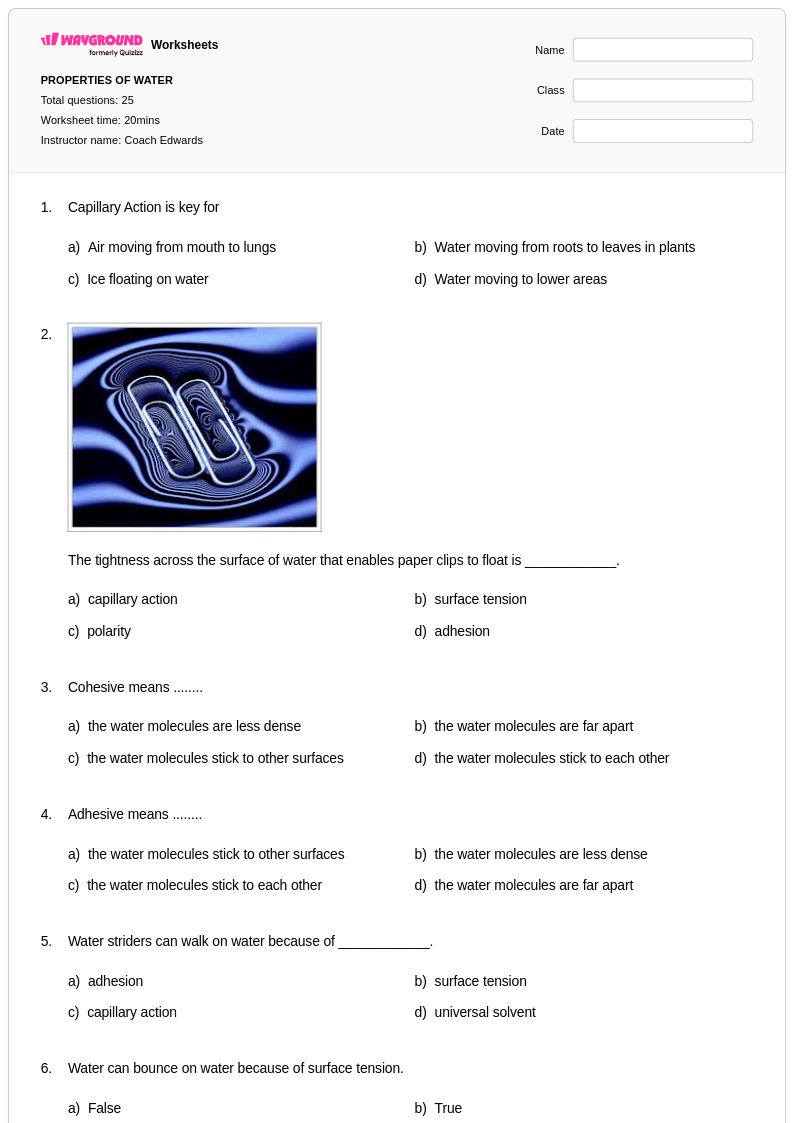
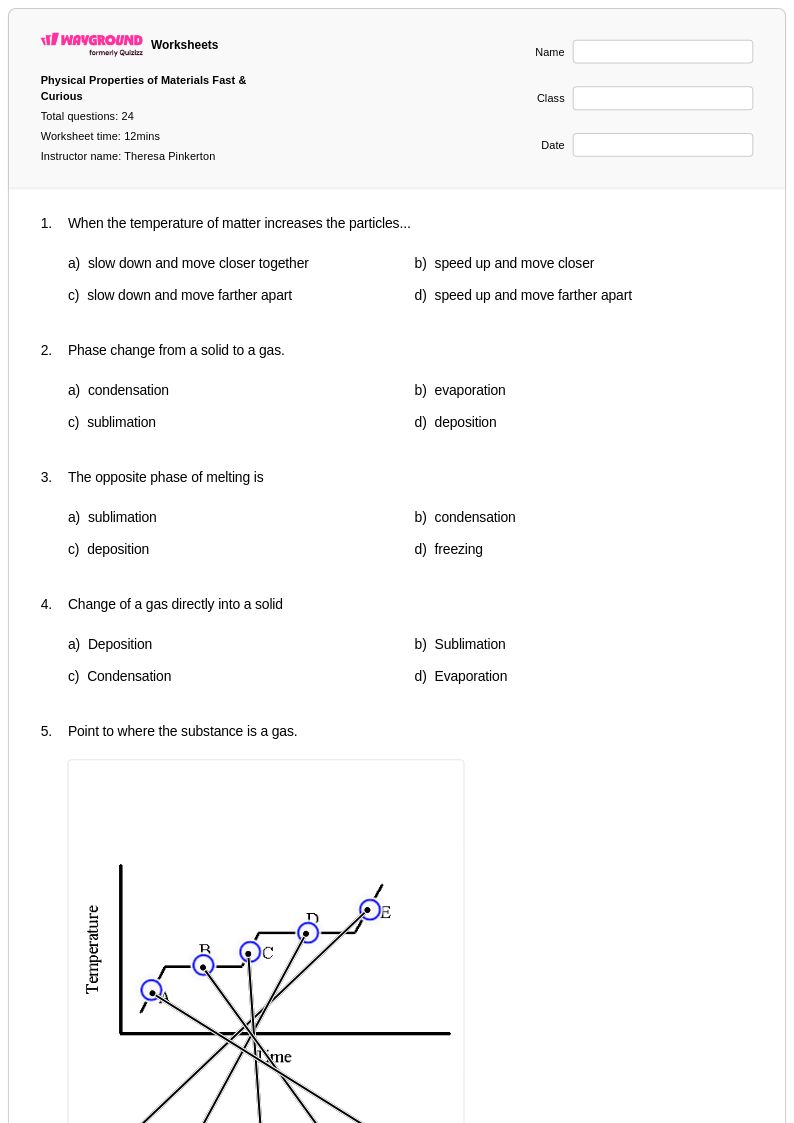
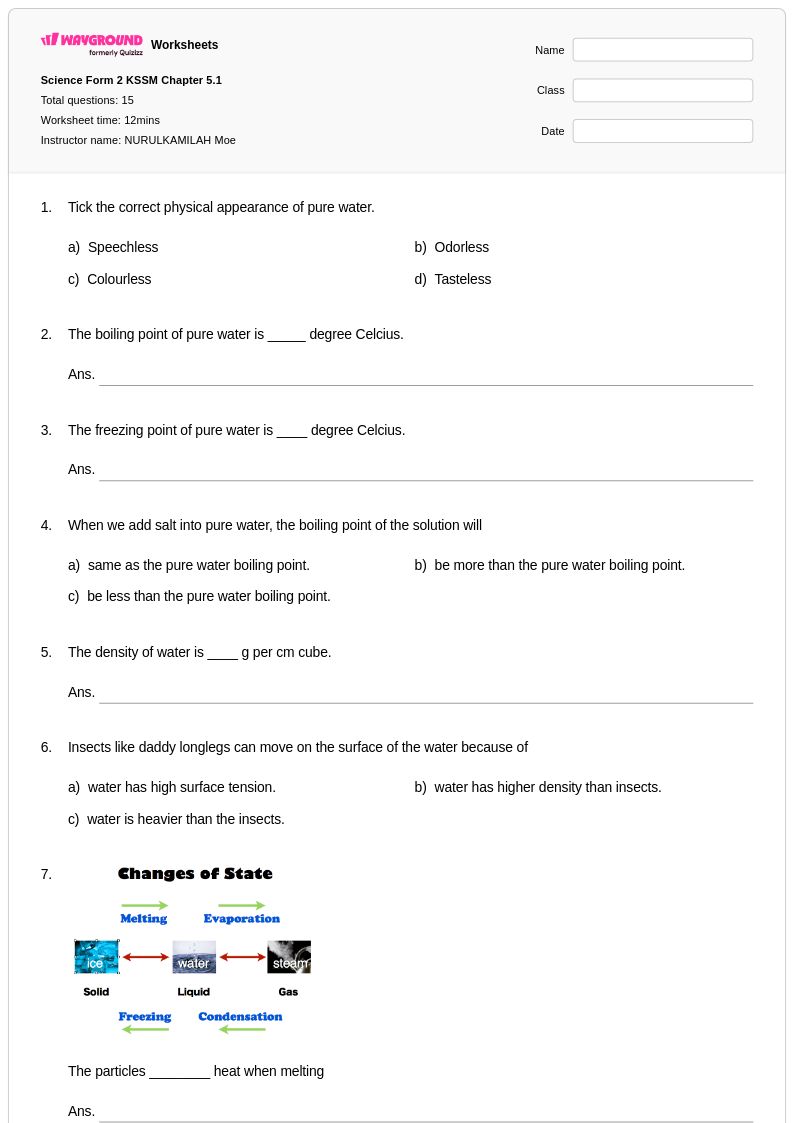
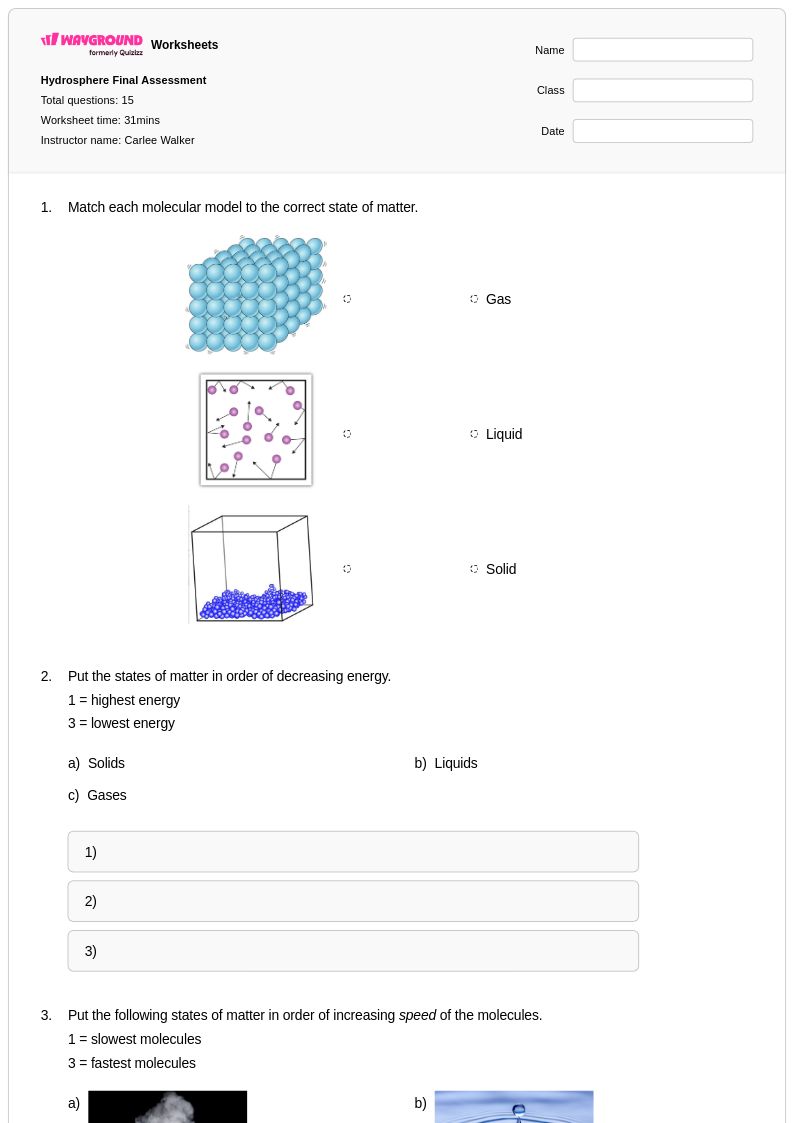
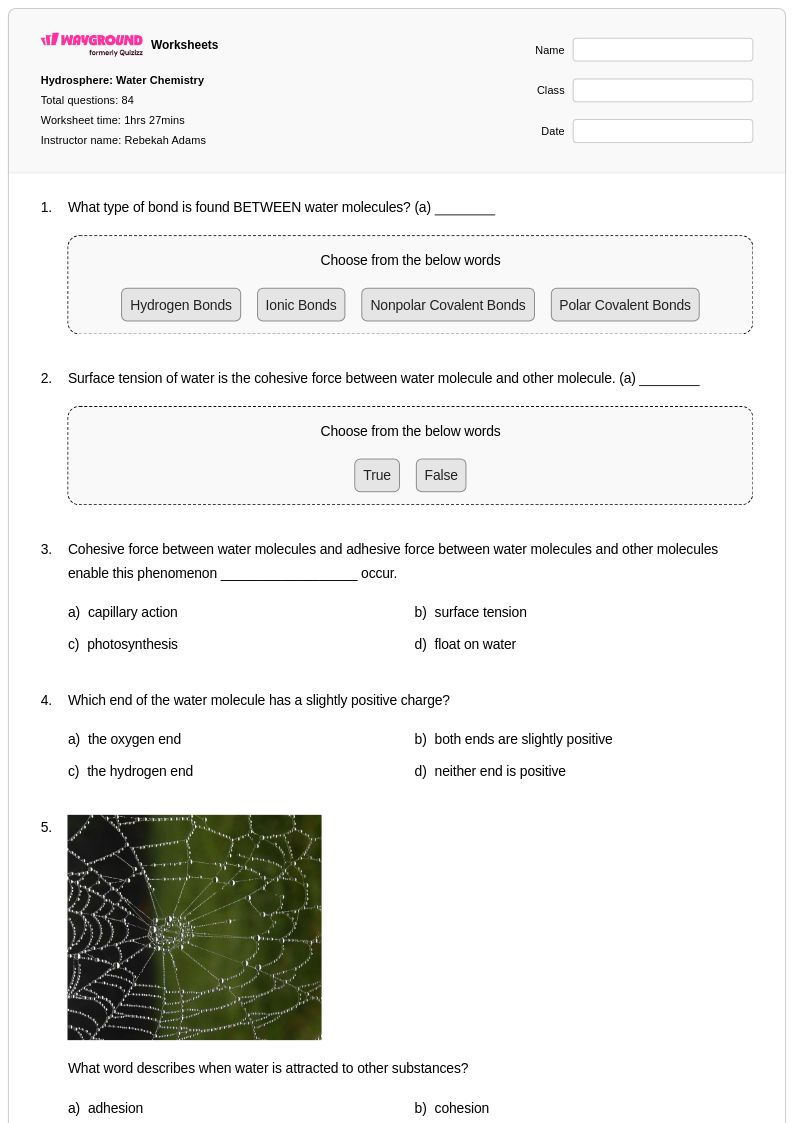
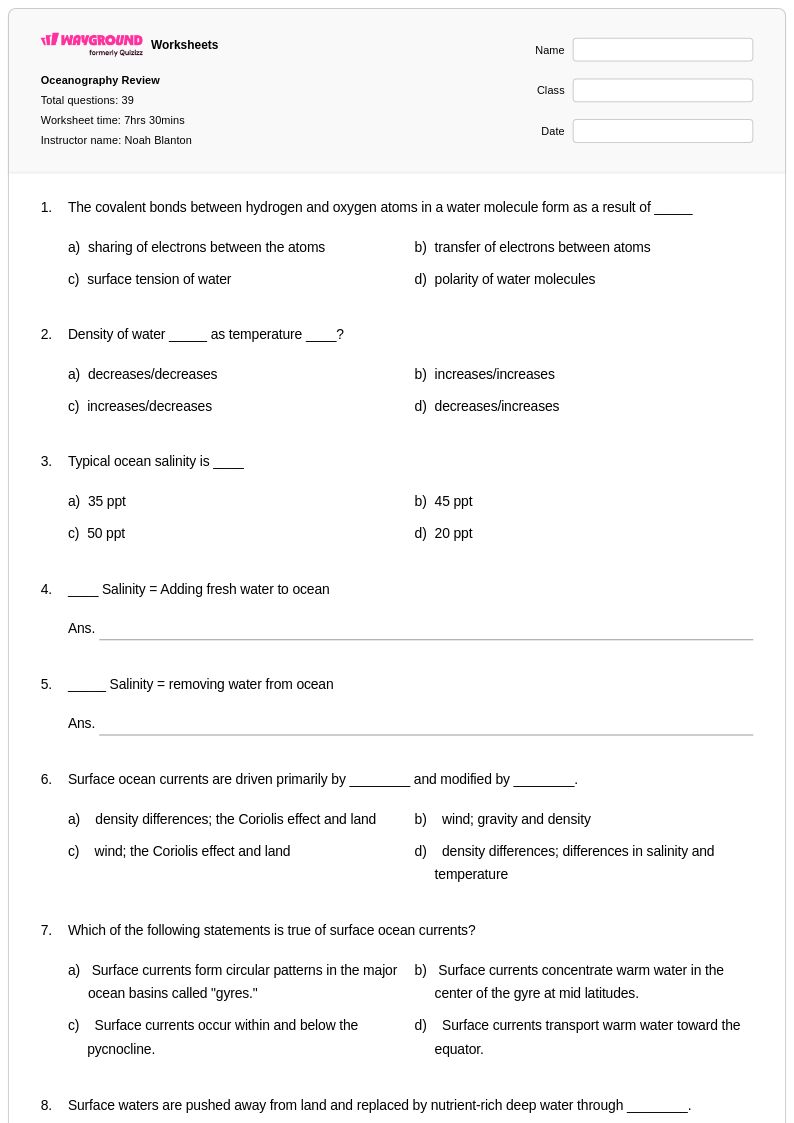
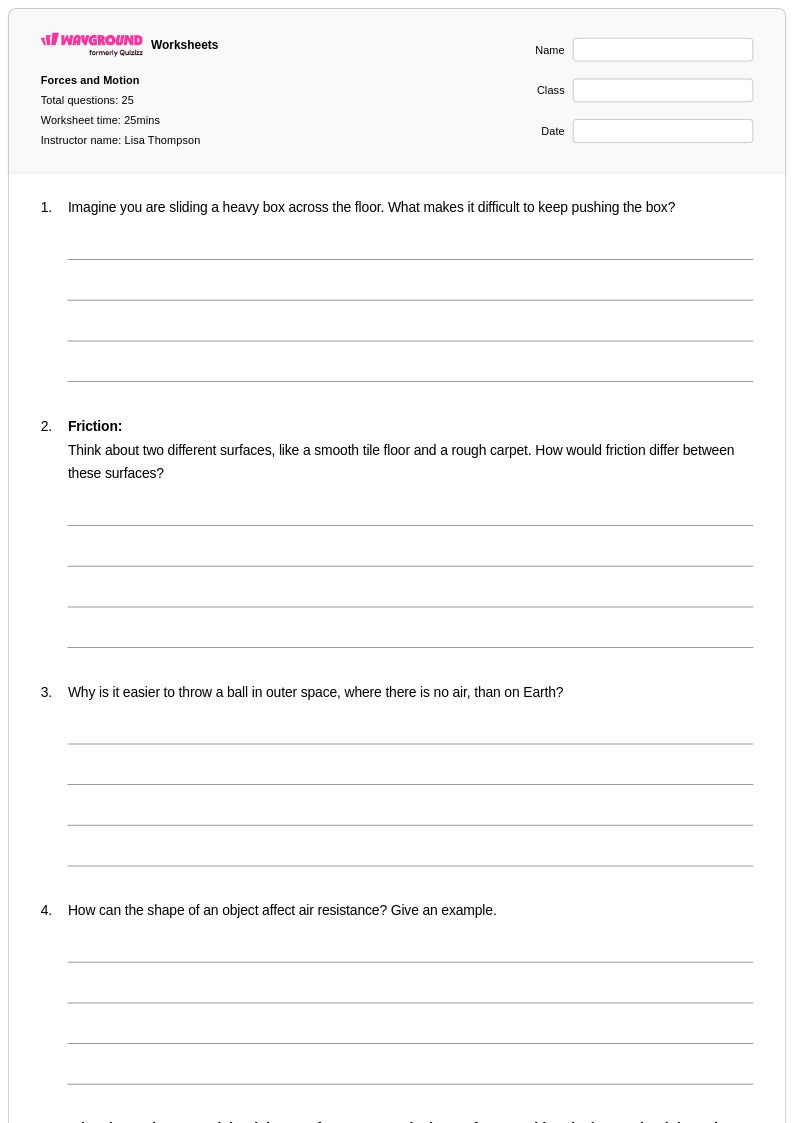
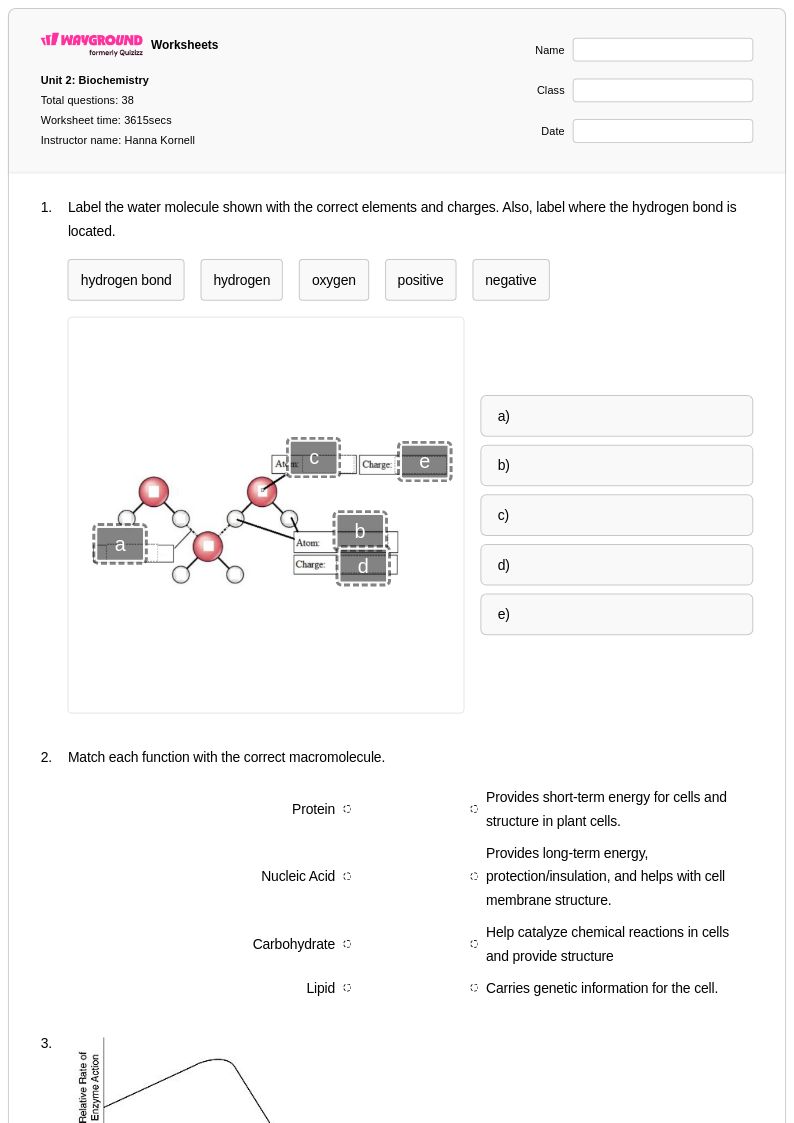
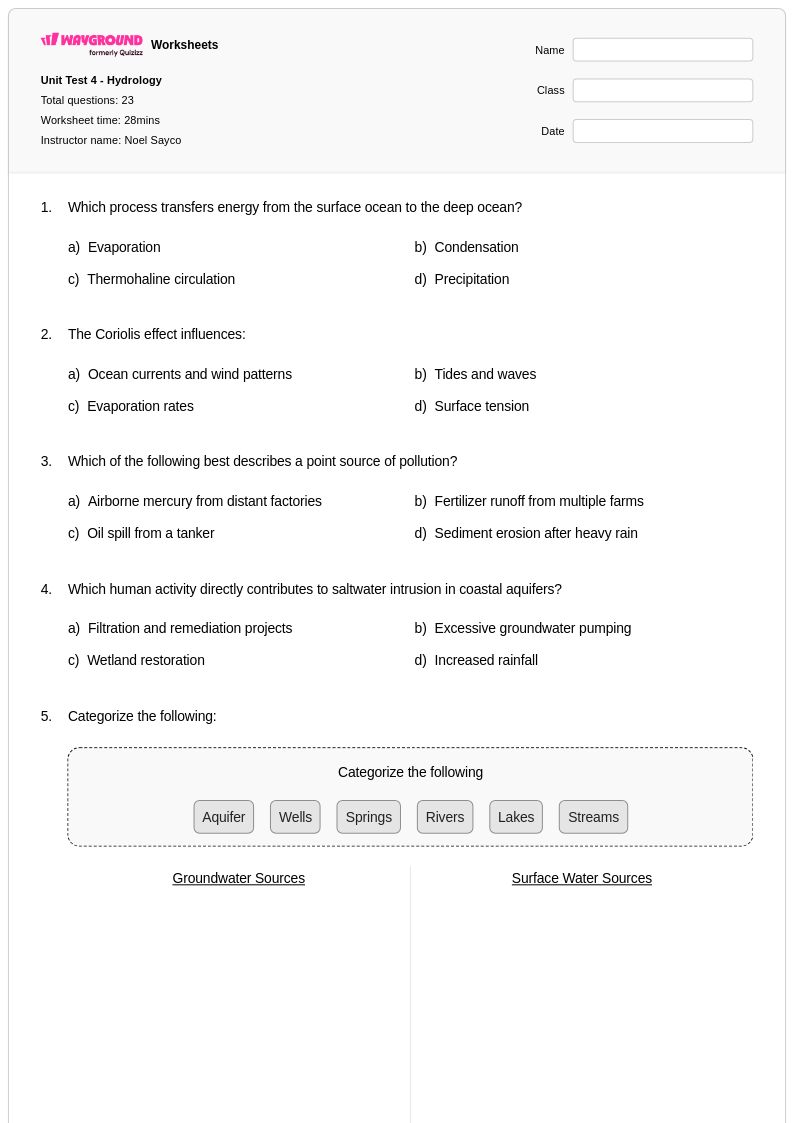
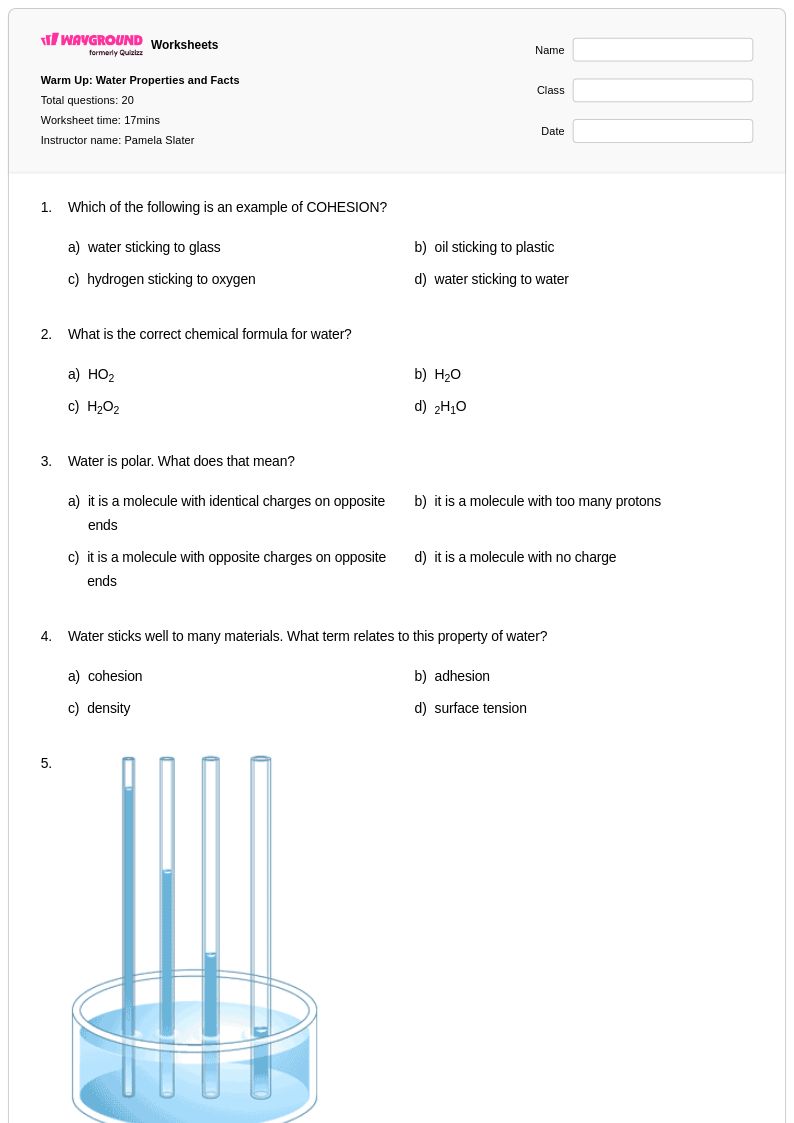
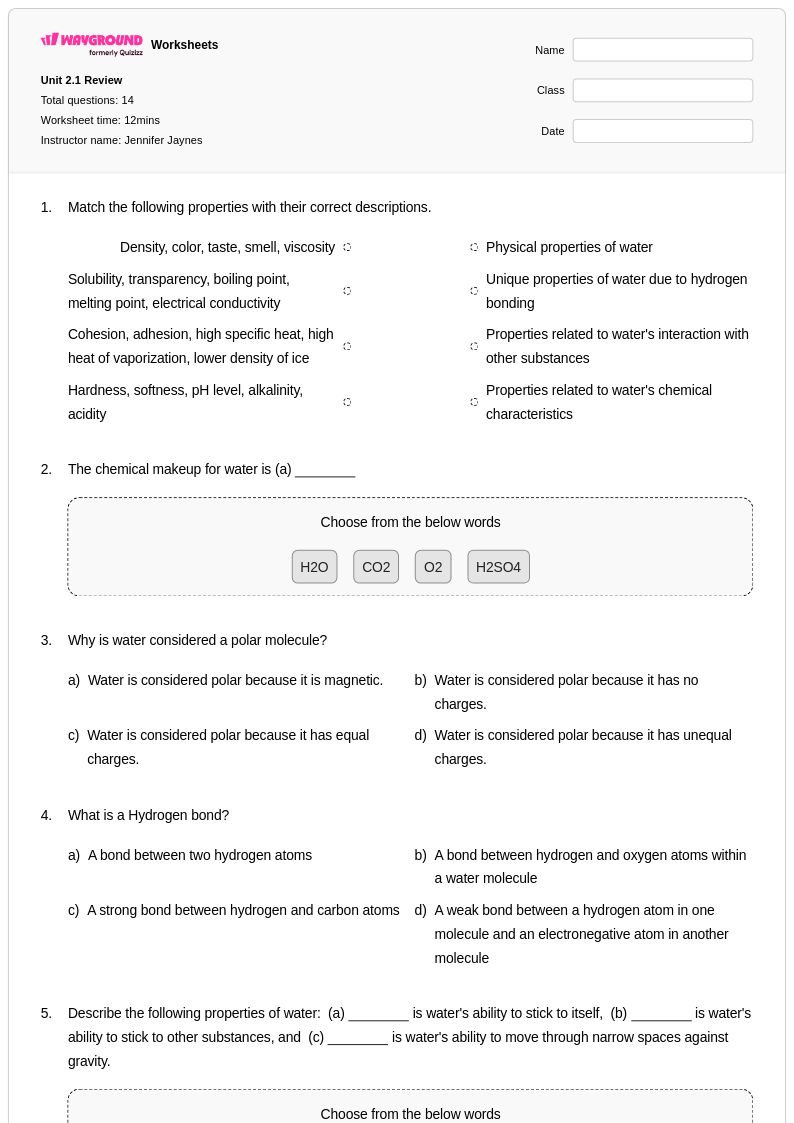
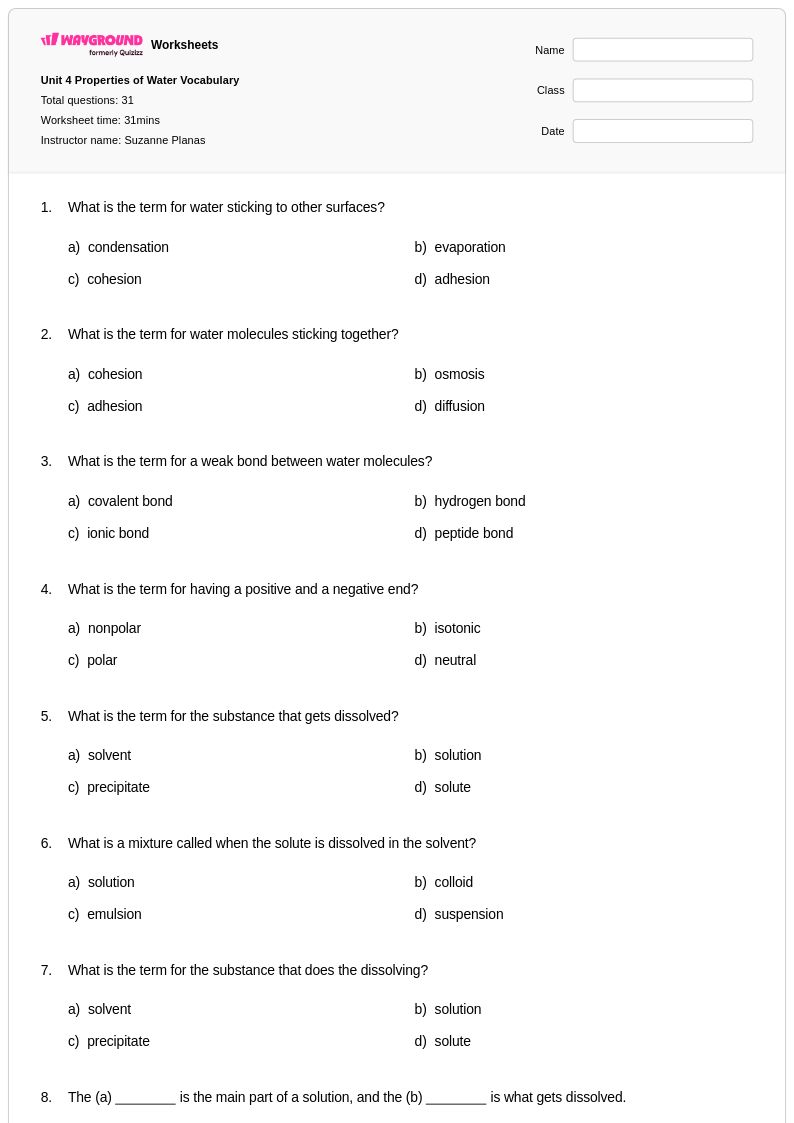
Surface tension worksheets for Year 10 students available through Wayground (formerly Quizizz) provide comprehensive coverage of this fundamental physics concept that governs liquid behavior at interfaces. These expertly designed resources help students master the molecular forces responsible for surface tension phenomena, including cohesion, adhesion, and the formation of meniscus in various containers. The worksheets strengthen critical analytical skills through practice problems that explore real-world applications such as water striders walking on pond surfaces, soap's effect on surface tension, and capillary action in plants. Each worksheet collection includes detailed answer keys and is available as free printables in convenient pdf format, allowing students to work through increasingly complex scenarios involving surface energy calculations, contact angles, and the Young-Laplace equation that describes pressure differences across curved interfaces.
Wayground (formerly Quizizz) empowers physics educators with millions of teacher-created surface tension worksheet resources that feature robust search and filtering capabilities, enabling quick identification of materials aligned with specific curriculum standards and learning objectives. The platform's differentiation tools allow teachers to customize worksheet difficulty levels and problem types to accommodate diverse learning needs, while flexible formatting options provide both printable pdf versions for traditional classroom use and interactive digital formats for modern learning environments. These comprehensive collections support effective lesson planning by offering varied approaches to surface tension instruction, from basic conceptual understanding through advanced mathematical applications, making it simple for educators to design targeted practice sessions, implement remediation strategies for struggling students, and provide enrichment opportunities that deepen understanding of intermolecular forces and their macroscopic effects in liquid systems.
FAQs
How do I teach surface tension to students?
Surface tension is best taught by grounding it in observable phenomena before introducing the underlying physics. Start with demonstrations like floating a paper clip on water or showing water striders, then connect those observations to the concept of cohesive forces between water molecules. From there, introduce the formula for surface tension force and walk students through worked examples involving liquid interfaces and contact angles. Tying abstract molecular forces to visible, real-world behavior significantly improves student engagement and retention.
What practice problems help students master surface tension calculations?
Effective surface tension practice problems progress from straightforward formula applications, such as calculating the force along a liquid film, to more complex scenarios involving capillary rise, contact angles, and meniscus formation. Students also benefit from problems that ask them to explain phenomena like droplet formation or insect locomotion on water using surface tension principles. Mixing calculation-based and explanation-based problems ensures students develop both procedural fluency and conceptual understanding.
What mistakes do students commonly make when working with surface tension?
One of the most frequent errors is confusing cohesion with adhesion and applying the wrong concept when analyzing capillary action. Students also commonly misapply the surface tension formula by failing to account for the factor of two when a liquid film has two surfaces, such as in a soap film. Another common misconception is treating surface tension as a property of the surface alone rather than recognizing it as a result of net inward molecular forces on liquid molecules at an interface.
How can I use surface tension worksheets to support students at different skill levels?
Surface tension worksheets can be differentiated by sequencing problems from basic calculations to multi-step scenarios involving contact angles and capillary action, allowing students to work at an appropriate entry point. On Wayground, teachers can apply individual accommodations such as read aloud support for students who need questions read to them, reduced answer choices to lower cognitive load, and extended time settings for students who need more processing time. These accommodations can be assigned per student without disrupting the experience of the rest of the class.
How do I use Wayground's surface tension worksheets in my classroom?
Wayground's surface tension worksheets are available as free printable PDFs for traditional classroom distribution and in digital formats for technology-integrated learning environments. Teachers can also host worksheets as interactive quizzes directly on Wayground, enabling real-time student responses and automatic grading. Complete answer keys are included with every worksheet, supporting independent student practice as well as teacher-led review sessions.
How does surface tension relate to capillary action, and how should I explain the connection to students?
Surface tension and capillary action are closely linked: capillary action occurs when the adhesive forces between a liquid and a surface exceed the cohesive forces within the liquid, causing it to climb the walls of a narrow tube. Surface tension determines how strongly the liquid resists the expansion of its surface, which directly influences how high the liquid can rise. Teaching these concepts together, with problems that require students to calculate capillary rise using both adhesion and surface tension values, reinforces the relationship and prevents students from treating them as isolated topics.