Free Printable Equations with Infinite and No Solutions Worksheets for Year 12
Master Year 12 equations with infinite and no solutions through Wayground's comprehensive collection of free worksheets, featuring targeted practice problems, printable PDFs, and detailed answer keys to strengthen algebraic reasoning skills.
Explore printable Equations with Infinite and No Solutions worksheets for Year 12
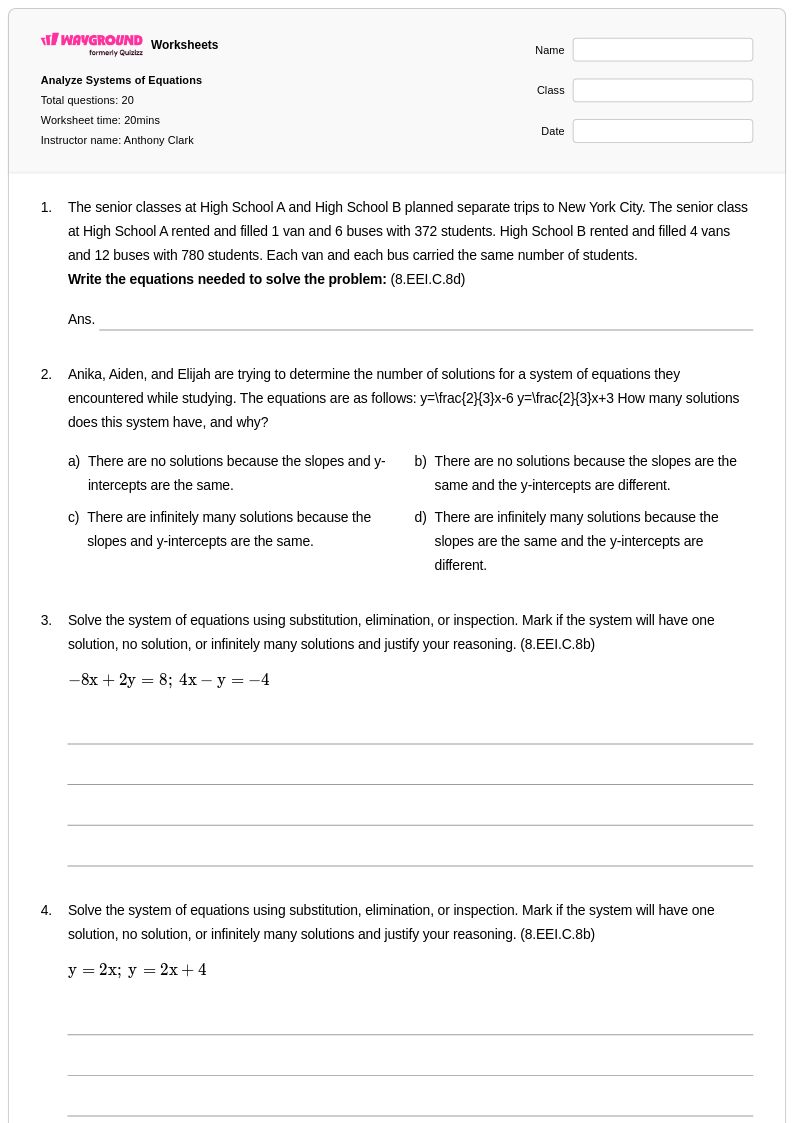
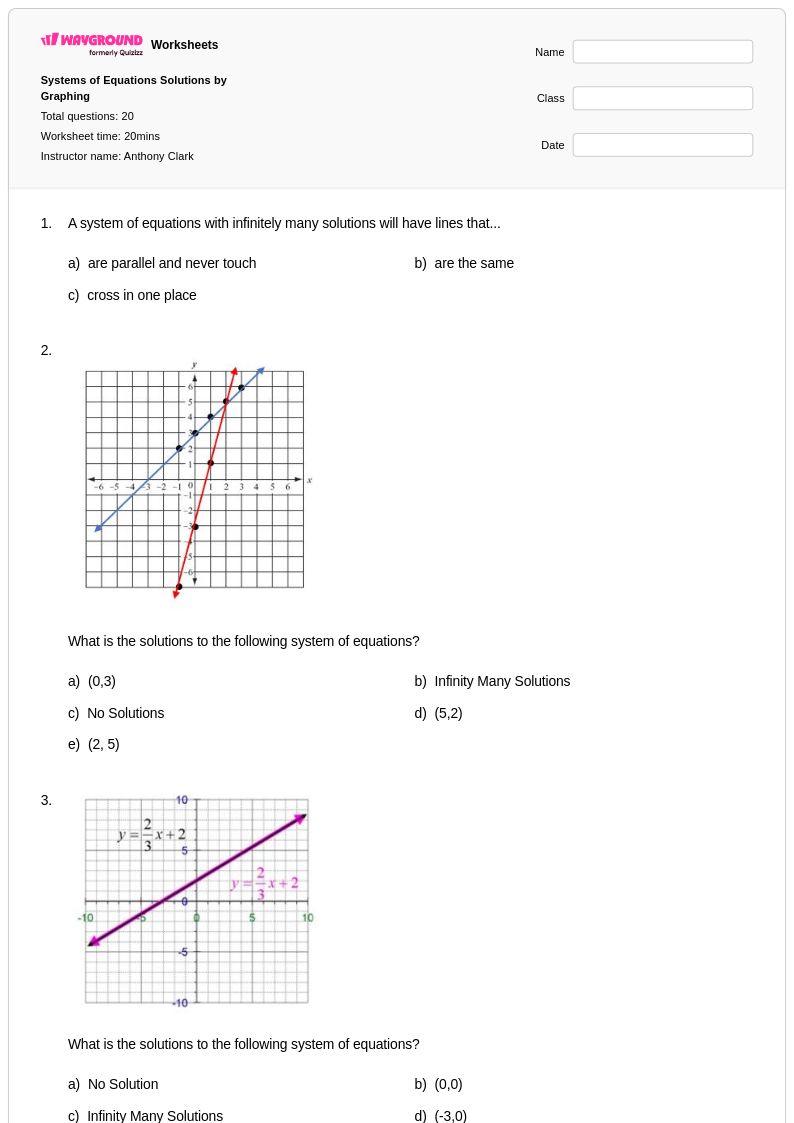
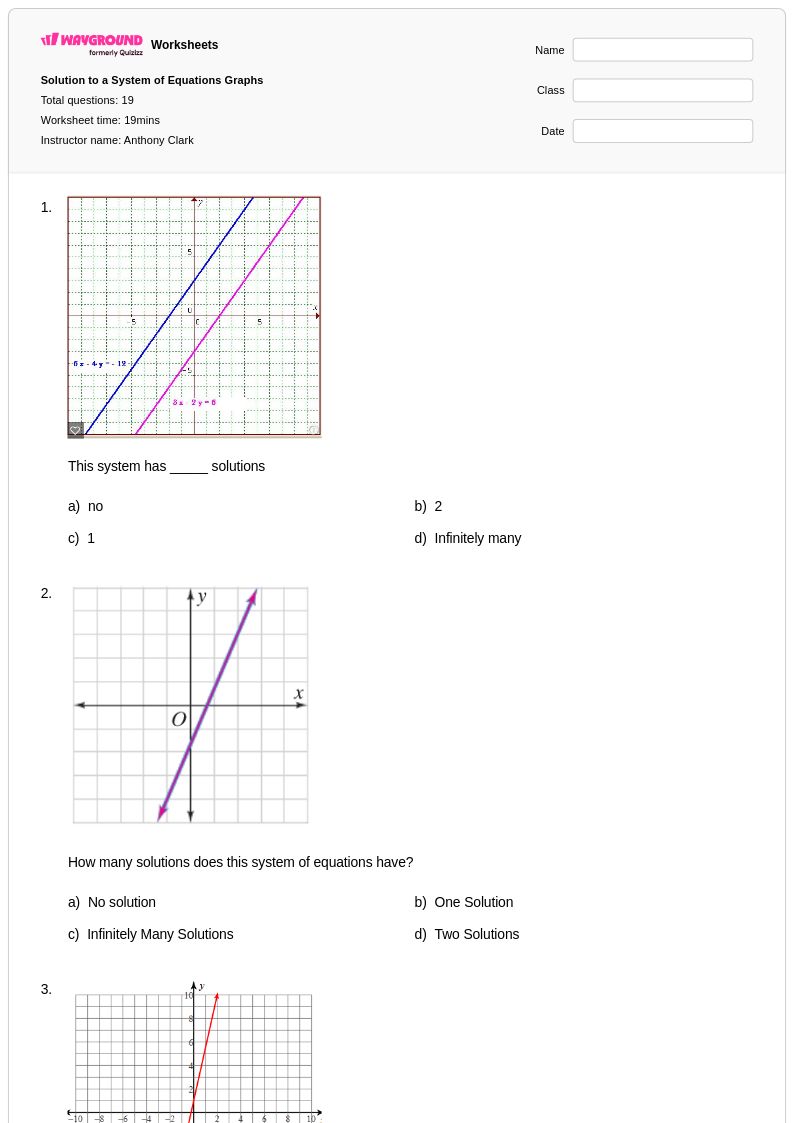
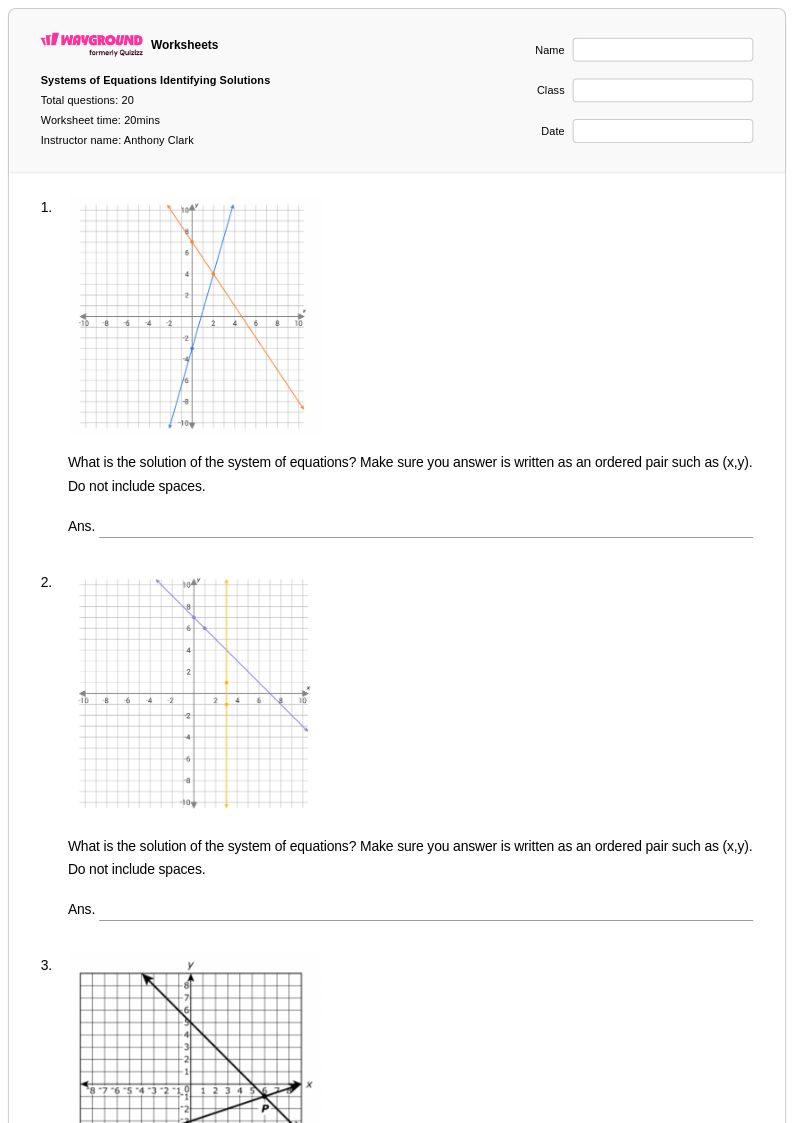
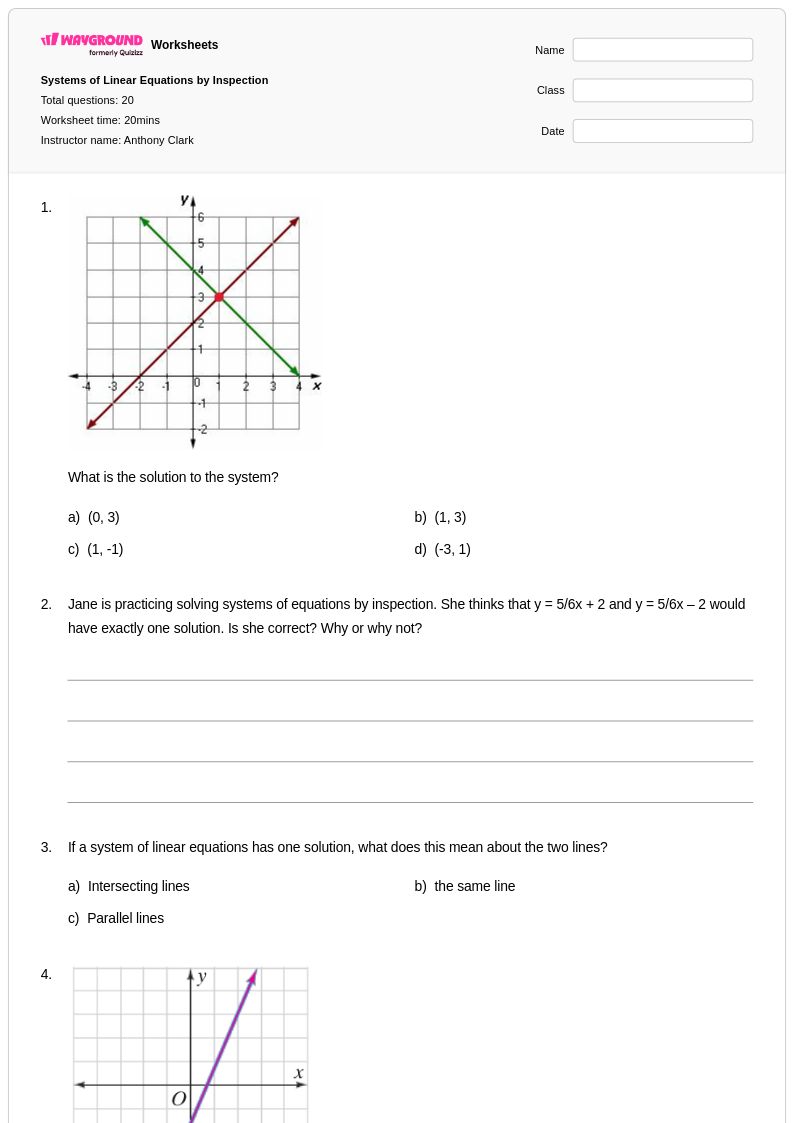
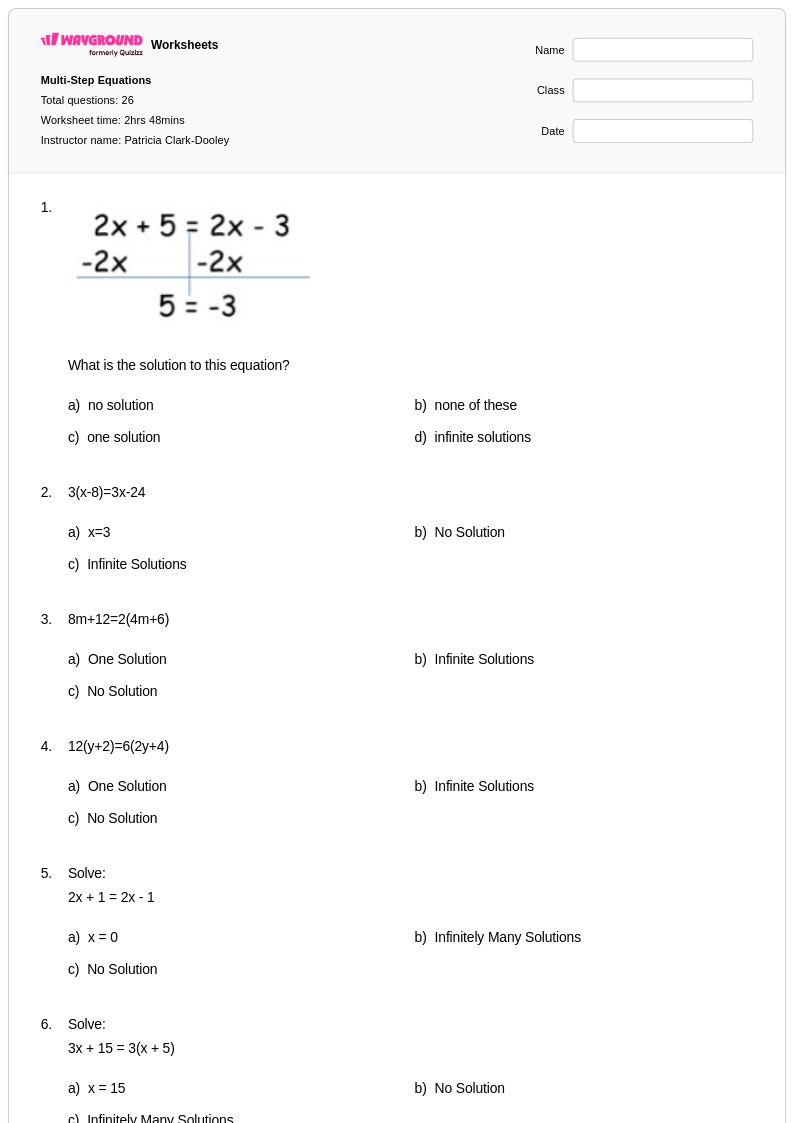
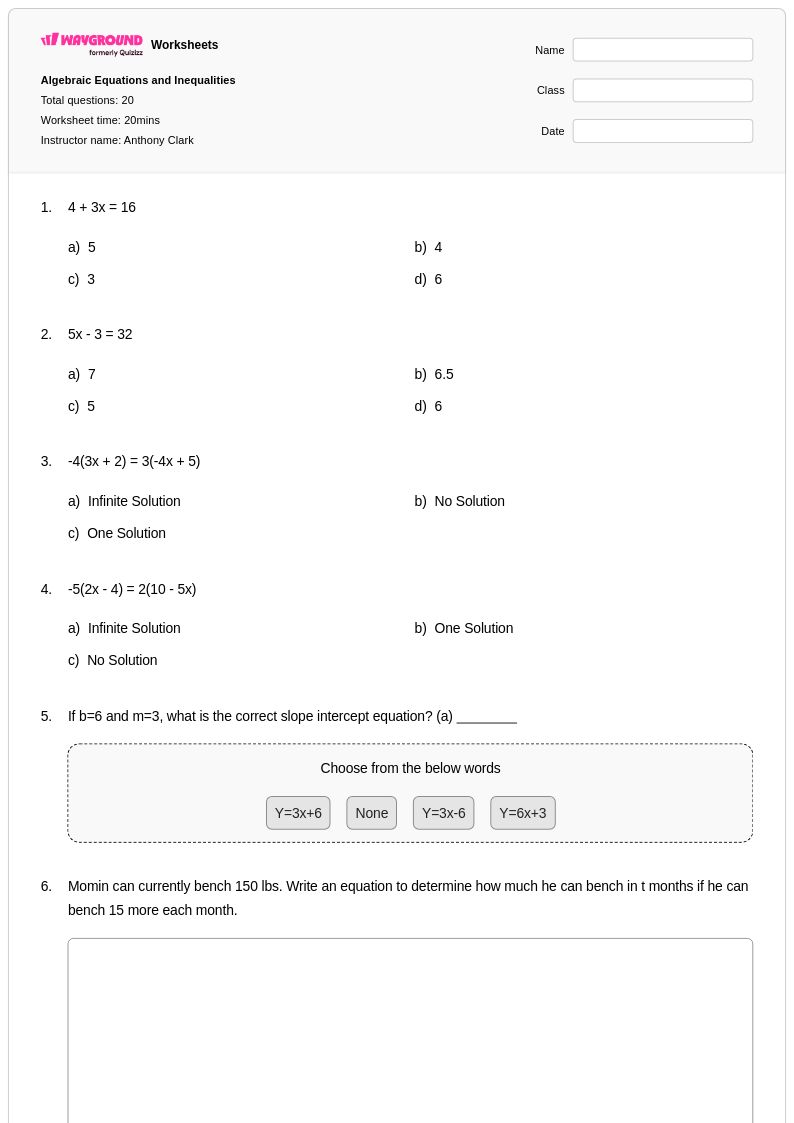
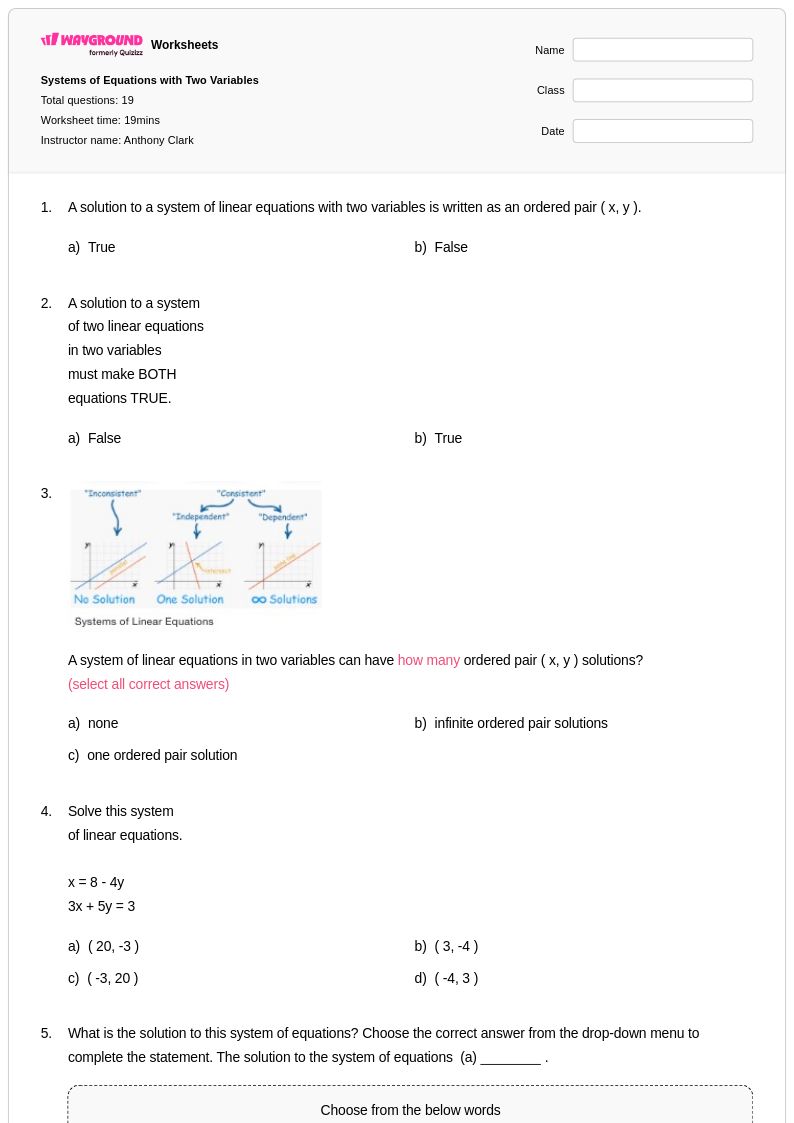
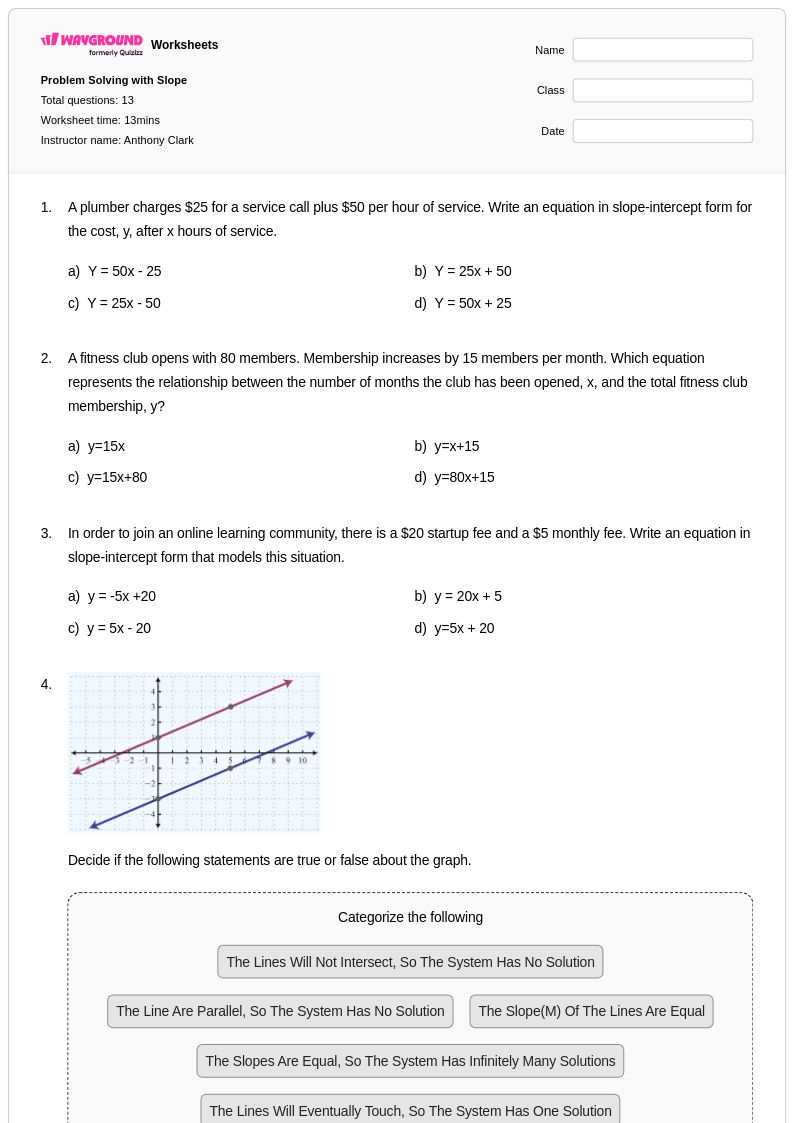
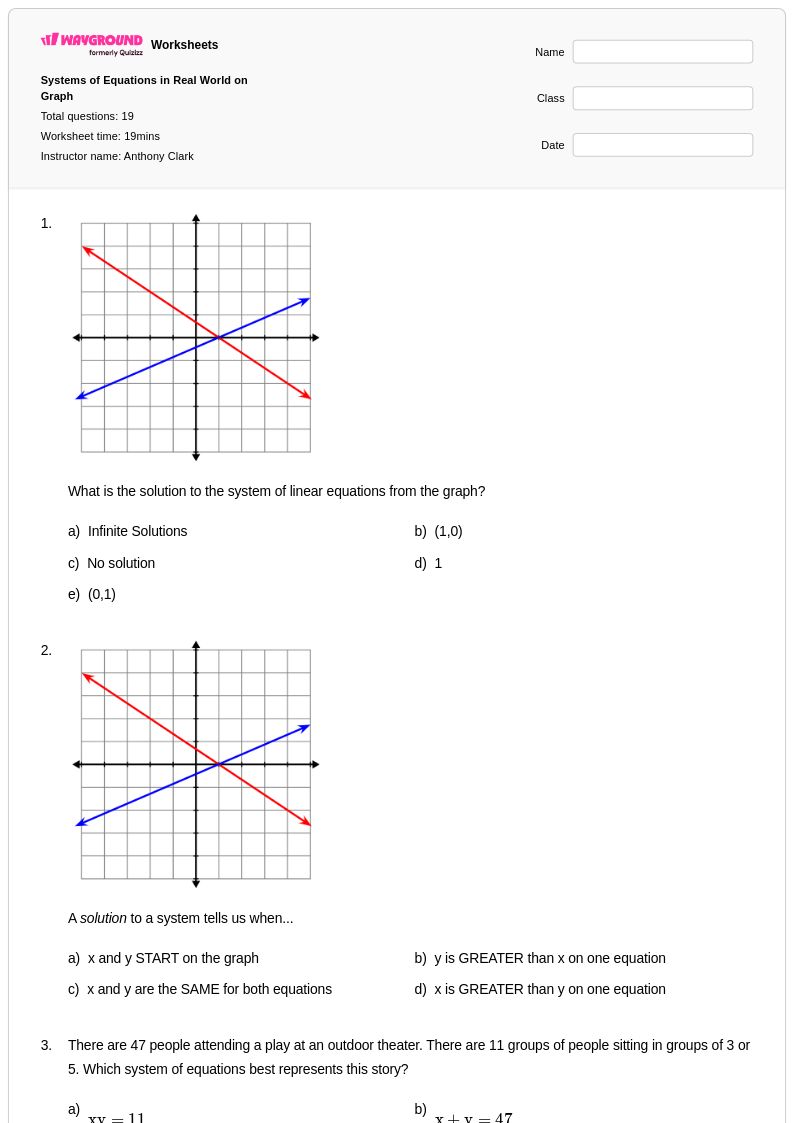
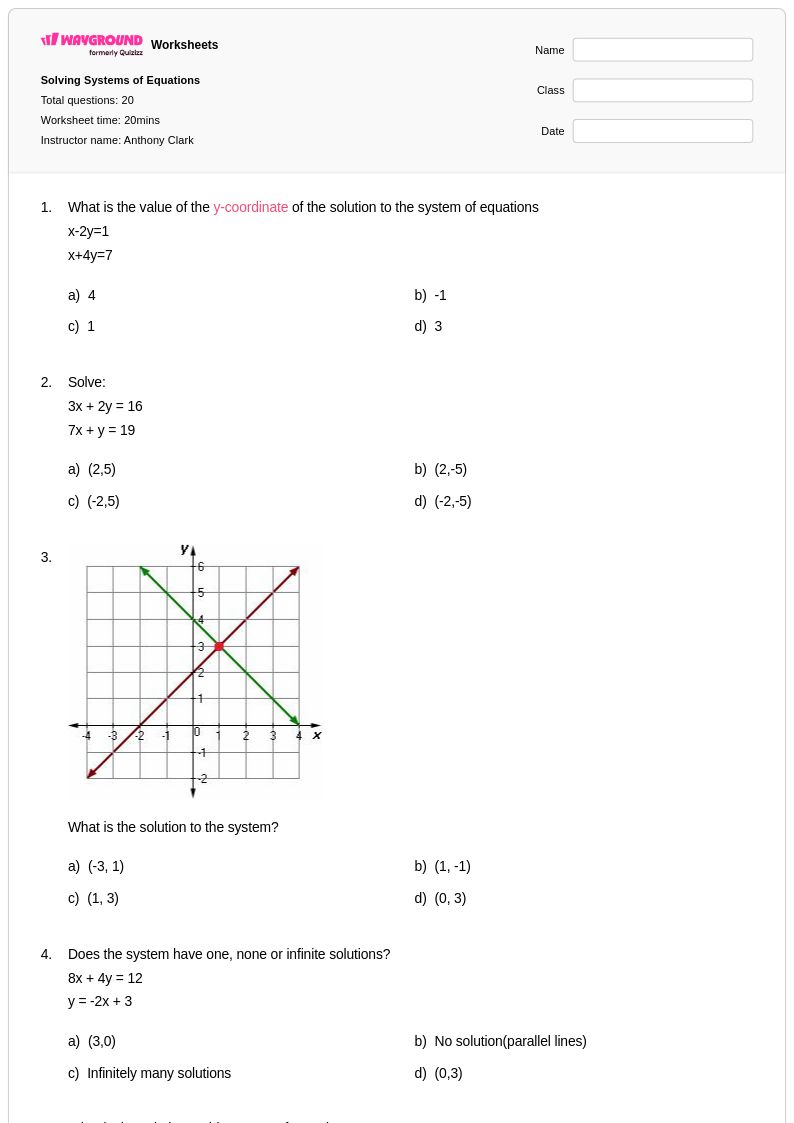
Equations with infinite and no solutions represent a critical concept in Year 12 algebra that challenges students to analyze the fundamental nature of linear and higher-order equations beyond finding simple numerical answers. Wayground's comprehensive worksheet collection addresses this advanced algebraic topic through carefully structured practice problems that guide students through identifying inconsistent systems, dependent equations, and special cases where traditional solving methods reveal deeper mathematical truths. These free printable resources strengthen students' analytical reasoning skills by requiring them to recognize when an equation simplifies to contradictions like 0 = 5 (indicating no solution) or identities like 3 = 3 (indicating infinite solutions). Each worksheet includes a detailed answer key that explains the algebraic steps leading to these conclusions, helping students develop the critical thinking necessary for advanced mathematics and building confidence in handling complex algebraic scenarios through systematic practice.
Wayground supports mathematics educators with an extensive library of teacher-created resources specifically designed for Year 12 algebra instruction, including thousands of worksheets focused on equations with infinite and no solutions. The platform's robust search and filtering capabilities allow teachers to quickly locate materials aligned with state standards and curriculum objectives, while differentiation tools enable customization based on individual student needs and varying skill levels. Teachers can access these resources in both printable pdf format for traditional classroom use and digital formats for online learning environments, providing flexibility for lesson planning, targeted remediation, and enrichment activities. The millions of educator-contributed materials ensure comprehensive coverage of this challenging algebraic concept, empowering teachers to provide sustained skill practice that builds student mastery through multiple approaches and difficulty levels tailored to advanced high school mathematics requirements.
FAQs
How do I teach equations with infinite and no solutions to 12th graders?
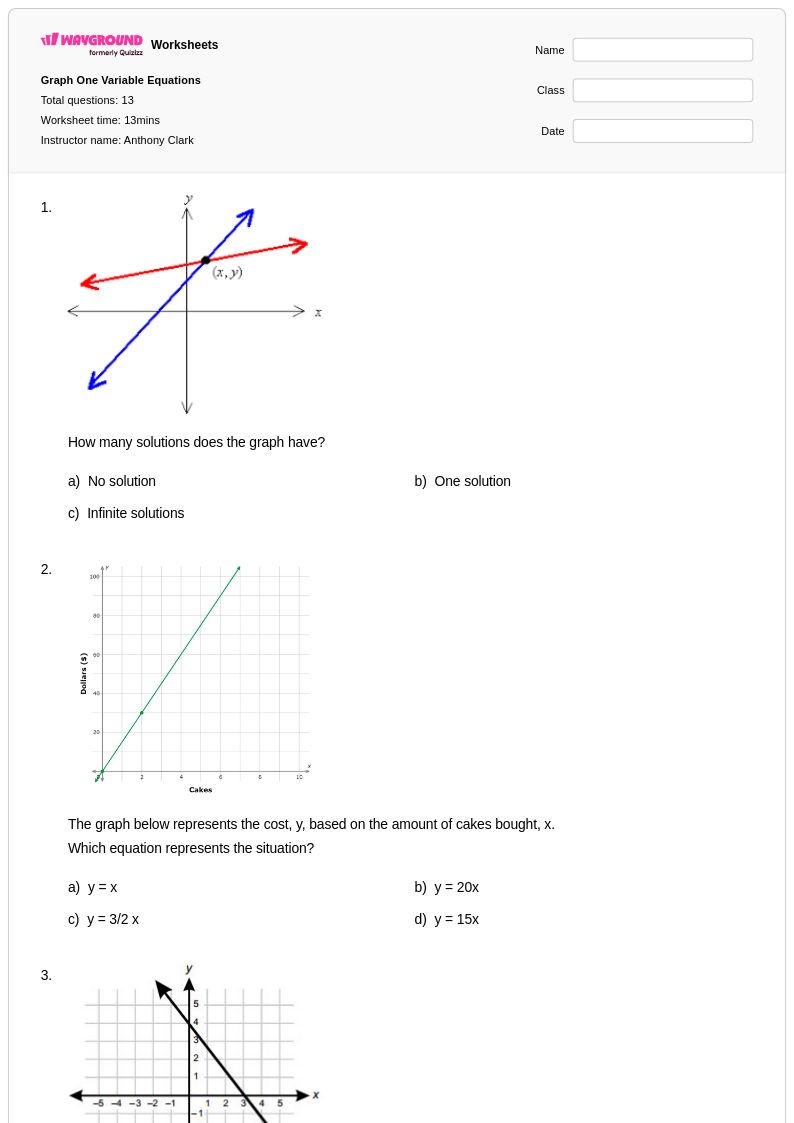
At Grade 12, this concept should be revisited in more sophisticated contexts: systems of linear equations solved by elimination or matrices, rational equations with domain restrictions, and parametric or vector equations where solution sets are described geometrically. The pedagogical goal is no longer recognition — students should be able to explain why a system is dependent or inconsistent using both algebraic and geometric reasoning, and connect that to the rank of a coefficient matrix if they're in a precalculus or linear algebra track. Frame it as a unifying idea across equation types rather than a standalone skill.
What practice problems are appropriate for 12th grade students on this topic?
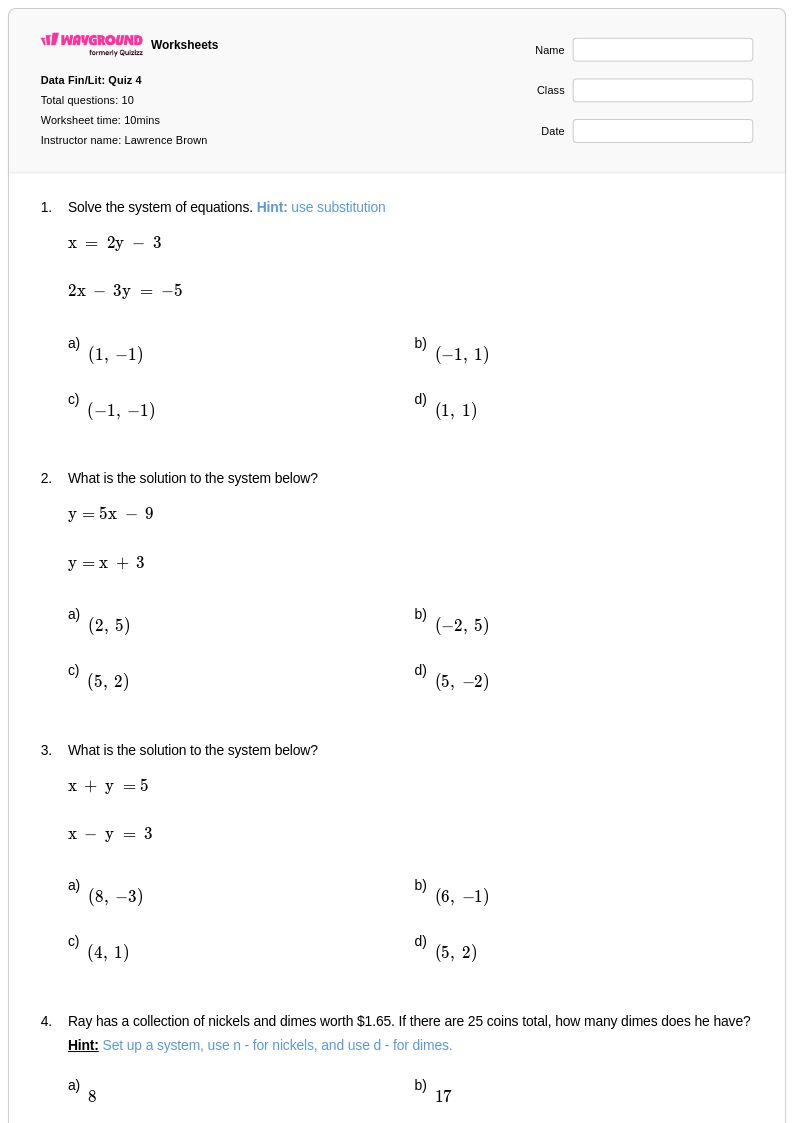
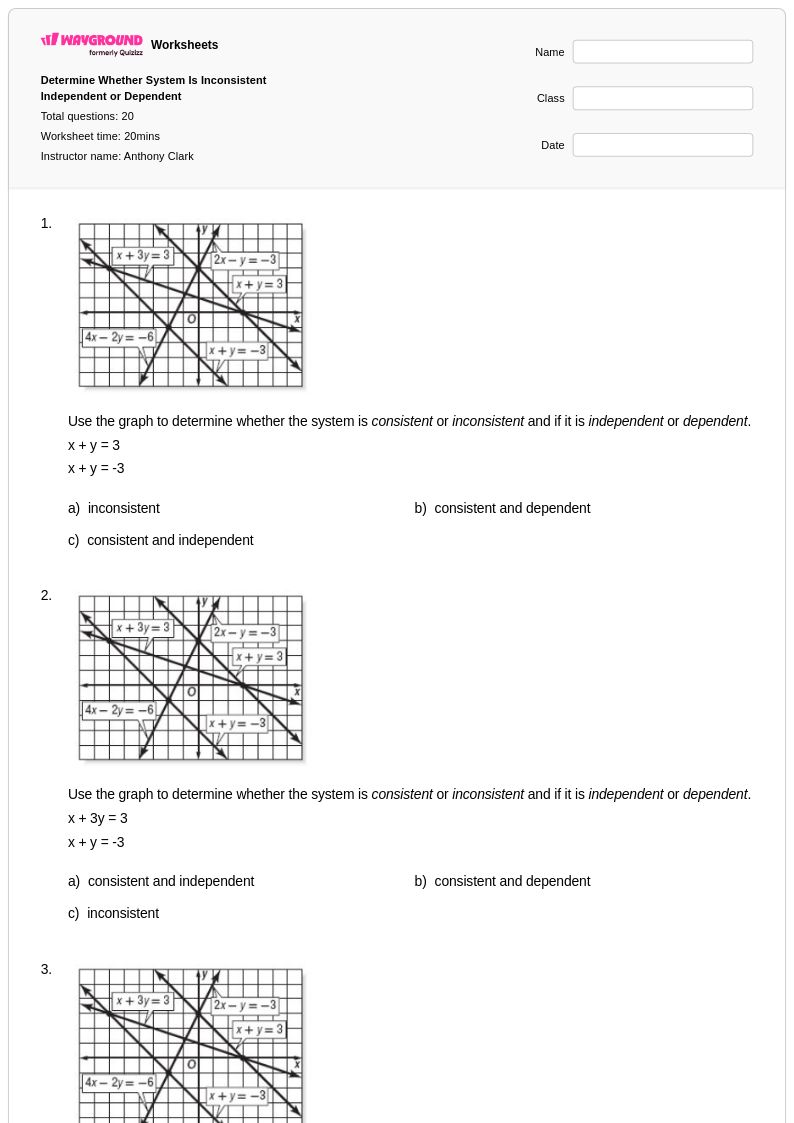
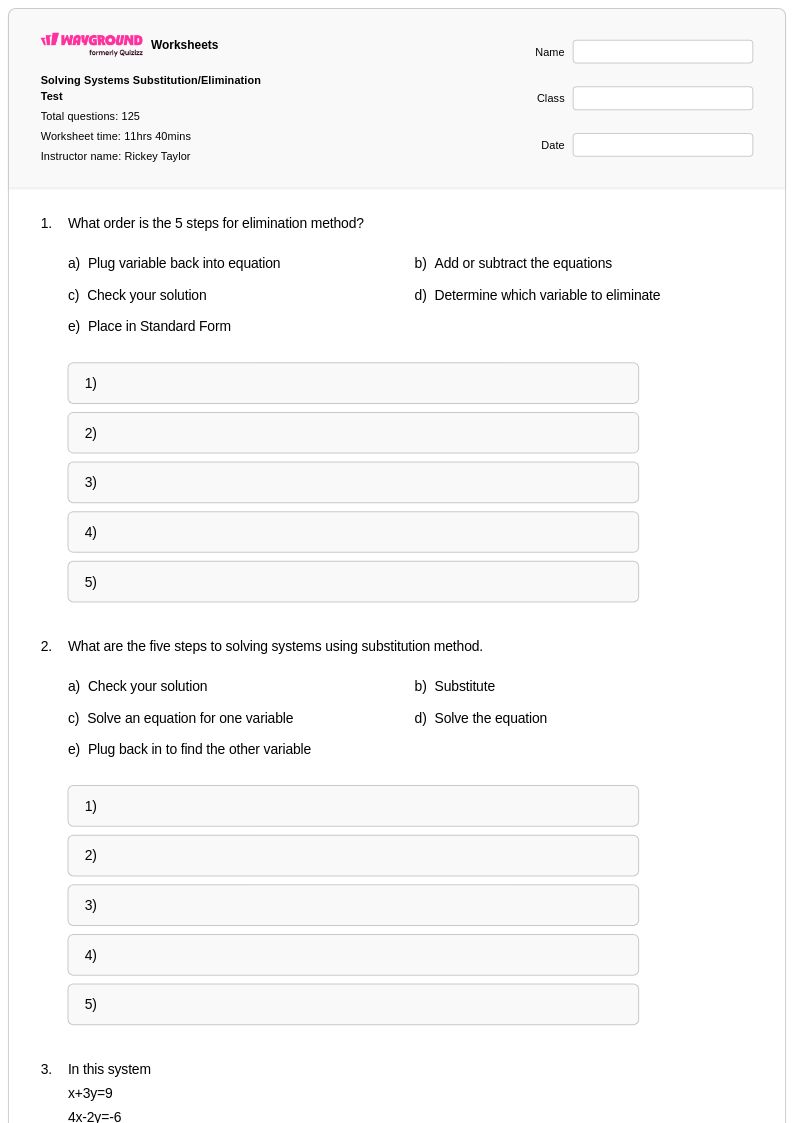
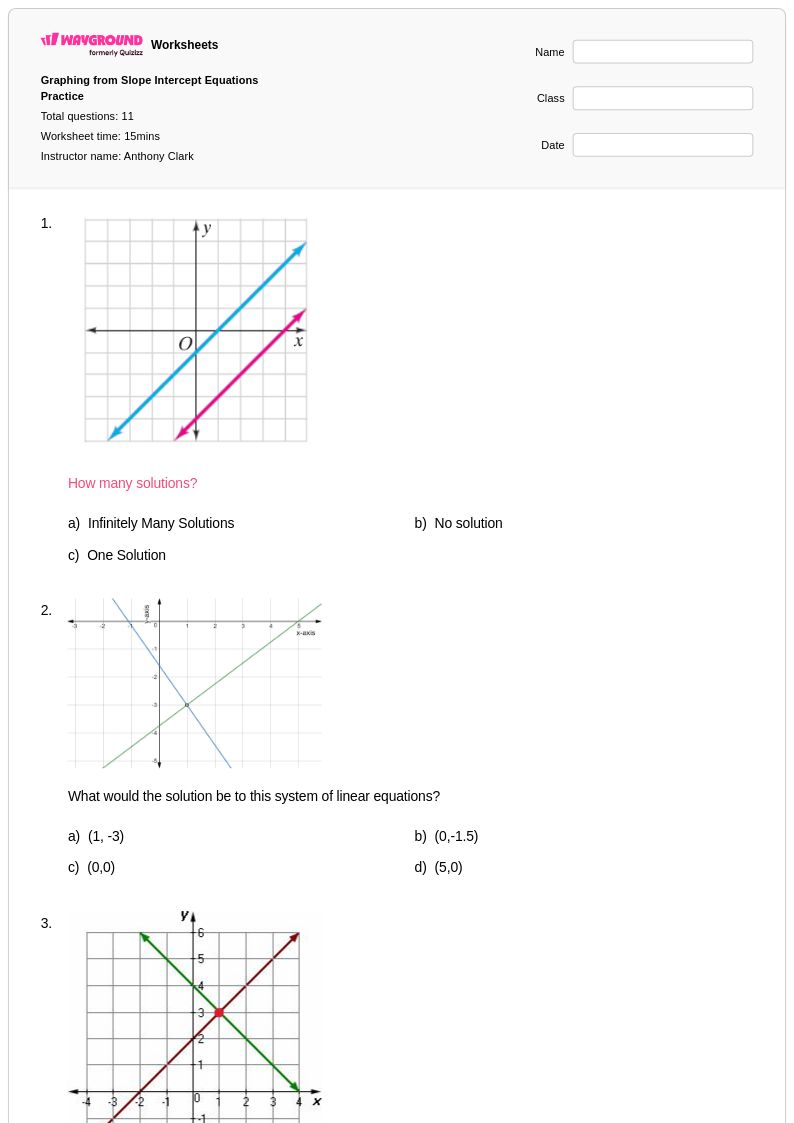
Problems should go beyond single-variable linear equations. Effective Grade 12 practice includes: classifying 2×2 and 3×2 systems as consistent, inconsistent, or dependent; analyzing rational equations for extraneous solutions that mimic no-solution outcomes; and constructing equations or systems with a specified solution type. Wayground's Grade 12 worksheets include complete answer keys with algebraic justifications, which is important at this level because the reasoning process is as assessable as the final classification.
What errors do 12th grade students make with this concept?
The most consequential error at Grade 12 is confusing 'no solution' with 'extraneous solution' in rational equations — students sometimes discard a valid solution because they misapply the no-solution logic. In systems work, a common mistake is correctly identifying a dependent system but failing to express the solution set properly, writing a single point instead of a parametric description of the line. These aren't careless errors; they reflect gaps in understanding what a solution set actually is, which is worth addressing directly before assessments.
How do I use Wayground's Grade 12 worksheets for this topic?
You can assign these as a digital quiz on Wayground for on-screen completion with automatic response capture, or download the printable PDF for paper-based work — both include a complete answer key. For paper submissions, the Wayground for Teachers app lets you scan student work for grading, which is practical when you're reviewing multi-step algebraic justifications across a full class set.
How does this topic connect to what 12th graders need for college-level math?
Recognizing inconsistent and dependent systems is foundational to linear algebra, which most STEM-track students encounter in their first year of college. In calculus, the same reasoning appears when analyzing whether two curves intersect, are tangent, or are identical. Students who can fluently classify solution types — and articulate why — are better equipped for proof-based coursework where 'no solution' and 'infinitely many solutions' are conclusions that must be justified, not just stated. Solid command of this concept at Grade 12 removes a common stumbling block in college math transitions.
How can I differentiate this worksheet for students at different readiness levels in Grade 12?
For students who need scaffolding on the algebraic manipulation before they can focus on classification, Wayground lets you create an alternate version of the worksheet with increased font size and wider spacing, which makes multi-step work easier to track visually. For students who are ready for more challenge, the most effective extension is asking them to construct a system of three equations that is dependent — that requires genuine understanding of what makes a system dependent, not just pattern recognition from two-equation examples.