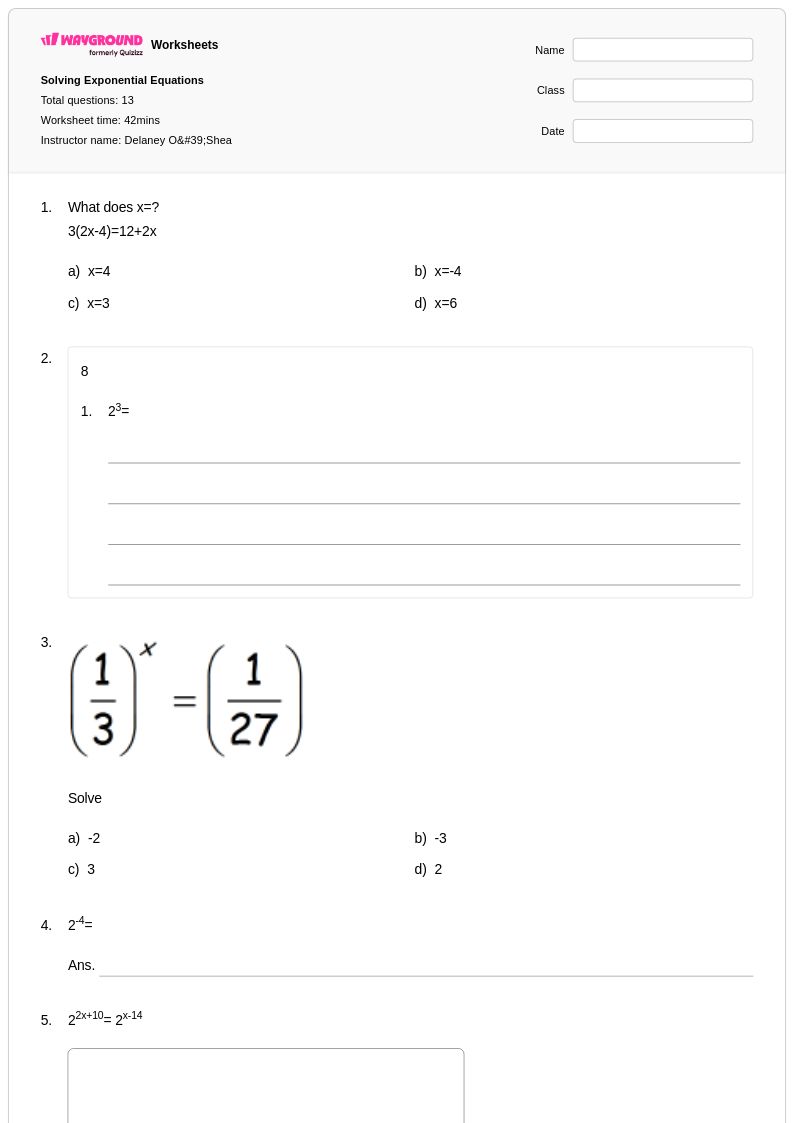
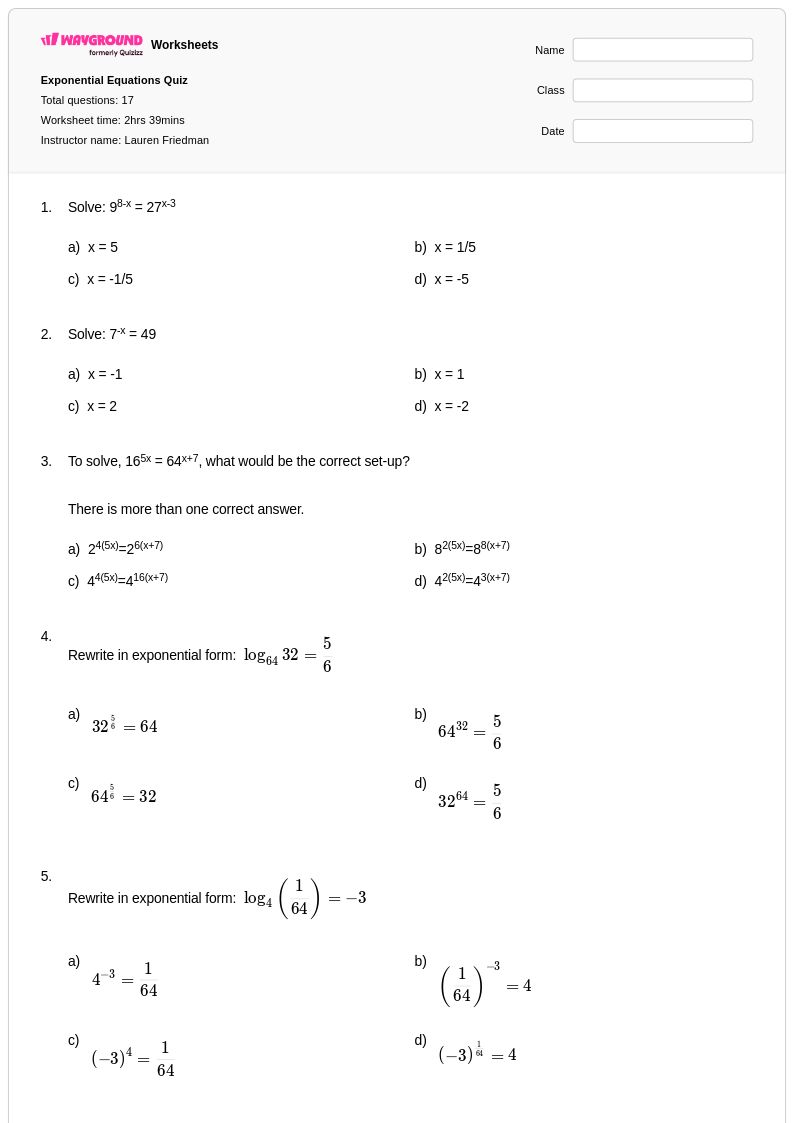
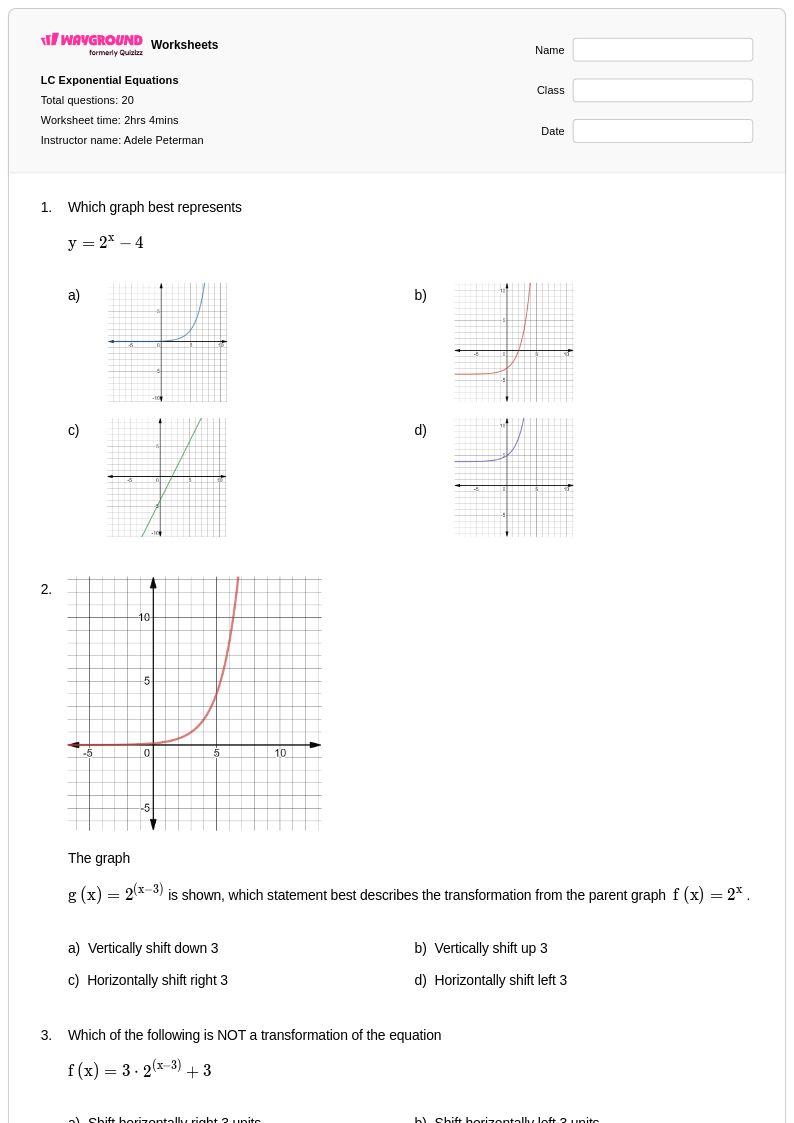
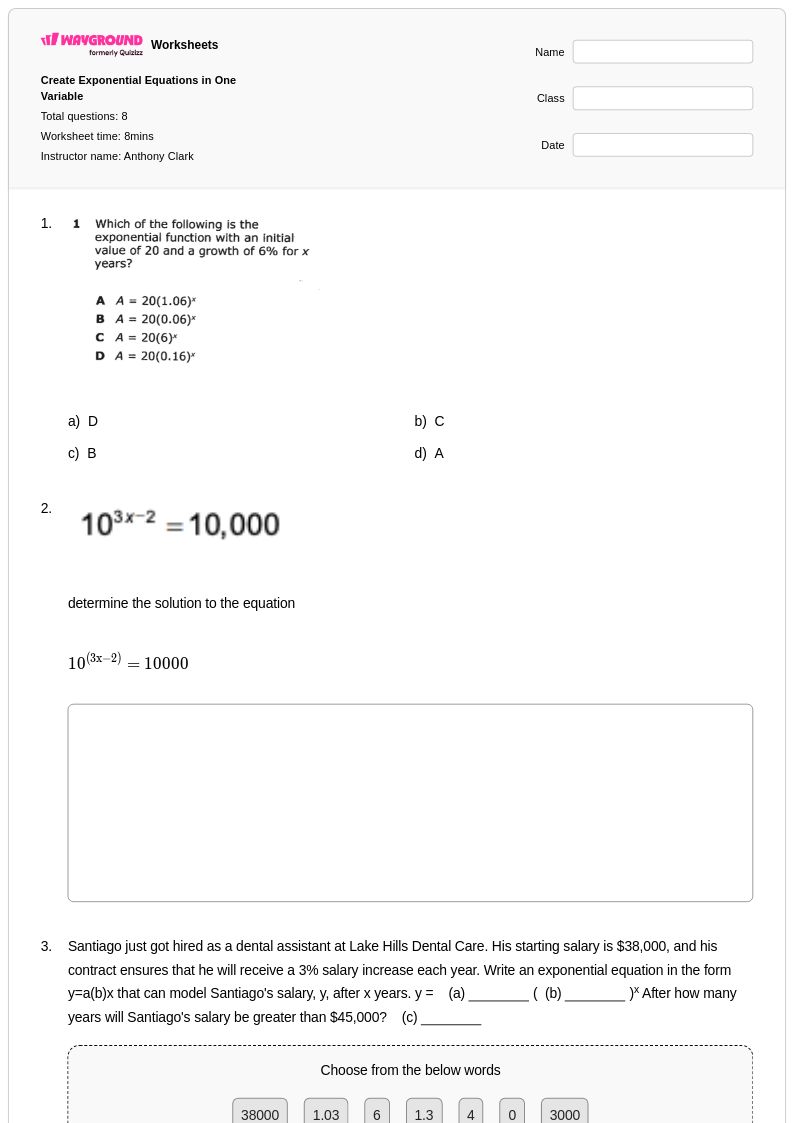
Free Printable Exponential Equations Worksheets for Year 11
Free Year 11 exponential equations worksheets with printables, PDFs, and answer keys help students master solving exponential functions through comprehensive practice problems and step-by-step solutions.
Explore printable Exponential Equations worksheets for Year 11
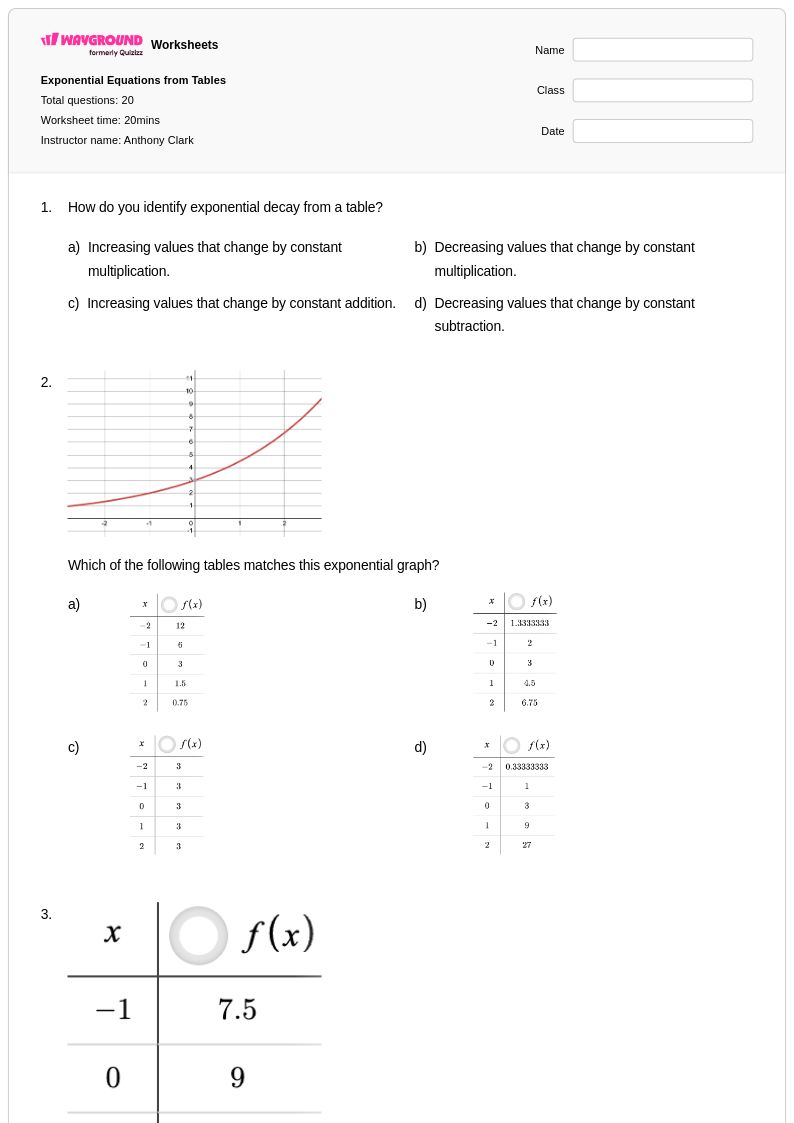
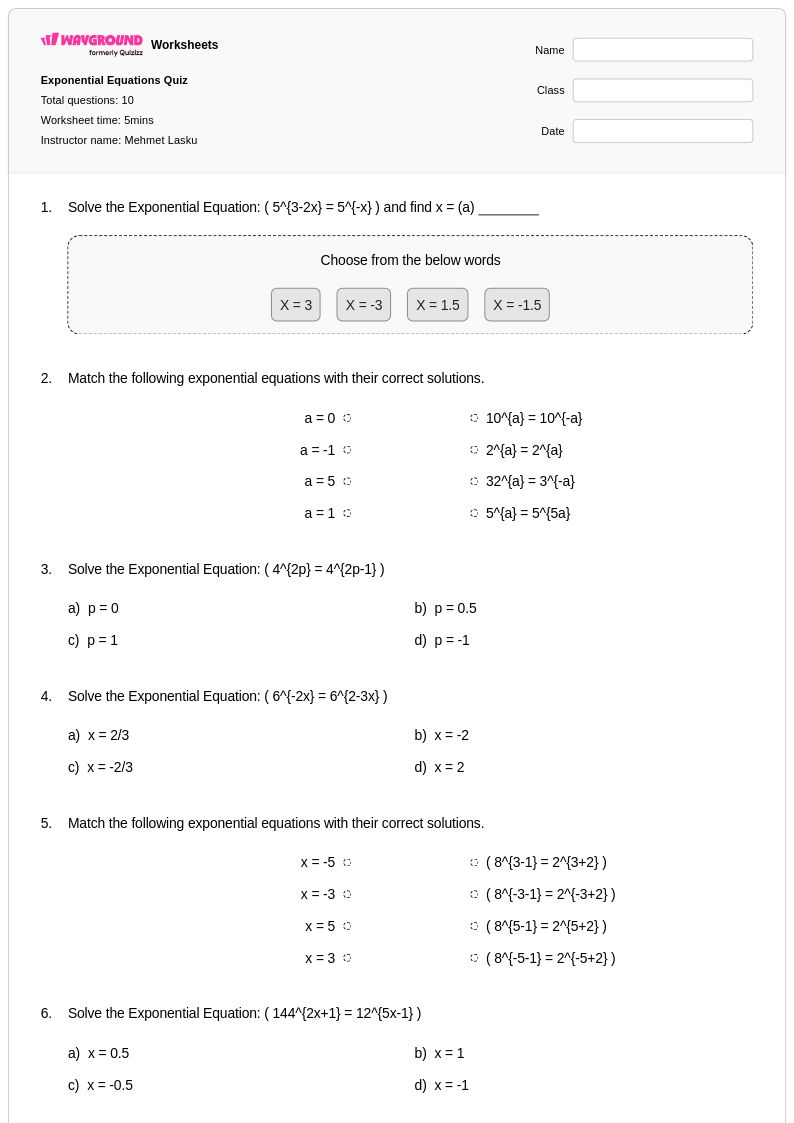
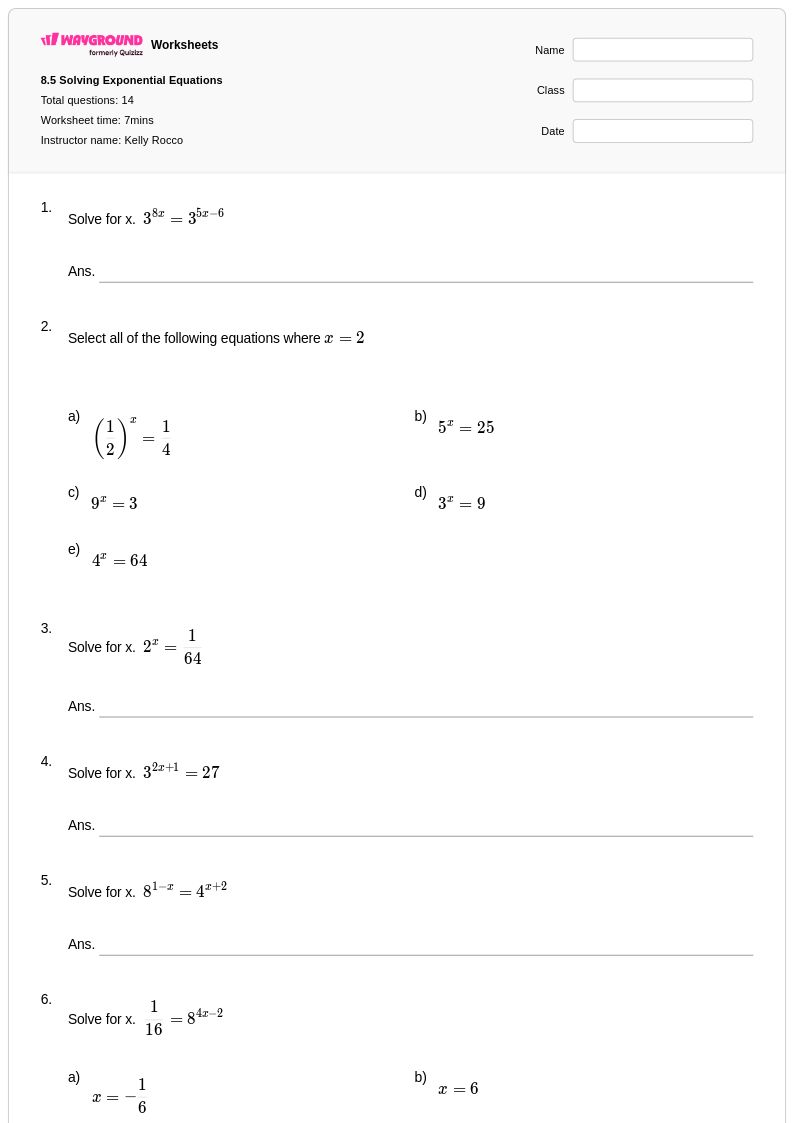
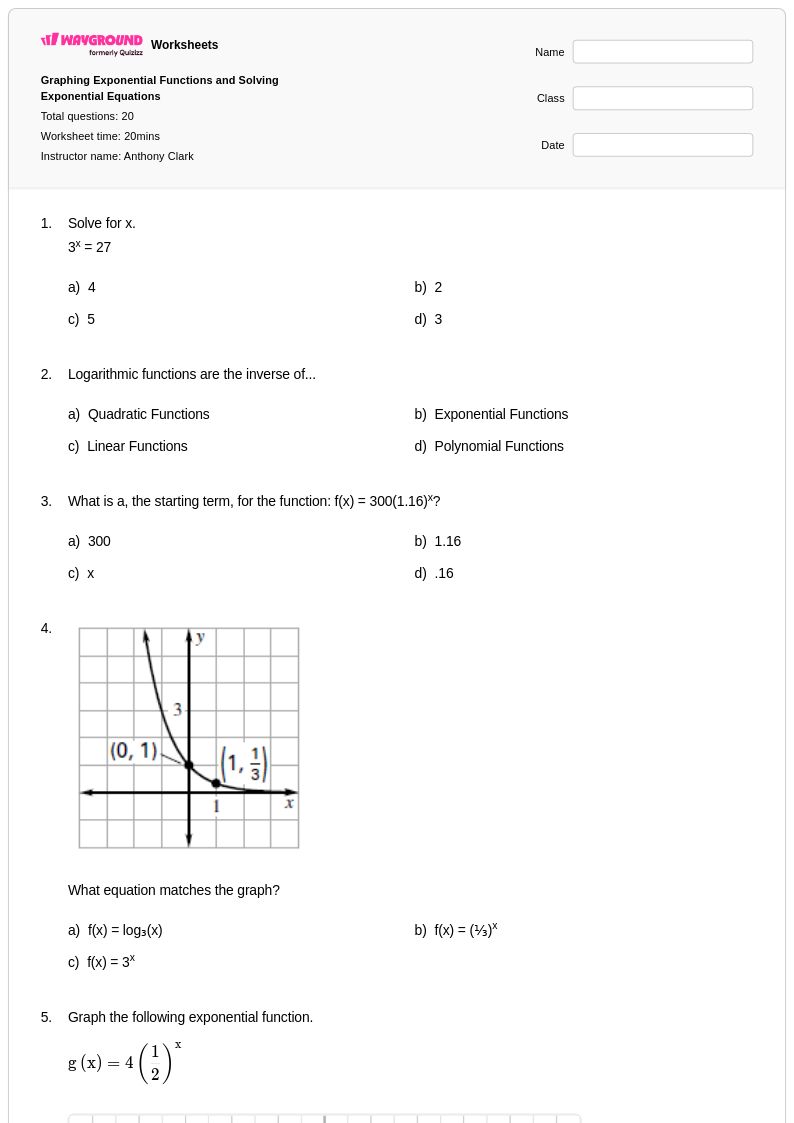
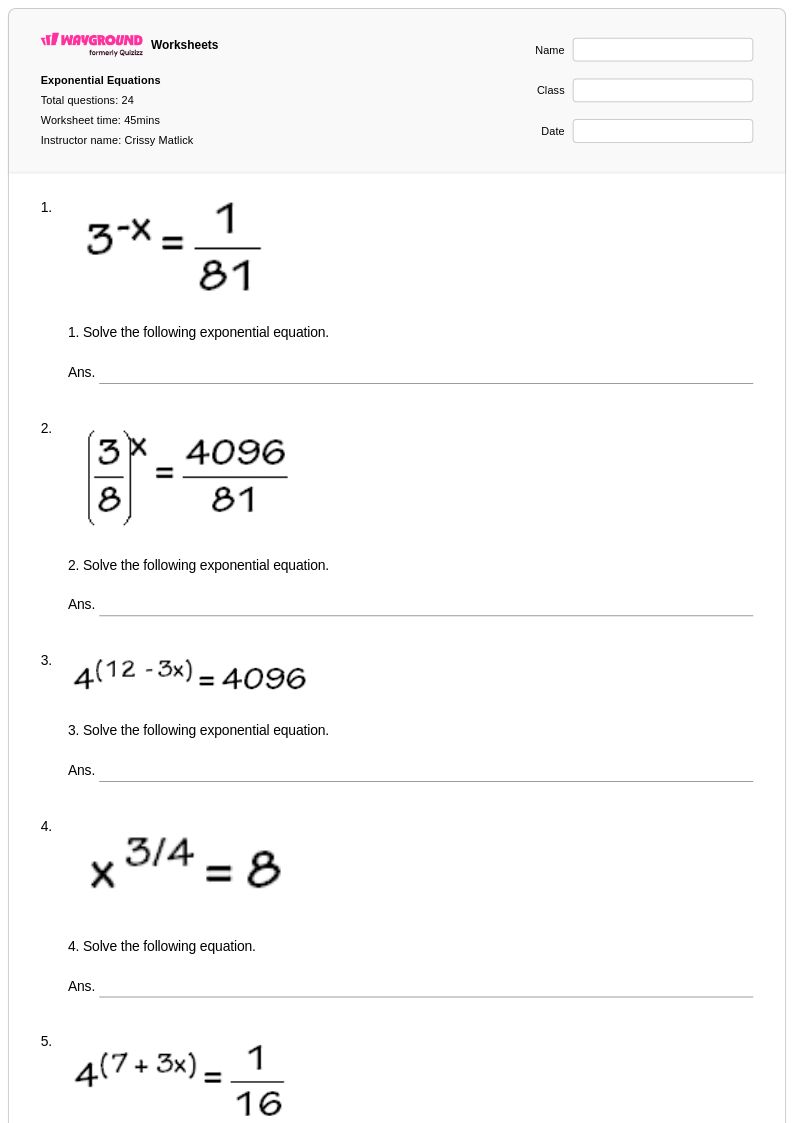
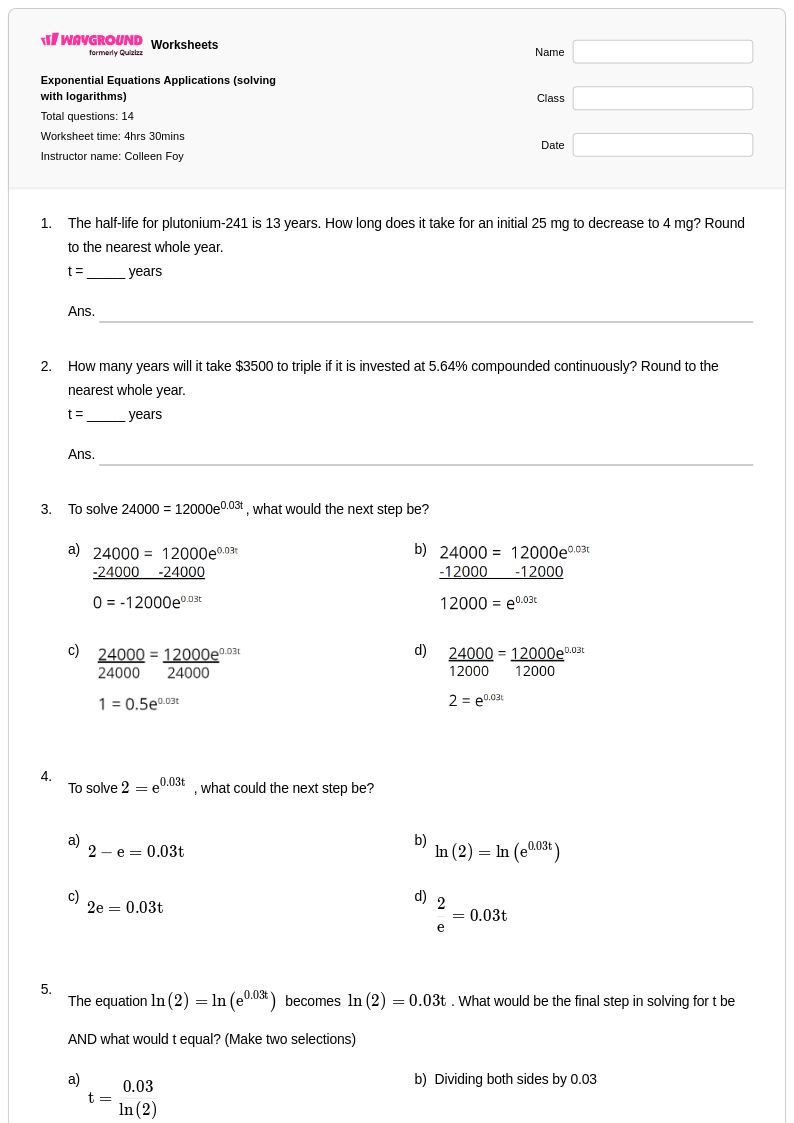
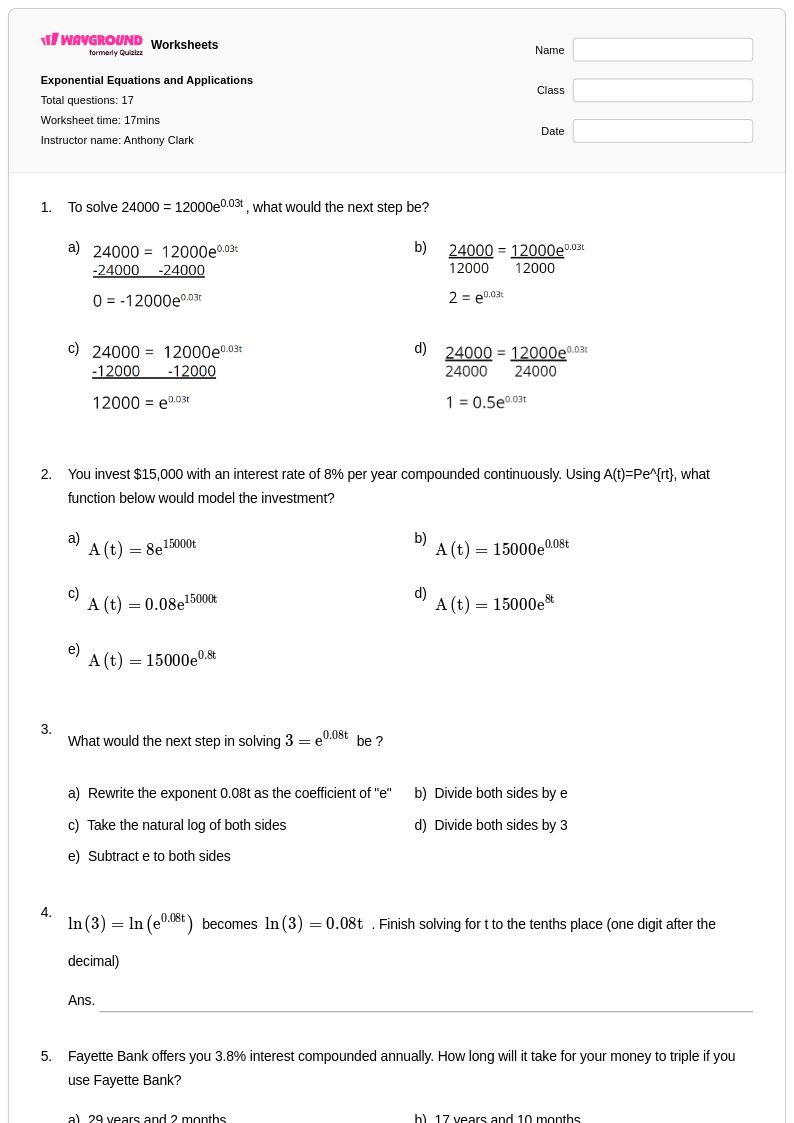
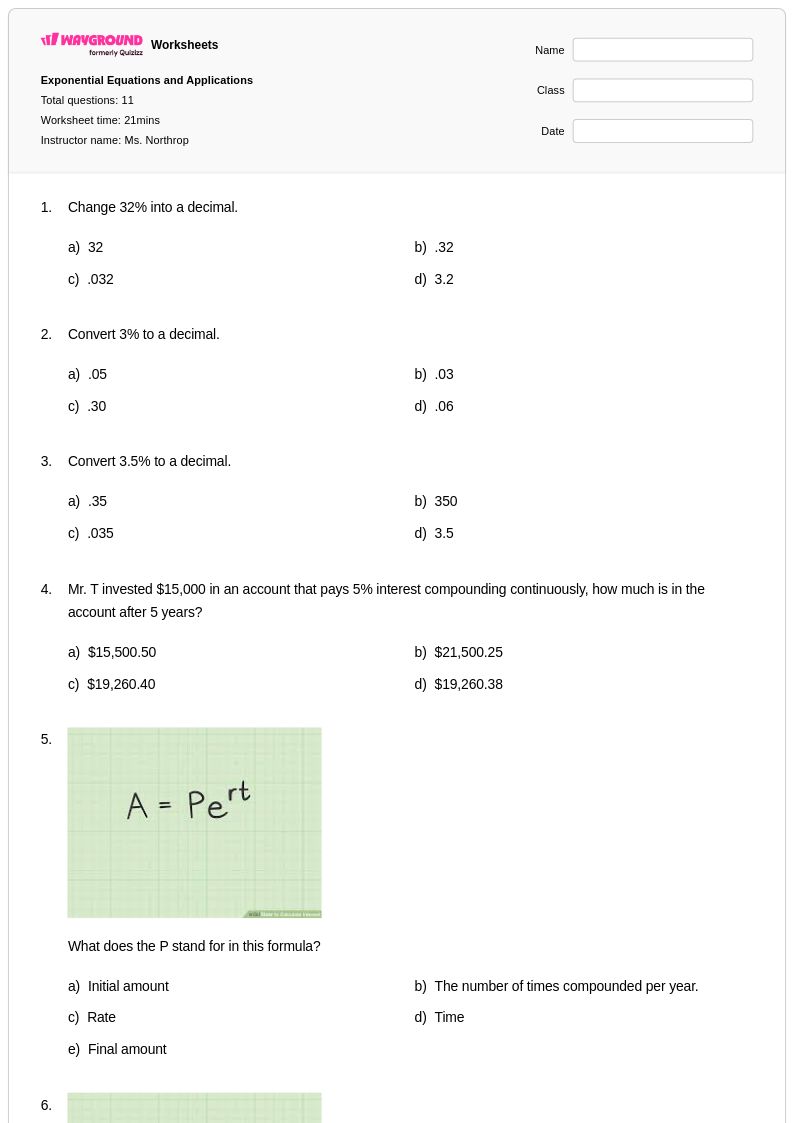
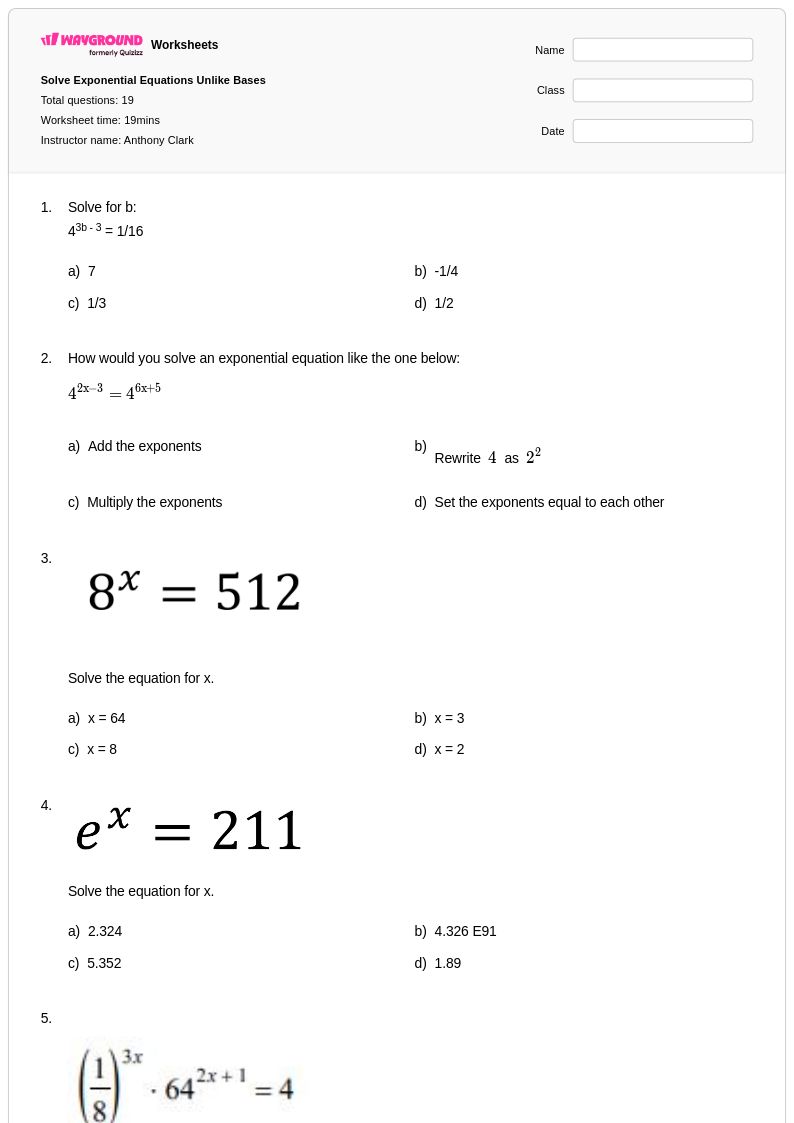
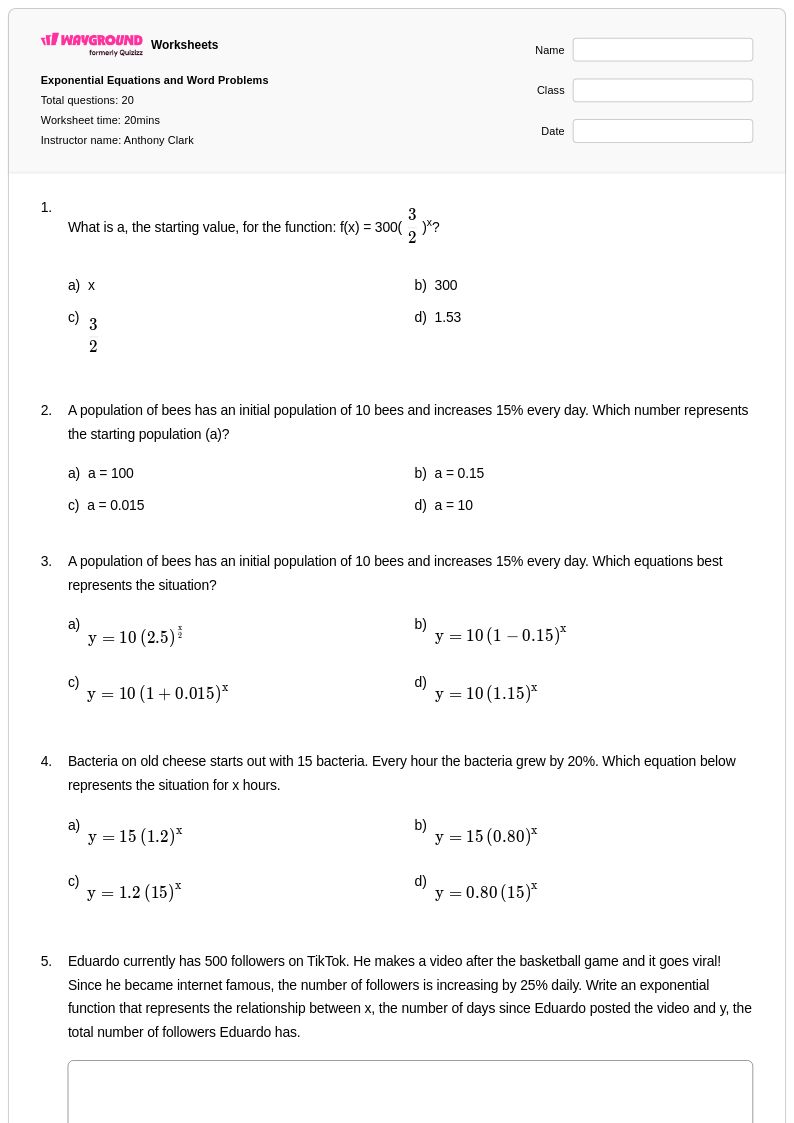
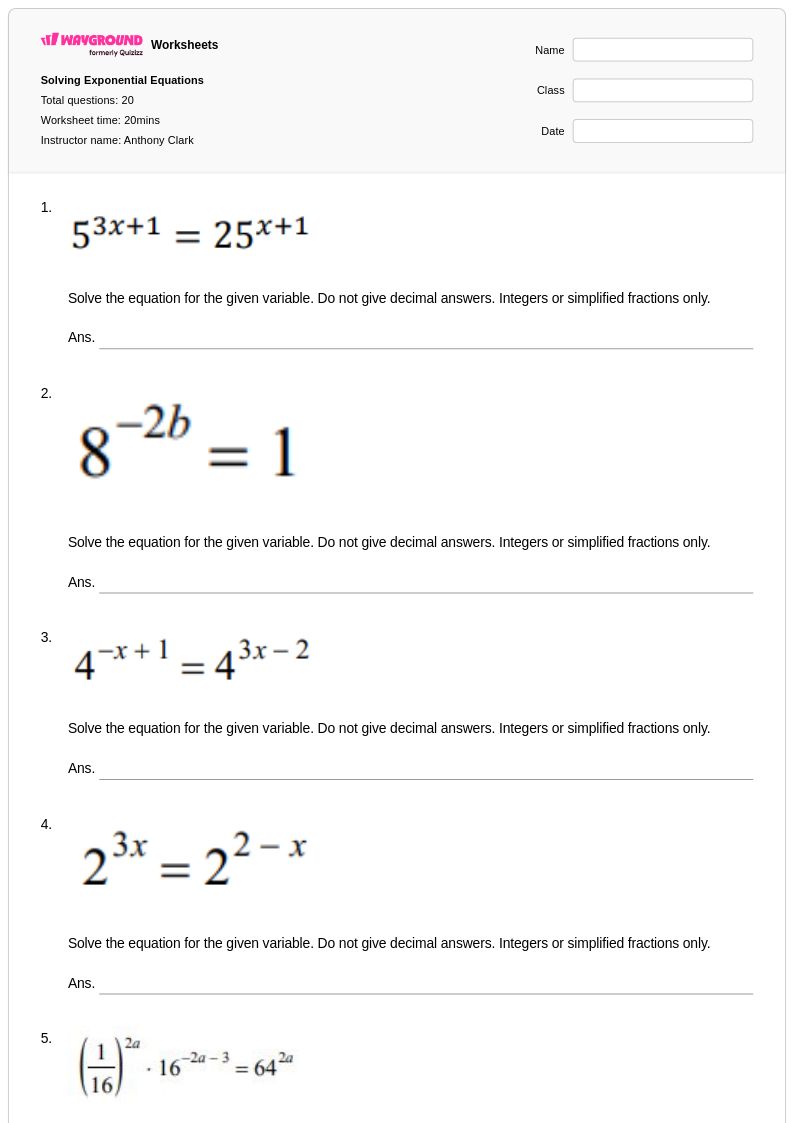
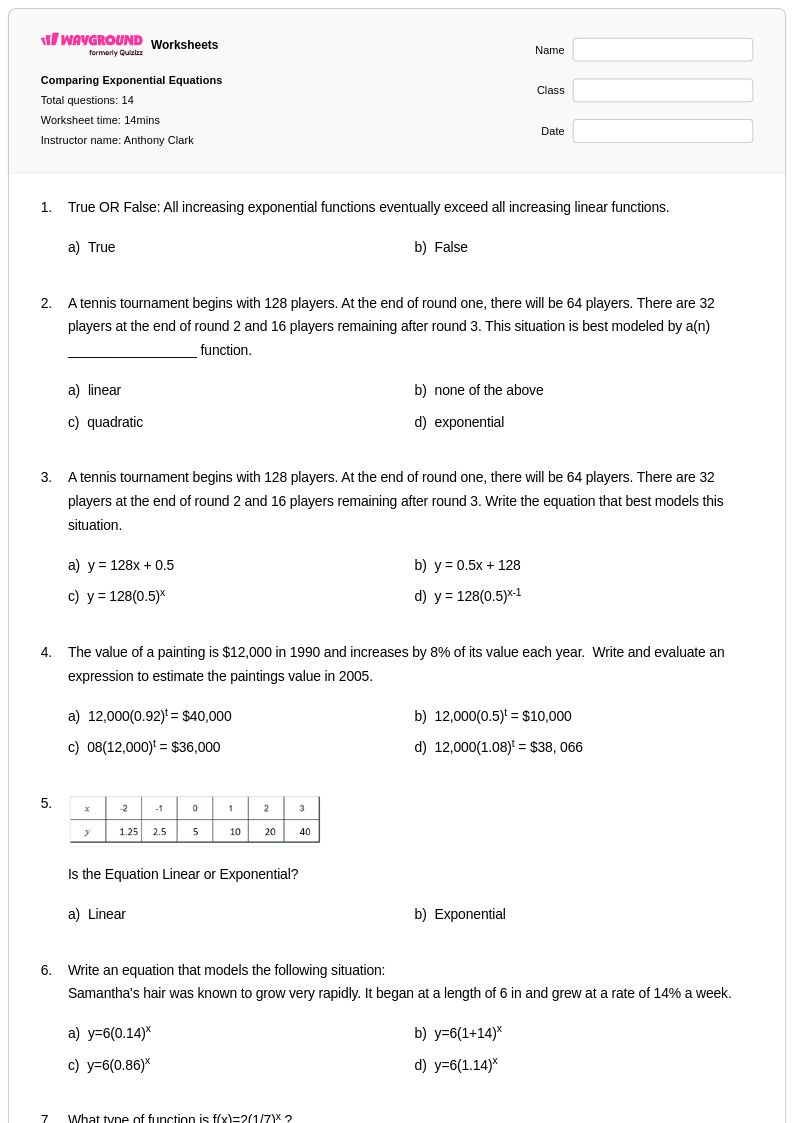
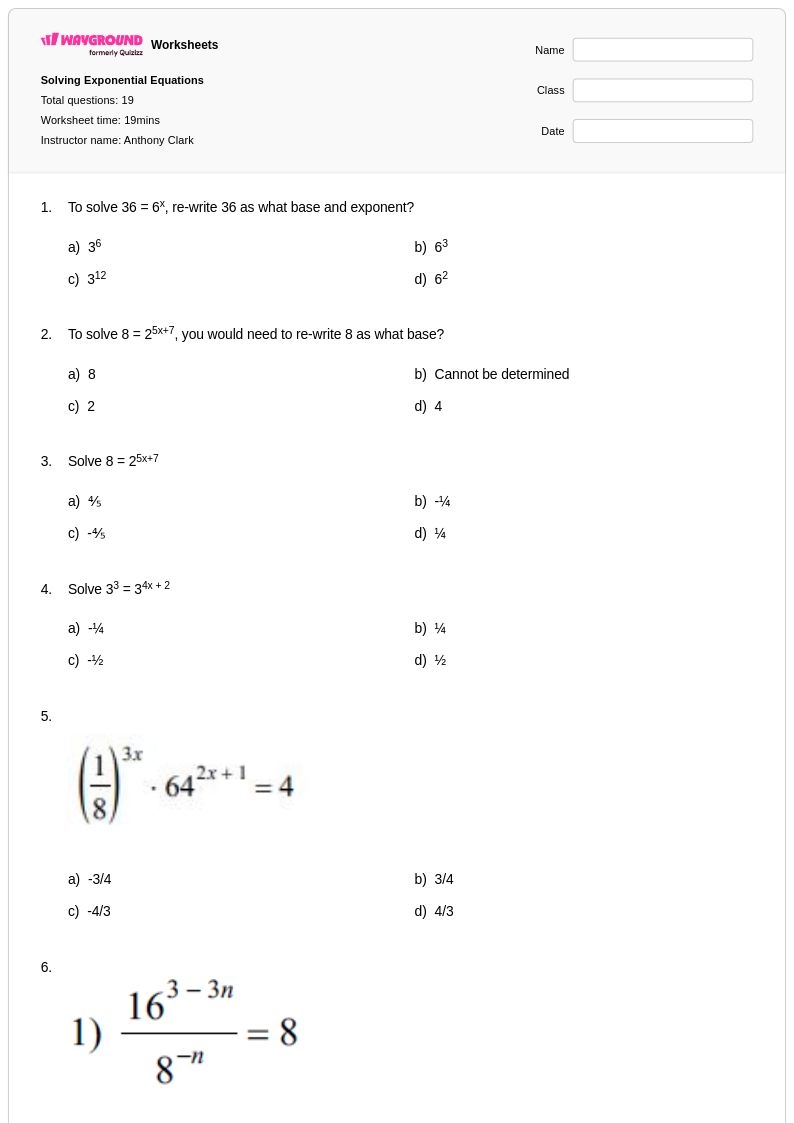
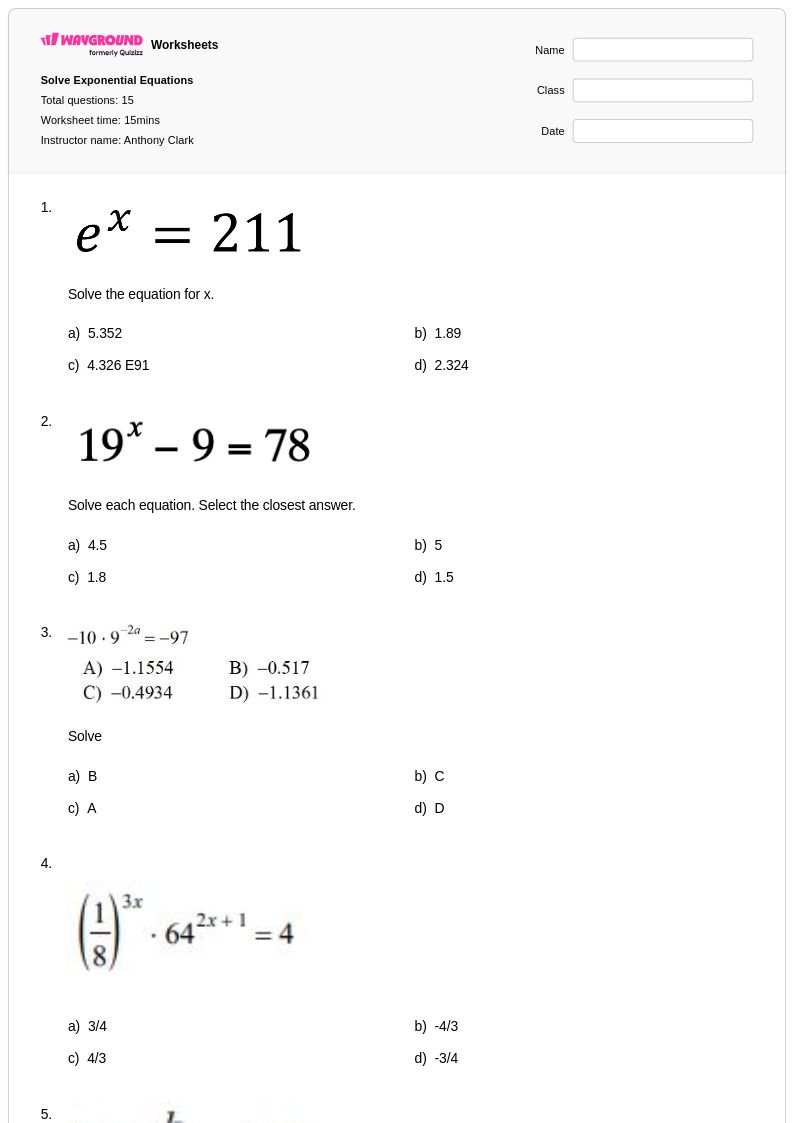
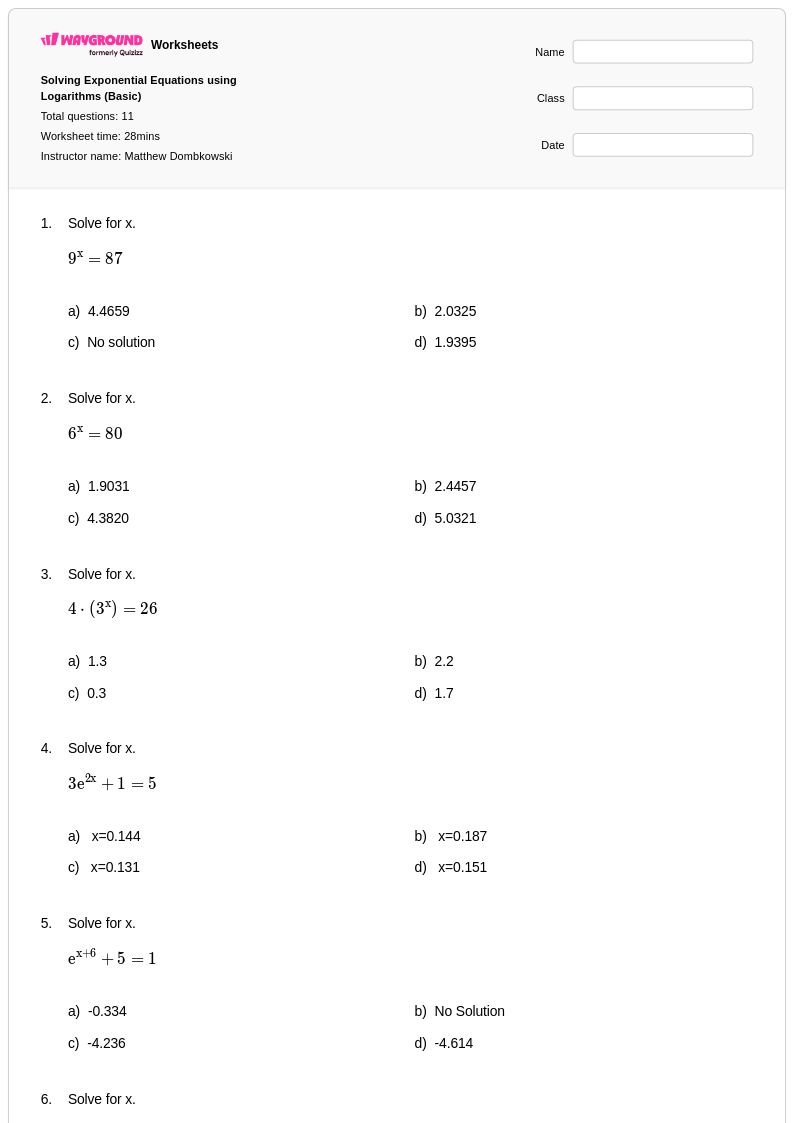
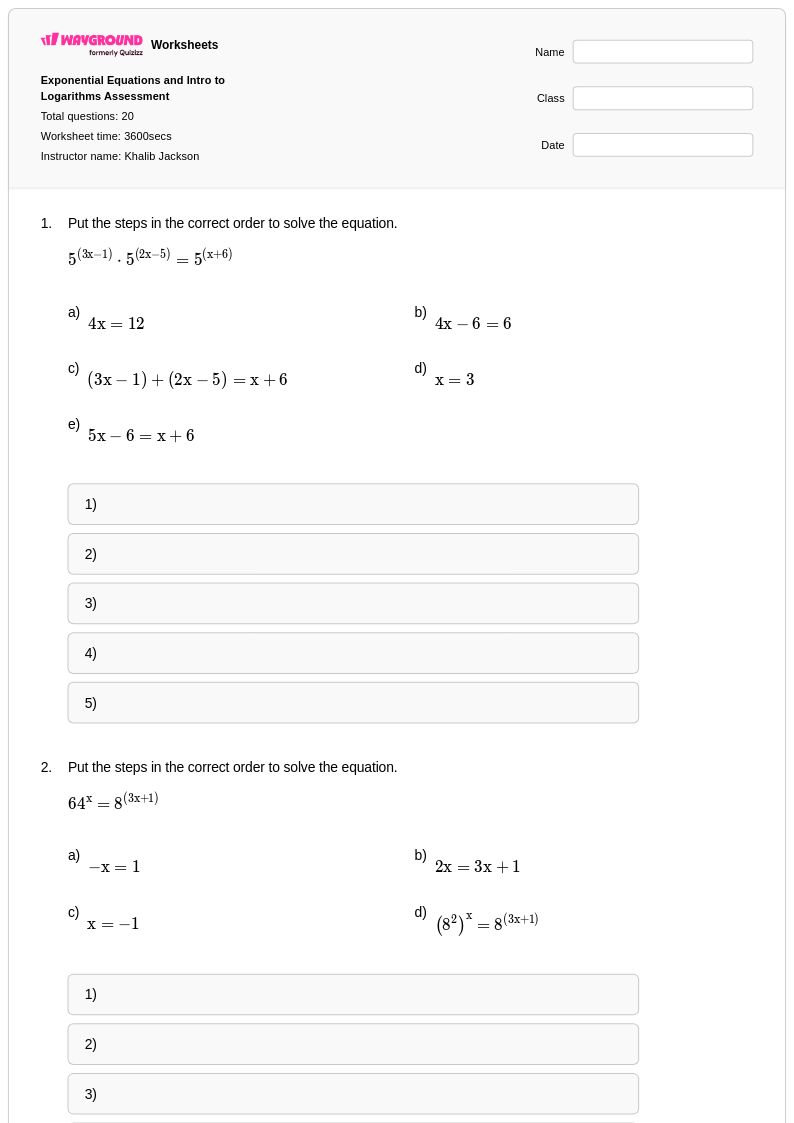
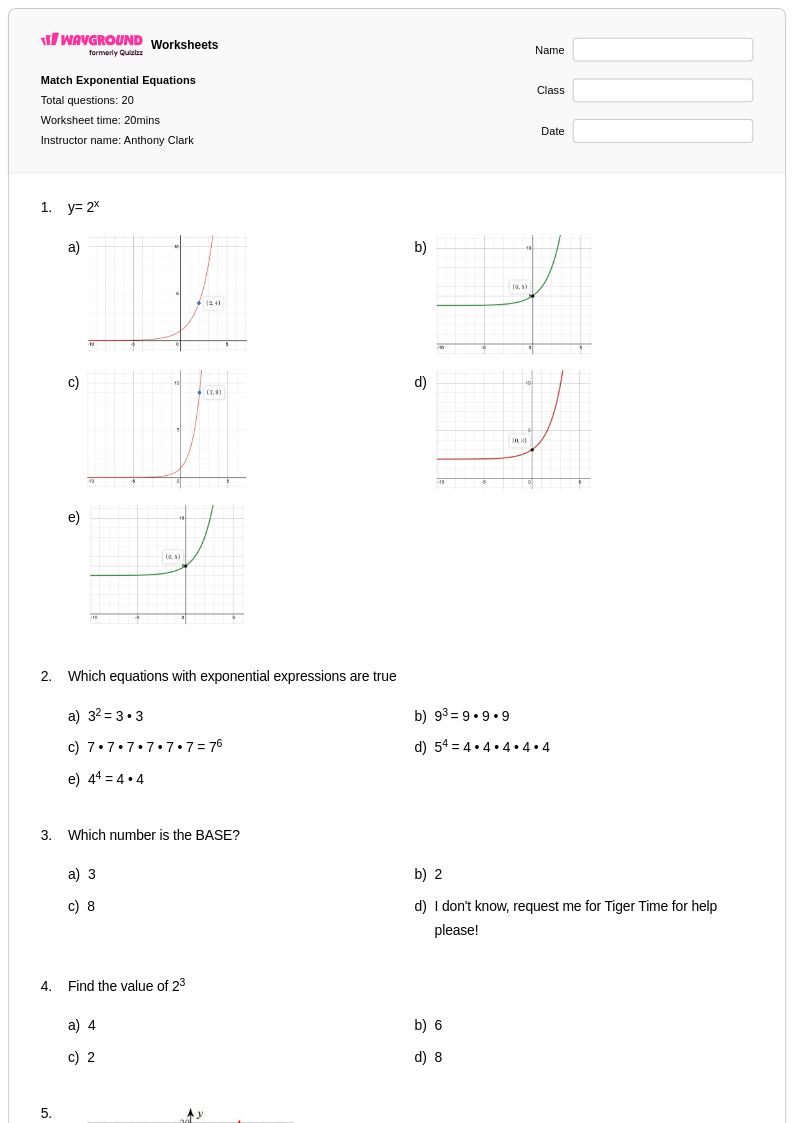
Exponential equations represent a critical mathematical concept for Year 11 students, forming the foundation for advanced algebraic reasoning and real-world problem solving. Wayground's comprehensive collection of exponential equations worksheets provides educators with expertly designed practice problems that guide students through solving equations where variables appear in exponents, including both simple exponential forms and more complex logarithmic transformations. These free printable resources systematically develop students' abilities to apply exponential properties, utilize inverse operations, and recognize when logarithms are necessary for finding solutions, while each worksheet includes a complete answer key to facilitate immediate feedback and self-assessment. The carefully structured practice problems progress from basic exponential equations with rational solutions to challenging applications involving natural logarithms and exponential growth models, ensuring students master both computational techniques and conceptual understanding essential for success in advanced mathematics and science courses.
Wayground's extensive library of teacher-created exponential equations worksheets offers mathematics educators powerful tools for delivering differentiated instruction that meets diverse learning needs in Year 11 algebra classrooms. With millions of expertly crafted resources available through intuitive search and filtering systems, teachers can quickly locate materials aligned with specific curriculum standards while accessing flexible customization options that allow modification of difficulty levels, problem types, and assessment formats. These comprehensive worksheet collections are available in both printable PDF formats for traditional classroom use and digital formats for online learning environments, enabling seamless integration into any instructional setting. The platform's robust differentiation tools support effective lesson planning by providing resources suitable for remediation, standard practice, and enrichment activities, allowing educators to address individual student needs while maintaining rigorous academic expectations for exponential equation mastery.
FAQs
How do I teach exponential equations to Grade 11 students?
Grade 11 is where exponential equations get formally connected to logarithmic functions as inverses — not just as a solving trick, but as a conceptual relationship. Students should be able to move fluently between exponential and logarithmic forms, apply both common and natural logarithms, and recognize which approach fits a given problem. Emphasize the inverse relationship explicitly: if students understand that log base b of b^x equals x, a lot of the algebra becomes intuitive rather than procedural.
What exercises help Grade 11 students practice exponential equations?
At Grade 11, practice should span the full range: base-matching for simpler forms, logarithmic conversion for equations where bases can't be matched, natural logarithm problems (especially for continuous growth/decay models), and multi-step application problems. Problems that require students to choose their approach — rather than being told which method to use — are especially valuable at this level, since that judgment is what assessments will test.
What mistakes do Grade 11 students commonly make with exponential equations?
The most persistent error at this level is confusing ln and log — students apply one where the other is appropriate, especially in natural growth and decay problems where e is the base. A second common mistake is incorrectly applying logarithm properties when simplifying, particularly the product and quotient rules, which leads to algebraic errors mid-solution even when the setup is correct.
How do I use these Grade 11 exponential equations worksheets?
Each worksheet includes a complete answer key, making them well-suited for self-paced practice or flipped classroom models where students check their own work. Print the PDF for paper-based assignments — the Wayground for Teachers app lets you scan student submissions for digital grading without requiring students to be on a device. For fully digital sessions, host the worksheet as a Wayground quiz and get auto-scored results immediately.
Are Grade 11 exponential equations aligned to Common Core?
Common Core's high school algebra and functions standards expect Grade 11 students to work fluently with exponential and logarithmic functions as inverses, solve equations using both forms, and apply these skills to modeling contexts. At this stage, the emphasis shifts from procedural solving toward understanding why logarithms work — the inverse relationship between exponential and logarithmic functions — and applying that understanding to natural logarithm problems and real-world exponential models.
How can I differentiate exponential equations practice for Grade 11 students with diverse needs?
For students who need more processing time on multi-step logarithmic problems, Wayground's extended time accommodation can be set per student without affecting the rest of the class. For students with reading difficulties, the Read Aloud feature ensures that application problems involving growth models or financial contexts are accessible. You can also apply a dyslexia-friendly font or adjust font size at the worksheet level for students who need it.
What real-world applications of exponential equations should Grade 11 students know?
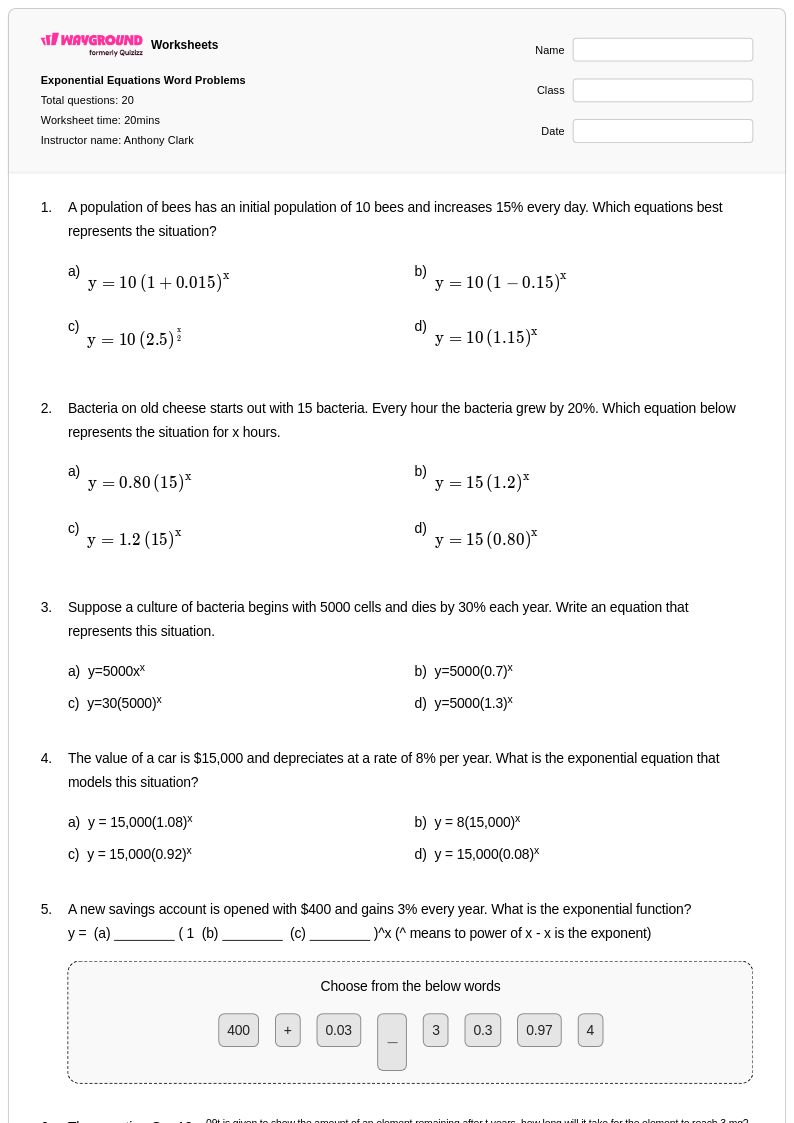
Grade 11 students should be comfortable with three core application types: compound interest (both periodic and continuous), population growth and decay, and radioactive half-life problems. Each requires a slightly different model setup, and students need to recognize which form applies before solving. Natural logarithm problems appear most often in continuous growth and decay contexts, so those are worth extra practice time.