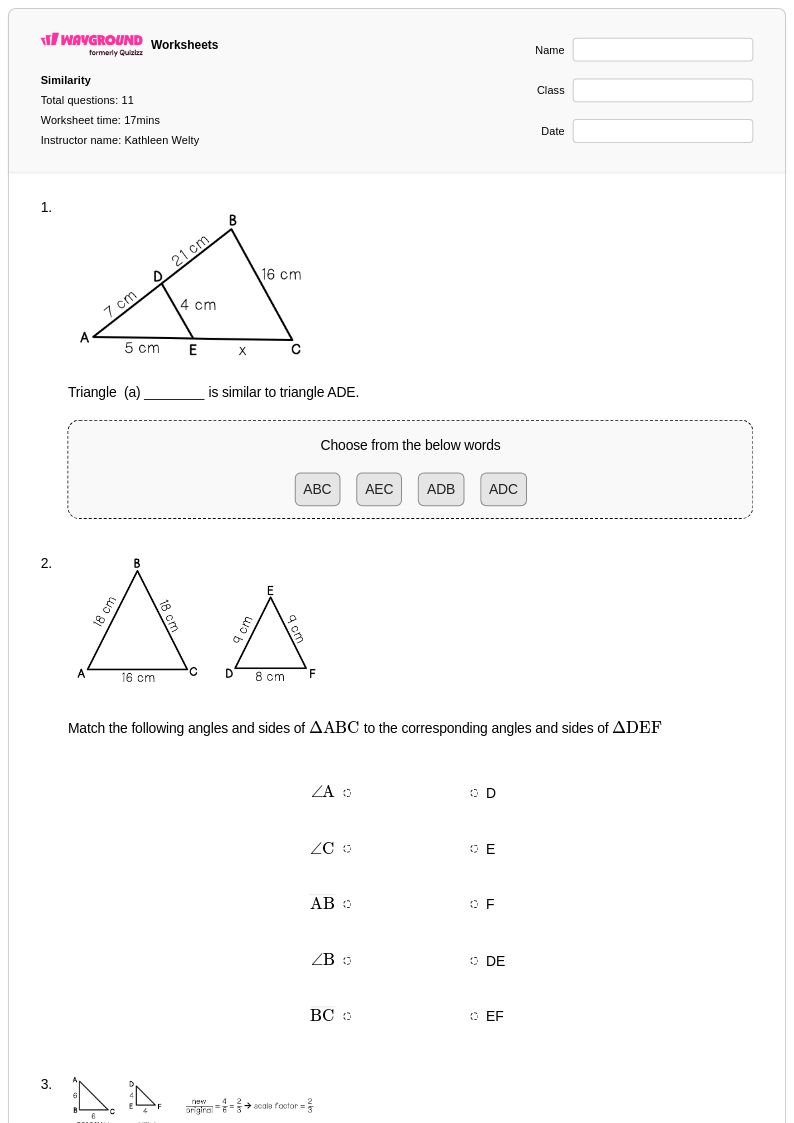
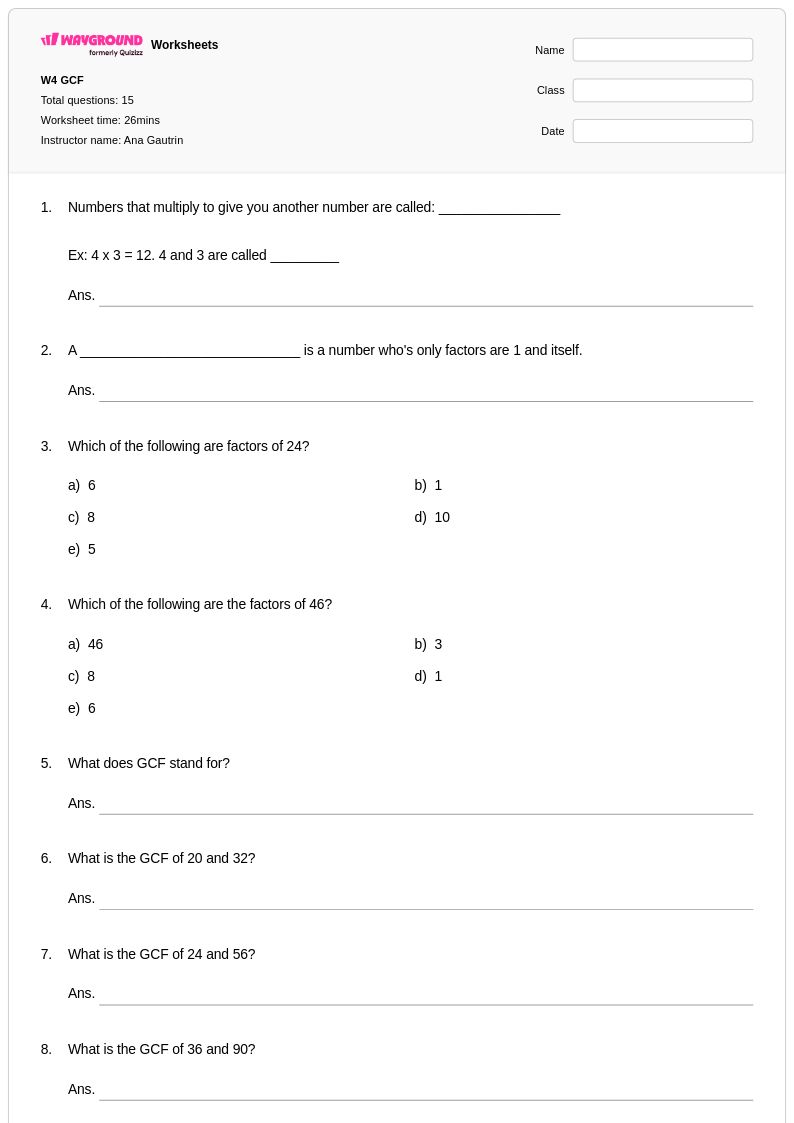
Enhance Year 7 students' understanding of factor trees with Wayground's comprehensive collection of free worksheets, printables, and practice problems that include detailed answer keys and step-by-step PDF solutions.
Explore printable Factor Trees worksheets for Year 7
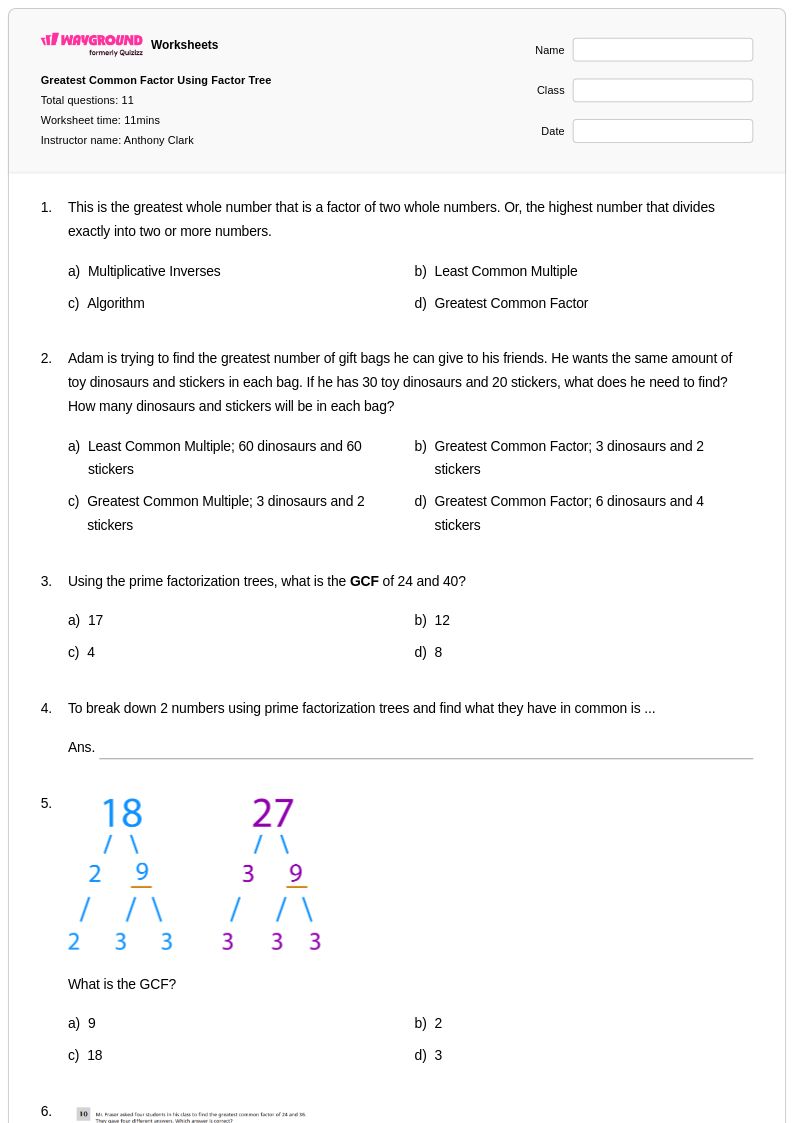
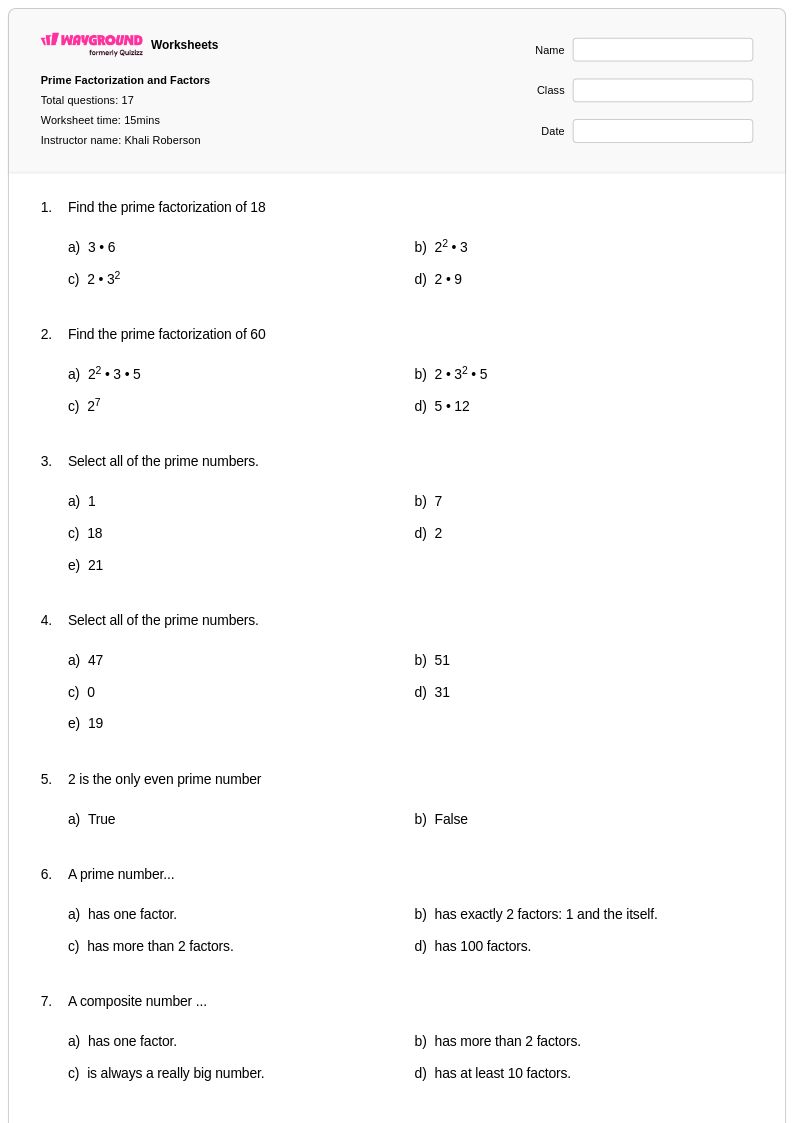
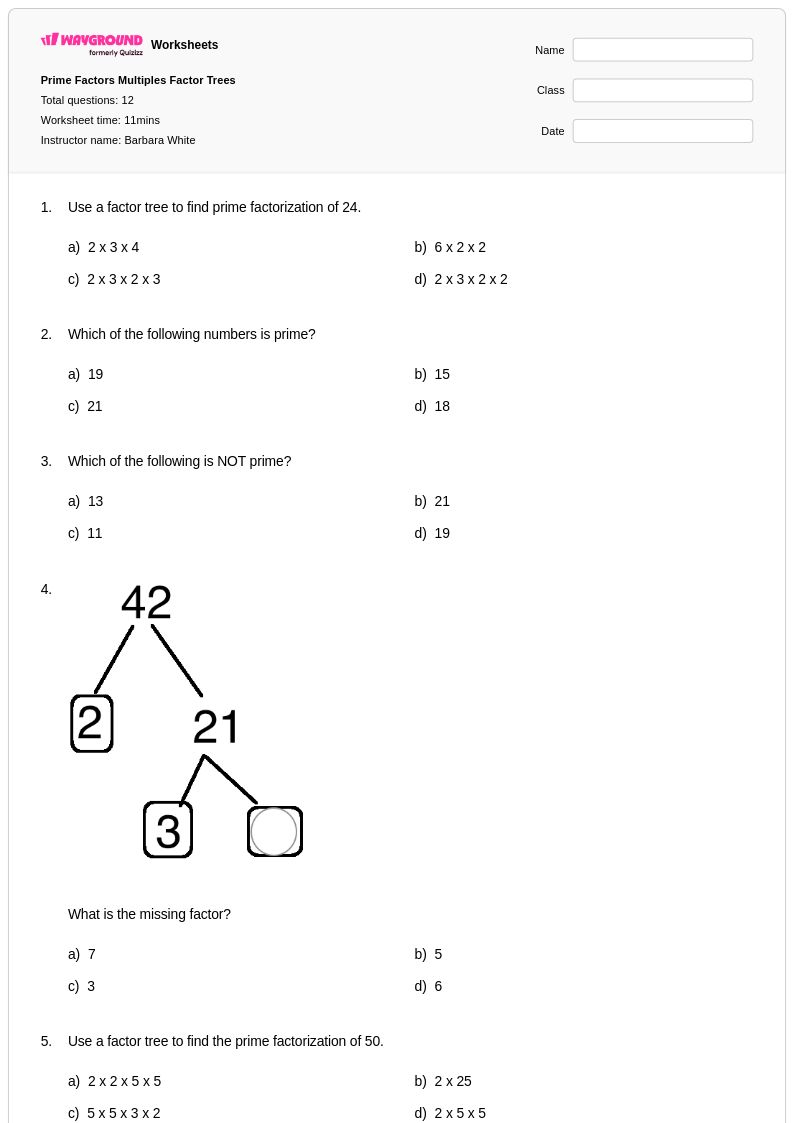
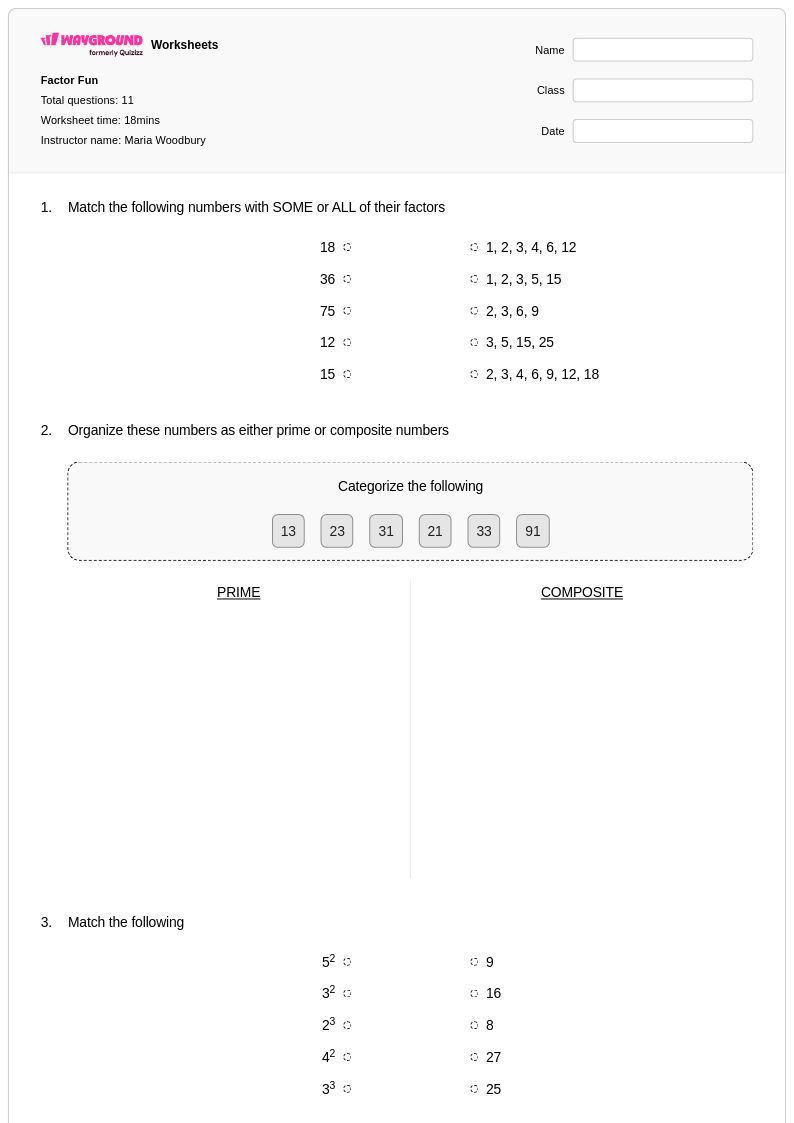
Factor trees provide Year 7 students with a systematic visual method for breaking down composite numbers into their prime factorization, and Wayground's comprehensive worksheet collection makes mastering this essential number sense skill both accessible and engaging. These carefully designed worksheets guide students through the step-by-step process of creating factor trees, starting with smaller numbers and progressively building to more complex composite numbers that require multiple levels of factorization. Each worksheet includes a complete answer key and is available as a free printable pdf, allowing teachers to seamlessly integrate factor tree practice problems into their mathematics instruction while helping students develop crucial foundational skills in prime factorization, divisibility, and number relationships that will support their understanding of fractions, greatest common factors, and least common multiples.
Wayground's extensive library of millions of teacher-created resources ensures that educators have access to diverse factor tree worksheets that can be easily customized to meet the varied learning needs of their Year 7 students. The platform's robust search and filtering capabilities allow teachers to quickly locate worksheets that align with specific mathematics standards while offering differentiation tools that support both remediation for struggling learners and enrichment opportunities for advanced students. These factor tree resources are available in both printable and digital formats, providing the flexibility teachers need for comprehensive lesson planning and targeted skill practice. Whether used for introducing prime factorization concepts, reinforcing classroom instruction, or providing additional practice opportunities, these worksheets support teachers in developing students' number sense competency through structured, progressive learning experiences.
FAQs
How do I teach factor trees in 7th grade?
By Grade 7, factor trees are a review and application skill rather than a new concept. The most effective approach is to reintroduce them in the context of a problem students actually need to solve — simplifying fractions, finding a common denominator, or reducing a ratio. Students who see factor trees as a tool for something they care about re-engage with the skill faster than those who practice it in isolation. If you find significant gaps, a focused one-day review using two-digit composites before moving to application problems is usually enough.
What factor tree practice helps 7th graders most?
At this grade, the most useful practice ties factor trees to the number work 7th graders are actually doing: simplifying fractions, finding GCF and LCM for rational number operations, and working with ratios. Problems that ask students to use a factor tree to simplify a fraction like 48/72 are more valuable than standalone tree-building exercises — they reinforce the skill while making its purpose explicit.
What mistakes do 7th graders make with factor trees?
The most common issue at this grade isn't building the tree incorrectly — it's not thinking to use one. Students often try to simplify fractions or find GCF by guessing or listing, which breaks down with larger numbers. When they do build trees, the frequent error is stopping at a composite branch (leaving 9 or 15 unsplit) because the number looks familiar. Requiring students to verify every endpoint is prime before writing the final factorization catches this quickly.
How do I use Wayground's Grade 7 factor tree worksheets?
These worksheets include a complete answer key and are available as printable PDFs or as digital quizzes hosted on Wayground. The digital format works well for a quick diagnostic at the start of a unit on rational numbers — you can see at a glance which students need a factor tree refresher before moving into GCF and LCM applications. For students who need more hands-on practice, the printable version lets them draw the tree structure themselves, which helps reinforce the process for those who are rusty.
How do factor trees fit into the Common Core progression for Grade 7?
Common Core establishes prime factorization and GCF/LCM as Grade 6 standards, so by Grade 7 factor trees are a supporting skill rather than a new one. They underpin the rational number work that is central to Grade 7 — adding and subtracting fractions with unlike denominators, simplifying ratios, and working with proportional relationships all rely on students being able to find GCF and LCM efficiently. A student who can't build a reliable factor tree will hit friction throughout the Grade 7 number strand.
How can I support 7th graders who are still struggling with factor trees?
For students who need a scaffold, Wayground's Read Aloud accommodation on digital assignments removes any reading barrier so they can focus entirely on the factorization. On printed worksheets, the dyslexia-friendly font and larger font size options (available through Wayground's worksheet settings) make the tree structure easier to track visually — useful for students who lose their place in multi-level trees. These settings apply only to the students who need them, so the rest of the class works from standard versions without any disruption.