
20 Q
6th - 7th
7 Q
6th - 8th
13 Q
6th
17 Q
6th - 8th
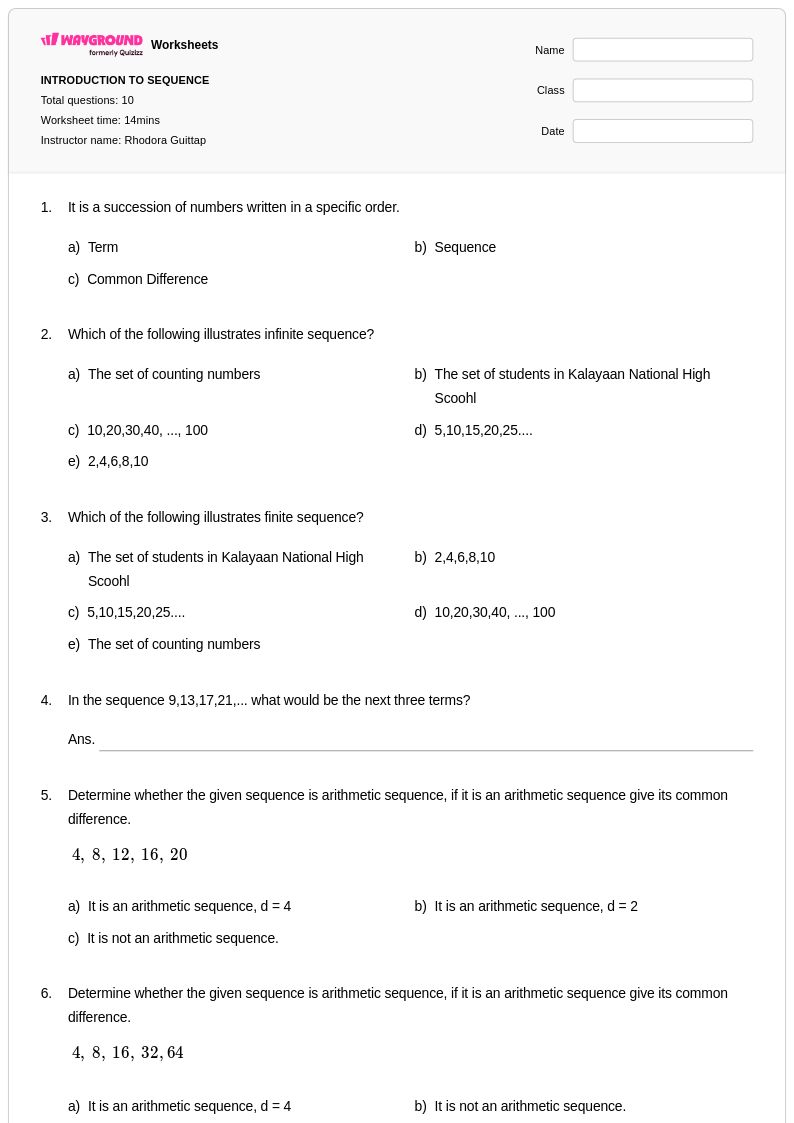
10 Q
6th - 12th
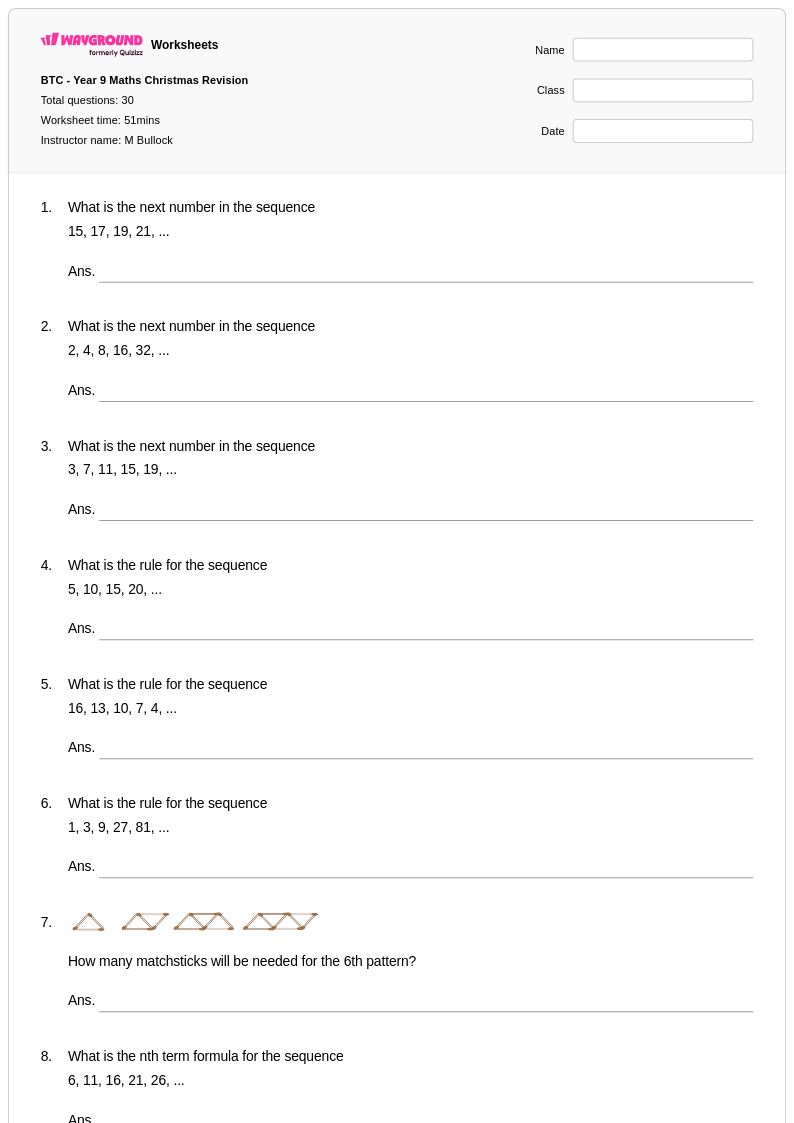
30 Q
6th - 8th
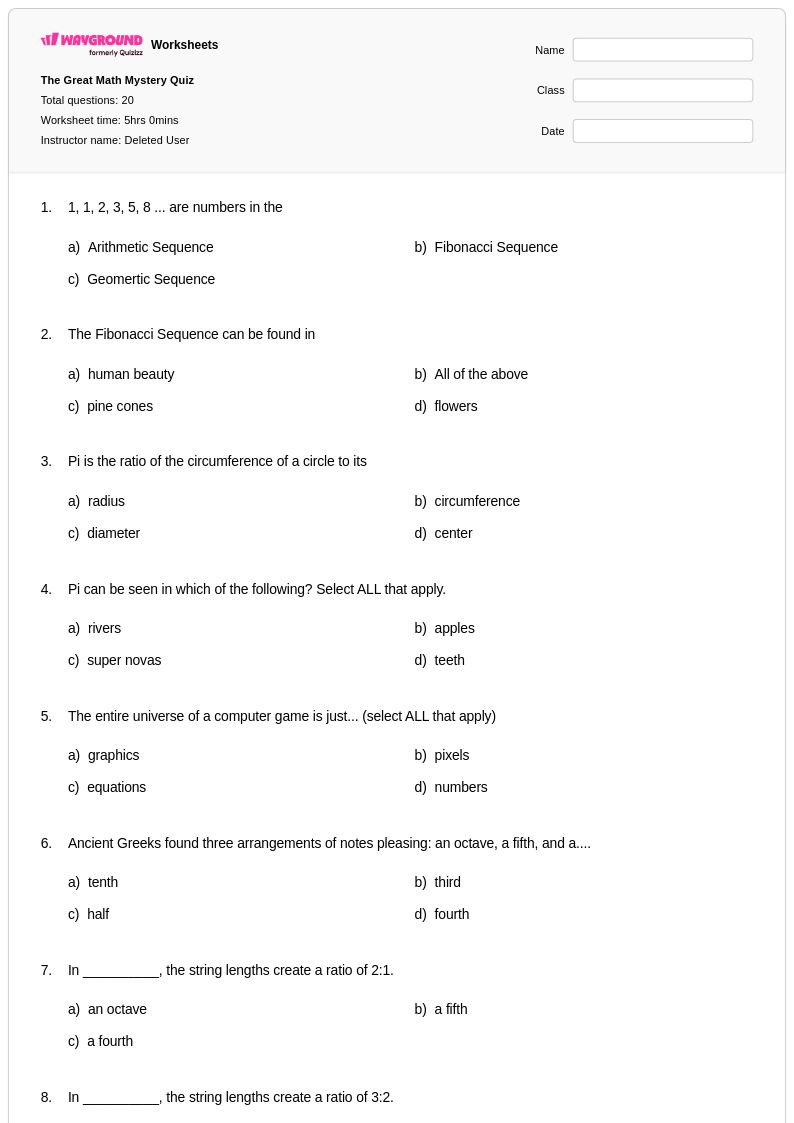
20 Q
6th

20 Q
5th - 6th
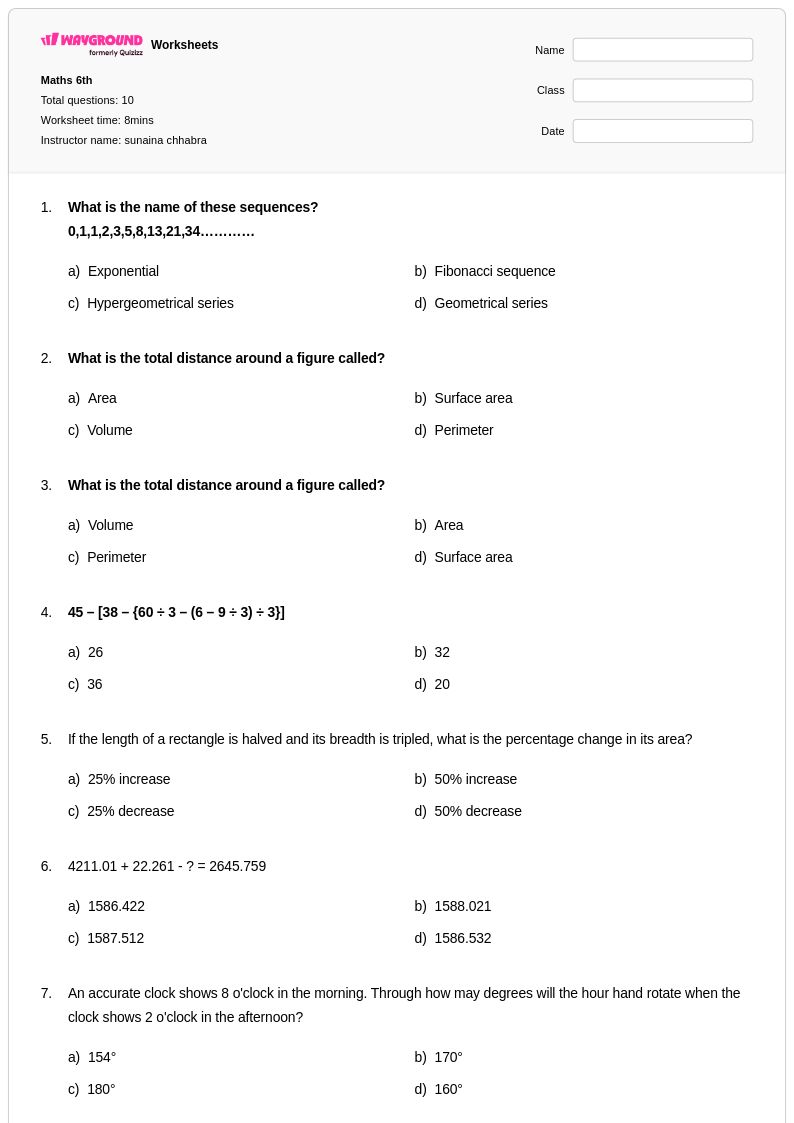
10 Q
6th
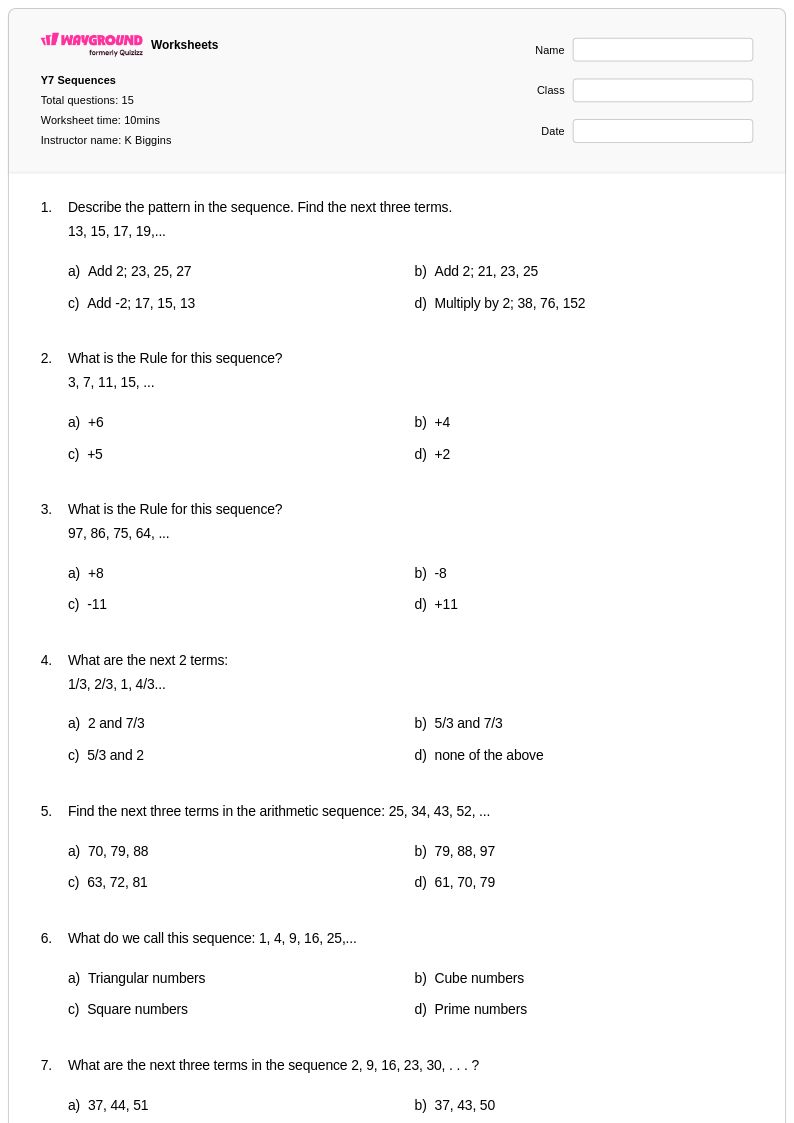
15 Q
6th - 7th
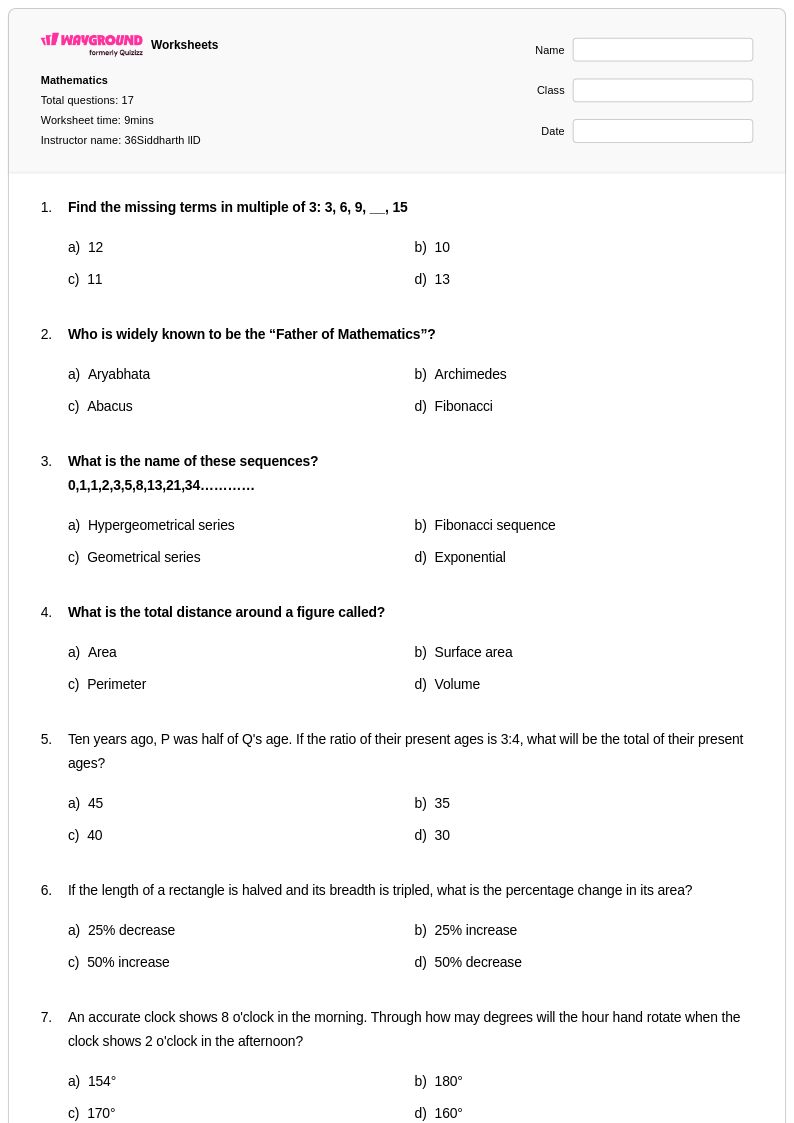
17 Q
6th - 8th
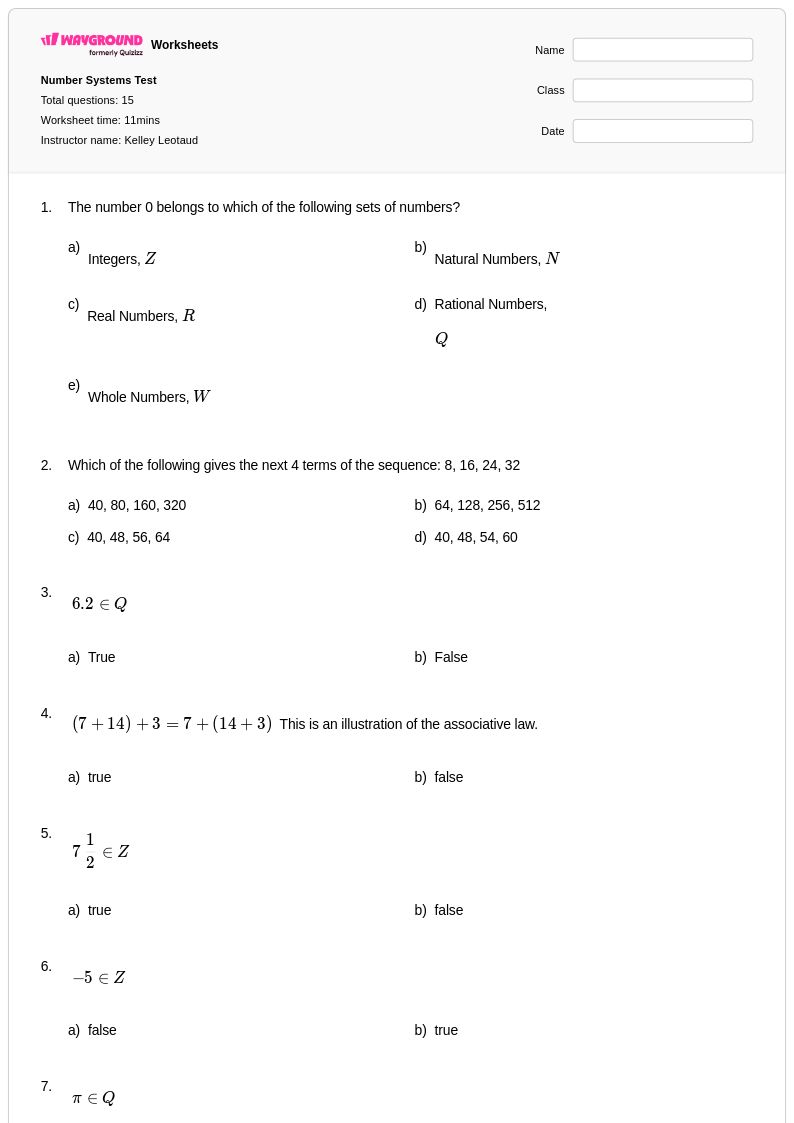
15 Q
6th - 8th
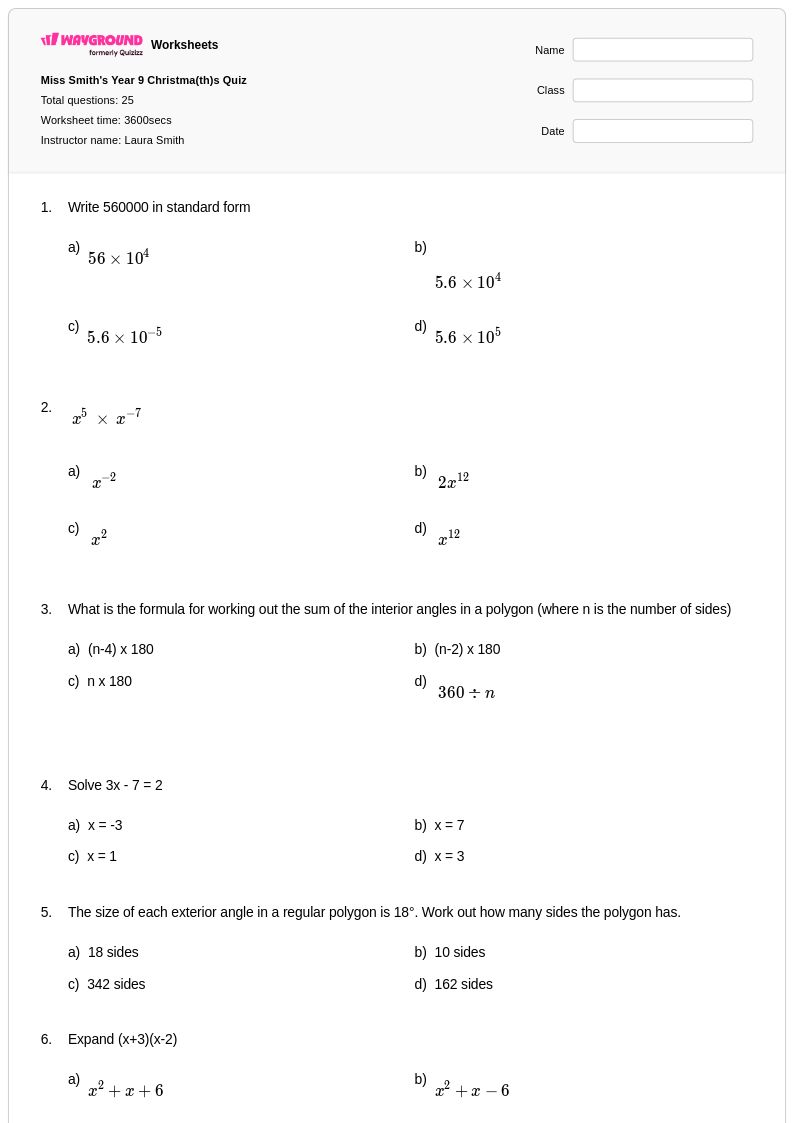
25 Q
6th - 9th
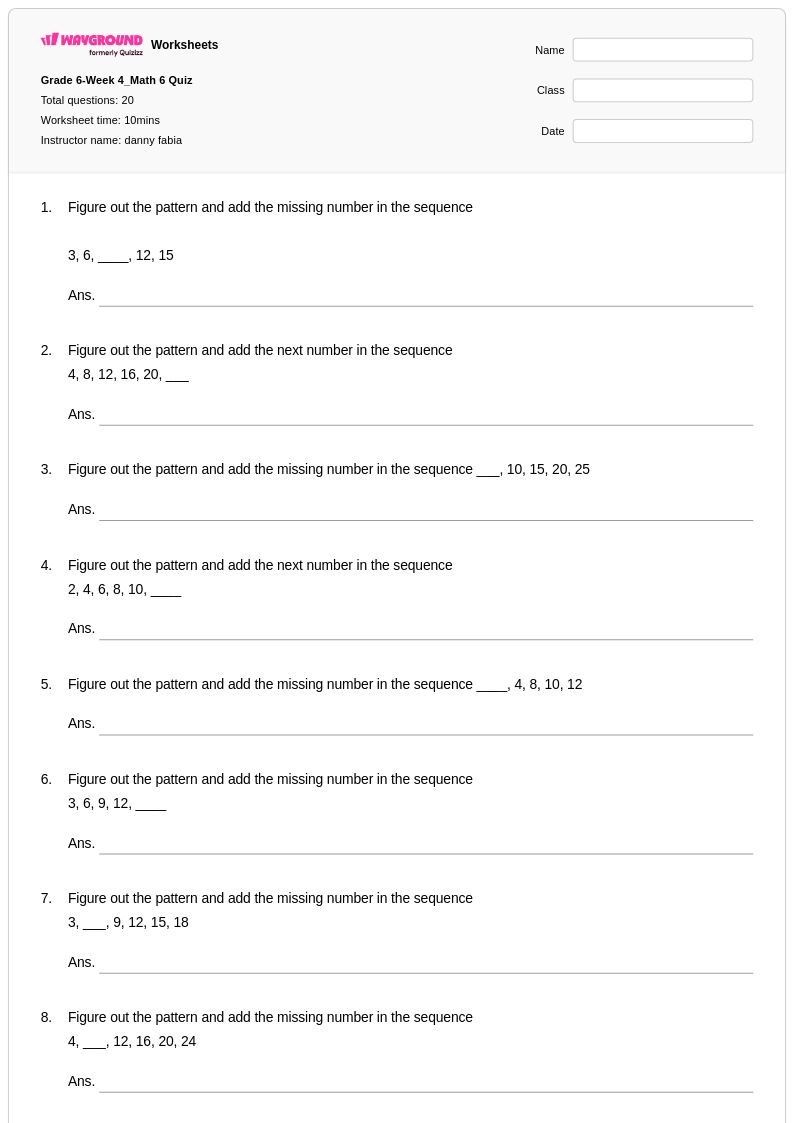
20 Q
6th
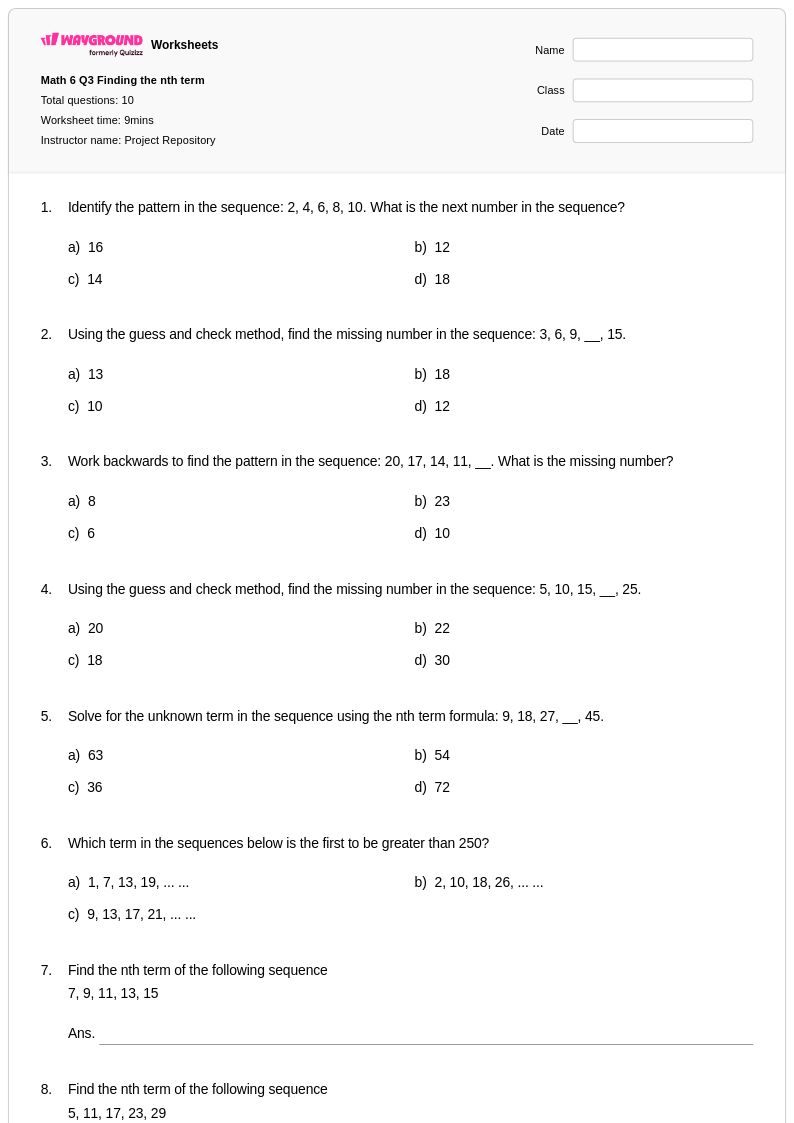
10 Q
6th
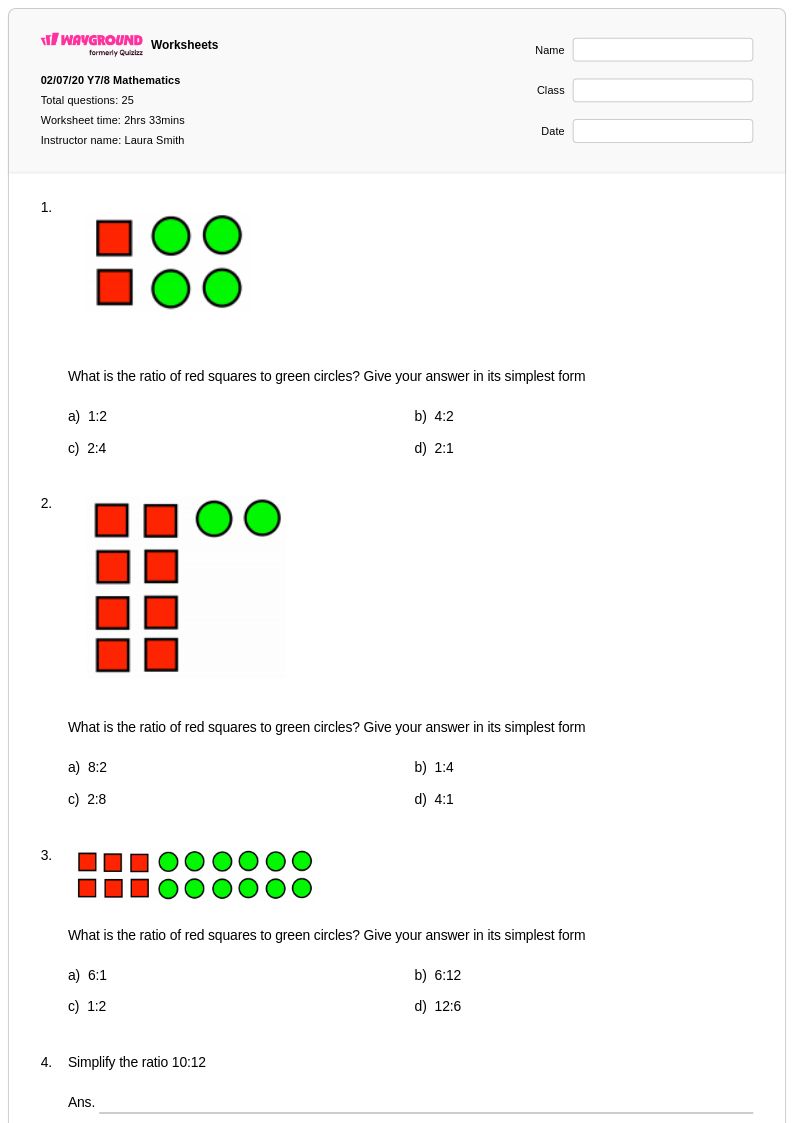
25 Q
6th - 8th
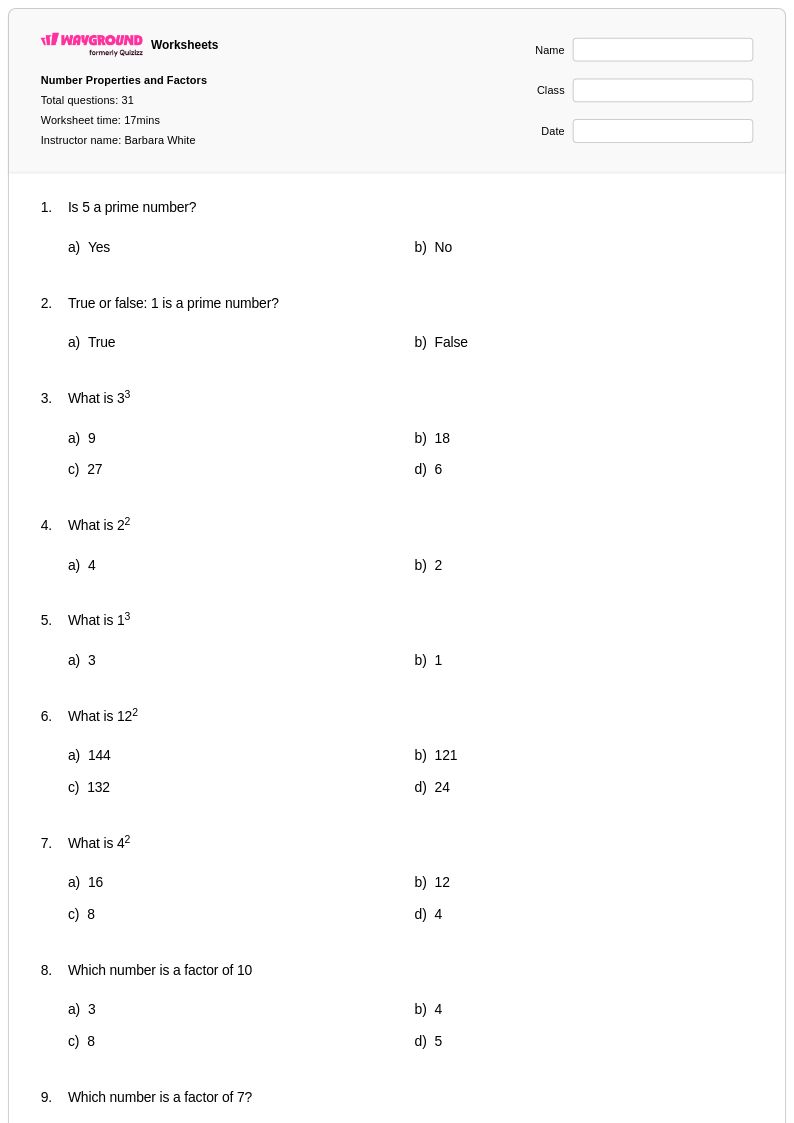
31 Q
6th
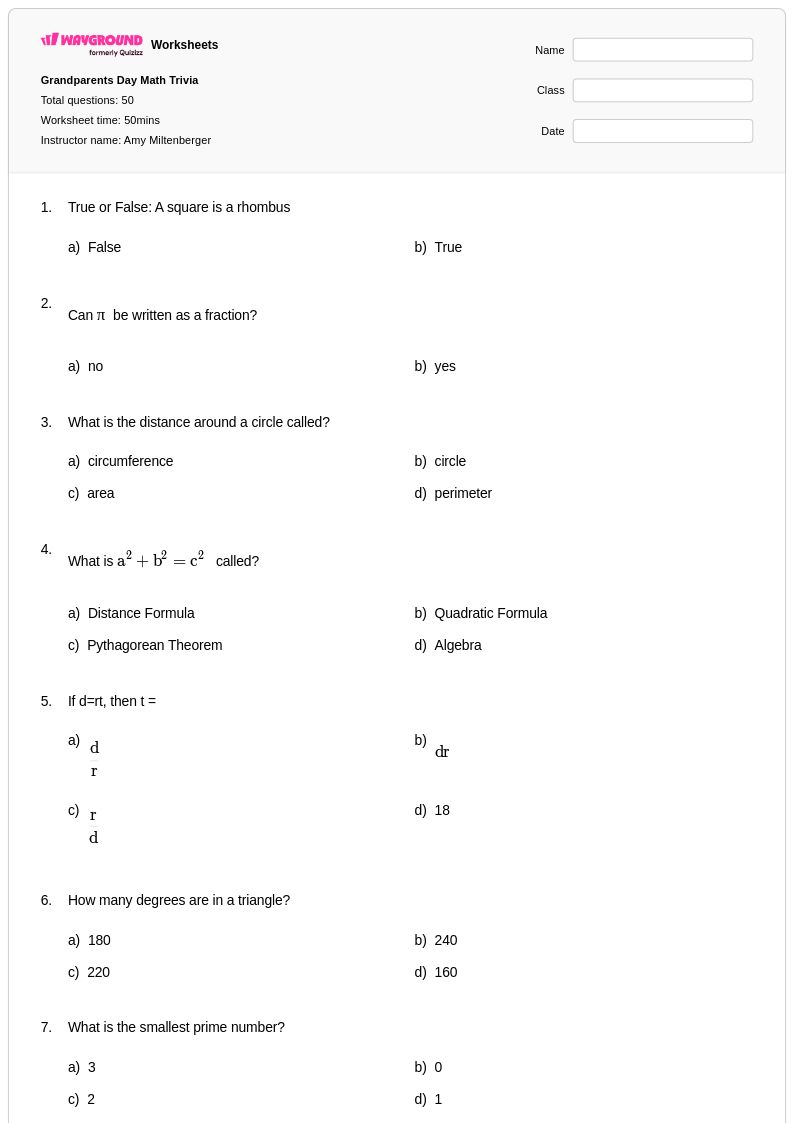
50 Q
5th - 8th
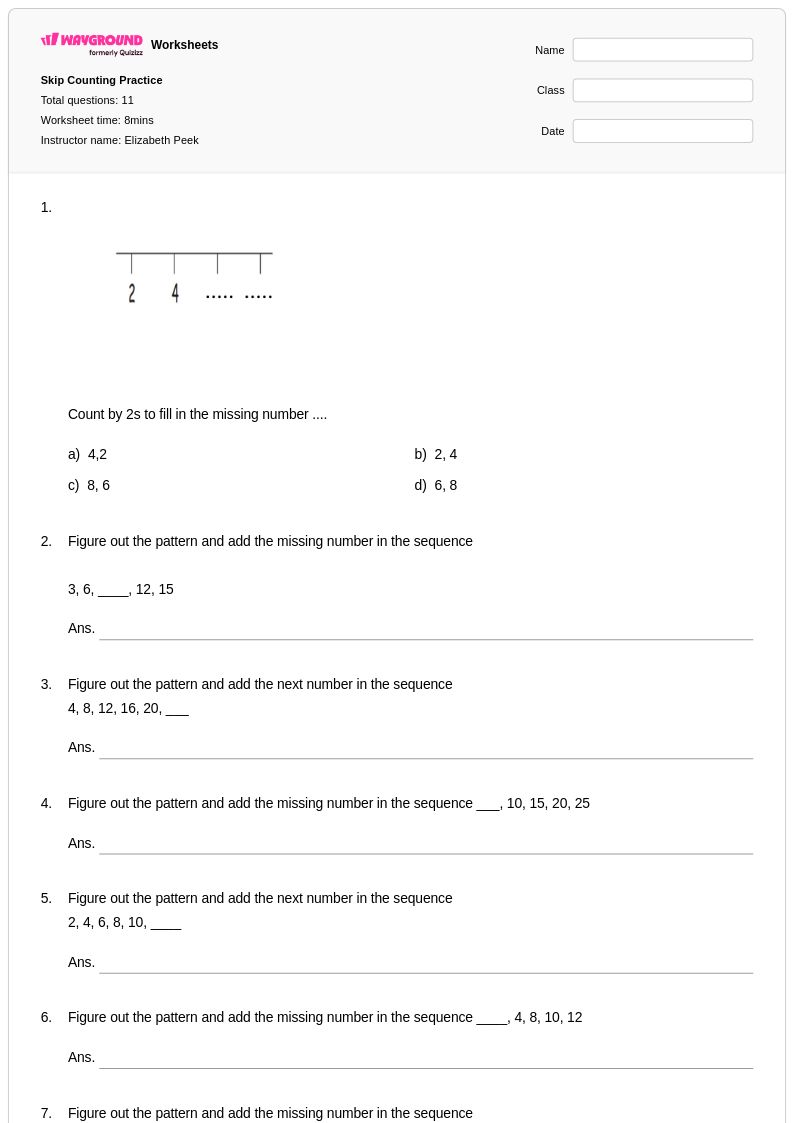
11 Q
6th - 8th
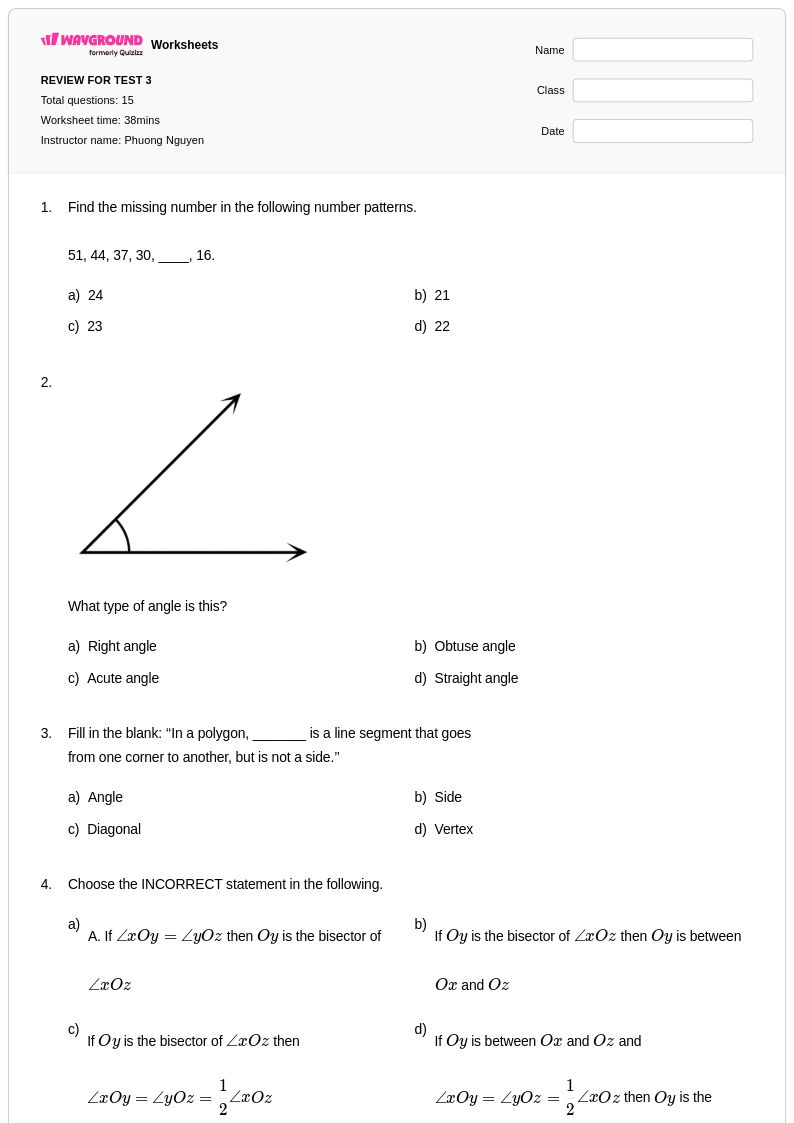
15 Q
6th
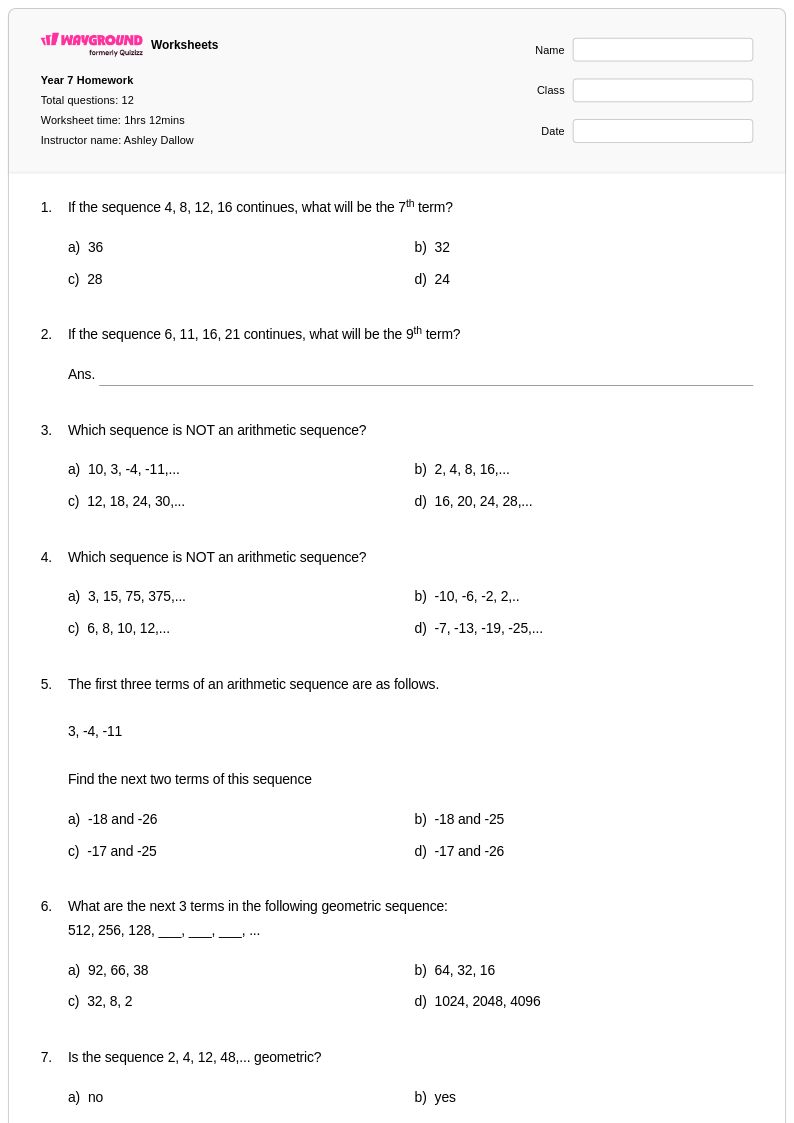
12 Q
6th
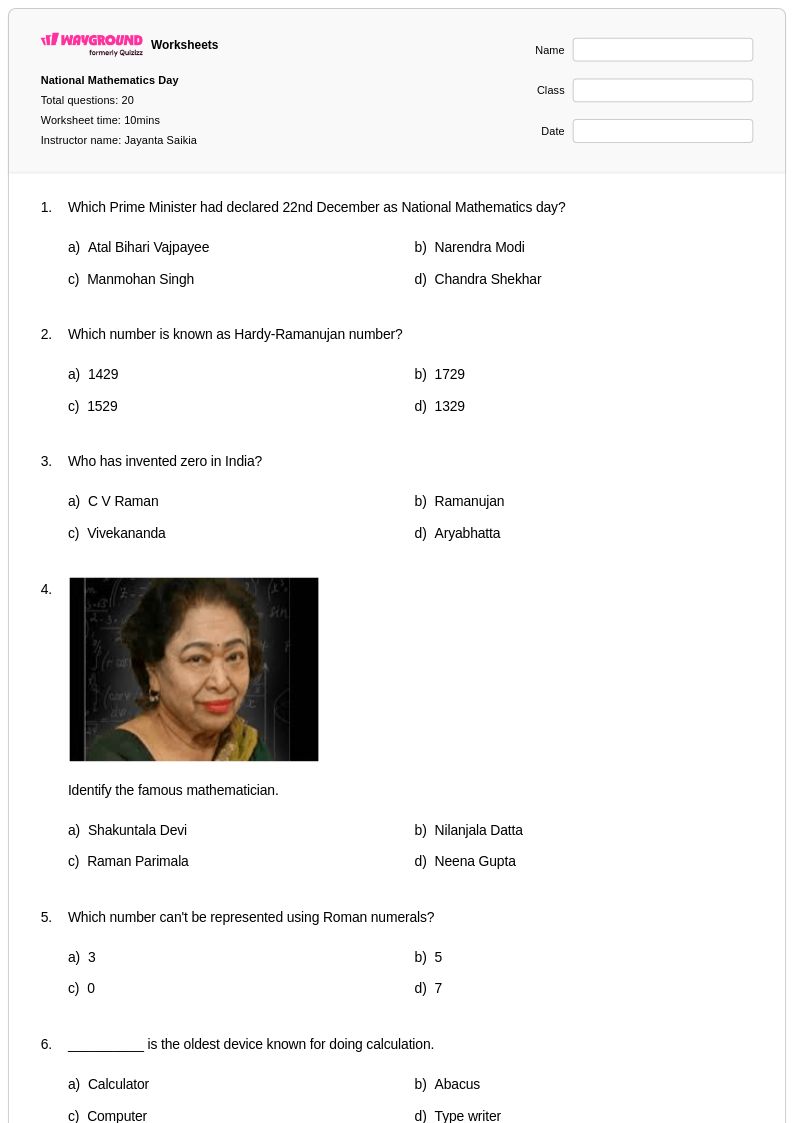
20 Q
6th - 8th
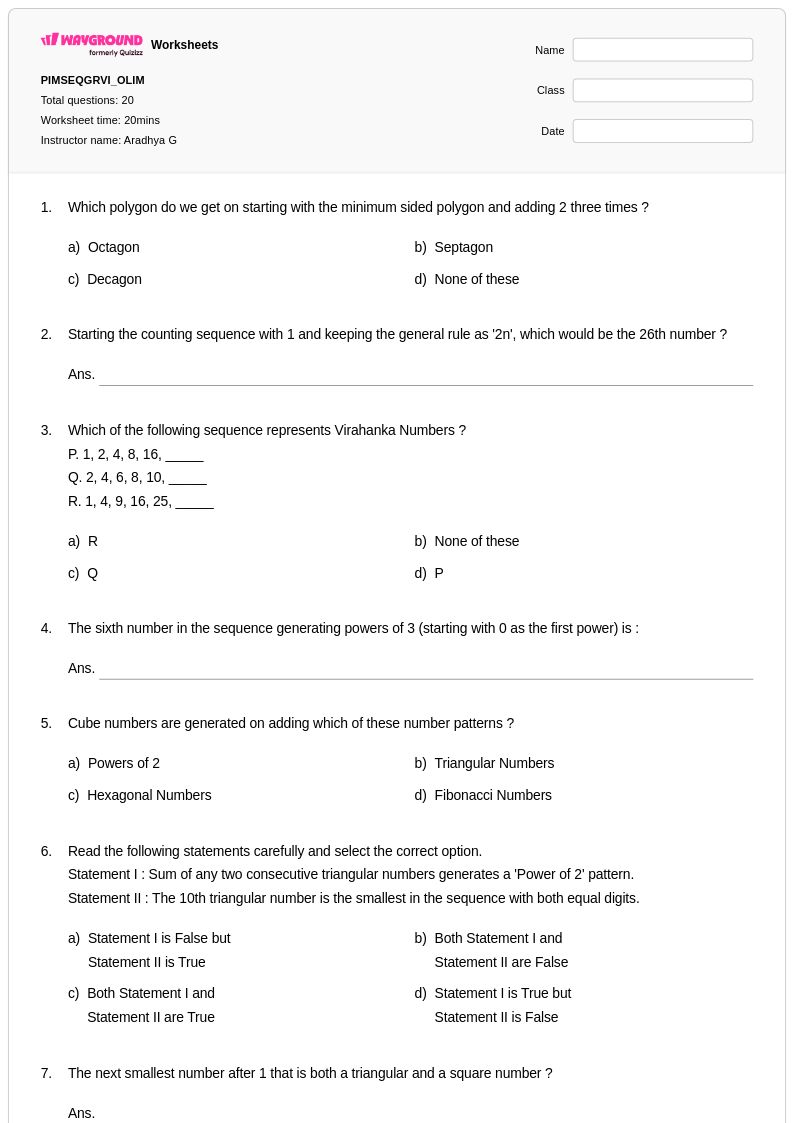
20 Q
6th - Uni
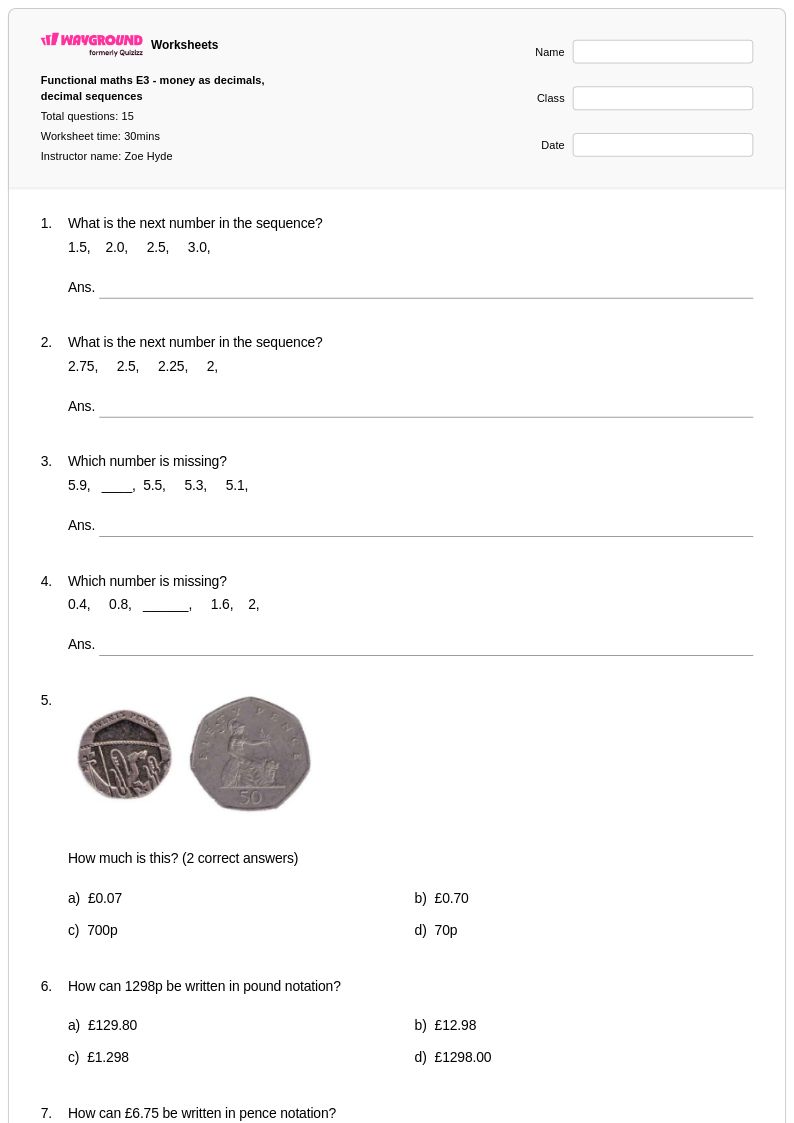
15 Q
6th
Explore Fibonacci Sequence Worksheets by Grades
Explore Other Subject Worksheets for year 6
Explore printable Fibonacci Sequence worksheets for Year 6
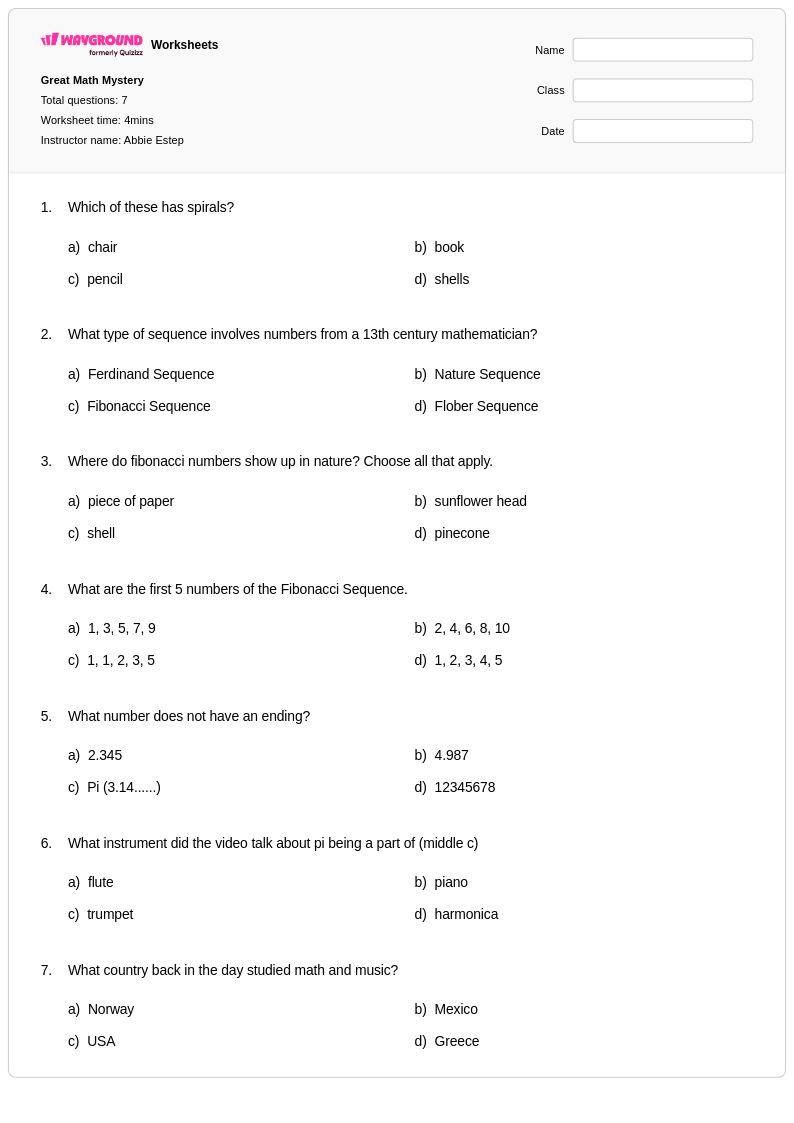
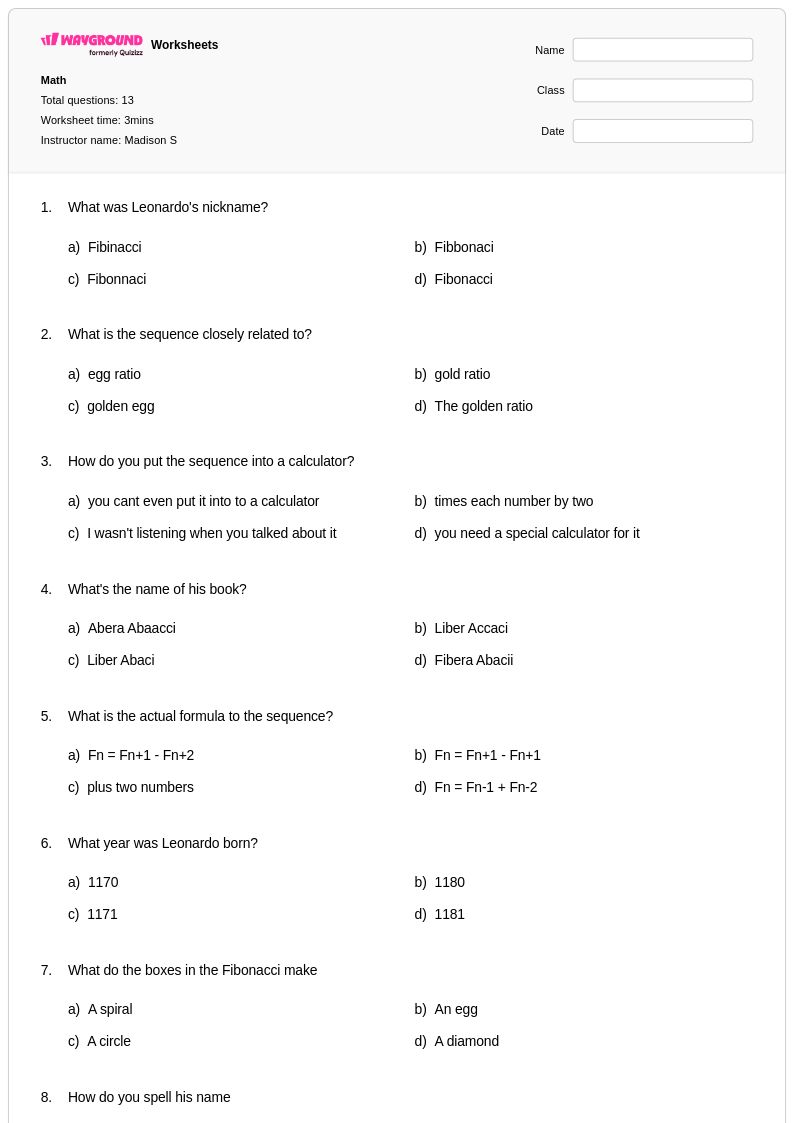
Year 6 Fibonacci Sequence worksheets available through Wayground (formerly Quizizz) provide students with structured practice in exploring one of mathematics' most fascinating numerical patterns. These comprehensive printables introduce sixth graders to the foundational concepts of the Fibonacci sequence, where each number is the sum of the two preceding numbers, beginning with 0 and 1. Students develop critical pattern recognition skills while working through practice problems that guide them to identify, extend, and analyze Fibonacci numbers in various contexts. Each worksheet collection includes detailed answer keys to support independent learning and self-assessment, while the free pdf format ensures easy access for both classroom instruction and home practice. These resources strengthen mathematical reasoning abilities by encouraging students to observe relationships between consecutive terms and make predictions about sequence behavior.
Wayground (formerly Quizizz) empowers educators with millions of teacher-created Fibonacci Sequence resources specifically designed for Year 6 mathematics instruction. The platform's robust search and filtering capabilities enable teachers to quickly locate worksheets that align with specific learning objectives and curriculum standards, while differentiation tools allow for seamless adaptation to meet diverse student needs. Teachers can customize existing materials or create original practice sets, with flexible options for both printable pdf distribution and digital classroom integration. These comprehensive worksheet collections support varied instructional approaches, from initial concept introduction during whole-group lessons to targeted remediation for struggling learners and enrichment opportunities for advanced students. The extensive resource library ensures that educators have access to high-quality materials that facilitate meaningful skill practice and deepen students' understanding of sequential mathematical relationships.
FAQs
How do I teach the Fibonacci sequence to Grade 6 students?
What Fibonacci sequence exercises work well at Grade 6?
What mistakes do sixth graders make with the Fibonacci sequence?
How do I use Wayground's Grade 6 Fibonacci worksheets?
How does the Fibonacci sequence fit into the Grade 6 Common Core math progression?
How can I differentiate Fibonacci sequence practice for my Grade 6 class?