Free Printable Finding Missing Lengths Worksheets for Year 6
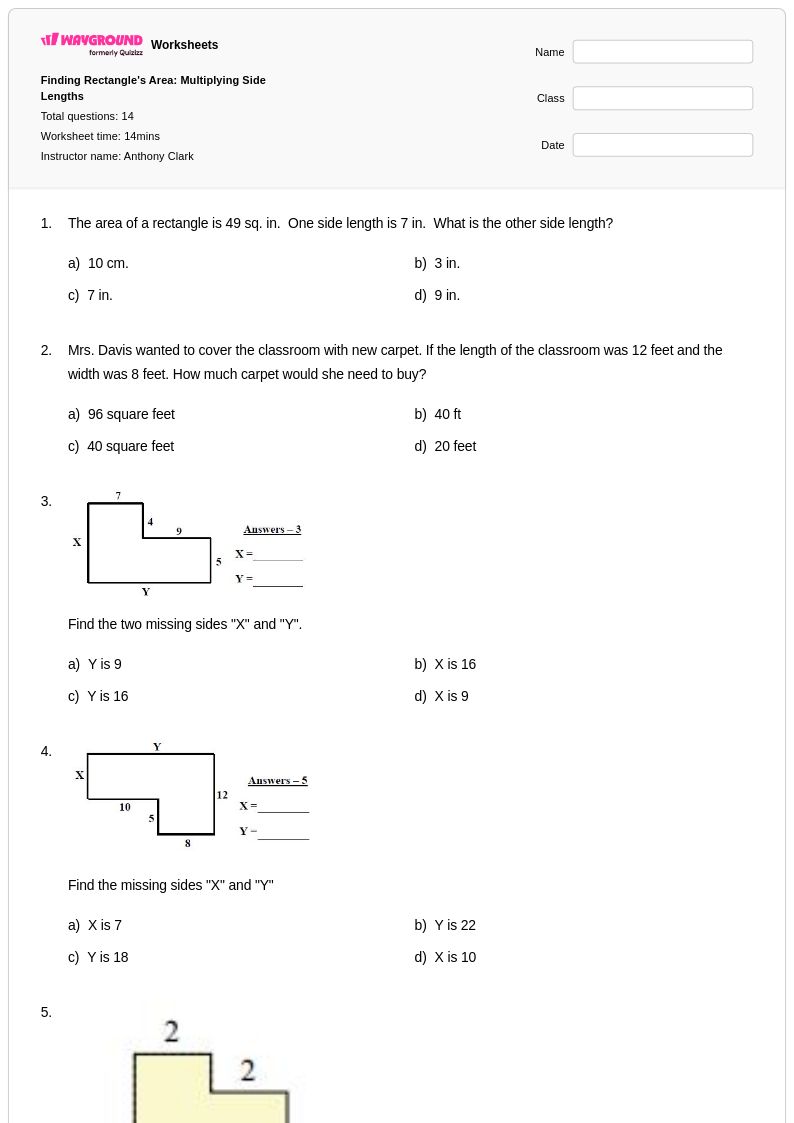
Year 6 finding missing lengths worksheets provide free printables with practice problems and answer keys to help students master calculating unknown dimensions in geometric figures through engaging PDF exercises.
Explore printable Finding Missing Lengths worksheets for Year 6
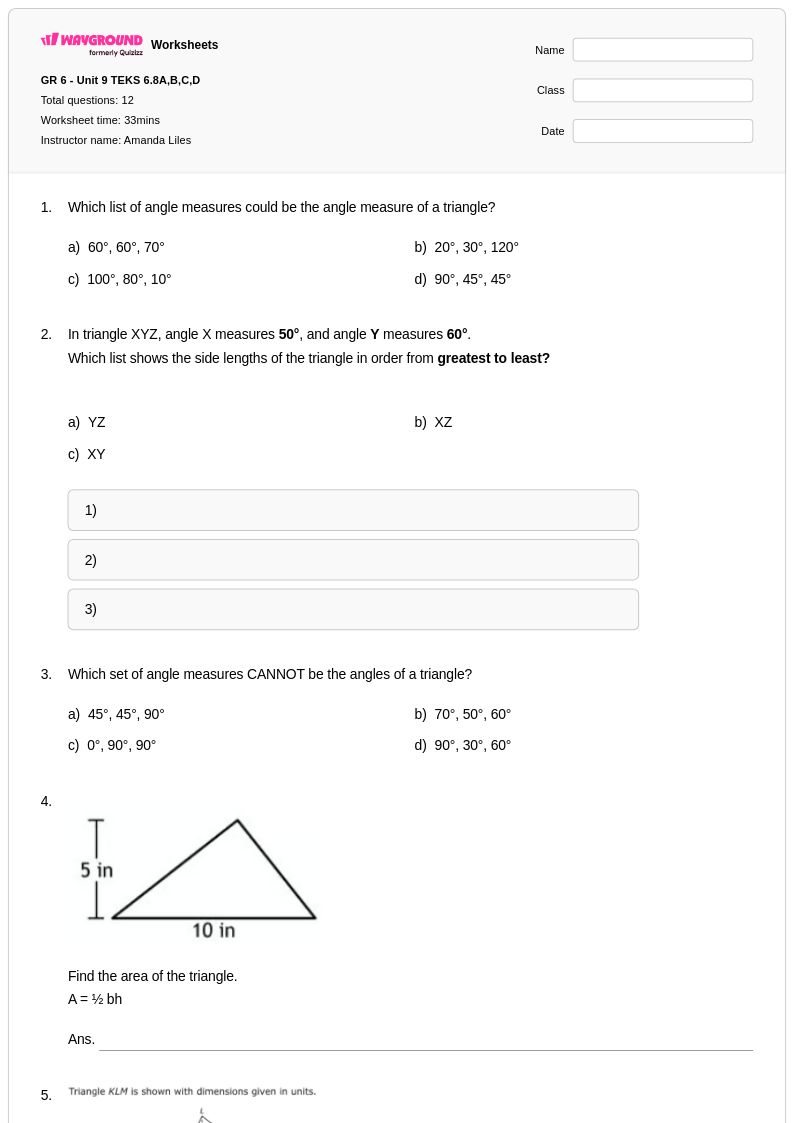
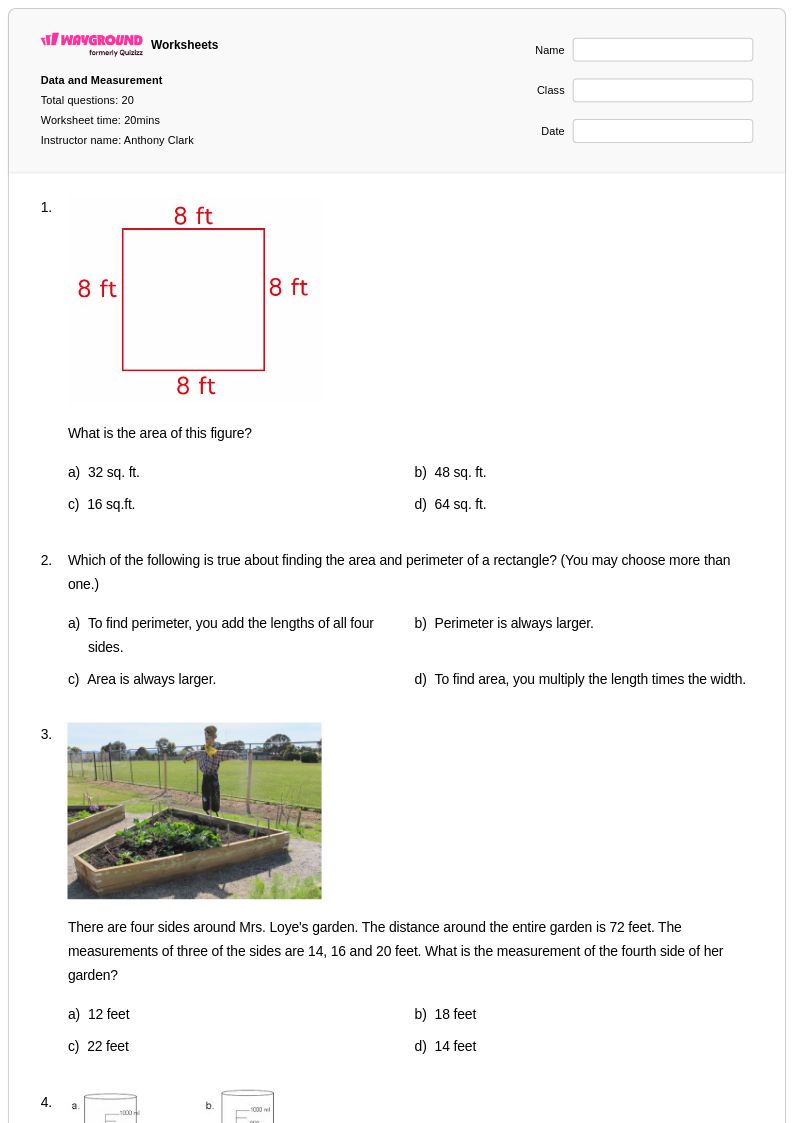
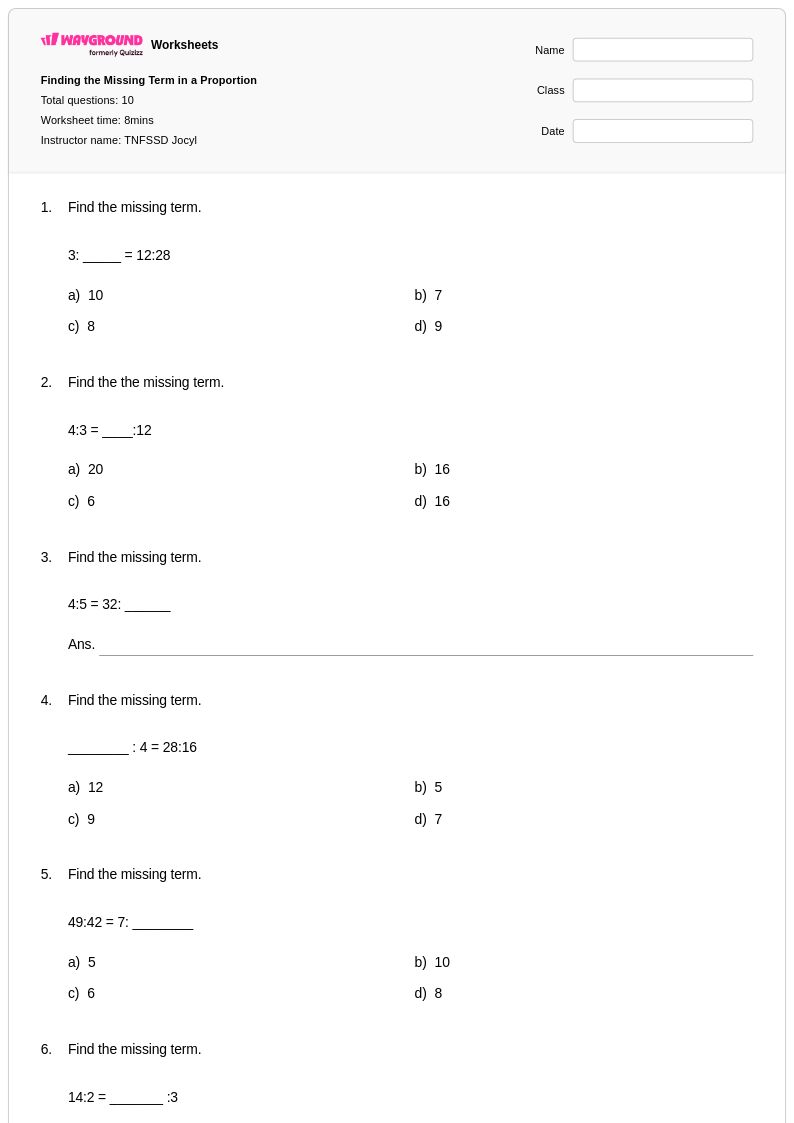
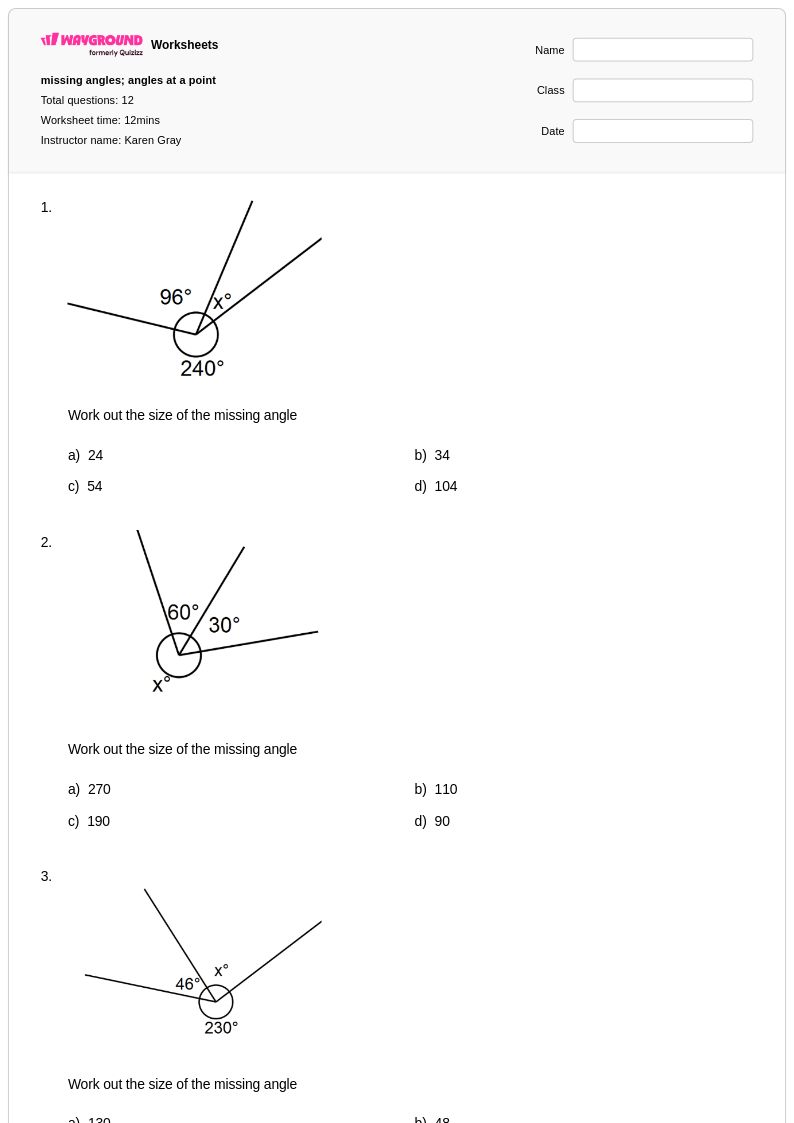
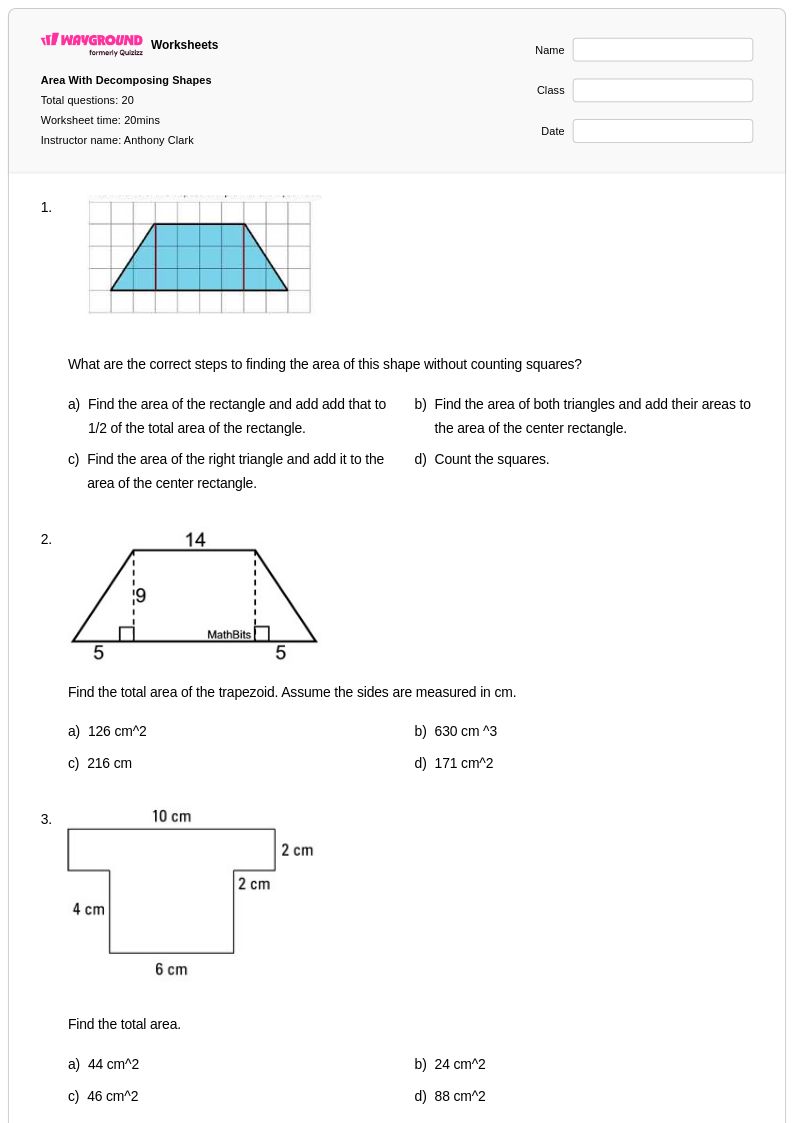
Year 6 finding missing lengths worksheets available through Wayground (formerly Quizizz) provide comprehensive practice for students developing essential geometric measurement skills. These carefully designed resources focus on helping sixth-grade students master techniques for calculating unknown dimensions in various geometric figures, including triangles, rectangles, and other polygons using properties like perimeter, area formulas, and the Pythagorean theorem foundations. The worksheets strengthen critical problem-solving abilities by presenting real-world scenarios where students must apply geometric relationships and algebraic thinking to determine missing measurements. Each printable resource includes detailed practice problems that progress from basic applications to more complex multi-step challenges, with comprehensive answer keys that support both independent study and guided instruction in pdf format.
Wayground (formerly Quizizz) empowers educators with access to millions of teacher-created finding missing lengths worksheets that streamline lesson planning and enhance mathematical instruction for Year 6 students. The platform's robust search and filtering capabilities allow teachers to quickly locate resources aligned with specific curriculum standards and learning objectives, while built-in differentiation tools enable seamless customization to meet diverse student needs and ability levels. These versatile worksheet collections are available in both printable pdf formats for traditional classroom use and digital formats for interactive learning experiences, making them ideal for remediation sessions, enrichment activities, and regular skill practice. The extensive library of professionally crafted resources supports teachers in delivering targeted geometry instruction that builds student confidence in analyzing geometric relationships and applying mathematical reasoning to solve complex measurement problems.
FAQs
How do I teach finding missing lengths to 6th graders?
At Grade 6, the focus is on using what students already know — perimeter formulas, area relationships, and basic properties of triangles and rectangles — to reason backward to an unknown side. Avoid jumping to the Pythagorean theorem at this stage; instead, build the habit of writing an equation from a known formula and solving for the missing value. Real-world contexts like finding the missing side of a garden or a floor plan make the reasoning feel purposeful rather than abstract.
What exercises help 6th graders practice finding missing lengths?
Problems that give students a perimeter or area and ask them to find one missing dimension are the right starting point — they require algebraic thinking without demanding formal equation-solving. From there, move to multi-step problems where students must find a missing side before they can calculate something else, like total perimeter. Wayground's Grade 6 worksheets are structured to follow this progression, moving from single-step to multi-step scenarios within the same practice set.
What mistakes do 6th graders commonly make when finding missing lengths?
The most common error is treating all sides of a polygon as equal when only some are labeled — students add the given sides and assume the rest match, rather than using the perimeter relationship to solve. A close second is unit confusion: mixing centimeters and meters within the same problem. Both errors usually trace back to students not drawing or annotating the figure before calculating.
How do I use Wayground's Grade 6 finding missing lengths worksheets?
Each worksheet comes with a complete answer key, which makes them practical for homework or independent practice without extra prep on your end. You can assign them as a digital quiz on Wayground or print the PDF — whichever fits your lesson. Printed worksheets can be graded quickly using the Wayground for Teachers app, which lets you scan student work rather than mark each paper by hand.
What grade level is finding missing lengths typically taught?
The foundational version — using perimeter and area formulas to find an unknown side — is a Grade 6 skill. Students at this level are expected to apply geometric formulas algebraically, which is exactly what missing-length problems require. The concept extends into Grades 7 and 8 as students add the Pythagorean theorem, similar figures, and proportional reasoning to their toolkit.
Is finding missing lengths aligned to Common Core standards for Grade 6?
Yes. Common Core expects Grade 6 students to solve real-world problems involving area, surface area, and volume, which naturally includes working backward from a known measurement to find a missing dimension. This is also where students begin applying their understanding of equations to geometry — writing something like P = 2l + 2w and solving for l is both an algebra skill and a geometry skill at this grade.
How can I support struggling 6th graders on finding missing lengths worksheets?
Two accommodations make the biggest difference here. The read-aloud feature helps students who lose track of the given information in multi-sentence word problems. For students who get overwhelmed by answer choices, reducing the number of options keeps them focused on reasoning rather than guessing. Both settings can be applied to individual students in Wayground without affecting the rest of the class.