Free Printable Forms of Energy Worksheets for Year 7
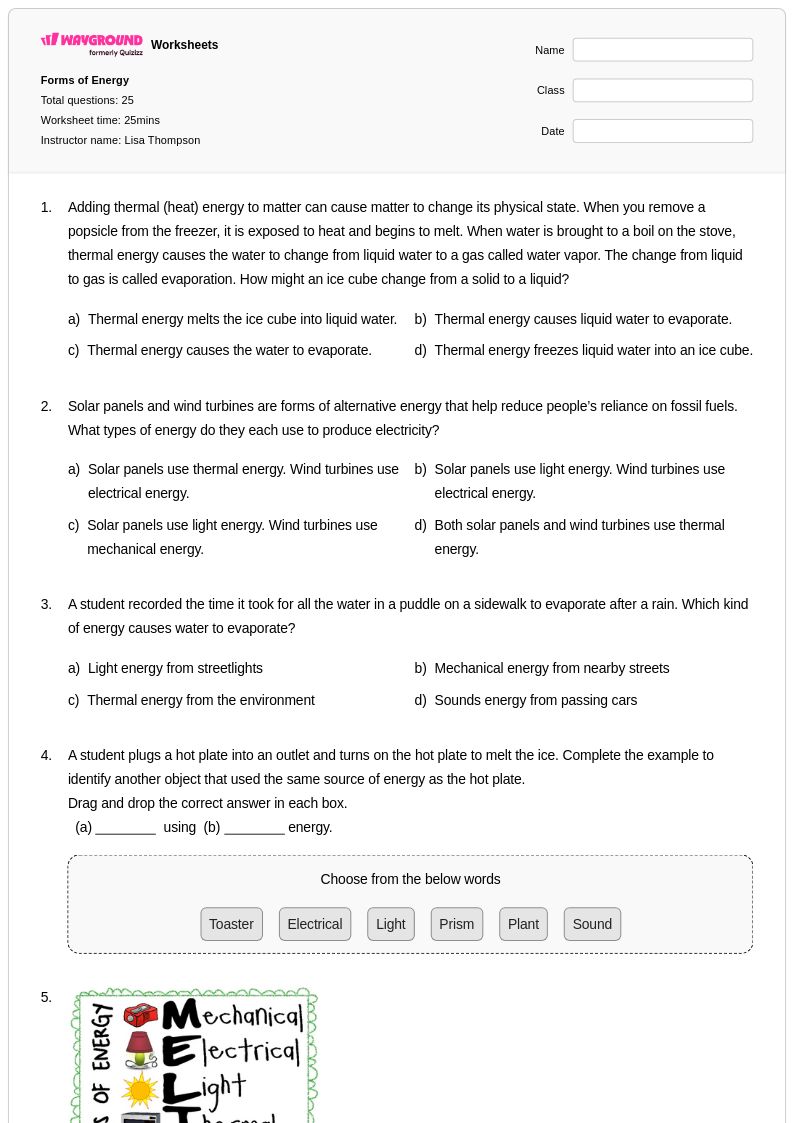
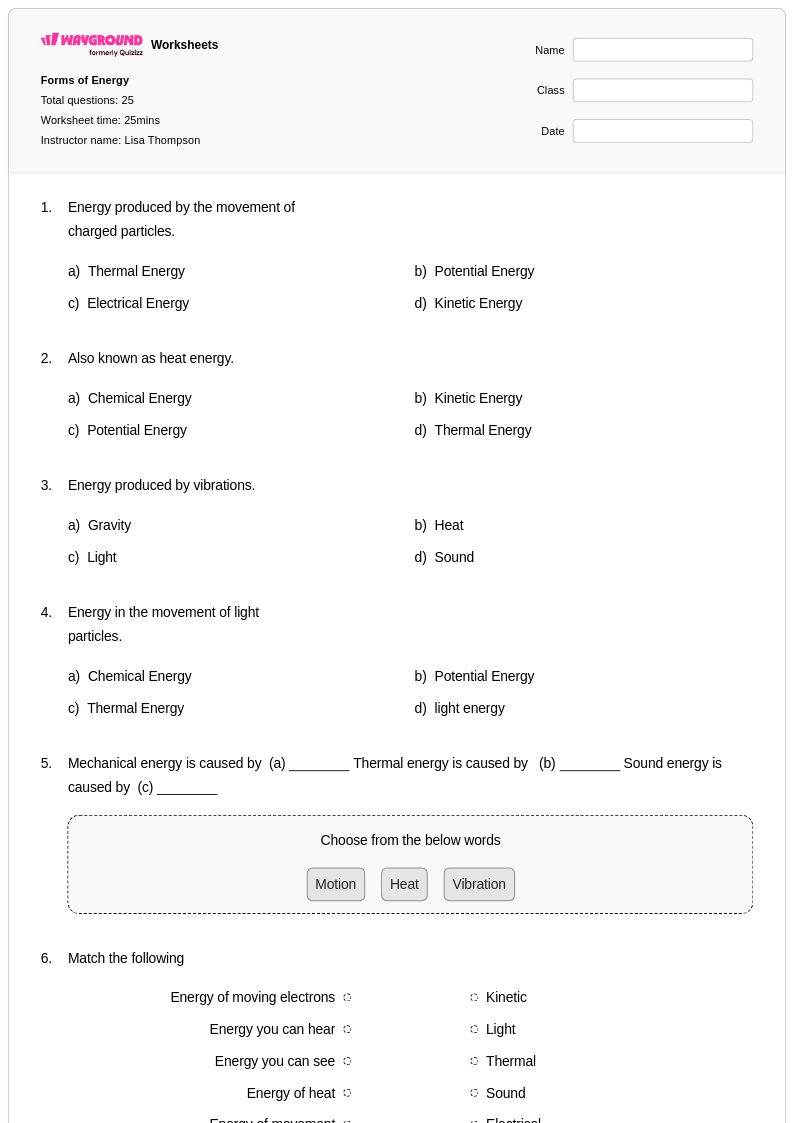
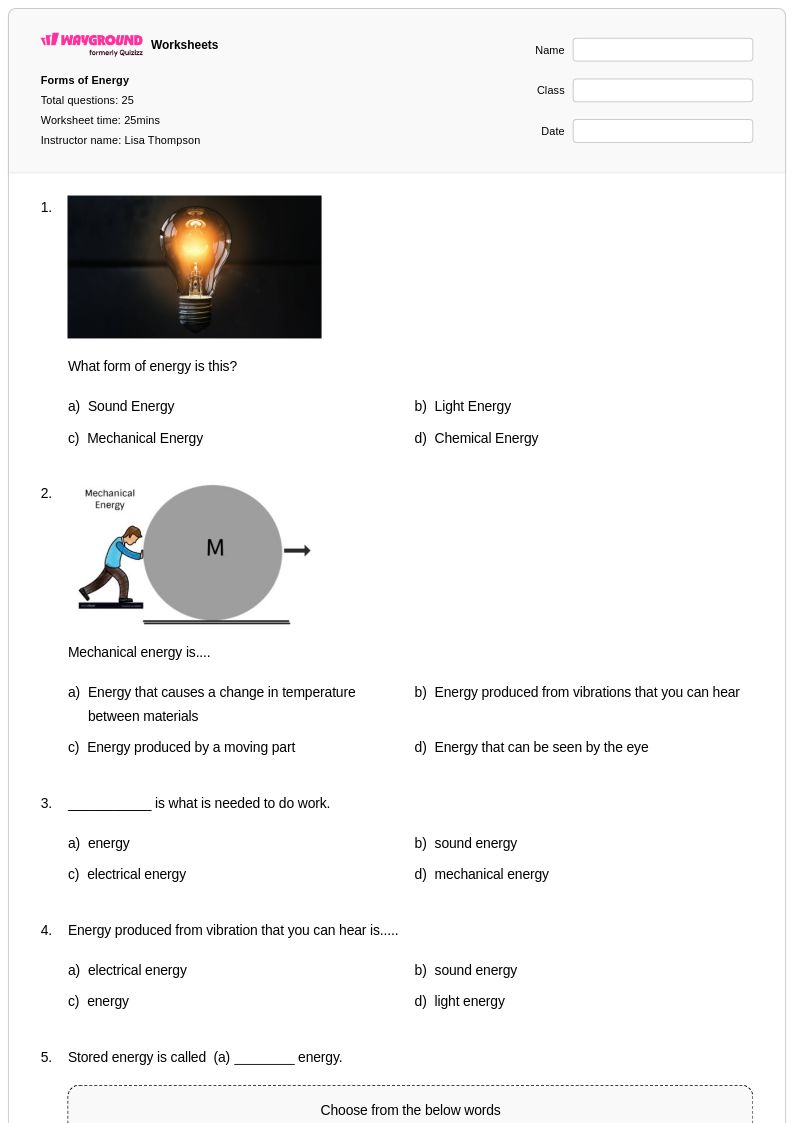
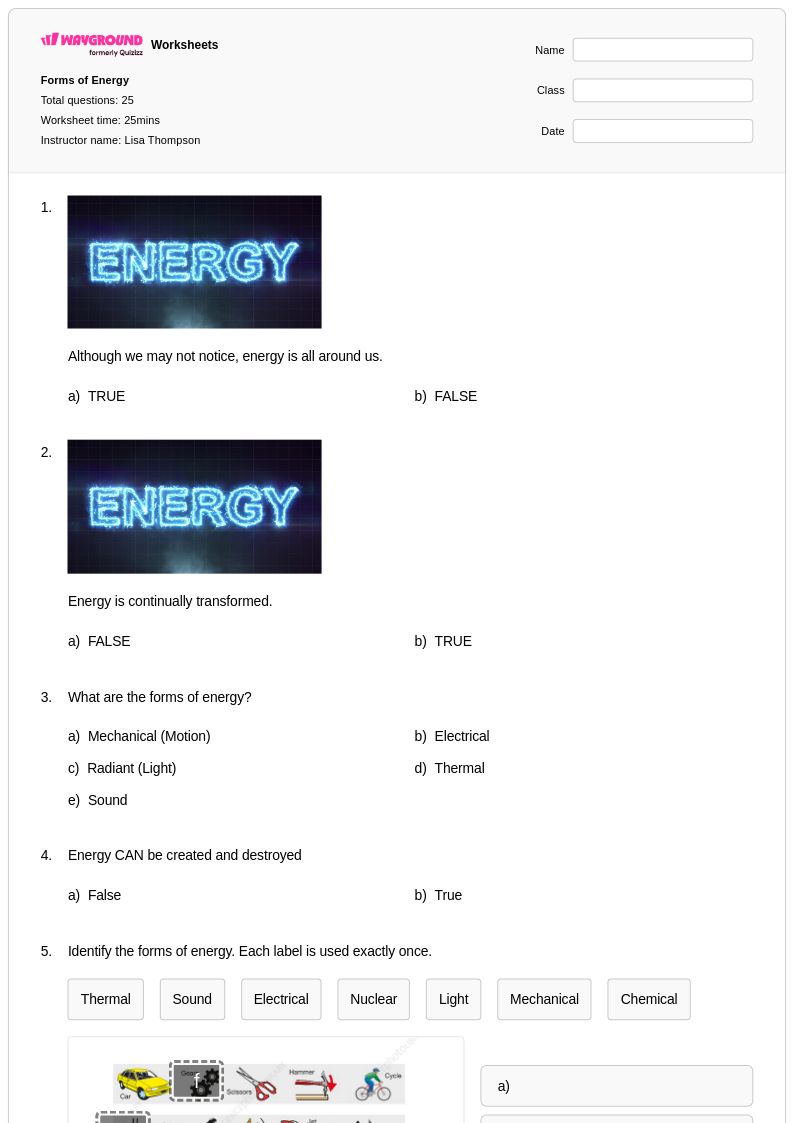
Year 7 forms of energy worksheets and printables help students explore kinetic, potential, thermal, and other energy types through engaging practice problems with complete answer keys available as free PDF downloads.
Explore printable Forms of Energy worksheets for Year 7
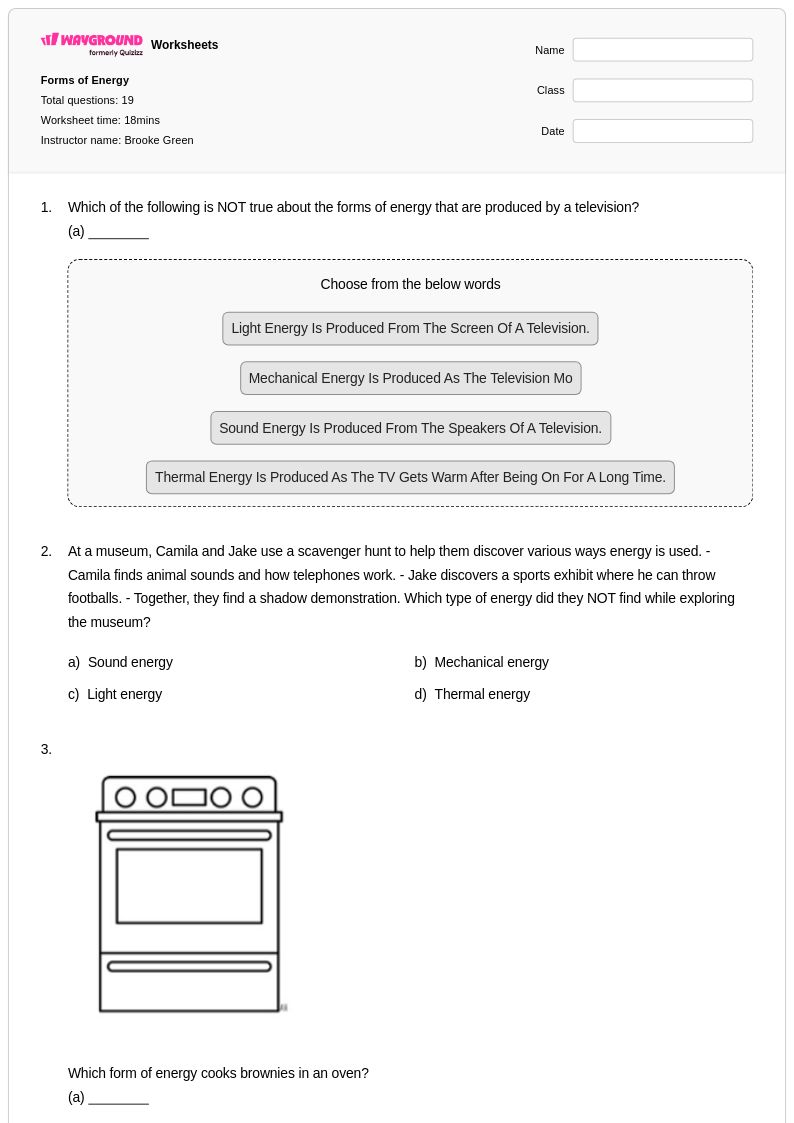
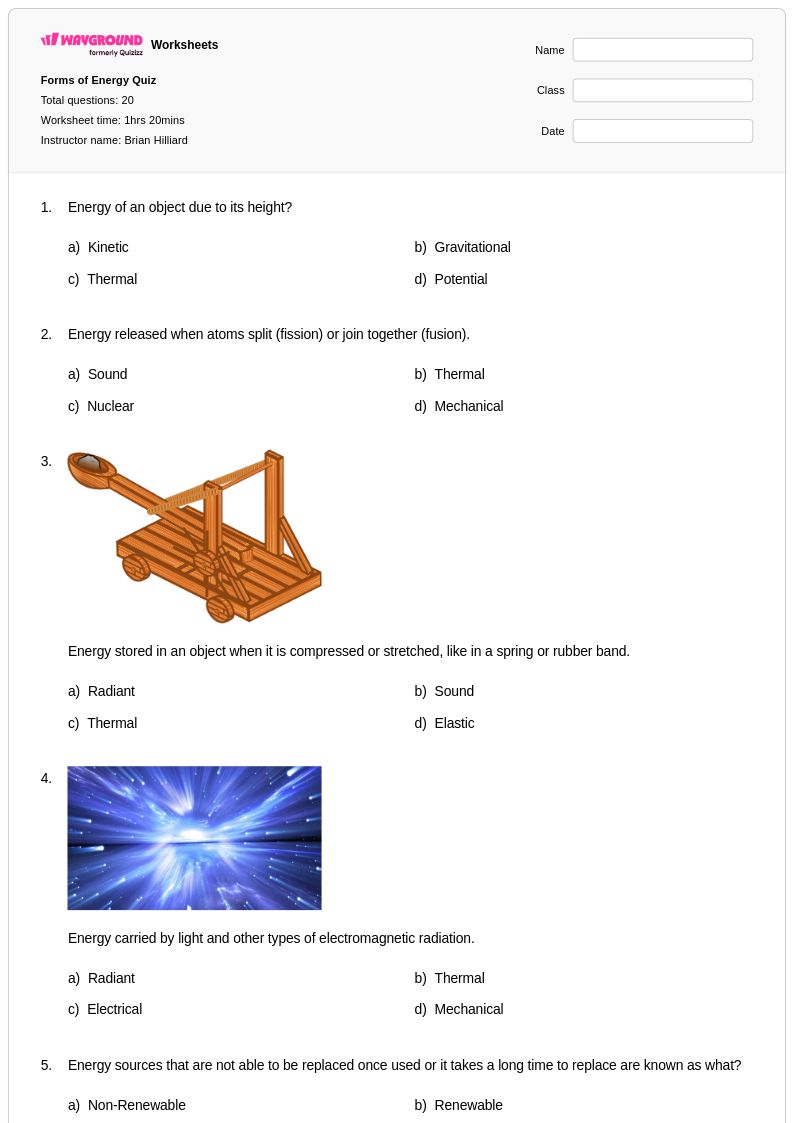
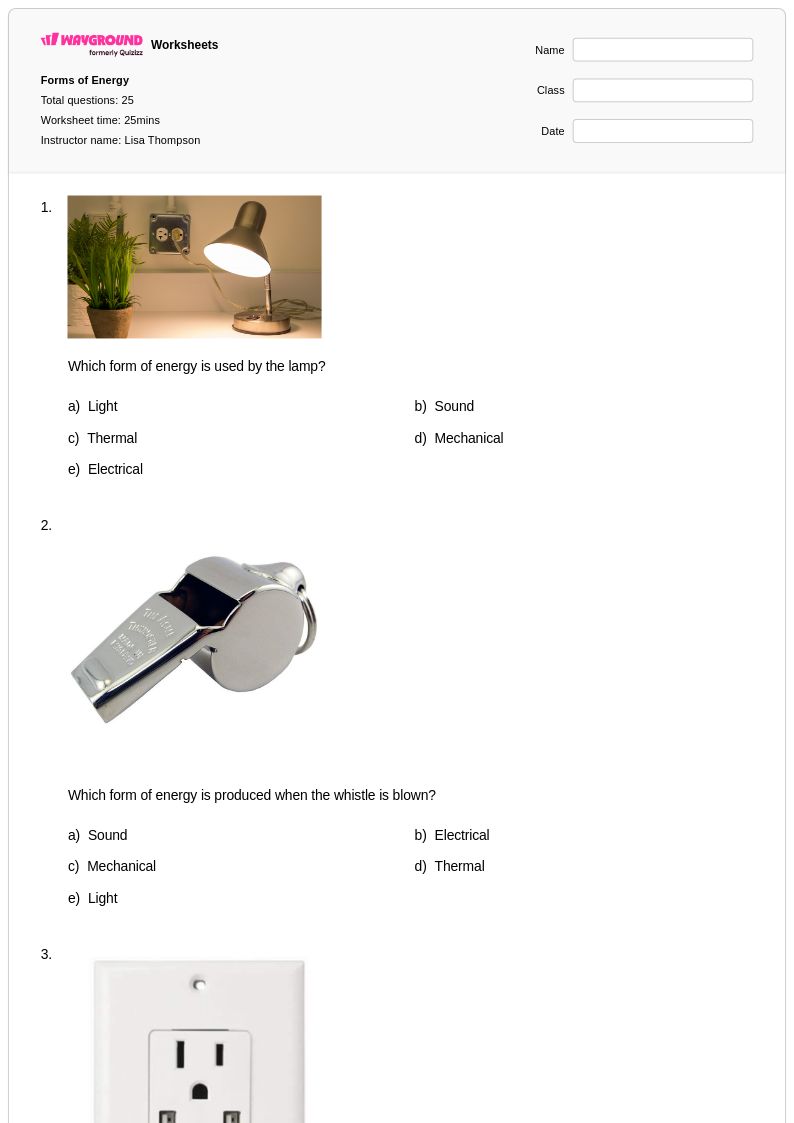
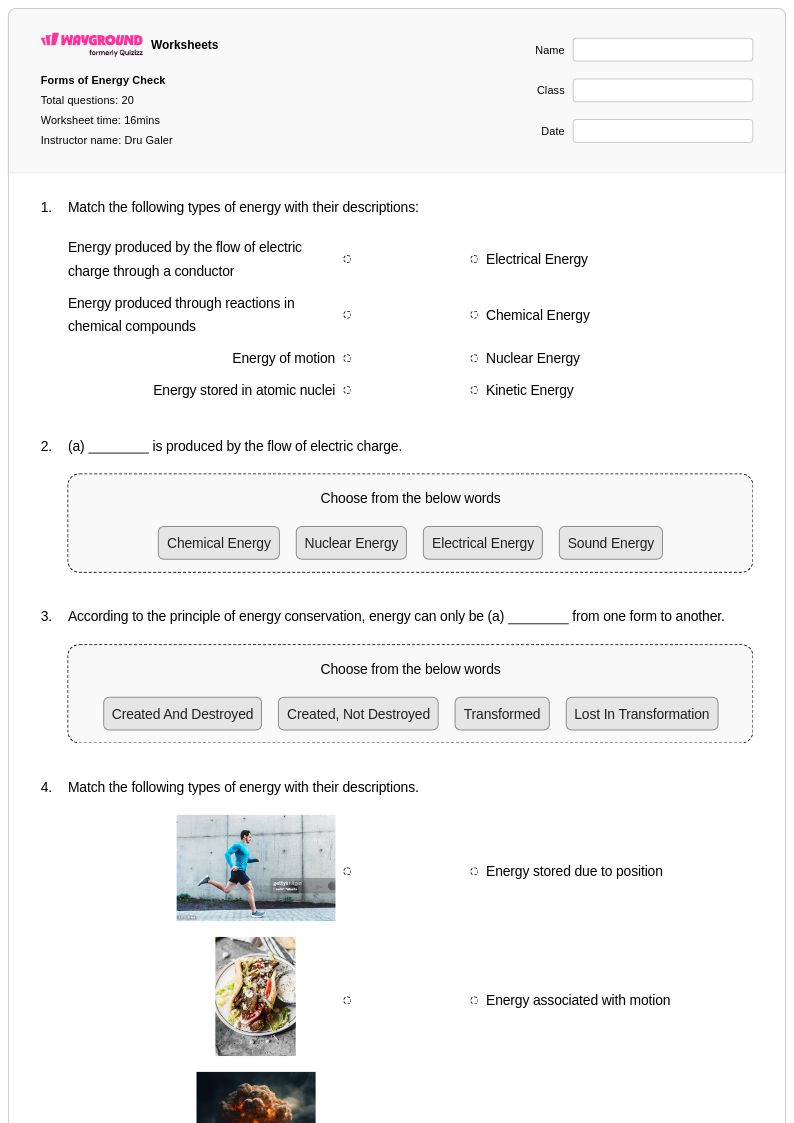
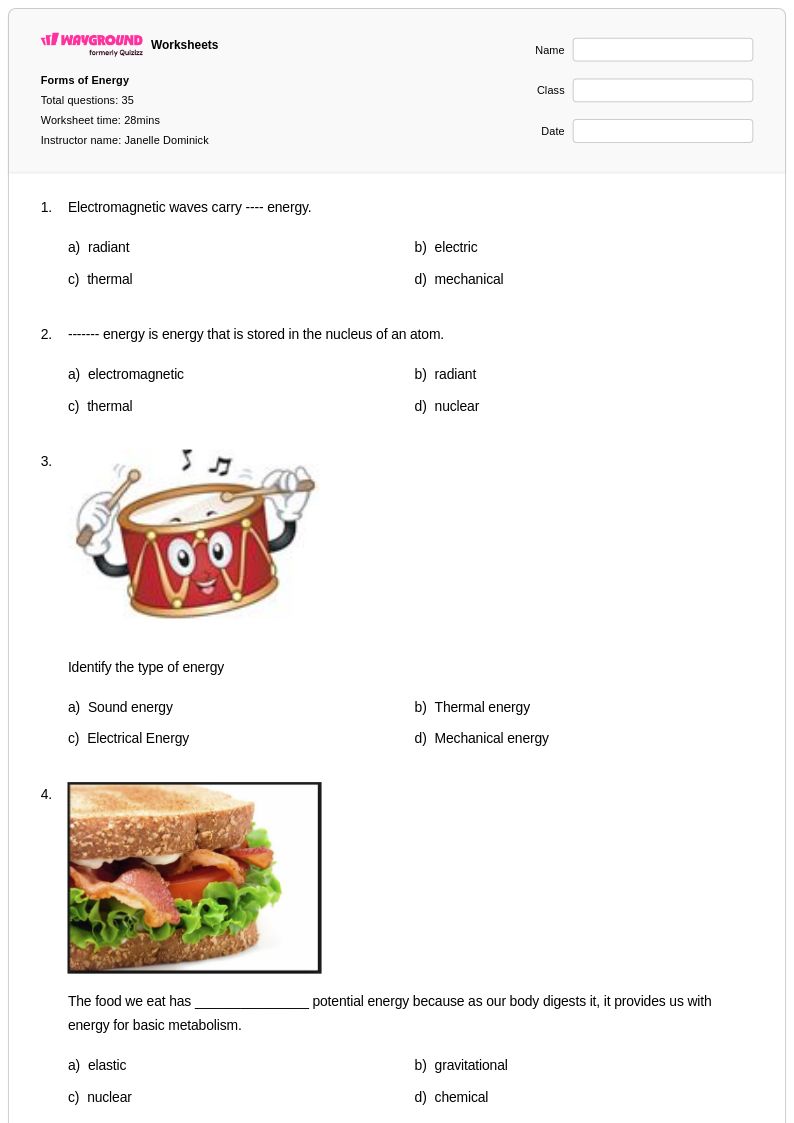
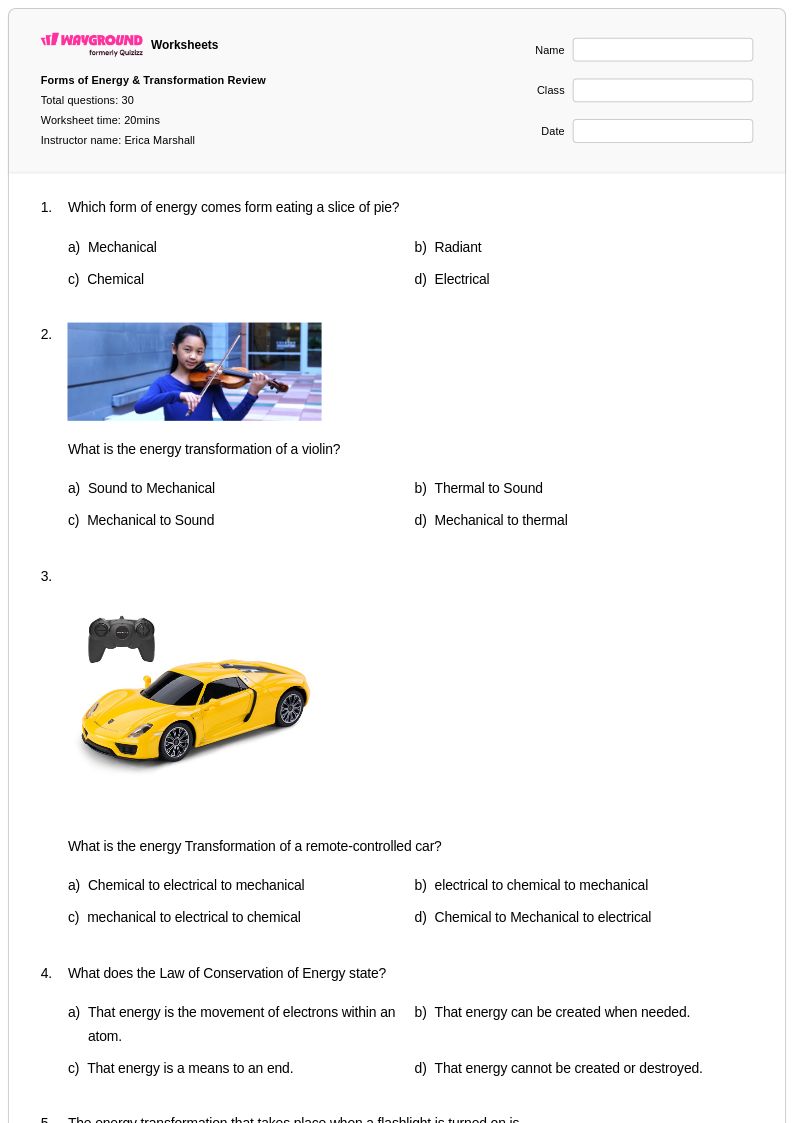
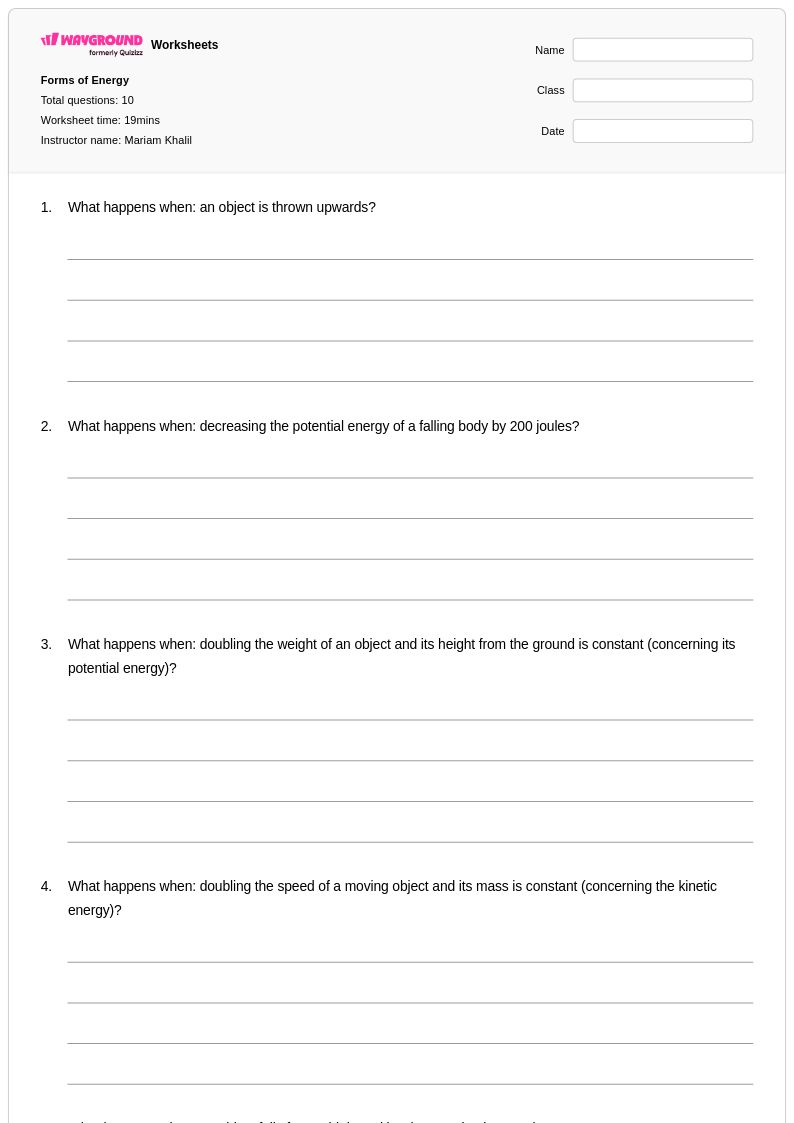
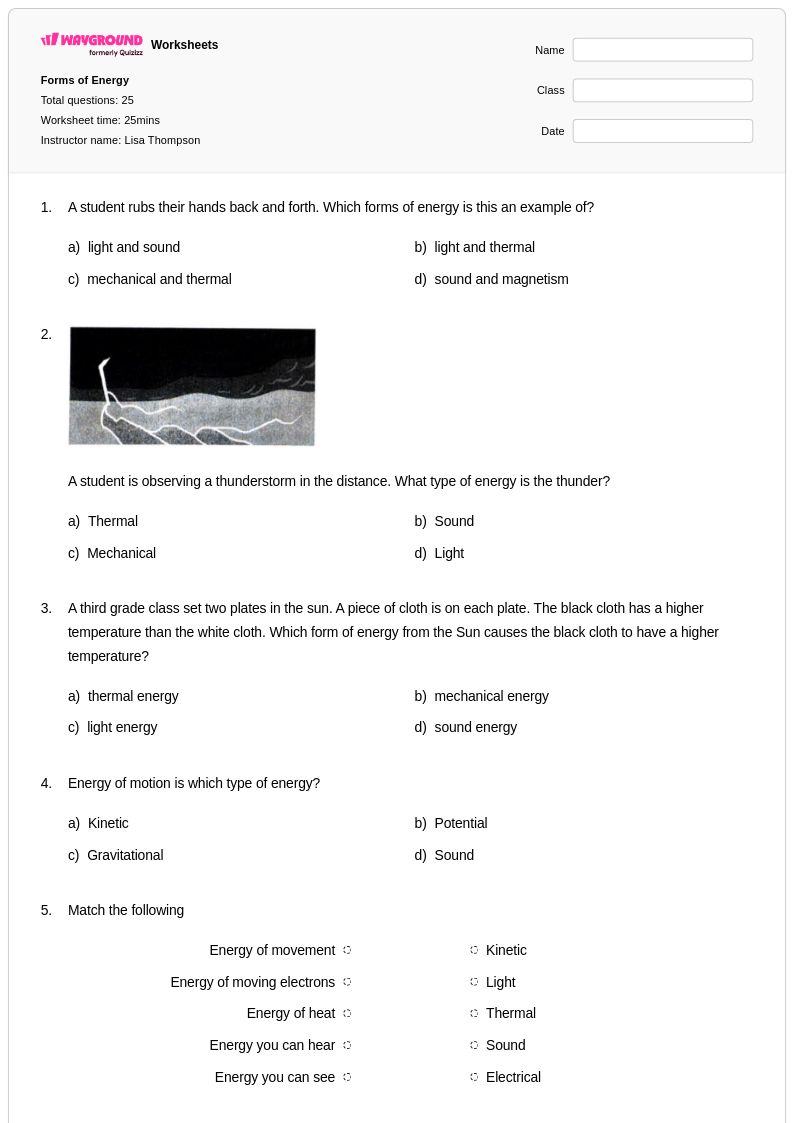
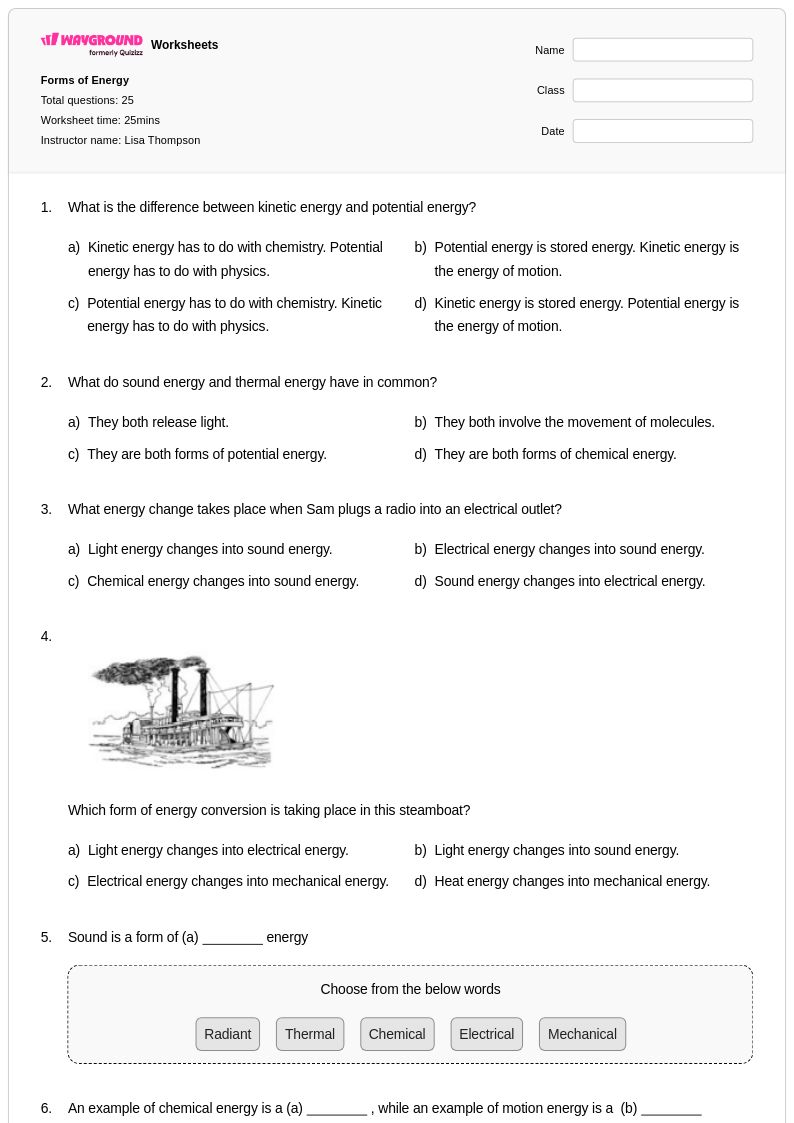
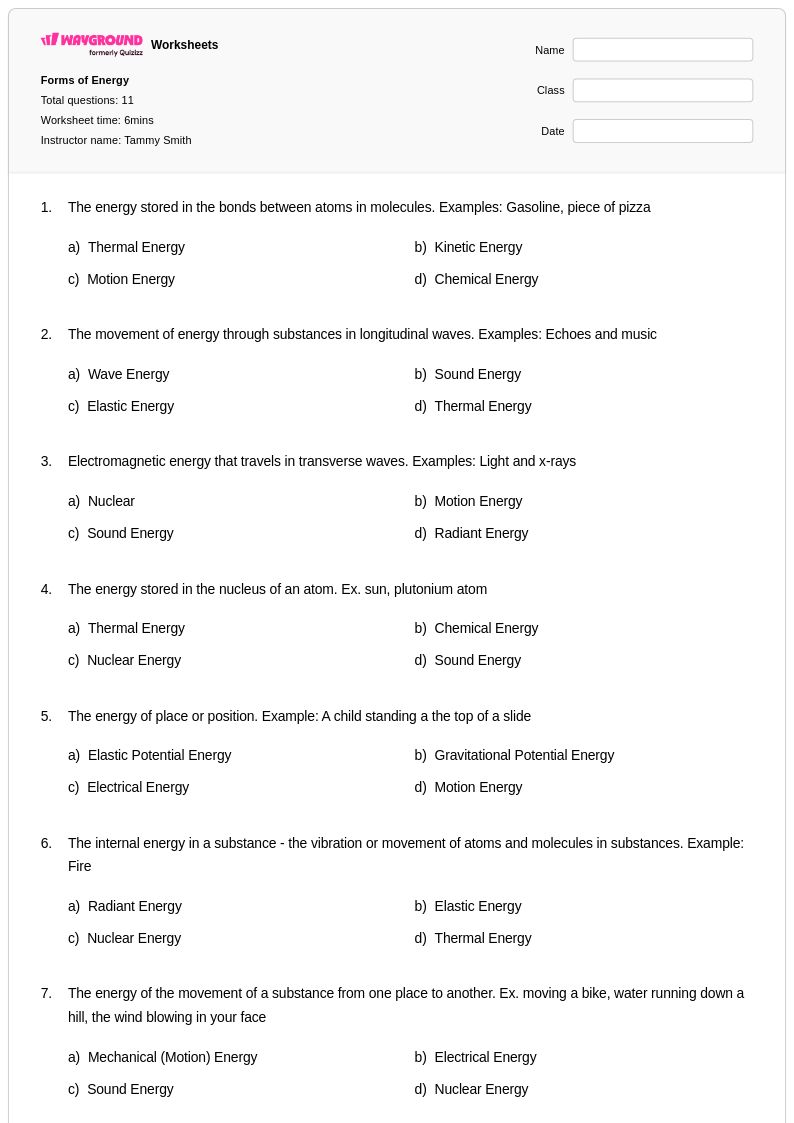
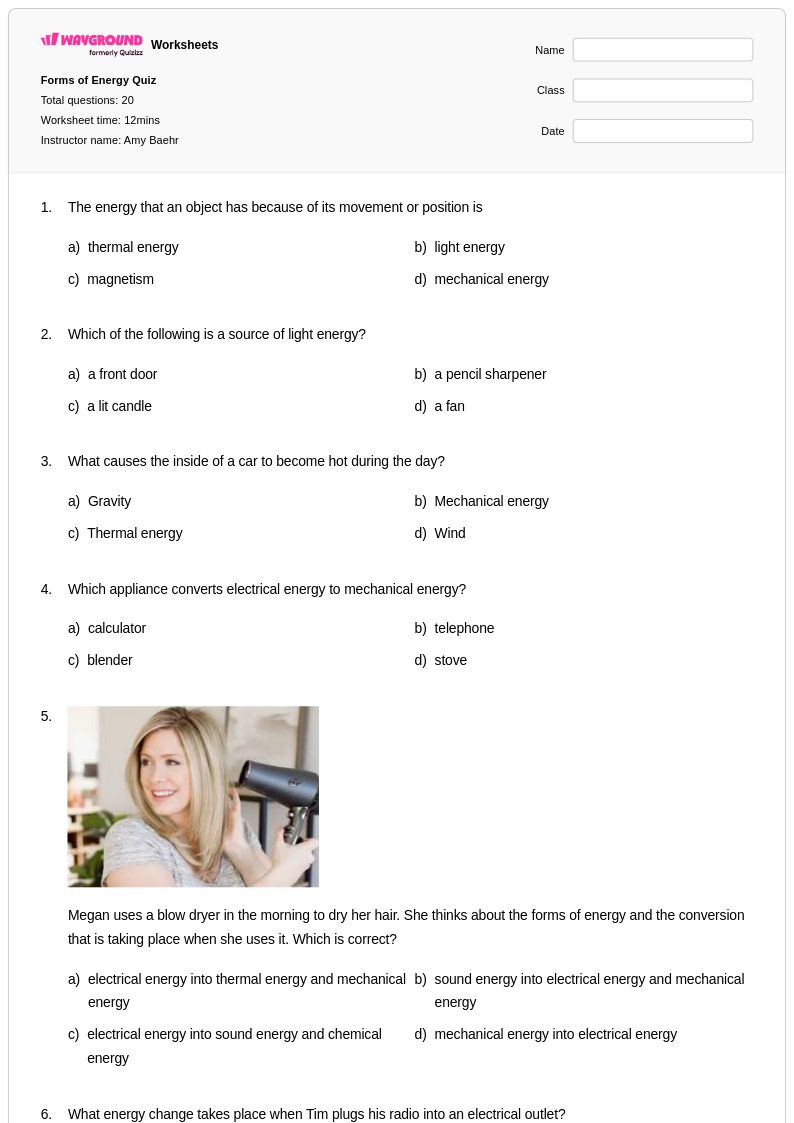
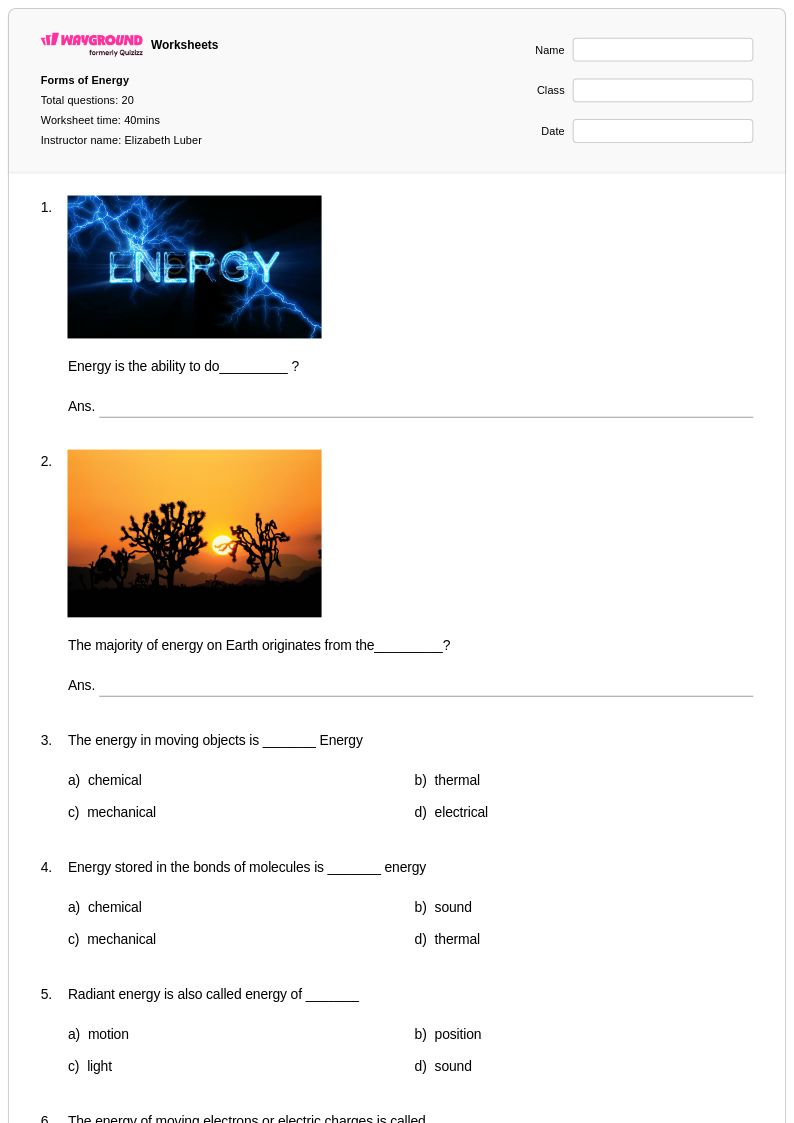
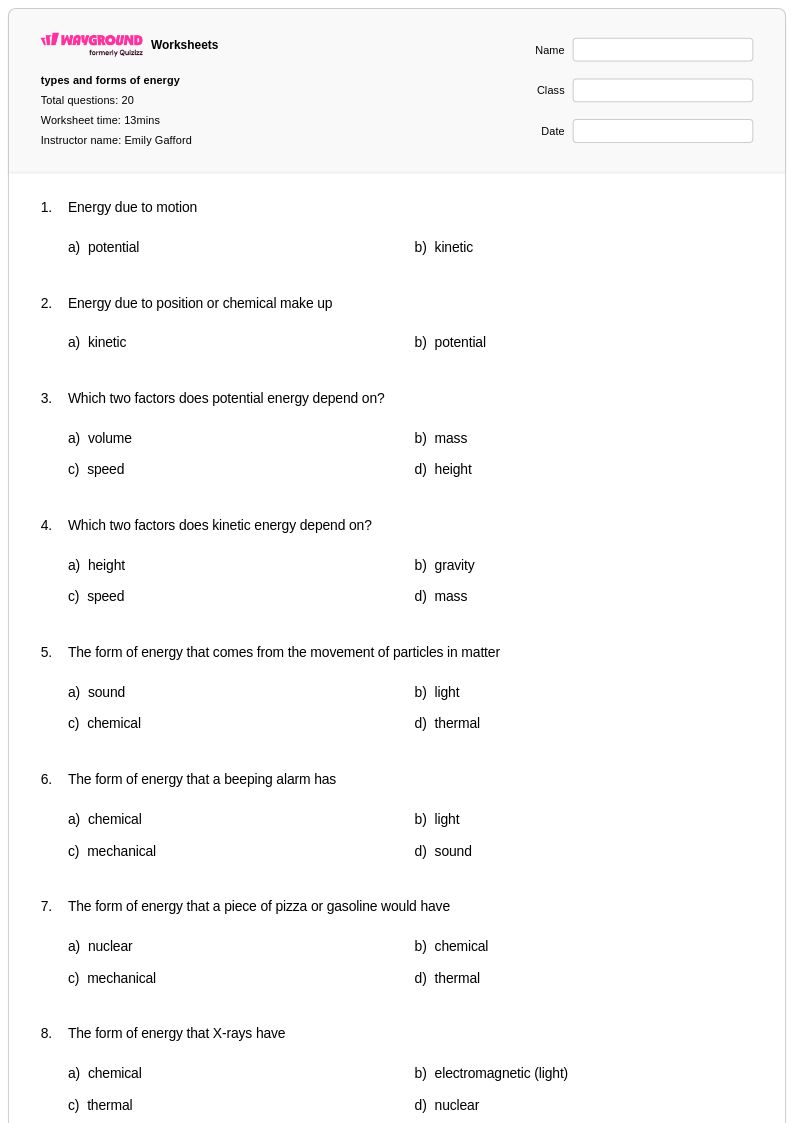
Forms of energy worksheets for Year 7 students available through Wayground (formerly Quizizz) provide comprehensive coverage of kinetic energy, potential energy, thermal energy, electrical energy, sound energy, light energy, and chemical energy concepts. These carefully designed practice problems help seventh-grade students develop critical thinking skills as they identify different energy types in real-world scenarios, analyze energy transformations, and apply scientific principles to solve problems involving energy conservation. The collection includes diverse question formats from multiple-choice assessments to detailed calculation exercises, with each printable worksheet featuring a complete answer key that enables independent study and immediate feedback. Students benefit from these free resources as they practice converting between energy units, examining how energy moves through systems, and understanding the fundamental relationship between work and energy in physical science contexts.
Wayground (formerly Quizizz) empowers educators with an extensive library of millions of teacher-created resources specifically designed for forms of energy instruction at the Year 7 level. The platform's advanced search and filtering capabilities allow teachers to quickly locate worksheets that align with state and national science standards while meeting diverse classroom needs through built-in differentiation tools. Teachers can seamlessly customize existing materials or create original assessments, with all content available in both printable pdf format and interactive digital versions for flexible classroom implementation. This comprehensive resource collection supports effective lesson planning by providing ready-to-use materials for initial concept introduction, targeted remediation for struggling learners, enrichment activities for advanced students, and ongoing skill practice that reinforces understanding of energy principles throughout the academic year.
FAQs
How do I teach forms of energy to middle school students?
Start by grounding each energy type in a concrete, familiar example — a moving car for kinetic energy, a compressed spring for elastic potential energy, a battery for chemical energy. From there, guide students through energy transformations using real systems like a roller coaster or a toaster, which helps them see that energy changes form rather than disappearing. Visual sorting activities and labeled diagrams are especially effective before moving into formula-based problem solving.
What are common misconceptions students have about forms of energy?
One of the most persistent misconceptions is that energy is 'used up' rather than transformed — students often say a battery 'runs out of energy' rather than understanding that chemical energy converts to electrical and then thermal or light energy. Another common error is confusing heat and temperature, or treating thermal energy as a separate, unrelated concept rather than a manifestation of kinetic energy at the particle level. Students also frequently conflate potential energy with height alone, missing that elastic, chemical, and gravitational potential energy are all distinct forms.
What types of practice problems help students understand energy transformations?
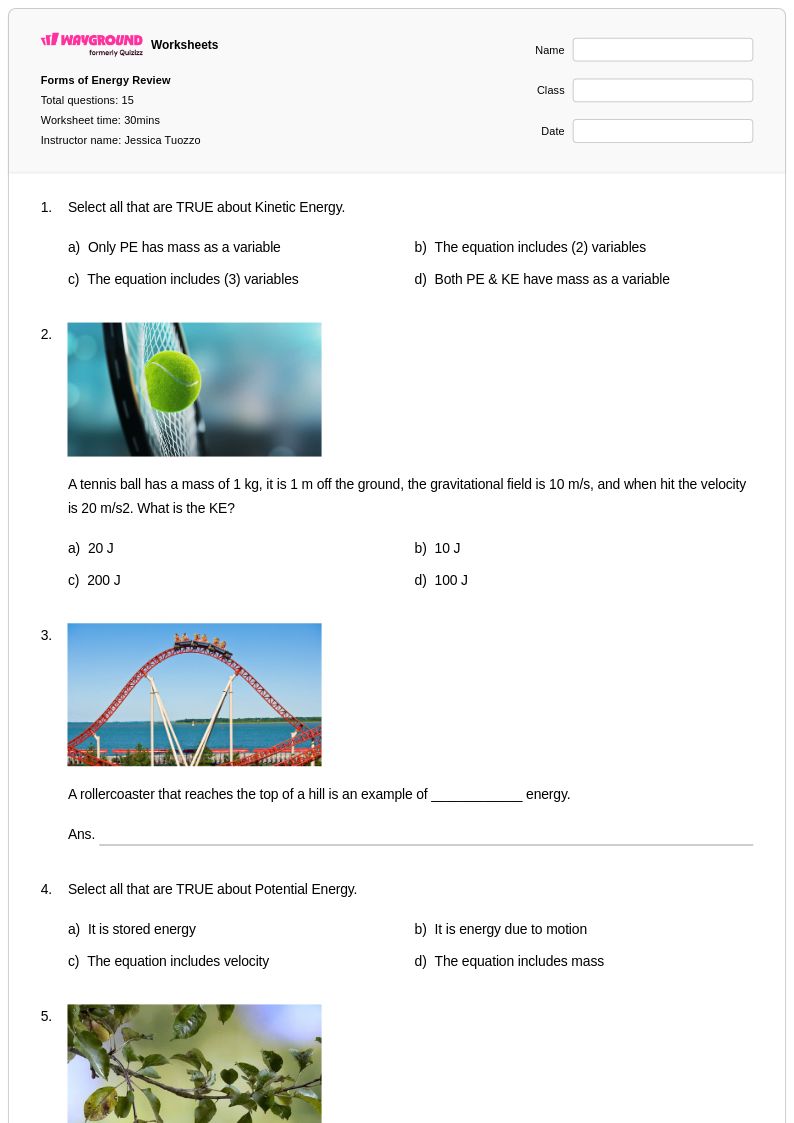
Scenario-based problems are most effective — ask students to trace the full energy transformation chain in systems like a lightbulb, a bouncing ball, or a hydroelectric dam. Calculation problems using the formulas for kinetic energy (KE = ½mv²) and gravitational potential energy (PE = mgh) help students connect the conceptual and quantitative sides of the topic. Matching and classification exercises that require students to identify energy types from descriptions also reinforce recognition skills before applying conservation of energy principles.
How do I use Forms of Energy worksheets in my classroom?
Forms of Energy worksheets on Wayground are available as printable PDFs for traditional classroom use and in digital formats for technology-integrated or remote learning environments, giving teachers flexibility in how they assign and collect work. Teachers can also host worksheets as a live quiz on Wayground, making them suitable for formative assessment, whole-class review, or self-paced independent practice. Each worksheet includes a complete answer key, which supports both teacher-led correction and independent student self-assessment.
How can I differentiate forms of energy instruction for students at different levels?
For foundational learners, start with identification tasks — sorting images or scenarios into energy type categories before introducing any calculations. Advanced students can be challenged with multi-step problems that require applying conservation of energy across complex mechanical systems. On Wayground, teachers can apply individual accommodations such as read aloud support, reduced answer choices, and extended time to specific students, ensuring that all learners access the same content at an appropriate level of support without singling anyone out.
What mistakes do students commonly make when calculating kinetic and potential energy?
When calculating kinetic energy, students frequently forget to square the velocity in KE = ½mv², leading to answers that are significantly off. For gravitational potential energy, a common error is using inconsistent units, particularly mixing grams with meters per second squared instead of kilograms. Students also struggle with identifying the reference point for height in PE = mgh, which causes confusion when the same object appears to have different potential energy values depending on the frame of reference.