Free Printable Physical Science Worksheets for Year 7
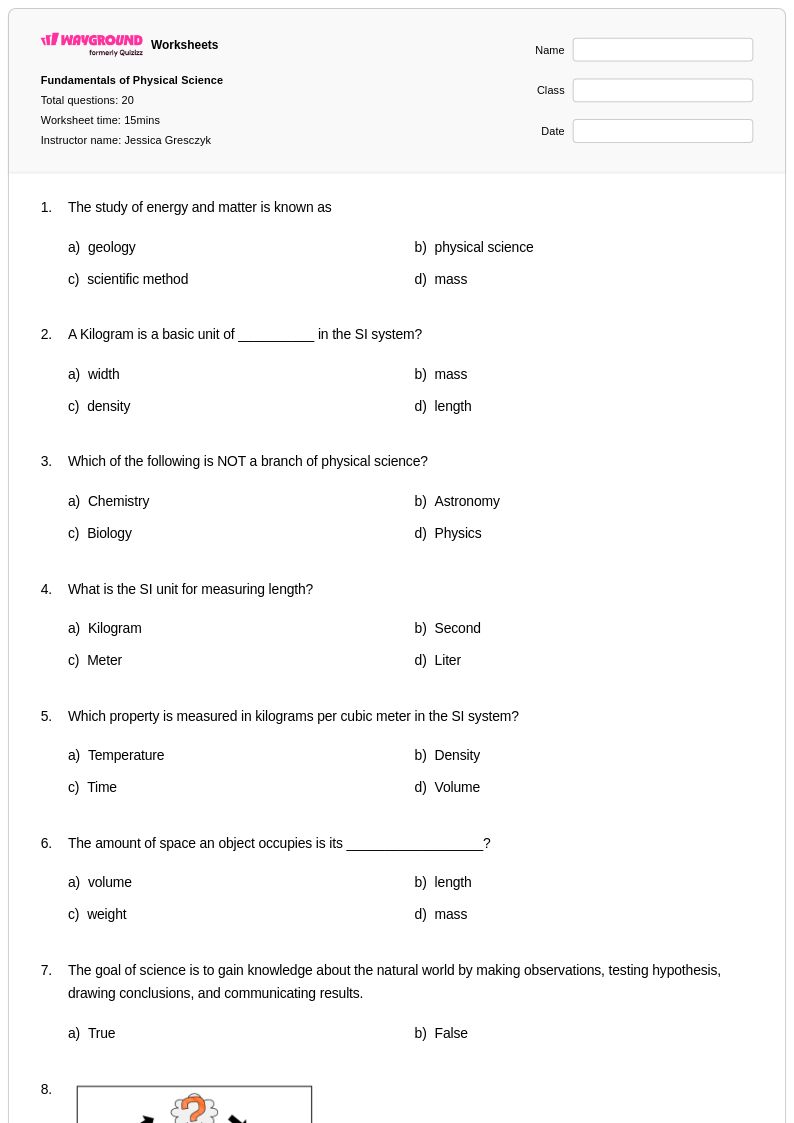
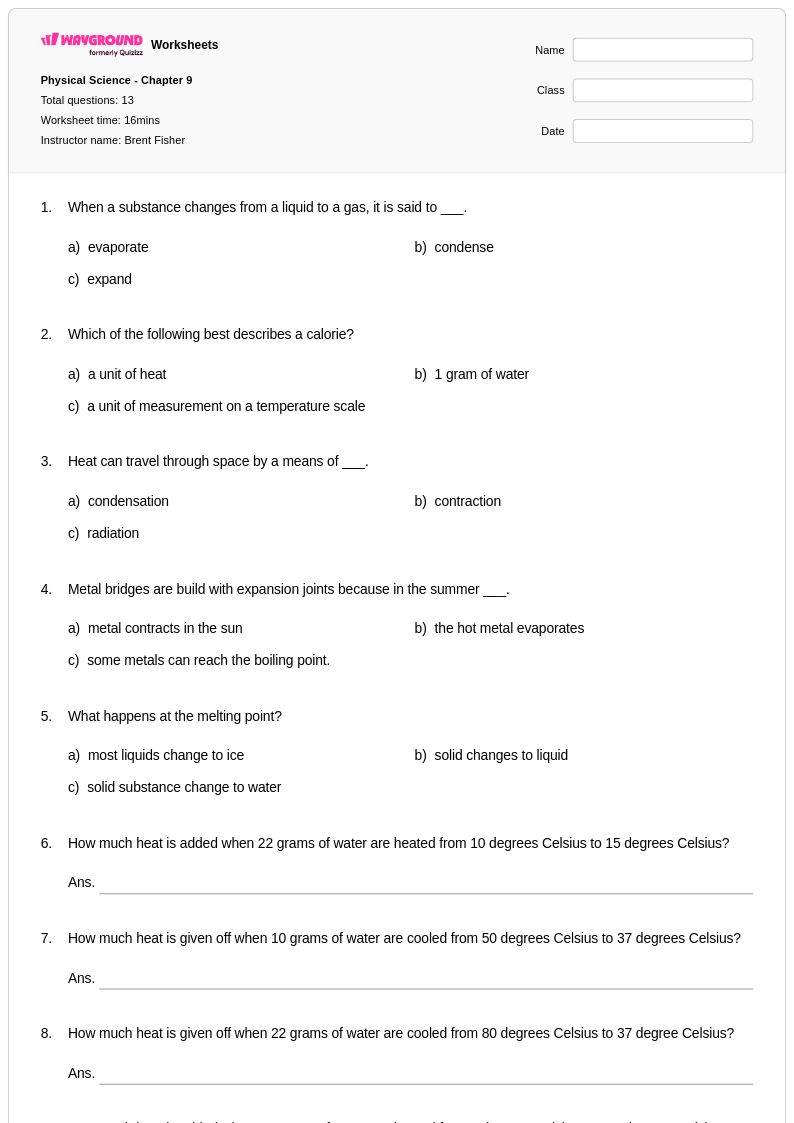
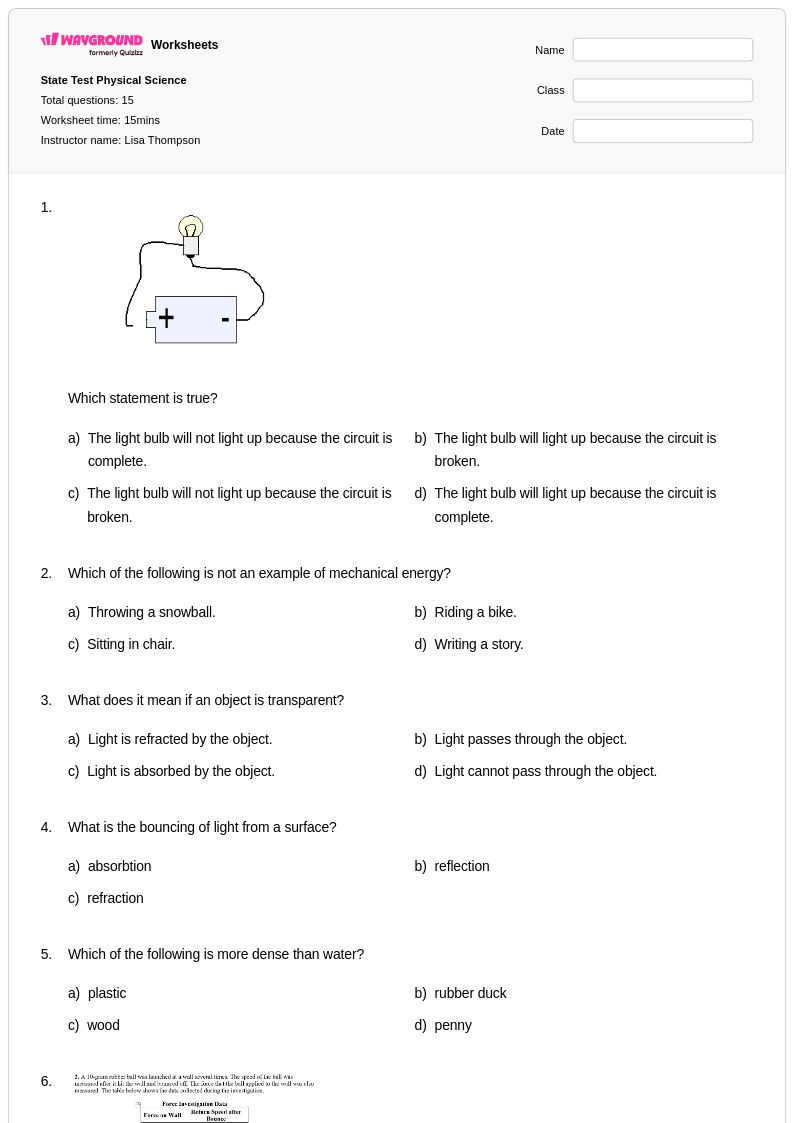
Explore Year 7 Physical Science worksheets from Wayground that help students master fundamental concepts through engaging printables, practice problems, and comprehensive answer keys available as free PDF downloads.
Explore printable Physical Science worksheets for Year 7
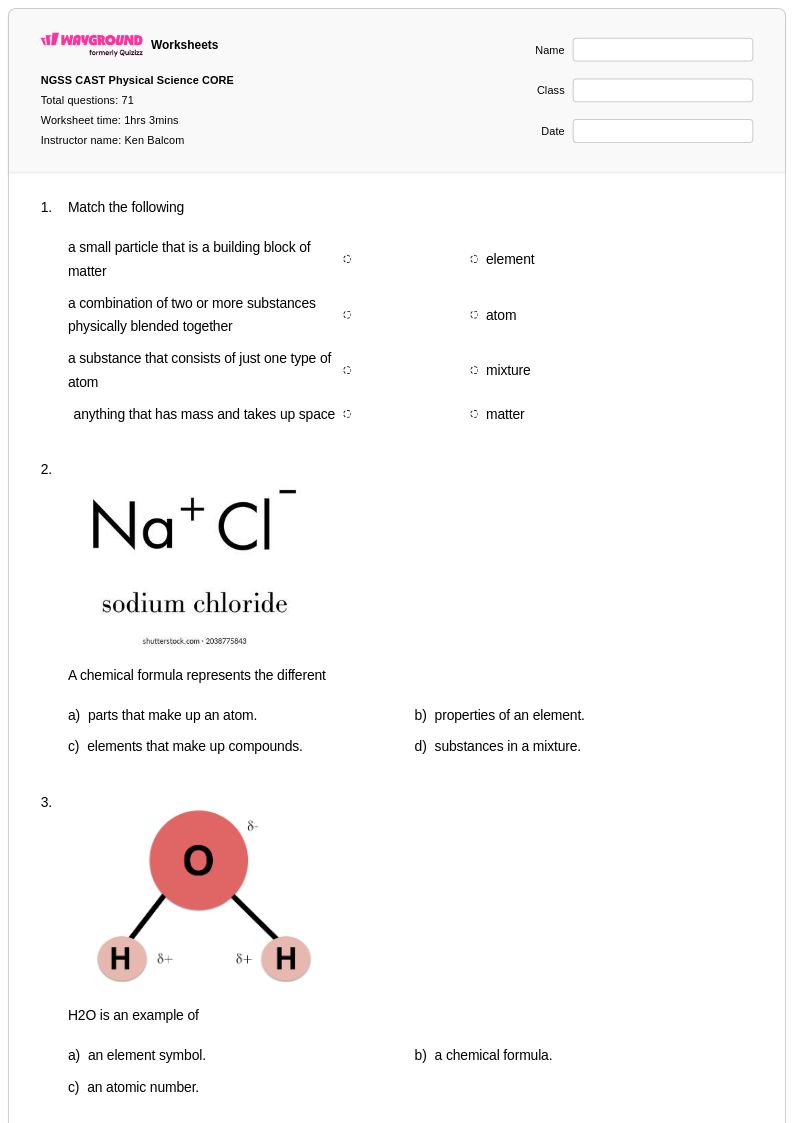
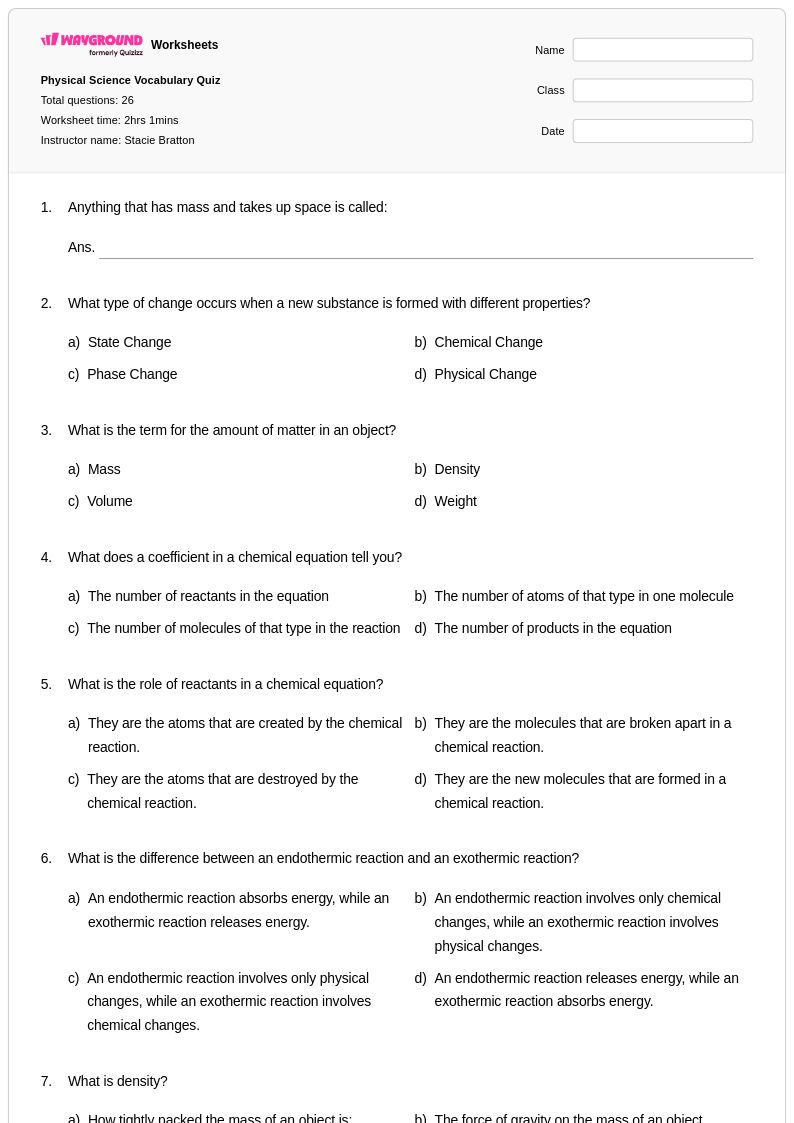
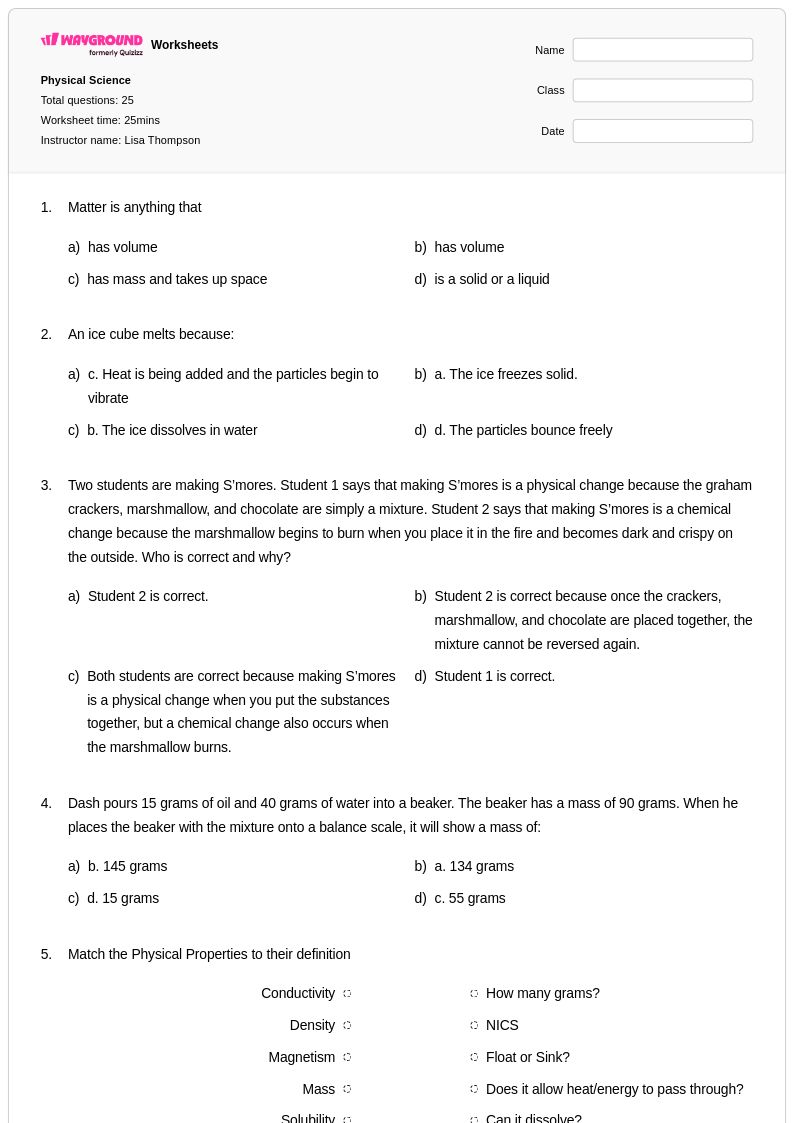
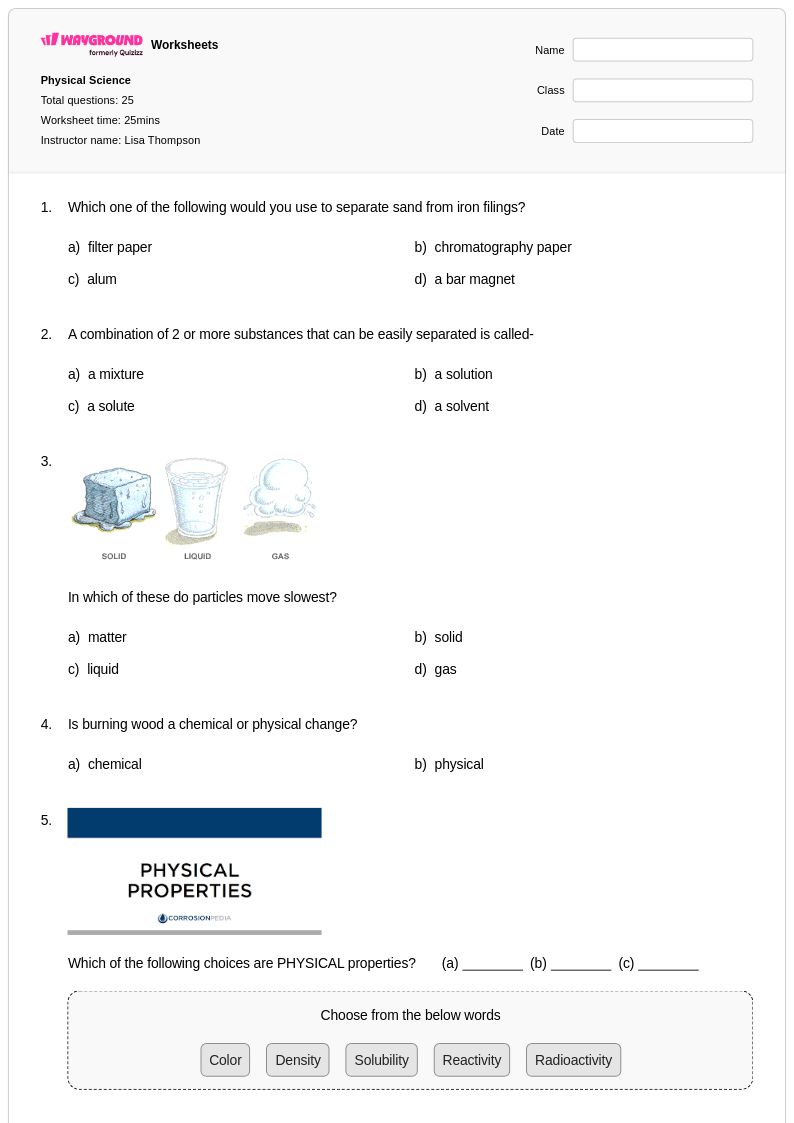
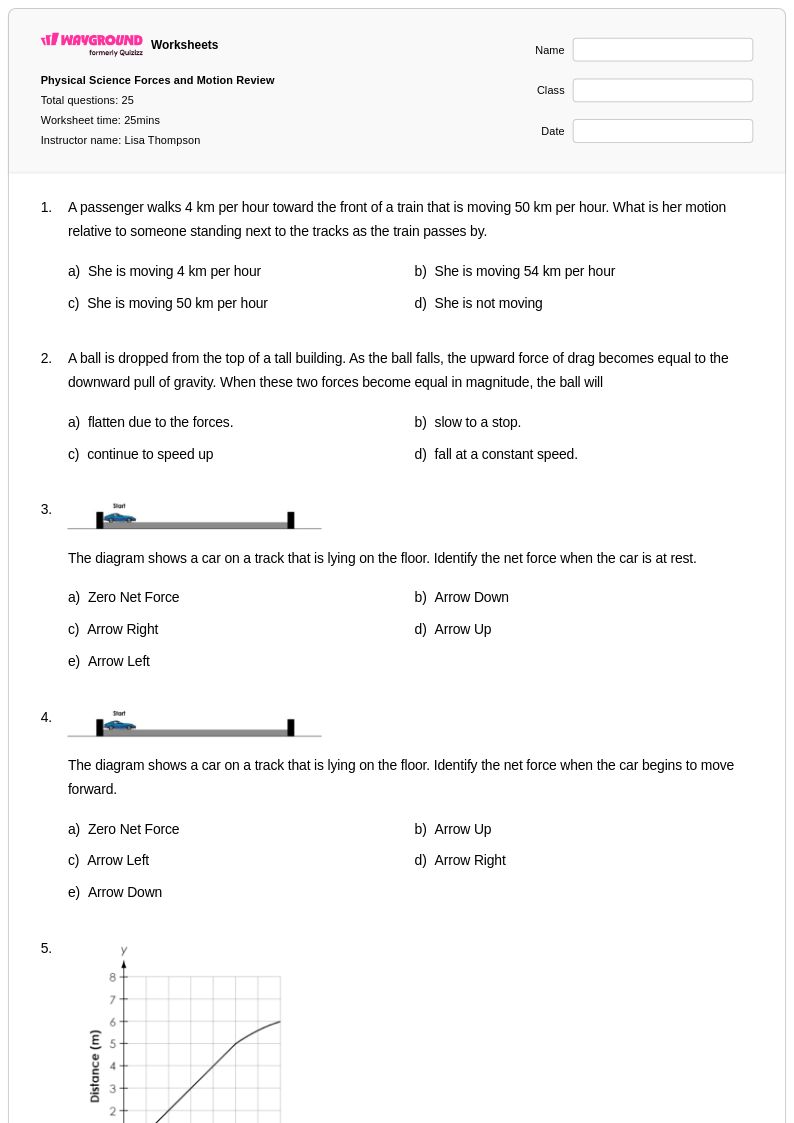
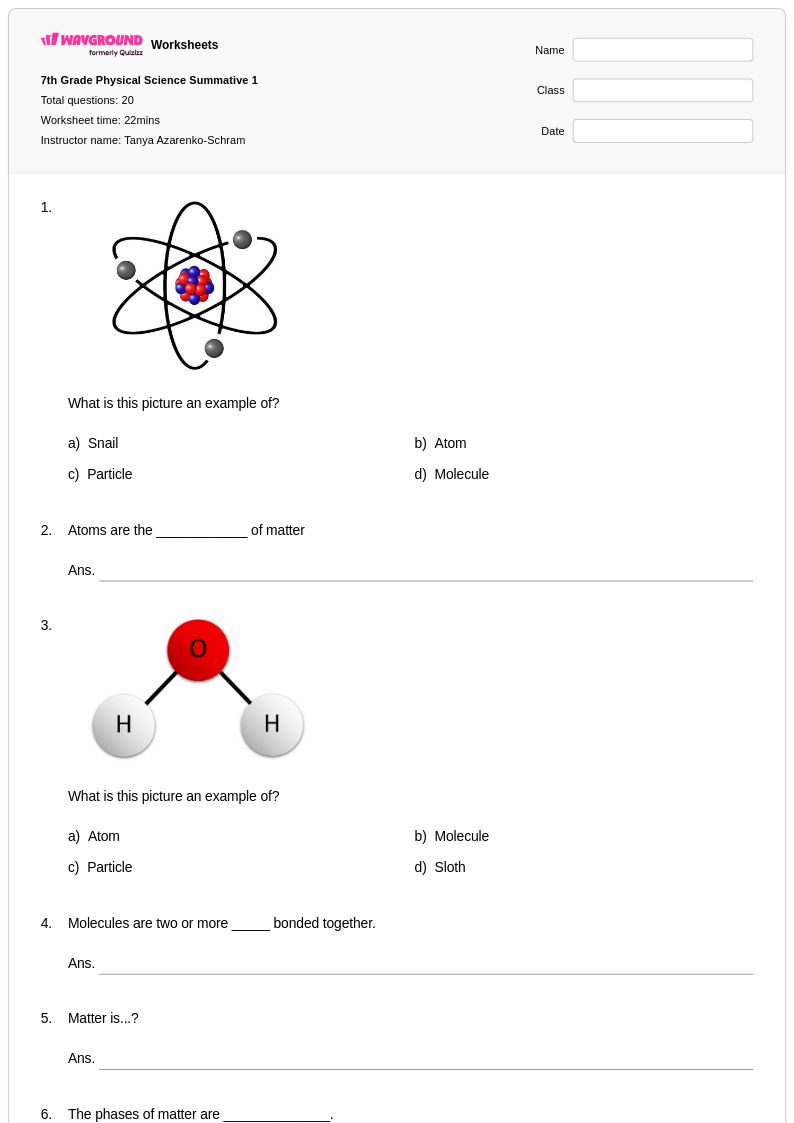
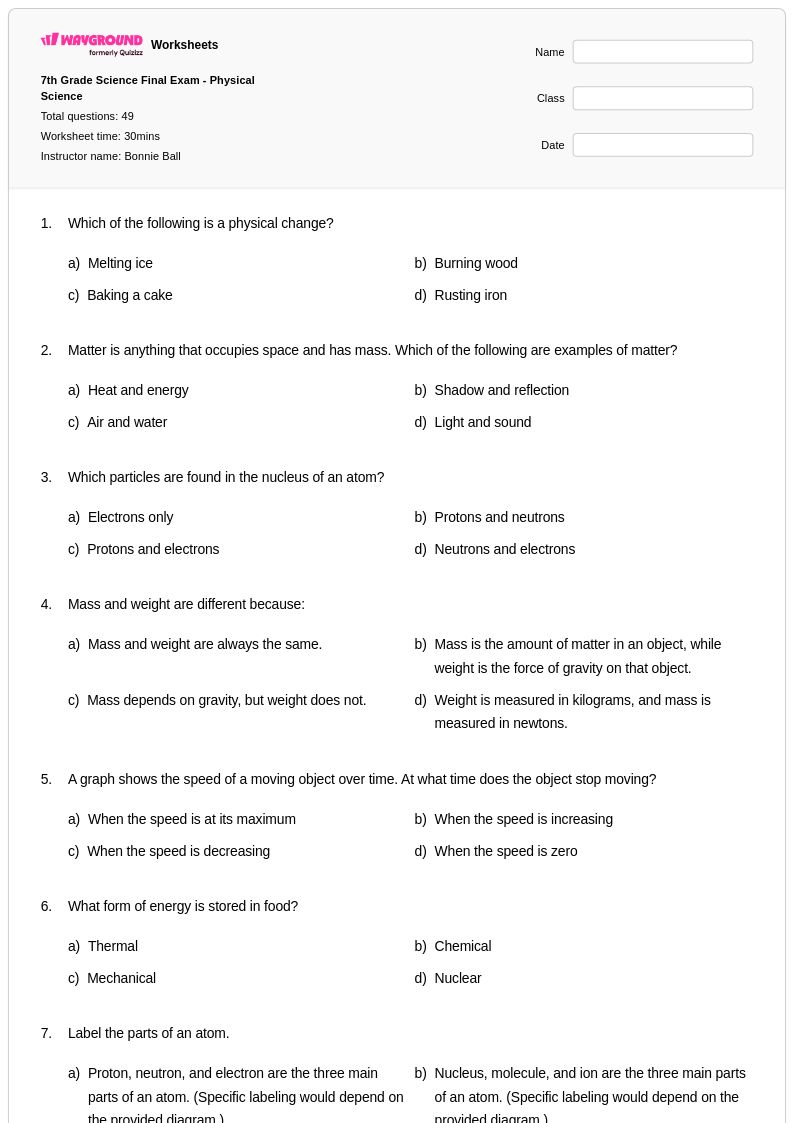
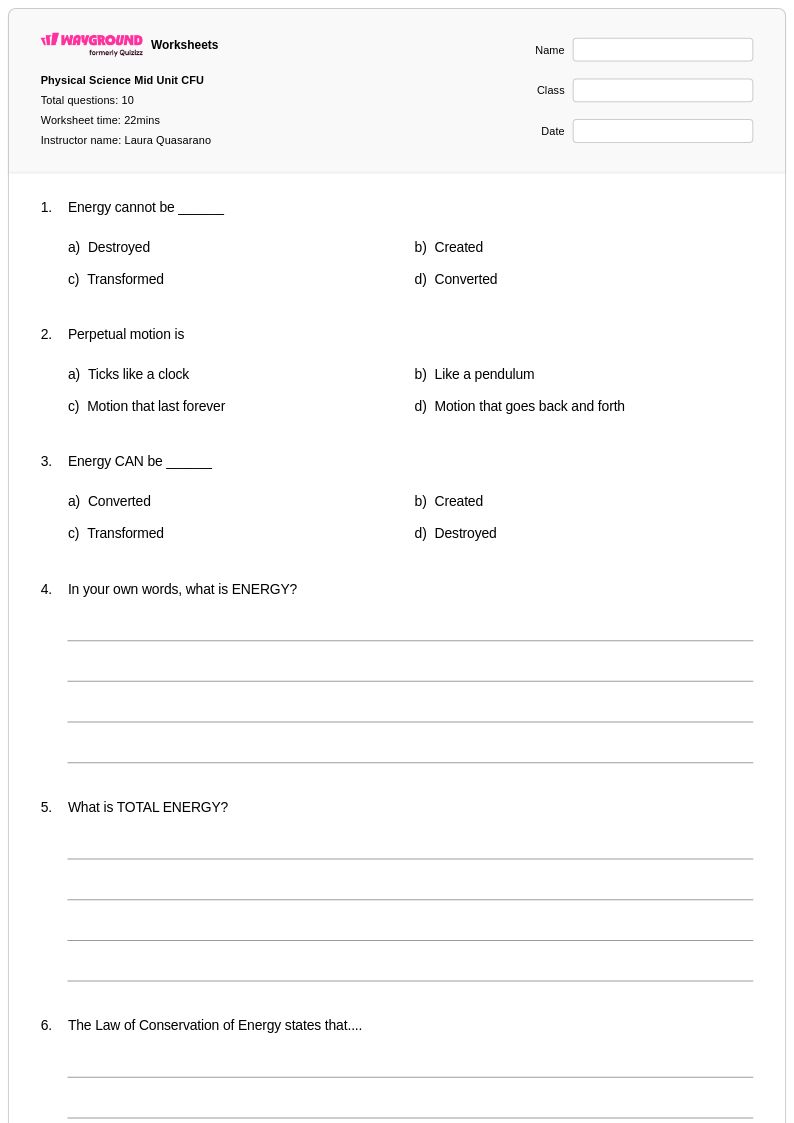
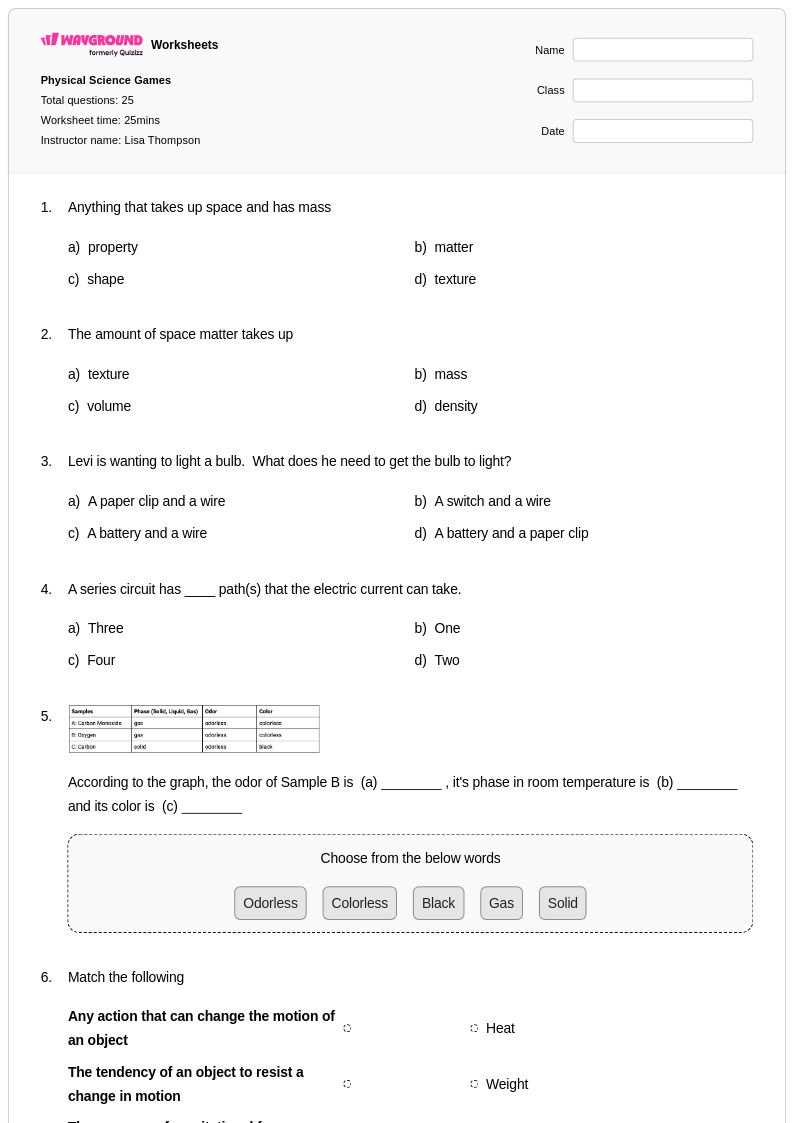
Physical Science worksheets for Year 7 students available through Wayground (formerly Quizizz) provide comprehensive coverage of fundamental concepts including matter and its properties, forces and motion, energy transformations, and wave behavior. These carefully crafted educational resources strengthen critical thinking skills as students explore atomic structure, chemical and physical changes, Newton's laws of motion, and various forms of energy transfer. Each worksheet collection includes detailed answer keys that facilitate self-assessment and instructor evaluation, while the free printable format ensures accessibility for diverse classroom environments. Students engage with practice problems that range from basic concept identification to complex problem-solving scenarios, building the analytical skills essential for advanced scientific study.
Wayground (formerly Quizizz) empowers educators with an extensive library of millions of teacher-created Physical Science resources specifically aligned with Year 7 curriculum standards and learning objectives. The platform's robust search and filtering capabilities enable teachers to quickly locate materials that match specific topics, difficulty levels, and instructional goals, while built-in differentiation tools support diverse learning needs within the classroom. These customizable worksheets are available in both printable PDF format and interactive digital versions, providing flexibility for traditional classroom instruction, remote learning, and hybrid educational models. Teachers utilize these resources for comprehensive lesson planning, targeted remediation of challenging concepts, enrichment activities for advanced learners, and ongoing skill practice that reinforces mastery of Physical Science fundamentals throughout the academic year.
FAQs
How do I teach physical science concepts like matter, energy, and forces to students?
Effective physical science instruction builds conceptual understanding before moving to abstract formulas. Start with observable phenomena — density columns, energy conversions, or wave demonstrations — so students can anchor new vocabulary to real-world experience. From there, structured problem-solving practice helps students apply concepts like calculating density or analyzing forces in context. Connecting each topic to everyday examples (why objects float, how sound travels) sustains engagement and deepens retention.
What worksheets help students practice physical science skills like density, energy, and wave properties?
Worksheets that combine targeted problem sets with data interpretation exercises are most effective for physical science practice. Students benefit from practice problems that progress from basic concept reinforcement — identifying forms of energy or classifying matter — to applied scenarios like calculating density or analyzing wave properties. Including visual elements such as density column diagrams or energy conversion charts helps students bridge conceptual and quantitative understanding.
What mistakes do students commonly make when learning physical science topics like density and energy conversions?
One of the most common misconceptions in physical science is confusing mass with weight, or treating density as a measure of heaviness rather than mass-per-unit-volume. Students also frequently conflate different forms of energy, struggling to distinguish between energy transformation and energy transfer. When working with wave properties, learners often mix up amplitude and frequency, or assume that faster waves always carry more energy. Targeted practice problems that isolate these distinctions help students self-correct before misconceptions become entrenched.
How do I differentiate physical science worksheets for students at different skill levels?
Differentiation in physical science works best when the same core concept is accessible at varying levels of complexity — for example, having some students classify mixtures by observation while others calculate concentration ratios. On Wayground, teachers can apply student-level accommodations including read aloud support for students who need audio access to questions, reduced answer choices to lower cognitive load for struggling learners, and extended time settings configurable per student. These accommodations are saved and reusable across future sessions, so setup remains efficient even across diverse classrooms.
How do I use Wayground's physical science worksheets in my classroom?
Wayground's physical science worksheets are available as printable PDFs for traditional classroom use and in digital formats for technology-integrated environments, giving teachers flexibility regardless of their setup. Teachers can assign worksheets as independent practice, group work, or homework, and can host them as a quiz directly on Wayground for real-time digital assessment. Each worksheet includes a complete answer key, making them equally practical for self-paced student study or teacher-led instruction.
How do I assess whether students understand physical science concepts like changes in matter or forces and interactions?
Effective formative assessment in physical science looks beyond recall — tasks that ask students to predict outcomes (what happens to density when volume changes?) or explain cause-and-effect relationships (why does a balloon sink in cold air?) reveal conceptual depth more reliably than definitions alone. Common error patterns worth monitoring include students applying physical change vocabulary to chemical change scenarios, or failing to account for all forces acting on an object. Short exit-ticket style problem sets after each subtopic help teachers identify gaps before moving to the next concept.