
Recommended Topics for you
- Acids, Bases, and Salts
- Alcohol
- Analyzing Substances
- Anions
- Atom Structure
- Atomic Mass
- Atomic Mass Number
- Atomic Models
- Atoms and Molecules
- Building Atoms
- Cations
- Chemical Bonds
- Chemical Change
- Chemical Elements
- Chemical Formulas
- Chemical Measurements
- Chemical Names and Formulas
- Chemical Naming
- Chemical Property
- Chemistry Calculations
- Chemistry Lab Safety
- Classification and Changes
- Classification of Matter
- Compounds and Mixtures
- Concentrations
- Conservation of Mass
- Conservation of Matter
- Conversion Factors in Chemistry
- Counting Atoms in Compounds
- Diffusion
- Dilutions
- Dissolving
- Double Displacement Reaction
- Electrolytes
- Electron Arrangements
- Electron Dot Diagram
- Electrons
- Element Symbols
- Elements, Compounds, and Mixtures
- Flame Test
- Forming Ions
- Gas Properties
- Heat Transfer and Thermal Equilibrium
- History of Atomic Models
- History of Chemistry
- Homogeneous and Heterogeneous Mixtures
- Hydrocarbons
- Identifying Reactions
- Ion Formation
- Ionic and Covalent Compounds
- Ionic Bonding
- Ionic Charges
- Ionic Compounds
- Ions
- Ions and Atoms
- Ions and Formula Units
- Ions and Isotopes
- Lab Equipment
- Laboratory Equipment
- Law of Conservation of Mass
- Lewis Dot Diagram
- Mass and Moles
- Metalloids
- Metals
- Mixtures and Pure Substances
- Models of Atoms
- Mole Concept
- Molecule
- Naming Binary Ionic Compounds
- Naming Compounds
- Naming Ionic and Covalent Bonds
- Naming Ionic Compounds
- Neutralisation Reaction
- Nonmetals
- Periodic Table
- Periodic Table Organization
- Periodic Table Trends
- PH Scale
- Phase Change
- Physical and Chemical Changes
- Physical and Chemical Properties and Changes
- Physical Properties
- Physical Property
- Properties of Matter
- Properties of Water
- Relative Mass
- Rutherford Gold Foil Experiment
- Salts
- Separation Methods
- Separation Techniques
- Single Displacement Reaction
- Solubility
- Solutions and Mixtures
- States of Matter
- Timeline
- Valence Electrons
- Word Equations
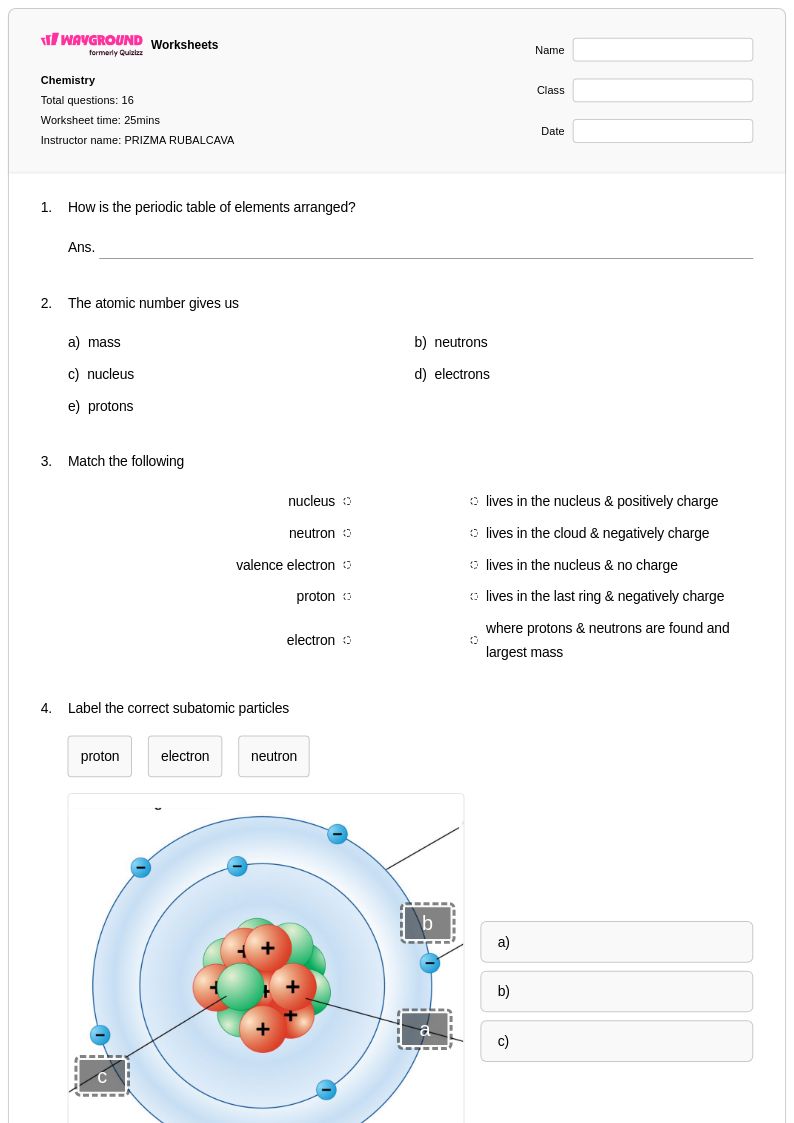
16 Q
6th - 8th
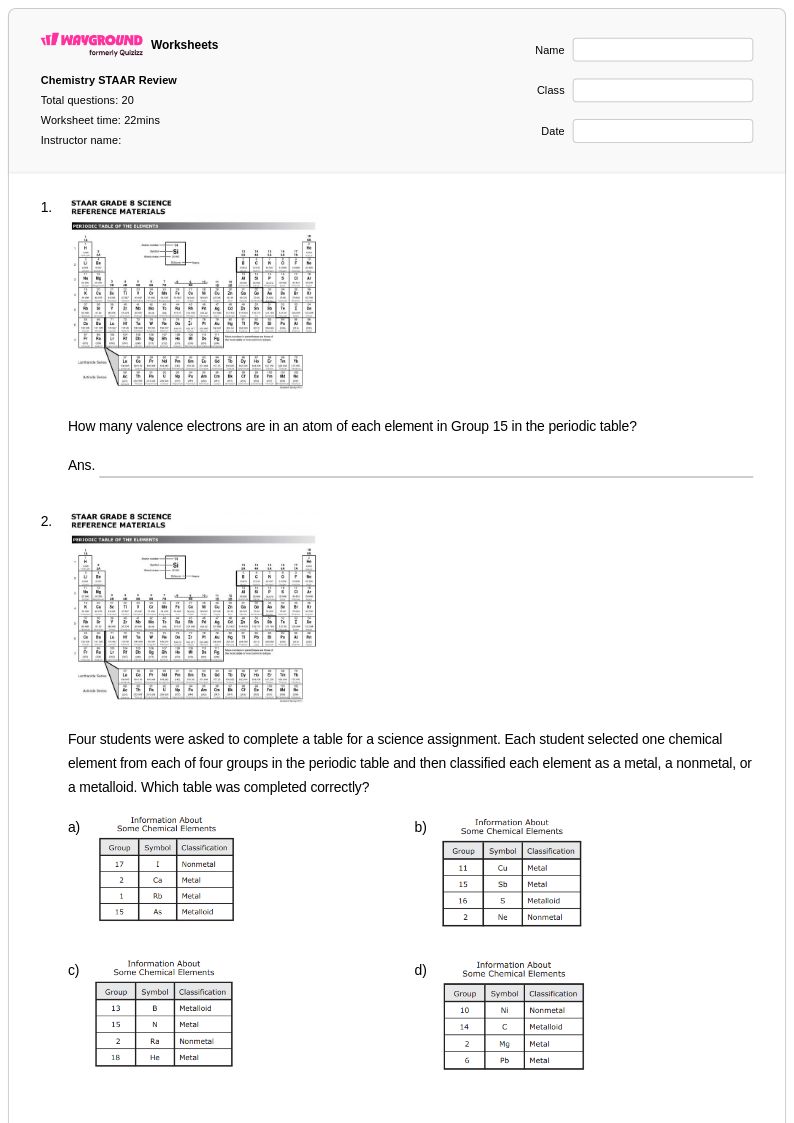
20 Q
7th
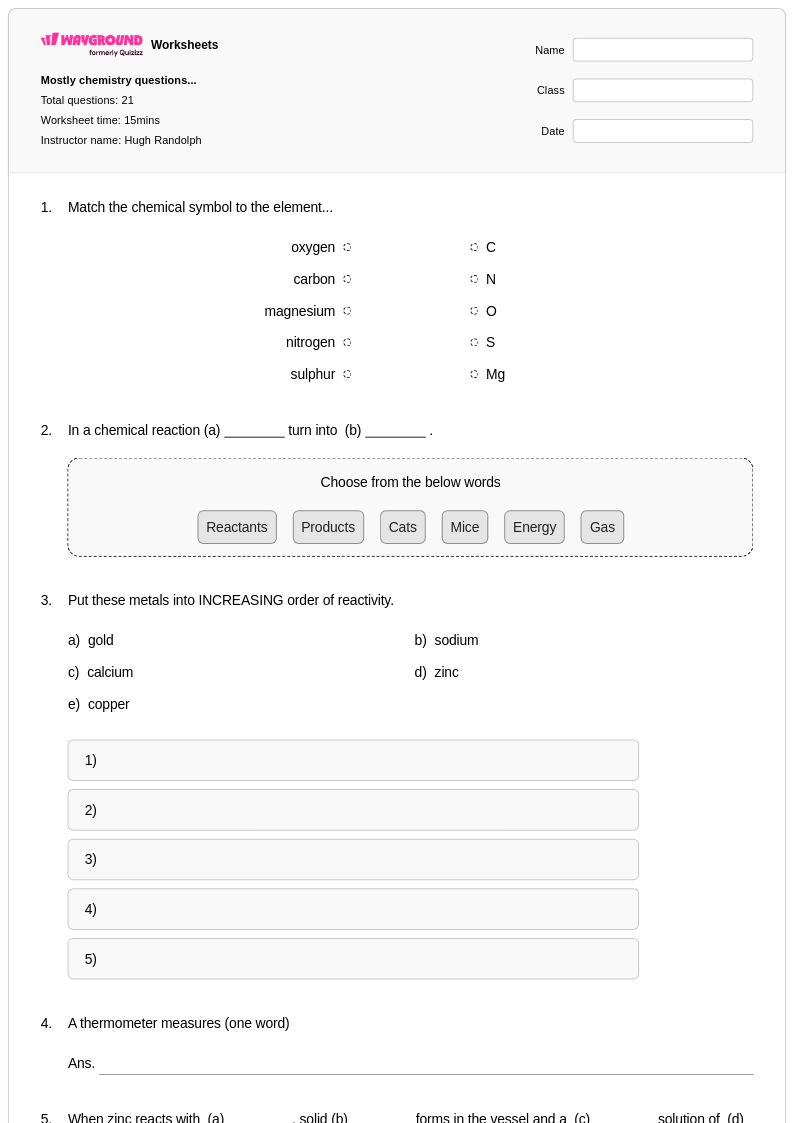
21 Q
7th
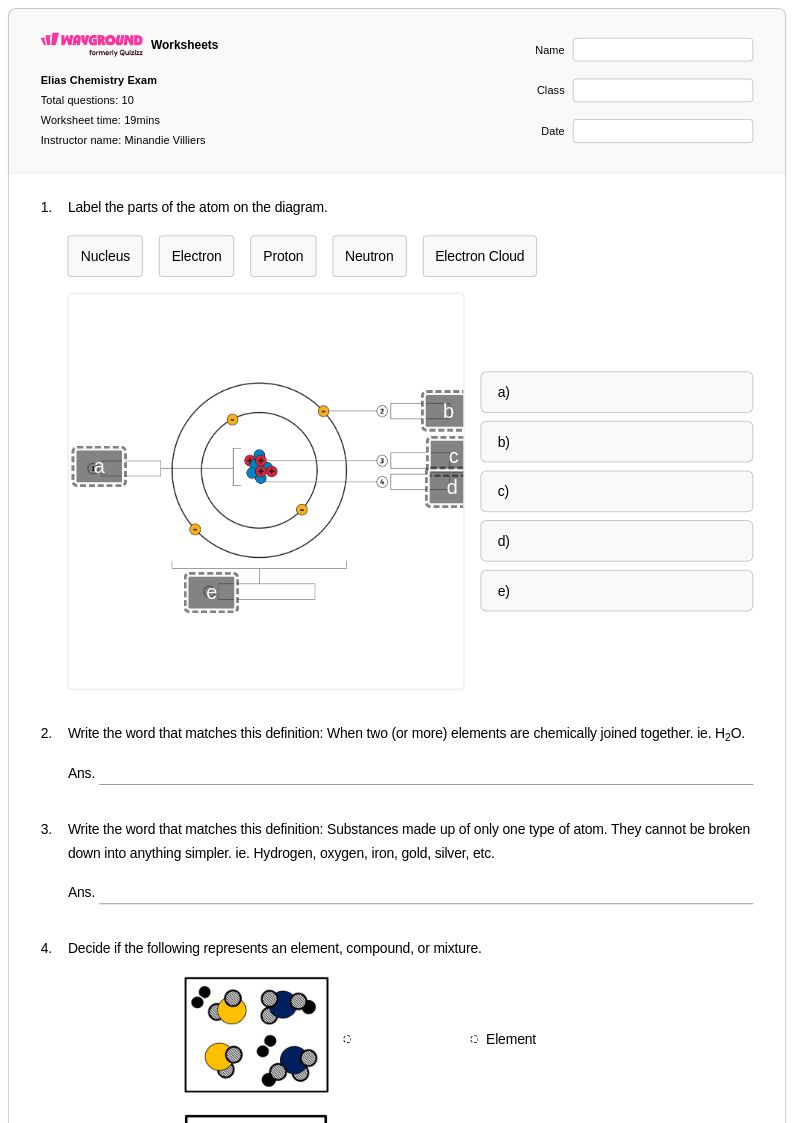
10 Q
7th - 12th
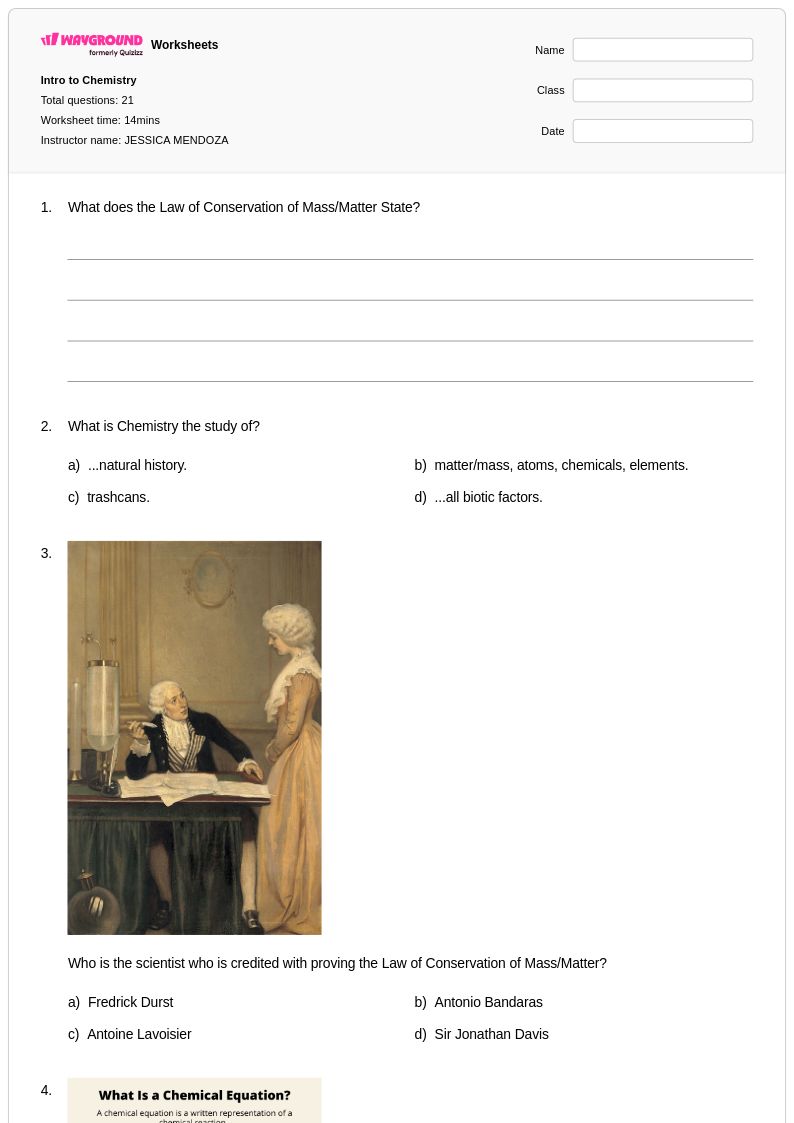
21 Q
7th
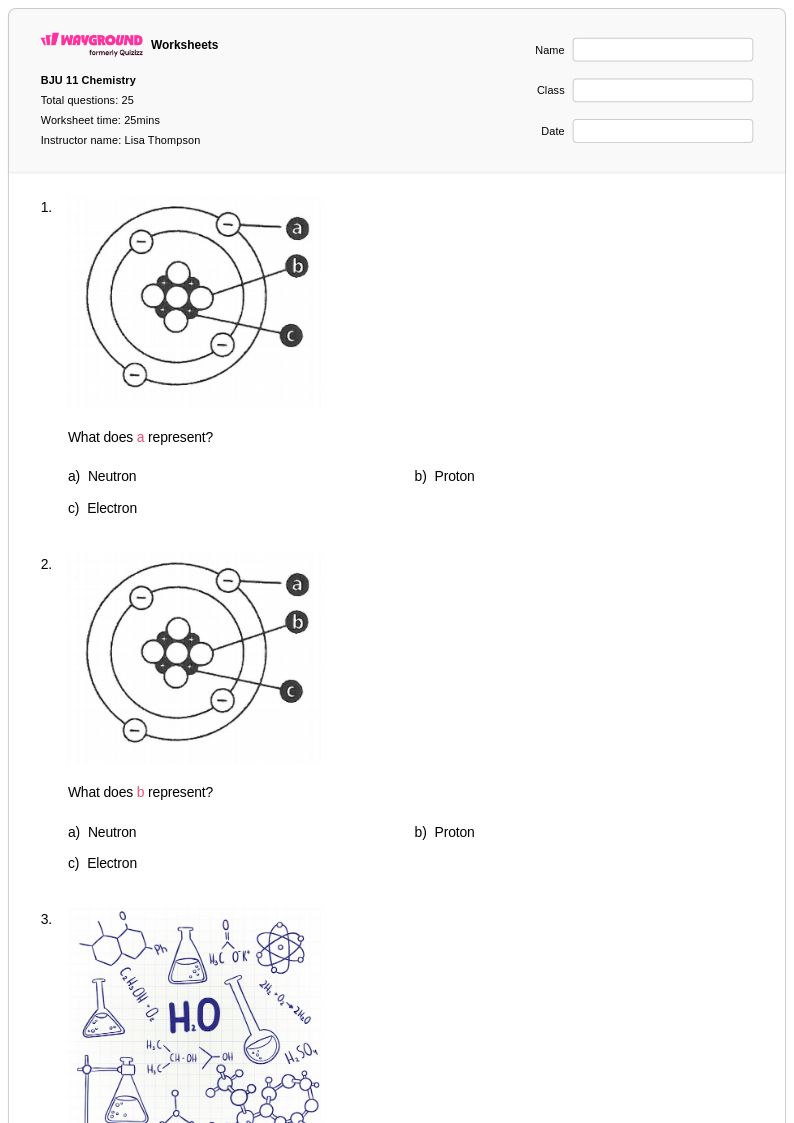
25 Q
6th - Uni
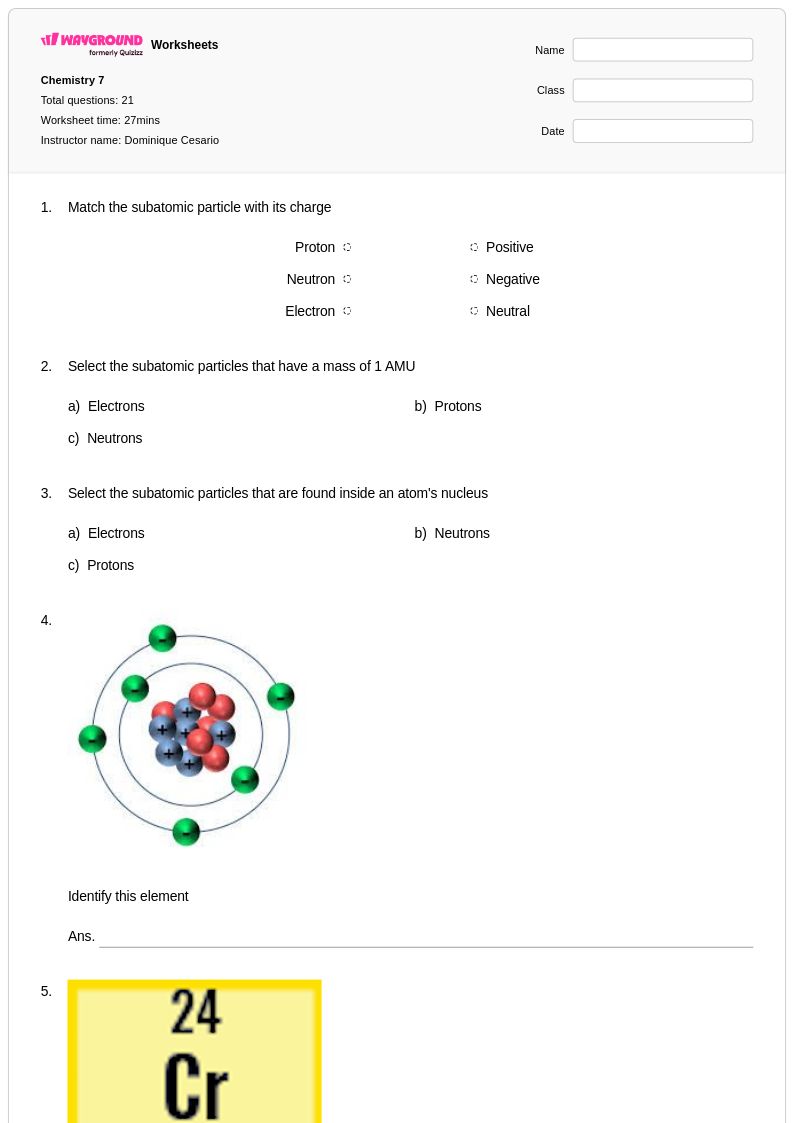
21 Q
6th - 8th
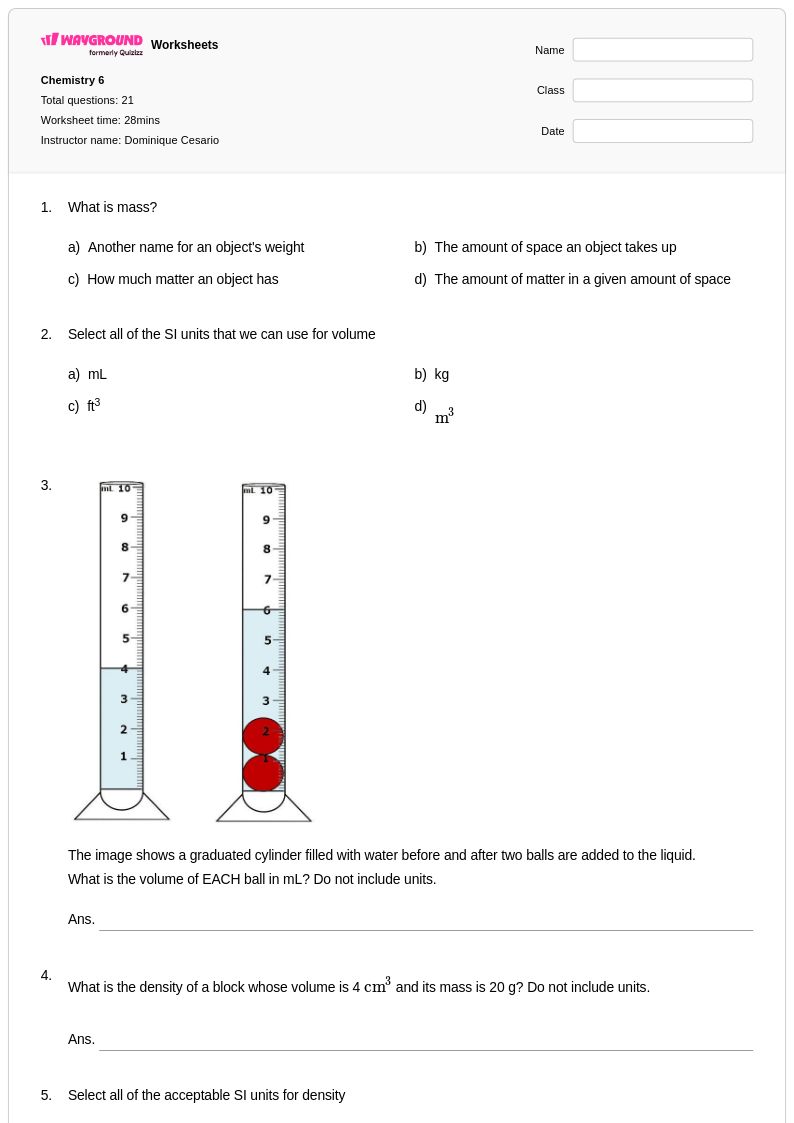
21 Q
6th - 8th
21 Q
6th - 8th
40 Q
7th - 8th
23 Q
7th
20 Q
7th - Uni
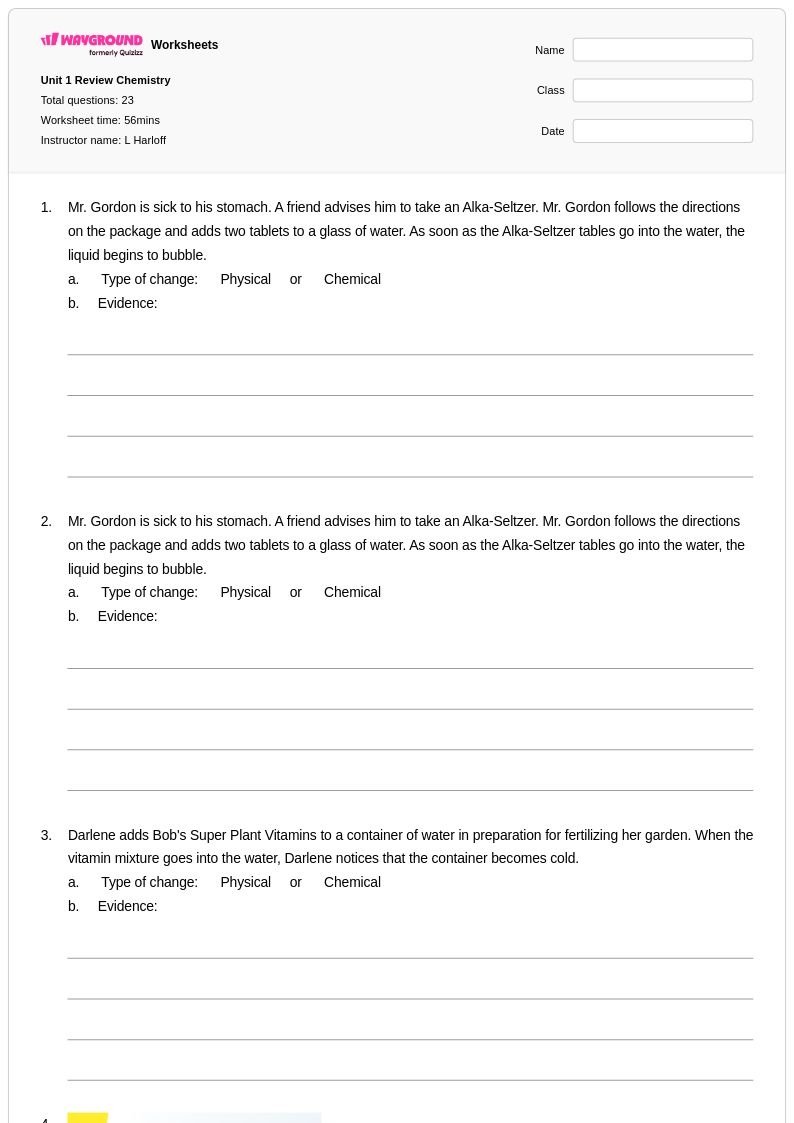
23 Q
6th - Uni
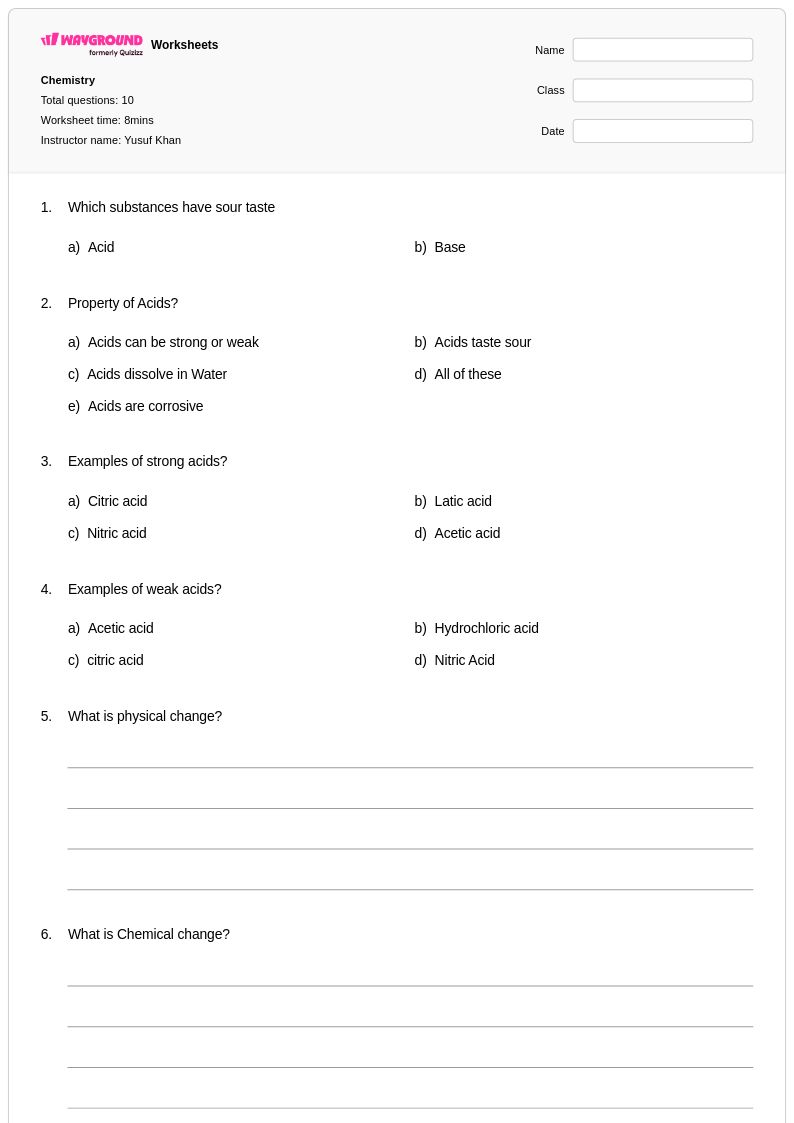
10 Q
7th
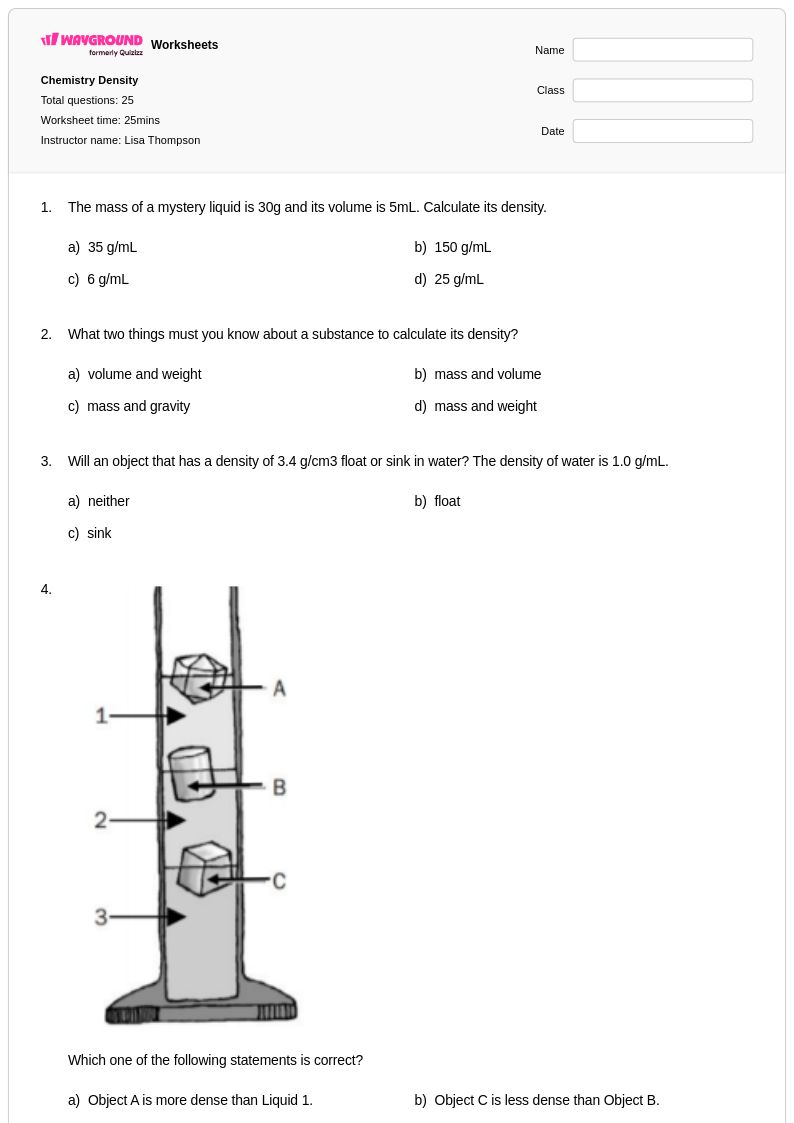
25 Q
6th - Uni
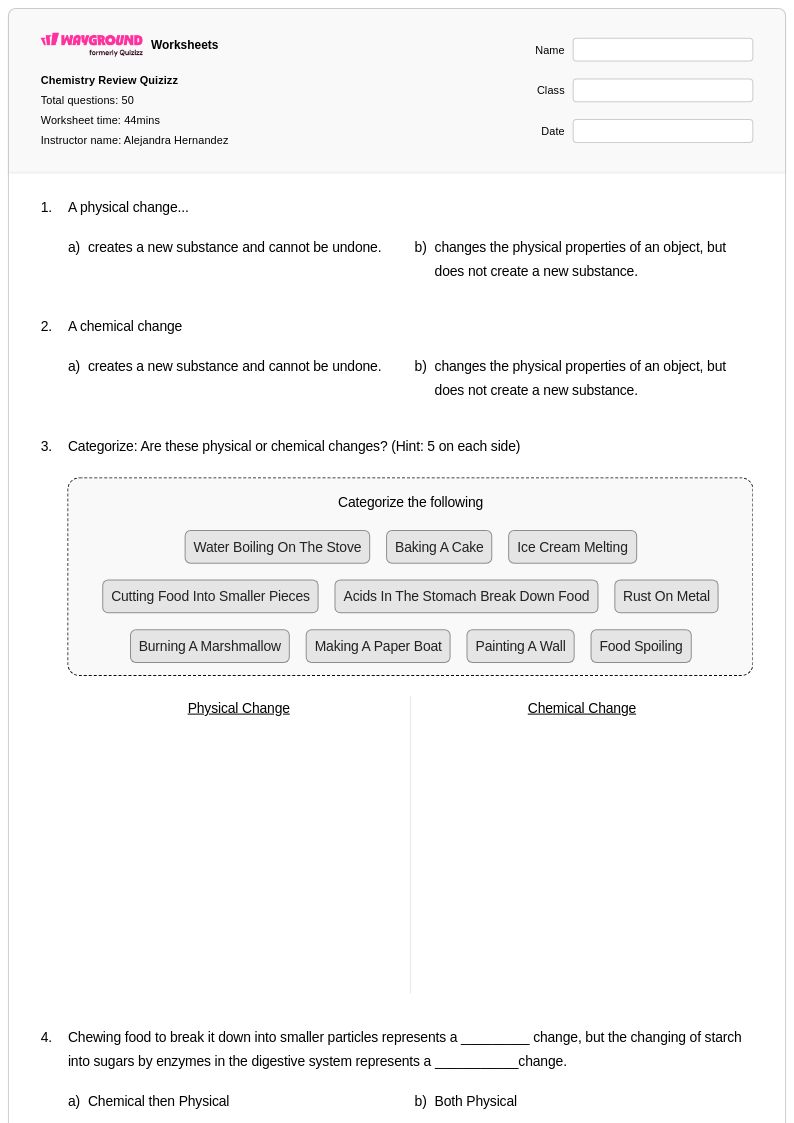
50 Q
6th - 8th
22 Q
6th - 8th
34 Q
6th - Uni
10 Q
7th
20 Q
7th

20 Q
6th - 8th
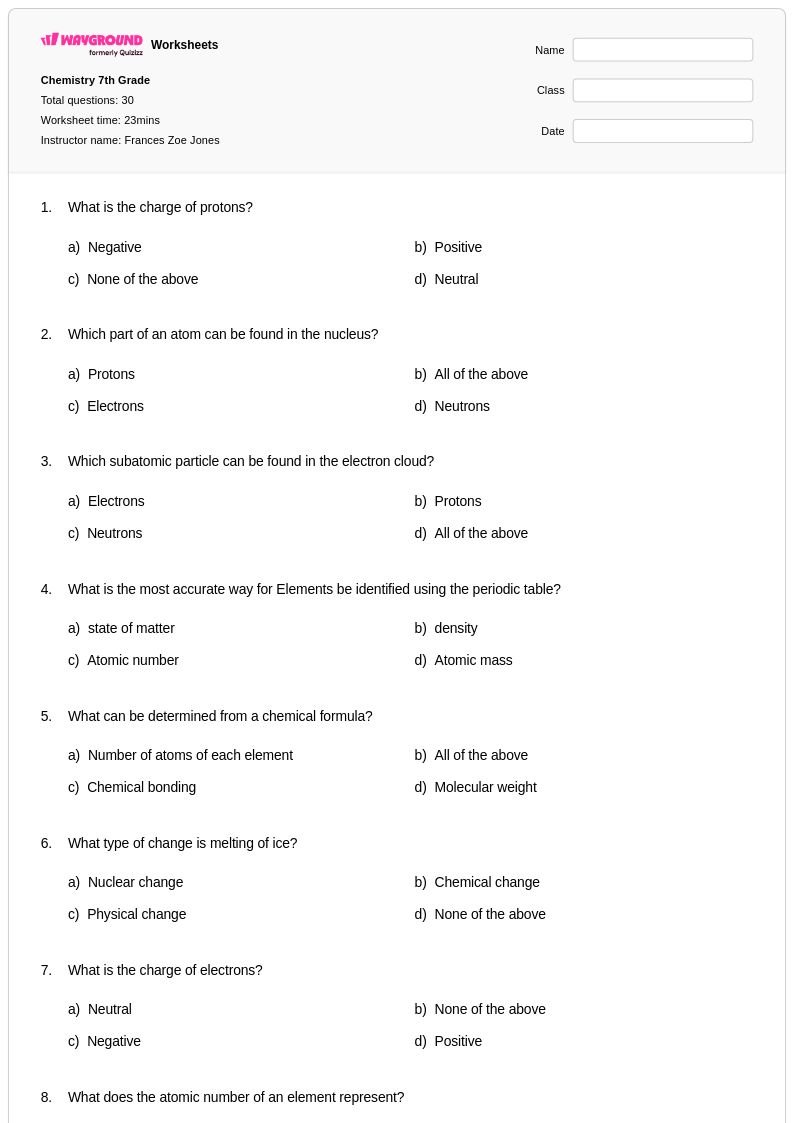
30 Q
7th
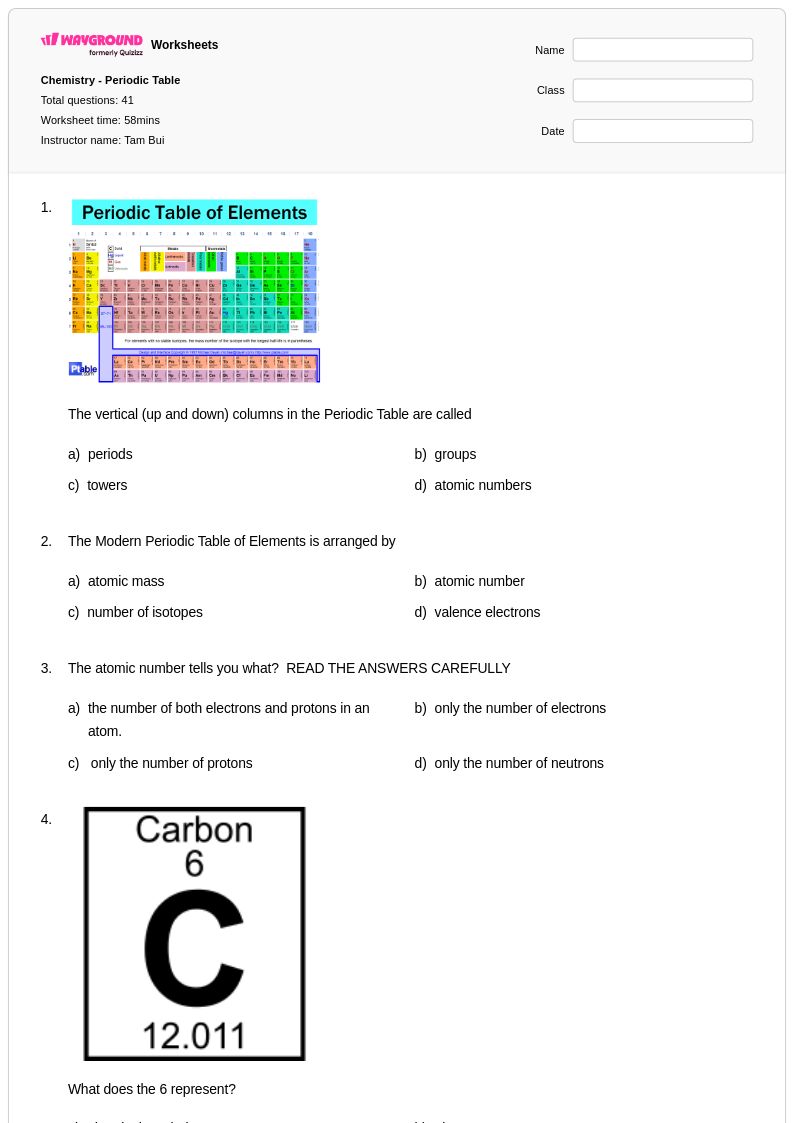
41 Q
6th - 8th
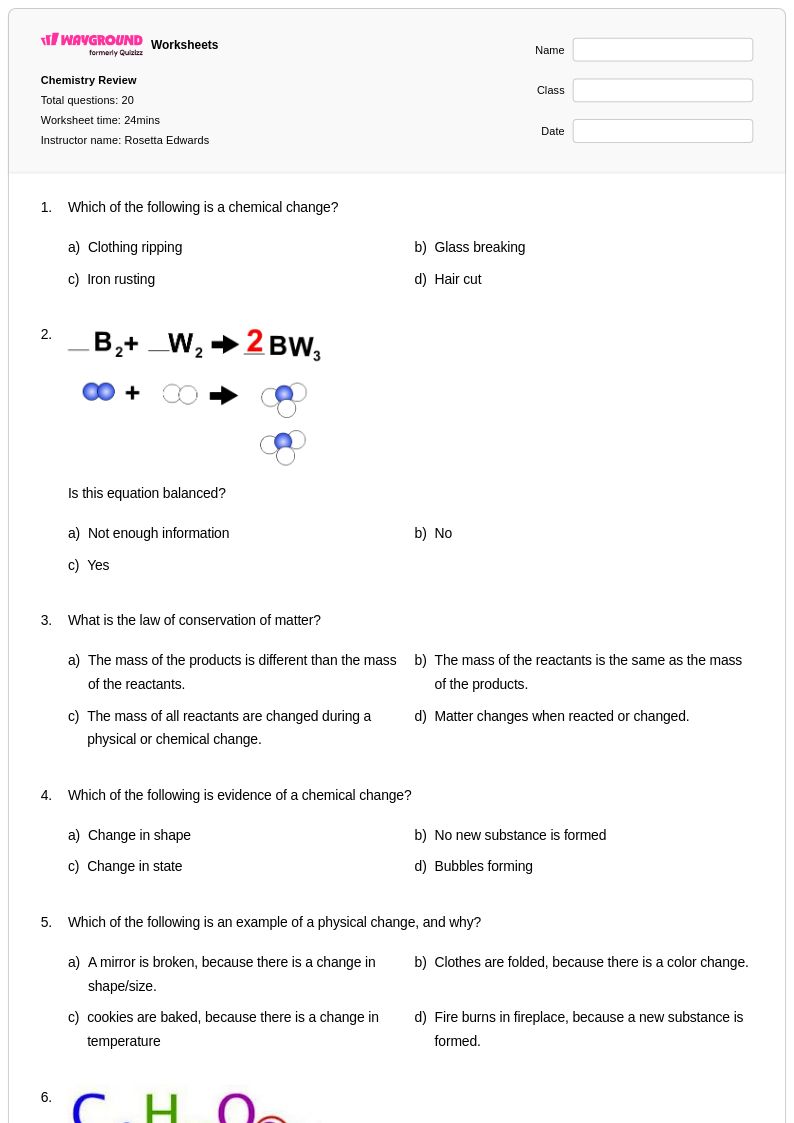
20 Q
7th
Explore Chemistry Worksheets by Grades
Explore Chemistry Worksheets for year 7 by Topic
- Acids, Bases, and Salts
- Alcohol
- Analyzing Substances
- Anions
- Atom Structure
- Atomic Mass
- Atomic Mass Number
- Atomic Models
- Atoms and Molecules
- Building Atoms
- Cations
- Chemical Bonds
- Chemical Change
- Chemical Elements
- Chemical Formulas
- Chemical Measurements
- Chemical Names and Formulas
- Chemical Naming
- Chemical Property
- Chemistry Calculations
Explore Other Subject Worksheets for year 7
Explore printable Chemistry worksheets for Year 7
Year 7 chemistry worksheets available through Wayground (formerly Quizizz) provide comprehensive coverage of foundational chemical concepts that seventh-grade students must master to build scientific literacy. These expertly designed resources focus on essential topics including atomic structure, the periodic table, chemical properties and changes, mixtures and solutions, and basic chemical reactions. Each worksheet collection strengthens critical thinking skills through hands-on practice problems that require students to analyze, classify, and predict chemical behaviors. Teachers can access complete answer keys alongside each printable resource, ensuring efficient grading and immediate feedback opportunities. The free chemistry worksheets serve multiple pedagogical purposes, from introducing new concepts to reinforcing previously learned material, while pdf formats guarantee consistent formatting across different devices and printing systems.
Wayground's extensive library contains millions of teacher-created chemistry resources that support diverse classroom needs through sophisticated search and filtering capabilities. Educators can quickly locate grade 7 chemistry worksheets aligned with state and national science standards, then customize content difficulty and scope to match individual student requirements. The platform's differentiation tools enable teachers to modify existing worksheets or combine multiple resources to create targeted practice sessions for remediation or enrichment purposes. Both printable and digital formats accommodate various learning environments, whether students work independently at home or collaboratively in classroom settings. This flexibility streamlines lesson planning while providing teachers with reliable assessment tools that accurately measure student understanding of fundamental chemistry principles and support continued skill development throughout the academic year.
FAQs
How do I teach chemistry concepts effectively in a high school classroom?
What exercises help students practice balancing chemical equations?
What mistakes do students commonly make in stoichiometry?
What are common misconceptions students have about acids and bases?
How do I use Wayground's chemistry worksheets in my classroom?
How can I differentiate chemistry worksheets for students with different learning needs?
How do I help students understand the periodic table and periodic trends?