Free Printable Homogeneous and Heterogeneous Mixtures Worksheets for Year 7
Explore Wayground's free Year 7 homogeneous and heterogeneous mixtures worksheets with printable PDFs, practice problems, and answer keys to help students master identifying and classifying different types of chemical mixtures.
Explore printable Homogeneous and Heterogeneous Mixtures worksheets for Year 7
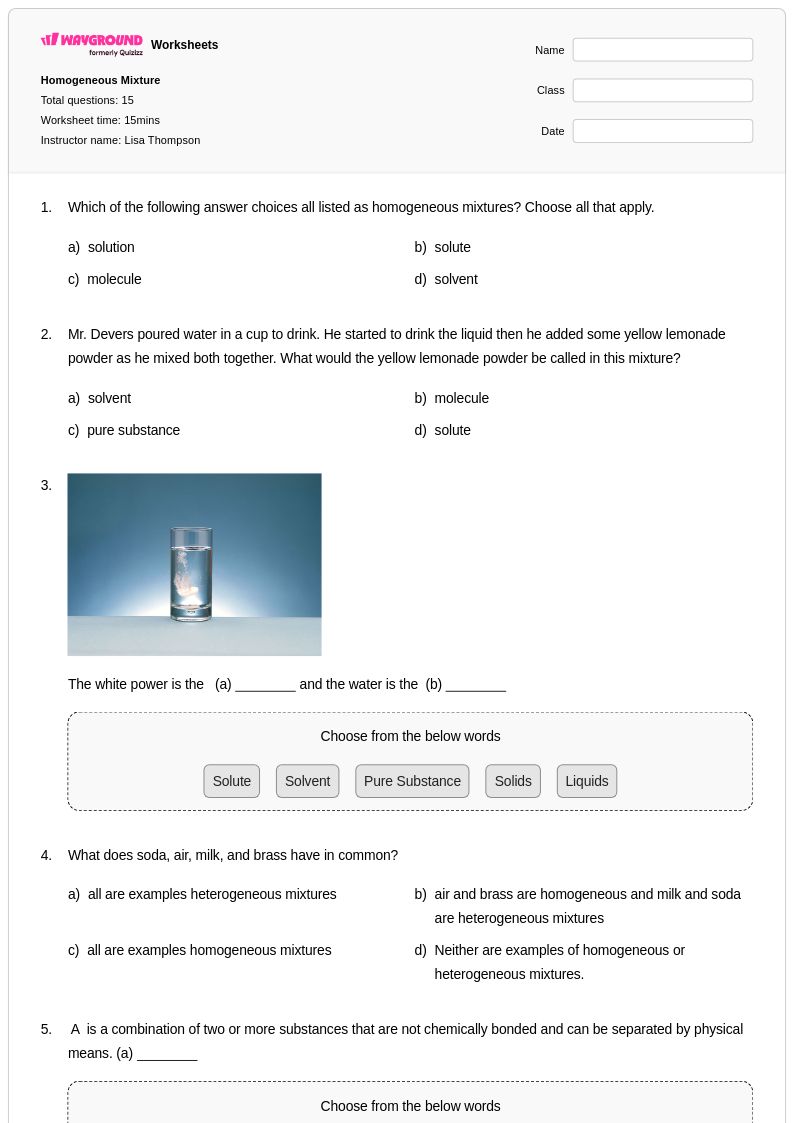
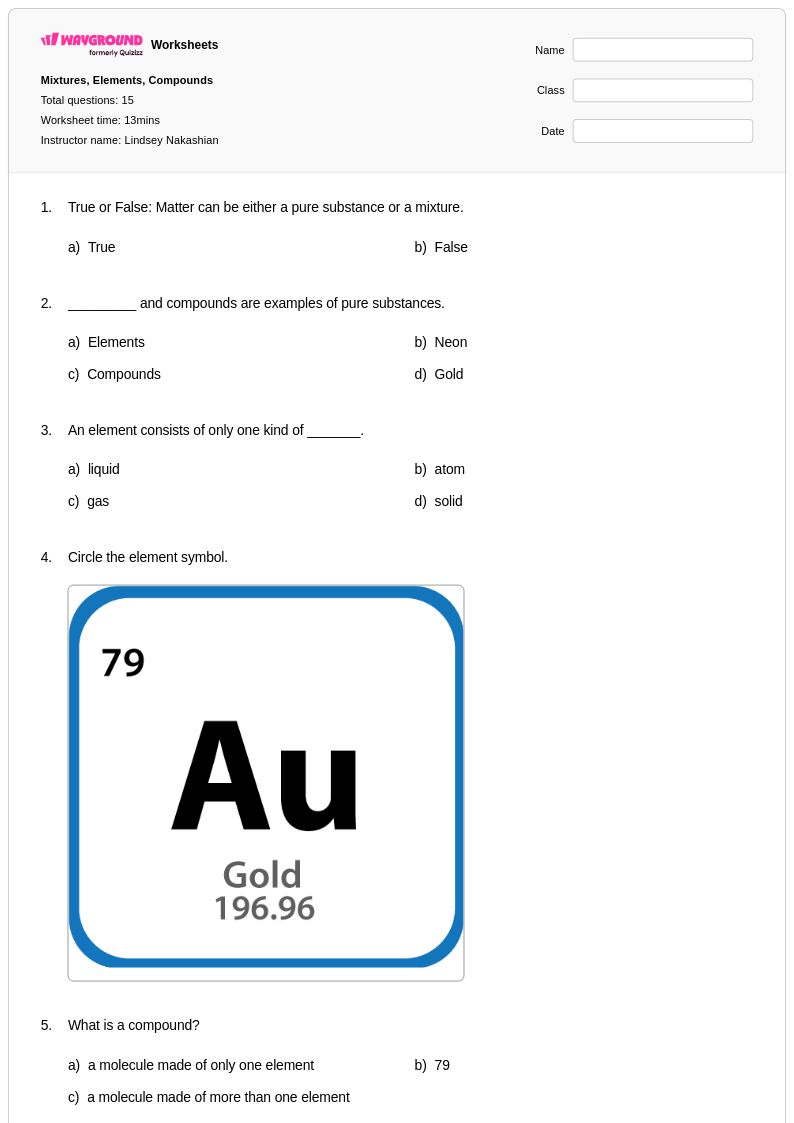
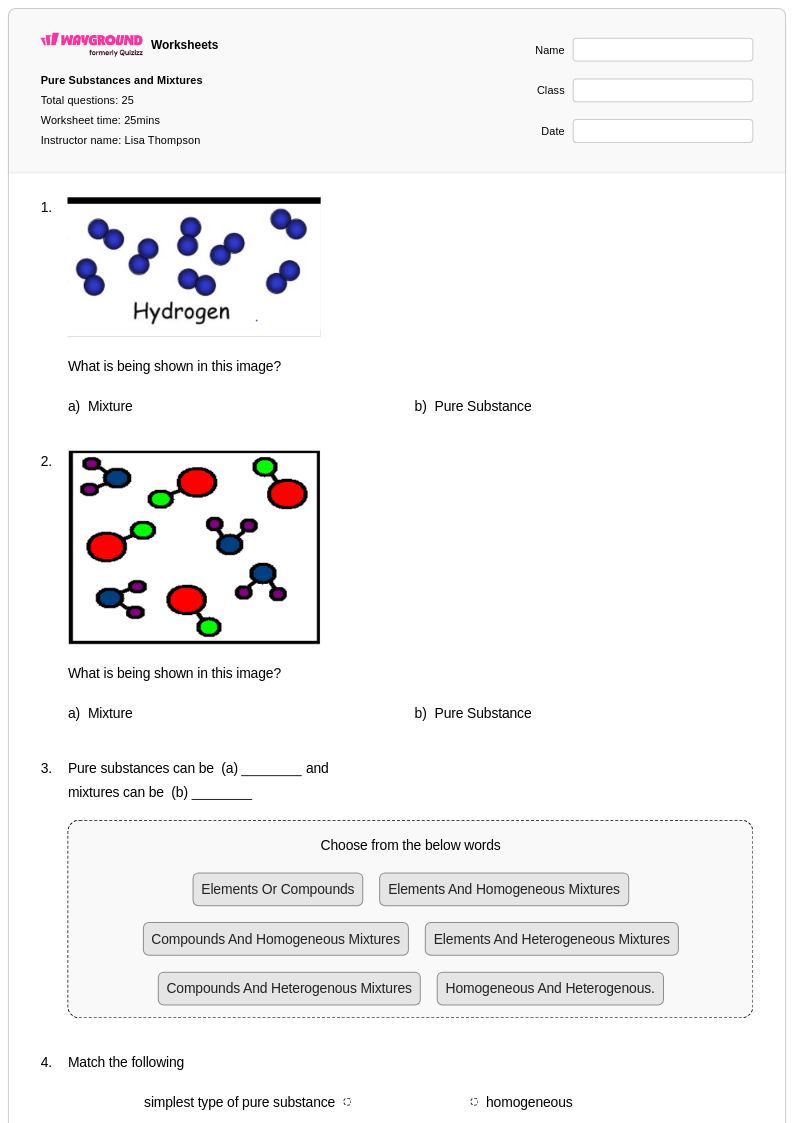
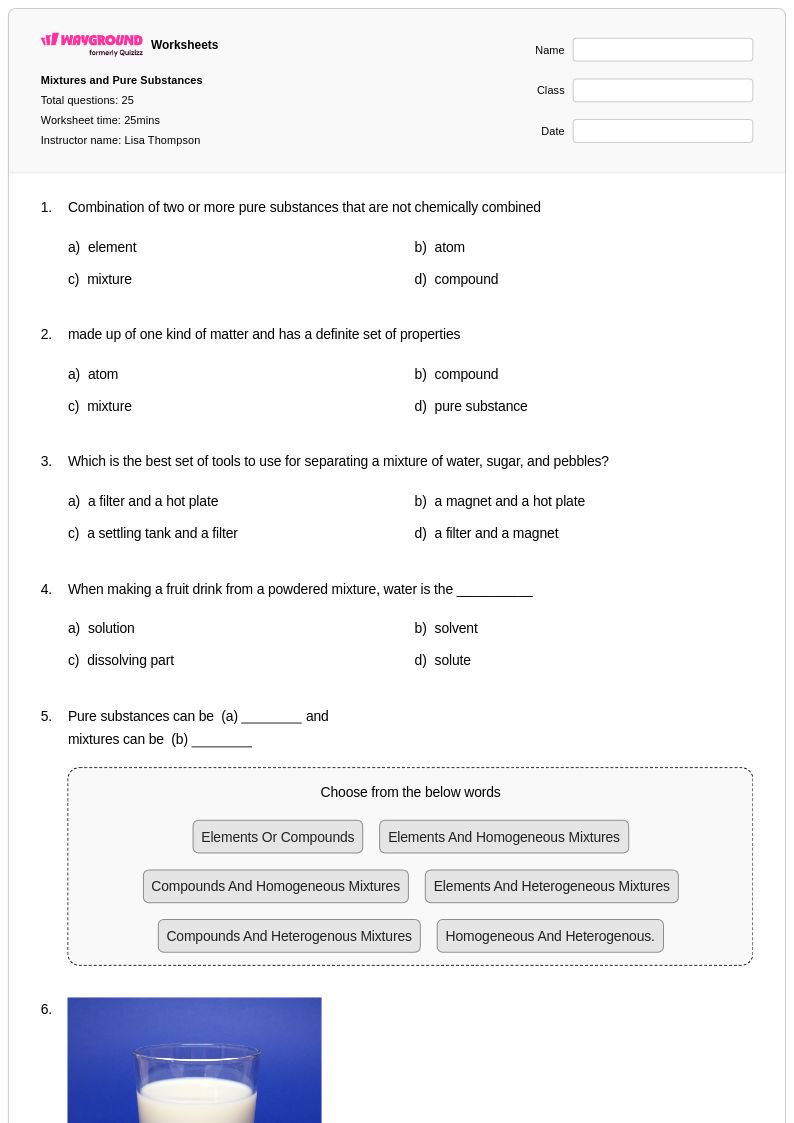
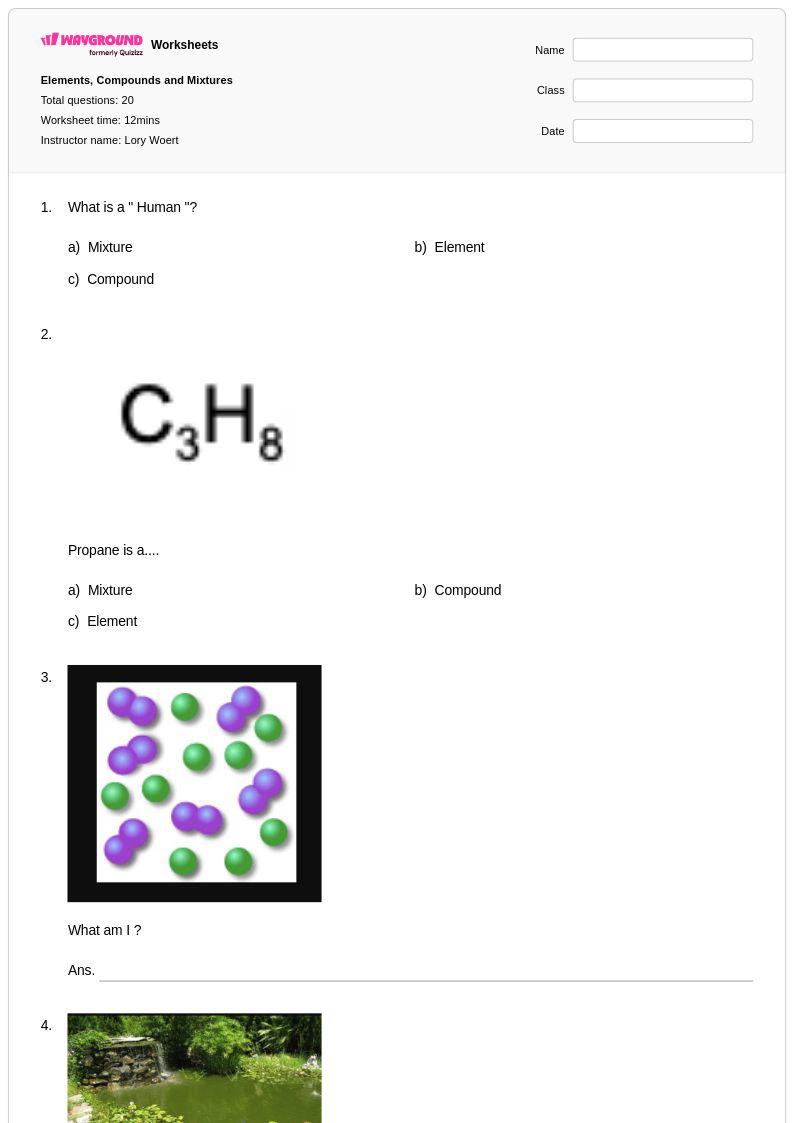
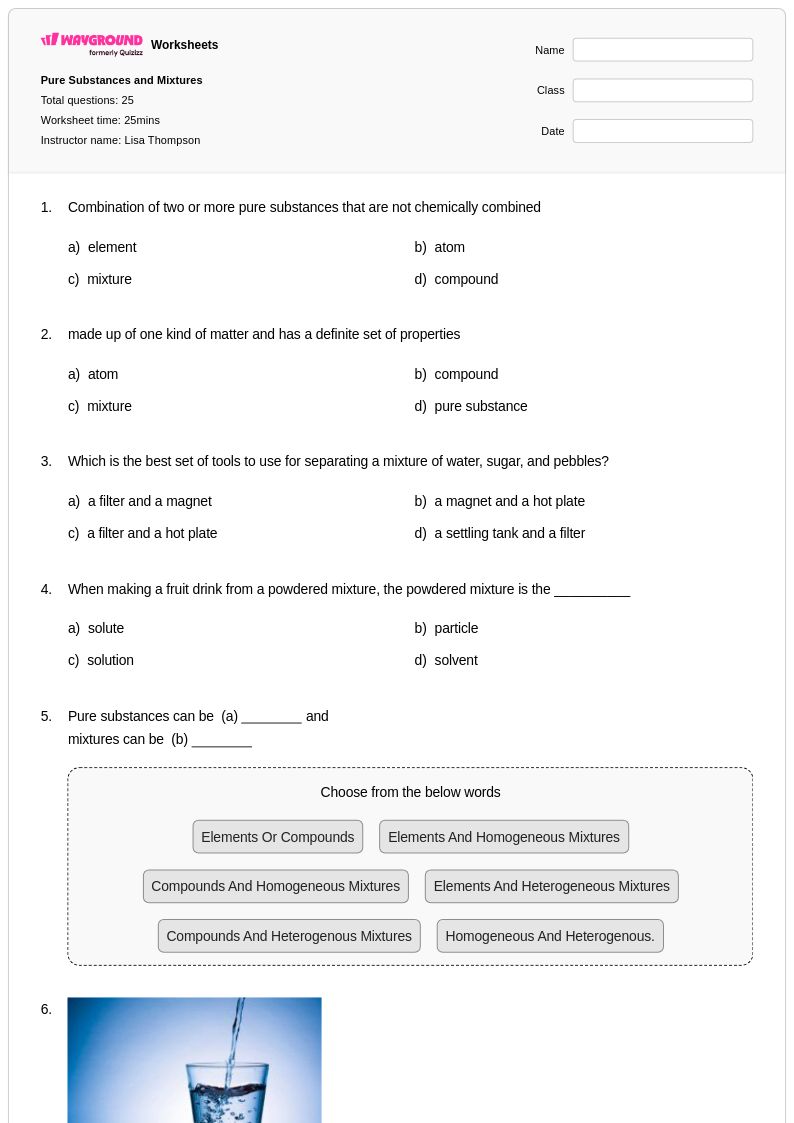
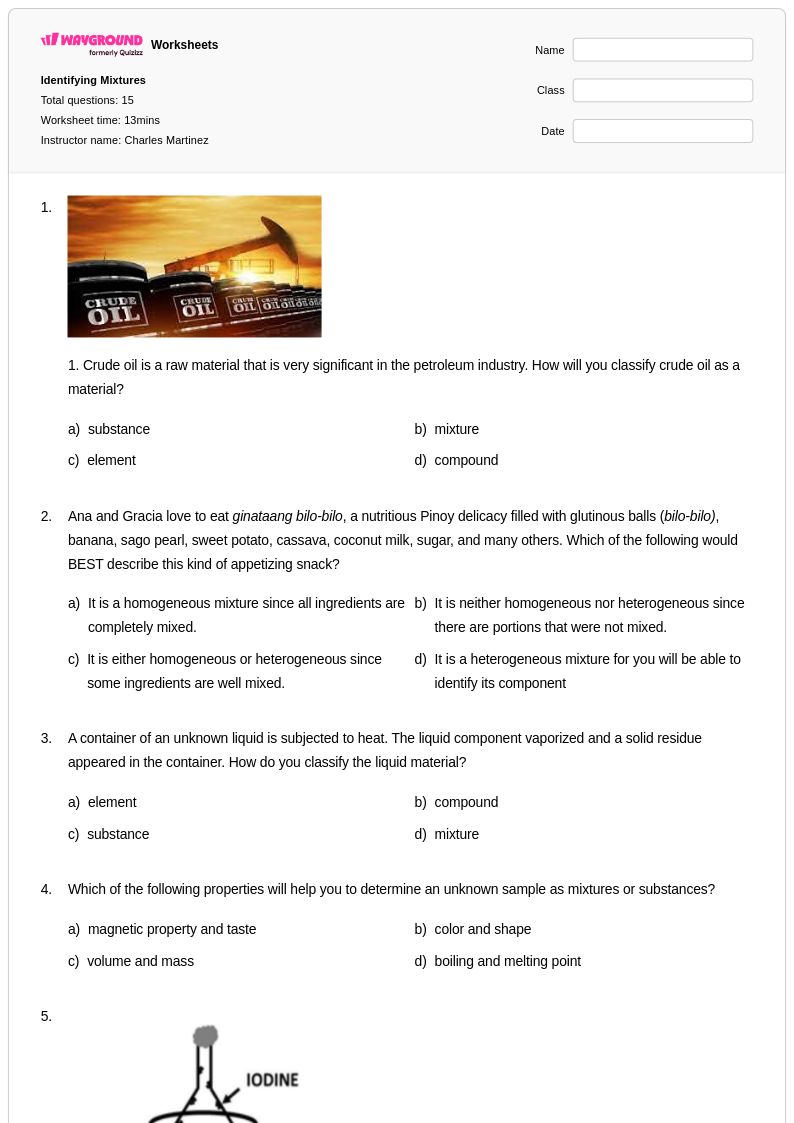
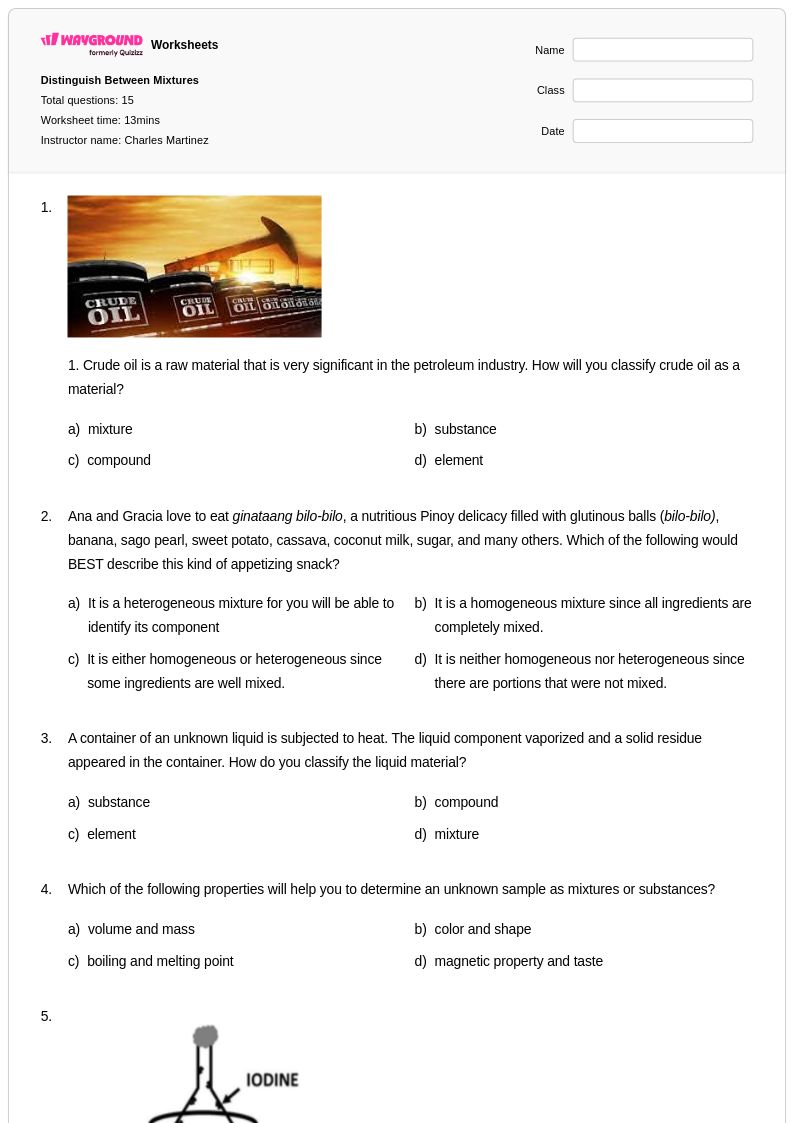
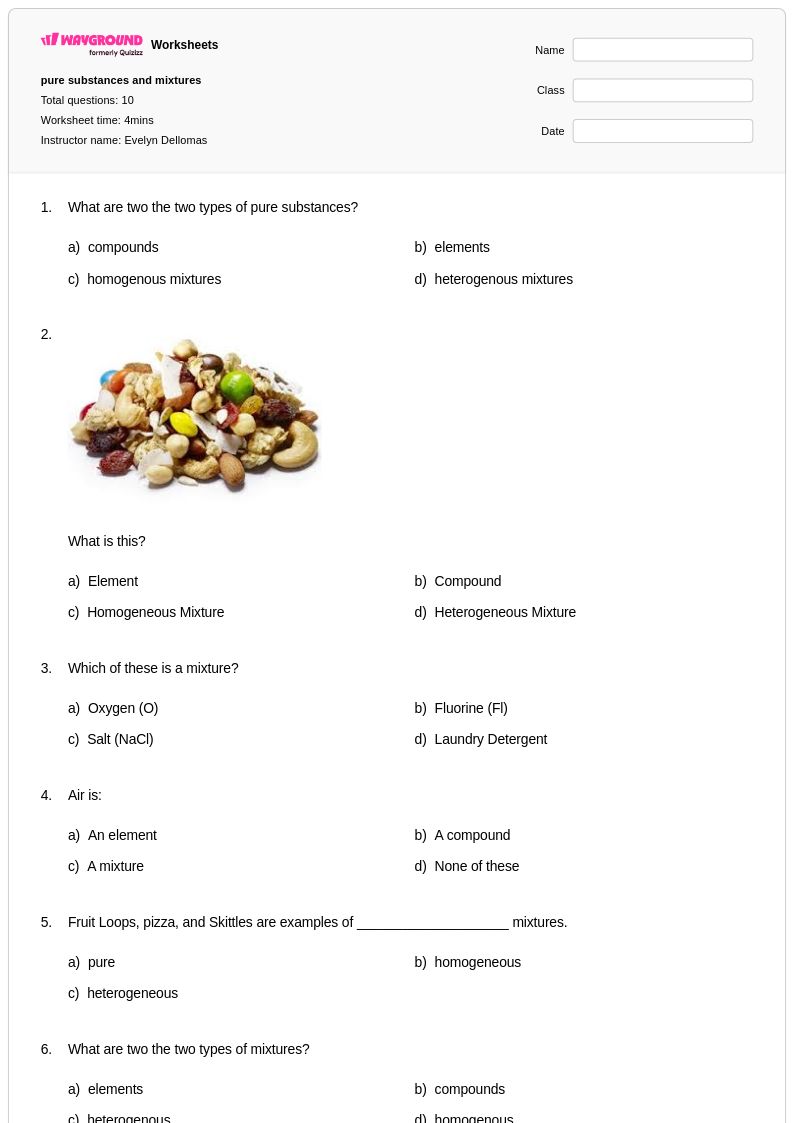
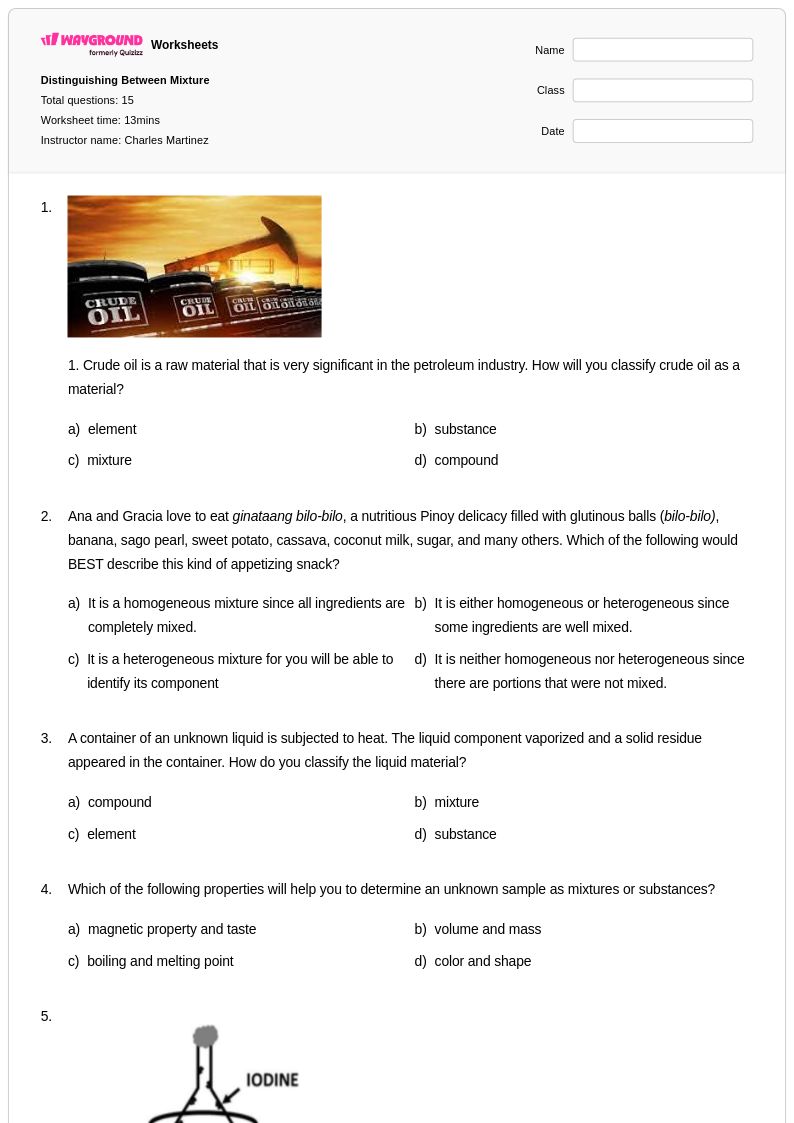
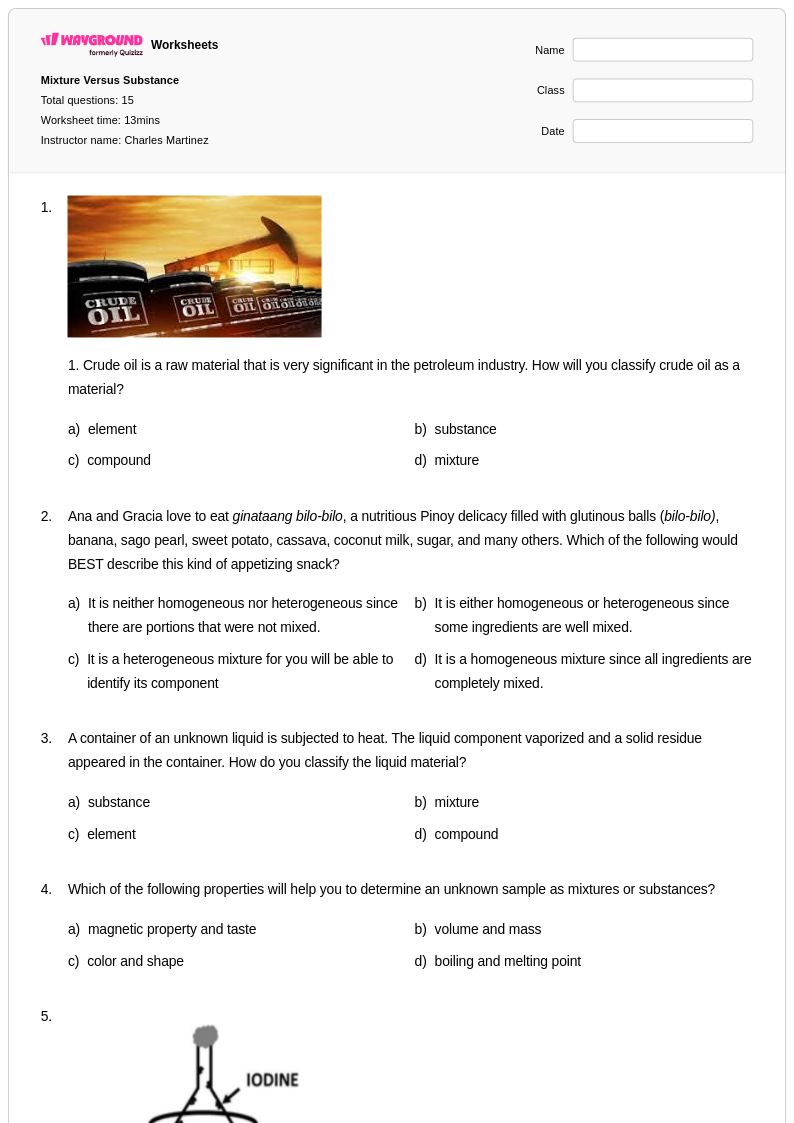
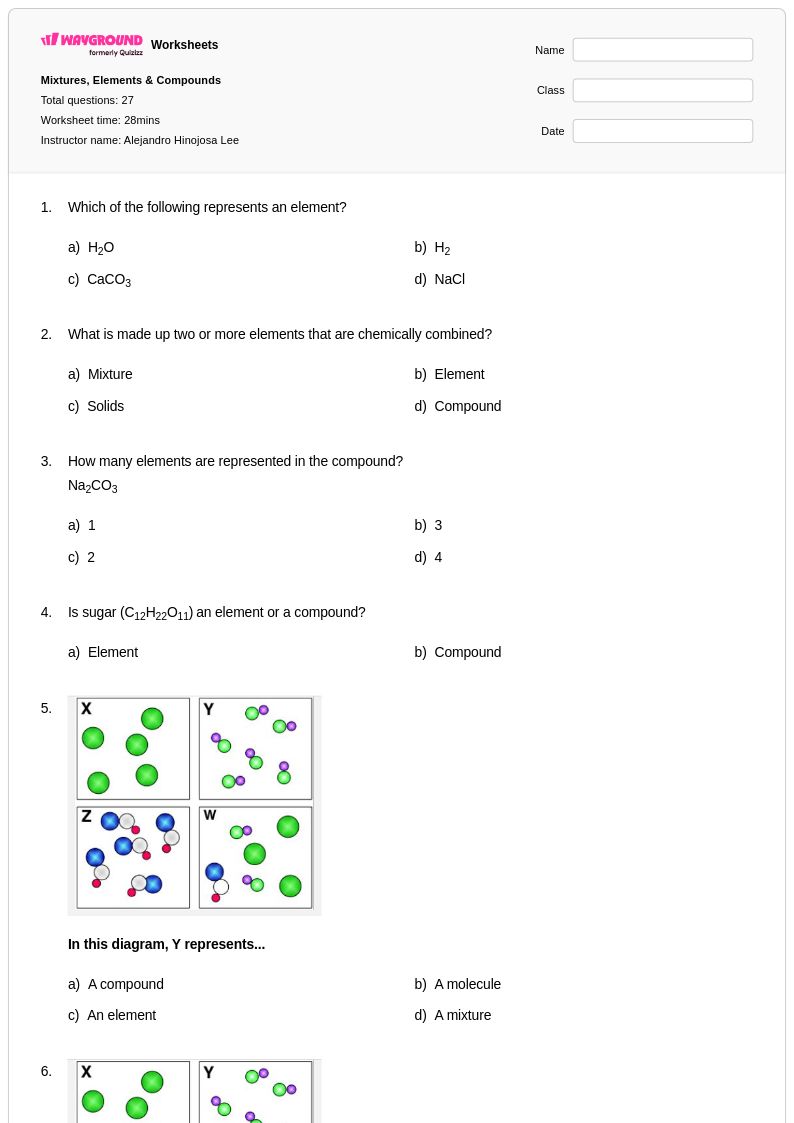
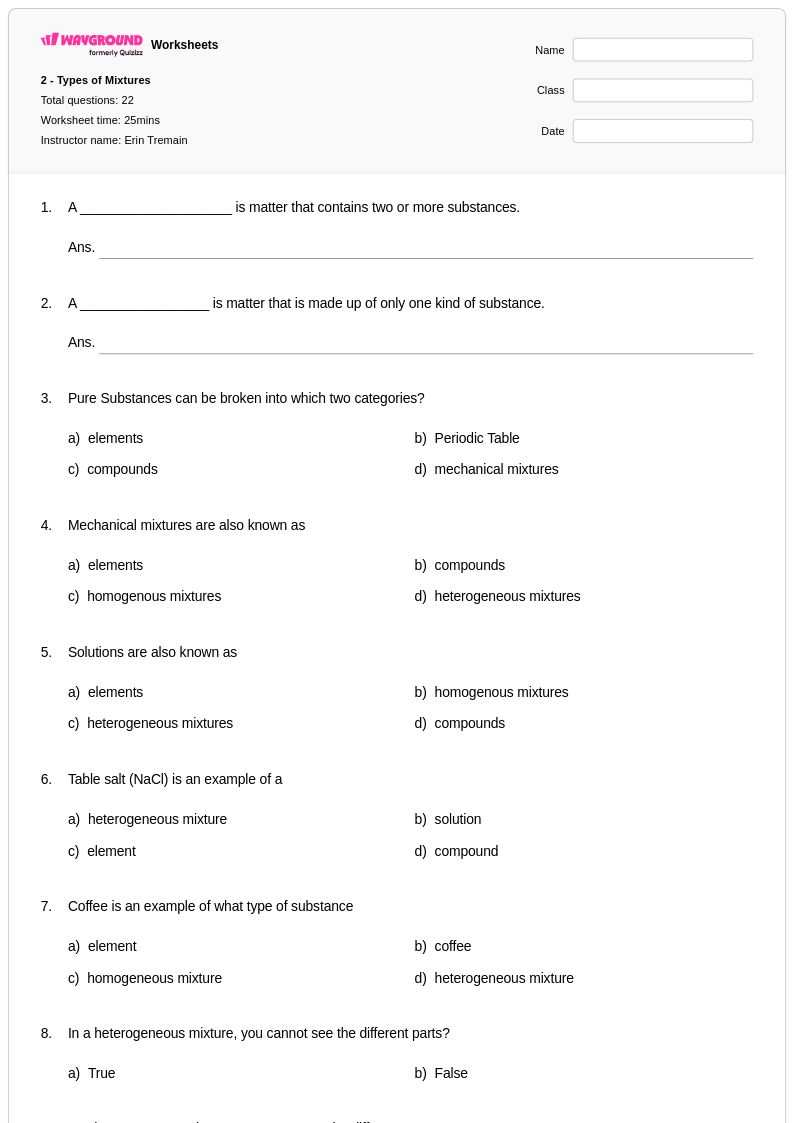
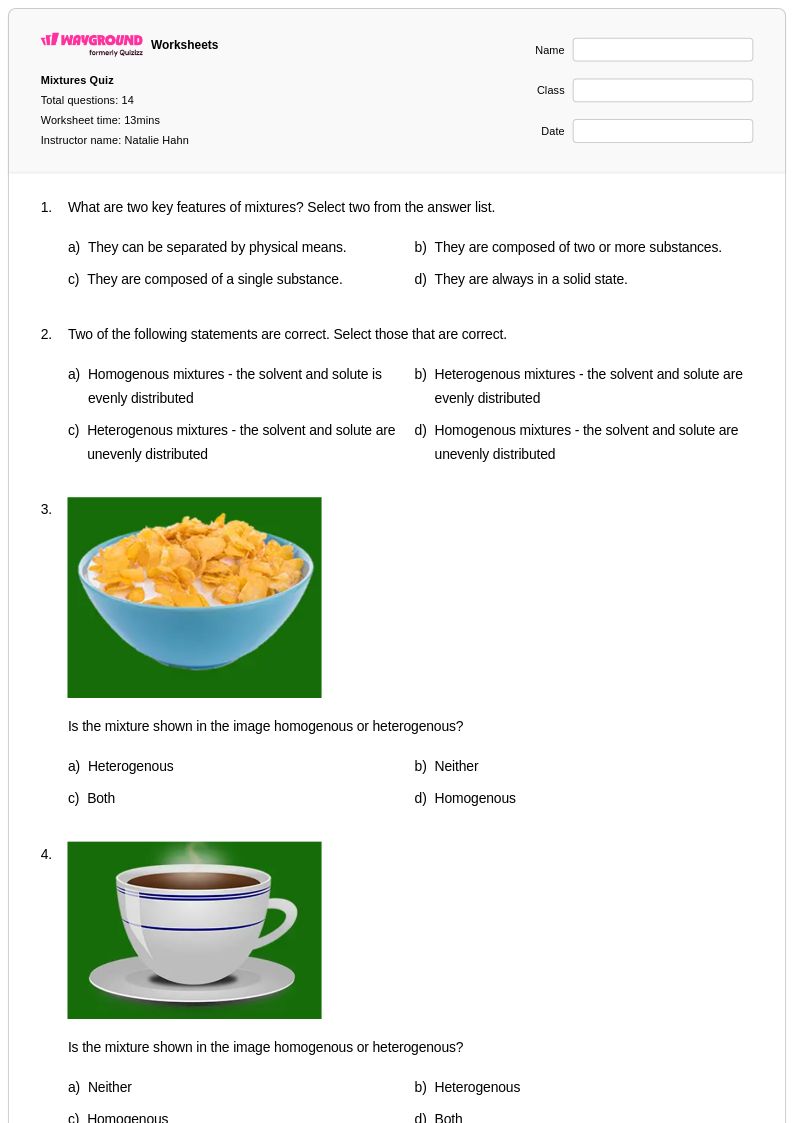
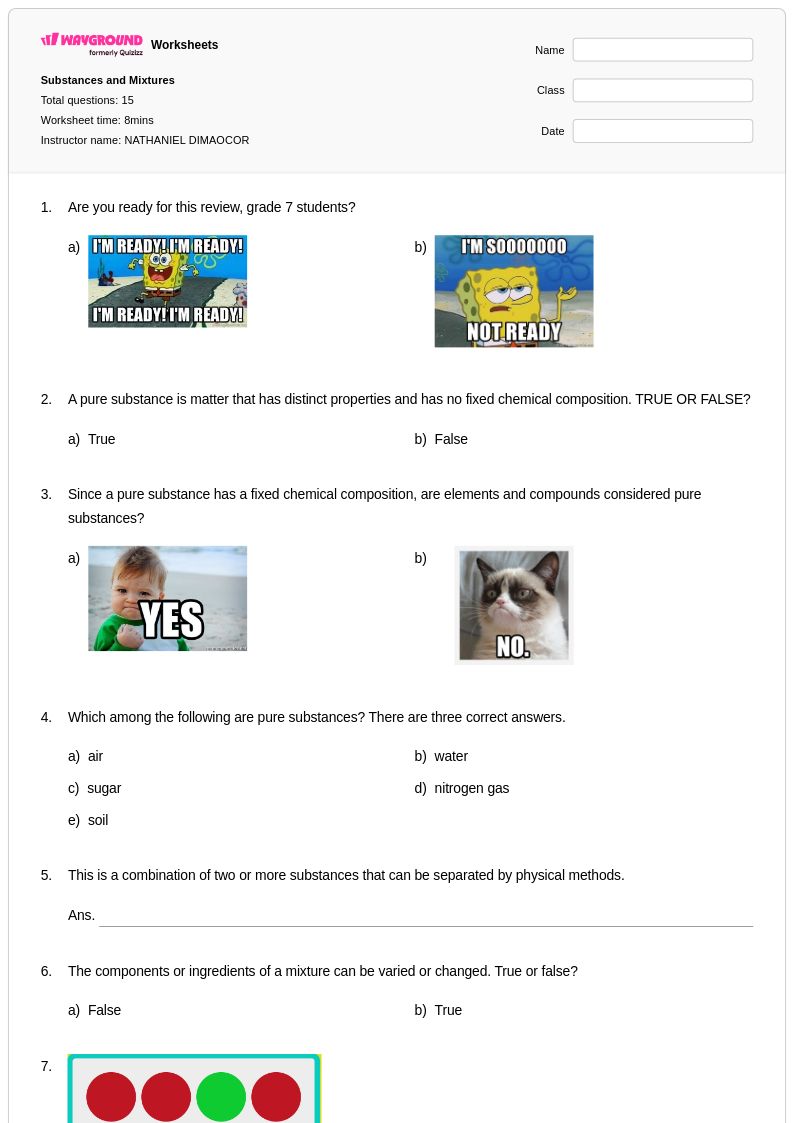
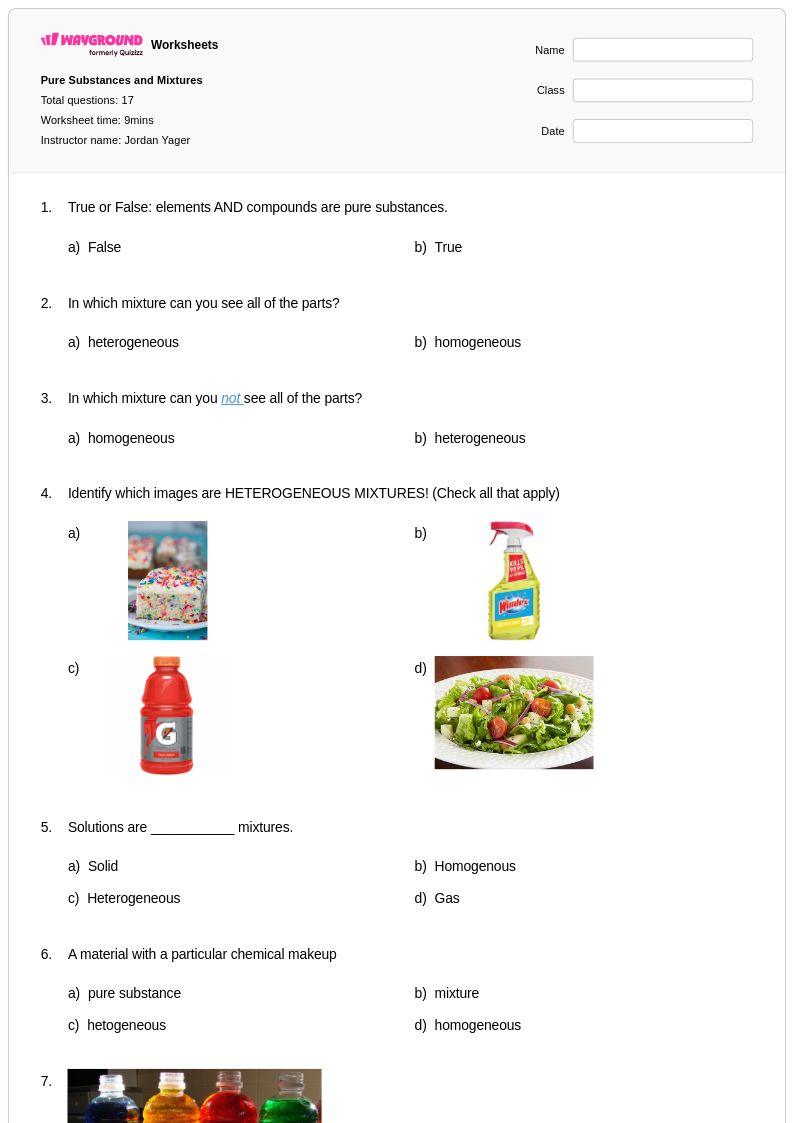
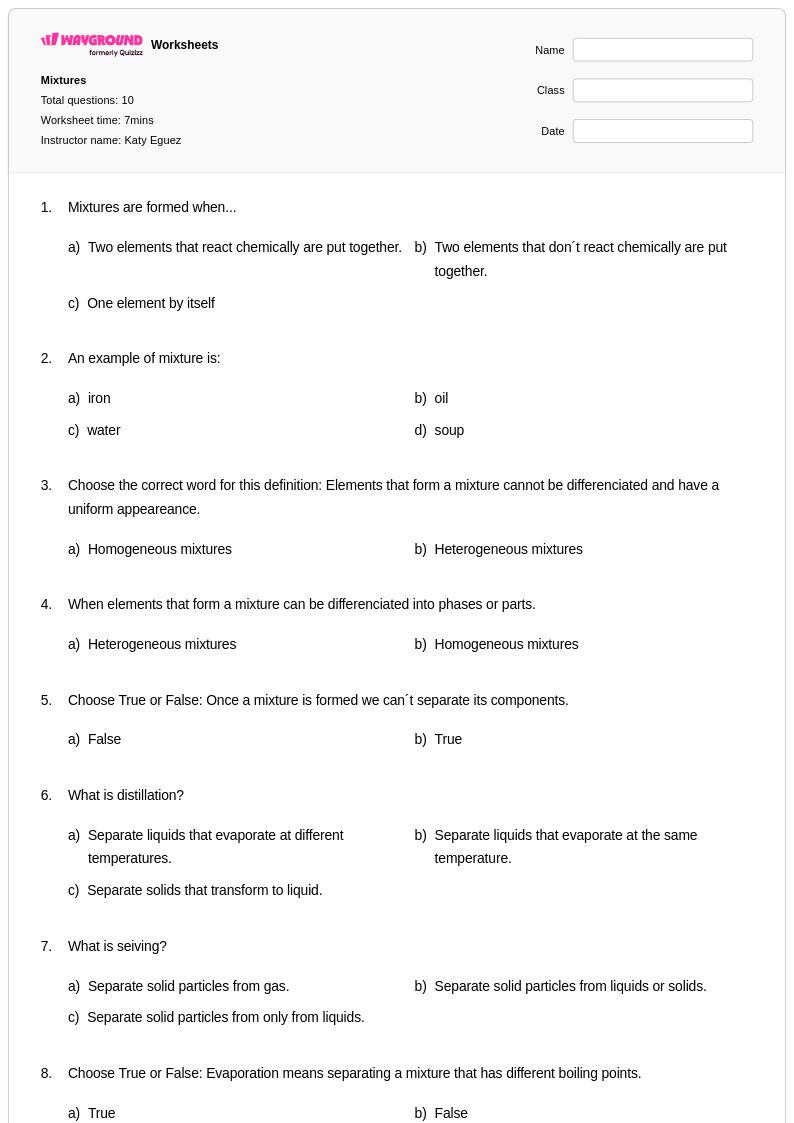
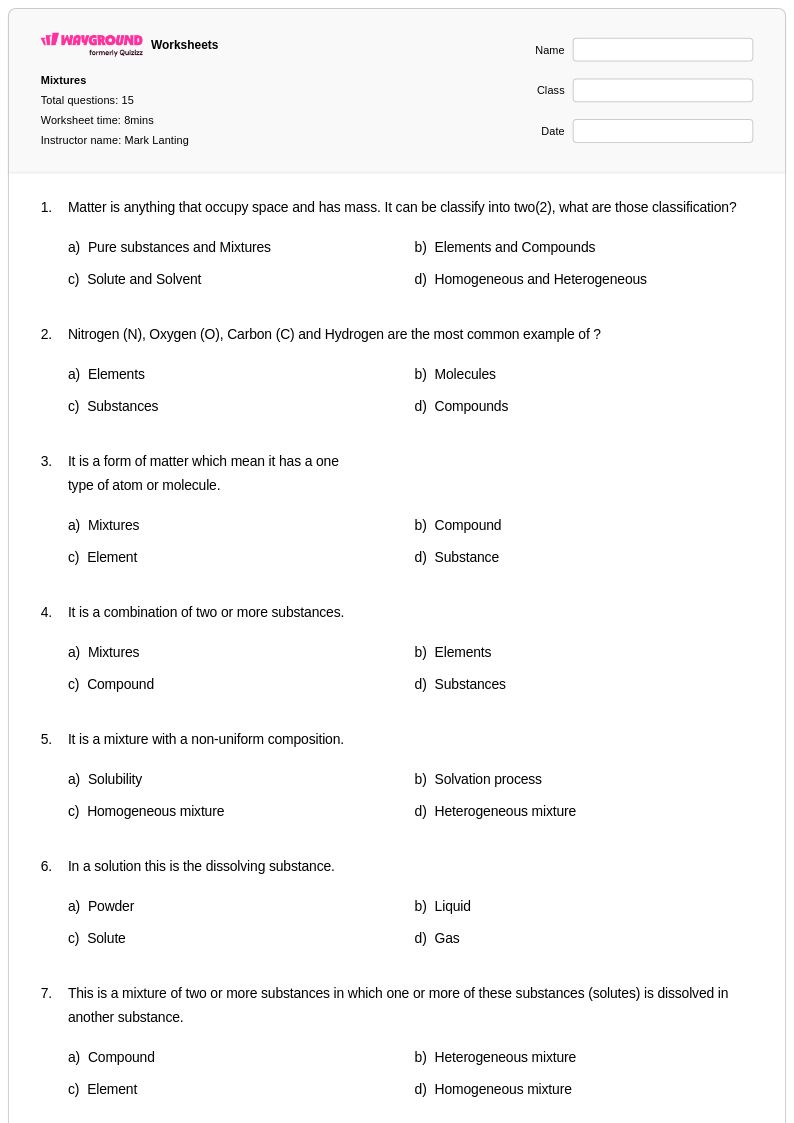
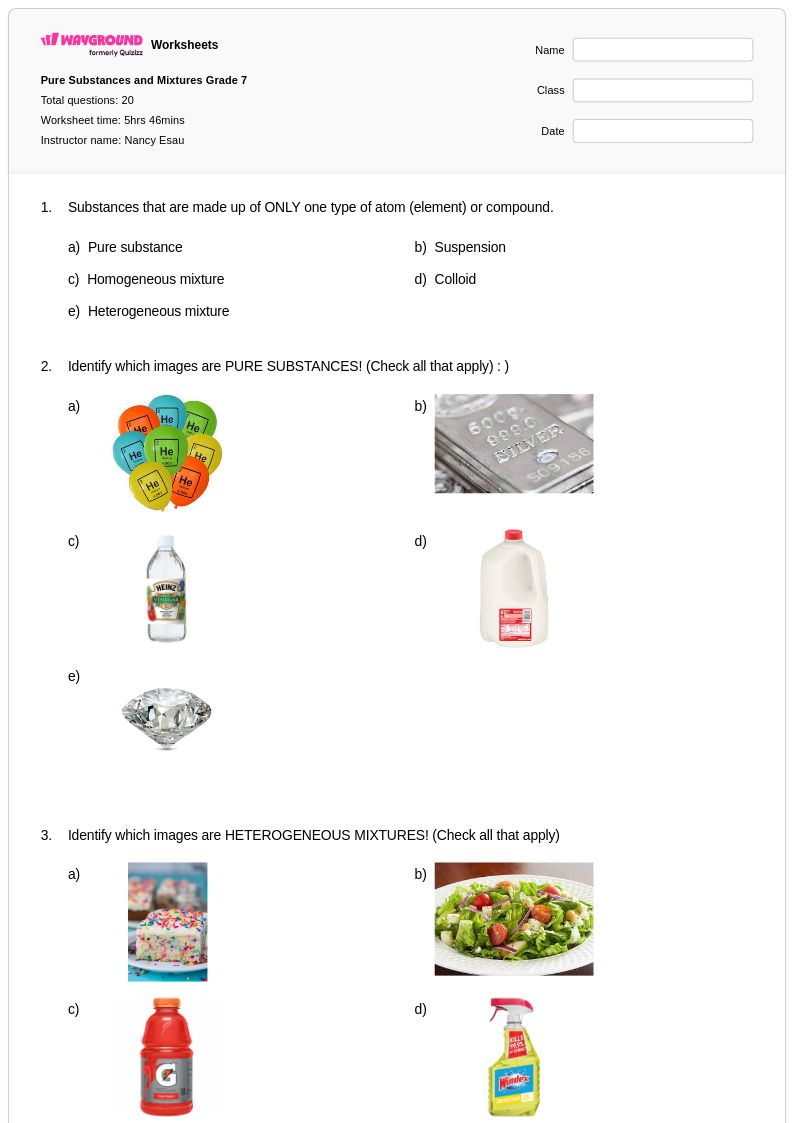
Homogeneous and heterogeneous mixtures form a fundamental concept in Year 7 chemistry education, and Wayground's comprehensive worksheet collection provides students with essential practice in distinguishing between these two types of matter combinations. These carefully designed worksheets guide students through identifying uniform mixtures like salt water and air, while contrasting them with non-uniform mixtures such as oil and water or trail mix. Each worksheet strengthens critical observation skills and reinforces the scientific vocabulary necessary for mixture classification, featuring detailed answer keys that help students verify their understanding. The free printable resources include a variety of practice problems ranging from visual identification exercises to real-world application scenarios, ensuring students can confidently recognize and categorize mixtures in both laboratory and everyday contexts.
Wayground's platform, formerly Quizizz, empowers teachers with millions of educator-created resources specifically focused on mixture concepts, featuring robust search and filtering capabilities that allow quick access to grade-appropriate materials. The collection aligns with national science standards while offering extensive differentiation tools that accommodate diverse learning needs, from struggling students requiring additional scaffolding to advanced learners ready for enrichment activities. Teachers can seamlessly customize worksheets to match their specific curriculum requirements and classroom objectives, with materials available in both digital and printable PDF formats for maximum flexibility. These comprehensive resources streamline lesson planning while providing targeted options for remediation sessions, independent practice, and formative assessment, enabling educators to effectively address individual student needs in mastering this essential chemistry foundation.
FAQs
How do I teach students the difference between homogeneous and heterogeneous mixtures?
Start with visible, tangible examples before introducing technical vocabulary. Show students a glass of saltwater next to a bowl of trail mix and ask them to describe what they observe at the surface level — one looks uniform, the other does not. From there, introduce the terms homogeneous (uniform composition throughout) and heterogeneous (visibly distinct components) and have students sort a list of real-world examples into each category. Grounding the concept in familiar substances before moving to colloids and suspensions helps students build a durable mental model.
What are the most common misconceptions students have about mixtures?
The most persistent misconception is that all liquids are homogeneous — students frequently classify milk or muddy water as uniform because they appear smooth or single-phase. In reality, milk is a colloid and muddy water is a suspension, both heterogeneous. Students also confuse mixtures with pure substances, incorrectly labeling compounds like water (H₂O) as mixtures. Directly addressing these error patterns with classification exercises that include non-obvious examples is the most effective way to correct them.
What practice exercises help students get better at classifying mixtures?
The most effective practice combines classification tasks, real-world example analysis, and justification writing. Students should practice sorting substances like saltwater, granite, air, oil-and-water, and blood into homogeneous or heterogeneous categories and then explain their reasoning in one or two sentences. Adding a component where students identify whether a heterogeneous mixture is a suspension or colloid deepens the skill beyond simple binary classification. Regular low-stakes practice with varied examples builds the fluency needed for assessments.
How do I differentiate mixture classification activities for students at different levels?
For students who are still developing foundational understanding, reduce the number of answer choices and focus on clear-cut examples with visual support, such as labeled diagrams of particle distribution. On Wayground, teachers can apply individual accommodations including reduced answer choices and read-aloud support directly to specific students, while other students continue with standard settings. For advanced learners, extend the task by requiring students to describe separation techniques appropriate for each mixture type, connecting classification to practical chemistry applications.
How can I use Wayground's homogeneous and heterogeneous mixtures worksheets in my classroom?
Wayground's worksheets on this topic are available as printable PDFs for traditional classroom use and in digital formats for technology-integrated or hybrid environments, and teachers can also host them as a quiz directly on Wayground. Each worksheet includes a complete answer key, making them suitable for independent practice, homework, or self-paced review. The digital format is particularly useful for collecting student responses quickly and identifying which classification errors are most common before the next lesson.
How does understanding homogeneous and heterogeneous mixtures support more advanced chemistry topics?
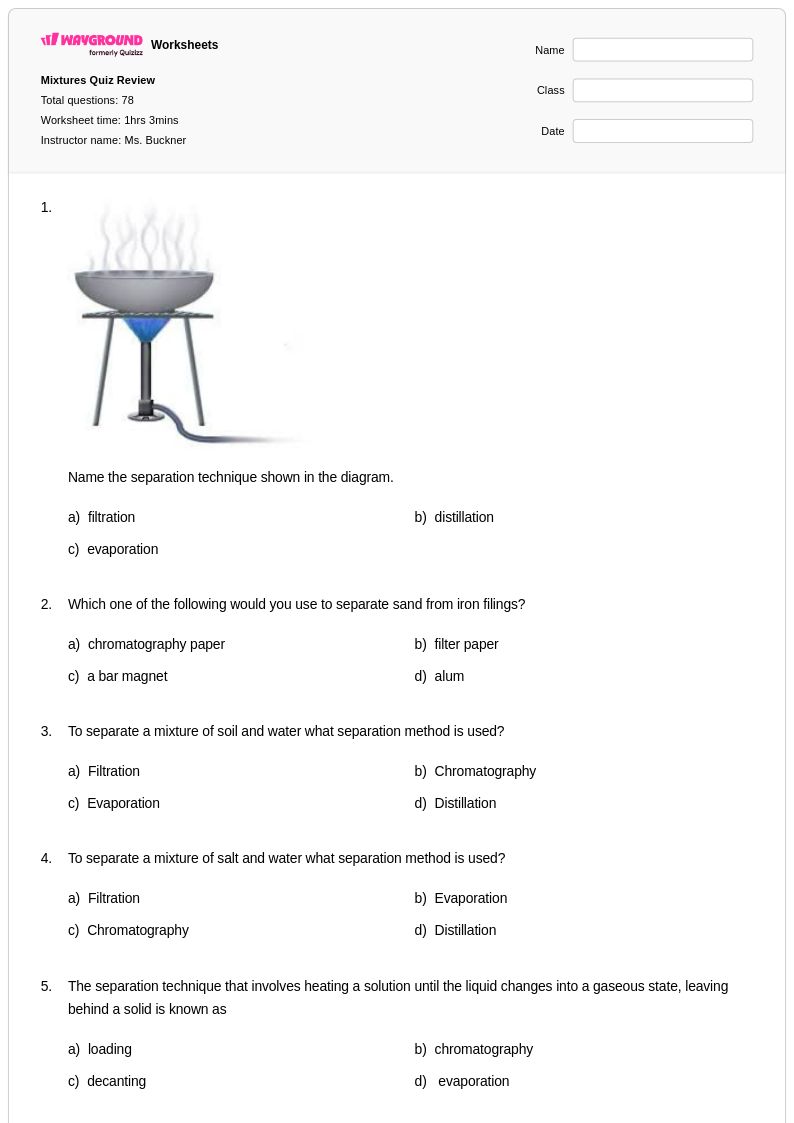
Mixture classification is a foundational skill that underpins several advanced chemistry concepts, including solubility, concentration calculations, colligative properties, and separation techniques such as filtration, distillation, and chromatography. Students who cannot reliably distinguish between a solution and a suspension will struggle to apply the correct separation method or interpret experimental results accurately. Establishing this classification fluency early reduces cognitive load when students encounter more complex material in later units.