
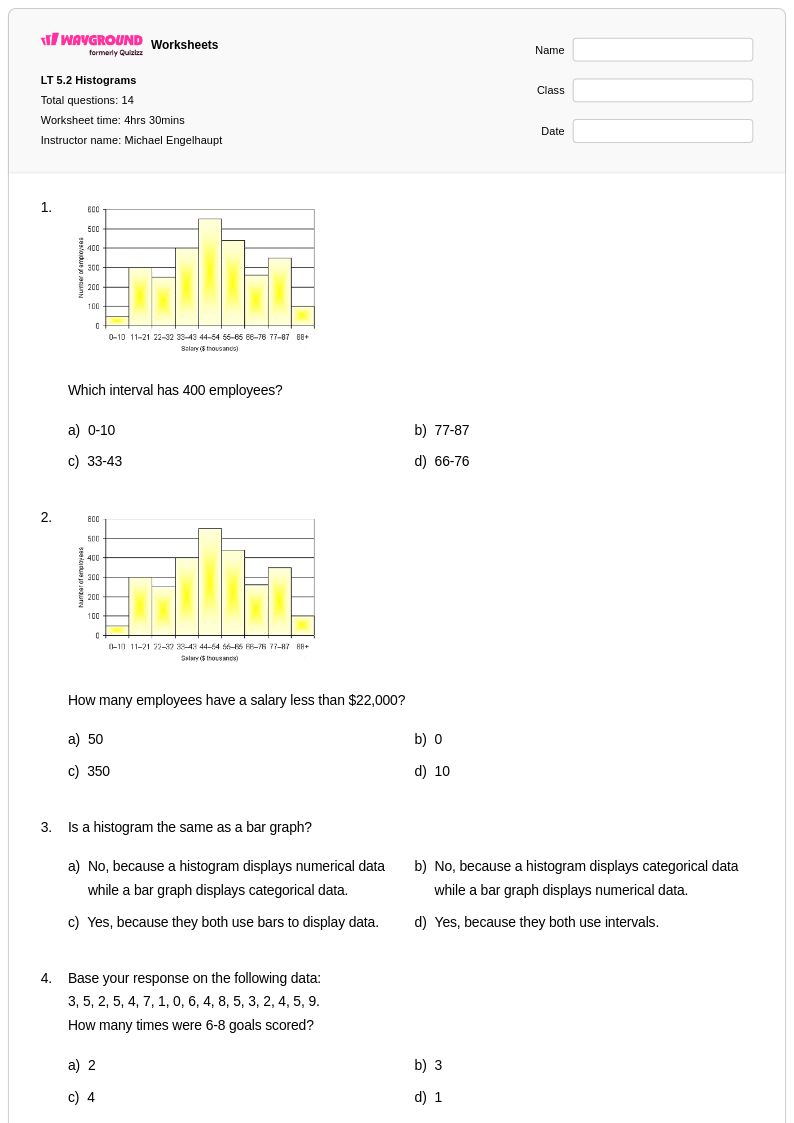
14 Q
10th - 12th
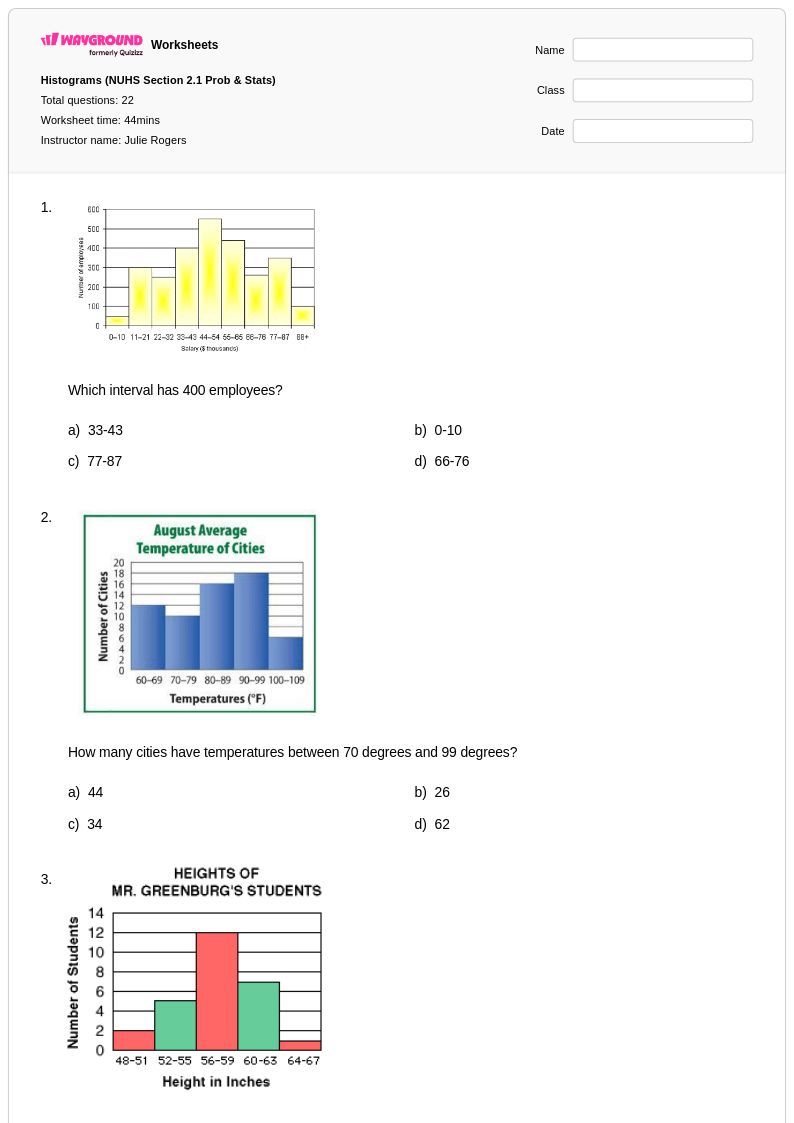
22 Q
10th - 12th
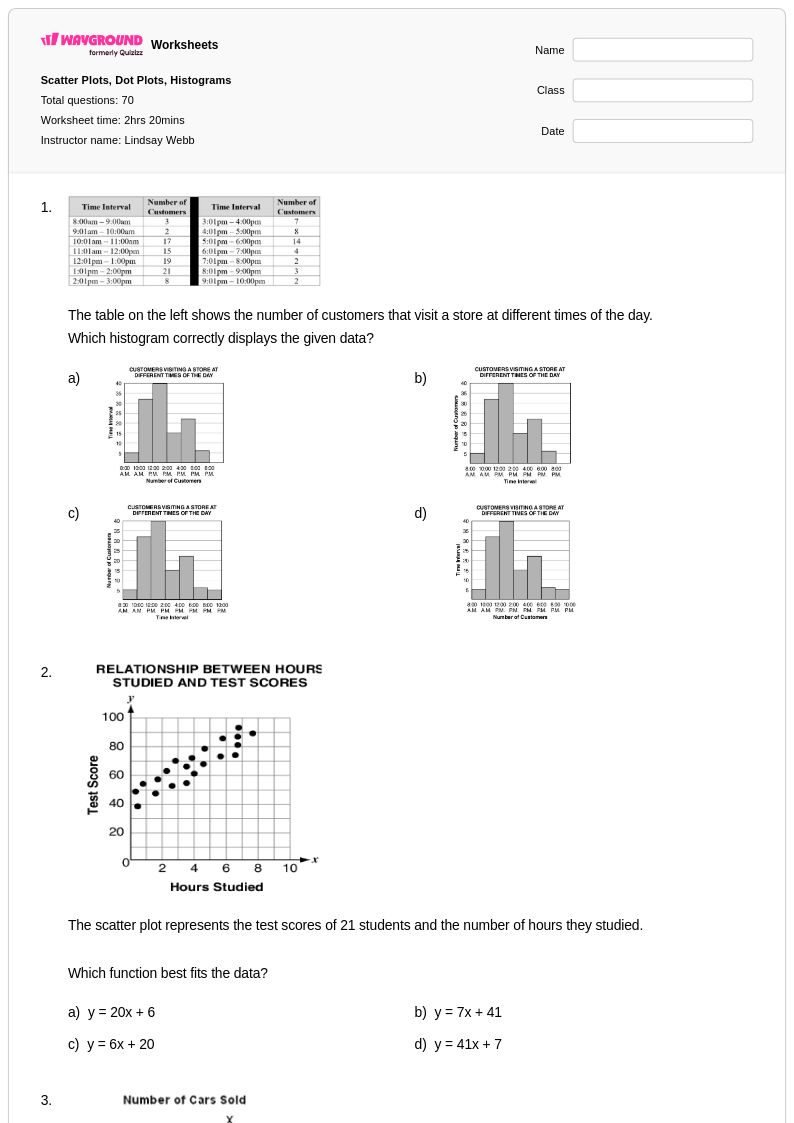
70 Q
9th - 12th
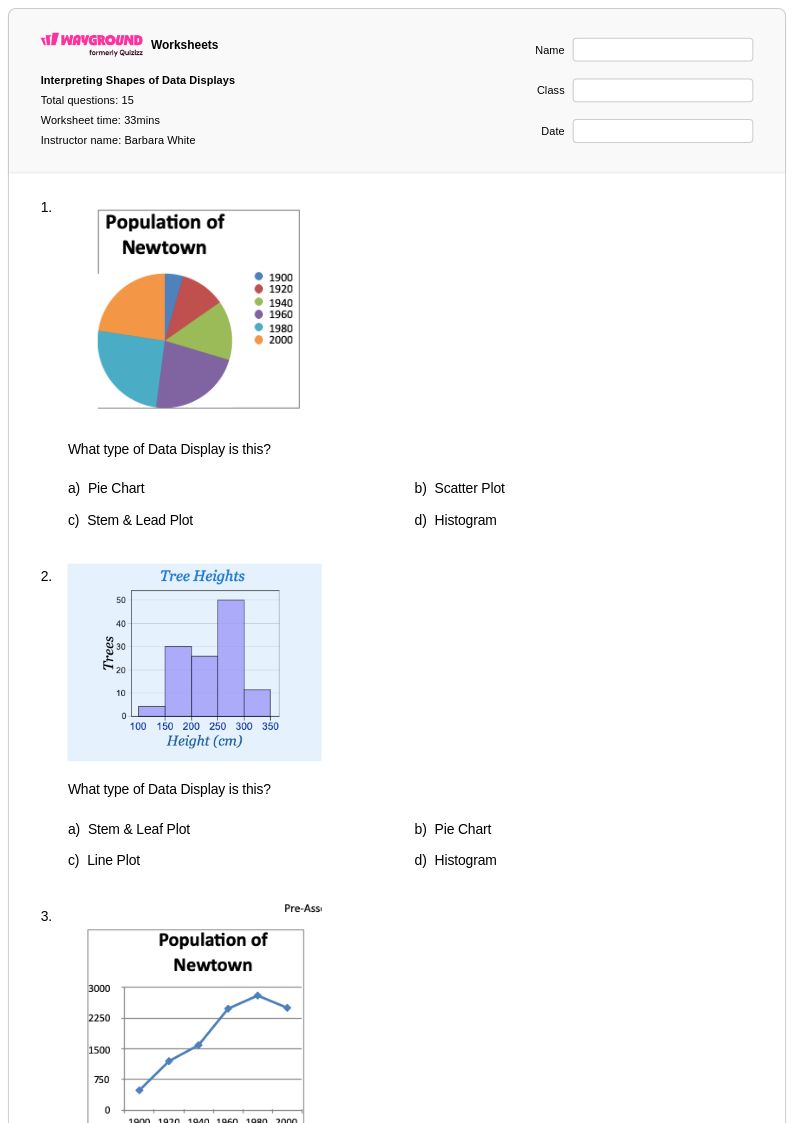
15 Q
9th - 10th
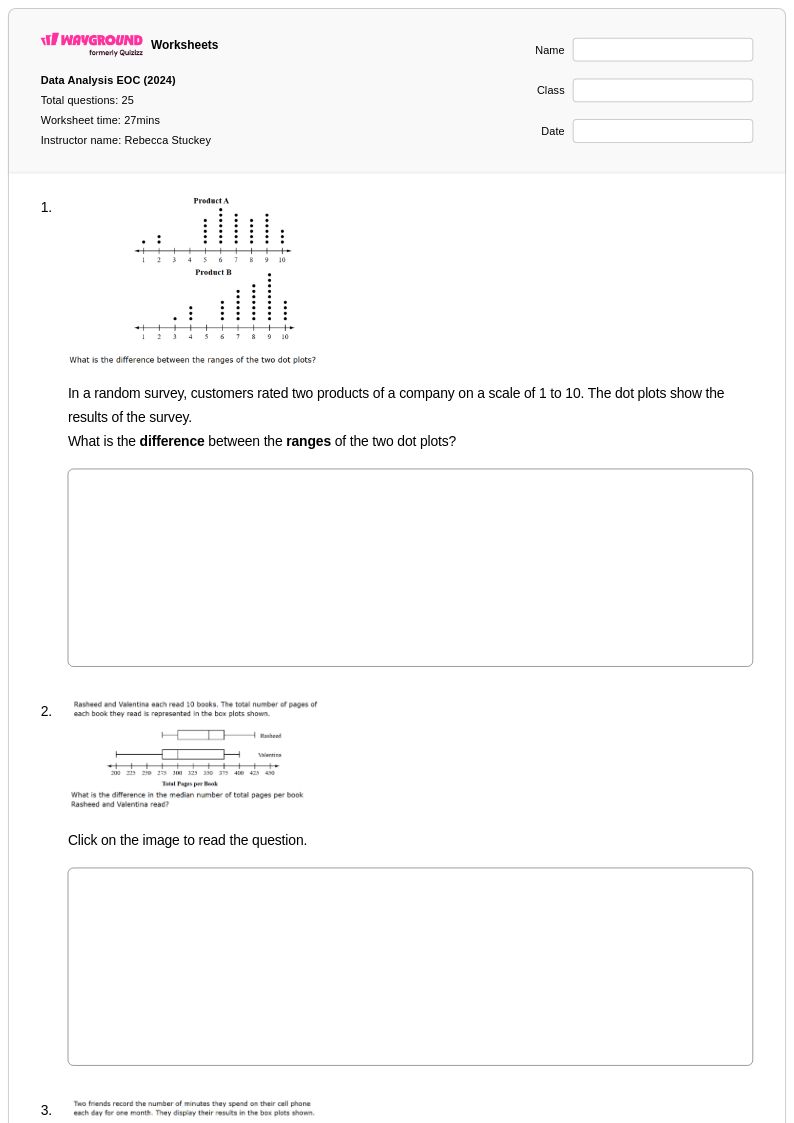
25 Q
9th - Uni
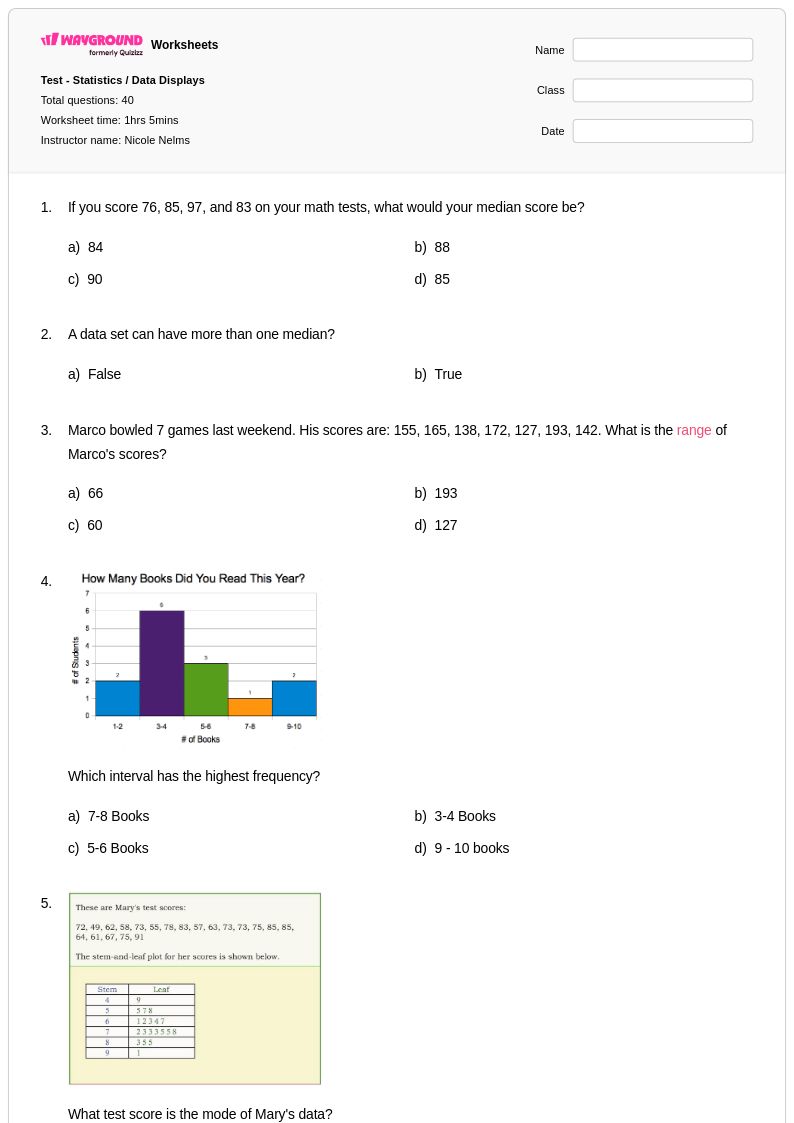
40 Q
10th
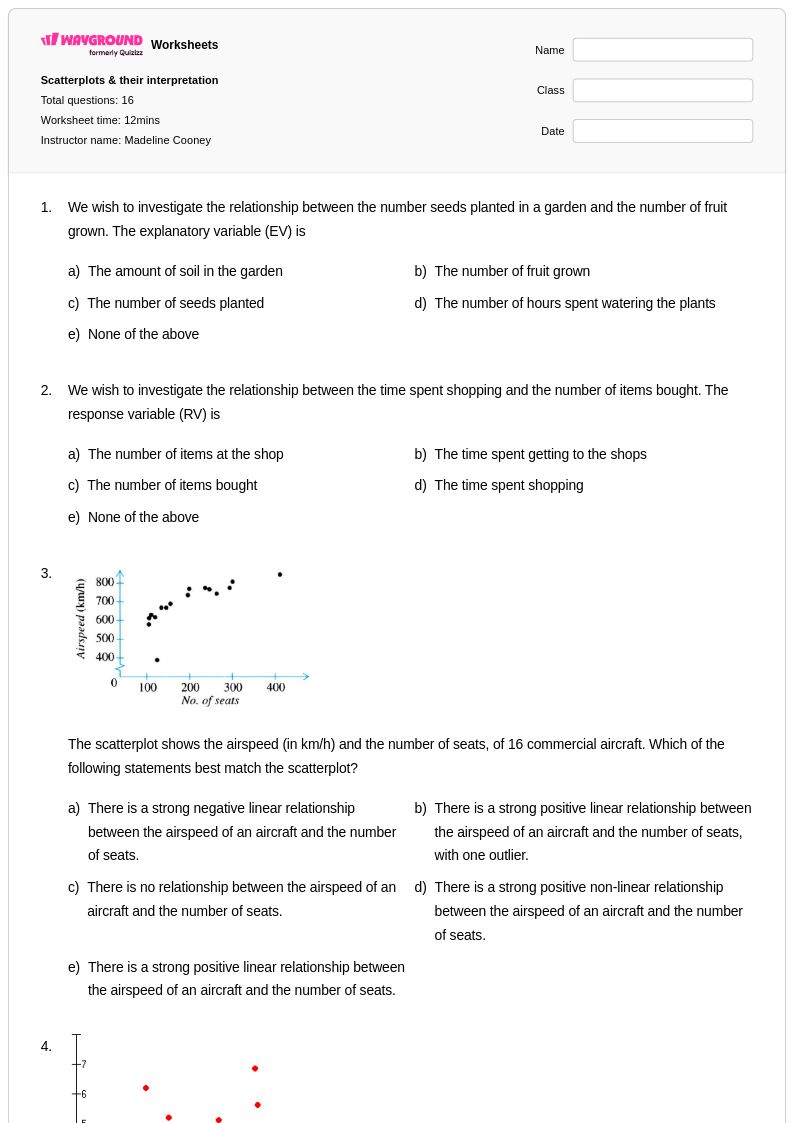
16 Q
9th - 12th
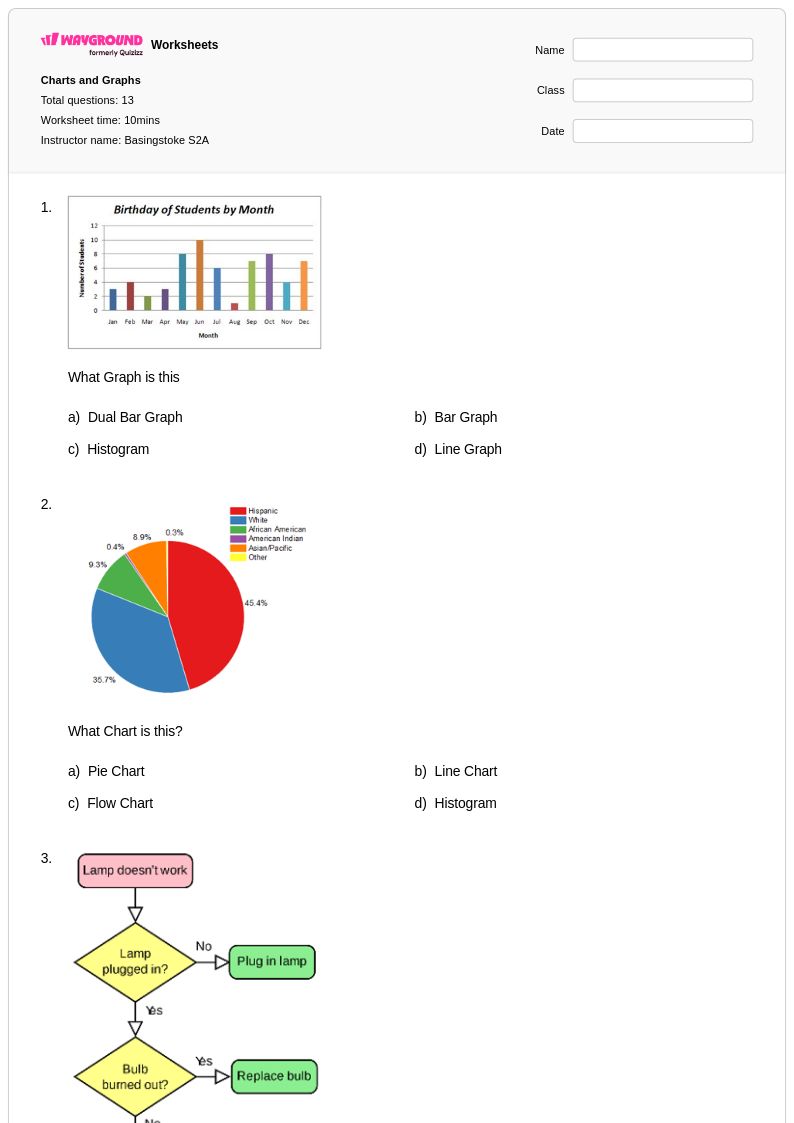
13 Q
8th - 12th
19 Q
6th - Uni
10 Q
9th - 12th
13 Q
6th - Uni
13 Q
10th
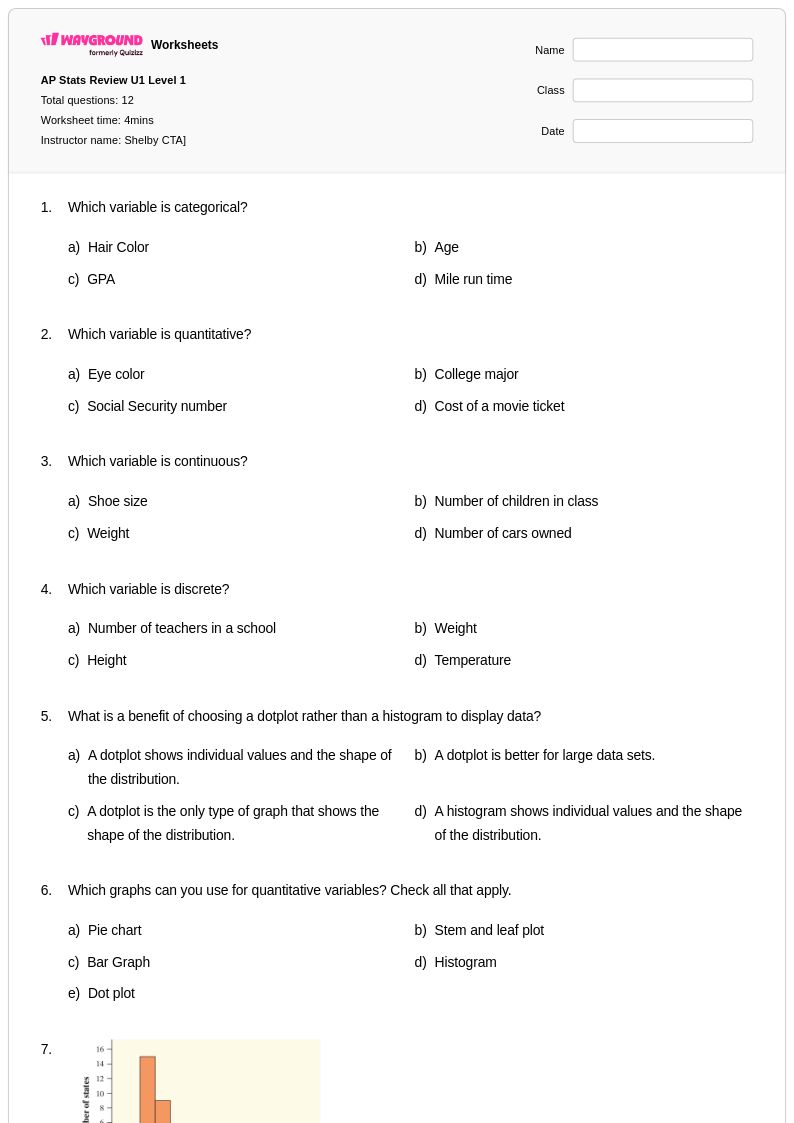
12 Q
10th
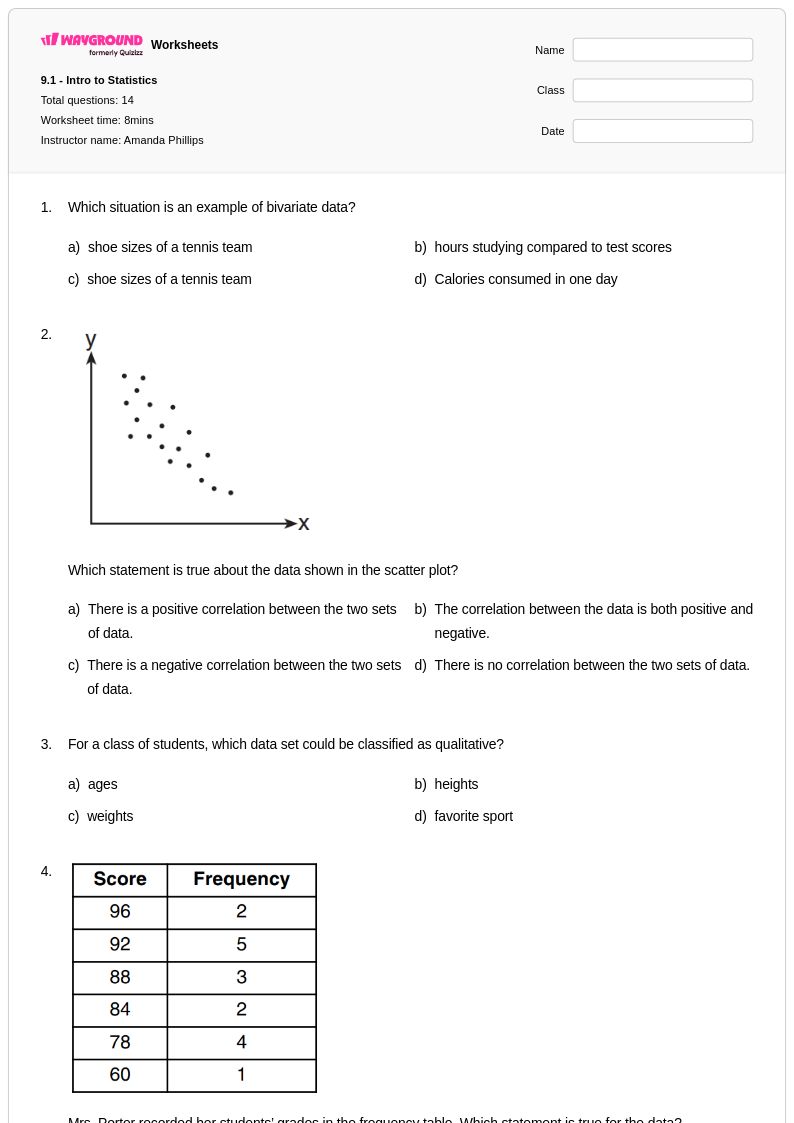
14 Q
9th - 12th
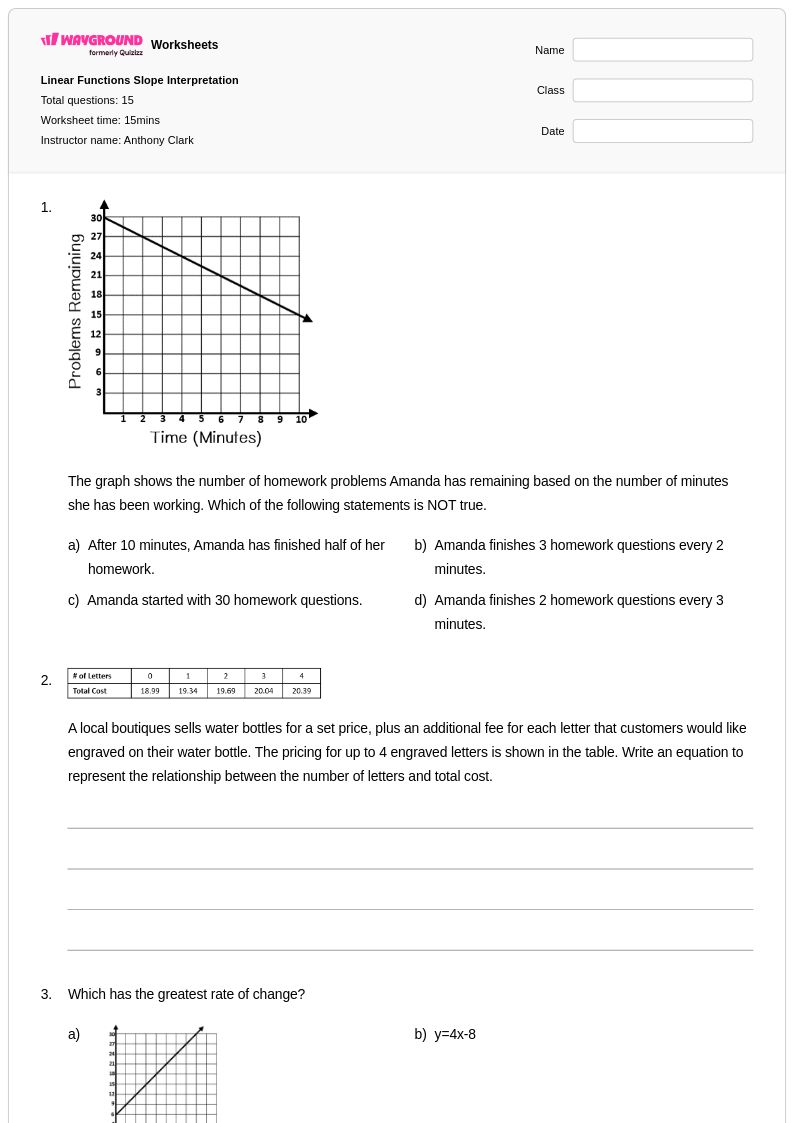
15 Q
9th - Uni
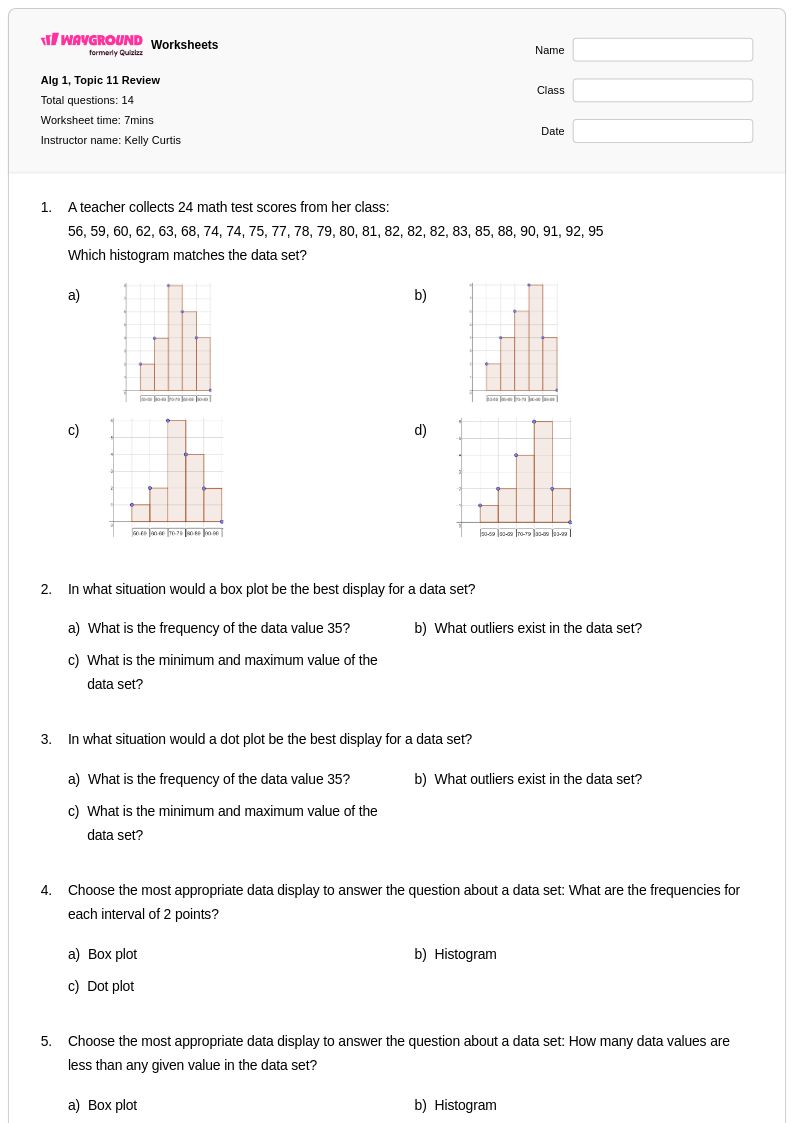
14 Q
9th - 12th
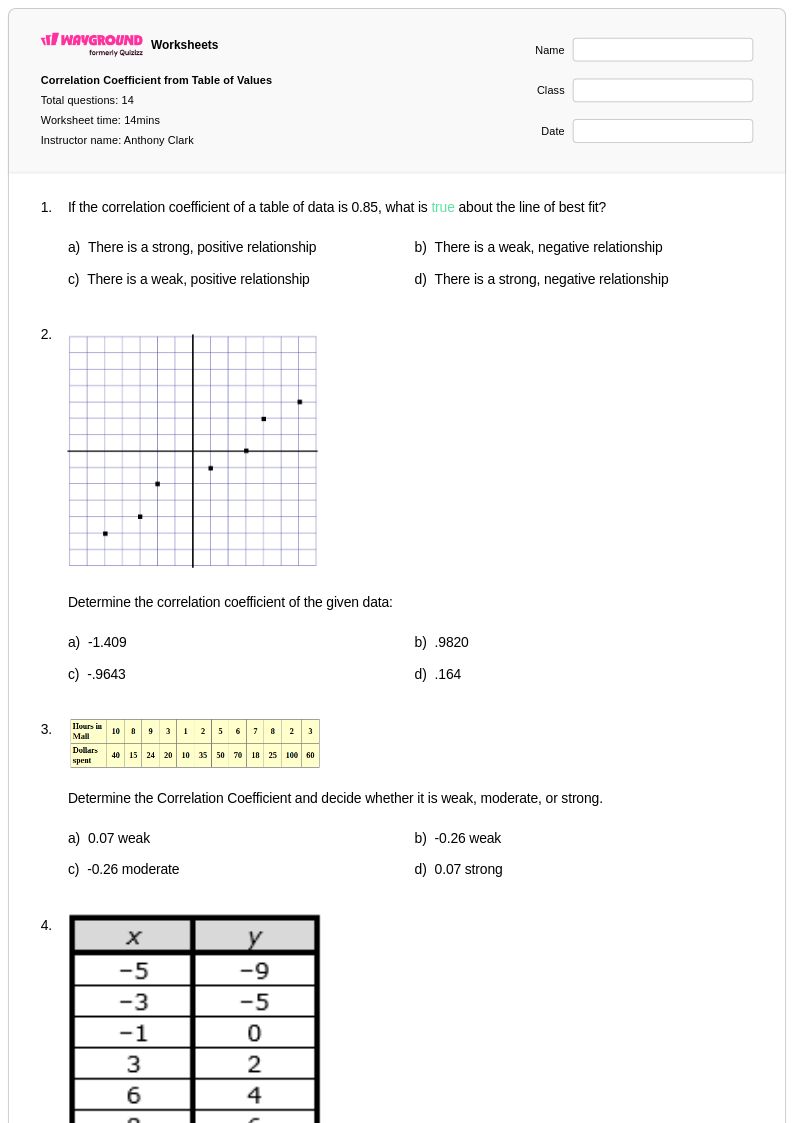
14 Q
9th - Uni
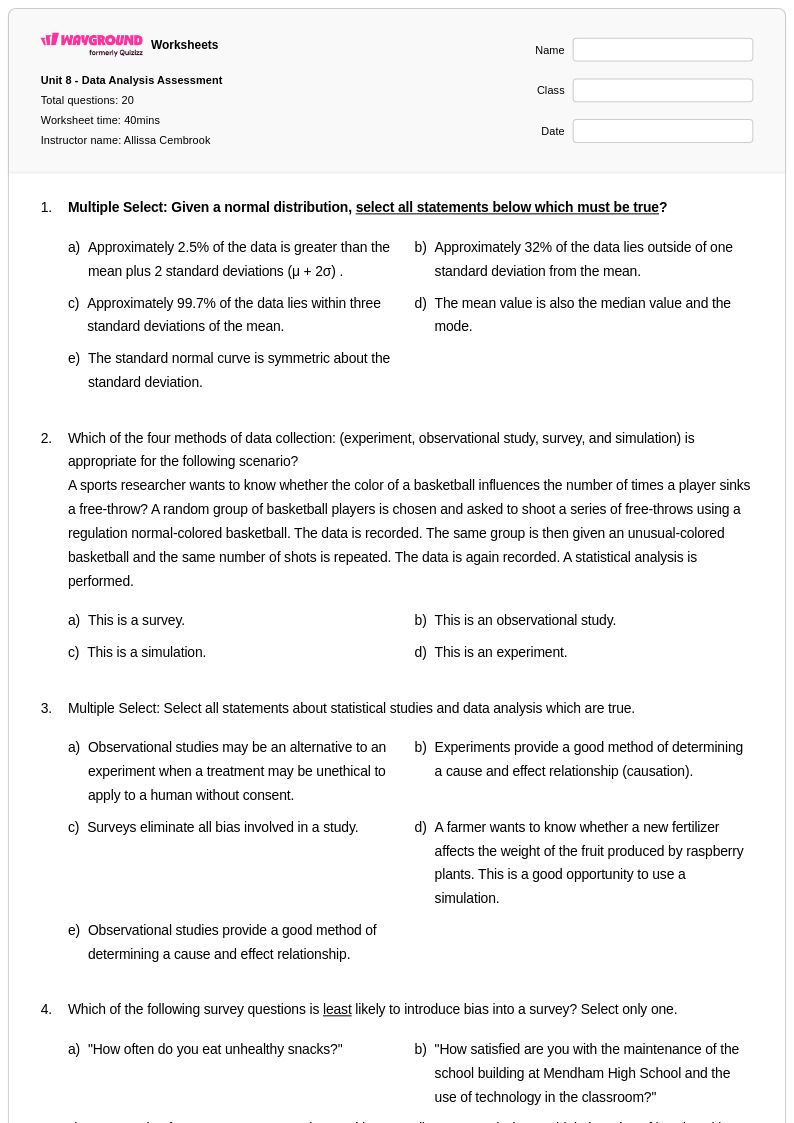
20 Q
9th - 10th
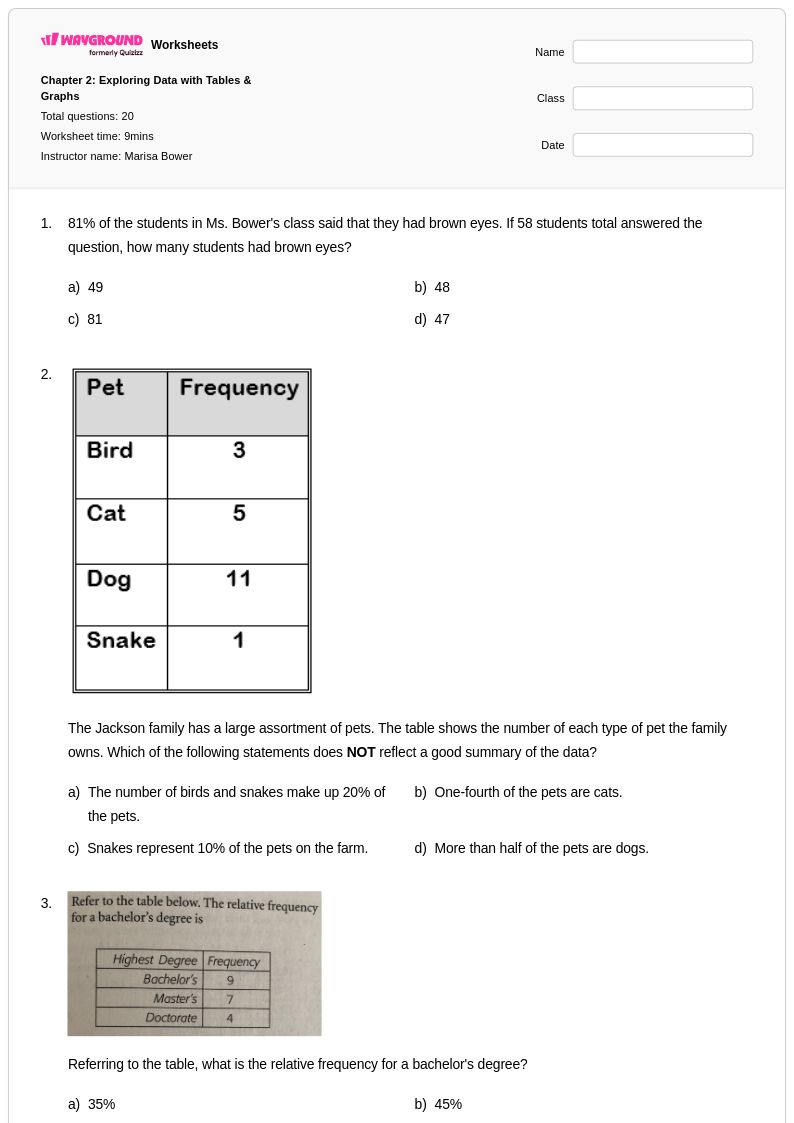
20 Q
9th - 12th
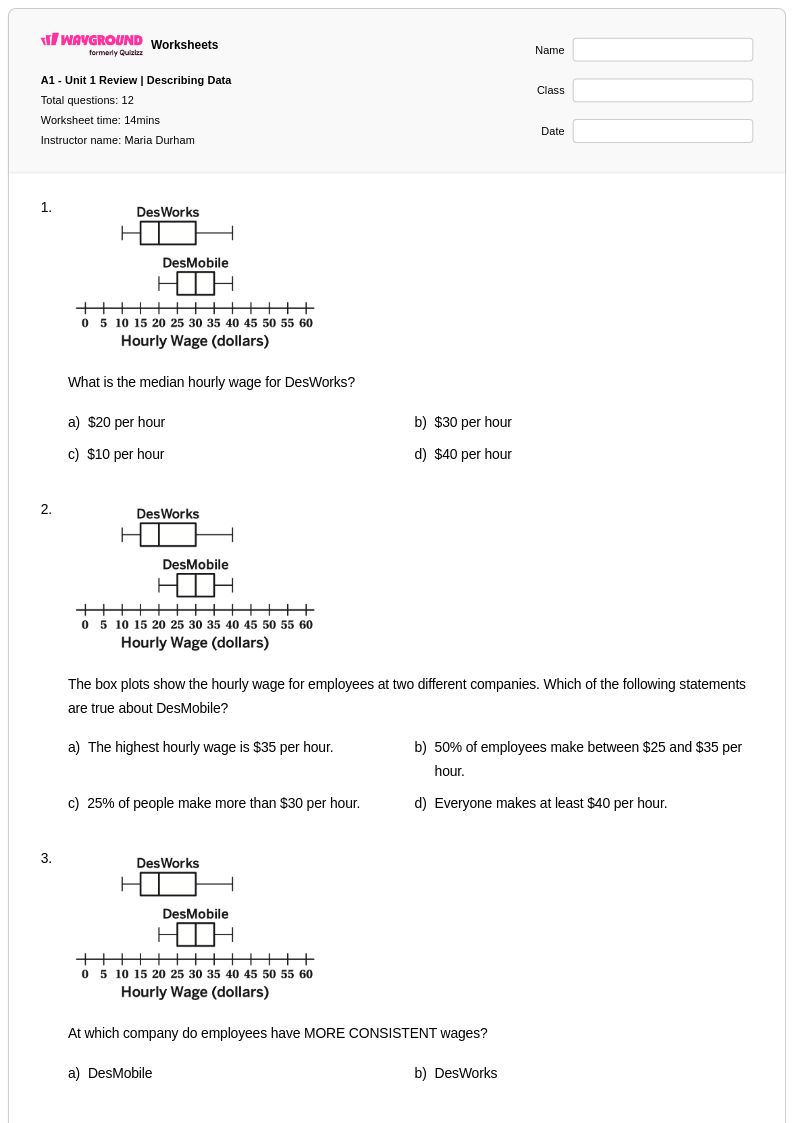
12 Q
9th - 12th
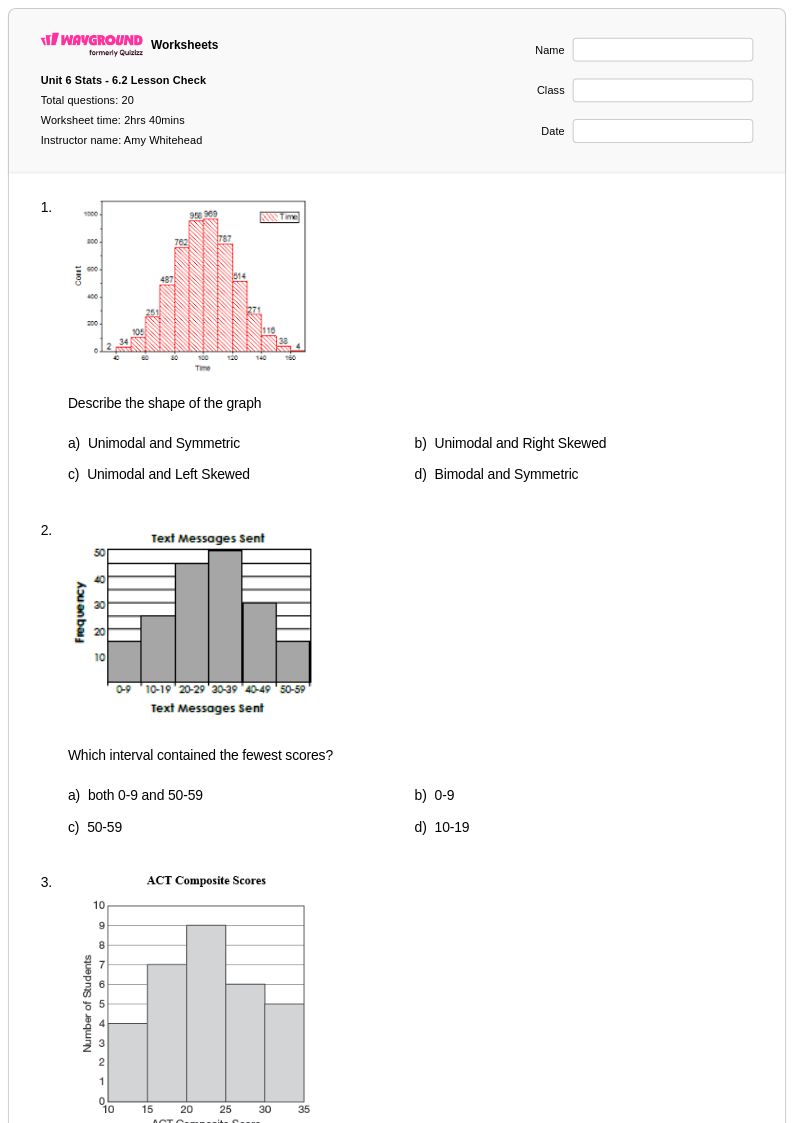
20 Q
9th - 12th
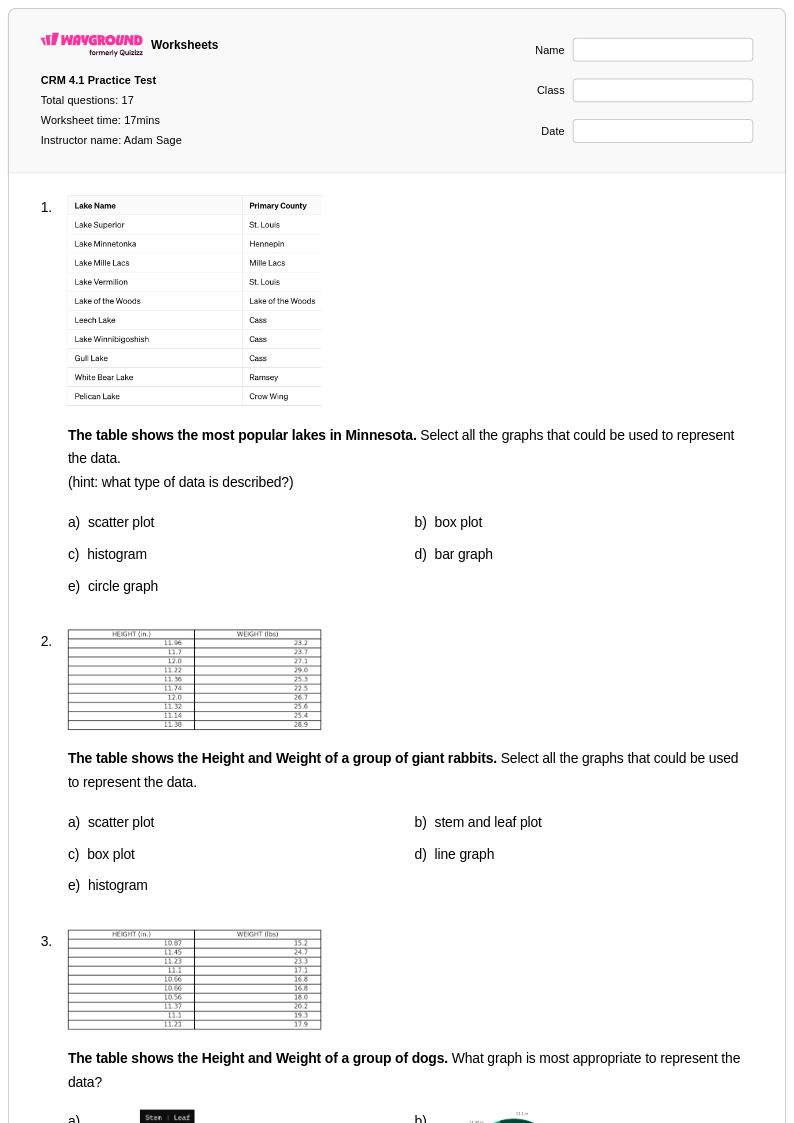
19 Q
9th - 12th
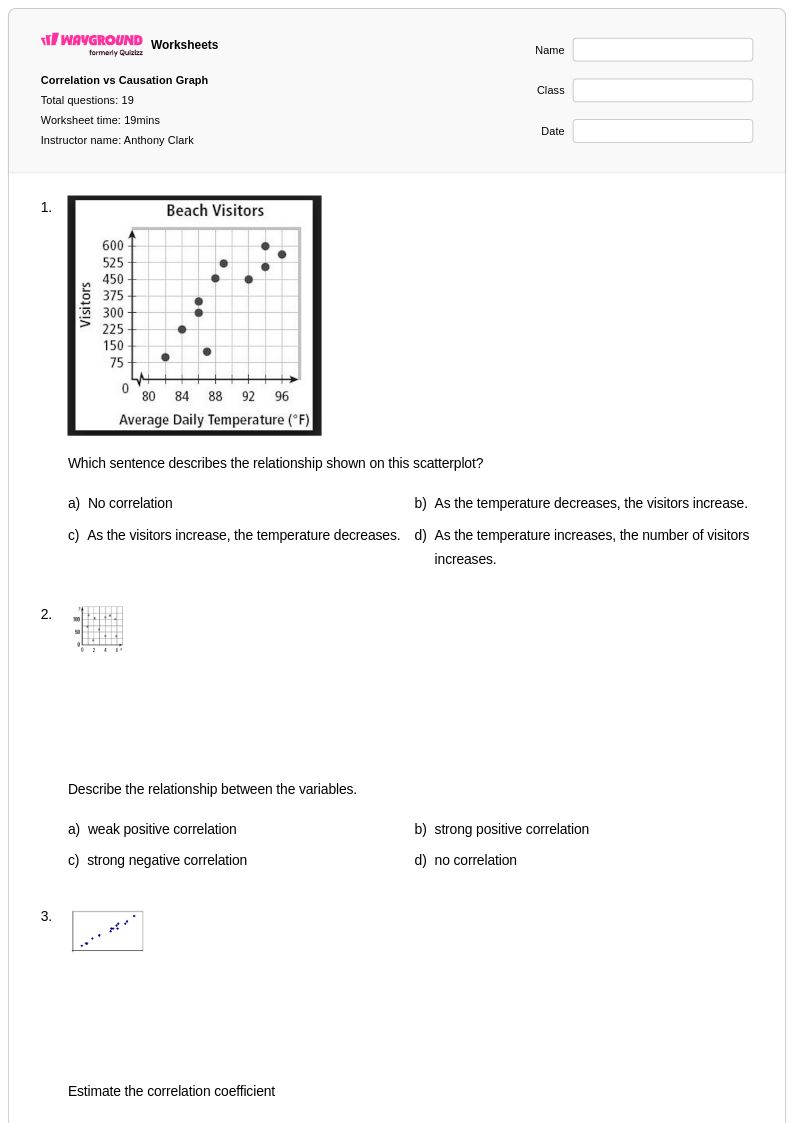
19 Q
9th - Uni
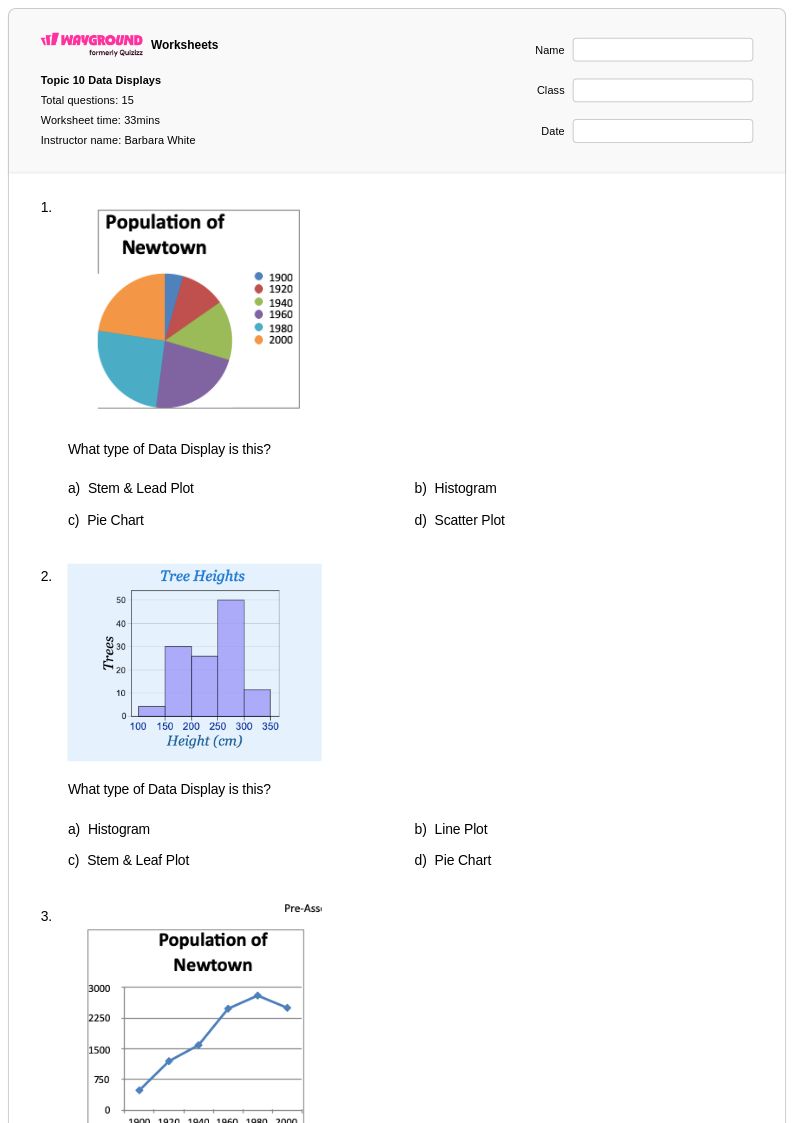
15 Q
9th - 10th
Explore Other Subject Worksheets for year 10
Explore printable Histogram Interpretation worksheets for Year 10
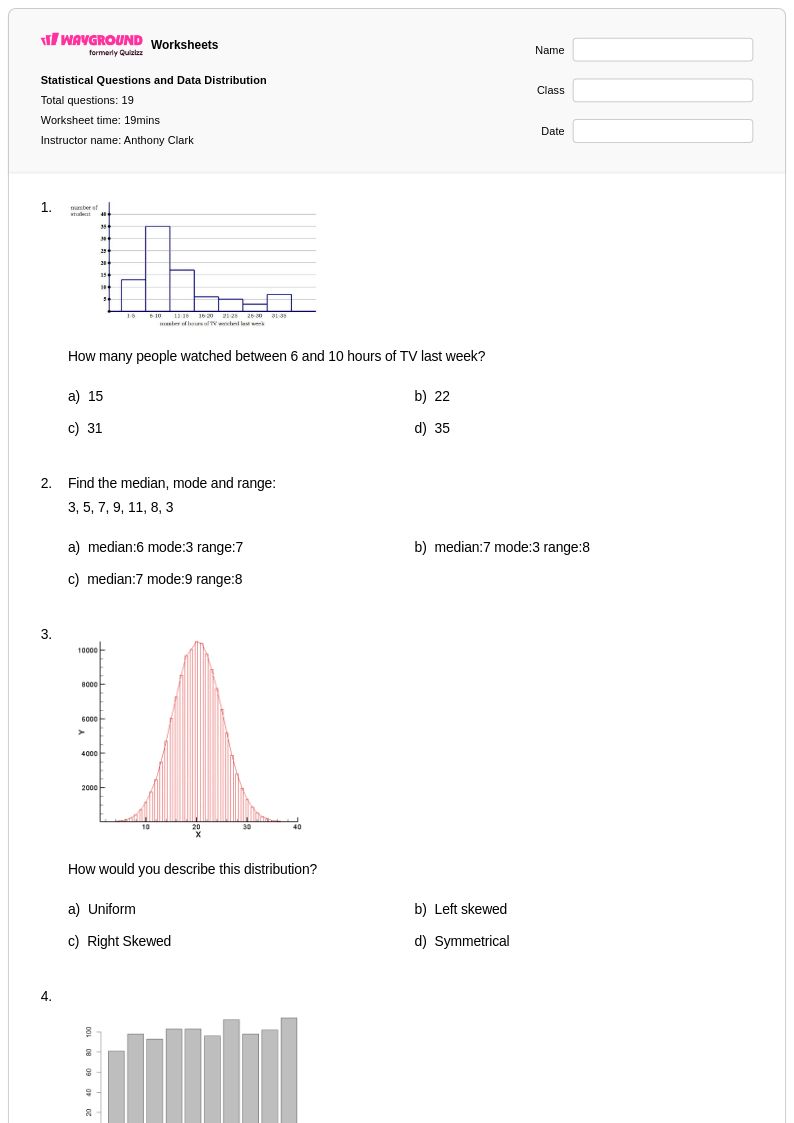
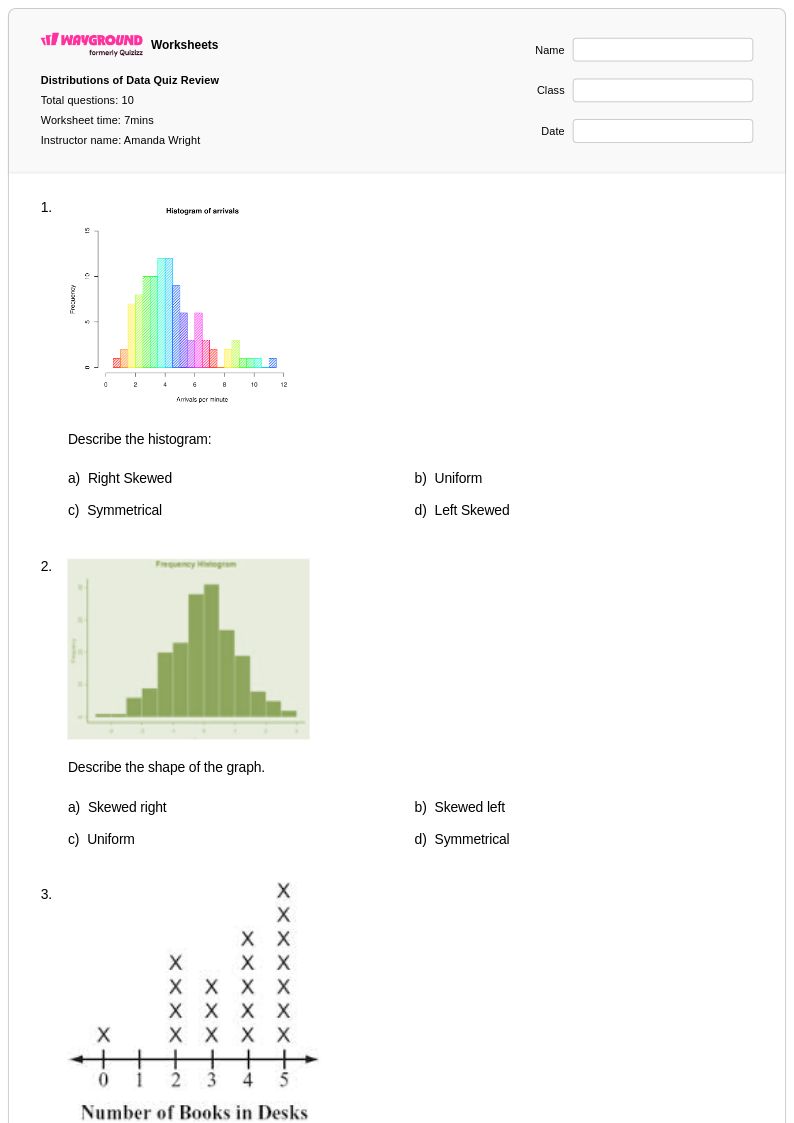
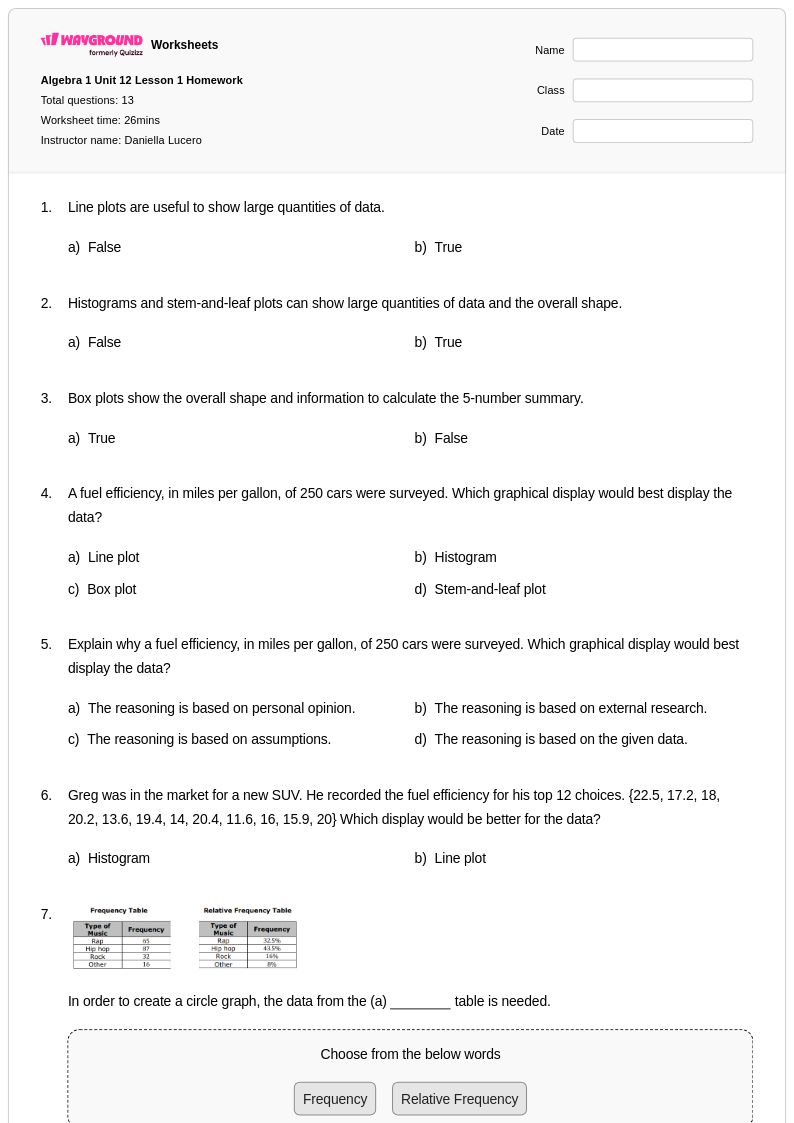
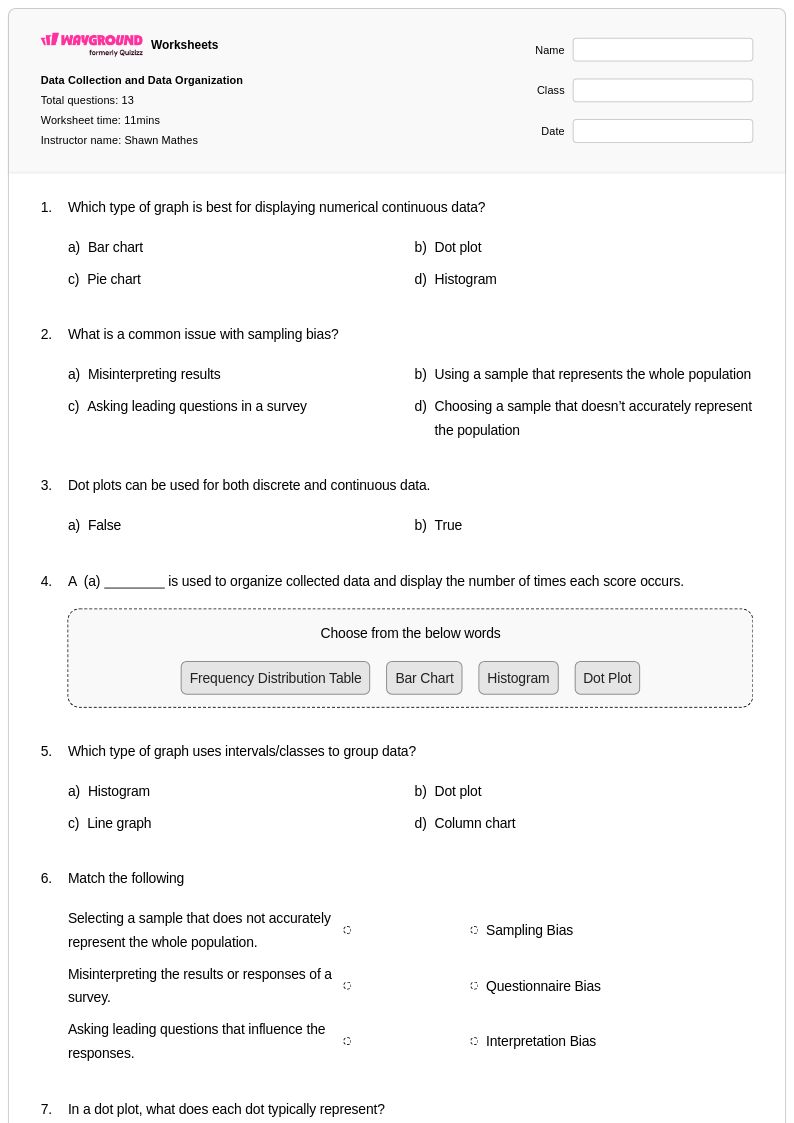
Histogram interpretation worksheets for Year 10 mathematics provide students with essential practice in analyzing and understanding data distributions through visual representations. These comprehensive worksheet collections available through Wayground (formerly Quizizz) focus on developing critical statistical literacy skills, including reading histogram axes, identifying frequency patterns, calculating measures of central tendency from grouped data, and drawing meaningful conclusions about data sets. Students work through practice problems that challenge them to interpret real-world scenarios presented in histogram format, analyze the shape and spread of distributions, and compare multiple data sets. Each worksheet comes with a detailed answer key to support independent learning, and these free printables offer educators flexible resources for both classroom instruction and homework assignments.
Wayground (formerly Quizizz) empowers educators with access to millions of teacher-created histogram interpretation resources specifically designed for Year 10 mathematics instruction. The platform's robust search and filtering capabilities allow teachers to quickly locate worksheets that align with specific curriculum standards and learning objectives, while differentiation tools enable customization based on individual student needs and skill levels. These versatile resources are available in both printable PDF format and interactive digital versions, making them ideal for traditional classroom settings, remote learning environments, or hybrid instruction models. Teachers can efficiently plan comprehensive data analysis units, provide targeted remediation for students struggling with statistical concepts, offer enrichment opportunities for advanced learners, and deliver consistent skill practice that builds confidence in interpreting graphical representations of quantitative information.
FAQs
How do I teach histogram interpretation to Grade 10 students?
What exercises help Grade 10 students practice reading histograms?
What mistakes do students commonly make when interpreting histograms?
How can I use these Grade 10 histogram interpretation worksheets?
How does histogram interpretation fit into the Common Core math progression?
How can I differentiate histogram practice for a mixed-ability Grade 10 class?
What grade level is histogram interpretation usually taught at?