Free Printable Human Population Worksheets for Year 8
Explore Wayground's free Year 8 human population geography worksheets and printables that help students analyze demographic patterns, population distribution, and migration trends through engaging practice problems with complete answer keys.
Explore printable Human Population worksheets for Year 8
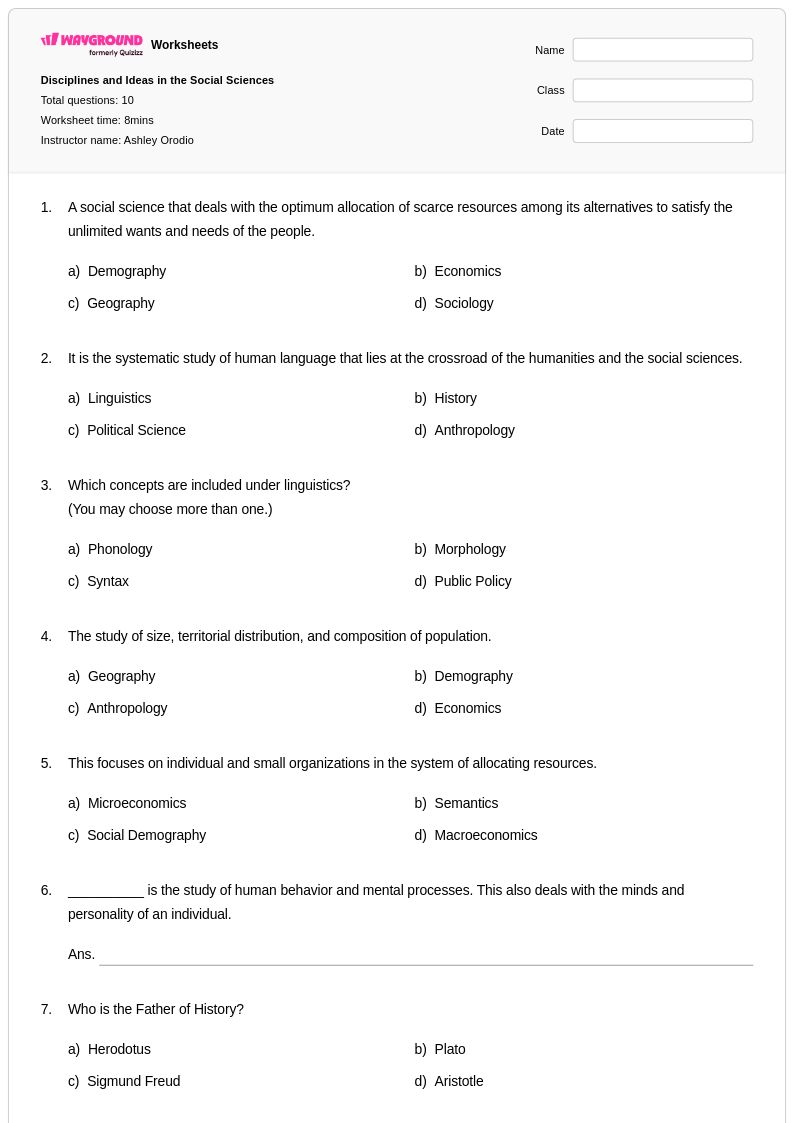
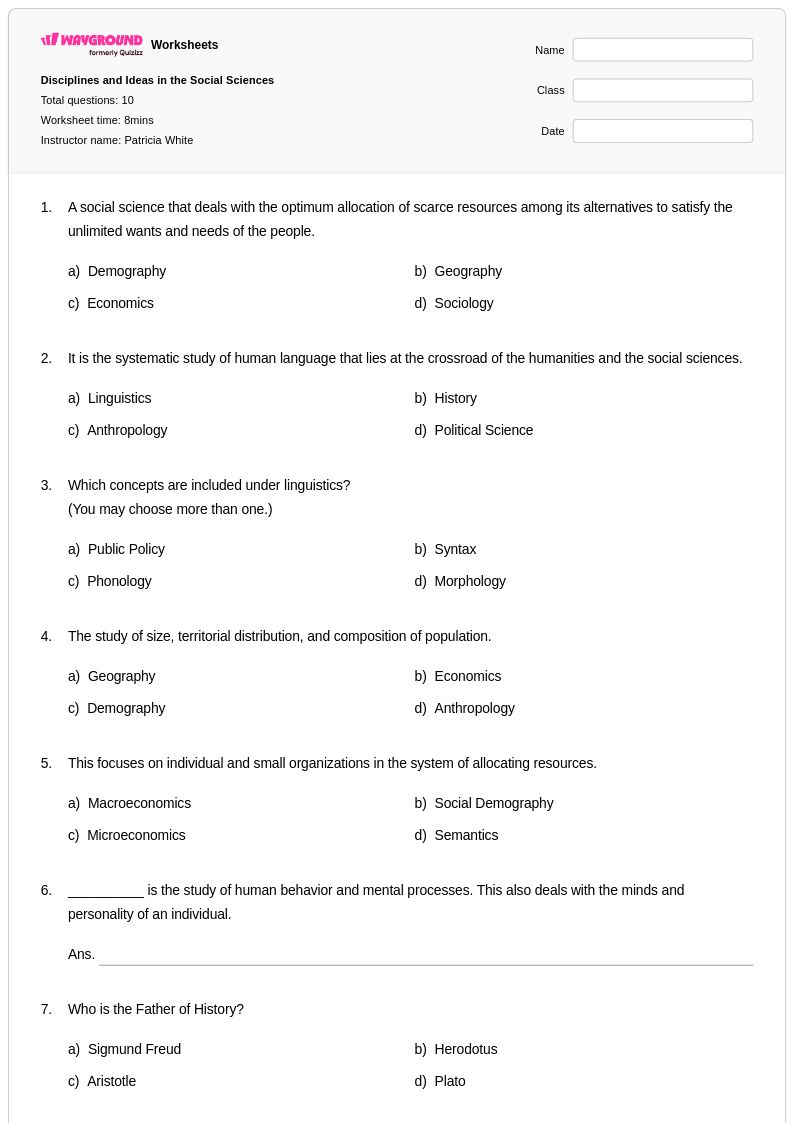
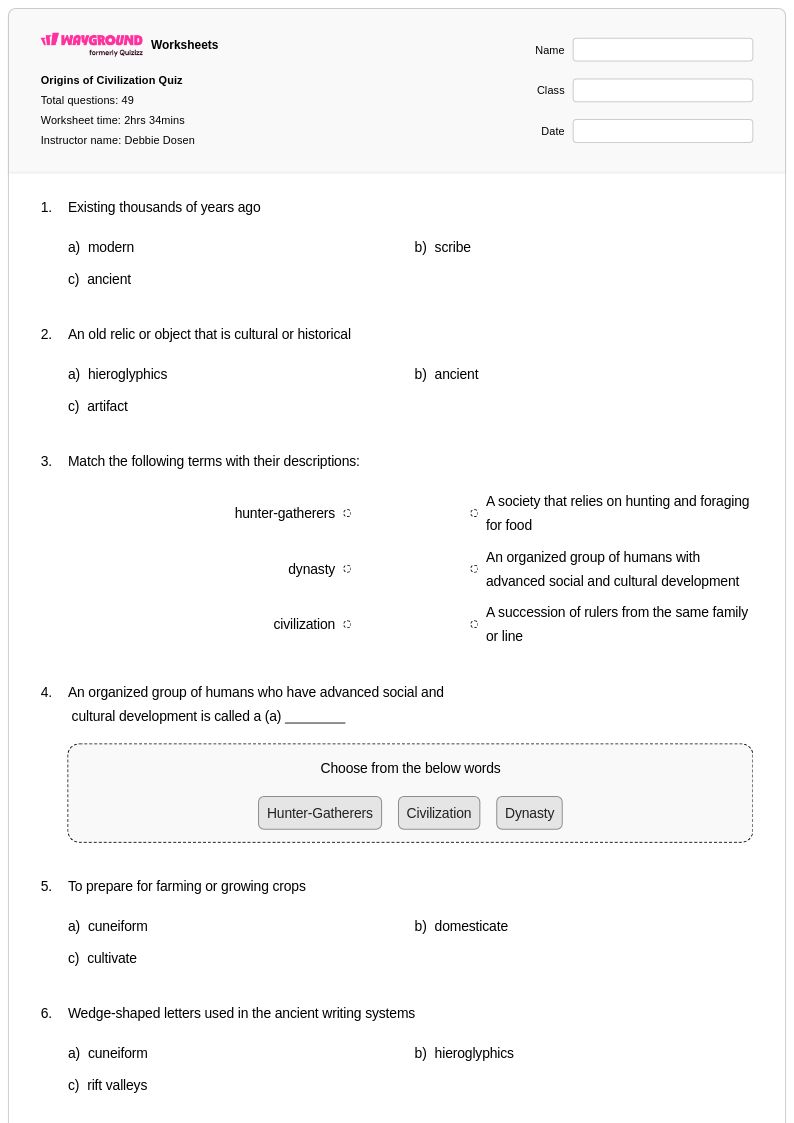
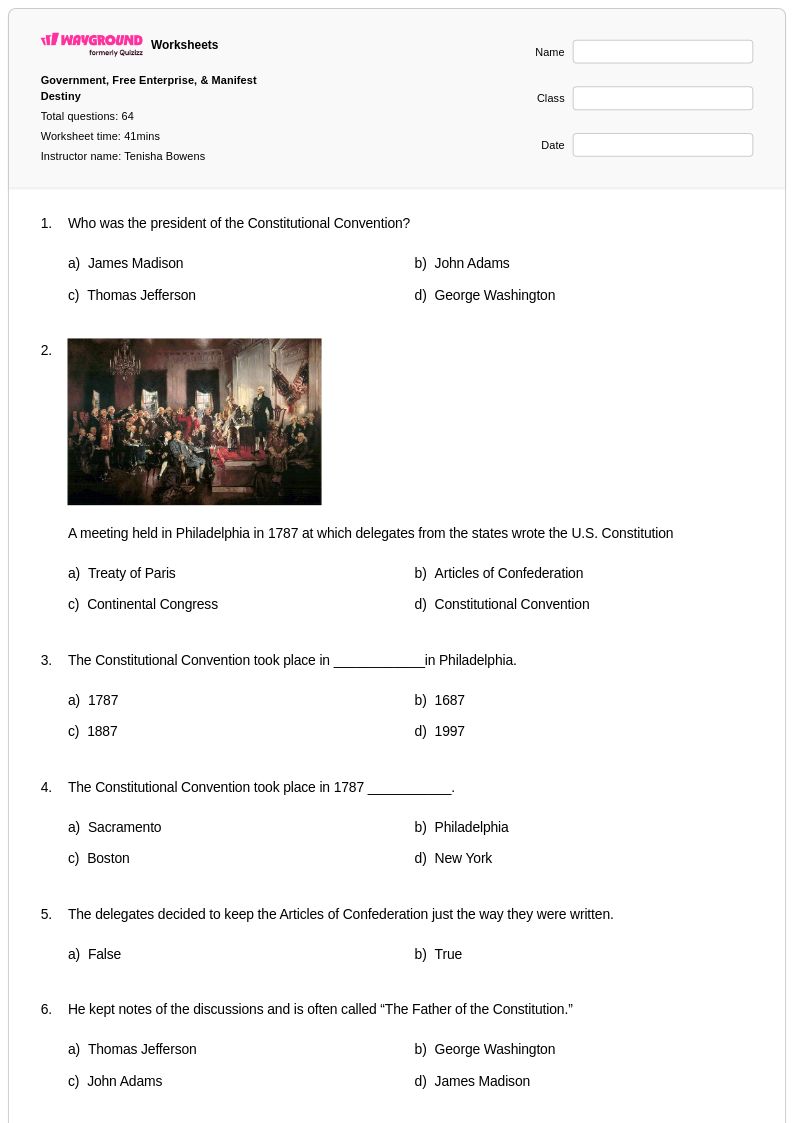
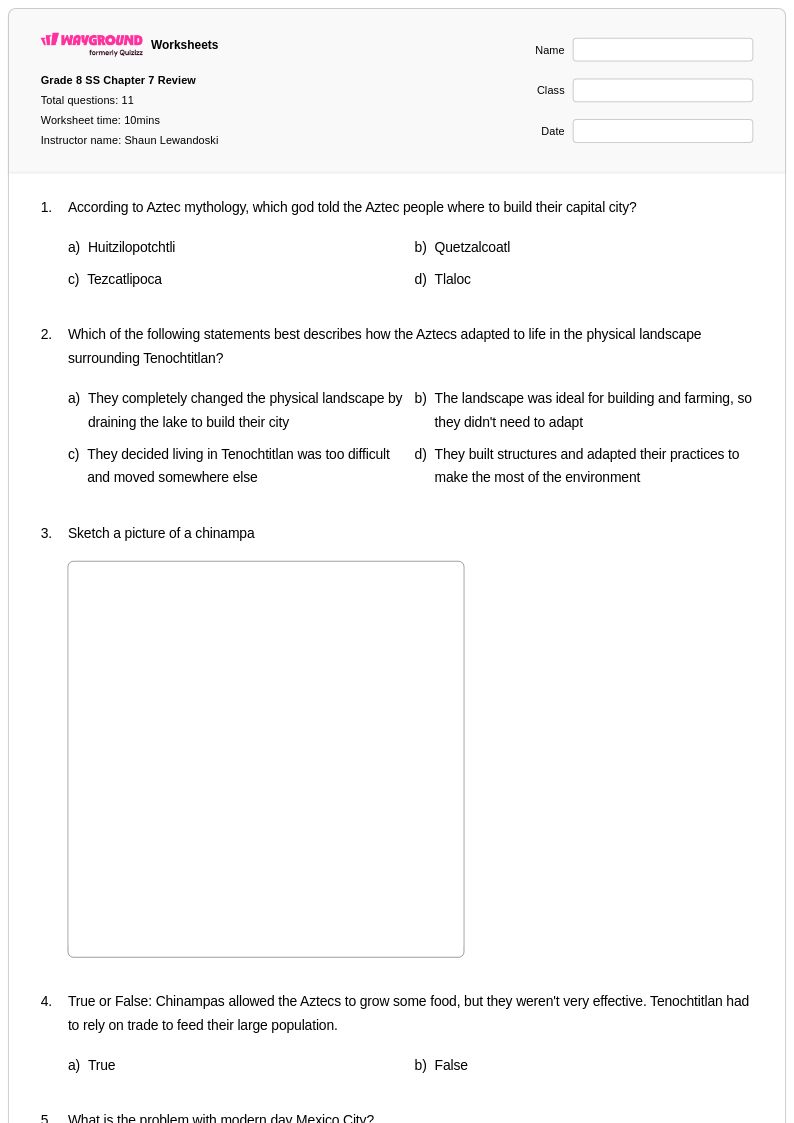
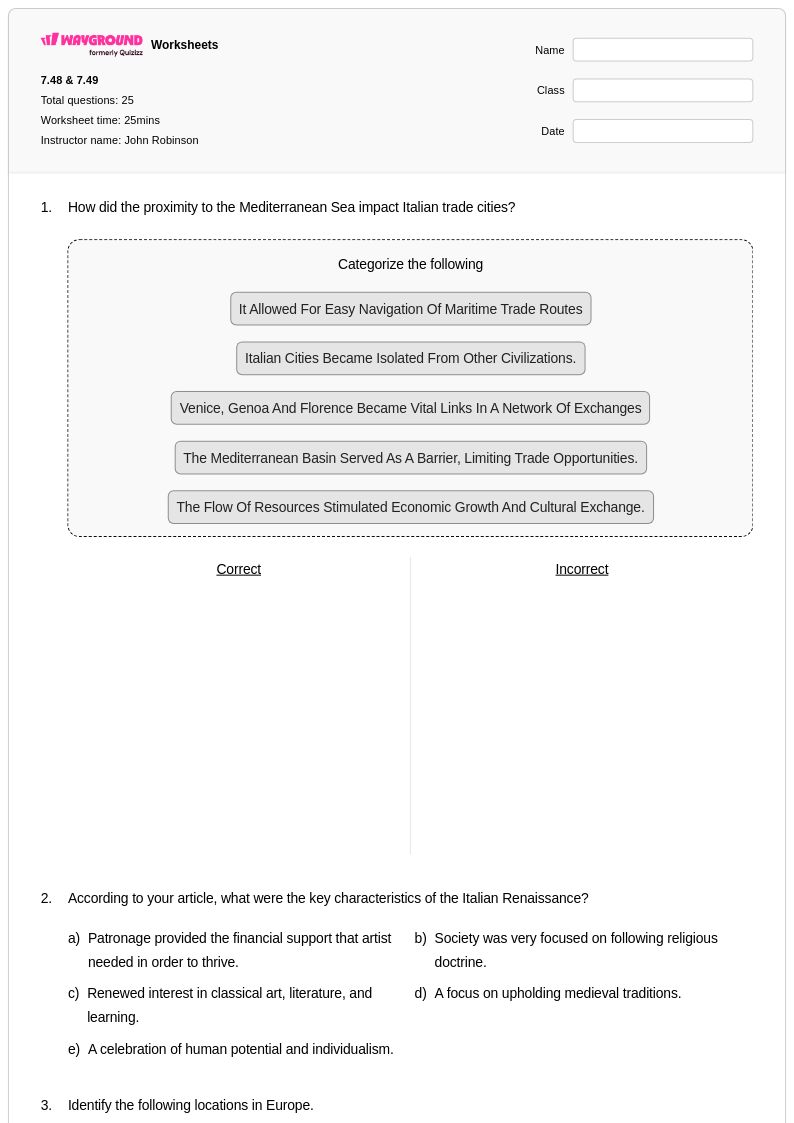
Human population worksheets for Year 8 provide comprehensive resources that help students analyze demographic patterns, distribution trends, and the complex factors that influence where and how people live around the world. These carefully designed practice materials guide eighth-grade learners through essential geographic concepts including population density, migration patterns, urbanization processes, and the relationship between physical geography and human settlement. Students work with real-world data to interpret population pyramids, calculate growth rates, and examine case studies that illustrate how economic, political, and environmental factors shape demographic changes. Each worksheet comes with a detailed answer key to support independent learning, and the free printable format makes these resources accessible for both classroom instruction and home study, ensuring students can practice these critical analytical skills repeatedly until mastery is achieved.
Wayground, formerly Quizizz, empowers educators with an extensive collection of millions of teacher-created human population worksheets specifically designed for Year 8 social studies instruction. The platform's robust search and filtering capabilities allow teachers to quickly locate materials that align with specific curriculum standards and learning objectives, whether they need resources for introductory lessons on population distribution or advanced practice problems involving demographic transition models. These differentiation tools enable educators to customize worksheets to meet diverse learning needs, providing enrichment opportunities for advanced students while offering additional scaffolding for those requiring remediation. Available in both printable PDF format and interactive digital versions, these resources streamline lesson planning and provide flexible options for skill practice, assessment preparation, and collaborative learning activities that deepen students' understanding of how human populations interact with geographic environments.
FAQs
How do I teach human population geography to middle and high school students?
Start by grounding students in core demographic vocabulary: birth rate, death rate, natural increase, and population density. From there, use population density maps and demographic transition model diagrams to help students visualize how and why populations grow or decline in specific regions. Connecting data to real-world examples, such as comparing urbanization trends in Sub-Saharan Africa versus Western Europe, builds both geographic reasoning and analytical thinking.
What exercises help students practice analyzing population data?
Effective practice includes calculating natural increase rates from birth and death rate data, interpreting population pyramids to infer a country's age structure and development stage, and analyzing choropleth maps showing population density. Tasks that ask students to explain the relationship between geographic features, like rivers or arable land, and settlement patterns push beyond recall into applied reasoning. Mixing quantitative calculations with written analysis ensures students develop both numerical and interpretive skills.
What common mistakes do students make when studying human population concepts?
One of the most frequent errors is confusing population density with total population size, leading students to assume the most populous countries are also the most densely settled. Students also struggle to distinguish between immigration and emigration when interpreting net migration data, and often conflate high birth rates with high population growth without accounting for corresponding death rates. Addressing these misconceptions explicitly, with data-driven examples, significantly improves accuracy on assessments.
How can I use human population worksheets to support different skill levels in my classroom?
Human population worksheets can be scaffolded by adjusting the complexity of the data students are asked to interpret, from single-variable population bar graphs for developing learners to multi-factor demographic analyses for advanced students. On Wayground, teachers can apply individual accommodations such as read aloud support for students who need audio assistance, reduced answer choices to lower cognitive load, and extended time settings configurable per student. These accommodations are reusable across sessions, so differentiation does not require rebuilding setups for every lesson.
How do I use Wayground's human population worksheets in my classroom?
Wayground's human population worksheets are available as printable PDFs for traditional classroom use and in digital formats for technology-integrated environments, accommodating a range of teaching setups and student preferences. Teachers can also host worksheets directly as a quiz on Wayground, enabling real-time student responses and built-in assessment. Each worksheet includes a complete answer key, which supports both independent student review and efficient teacher grading.
How do I teach the demographic transition model effectively?
Present the demographic transition model as a framework for understanding how birth rates and death rates shift as societies industrialize and develop economically. Have students place real countries into the four stages using current demographic data, then ask them to justify their classifications in writing. This approach prevents rote memorization and builds the analytical reasoning needed to apply the model to unfamiliar regions on assessments.
What is the relationship between geographic features and population distribution that students need to understand?
Students need to recognize that human populations cluster in areas with favorable physical geography, including flat, fertile land near freshwater sources, moderate climates, and coastal access for trade. Conversely, harsh environments such as deserts, dense rainforests, and high mountain ranges tend to support very low population densities. Understanding these patterns allows students to interpret population density maps critically rather than simply reading them as isolated data displays.