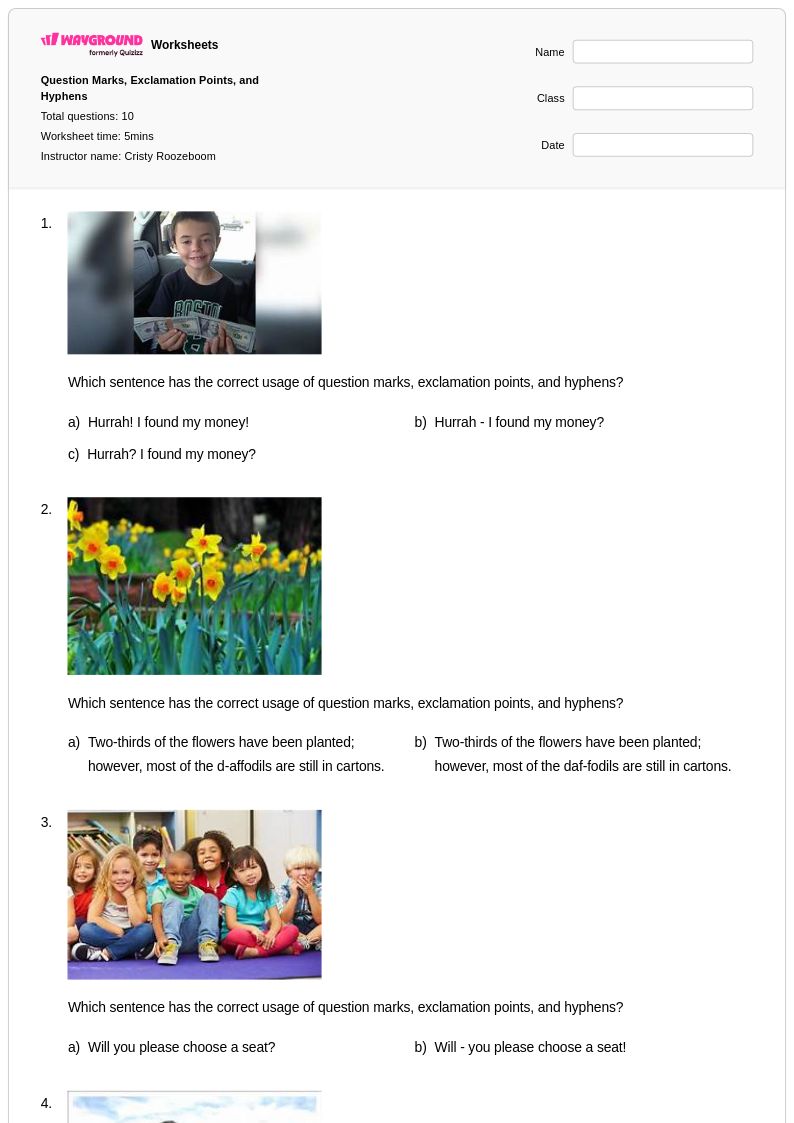
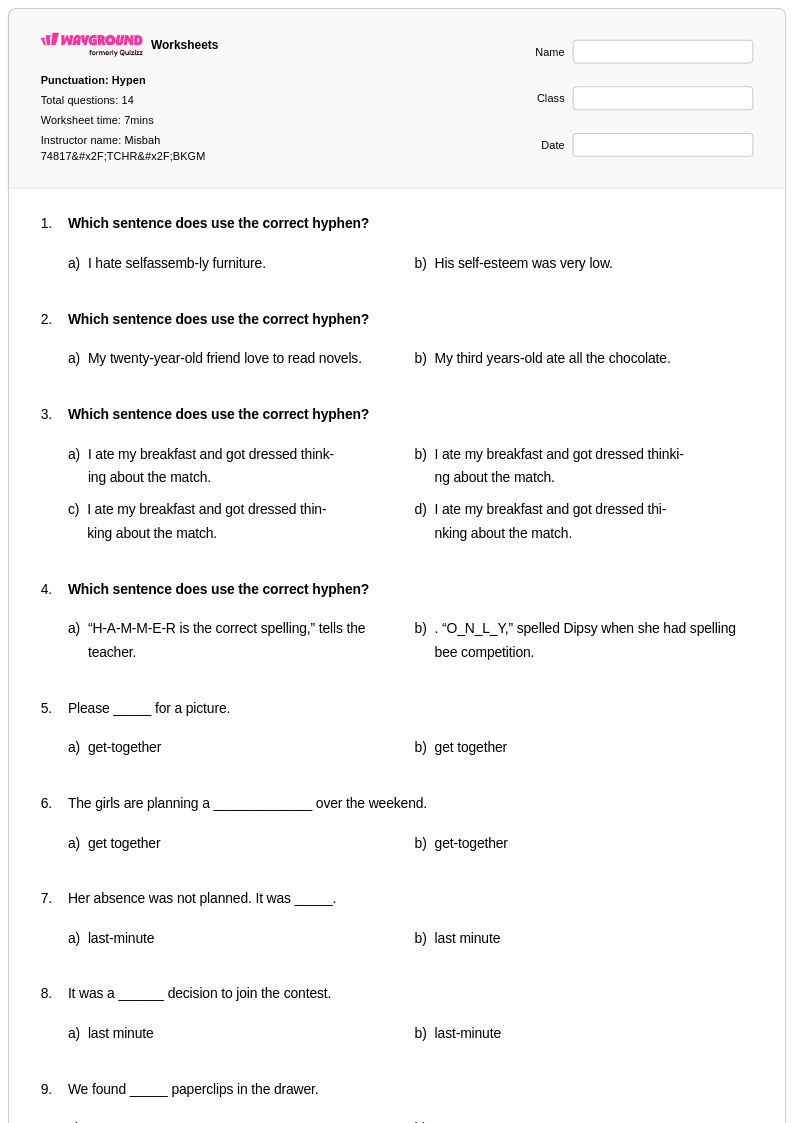
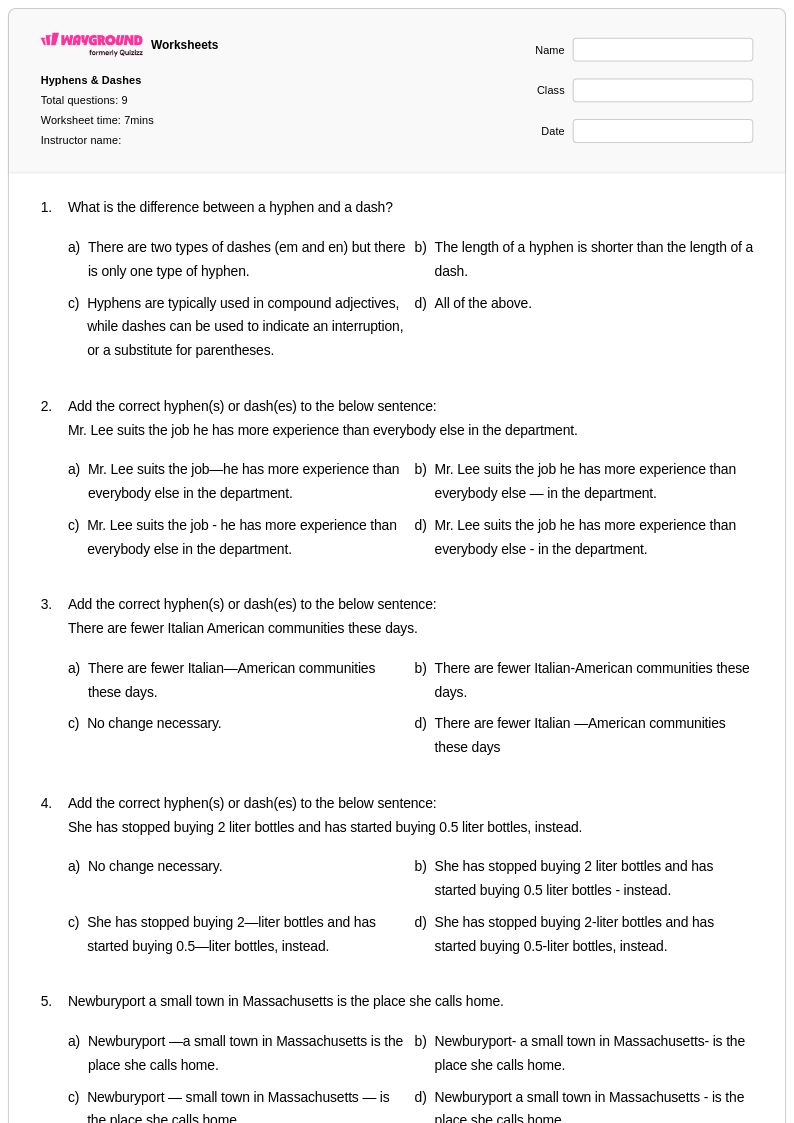
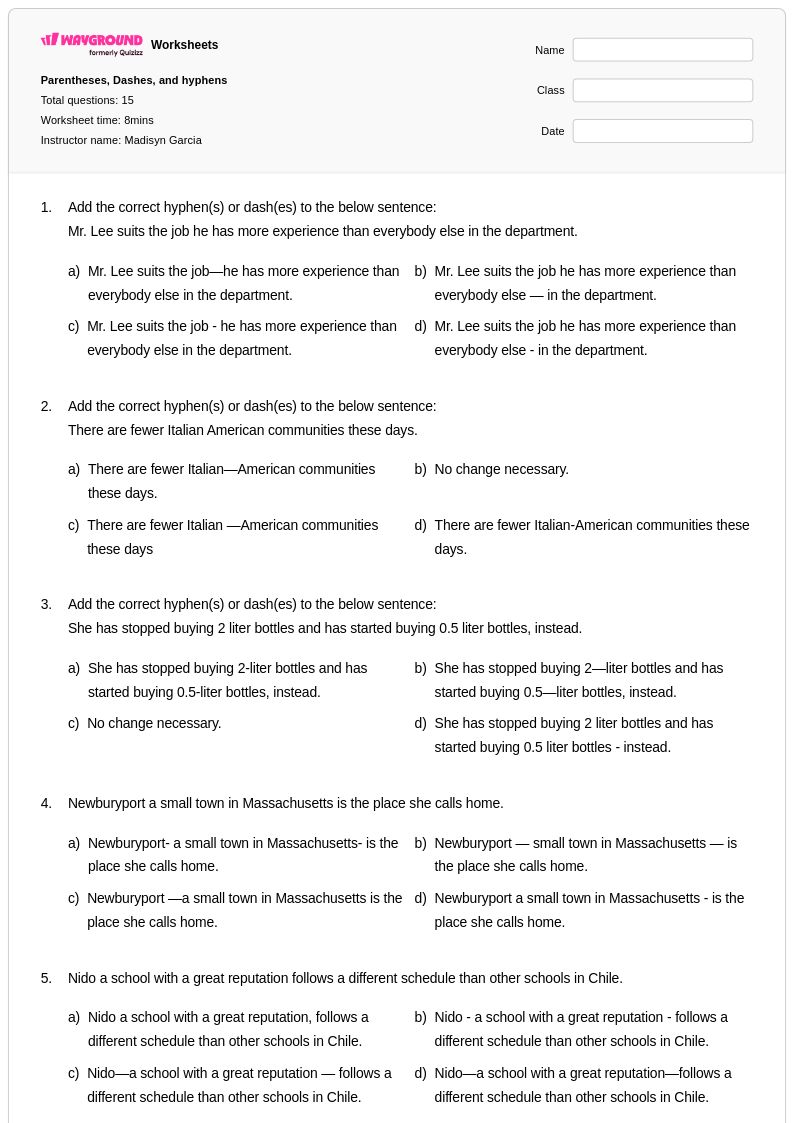
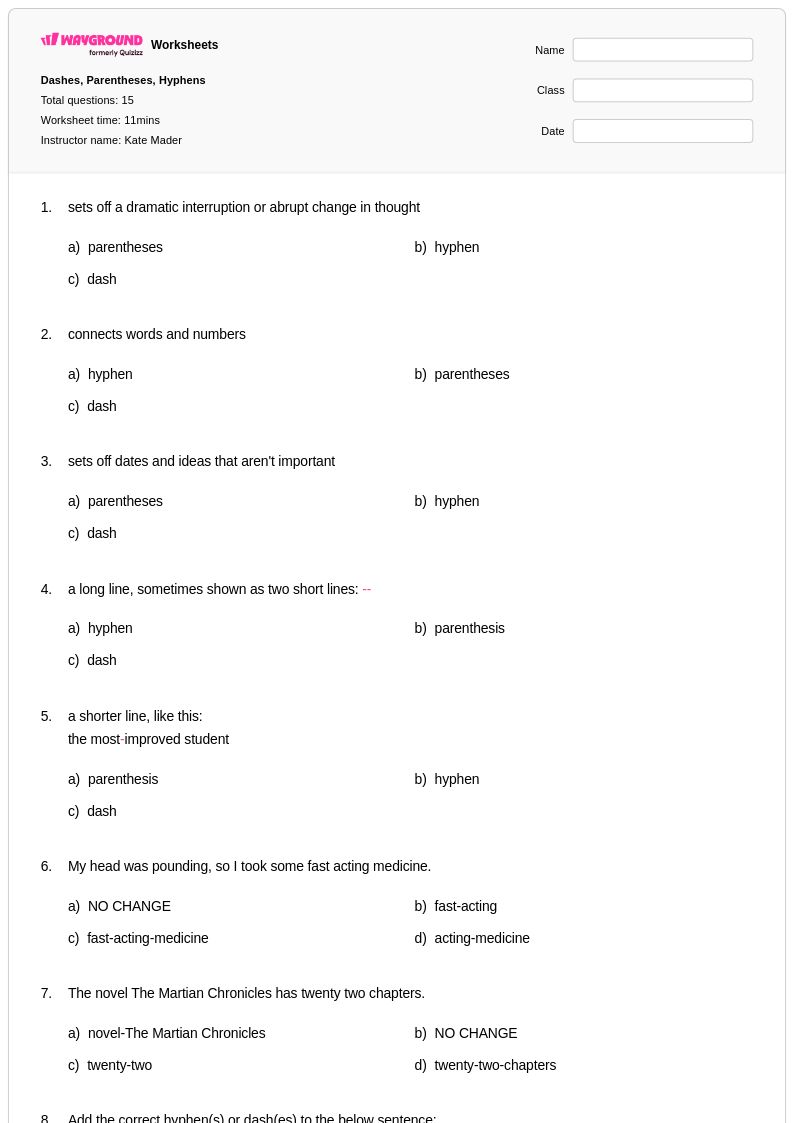
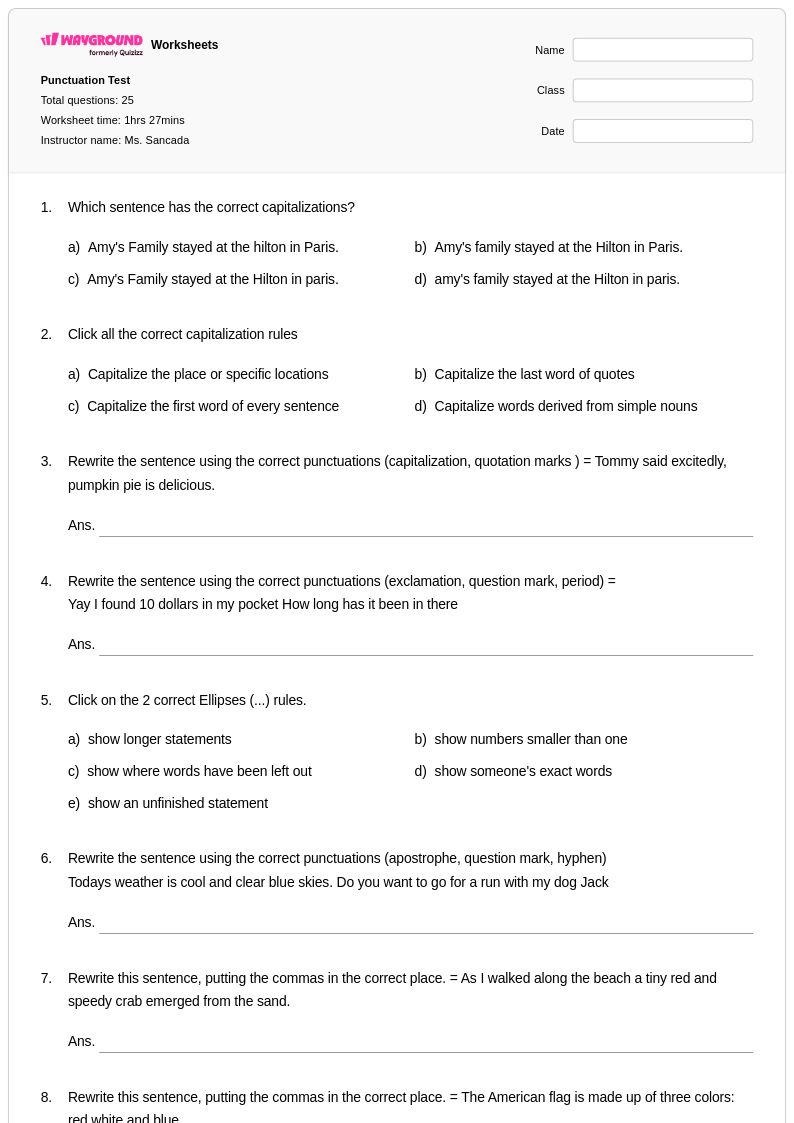
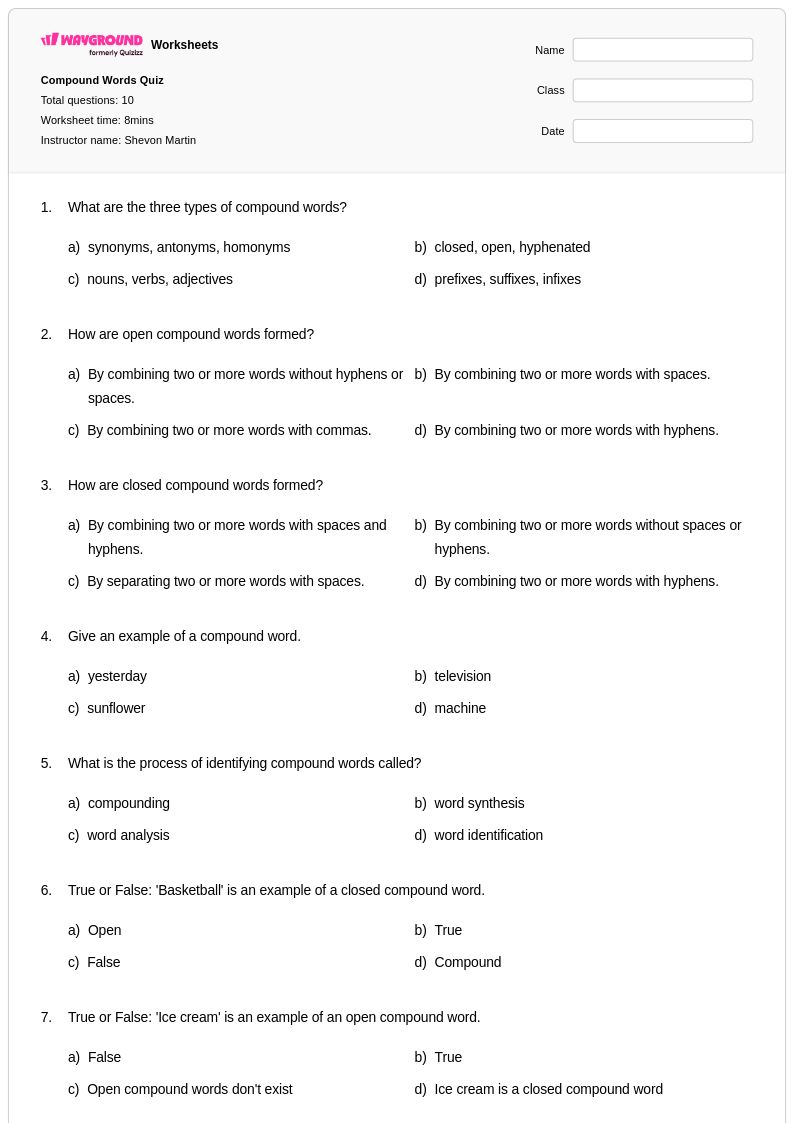
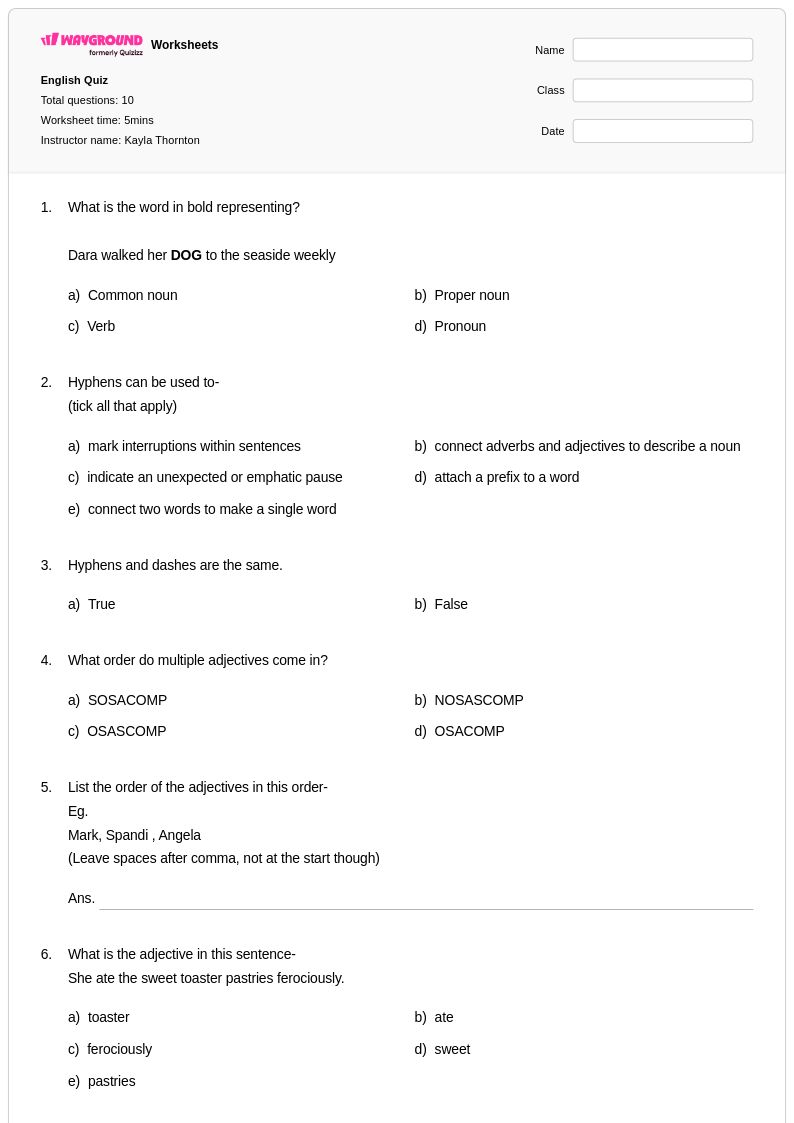
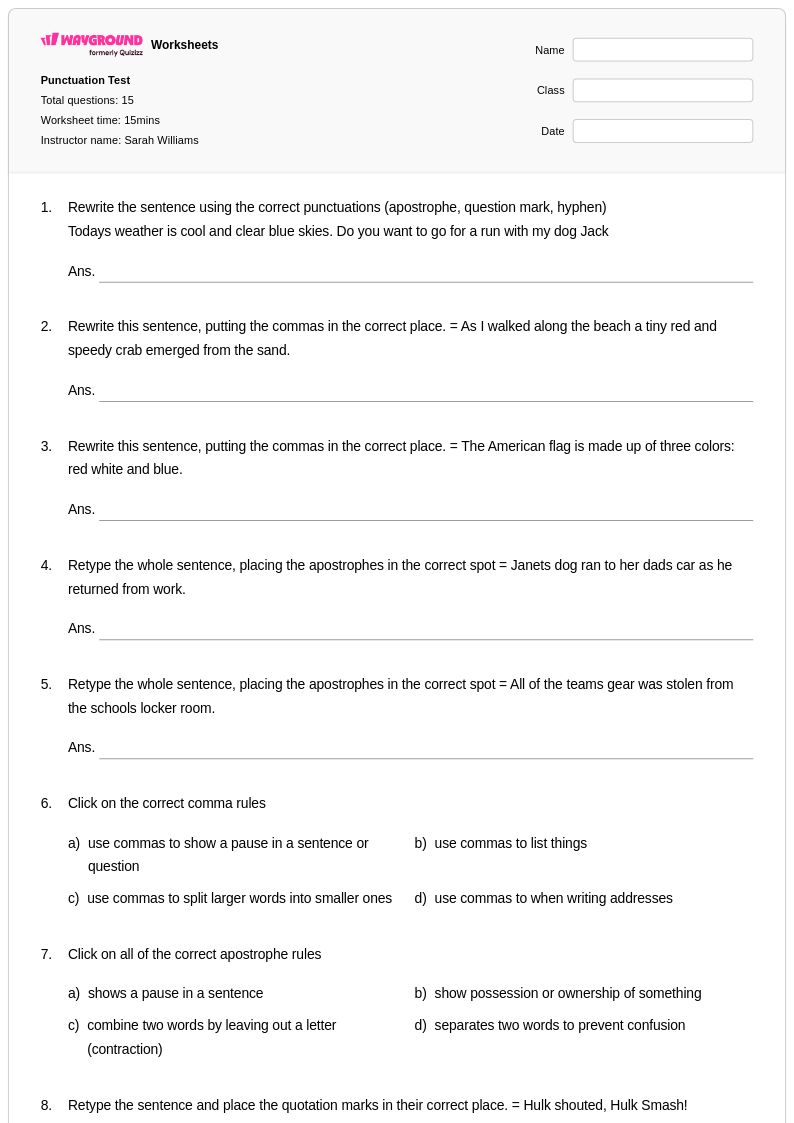
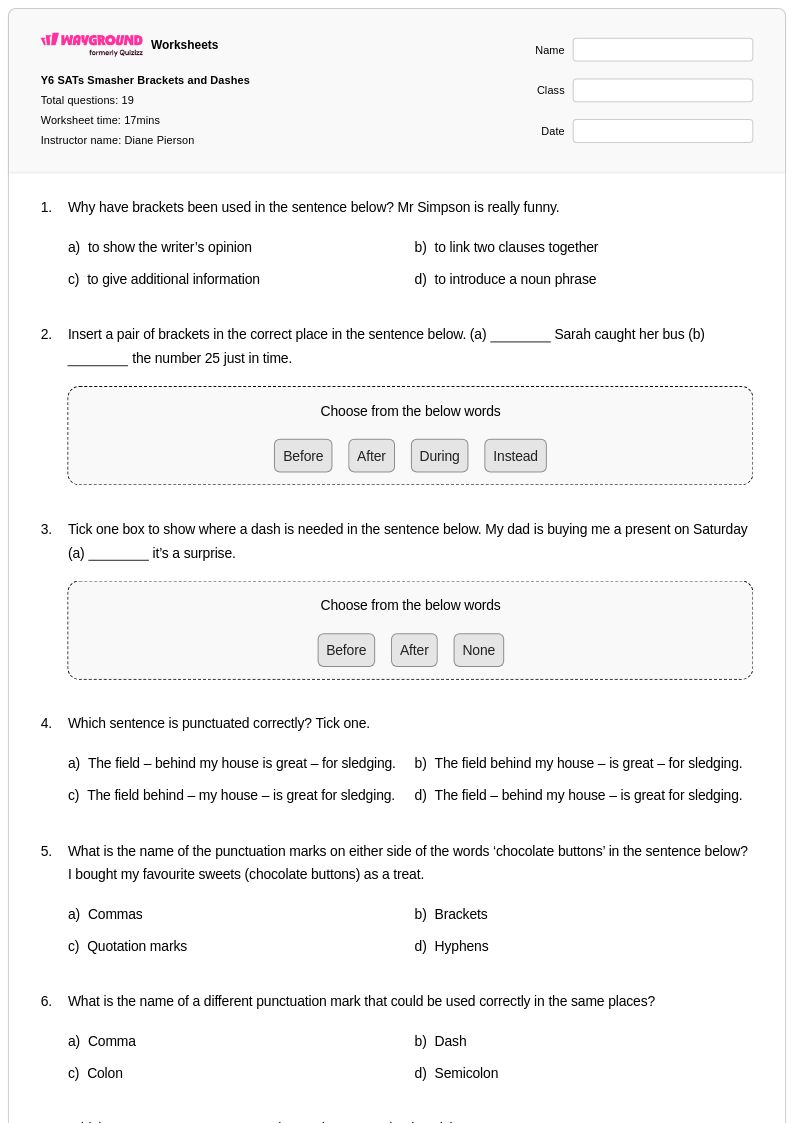
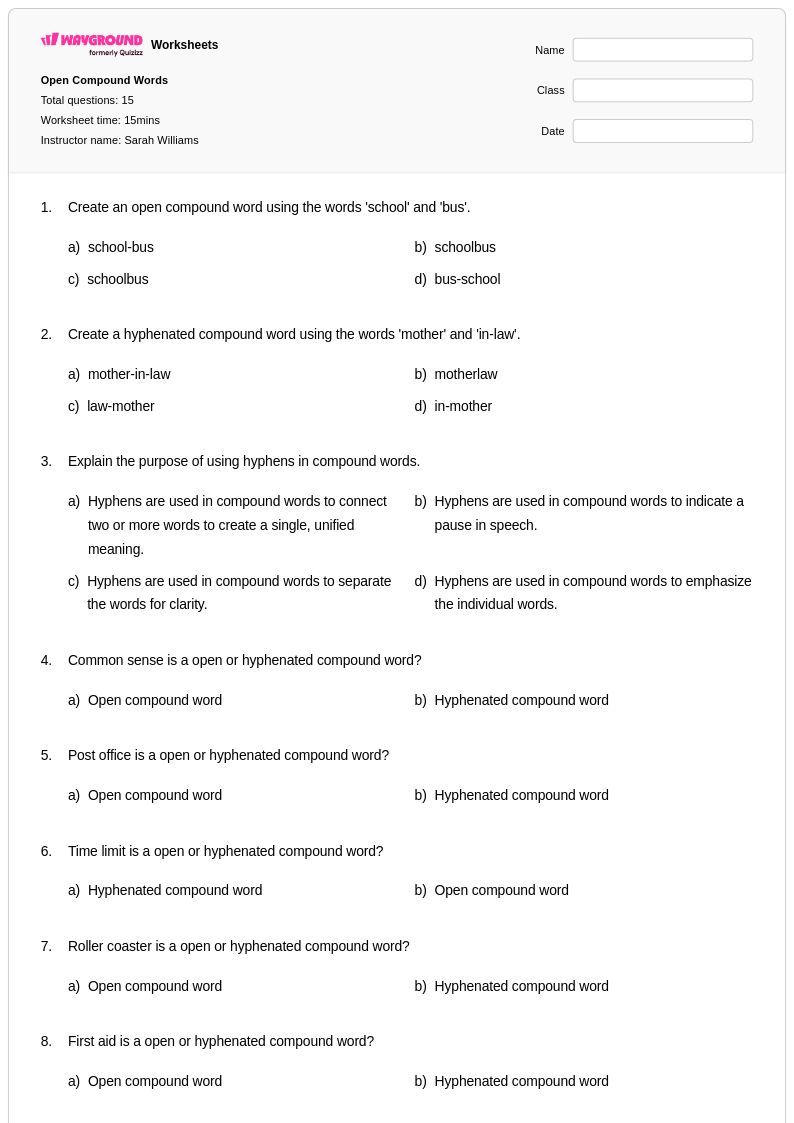
Year 6 hyphens worksheets from Wayground help students master proper hyphen usage through engaging printables, practice problems, and comprehensive answer keys for effective grammar and mechanics learning.
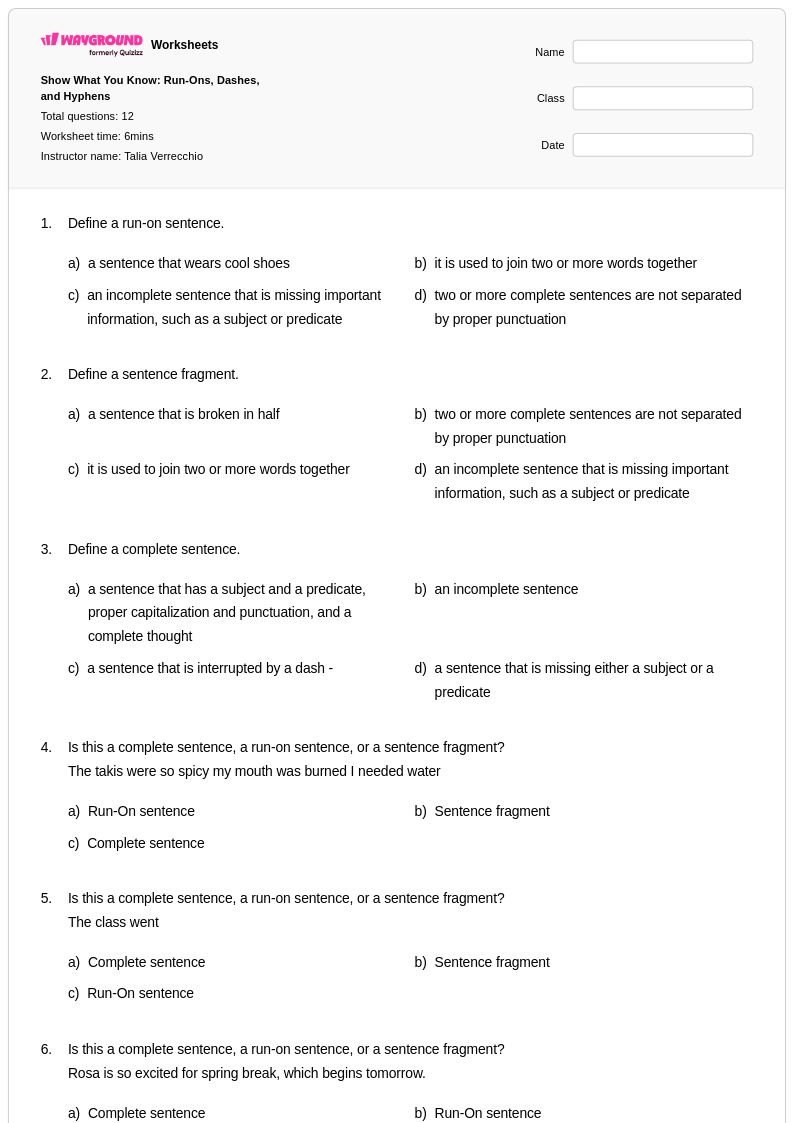
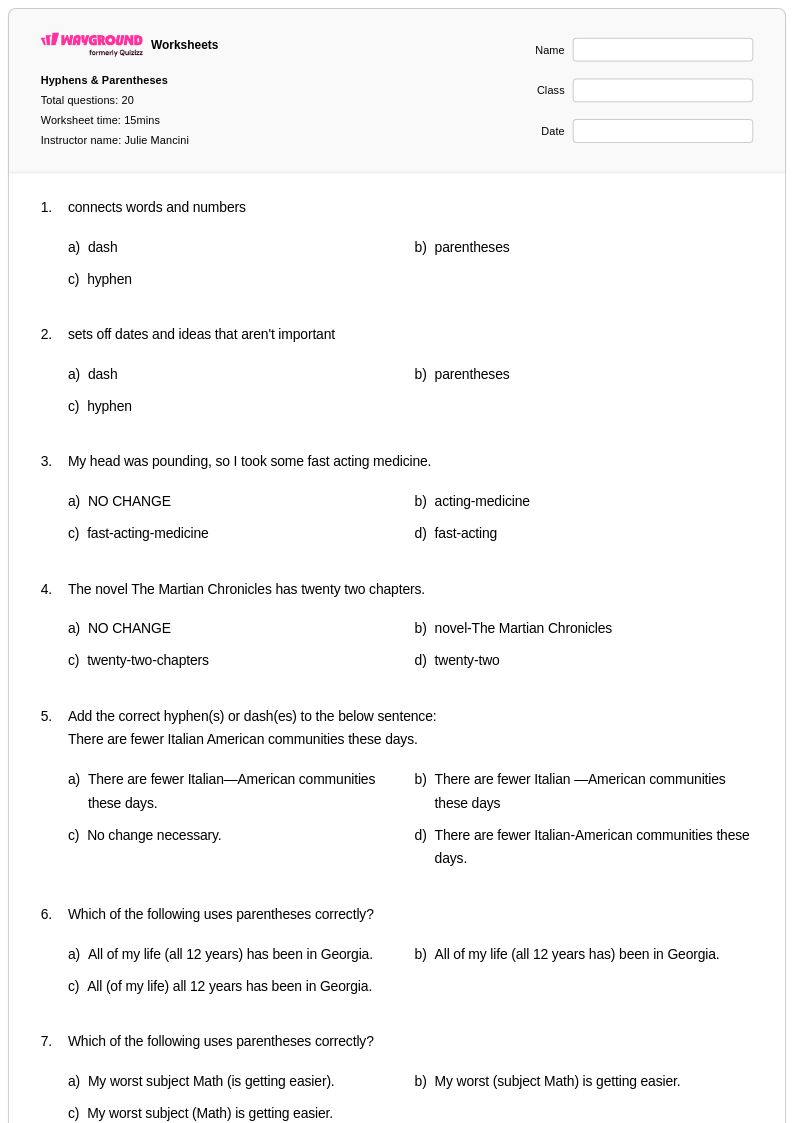
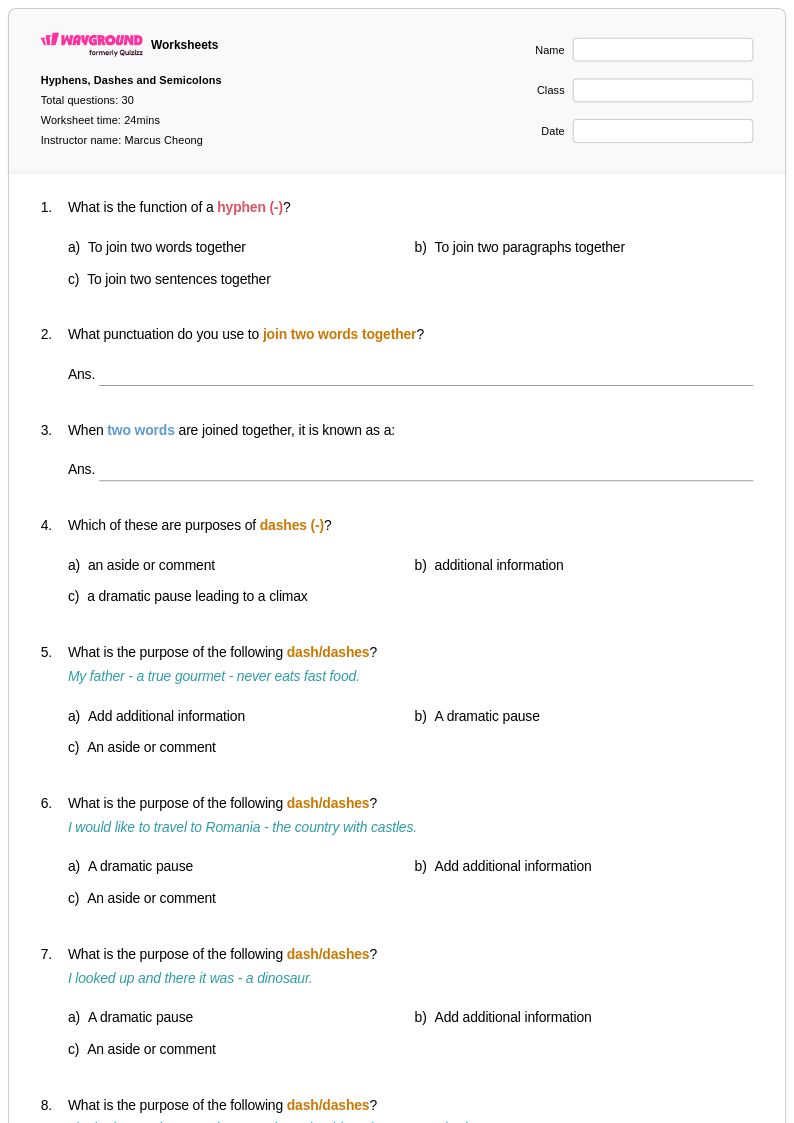
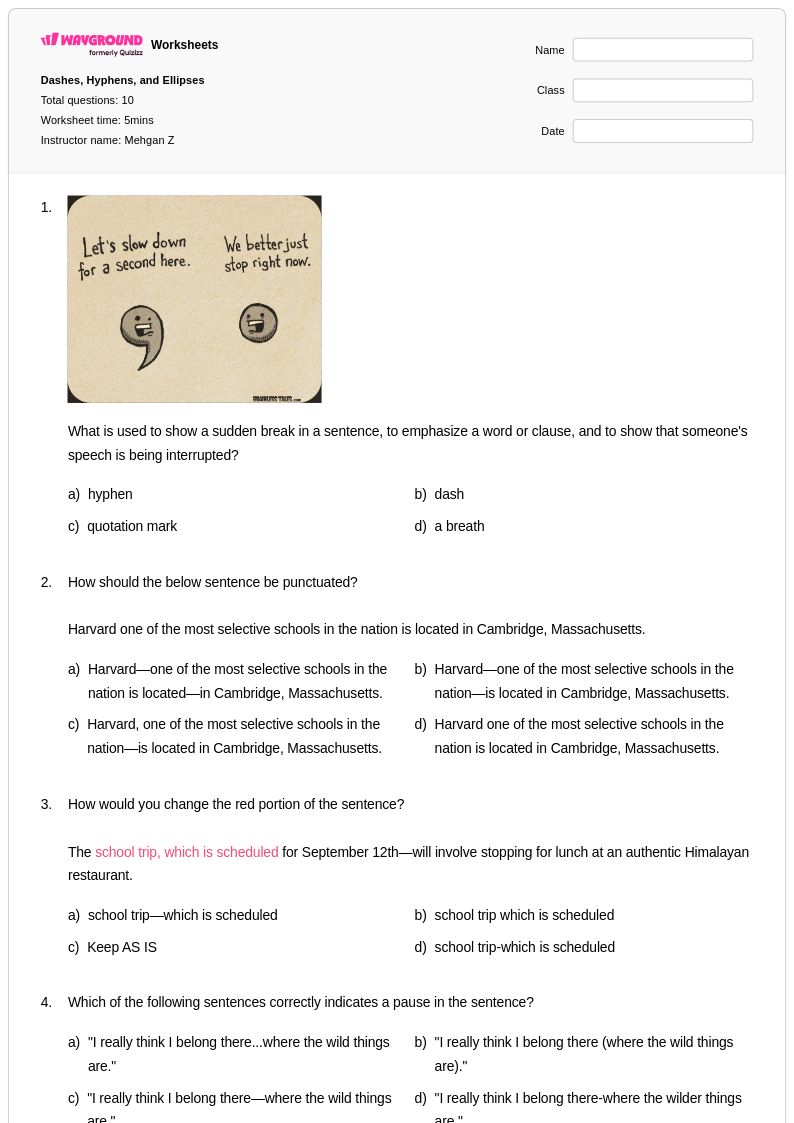
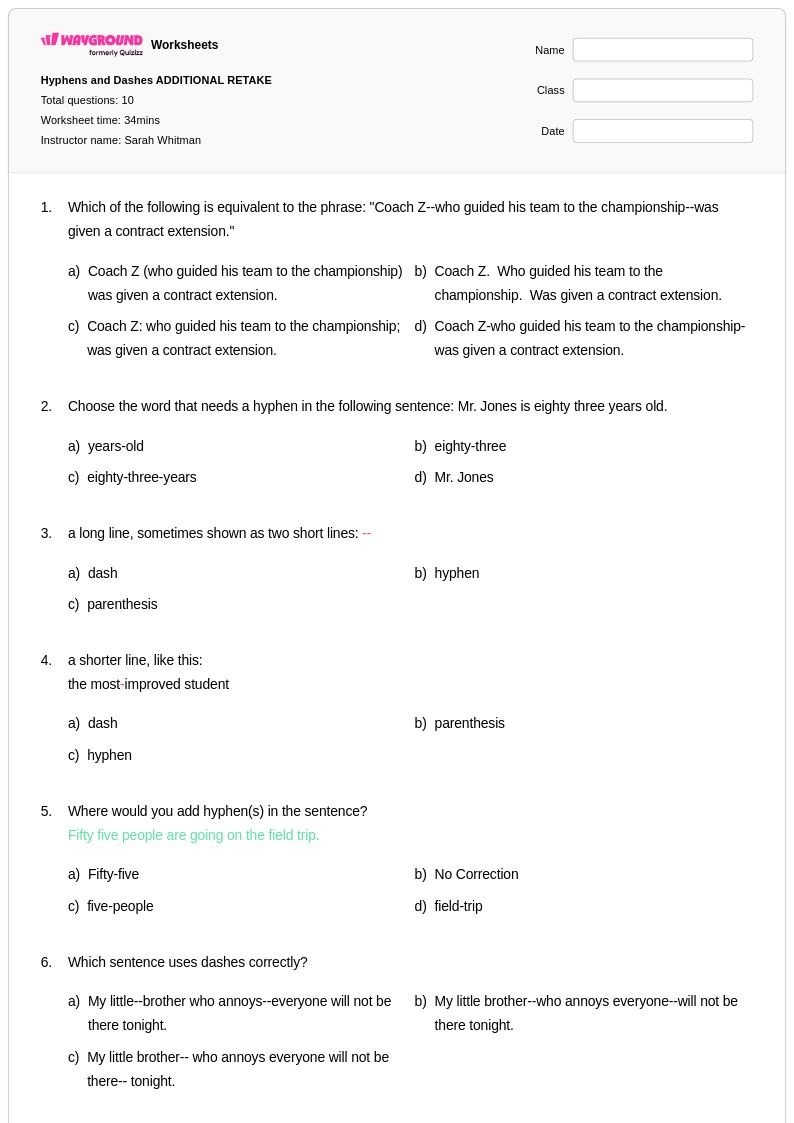
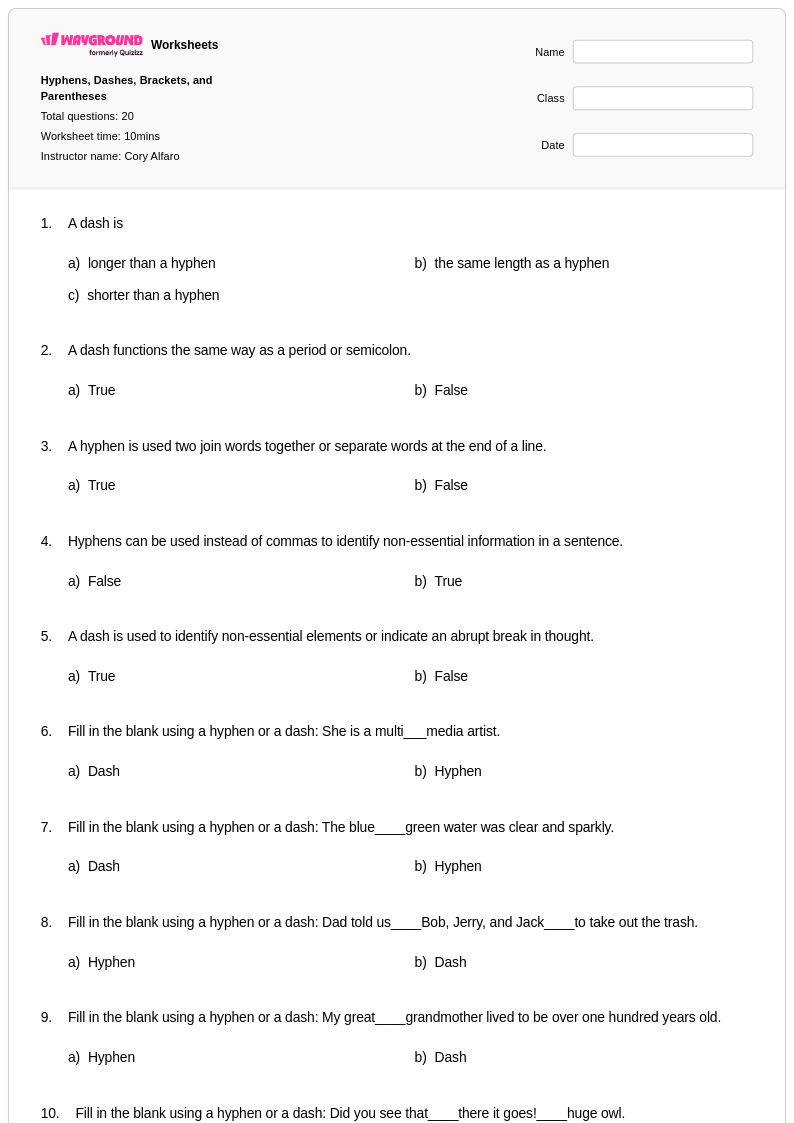
Hyphen worksheets for Year 6 students available through Wayground (formerly Quizizz) provide comprehensive practice with one of English grammar's most nuanced punctuation marks. These carefully designed resources help sixth-grade learners master the complex rules governing hyphen usage, including compound words, prefixes, number ranges, and word breaks at line endings. Students work through engaging practice problems that cover essential hyphen applications such as creating compound adjectives, connecting prefixes to proper nouns, and forming fractions written as words. Each worksheet includes a detailed answer key to support independent learning and self-assessment, while the free printables offer teachers flexible options for classroom instruction, homework assignments, and assessment preparation. The pdf format ensures consistent formatting across devices and makes these valuable resources easily accessible for both digital distribution and traditional paper-based learning environments.
Wayground (formerly Quizizz) empowers educators with millions of teacher-created hyphen worksheet resources that streamline lesson planning and enhance student learning outcomes. The platform's robust search and filtering capabilities allow teachers to quickly locate Year 6 hyphen materials that align with specific curriculum standards and learning objectives. Differentiation tools enable instructors to customize worksheets for diverse learning needs, supporting both remediation for struggling students and enrichment opportunities for advanced learners. Teachers can seamlessly transition between printable pdf worksheets for traditional classroom settings and interactive digital formats that engage tech-savvy students. This comprehensive collection supports systematic skill practice through varied exercise types, from basic hyphen identification to complex application scenarios, helping educators provide targeted instruction that builds student confidence and mastery in this critical area of grammar and mechanics.
FAQs
How do I teach hyphen rules to students who keep confusing them with dashes?
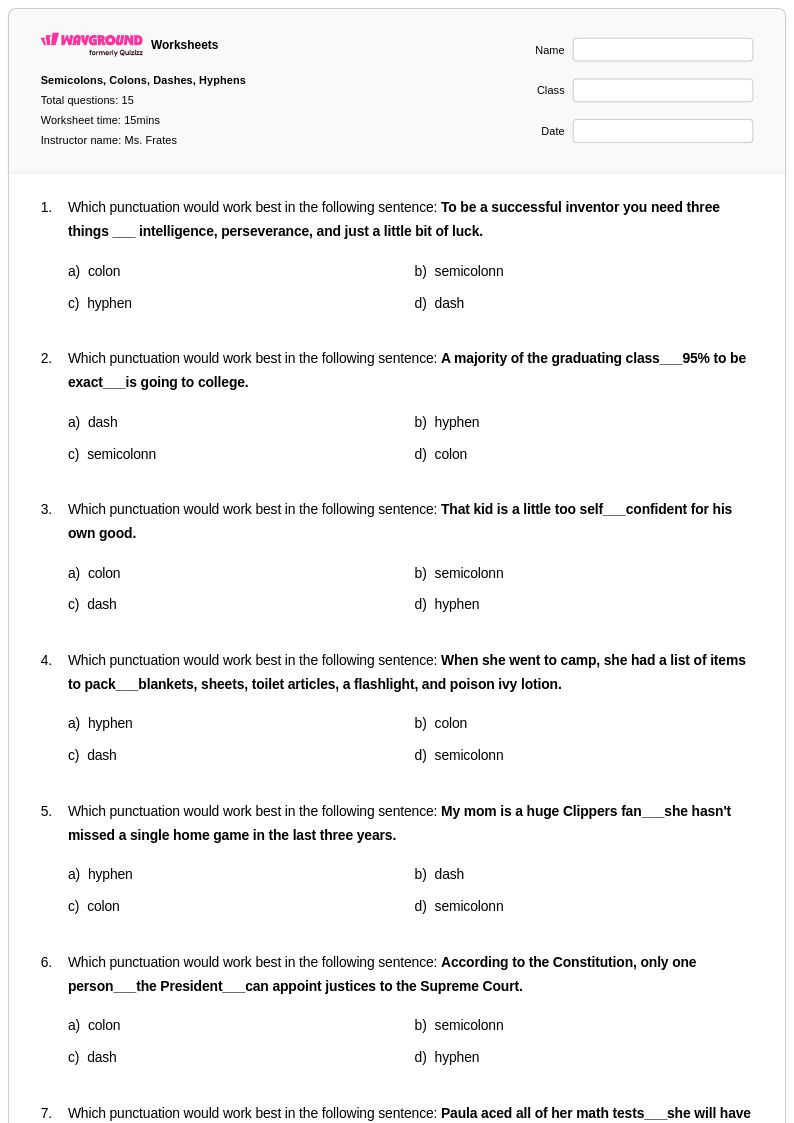
The most effective way to distinguish hyphens from dashes is to teach their functions separately before comparing them. Hyphens connect words or word parts — such as compound adjectives, prefixed words, and spelled-out numbers from twenty-one to ninety-nine — while dashes signal interruption or emphasis in a sentence. Using targeted examples in student writing samples helps make the distinction concrete and memorable.
What are the most important hyphen rules students need to practice?
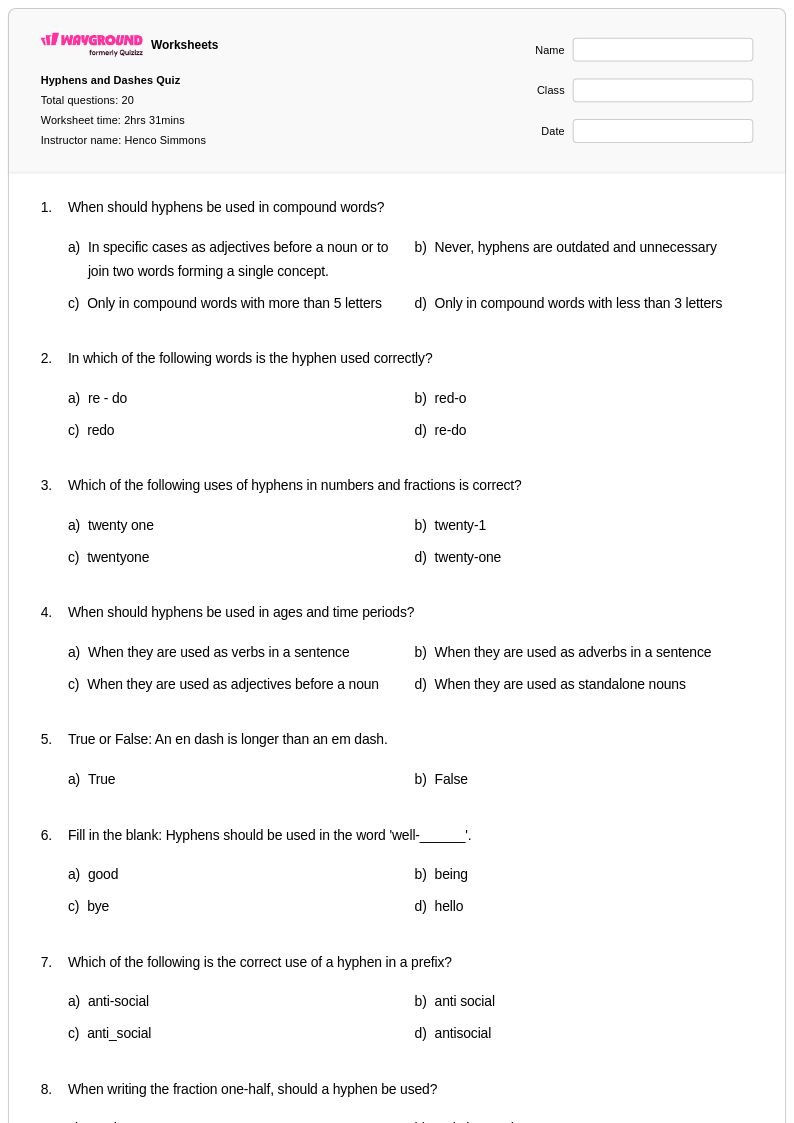
The core rules students need to master include hyphenating compound adjectives that appear before a noun (e.g., 'well-known author'), spelling out numbers twenty-one through ninety-nine with a hyphen, and attaching certain prefixes such as 'self-' and 'ex-' to base words. Students also need practice recognizing when a compound adjective follows a noun and no longer requires a hyphen, since this positional rule is one of the most commonly misapplied.
What mistakes do students most commonly make with hyphens?
The most frequent error is hyphenating compound adjectives regardless of their position in the sentence — students often write 'a well-known author' correctly but then also hyphenate 'the author is well-known,' where no hyphen is needed after a linking verb. Students also routinely omit hyphens in spelled-out compound numbers and in words with prefixes like 'self-' or 'ex-'. Worksheets that isolate each of these rules and require students to apply them in varied sentence contexts are the most reliable way to correct these patterns.
What exercises help students practice hyphen usage effectively?
Exercises that present sentences with missing or incorrectly placed hyphens and ask students to correct them are especially effective because they mirror the editing decisions writers make in real contexts. Sentence-combining tasks where students must form compound adjectives from two separate words also build rule application skills. Practice that spans multiple hyphen rules — compound words, prefixes, and number ranges — within a single worksheet ensures students build a complete, transferable skill set rather than isolated knowledge.
How do I use Wayground's hyphen worksheets in my classroom?
Wayground's hyphen worksheets are available as printable PDFs for traditional classroom use and in digital formats for technology-integrated learning environments, including the option to host them as a quiz directly on Wayground. Each worksheet includes a complete answer key, which allows students to self-assess and gives teachers a quick way to gauge progress. The digital format also supports individual accommodations such as read aloud, extended time, and reduced answer choices, making it straightforward to meet the needs of diverse learners without disrupting the rest of the class.
How can I differentiate hyphen instruction for students at different skill levels?
For students who are still building foundational grammar skills, start with a single rule — such as hyphenating compound numbers — before introducing compound adjectives and prefix rules. Advanced students benefit from open-ended editing tasks where they revise a paragraph containing multiple hyphen errors across different rule categories. Wayground's platform supports student-level accommodations including reduced answer choices and read aloud settings, which can be assigned to individual students while the rest of the class works under standard conditions.