Free Printable Identifying the Main Idea in Fiction Worksheets for Year 3
Year 3 students can master identifying the main idea in fiction stories with Wayground's free printable worksheets featuring engaging practice problems and comprehensive answer keys to build essential reading comprehension skills.
Explore printable Identifying the Main Idea in Fiction worksheets for Year 3
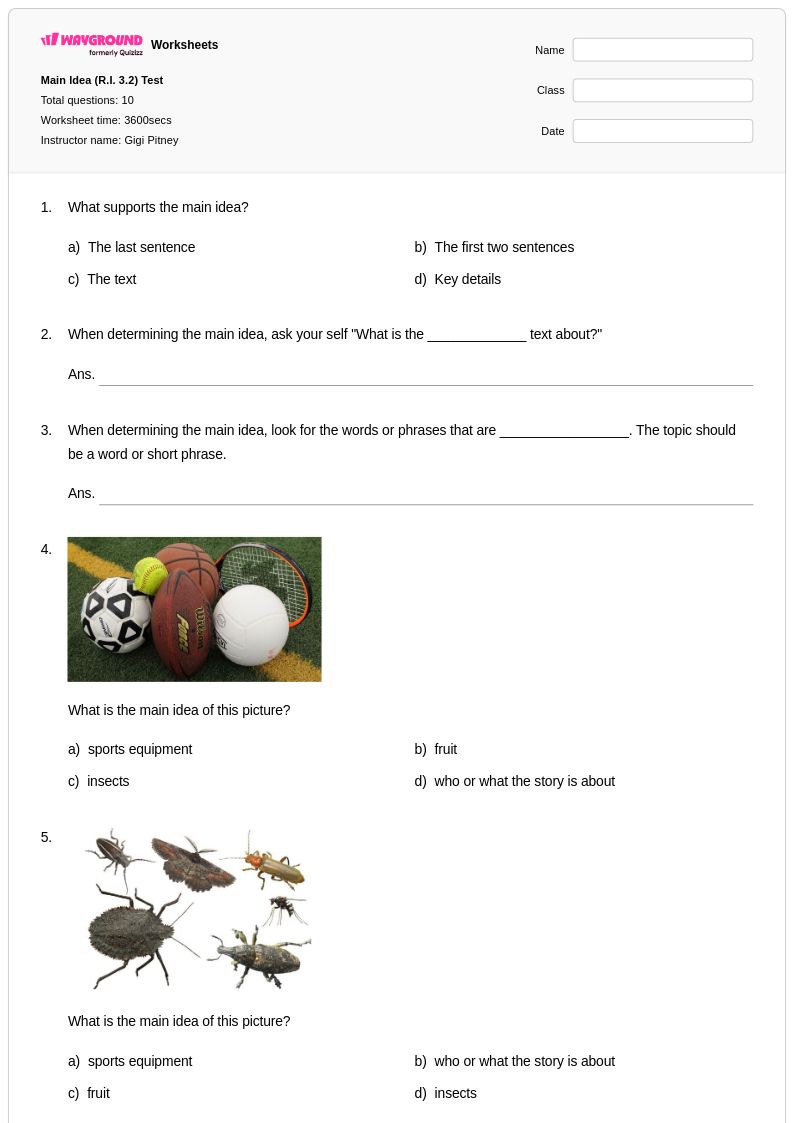
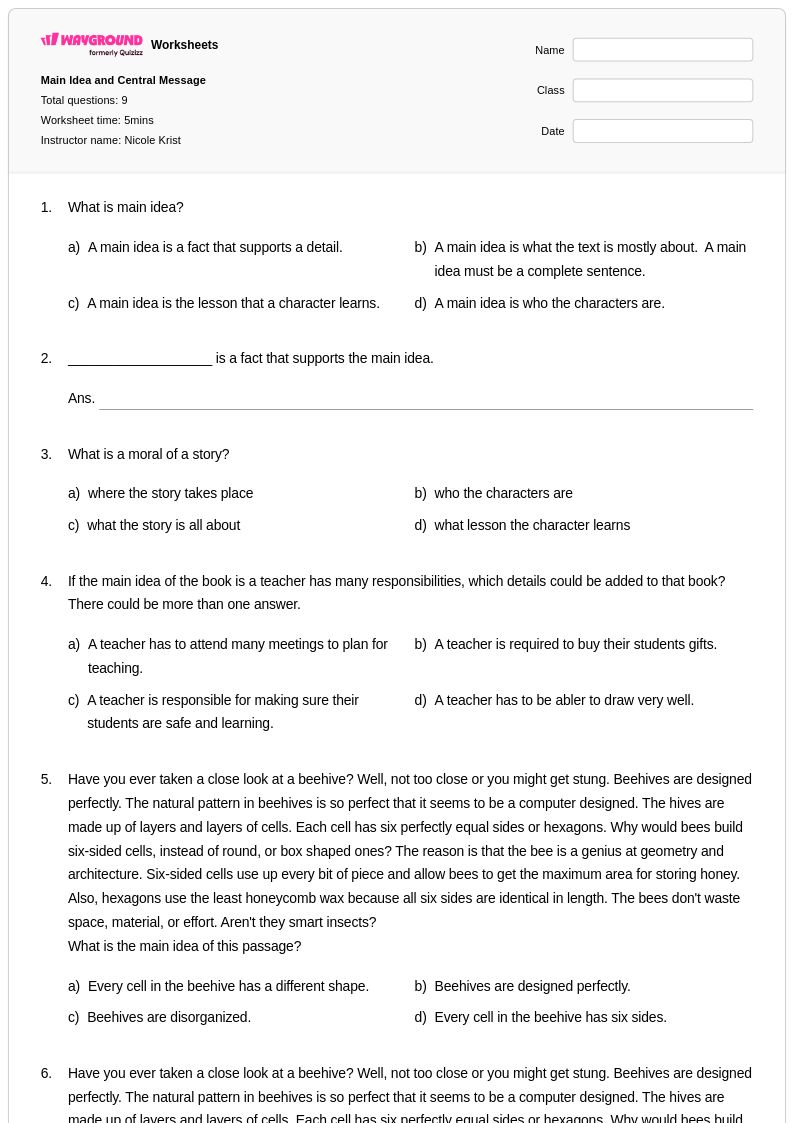
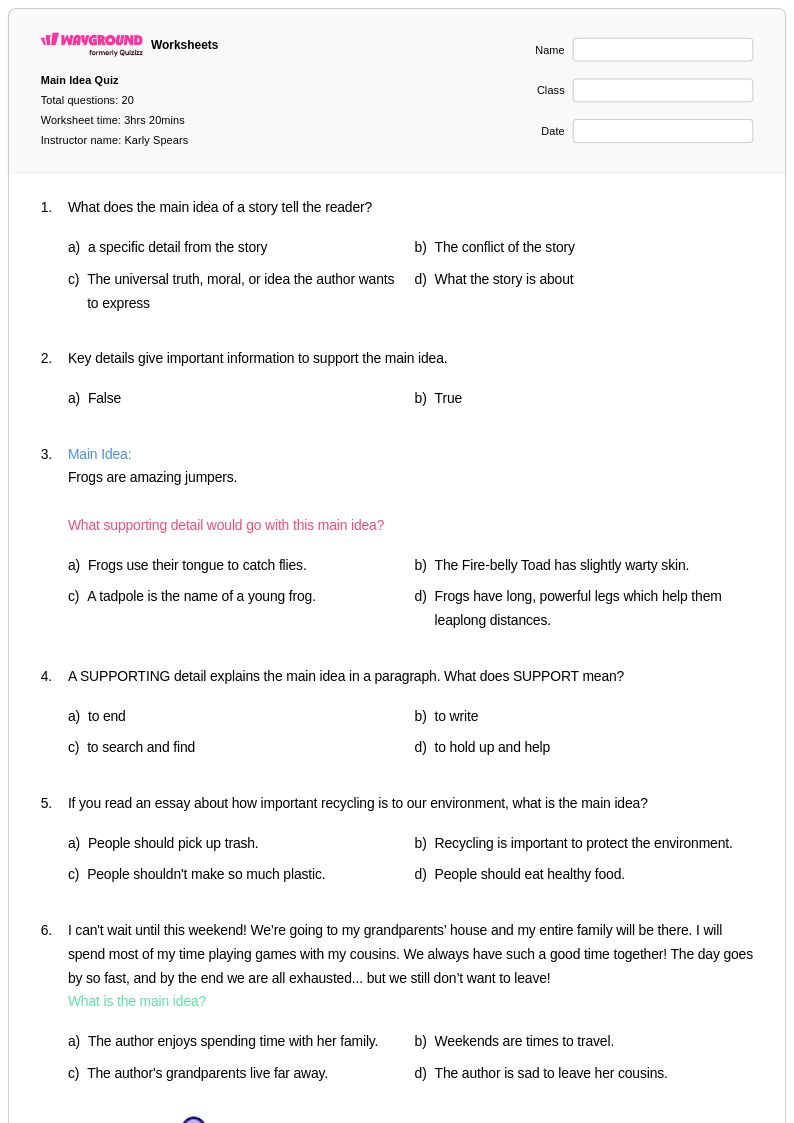
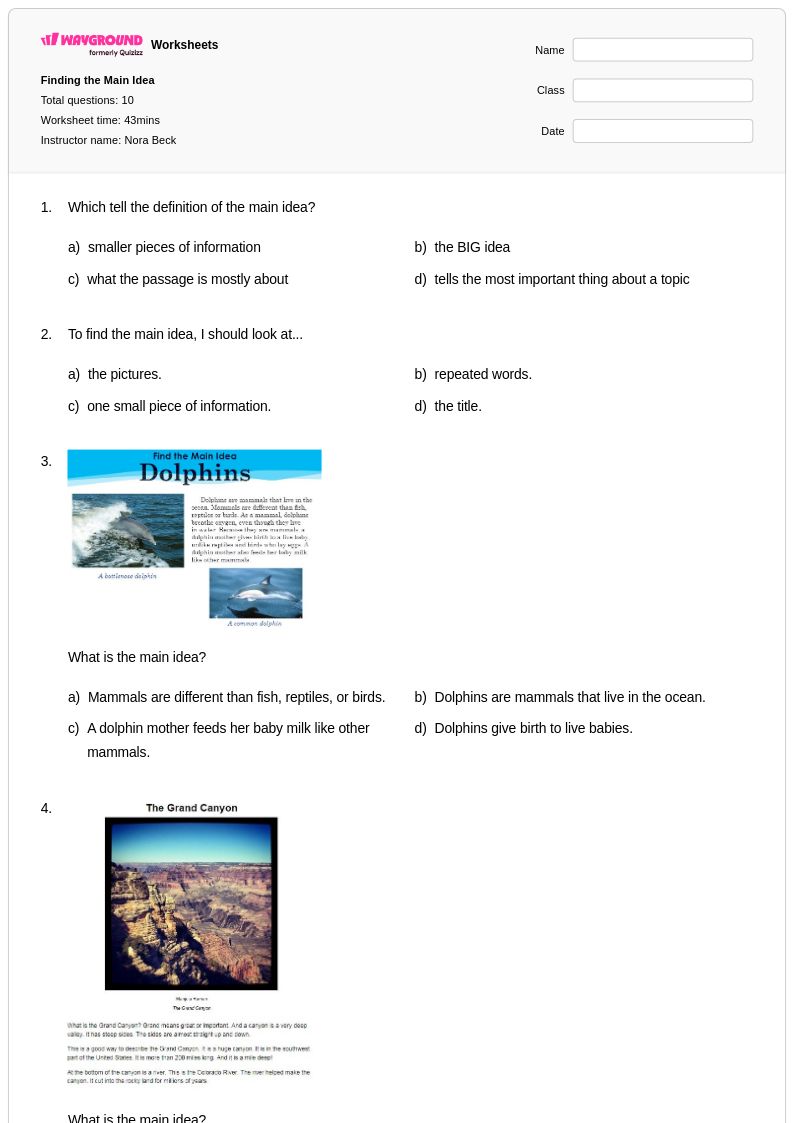
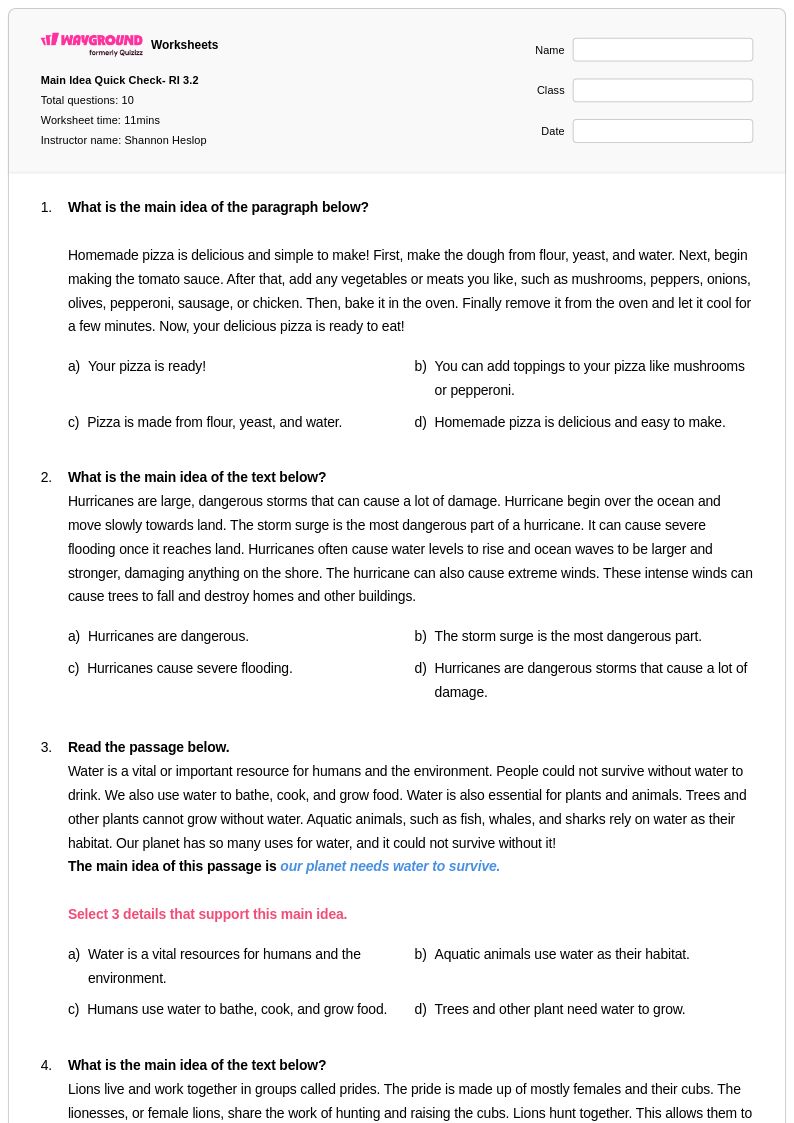
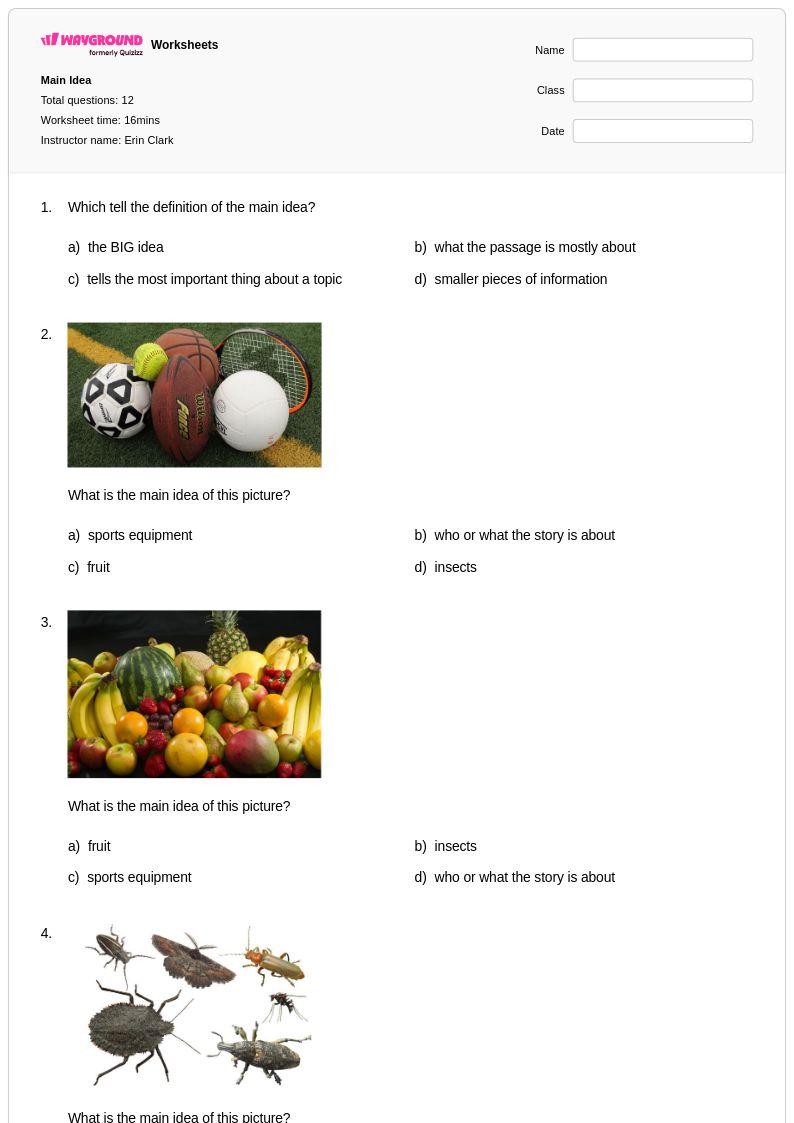
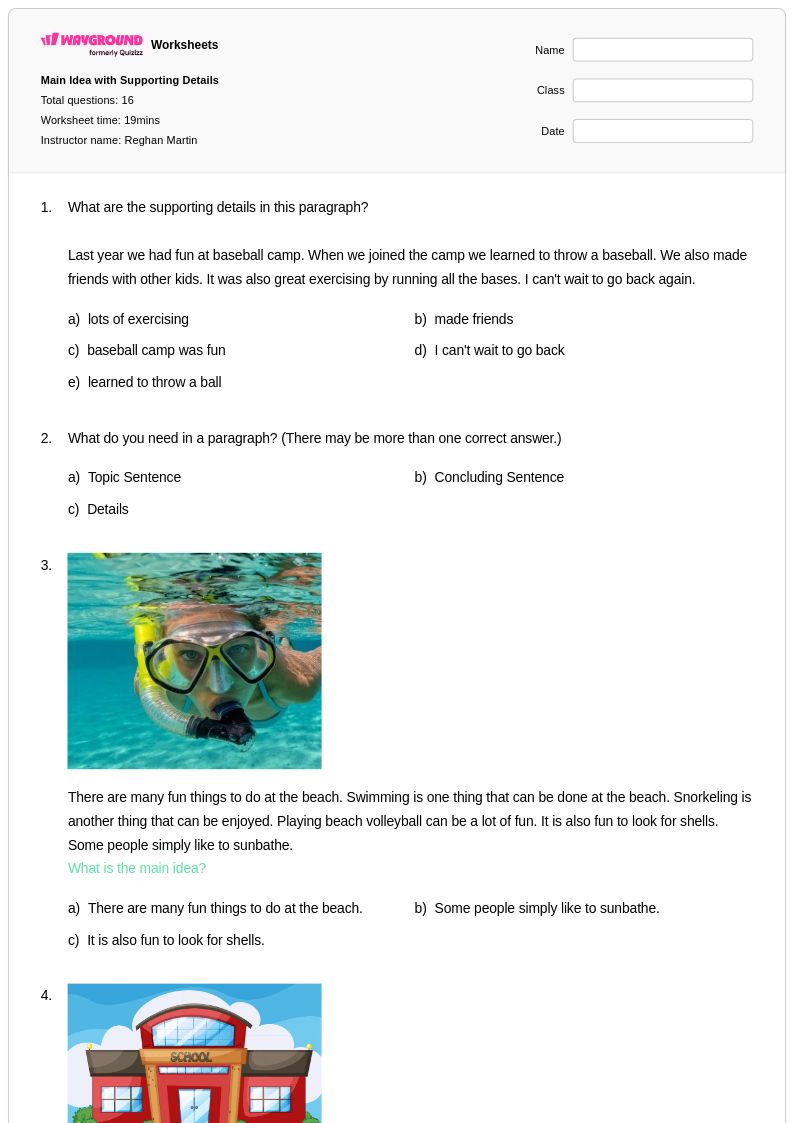
Identifying the main idea in fiction represents a fundamental reading comprehension skill that Year 3 students must master to become proficient readers and critical thinkers. Wayground's extensive collection of worksheets focuses specifically on helping young learners recognize the central message or primary point that authors convey through their fictional stories. These carefully designed practice problems guide students through the process of distinguishing between supporting details and the overarching theme, strengthening their ability to synthesize information and draw meaningful conclusions from narrative texts. Each worksheet includes a comprehensive answer key and is available as a free printable pdf, making it easy for educators to incorporate targeted skill practice into their literacy instruction while providing students with immediate feedback on their comprehension development.
Wayground, formerly Quizizz, empowers teachers with millions of educator-created resources specifically designed to support reading comprehension instruction across diverse learning environments. The platform's robust search and filtering capabilities enable teachers to quickly locate worksheets that align with curriculum standards and match their students' specific needs for identifying main ideas in fictional texts. These differentiation tools allow educators to customize content difficulty levels, ensuring that both struggling readers receive appropriate remediation and advanced students encounter suitable enrichment opportunities. Available in both printable and digital pdf formats, these worksheet collections provide the flexibility teachers need for classroom instruction, homework assignments, and independent practice sessions, ultimately supporting comprehensive lesson planning that addresses the full spectrum of student abilities and learning preferences.
FAQs
How do I teach students to identify the main idea in fiction?
Teaching main idea in fiction requires students to move beyond plot summary and toward understanding what the author most wants the reader to take away from the story. Start by guiding students to examine character motivations, repeated themes, and how conflicts are resolved, since these elements often point directly to the central message. Modeling think-alouds with short fiction passages helps students see the analytical process before they practice independently.
What is the difference between the main idea and the theme in a fiction text?
In fiction, the main idea refers to the central point or message of a specific passage or story, while theme is the broader, recurring idea that can apply beyond the text itself. For example, a story's main idea might be that a character learns to trust others, while the theme is the universal concept of friendship or loyalty. Students often confuse these terms, so comparing them side by side using the same passage is an effective instructional strategy.
What exercises help students practice finding the main idea in fiction passages?
Effective practice exercises include reading short fiction passages and asking students to distinguish between the main idea and supporting details, as well as identifying which details are relevant versus irrelevant to the central message. Targeted worksheets that range from explicitly stated main ideas to passages where the main idea must be inferred help students build skill across increasing levels of complexity. Practicing across multiple fiction genres also strengthens students' ability to transfer this skill.
What mistakes do students commonly make when identifying the main idea in fiction?
The most common error is confusing a key supporting detail or a plot event with the main idea, since students often fixate on the most memorable moment in a story rather than its central message. Students also frequently mistake a character's action for the main idea instead of asking what that action reveals about the story's broader point. Another common misconception is assuming the first or last sentence of a passage always contains the main idea, which is less reliable in fiction than in nonfiction.
How can I use main idea worksheets to support struggling readers in my class?
For struggling readers, worksheets with shorter fiction passages and scaffolded prompts that direct attention to character actions and plot resolution can reduce the cognitive load of the task. On Wayground, teachers can apply individual accommodations such as read-aloud support, reduced answer choices, and extended time to specific students without notifying the rest of the class. These settings are reusable across sessions, making it practical to maintain consistent support for students who need it.
How do I use Wayground's identifying the main idea in fiction worksheets in my classroom?
Wayground's main idea in fiction worksheets are available as printable PDFs for traditional classroom use and in digital formats for technology-integrated or hybrid learning environments. Teachers can also host worksheets as a quiz directly on Wayground, enabling real-time student responses and immediate feedback. Each worksheet includes a complete answer key, so teachers can efficiently review student work and adjust instruction based on individual performance.