
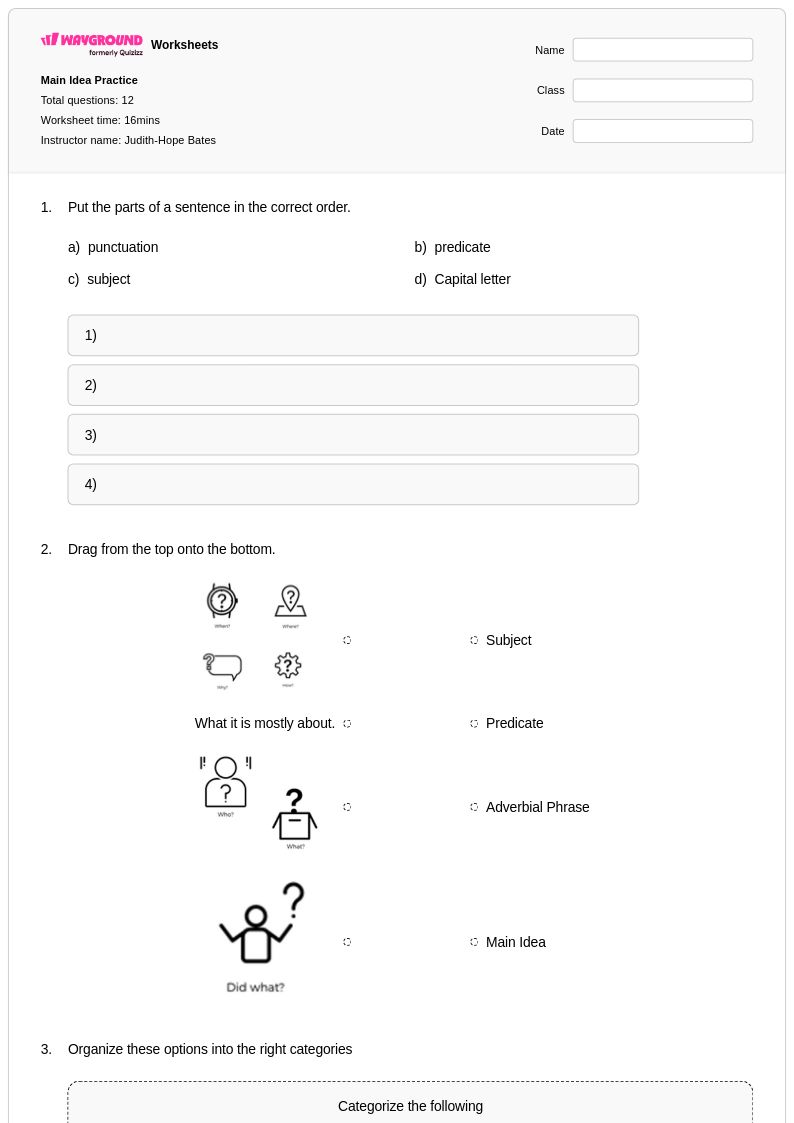
12 Q
5th
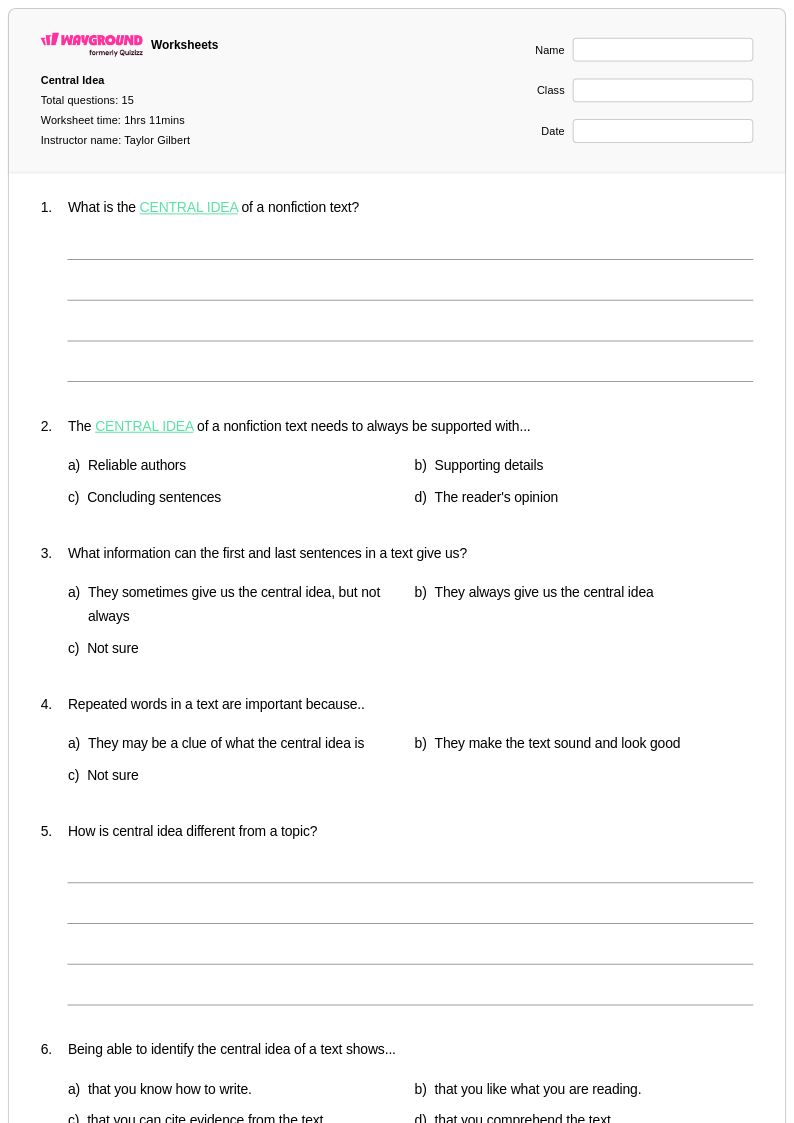
15 Q
5th
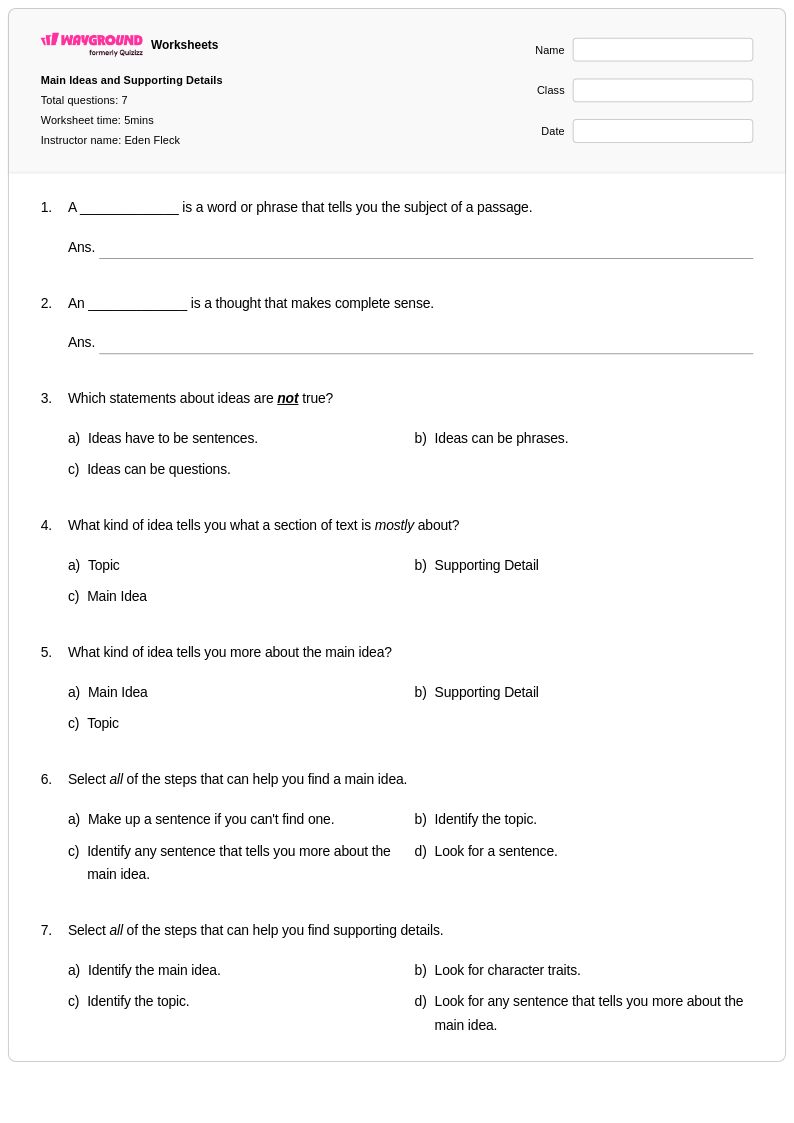
7 Q
4th - 6th
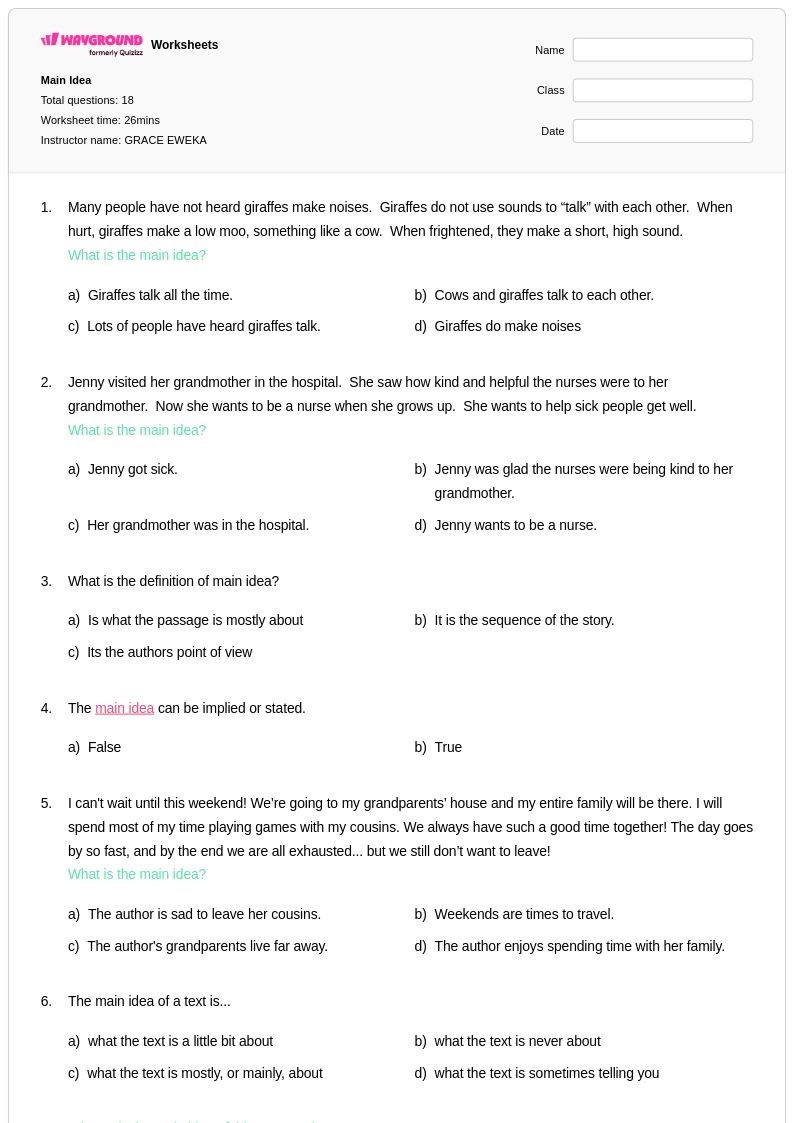
18 Q
5th
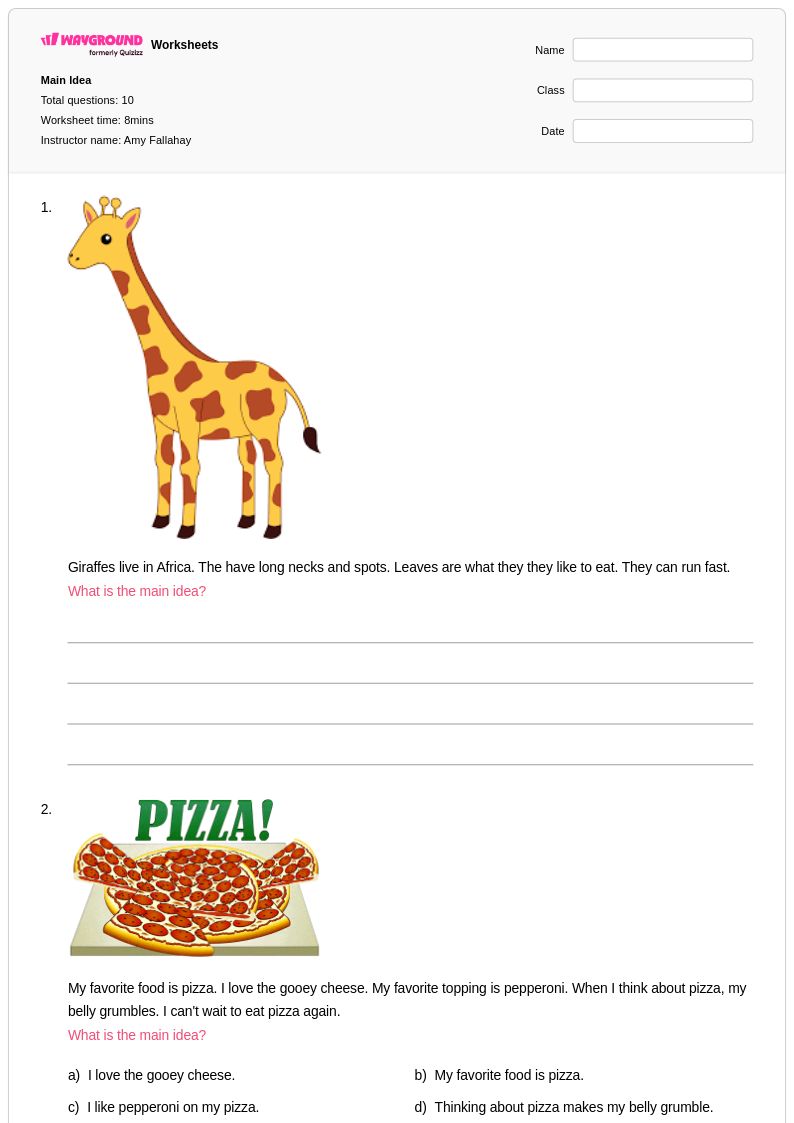
10 Q
4th - 5th
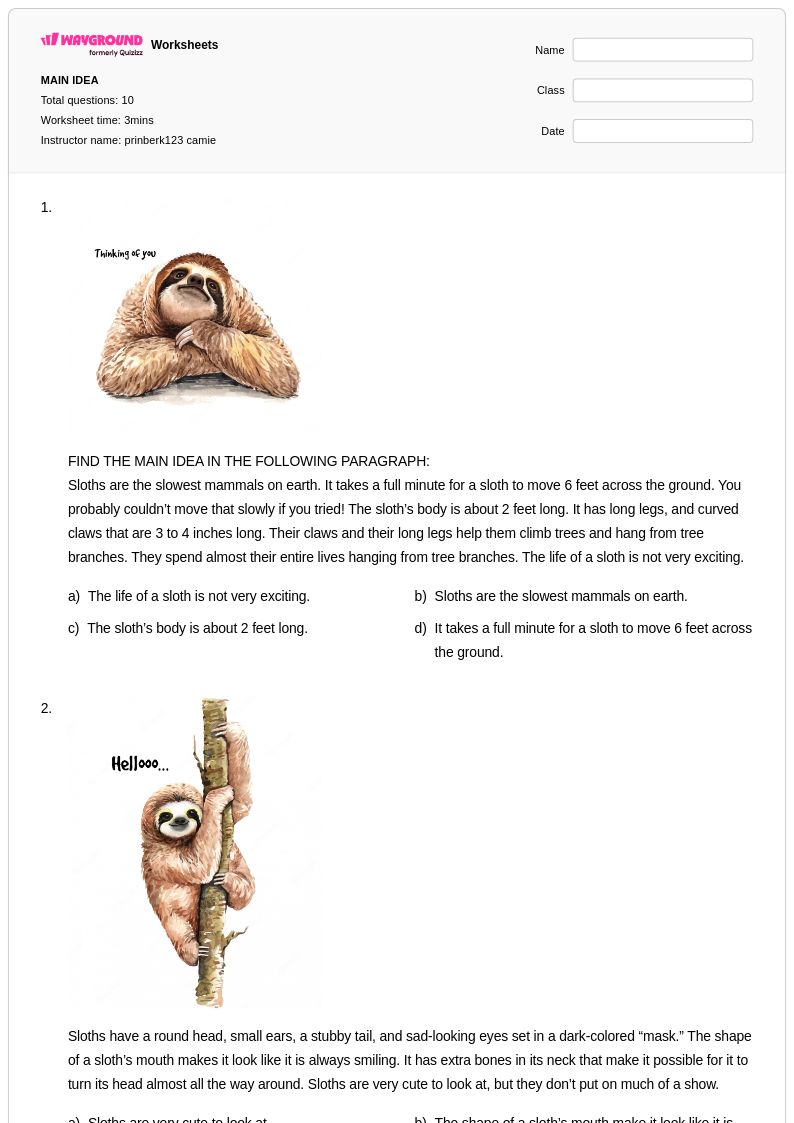
10 Q
5th
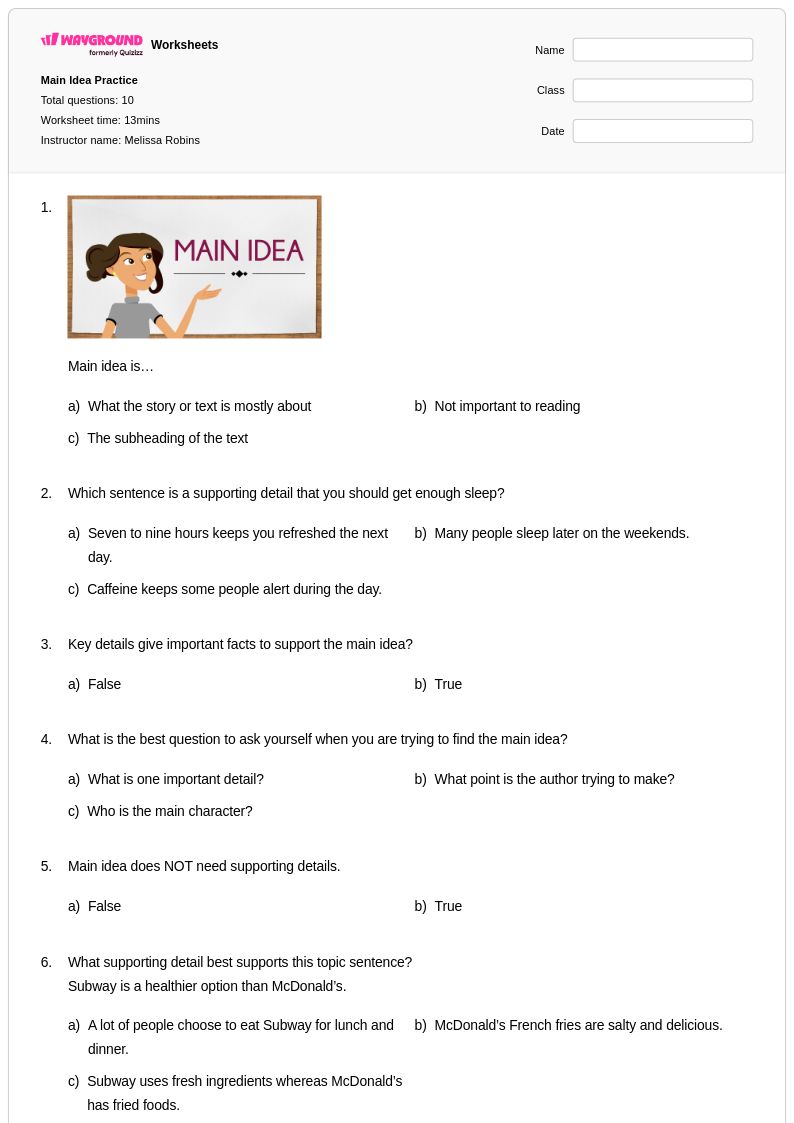
10 Q
5th
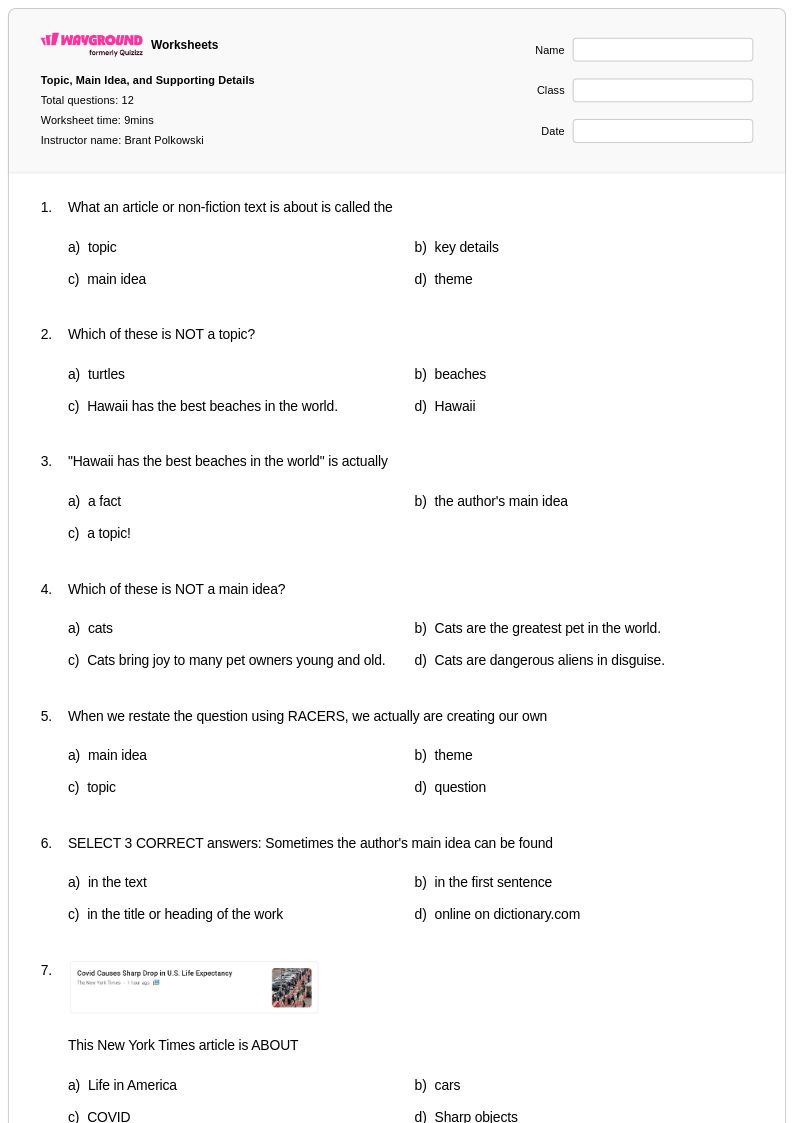
12 Q
4th - 5th
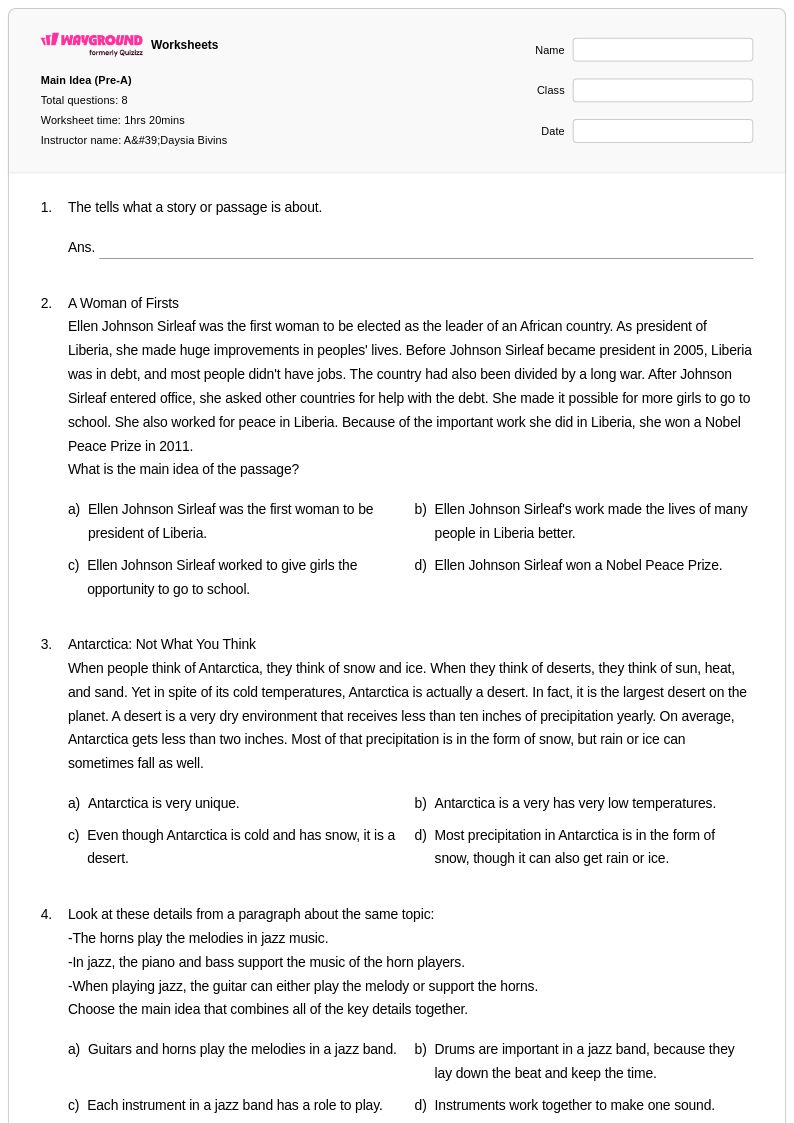
8 Q
5th
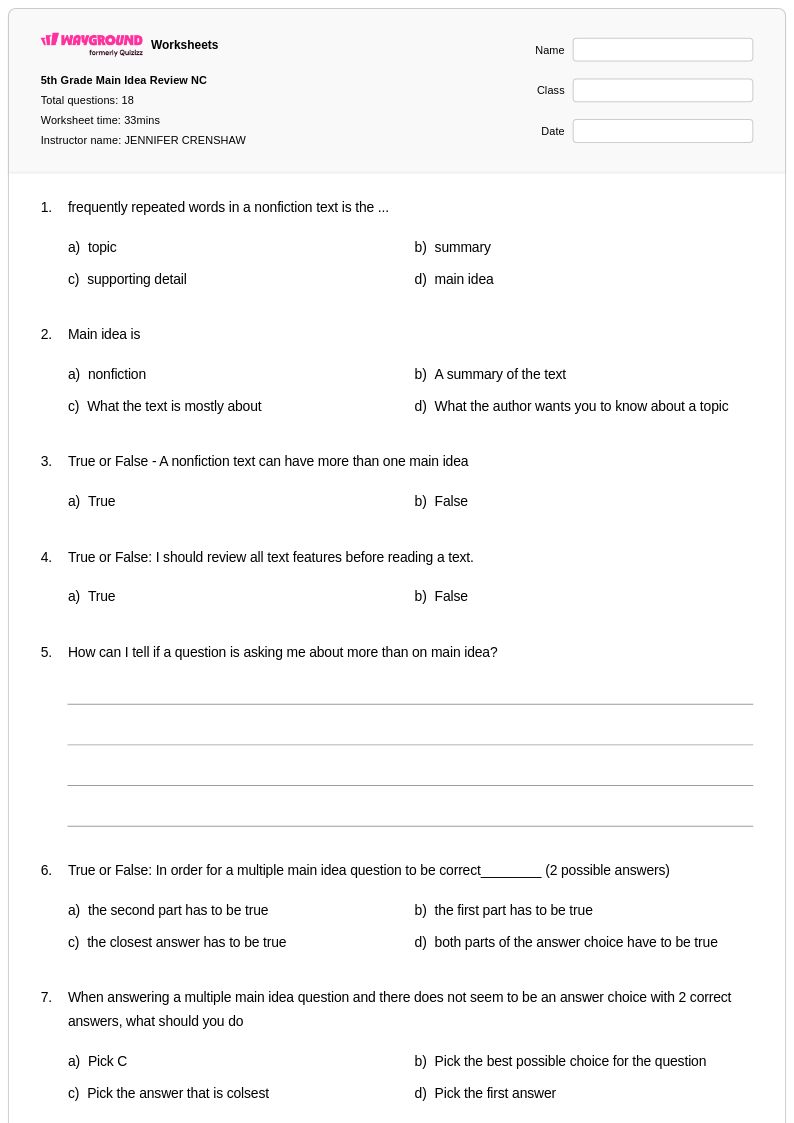
18 Q
5th
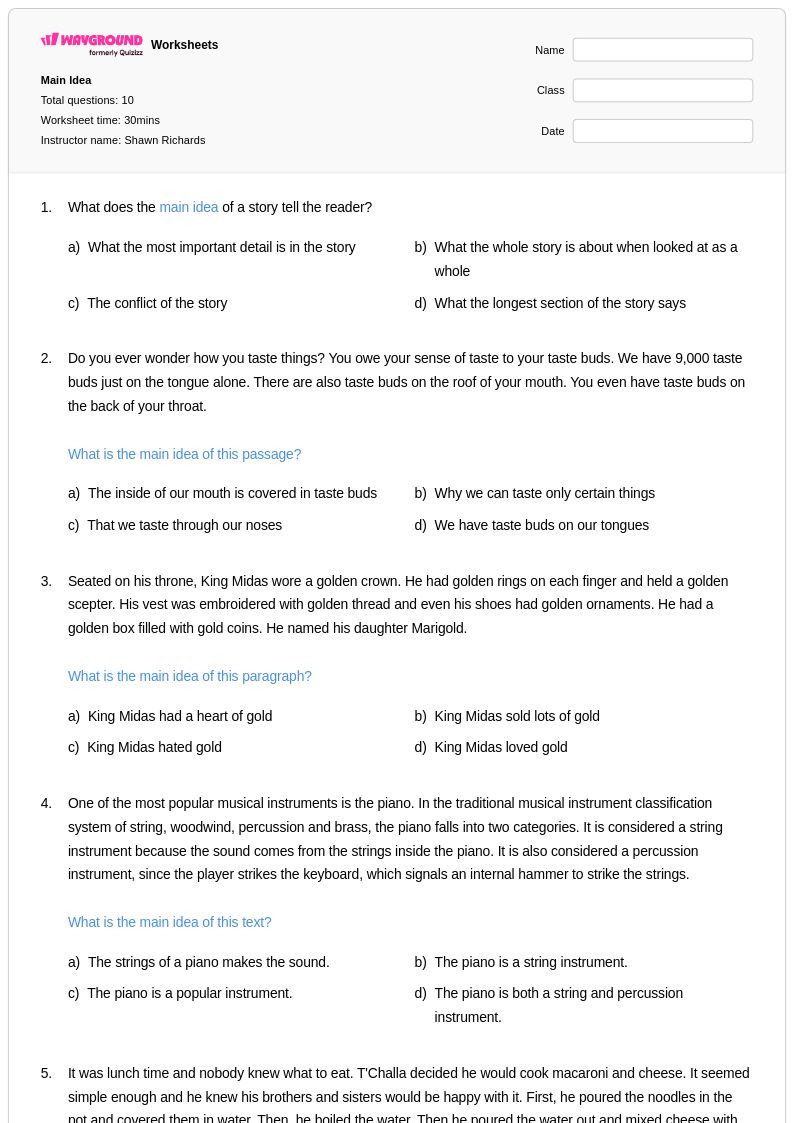
10 Q
5th
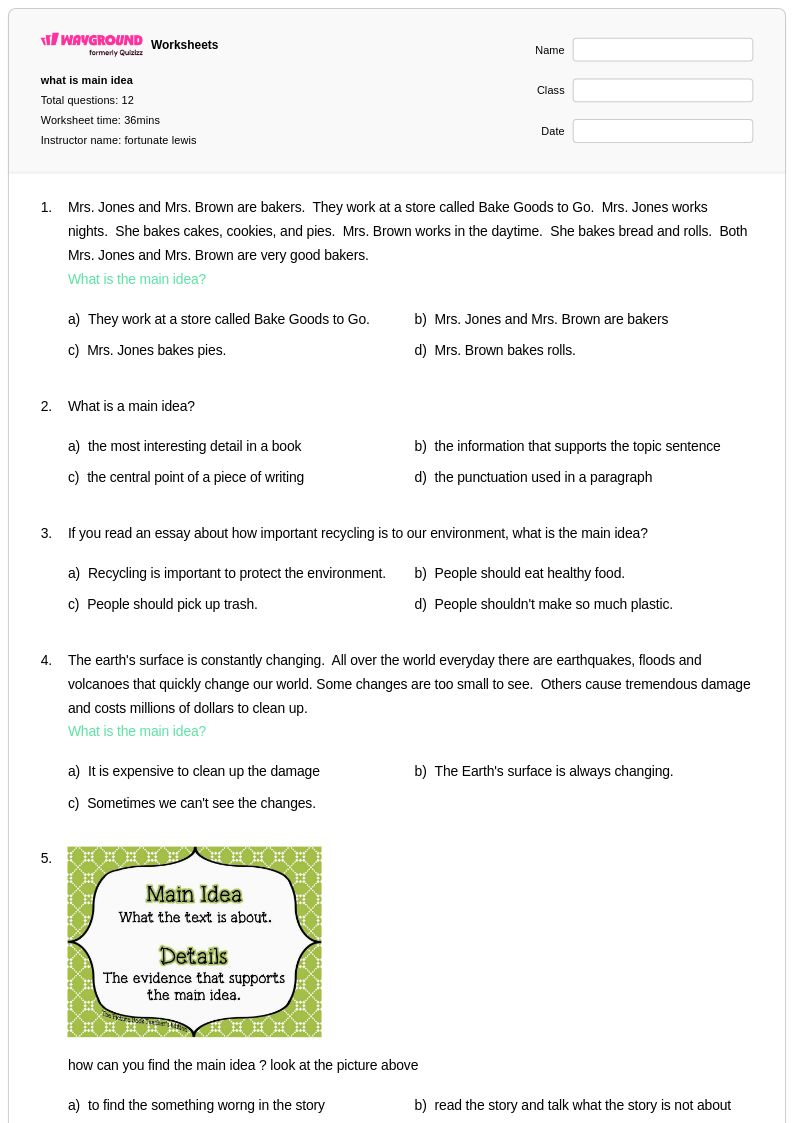
12 Q
2nd - 6th
10 Q
1st - 5th
18 Q
4th - 6th
10 Q
4th - 5th
12 Q
5th
10 Q
5th
13 Q
4th - 6th
12 Q
1st - 5th
18 Q
5th
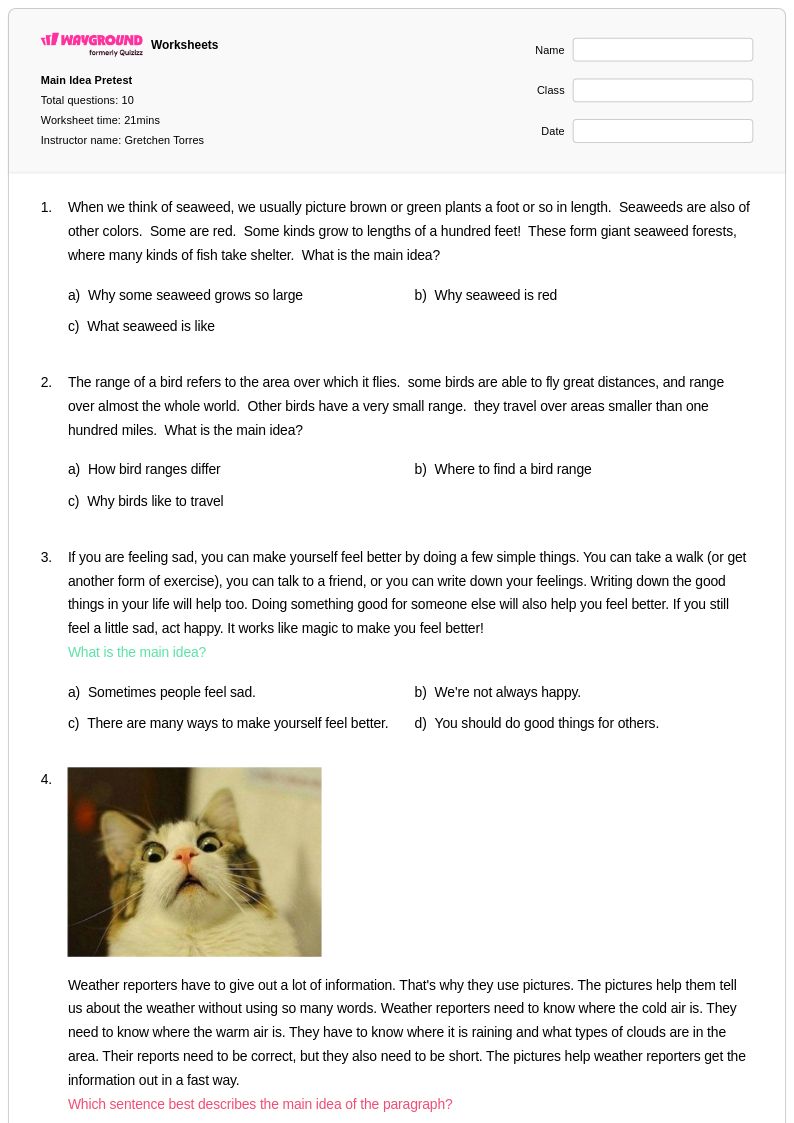
10 Q
5th - 7th
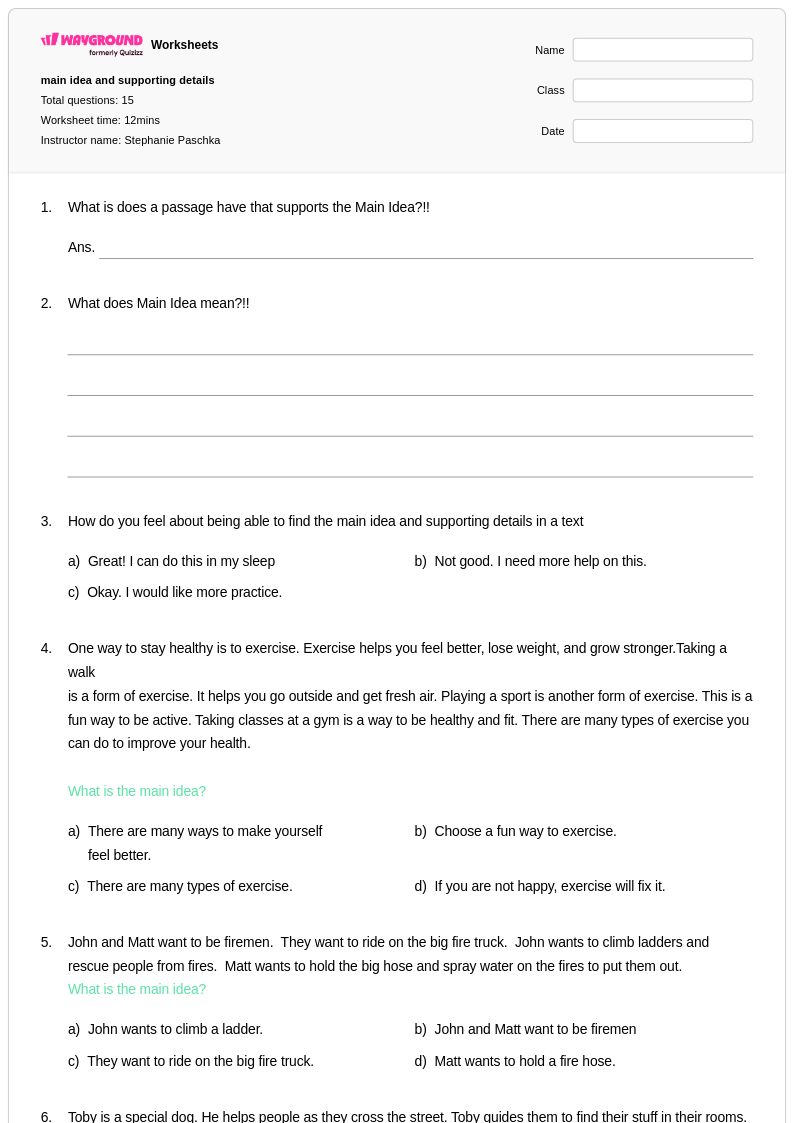
15 Q
5th
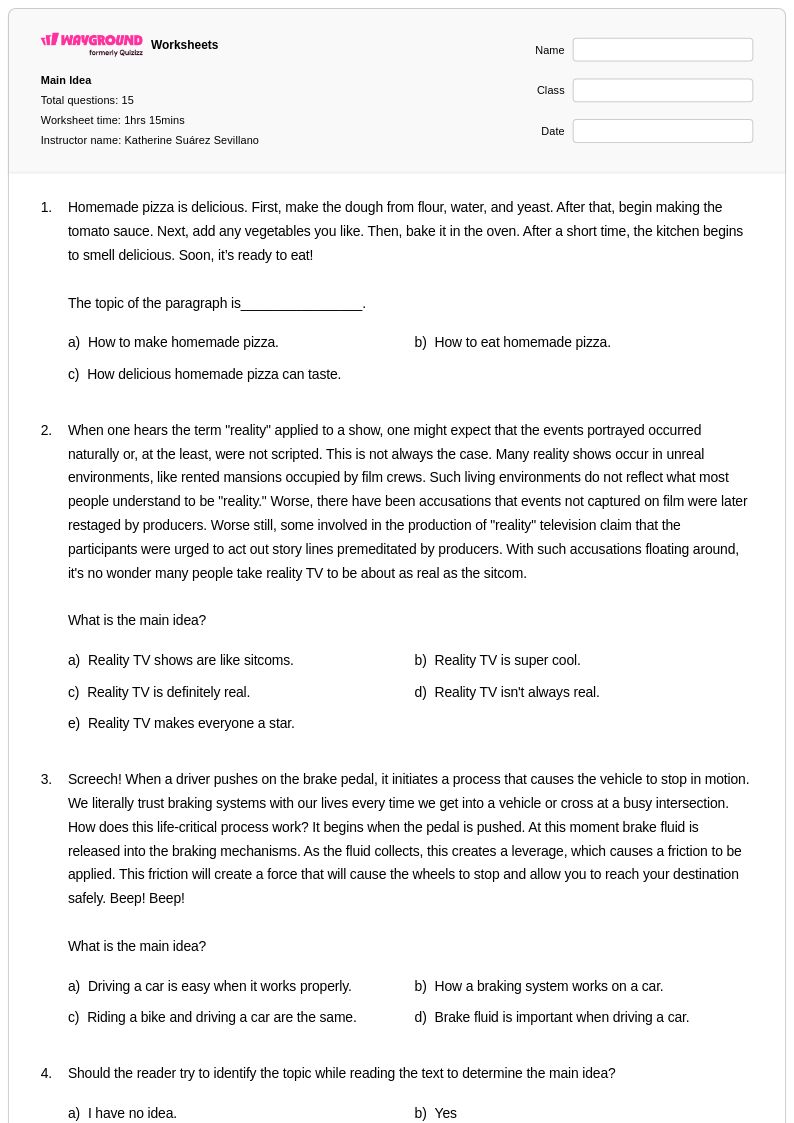
15 Q
5th
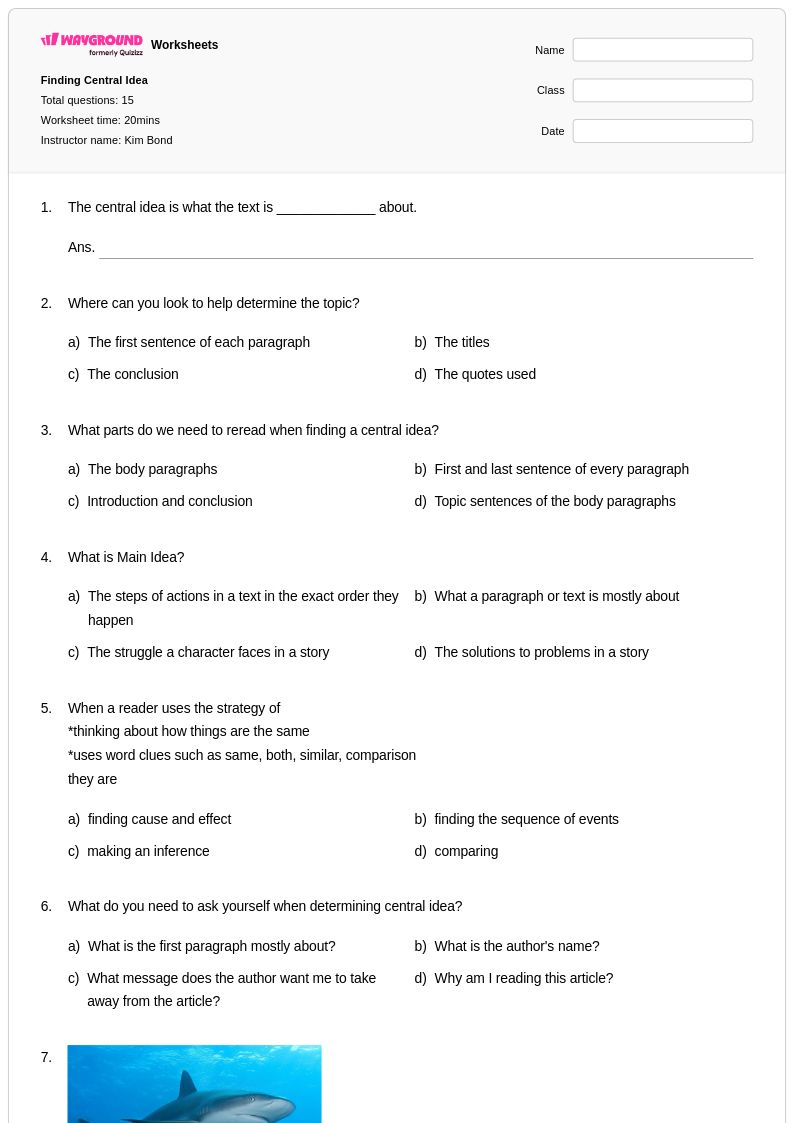
15 Q
5th
Explore Identifying the Main Idea in Fiction Worksheets by Grades
Explore Other Subject Worksheets for year 5
Explore printable Identifying the Main Idea in Fiction worksheets for Year 5
Identifying the main idea in fiction presents a fundamental reading comprehension challenge for Year 5 students, requiring them to distinguish between supporting details and the central message or theme that unifies a story. Wayground's comprehensive collection of worksheets focuses specifically on this critical skill, providing students with systematic practice in analyzing fictional texts to extract their primary meaning. These carefully designed resources strengthen students' ability to synthesize information from character development, plot events, and narrative elements to determine what the author wants readers to understand most importantly. Each worksheet includes structured practice problems that guide students through the process of identifying topic sentences, analyzing supporting evidence, and articulating main ideas in their own words, with complete answer keys available to facilitate immediate feedback and self-assessment. The printable PDF format ensures easy access for classroom use, homework assignments, and independent study sessions.
Wayground's extensive library, built from millions of teacher-created resources, offers educators unprecedented support for teaching main idea identification in fictional contexts through robust search and filtering capabilities that help locate precisely targeted materials. Teachers can efficiently sort through standards-aligned worksheets to find resources that match their specific curriculum requirements and student ability levels, while built-in differentiation tools enable customization for diverse learning needs within the same classroom. The platform's flexible format options, including both digital and printable PDF versions, accommodate various teaching environments and learning preferences, making these resources invaluable for lesson planning, targeted remediation with struggling readers, and enrichment opportunities for advanced students. This comprehensive approach ensures that educators have consistent access to high-quality practice materials that systematically build students' analytical reading skills while providing the scaffolding necessary for mastering this essential comprehension strategy.
FAQs
How do I teach students to identify the main idea in fiction?
What is the difference between the main idea and the theme in a fiction text?
What exercises help students practice finding the main idea in fiction passages?
What mistakes do students commonly make when identifying the main idea in fiction?
How can I use main idea worksheets to support struggling readers in my class?
How do I use Wayground's identifying the main idea in fiction worksheets in my classroom?