Free Printable Insect Anatomy Worksheets for Year 7
Explore Wayground's comprehensive collection of Year 7 insect anatomy worksheets and printables that help students master the structures and functions of insect body parts through engaging practice problems, free PDFs, and detailed answer keys.
Explore printable Insect Anatomy worksheets for Year 7
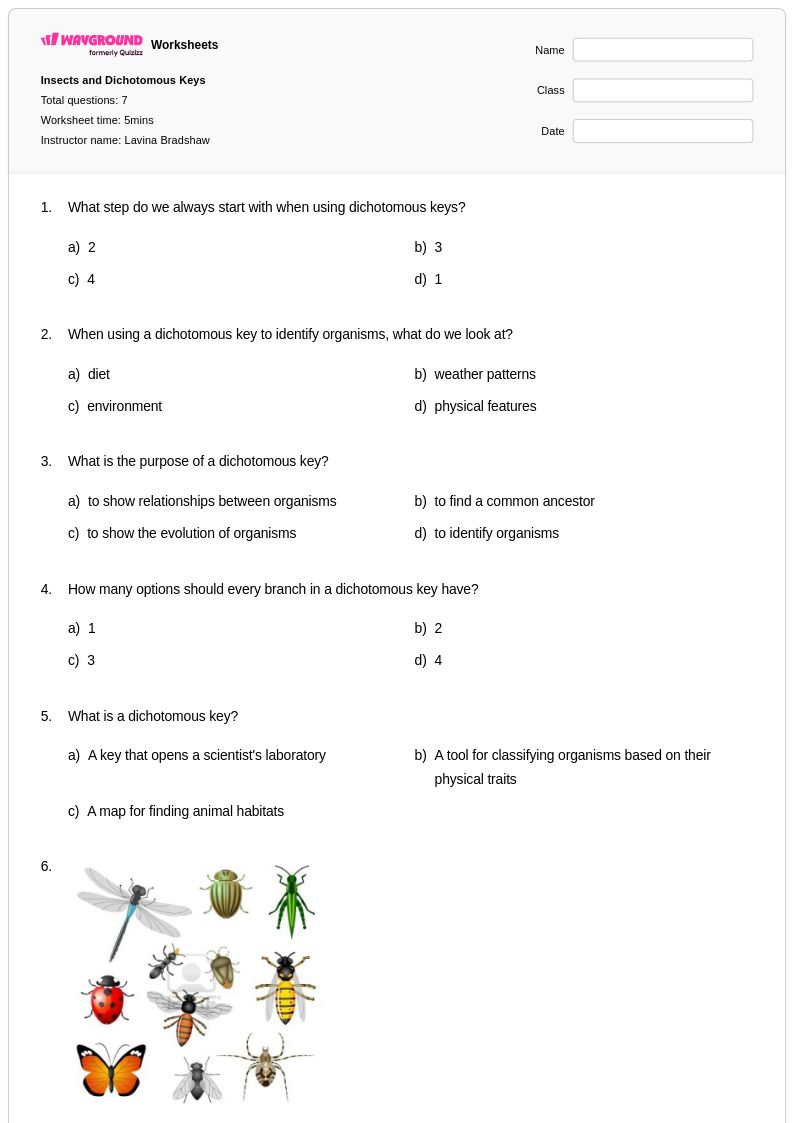
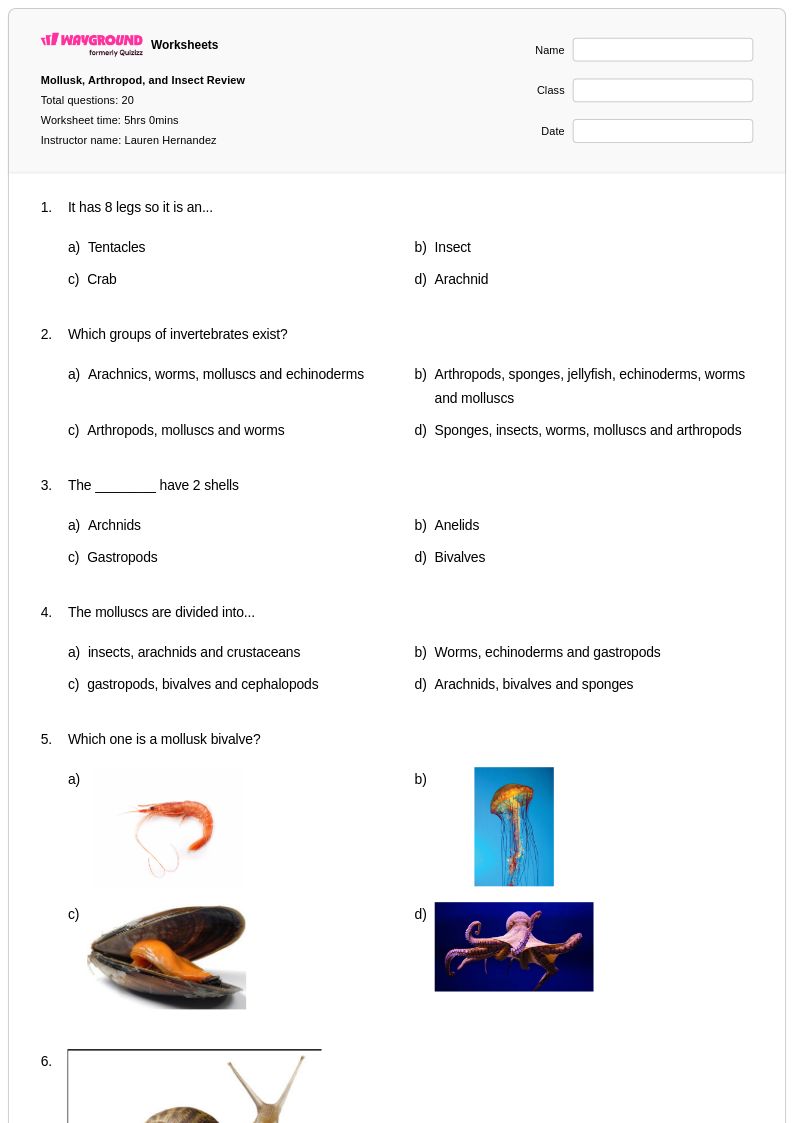
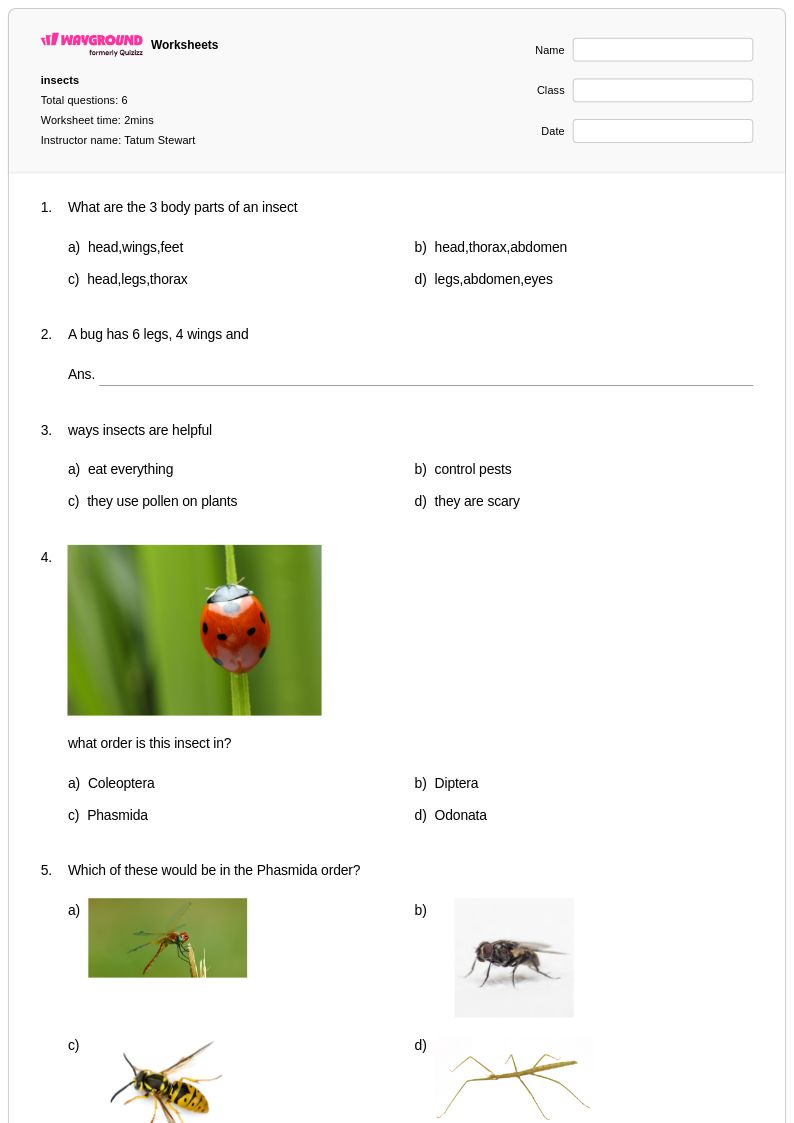
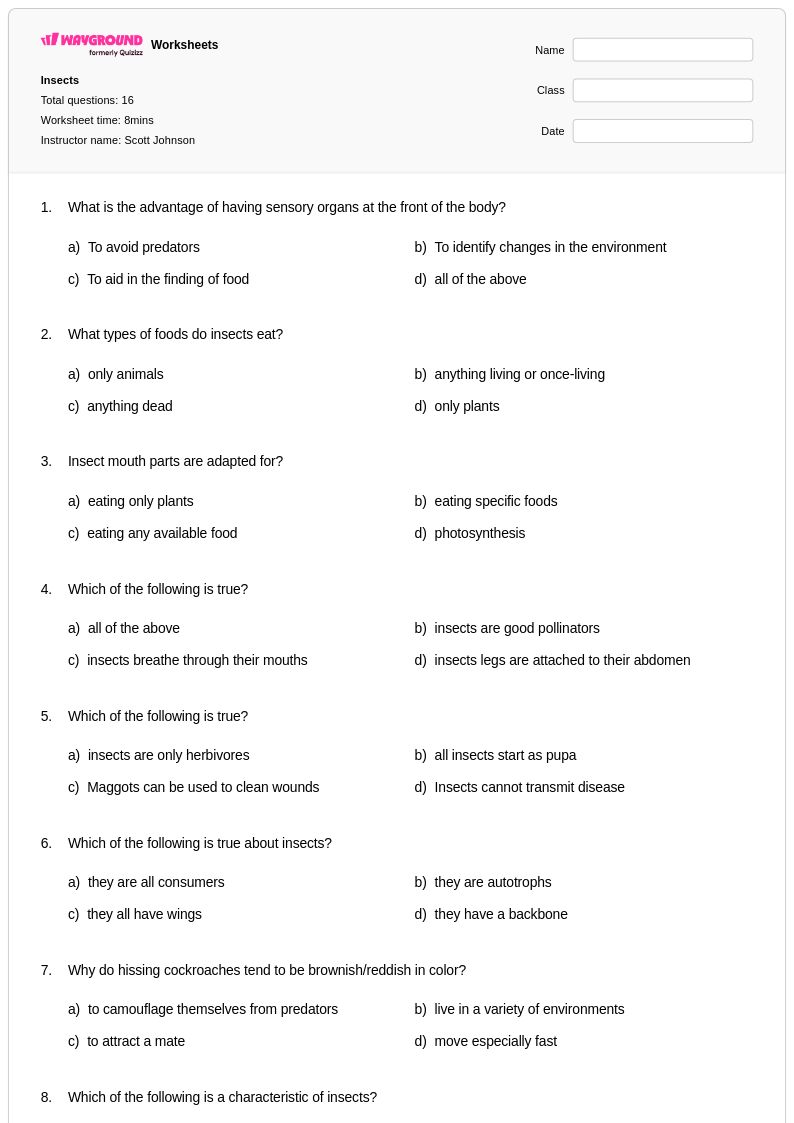
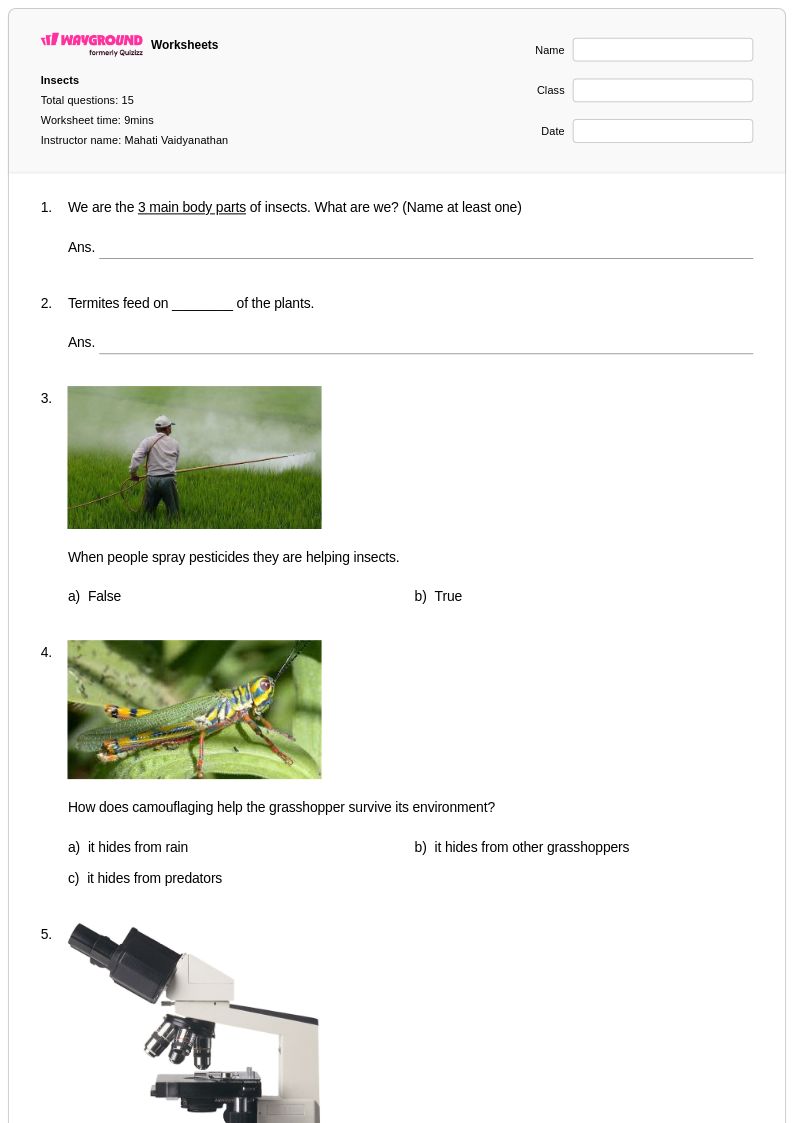
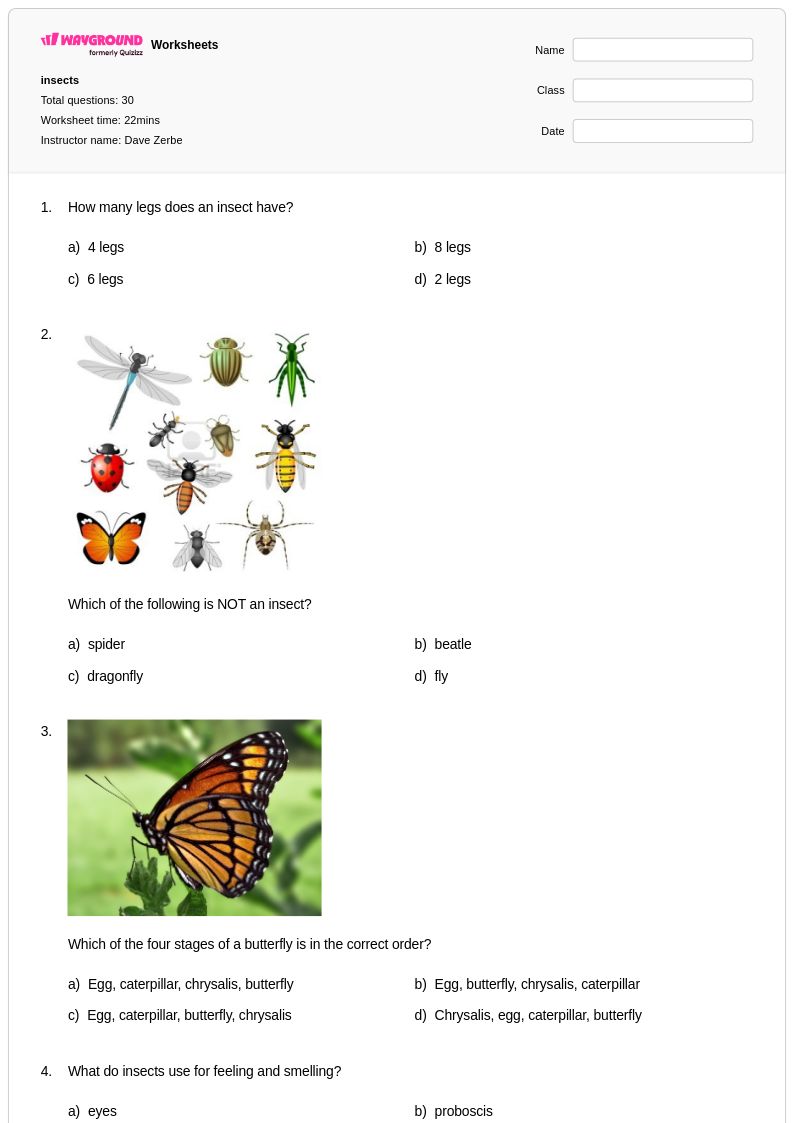
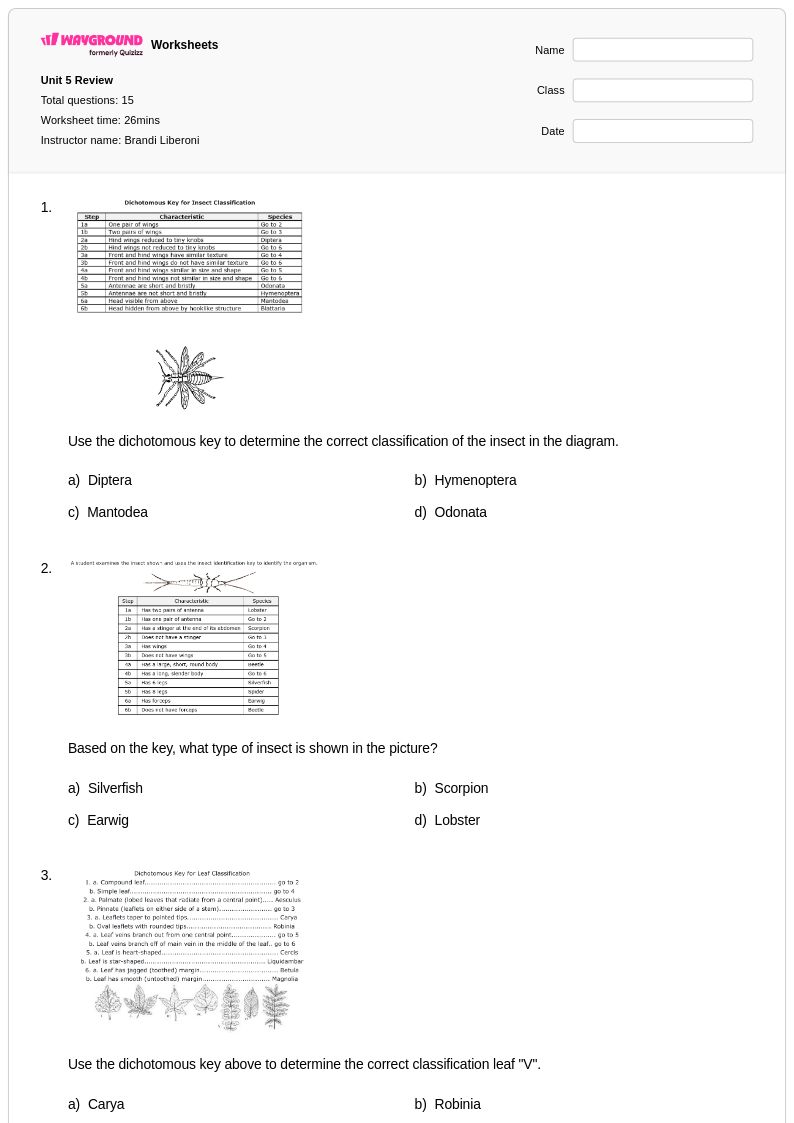
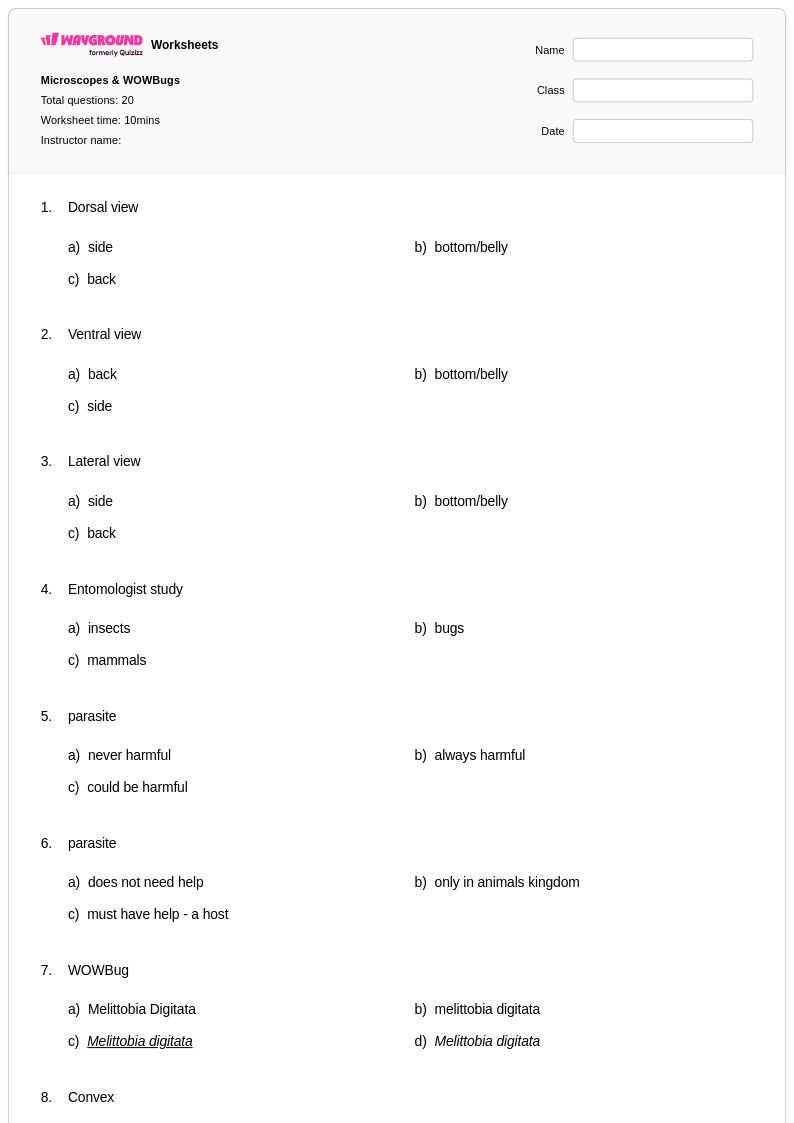
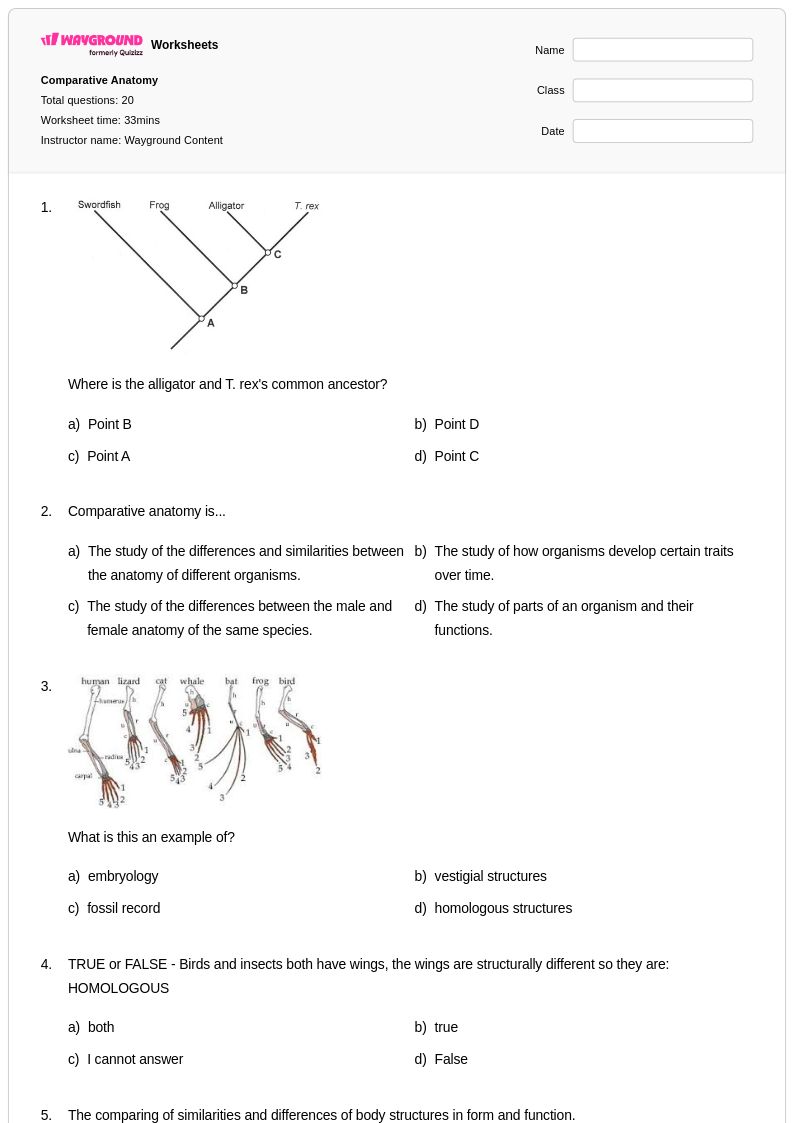
Insect anatomy worksheets for Year 7 students available through Wayground (formerly Quizizz) provide comprehensive exploration of arthropod body structures and biological systems. These educational resources guide seventh-grade learners through detailed examination of insect external features including head, thorax, and abdomen segments, compound eyes, antennae variations, and specialized appendages like mandibles and maxillae. Students develop critical scientific observation skills while investigating internal systems such as the open circulatory system, tracheal respiratory network, and digestive tract adaptations. The practice problems within these printable materials challenge students to identify anatomical structures, compare different insect species, and analyze how form relates to function in various ecological niches. Each worksheet includes comprehensive answer keys that support independent learning and provide educators with reliable assessment tools, while the free pdf format ensures accessibility for diverse classroom environments.
Wayground (formerly Quizizz) empowers teachers with an extensive collection of millions of teacher-created insect anatomy resources specifically designed for Year 7 life science instruction. The platform's advanced search and filtering capabilities enable educators to quickly locate materials aligned with specific curriculum standards and learning objectives, while differentiation tools allow customization based on individual student needs and abilities. Teachers can seamlessly adapt these worksheets for various instructional purposes, from initial concept introduction to targeted remediation and advanced enrichment activities. The flexible format options, including both digital interactive versions and traditional printable pdfs, accommodate diverse classroom technologies and teaching preferences. This comprehensive resource library streamlines lesson planning by providing ready-to-use materials that support systematic skill practice, formative assessment, and reinforcement of complex biological concepts essential for middle school scientific literacy development.
FAQs
How do I teach insect anatomy to students?
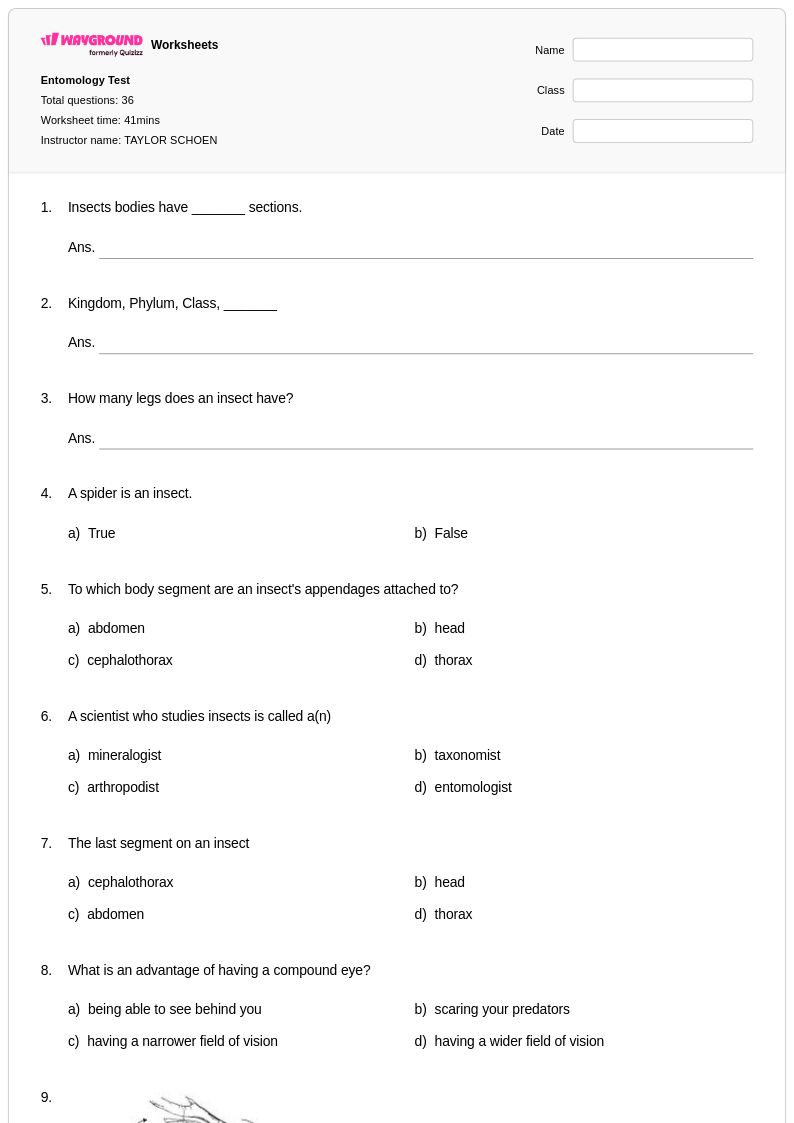
Start by introducing the three main body segments — head, thorax, and abdomen — before moving into specialized structures like compound eyes, antennae, and wing types. Use labeled diagrams to build scientific vocabulary, then have students practice identifying structures across different insect species to reinforce form-function relationships. Connecting each anatomical feature to its survival function (e.g., compound eyes for wide-angle vision, antennae for chemical sensing) helps students move beyond memorization toward genuine biological understanding.
What are good exercises for practicing insect anatomy identification?
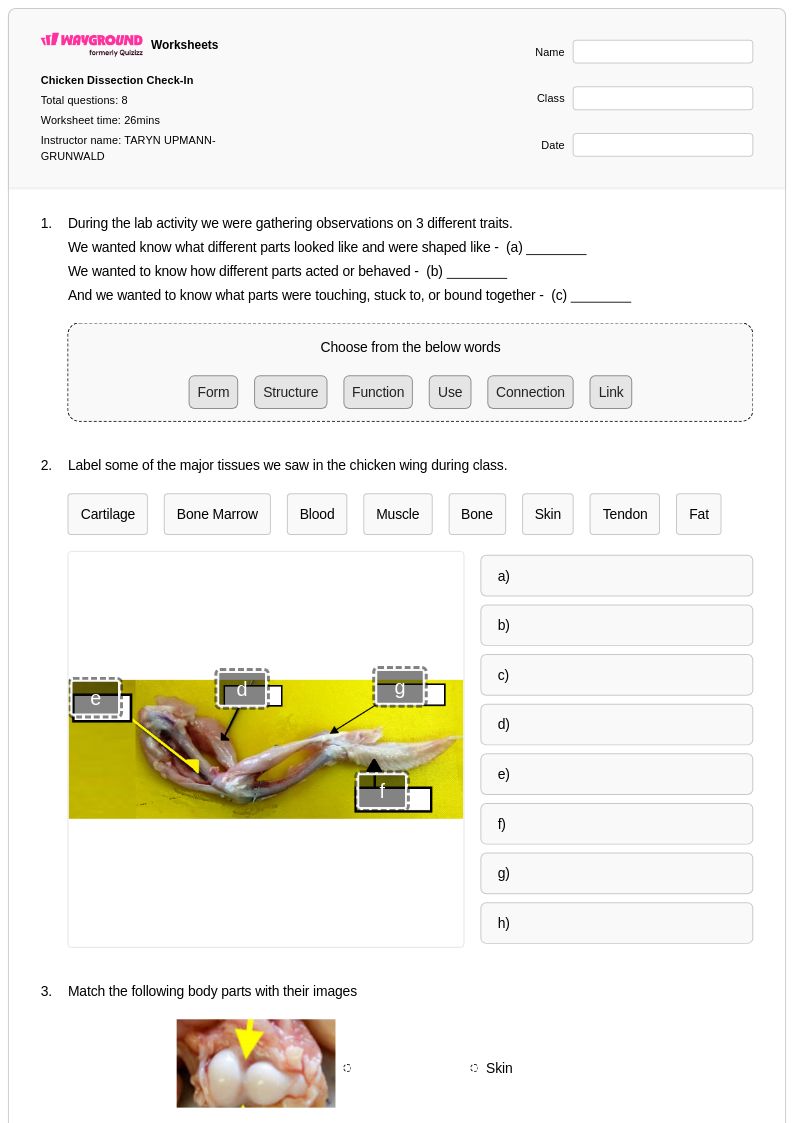
Diagram labeling exercises are the most effective entry point, requiring students to identify and name the head, thorax, abdomen, legs, wings, and sensory organs on unlabeled insect illustrations. Follow-up practice should include comparative exercises where students examine two or more insect species and explain structural differences based on ecological role or habitat. These activities build both anatomical vocabulary and analytical thinking at the same time.
What mistakes do students commonly make when learning insect anatomy?
The most common error is confusing the thorax and abdomen — students frequently mislabel the abdomen as the thorax, especially when examining insects where the body segments are not visually distinct. Students also struggle to distinguish insect appendages from those of other arthropods like spiders, often incorrectly attributing eight legs to insects. Emphasizing that all insects have exactly six legs attached to the thorax helps correct this misconception early.
How do insect anatomy worksheets help students understand form-function relationships?
Insect anatomy worksheets that include comparative species diagrams push students to explain why a structure exists, not just what it is called. For example, comparing the mouthparts of a butterfly to those of a grasshopper requires students to connect structure to feeding behavior and habitat. This approach builds the analytical reasoning skills central to biology education, moving students from passive identification to active scientific inference.
How can I use Wayground's insect anatomy worksheets in my classroom?
Wayground's insect anatomy worksheets are available as printable PDFs for traditional classroom use and in digital formats for technology-integrated environments, giving teachers flexibility regardless of setting. You can also host the materials as a quiz directly on Wayground, which supports formative assessment and provides immediate feedback. Each worksheet includes a complete answer key, making them suitable for independent student practice, small group work, or whole-class instruction.
How can I differentiate insect anatomy instruction for students at different skill levels?
For struggling learners, start with single-specimen diagrams that isolate one body region at a time before introducing full-body labeling tasks. Advanced students benefit from comparative anatomy challenges that require written explanations of how structural differences between species reflect different environmental adaptations. On Wayground, teachers can apply accommodations such as read aloud support and reduced answer choices for individual students, ensuring the same core material is accessible across diverse learning needs without singling anyone out.