Explore Wayground's comprehensive collection of Year 8 ions worksheets and printables that help students master ionic compounds, charges, and chemical bonding through engaging practice problems with complete answer keys.
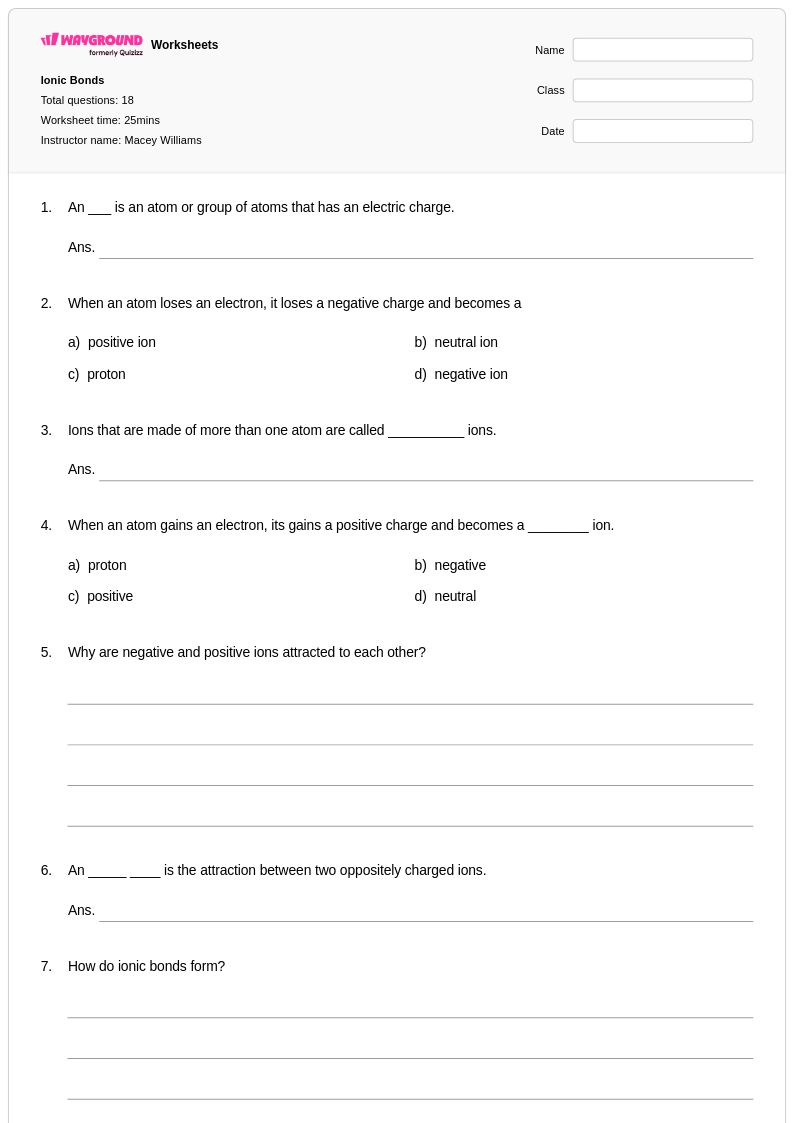
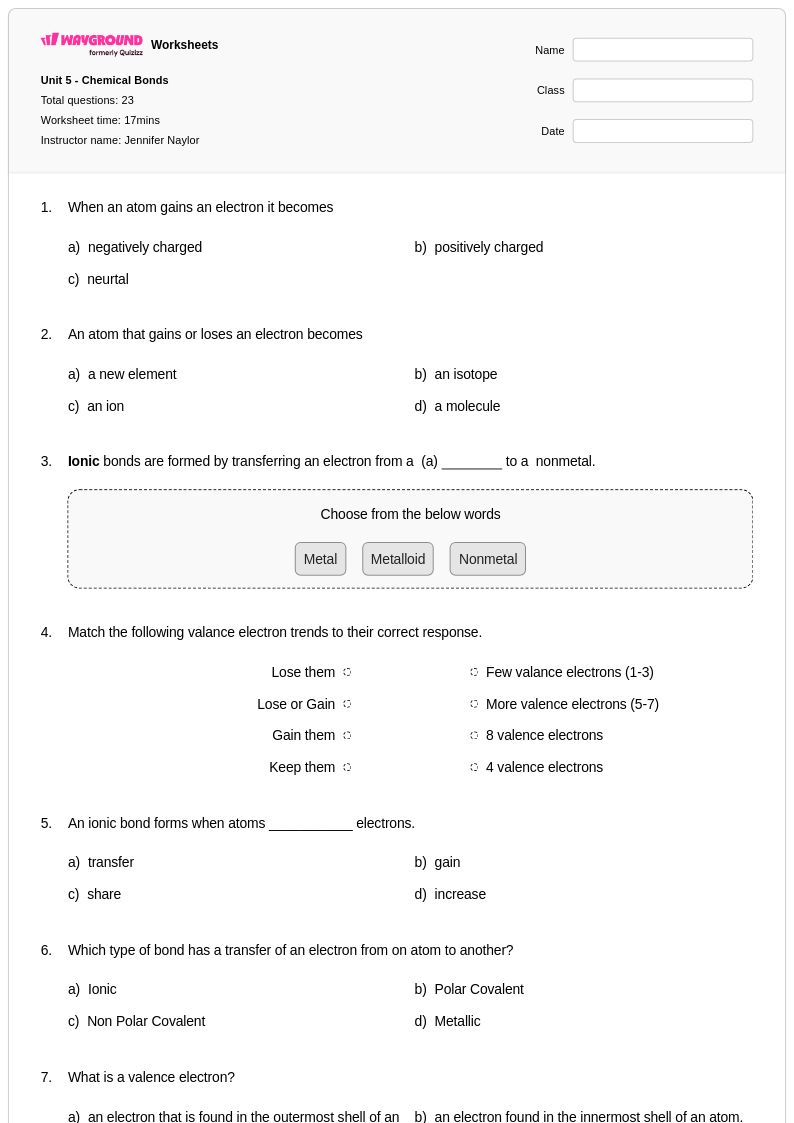
Year 8 ions worksheets available through Wayground (formerly Quizizz) provide comprehensive coverage of ionic compounds, charge determination, and electron transfer concepts that form the foundation of chemical bonding theory. These carefully designed resources strengthen students' ability to identify cations and anions, predict ionic charges based on periodic table position, write chemical formulas for ionic compounds, and understand the relationship between atomic structure and ion formation. The collection includes practice problems that progress from basic ion identification to more complex applications involving polyatomic ions and compound naming conventions, with each worksheet featuring detailed answer keys that support independent learning and self-assessment. Teachers can access these materials as free printables in convenient pdf format, making them ideal for classroom instruction, homework assignments, and test preparation.
Wayground (formerly Quizizz) empowers educators with millions of teacher-created ions worksheets that can be easily located through robust search and filtering capabilities designed specifically for Year 8 chemistry instruction. The platform's standards alignment features ensure that ionic bonding materials meet curriculum requirements while supporting differentiated instruction through customizable difficulty levels and problem types. Teachers can seamlessly adapt these resources for various instructional needs, whether planning whole-class lessons, designing targeted remediation activities for struggling learners, or creating enrichment opportunities for advanced students ready to explore complex ionic structures. The flexible format options allow educators to utilize these worksheets both digitally for interactive learning experiences and as traditional printable materials, providing the versatility needed to enhance skill practice and deepen conceptual understanding of ionic chemistry across diverse learning environments.
FAQs
How do I teach ions and ionic bonding to chemistry students?
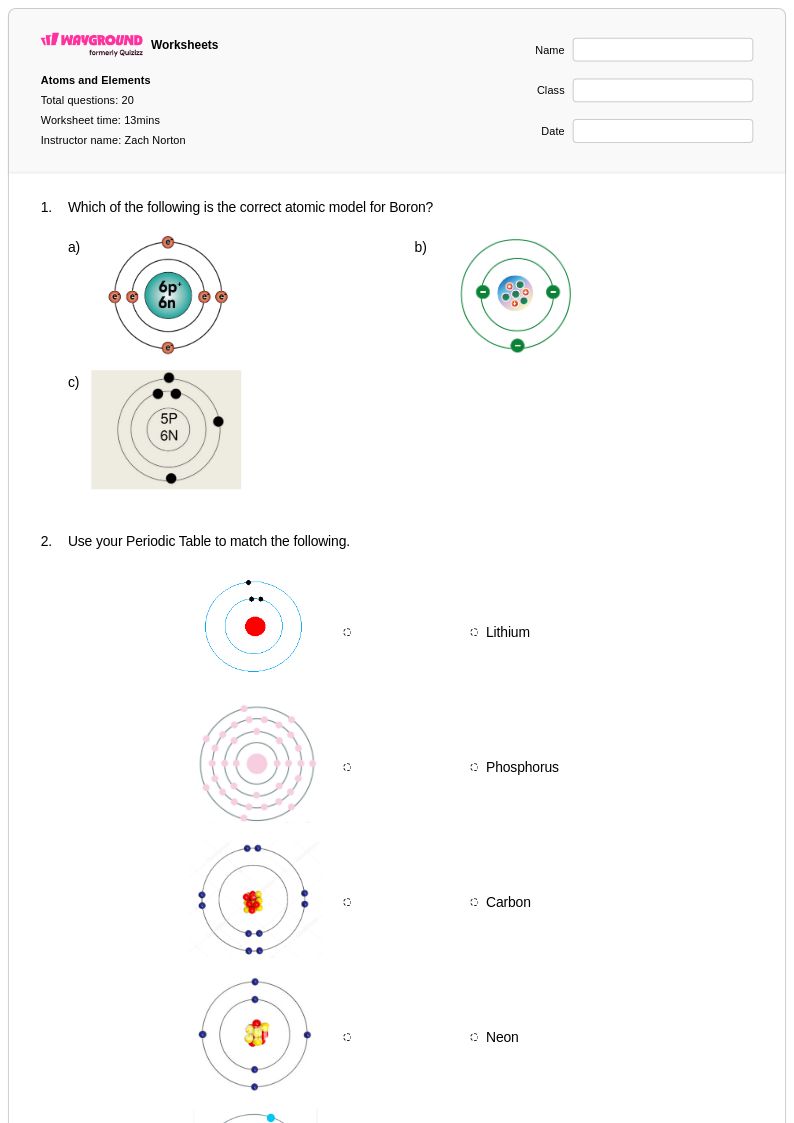
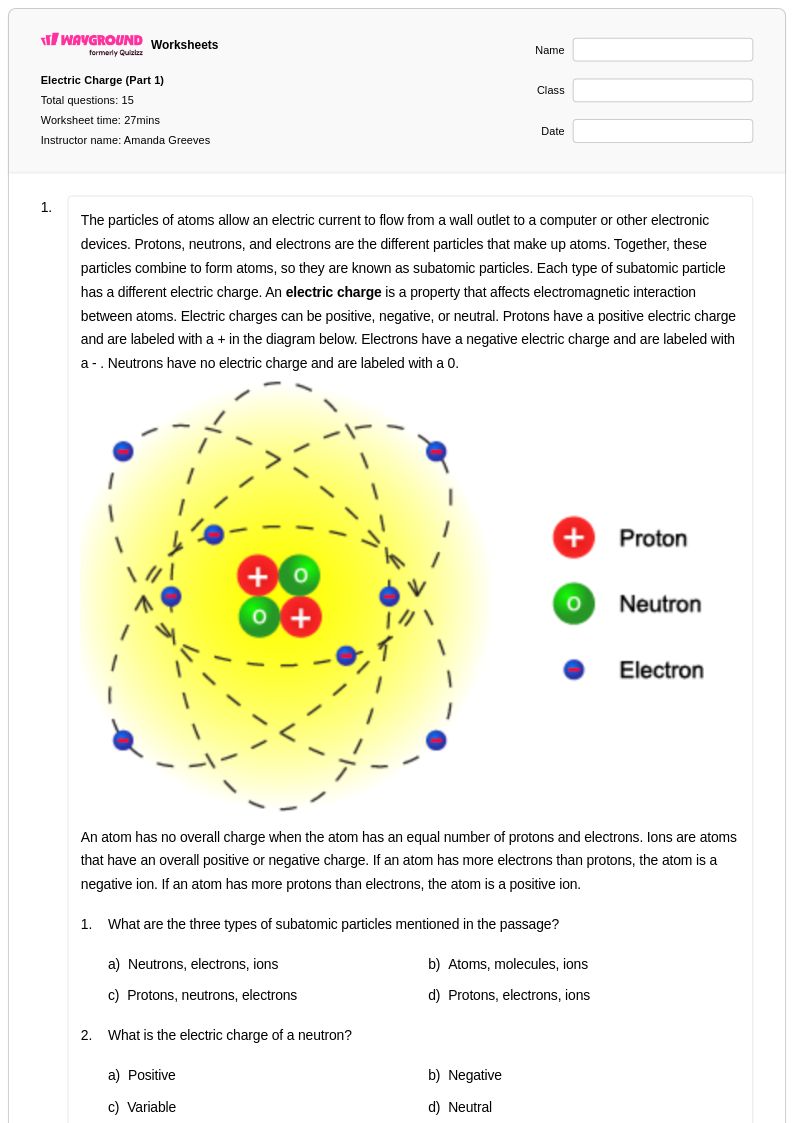
Start by grounding students in atomic structure, specifically the relationship between protons, electrons, and charge, before introducing ion formation. Use electron dot diagrams to show how atoms gain or lose electrons to achieve stable configurations, then connect this to ionic bonding by demonstrating how oppositely charged ions attract. Progressing from simple monatomic ions like sodium and chloride to polyatomic ions like sulfate or ammonium helps students build conceptual understanding incrementally rather than encountering all ion types at once.
What exercises help students practice identifying cations and anions?
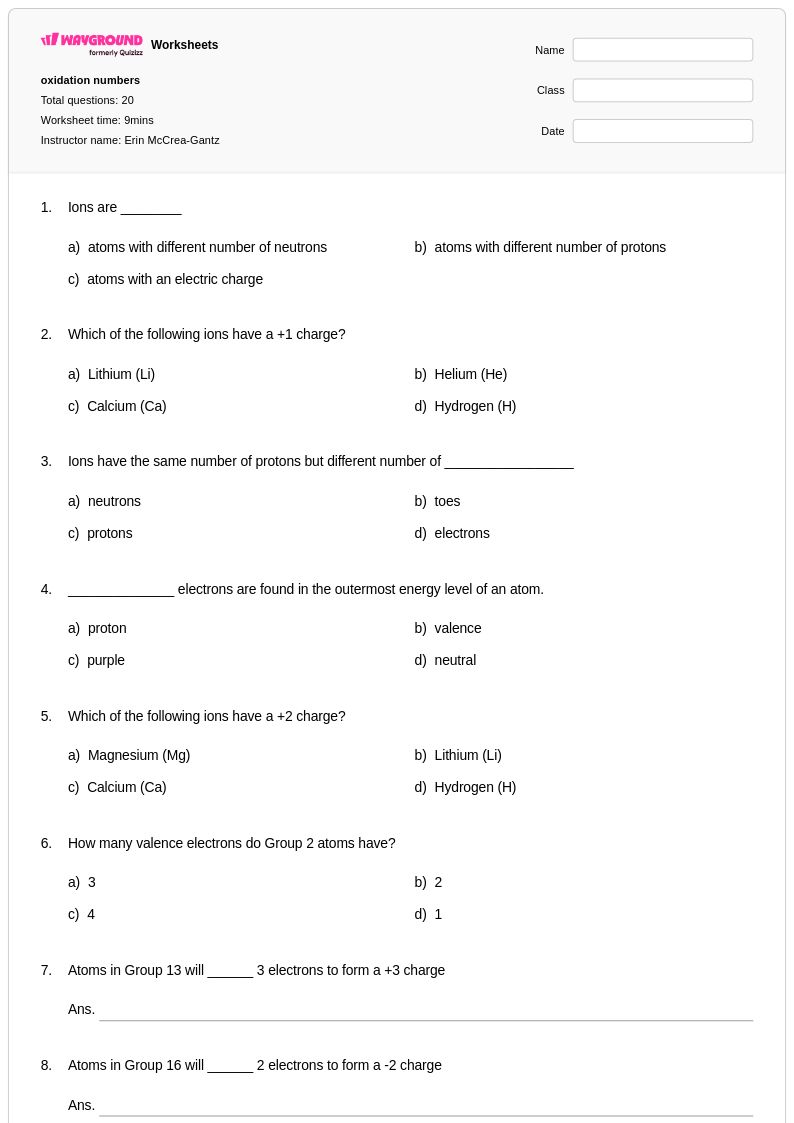
Effective practice exercises include charge-labeling activities where students determine whether an ion is a cation or anion based on electron gain or loss, and formula-writing tasks that require students to balance charges when combining ions into neutral compounds. Naming drills that alternate between giving a formula and asking for the name, and giving a name and asking for the formula, reinforce both recognition and recall. Worked practice problems that progress from monatomic to polyatomic ions systematically build the fluency students need for ionic compound work.
What mistakes do students commonly make when calculating ionic charges?
A frequent error is confusing the number of electrons gained or lost with the resulting charge, particularly for transition metals that can form multiple ions such as iron(II) versus iron(III). Students also commonly misapply charge balance rules when writing ionic compound formulas, either forgetting to cross-multiply charges or applying the rule incorrectly to polyatomic ions. Another persistent misconception is treating polyatomic ions as if their charges can be split across atoms, rather than understanding the ion as a single charged unit.
How do I differentiate ions instruction for students at different ability levels?
For students still developing foundational skills, limit initial practice to Group 1, 2, and 17 elements where charges are predictable, and use visual supports like periodic table charge guides. Advanced learners can be extended into transition metal ions, variable oxidation states, and ionic equilibria to deepen their understanding. On Wayground, teachers can apply accommodations such as reduced answer choices to lower cognitive load for struggling students, or enable Read Aloud for students who benefit from audio support, while other students receive standard settings without disruption.
How do I use Wayground's ions worksheets in my chemistry class?
Wayground's ions worksheets are available as printable PDFs for traditional paper-based classroom use and in digital formats for technology-integrated lessons, making them flexible across different teaching environments. Each worksheet includes a complete answer key, so they can be used for guided practice, independent work, or self-paced review. Teachers can also host worksheets as a quiz directly on Wayground, enabling real-time student responses and easy progress tracking without additional setup.
How do I help students who are struggling with naming ionic compounds?
Students who struggle with ionic compound naming often need explicit instruction on the two naming systems: the Stock system using Roman numerals for transition metals and the classical system using suffixes like -ous and -ic. Providing a structured reference chart for common polyatomic ions and requiring students to memorize a core set, such as nitrate, sulfate, phosphate, and carbonate, significantly reduces errors. Targeted remediation worksheets that isolate naming from formula writing allow students to build confidence in one skill before combining both tasks.