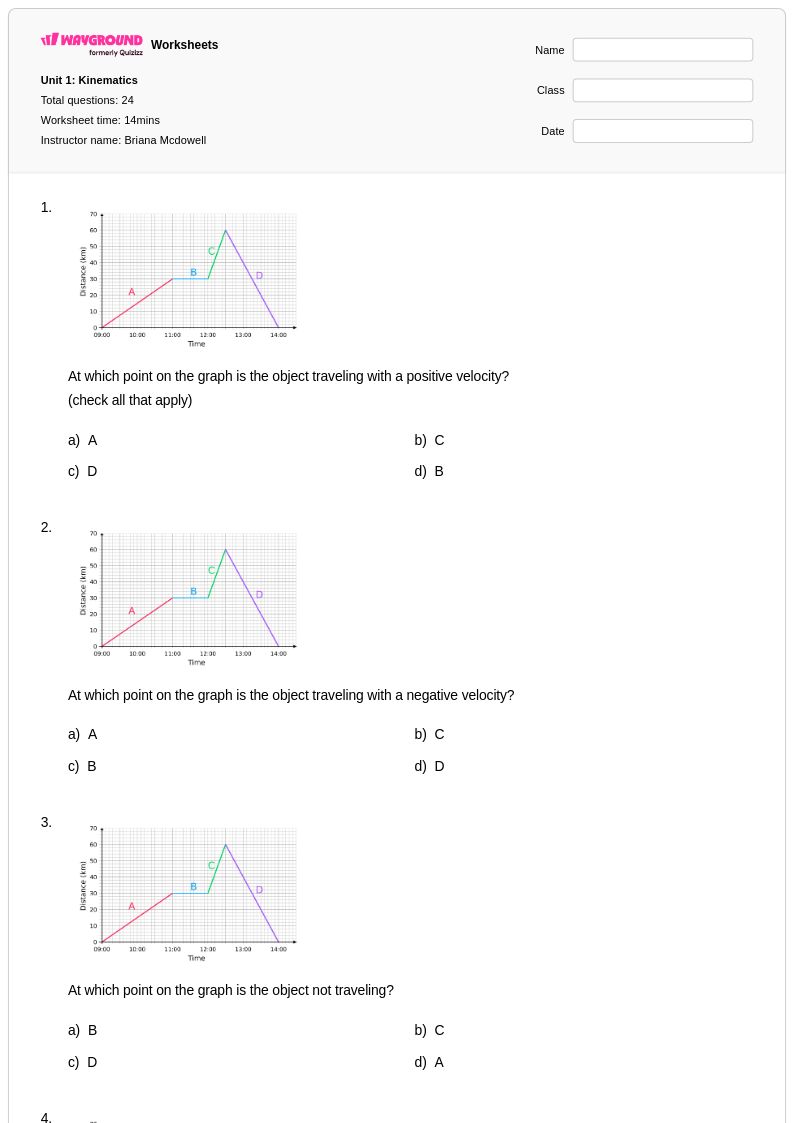
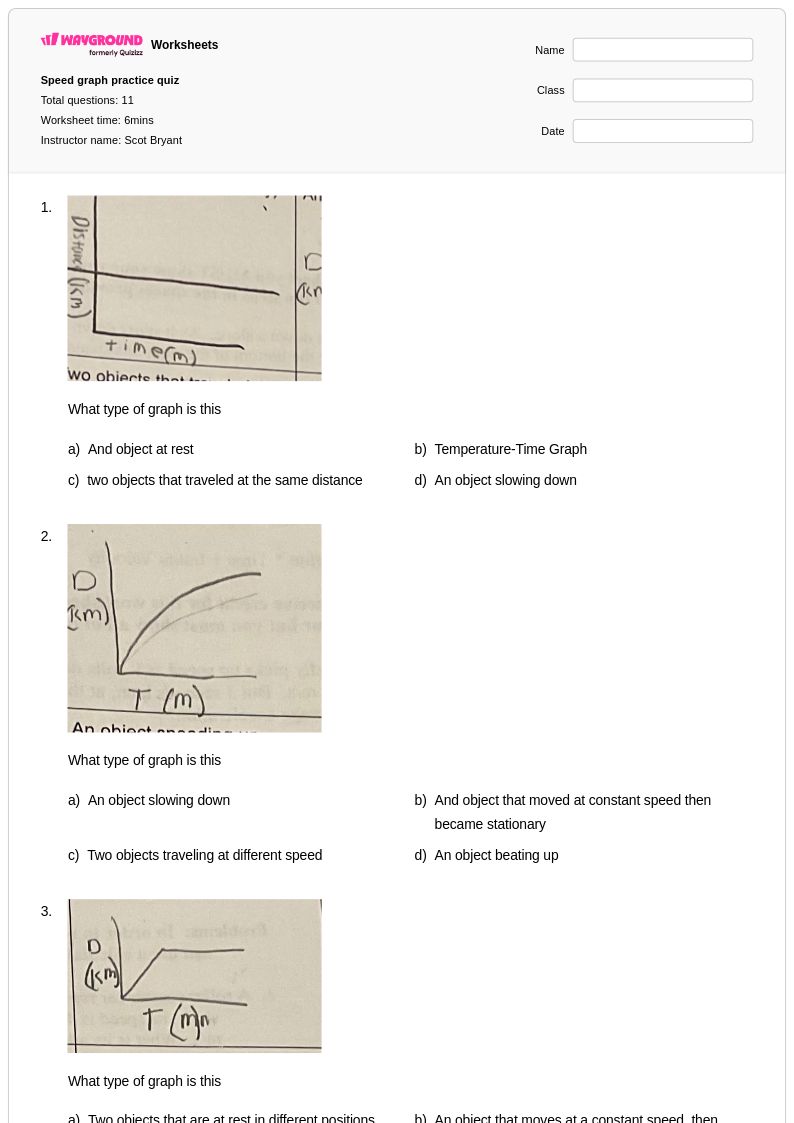
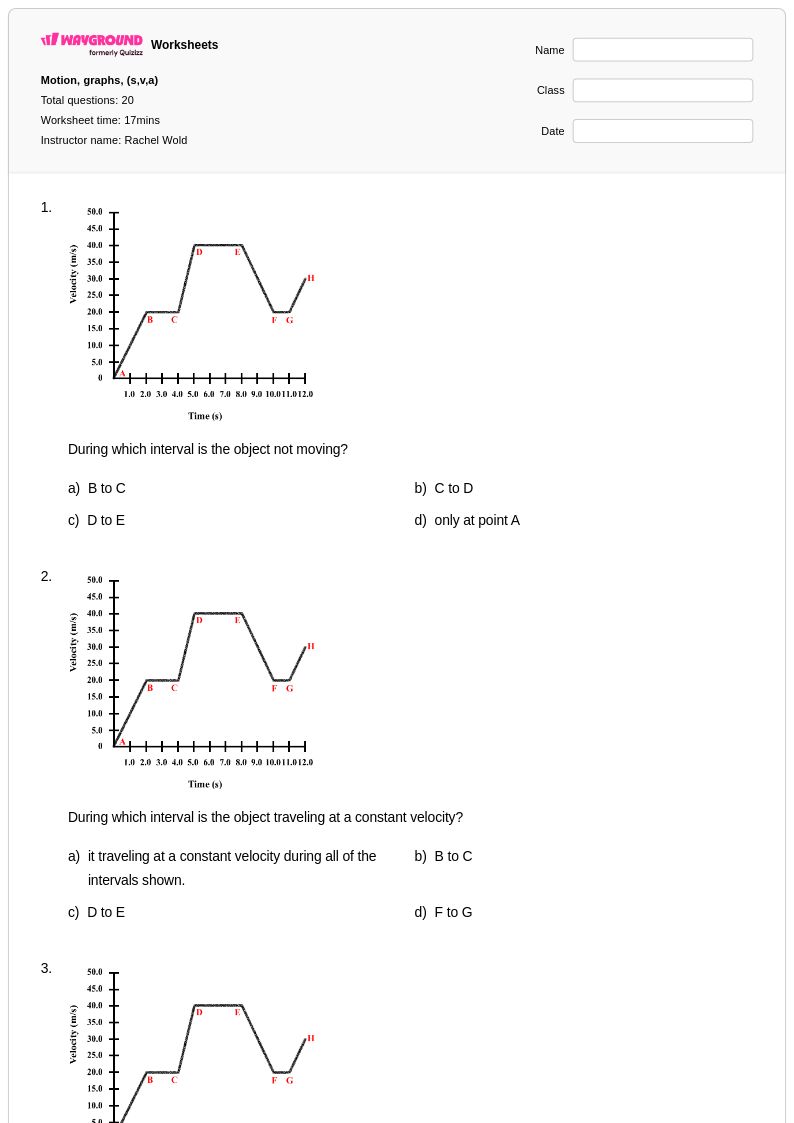
Free Printable Kinematic Graphs Worksheets for Year 9
Year 9 kinematic graphs worksheets and printables help students master motion analysis through practice problems, free PDF resources, and comprehensive answer keys for effective physics learning.
Explore printable Kinematic Graphs worksheets for Year 9
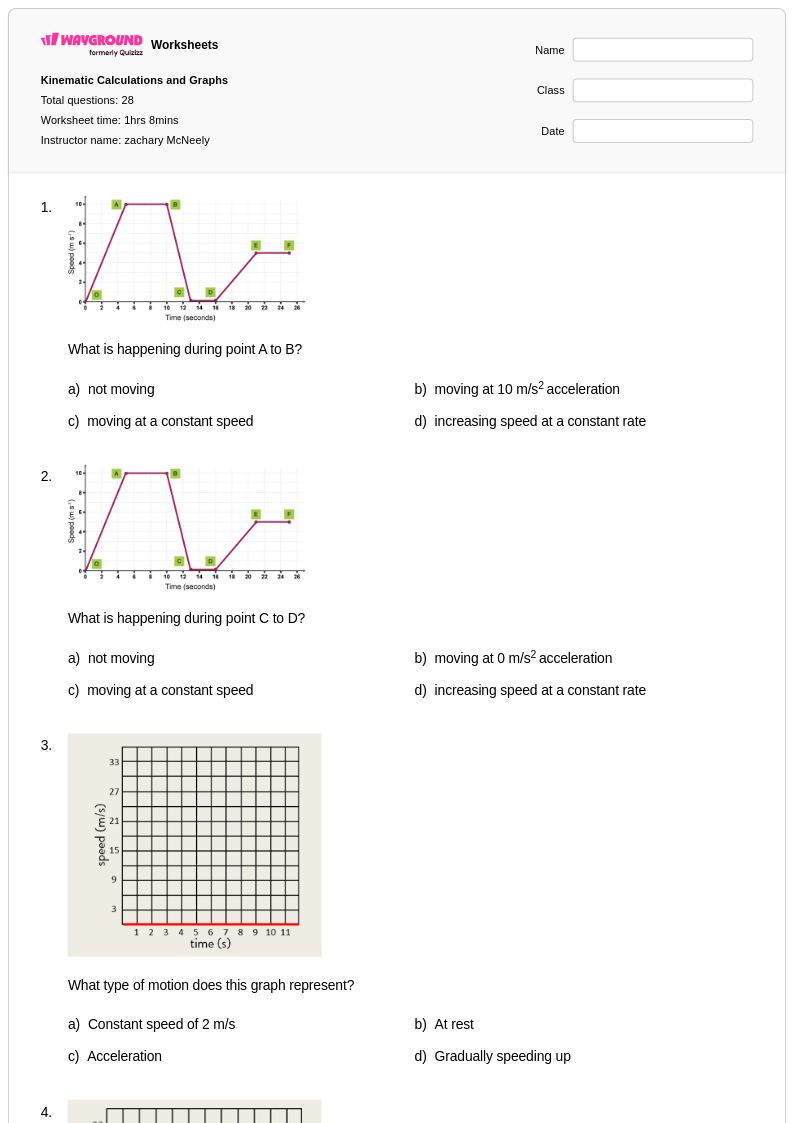
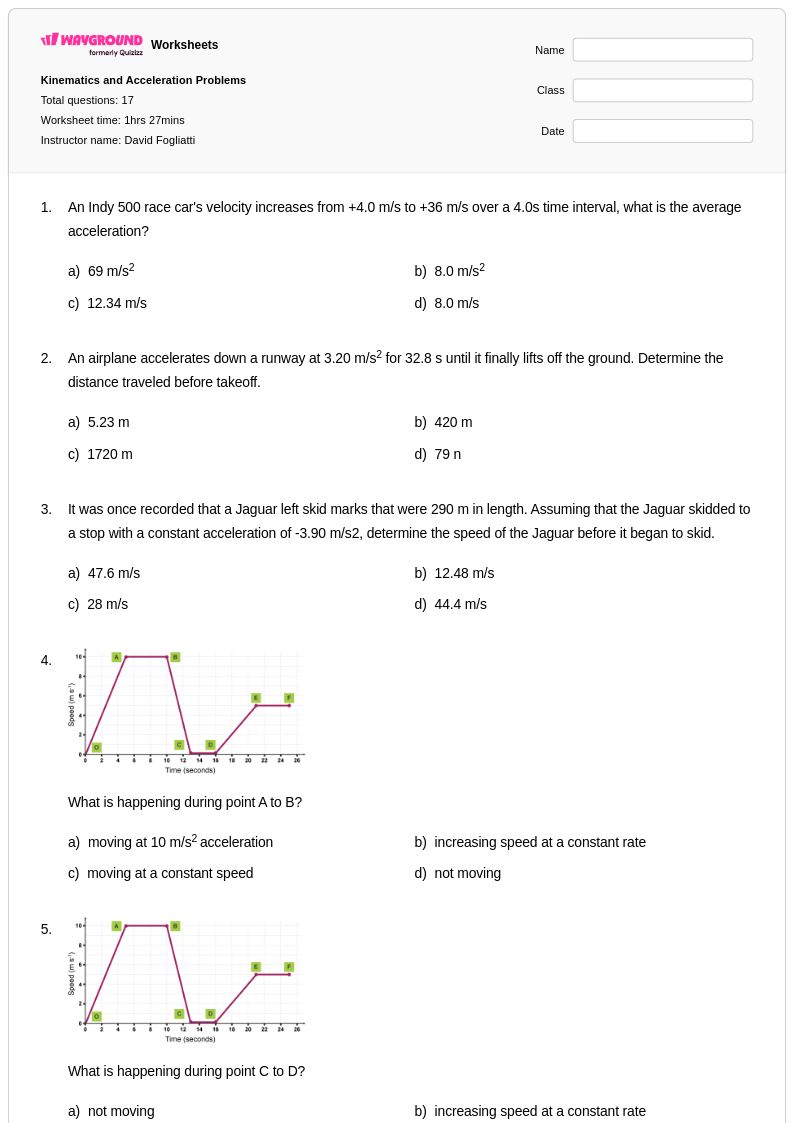
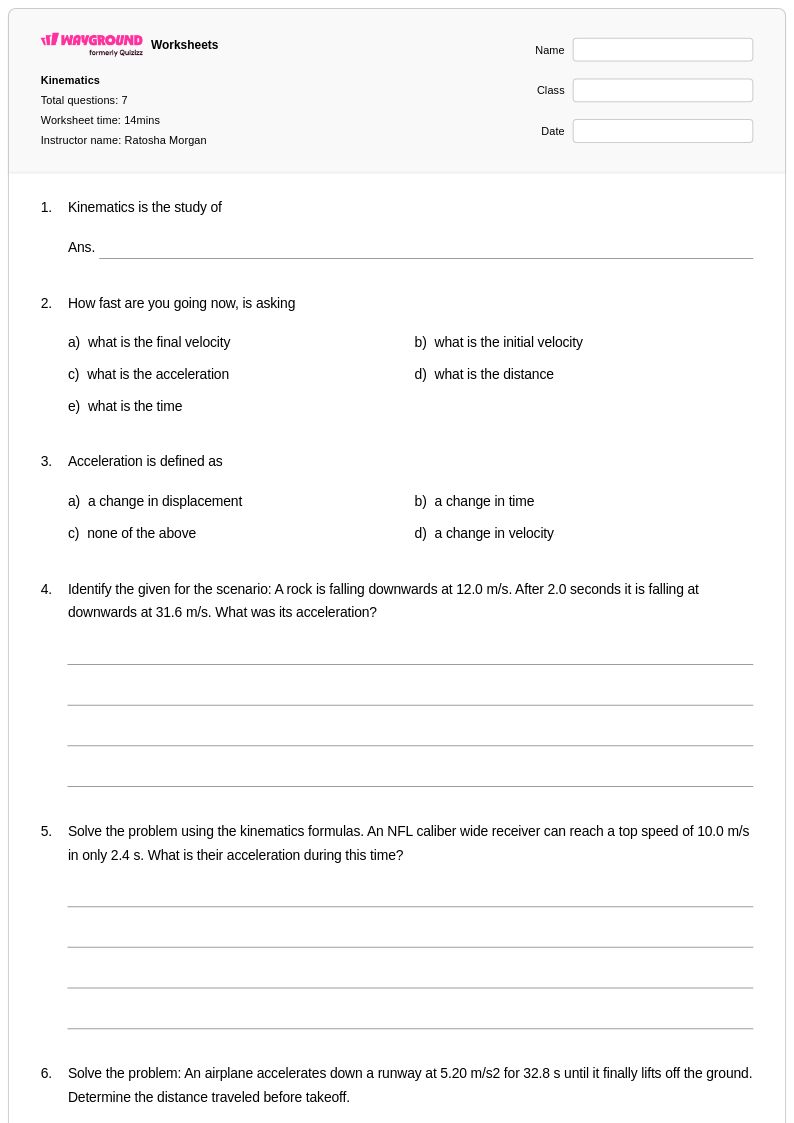
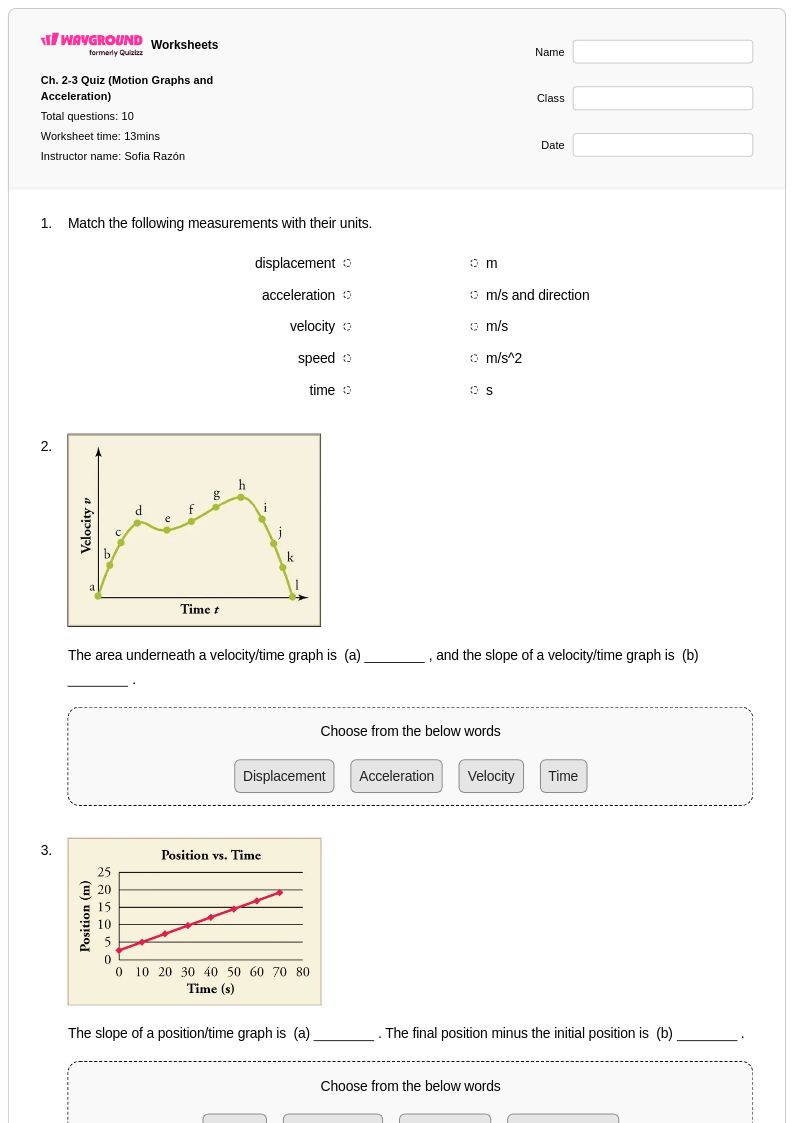
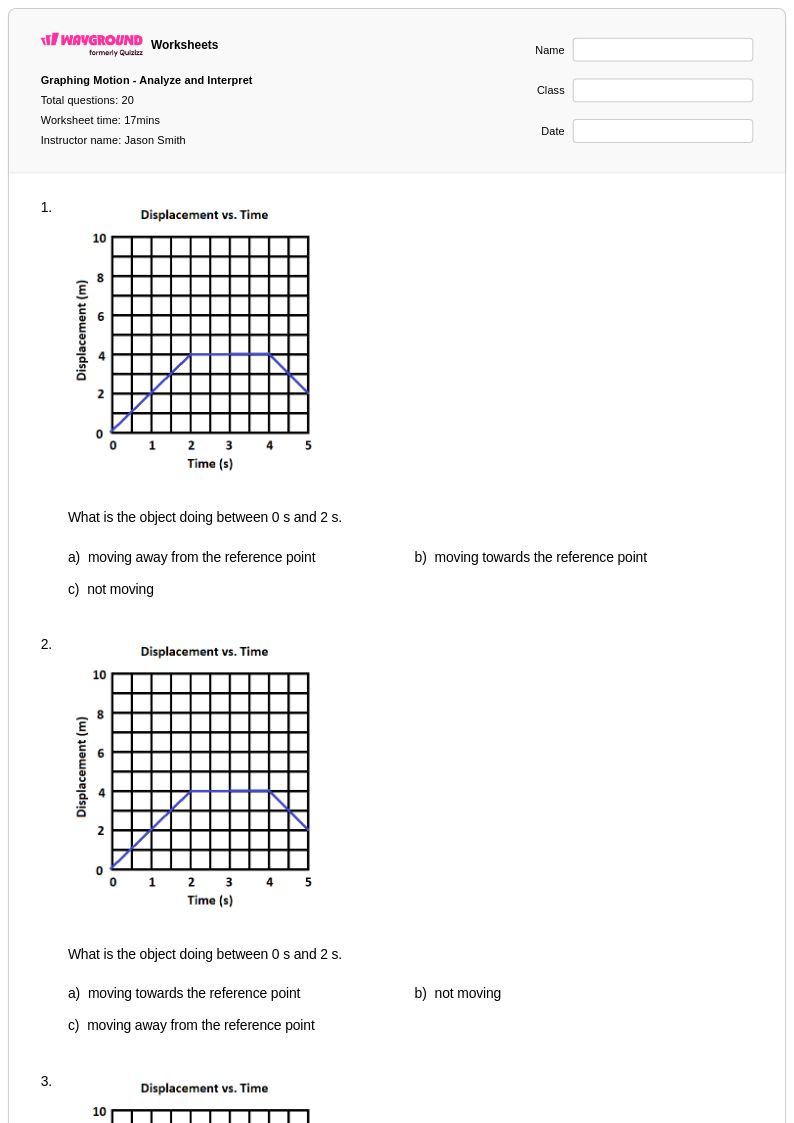
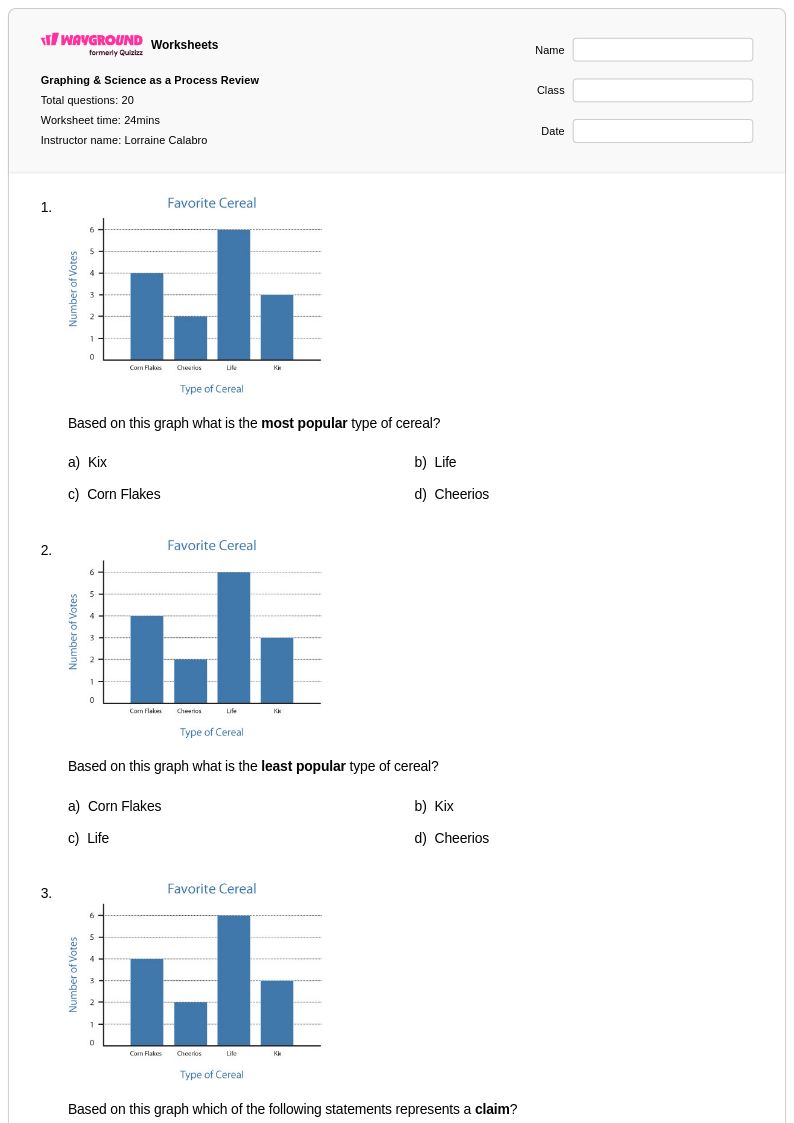
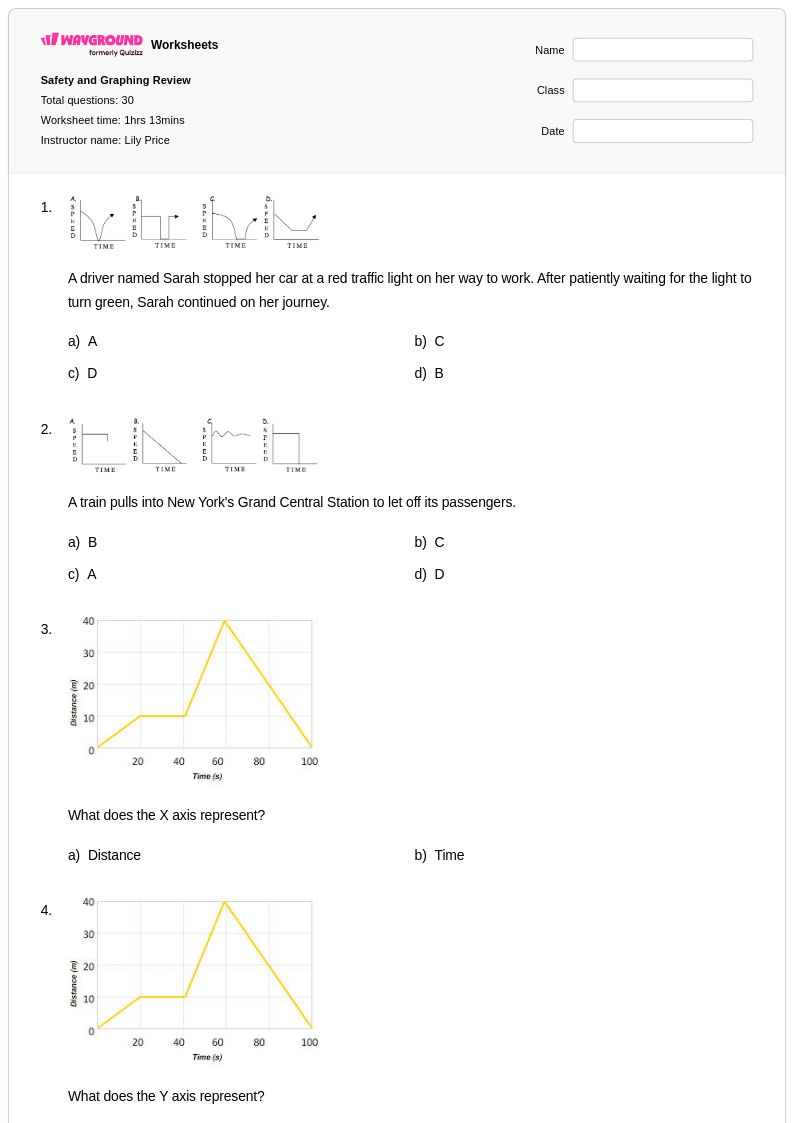
Kinematic graphs represent a fundamental component of Year 9 physics education, requiring students to interpret and analyze motion through visual data representation. Wayground's comprehensive collection of kinematic graph worksheets provides students with extensive practice in reading position-time, velocity-time, and acceleration-time graphs while developing critical analytical skills needed for advanced physics concepts. These carefully structured worksheets guide students through interpreting slopes, calculating areas under curves, and connecting graphical representations to real-world motion scenarios. Each worksheet includes detailed answer keys and step-by-step solutions, making them ideal for independent study, homework assignments, and classroom practice problems. Available as free printable resources and downloadable pdf files, these materials ensure students master the essential skill of translating between mathematical graphs and physical motion descriptions.
Wayground's platform, formerly known as Quizizz, empowers educators with access to millions of teacher-created kinematic graph resources that streamline lesson planning and instruction delivery. The robust search and filtering system allows teachers to quickly locate worksheets aligned with specific physics standards and tailored to Year 9 proficiency levels. Advanced differentiation tools enable educators to modify difficulty levels and customize content for diverse learning needs, supporting both remediation for struggling students and enrichment opportunities for advanced learners. These kinematic graph materials are available in both printable and digital formats, including easily accessible pdf downloads, providing flexibility for various classroom environments and teaching preferences. The extensive worksheet library supports systematic skill practice while offering teachers the resources needed for effective formative assessment and targeted intervention in motion graph interpretation.
FAQs
How do I teach students to interpret kinematic graphs in physics?
Start by teaching each graph type in isolation: position-time, velocity-time, and acceleration-time graphs. Help students understand that slope is the key operation on each graph, where slope on a position-time graph gives velocity and slope on a velocity-time graph gives acceleration. Once students are comfortable with individual graphs, introduce multi-graph comparison exercises that ask them to match or translate between representations of the same motion scenario. Building this layered approach prevents students from conflating graph types before they have internalized each one independently.
What exercises help students practice reading and analyzing kinematic graphs?
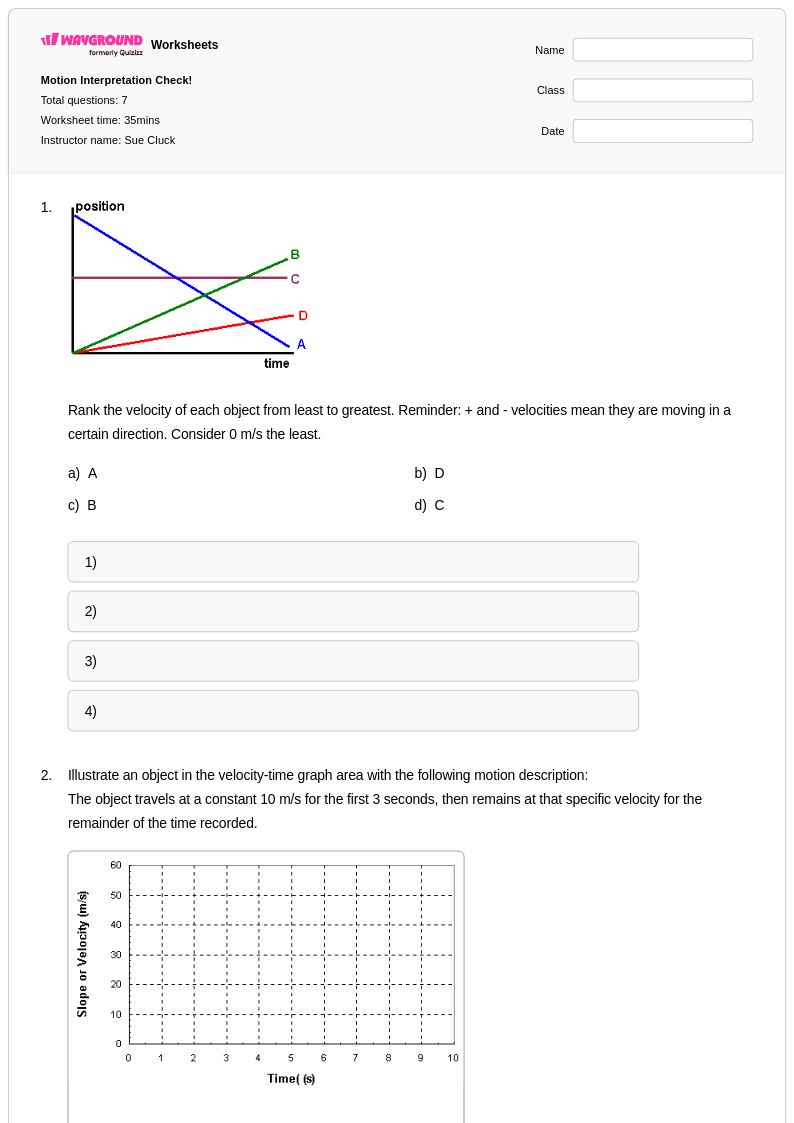
Effective practice includes problems that require students to calculate slope to find velocity or acceleration, calculate area under a velocity-time graph to find displacement, and sketch one graph type when given another. Matching exercises, where students pair a written motion description with its corresponding graph, are especially useful for building conceptual fluency. Kinematic graphs worksheets that include a range of problem types, from simple constant-motion scenarios to multi-phase motion with direction changes, give students the progressive challenge needed to develop confidence.
What mistakes do students commonly make when interpreting kinematic graphs?
The most common misconception is treating a graph as a picture of the actual path of motion rather than a representation of a variable over time. Students frequently confuse the shape of a position-time graph with the physical trajectory of an object. Another frequent error is misreading negative velocity as deceleration rather than motion in the opposite direction. Students also commonly neglect units when calculating slope or area, leading to correct numeric answers with wrong physical meaning.
How do students learn to connect position-time, velocity-time, and acceleration-time graphs to the same motion?
Students need explicit instruction on the derivative and integral relationships between graph types: the slope of a position-time graph corresponds to the velocity-time graph, and the slope of the velocity-time graph corresponds to the acceleration-time graph. Practice problems that display all three graphs for a single motion scenario and ask students to verify or complete one using the other two are highly effective. Teachers should emphasize that a horizontal line on a velocity-time graph means constant velocity and a flat zero line on an acceleration-time graph, not that the object is stopped.
How can I use Wayground's kinematic graphs worksheets in my physics class?
Wayground's kinematic graphs worksheets are available as printable PDFs for traditional classroom use and in digital formats for technology-integrated environments, making them flexible for in-class practice, homework, or lab follow-up activities. Teachers can also host worksheets as a quiz directly on Wayground, enabling real-time student responses and built-in answer key support for faster grading. For students who need additional support, Wayground offers accommodations such as extended time and read-aloud features that can be configured per student without disrupting the rest of the class.
How do I differentiate kinematic graph instruction for struggling physics students?
For students who struggle, begin with single-variable constant-motion graphs before introducing changing velocity or multi-phase scenarios. On Wayground, teachers can enable reduced answer choices for selected students to lower cognitive load on multiple-choice graph interpretation problems, while other students receive standard versions. Pairing simplified worksheets with labeled graph templates, where key features like slope triangles are pre-drawn, gives struggling learners a scaffold they can gradually remove as fluency develops.