Free Printable Mechanical Advantage Worksheets for Year 9
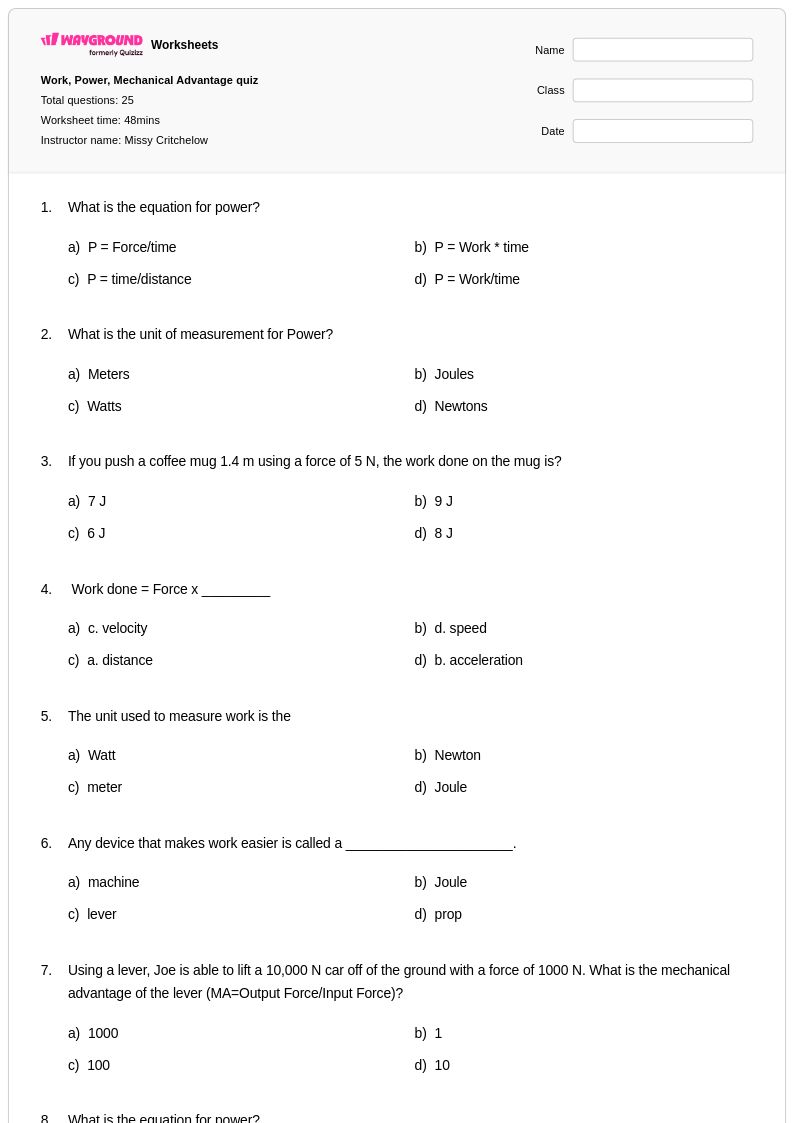
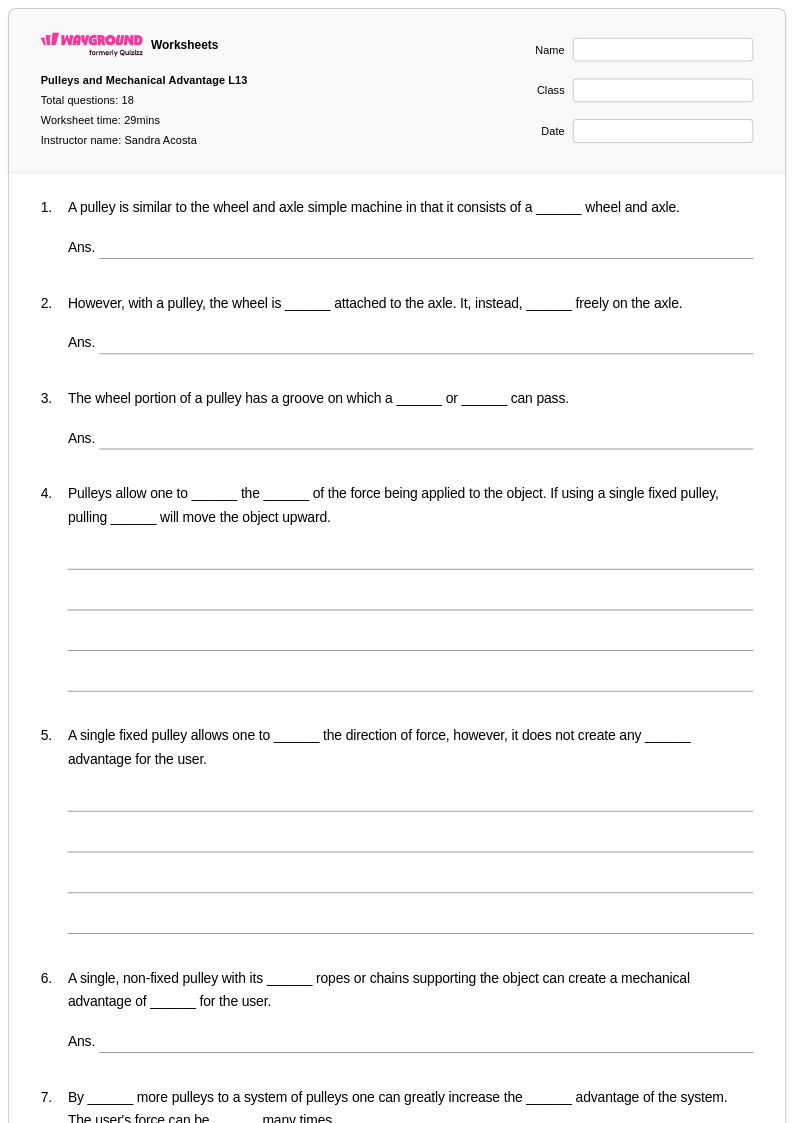
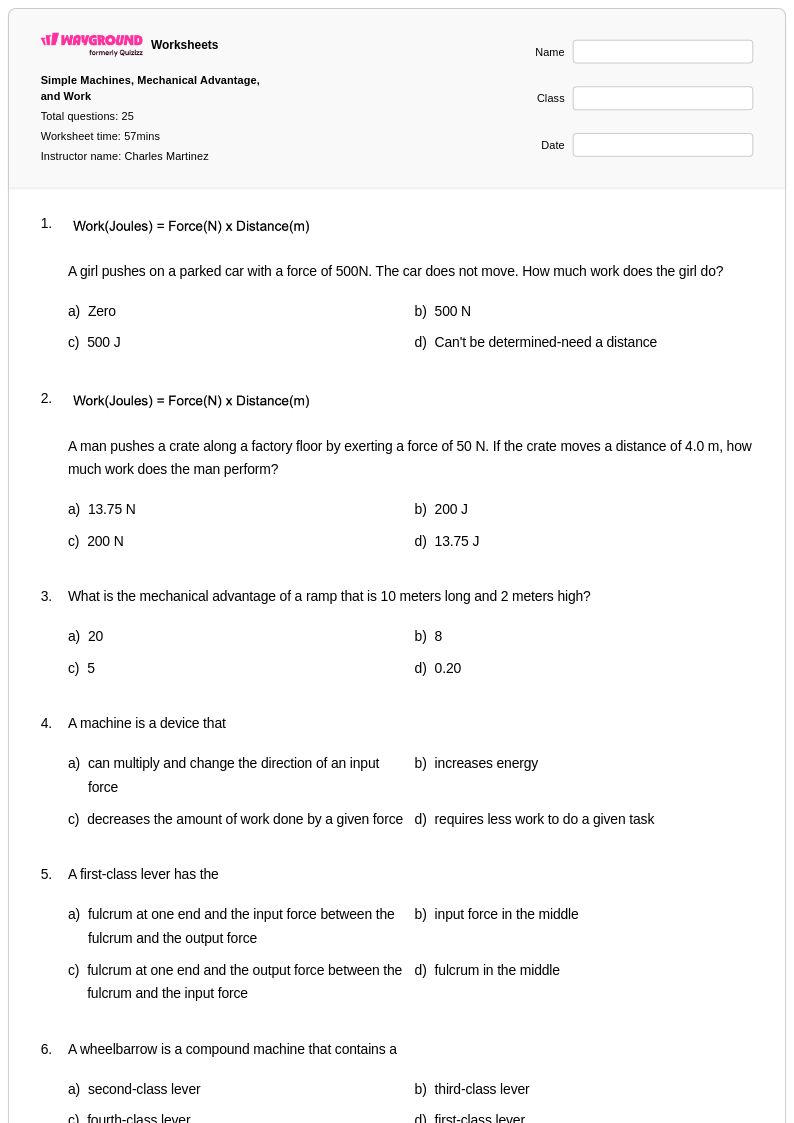
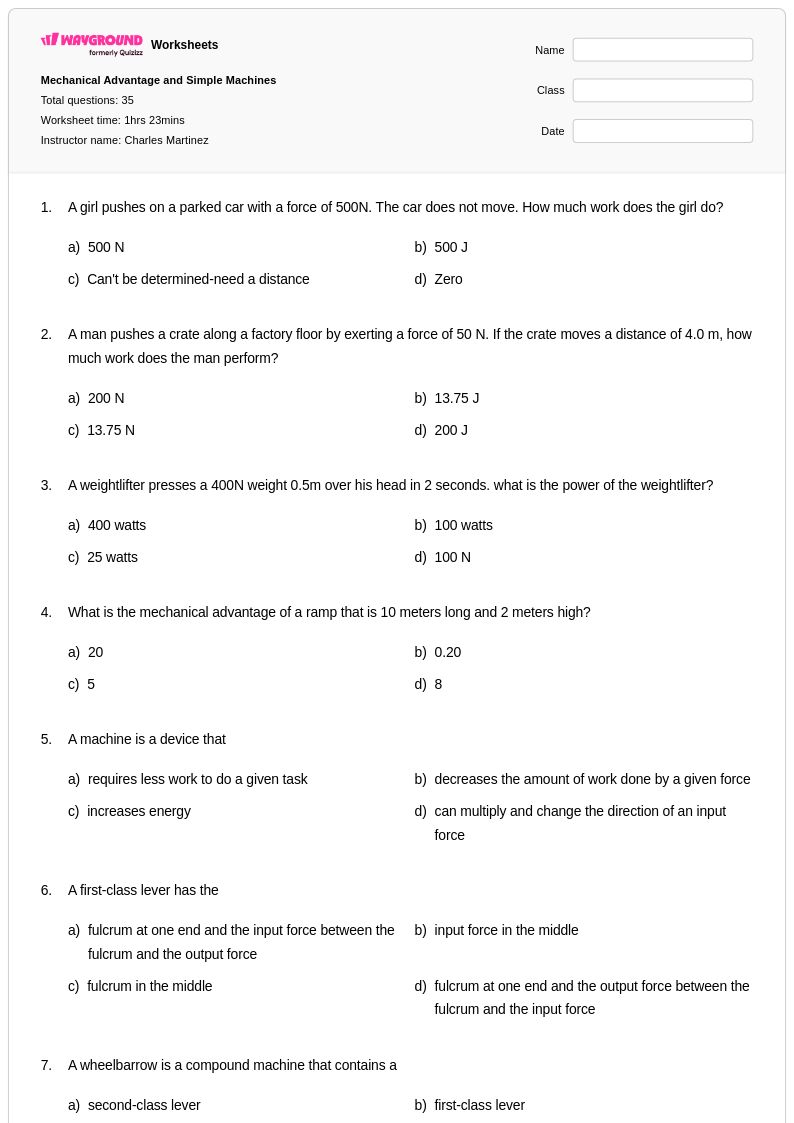
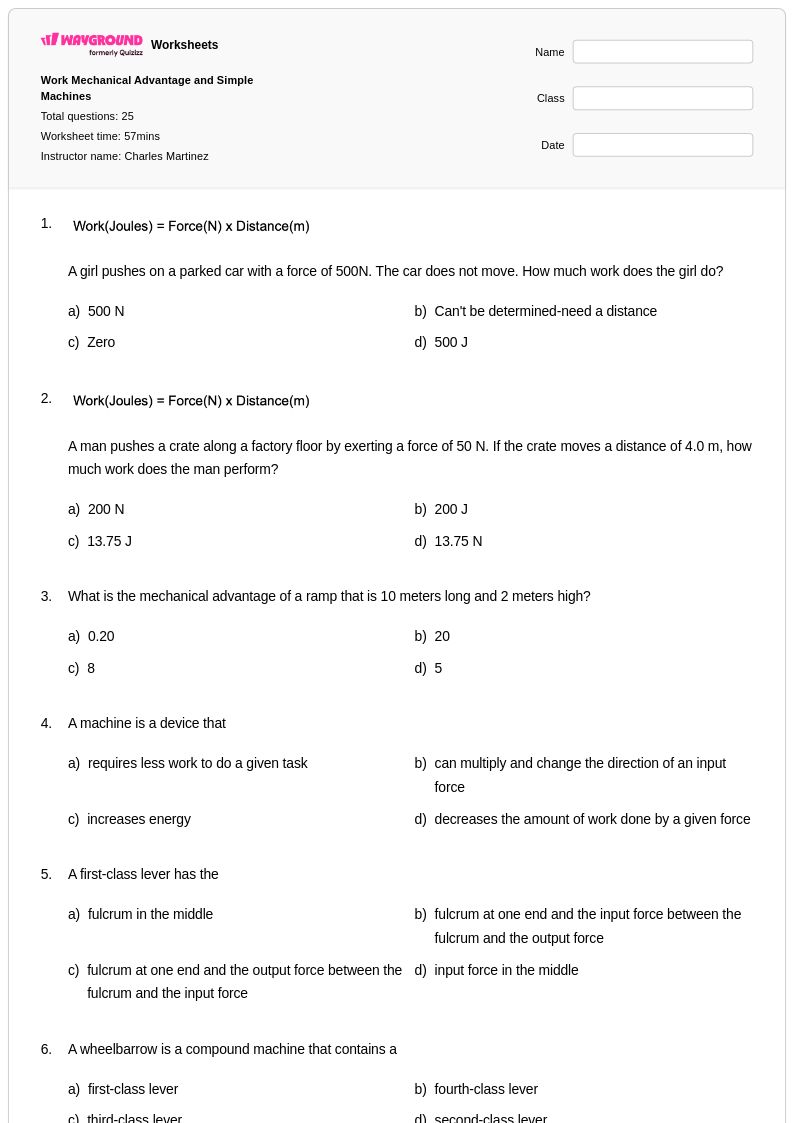
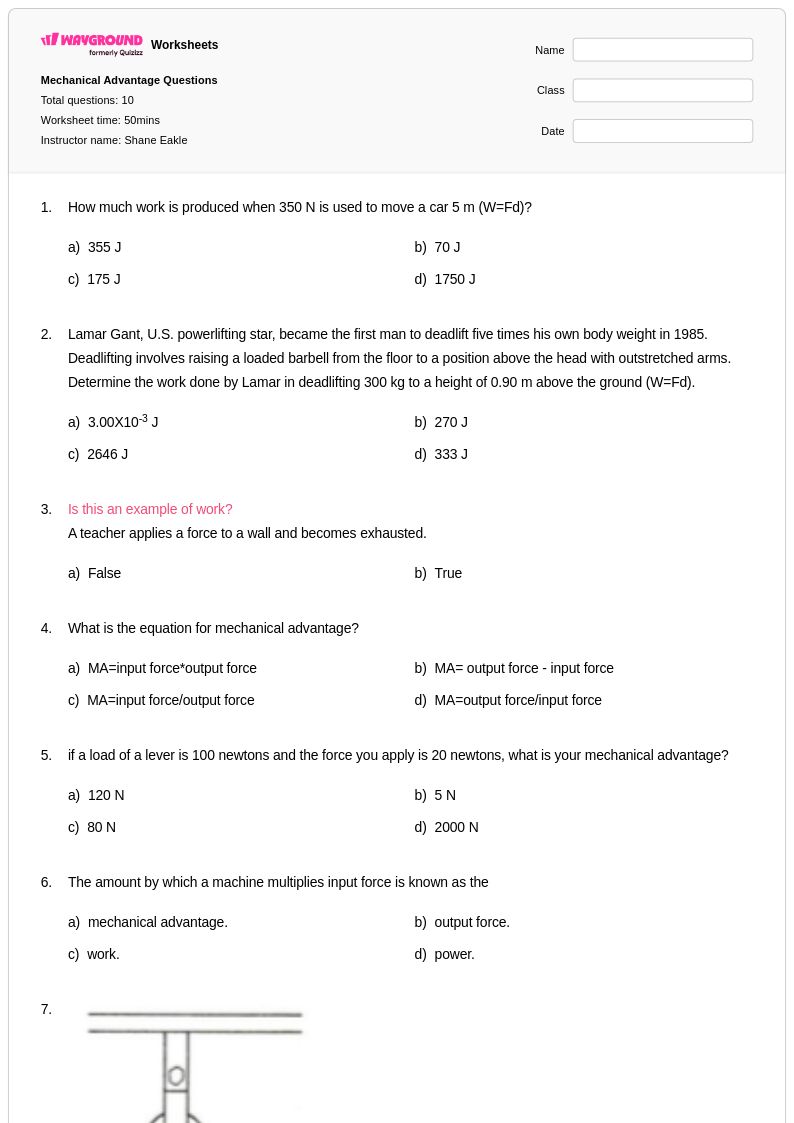
Year 9 mechanical advantage worksheets from Wayground provide comprehensive printables and practice problems with answer keys to help students master calculating and understanding mechanical advantage in simple machines through engaging PDF exercises.
Explore printable Mechanical Advantage worksheets for Year 9
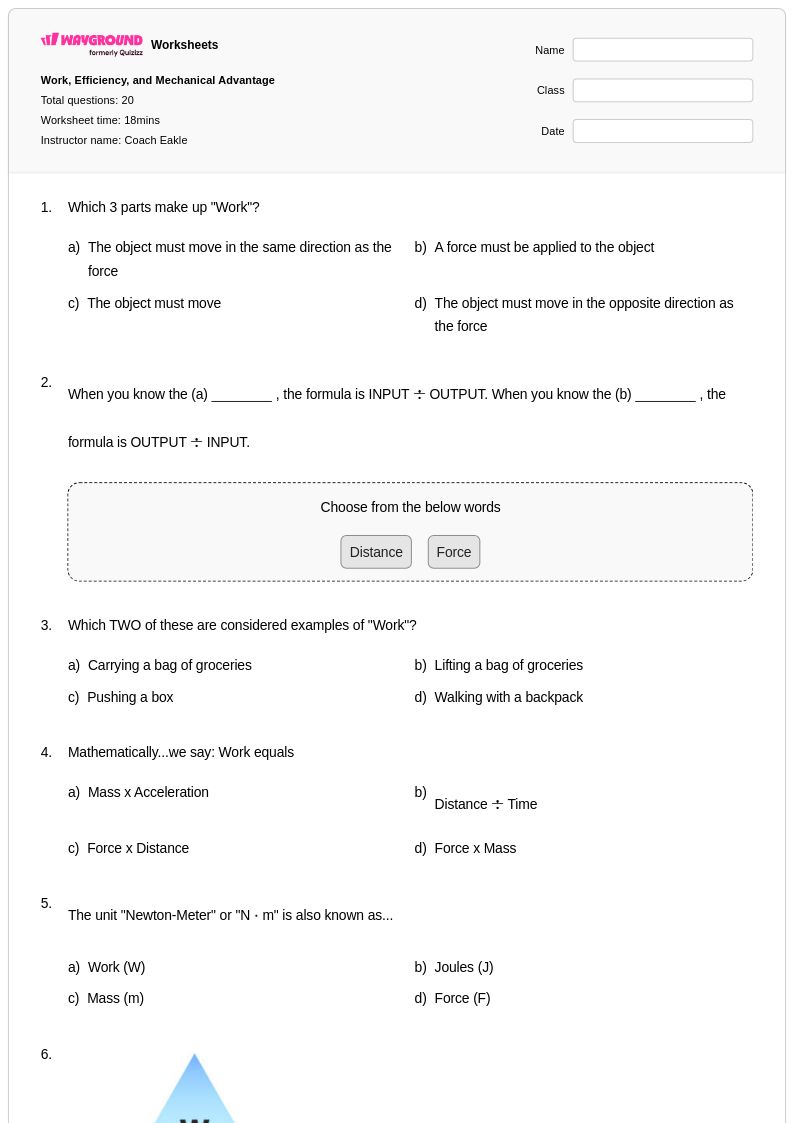
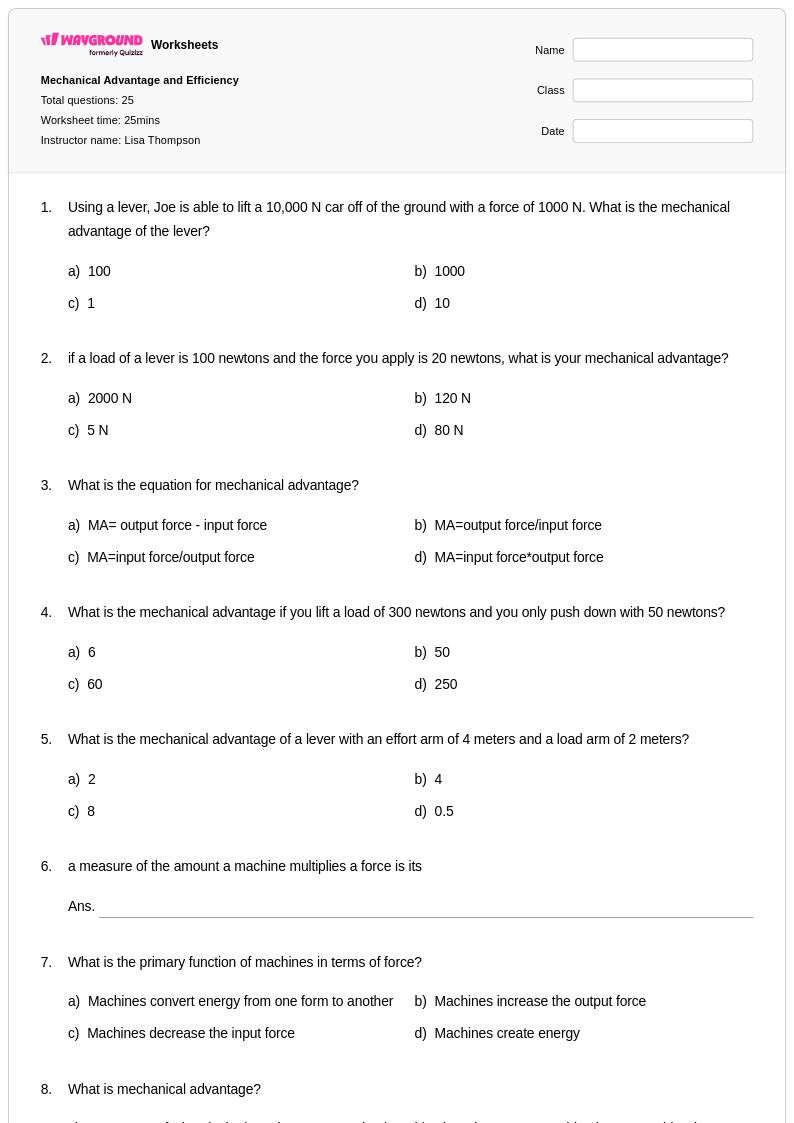
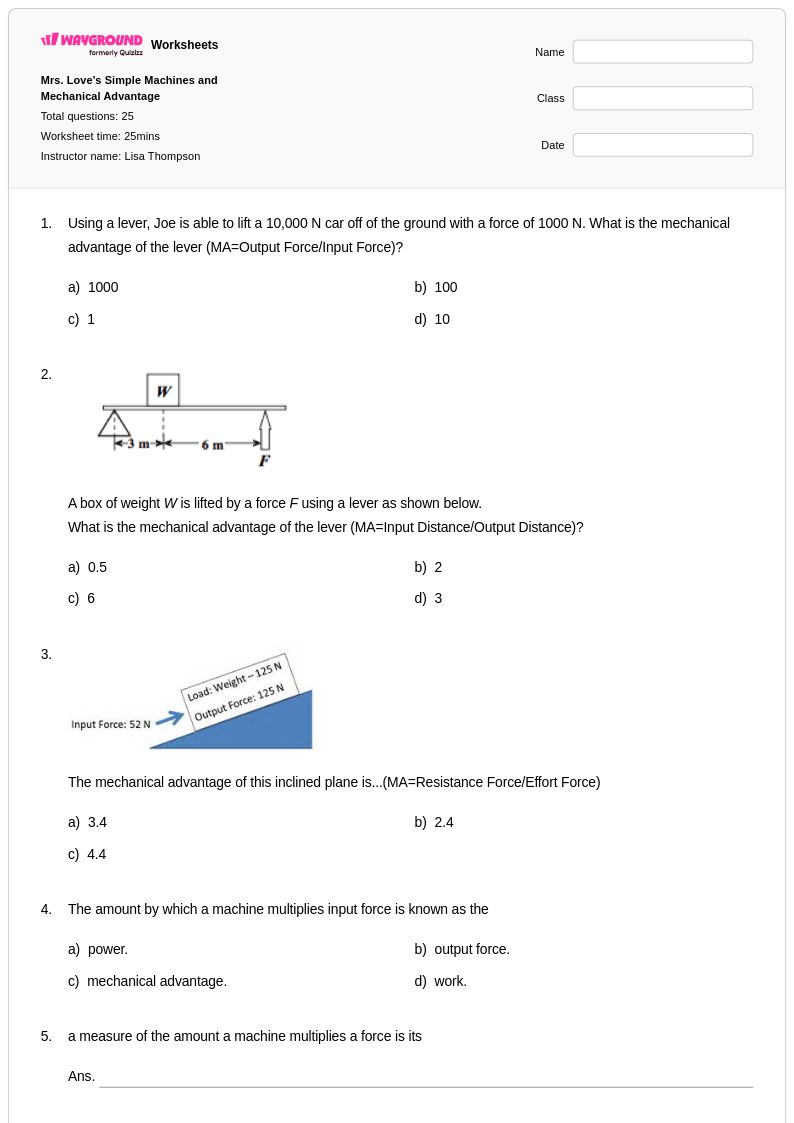
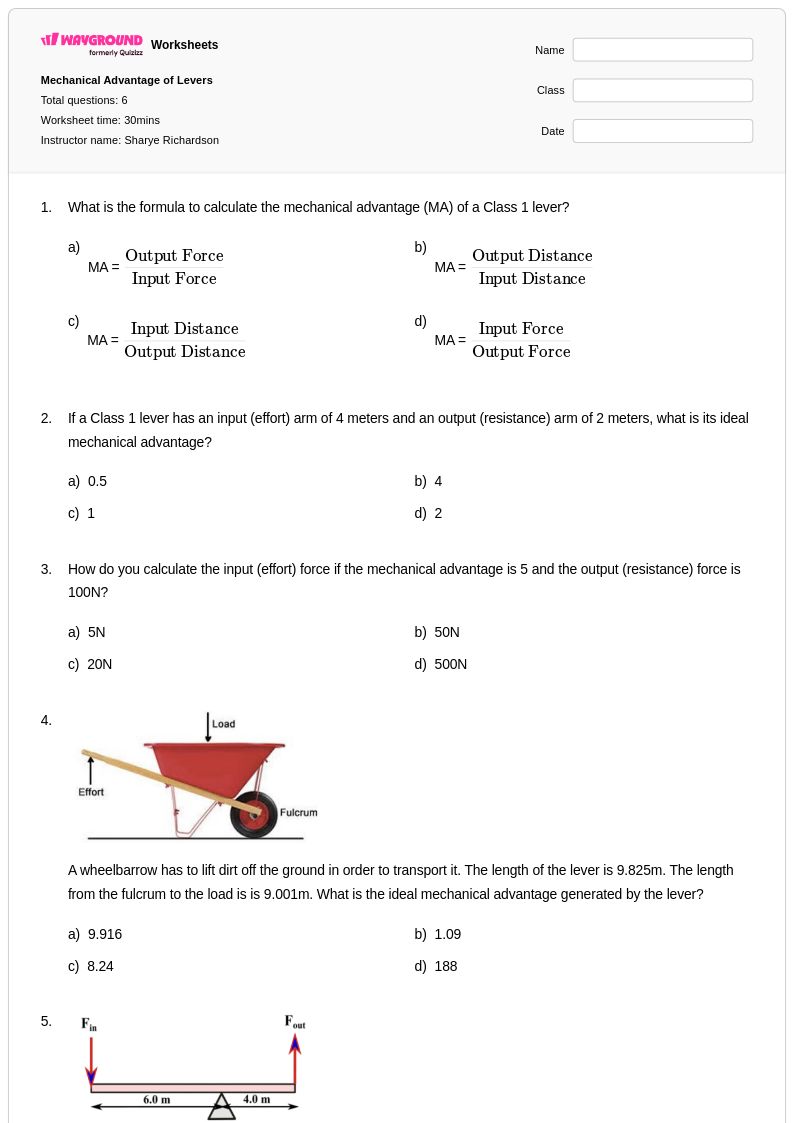
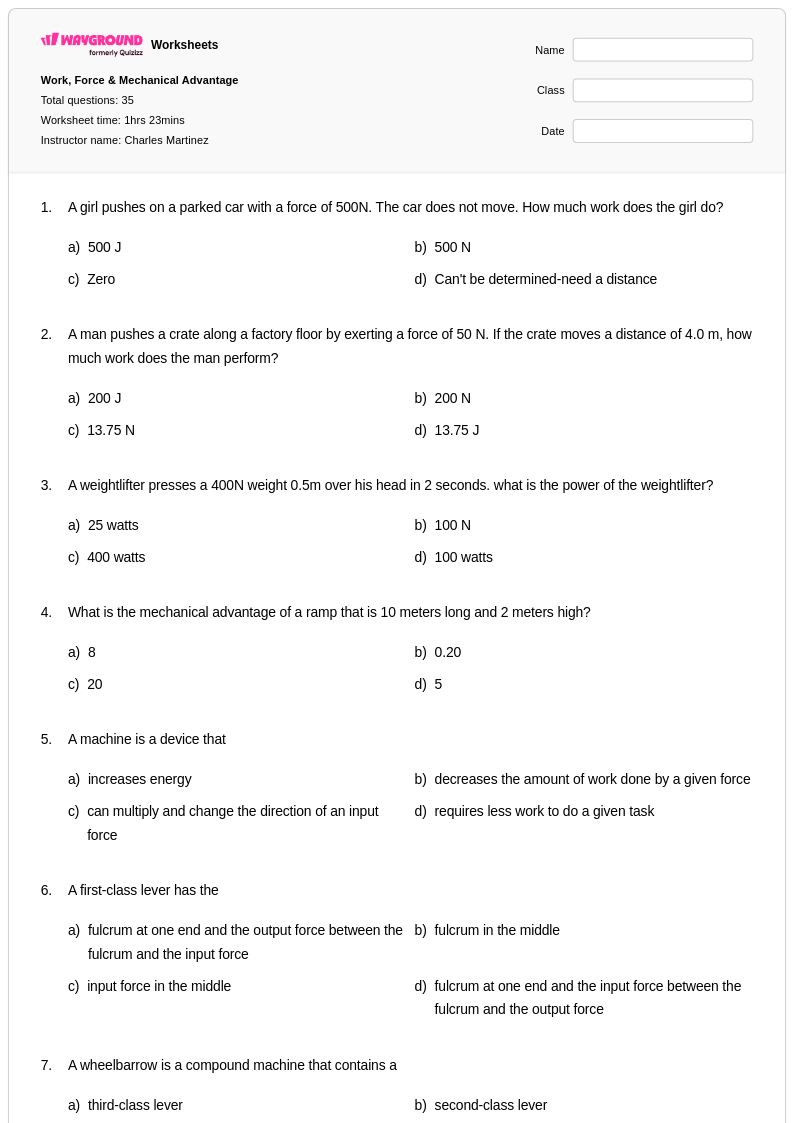
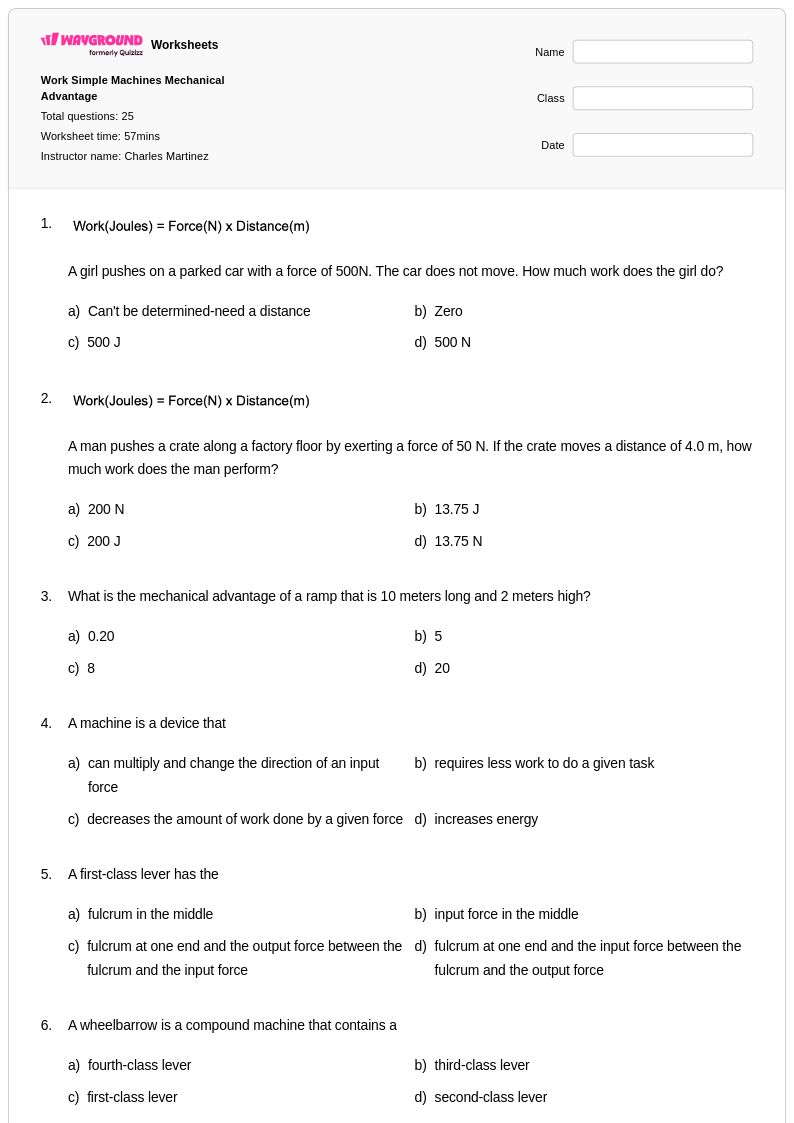
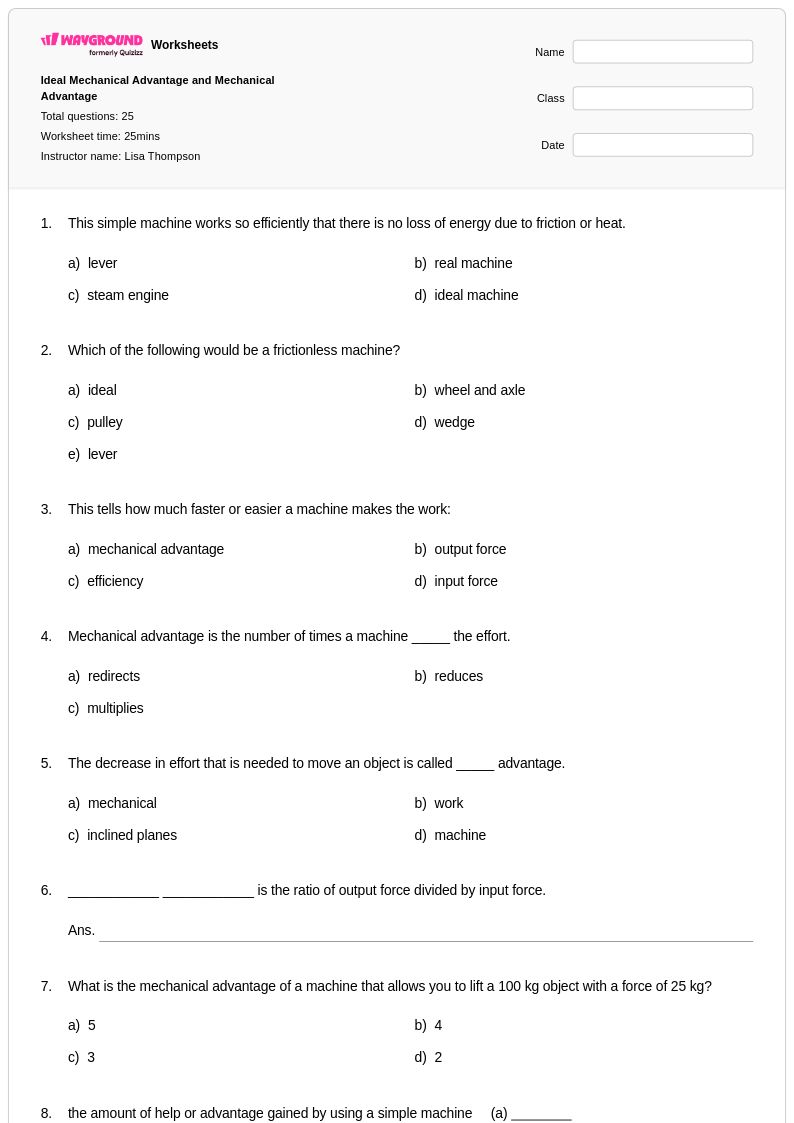
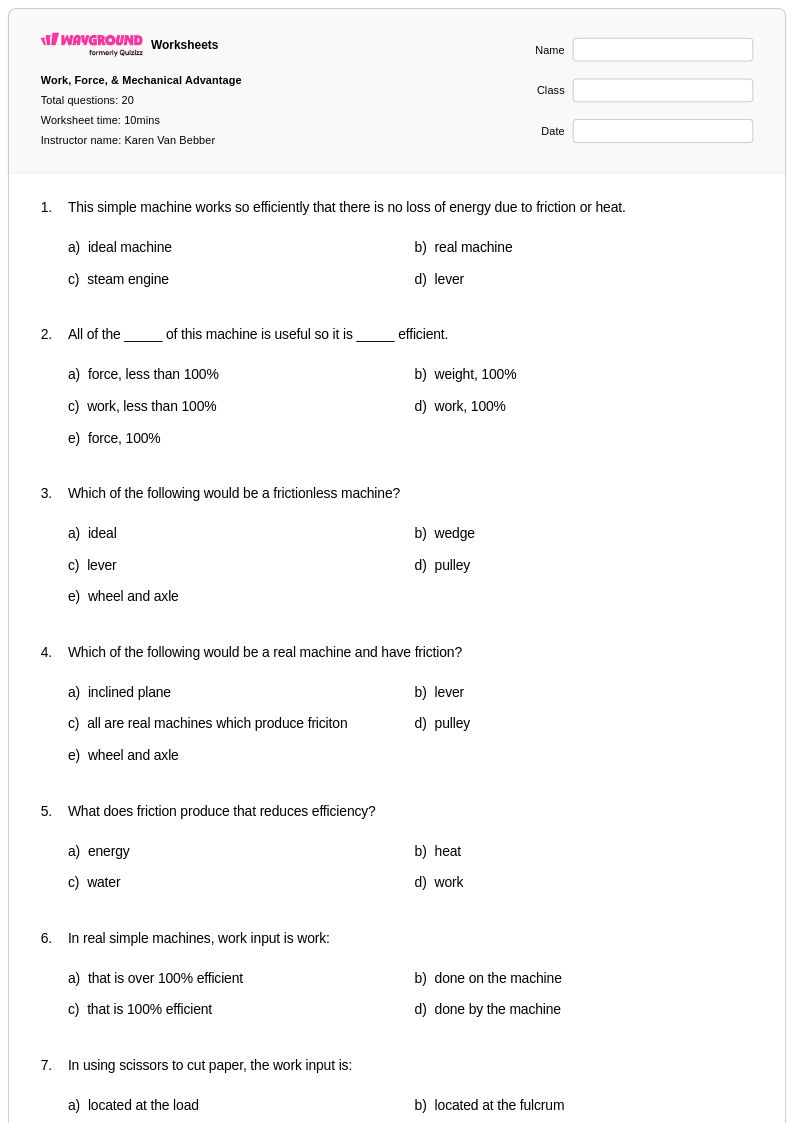
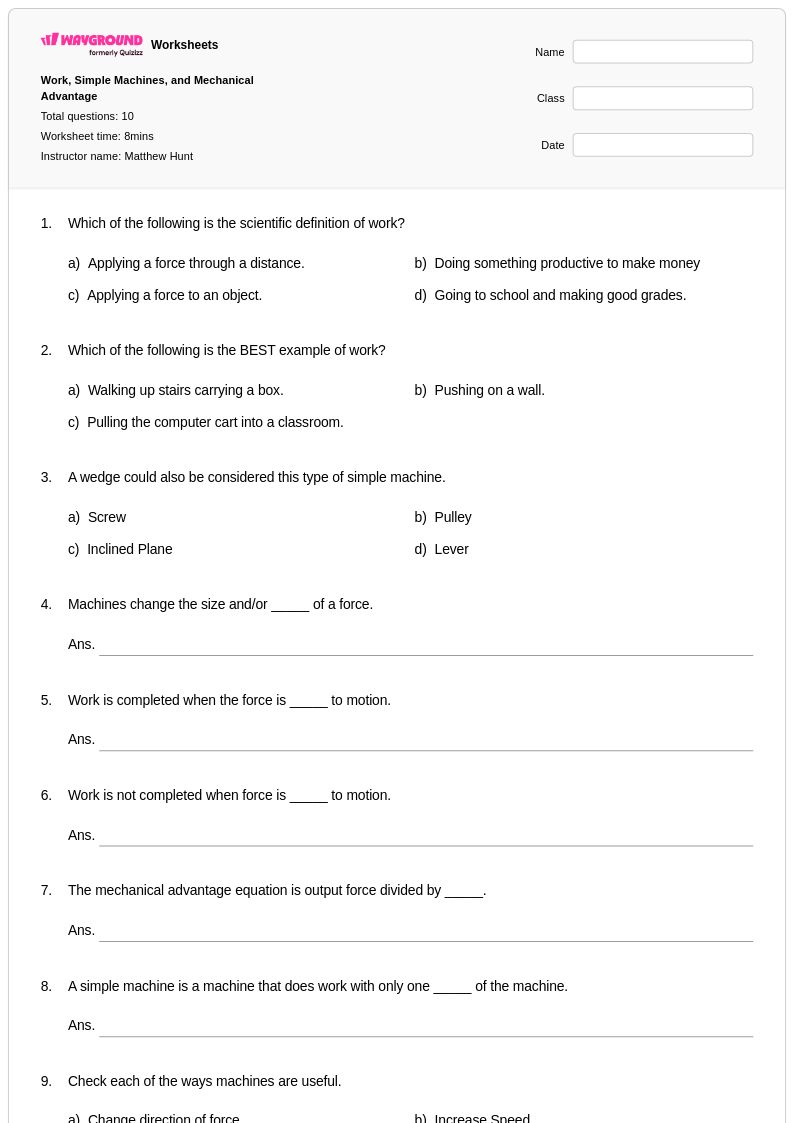
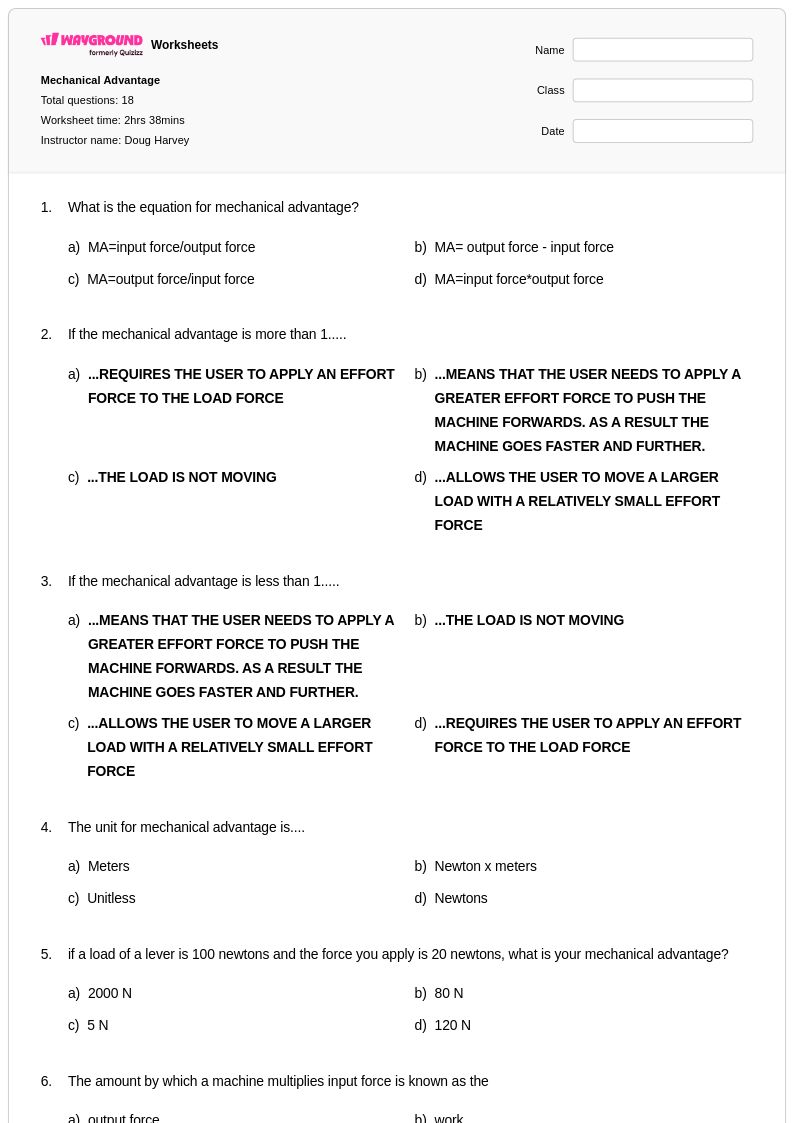
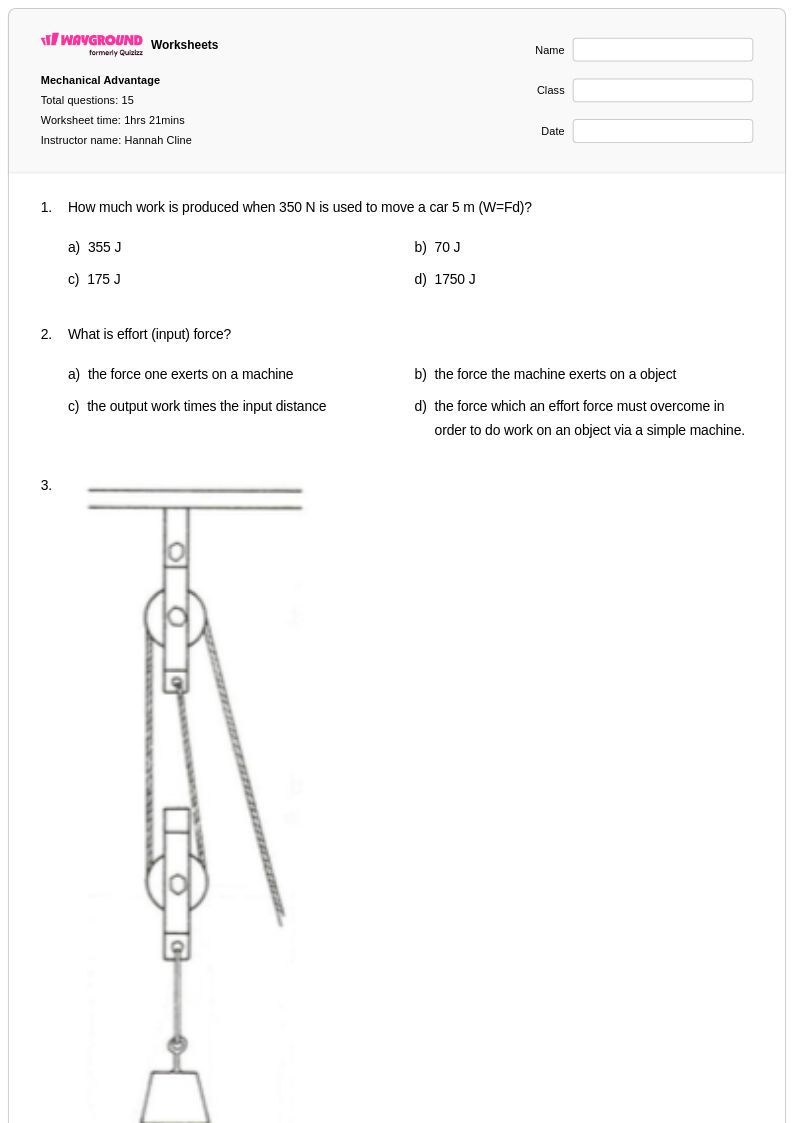
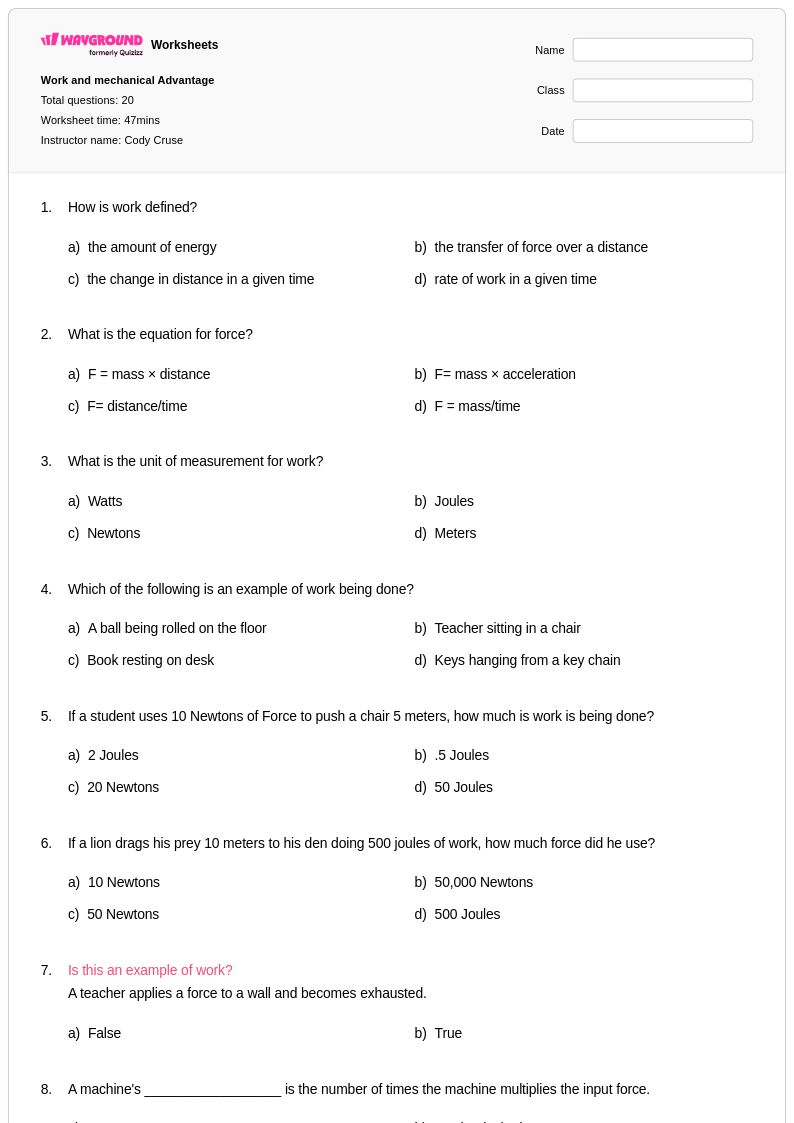
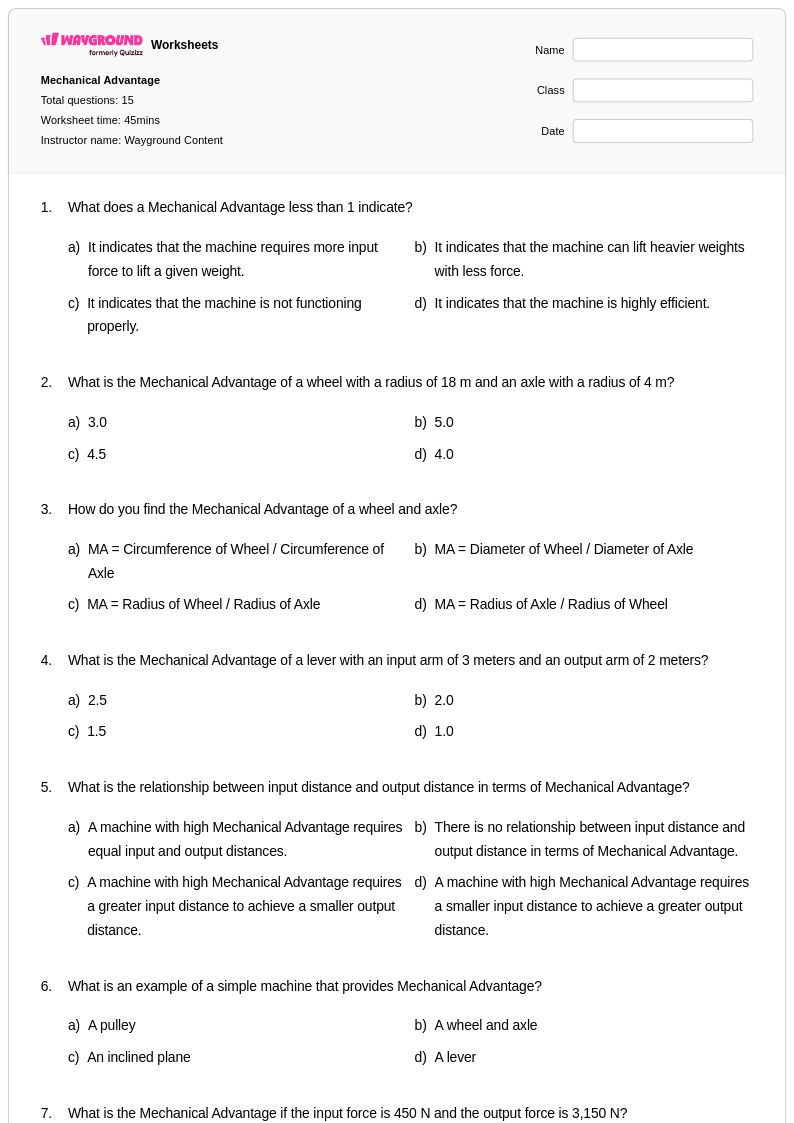
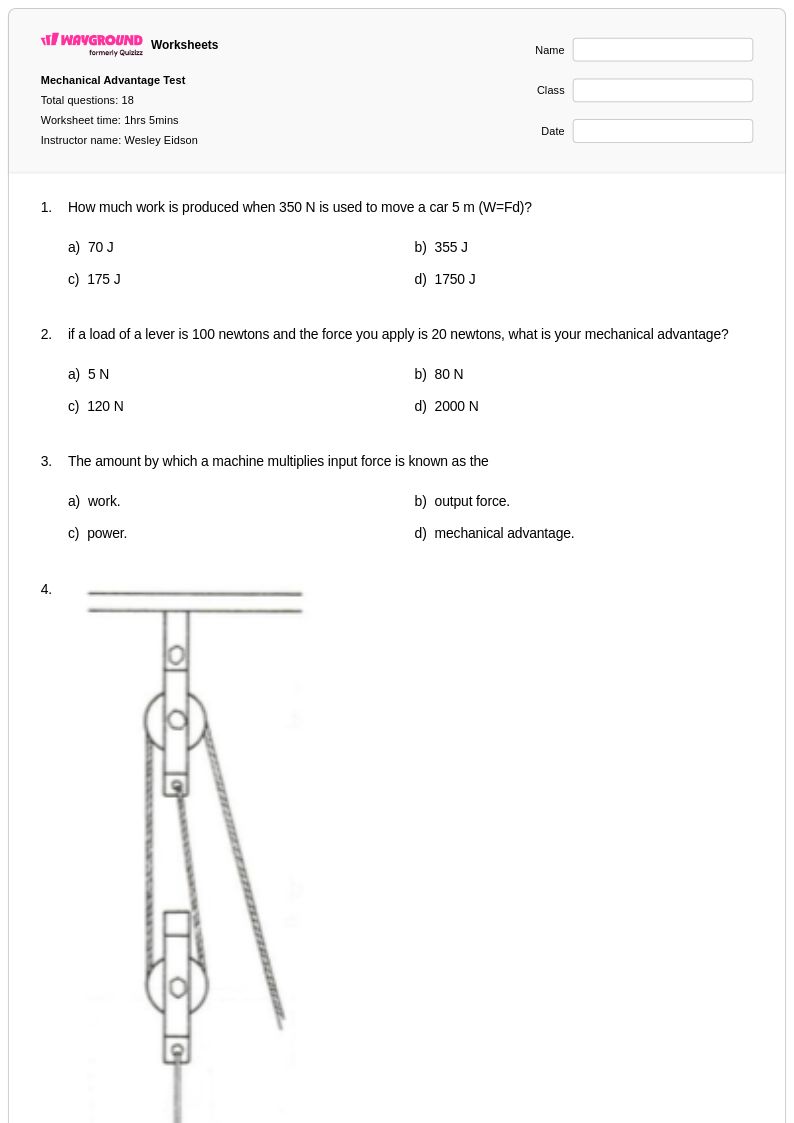
Mechanical advantage worksheets for Year 9 physics provide students with essential practice in understanding how simple machines multiply force and reduce the effort required to perform work. These comprehensive worksheet collections available through Wayground (formerly Quizizz) focus on developing critical problem-solving skills as students calculate mechanical advantage ratios, analyze lever systems, pulleys, inclined planes, and other simple machines. The practice problems guide students through real-world applications where they determine input and output forces, measure distances, and apply the fundamental mechanical advantage formula. Each worksheet includes detailed answer keys that help students verify their calculations and understand the step-by-step problem-solving process, while the free printable pdf format ensures accessibility for both classroom instruction and independent study.
Wayground (formerly Quizizz) empowers teachers with millions of educator-created mechanical advantage resources that streamline lesson planning and support differentiated instruction in Year 9 physics classrooms. The platform's advanced search and filtering capabilities allow teachers to quickly locate worksheets aligned with specific physics standards and learning objectives, while customization tools enable educators to modify practice problems to match their students' skill levels and learning needs. Teachers can seamlessly integrate these resources into their mechanical advantage units for initial skill-building, targeted remediation for struggling learners, or enrichment activities for advanced students. The flexible delivery options, including both digital formats for interactive learning and printable pdf versions for traditional paper-based practice, accommodate diverse classroom environments and teaching preferences while ensuring students develop mastery of mechanical advantage concepts through consistent, structured practice.
FAQs
How do I teach mechanical advantage to middle or high school students?
Start by grounding mechanical advantage in physical intuition: ask students whether it's easier to lift a heavy box directly or roll it up a ramp, then formalize that observation with the formula MA = output force / input force. From there, introduce each simple machine type (levers, pulleys, inclined planes, wheel-and-axle) as a different way of achieving force multiplication. Connecting the math to hands-on or diagram-based examples helps students see mechanical advantage as a measurement of real-world efficiency, not just an abstract ratio.
What practice problems help students get better at calculating mechanical advantage?
Effective practice should move from single-step calculations to multi-step analysis: begin with problems that give students input and output forces directly, then progress to scenarios where they must identify forces from a labeled diagram. Including problems across all simple machine types, such as levers with varying fulcrum positions, pulley systems with multiple wheels, and inclined planes at different angles, ensures students can apply the mechanical advantage formula flexibly rather than by rote.
What mistakes do students commonly make when calculating mechanical advantage?
The most frequent error is inverting the ratio, dividing input force by output force instead of the reverse, which produces a value less than one and implies a machine is working against the user. Students also confuse ideal mechanical advantage (based on geometry or distance) with actual mechanical advantage (based on measured forces), especially when friction is introduced. A third common misconception is assuming a higher mechanical advantage always means a better machine, without recognizing the trade-off between force and distance traveled.
How do I differentiate mechanical advantage instruction for students at different skill levels?
For struggling students, reduce cognitive load by providing labeled diagrams with forces already identified so they can focus solely on applying the formula. On-level students benefit from problems that require them to read diagrams and extract input and output force values independently. Advanced learners can be challenged with multi-stage systems, such as a pulley connected to a lever, or asked to calculate efficiency by comparing ideal and actual mechanical advantage. Wayground's accommodation tools allow teachers to assign reduced answer choices or enable read-aloud support for individual students without disrupting the rest of the class.
How do I use Wayground's mechanical advantage worksheets in my classroom?
Wayground's mechanical advantage worksheets are available as printable PDFs for traditional classroom distribution and as digital formats for online or blended learning environments. Teachers can also host any worksheet as a live quiz directly on Wayground, making it easy to assign as formative assessment, warm-up practice, or homework. Each worksheet includes a complete answer key, so students can self-check their work during independent practice and teachers can use the materials for both instruction and assessment without additional preparation.
What simple machines are typically covered in mechanical advantage worksheets?
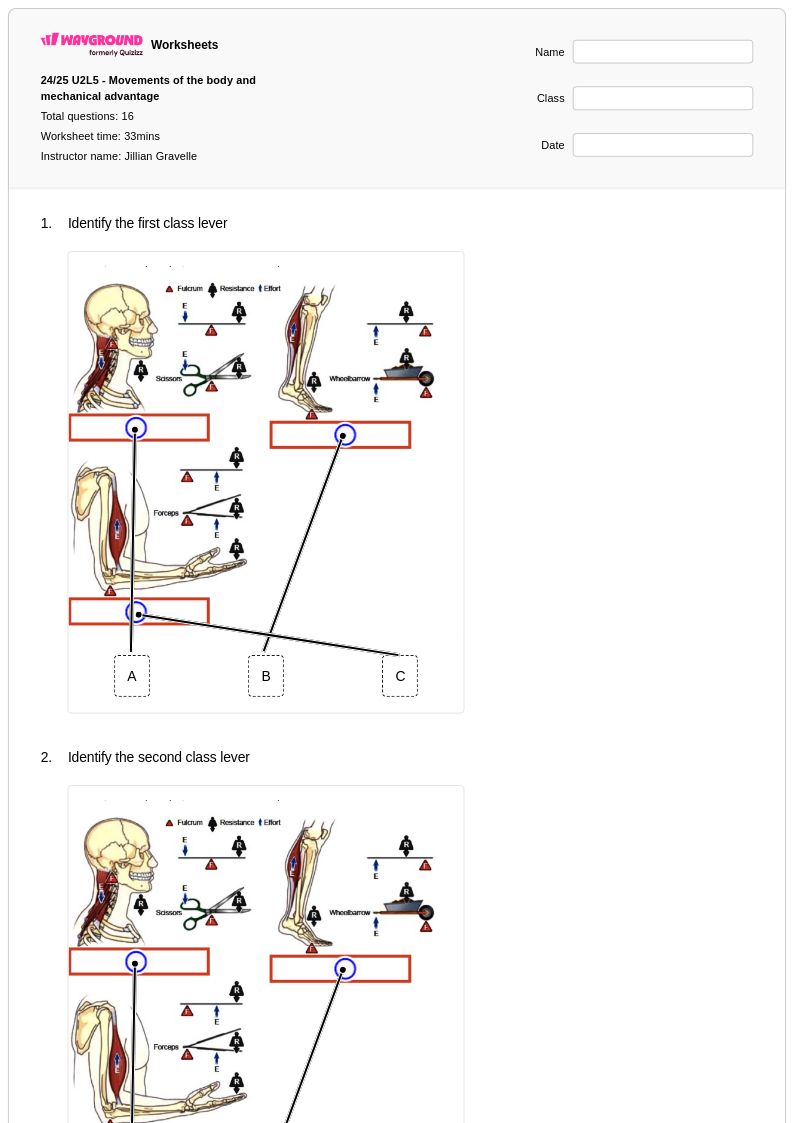
Mechanical advantage worksheets typically cover all six classical simple machines: levers (first, second, and third class), pulleys (fixed, movable, and compound), inclined planes, wedges, screws, and the wheel-and-axle. Practice problems usually emphasize levers, pulleys, and inclined planes most heavily because they offer the clearest mathematical relationships for calculating force ratios. Worksheets that include diagram interpretation alongside calculation problems give students the most complete preparation for physics assessments.