
26 Q
9th - Uni
14 Q
8th - Uni
21 Q
7th - 10th
29 Q
9th
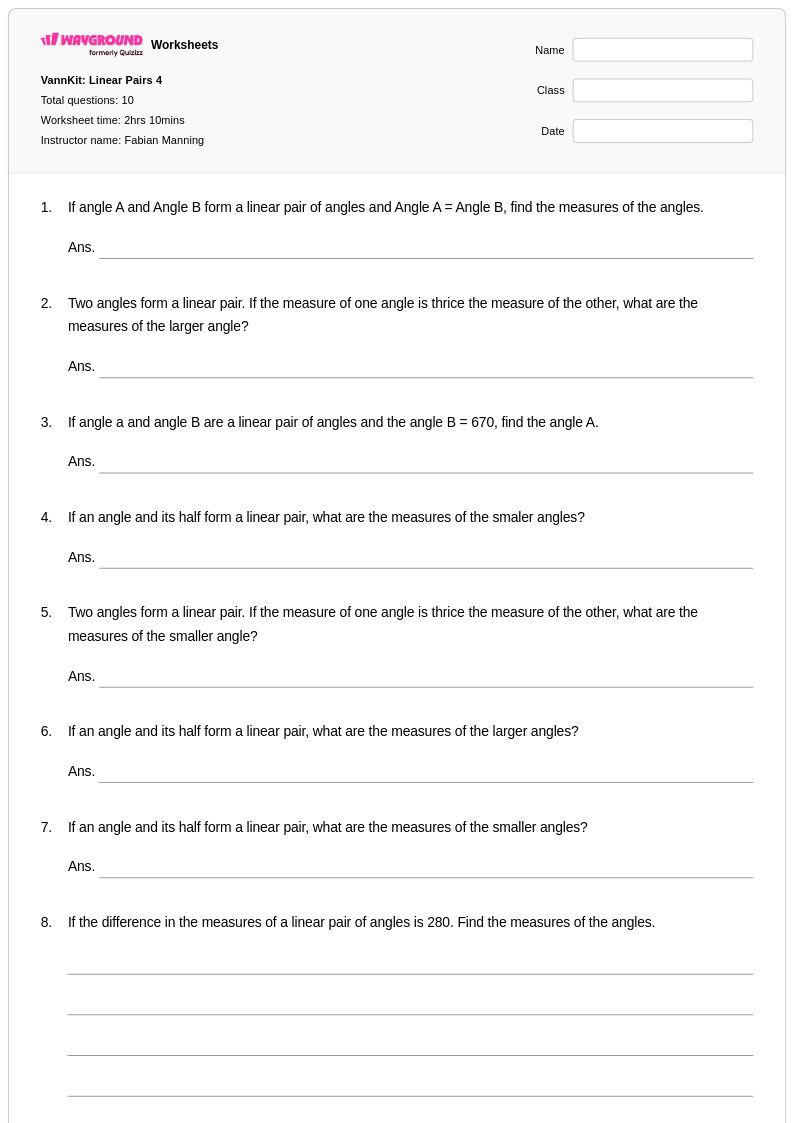
10 Q
9th - 12th
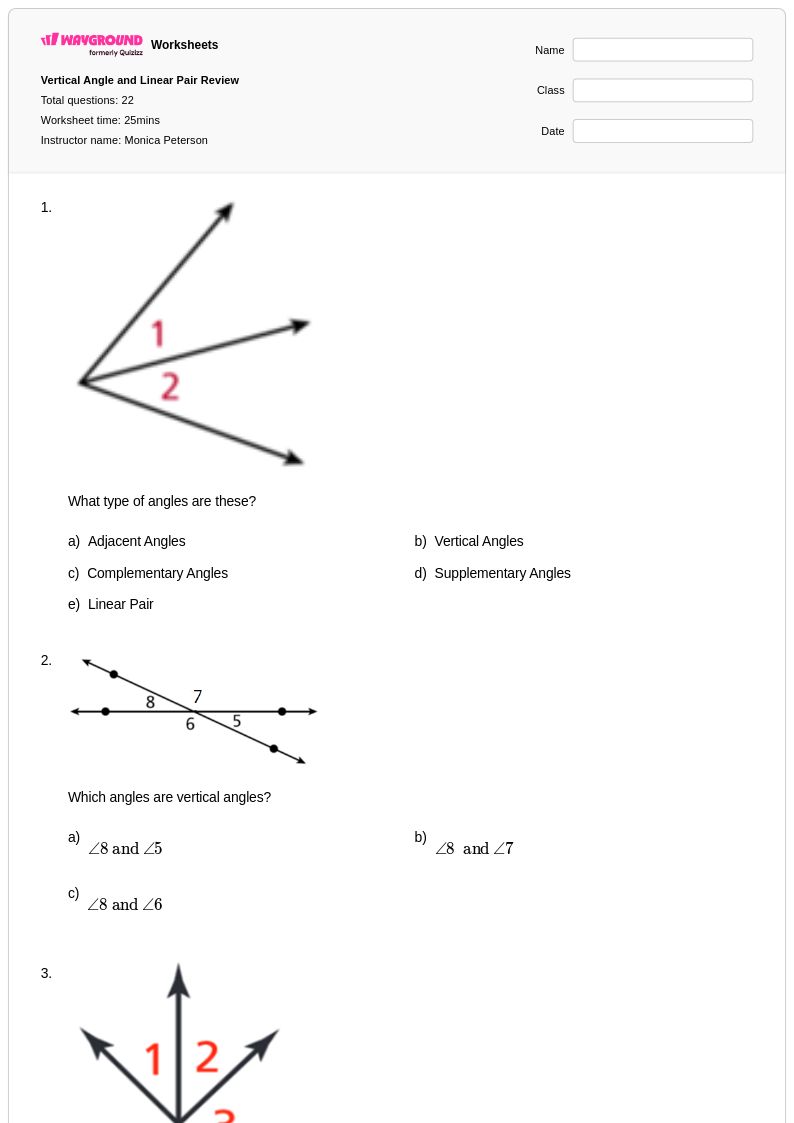
22 Q
9th - 12th
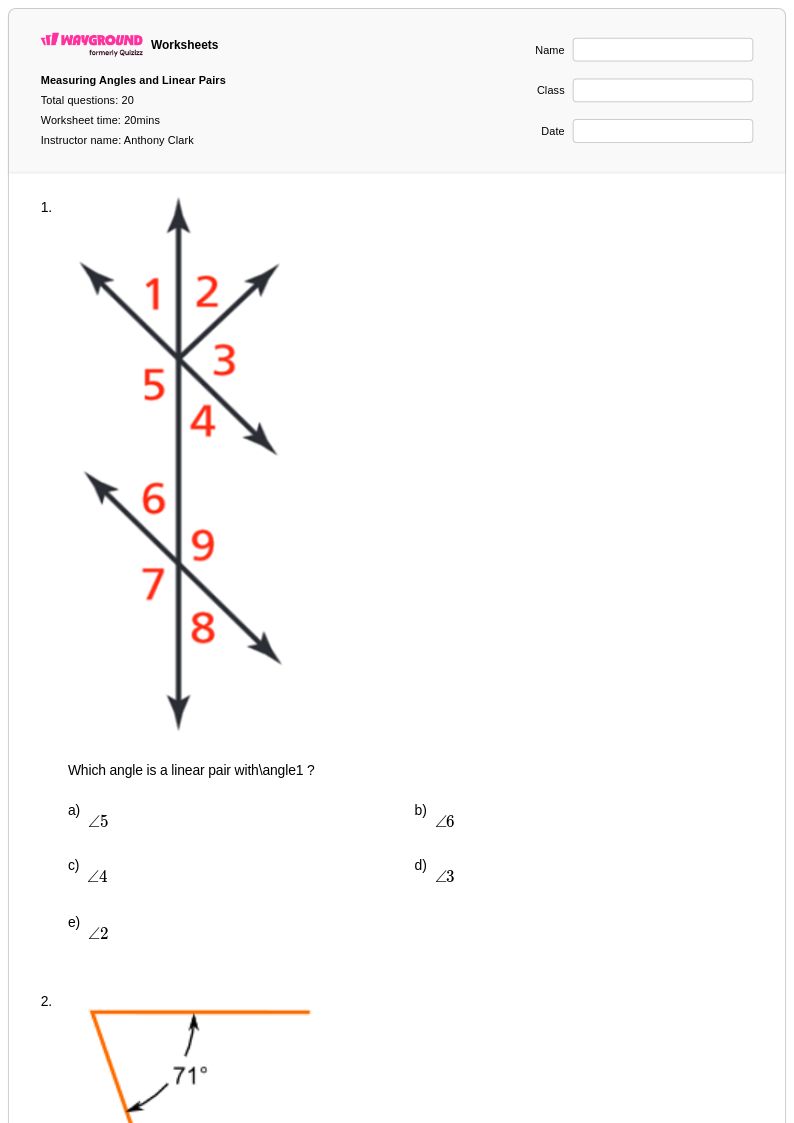
20 Q
9th - Uni
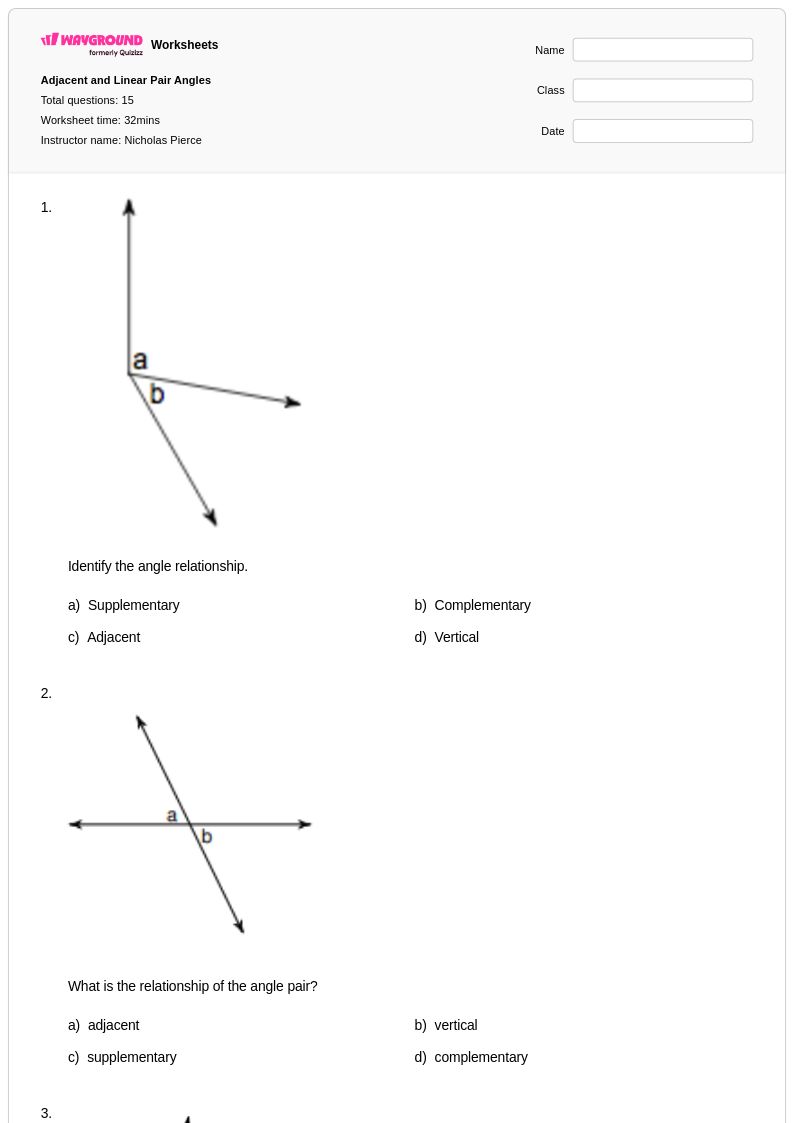
15 Q
9th - 12th
10 Q
9th - 12th
13 Q
9th - 12th
15 Q
9th - Uni
25 Q
6th - 12th
20 Q
7th - 9th
16 Q
9th - Uni
10 Q
8th - 12th
25 Q
6th - 12th
20 Q
9th - Uni
10 Q
9th
25 Q
6th - 12th
15 Q
9th - 11th
25 Q
6th - 12th
20 Q
8th - 9th
14 Q
9th - 11th
22 Q
8th - 11th
Explore Other Subject Worksheets for year 9
Explore printable Linear Pair worksheets for Year 9
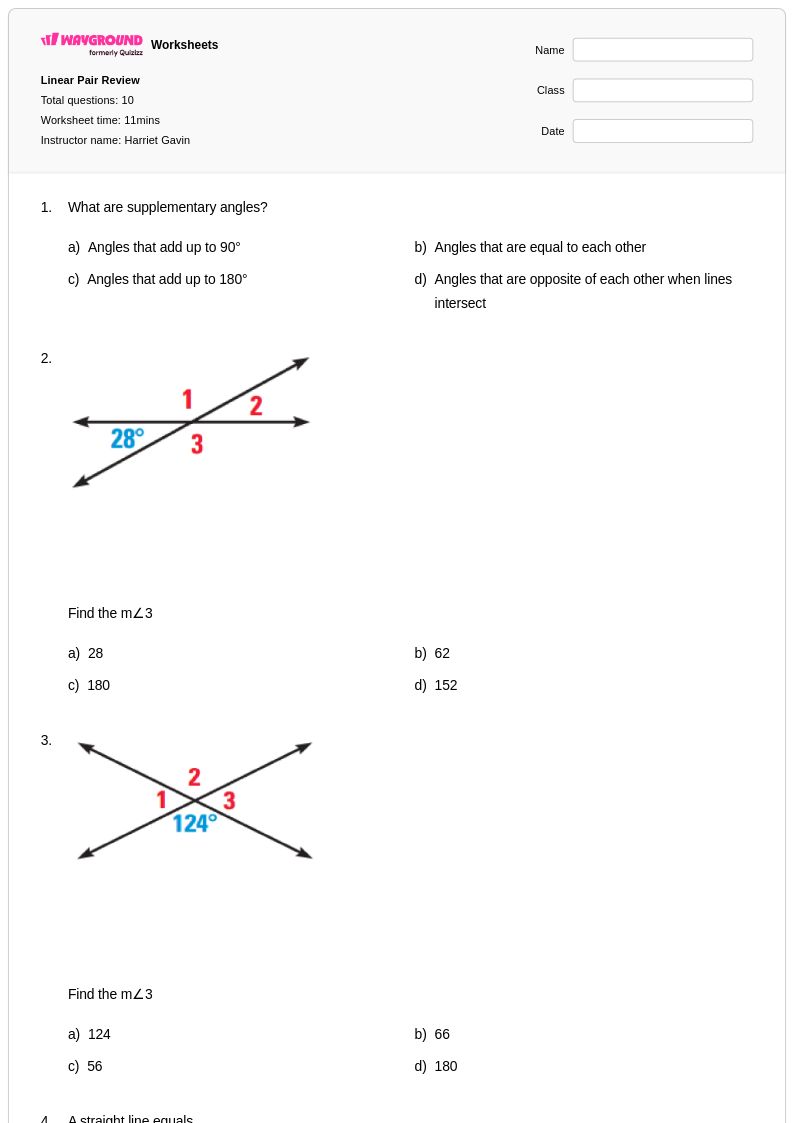
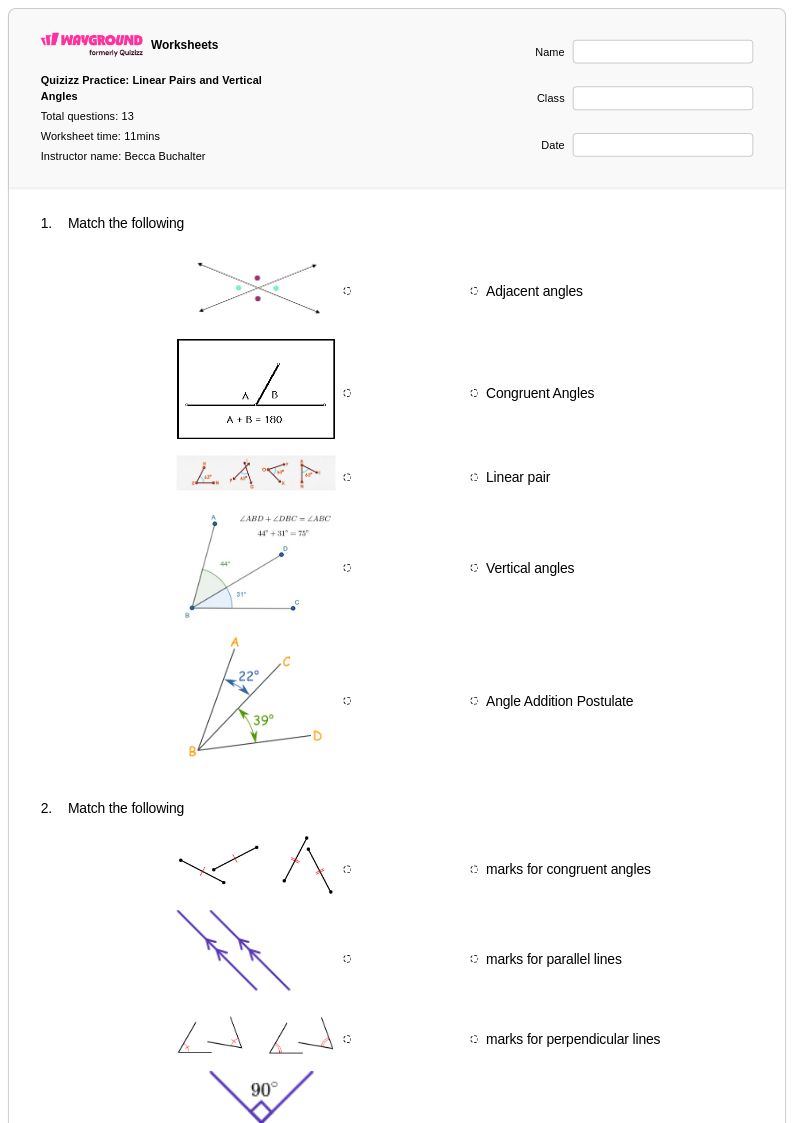
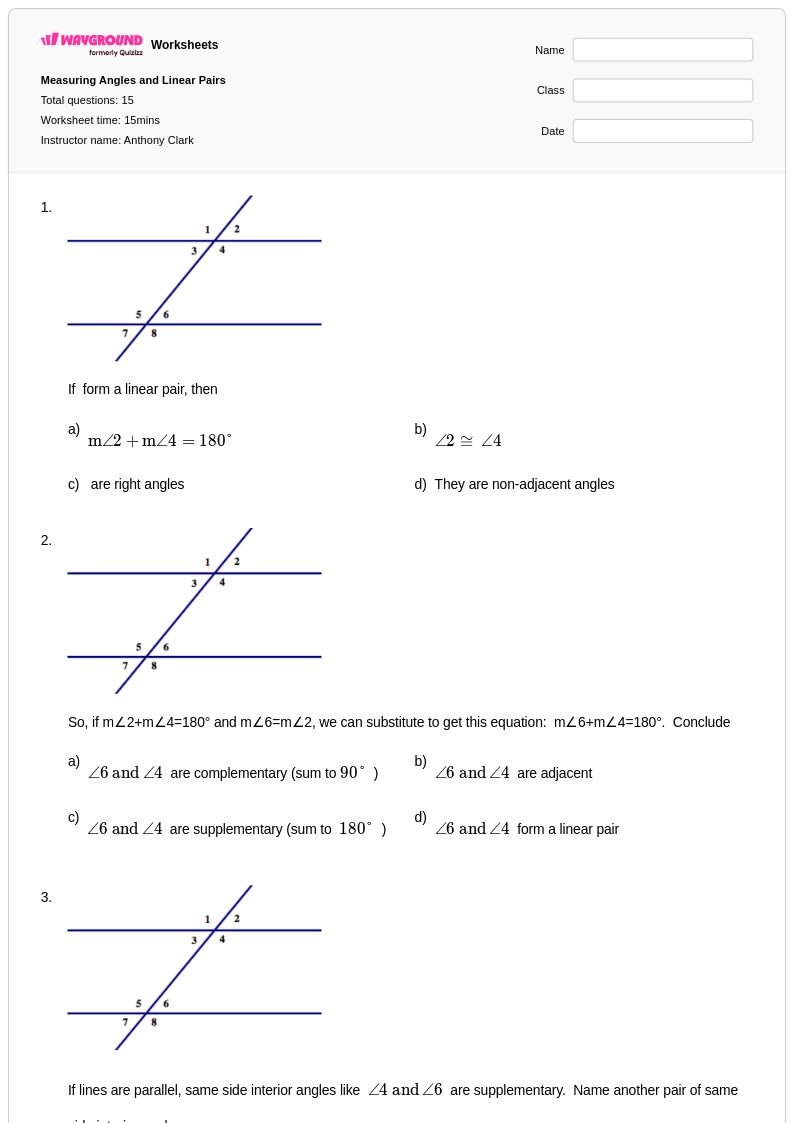
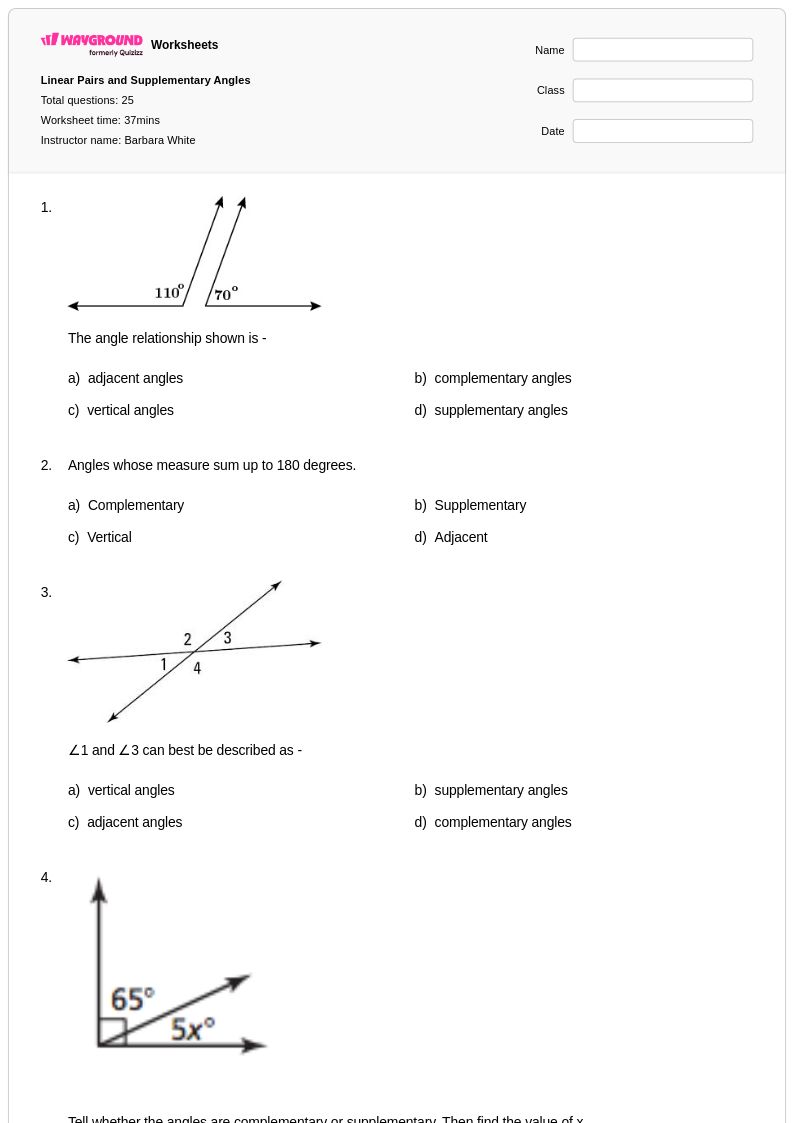
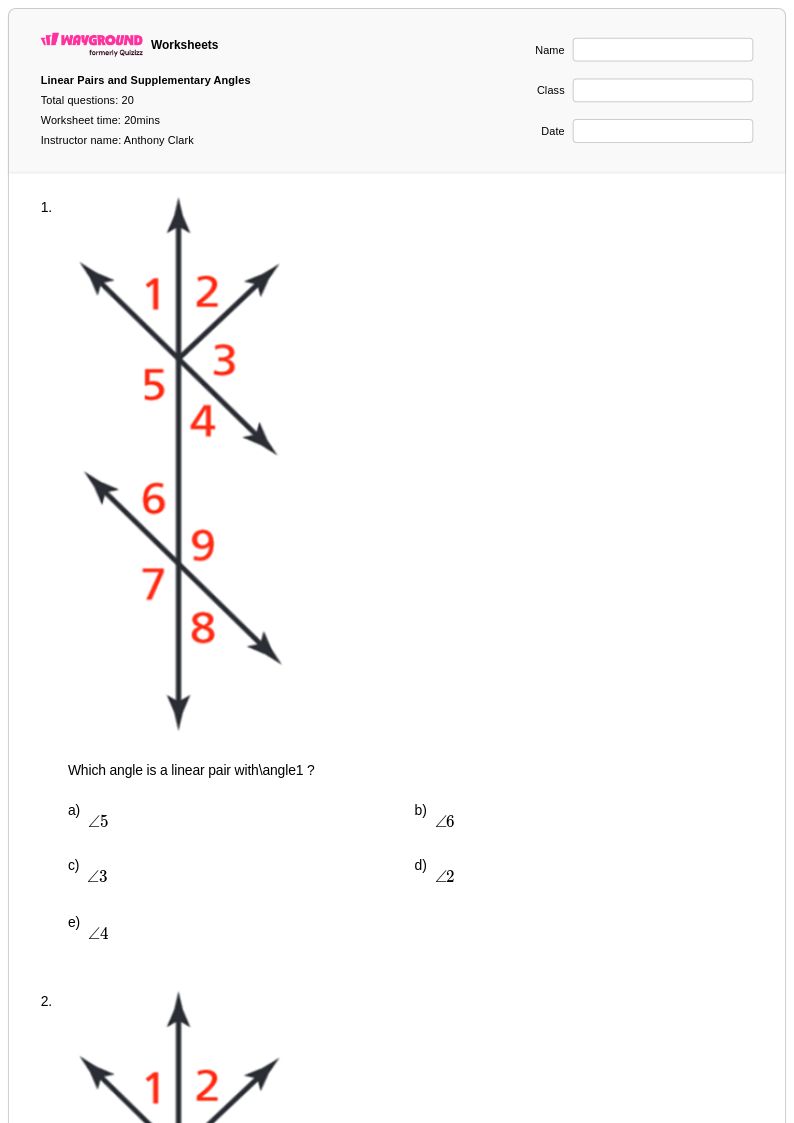
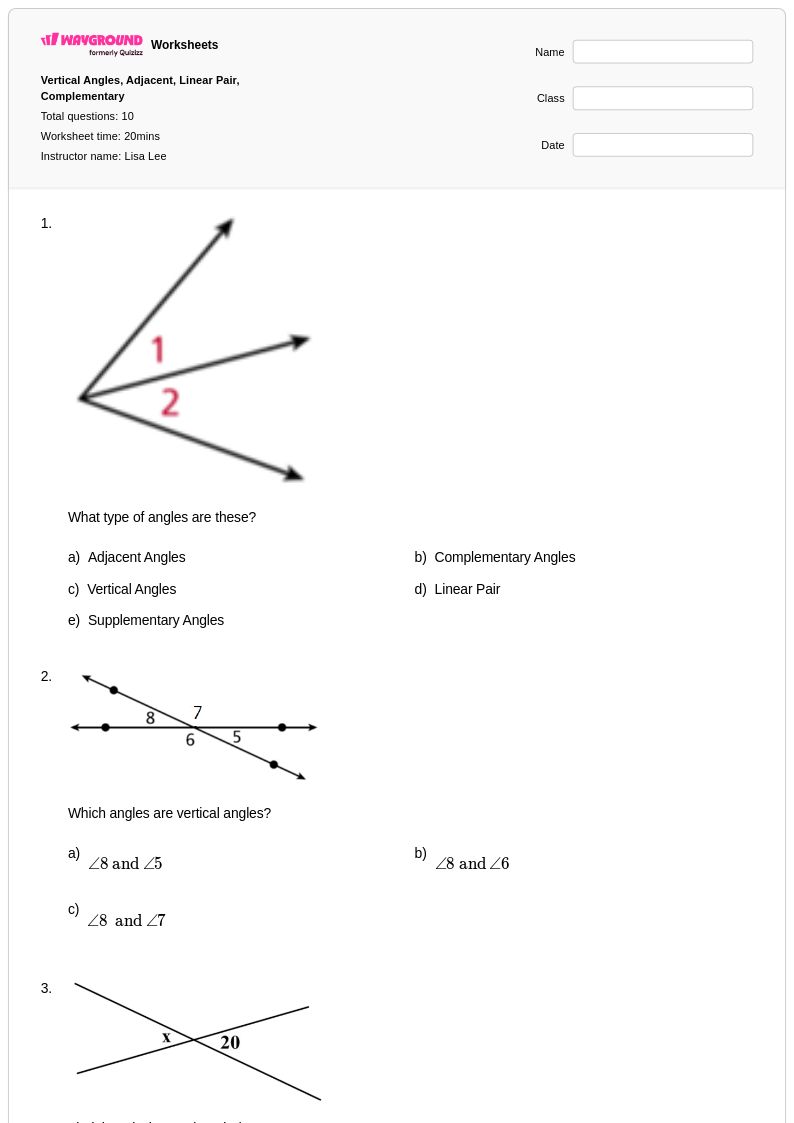
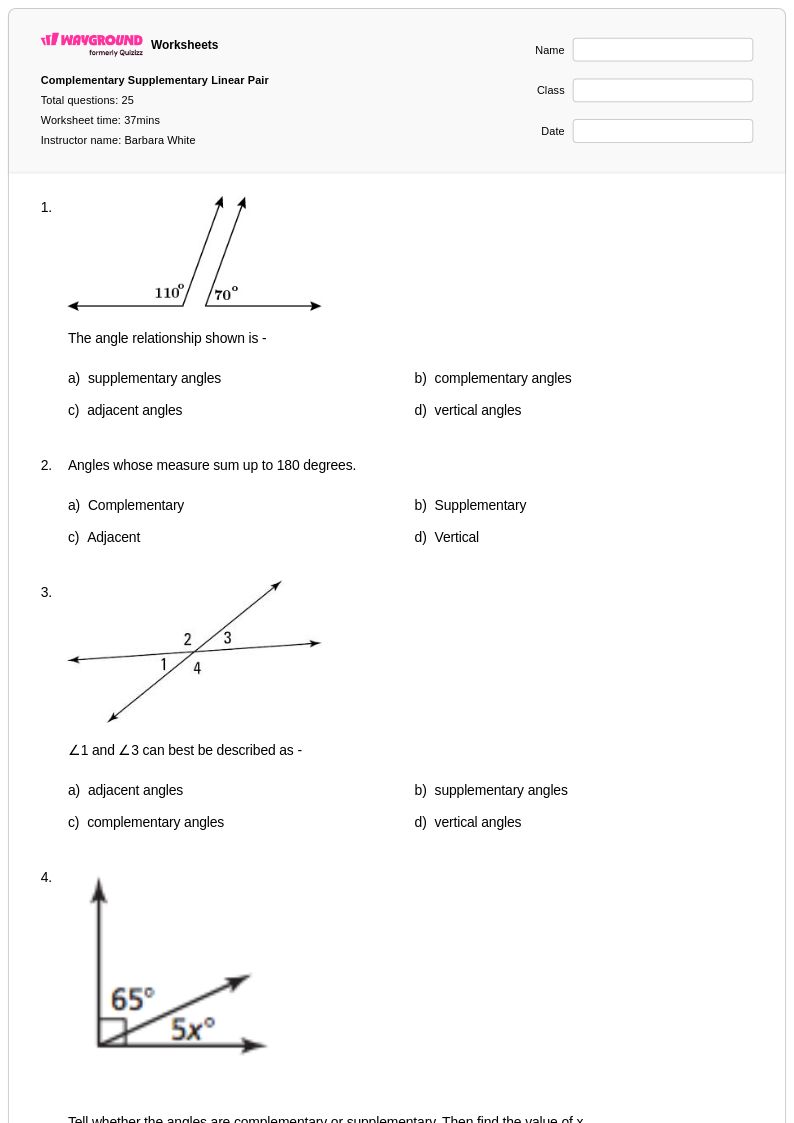
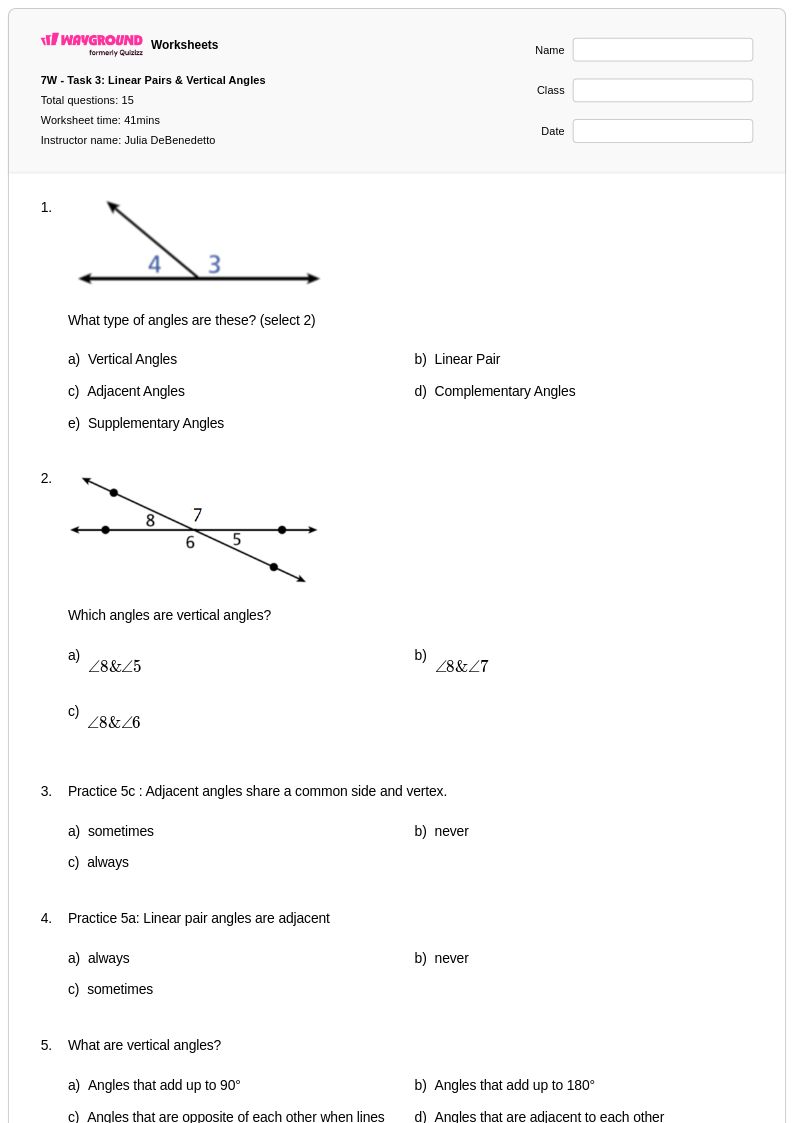
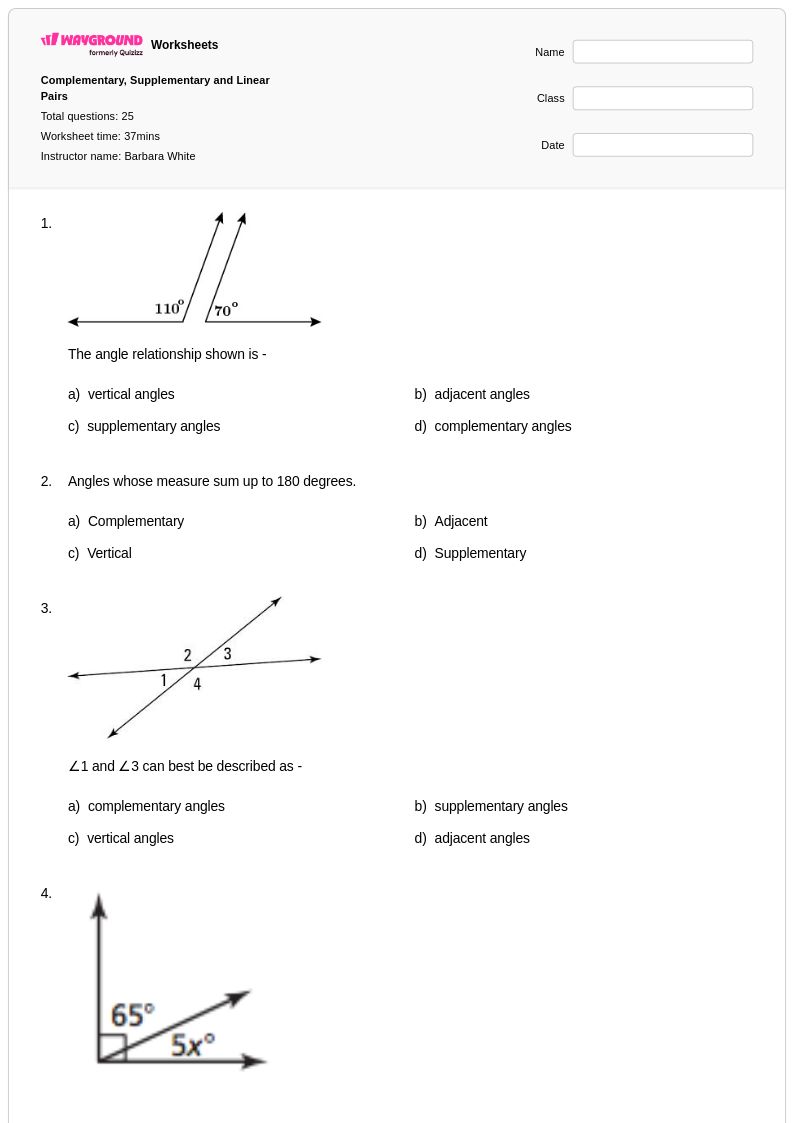
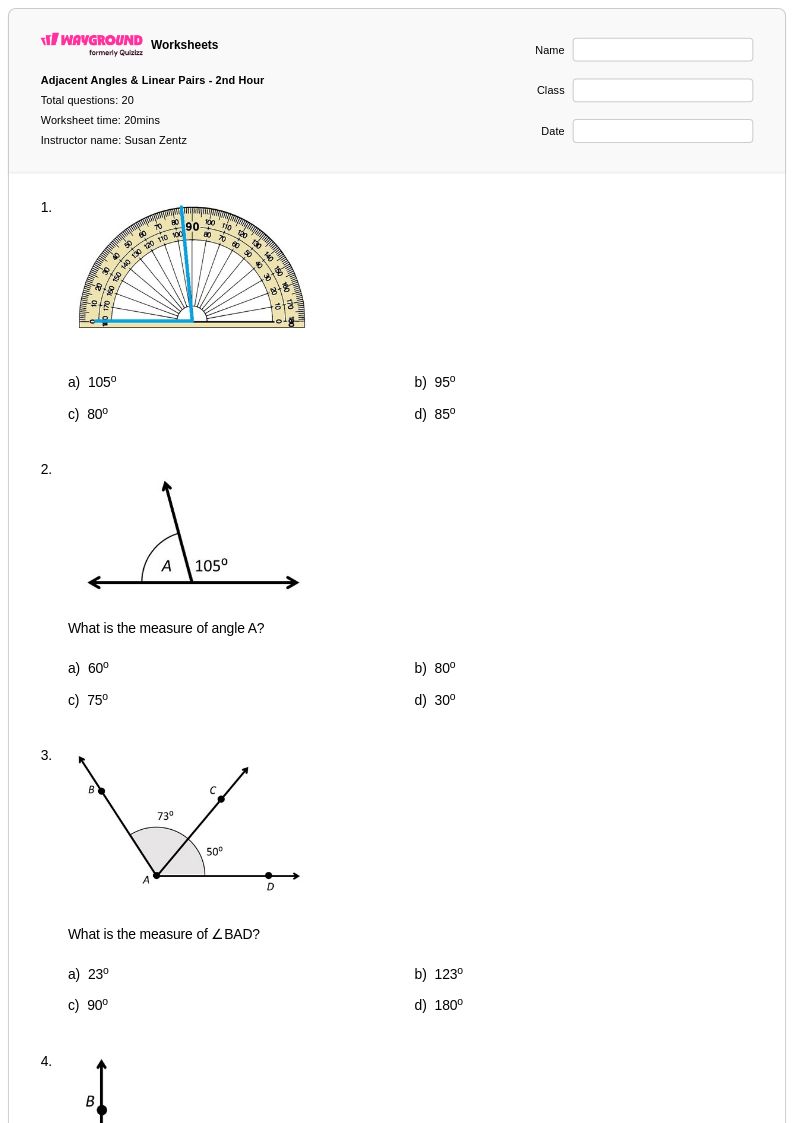
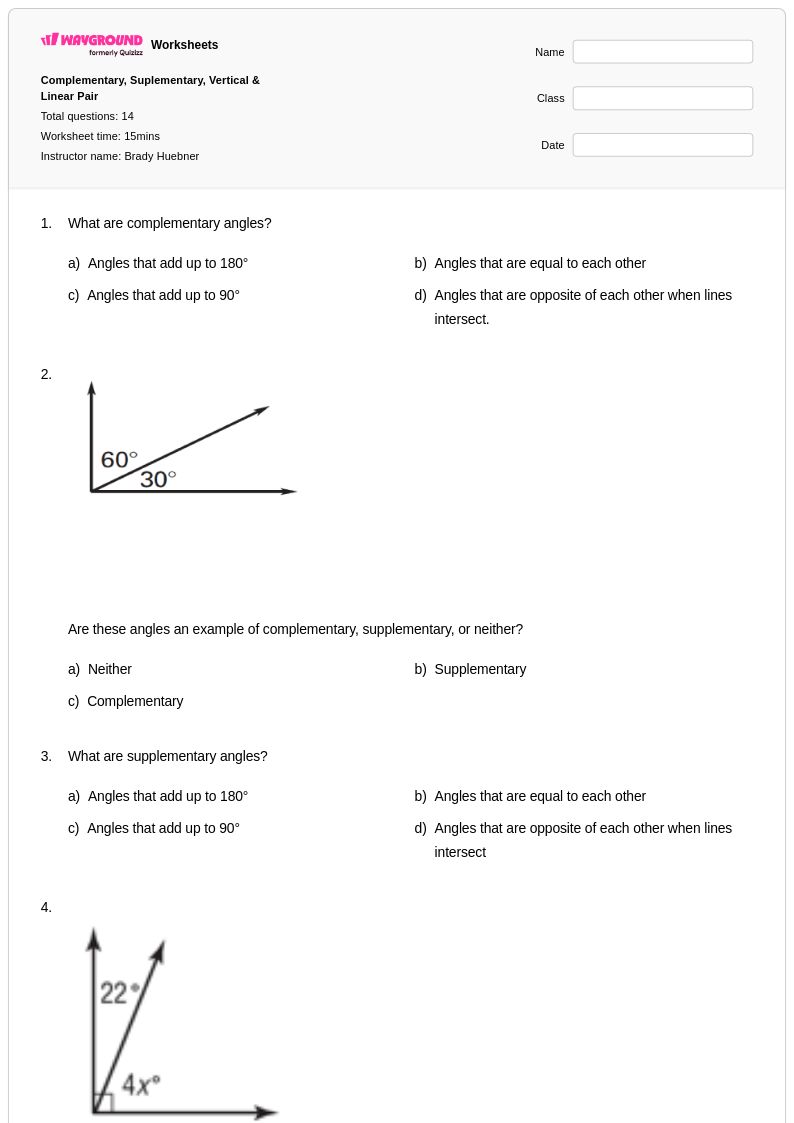
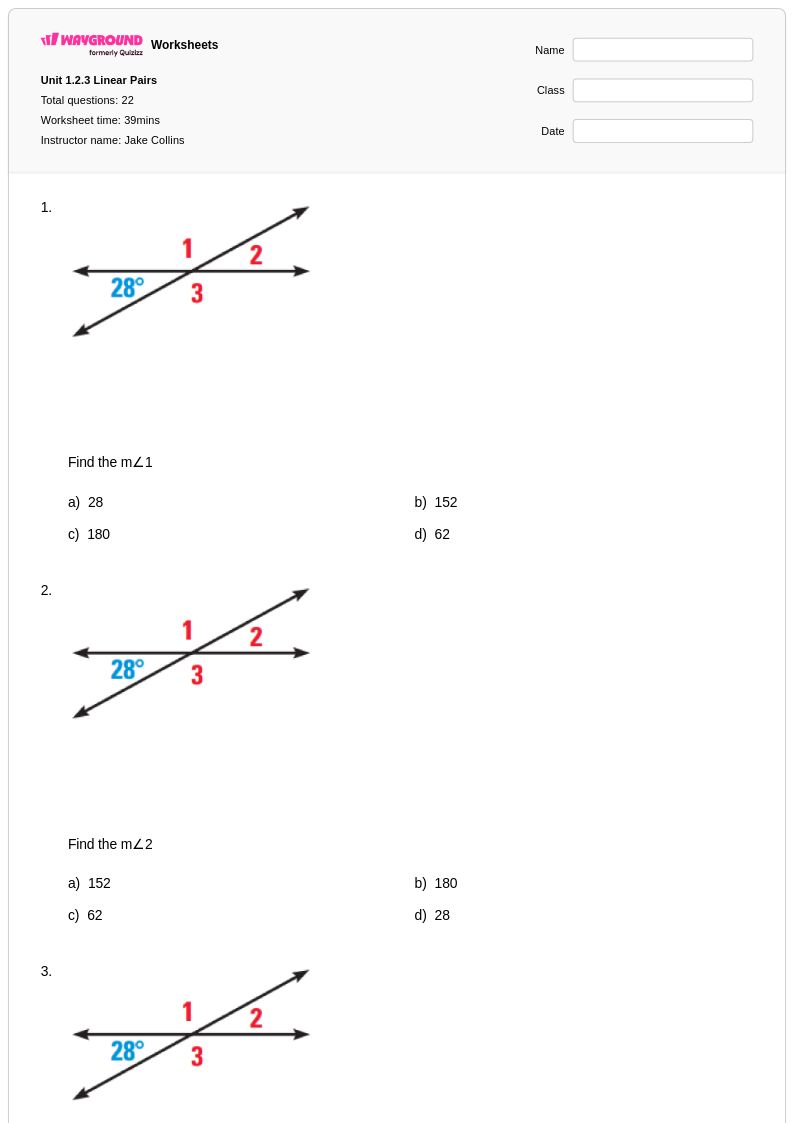
Linear pair worksheets for Year 9 mathematics provide students with comprehensive practice in understanding and working with adjacent angles that form straight lines. These educational resources through Wayground (formerly Quizizz) focus on developing critical geometric reasoning skills by helping students recognize that linear pairs are supplementary angles totaling 180 degrees. The printable worksheets contain varied practice problems that challenge students to identify linear pairs in different geometric configurations, calculate missing angle measures, and apply linear pair relationships to solve complex multi-step problems. Each worksheet comes with a detailed answer key to support independent learning and self-assessment, while the free pdf format ensures easy classroom distribution and home study accessibility.
Wayground's extensive collection of linear pair worksheets draws from millions of teacher-created resources, providing educators with robust search and filtering capabilities to locate materials perfectly aligned with Year 9 mathematics standards and specific learning objectives. Teachers benefit from comprehensive differentiation tools that allow customization of worksheet difficulty levels, problem types, and mathematical complexity to meet diverse student needs within the classroom. The platform's flexible format options include both digital and printable versions, enabling seamless integration into various instructional approaches whether for initial concept introduction, targeted skill remediation, or advanced problem-solving enrichment. These carefully curated resources support effective lesson planning by providing immediate access to high-quality practice materials that reinforce linear pair concepts and strengthen students' overall geometric understanding.
FAQs
Why are linear pairs taught in 9th-grade geometry?
How are linear pairs used in high school geometry proofs?
What kind of multi-step problems use the linear pair postulate?
What are common errors when applying the linear pair postulate in complex diagrams?
How does the Linear Pair Postulate fit into a high school geometry curriculum?
How can I use this worksheet to prepare students for geometry proofs?
How can I challenge advanced 9th graders with linear pair concepts?