
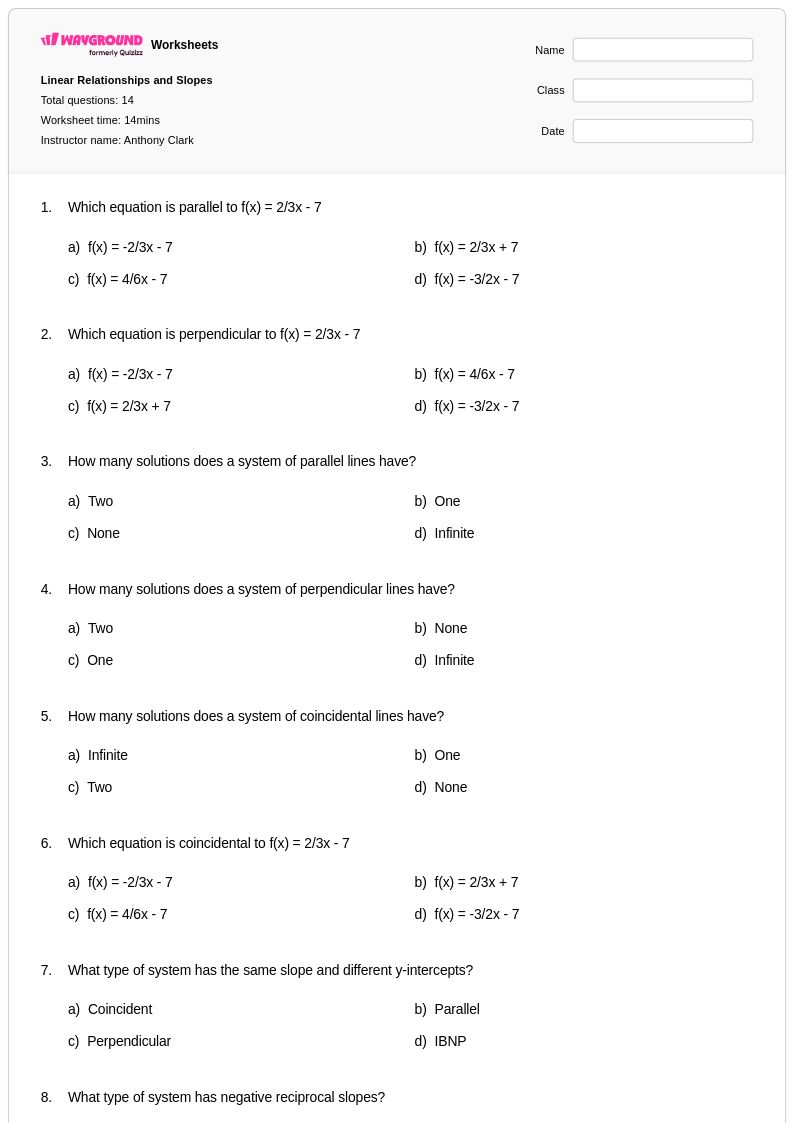
14 Q
8th - Uni
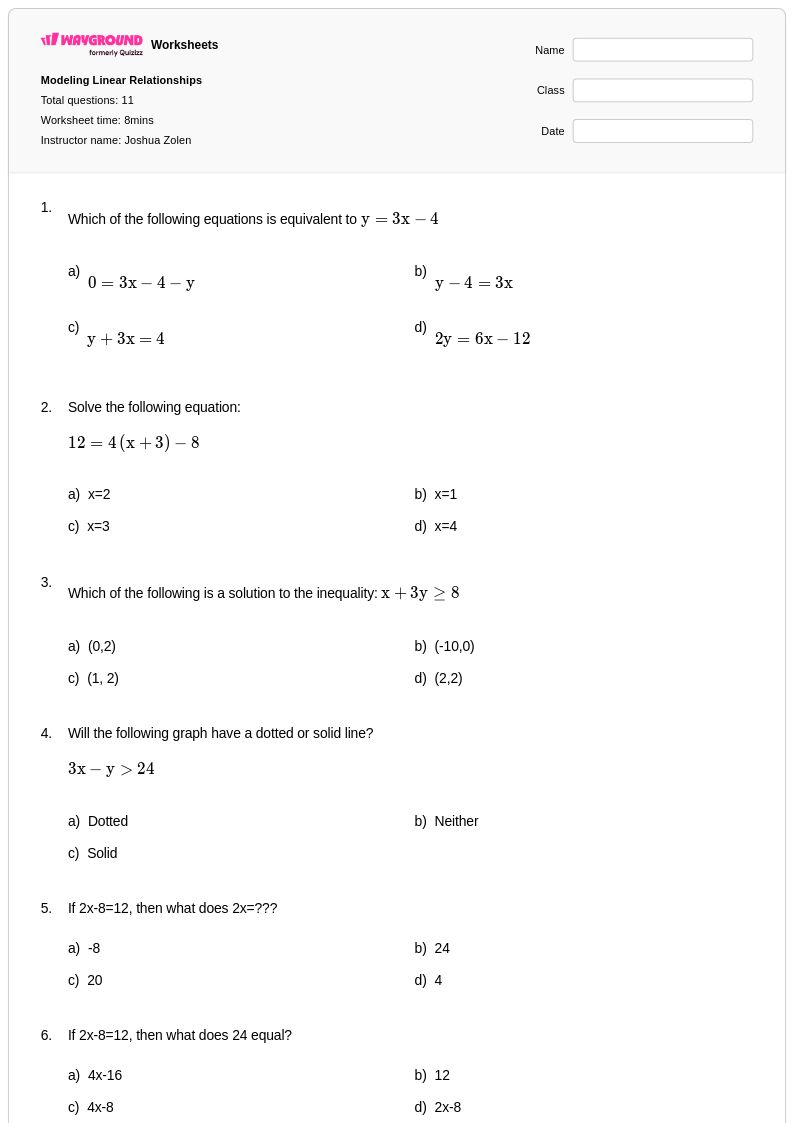
11 Q
9th - 12th
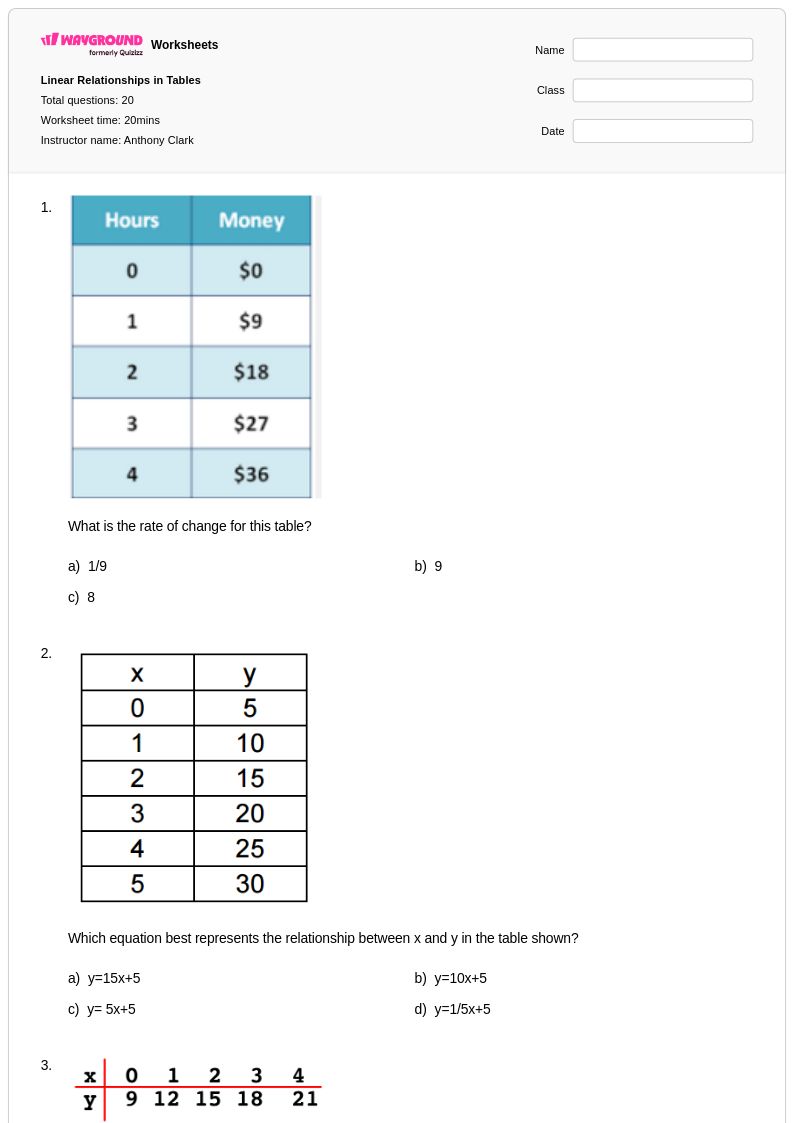
20 Q
7th - Uni
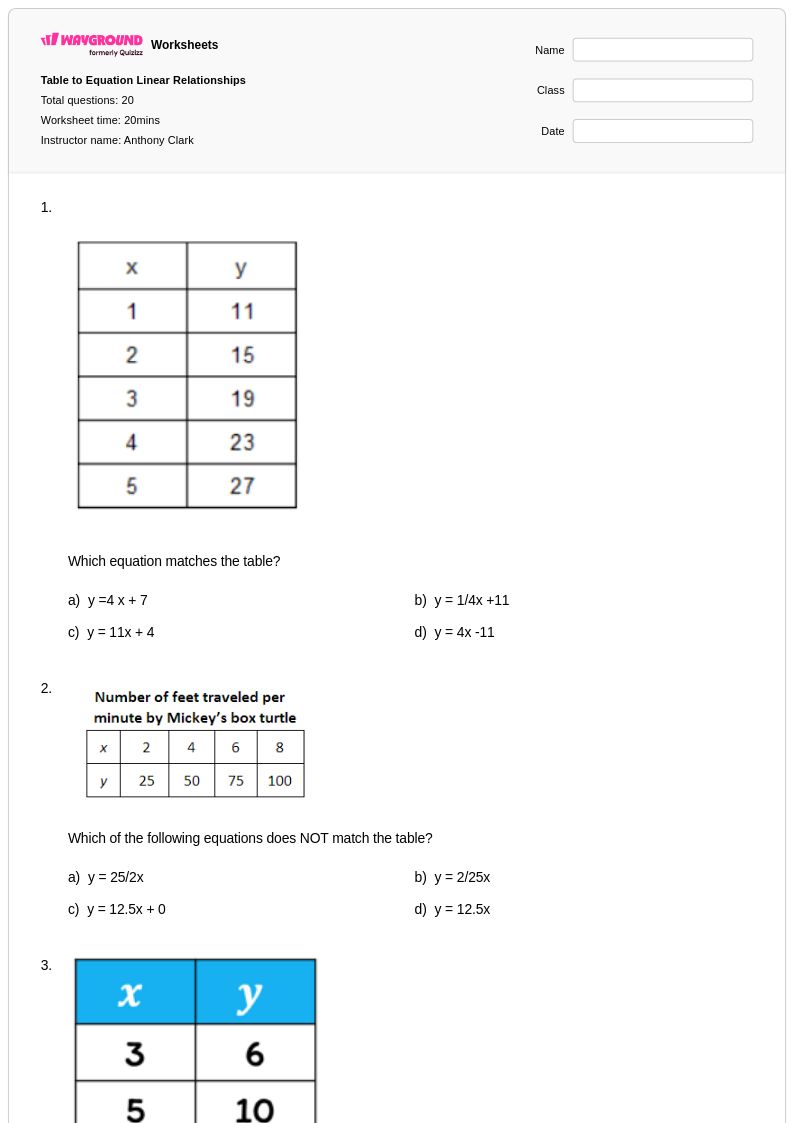
20 Q
8th - Uni
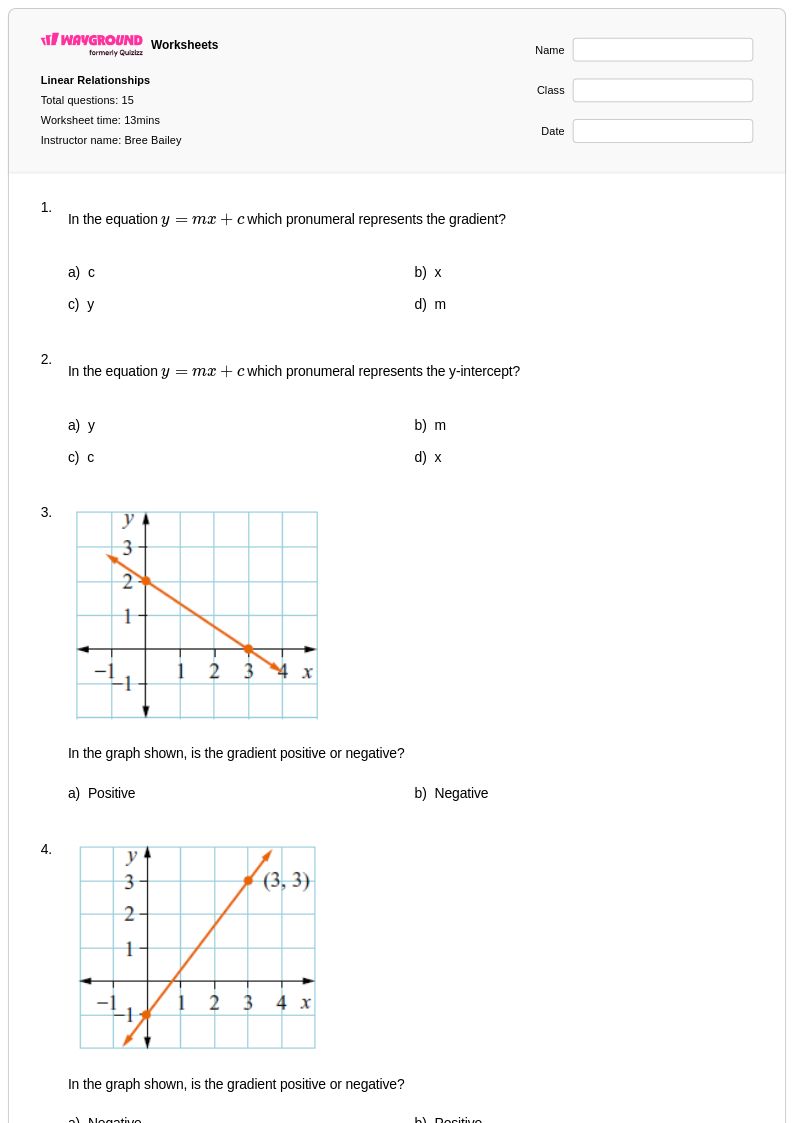
15 Q
9th - 12th
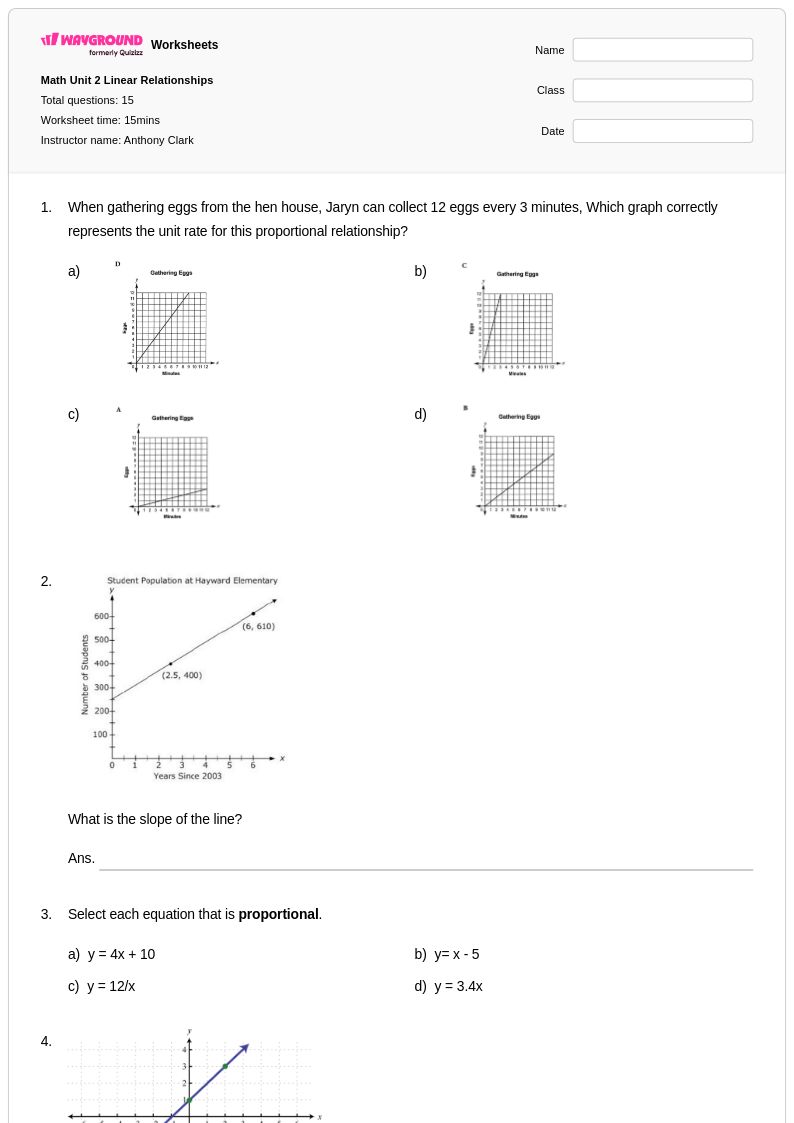
15 Q
8th - Uni
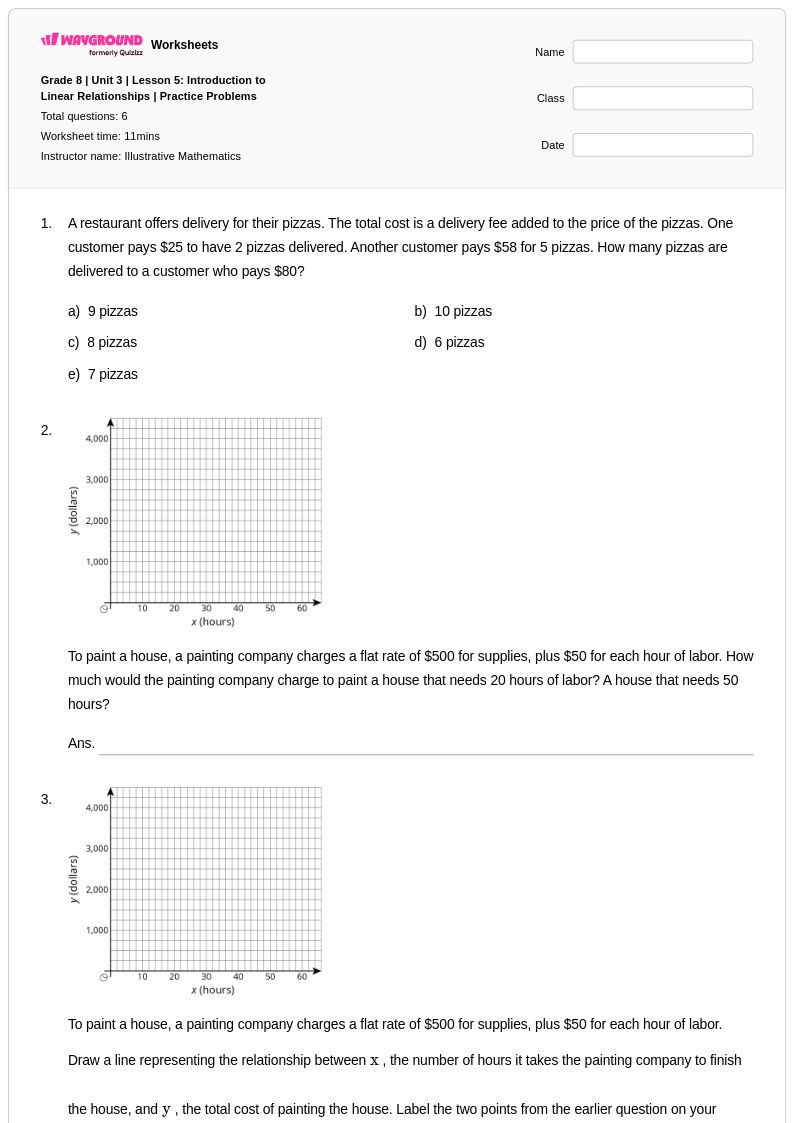
6 Q
6th - Uni
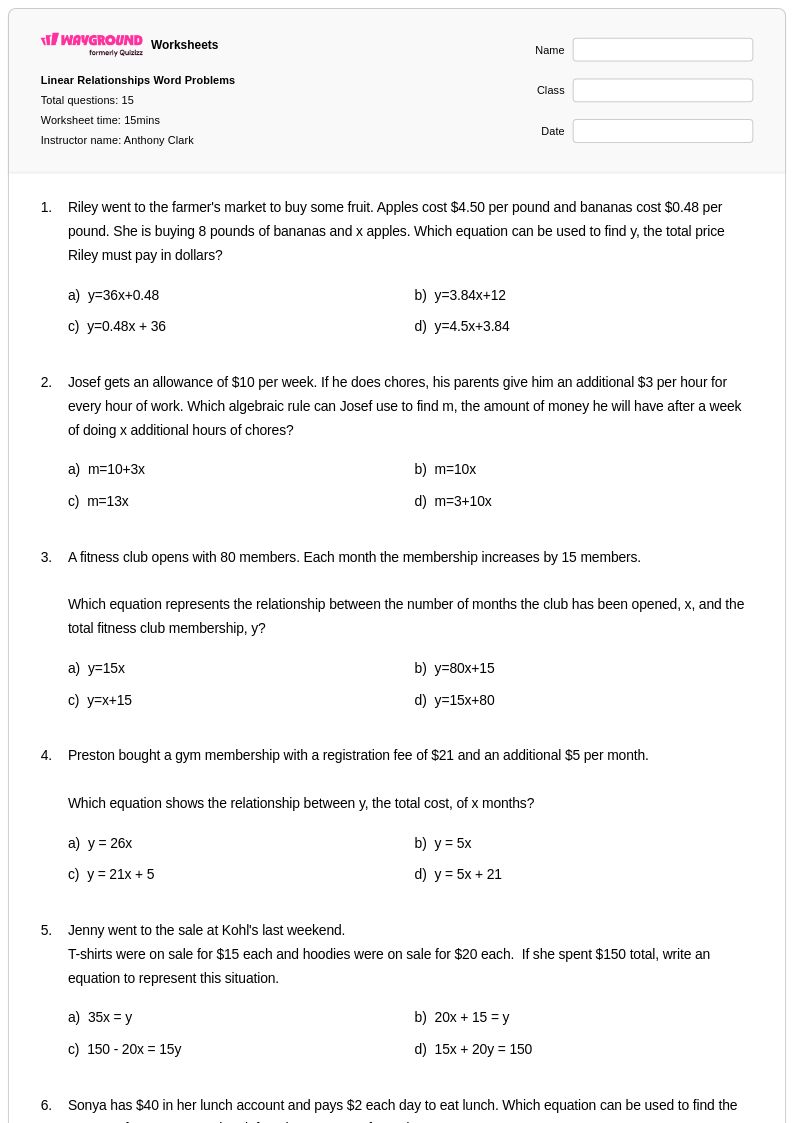
15 Q
8th - Uni
20 Q
8th - Uni
20 Q
7th - Uni
10 Q
8th - Uni
20 Q
8th - Uni
20 Q
8th - Uni
15 Q
8th - Uni
20 Q
8th - Uni
20 Q
8th - Uni
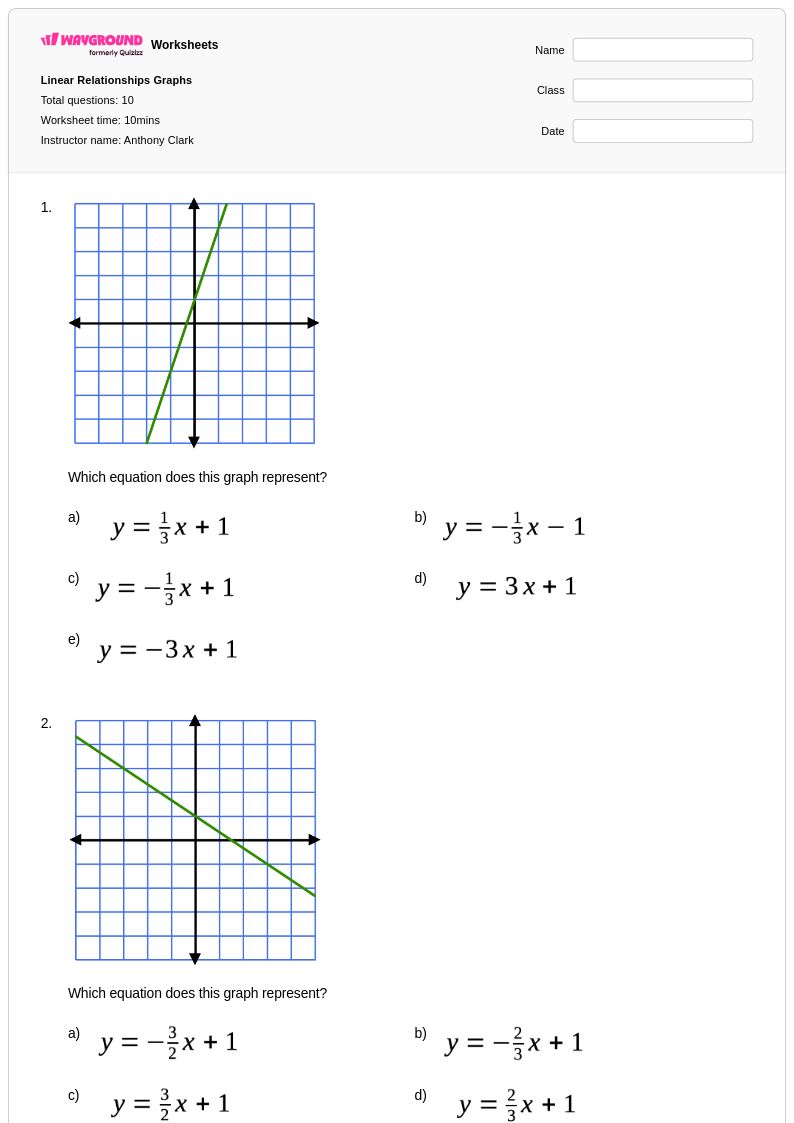
10 Q
7th - Uni
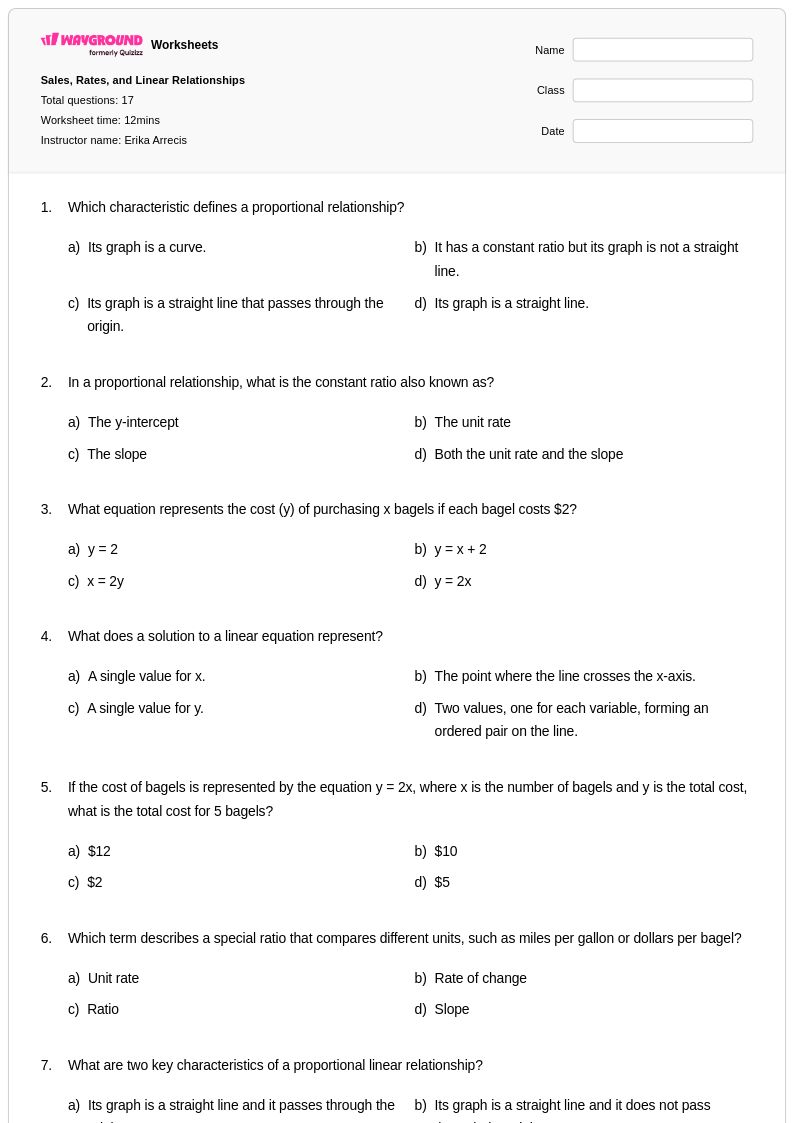
17 Q
8th - Uni
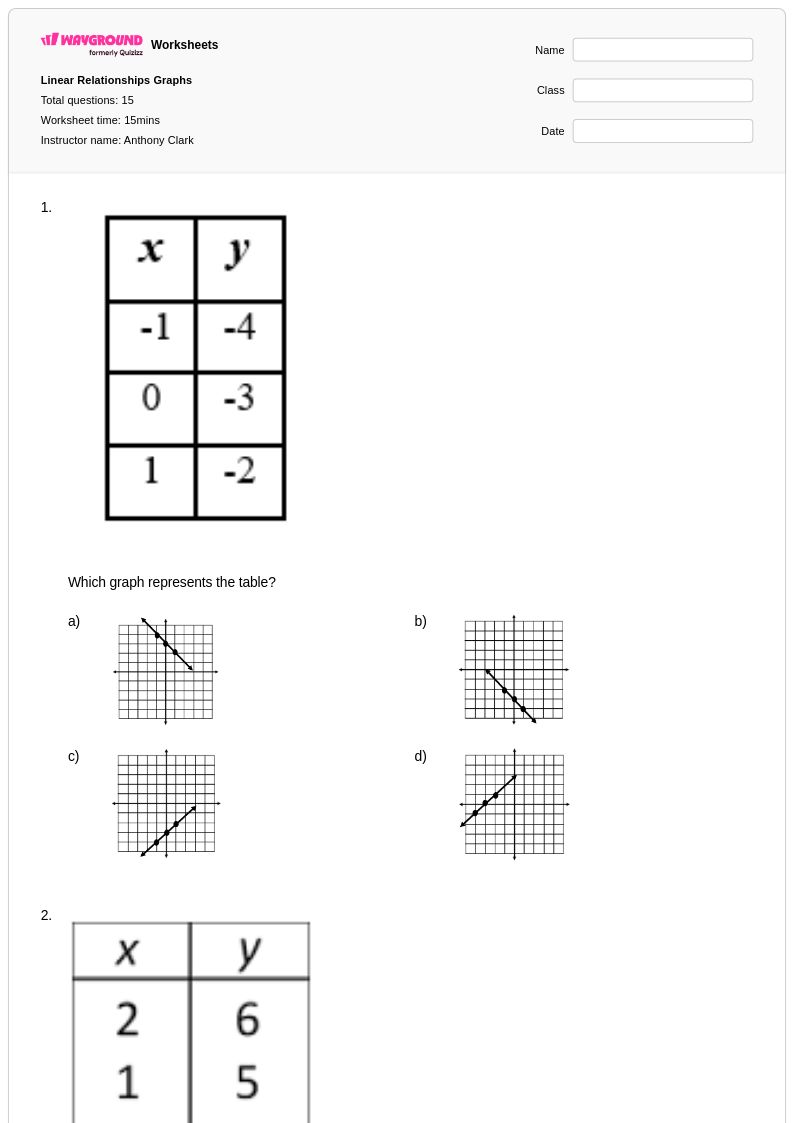
15 Q
7th - Uni
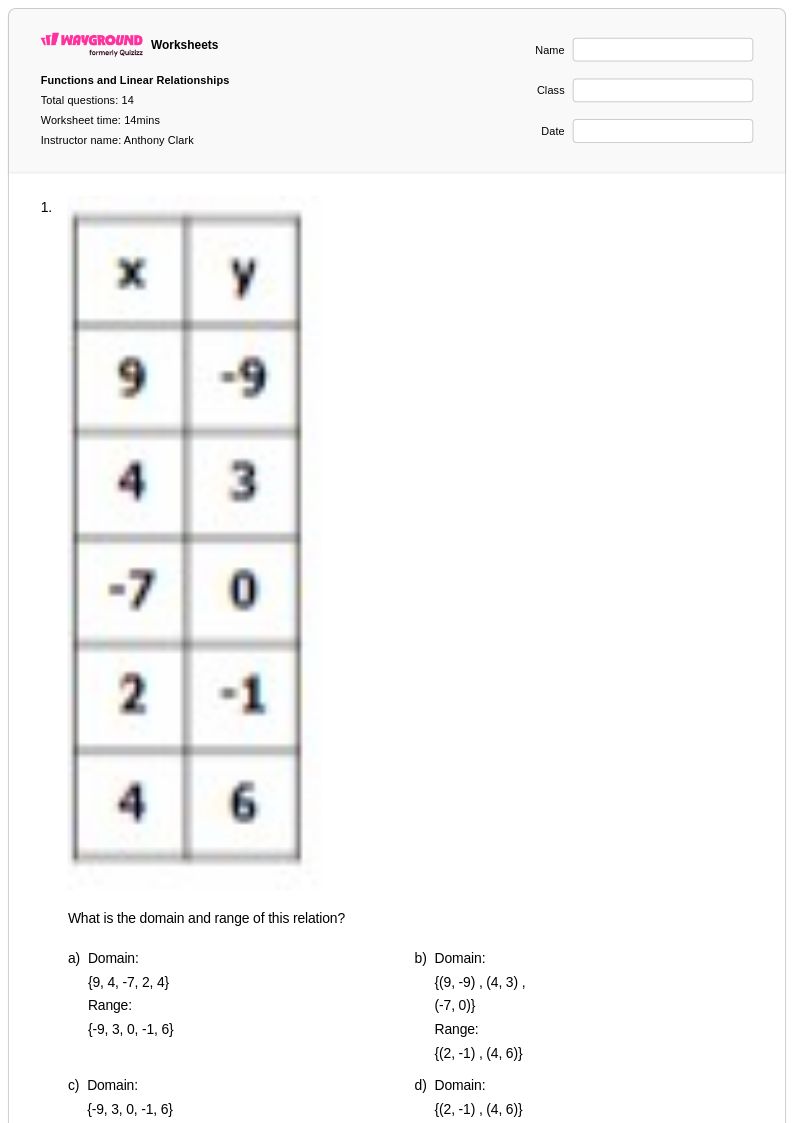
14 Q
8th - Uni
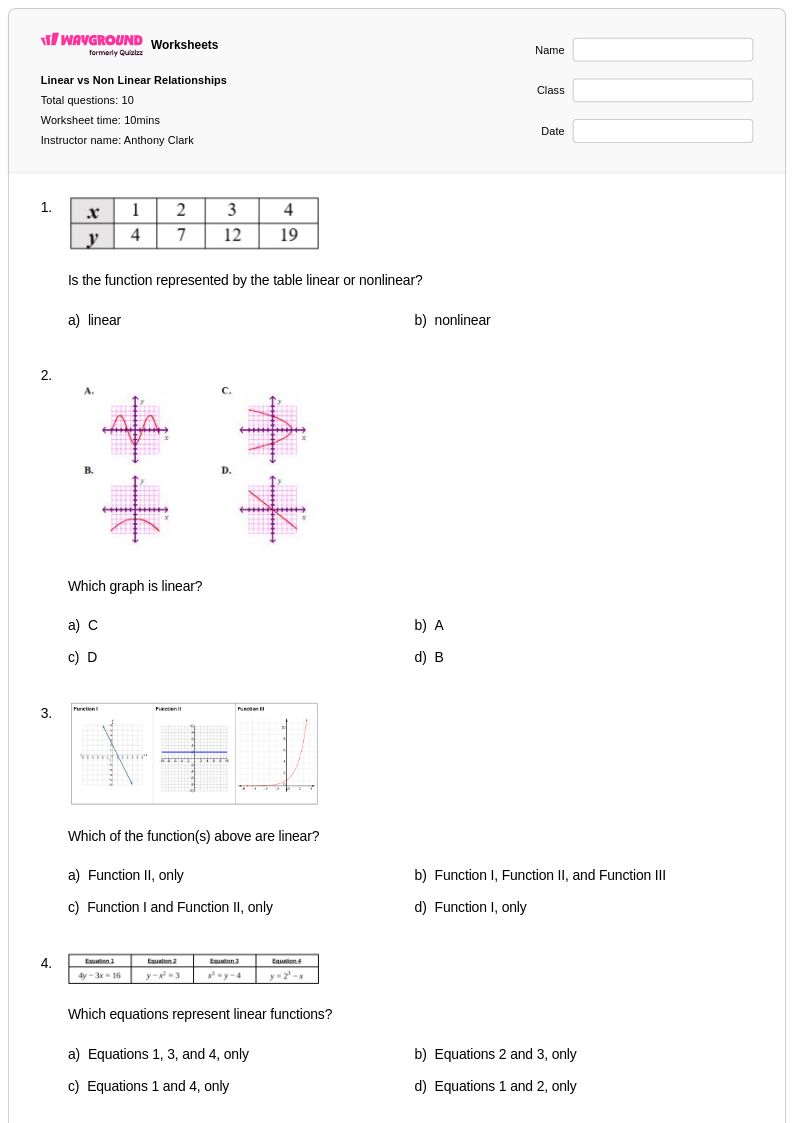
10 Q
8th - Uni
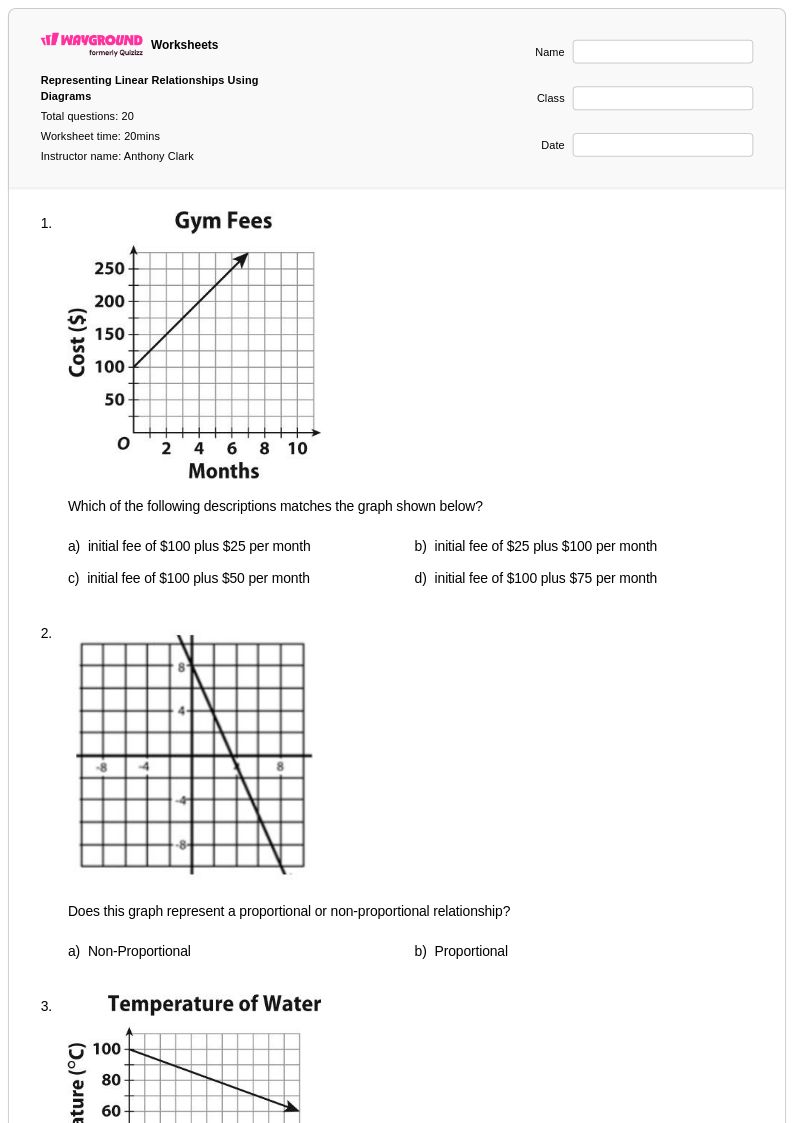
20 Q
8th - Uni
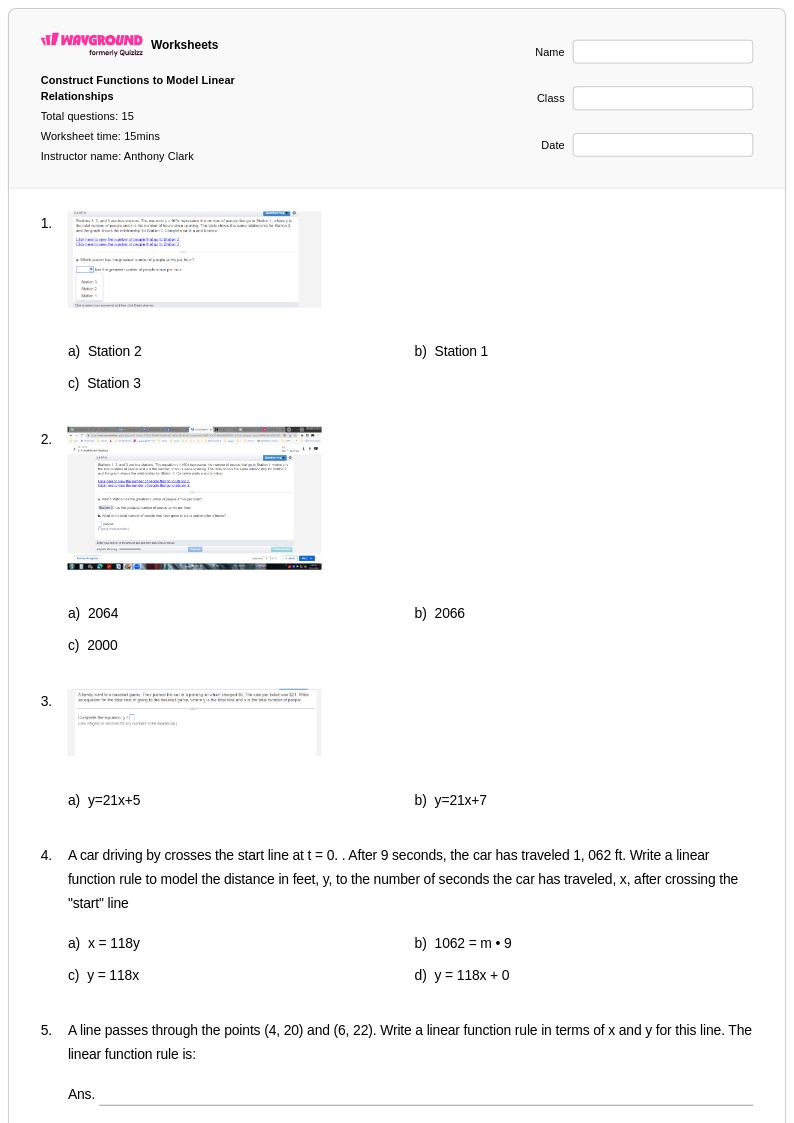
15 Q
8th - Uni
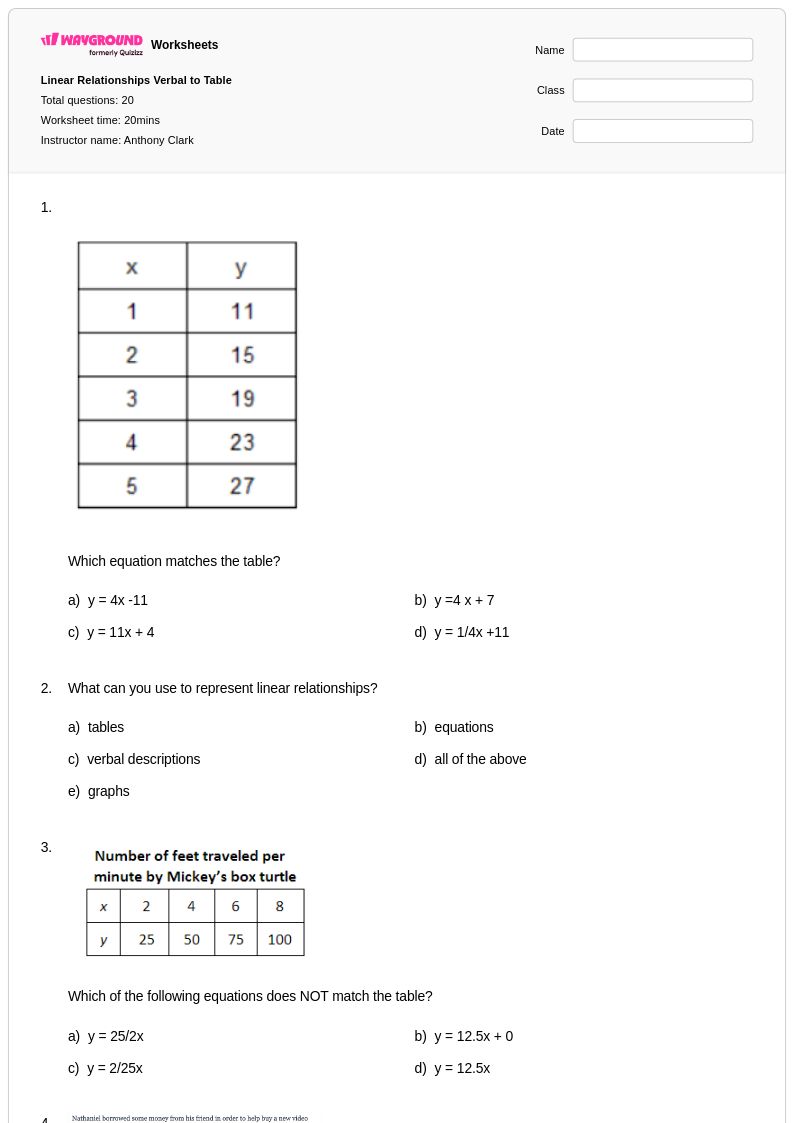
20 Q
7th - Uni
Explore Other Subject Worksheets for year 12
Explore printable Linear Relationships worksheets for Year 12
Linear relationships form a cornerstone of Year 12 mathematics, representing the foundation for advanced algebraic concepts and real-world problem solving. Wayground's comprehensive collection of linear relationships worksheets provides students with essential practice in identifying, graphing, and analyzing linear functions, equations, and their applications. These expertly designed resources strengthen critical skills including slope calculation, y-intercept identification, writing equations in various forms, and interpreting linear models in contextual situations. Each worksheet comes with a detailed answer key to support independent learning and immediate feedback, while the free printable format ensures accessibility for all students. The practice problems range from fundamental concept reinforcement to complex application scenarios, helping students master the mathematical reasoning required for success in advanced algebra and calculus preparation.
Wayground's extensive library of linear relationships worksheets draws from millions of teacher-created resources, offering educators unparalleled flexibility in addressing diverse learning needs within their Year 12 mathematics classrooms. The platform's robust search and filtering capabilities enable teachers to quickly locate materials aligned with specific curriculum standards while supporting both remediation for struggling students and enrichment opportunities for advanced learners. These customizable worksheets are available in both printable PDF format and interactive digital versions, allowing seamless integration into various instructional models including traditional classroom teaching, hybrid learning environments, and independent study programs. The differentiation tools empower educators to modify content difficulty and presentation style, ensuring that all students receive appropriately challenging practice opportunities that build confidence and competency in analyzing linear relationships across mathematical and real-world contexts.