
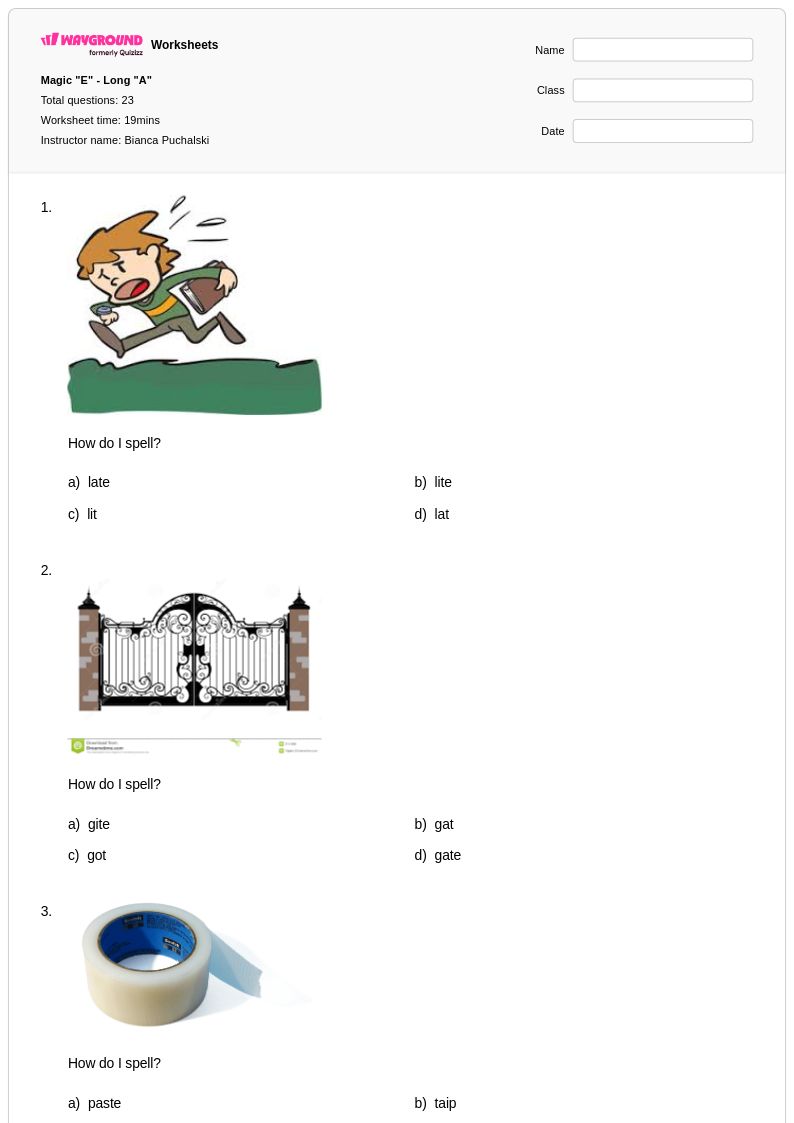
23 Q
2nd - 5th
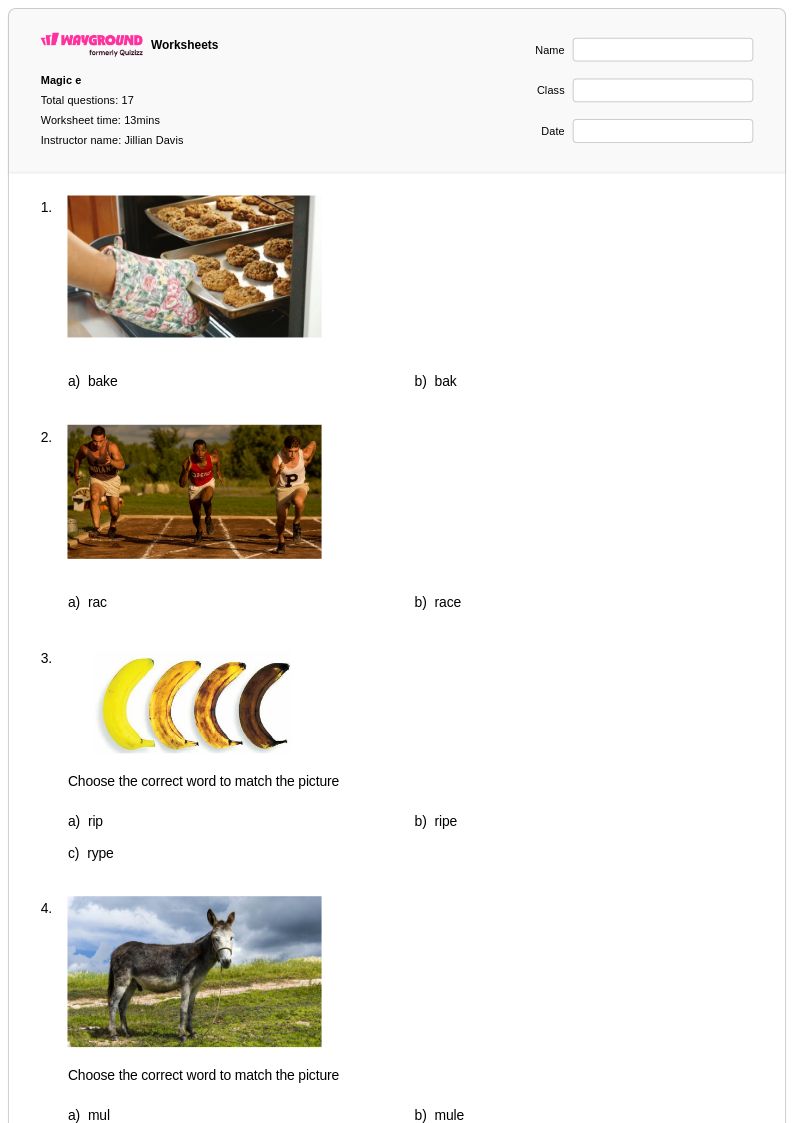
17 Q
1st - 3rd
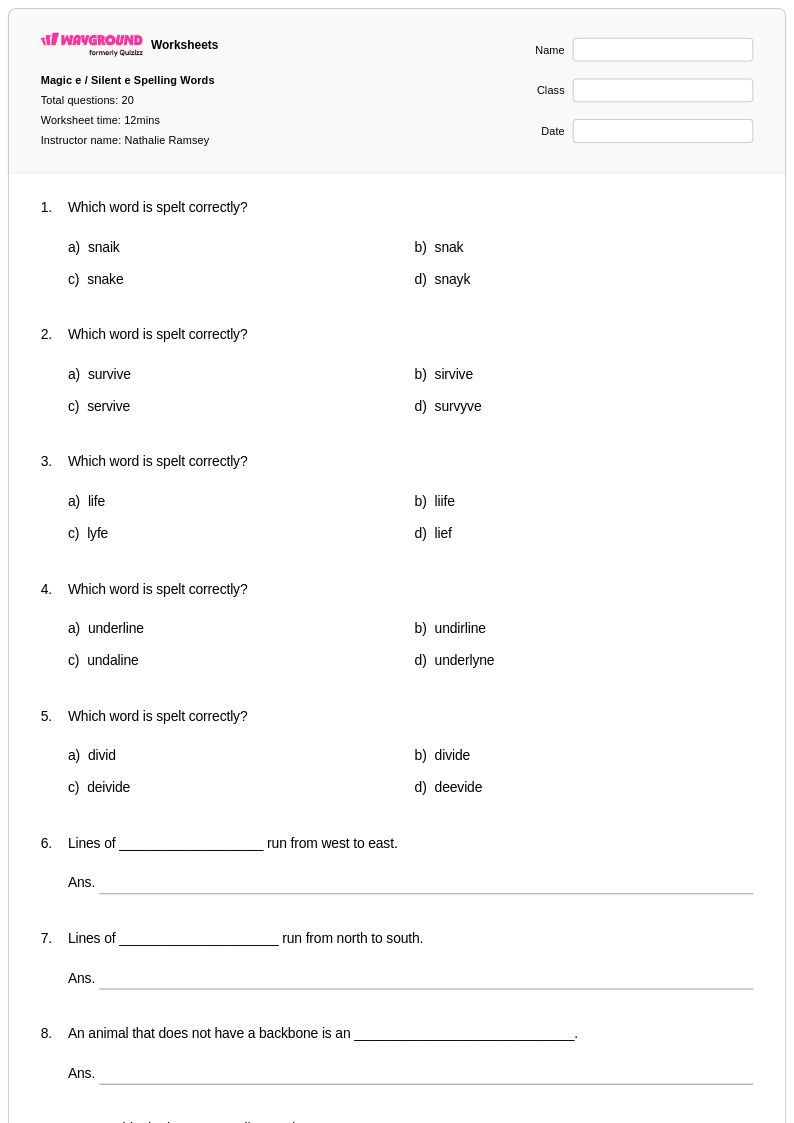
20 Q
3rd - 4th
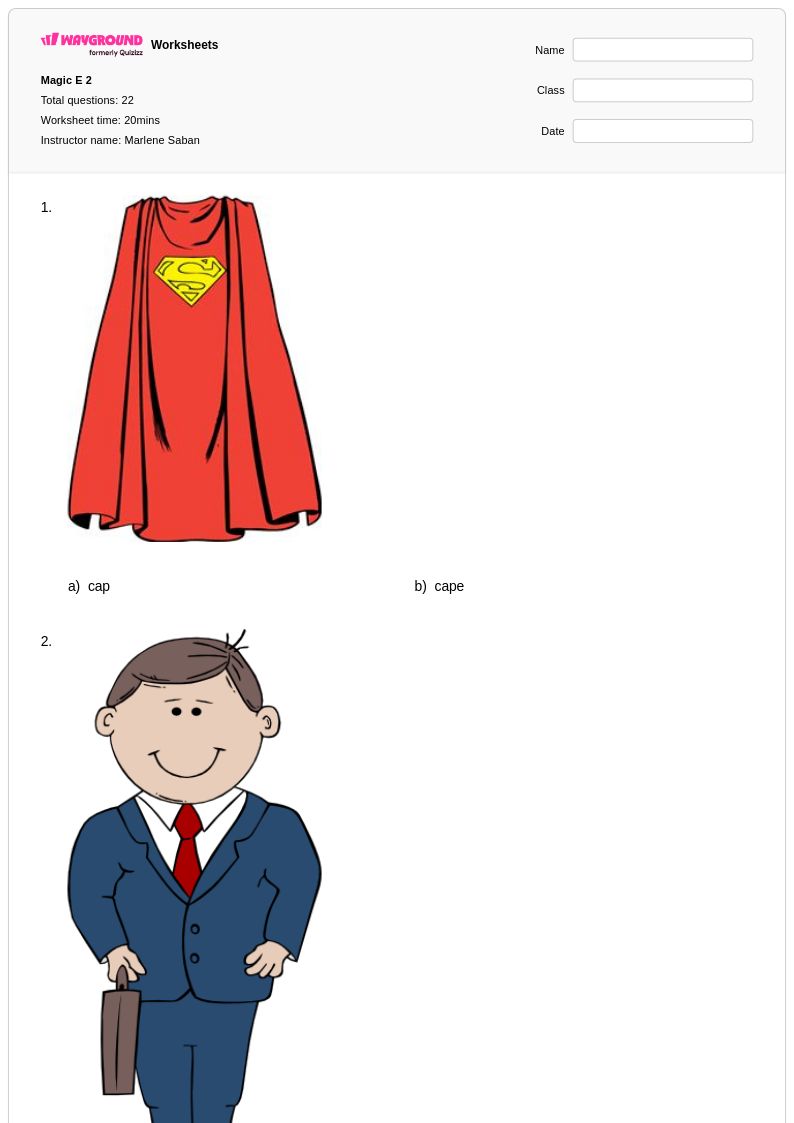
22 Q
1st - 5th
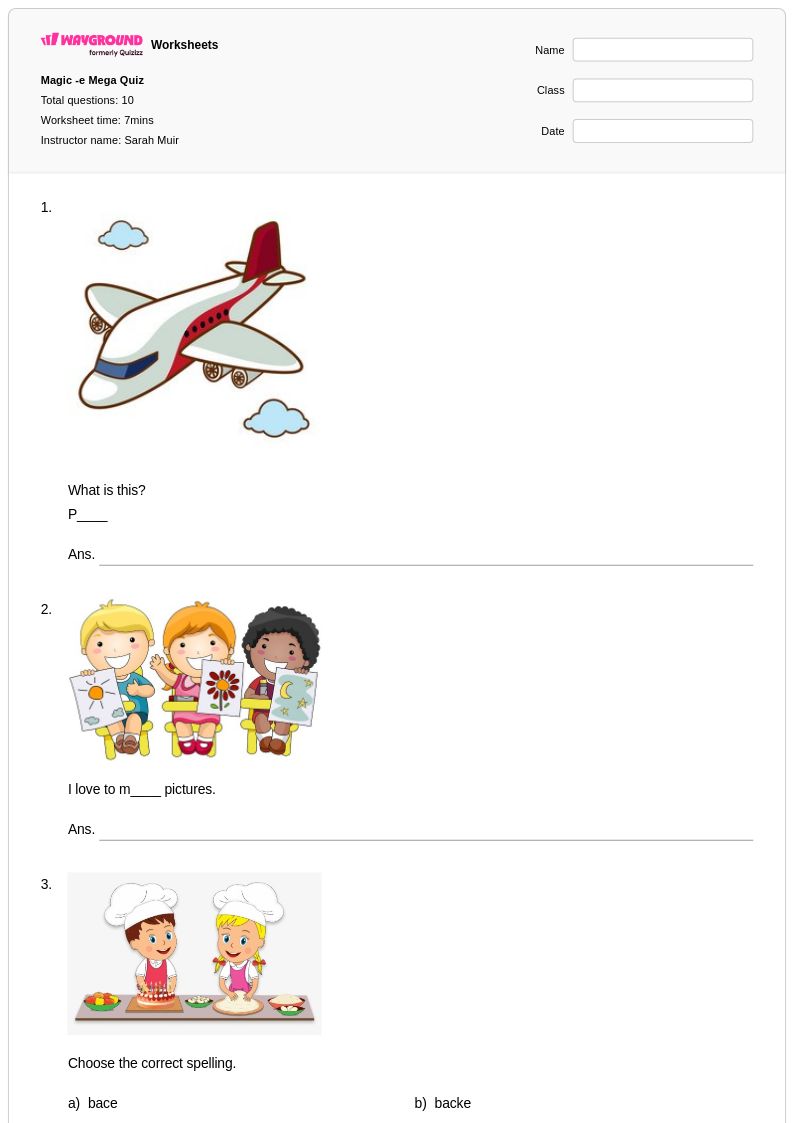
10 Q
1st - 3rd
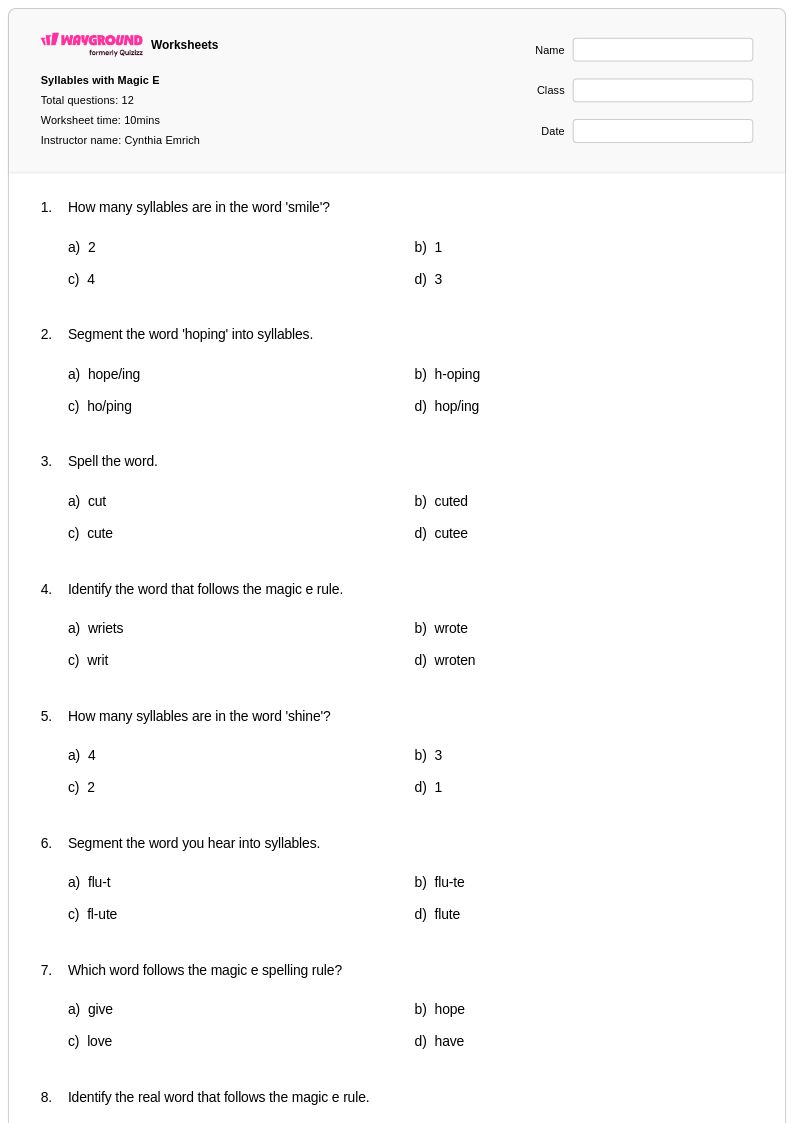
12 Q
1st - 5th
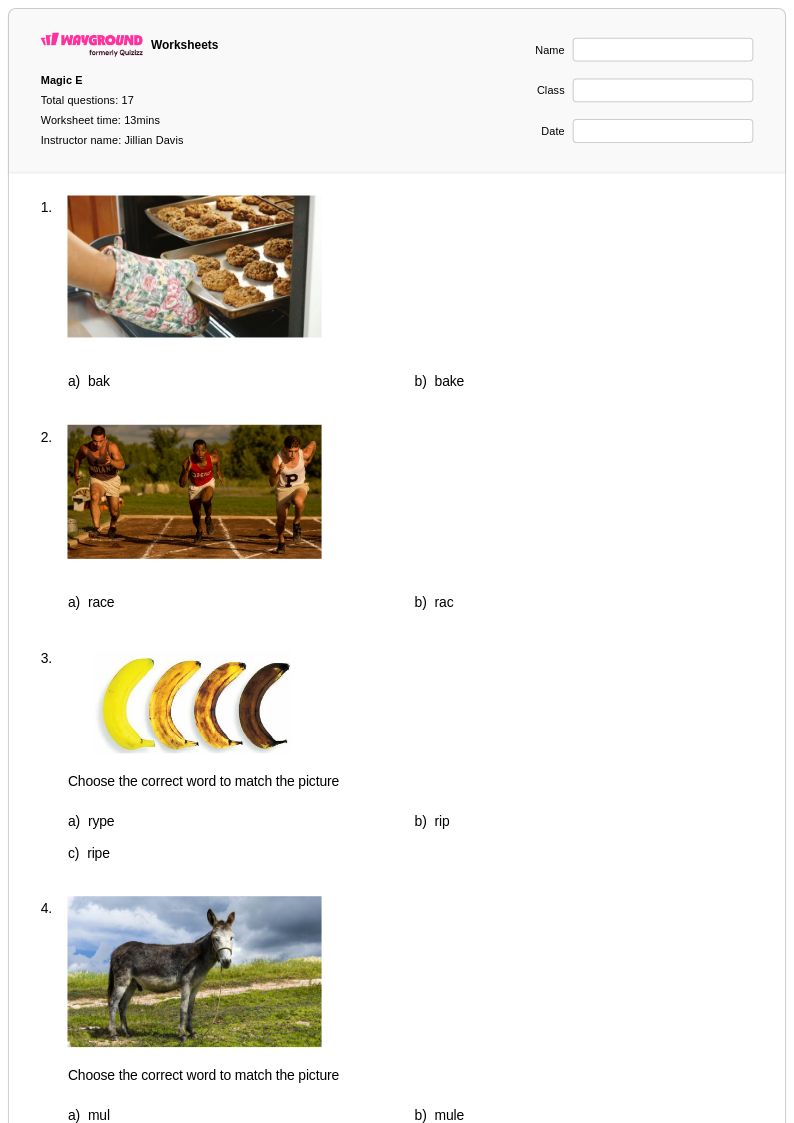
17 Q
1st - 5th
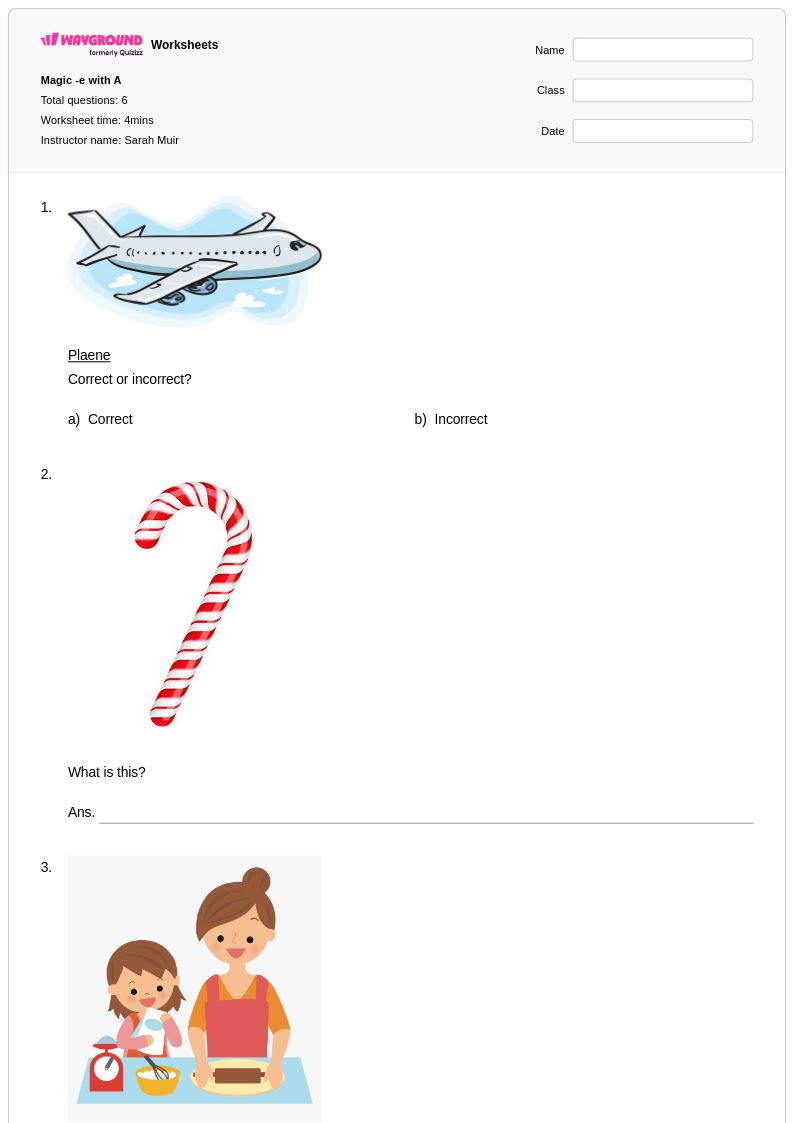
6 Q
1st - 3rd
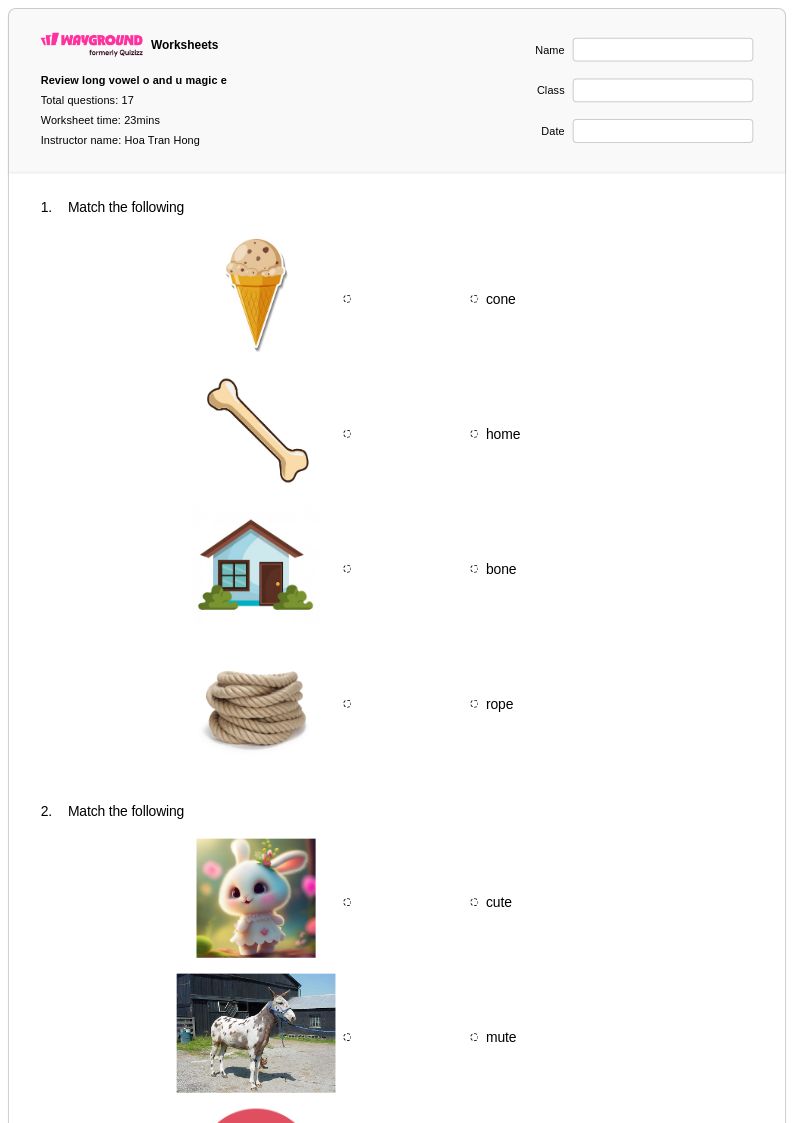
17 Q
1st - 5th
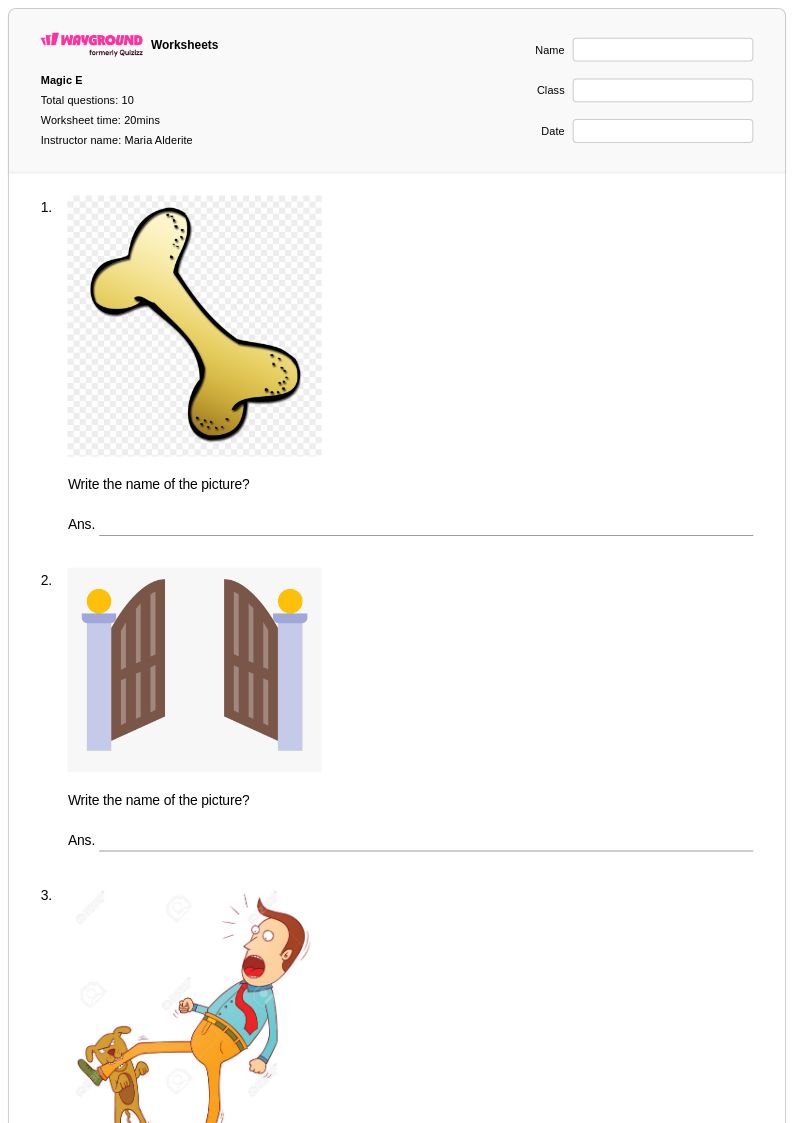
10 Q
3rd
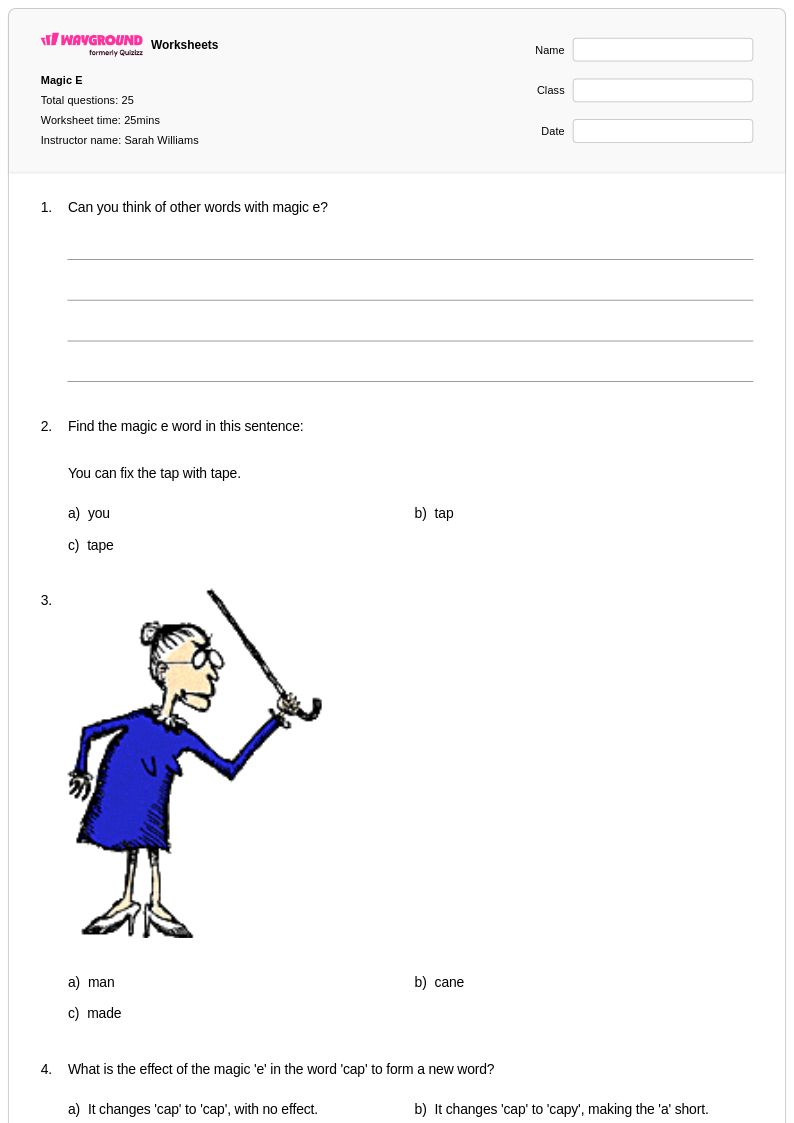
25 Q
2nd - Uni
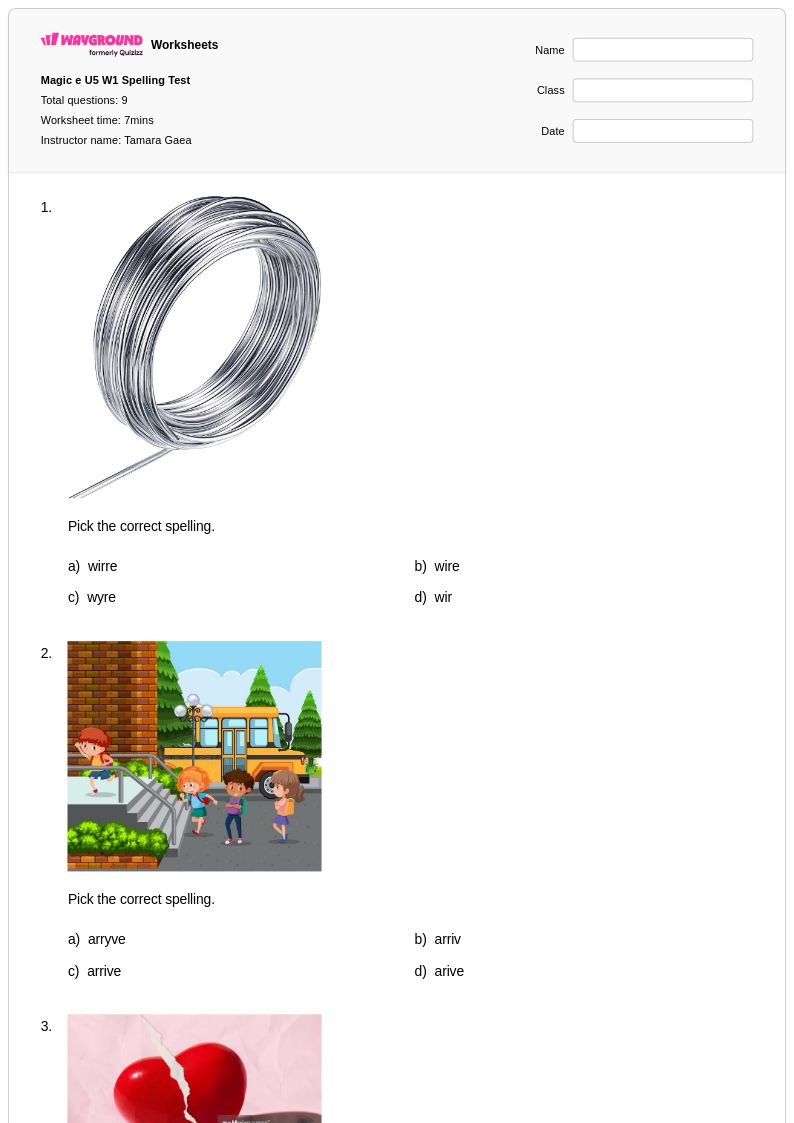
9 Q
3rd
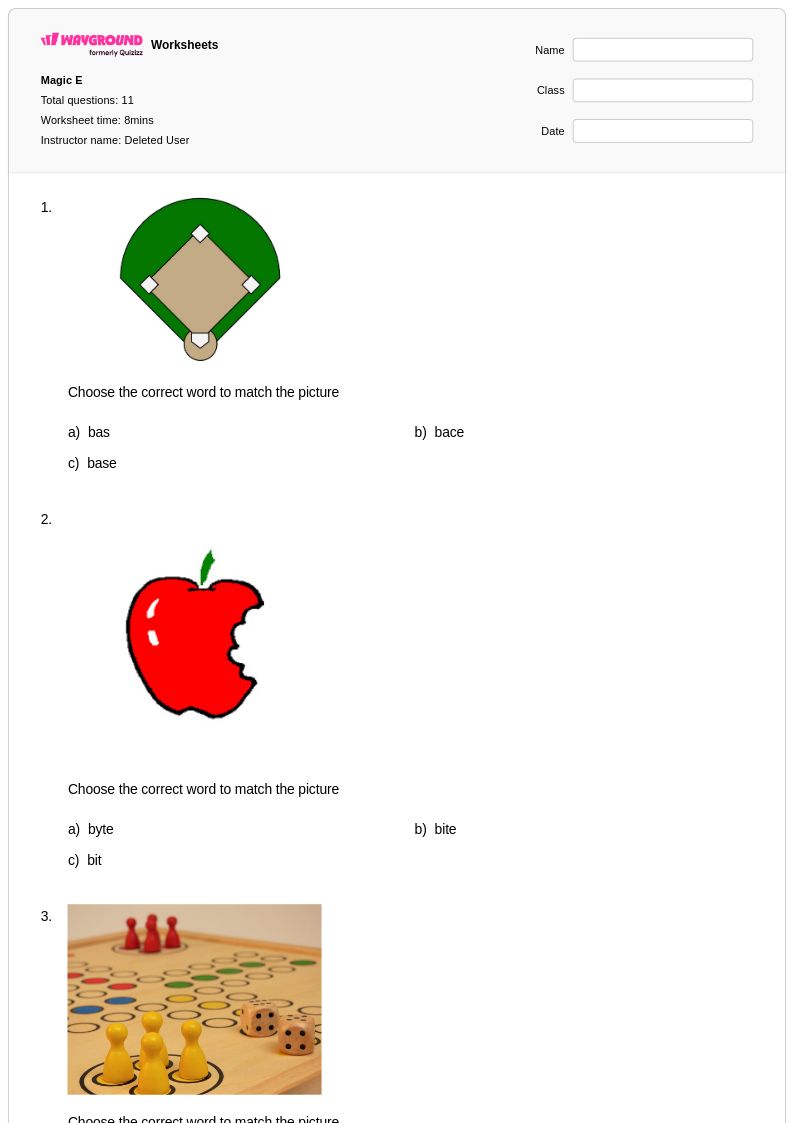
11 Q
2nd - 4th
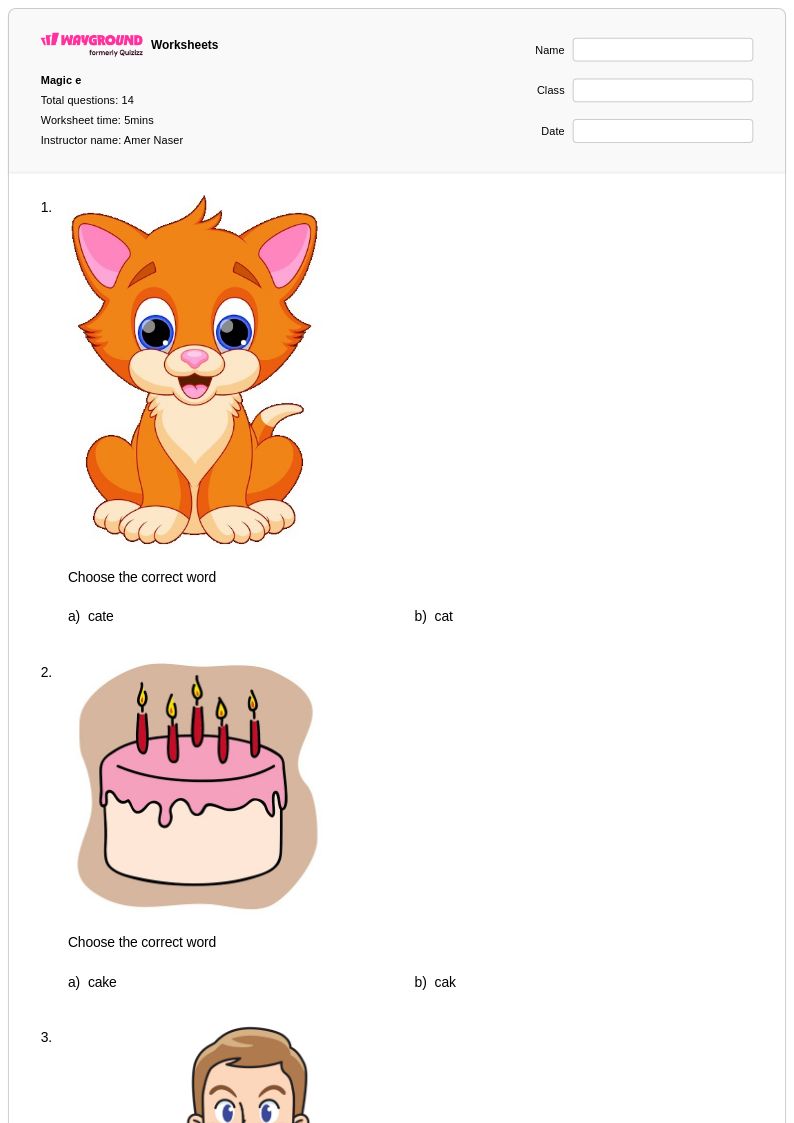
14 Q
3rd - 5th
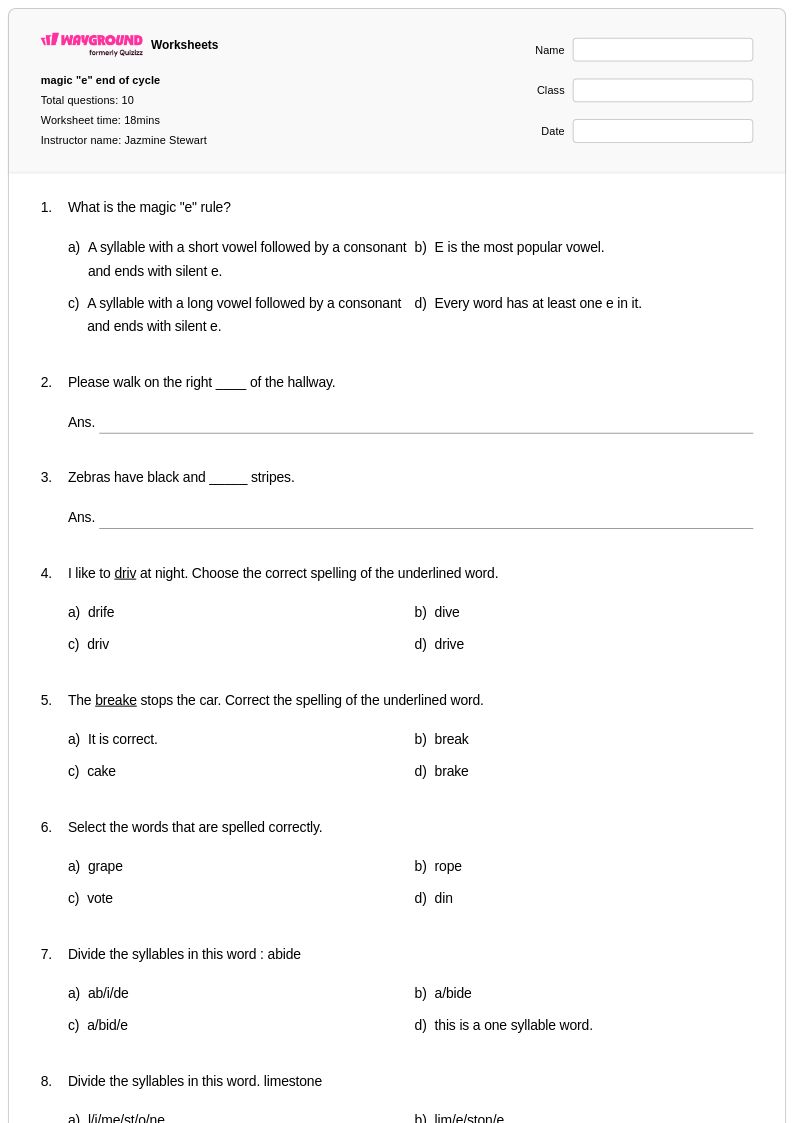
10 Q
1st - 3rd
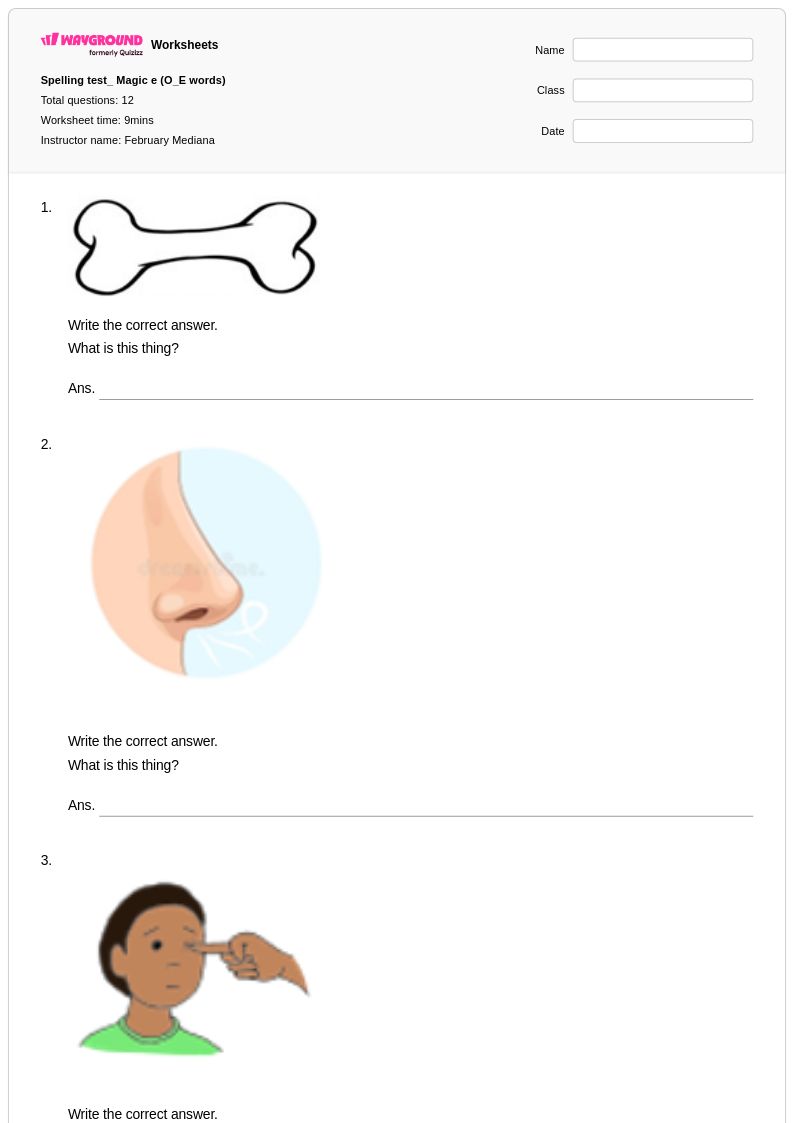
12 Q
1st - 3rd
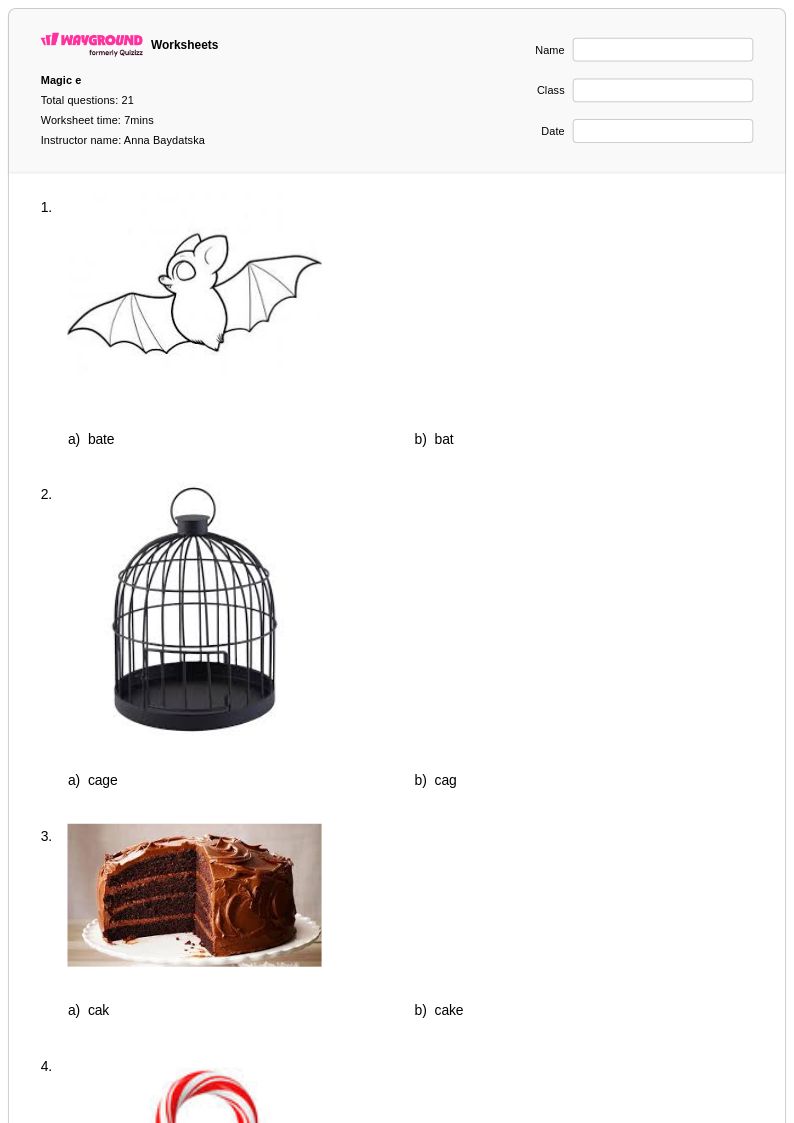
21 Q
3rd - 4th
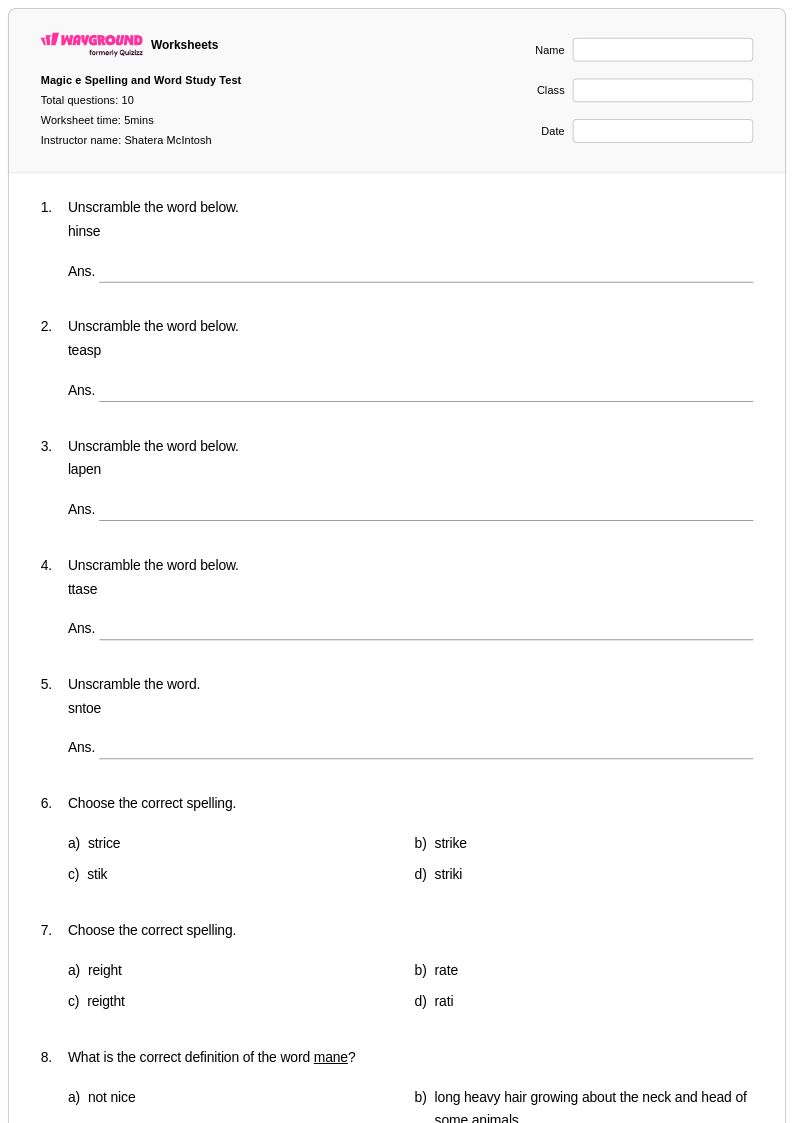
10 Q
3rd - 4th
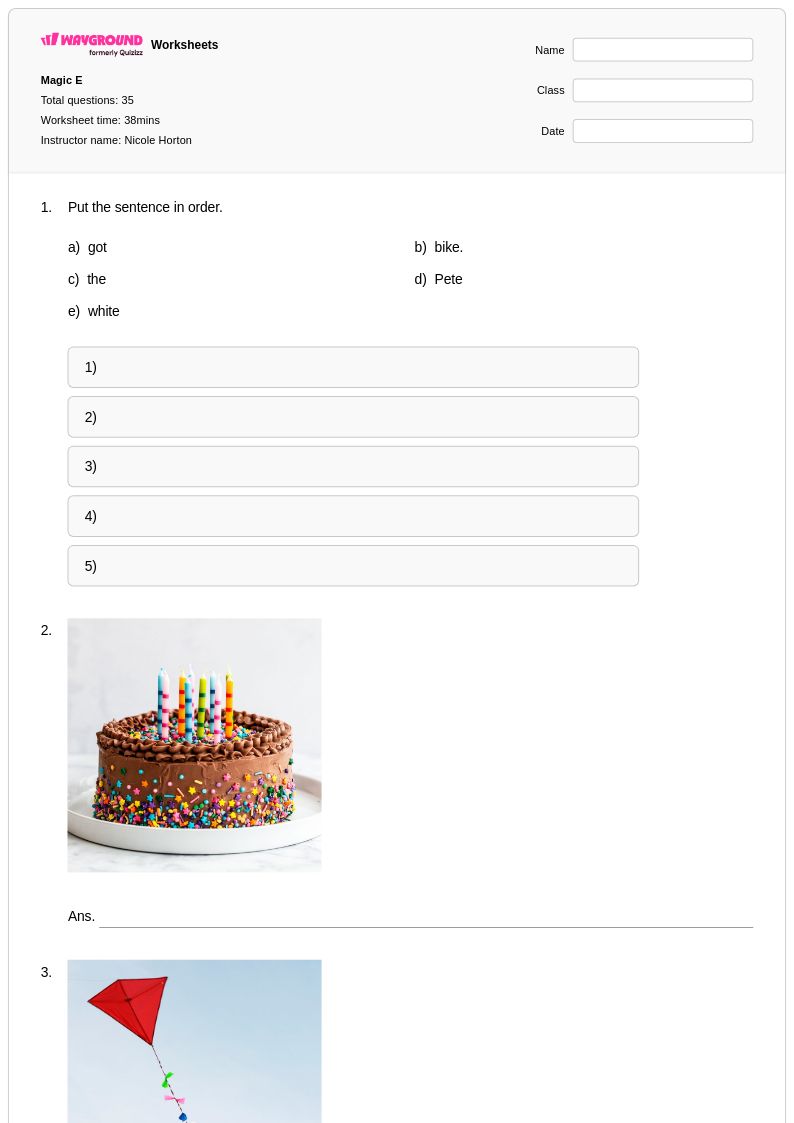
35 Q
3rd
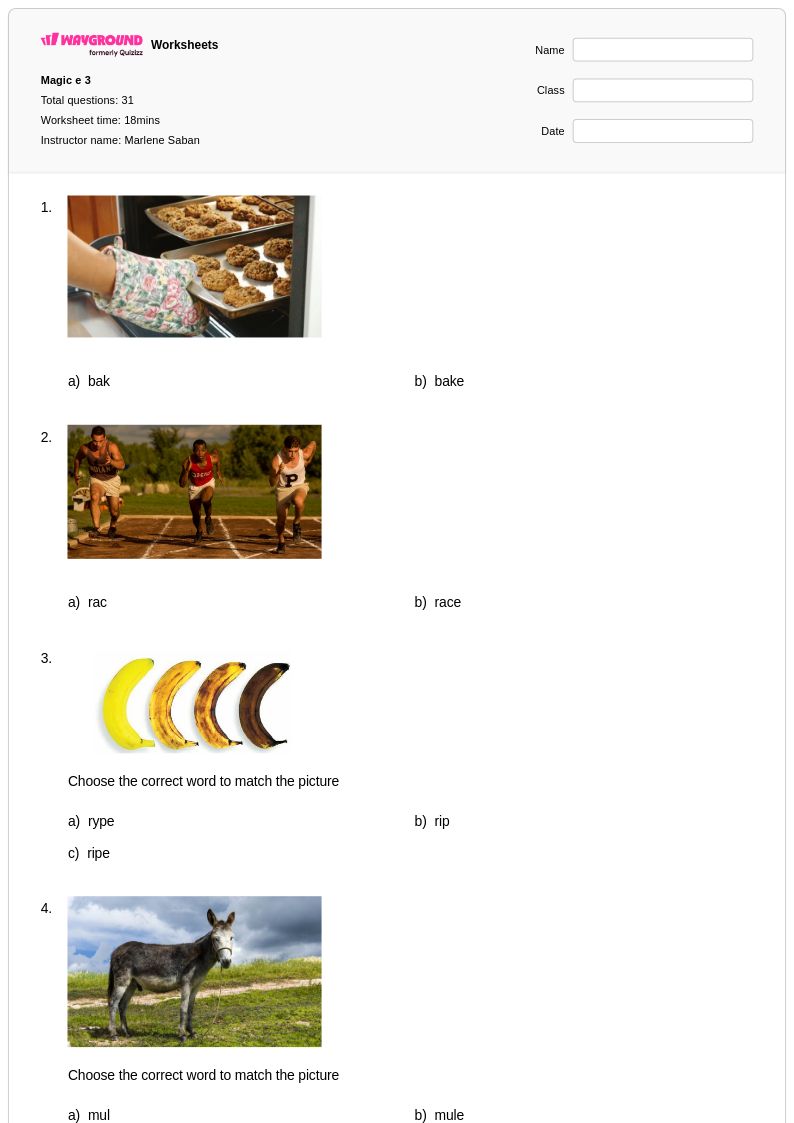
31 Q
1st - 5th
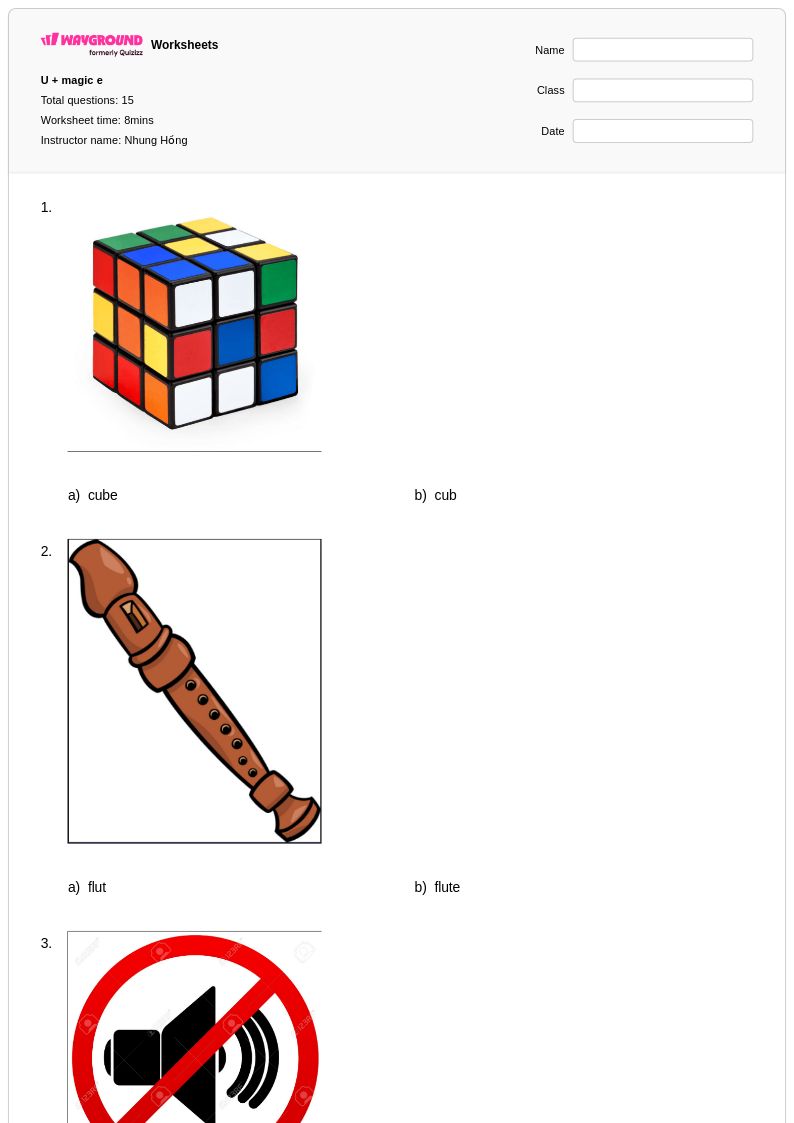
15 Q
1st - 5th
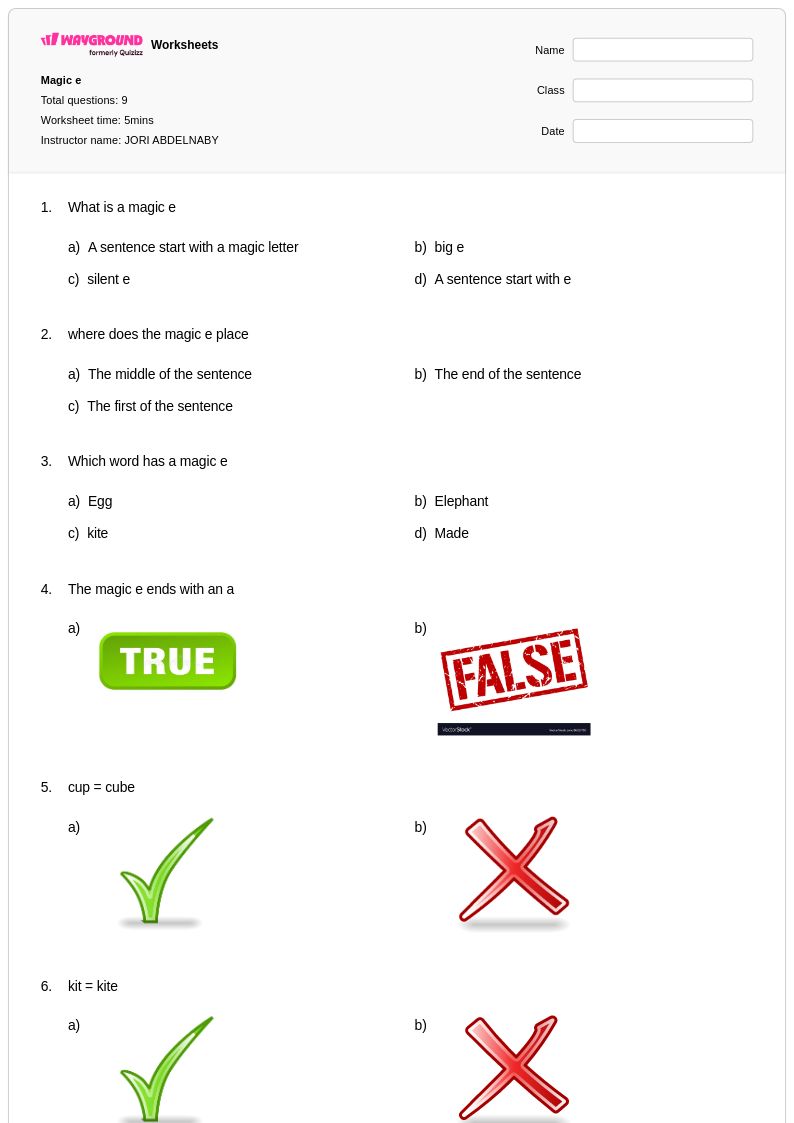
9 Q
3rd
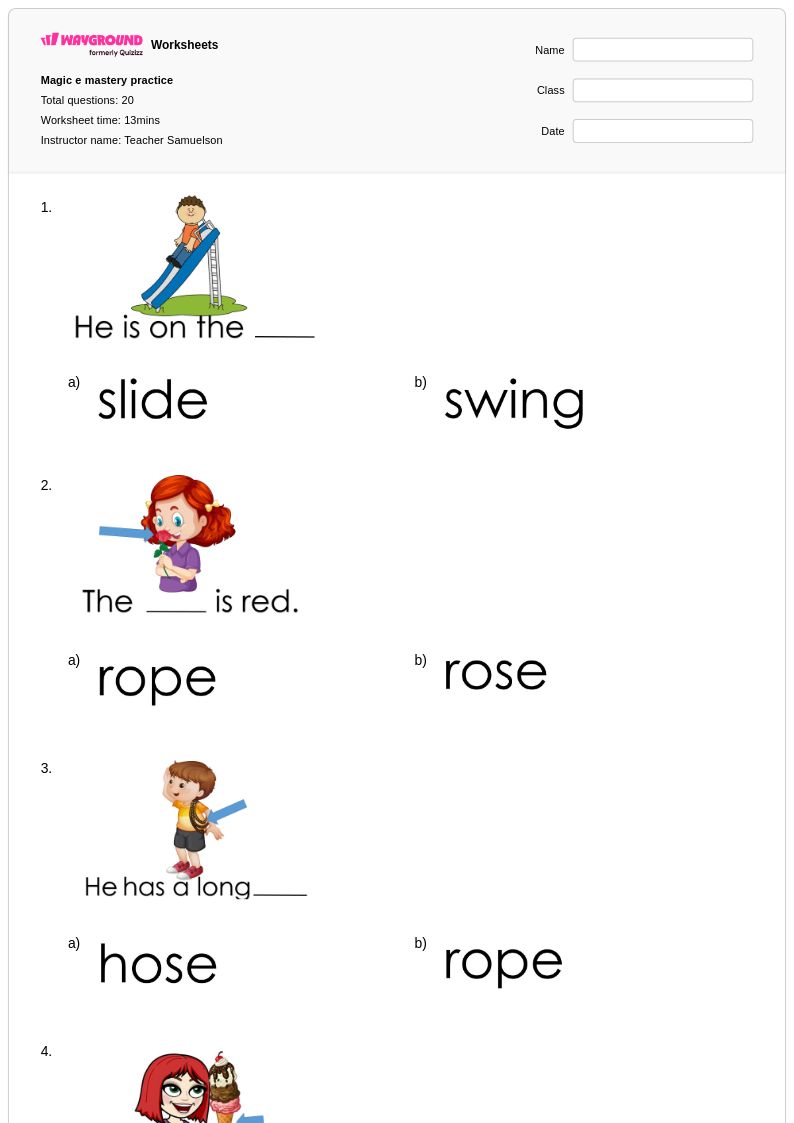
20 Q
1st - 5th
20 Q
3rd
Explore Magic E Worksheets by Grades
Explore Other Subject Worksheets for year 3
Explore printable Magic E worksheets for Year 3
Magic E worksheets for Year 3 students available through Wayground (formerly Quizizz) provide comprehensive practice with the silent E spelling pattern that transforms short vowel sounds into long vowel sounds. These educational resources strengthen students' understanding of how adding an E to the end of words like "cap" creates "cape" and "kit" becomes "kite," building essential phonetic awareness and decoding skills. The worksheets feature systematic practice problems that help third graders recognize, read, and spell Magic E words across different word families, with answer keys provided to support independent learning and immediate feedback. Teachers can access these free printables in convenient PDF format, making it easy to incorporate targeted phonics instruction into daily lessons and homework assignments.
Wayground's extensive collection of teacher-created Magic E resources supports educators with millions of differentiated materials that can be filtered by specific learning objectives and grade-appropriate content standards. The platform's robust search functionality allows teachers to quickly locate worksheets that match their students' skill levels, whether for remediation with struggling readers or enrichment activities for advanced learners. These customizable resources are available in both printable and digital formats, enabling flexible lesson planning that accommodates different classroom environments and learning preferences. Teachers can easily modify worksheets to target specific Magic E patterns, adjust difficulty levels, and create personalized practice sets that align with their phonics curriculum scope and sequence, making skill-building practice more effective and engaging for Year 3 students.
FAQs
How do I teach Magic E to early readers?
What exercises help students practice Magic E words?
What common mistakes do students make with Magic E?
How can I differentiate Magic E practice for students at different skill levels?
How do I use Magic E worksheets from Wayground in my classroom?