
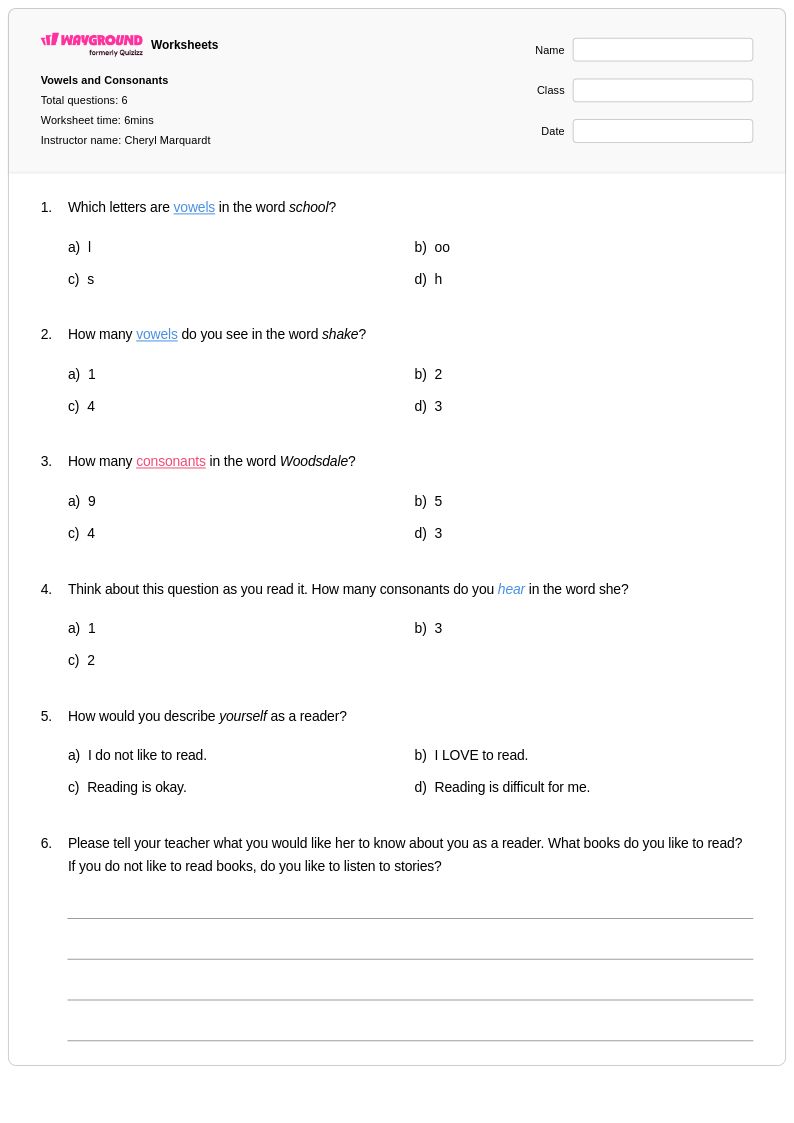
6 Q
2nd - 3rd
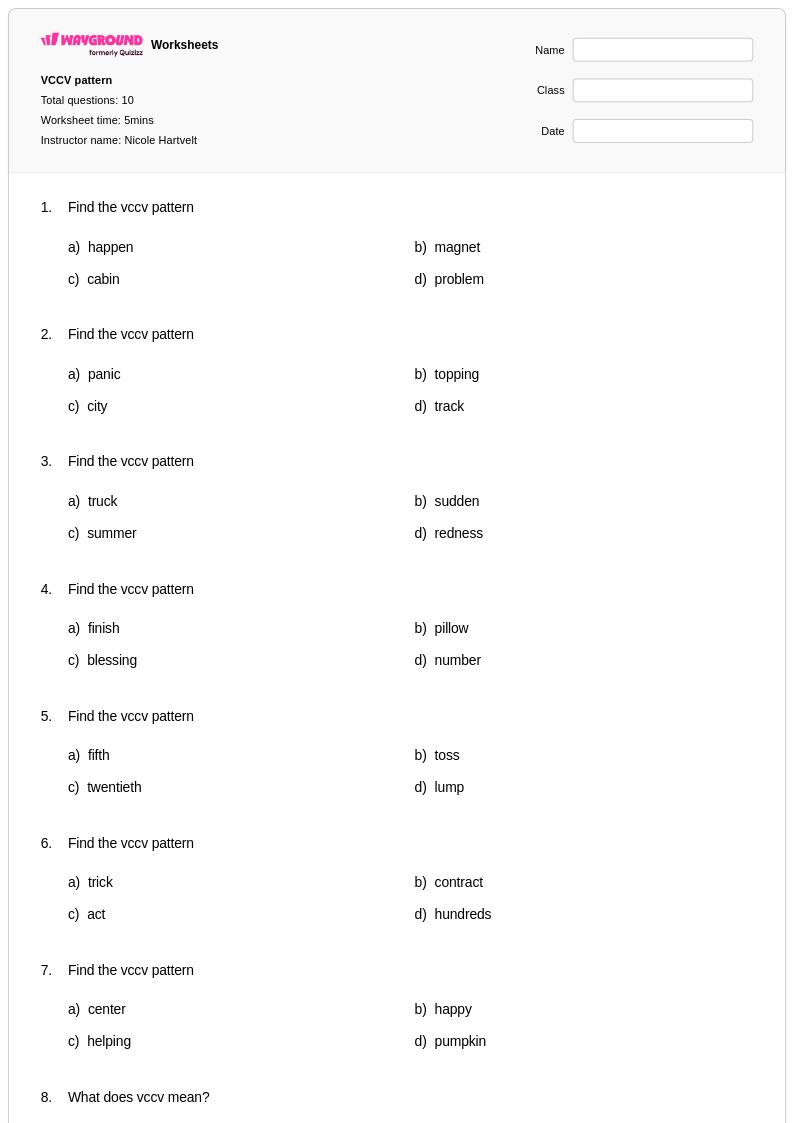
10 Q
3rd
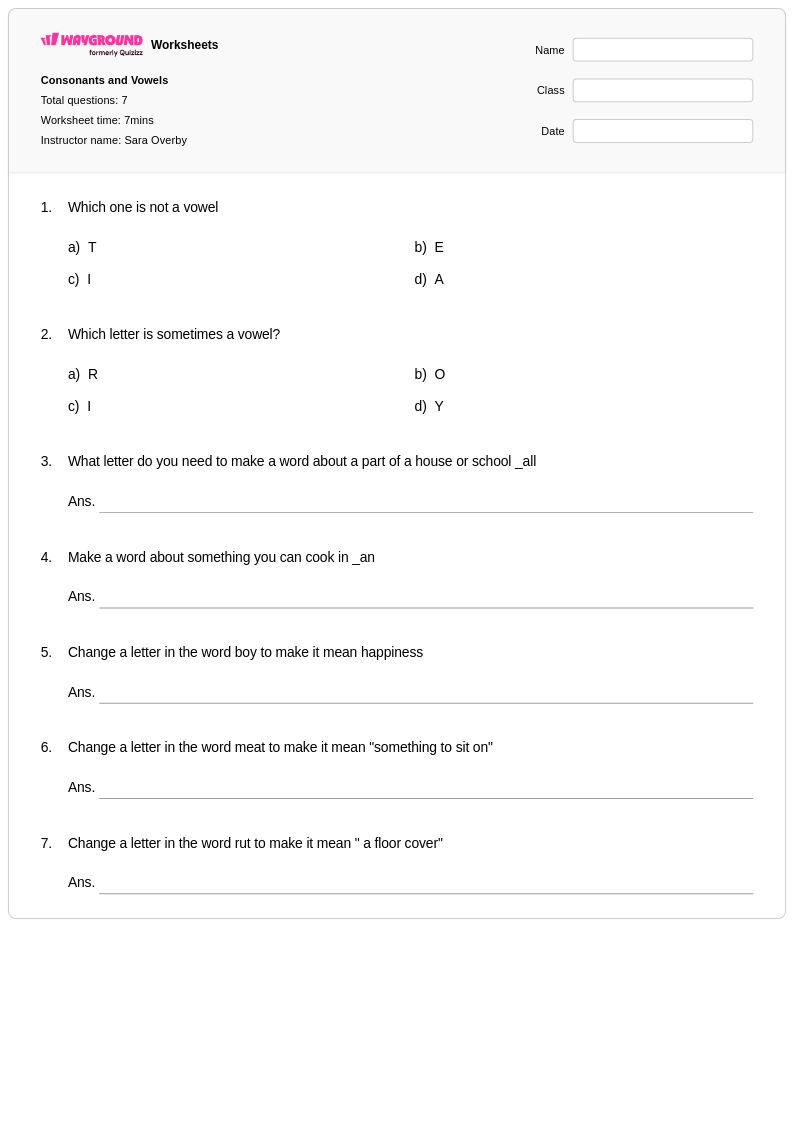
7 Q
1st - 5th
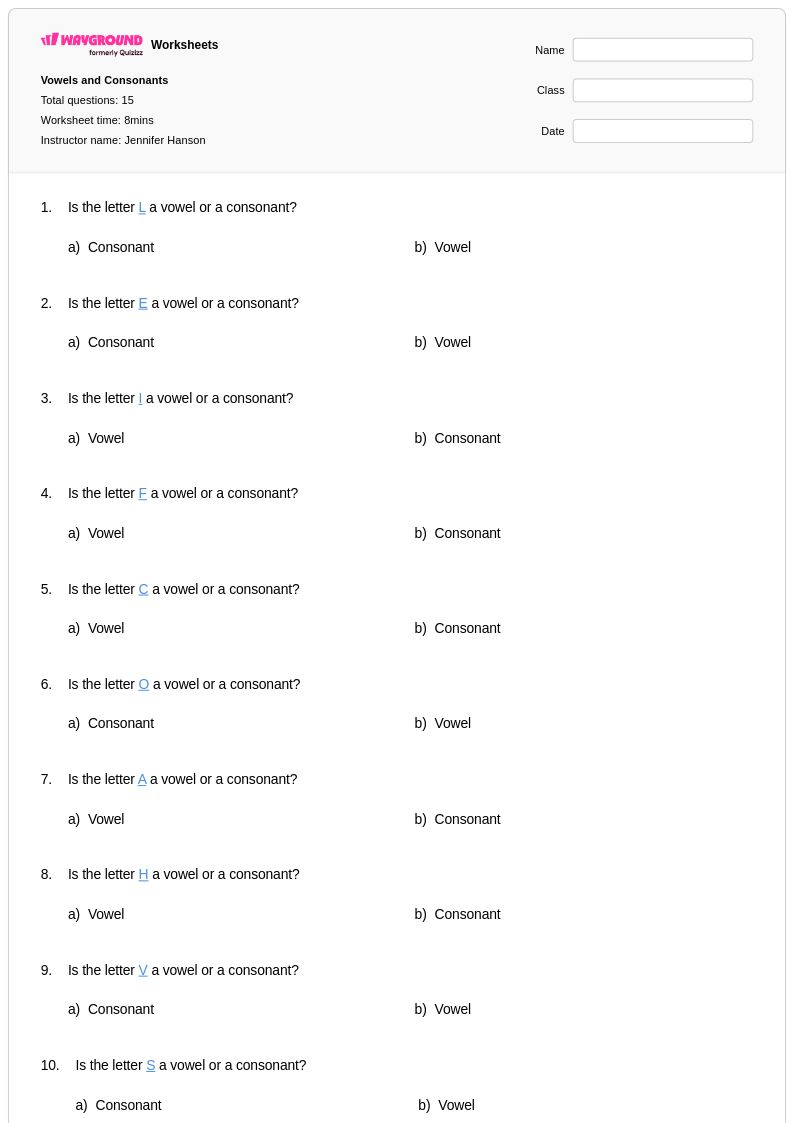
15 Q
1st - 5th
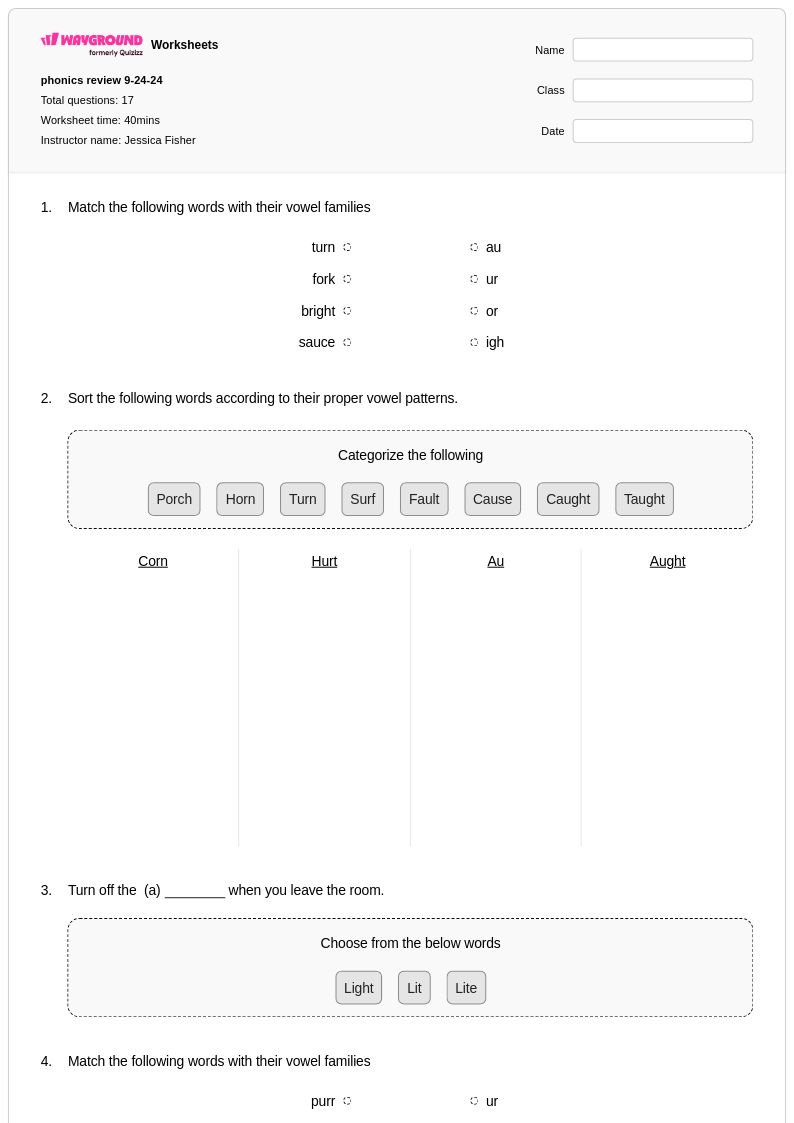
17 Q
3rd
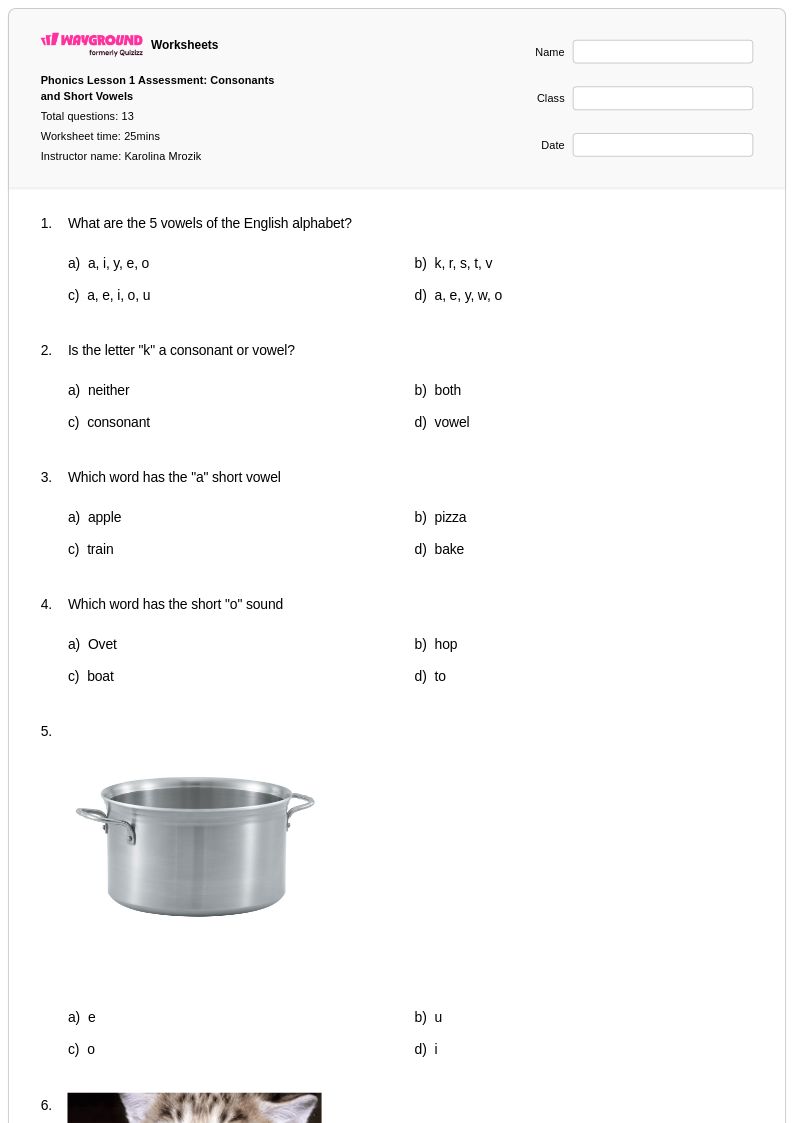
13 Q
3rd - 6th
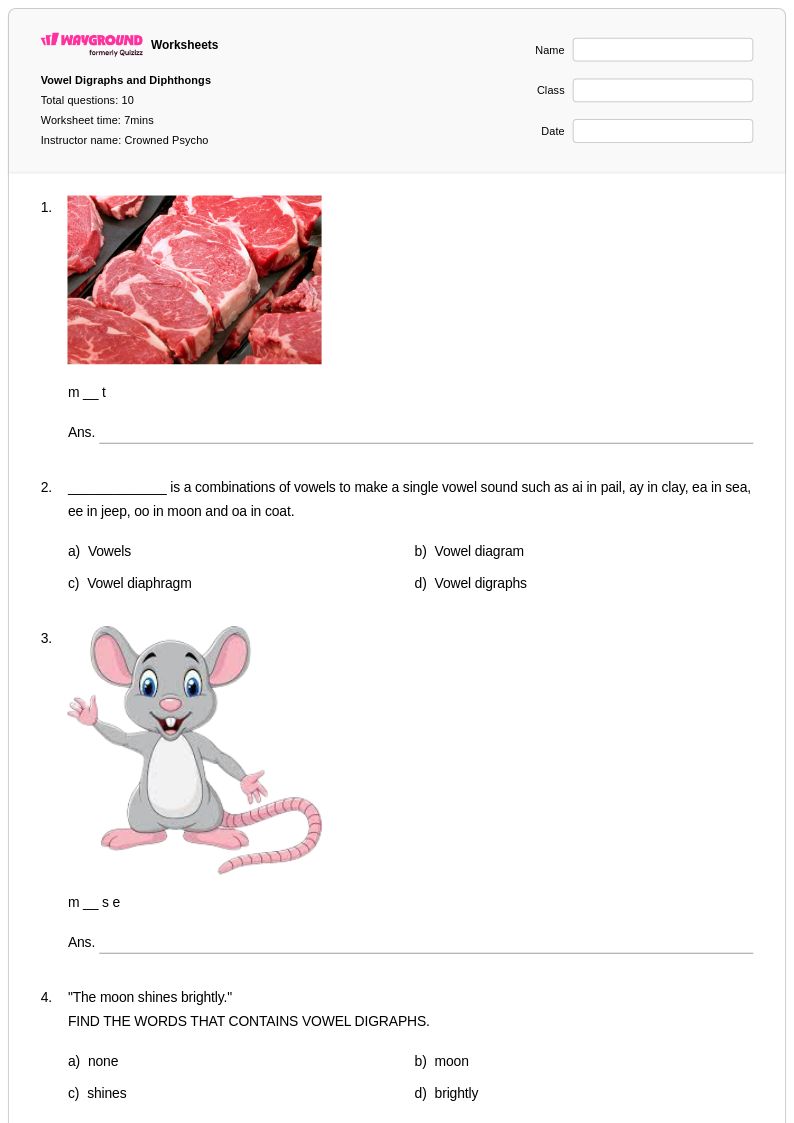
10 Q
3rd

7 Q
1st - 5th
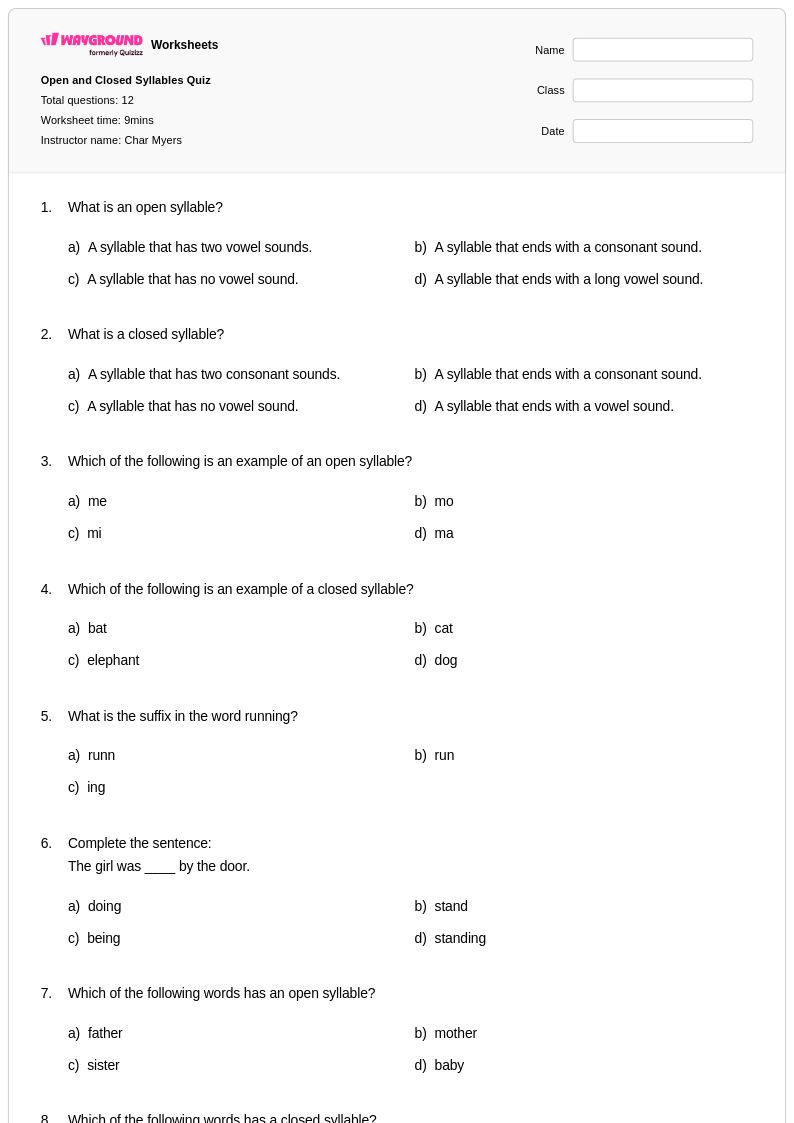
12 Q
3rd
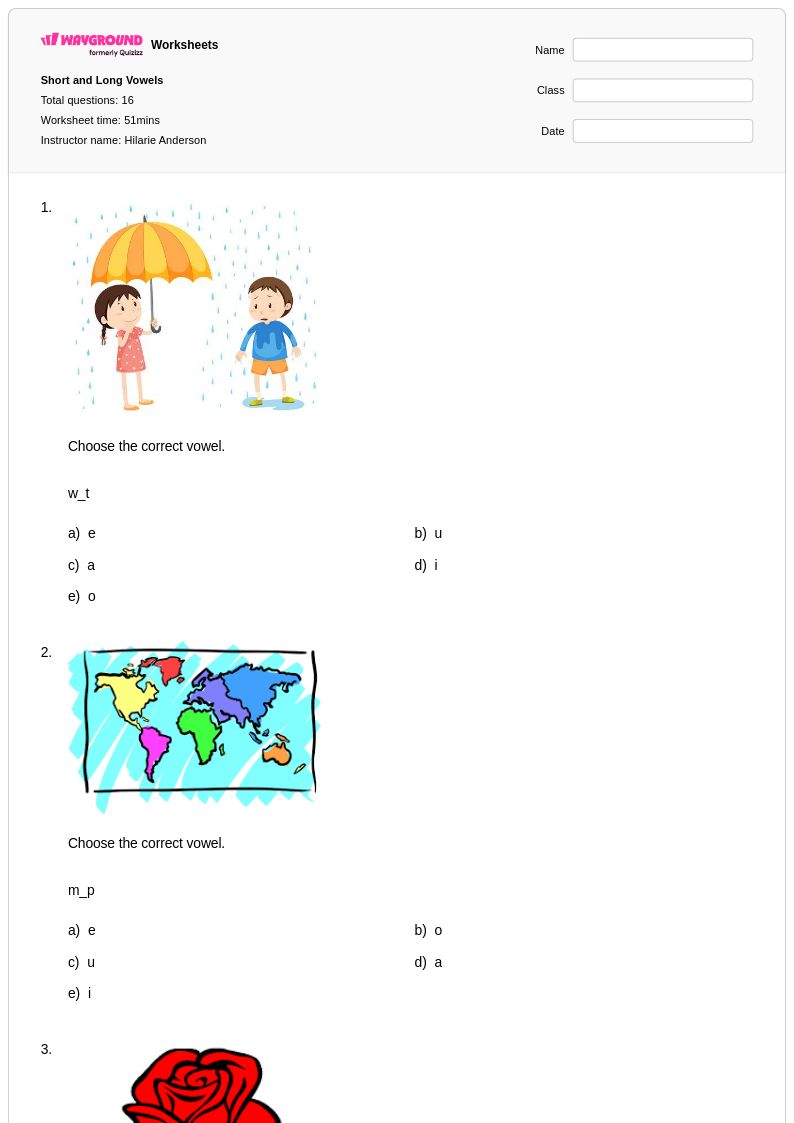
18 Q
1st - Uni
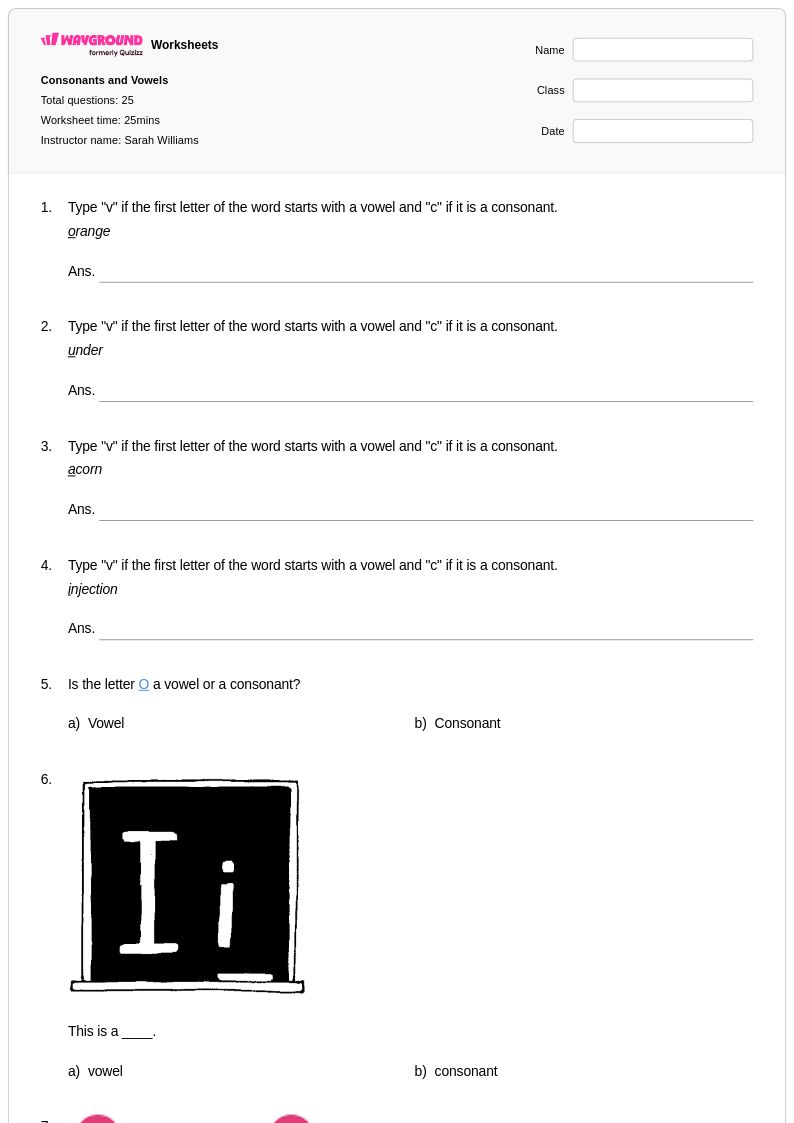
25 Q
2nd - Uni
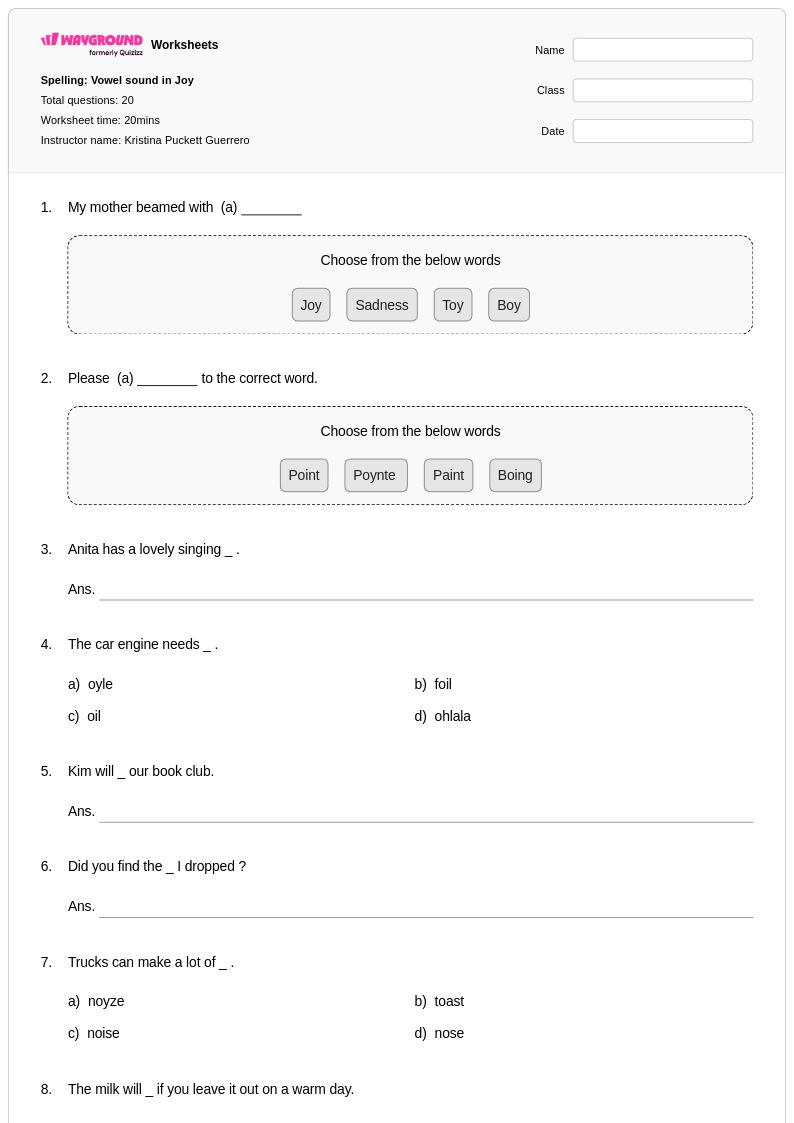
20 Q
3rd
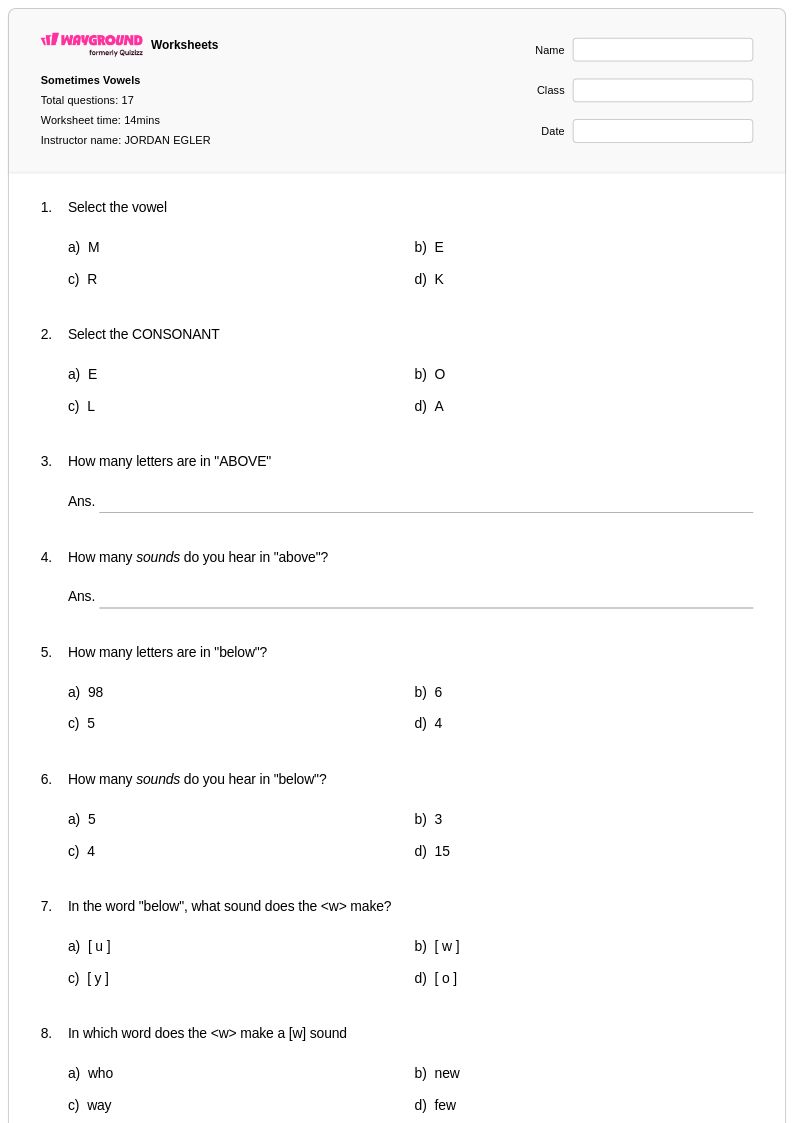
17 Q
2nd - 6th
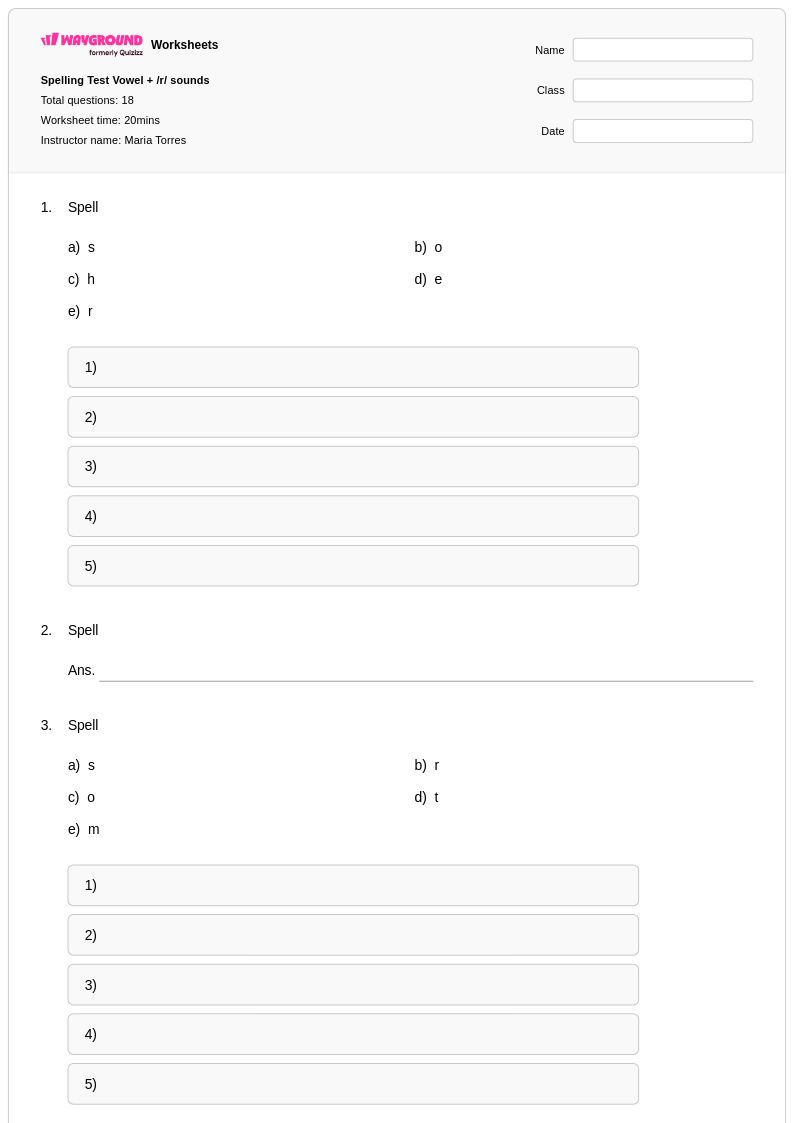
18 Q
3rd
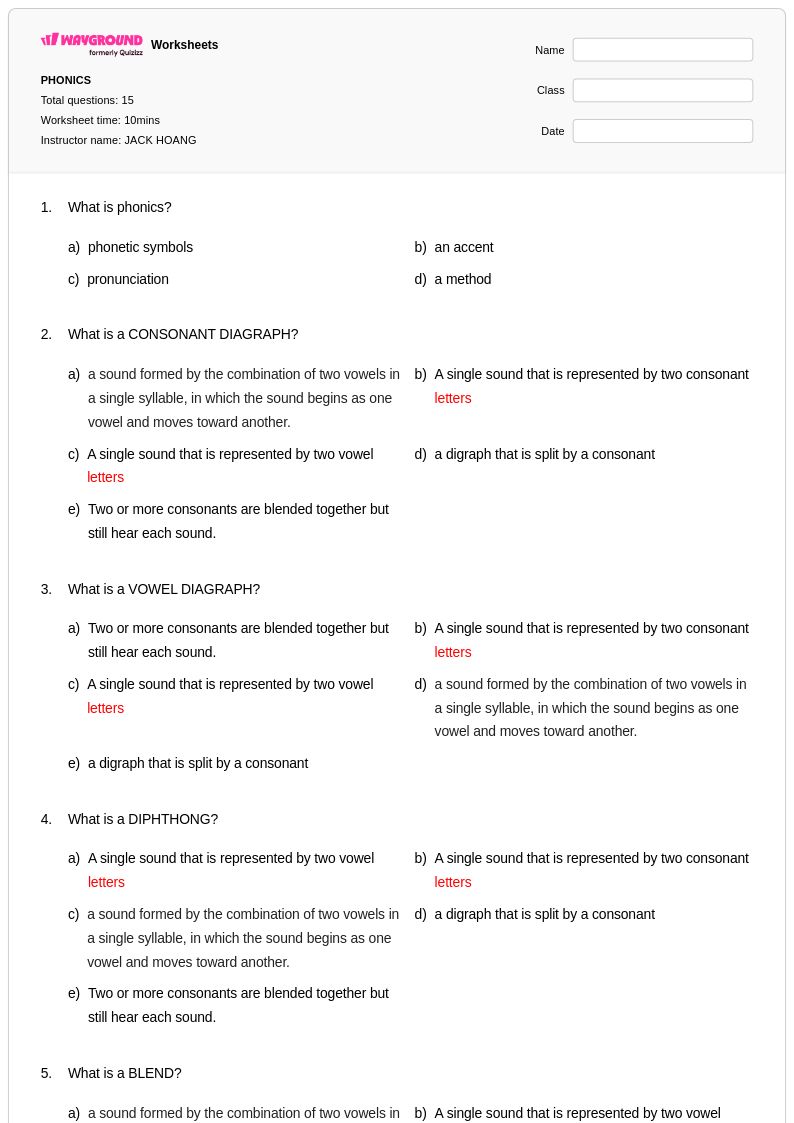
15 Q
3rd
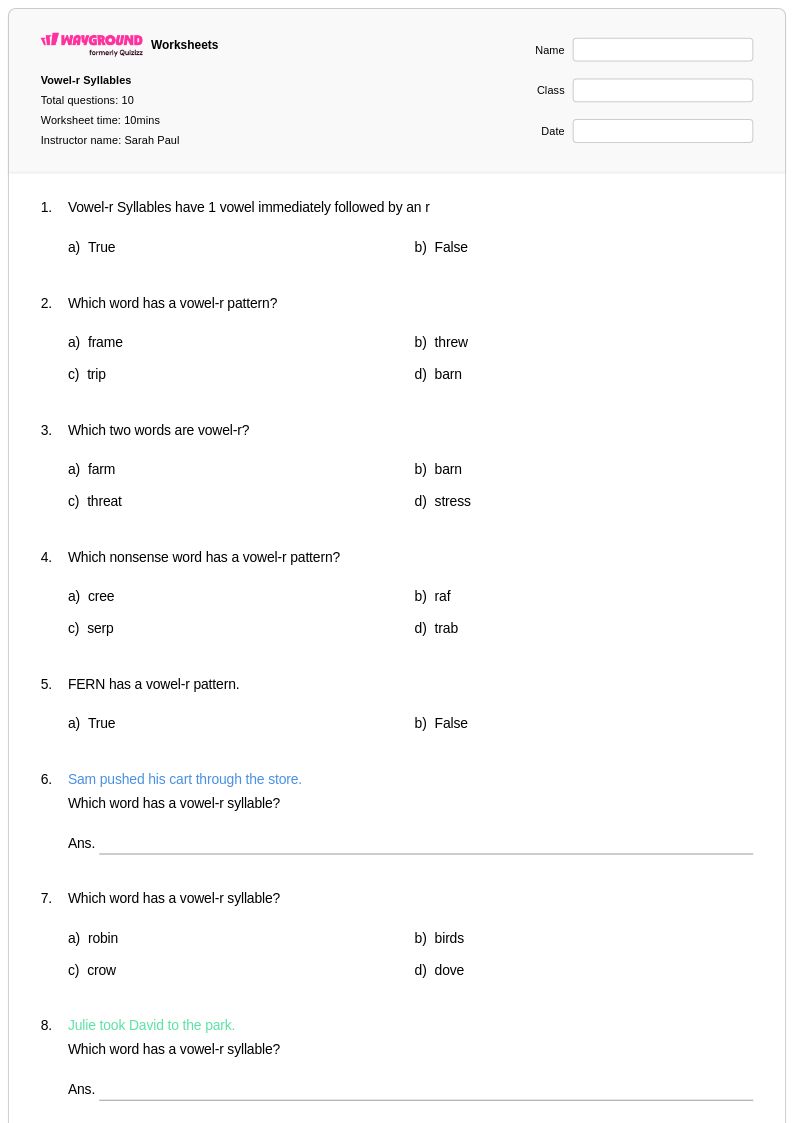
10 Q
3rd
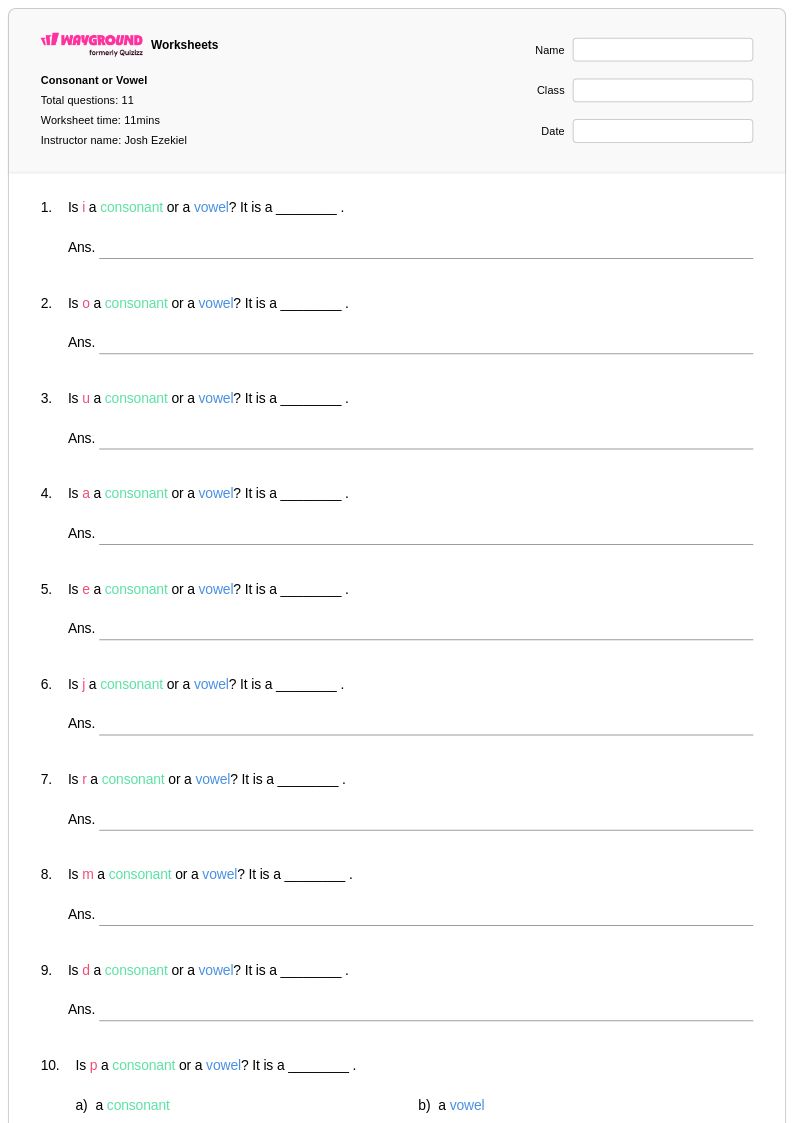
11 Q
1st - 5th
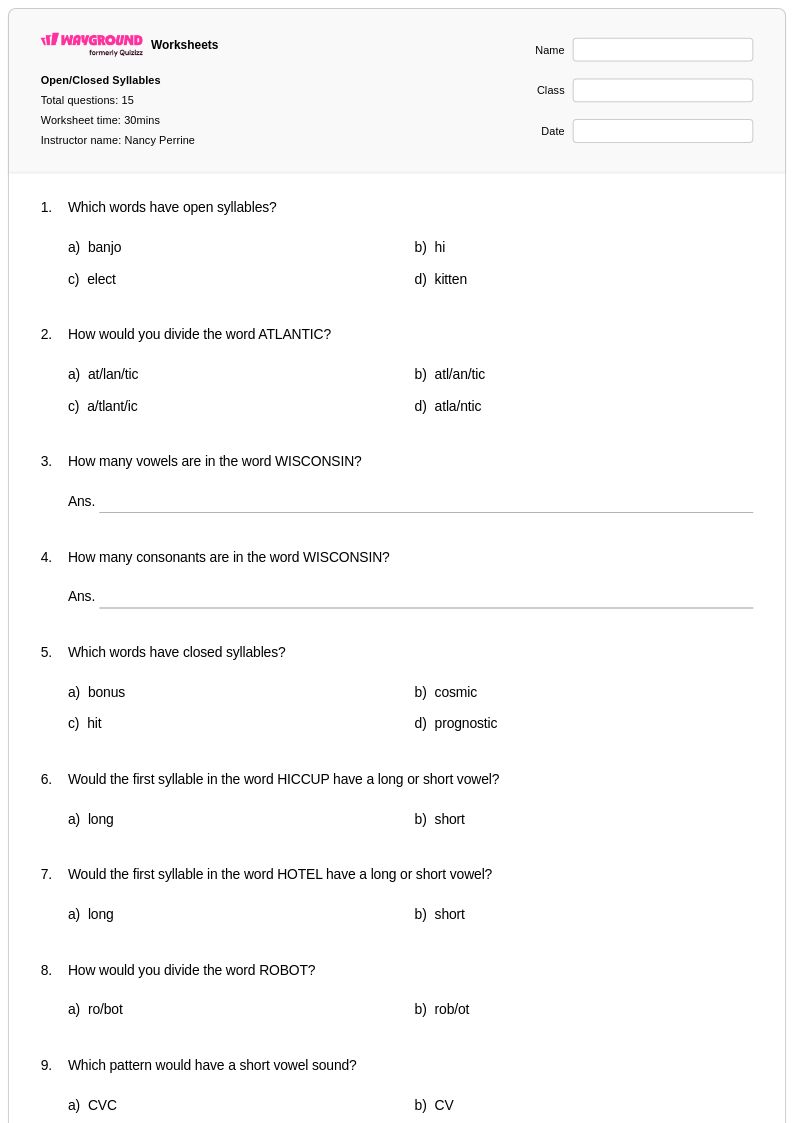
15 Q
1st - 5th
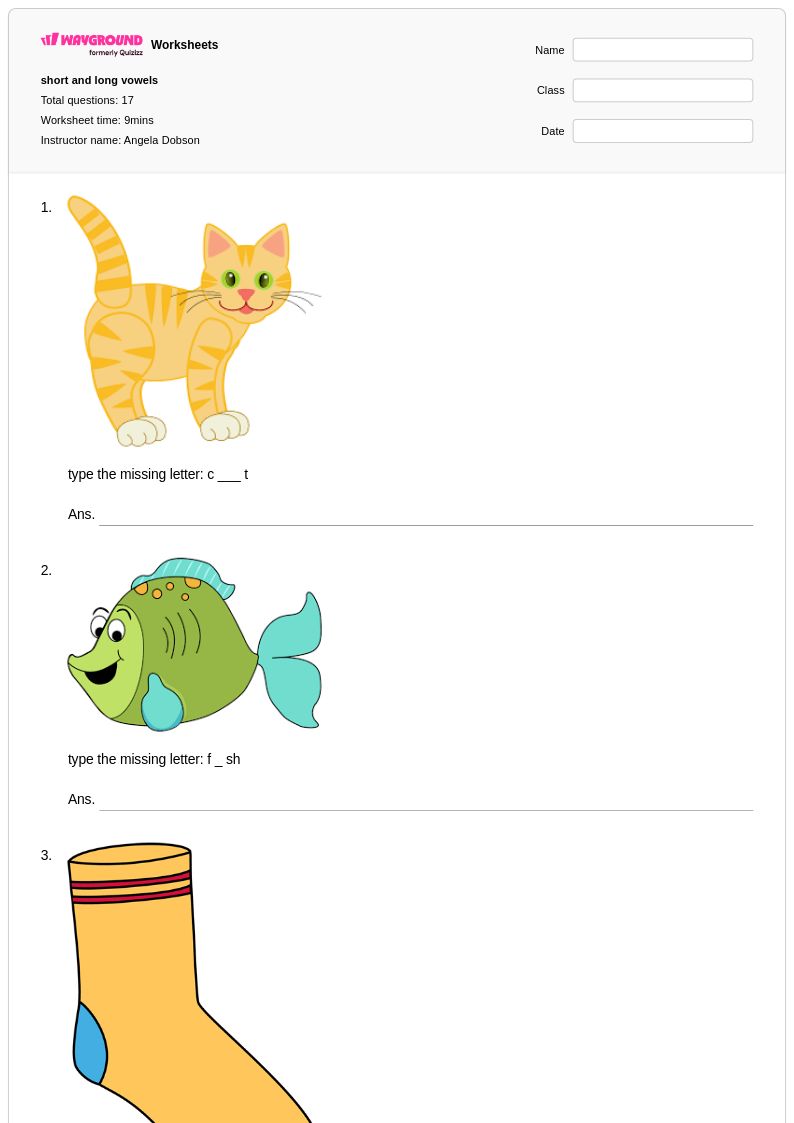
17 Q
1st - 3rd
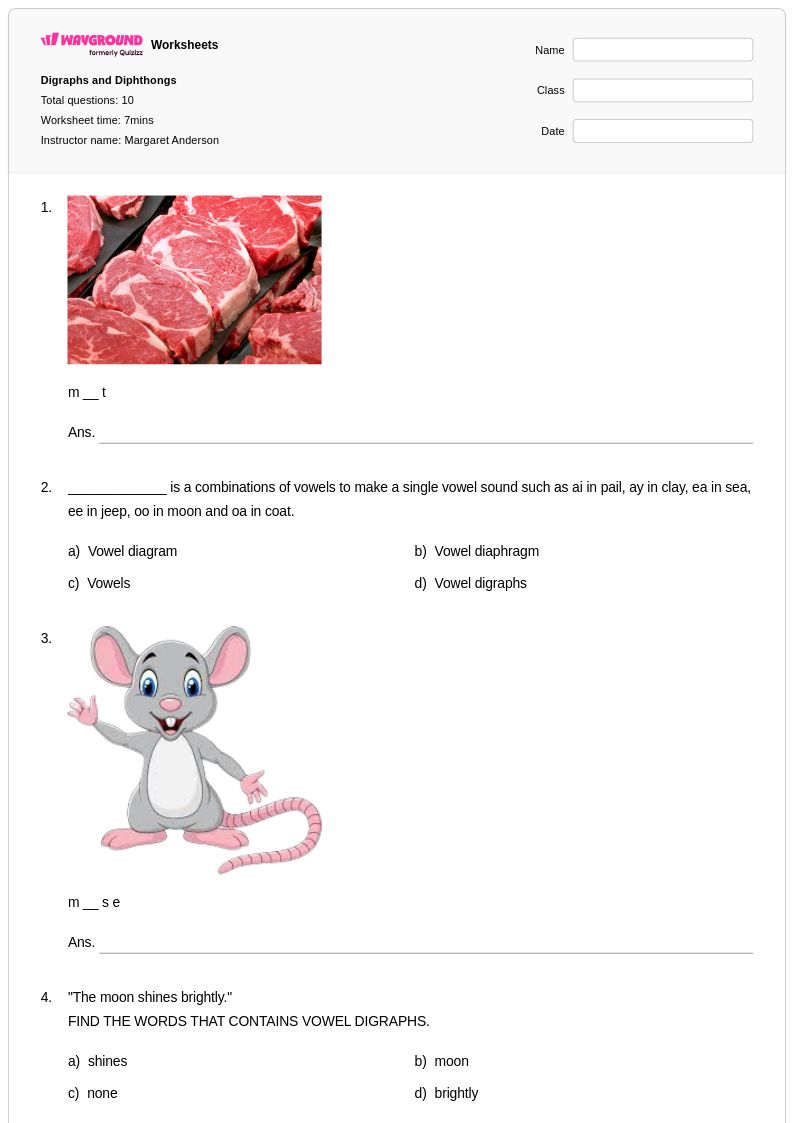
10 Q
3rd
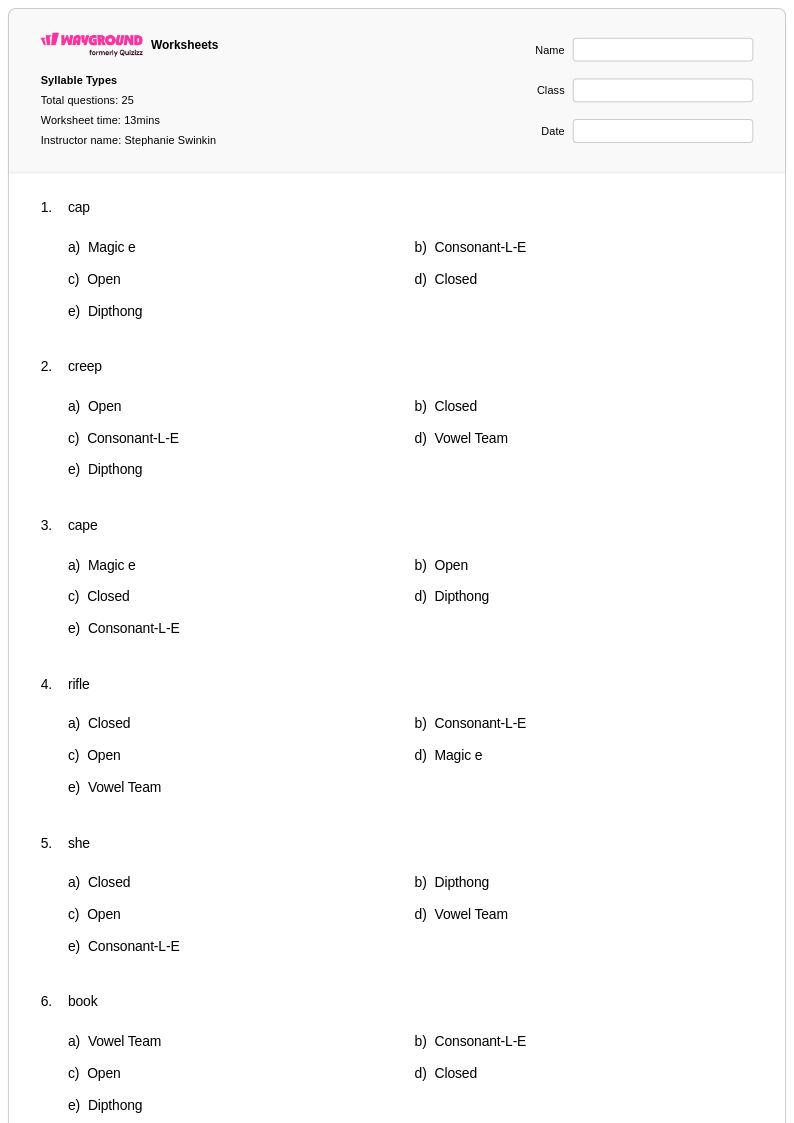
25 Q
1st - 6th
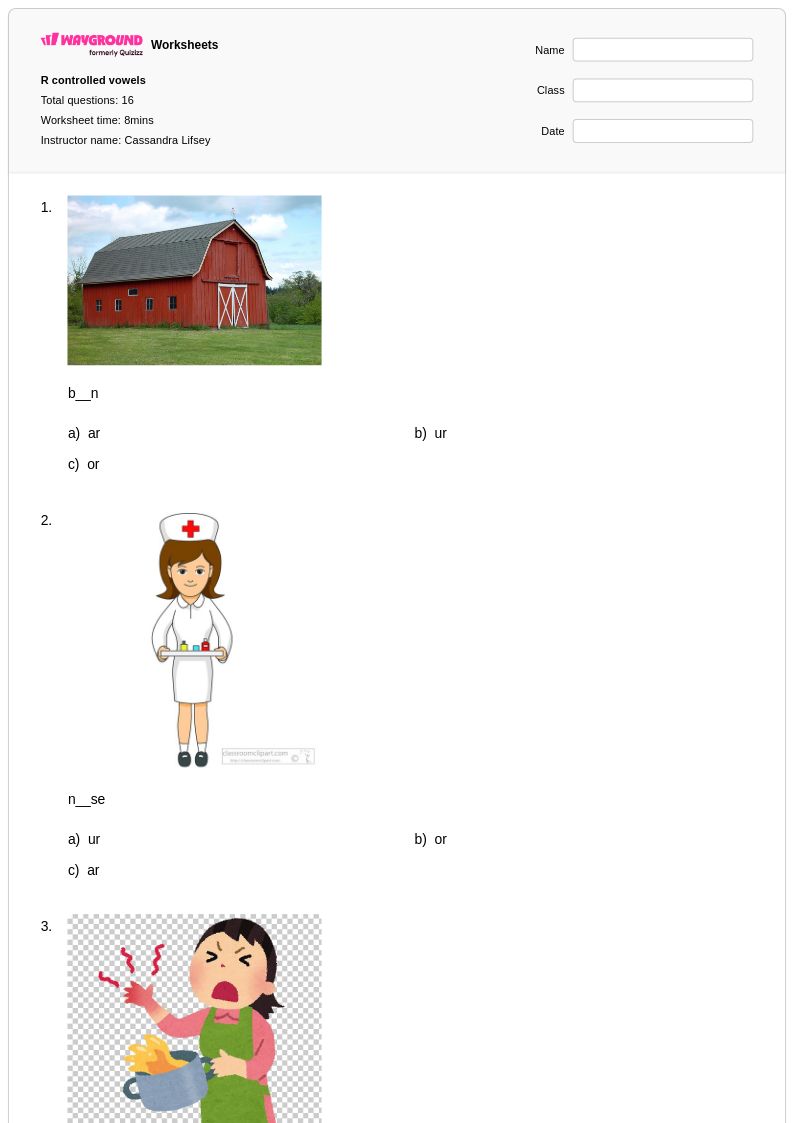
16 Q
2nd - 3rd
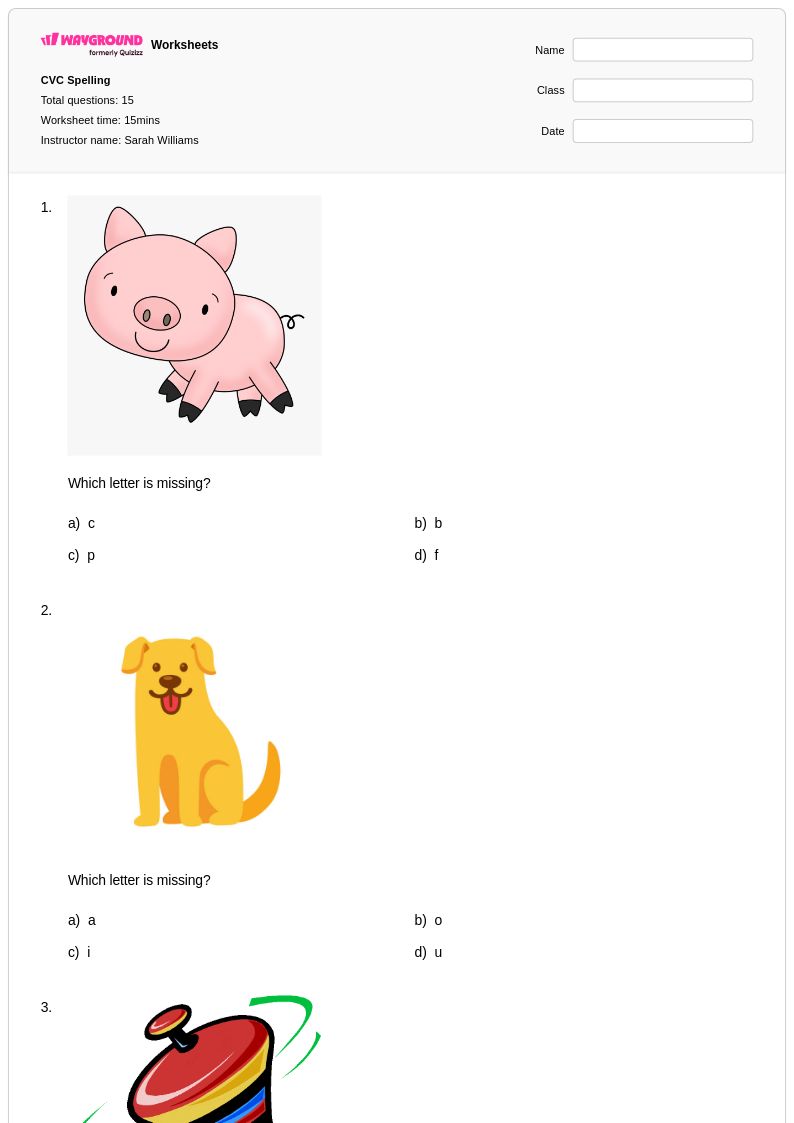
15 Q
1st - Uni
Explore Vowel-consonant Patterns Worksheets by Grades
Explore Other Subject Worksheets for year 3
Explore printable Vowel-consonant Patterns worksheets for Year 3
Vowel-consonant patterns form a crucial foundation in Year 3 phonics instruction, and Wayground's extensive worksheet collection provides comprehensive practice materials to help students master these essential spelling and reading concepts. These carefully designed worksheets guide third-grade learners through various vowel-consonant combinations including CVC (consonant-vowel-consonant), CVCE (consonant-vowel-consonant-silent e), and more complex patterns that appear frequently in multisyllabic words. Each worksheet strengthens students' ability to recognize, decode, and spell words containing these patterns while building their overall phonemic awareness and reading fluency. The practice problems systematically progress from simple pattern recognition to application in context, with answer keys provided to support both independent learning and teacher-guided instruction. Available as free printables in convenient PDF format, these resources offer structured repetition that helps solidify pattern recognition skills essential for reading advancement.
Wayground, formerly Quizizz, empowers educators with millions of teacher-created vowel-consonant pattern worksheets that can be easily accessed through robust search and filtering capabilities designed specifically for classroom needs. The platform's extensive collection aligns with phonics standards and includes differentiation tools that allow teachers to customize materials for varied skill levels within their Year 3 classrooms. Whether educators need quick remediation exercises for struggling readers, enrichment activities for advanced students, or consistent skill practice for whole-class instruction, the flexible worksheet options accommodate diverse learning objectives. Available in both printable and digital formats including downloadable PDFs, these resources streamline lesson planning while providing the repetitive practice necessary for students to internalize vowel-consonant pattern recognition. Teachers can efficiently select from thousands of professionally designed worksheets to create targeted instruction that addresses specific learning gaps or reinforces newly introduced phonics concepts.
FAQs
How do I teach vowel-consonant patterns to early readers?
What exercises help students practice vowel-consonant patterns?
What mistakes do students commonly make with vowel-consonant patterns?
How can I use vowel-consonant pattern worksheets to support struggling readers?
How do I use Wayground's vowel-consonant pattern worksheets in my classroom?
At what grade level should students learn vowel-consonant patterns?