Free Printable Phoneme Manipulation Worksheets for Year 3
Year 3 phoneme manipulation worksheets from Wayground help students practice blending, segmenting, and substituting sounds through engaging printables with answer keys for effective phonics skill development.
Explore printable Phoneme Manipulation worksheets for Year 3
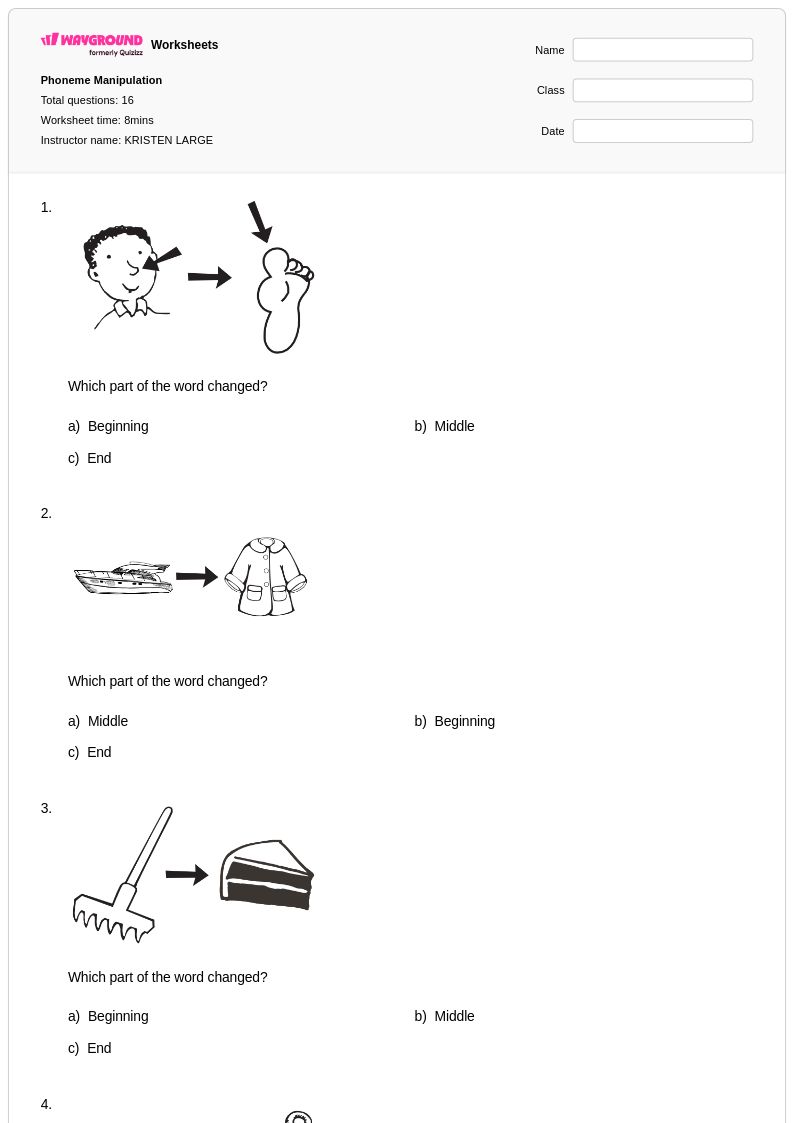
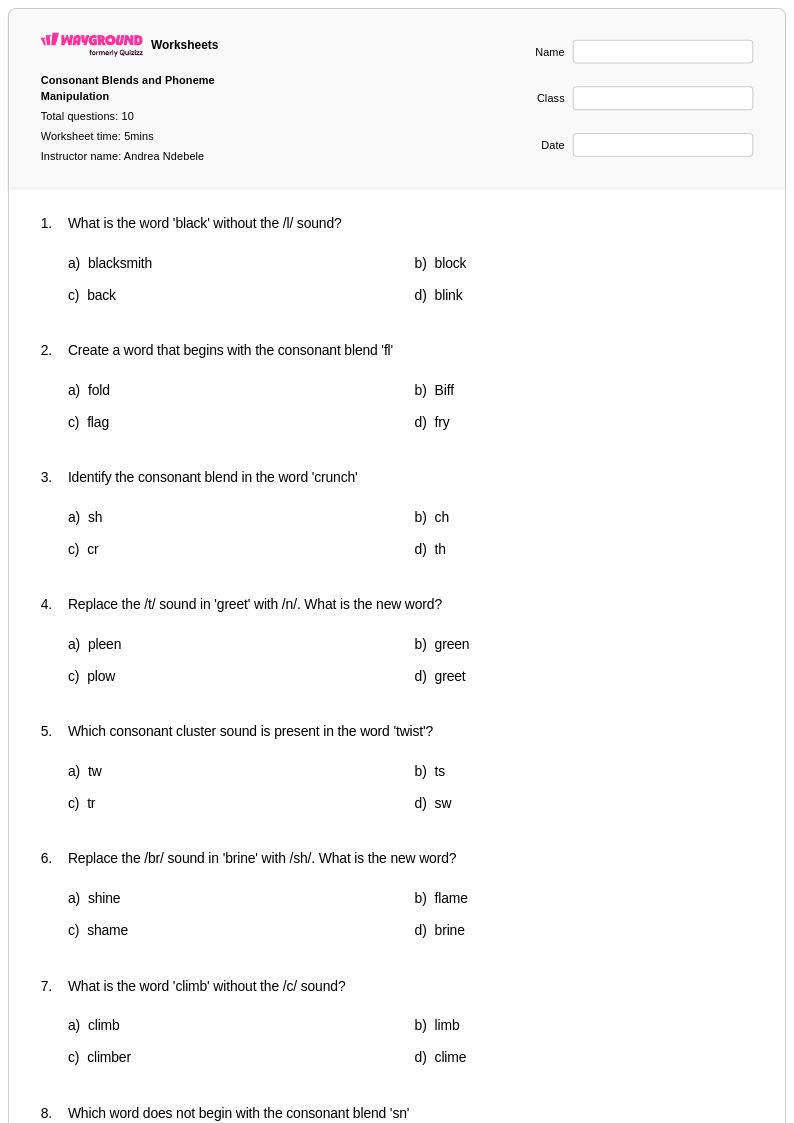
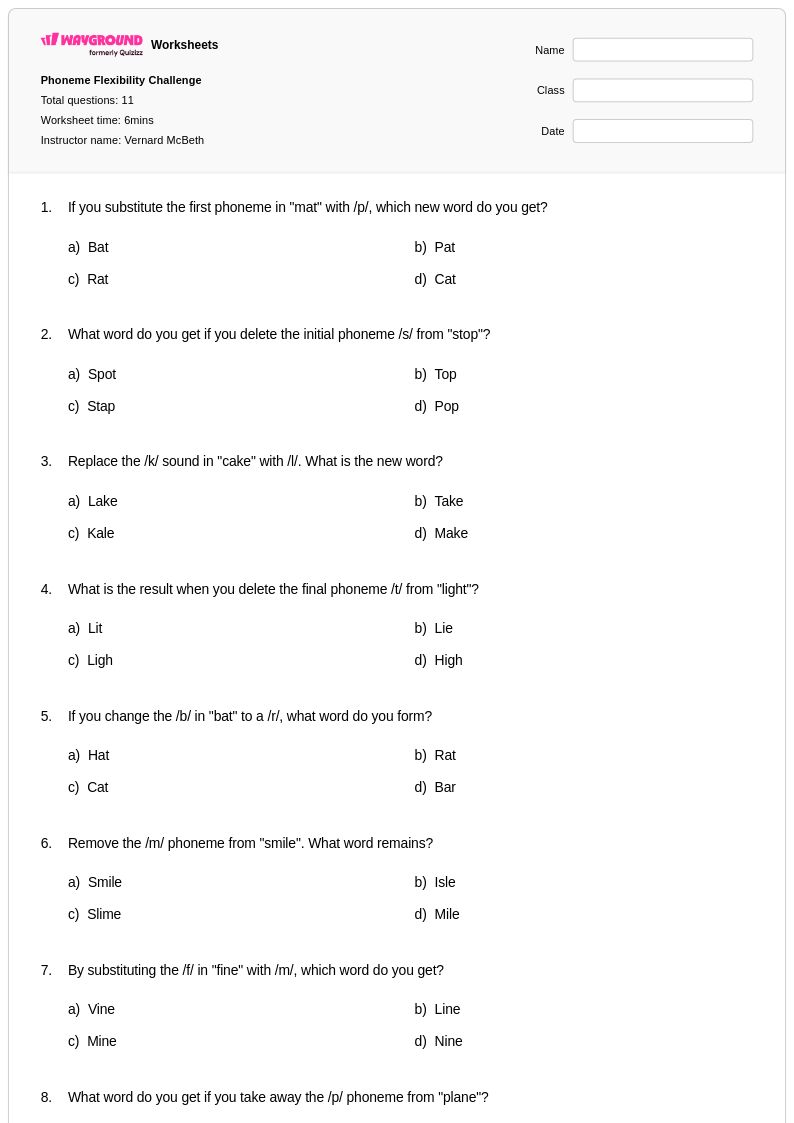
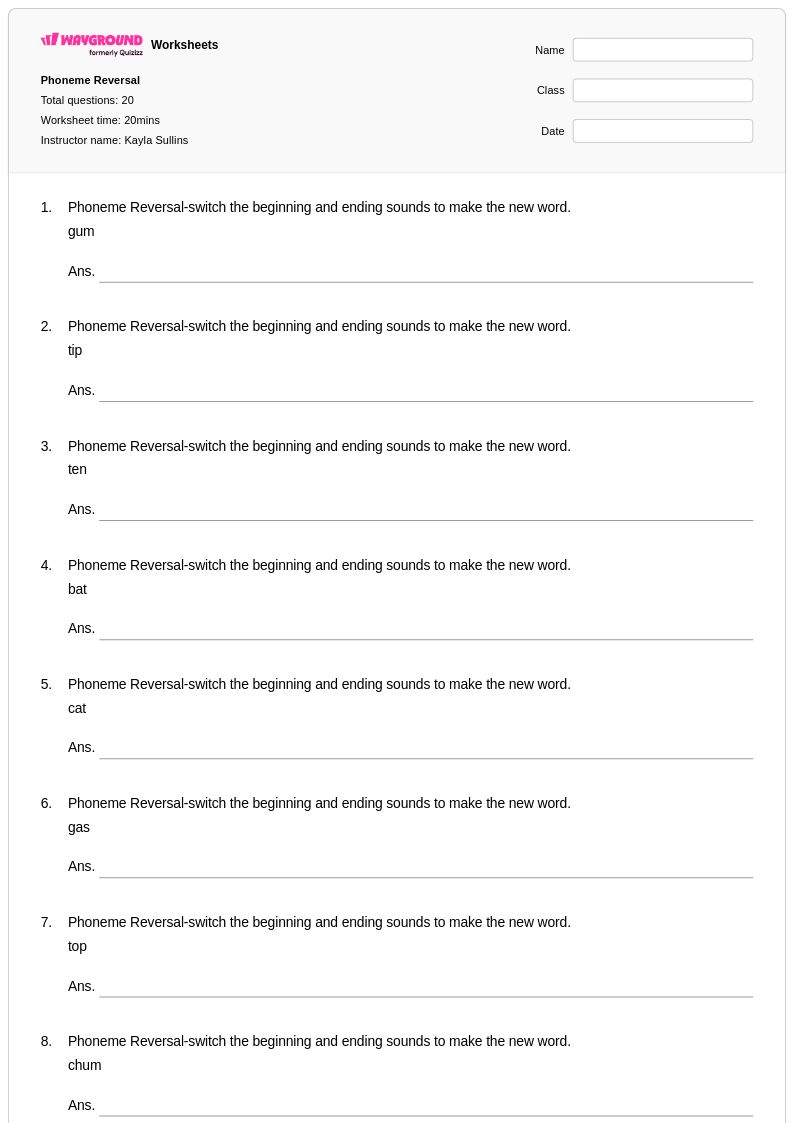
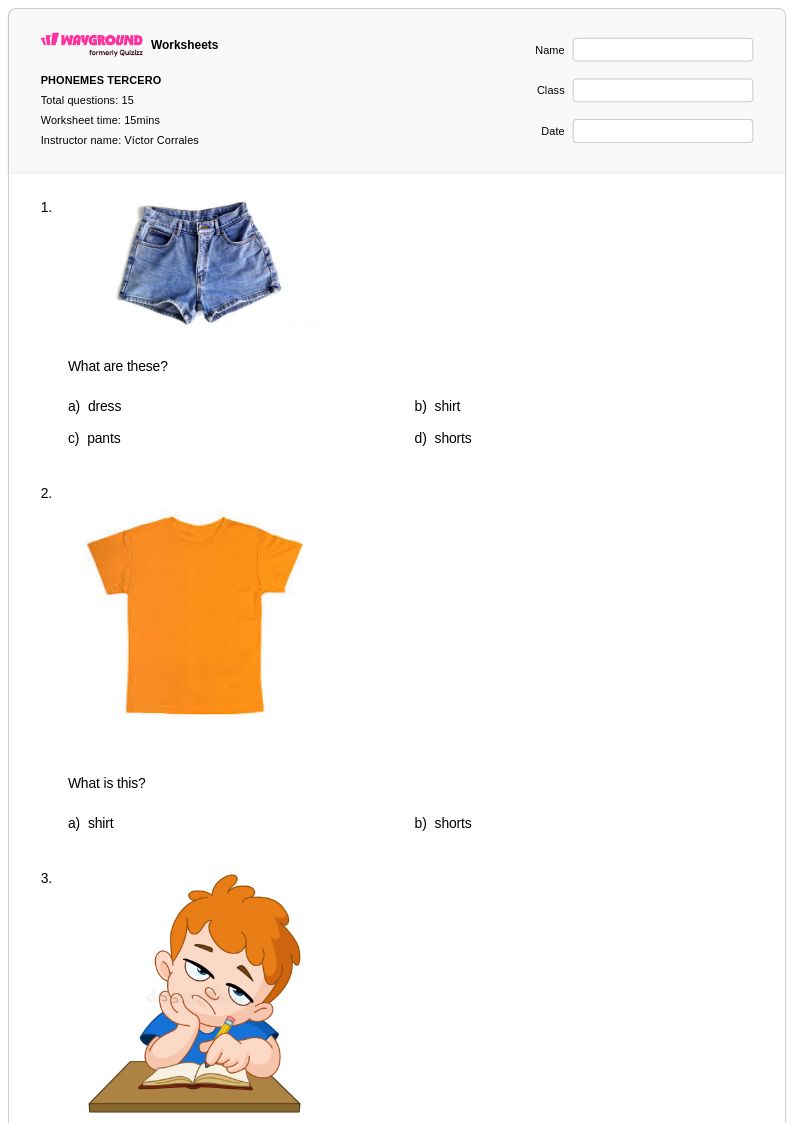
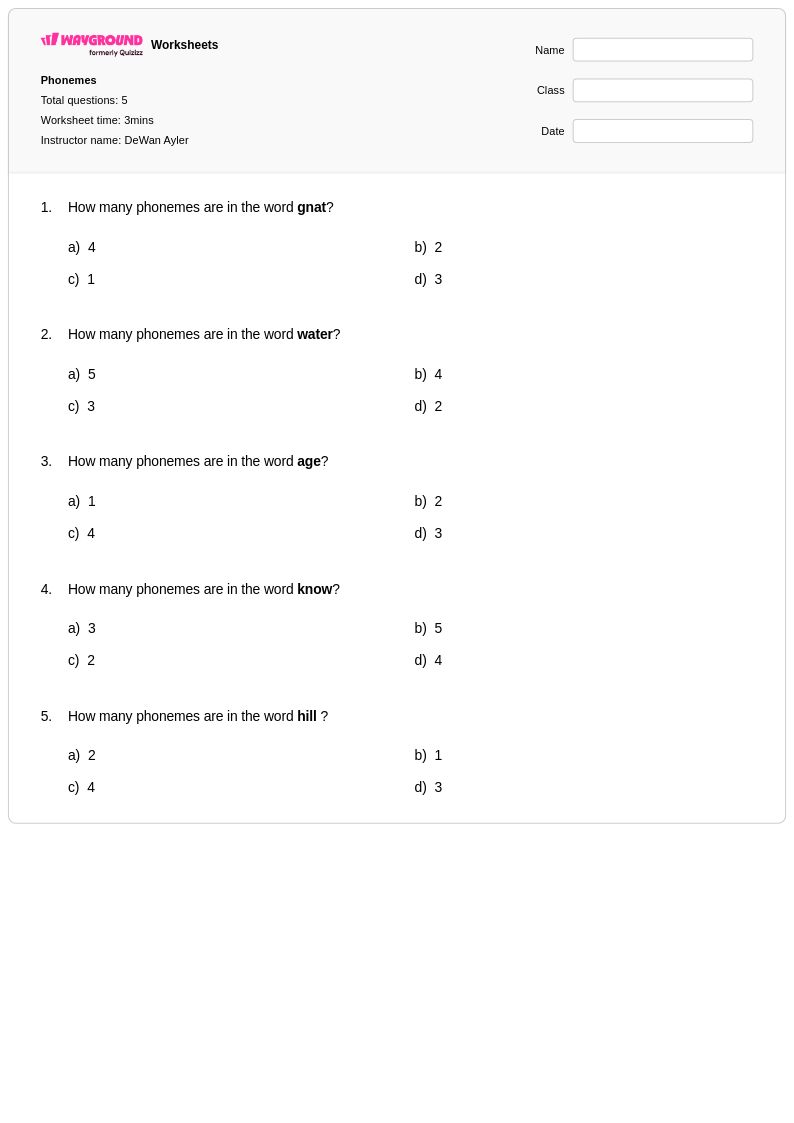
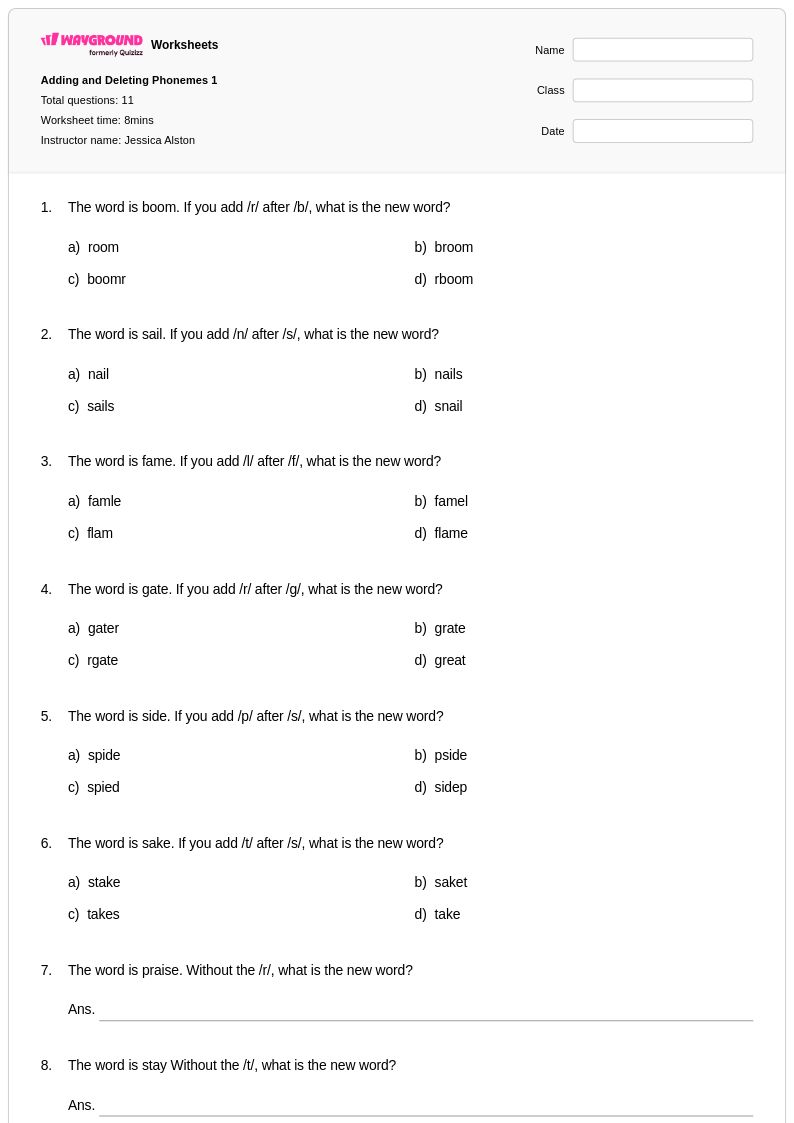
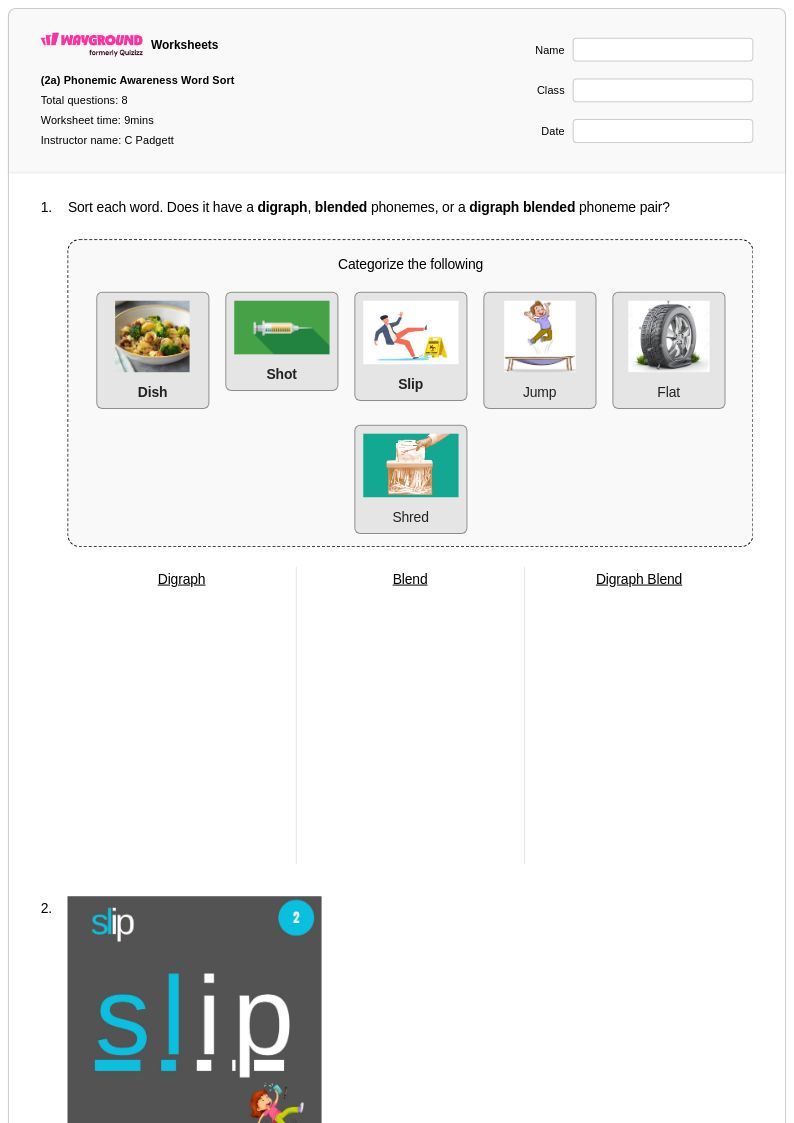
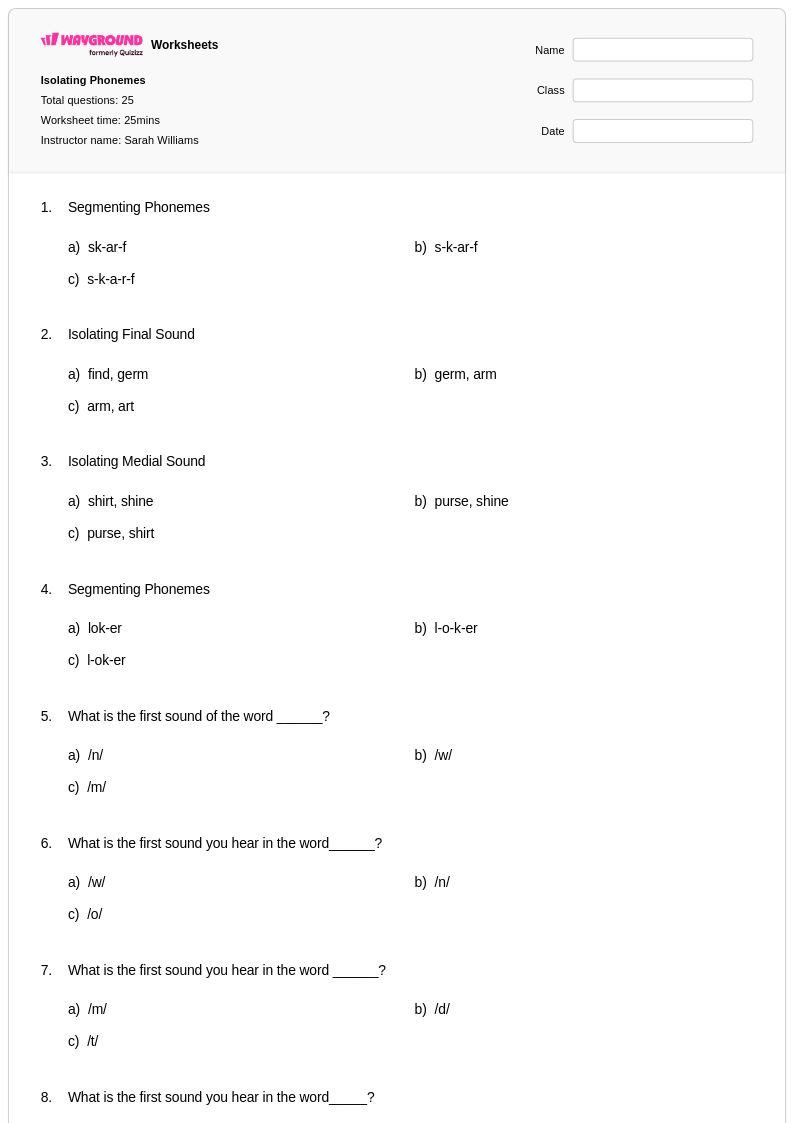
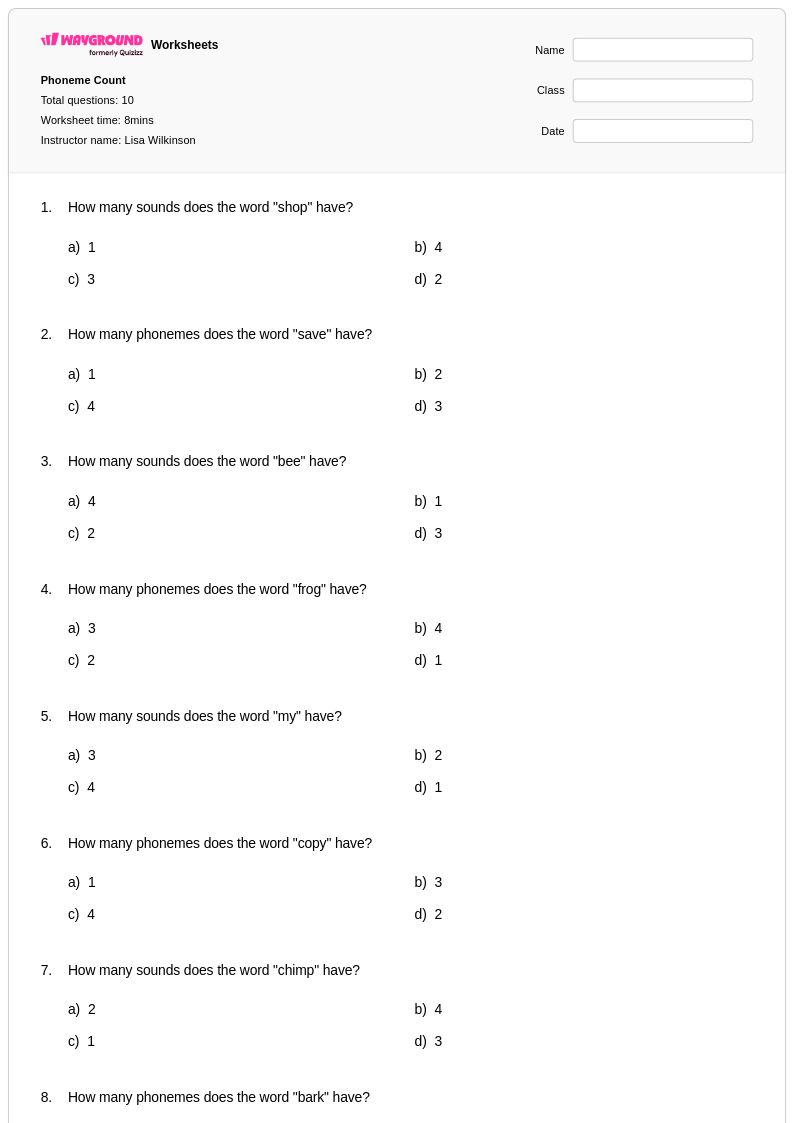
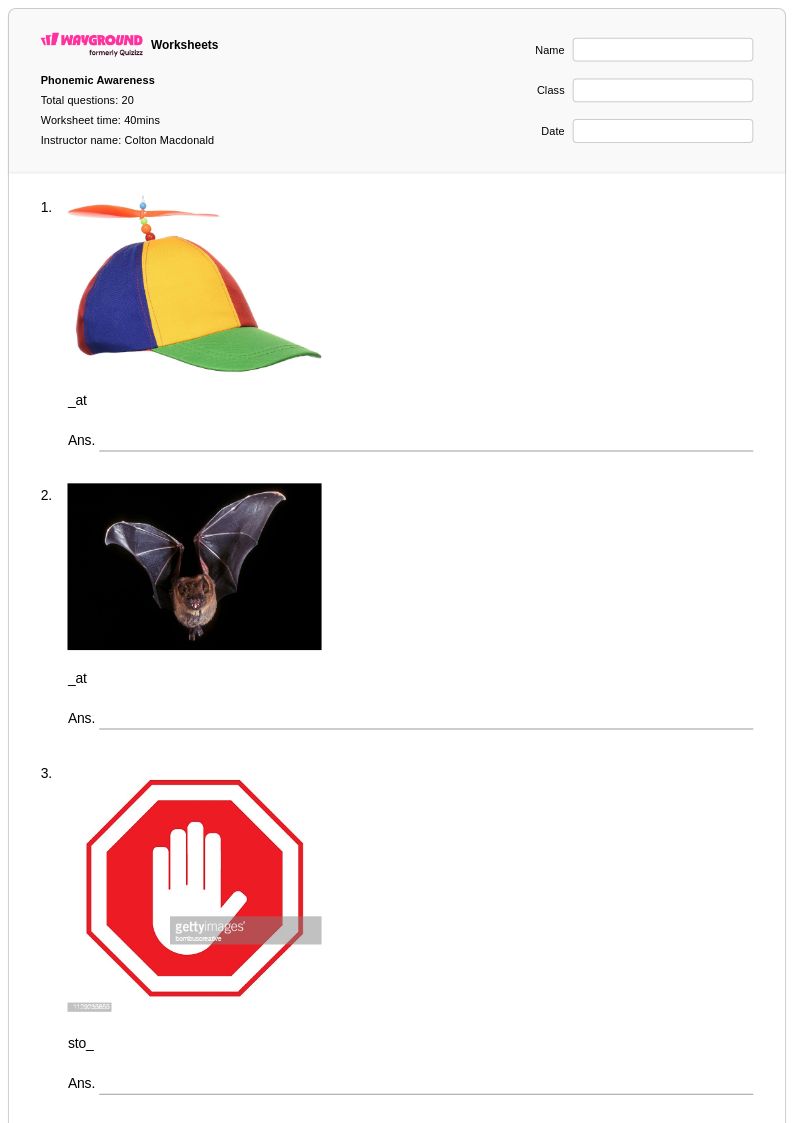
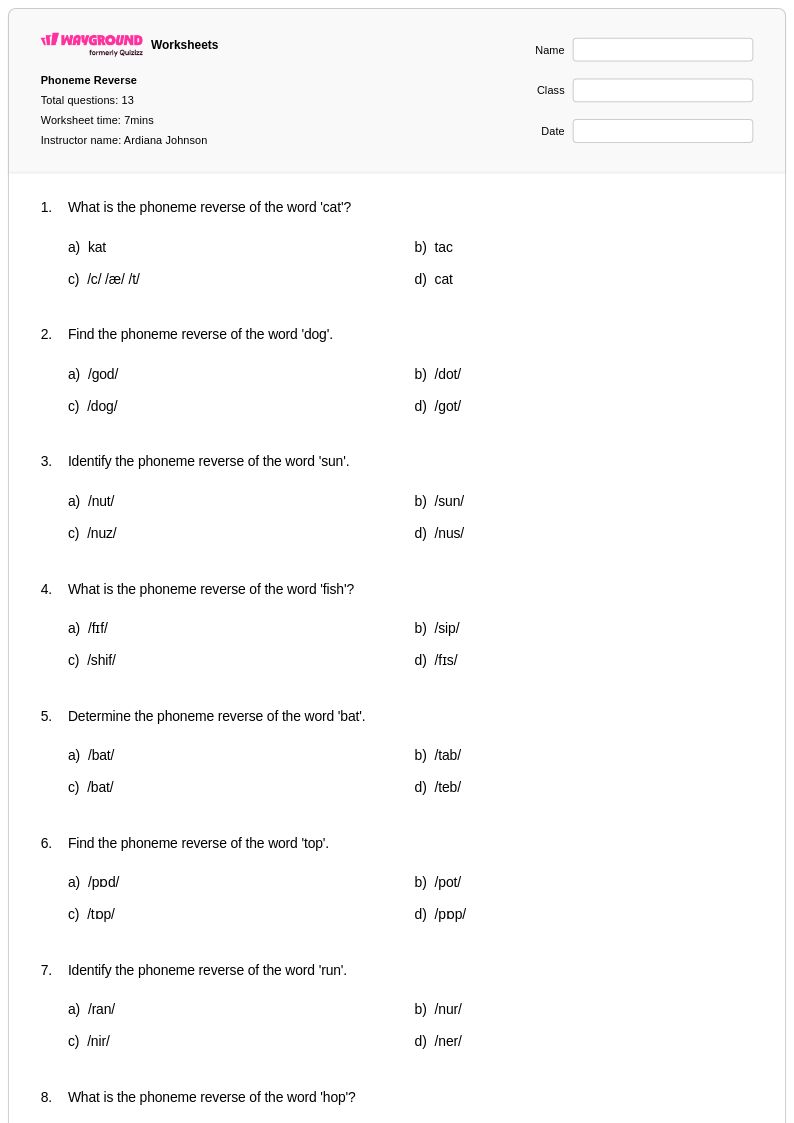
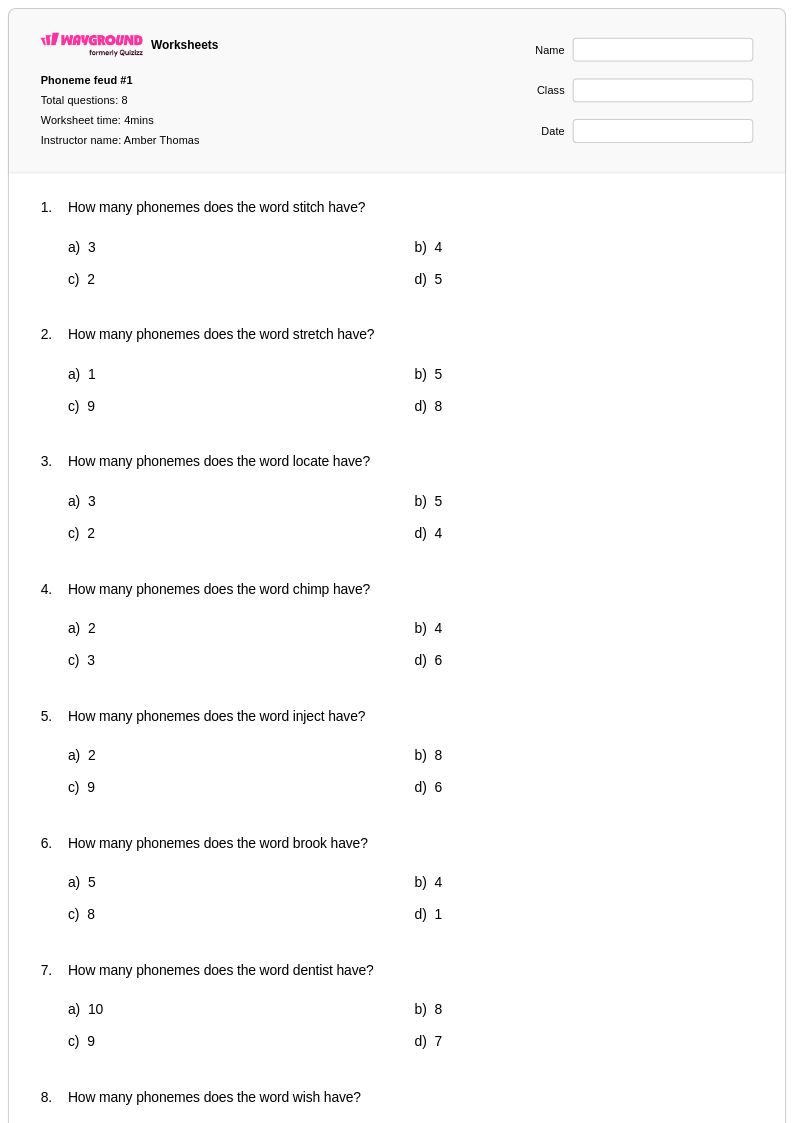
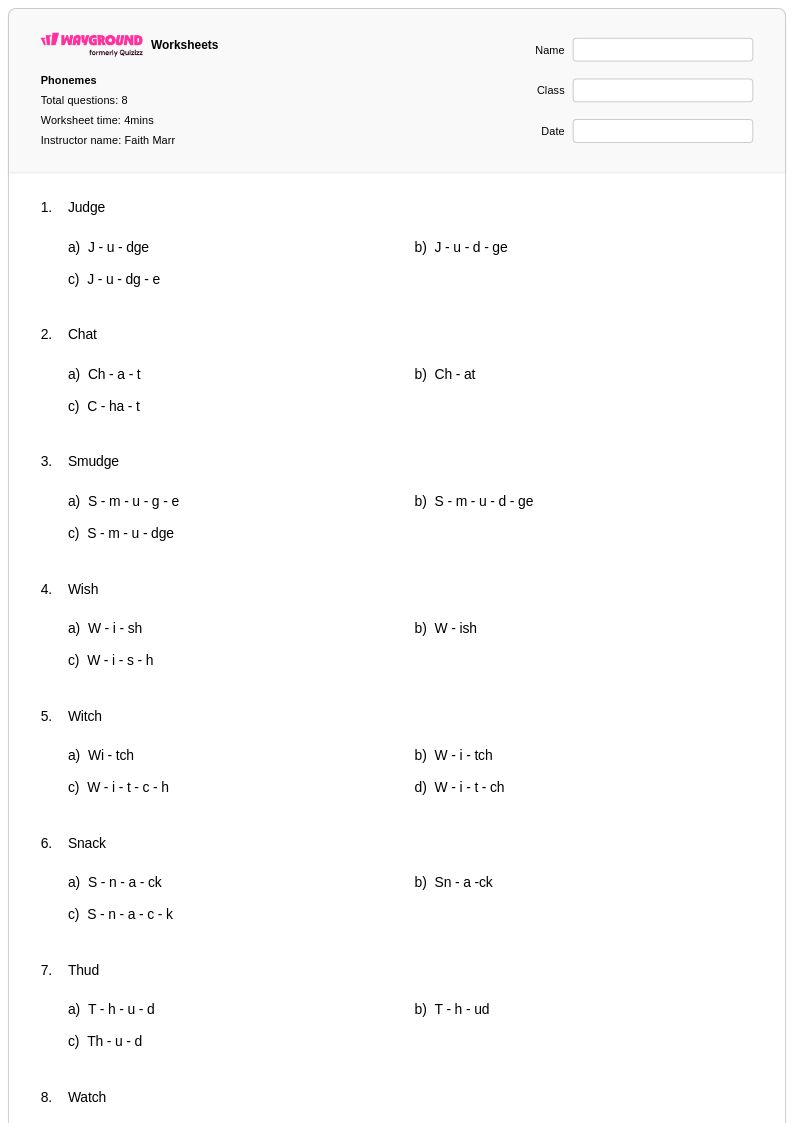
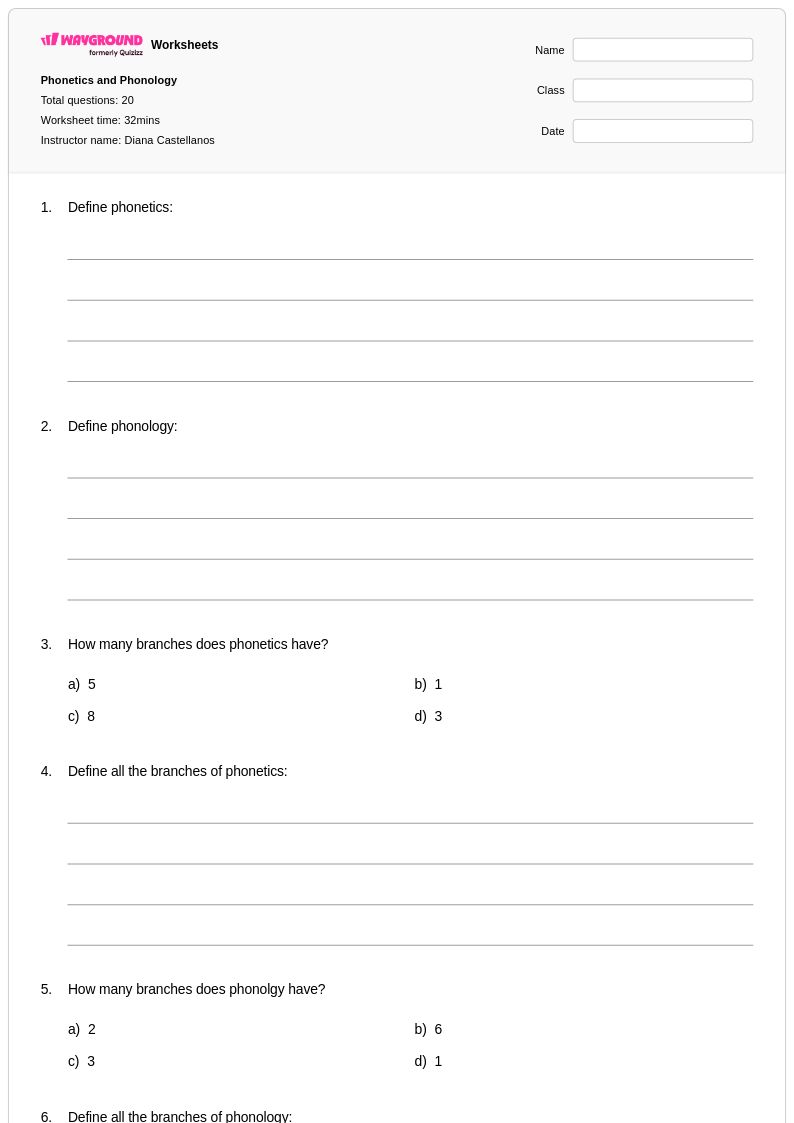
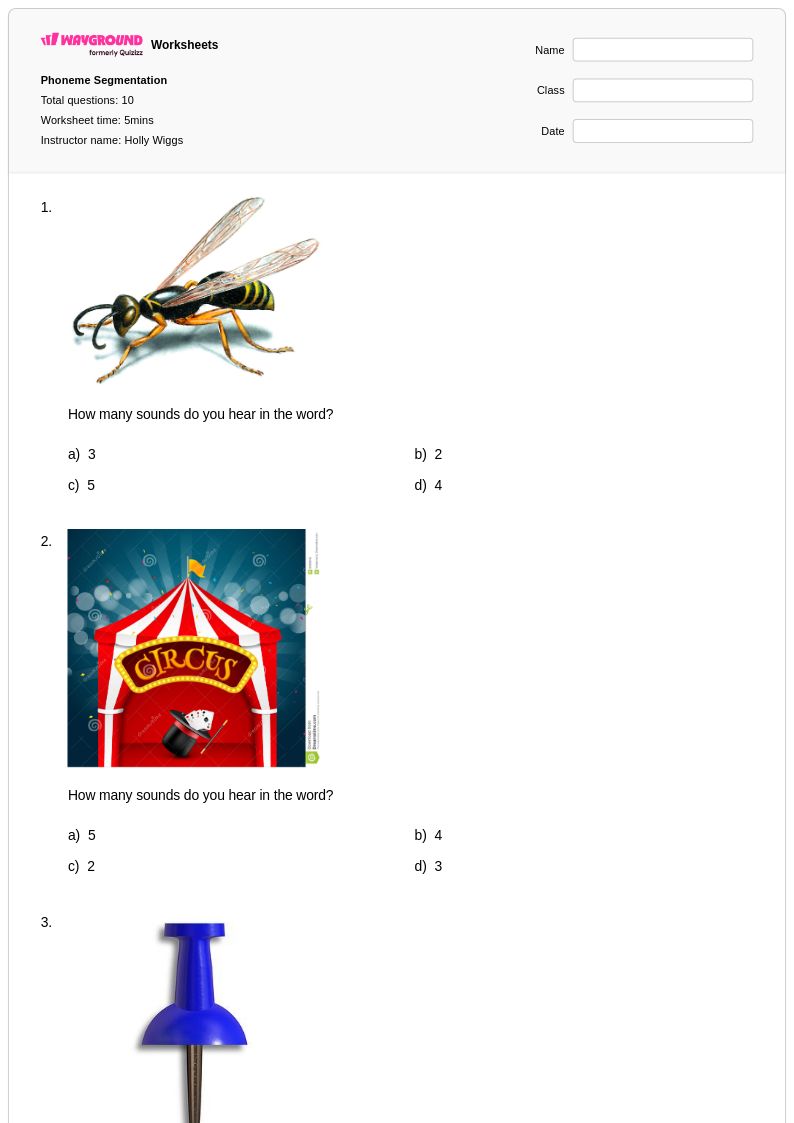
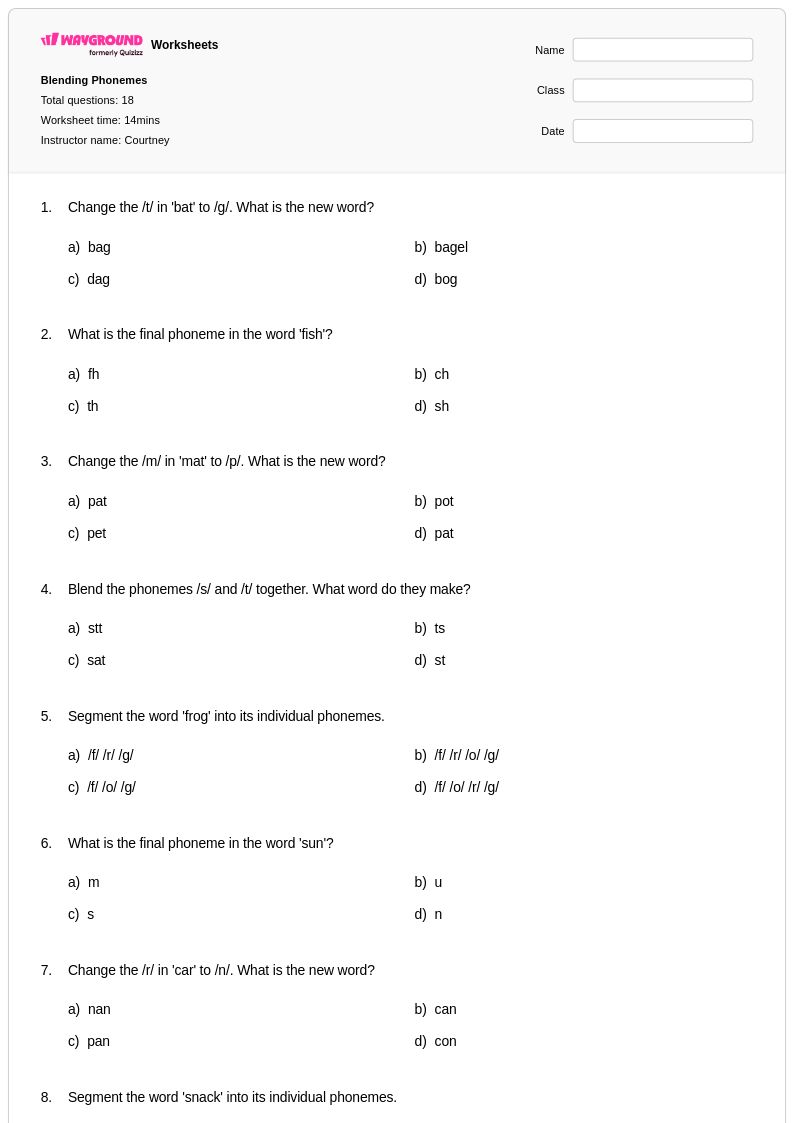
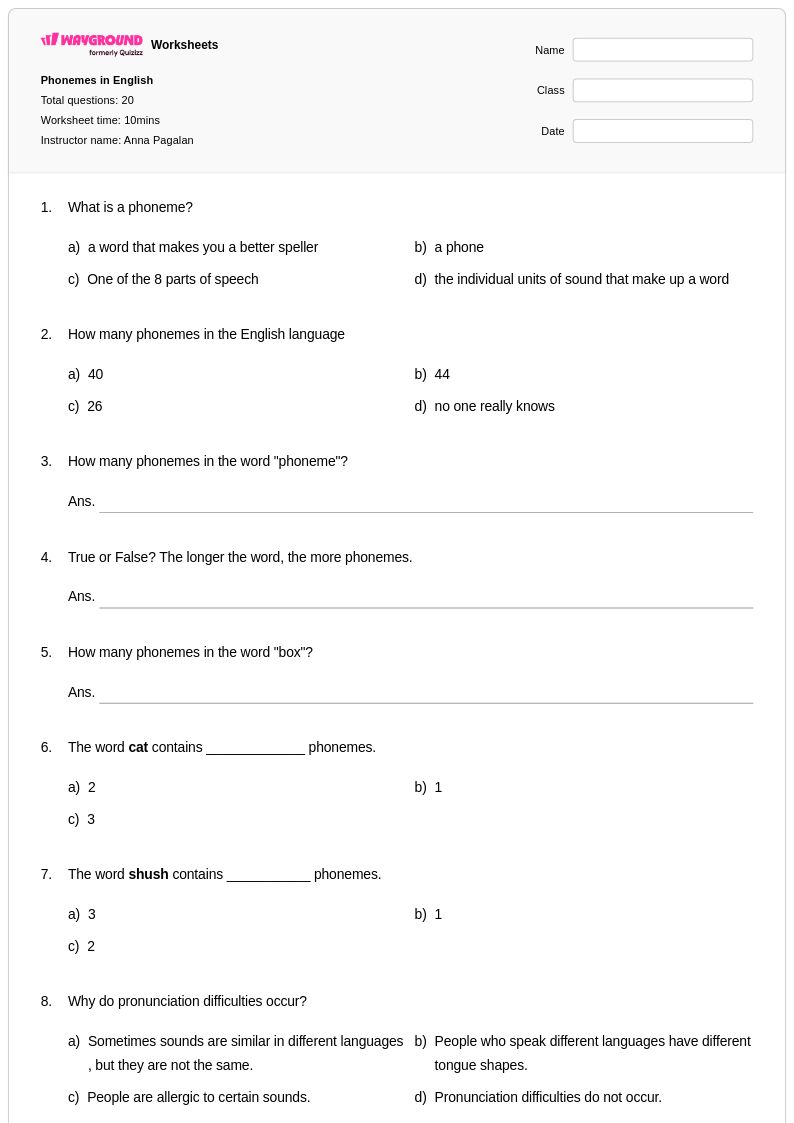
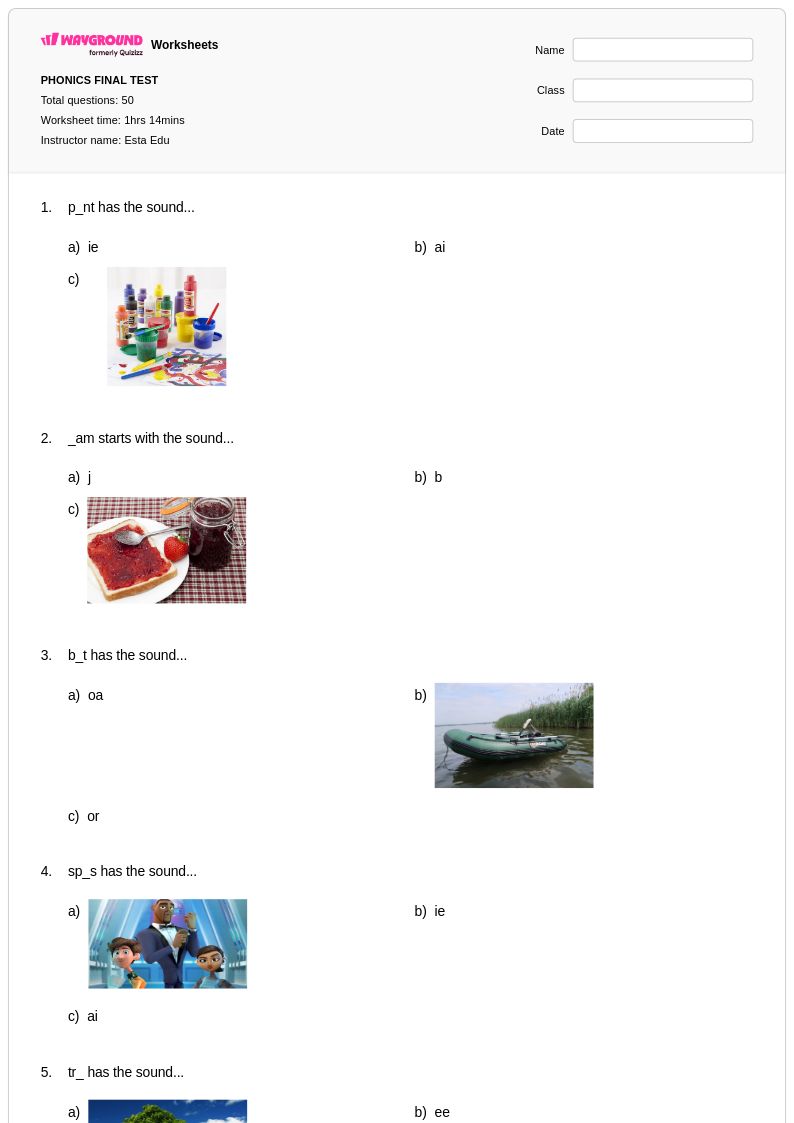
Phoneme manipulation worksheets for Year 3 students through Wayground (formerly Quizizz) provide targeted practice in the critical skill of consciously changing individual sounds within words to create new words. These comprehensive resources strengthen students' phonological awareness by focusing on substitution, deletion, and addition of phonemes at the beginning, middle, and end of words. The carefully designed practice problems guide third graders through systematic exercises where they might change the /k/ sound in "cat" to /b/ to make "bat," or remove the /s/ sound from "stop" to create "top." Each worksheet collection includes detailed answer keys and is available as free printables in PDF format, allowing educators to seamlessly integrate phoneme manipulation activities into their literacy instruction while supporting students who need additional reinforcement in this foundational reading skill.
Wayground's extensive library offers millions of teacher-created phoneme manipulation resources specifically designed for Year 3 learners, with robust search and filtering capabilities that allow educators to quickly locate materials aligned with specific learning standards and student needs. The platform's differentiation tools enable teachers to customize worksheets for various skill levels within their classroom, while the flexible format options provide both printable PDF versions for traditional paper-and-pencil practice and digital formats for interactive learning experiences. These comprehensive collections support instructional planning by offering ready-to-use materials for whole group lessons, small group intervention, and independent practice, while also serving as valuable resources for remediation activities for struggling readers and enrichment opportunities for advanced students ready to tackle more complex phoneme manipulation challenges.
FAQs
How do I teach phoneme manipulation to early readers?
Phoneme manipulation is best taught through a gradual release model that begins with phoneme isolation and blending before advancing to deletion and substitution. Start with oral, hands-on tasks such as using counters to represent sounds before introducing written practice. Connecting each manipulation task explicitly to real words students already know helps build the auditory processing skills that transfer directly to reading and spelling.
What is the difference between phoneme deletion, substitution, and addition?
Phoneme deletion asks students to remove a sound from a word and identify what remains (e.g., say 'cat' without the /k/ = 'at'). Phoneme substitution replaces one sound with another (e.g., change the /k/ in 'cat' to /b/ = 'bat'). Phoneme addition inserts a new sound into an existing word (e.g., add /s/ to the beginning of 'top' = 'stop'). All three tasks require students to mentally segment and reconstruct spoken words, which strengthens phonological awareness at the deepest level.
What exercises help students practice phoneme manipulation?
Structured worksheet practice that progresses from basic phoneme identification to more complex deletion and substitution tasks is highly effective for building phoneme manipulation skills. Exercises that ask students to manipulate sounds within real, decodable words give the practice immediate relevance to reading and spelling. Systematic repetition across multiple word types and positions (initial, medial, final sounds) ensures students develop flexible phonological processing rather than memorizing isolated patterns.
What mistakes do students commonly make with phoneme manipulation?
A frequent error is confusing phonemes with letters, particularly for students who have begun formal reading instruction — for example, treating the two letters in 'ch' as two separate sounds. Students also commonly struggle with medial vowel manipulation, since vowel sounds are harder to isolate than consonants. Another common misconception is deleting a syllable rather than a single phoneme, which indicates the student has not yet fully segmented the word at the sound level.
How can I differentiate phoneme manipulation practice for students at different skill levels?
Students who are still developing phonological awareness may need to begin with two-phoneme words and simpler CVC patterns before attempting deletion or substitution in blends. More advanced students can practice manipulating sounds in multisyllabic words or within consonant clusters. On Wayground, teachers can apply individual accommodations such as Read Aloud support for students who benefit from hearing questions spoken aloud, and reduced answer choices to lower cognitive load for students who need additional scaffolding — without other students being aware of those adjustments.
How do I use Wayground's phoneme manipulation worksheets in my classroom?
Wayground's phoneme manipulation worksheets are available as printable PDFs for traditional classroom use and in digital formats for technology-integrated or remote learning environments. Teachers can also host the worksheets as a quiz directly on Wayground, enabling real-time student responses and automatic scoring. Answer keys are included with every worksheet, supporting both independent student practice and efficient instructional assessment.