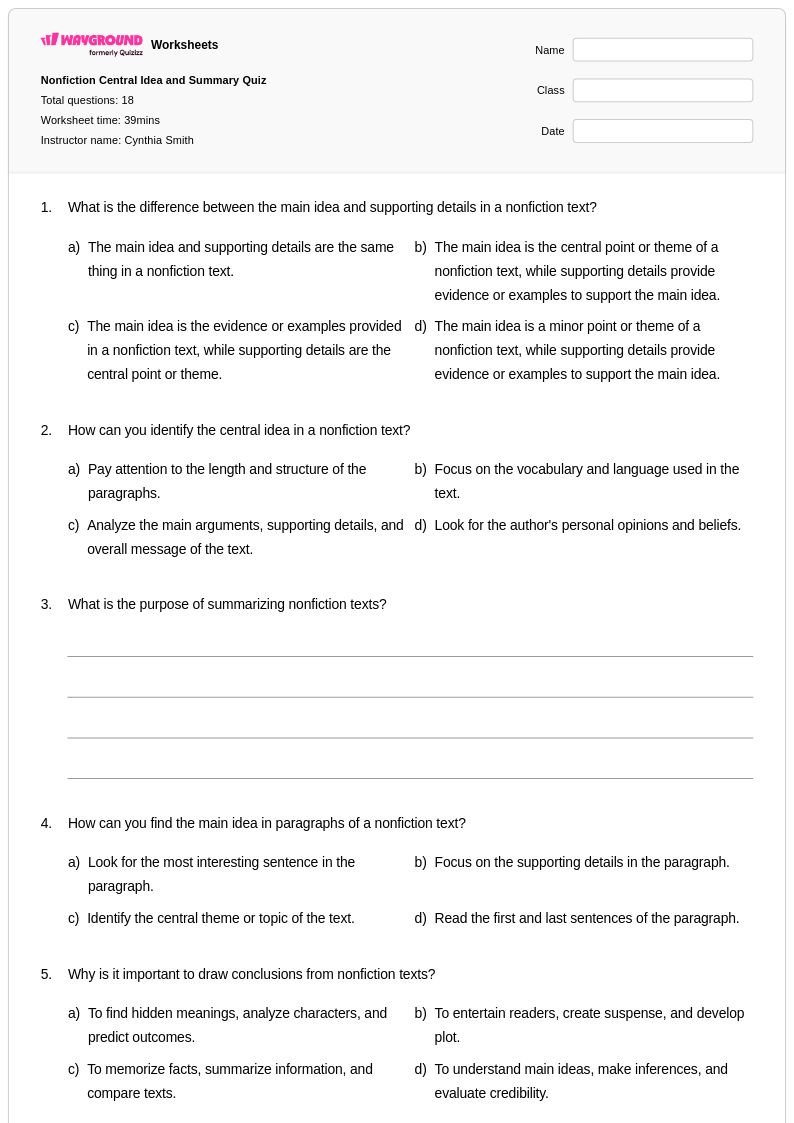
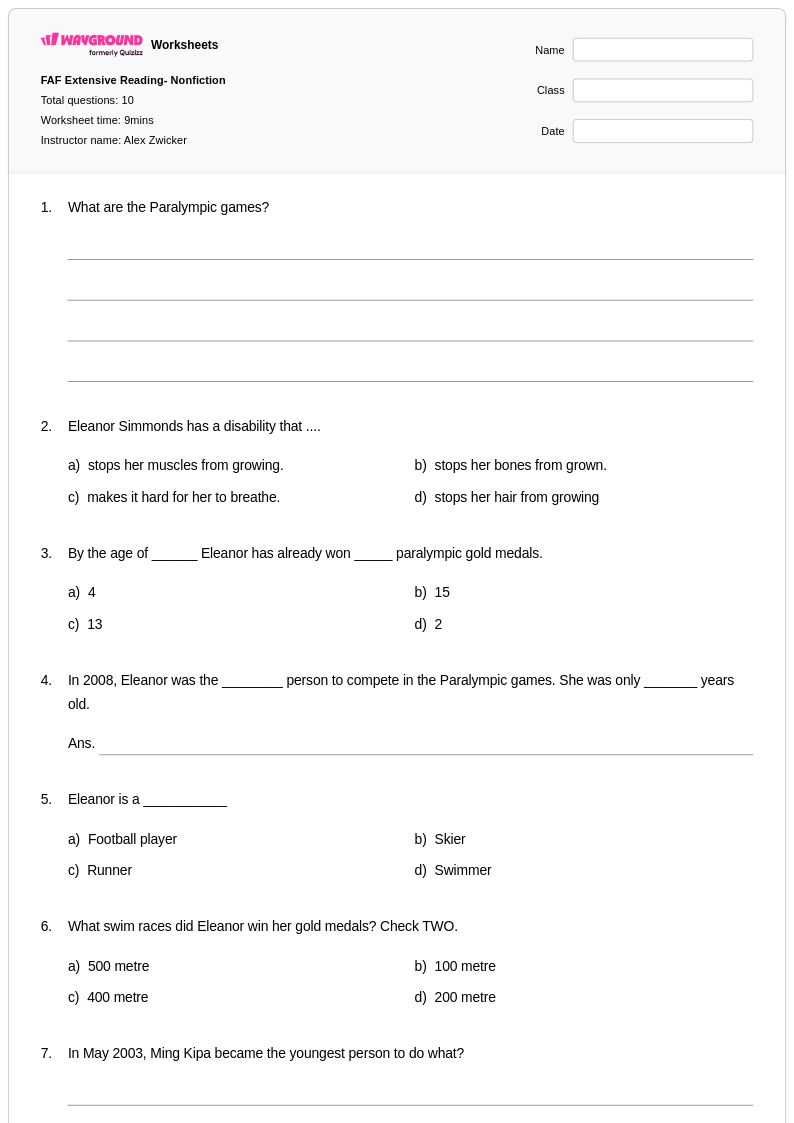
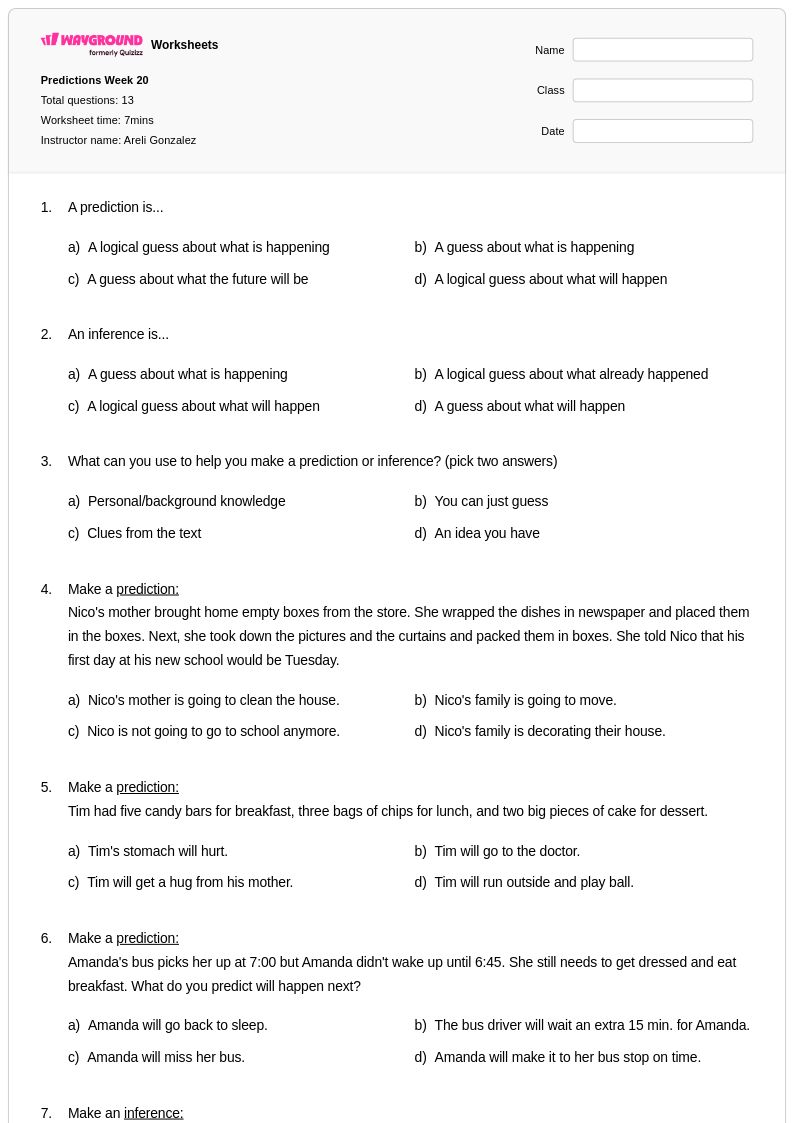
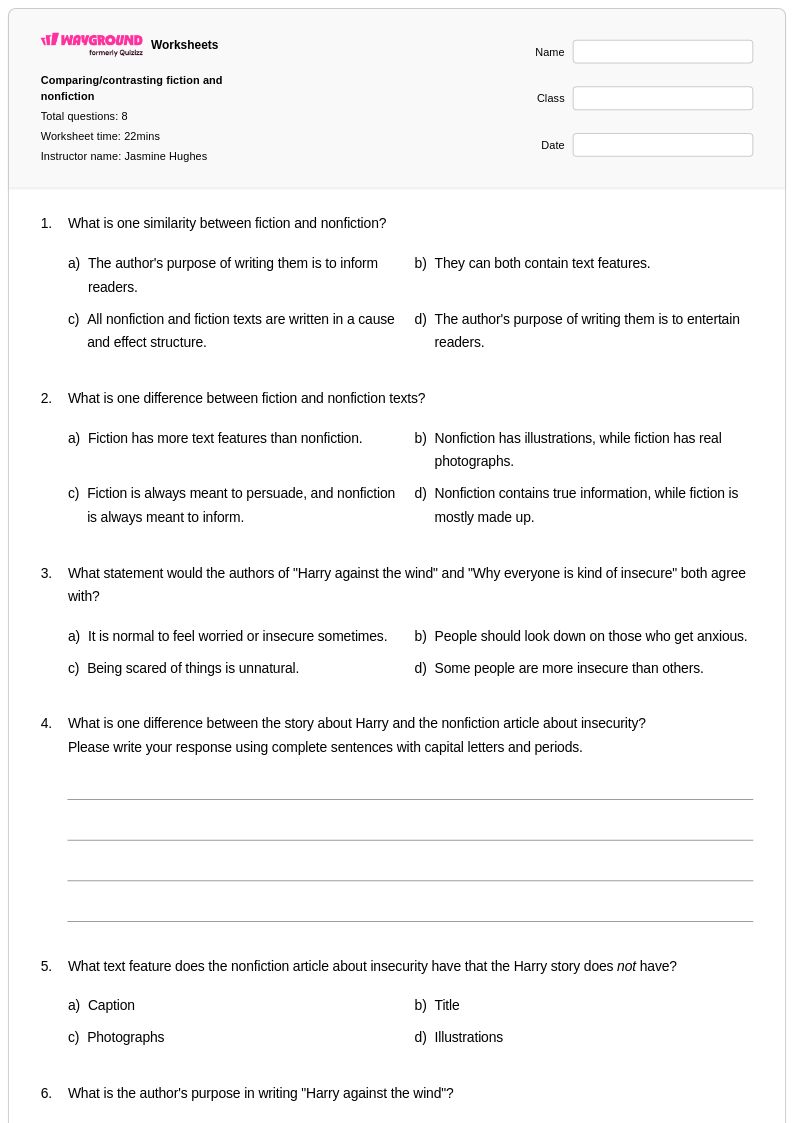
Free Printable Making Predictions in Nonfiction Worksheets for Year 5
Year 5 students develop critical reading skills with our free Making Predictions in Nonfiction worksheets, featuring printable PDF practice problems and answer keys to master analyzing text clues and forecasting outcomes.
Explore printable Making Predictions in Nonfiction worksheets for Year 5
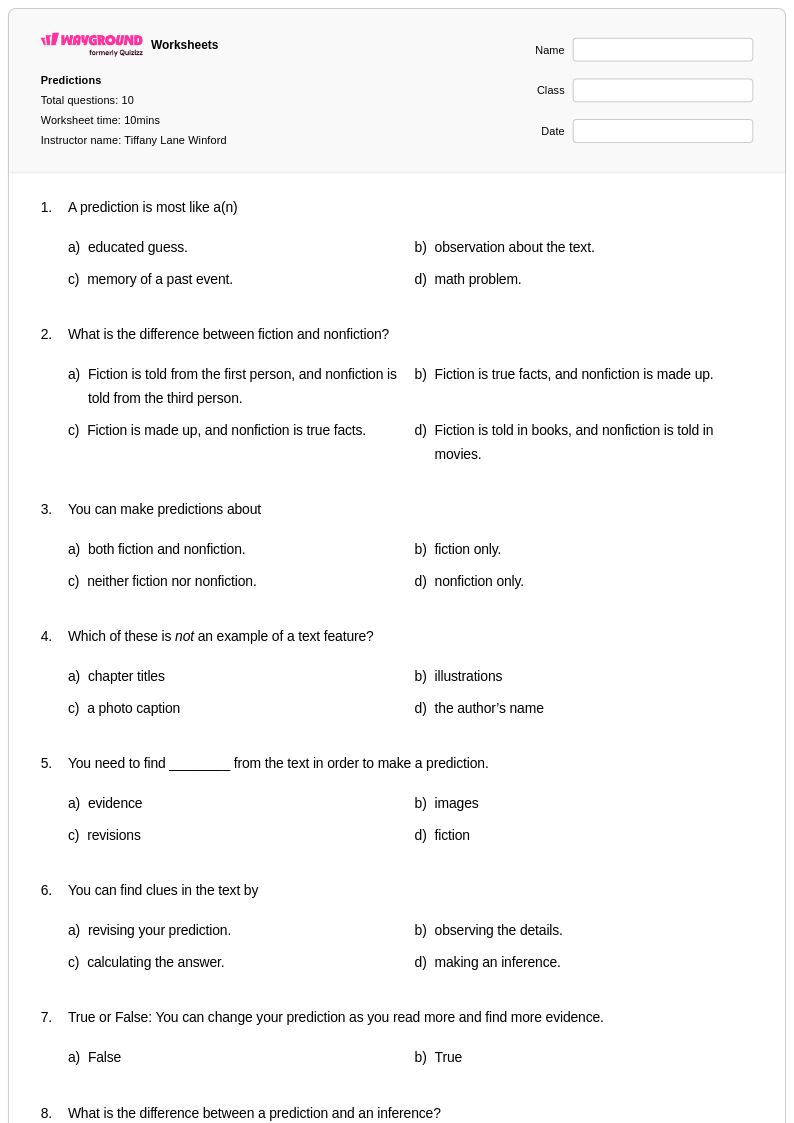
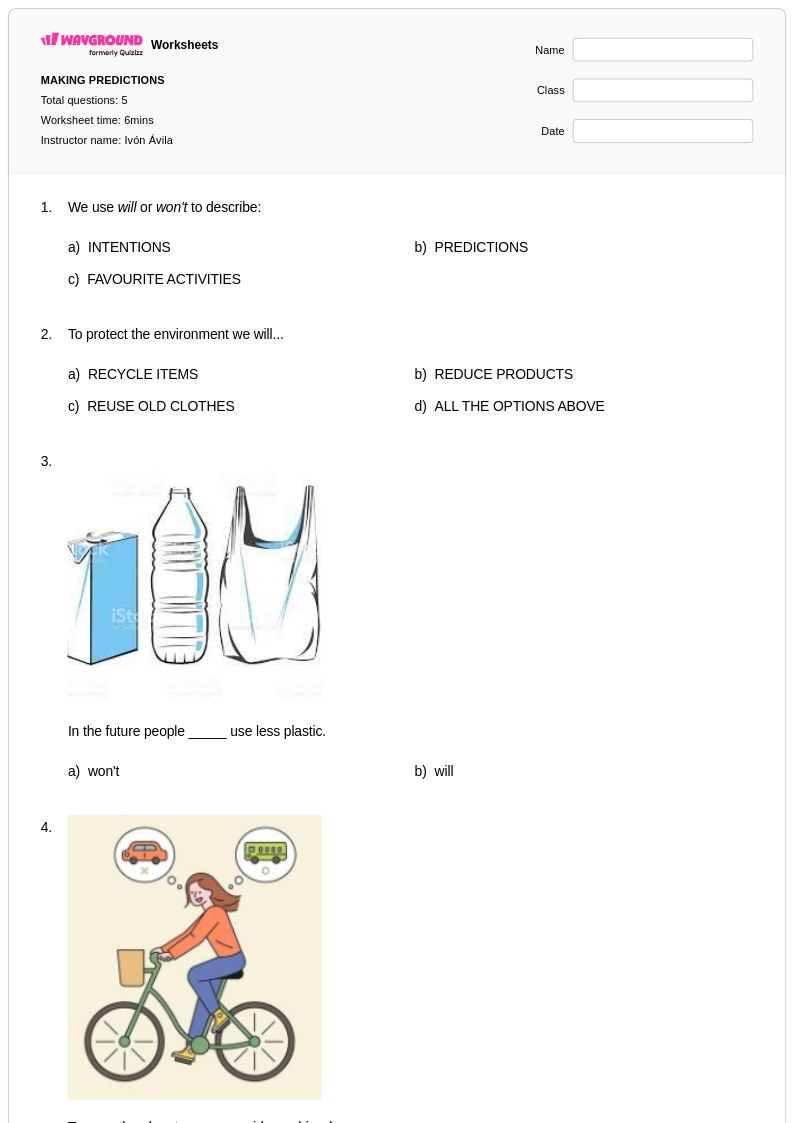
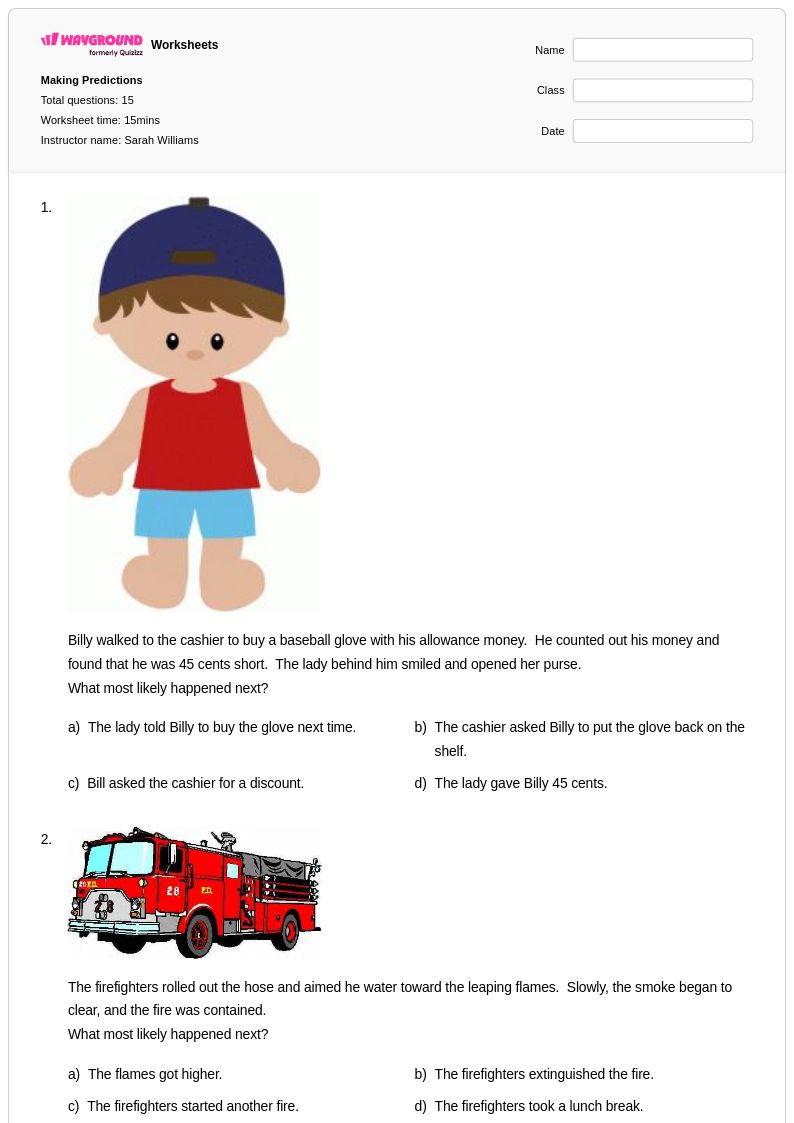
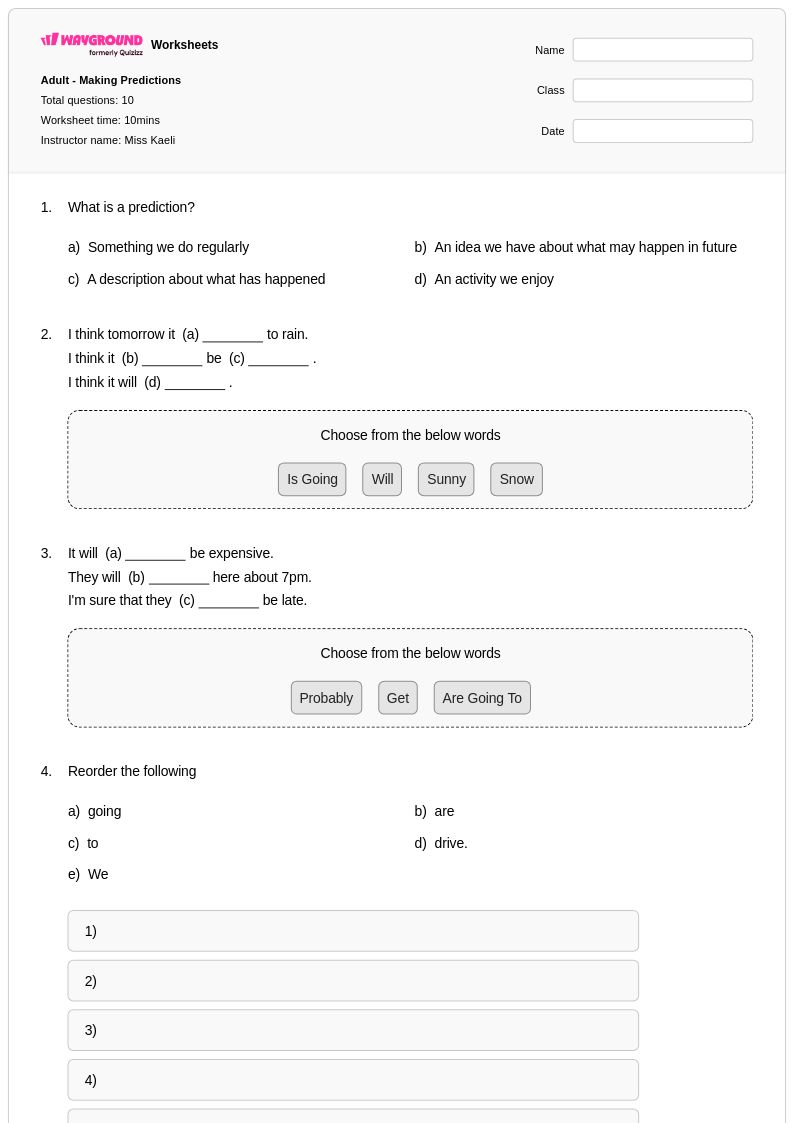
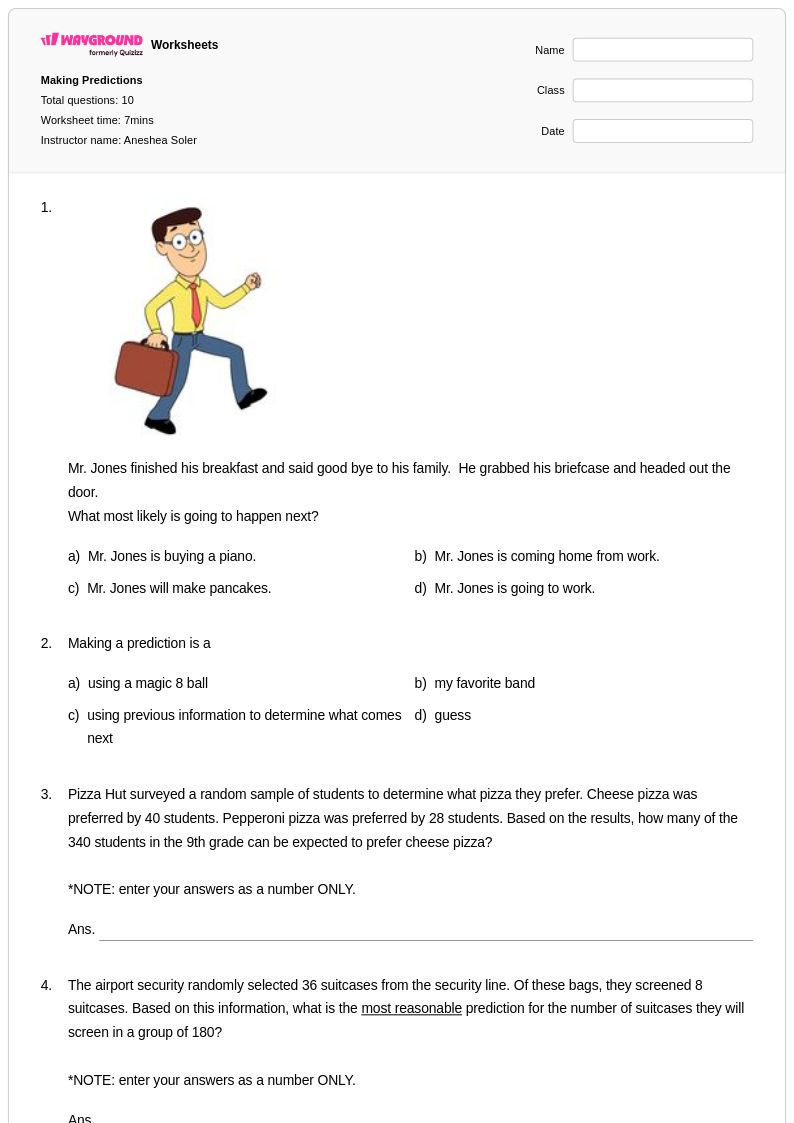
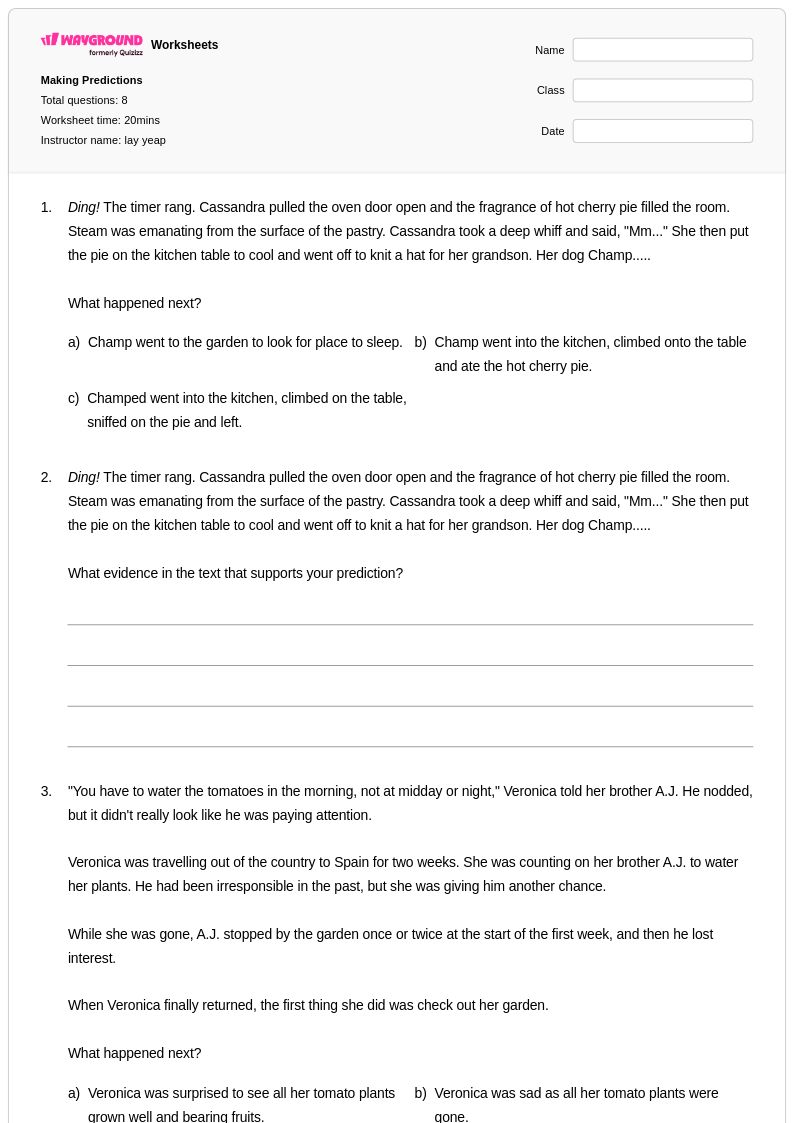
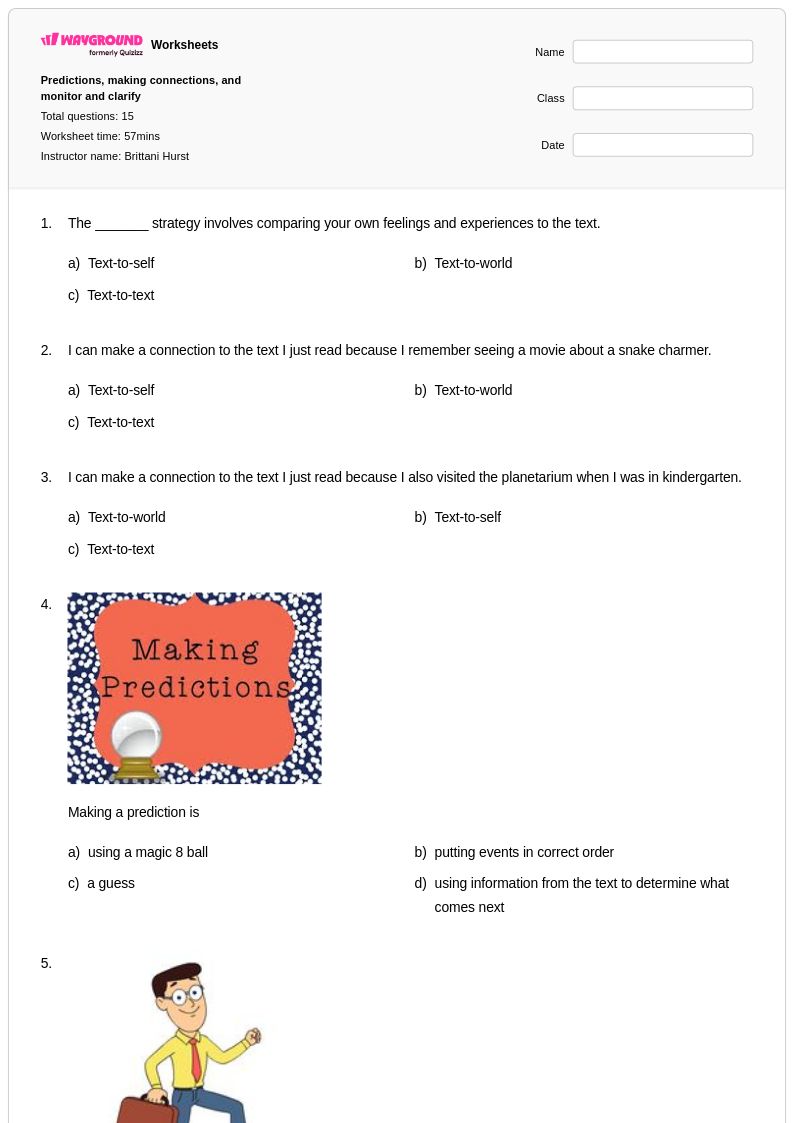
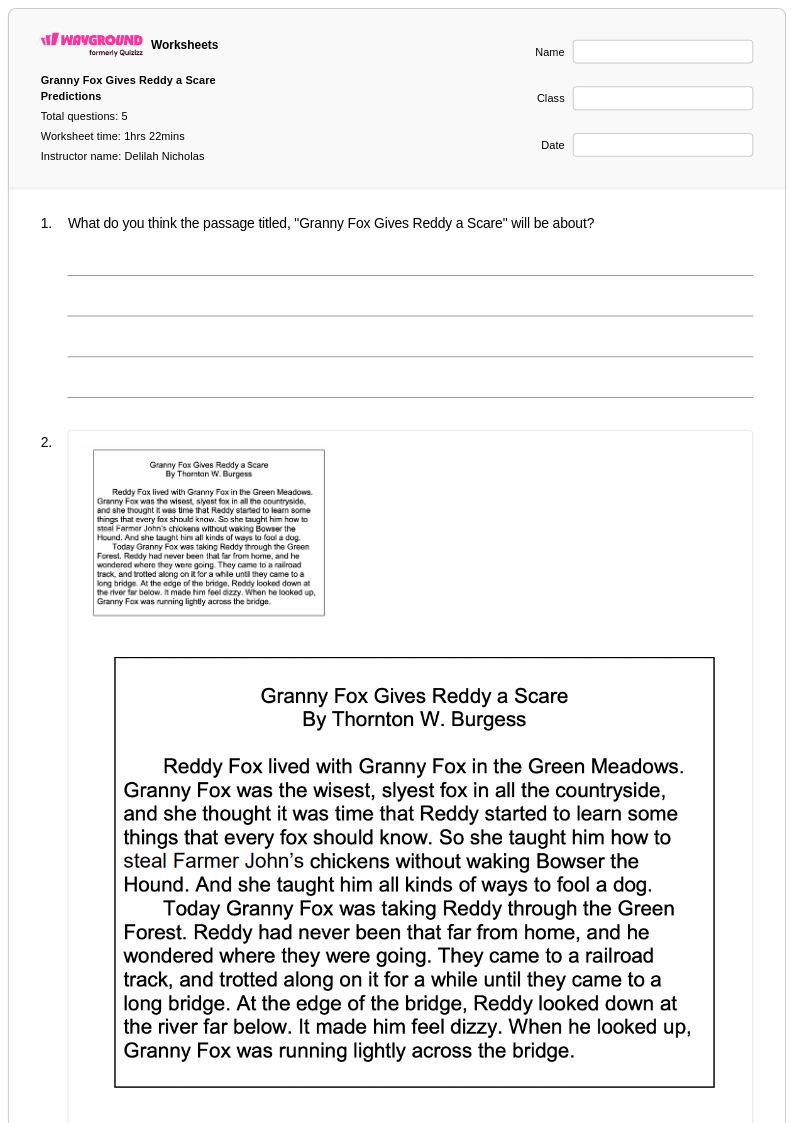
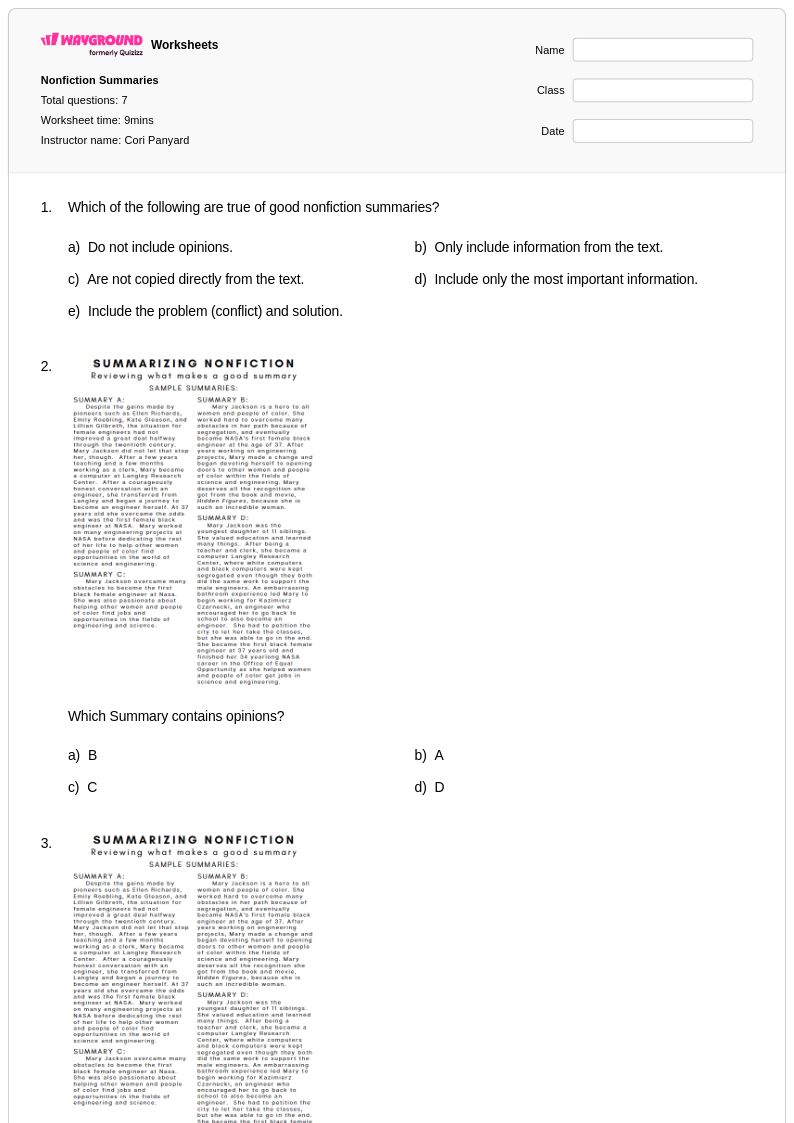
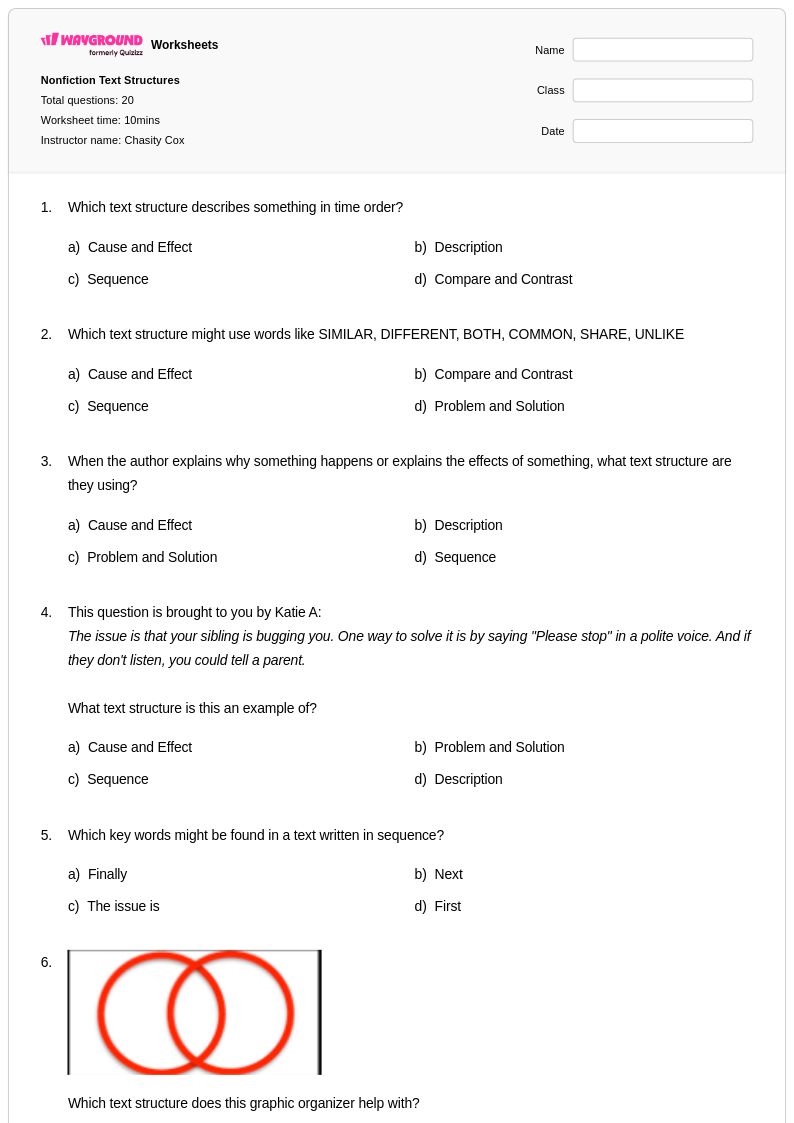
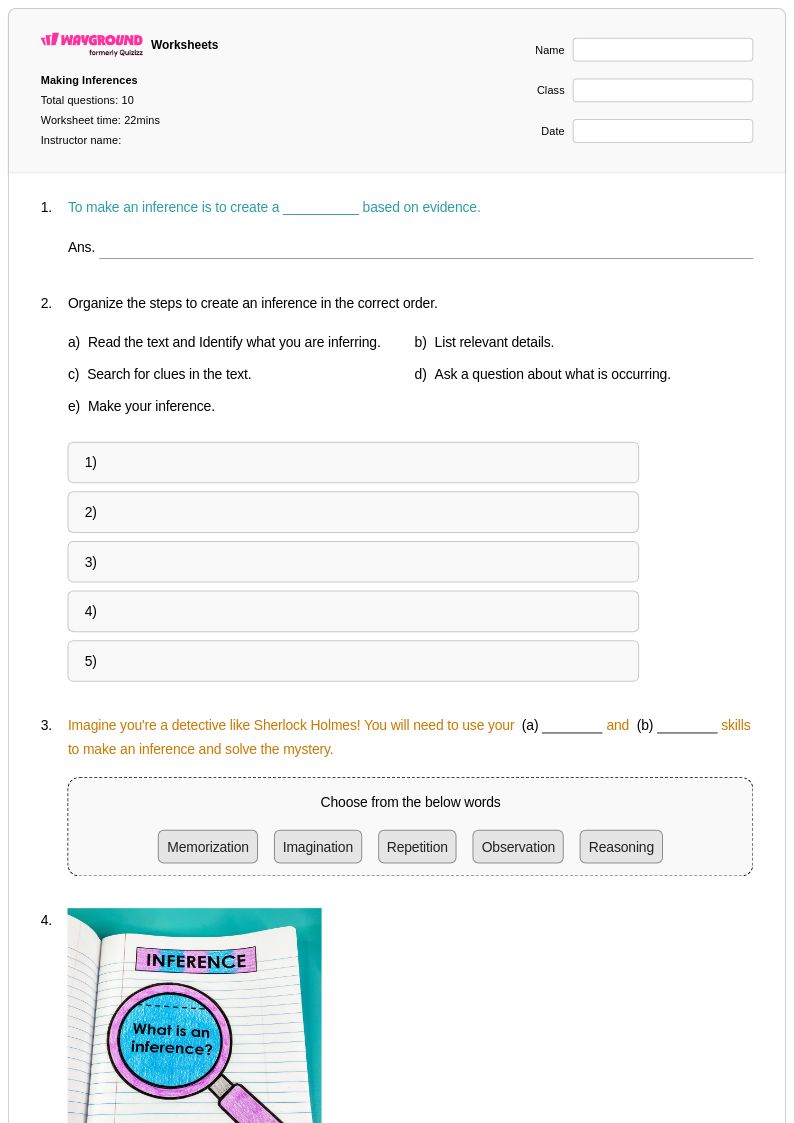
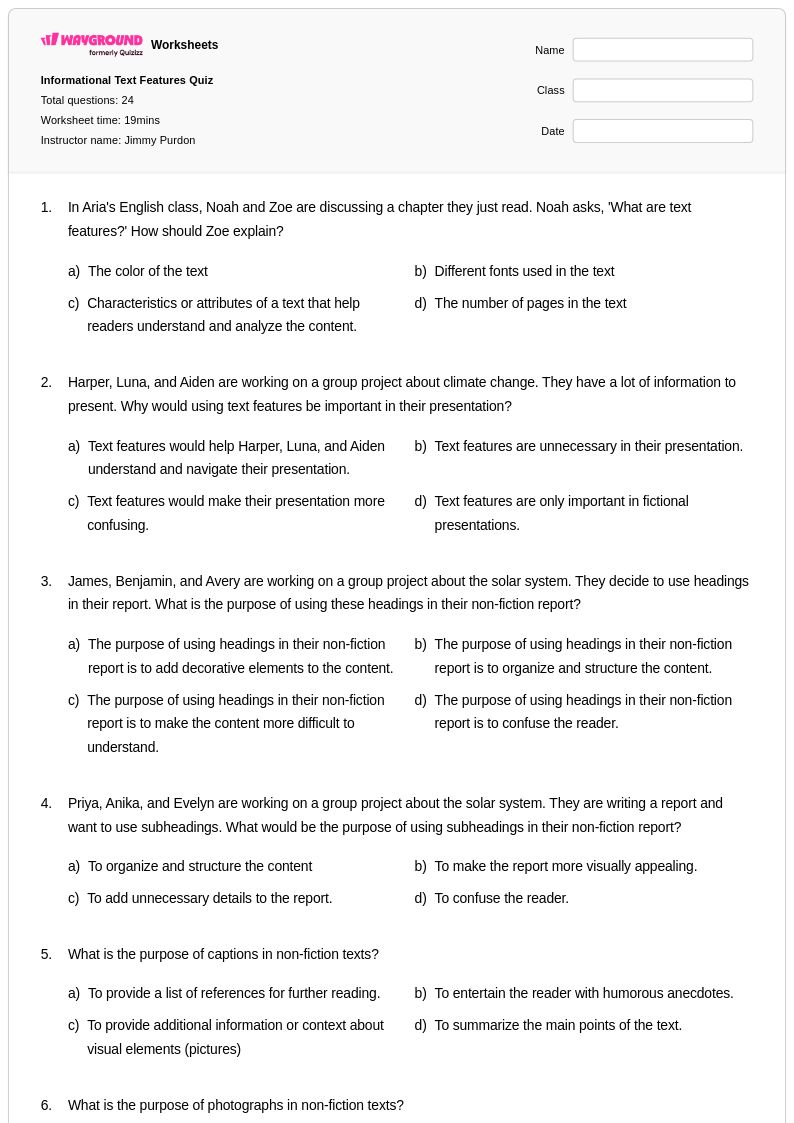
Making predictions in nonfiction is a critical reading comprehension skill that Year 5 students must develop to become analytical readers who can anticipate outcomes based on textual evidence and prior knowledge. Wayground's extensive collection of making predictions in nonfiction worksheets provides students with structured practice opportunities to examine factual texts, identify key details, and use context clues to forecast what might happen next or determine logical conclusions. These comprehensive printables strengthen students' ability to connect cause and effect relationships, recognize patterns in informational text, and support their predictions with specific evidence from the passage. Each worksheet includes detailed answer keys and offers free access to practice problems that progressively build students' confidence in making informed predictions while reading biographies, scientific articles, historical accounts, and other nonfiction genres.
Wayground supports educators with millions of teacher-created resources specifically designed for making predictions in nonfiction instruction, offering robust search and filtering capabilities that allow teachers to quickly locate grade-appropriate materials aligned with reading standards. The platform's differentiation tools enable teachers to customize worksheets for varying skill levels within their Year 5 classrooms, while flexible formatting options provide both printable pdf versions for traditional paper-based learning and digital formats for interactive instruction. These comprehensive worksheet collections facilitate targeted skill practice during guided reading sessions, support remediation efforts for struggling readers, and provide enrichment opportunities for advanced students, making lesson planning more efficient while ensuring all learners receive appropriate challenge levels in developing this essential reading comprehension strategy.
FAQs
How do I teach students to make predictions in nonfiction texts?
Teach prediction-making in nonfiction by explicitly modeling how to use text evidence, prior knowledge, and contextual clues before reading. Show students how to pause at section headings, charts, or topic sentences and ask what they expect to learn next. Gradually release responsibility by having students practice with diverse nonfiction formats — such as scientific articles, news reports, and biographical texts — where they must justify each prediction with specific evidence from the text.
What exercises help students practice making predictions in nonfiction?
Effective exercises include prediction journals where students write and later verify their predictions against actual text content, as well as structured worksheets that prompt students to cite the specific text evidence supporting each inference. Working across varied nonfiction formats — historical accounts, science articles, news reports — helps students apply prediction strategies flexibly rather than relying on narrative story cues they may be more familiar with from fiction.
What common mistakes do students make when predicting in nonfiction texts?
The most frequent error is making predictions based on personal opinion or background knowledge alone, without anchoring them in actual text evidence such as headings, data, or key vocabulary. Students also tend to confuse prediction with summarization, restating what they have already read rather than projecting forward. A related misconception is assuming predictions must be correct — students benefit from explicit instruction that an evidence-based prediction is valid even when the text later contradicts it.
How is making predictions in nonfiction different from making predictions in fiction?
In fiction, predictions typically focus on plot and character outcomes driven by narrative structure and character motivation. In nonfiction, predictions involve anticipating conclusions, trends, causes, or implications based on factual evidence, data patterns, and informational text structures such as cause-and-effect or problem-solution. This distinction is important because students must shift from story logic to analytical reasoning, using domain-specific vocabulary and text features like subheadings, graphs, and captions as their primary evidence.
How do I use Making Predictions in Nonfiction worksheets from Wayground in my classroom?
Wayground's making predictions in nonfiction worksheets are available as free printable PDFs for traditional classroom use and in digital formats for technology-integrated environments, including the option to host them as a live quiz on Wayground. Teachers can use them for direct instruction, independent practice, homework, or targeted remediation. Wayground also supports student-level accommodations such as read aloud, extended time, and reduced answer choices, which can be assigned individually so that all learners engage with prediction practice at an appropriate level of support.
How can I differentiate making predictions in nonfiction practice for struggling and advanced readers?
For struggling readers, provide shorter, highly structured nonfiction passages with explicit text features and scaffold each prediction step with sentence frames such as 'I predict ___ because the text says ___.' Advanced students benefit from working with more complex texts — multi-source comparisons or data-heavy scientific articles — where they must synthesize information across sections to construct and defend predictions. On Wayground, teachers can apply accommodations like read aloud or reduced answer choices to individual students, ensuring each learner practices at the right level without disrupting the rest of the class.