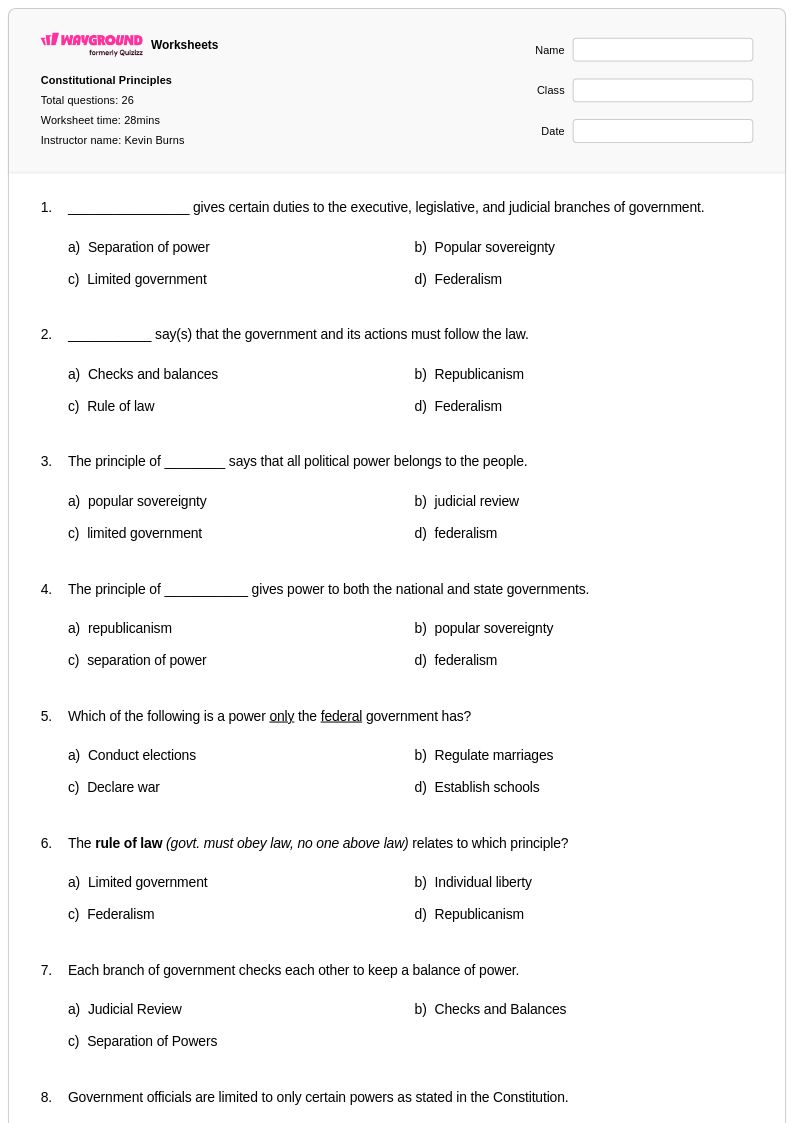
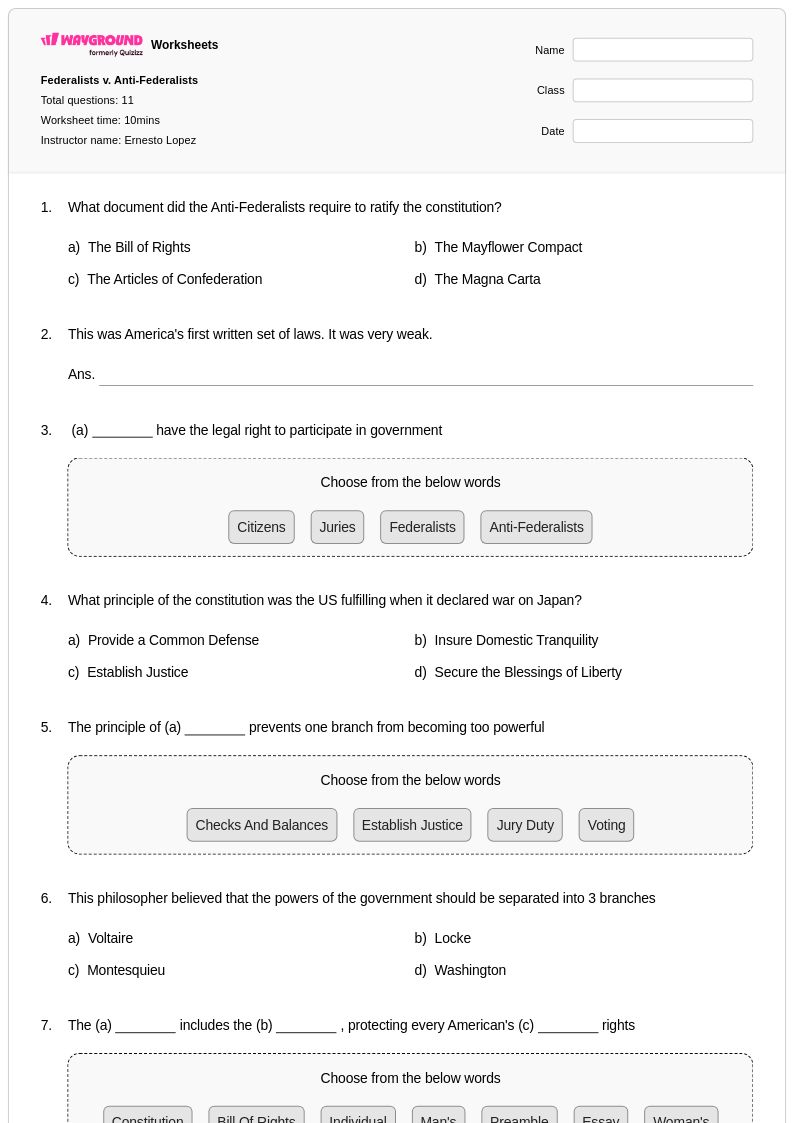
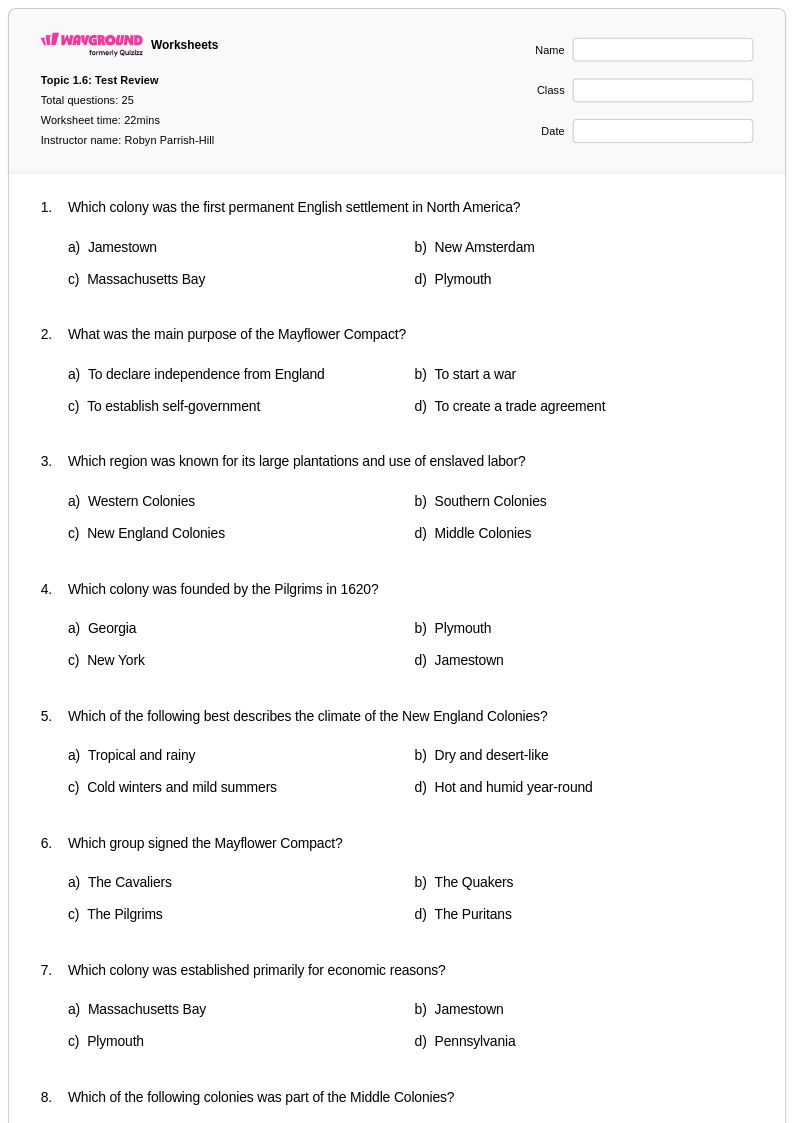
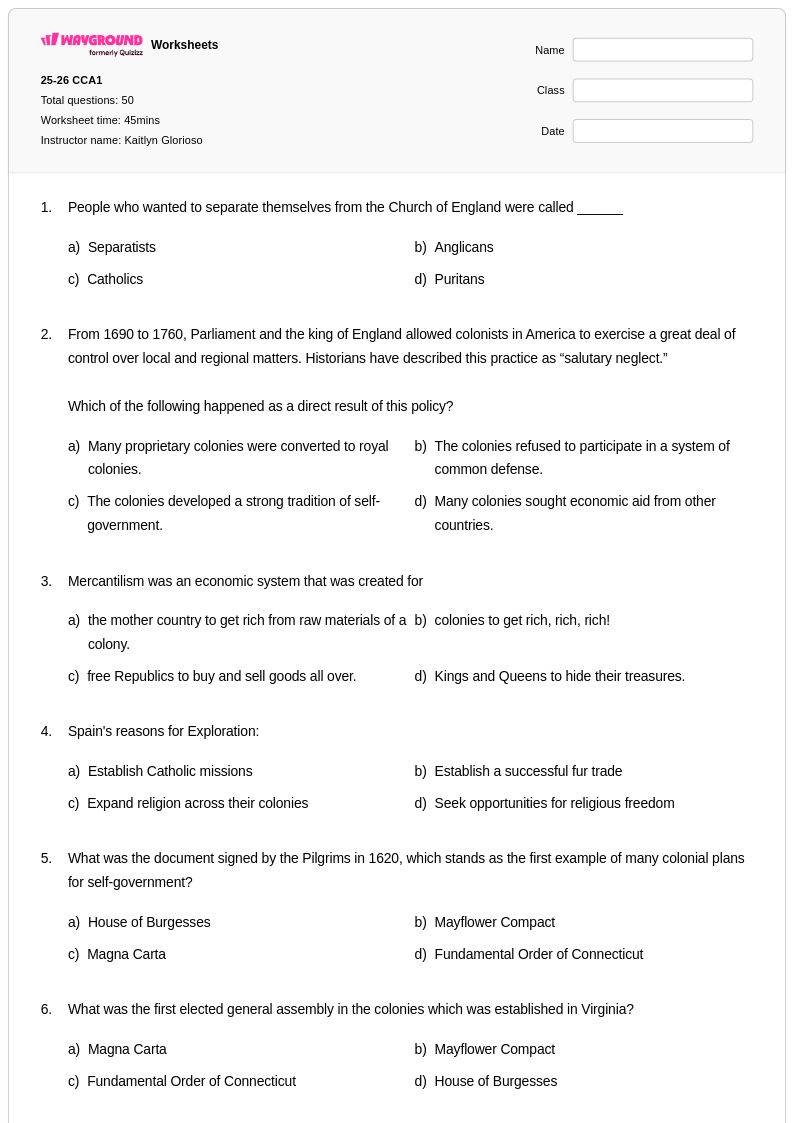
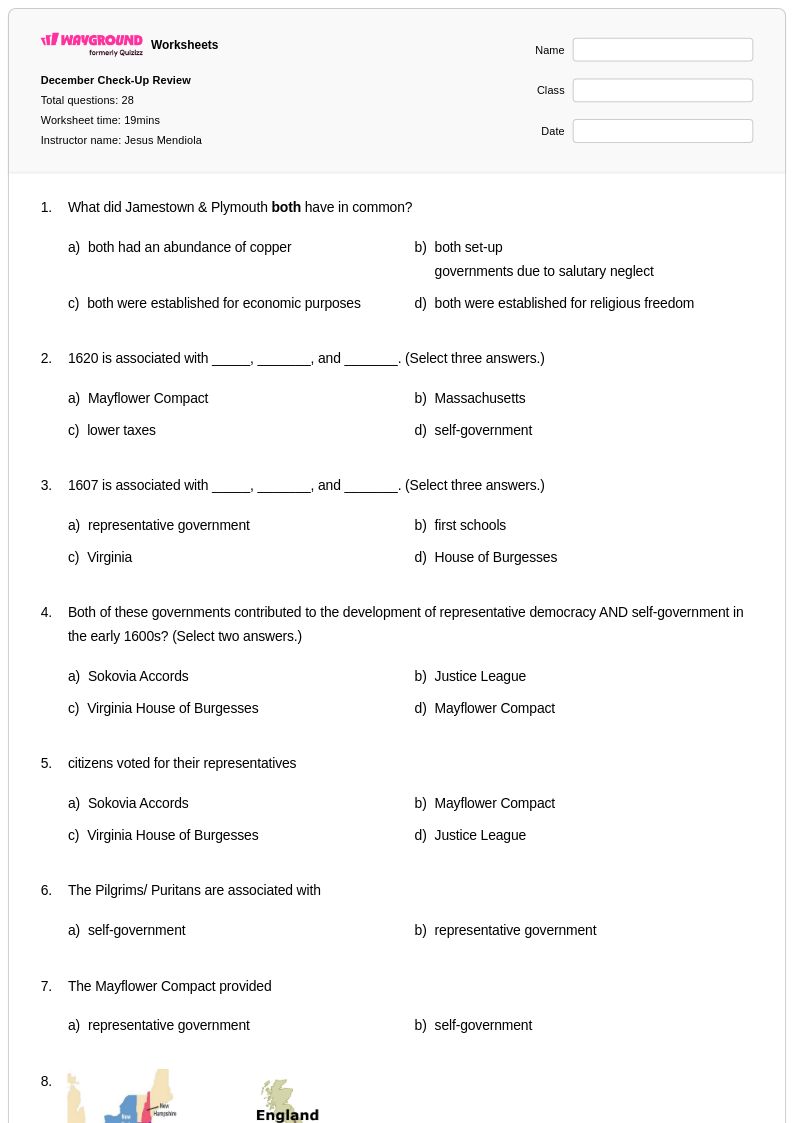
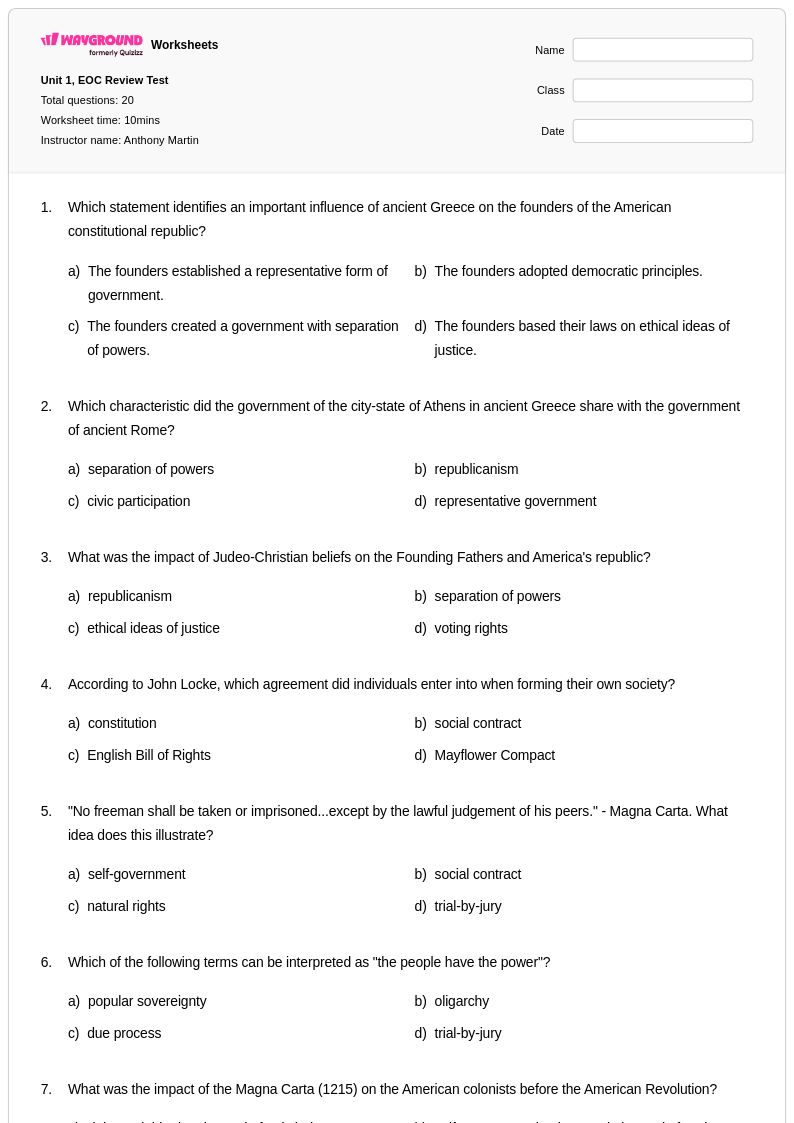
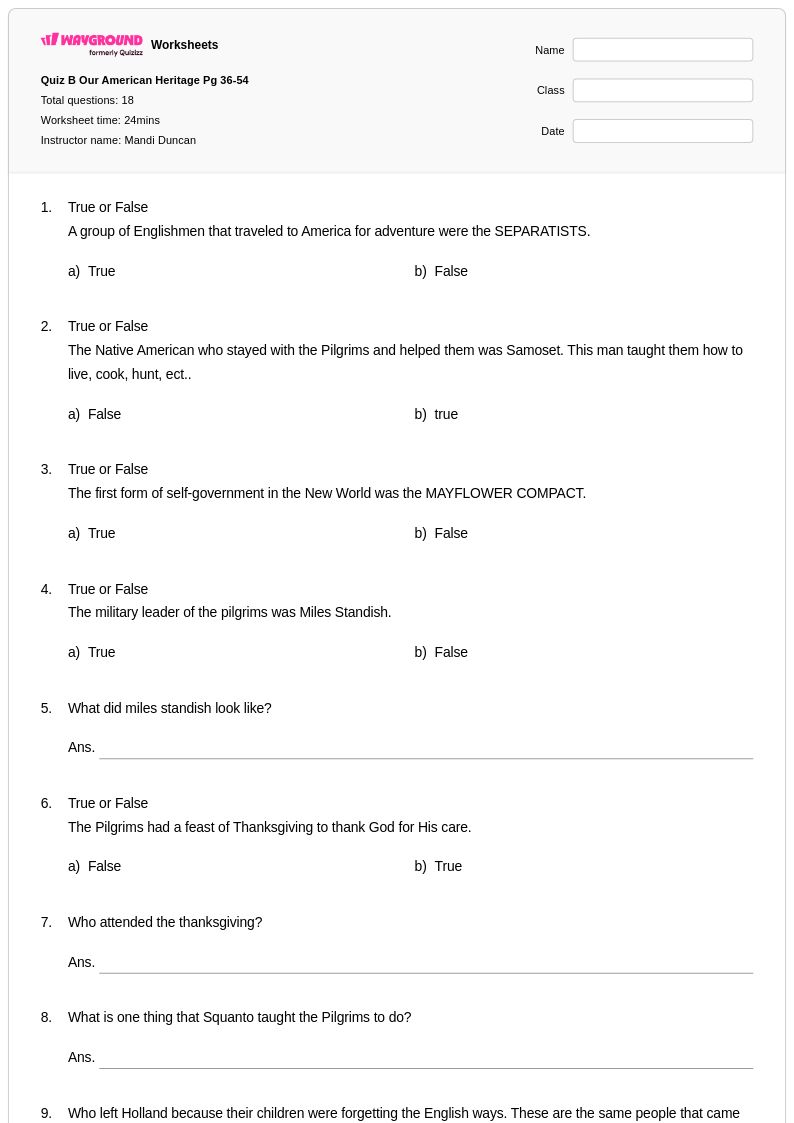
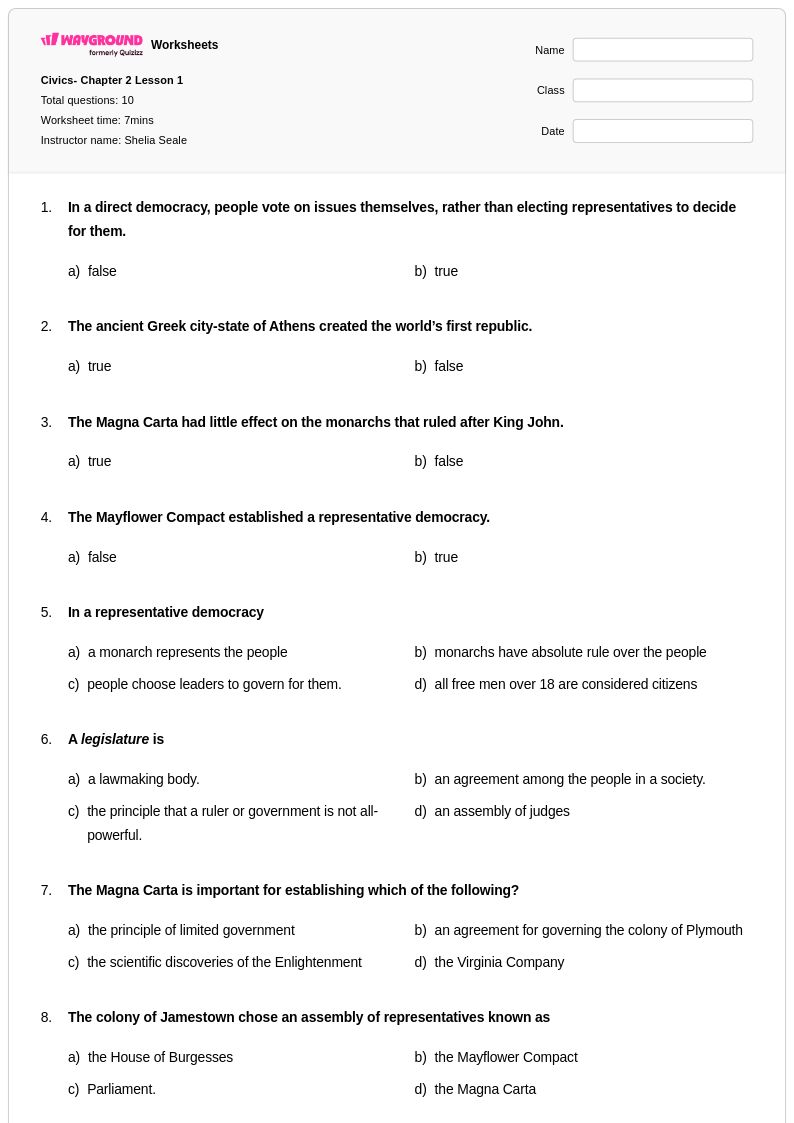
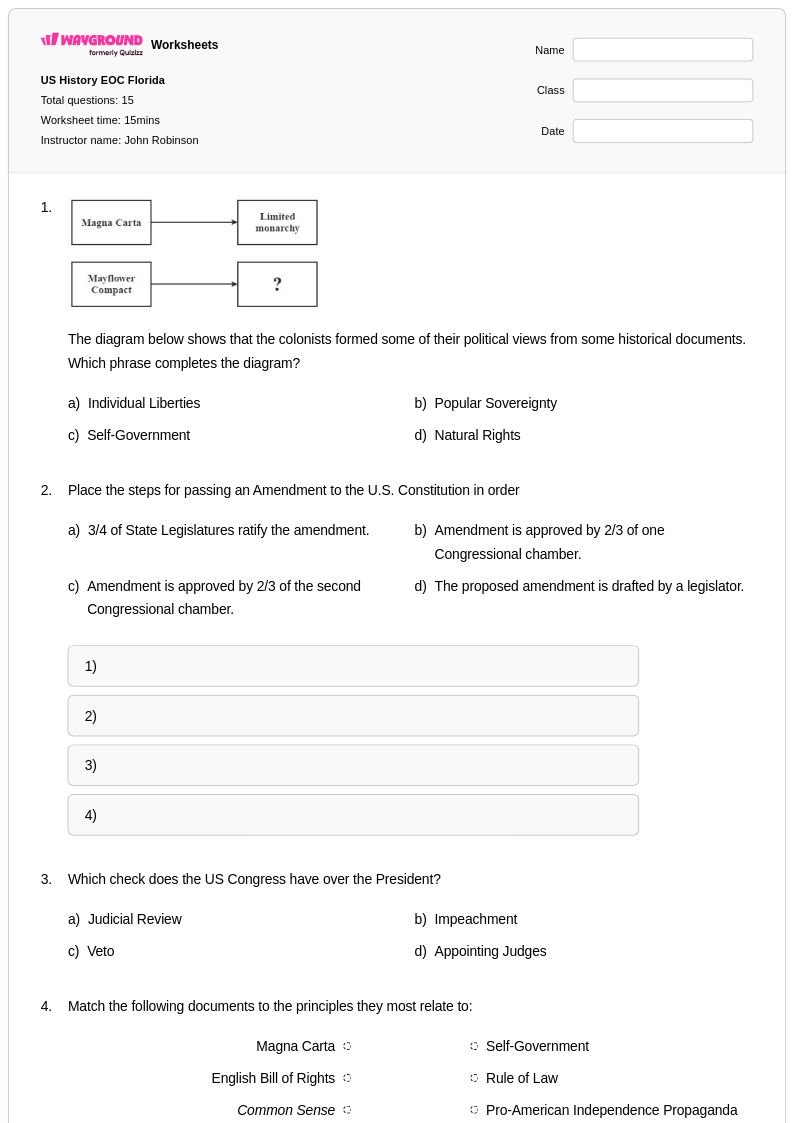
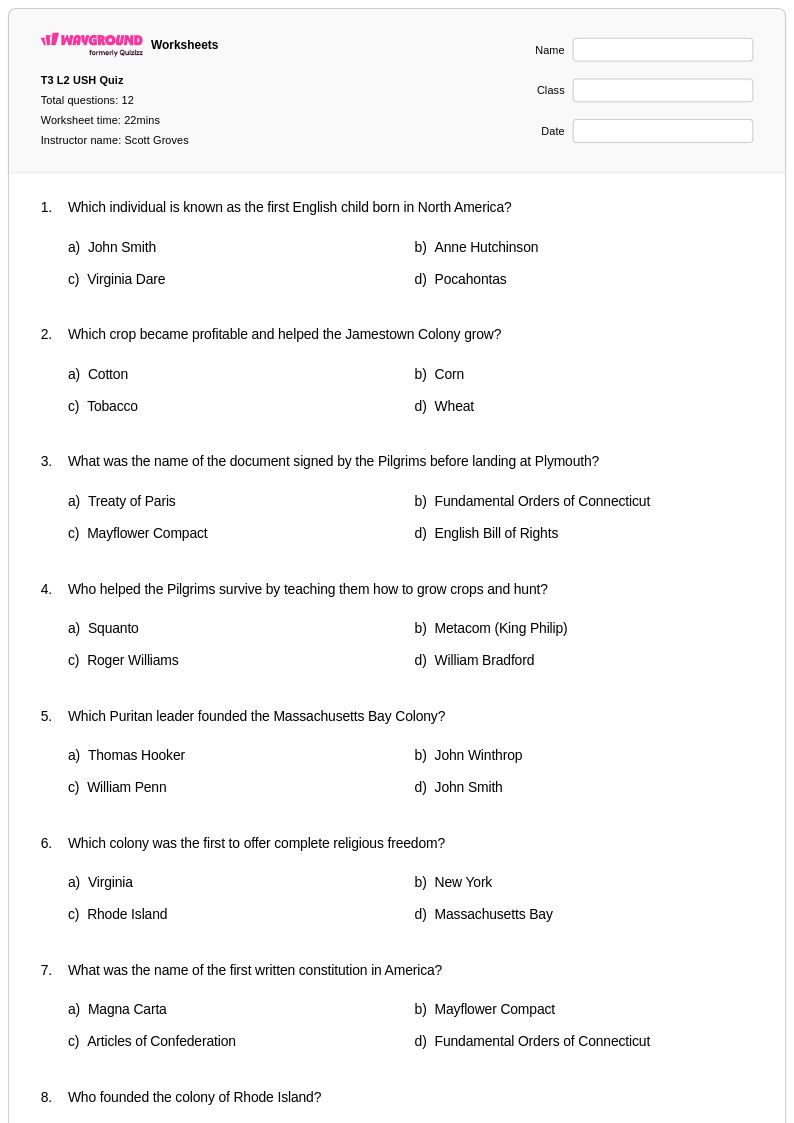
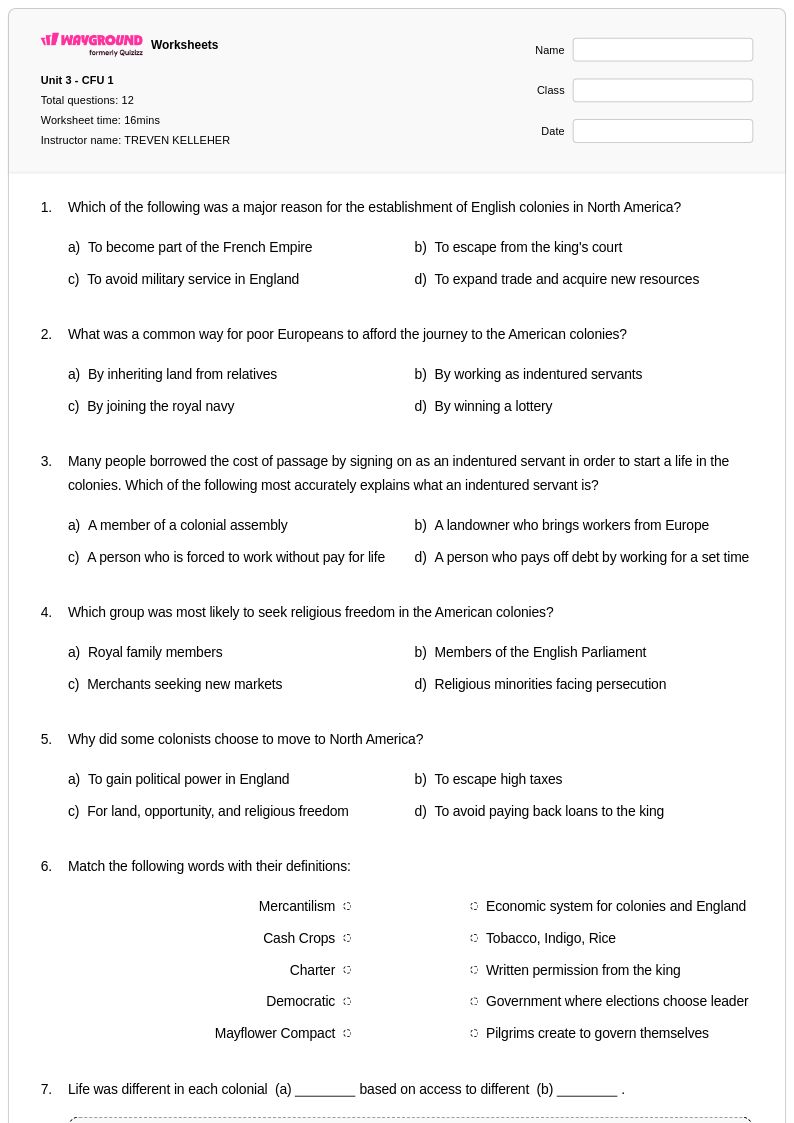
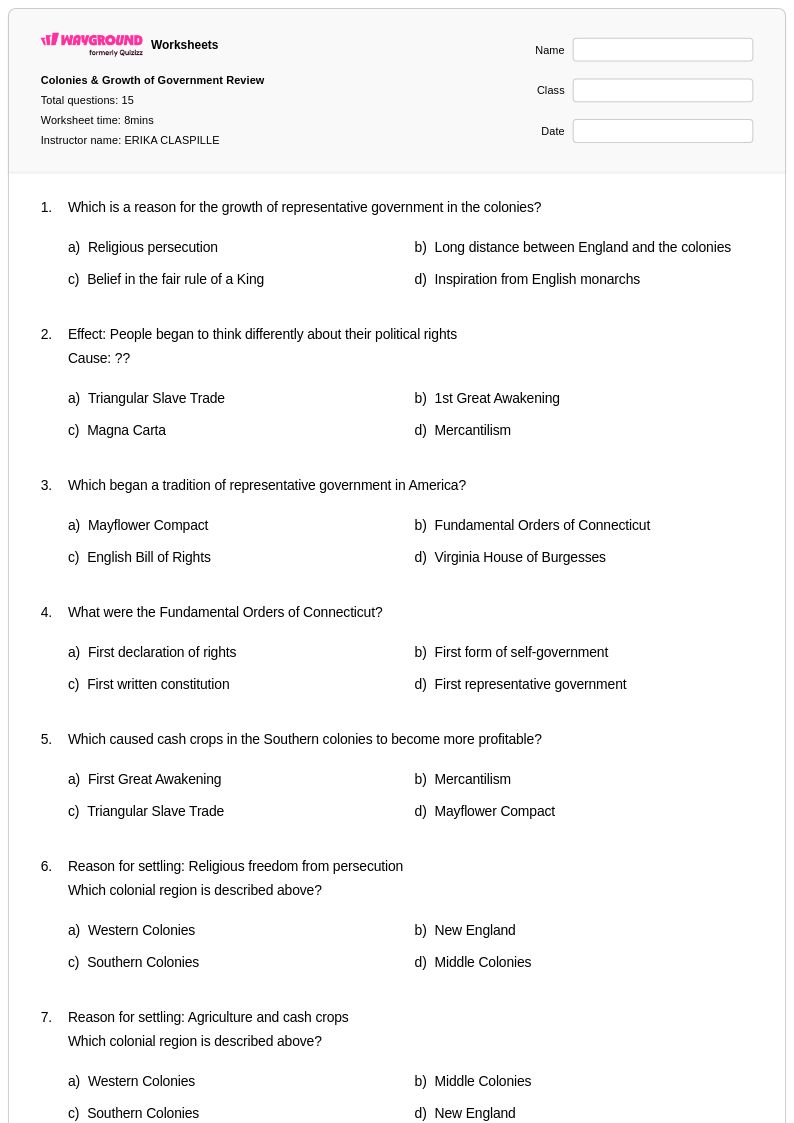
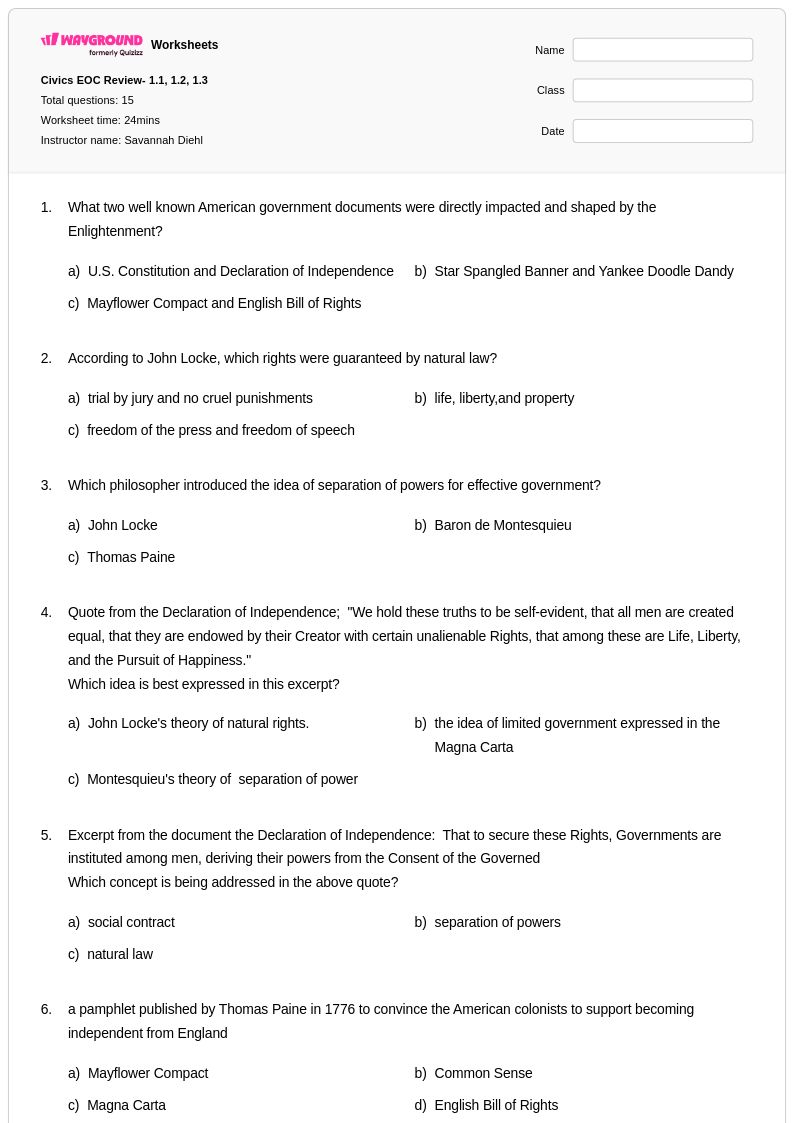
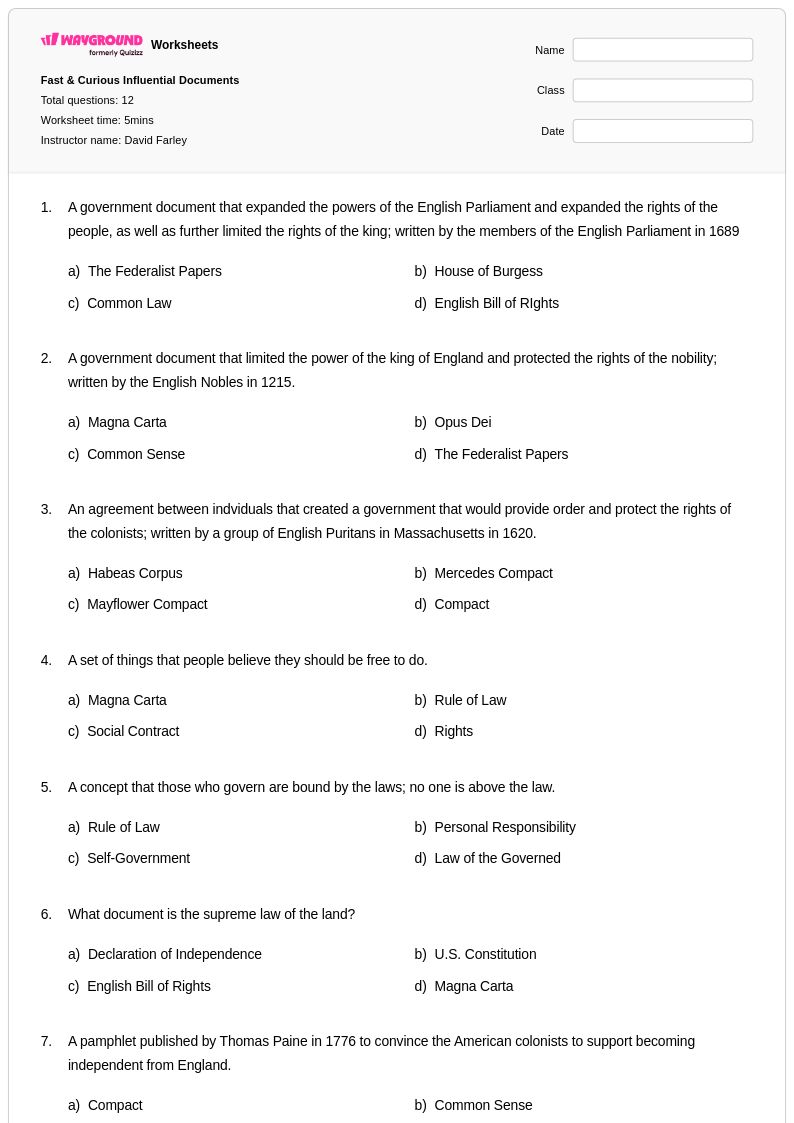
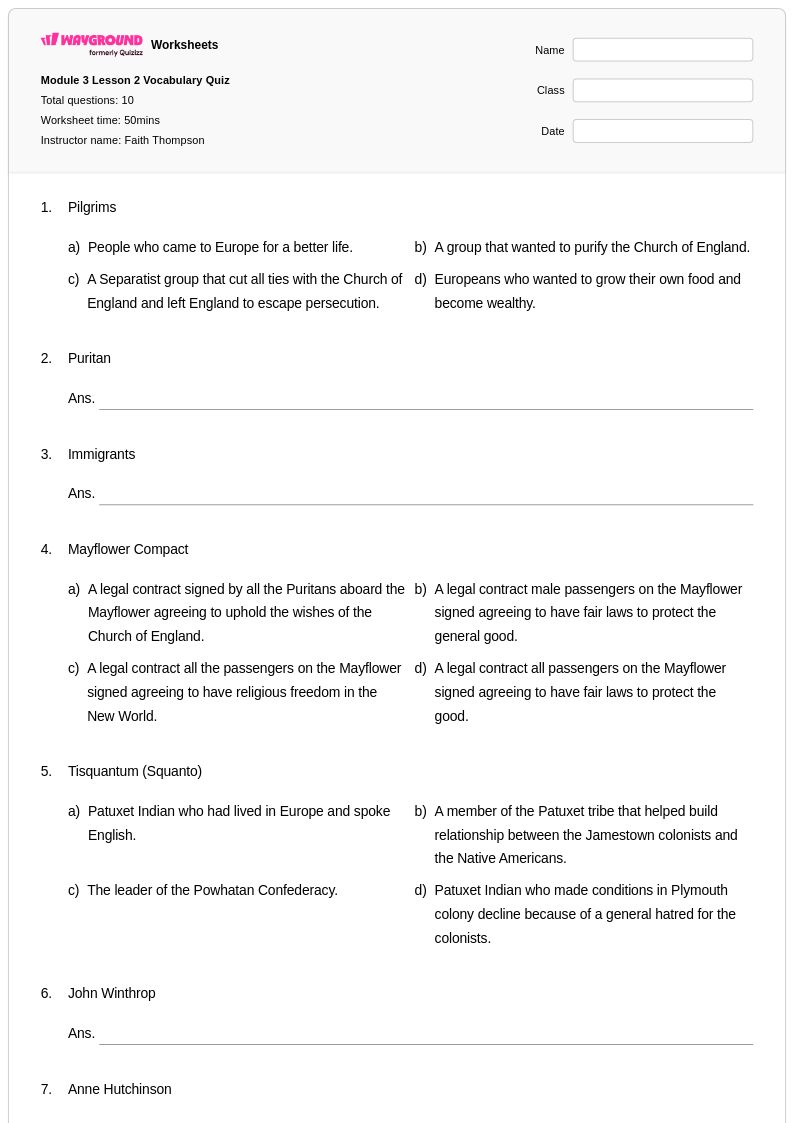
Explore Year 7 Mayflower worksheets and printables that help students learn about the historic voyage, Pilgrim settlement, and early colonial challenges through engaging practice problems with comprehensive answer keys.
Mayflower worksheets for Year 7 students provide comprehensive exploration of this pivotal moment in early American colonial history. These educational resources guide seventh-grade learners through the fascinating journey of the Pilgrims aboard the historic ship in 1620, examining their motivations for leaving England, the challenging Atlantic crossing, and their eventual arrival at Plymouth Rock. The worksheets strengthen critical thinking skills through analysis of primary source documents, timeline construction activities, and comparative exercises that help students understand the differences between the Pilgrims and other early colonial groups. Each worksheet collection includes detailed answer keys that enable independent study and self-assessment, while the variety of practice problems ranges from basic comprehension questions to more complex analytical tasks that challenge students to evaluate the historical significance of the Mayflower Compact and its influence on American democratic principles. These free printables serve as valuable supplements to textbook learning, offering engaging activities that bring this foundational period of U.S. history to life through maps, document analysis, and creative writing prompts.
Wayground, formerly Quizizz, empowers educators with an extensive library of millions of teacher-created Mayflower worksheet resources specifically designed for Year 7 social studies instruction. The platform's advanced search and filtering capabilities allow teachers to quickly locate materials that align with state and national history standards, ensuring that lesson plans meet curriculum requirements while addressing diverse learning needs. Teachers can easily customize these digital and printable worksheet collections to support differentiated instruction, whether they need materials for remediation, grade-level practice, or enrichment activities for advanced learners. The flexible format options, including downloadable pdf versions, accommodate various classroom environments and teaching preferences, from traditional paper-based assignments to interactive digital lessons. This comprehensive resource collection streamlines lesson planning by providing ready-to-use materials that support skill practice in historical analysis, reading comprehension, and critical thinking, allowing educators to focus more time on instruction and student engagement rather than resource creation.
FAQs
How do I teach the Mayflower voyage to elementary or middle school students?
Start by grounding students in the Pilgrims' motivations for leaving England, particularly religious persecution, before moving to the voyage itself. Use timeline construction activities to help students sequence the 66-day Atlantic crossing, arrival at Plymouth, and the signing of the Mayflower Compact. Connecting cause-and-effect relationships, such as how the harsh voyage conditions shaped the colonists' early decisions, gives students a framework for understanding why this journey mattered beyond just the date.
What exercises help students practice and understand the Mayflower Compact?
Primary source analysis activities work well here, having students read excerpts from the Mayflower Compact and identify its key principles of self-governance. Cause-and-effect graphic organizers that connect the Compact's creation to the challenges of governing a new settlement help students understand its historical significance. Asking students to compare the Compact's ideas to later democratic documents deepens comprehension and builds analytical writing skills.
What are the most common misconceptions students have about the Mayflower voyage?
A frequent misconception is that all passengers aboard the Mayflower were Pilgrims seeking religious freedom, when in fact about half were non-Separatist colonists often called 'Strangers.' Students also tend to romanticize the voyage, underestimating the brutally harsh 66-day crossing and the high mortality rate among colonists in the first winter at Plymouth. Addressing these gaps directly, using accurate accounts of the journey's conditions and passenger demographics, prevents oversimplified narratives from taking hold.
How do I use Mayflower worksheets in my classroom effectively?
Mayflower worksheets on Wayground are available as printable PDFs for traditional classroom use and in digital formats for technology-integrated environments, including the option to host them as a quiz directly on Wayground. Printable versions work well for guided note-taking or small group work during a Mayflower unit, while digital formats allow for quick formative checks or homework assignments. Each worksheet includes a complete answer key, which reduces grading time and supports consistent feedback.
How do I help struggling learners engage with the Mayflower without simplifying the history too much?
Scaffold the content by breaking the narrative into distinct phases: life in England, the Atlantic crossing, arrival, and early colonial governance. Wayground supports accommodations such as Read Aloud, which audio-reads questions and content for students who need it, and reduced answer choices to lower cognitive load on selected students without altering the historical rigor of the material. These settings can be applied individually so the rest of the class continues with standard resources, keeping differentiation seamless.
How do I teach students about the Mayflower's interactions with Native American populations?
It is important to frame this topic with balance, presenting both the Wampanoag perspective and the colonists' perspective rather than defaulting to a celebratory narrative. Primary source and document analysis activities that include accounts from multiple viewpoints help students evaluate the complexity of early contact. Pairing this with cause-and-effect analysis of how these interactions shaped both communities over time builds historical thinking skills beyond surface-level recall.